Image: Saint Louis Art Museum, Museum Purchase · CC BY-SA 4.0 · via Wikimedia Commons
Charing Cross Bridge (Saint Louis)
Claude Monet, 1903
Charing Cross Bridge (1903) is Claude Monet's view of a train crossing the Thames bridge under a dark, smoky sky, sunlight shimmering on the water below. The Saint Louis Art Museum bought it from Durand-Ruel in 1915.
- Artist
- Claude Monet
- Date
- 1903
- Medium
- Oil on canvas
- Dimensions
- 73 × 104.1 cm
- Collection
- Saint Louis Art Museum, St. Louis, United States
- Movement
- Impressionism
- Catalogue
- Wildenstein 1548
- The City
- Water & Sea
Charing Cross Bridge in Saint Louis is one of the darkest and most dramatic canvases in Claude Monet's London series. Signed and dated 1903, it shows a train crossing the railway bridge from the left, its white smoke spilling into a heavy sky of brown, plum and slate, while sunlight filtering through the haze lights up the river in gold and violet. The Saint Louis Art Museum bought it from Durand-Ruel in 1915, and it has been there for more than a century.
What you are looking at
The canvas is one of the widest of the motif, about 73 by 104 cm. The bridge runs across the picture a little below the middle, a long, dark violet beam on heavy, paired piers. At far left a puff of white smoke, edged with pink, bursts out at the end of the bridge: the train, as the museum's label notes. Monet gave it more definition than usual, so the smoke reads as a single plume moving to the right.
The sky is unusually somber, built from dense strokes of brown-gray, mauve and dull green, with a faint warm glow toward the upper right. Parliament, which anchors so many versions, is almost entirely swallowed by it. The water, by contrast, is full of light: horizontal strokes of gold, lilac, pale green and white catch the sun filtering down between the piers. In the lower left, a small boat with a dark sail moves across the shimmering surface, and in the middle distance a buoy or small craft sits beneath the central spans. The signature, Claude Monet 1903, is at lower left.
Where and when it was painted
Monet painted the bridge from his room at the Savoy Hotel during his visits of 1899, 1900 and 1901; the museum notes he made this view on one of those trips. Looking upriver, he saw the Hungerford railway bridge carrying trains into Charing Cross; looking downriver, Waterloo Bridge. He finished the canvases at Giverny for his 1904 exhibition at Durand-Ruel. "I love London," he wrote, and what he loved most was the fog. Our Monet in London hub tells the story.
How it was painted
The surface is thick and layered, with a dense weave of small strokes in the sky that gives it a heavy, almost woolly texture. On the water Monet used brighter, more separate touches. The contrast between the dark, compact sky and the luminous river is stronger here than in most versions, and the bridge, painted in a deep violet, acts as a hinge between them.
Ownership
According to the museum's provenance, Durand-Ruel's New York gallery bought the painting from Monet in spring 1913 and sold it in May to Arthur B. Emmons of Newport, Rhode Island. Durand-Ruel took it back in December, and in 1915 the Saint Louis Art Museum, then the City Art Museum, purchased it.
How this version differs
The Saint Louis canvas is the dark sibling in the Charing Cross Bridge series. Compare the luminous Lyon version of the same year, where the sun hangs pale over the bridge, or the airy Santa Barbara picture of 1899. Its train smoke links it to the Chicago canvas and the Baltimore version, where a tug's plume plays the same role, but none has such a brooding sky.
Smoke and industry
Few pictures in the series make London's industrial character so plain. The sky here is not a romantic mist but a heavy, smoke-laden canopy, the coal pollution that gave the city its famous fogs and that Monet found beautiful. The train crossing the bridge adds its own plume to the murk. Read today, the canvas is both a study of light and a record of the air over a Victorian industrial city, which researchers have compared with historic weather and pollution data.
Where to see it
The painting (inv. 22:1915) hangs in the Saint Louis Art Museum in Forest Park, which offers free general admission. Check the online collection for current gallery location. For other collections, see where to see Monet's paintings.
Questions & answers
Where is Monet's Charing Cross Bridge in St. Louis?
In the Saint Louis Art Museum in Forest Park (inv. 22:1915), which bought it from Durand-Ruel's New York gallery in 1915. General admission to the museum is free.
When was it painted?
Monet began it on one of his London visits of 1899–1901, painting from the Savoy Hotel, and finished it at Giverny. It is signed and dated 'Claude Monet 1903'.
What does the painting show?
A train crossing Charing Cross Bridge from the left, its white smoke spilling into a dark brown and plum sky, while sunlight filters through the haze and shimmers on the Thames. A small sailboat crosses the river in the foreground.
How is it different from other Charing Cross Bridge paintings?
It has one of the darkest skies in the series, almost hiding the Houses of Parliament, set against a brilliantly lit river. Most versions are pale and misty from top to bottom.
More by the artist
Claude Monet
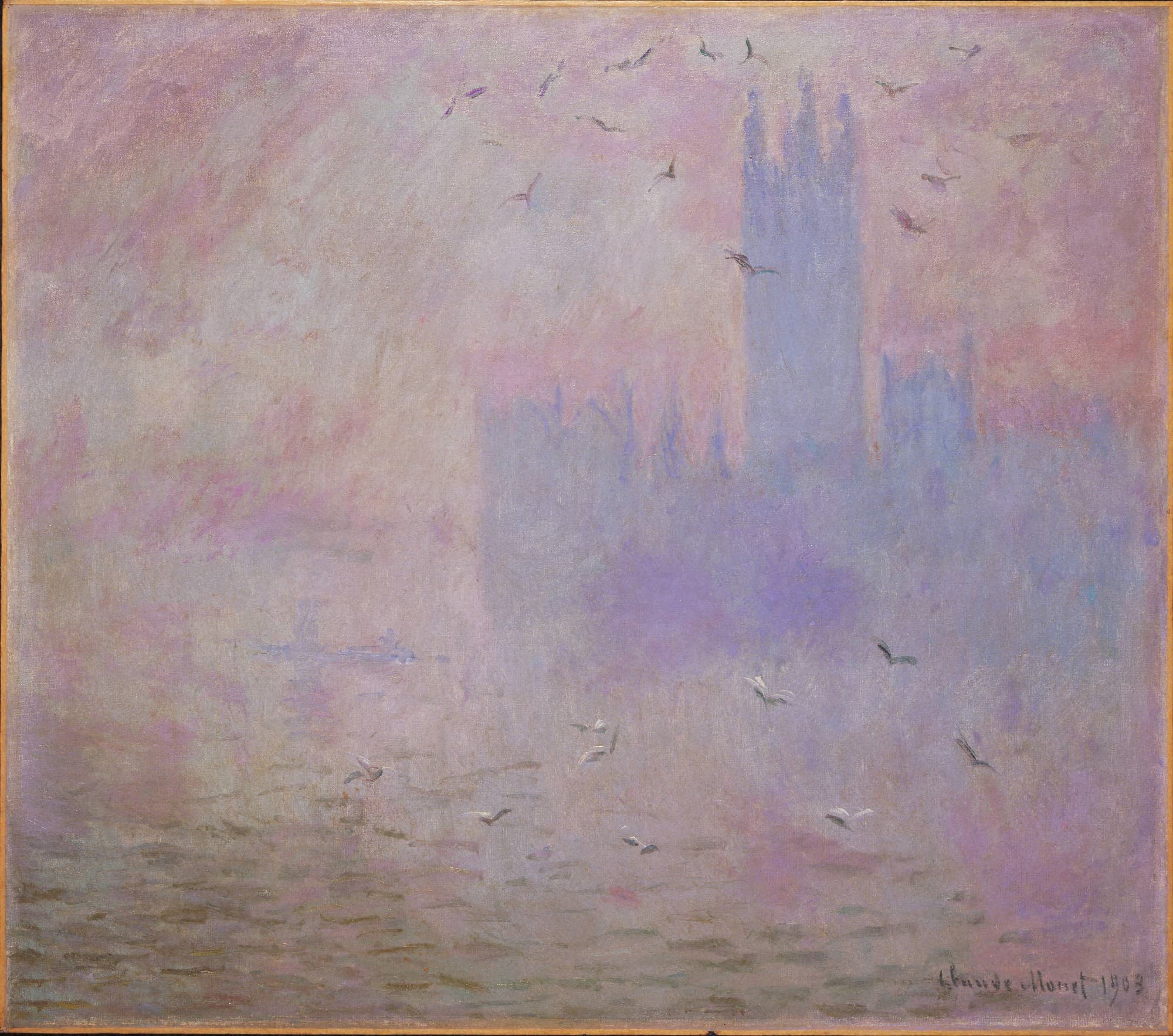
The Houses of Parliament, Seagulls
Claude Monet · 1903
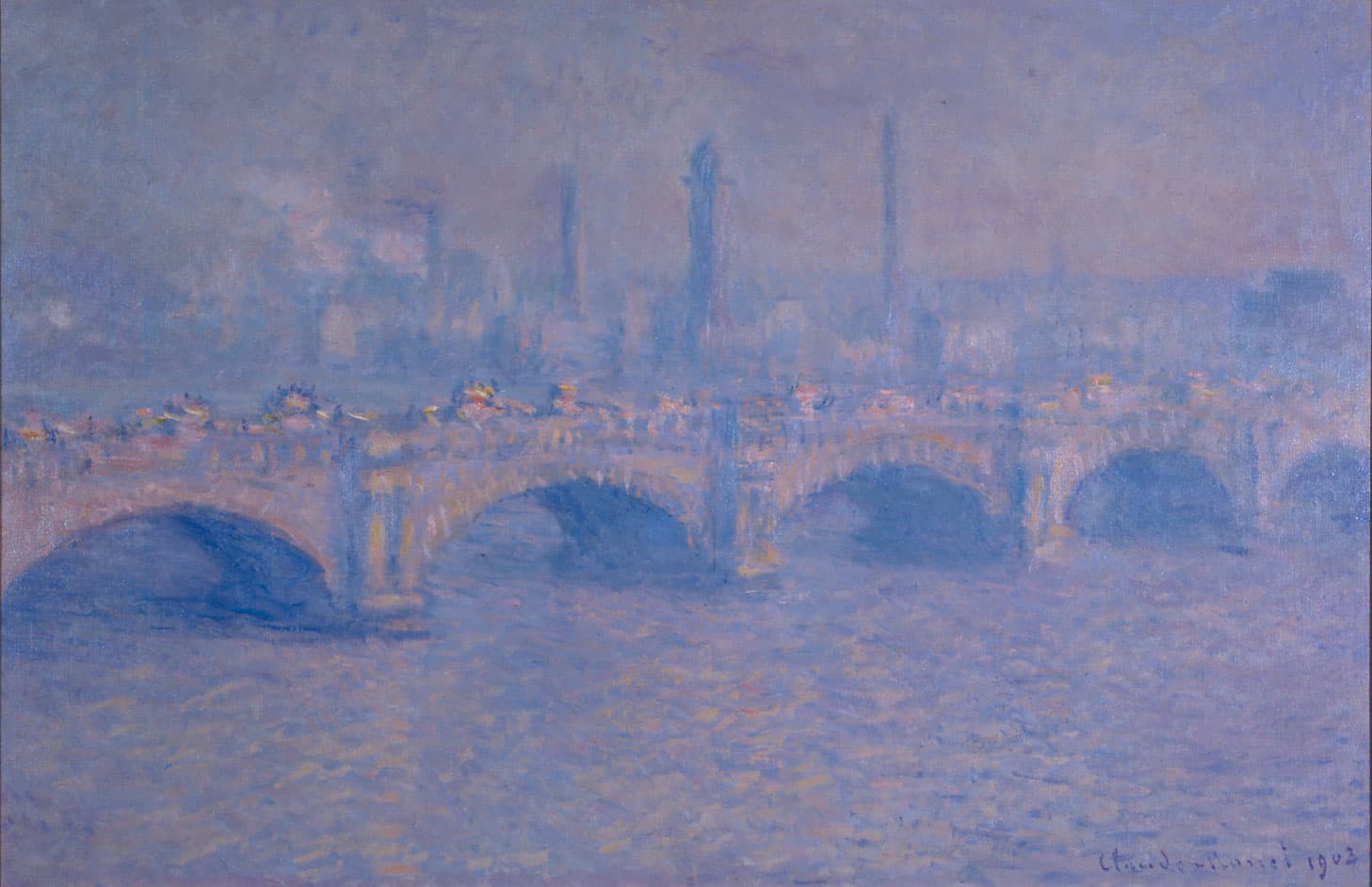
Waterloo Bridge, Sunlight Effect
Claude Monet · 1903
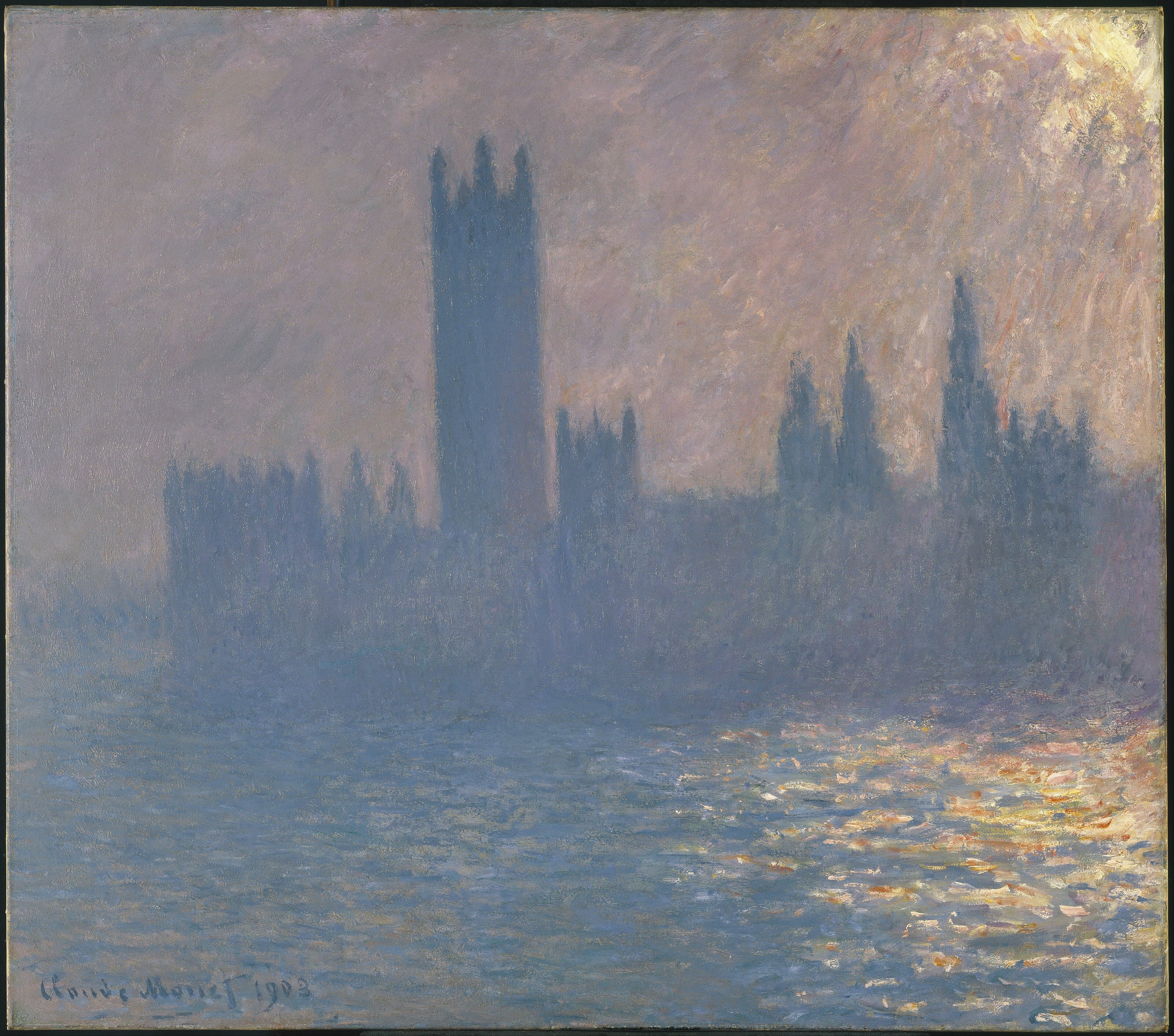
Houses of Parliament, Sunlight Effect
Claude Monet · 1903
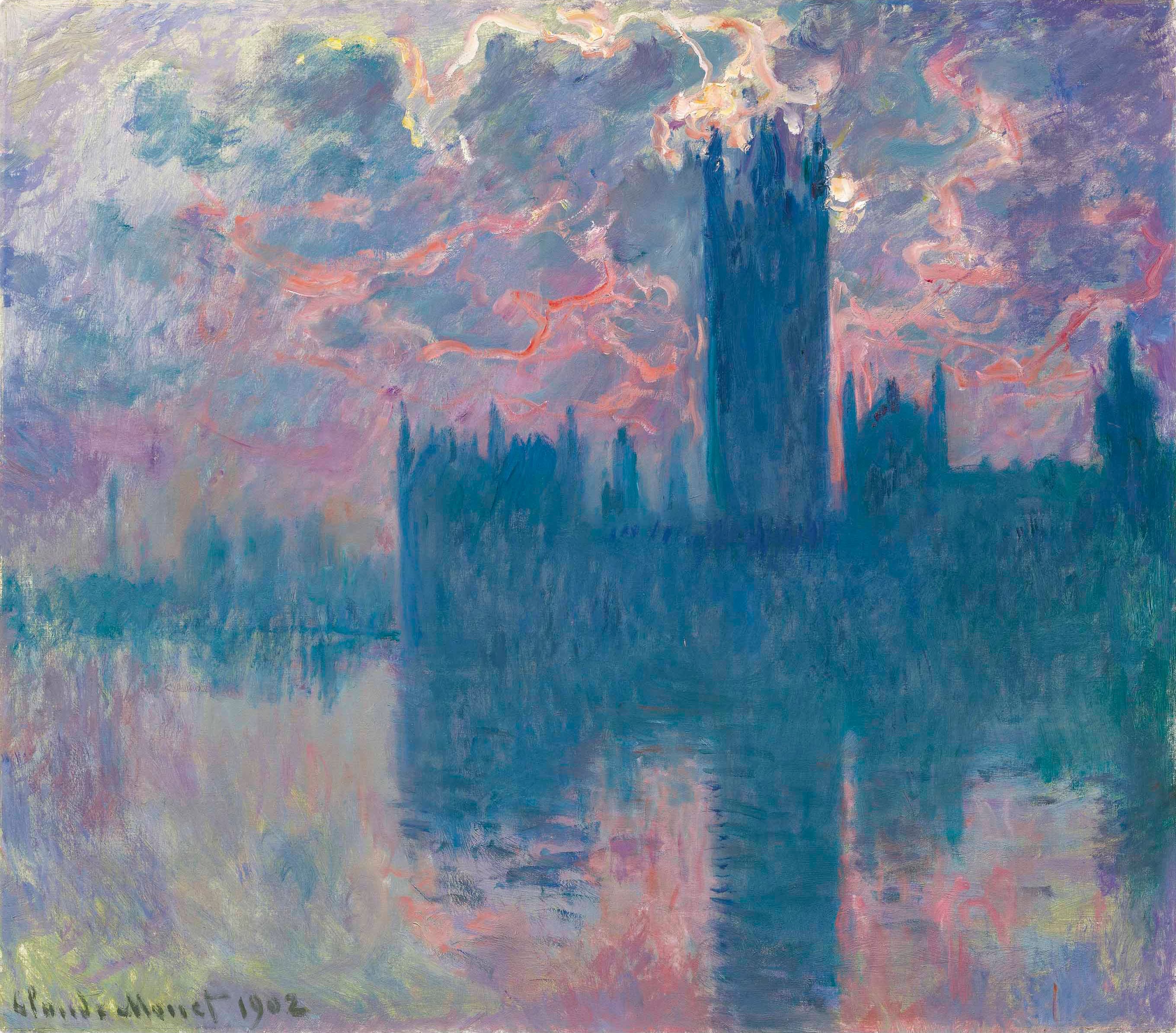
Le Parlement, soleil couchant
Claude Monet · 1902–03
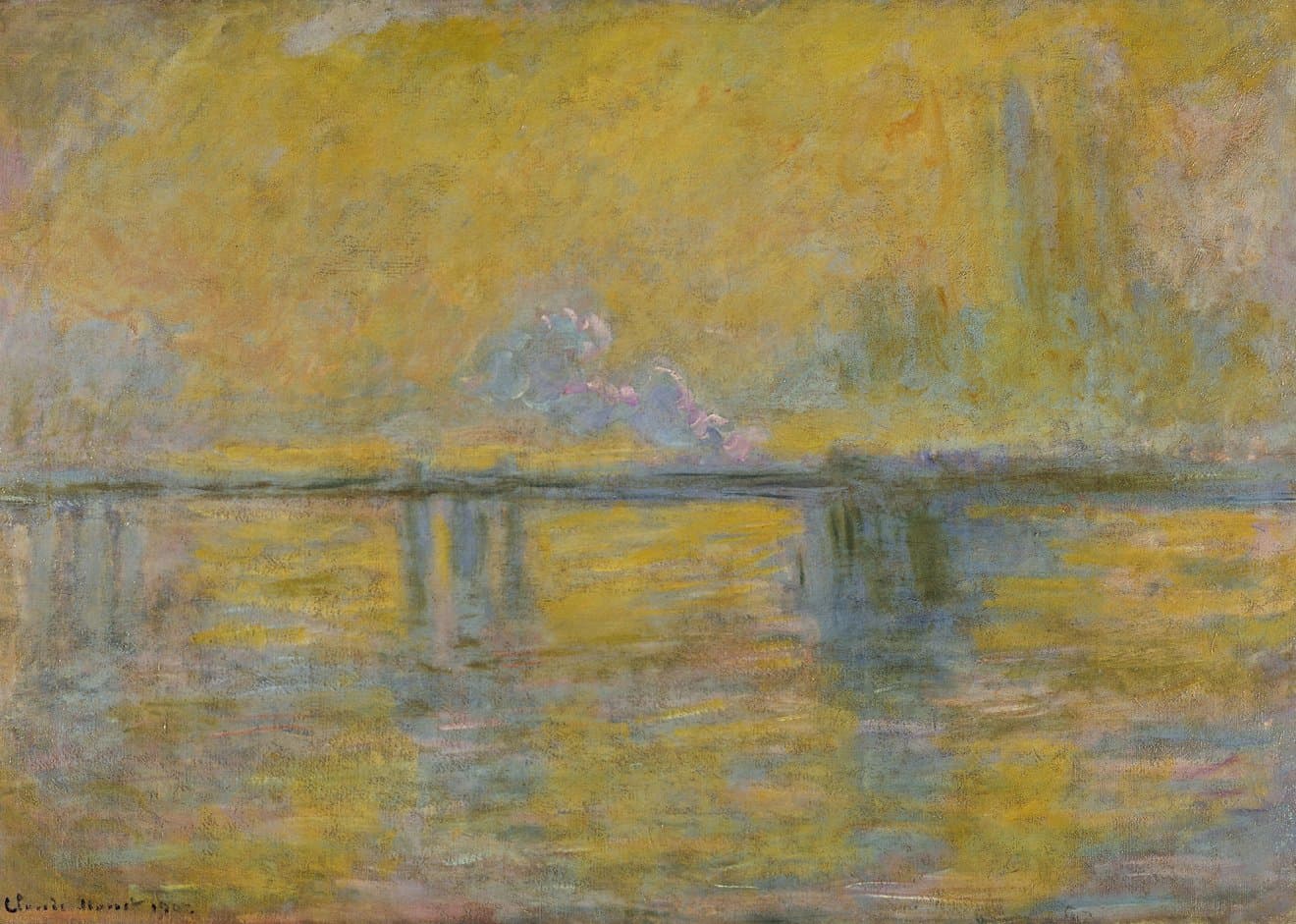
Charing Cross Bridge (Chartwell)
Claude Monet · 1899–1902 (dated 1902)
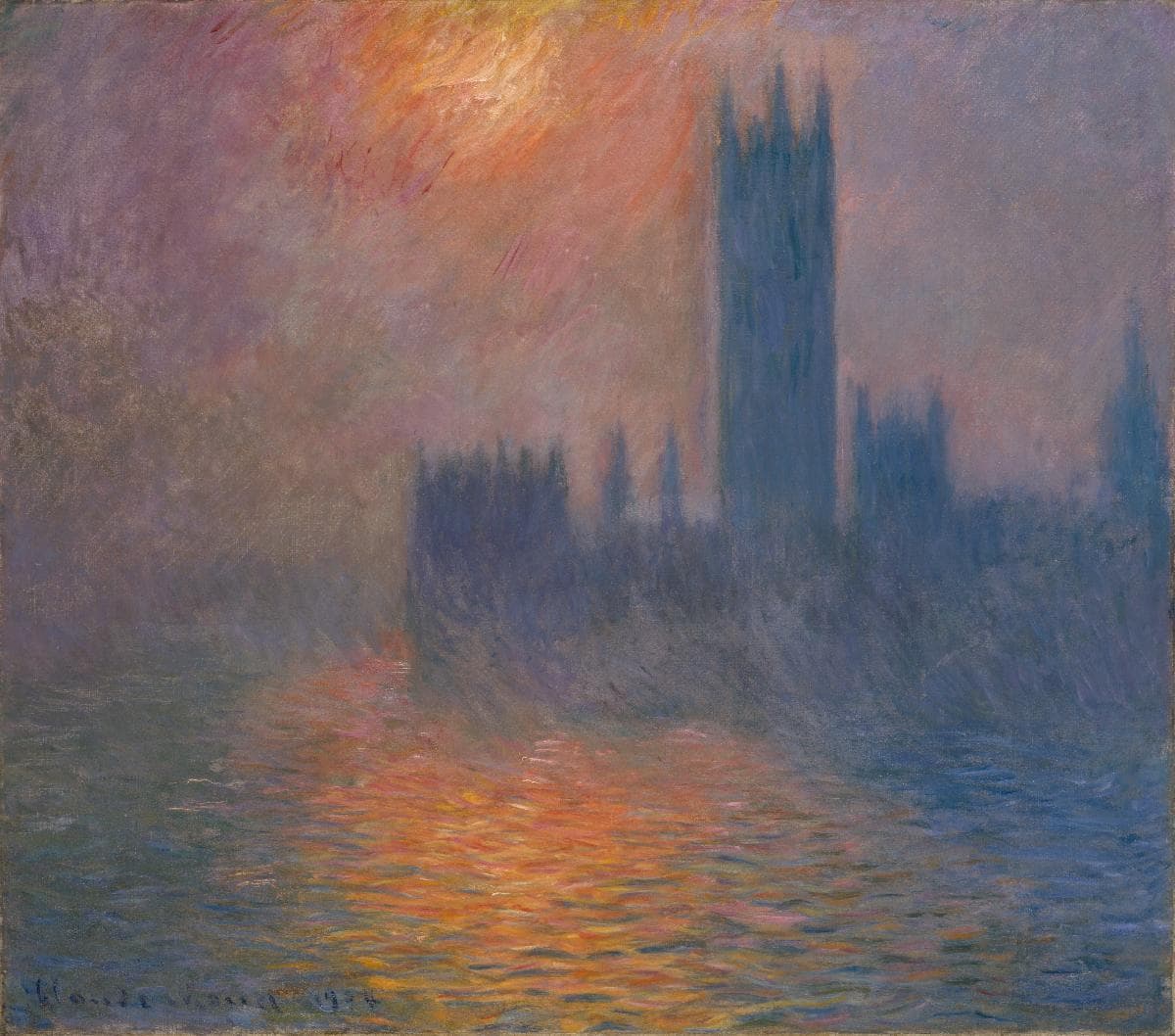
Houses of Parliament, Sunset
Claude Monet · 1904
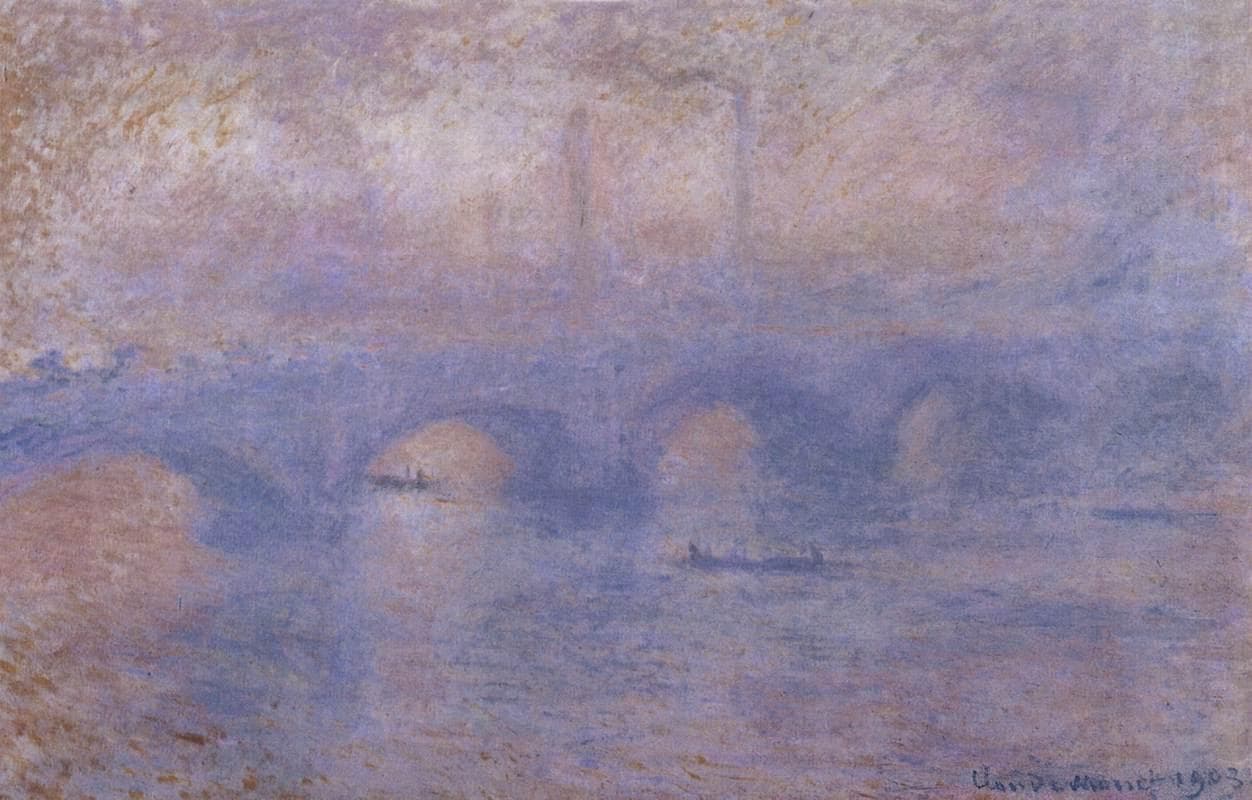
Waterloo Bridge, Effect of Fog
Claude Monet · 1903
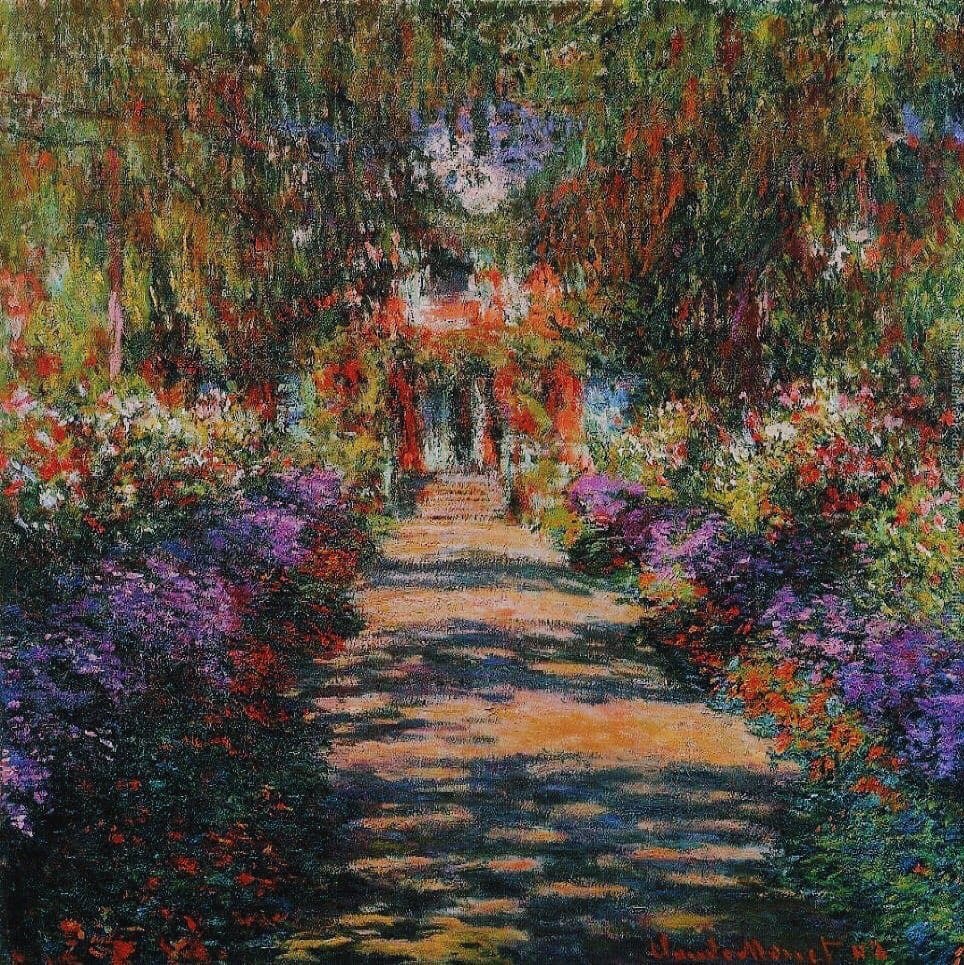
The Garden Path at Giverny
Claude Monet · 1902
Also painted in 1903
The same year
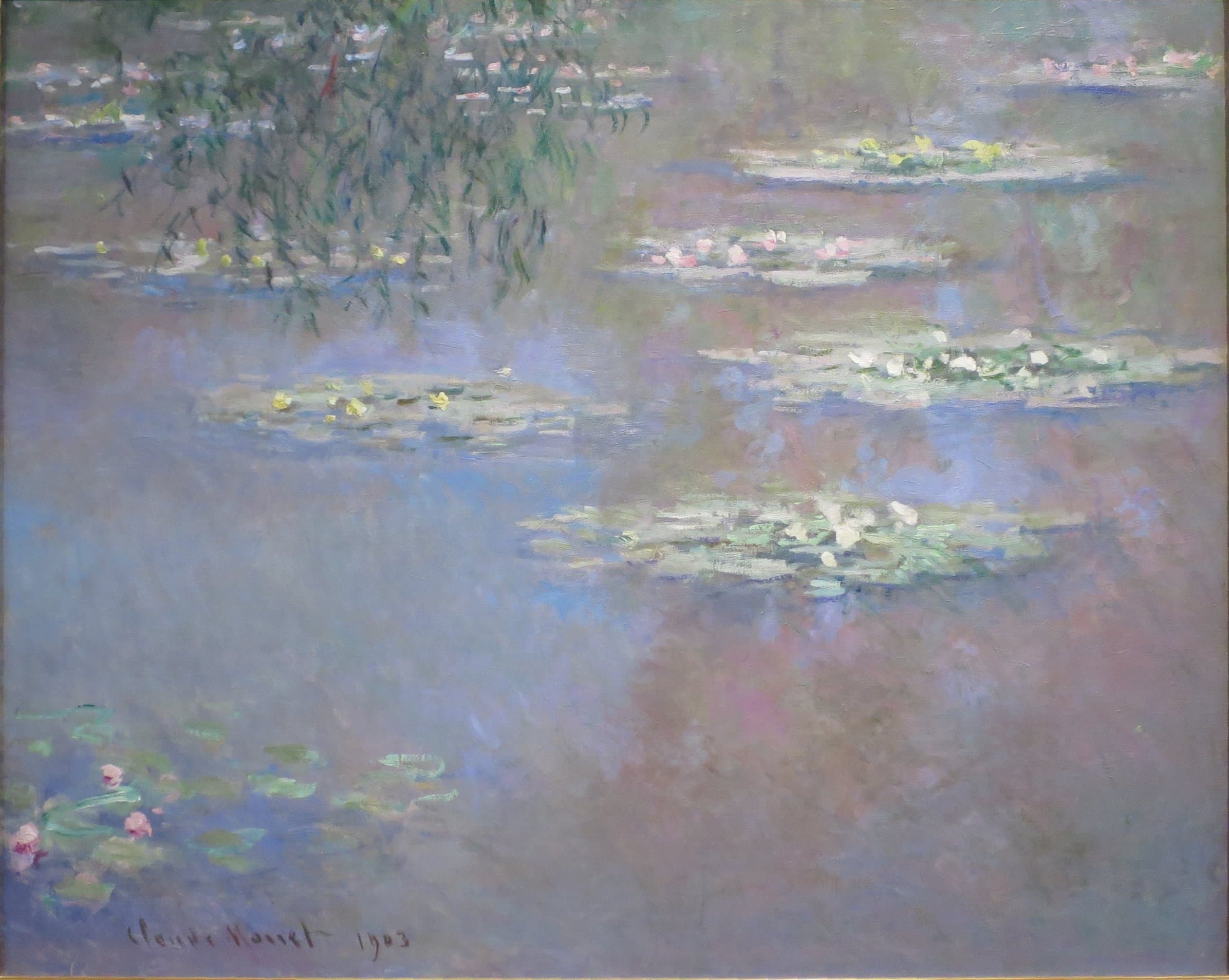
Waterlilies (1903, Dayton Art Institute)
Claude Monet · 1903
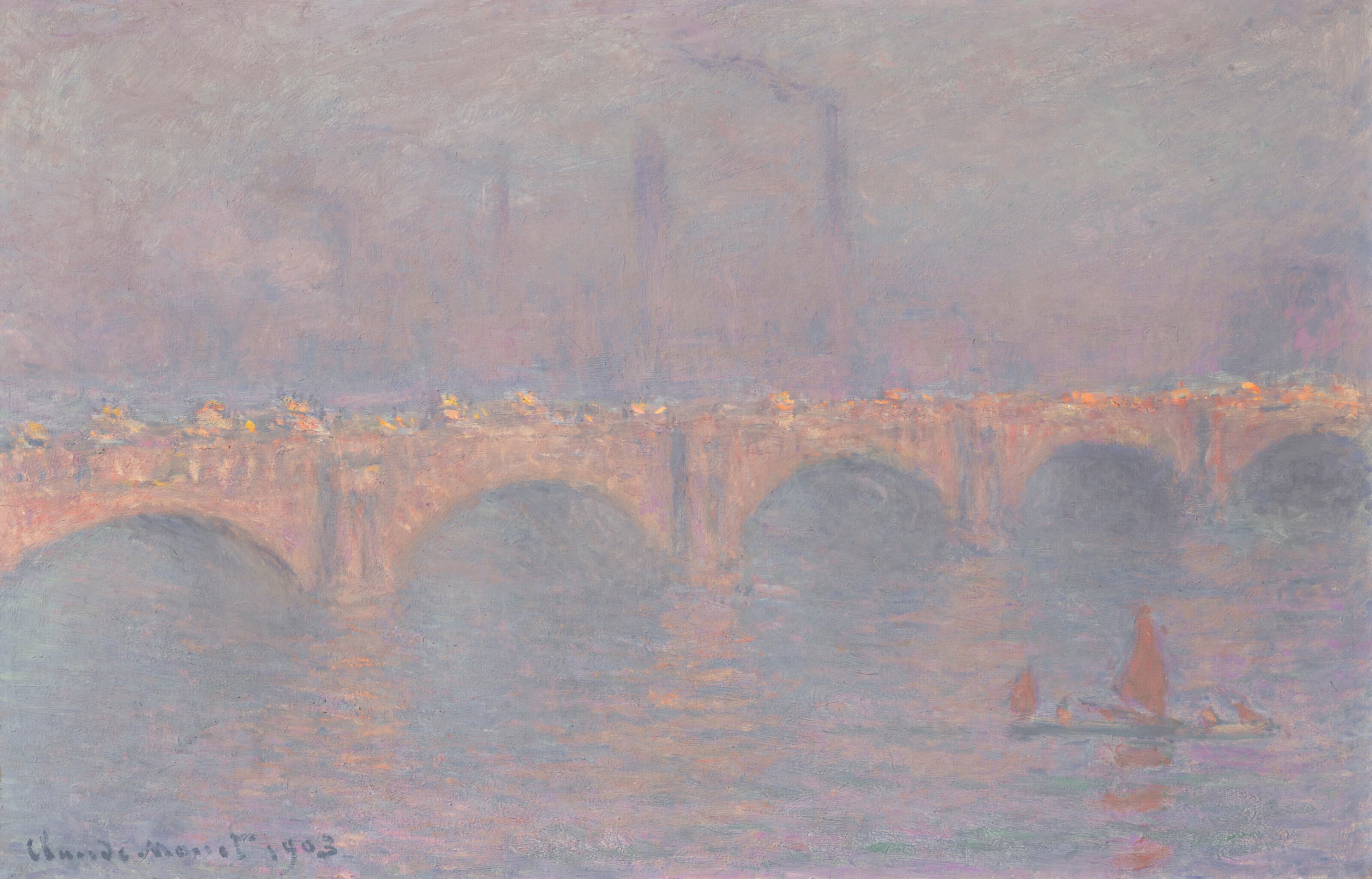
Waterloo Bridge, Hazy Sun
Claude Monet · 1903
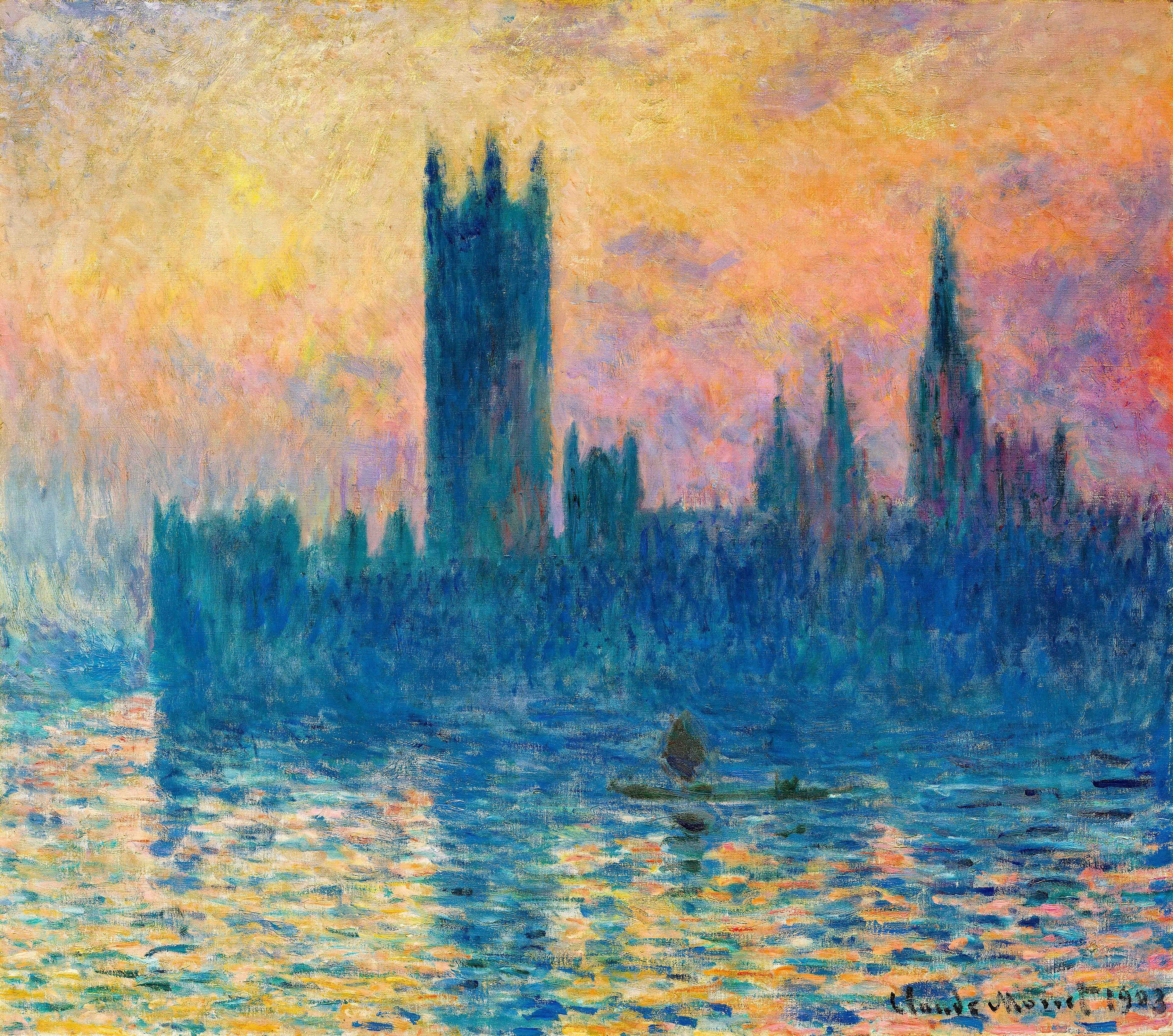
The Houses of Parliament, Sunset
Claude Monet · 1903
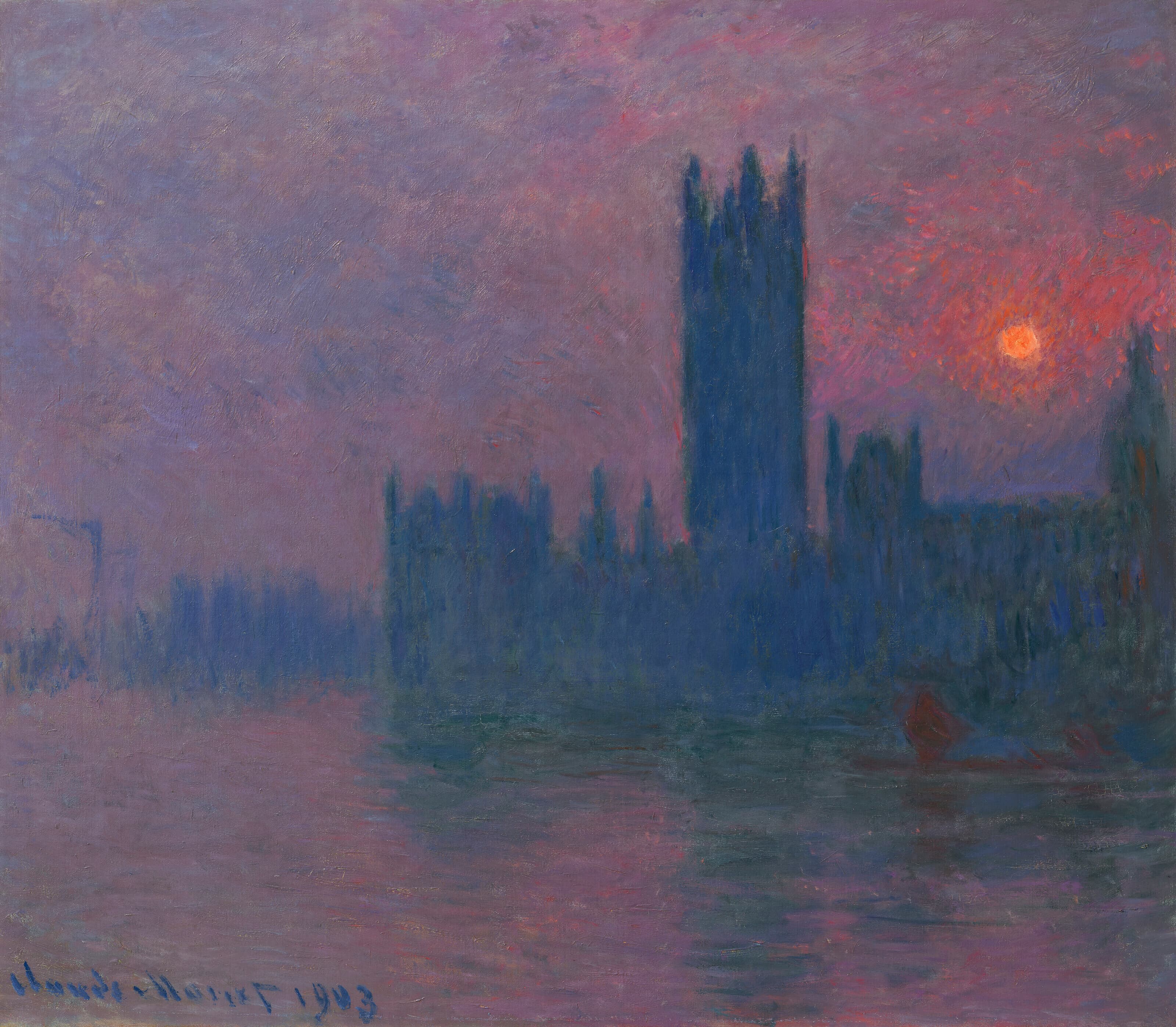
Houses of Parliament, Sunset
Claude Monet · 1903
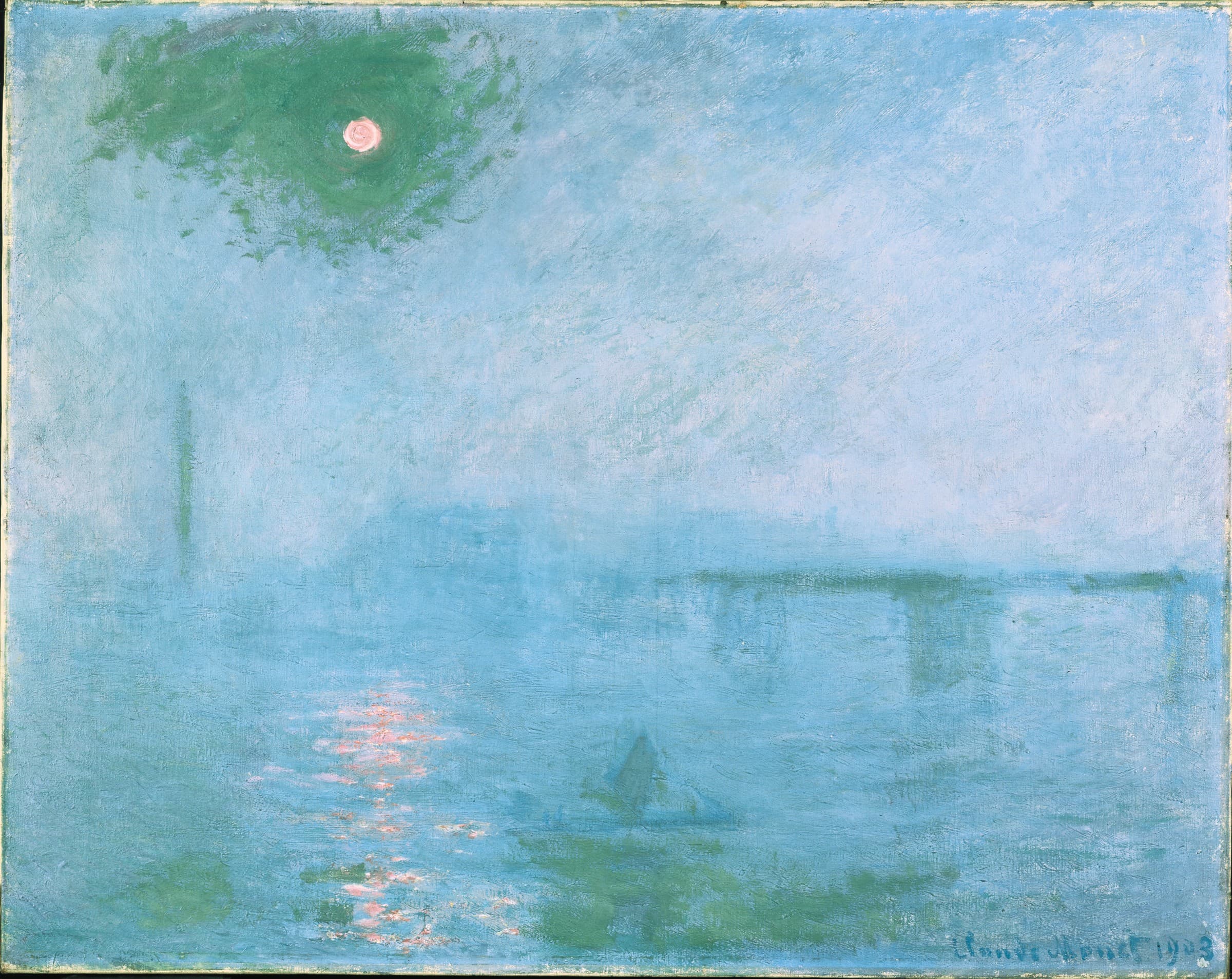
Charing Cross Bridge: Fog on the Thames
Claude Monet · 1903
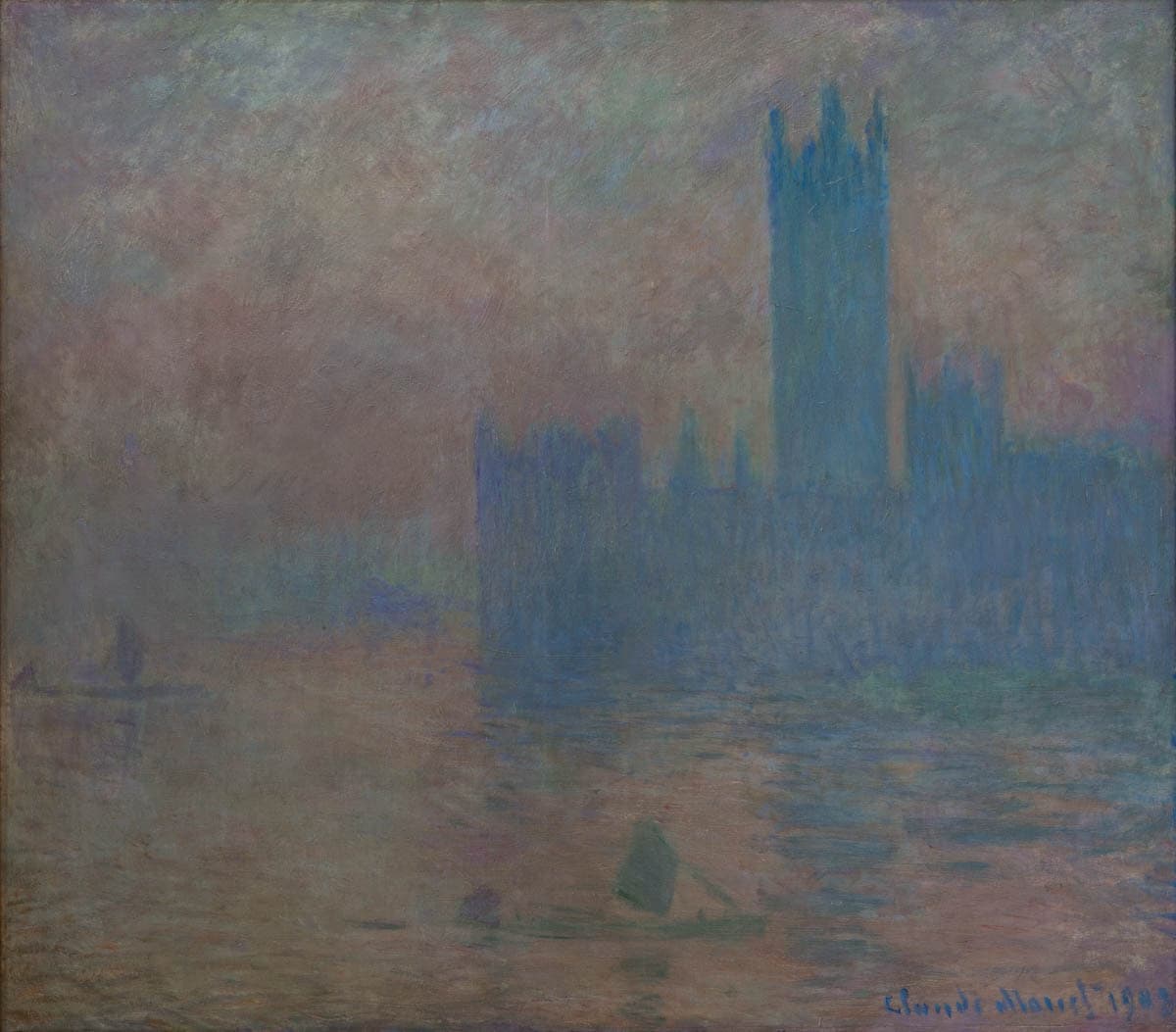
Le Parlement de Londres, effet de brouillard
Claude Monet · 1903
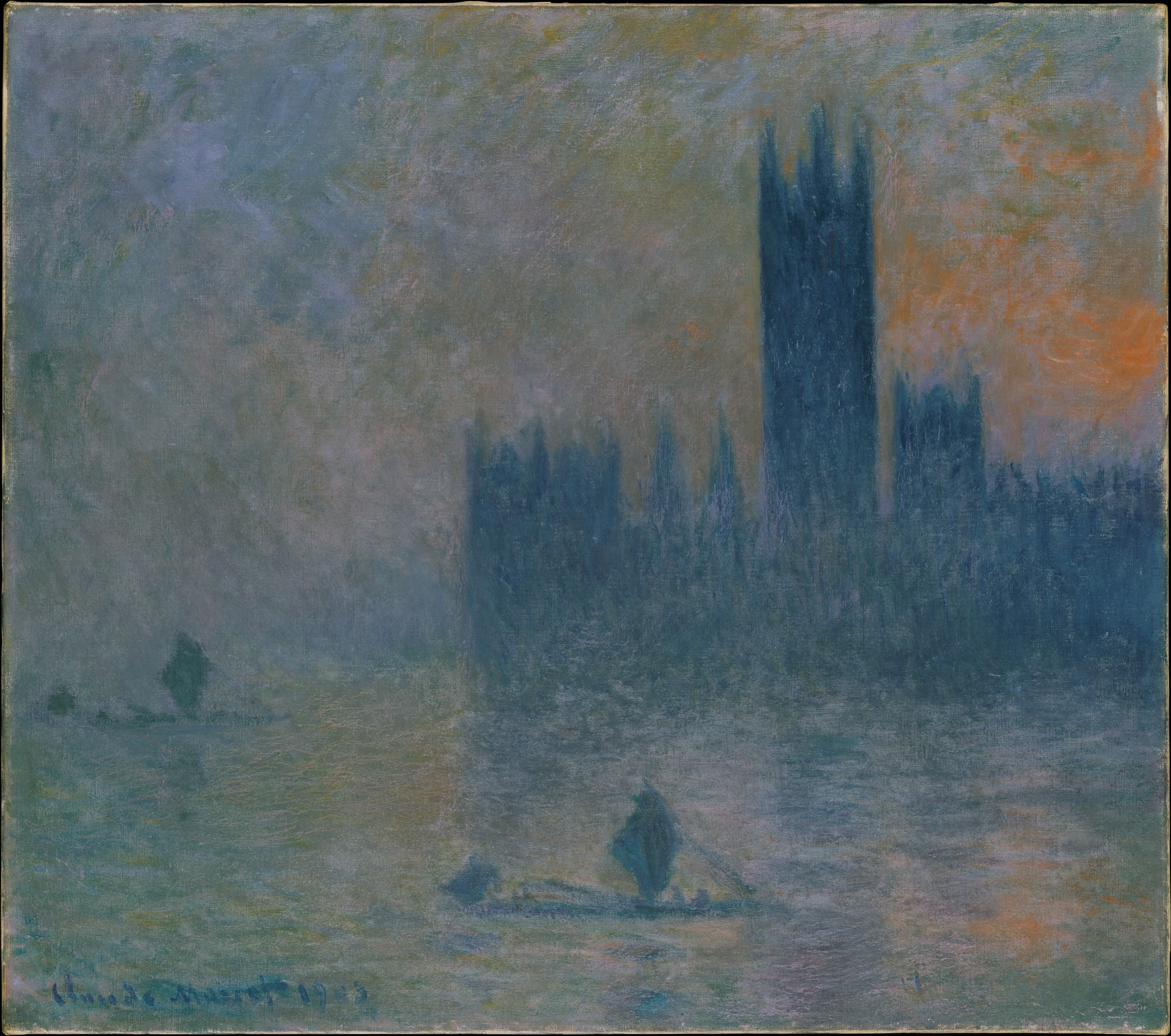
The Houses of Parliament (Effect of Fog)
Claude Monet · 1903–04
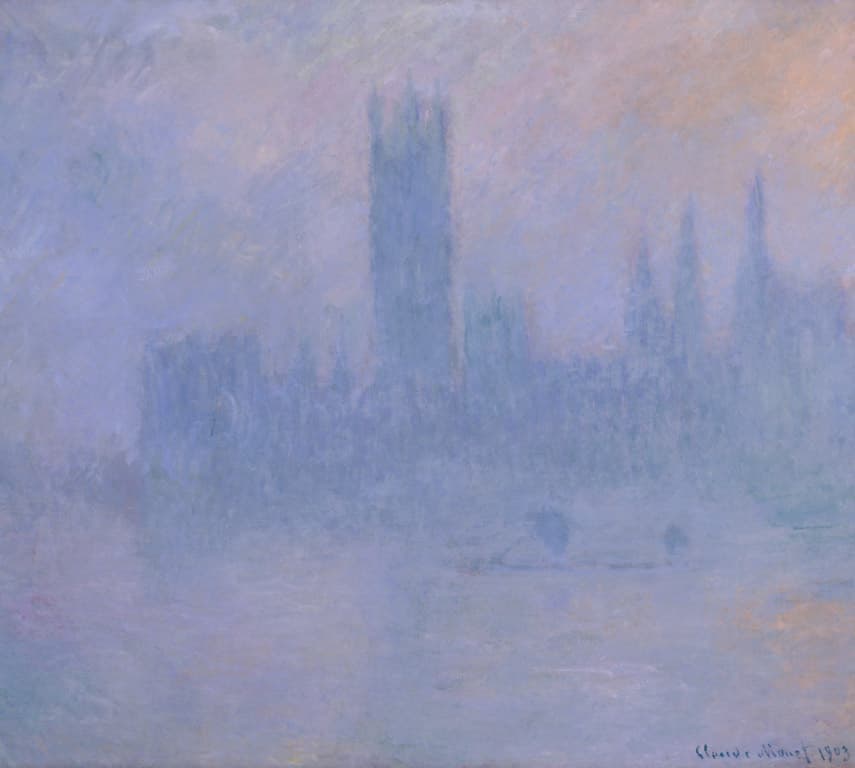
Houses of Parliament, Symphony in Blue
Claude Monet · 1903
Kindred works
You may also study
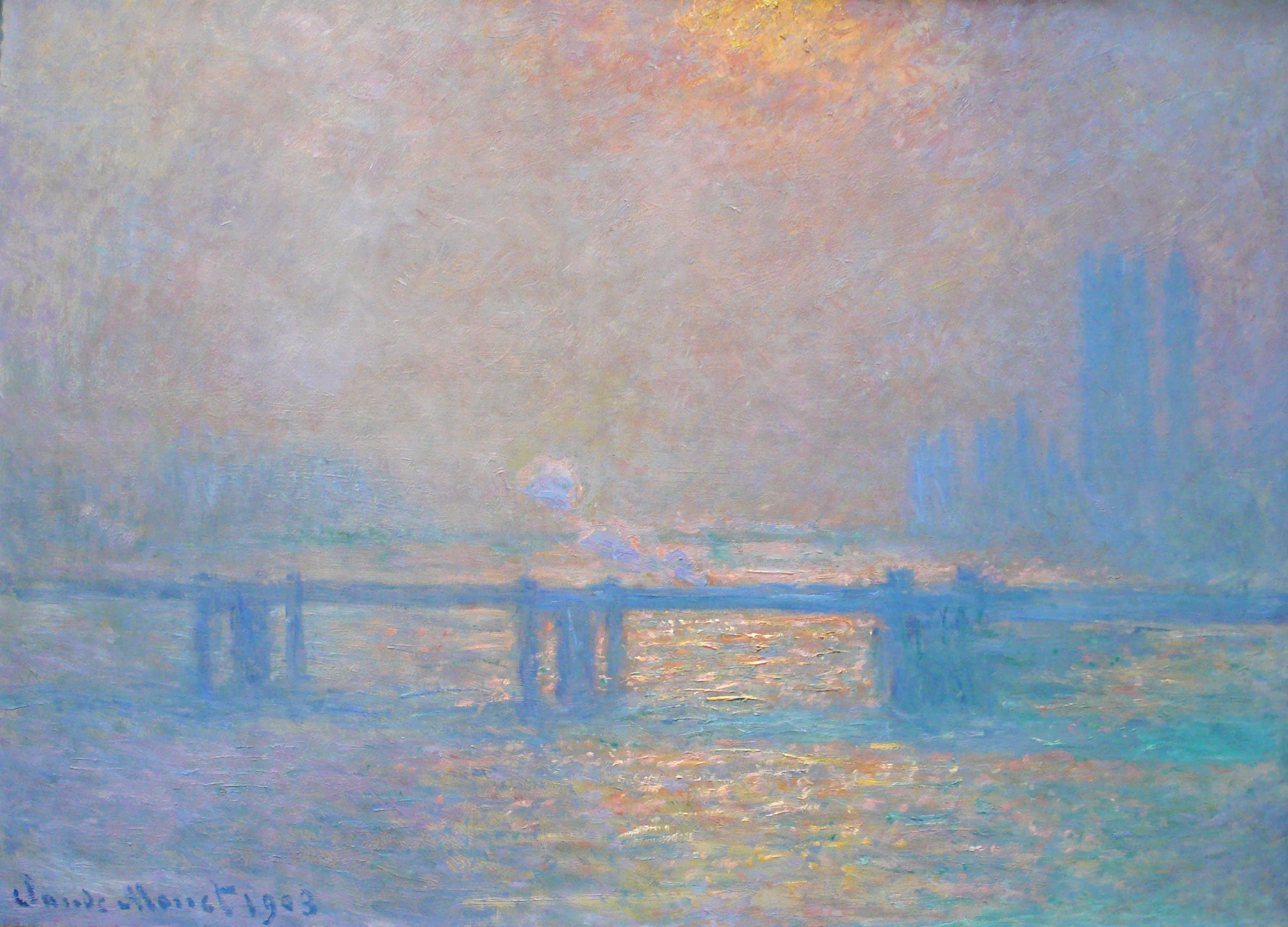
Charing Cross Bridge, The Thames
Claude Monet · 1903
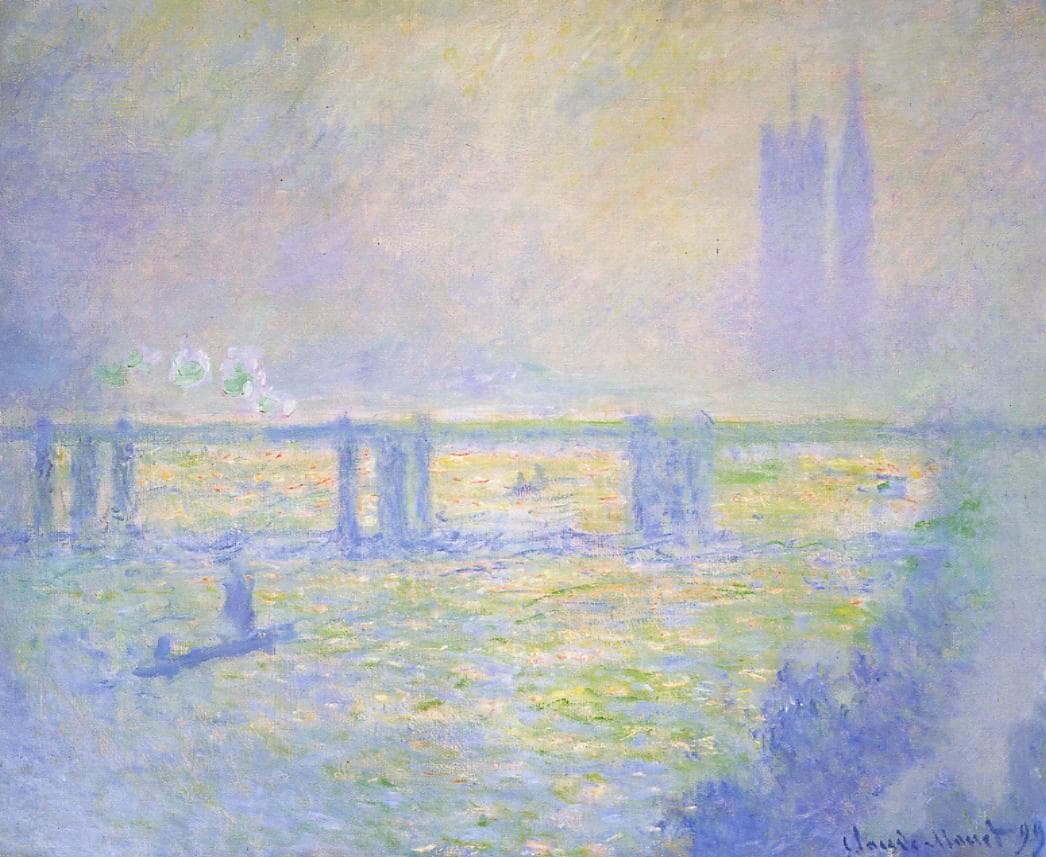
Charing Cross Bridge
Claude Monet · 1899
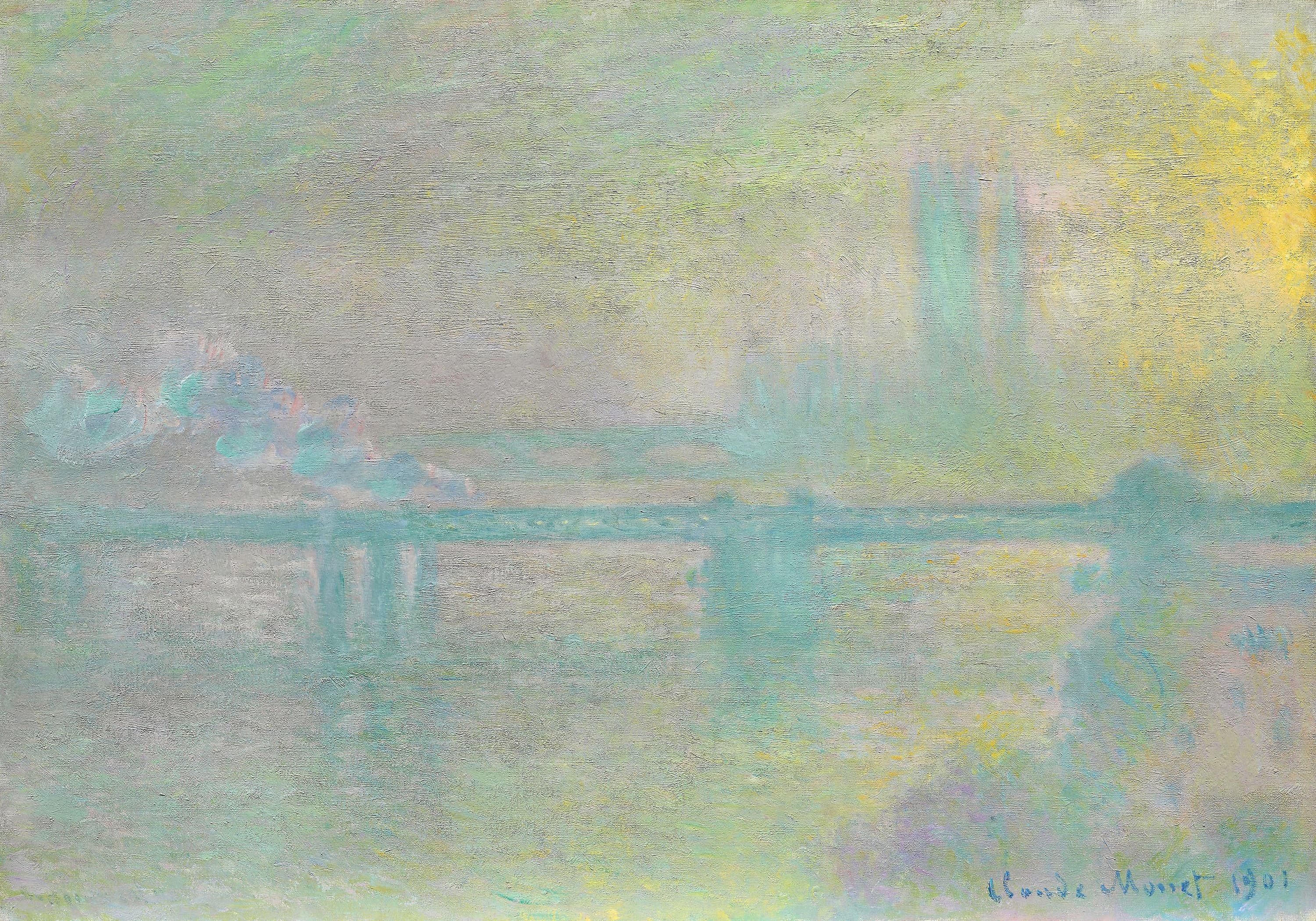
Charing Cross Bridge, London
Claude Monet · 1901
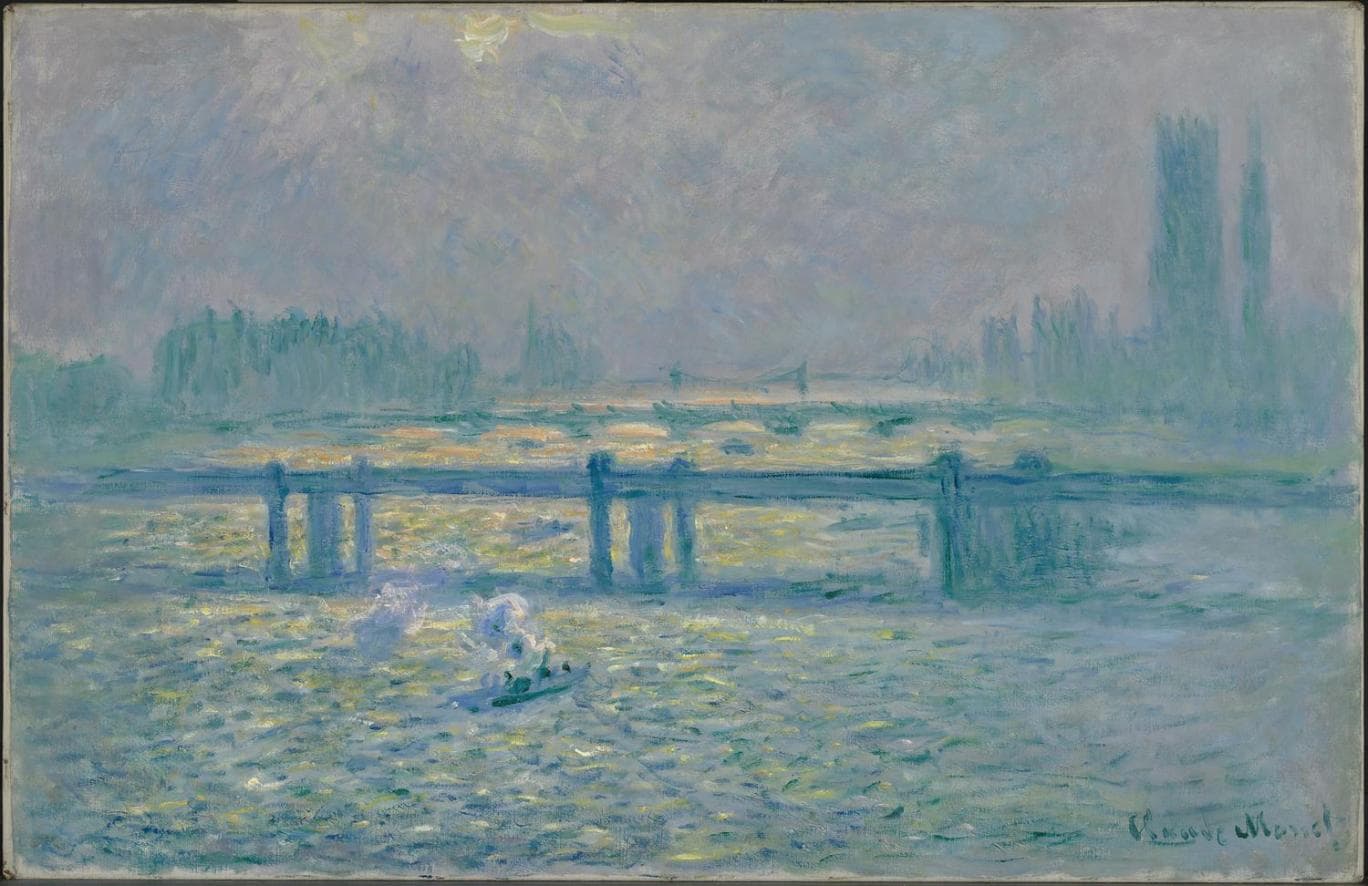
Charing Cross Bridge, Reflections on the Thames
Claude Monet · c. 1900
Houses of Parliament, Symphony in Rose
Claude Monet · 1900
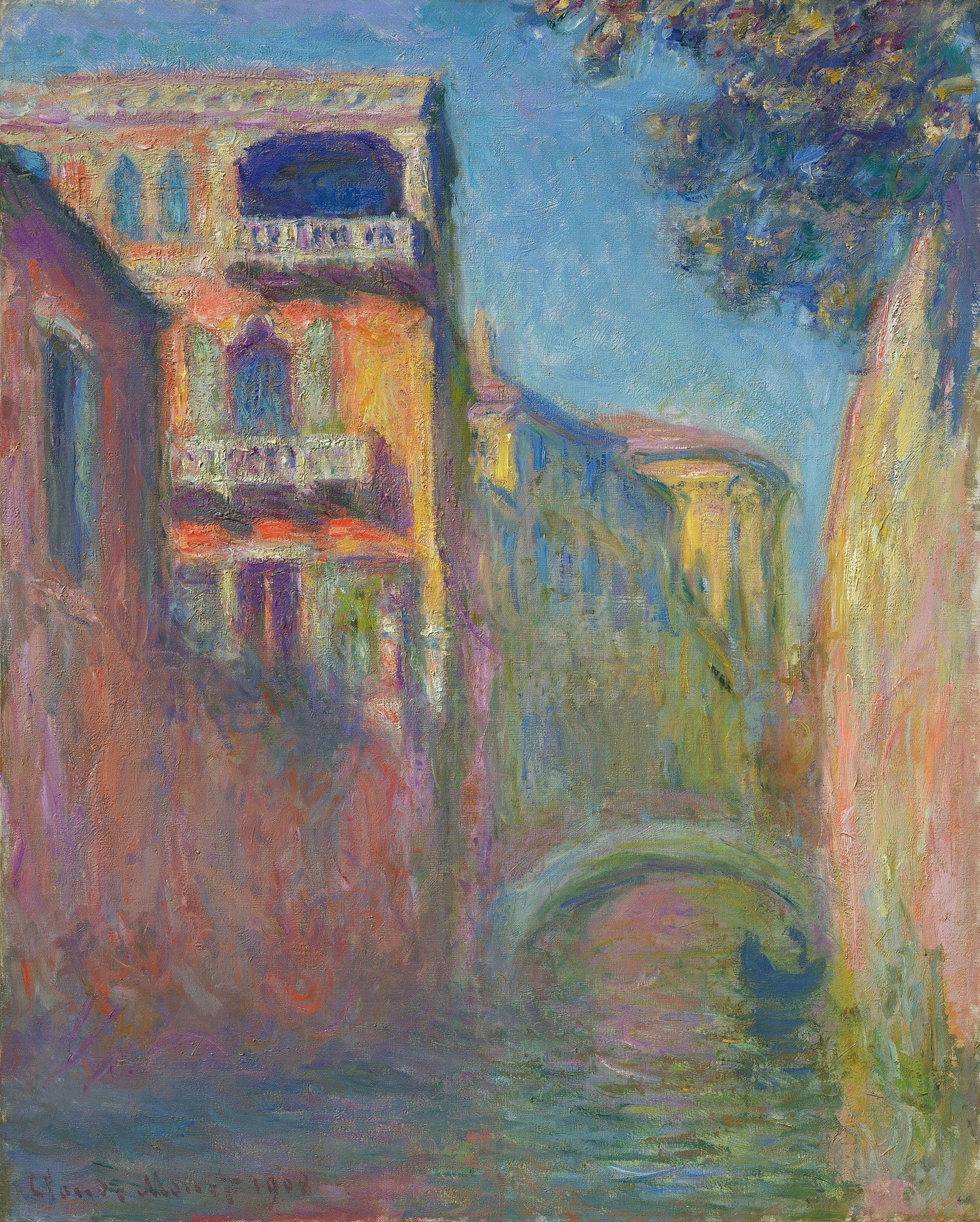
The Rio della Salute
Claude Monet · 1908
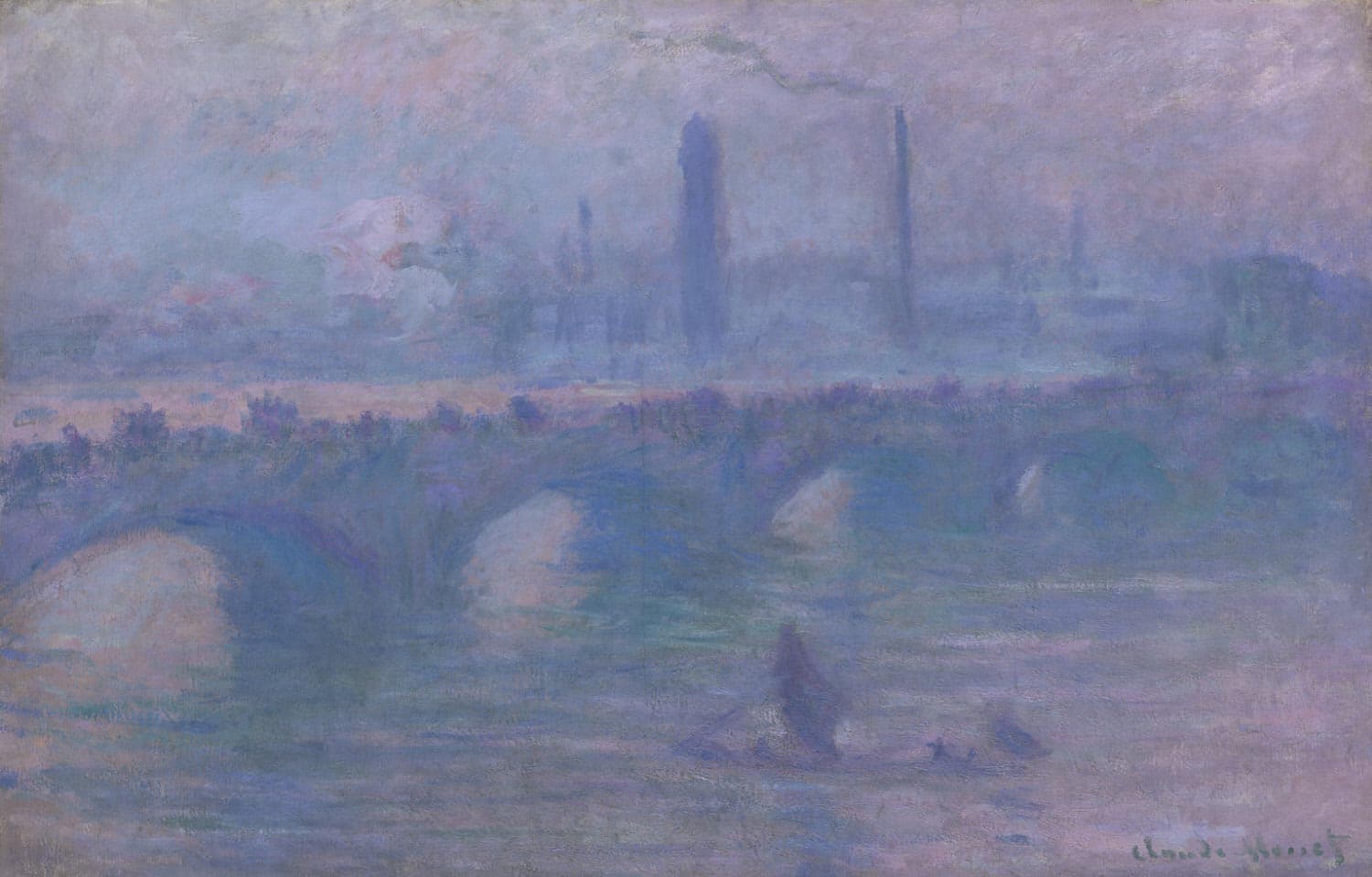
Waterloo Bridge, Morning Fog
Claude Monet · 1901
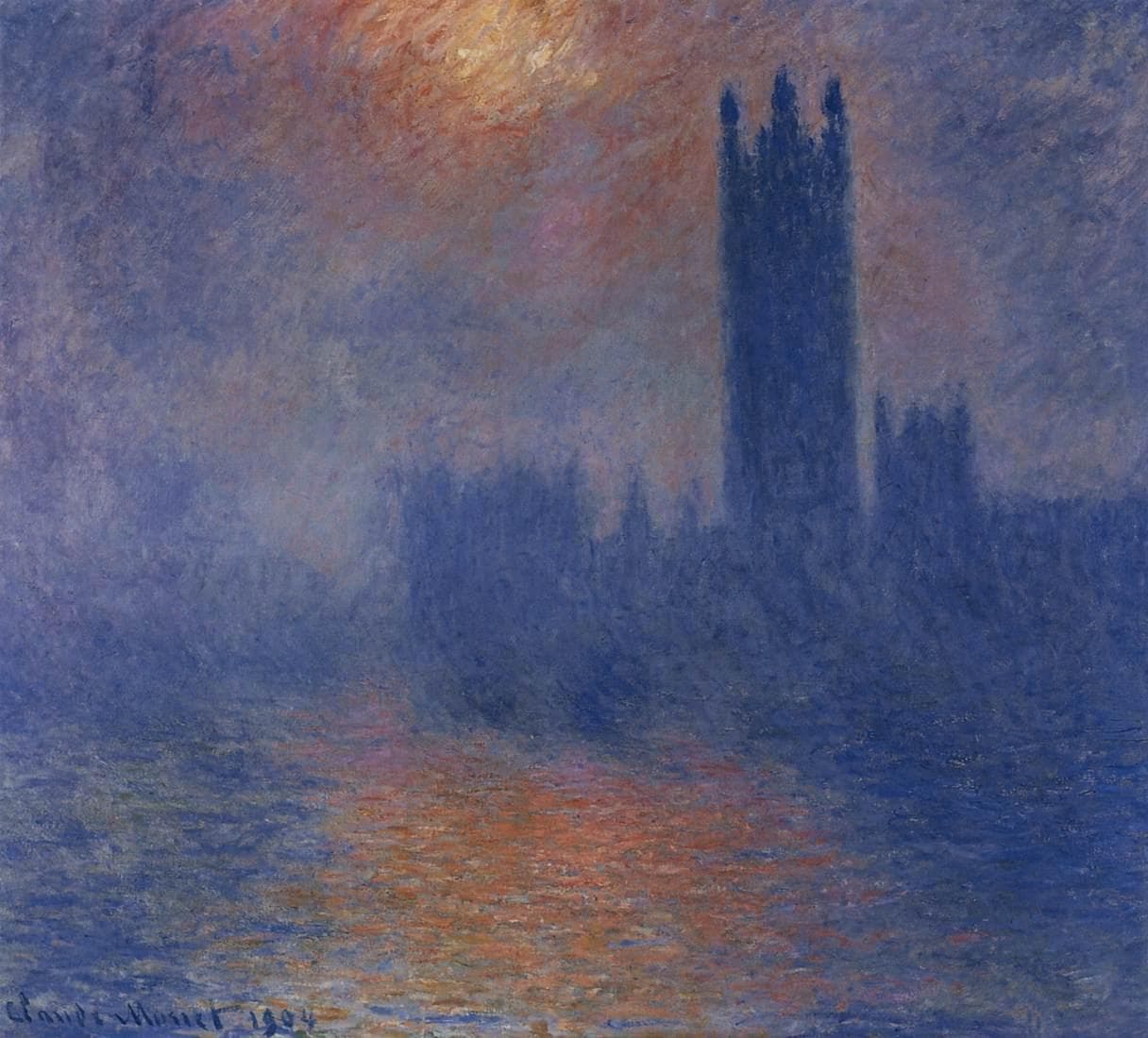
The Houses of Parliament in London
Claude Monet · 1904