Image: Princeton University Art Museum · Public domain · via Wikimedia Commons
Water Lilies and Japanese Bridge
Claude Monet, 1899
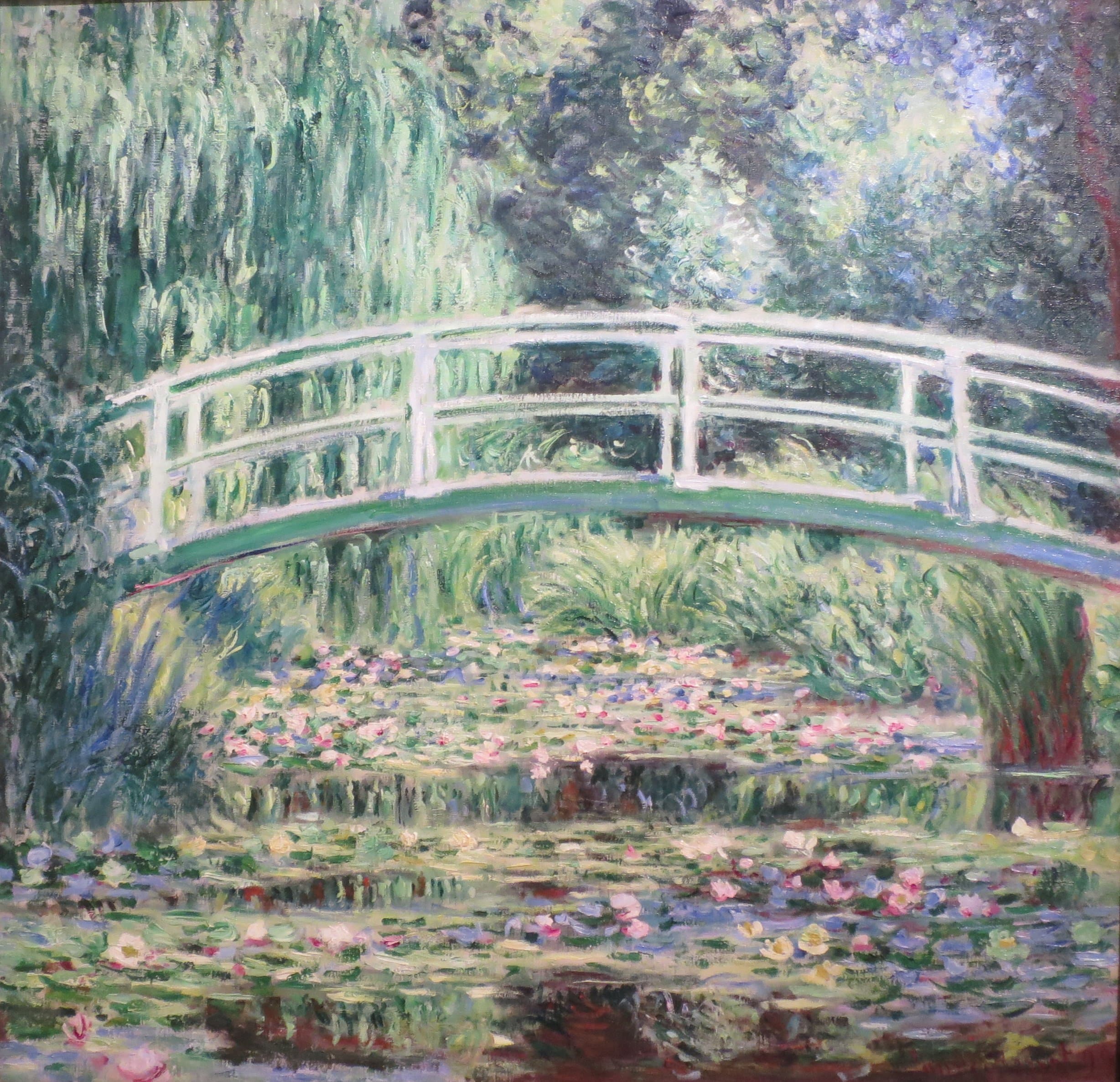
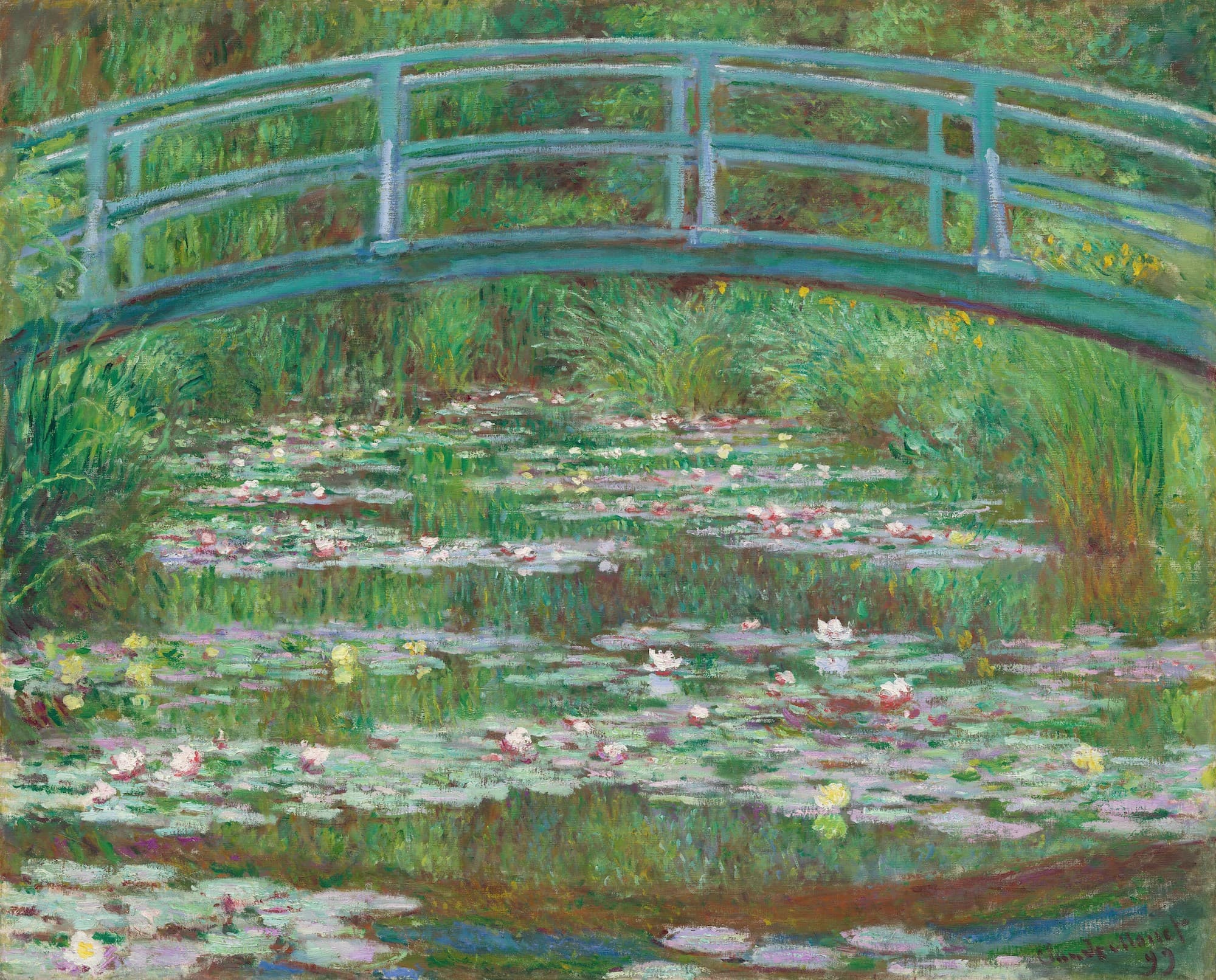
Water Lilies and Japanese Bridge is an 1899 Claude Monet painting of the footbridge over his Giverny lily pond, a blue-green arch above a pond of pink and white blooms. It is in the Princeton University Art Museum, a gift from the family of William Church Osborn.
- Artist
- Claude Monet
- Date
- 1899
- Medium
- Oil on canvas
- Dimensions
- 90.5 × 89.7 cm
- Collection
- Princeton University Art Museum, Princeton, New Jersey, United States
- Movement
- Impressionism
- Catalogue
- Wildenstein 1509
- Nature & Landscape
- Water & Sea
Water Lilies and Japanese Bridge is one of the paintings Claude Monet made in the summer of 1899 of the wooden footbridge over the water-lily pond in his garden at Giverny. Signed and dated Claude Monet 99 in red at the lower right, it measures 90.5 by 89.7 centimeters. It is in the Princeton University Art Museum in New Jersey, given by the family of William Church Osborn, a Princeton trustee and president of the Metropolitan Museum of Art.
What you're looking at
The bridge crosses the canvas in a shallow arch about a third of the way down, cut off by the frame at the right but ending inside the picture at the left, where its first post stands on the bank. Its railings are painted in pale gray-green and white on the side facing us, and in a stronger, cooler blue along the underside of the arch and toward the right, where it passes into shadow. Every post and rail is legible.
Behind and above it, there is no sky: a weeping willow pours down at the upper left in long strokes of yellow-green and blue, and the right side is a wall of darker, rounder foliage in deep green, blue and turquoise. Beneath the arch, the far bank shows as a band of reeds and grasses. The lower two-thirds of the canvas belong to the pond. Its surface is covered with horizontal bands of lily pads in blue, lavender and green, alternating with darker strips of open water that reflect the trees. Small flowers, pink, white and pale mauve, float among the pads, more densely in the middle distance, more sparsely in the foreground. A darker red-brown edge along the bottom suggests the near bank.
The square format and the near-symmetry make the picture calm and decorative. The arch reads as a pattern across the surface as much as a structure in space.
Giverny, summer 1899
Monet had moved to Giverny in 1883. Ten years later he bought a marshy plot across the road and railway from his house, diverted a branch of the Epte to make a pond, and planted it with water lilies, bamboo and other plants, adding the footbridge by about 1895. In 1899 he set up his easel on the bank at the end of the pond and painted the bridge about a dozen times from virtually the same spot. Princeton's catalogue notes that he worked on several canvases in a single session and reworked them later.
How it was painted
The handling is denser and more textured than in Monet's earlier Impressionist work. The willow and foliage are built up in thick, short strokes, almost crusty; the pond in long horizontal touches laid side by side, with flowers dabbed on top. The color is concentrated in the blue-green range, with pink and white for accent. Princeton's version is bluer, especially in the bridge and the water, than several of its siblings.
How this version differs
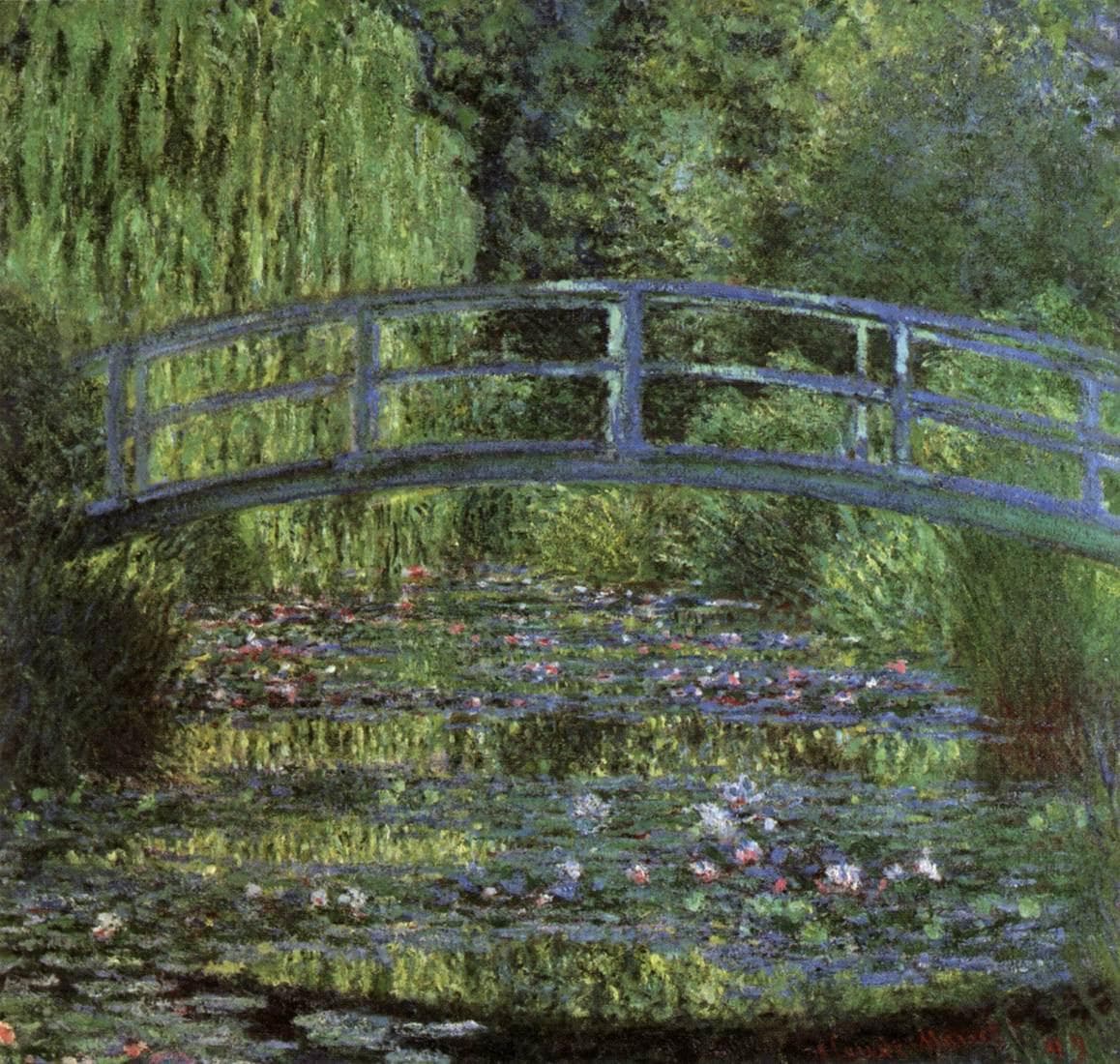
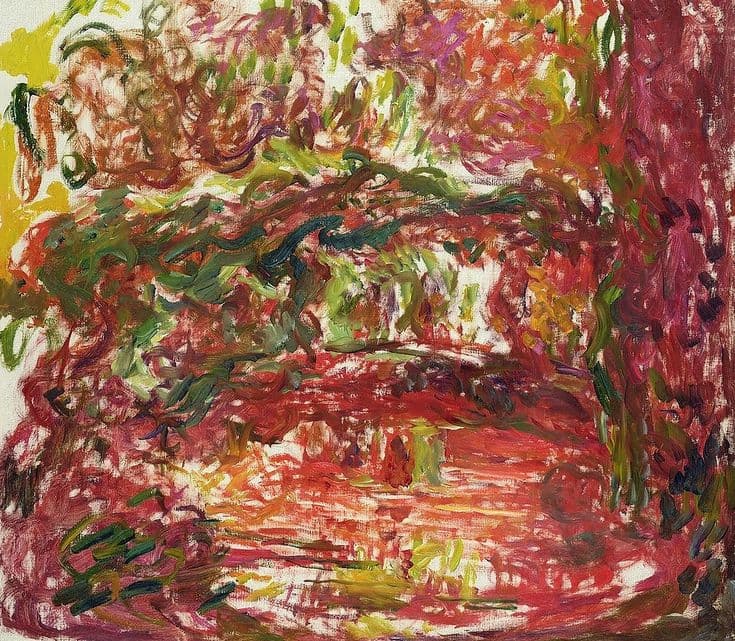
The 1899 bridges share a composition, so the differences are in color and finish. Bridge over a Pond of Water Lilies at the Metropolitan Museum is lighter, with stronger whites. The Japanese Footbridge in Washington is cooler and greener. The National Gallery in London owns a very close version, The Water-Lily Pond. Princeton's canvas is distinguished by its blue bridge, deep blue-violet lily pads and the visible left end of the arch. Twenty years later Monet would return to the motif in a far freer style, as in the red Japanese Bridge at the Marmottan. See the whole story in the Japanese Footbridge series and the garden in Monet's Giverny.
Where to see it
The painting belongs to the Princeton University Art Museum, on the university campus in Princeton, New Jersey, where it has been displayed in the European art galleries. Check the museum's website for current displays. For other collections of Monet's work, see where to see Monet's paintings.
Questions & answers
Where is Monet's Water Lilies and Japanese Bridge?
It is in the Princeton University Art Museum in Princeton, New Jersey (y1972-15). It came from the collection of William Church Osborn, Princeton trustee and president of the Metropolitan Museum of Art, and was given by his family.
When was it painted?
In 1899, at Giverny. It is signed and dated 'Claude Monet 99' in red at lower right. It is one of about a dozen canvases Monet painted of the footbridge from the same spot that summer.
What does it show?
It shows the arched wooden footbridge in blue-green crossing Monet's lily pond, with a weeping willow at upper left, dense foliage behind, and the pond below covered with lily pads and pink and white flowers.
How many versions of the Japanese bridge did Monet paint in 1899?
About a dozen from the same viewpoint, now in museums including the Metropolitan Museum, the National Gallery of Art in Washington, the National Gallery in London, the Musée d'Orsay and Princeton. He painted further versions in 1900.
More by the artist
Claude Monet
Waterloo Bridge (Matsushita Museum of Art)
Claude Monet · 1899–1901
White Water Lilies
Claude Monet · 1899
Charing Cross Bridge
Claude Monet · 1899
Charing Cross Bridge (Overcast Day)
Claude Monet · 1900
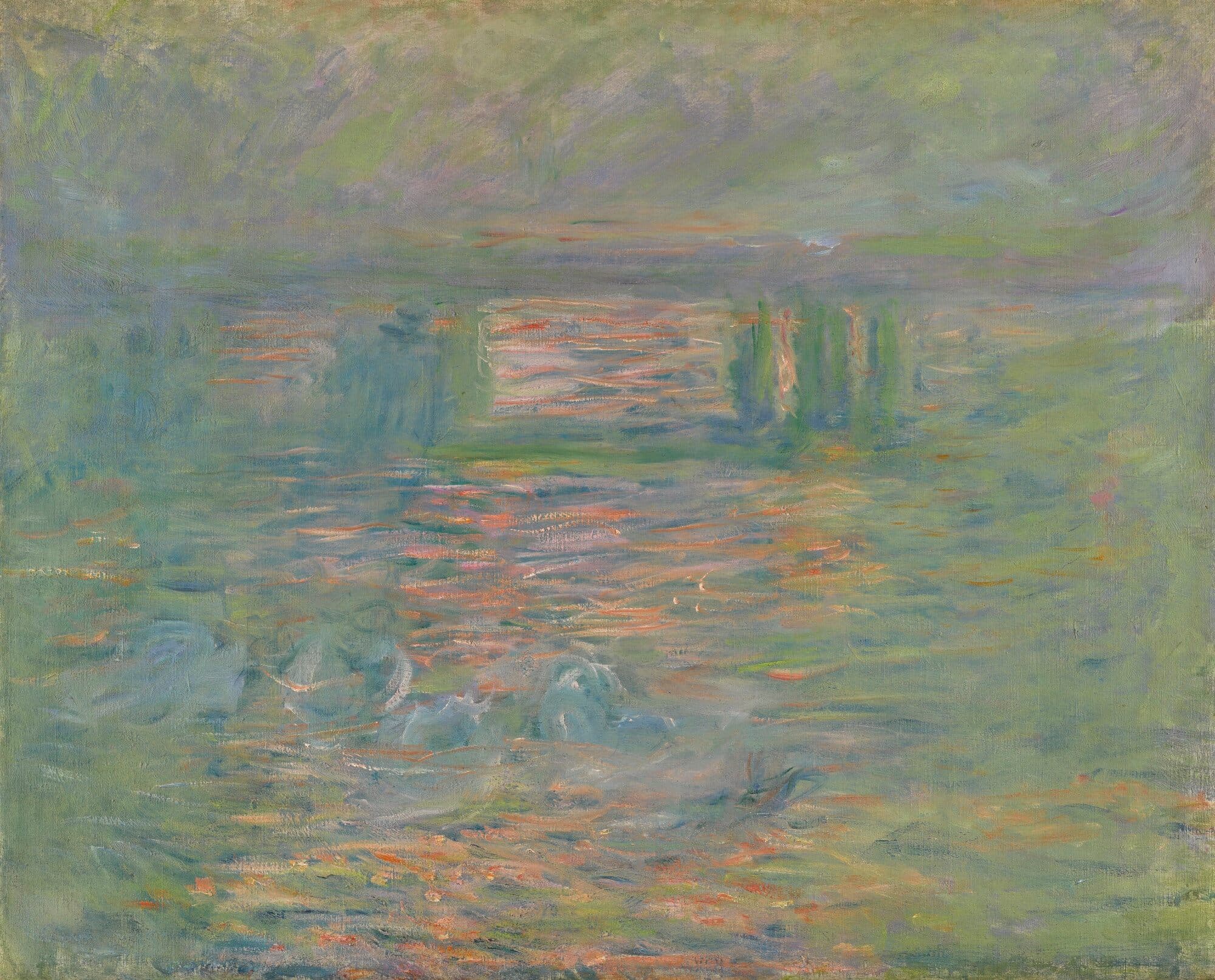
Charing Cross Bridge (private collection, c. 1900)
Claude Monet · c. 1899–1901
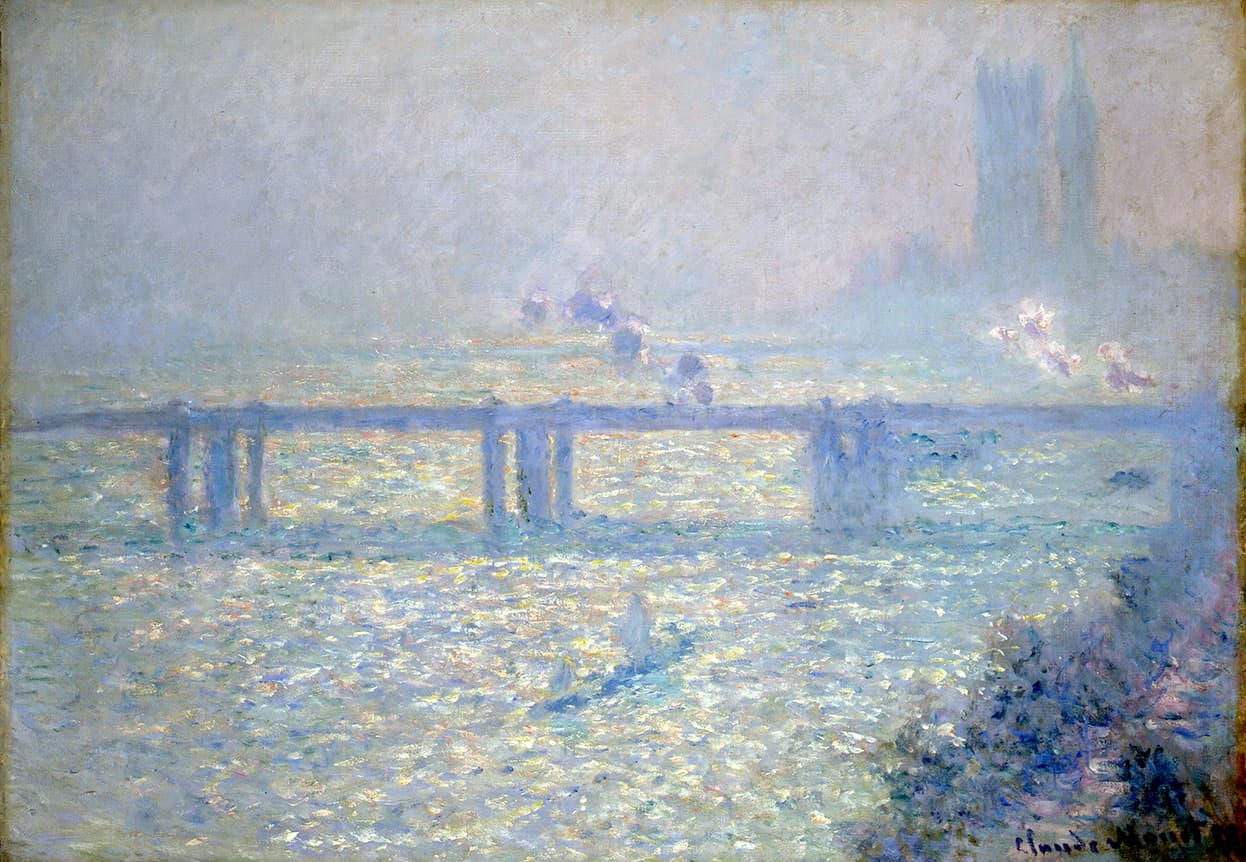
Charing Cross Bridge (Shelburne Museum)
Claude Monet · 1899
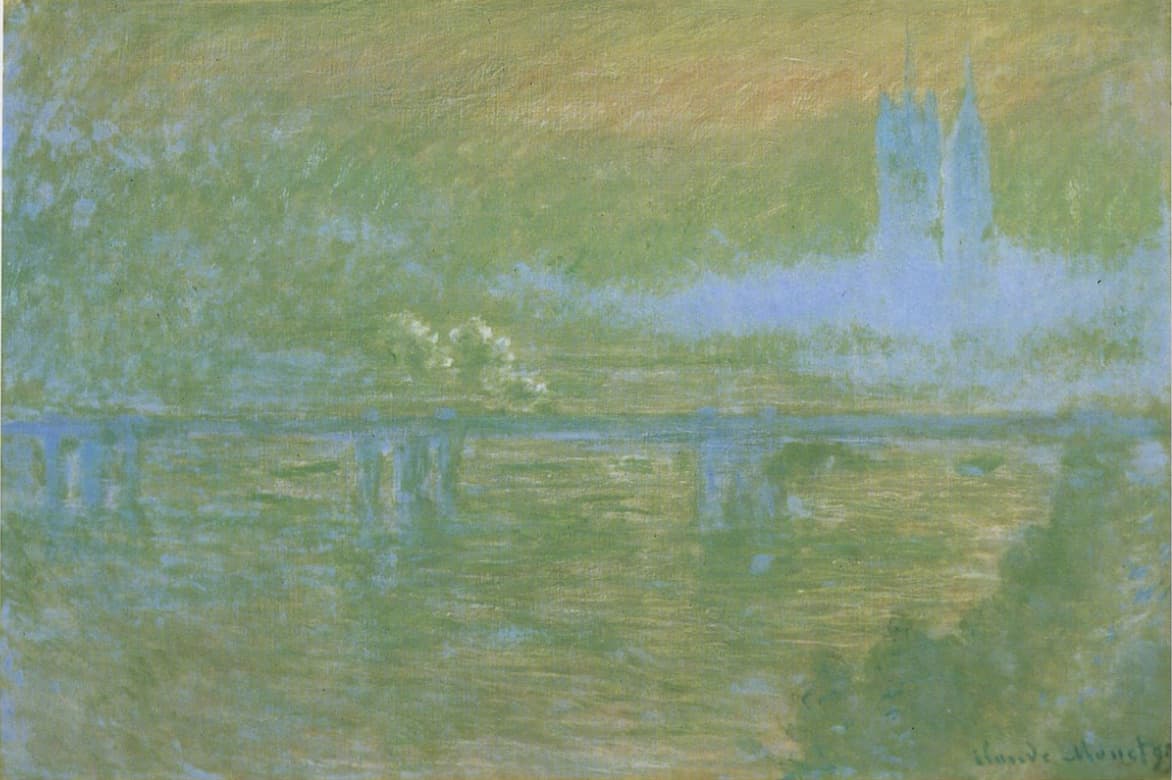
Charing Cross Bridge
Claude Monet · c. 1899
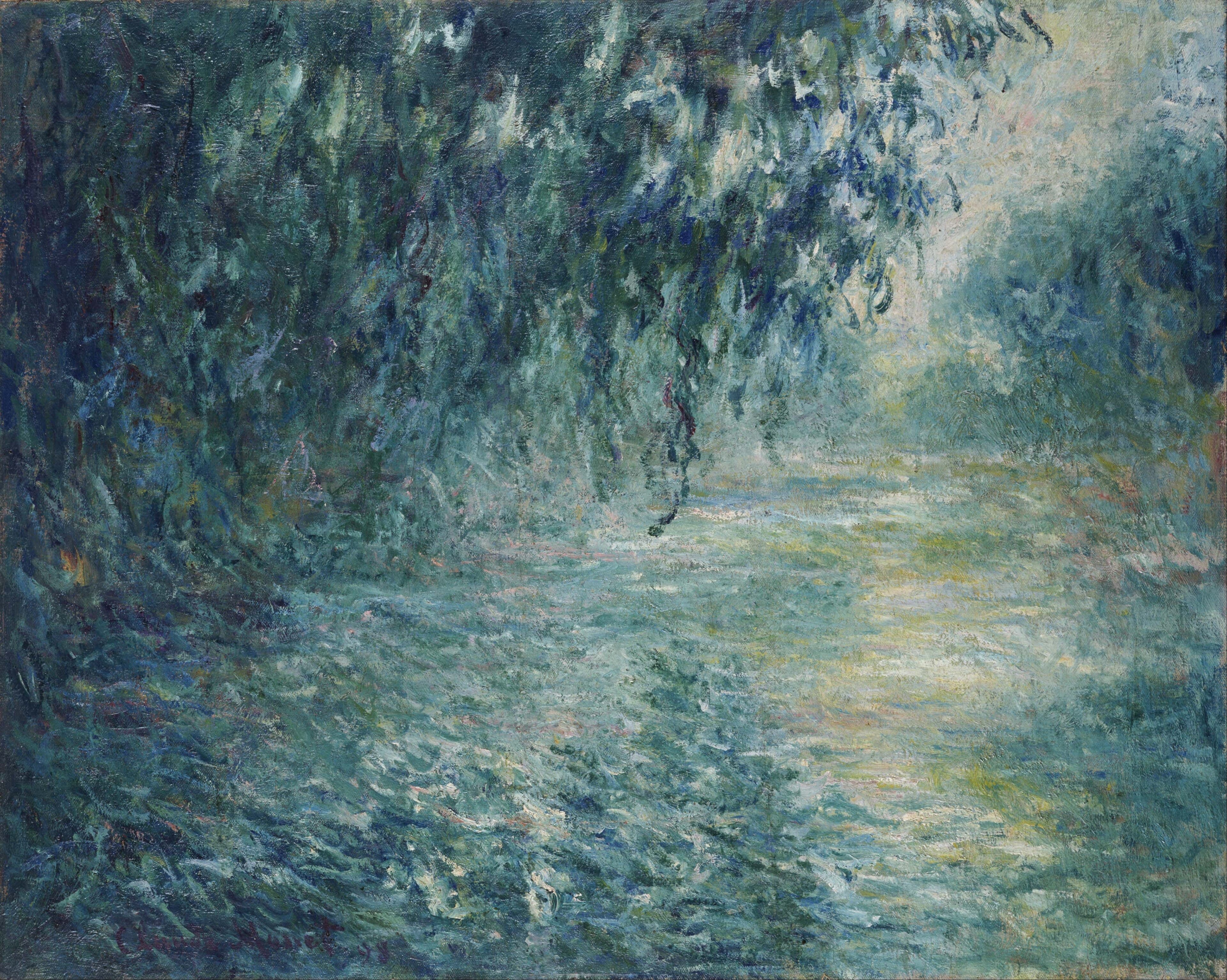
Morning on the Seine
Claude Monet · 1898
Also painted in 1899
The same year

Bridge over a Pond of Water Lilies
Claude Monet · 1899
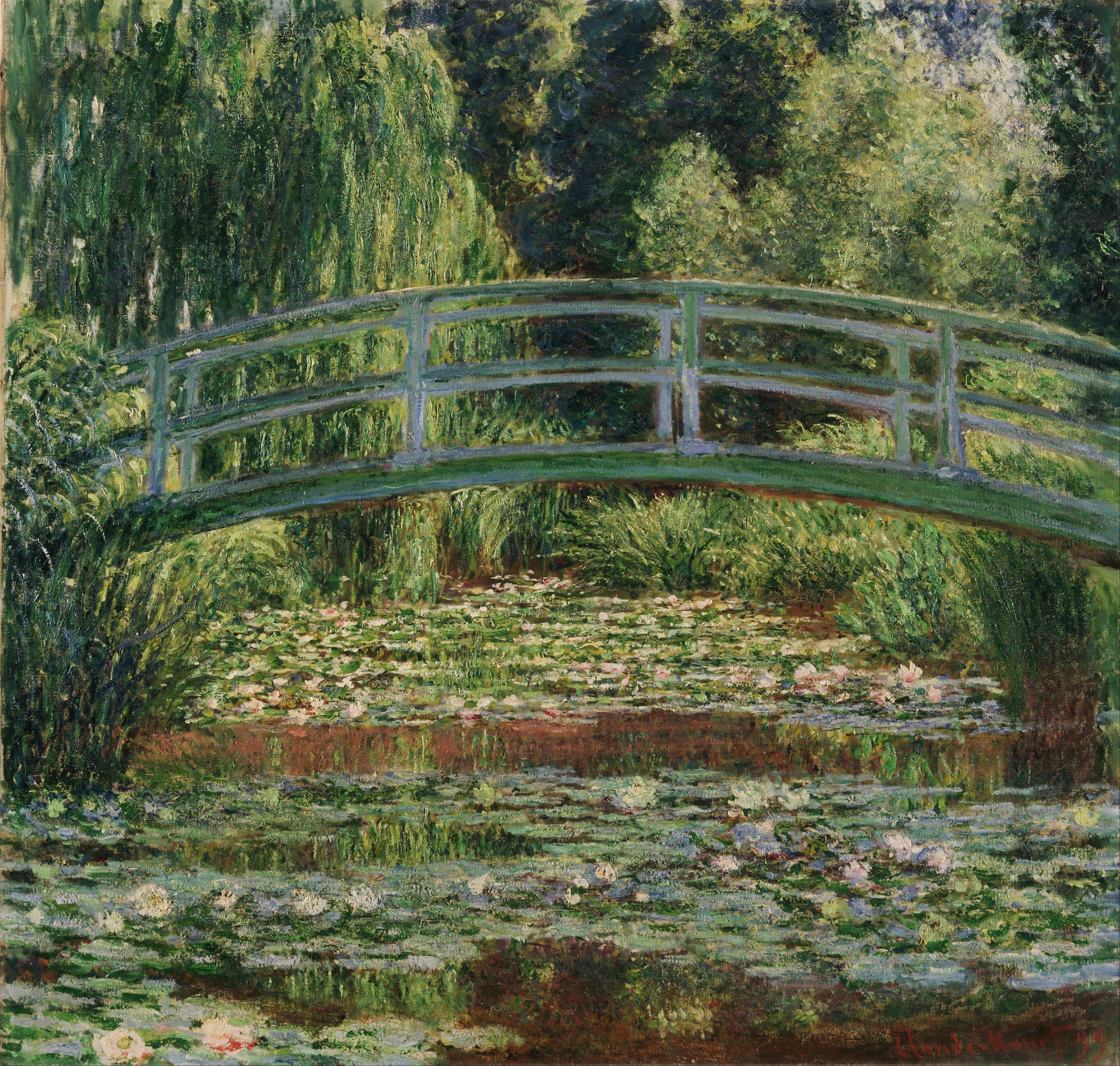
The Japanese Footbridge and the Water Lily Pool, Giverny
Claude Monet · 1899
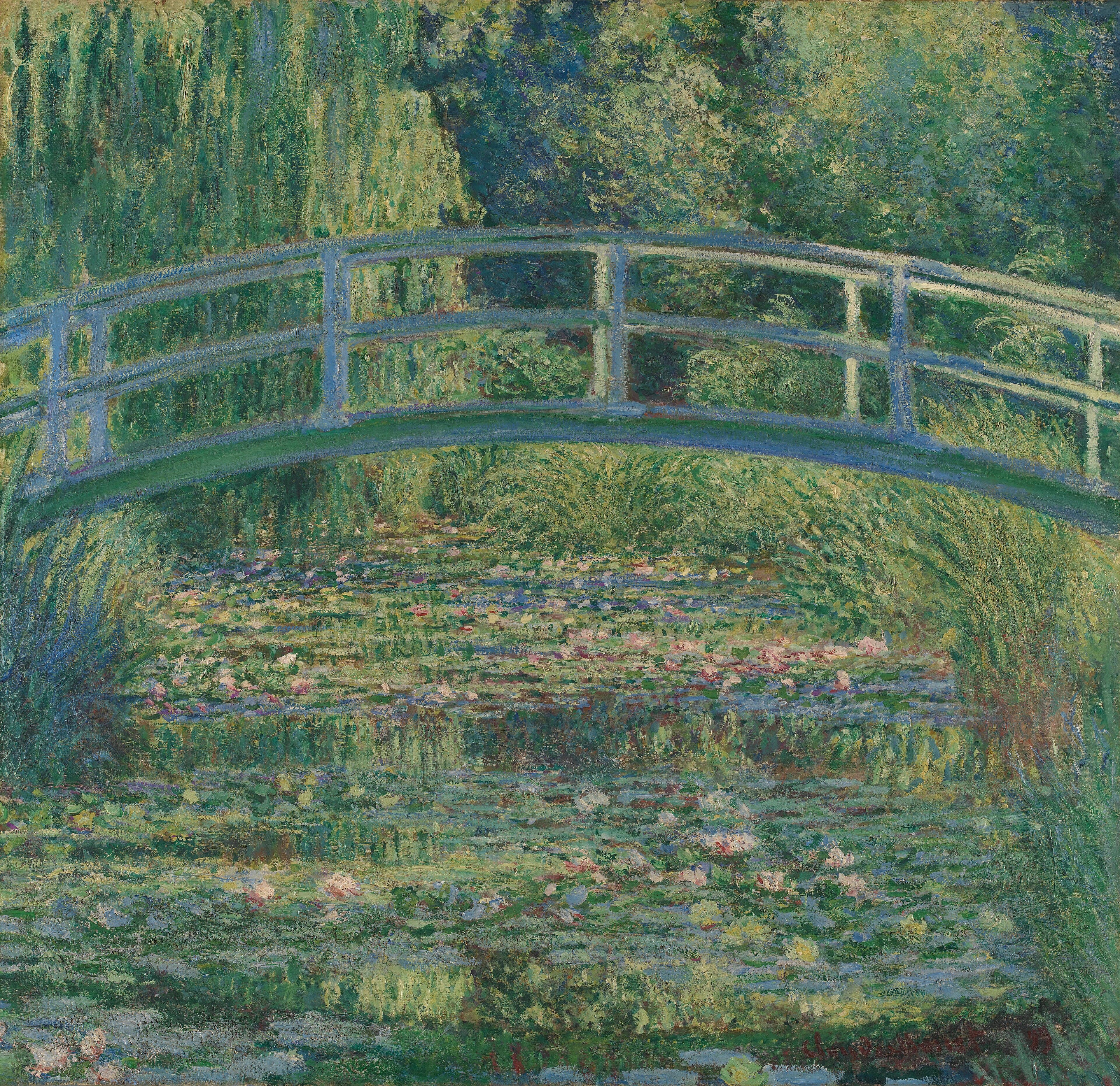
The Water-Lily Pond (National Gallery, London)
Claude Monet · 1899
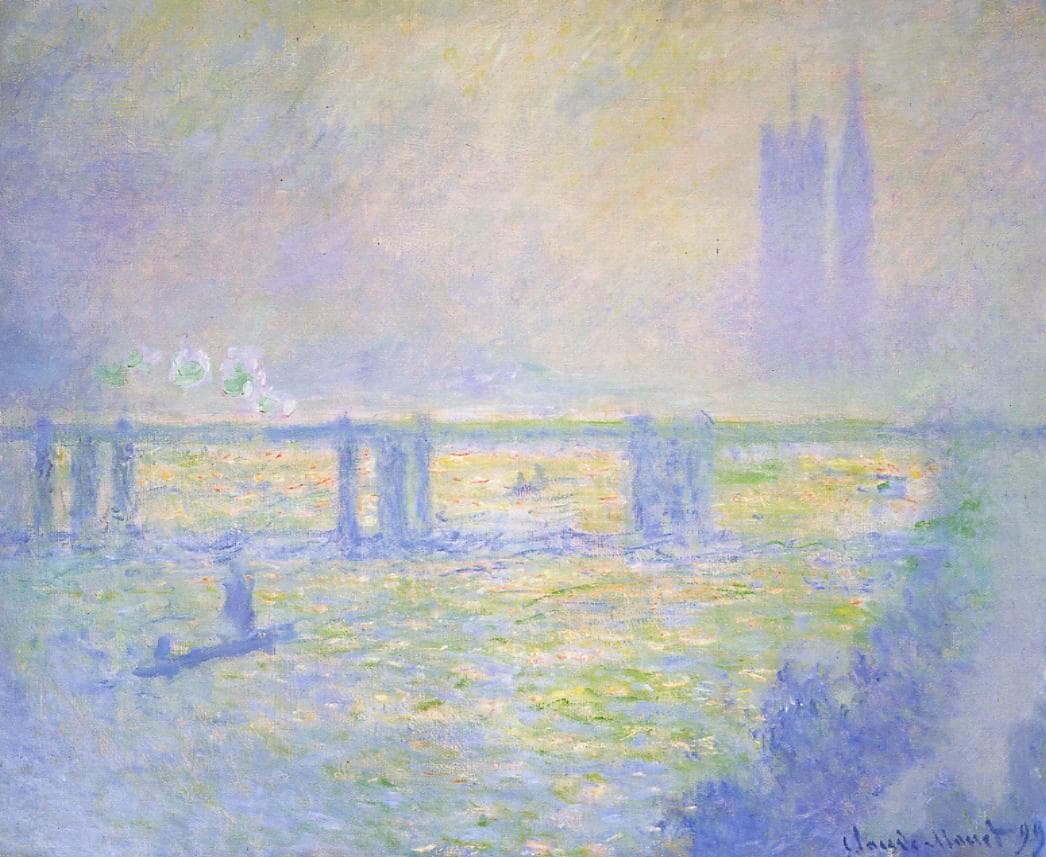
Charing Cross Bridge
Claude Monet · 1899
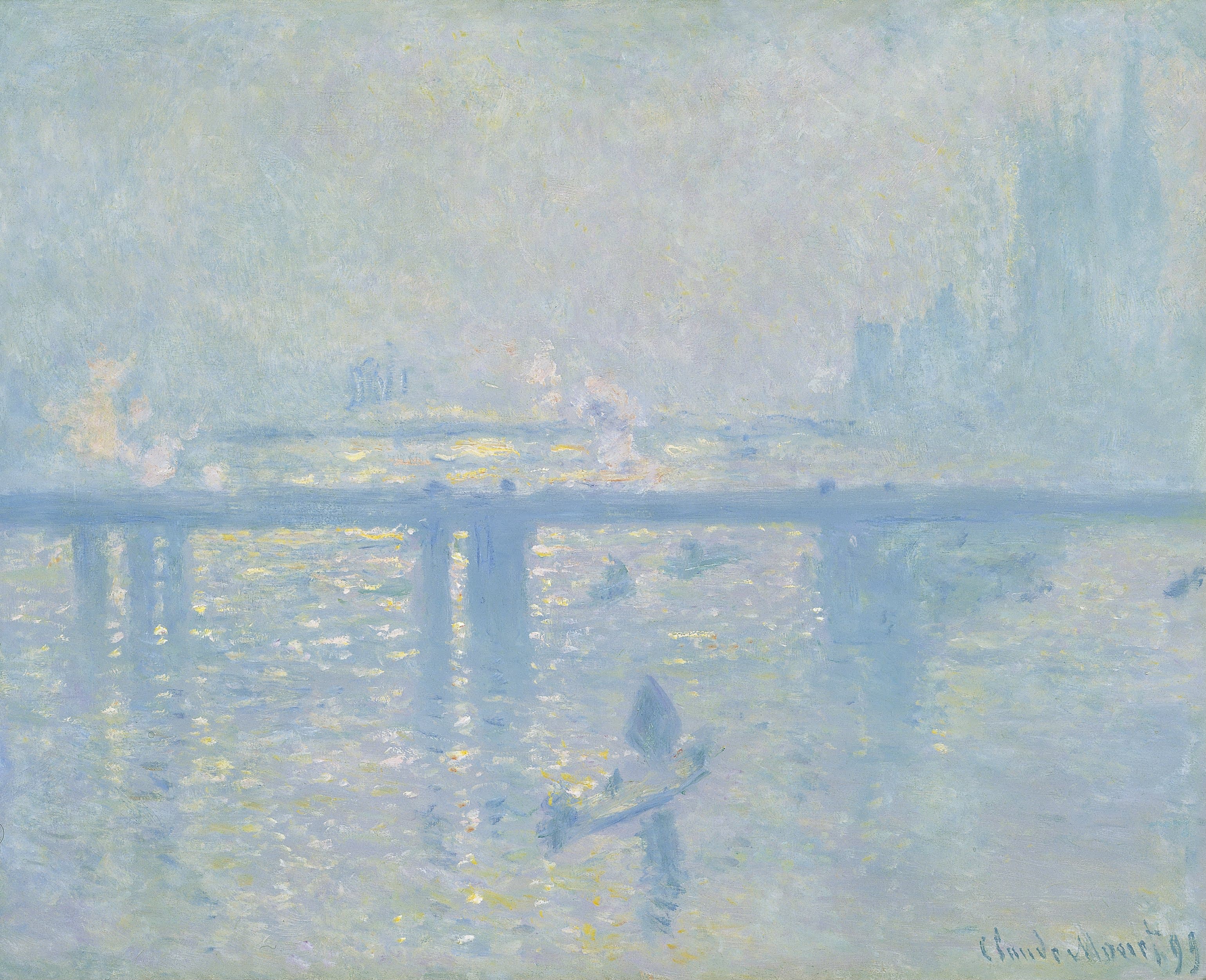
Charing Cross Bridge
Claude Monet · 1899
The Japanese Footbridge
Claude Monet · 1899
Water Lily Pond, Green Harmony
Claude Monet · 1899
Kindred works
You may also study
Bridge over a Pond of Water Lilies
Claude Monet · 1899
The Japanese Footbridge
Claude Monet · 1899
The Japanese Footbridge and the Water Lily Pool, Giverny
Claude Monet · 1899
The Japanese Bridge
Claude Monet · 1918–24
The Bridge in Monet's Garden
Claude Monet · c. 1895–96
The Promenade with the Railroad Bridge, Argenteuil
Claude Monet · 1874

Beach in Pourville
Claude Monet · 1882
The Barque
Claude Monet · 1887