Image: Musée Marmottan Monet, Paris · Public domain · via Wikimedia Commons
Charing Cross Bridge, Smoke in the Fog, Impression
Claude Monet, 1902
Charing Cross Bridge, Smoke in the Fog, Impression (1902) is Claude Monet's most vivid London canvas: billowing white train smoke along the bridge in a fog of red, orange and violet. It is in the Musée Marmottan Monet, Paris.
- Artist
- Claude Monet
- Date
- 1902
- Medium
- Oil on canvas
- Dimensions
- 73 × 92 cm
- Collection
- Musée Marmottan Monet, Paris, France
- Movement
- Impressionism
- Catalogue
- Wildenstein 1535
- The City
- Water & Sea
- Night & Dreams
Charing Cross Bridge, fumées dans le brouillard, impression (Smoke in the Fog, Impression) is the most intensely colored of Claude Monet's views of the London railway bridge. Signed and dated 1902, it shows a long wall of white and lilac train smoke rolling along the bridge, a sky burning red and orange above, and violet reflections in the Thames below. The word impression in the title deliberately echoes the picture that named a movement thirty years earlier. It belongs to the Musée Marmottan Monet in Paris (inv. 5001), from the 1966 bequest of Monet's son Michel.
What you are looking at
The canvas is 73 by 92 cm, one of the larger formats Monet used in London. Its upper half is a sky of loose, crisscrossing diagonal strokes in vermilion, coral, orange and pink, cooling to violet and blue at the left edge. Across the middle, a little below center, a chain of rounded, cauliflower-shaped clouds of white, lilac and pale green runs nearly the full width of the picture. This is the smoke of trains on the bridge, so thick that it hides the bridge deck almost completely.
Below the smoke, the bridge reappears only as a series of dark violet verticals, the piers, reflected in the water. The river is a mirror of the sky, with horizontal strokes of rose, lilac and blue. There are no boats, no figures, and, unusually, no Parliament towers. The signature and date, Claude Monet 1902, are at lower left, written in the same violet as the shadows.
Where and when it was painted
Monet painted the Thames from the Savoy Hotel during his visits of 1899, 1900 and 1901, looking upriver to Charing Cross Bridge and downriver to Waterloo Bridge. After his last visit he worked on the canvases at Giverny until 1904, when 37 Thames views were shown at Durand-Ruel's gallery in Paris. This one carries the date 1902, the year he was most intensively reworking the series. Our Monet in London hub explains the chronology.
How it was painted
The brushwork is unusually free and energetic. In the sky the strokes cross in every direction, like hatching; on the water they lie flatter. The smoke is built from thick, swirling touches of white and pale color laid wet into wet, so that each billow has a soft, rounded edge. Monet pushed the color further than in almost any other London canvas, turning the whole fog red and violet, as if lit by a setting sun from within.
The word impression in the title signals that Monet saw this as a picture of a fleeting effect rather than a finished view, much as he had titled Impression, Sunrise in 1872. Both pictures show a port or river in smoke and haze, dominated by a single hot color.
Why it stayed with the family
The canvas did not go to Durand-Ruel. It remained at Giverny until Monet's death in 1926 and passed to Michel Monet, who left it with the rest of the studio contents to the Académie des Beaux-Arts in 1966. That bequest created the Marmottan's unrivaled Monet collection. Whether Monet kept this picture because he considered it unfinished or because he valued it, it is today one of the museum's highlights.
How this version differs
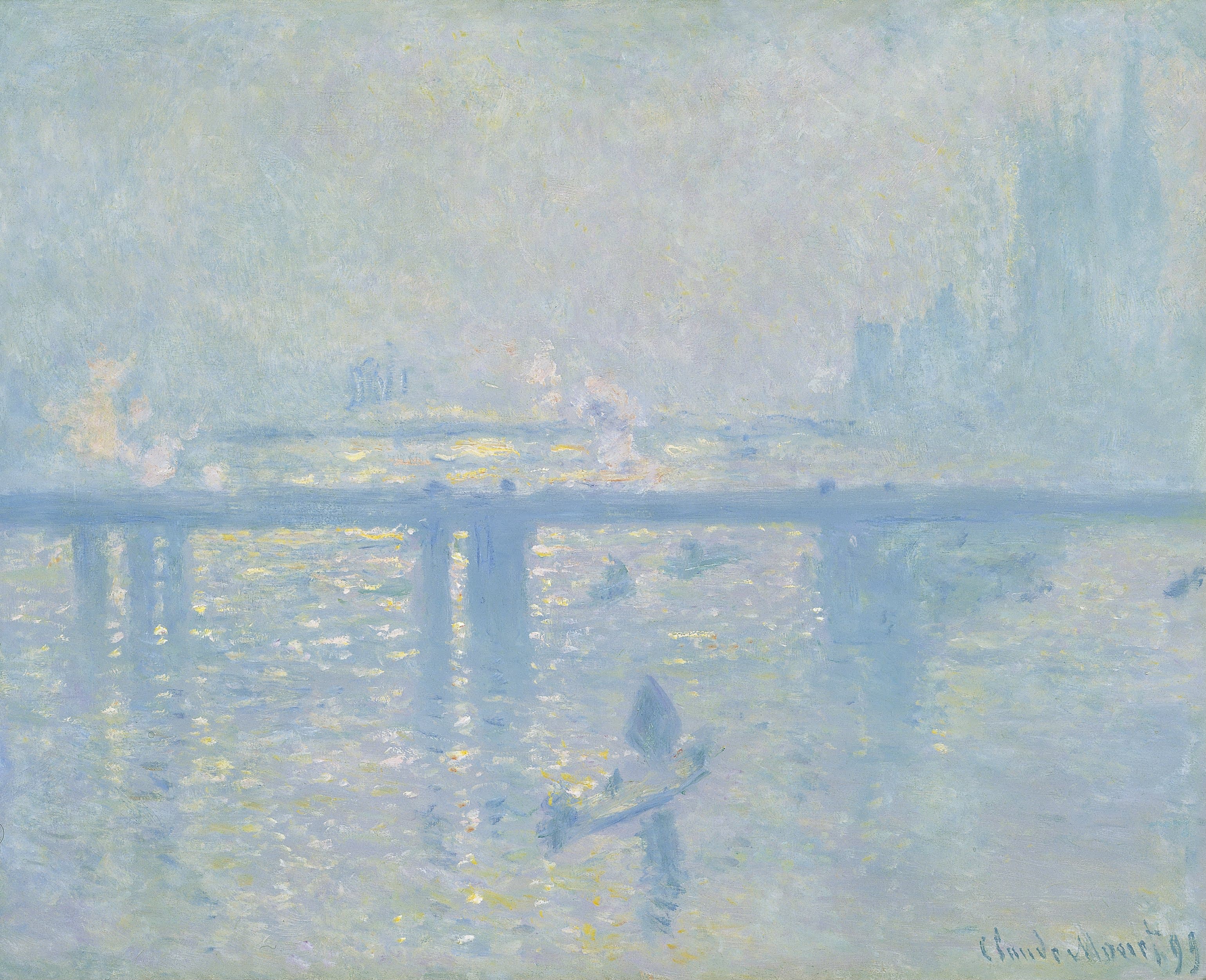
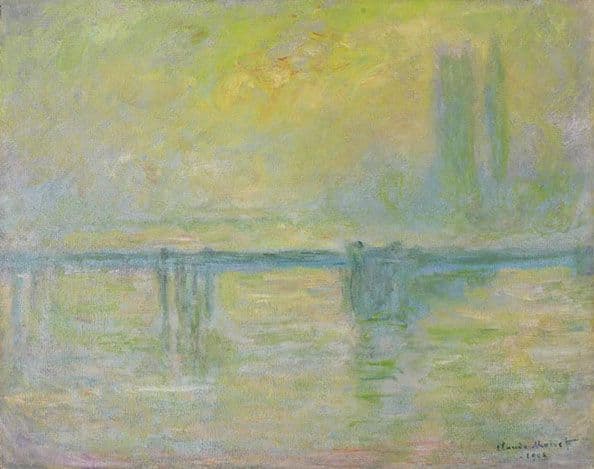
Most Charing Cross canvases keep the bridge as a clear horizontal and Westminster as an anchor. Here the smoke itself becomes the subject, replacing the bridge, and the skyline vanishes. Compare the golden Chartwell canvas, equally saturated but in yellow, or the pale Thyssen-Bornemisza version of 1899. In the same museum, the unfinished Marmottan study shows the bridge drawn in dark strokes before any color was laid. See all versions on our Charing Cross Bridge series page.
Where to see it
The painting is in the Musée Marmottan Monet in Paris's 16th arrondissement, home to the world's largest Monet collection; see our Marmottan guide. The museum rotates its displays and lends to exhibitions, so check what is on view before visiting.
Questions & answers
Where is Monet's Charing Cross Bridge, Smoke in the Fog?
In the Musée Marmottan Monet in Paris (inv. 5001). It came to the museum in 1966 with the bequest of Monet's son Michel, which included the paintings still in the artist's studio at his death.
When was it painted?
Monet began the Charing Cross Bridge canvases at the Savoy Hotel in London in 1899–1901 and reworked them at Giverny. This one is signed and dated 1902.
What does 'fumées dans le brouillard, impression' mean?
'Smoke in the fog, impression.' The title describes the subject, train smoke billowing along the bridge in a colored fog, and the word 'impression' echoes Impression, Sunrise (1872), marking it as a picture of a fleeting effect.
Why is the painting red and violet?
Monet painted London's smoky fog as colored light rather than gray. Here the low sun seems to set the whole fog glowing red and orange, with violet shadows on the water, a much more saturated effect than in most of the series.
More by the artist
Claude Monet
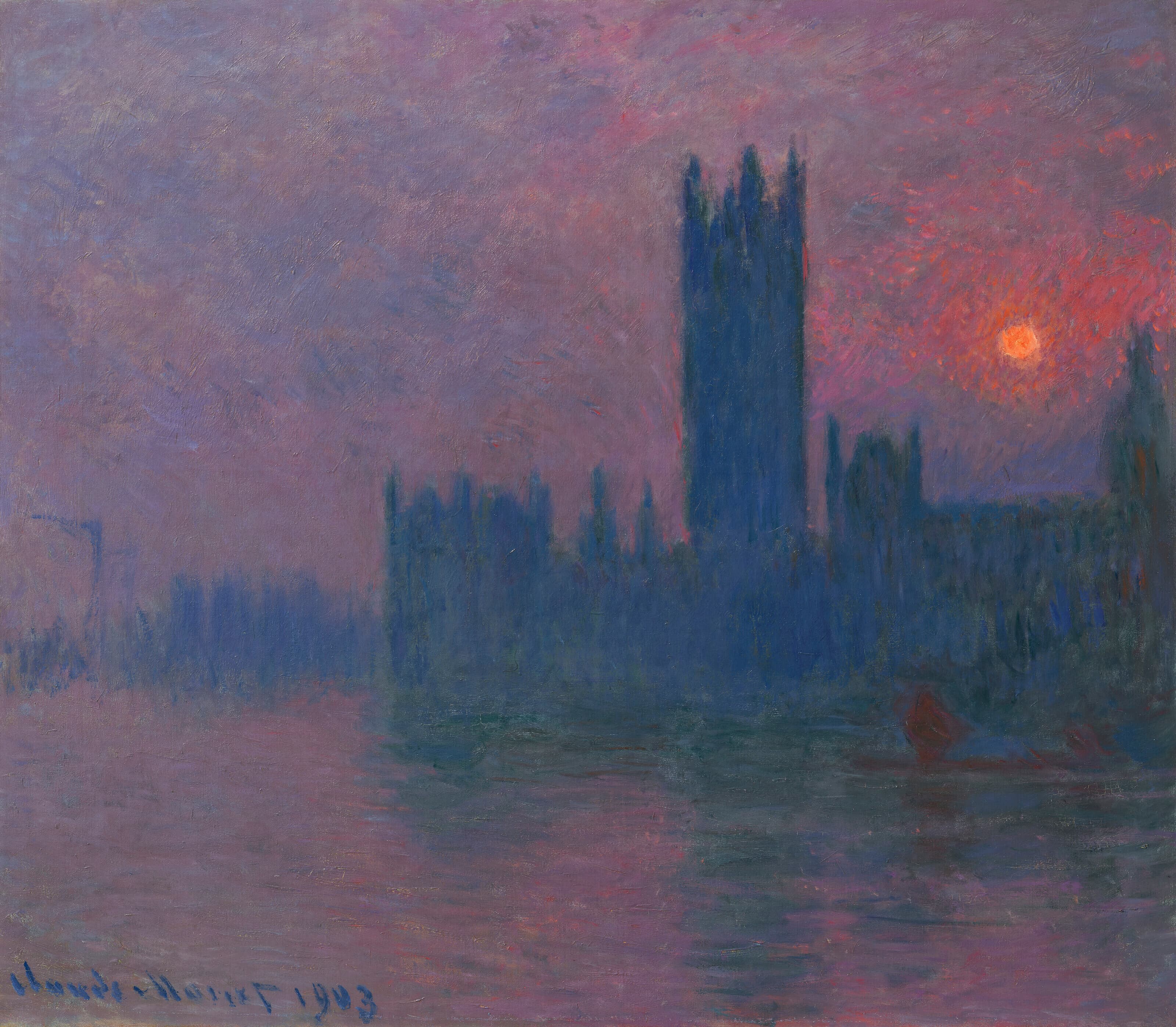
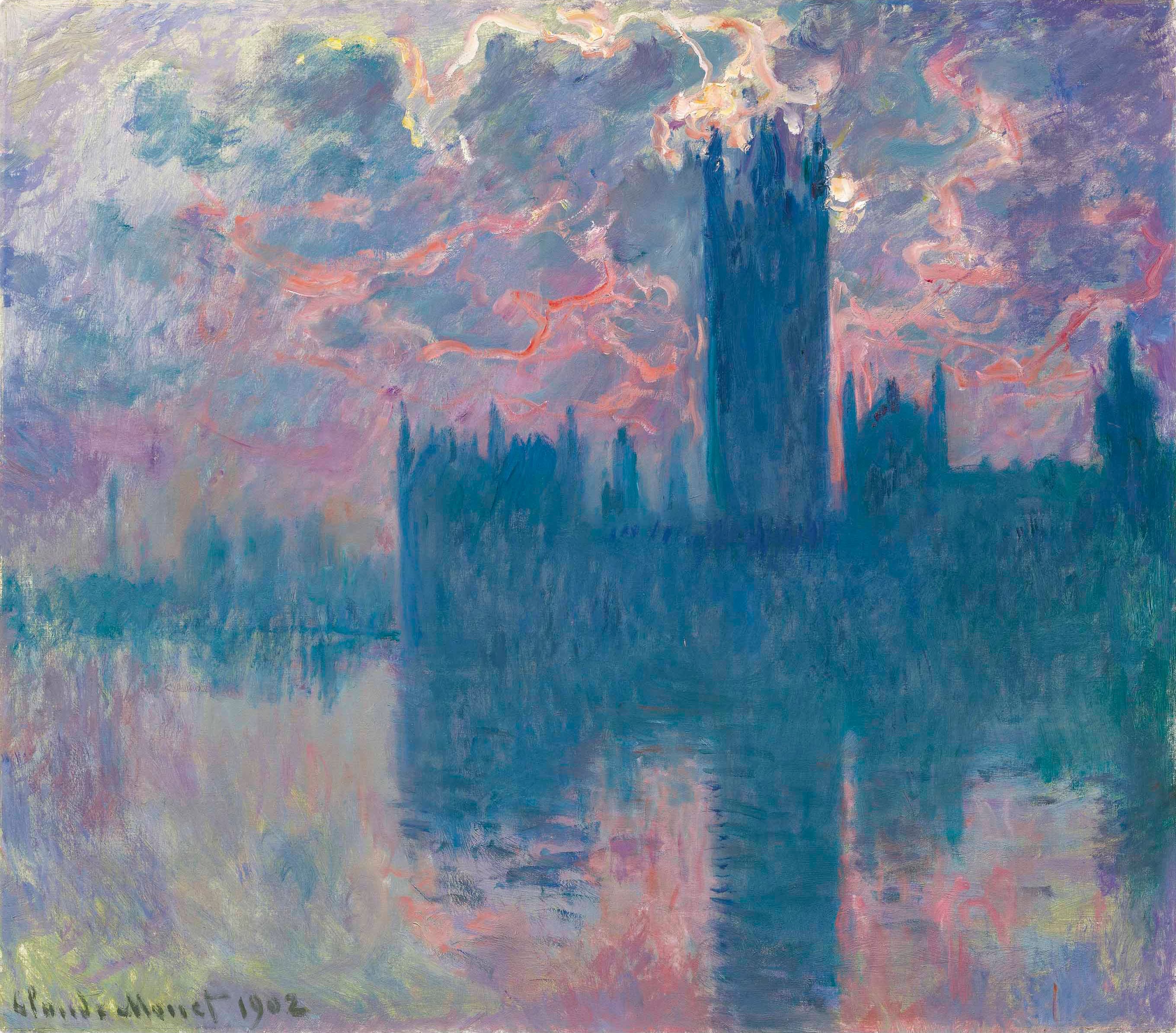
Houses of Parliament, Sunset
Claude Monet · 1903
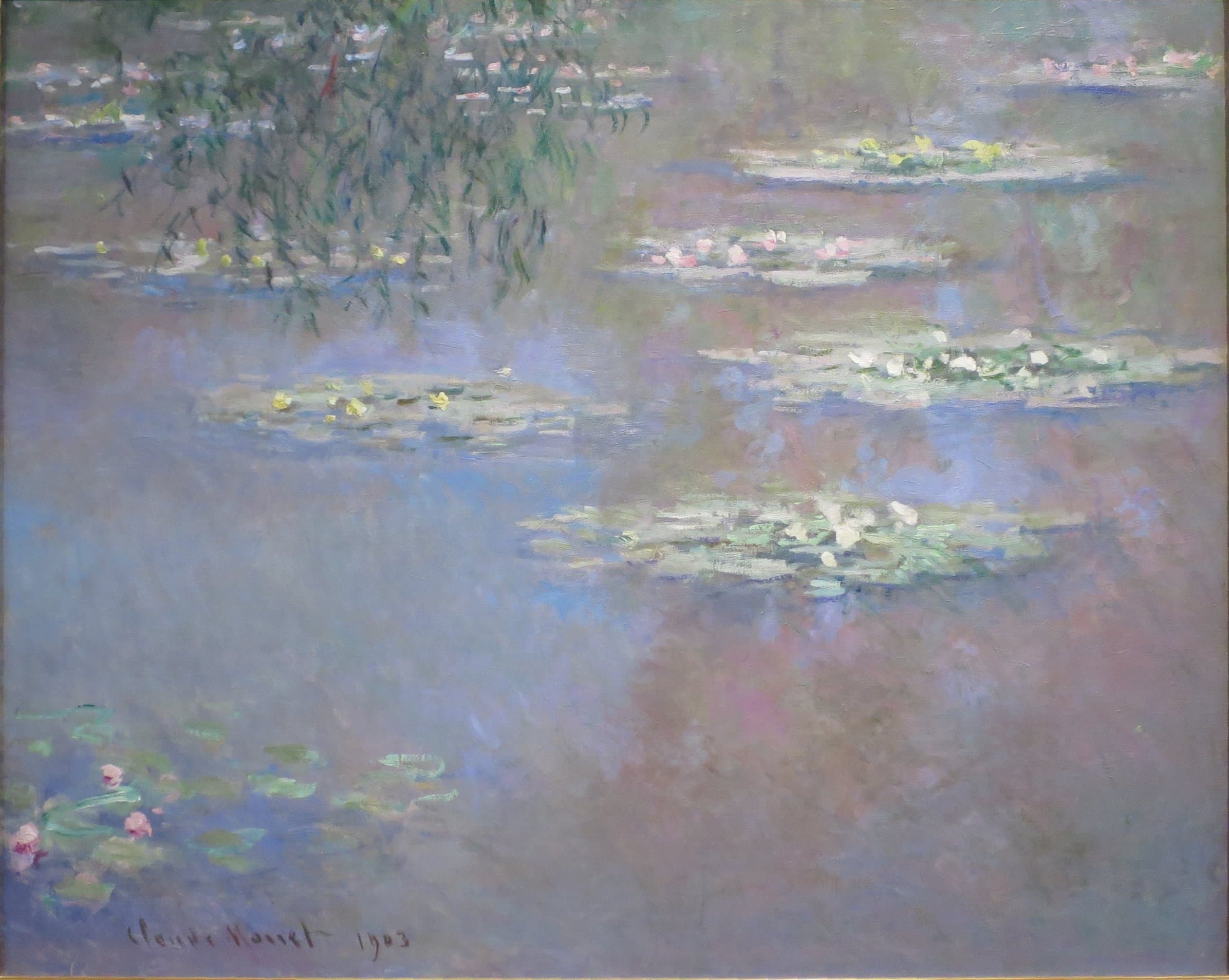
Waterlilies (1903, Dayton Art Institute)
Claude Monet · 1903
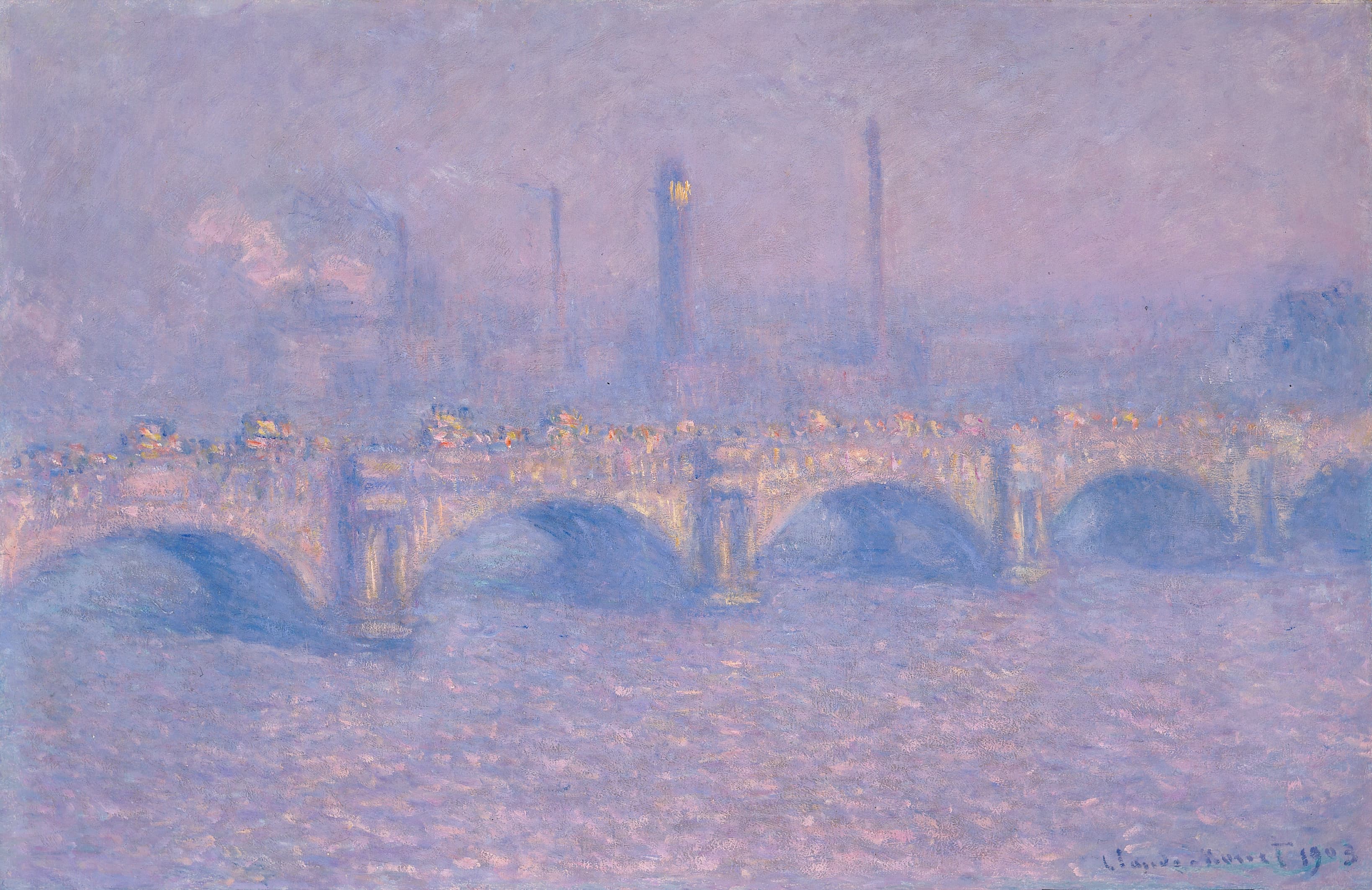
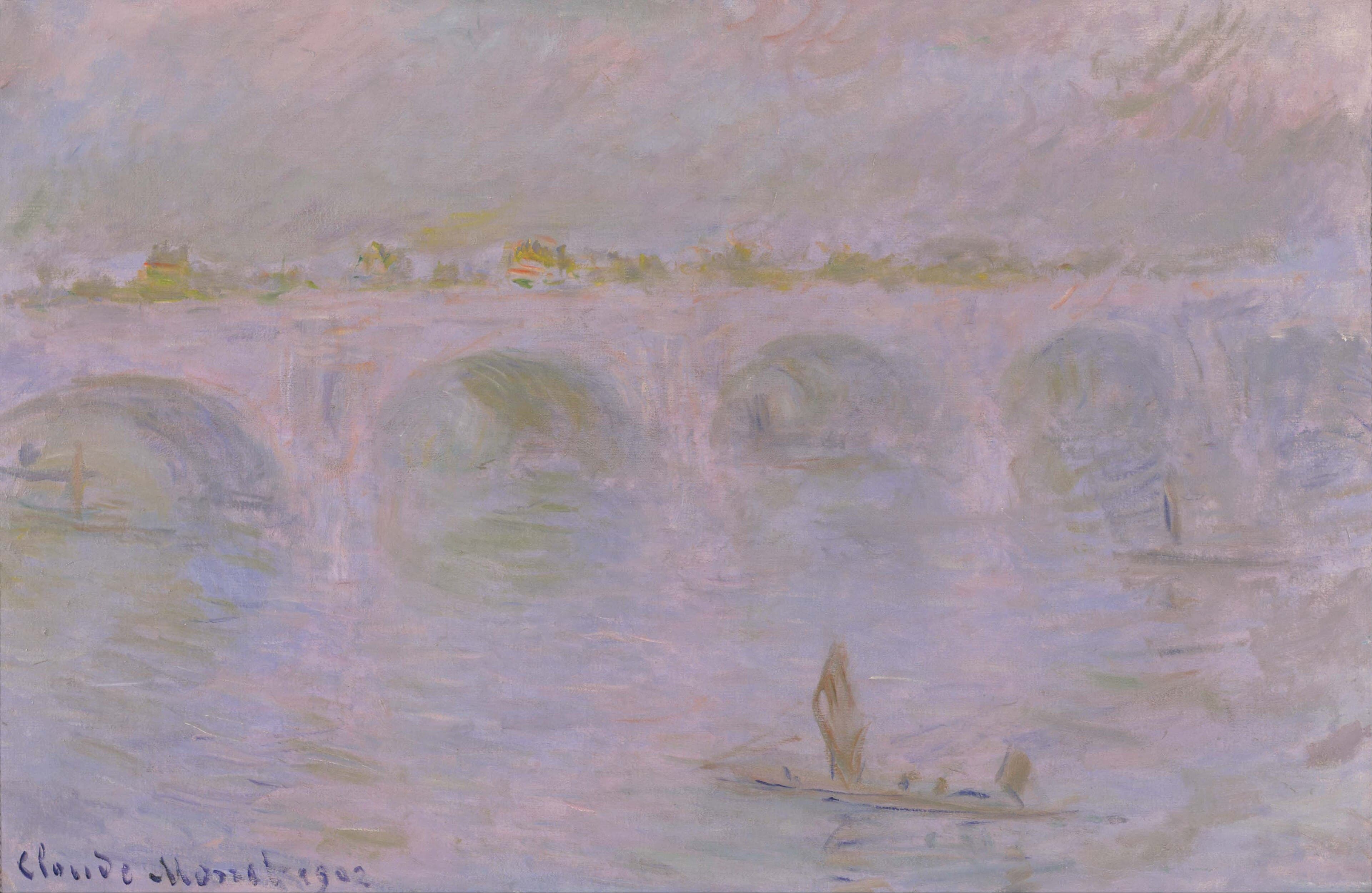
Waterloo Bridge, Veiled Sun
Claude Monet · 1903
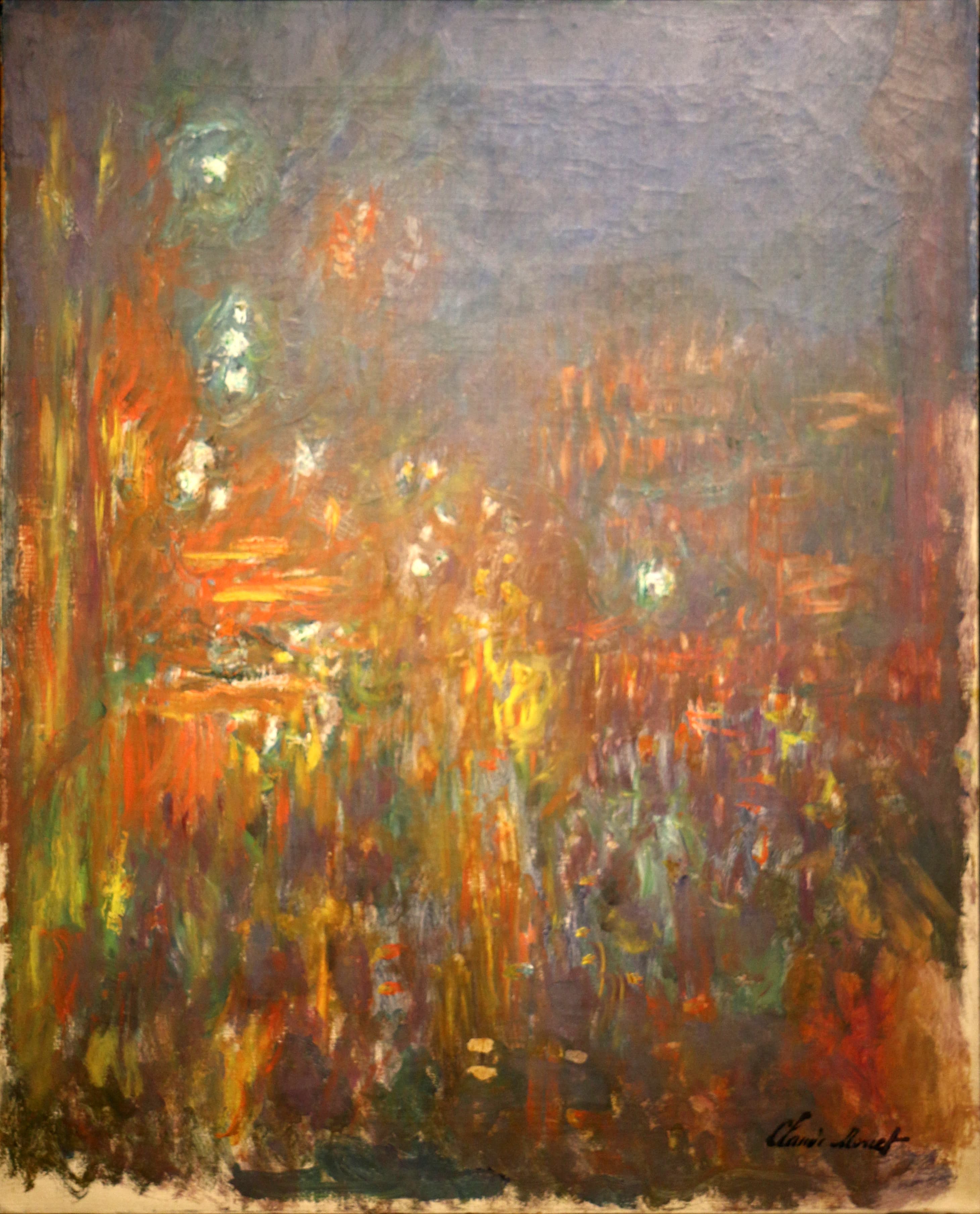
Leicester Square, by Night
Claude Monet · 1901
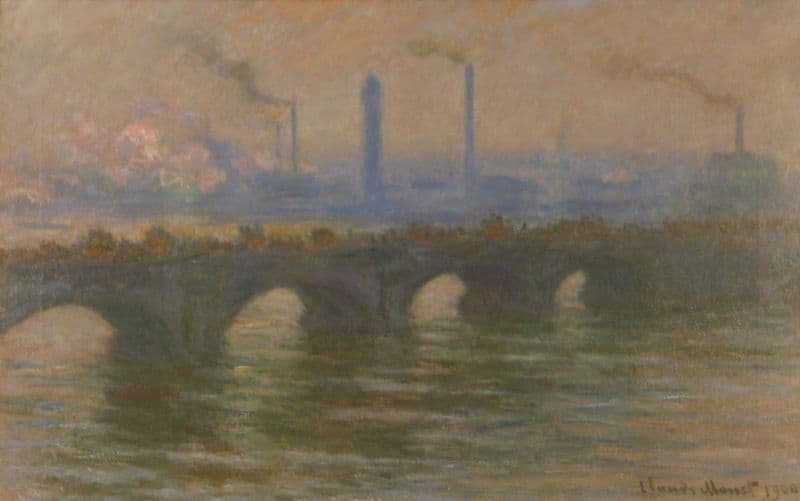
Waterloo Bridge, Overcast Weather
Claude Monet · 1900
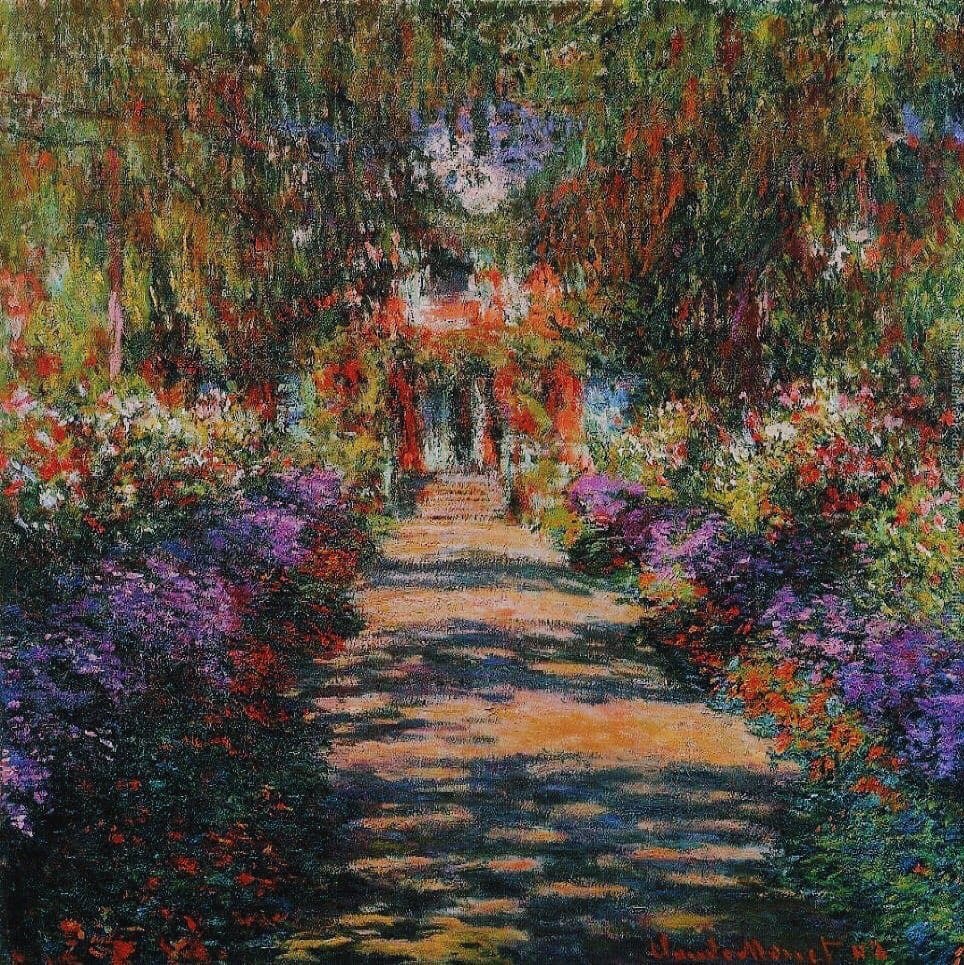
The Garden Path at Giverny
Claude Monet · 1902
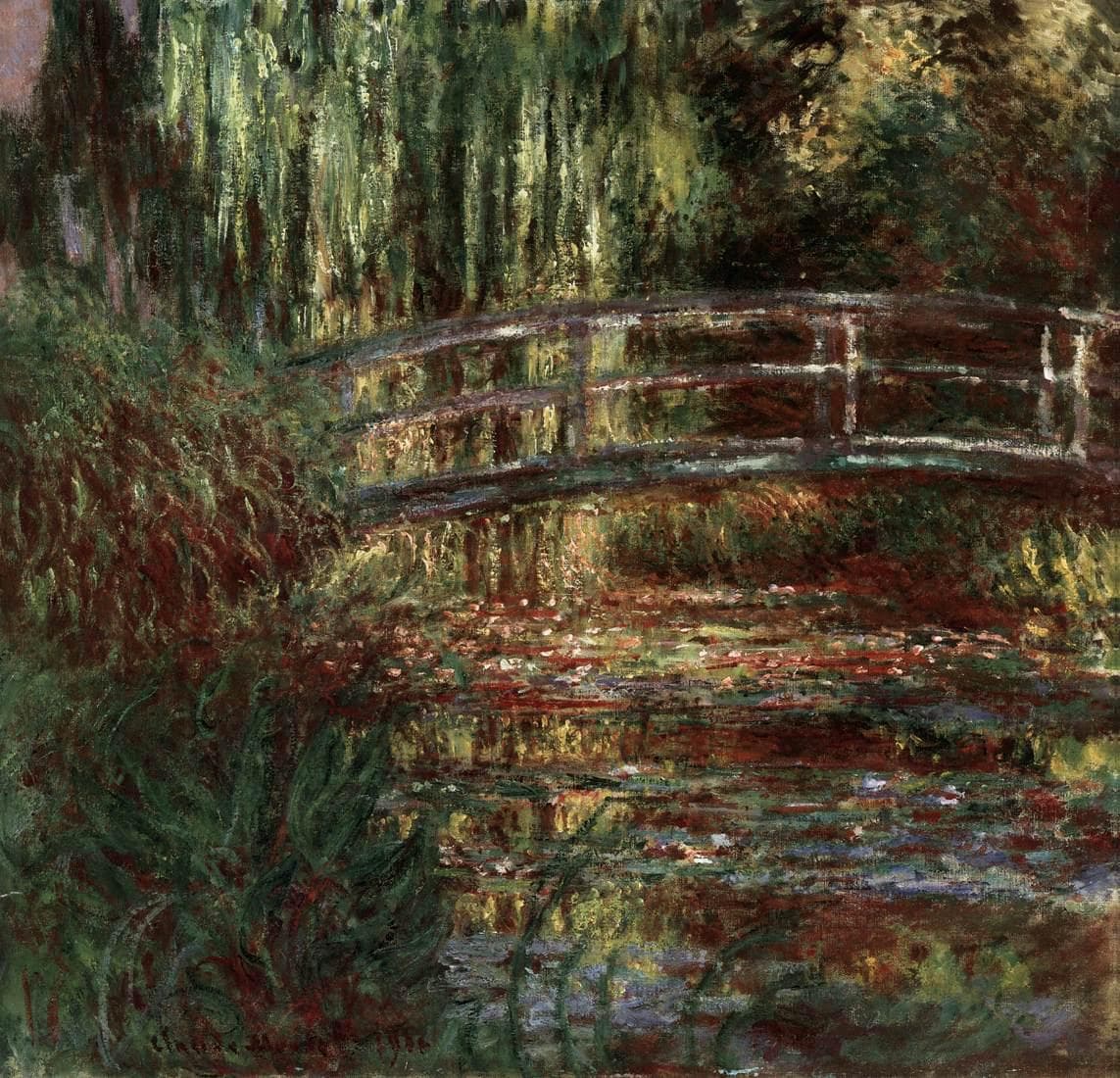
The Water Lily Pond
Claude Monet · 1900
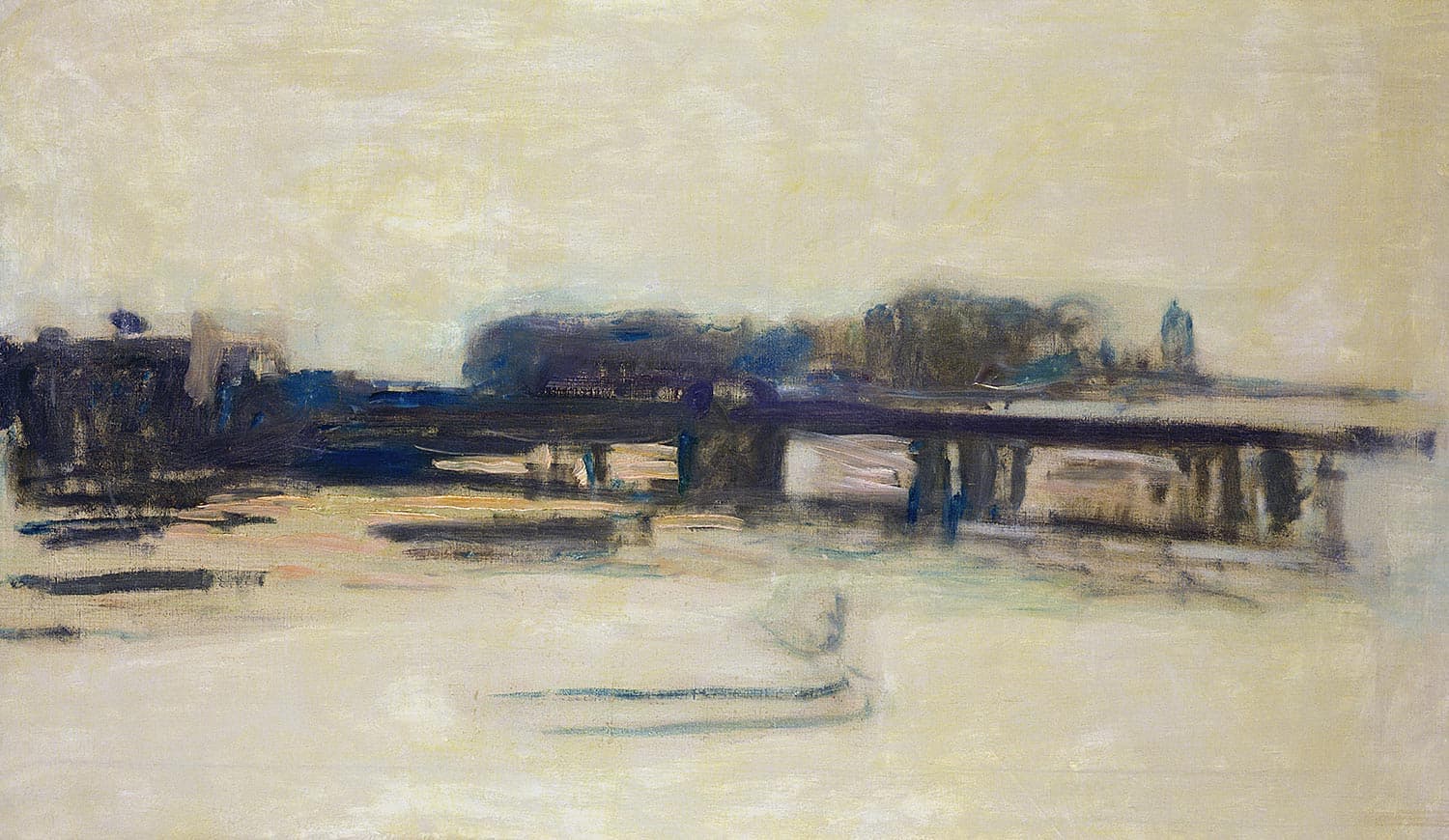
Charing Cross Bridge, London (Marmottan study)
Claude Monet · c. 1899–1901
Also painted in 1902
The same year
Kindred works
You may also study
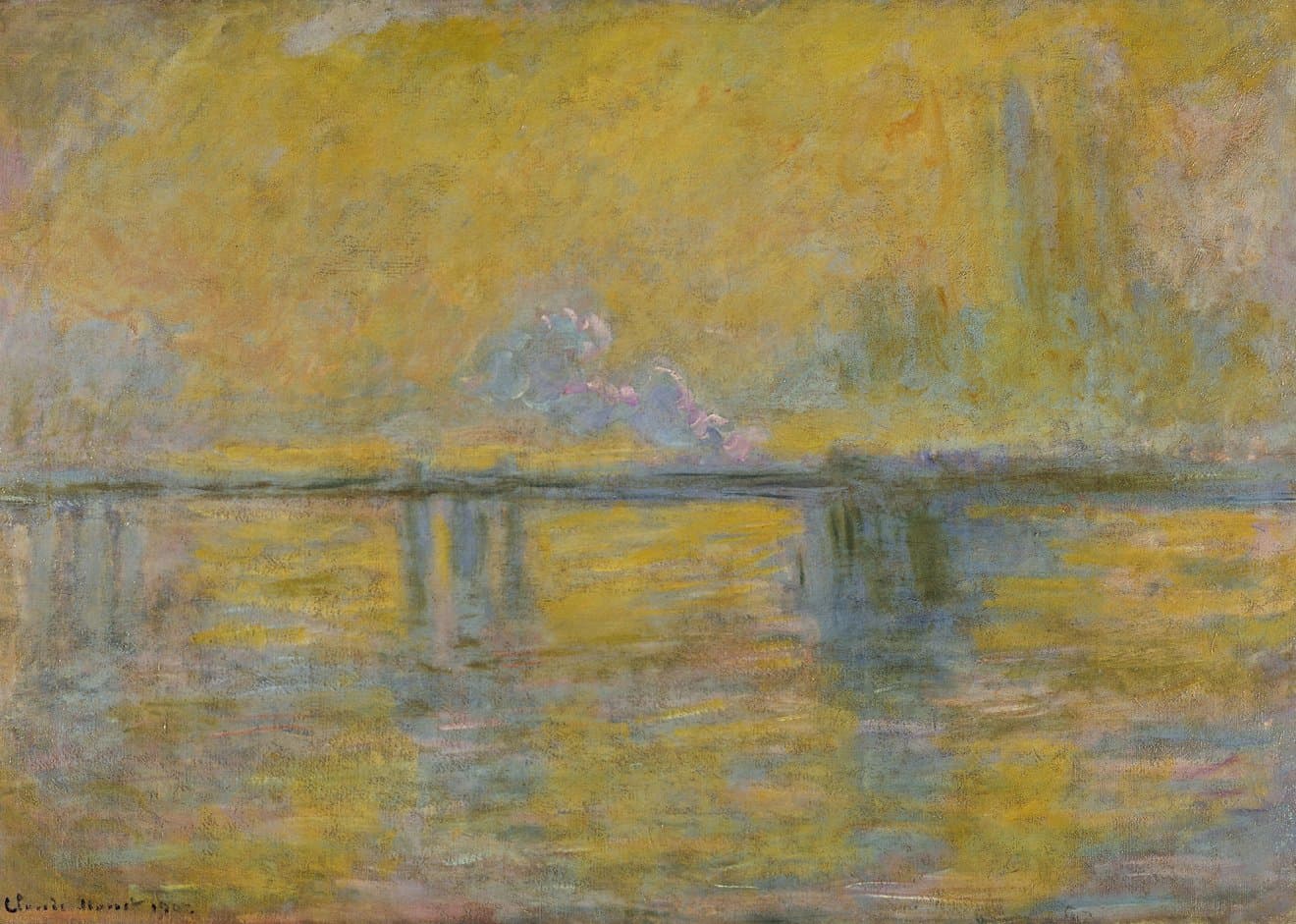
Charing Cross Bridge (Chartwell)
Claude Monet · 1899–1902 (dated 1902)
Charing Cross Bridge
Claude Monet · 1899
Charing Cross Bridge, Fog
Claude Monet · 1902–03
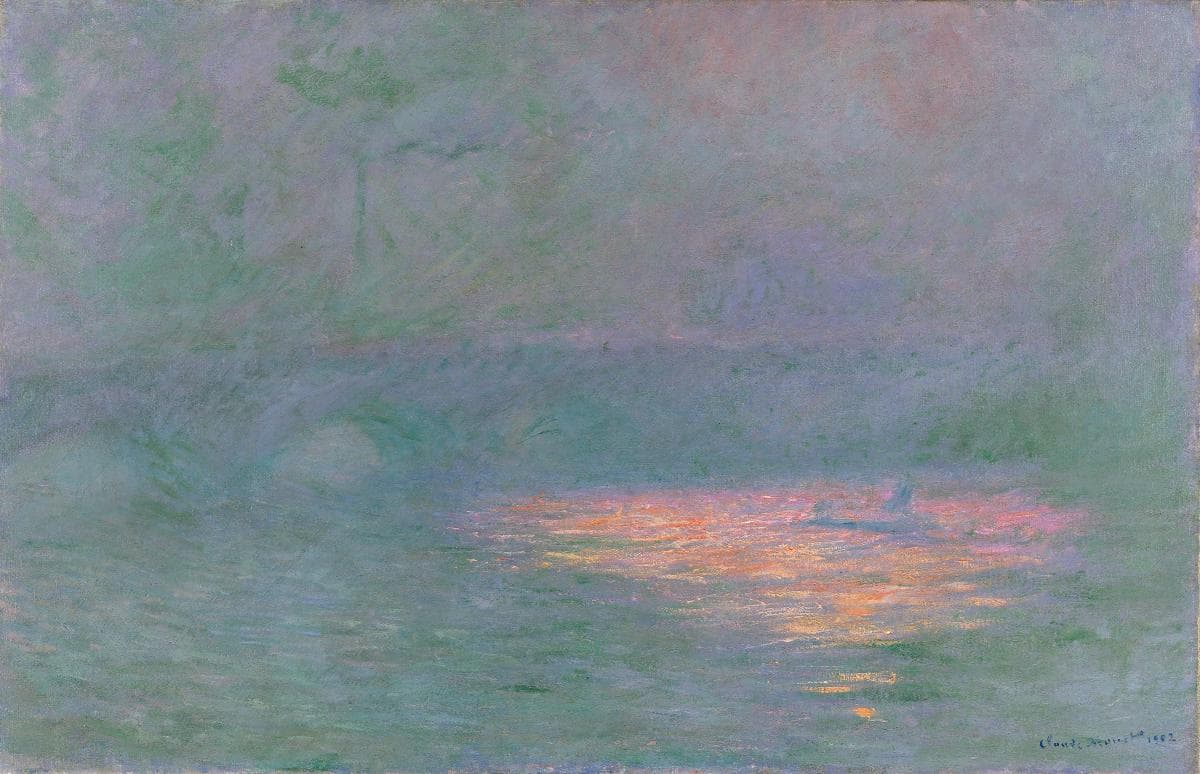
Waterloo Bridge, Effect of Fog
Claude Monet · 1903
Charing Cross Bridge: Fog on the Thames
Claude Monet · 1903

Sunset in Venice
Claude Monet · 1908–12
Waterloo Bridge, London, at Dusk
Claude Monet · 1904
The Grand Canal, Venice
Claude Monet · 1908