Image: Museo del Prado, Madrid (via Google Earth) / Wikimedia Commons · Public domain · via Wikimedia Commons
Baroque (Spanish Golden Age)
Las Meninas
Diego Velázquez, 1656
Las Meninas (The Ladies-in-Waiting) is Diego Velázquez's 1656 painting of the five-year-old Infanta Margarita and her attendants, with the artist himself at his easel. It hangs in the Museo del Prado in Madrid.
- Artist
- Diego Velázquez
- Date
- 1656
- Medium
- Oil on canvas
- Dimensions
- 318 × 276 cm
- Collection
- Museo del Prado, Madrid, Spain
- Movement
- Baroque (Spanish Golden Age)
Las Meninas, "The Ladies-in-Waiting," is a large oil painting, 318 by 276 centimeters, made in 1656 by Diego Velázquez, court painter to King Philip IV of Spain. It shows the king's young daughter, the Infanta Margarita Teresa, surrounded by her household in a room of the Royal Alcázar palace in Madrid, while Velázquez himself stands at a huge canvas, brush in hand, looking straight out. It hangs in the Museo del Prado in Madrid and is widely considered one of the most important paintings in Western art. In the royal inventories it was called The Family of Philip IV; the title Las Meninas dates from the nineteenth century.
What you're looking at
At the center stands the Infanta Margarita, about five years old, in a pale silver-grey dress with a wide skirt, her blond hair loose, lit more brightly than anyone else. On her left (our right), a maid of honor, Isabel de Velasco, curtsies; on her right, María Agustina Sarmiento kneels to offer her a small red clay cup of water on a gold tray. These two are the meninas, the ladies-in-waiting of the title.
In the right foreground are two of the court's dwarfs: Mari Bárbola, a German woman with a dark dress who stares at the viewer, and the Italian boy Nicolás Pertusato, who has put his foot on the back of a large, sleepy mastiff. Behind them, in half shadow, a chaperone, Marcela de Ulloa, talks to an unidentified guard.
At far left stands Velázquez, holding his palette and brush, before the back of a canvas so tall it runs off the top of the picture. In the back wall, an open doorway at the top of a short flight of steps frames a man in black, José Nieto Velázquez, the queen's chamberlain, pausing as he holds back a curtain. Next to the doorway hangs a mirror. In it, dimly, appear the king, Philip IV, and the queen, Mariana of Austria.
Who is the painting looking at?
This is the riddle at the heart of Las Meninas. The king and queen appear in the mirror, which means they are standing where we stand, in front of the scene. The Infanta, the dwarf Mari Bárbola, the painter and the chamberlain all look in our direction, as though the royal couple has just entered. We are put in the place of the king.
What is Velázquez painting on the enormous canvas? Perhaps a portrait of the king and queen, whose reflection we see; perhaps Las Meninas itself. The mirror could be reflecting the royal couple in person, or reflecting the canvas Velázquez is working on. Scholars still argue. The French philosopher Michel Foucault opened his book The Order of Things (1966) with a famous analysis of the painting as an image of representation itself: a picture in which everyone looks at a spectator who is absent.
The details most people miss
Look at the red cross on Velázquez's chest. It is the emblem of the Order of Santiago, the most prestigious knightly order in Spain. Velázquez was only admitted in 1659, three years after he painted the picture, so the cross was added later. According to legend, the king painted it himself after the artist's death in 1660; more likely Velázquez added it.
Look at the paintings on the back wall. They are dark copies, by Velázquez's son-in-law Juan Bautista Martínez del Mazo, of works by Rubens and Jordaens showing mythological contests between gods and mortals, including Minerva and Arachne and Apollo and Pan. Stories in which a human artist challenges a god, hung above a painter who placed himself beside royalty, are unlikely to be a coincidence.
And look at the brushwork up close. The Infanta's dress, the dog's fur and the reflections in the mirror are built from loose, quick, sometimes abstract strokes that only resolve into form at a distance. Velázquez's freedom of handling was two centuries ahead of its time.
What does Las Meninas mean?
The painting has been read in several overlapping ways.
As a statement about painting: Velázquez spent years seeking noble status for himself and for painting, then regarded as a craft. By showing himself at work in the royal family's company, in the king's palace, wearing the key of his court office at his belt, he argues that painting is a liberal art worthy of nobility. The Italian painter Luca Giordano reportedly called it "the theology of painting."
As a royal image: it is a portrait of a princess in the line of succession to the Spanish throne, of the court that served her, and of the king and queen whose presence, even in reflection, governs everyone.
As a puzzle of vision: the mirror, the doorway, the backward canvas and the gazes aimed at us make the viewer part of the picture, a device that has fascinated philosophers and artists ever since.
Reception and legacy
Velázquez painted it for Philip IV's private office, and it was rarely seen outside the court until it entered the Prado, which opened in 1819. After that, artists came to study it. Édouard Manet called Velázquez "the painter of painters." Francisco Goya made an etching of it. In 1957 Pablo Picasso painted 58 variations on Las Meninas, now in the Museu Picasso in Barcelona. The painting survived the fire that destroyed the Alcázar in 1734, where much of the royal collection was lost.
Where to see it
Las Meninas hangs in the Museo del Prado in Madrid, in Room 12, the central space dedicated to Velázquez, where it is the focal point of the gallery. Visit early or late in the day; crowds gather before it all day. For the long tradition of court and group portraits, see The Arnolfini Portrait, whose convex mirror probably inspired Velázquez, and The Night Watch. See also Picasso's work and our Baroque collection.
Questions & answers
Where is Las Meninas?
It hangs in the Museo del Prado in Madrid, Spain, in Room 12, the central gallery dedicated to Velázquez. It has been in the Prado since the museum's early years, after it opened in 1819; before that it hung in the royal palaces of Madrid.
What does Las Meninas mean?
It is a portrait of the Infanta Margarita and her court, but also a statement about painting. Velázquez shows himself at work beside royalty, arguing for painting's nobility, and the mirror reflecting the king and queen places the viewer in their position, making the act of looking part of the picture.
Who is in the mirror in Las Meninas?
The mirror on the back wall reflects King Philip IV and Queen Mariana of Austria. They seem to stand where the viewer stands, though some scholars argue the mirror reflects the canvas Velázquez is painting rather than the royals themselves.
Who are the people in Las Meninas?
The Infanta Margarita Teresa; her maids of honor María Agustina Sarmiento and Isabel de Velasco; the dwarfs Mari Bárbola and Nicolás Pertusato with a mastiff; the chaperone Marcela de Ulloa and a guard; Velázquez at his easel; José Nieto in the doorway; and the king and queen in the mirror.
Why is there a red cross on Velázquez in Las Meninas?
It is the cross of the Order of Santiago, which Velázquez joined in 1659, three years after finishing the painting. It was therefore added later. Legend says Philip IV painted it himself; it is more likely Velázquez did.
Kindred works
You may also study
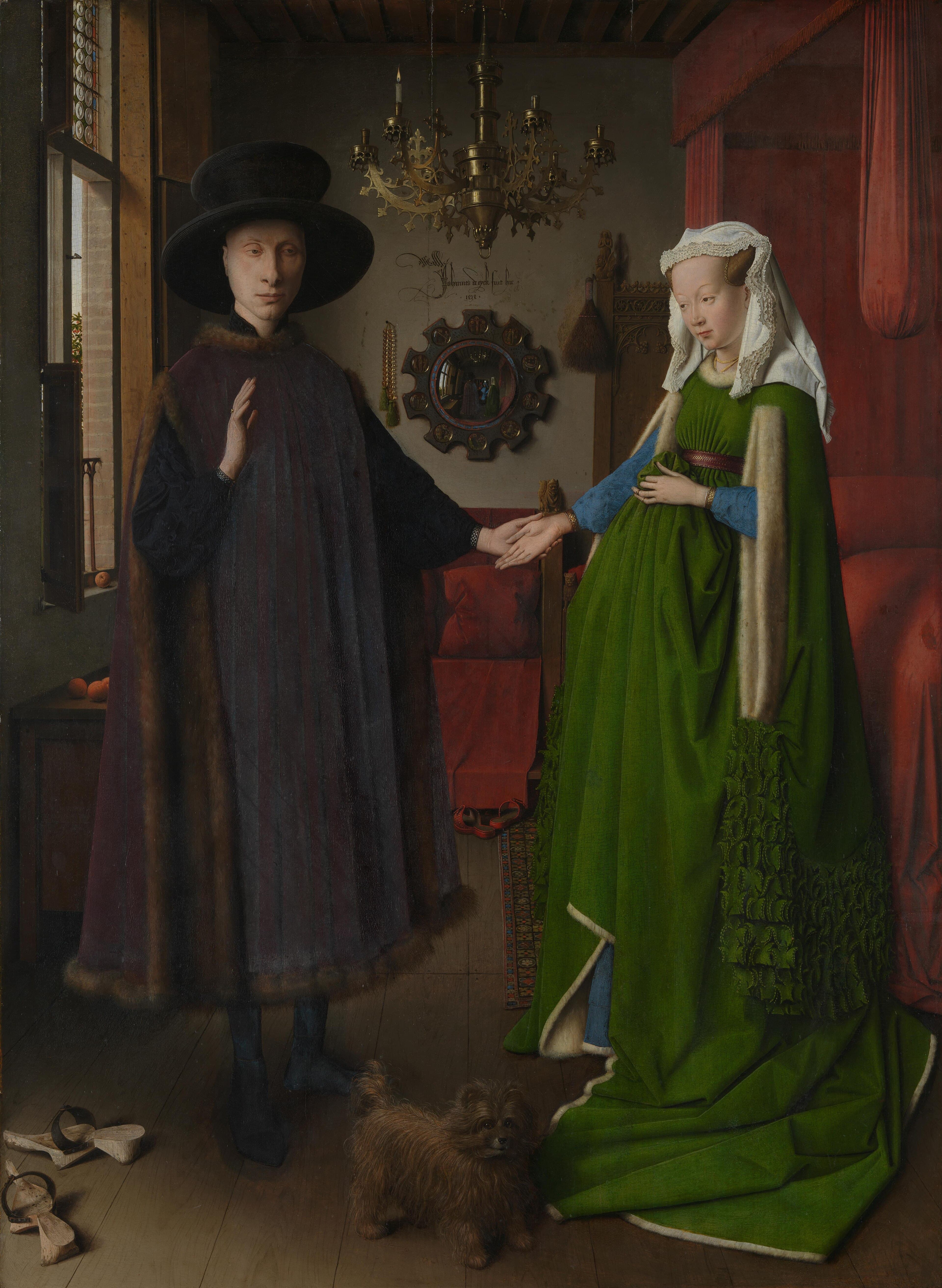
The Arnolfini Portrait
Jan van Eyck · 1434
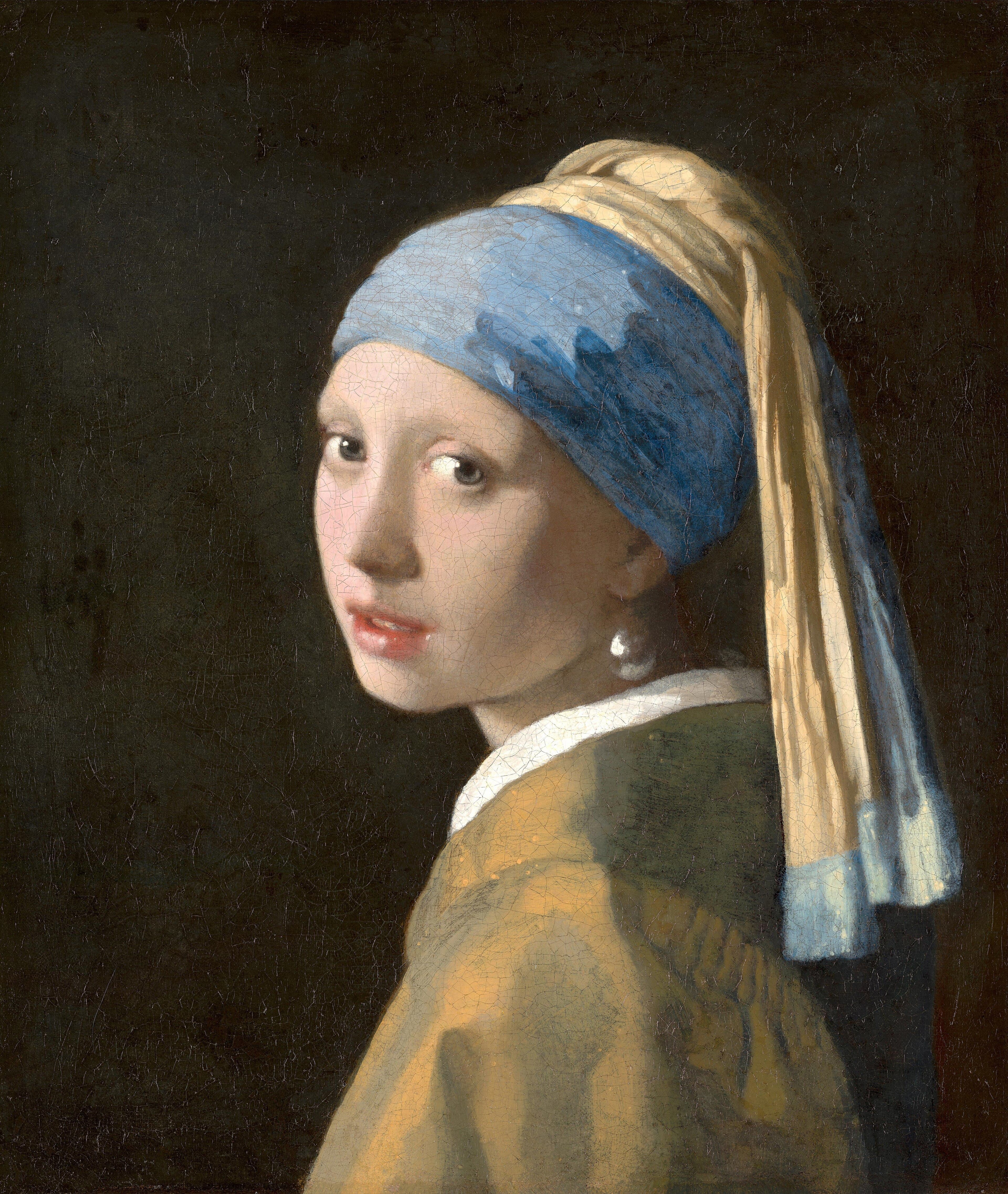
Girl with a Pearl Earring
Johannes Vermeer · c. 1665
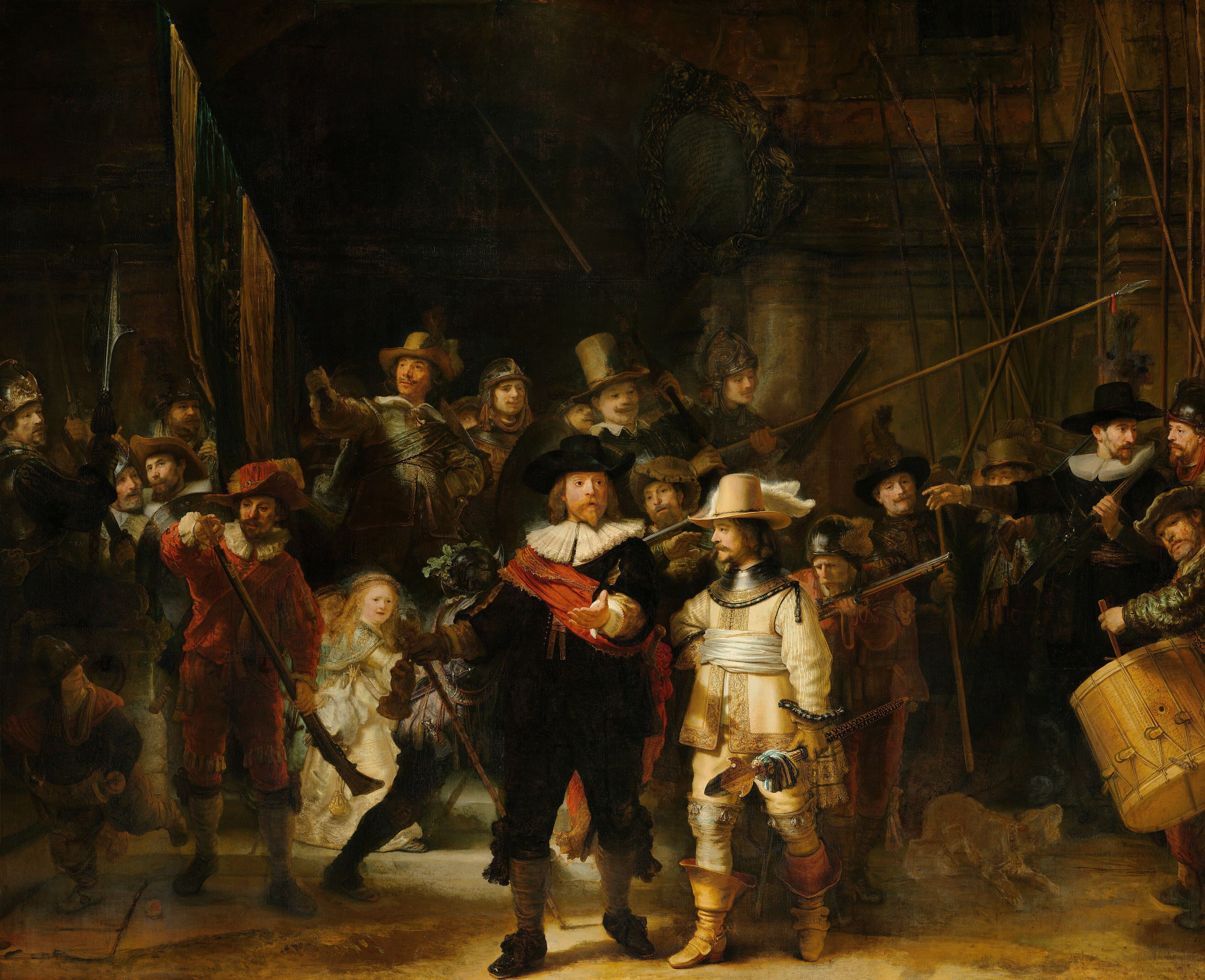
The Night Watch
Rembrandt · 1642
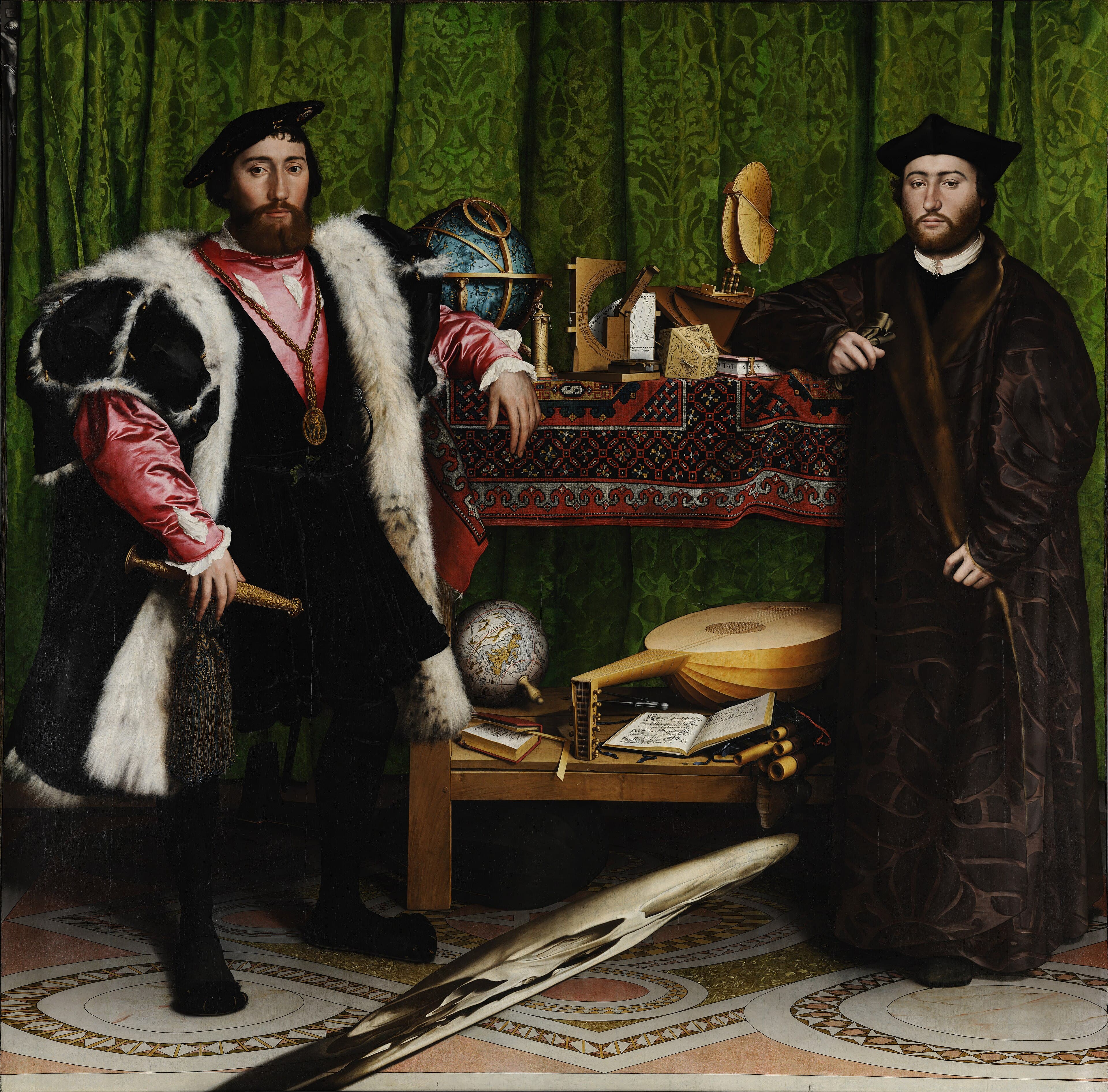
The Ambassadors
Hans Holbein the Younger · 1533
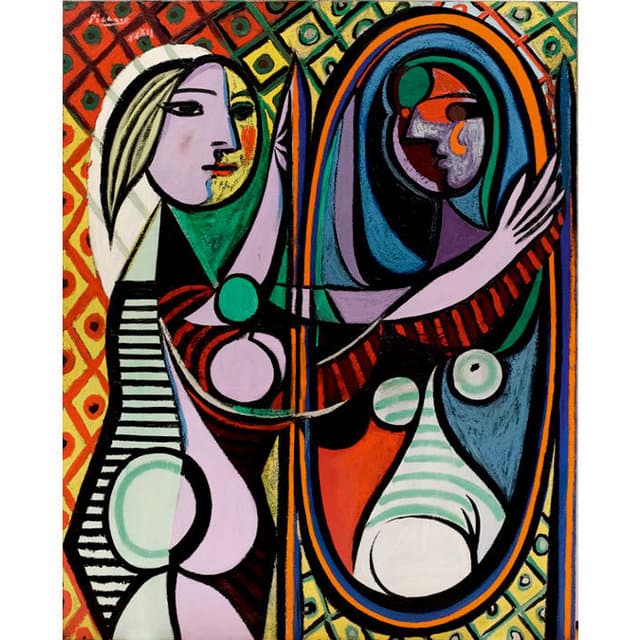
Girl before a Mirror
Pablo Picasso · 1932

Venus de Milo
Alexandros of Antioch · c. 150–125 BC

Ophelia
John Everett Millais · 1851–52

Woman with a Parasol – Madame Monet and Her Son
Claude Monet · 1875