Impressionism
Corner of the Garden at Montgeron
Claude Monet, 1876–77
Corner of the Garden at Montgeron is a large decorative canvas Claude Monet painted in 1876–77 for the collector Ernest Hoschedé's château at Montgeron, south of Paris. It is now in the State Hermitage Museum, Saint Petersburg.
- Artist
- Claude Monet
- Date
- 1876–77
- Medium
- Oil on canvas
- Dimensions
- 172 × 193 cm
- Collection
- State Hermitage Museum, Saint Petersburg, Russia
- Movement
- Impressionism
- Catalogue
- Wildenstein 418
Corner of the Garden at Montgeron is one of the biggest pictures Claude Monet painted in the 1870s: almost two meters wide, it was made in 1876–77 as a decorative panel for the Château de Rottembourg at Montgeron, south of Paris, the country house of the department-store owner and collector Ernest Hoschedé. The canvas, about 172 by 193 centimeters and number 418 in Wildenstein's catalogue, is in the State Hermitage Museum in Saint Petersburg.
What you are looking at
The view is from inside a thicket of flowering shrubs. In the lower left, a great bank of dahlias rises in pale yellow and cream; beside it, a lower mass of coral and scarlet blooms runs across the foreground and down to the water. Each flower is a single loaded touch of paint, laid on thickly so that it sits on the surface like embroidery. Behind them a screen of trees in olive, gold and blue-green closes off most of the view.
At the right a dark pool opens into the shrubbery. Its surface reflects a sliver of violet sky and the red flowers on its bank, and its far edge is lost in shadow under the trees. At the left a strip of mown lawn slips away into sunlight. Only the upper left corner gives a long view: a hazy ridge of hills under a sky streaked with cream, pink and blue, laid on in long horizontal strokes.
How it was painted
Monet keeps the horizon high and pushes everything toward the picture plane, so the garden reads as a wall of color rather than a space you could walk into. That flattening suits the work's purpose. It was meant to hang in a room as a kind of painted tapestry, not to open like a window. The brushwork changes with the material: short, stabbing touches for the flowers, longer vertical strokes for the trees, smooth horizontal drags for the water. The colors are high-keyed throughout, and there is almost no black; the darkest notes, in the pool and under the trees, are deep blues and greens.
The scale is remarkable for an Impressionist landscape. Most of Monet's canvases of these years are about 60 by 80 centimeters, sizes he could carry outdoors. A panel this large had to be worked on in stages, partly on the spot and partly in the studio, and it shows him thinking about how a picture behaves on a wall.
The Hoschedé commission
Hoschedé was one of the first serious buyers of Impressionist painting. In 1876 he invited Monet to Montgeron to paint a set of large panels for the château. Alongside this canvas the group included The Pond at Montgeron, also in the Hermitage, and the startling Turkeys, now in the Musée d'Orsay, where white birds strut across the lawn in front of the house. A view of the hunt in the park belonged to the same scheme.
The project mattered for reasons beyond painting. Hoschedé went bankrupt in 1877 and his collection was sold the following year at very low prices. His wife Alice and their six children later moved in with the Monets at Vétheuil, and after Camille Monet's death in 1879 Alice became Claude Monet's companion and, in 1892, his second wife.
Why it matters
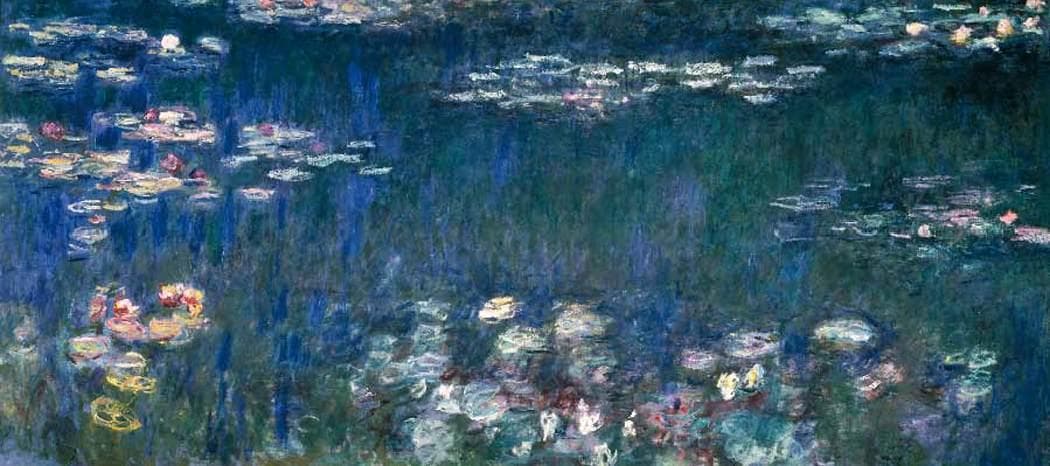
This is Monet's first sustained attempt at painting as decoration on a monumental scale. The garden pictures he had made at Argenteuil, such as Monet's Garden at Argenteuil and The Gladioli, are easel paintings; at Montgeron he had to imagine a room. The idea that a garden picture could fill a wall, and should be judged as an enveloping surface rather than a framed view, returns forty years later in the water lily decorations he painted at Giverny, such as Water Lilies, Green Harmony at the Musée de l'Orangerie. Seen in that light, the crowded flowerbeds of Montgeron are an early sketch of Monet's last ambition.
Where to see it
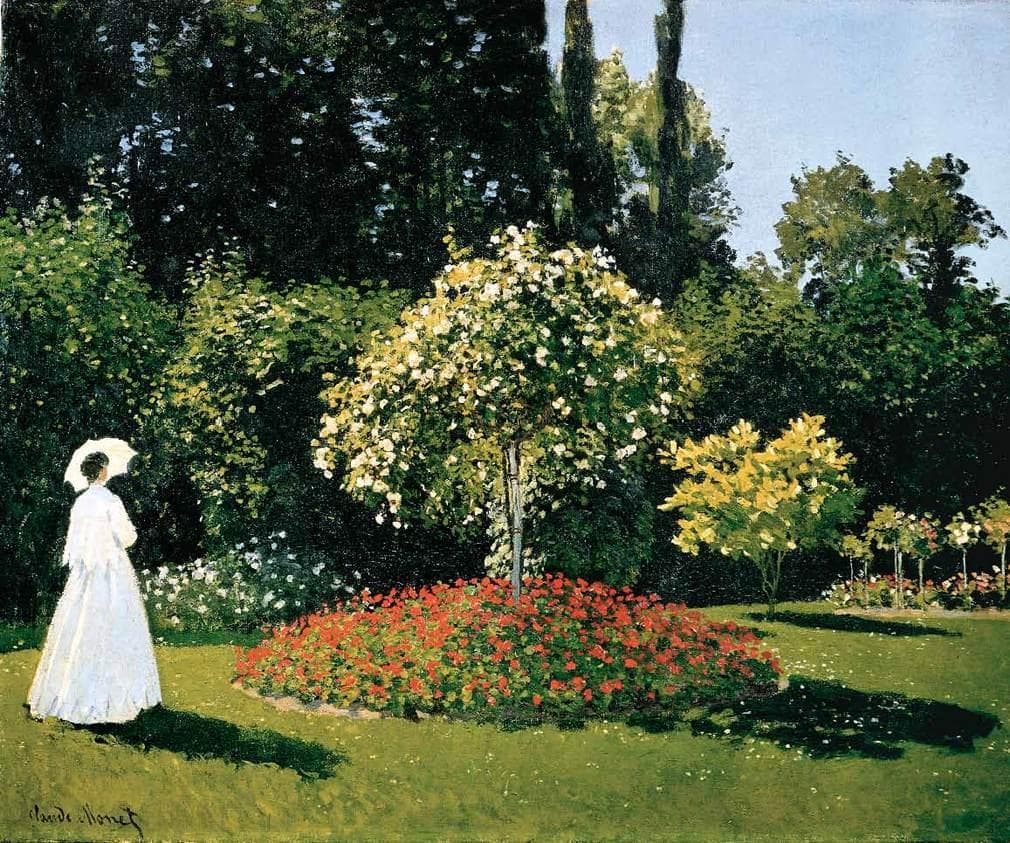
The painting belongs to the State Hermitage Museum in Saint Petersburg, which received it in 1948 from the State Museum of New Western Art in Moscow, the institution formed from the nationalized collections of Sergei Shchukin and Ivan Morozov. The Hermitage holds one of the strongest groups of French Impressionist painting outside France, including Woman in the Garden. For other collections, see where to see Monet's paintings.
Questions & answers
Where is Monet's Corner of the Garden at Montgeron?
The painting is in the State Hermitage Museum in Saint Petersburg, Russia, which received it in 1948 from the State Museum of New Western Art in Moscow. Its companion panel, The Pond at Montgeron, is also in the Hermitage, while Turkeys, another panel for the same château, is in the Musée d'Orsay.
When and where was Corner of the Garden at Montgeron painted?
Monet painted it in 1876–77 at the Château de Rottembourg in Montgeron, south-east of Paris, the country house of the collector Ernest Hoschedé, who had commissioned a set of large decorative panels for the house.
What does Corner of the Garden at Montgeron show?
A dense bed of yellow, cream, coral and red dahlias in front of a screen of trees, with a dark pool opening at the right and a glimpse of hazy hills at the upper left. It was painted as a wall decoration, so the garden is pressed up close like a tapestry of color.
How big is Corner of the Garden at Montgeron?
It measures about 172 by 193 centimeters, which makes it one of the largest canvases Monet painted in the 1870s. The size reflects its purpose as a decoration for a room in Hoschedé's château rather than an easel picture for exhibition.
More by the artist
Claude Monet

Bridge over a Pond of Water Lilies
Claude Monet · 1899

Woman with a Parasol – Madame Monet and Her Son
Claude Monet · 1875

Sunset in Venice
Claude Monet · 1908–12

La Grenouillère
Claude Monet · 1869

Beach in Pourville
Claude Monet · 1882

Springtime
Claude Monet · 1872

Boating on the River Epte
Claude Monet · 1890

The Seine at Asnières (Hermitage)
Claude Monet · 1873
Also painted in 1876
The same year
Kindred works
You may also study
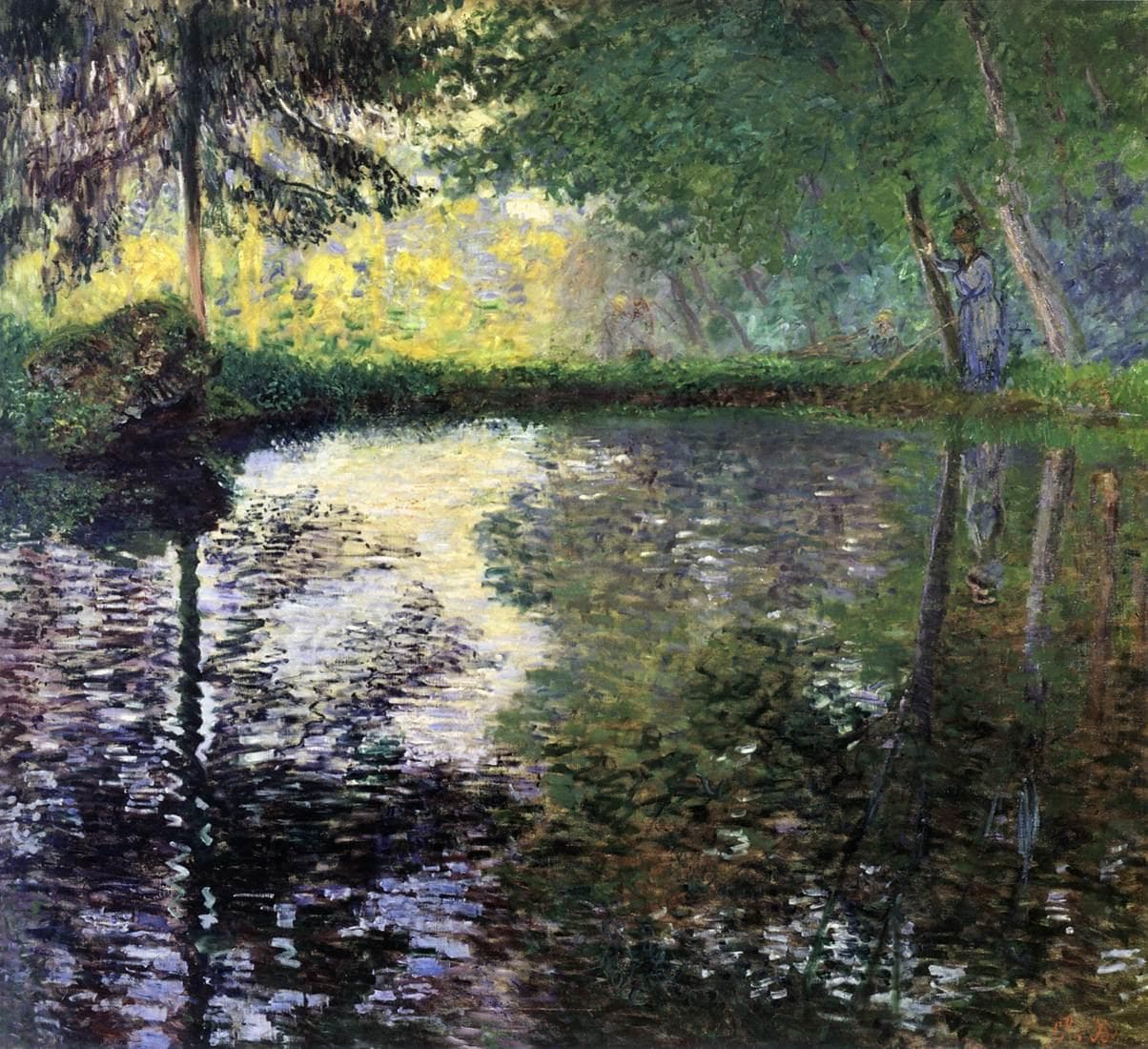
The Pond at Montgeron
Claude Monet · 1876–77
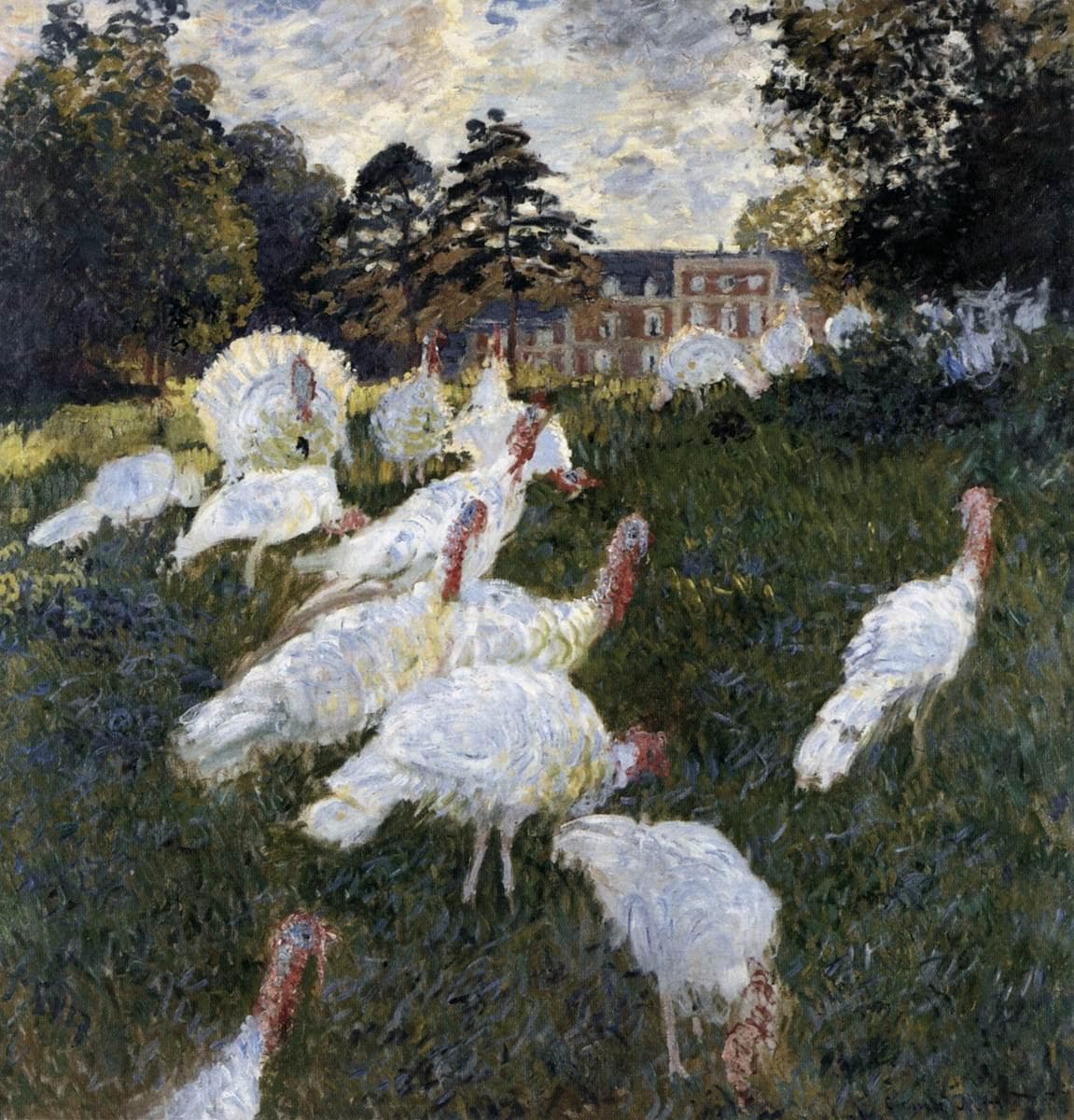
The Turkeys
Claude Monet · 1877
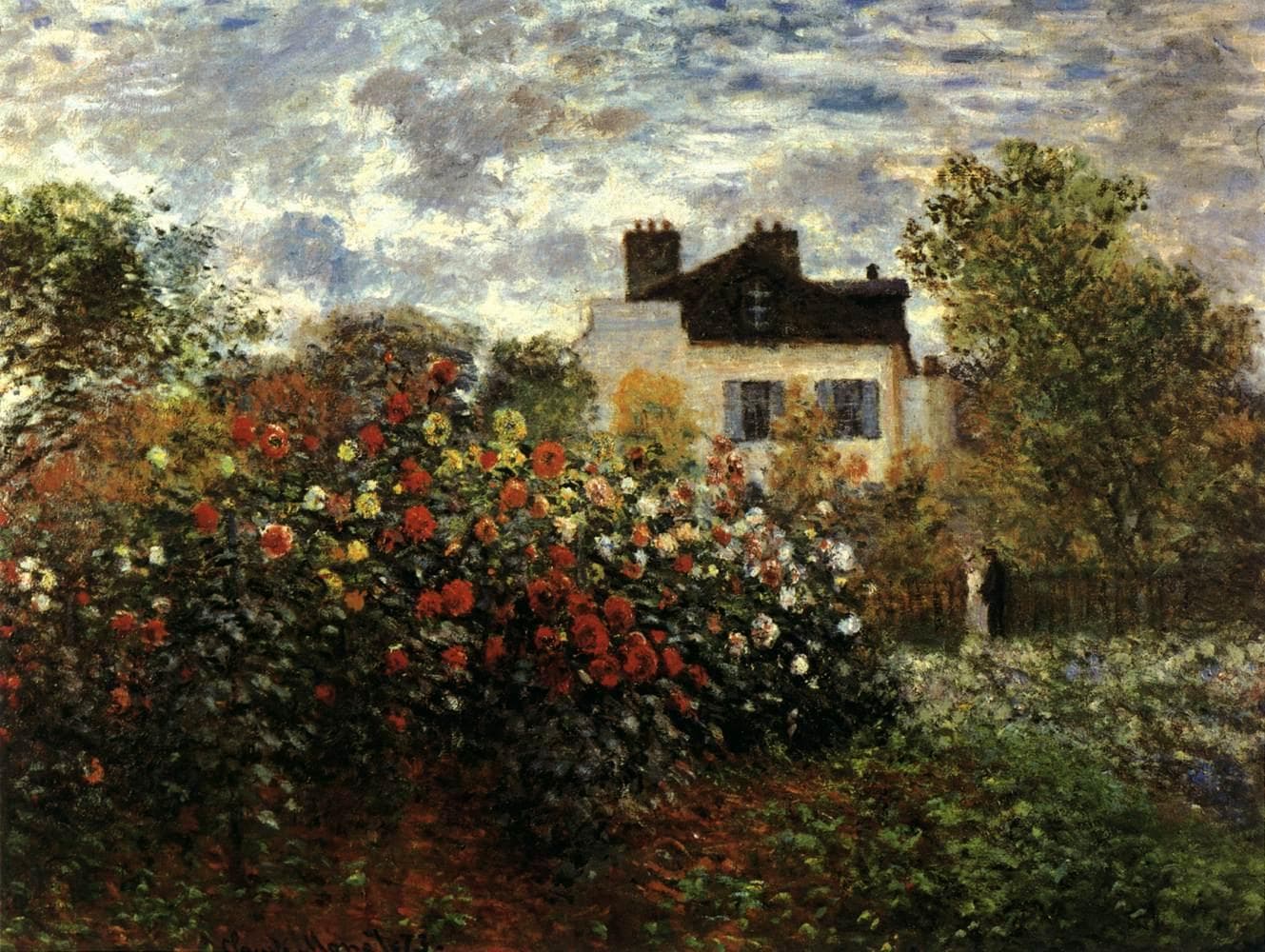
The Artist's Garden in Argenteuil (A Corner of the Garden with Dahlias)
Claude Monet · 1873
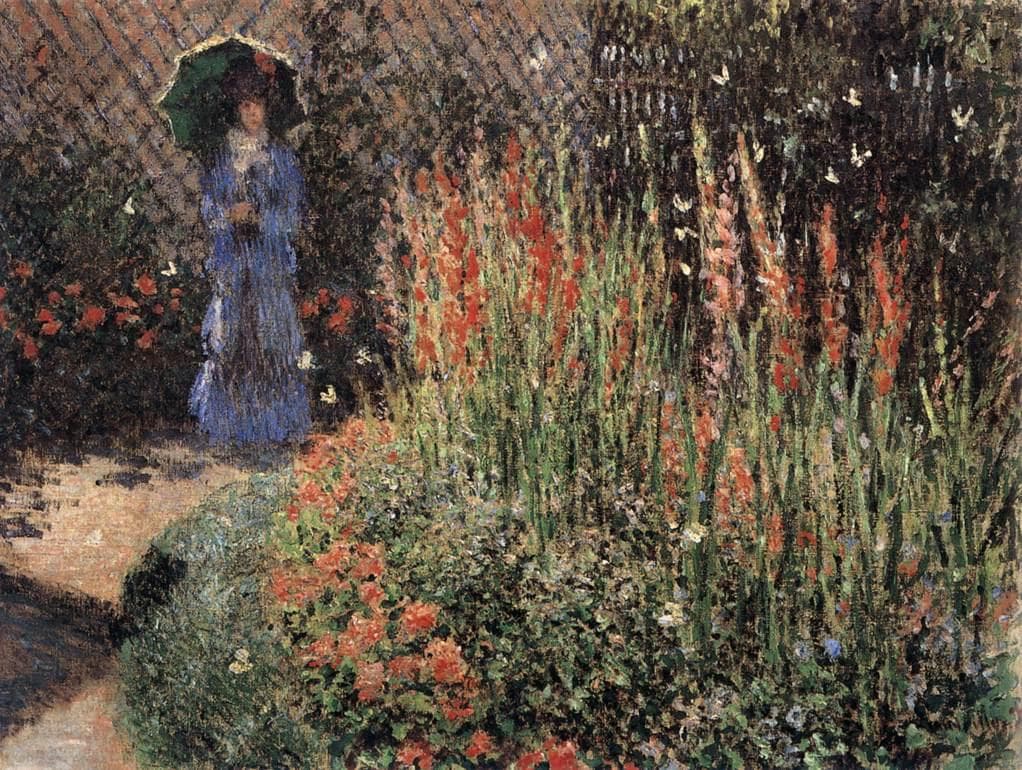
The Gladioli
Claude Monet · c. 1876
Woman in the Garden
Claude Monet · 1867
Water Lilies: Green Reflections
Claude Monet · 1914–26

The Scream
Edvard Munch · 1893

Ophelia
John Everett Millais · 1851–52