Impressionism
The Tuileries
Claude Monet, 1876
The Tuileries is an 1876 oil painting by Claude Monet, a high view over the Tuileries Garden in Paris painted from a collector's apartment on the rue de Rivoli. It hangs in the Musée Marmottan Monet, Paris.
- Artist
- Claude Monet
- Date
- 1876
- Medium
- Oil on canvas
- Dimensions
- 54 × 73 cm
- Collection
- Musée Marmottan Monet, Paris, France
- Movement
- Impressionism
- Catalogue
- Wildenstein 401
More at Musée Marmottan Monet
Claude Monet painted The Tuileries in 1876 from a fifth-floor window at 198 rue de Rivoli, looking west across the formal garden that runs from the Louvre toward the Place de la Concorde. The canvas, 54 by 73 centimeters, belongs to the Musée Marmottan Monet in Paris, which received it in 1940 from the bequest of Eugène and Victorine Donop de Monchy. Older catalogue entries and some websites give the date as 1875; the museum dates it 1876.
What you are looking at
The picture is built on a steep diagonal. At the far left, cut off by the edge of the canvas, rises the pale stone flank of the Pavillon de Marsan, the surviving northern wing of the Tuileries Palace complex. Below it the garden opens out like a map: the gravel walks are laid in with dragged strokes of cream and pink, and the lawns are flat patches of acid green that Monet barely models at all.
In the lower center sits one of the garden's round basins, its water a darker, cooler note than anything around it. Tiny figures, a few touches of black and blue each, stroll along the paths, and pale marble statues stand like exclamation marks at the edges of the lawns. Look at the lower right and you will find one of them almost dissolved into the surrounding foliage.
The trees are the real subject. Monet paints them as massed clouds of green, rust and silver-gray, and lets them run right to the horizon, where the roofs and domes of the Left Bank sit in a soft, violet haze. The sky takes up only a narrow band at the top, streaked with warm white. The whole scene reads as a single breathing mass of foliage rather than as a garden of separate trees, which is exactly how a city park looks from five stories up.
How it was made
The apartment belonged to Victor Chocquet, a customs official and one of the earliest collectors of Impressionist painting, who also championed Renoir and Cézanne. Chocquet lent Monet his windows in 1876, and from them Monet painted four views of the garden. The Marmottan canvas is the most fully worked of the group. A smaller, freer version described as a sketch is in the Musée d'Orsay.
Painting from a high window gave Monet the elevated, slightly tilted viewpoint he had already used for Boulevard des Capucines in 1873, and would use again for Quai du Louvre. It flattens the ground plane and turns streets and lawns into bands of color, a device that later Impressionists and the Japanese prints Monet collected both encouraged.
The brushwork is quick but deliberate. Monet uses a loaded brush for the trees, dabbing and twisting the paint so the surface catches real light, while the paths are dragged thin enough for the warm ground to show through. You can see the canvas weave in places along the lower edge.
The story behind it
When Monet painted this view, the Tuileries Palace itself was a ruin. It had been set on fire by the Communards in May 1871, and its blackened shell stood between the two surviving pavilions until it was demolished in 1883. Monet keeps that ruin out of the picture. He shows the garden as Parisians used it in the mid-1870s: a place of leisure, nursemaids and promenades, a sign that the city had recovered.
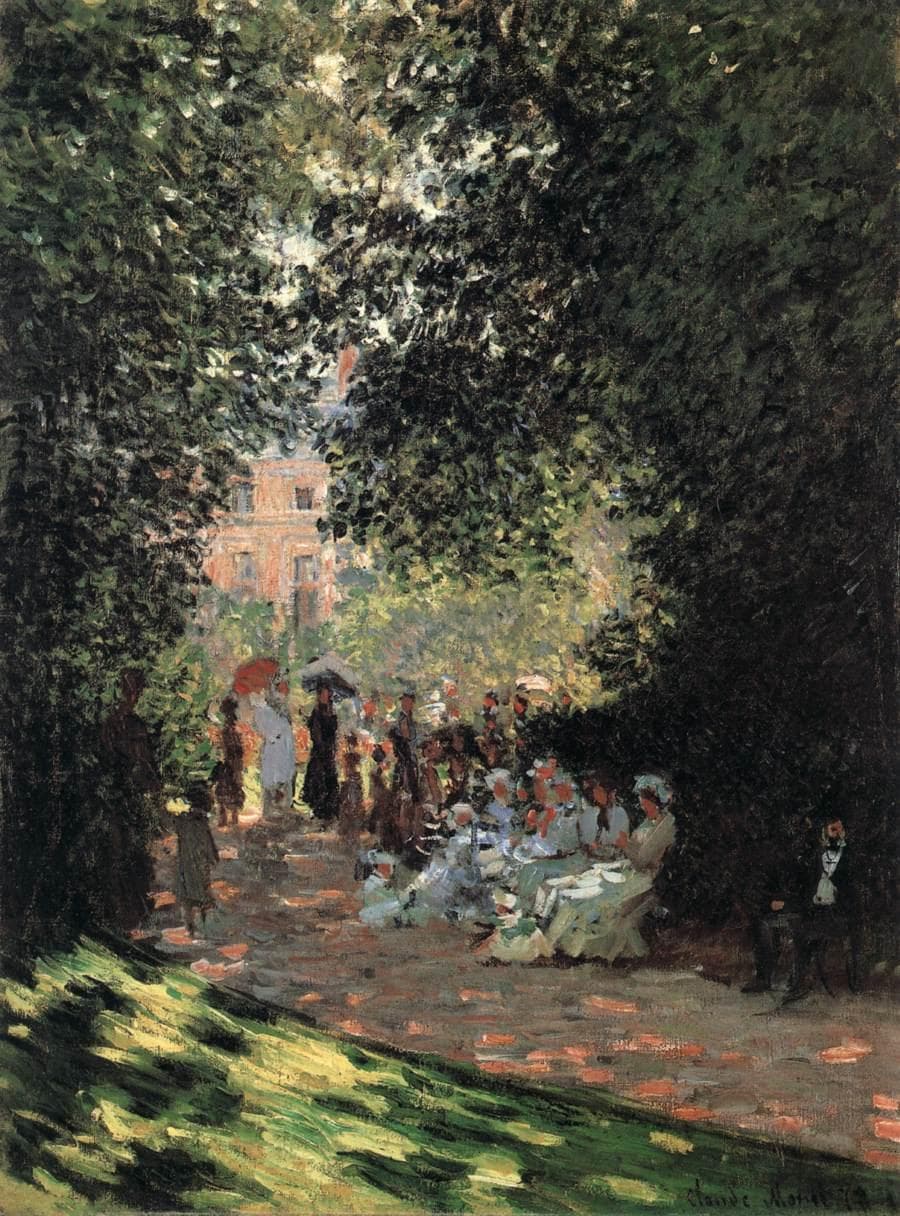
That choice fits the Impressionists' larger project in these years: painting modern Paris as a place of ordinary pleasures rather than of history and monuments. Compare the crowded, ice-bright The Parc Monceau, which Monet painted two years later.
Meaning and reading
There is no hidden symbolism here, and Monet would not have wanted one. The painting is about looking: how sunlight on a spring or early summer day unifies a vast space, and how distance turns people into specks of color. Art historians often read the urban views of 1873 to 1878 as Monet's most direct engagement with the modern city before he withdrew to the countryside at Vétheuil and, later, Giverny.
The four Tuileries views
Each of the four canvases Monet painted from Chocquet's windows frames the garden slightly differently. In some he swings the view toward the Louvre and lets the palace ruins and pavilions take more of the picture; in others, like this one, the architecture is pushed to the edge and the trees dominate. Seen together they work as an early experiment in the idea that would define his later career: returning to one motif under different light and from slightly shifted positions, as he later did with the haystacks, the poplars and Rouen Cathedral.
The Marmottan version is the calmest of the group. The light is even, the shadows short, and the sky almost white, which suggests a hazy late-morning or midday sun. There is very little cast shadow under the trees, and Monet relies instead on contrasts of warm and cool green to separate one clump of foliage from the next.
Why it matters
The painting shows Monet, in his mid-thirties, confident enough to make a large public garden into a near-abstract field of color while keeping it instantly recognizable. A Parisian of 1876 would have known exactly where they were standing. That balance between a real, named place and a surface of free brushwork is the core of Impressionism, and few of his city pictures strike it as cleanly as this one.
Detail and the detail page
The catalogue also holds a close-up of this canvas, View of the Tuileries Garden (detail), useful for studying the brushwork on the statues and basin.
Where to see The Tuileries
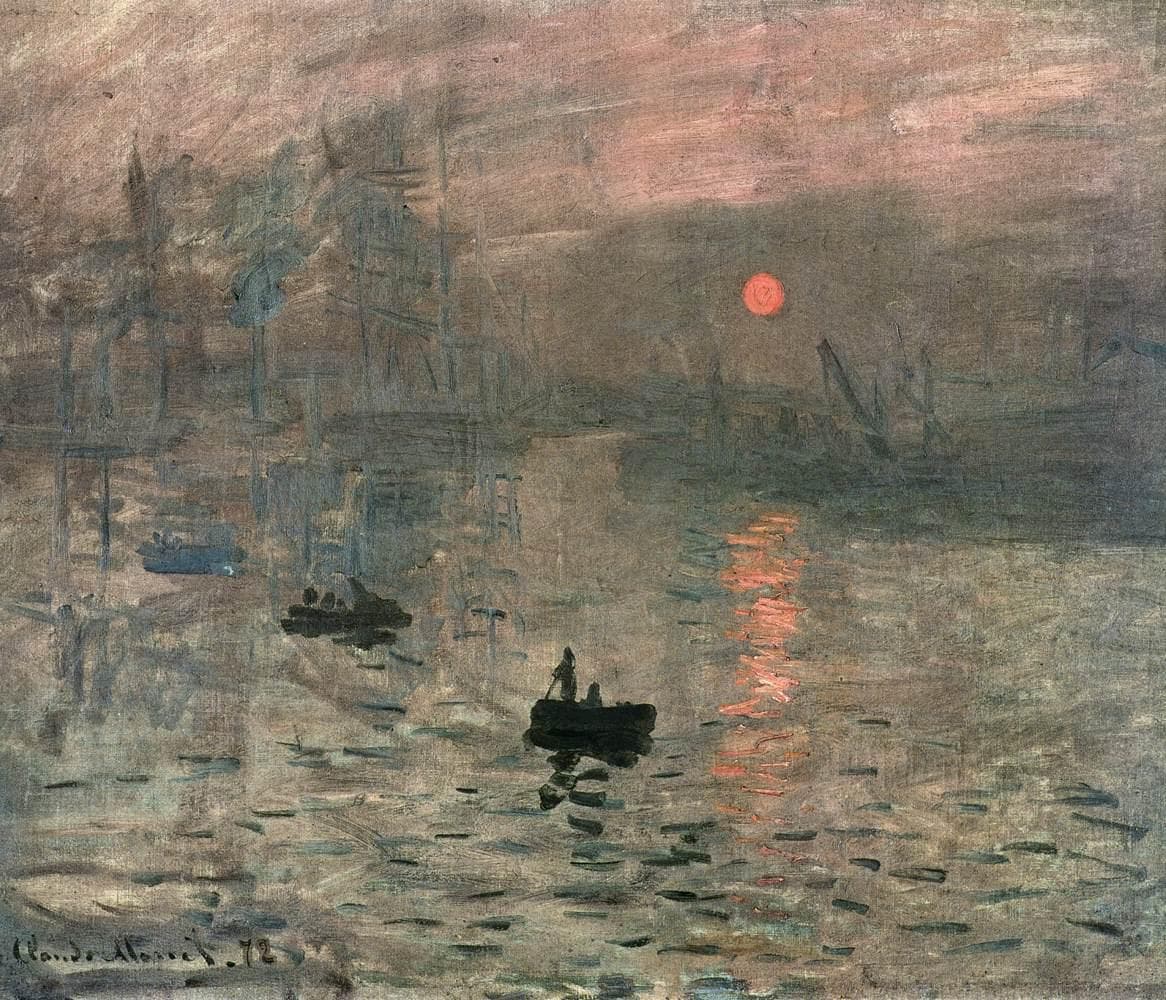
The painting is in the permanent collection of the Musée Marmottan Monet in the 16th arrondissement of Paris, which holds the largest collection of Monet's work in the world, including Impression, Sunrise. For more of his city views and landscapes, see famous Monet paintings and our guide to Impressionism.
Questions & answers
Where is Monet's The Tuileries today?
Monet's 1876 view of the Tuileries Garden is in the Musée Marmottan Monet in Paris. It entered the museum in 1940 with the Donop de Monchy bequest. A looser sketch of the same view, painted from the same window, is in the Musée d'Orsay.
Where did Monet paint the Tuileries from?
He painted it from the fifth-floor apartment of the collector Victor Chocquet at 198 rue de Rivoli, which looked down onto the garden. Monet made four views of the Tuileries from those windows in 1876, and the Marmottan canvas is the most finished of them.
Was View of the Tuileries Garden painted in 1875 or 1876?
The Musée Marmottan Monet dates the painting to 1876, the year Monet worked from Chocquet's apartment. Some older listings, including earlier versions of this page, gave 1875. The museum's date is the one to rely on. The difference matters only for cataloguing; the painting itself is the same.
How big is Monet's Tuileries painting?
The canvas measures 54 by 73 centimeters, about 21 by 29 inches, without its frame. It is a moderate easel size typical of Monet's outdoor and window views of the 1870s, small enough to be painted quickly in front of the motif.
More by the artist
Claude Monet

Bridge over a Pond of Water Lilies
Claude Monet · 1899

Woman with a Parasol – Madame Monet and Her Son
Claude Monet · 1875

Sunset in Venice
Claude Monet · 1908–12

La Grenouillère
Claude Monet · 1869

Beach in Pourville
Claude Monet · 1882

Springtime
Claude Monet · 1872

Boating on the River Epte
Claude Monet · 1890

The Seine at Asnières (Hermitage)
Claude Monet · 1873
Also painted in 1876
The same year
Kindred works
You may also study
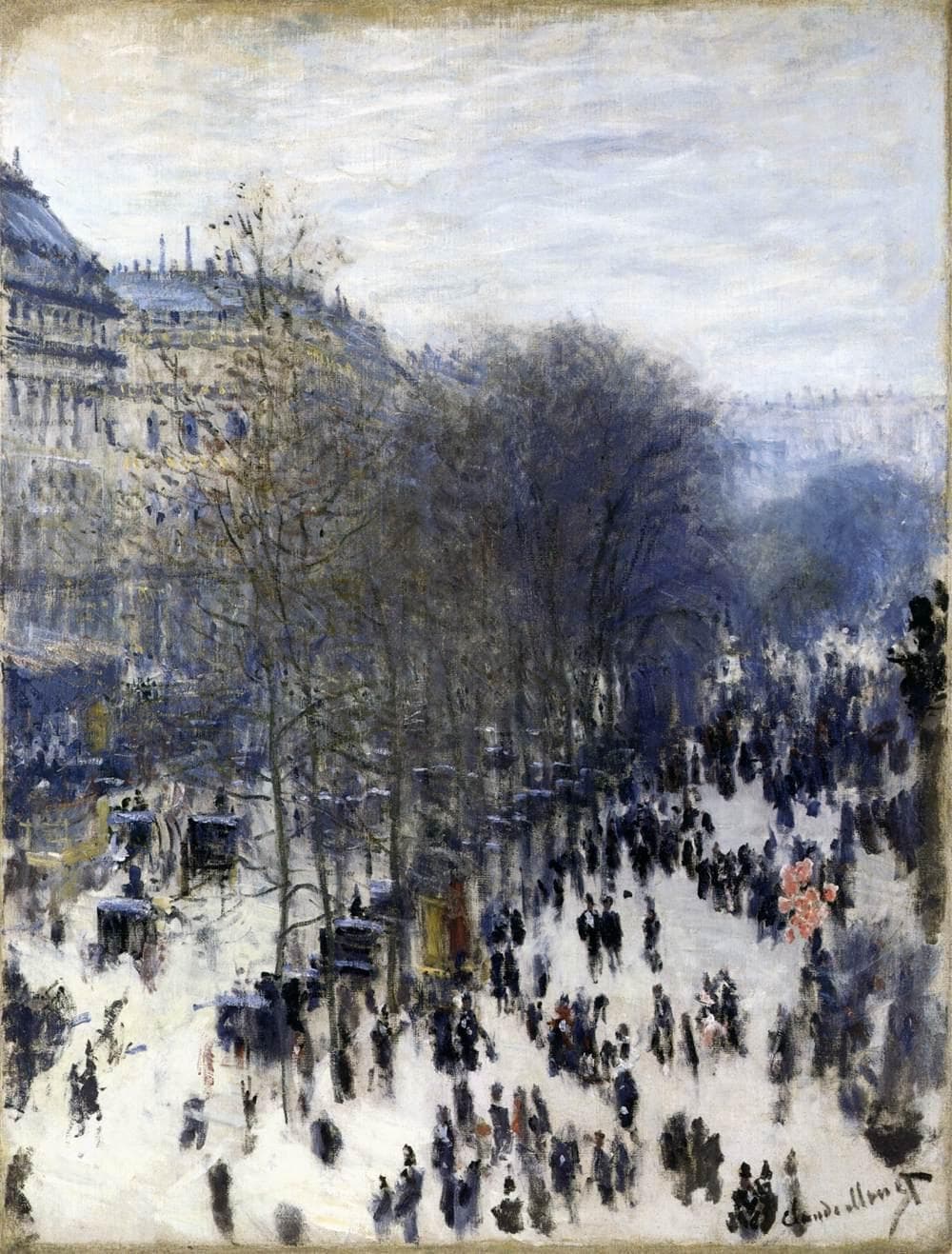
Boulevard des Capucines
Claude Monet · 1873–74
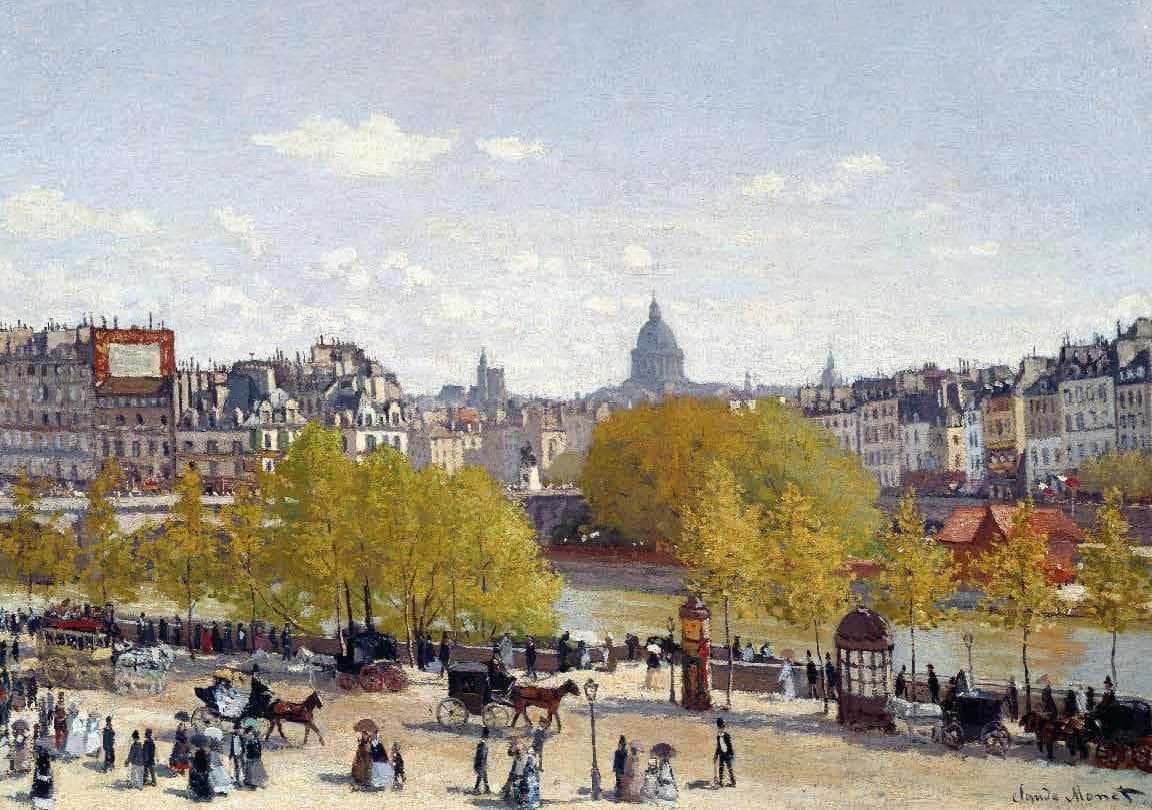
Quai du Louvre, Paris
Claude Monet · 1867
The Parc Monceau
Claude Monet · 1878
Impression, Sunrise
Claude Monet · 1872

The Scream
Edvard Munch · 1893

Ophelia
John Everett Millais · 1851–52

The Great Wave off Kanagawa
Katsushika Hokusai · c. 1830–32
Liberty Leading the People
Eugène Delacroix · 1830