Impressionism
The Pond at Montgeron
Claude Monet, 1876–77
The Pond at Montgeron (L'Étang à Montgeron) is a large decorative painting of 1876–77 by Claude Monet, made for the collector Ernest Hoschedé, of a still pond reflecting trees and sunlit foliage. It is in the State Hermitage Museum, Saint Petersburg.
- Artist
- Claude Monet
- Date
- 1876–77
- Medium
- Oil on canvas
- Dimensions
- 173 × 194 cm
- Collection
- State Hermitage Museum, Saint Petersburg, Russia
- Movement
- Impressionism
- Catalogue
- Wildenstein 420
What you are looking at
A still pond fills the lower two-thirds of a nearly square canvas. Its surface reflects everything above it: the dark trunks of the trees, the green of the banks, a blaze of yellow light breaking through the leaves, and patches of pale sky, all broken into short horizontal strokes of violet, blue, green, cream and white. On the far bank, a band of sunlit, yellow-green foliage glows behind a screen of slim, dark trunks, and at left a mossy mound sits at the water's edge under a leaning tree.
At the right, half hidden among the trees on the bank, a woman in a pale blue dress and a hat stands fishing, her rod a thin line over the water; her reflection hangs upside down below her among the reflected trunks. There is almost no sky, only the light filtering through leaves.
Claude Monet painted L'Étang à Montgeron in 1876–77. It is a very large canvas, 173 by 194 centimeters, number 420 in Wildenstein's catalogue, and is in the State Hermitage Museum, Saint Petersburg.
Where and when
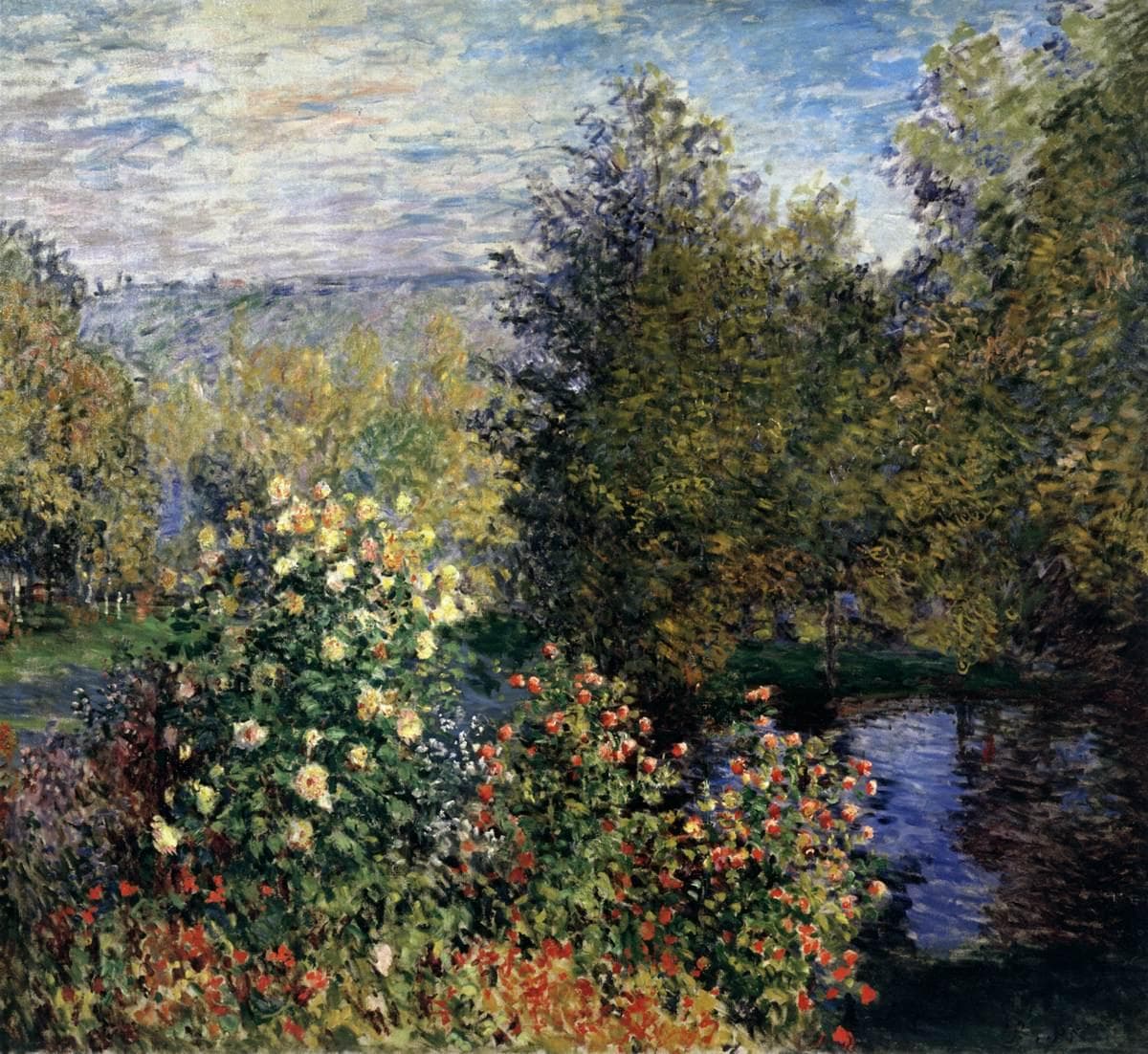
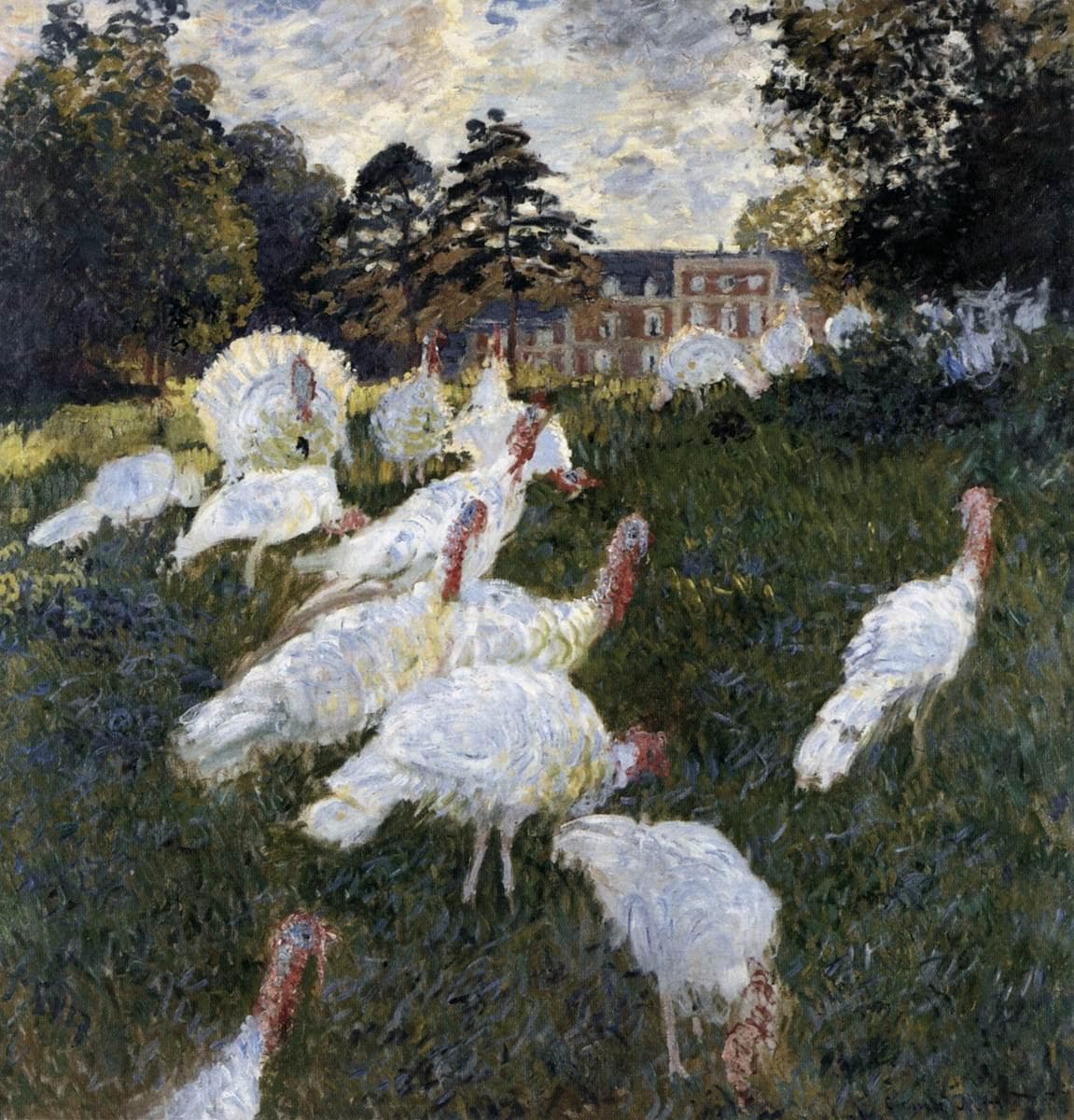
In the summer and autumn of 1876 Monet stayed at the Château de Rottembourg in Montgeron, southeast of Paris, the country house of Ernest Hoschedé, a department-store magnate and collector who had bought his work. Hoschedé commissioned a set of large decorative panels for the château. Monet painted four: The Turkeys, now in the Musée d'Orsay; A Corner of the Garden at Montgeron and this pond, both now in the Hermitage; and The Hunt, in a private collection.
The commission had lasting consequences. Hoschedé went bankrupt in 1877 and his collection was sold. In 1878 the Monets and Hoschedé's wife, Alice, with her six children moved in together at Vétheuil. After Camille's death in 1879 and Ernest's in 1891, Alice became Monet's second wife in 1892. The woman fishing is sometimes identified as Alice herself, though the figure is too slight to be a portrait.
How it was painted
Because it was made as decoration, the picture is designed to be seen from a distance and to work as a surface. The vertical tree trunks and their reflections set up a rhythm across the canvas, almost like a folding screen. Look at the water. Monet does not paint a smooth mirror but lays down countless separate strokes, each a slightly different color, so the reflection shimmers and the surface reads as water.
The brightest passage, the yellow foliage across the pond, is repeated below as a broad band of pale gold and white in the water, and the darkest, the shaded trunks, becomes long vertical streaks of blue-black. Between them, violet and green dabs break up the surface. The large format and thin, rapid handling in places suggest Monet worked partly on the spot and partly in the château, finishing the panel the following year. Notice how the woman is built from just a few strokes of blue and white, yet her reflection is as carefully placed as she is.
The motif and its siblings
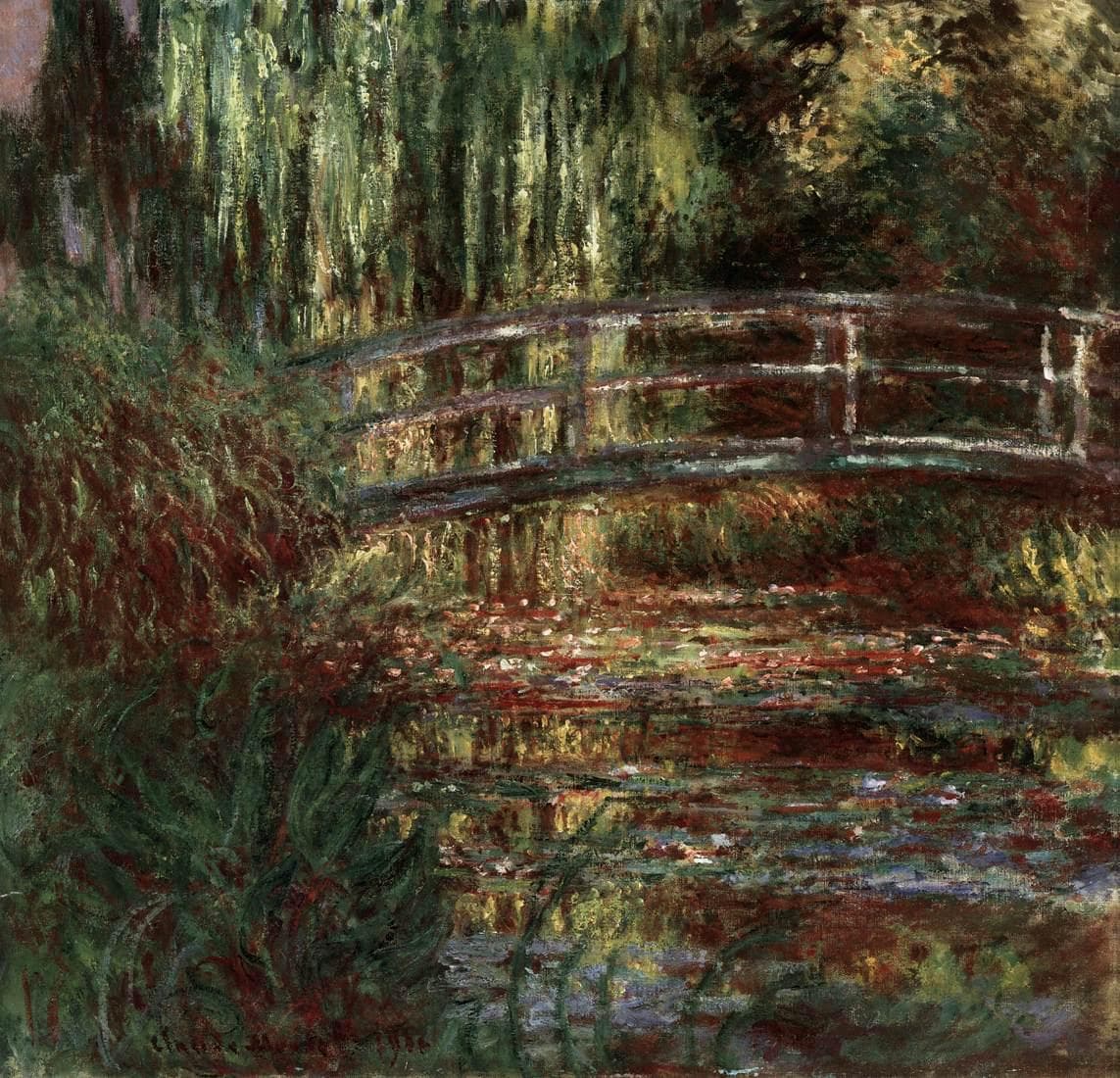
The scale and the subject, a pond seen close up with reflected trees and almost no sky, look forward by twenty years to the water garden at Giverny and the Water Lilies. Compare the pond's surface here with The Water Lily Pond of 1900 and the late decorative ambitions of the Orangerie panels, such as Water Lilies, Green Harmony.
Within the Hoschedé set, the pond is the calmest panel: The Turkeys is bright and almost comic, with white birds strutting in a meadow before the château, and the garden picture is a dense bank of dahlias and flowering shrubs running down to the water. Seen together, the panels would have surrounded the room with the estate's own grounds.
Where to see it
The painting is in the State Hermitage Museum, Saint Petersburg, which also holds its companion, A Corner of the Garden at Montgeron. For other museums, see where to see Monet's paintings, and for the artist, Claude Monet.
Questions & answers
Where is Monet's The Pond at Montgeron?
The painting is in the State Hermitage Museum in Saint Petersburg, together with its companion, A Corner of the Garden at Montgeron. It is a large canvas of 173 by 194 centimeters, catalogued by Wildenstein as number 420.
When and where was The Pond at Montgeron painted?
In 1876–77, at the Château de Rottembourg in Montgeron, southeast of Paris, the country house of Ernest Hoschedé, where Monet stayed in the summer and autumn of 1876. He finished the panel the following year.
What does The Pond at Montgeron show?
A still pond reflecting dark tree trunks and a band of sunlit yellow-green foliage on the far bank, with a woman in blue fishing among the trees at right. Almost all the picture is water and reflection.
Who commissioned The Pond at Montgeron?
Ernest Hoschedé, a department-store owner and collector, commissioned it as one of four decorative panels for his château. His wife Alice later became Monet's second wife, after both their spouses had died.
More by the artist
Claude Monet

Bridge over a Pond of Water Lilies
Claude Monet · 1899

Woman with a Parasol – Madame Monet and Her Son
Claude Monet · 1875

Sunset in Venice
Claude Monet · 1908–12

La Grenouillère
Claude Monet · 1869

Beach in Pourville
Claude Monet · 1882

Springtime
Claude Monet · 1872

Boating on the River Epte
Claude Monet · 1890

The Seine at Asnières (Hermitage)
Claude Monet · 1873
Also painted in 1876
The same year
Kindred works
You may also study
Corner of the Garden at Montgeron
Claude Monet · 1876–77
The Turkeys
Claude Monet · 1877
The Water Lily Pond
Claude Monet · 1900
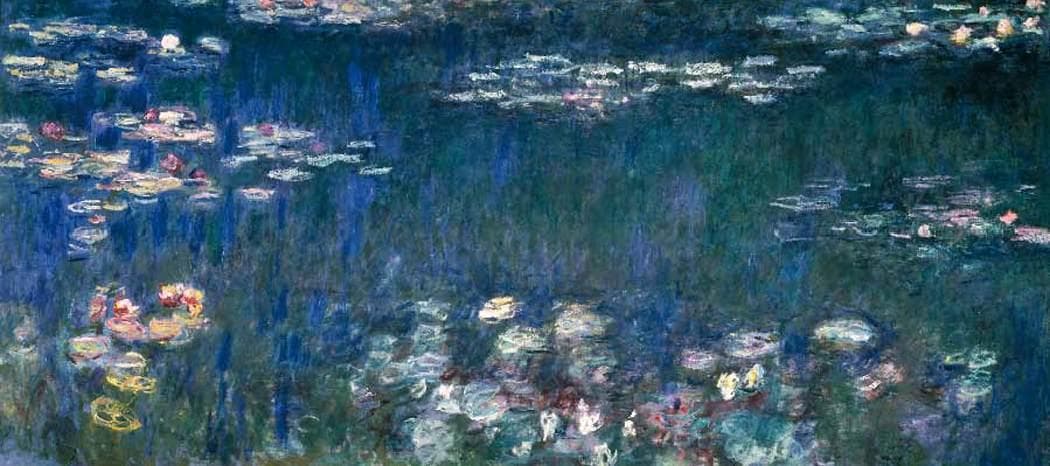
Water Lilies: Green Reflections
Claude Monet · 1914–26
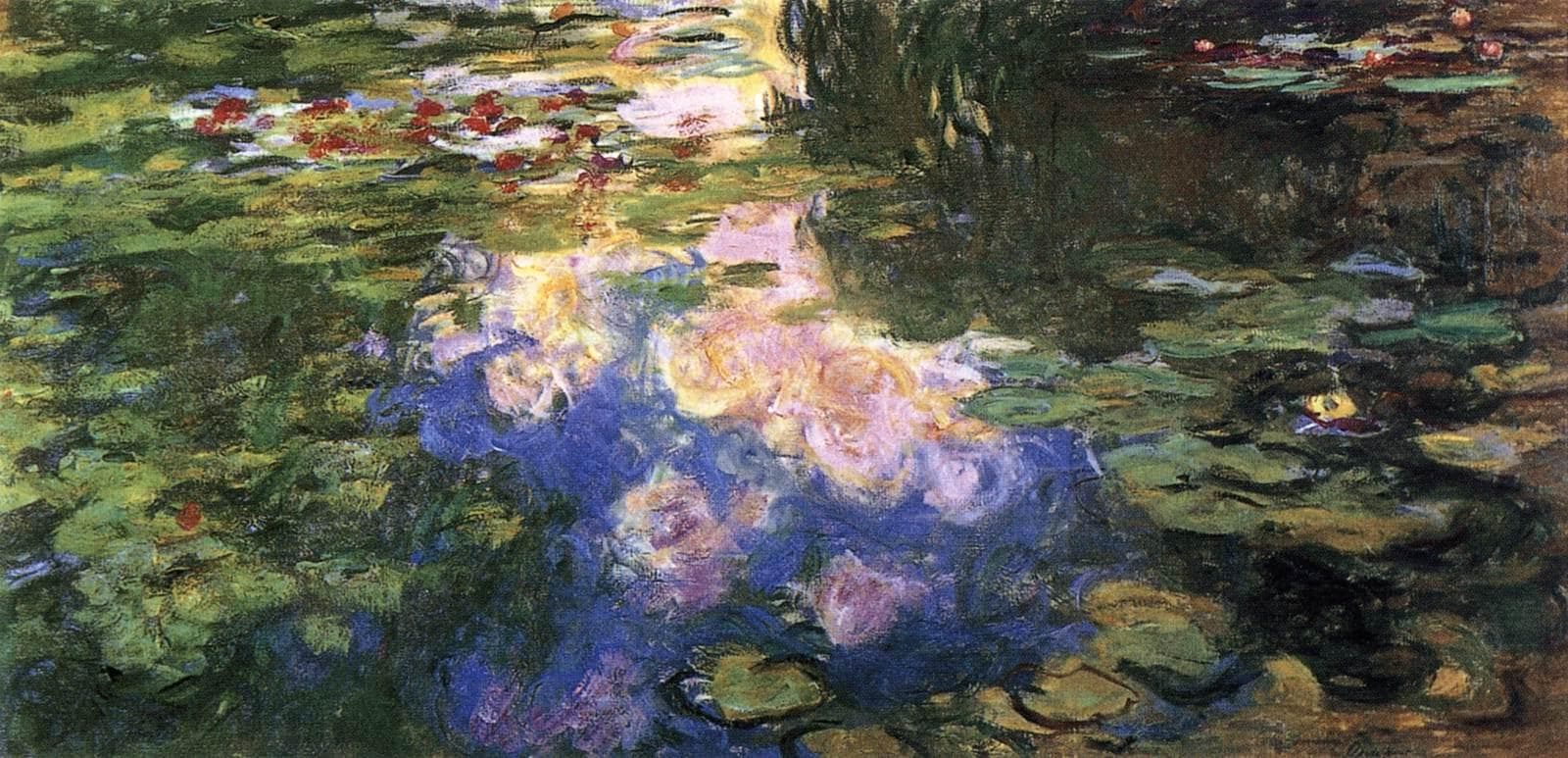
Water-Lily Pond (Le Bassin aux nymphéas), 1917–19
Claude Monet · 1917–19

Venus de Milo
Alexandros of Antioch · c. 150–125 BC

The Scream
Edvard Munch · 1893

Ophelia
John Everett Millais · 1851–52