Image: Amgueddfa Cymru – Museum Wales (CC0) · CC0 · via Wikimedia Commons
San Giorgio Maggiore
Claude Monet, 1908
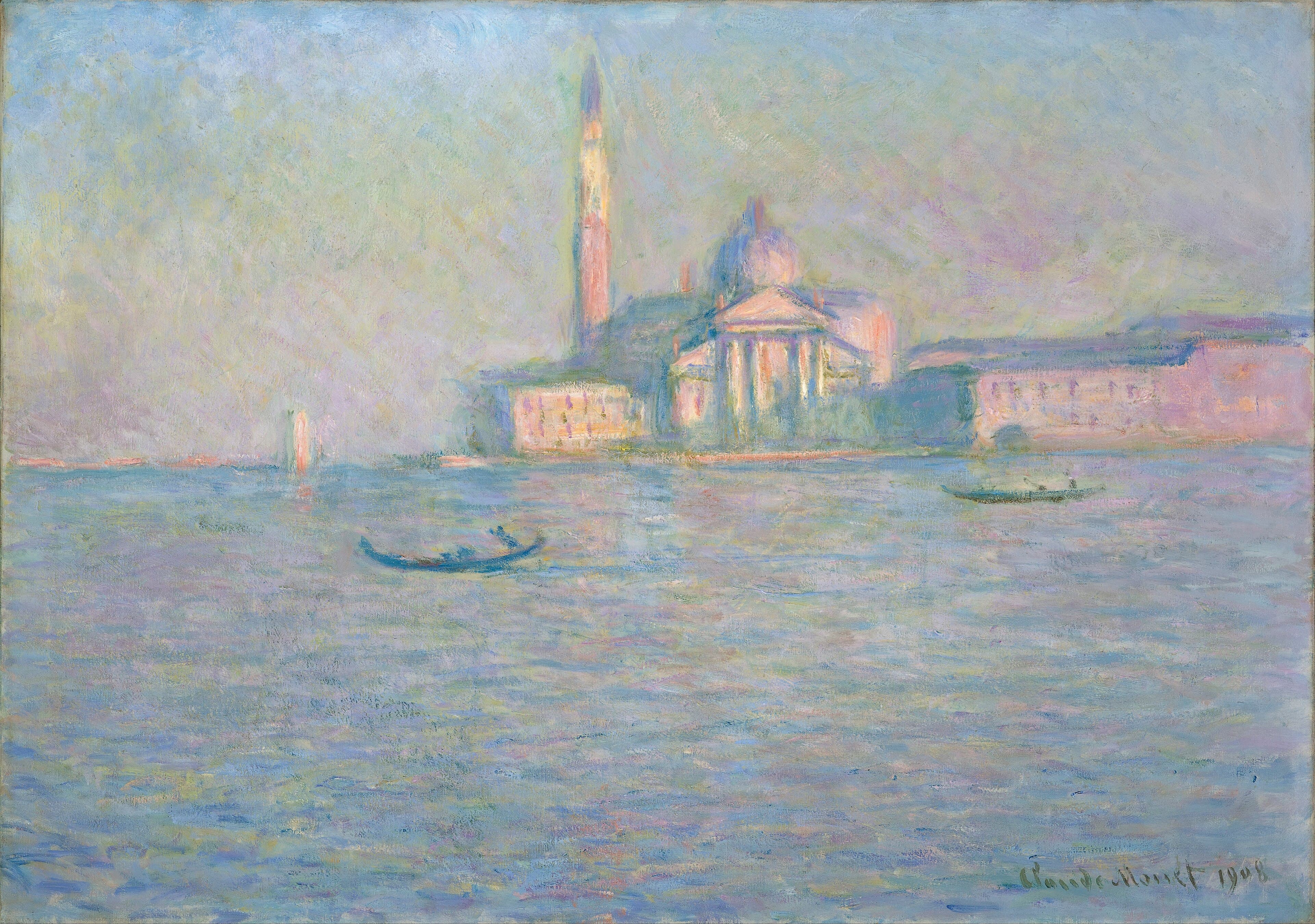
San Giorgio Maggiore is a 1908 painting by Claude Monet of Palladio's island church in Venice, almost dissolved in pale lilac and green mist, with two gondolas on the lagoon. It is in National Museum Cardiff, Wales.
- Artist
- Claude Monet
- Date
- 1908
- Medium
- Oil on canvas
- Dimensions
- 59.2 × 81.2 cm
- Collection
- National Museum Cardiff (Amgueddfa Cymru), Cardiff, United Kingdom
- Movement
- Impressionism
- Catalogue
- Wildenstein 1747
- Water & Sea
- Architecture & Ruins
- The City
San Giorgio Maggiore is one of Claude Monet's views of the island church across the Venetian lagoon, painted during his only stay in Venice in the autumn of 1908. The canvas, 59.2 by 81.2 centimeters, was bought by Gwendoline Davies in 1912 and is now in National Museum Cardiff (Amgueddfa Cymru), inventory NMW A 2488. Among the San Giorgio pictures it is the palest and most veiled.
What you're looking at
The church sits in the upper middle of the canvas, set well back, with water filling more than half the picture. You can make out the essentials of Palladio's building: the white temple front with its columns and pediment, the dome behind, the tall campanile to the left, and the long low monastery wings to either side, touched with pink and apricot. But everything is softened, as if seen through gauze. The sky is a pale mixture of lilac, rose, green and cream, and the bell tower barely separates from it.
The lagoon is painted in short horizontal strokes of the same colors, lilac and pale green with flecks of pink. Two gondolas are the only dark notes: a small one to the left near a faint sail or mooring post, and a larger one at the right with a standing gondolier, drawn in a few strokes of blue-black. They give scale to the empty water and pull the eye across the canvas. The signature and date, Claude Monet 1908, are at the lower right.
The museum's catalogue notes that the view was taken from the window of the Monets' room at the Hotel Britannia, which faced San Giorgio across the basin of San Marco.
Venice in 1908
Monet arrived in Venice with his wife Alice at the beginning of October 1908 and stayed until early December, first at the Palazzo Barbaro on the Grand Canal and then at the Hotel Britannia. He had resisted the city for years, but there he settled into a regular routine of motifs, working on several canvases at once and returning to each at its own hour. From the hotel, San Giorgio was always in front of him, and it became the subject of his longest run of Venetian pictures.
He took the canvases home unfinished and reworked them at Giverny. Alice died in 1911; the following year twenty-nine Venice paintings were shown at Bernheim-Jeune in Paris.
How this version differs
The San Giorgio views divide by hour and weather. At dusk, in Twilight, Venice and Cardiff's own Sunset in Venice, the church is a dark silhouette on an orange sky. In the Indianapolis Church of San Giorgio Maggiore, seen from a similar distance, the facade is brighter and firmer, catching sun, with blue and pink water. This Cardiff canvas is the misty, high-key version: the contrasts are low, the building is almost the same value as the sky, and the gondolas carry the only real darks. It is the picture in the series closest to the London fog paintings Monet had made a few years earlier.
Its smaller size also stands out. Many of the Venice canvases are around 65 by 92 or 73 by 92 centimeters; this one is a little smaller and the brushwork is correspondingly finer.
How it was painted
The paint is thin to medium, with dry, short strokes in the sky that let the pale ground glimmer through. The architecture is not drawn in line but built from slightly lighter and warmer touches laid over the mist: a few vertical strokes of white for the columns, a curve of pink for the dome. The water is laid in horizontal dashes with lilac over green, and a warmer strip of pink along the base of the island suggests the reflection of the buildings.
Ownership and where to see it
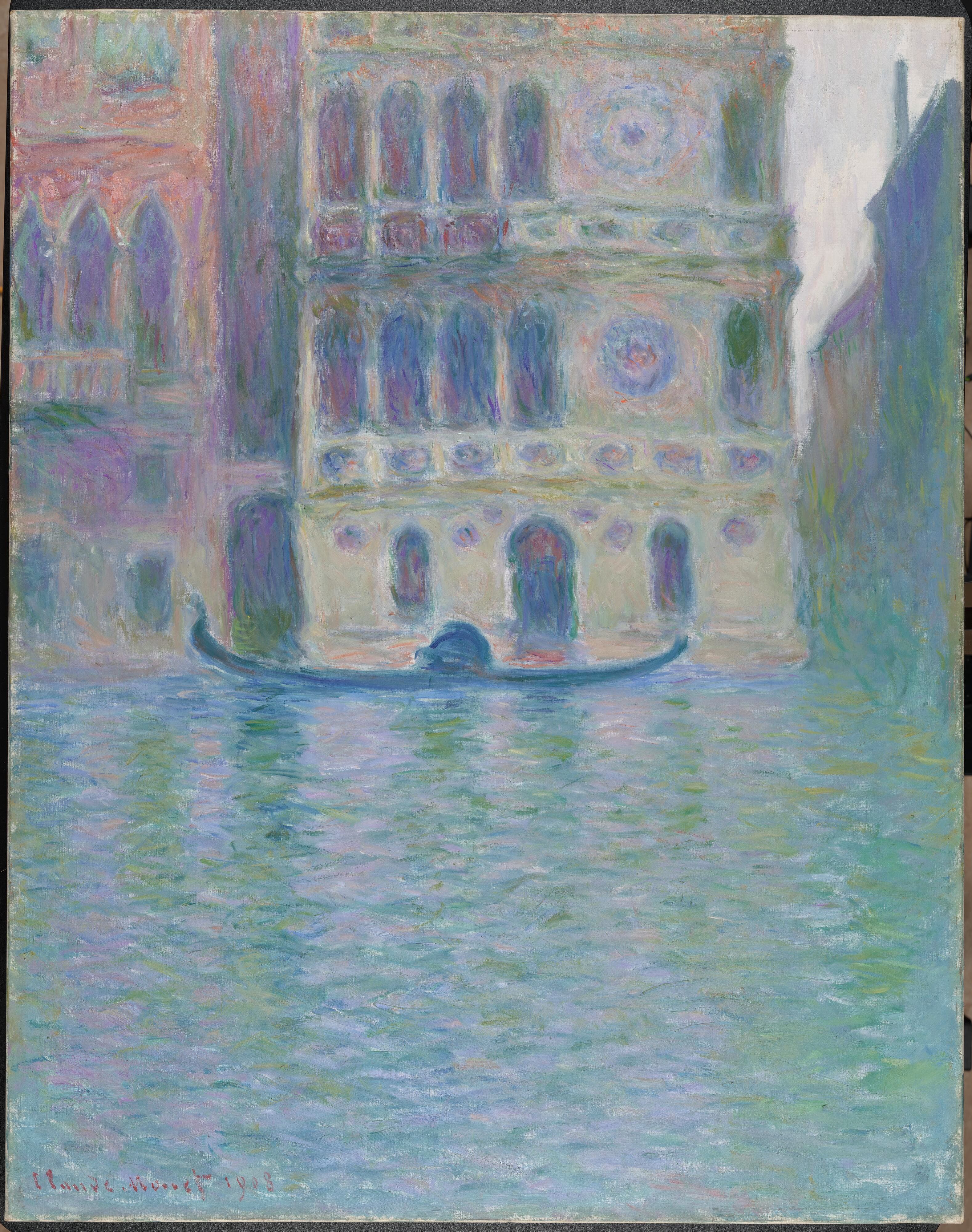
Gwendoline Davies (1882–1951), who with her sister Margaret formed the great collection of Impressionist paintings at Gregynog in mid-Wales, bought this canvas in Paris in 1912, the year of the Venice exhibition. It came to the National Museum with her bequest, alongside Sunset in Venice and The Palazzo Dario, so that Cardiff holds three of the Venice pictures. For the whole group see Monet in Venice, and for other public collections of Monet see Where to See Monet's Paintings.
Questions & answers
Where is Monet's San Giorgio Maggiore?
It is in National Museum Cardiff (Amgueddfa Cymru) in Wales, inventory NMW A 2488. It came from the collection of Gwendoline Davies, who bought it in Paris in 1912. Cardiff also owns Sunset in Venice and The Palazzo Dario.
When and where was it painted?
Monet began it in Venice in the autumn of 1908, during his only trip there, reportedly from the window of his room at the Hotel Britannia facing the island of San Giorgio. He finished it at Giverny before the 1912 Paris exhibition.
What does the painting show?
Palladio's church of San Giorgio Maggiore, with its white columned facade, dome and bell tower, seen across the lagoon in pale lilac and green mist, with two gondolas on the water as the only dark accents.
How many paintings of San Giorgio Maggiore did Monet make?
San Giorgio was one of his main Venetian motifs, painted at different hours from morning haze to sunset. Known versions include this one, Sunset in Venice in Cardiff, Twilight, Venice in Tokyo and the Indianapolis canvas.
More by the artist
Claude Monet

Sunset in Venice
Claude Monet · 1908–12
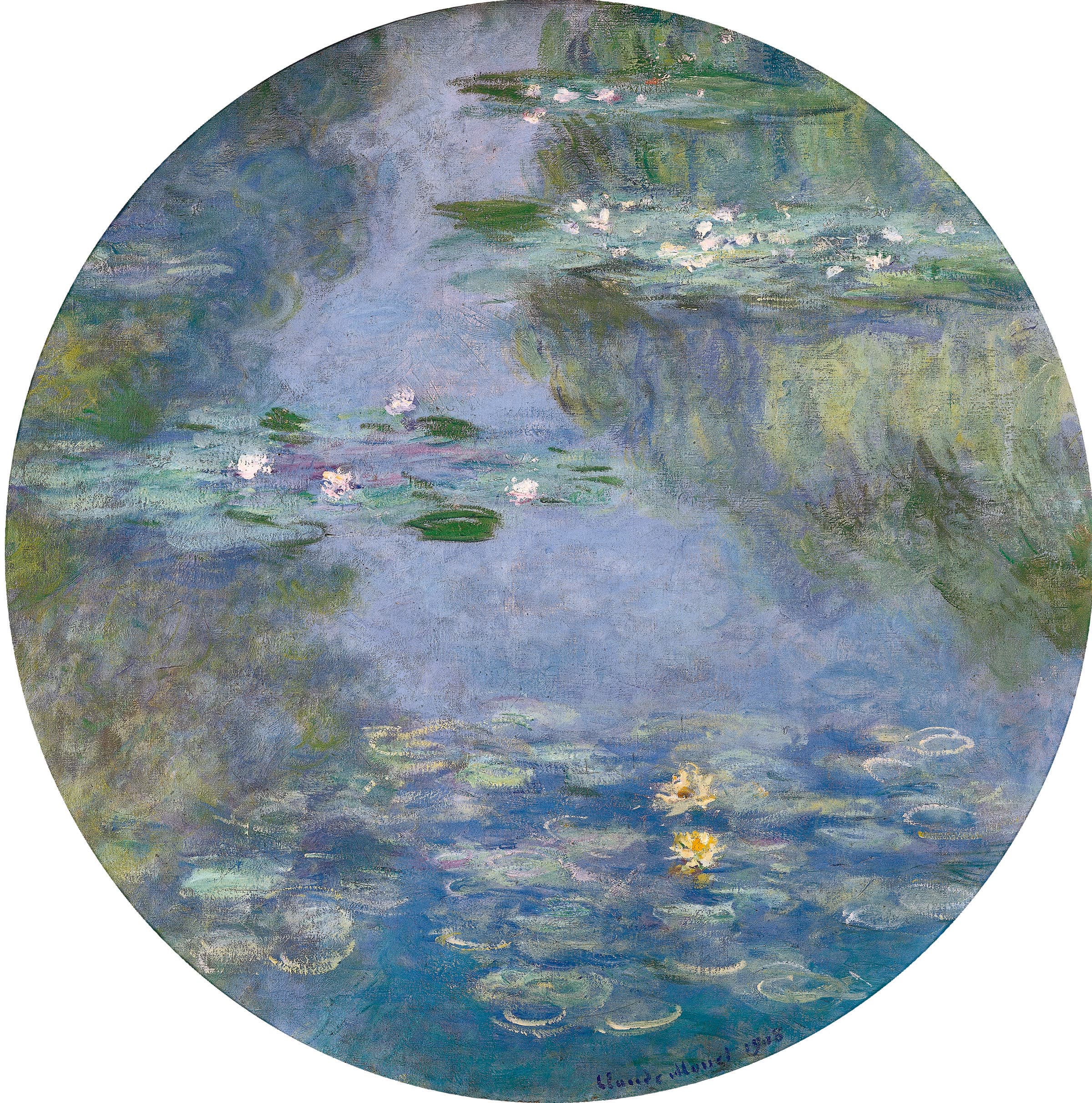
Nymphéas (1908 tondo, Vernon)
Claude Monet · 1908
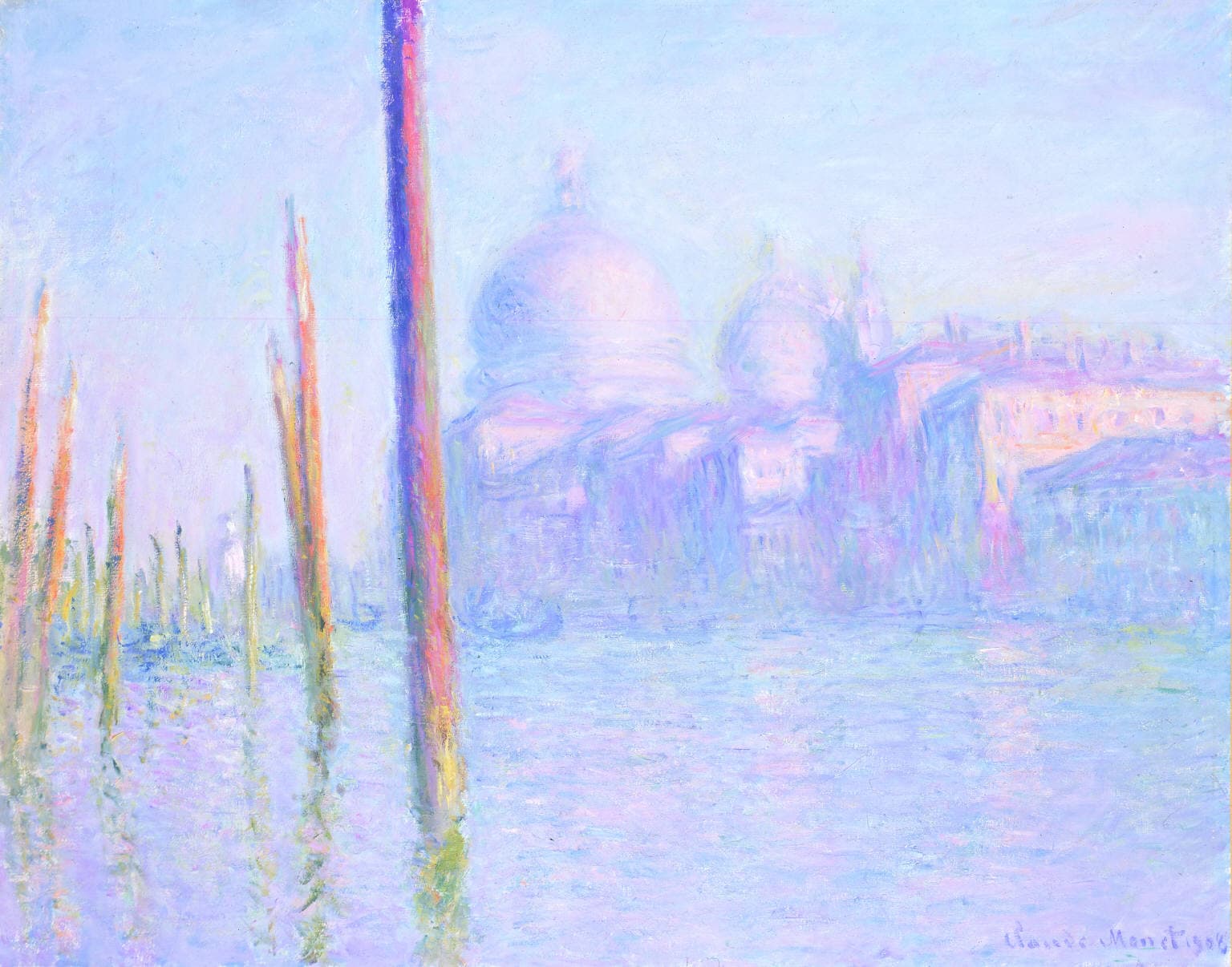
The Grand Canal, Venice
Claude Monet · 1908
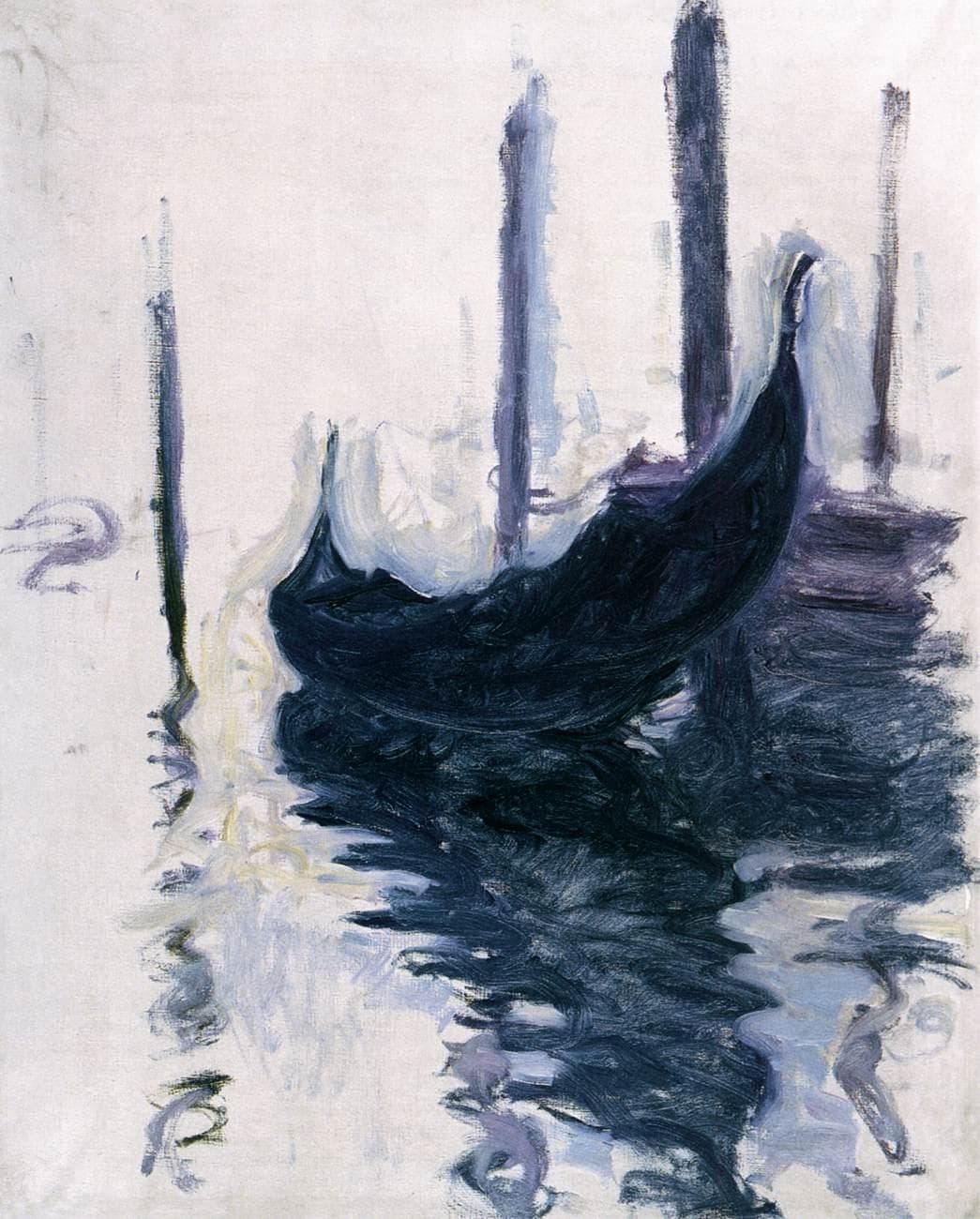
Gondola in Venice
Claude Monet · 1908
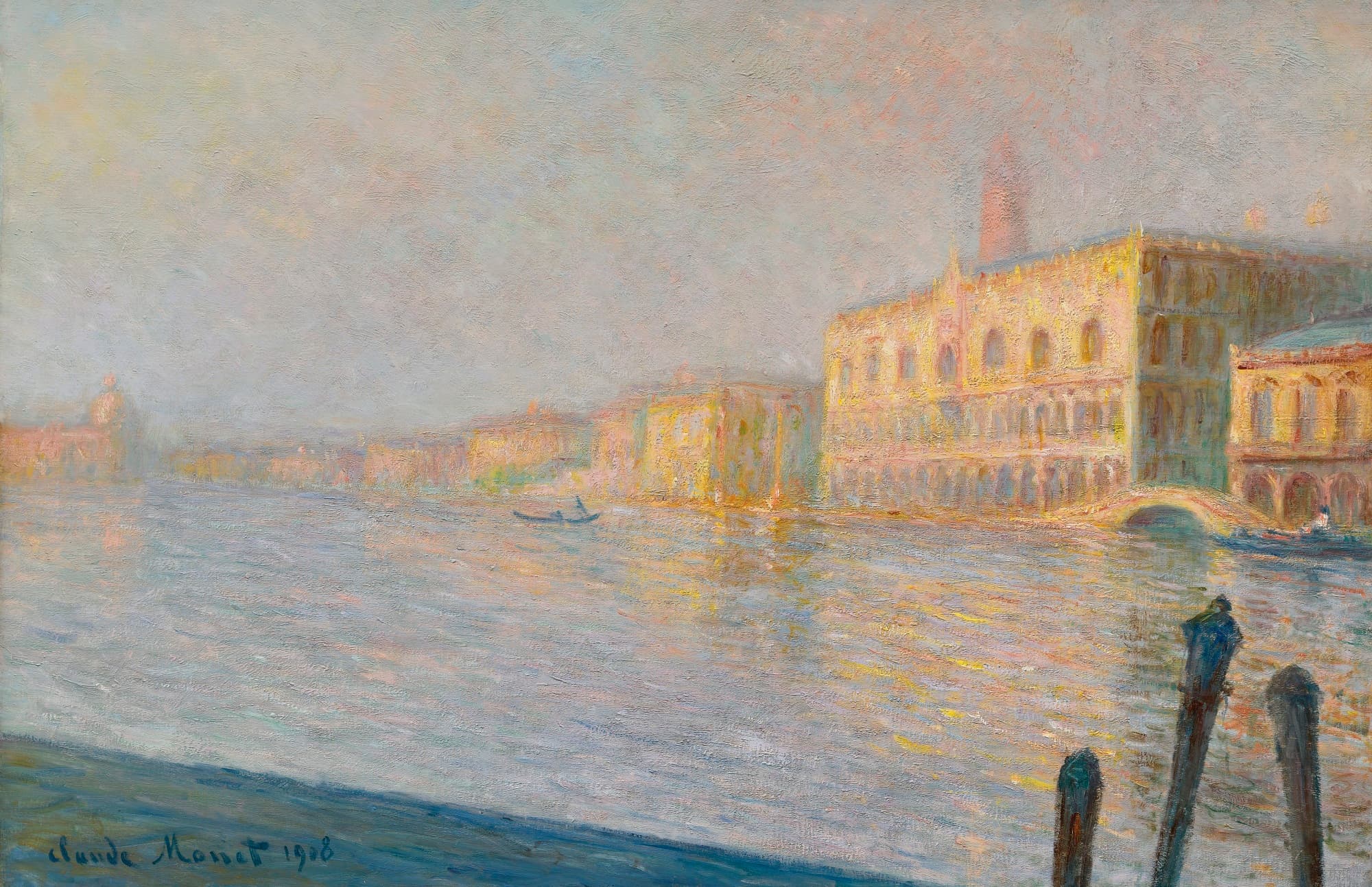
The Palazzo Ducale (Le Palais Ducal), 1908
Claude Monet · 1908
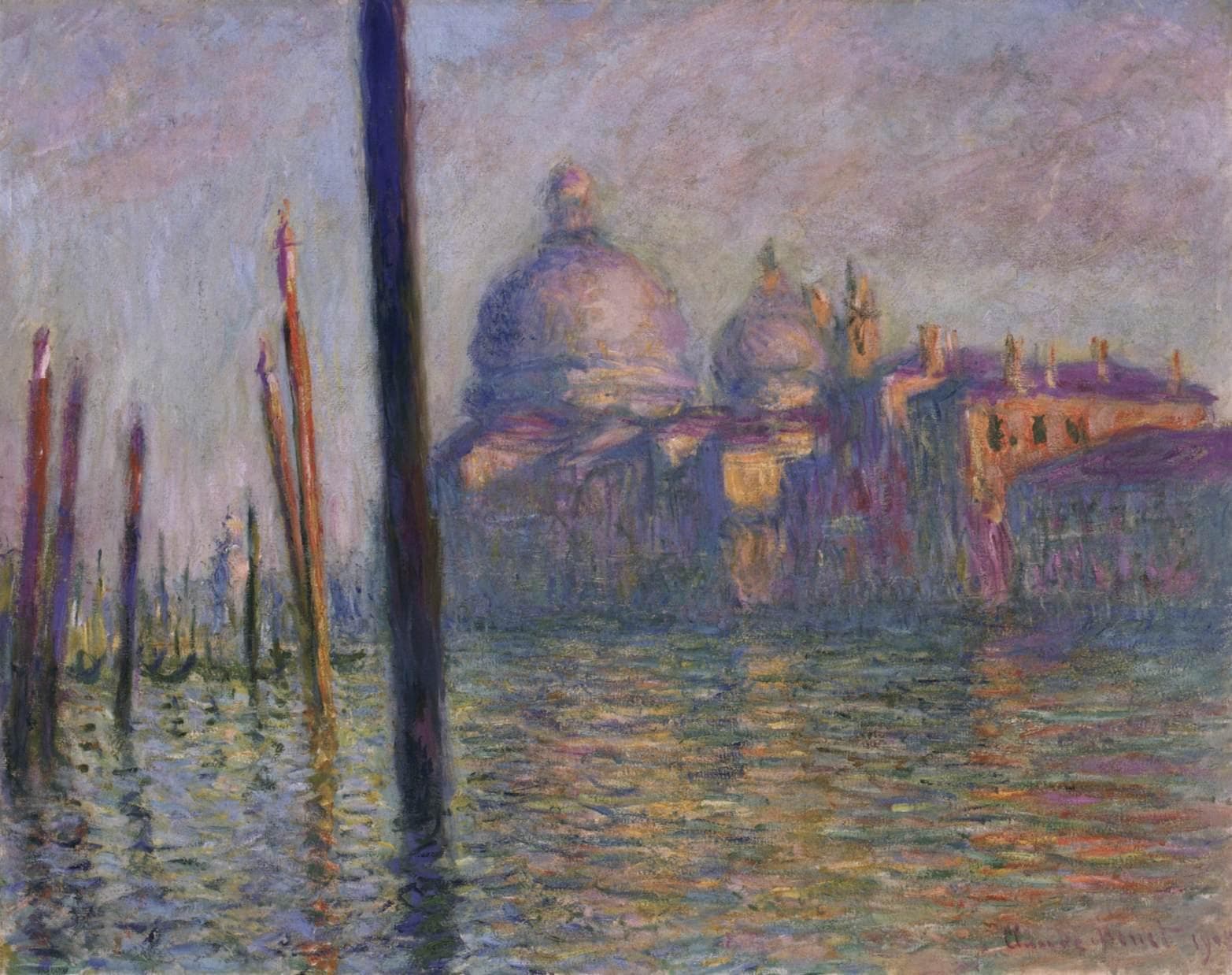
The Grand Canal in Venice
Claude Monet · 1908
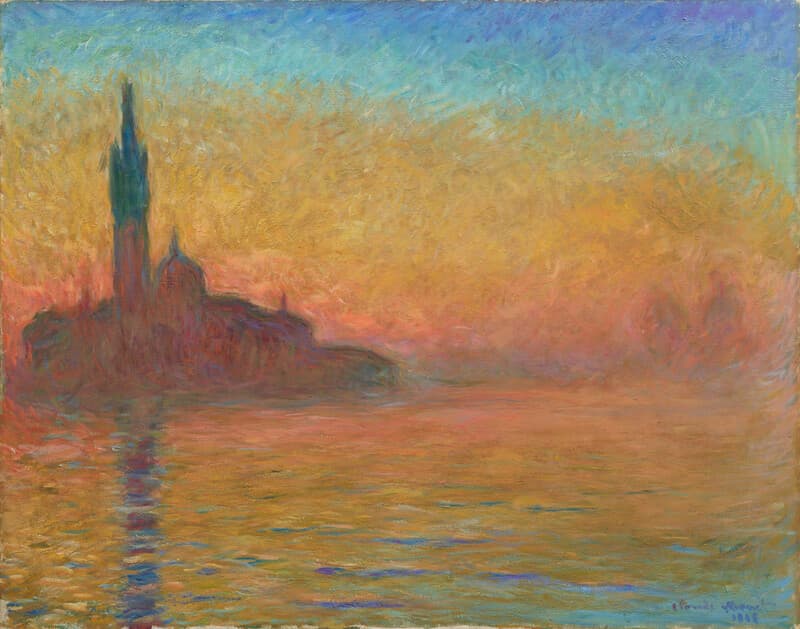
Twilight, Venice
Claude Monet · 1908
The Church of San Giorgio Maggiore, Venice
Claude Monet · 1908
Also painted in 1908
The same year
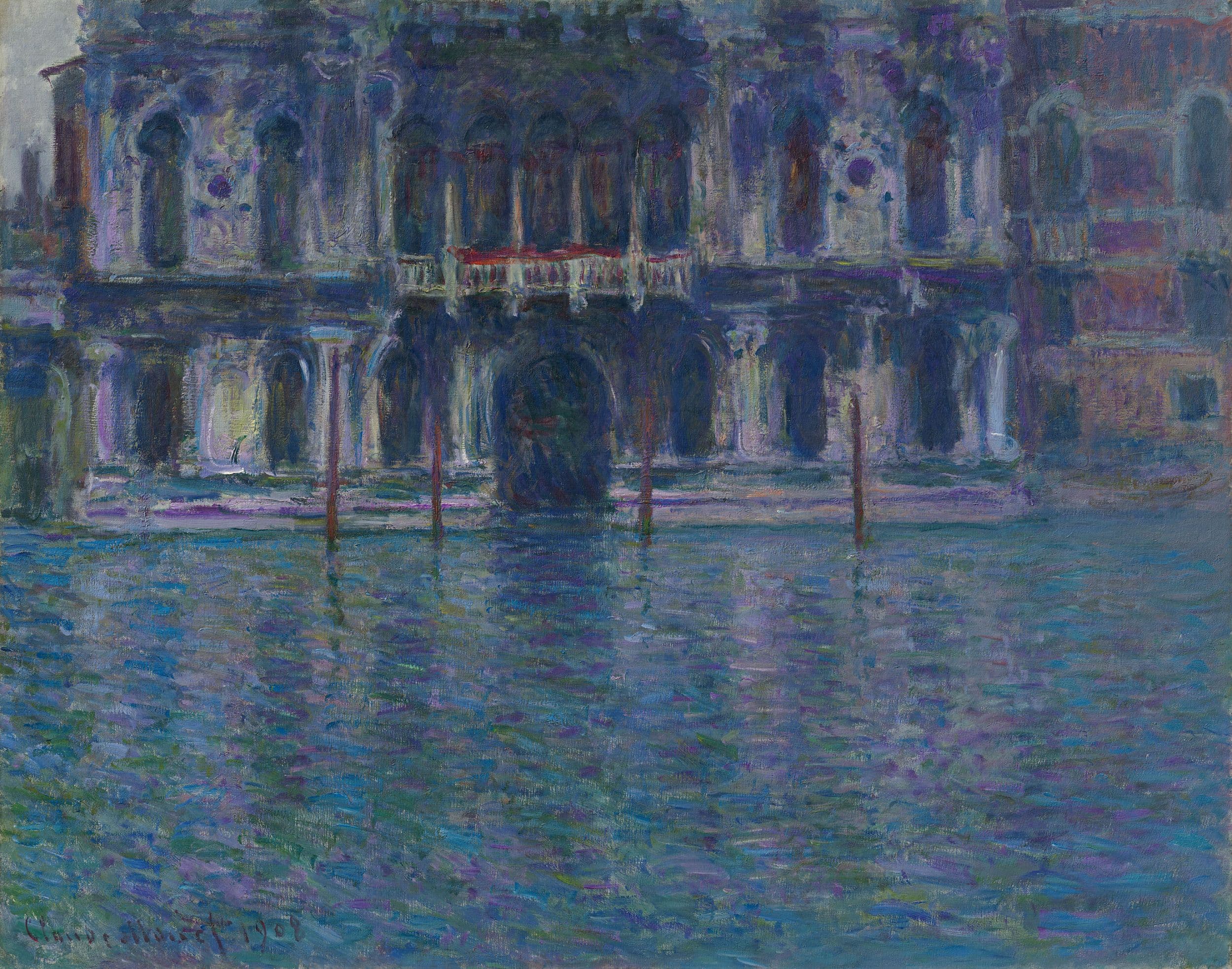
Le Palais Contarini (Potsdam)
Claude Monet · 1908
Water Lilies (1908, Tokyo Fuji Art Museum)
Claude Monet · 1908
Nymphéas (Oyamazaki Villa Museum)
Claude Monet · 1908
The Grand Canal, Venice
Claude Monet · 1908
The Rio della Salute
Claude Monet · 1908
The Rio della Salute
Claude Monet · 1908
The Rio della Salute
Claude Monet · 1908
The Palazzo Ducale, Seen from San Giorgio Maggiore (Guggenheim)
Claude Monet · 1908
Kindred works
You may also study
The Palazzo Dario
Claude Monet · 1908
Waterlilies (1906, National Museum Cardiff)
Claude Monet · 1906
Houses of Parliament, London
Claude Monet · 1900–01
Houses of Parliament, Effect of Fog
Claude Monet · 1904
Houses of Parliament, Symphony in Rose
Claude Monet · 1900
Le Palais Dario
Claude Monet · 1908
The Grand Canal, Venice
Claude Monet · 1908
Seagulls, the River Thames and the Houses of Parliament
Claude Monet · 1904