Image: Christie's (via Wikimedia Commons) · Public domain · via Wikimedia Commons
Waterloo Bridge, Hazy Sun
Claude Monet, 1903
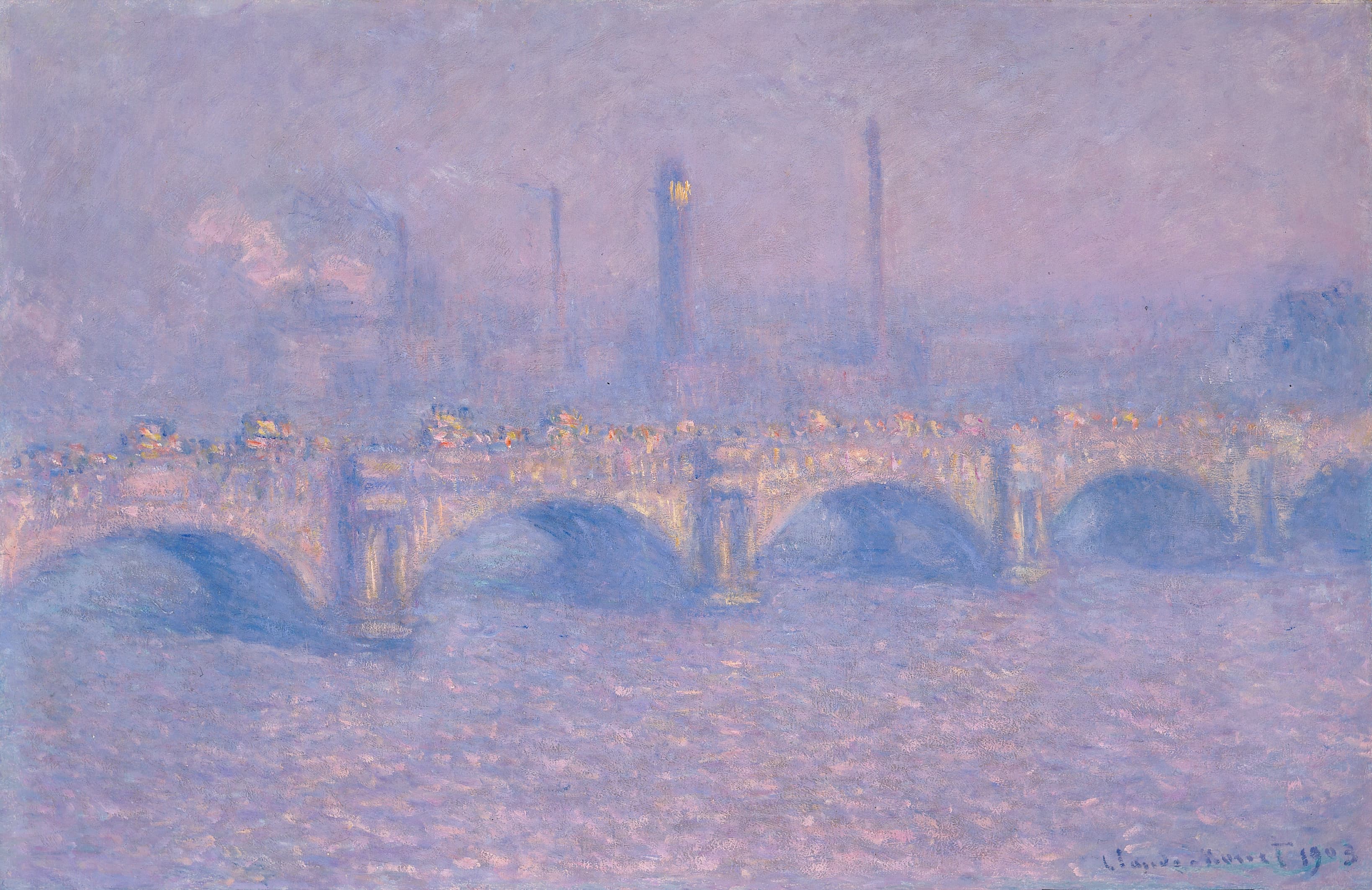
Waterloo Bridge, Hazy Sun (soleil voilé) is a 1903 Claude Monet painting of the bridge glowing peach and gold in lilac haze, chimneys faint beyond. Owned by Paul G. Allen, it sold at Christie's New York in 2022 for $64.5 million.
- Artist
- Claude Monet
- Date
- 1903
- Medium
- Oil on canvas
- Dimensions
- 65.1 × 100.7 cm
- Collection
- Private collection
- Movement
- Impressionism
- Catalogue
- Wildenstein 1591
- The City
- Water & Sea
Waterloo Bridge, Hazy Sun (Waterloo Bridge, soleil voilé) is one of Claude Monet's views of the Thames from the Savoy Hotel, signed and dated 1903 at lower left. It measures 65.1 × 100.7 cm and is number 1591 in the Wildenstein catalogue raisonné. It belonged to the Microsoft co-founder Paul G. Allen, reportedly from 1997, and was sold at Christie's New York on 9 November 2022, in the sale of his collection, for $64.5 million with fees. It is now in a private collection.
What you're looking at
The bridge is the brightest thing in the picture, which is unusual for the series. Its arches, deck and parapet are painted in warm peach, apricot and cream, as if the low sun, veiled by haze, were striking the stone from the side. Along the deck runs a lively line of small touches in orange, yellow and green, the morning traffic catching the light.
Above, the sky is a soft lilac-grey. Through it, the chimneys and towers of the south bank rise as faint violet verticals, with a trail of smoke from the tallest. The river below is a calm lilac-blue, with long, soft reflections of the pale arches. At lower right, a barge with a red-brown sail and a smaller boat sit on the water.
This version is distinct for that warm, side-lit bridge against cool surroundings. The title's "veiled sun" is never seen directly; it is felt in the peach glow on the stonework.
Where and when it was painted
Monet painted Waterloo Bridge in the mornings from the Savoy during his London stays of 1899, 1900 and 1901, and then reworked the canvases at Giverny, dating them when he considered them finished. Like many of the 1903 canvases, this one was probably begun in London several years before the date it carries. Thirty-seven of the Thames views were shown at Durand-Ruel in Paris in 1904.
How it was painted
The paint is layered in small, dense strokes, warmer on the bridge, cooler on sky and water. The traffic and the barge's sail are the thickest touches. The careful modulation of warm and cool across a narrow range of values reflects the long studio reworking that Monet gave the London pictures.
How this version differs
In the Waterloo Bridge series, its closest relatives are the Tokyo Waterloo Bridge in London, pinker and without chimneys, and the Art Institute of Chicago's Waterloo Bridge, Sunlight Effect of the same year, where the bridge is lilac and the sun shows as colored flecks. The Memorial Art Gallery's Waterloo Bridge, Veiled Sun shares the title but is a different canvas.
A detail to look for
The barge at lower right has a red-brown sail and a long dark hull, and next to it a smaller boat seems to be rowing or drifting. Painted in a few strokes, these boats are the only firm forms on the water. Monet often included Thames sailing barges in the Waterloo Bridge canvases, and they tie the series to the working life of the river: these barges carried hay, bricks and other cargo up and down the Thames. Here, their warm sail echoes the peach glow of the bridge above, a subtle link between the river's traffic and the light.
Ownership
The 2022 sale of the Paul G. Allen Collection at Christie's totaled more than $1.5 billion, the largest single-owner auction to that date, with proceeds directed to philanthropy. The Monet's hammer price, about $56 million, fell slightly short of its reported estimate of around $60 million, and the buyer was not named. For London views by Claude Monet on public view, see Monet in London and where to see Monet's paintings.
Monet's Waterloo Bridge canvases appear on the market only rarely, because so many are in museums, and each sale of one in good condition is closely watched as a measure of demand for his London series.
Questions & answers
Where is Monet's Waterloo Bridge, Hazy Sun?
It is in a private collection. It belonged to Paul G. Allen, co-founder of Microsoft, and was sold at Christie's New York on 9 November 2022 to an unnamed buyer.
How much did Waterloo Bridge, Hazy Sun sell for?
It sold for about $64.5 million with fees at Christie's New York in November 2022, in the auction of the Paul G. Allen Collection. The hammer price was reported at about $56 million.
When was it painted?
It is signed and dated 1903. Monet probably began it in London during his stays at the Savoy Hotel in 1899–1901, and finished and dated it in his studio at Giverny.
What does the painting show?
Waterloo Bridge glowing peach and cream in a veiled morning sun, with faint chimneys beyond, lilac-blue water below, and a barge with a red-brown sail in the foreground.
More by the artist
Claude Monet
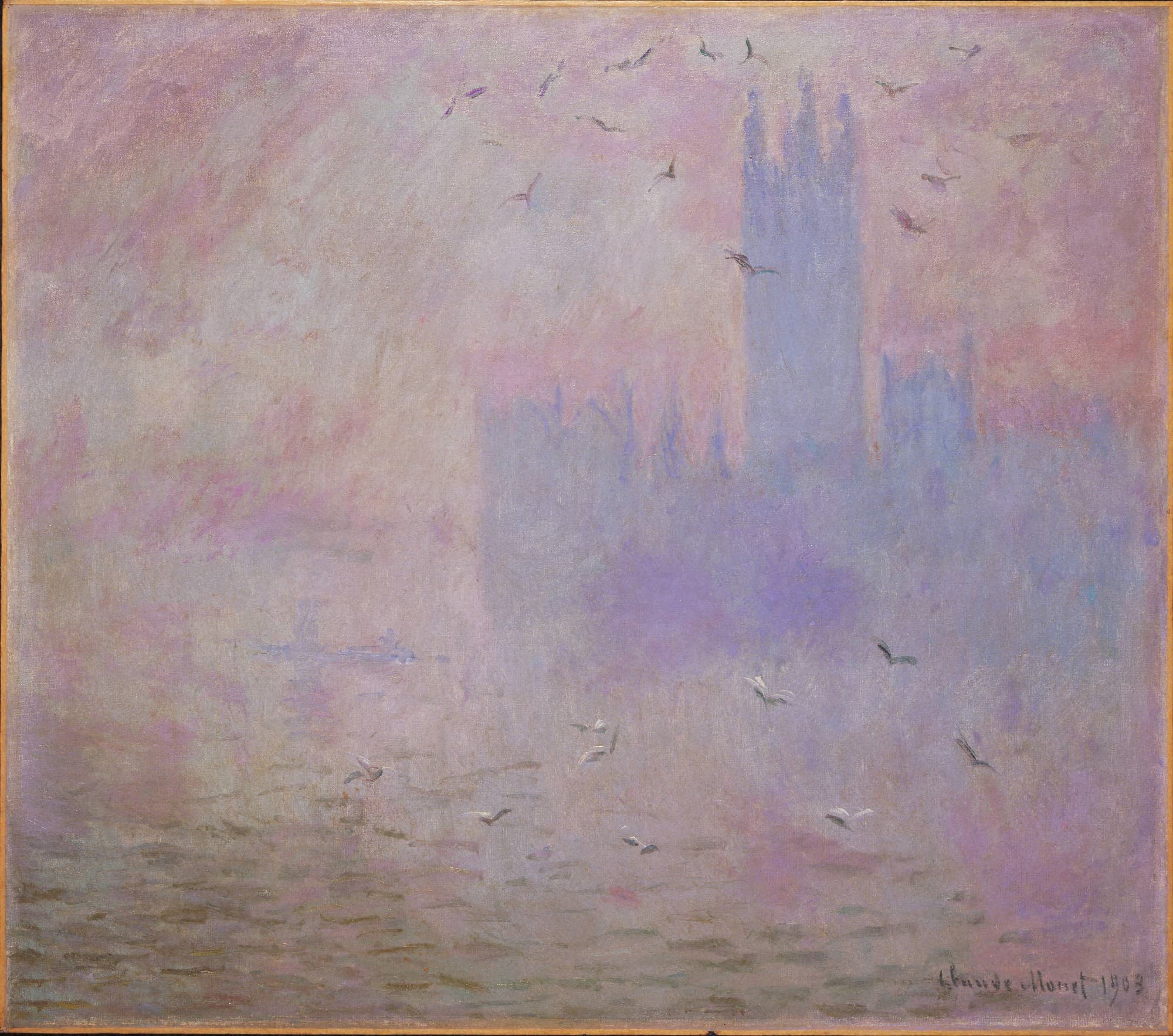
The Houses of Parliament, Seagulls
Claude Monet · 1903
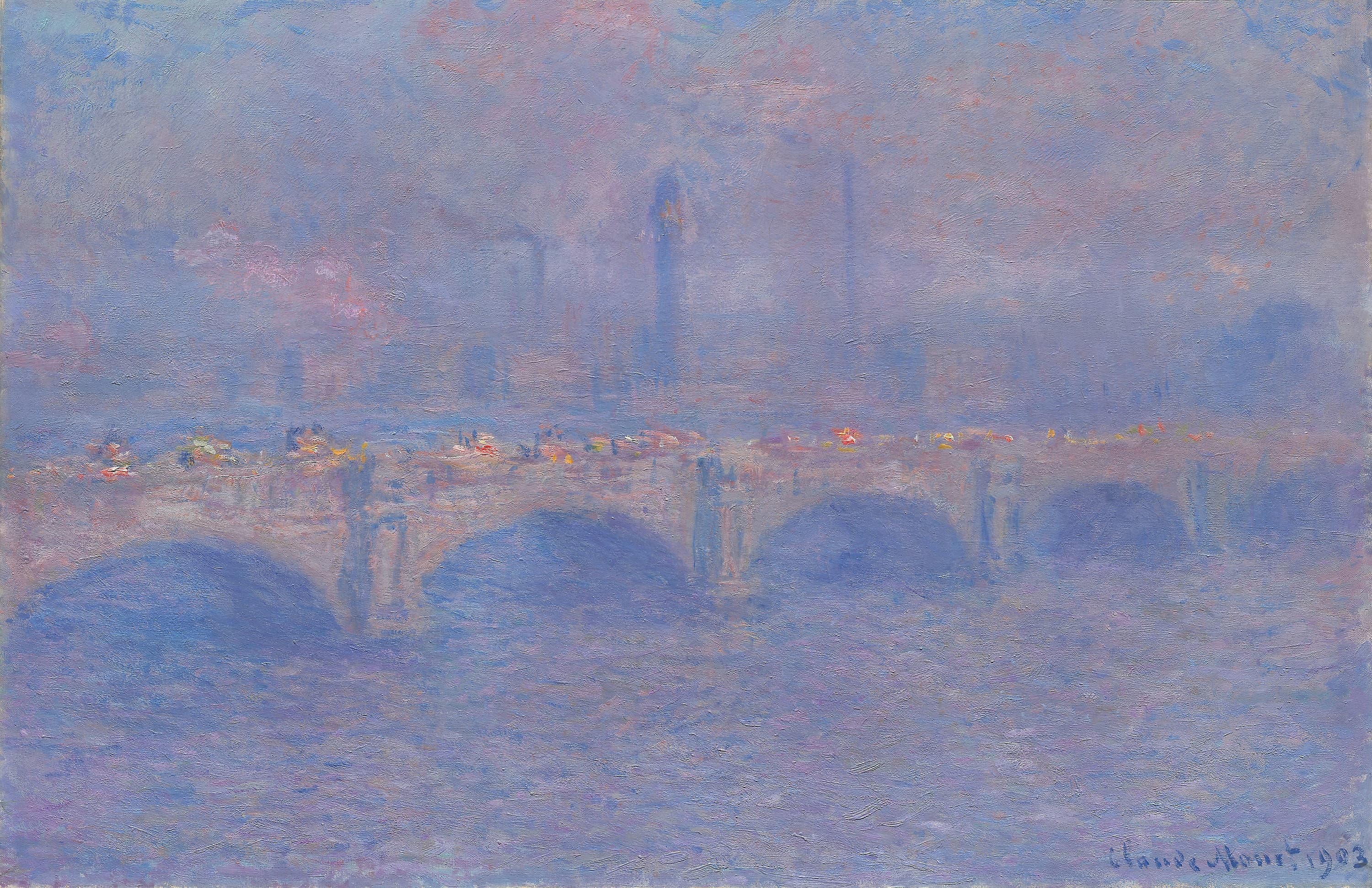
Waterloo Bridge, Sunlight Effect
Claude Monet · 1903
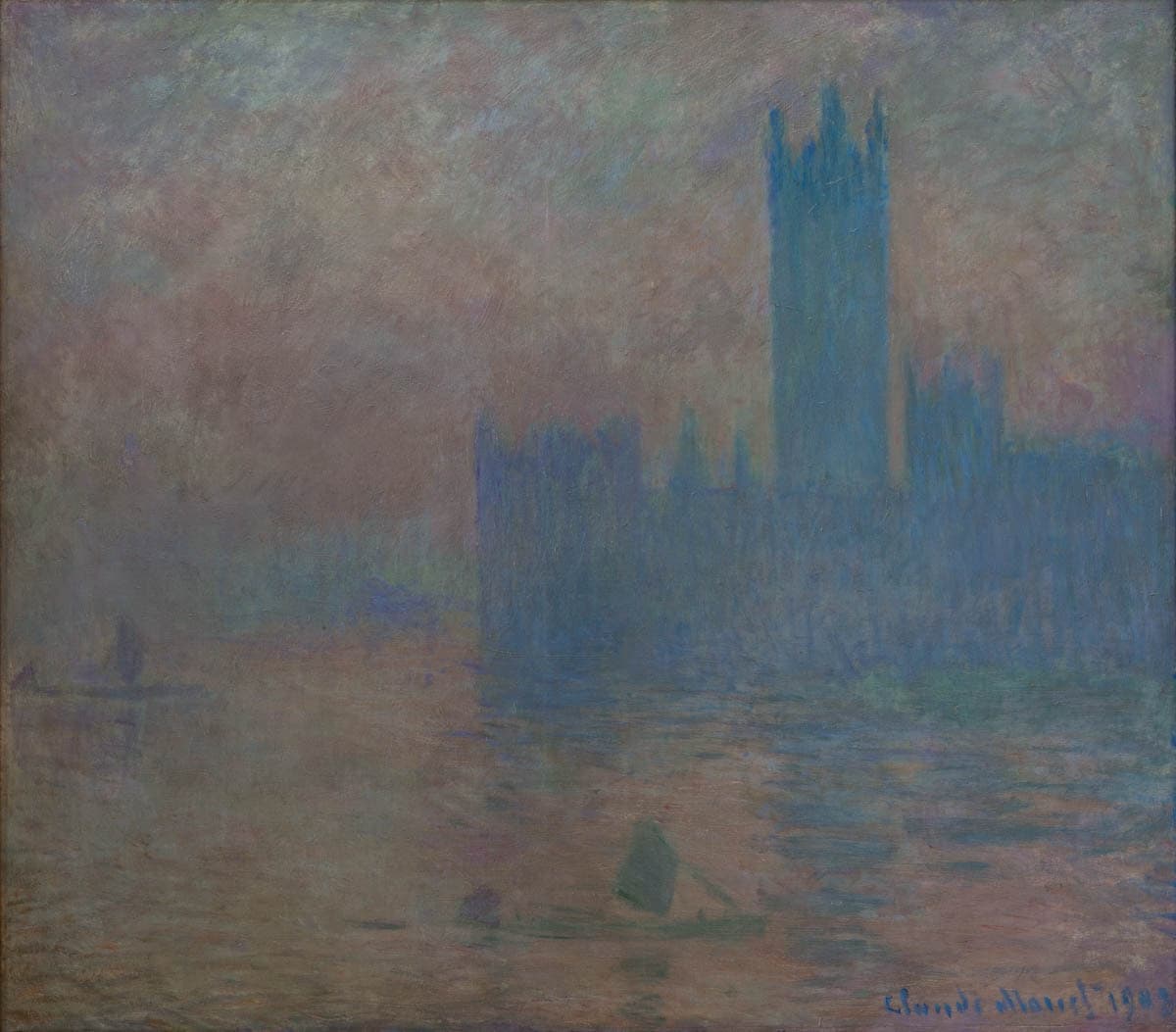
Le Parlement de Londres, effet de brouillard
Claude Monet · 1903
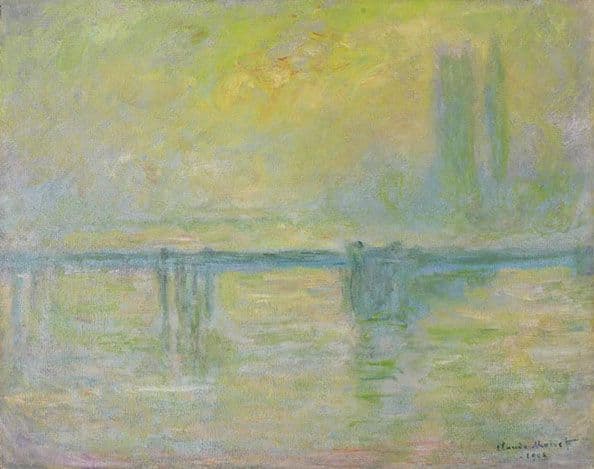
Charing Cross Bridge, Fog
Claude Monet · 1902–03
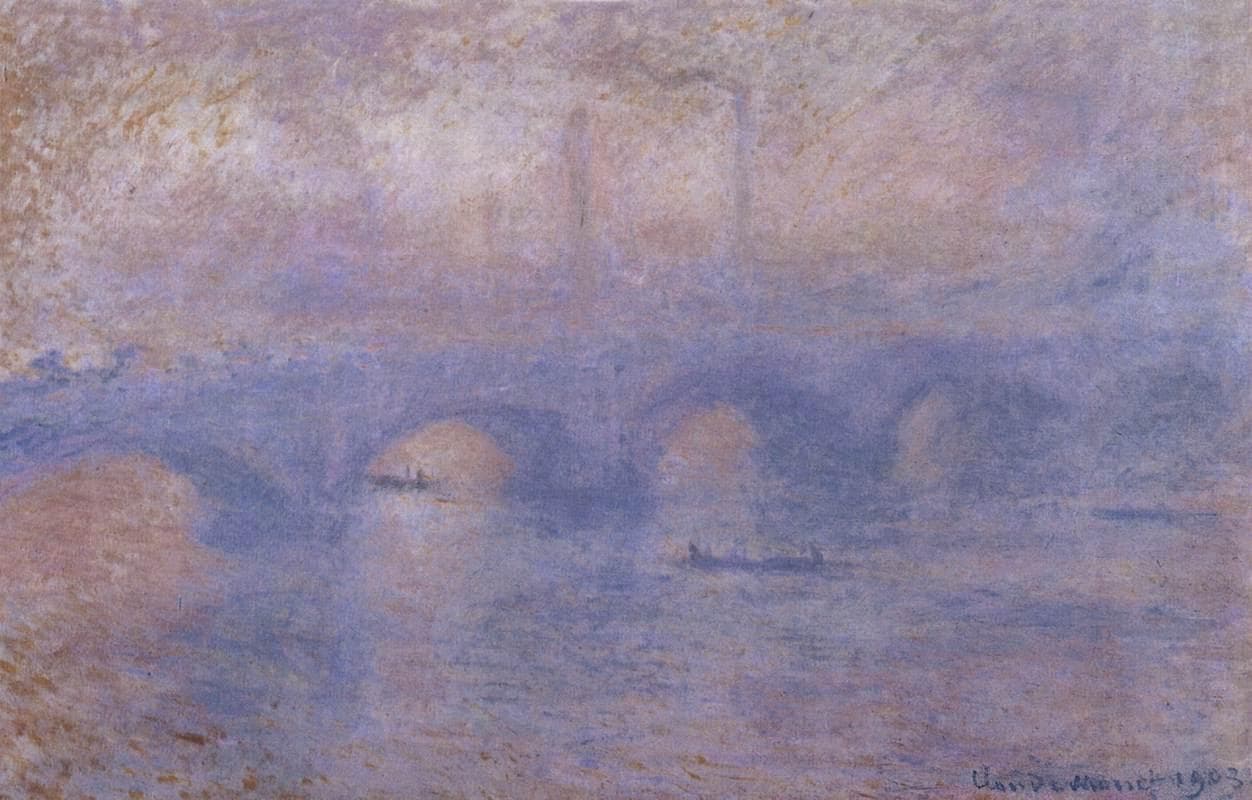
Waterloo Bridge, Effect of Fog
Claude Monet · 1903
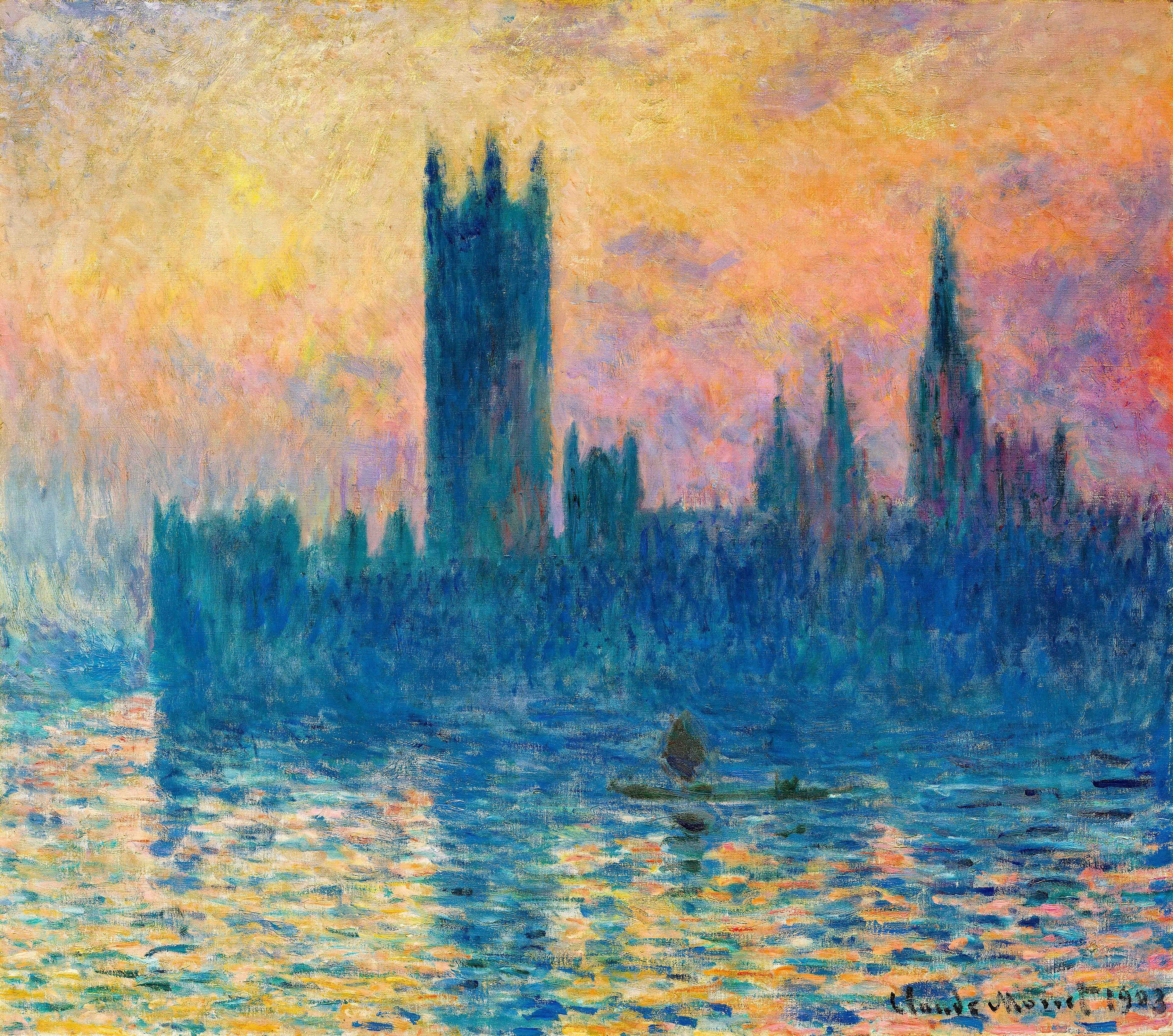
The Houses of Parliament, Sunset
Claude Monet · 1903
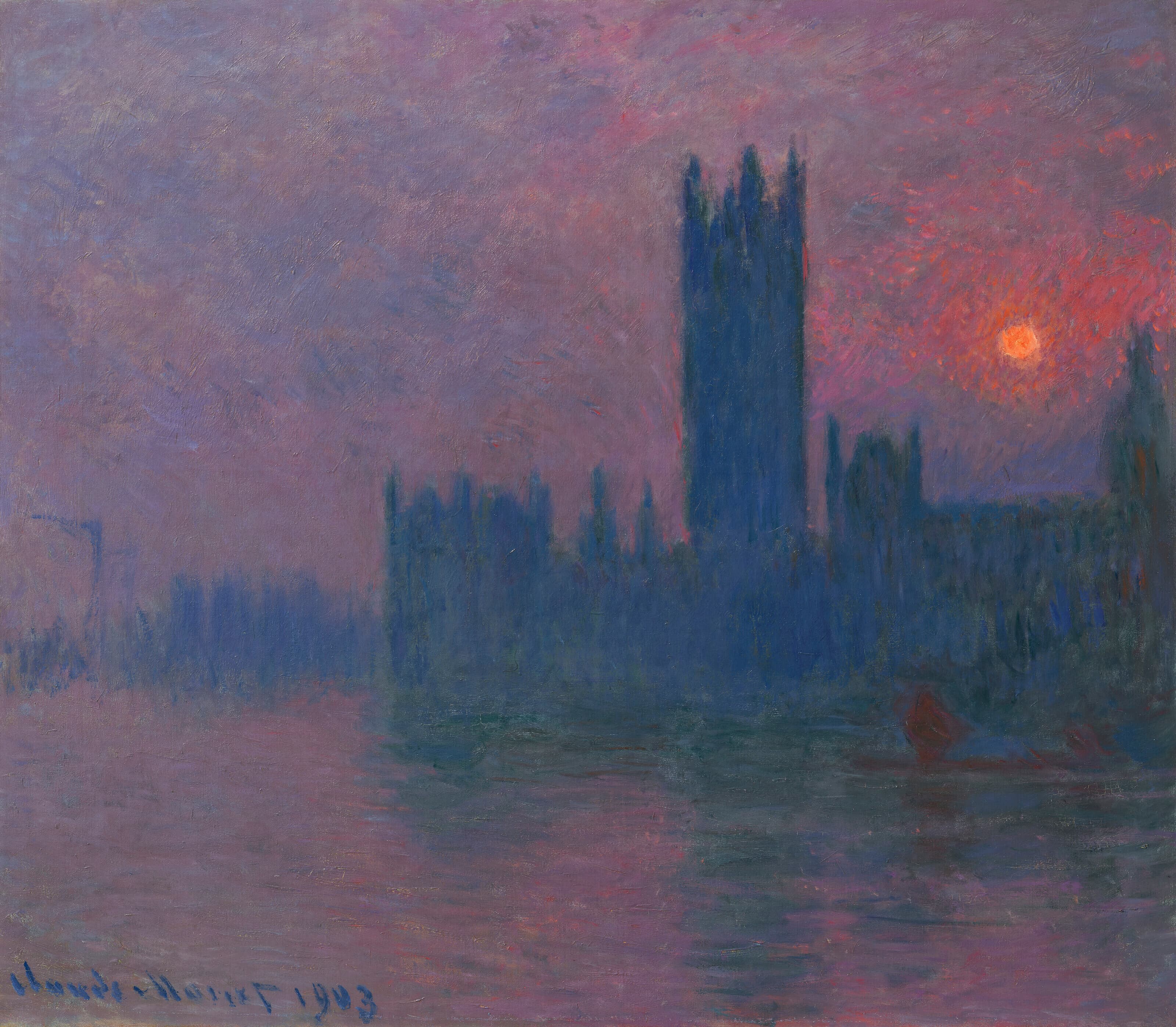
Houses of Parliament, Sunset
Claude Monet · 1903
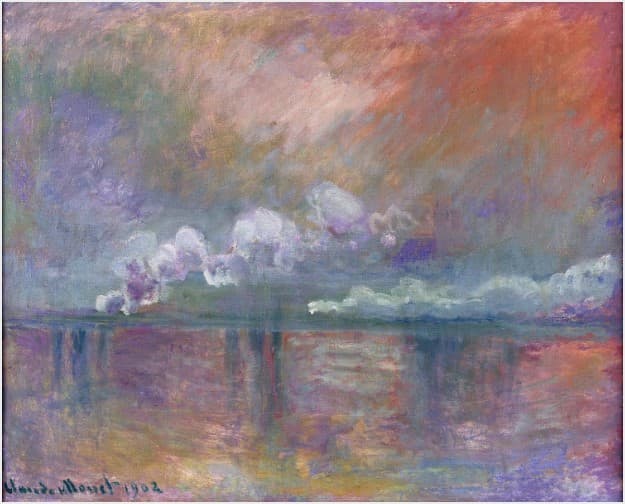
Charing Cross Bridge, Smoke in the Fog, Impression
Claude Monet · 1902
Also painted in 1903
The same year
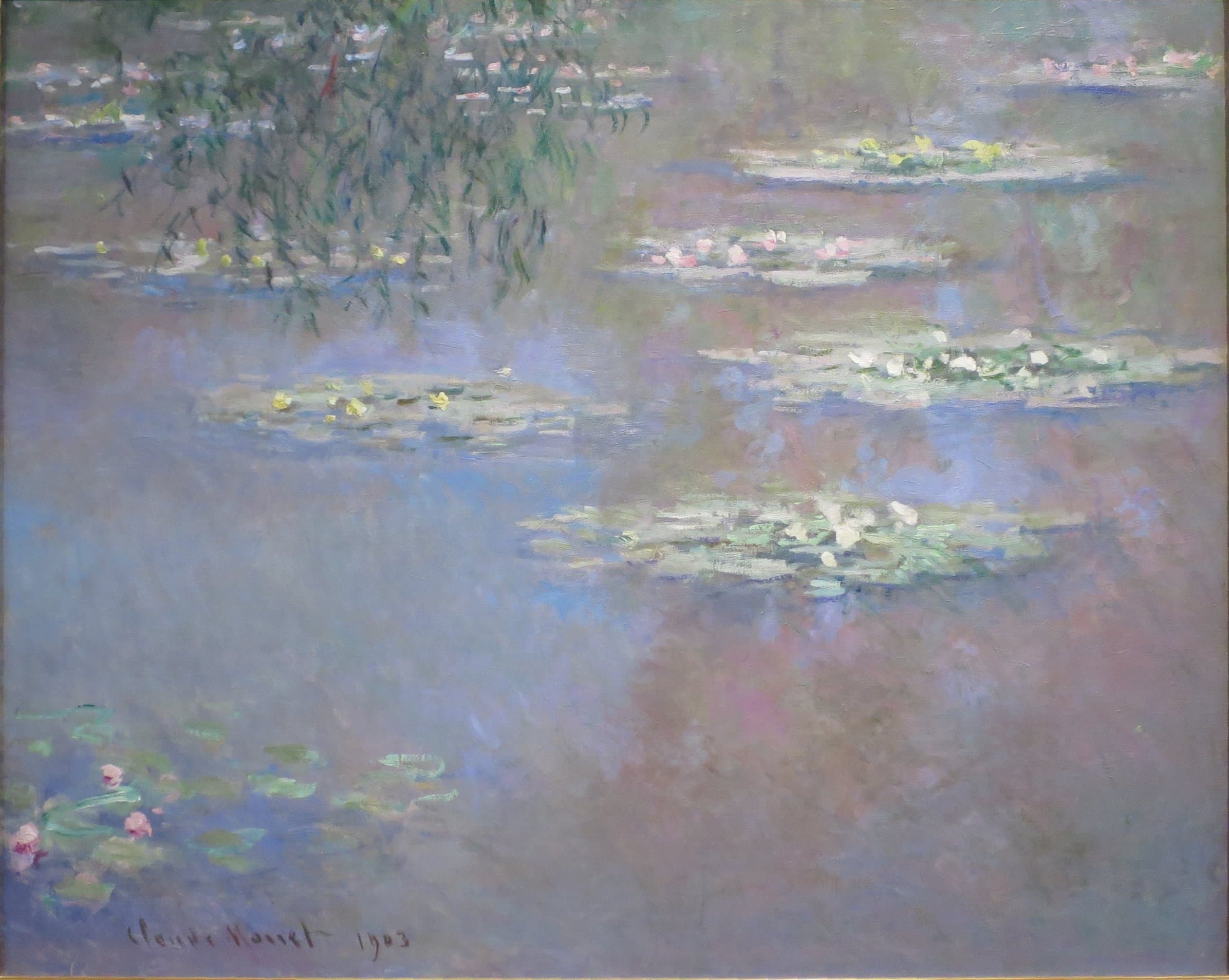
Waterlilies (1903, Dayton Art Institute)
Claude Monet · 1903
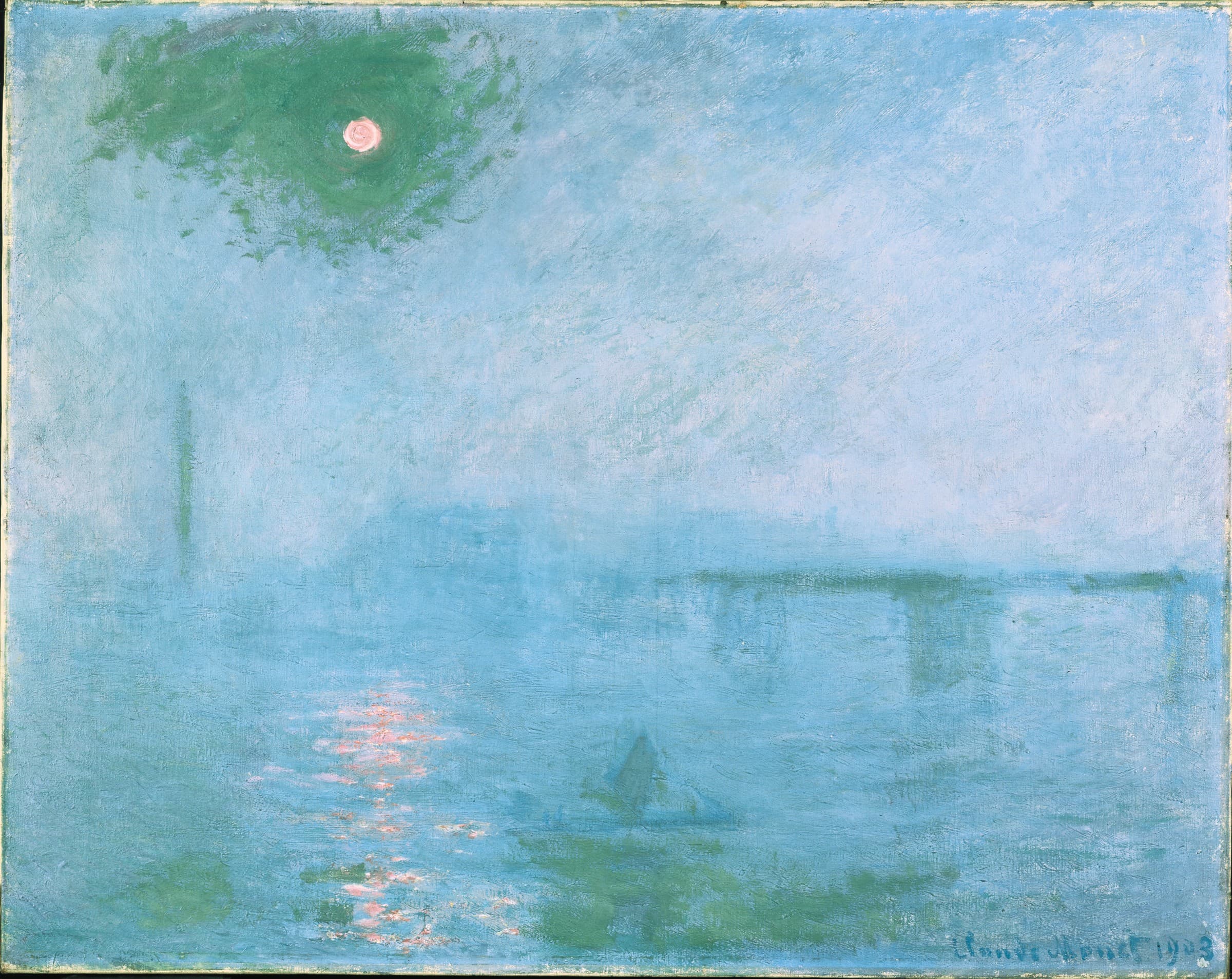
Charing Cross Bridge: Fog on the Thames
Claude Monet · 1903
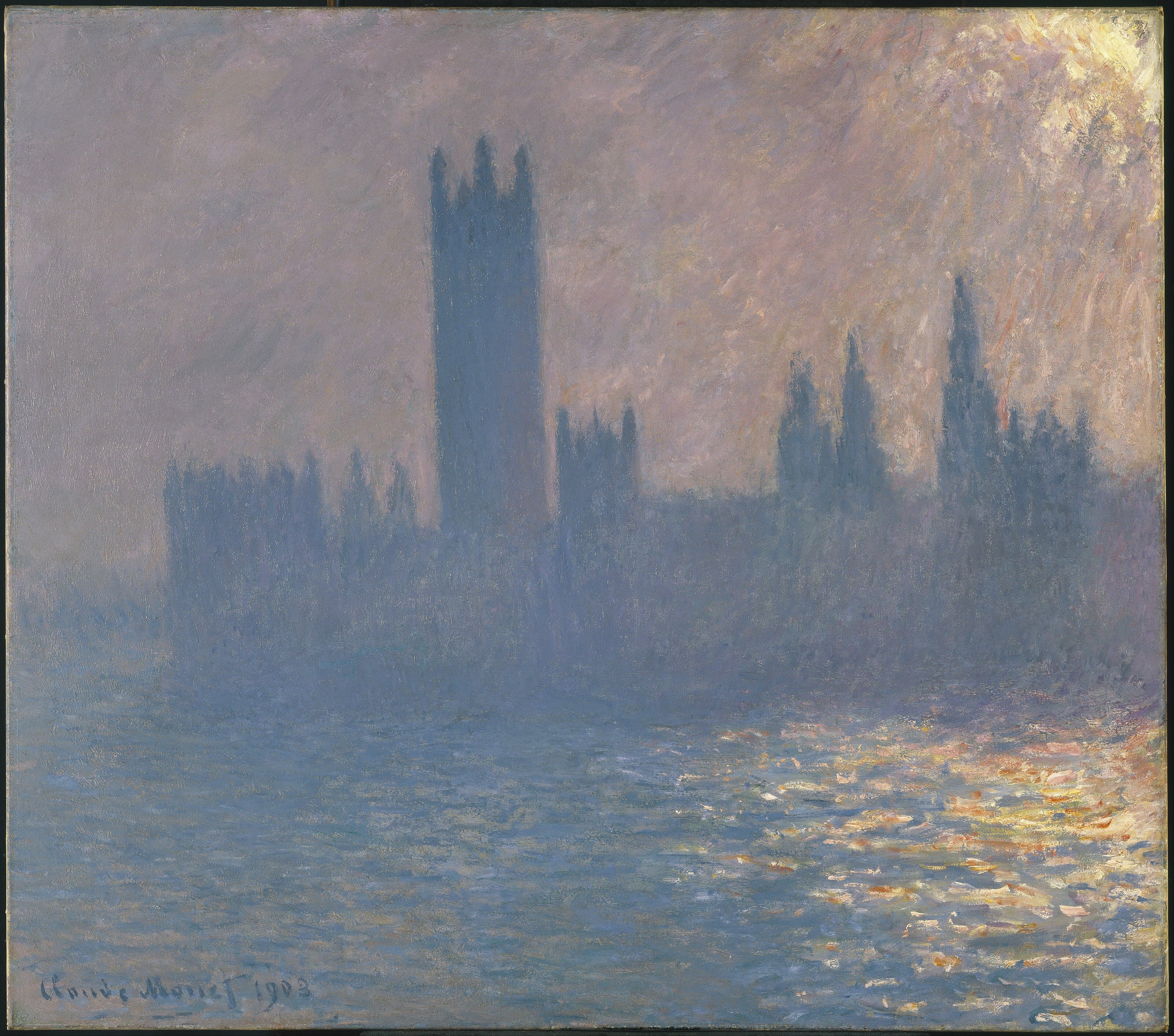
Houses of Parliament, Sunlight Effect
Claude Monet · 1903
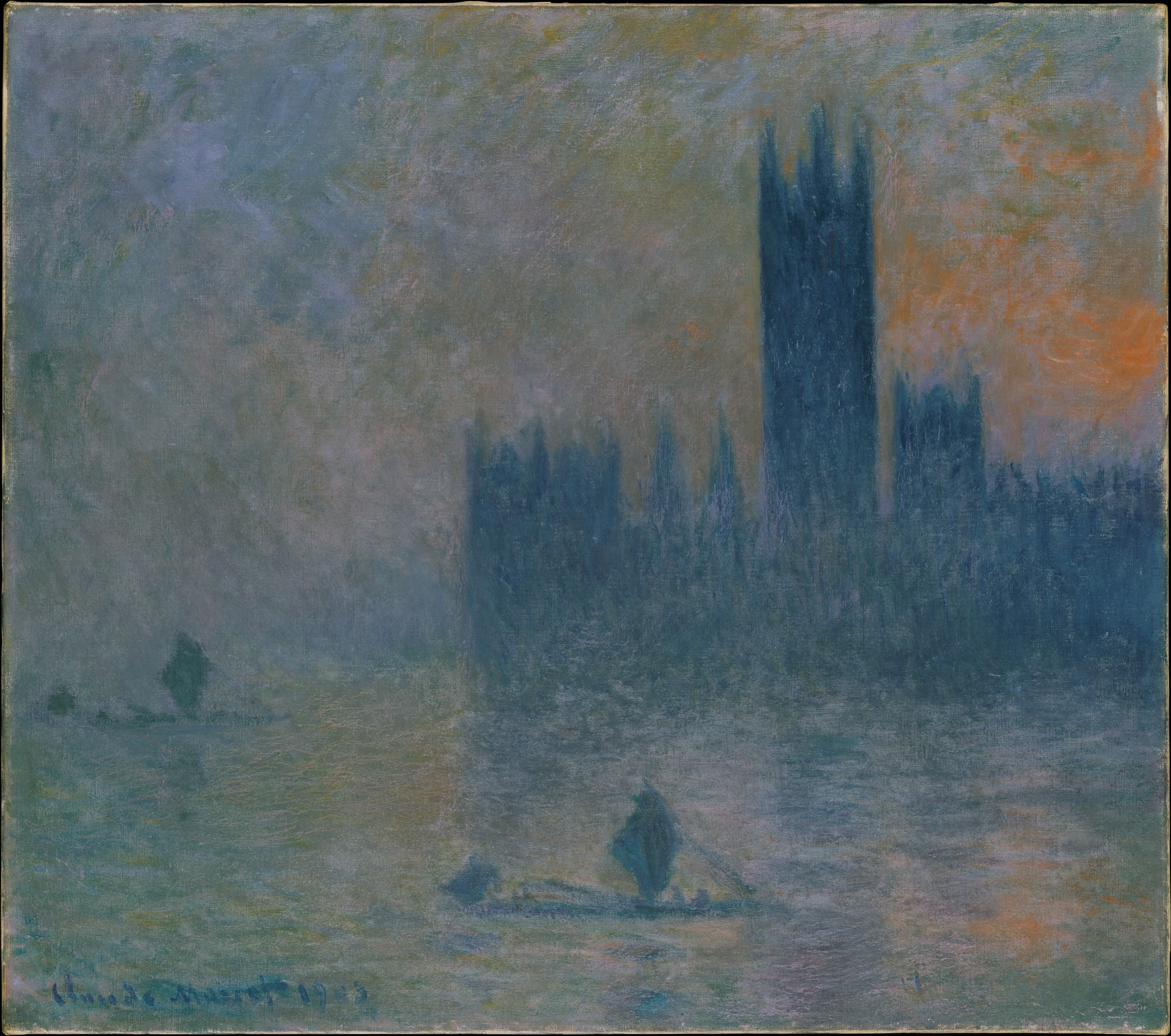
The Houses of Parliament (Effect of Fog)
Claude Monet · 1903–04
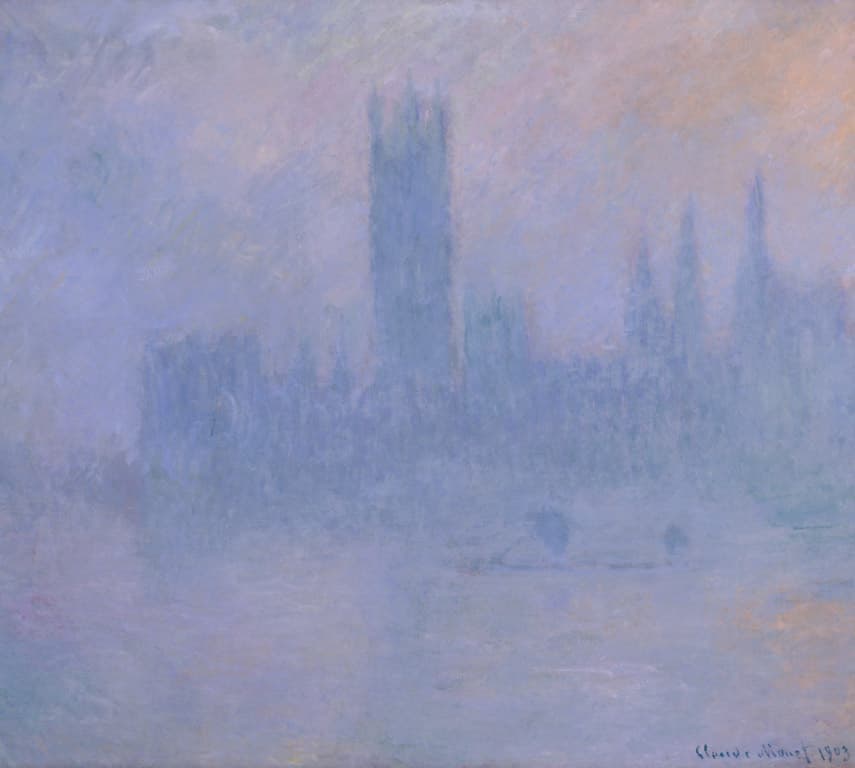
Houses of Parliament, Symphony in Blue
Claude Monet · 1903
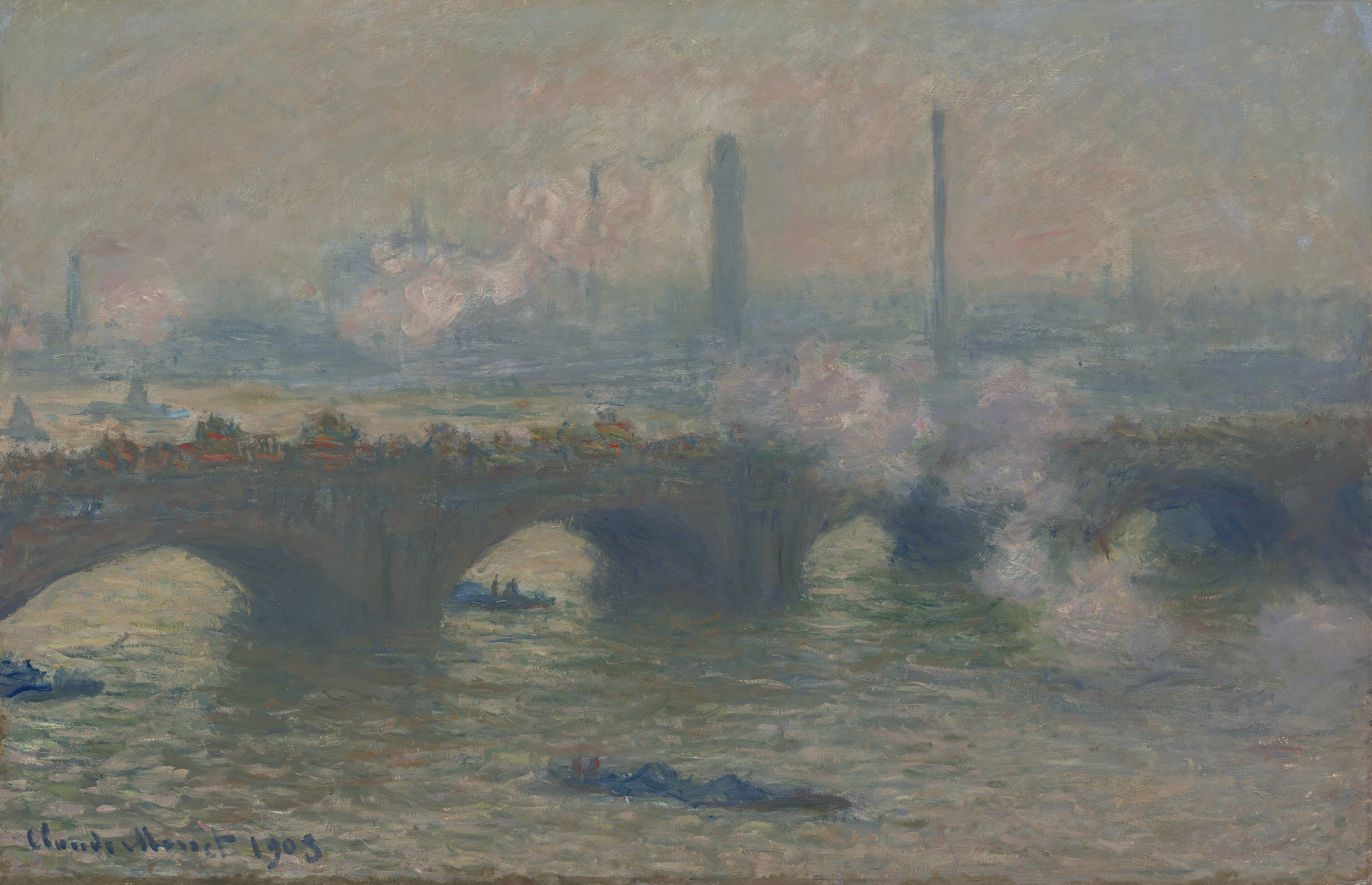
Waterloo Bridge, Gray Day
Claude Monet · 1903
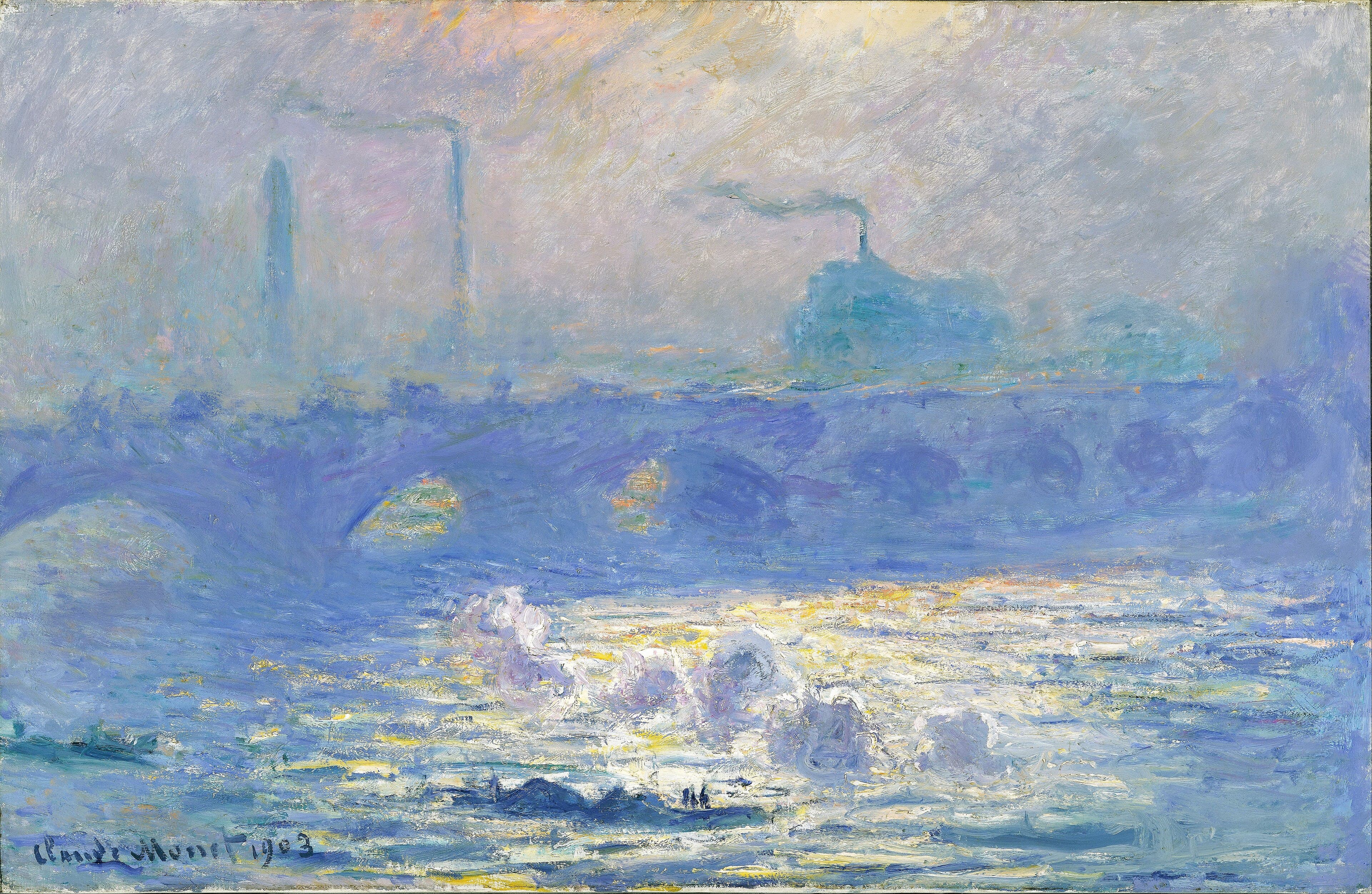
Waterloo Bridge, Sunlight Effect (Denver Art Museum)
Claude Monet · 1903
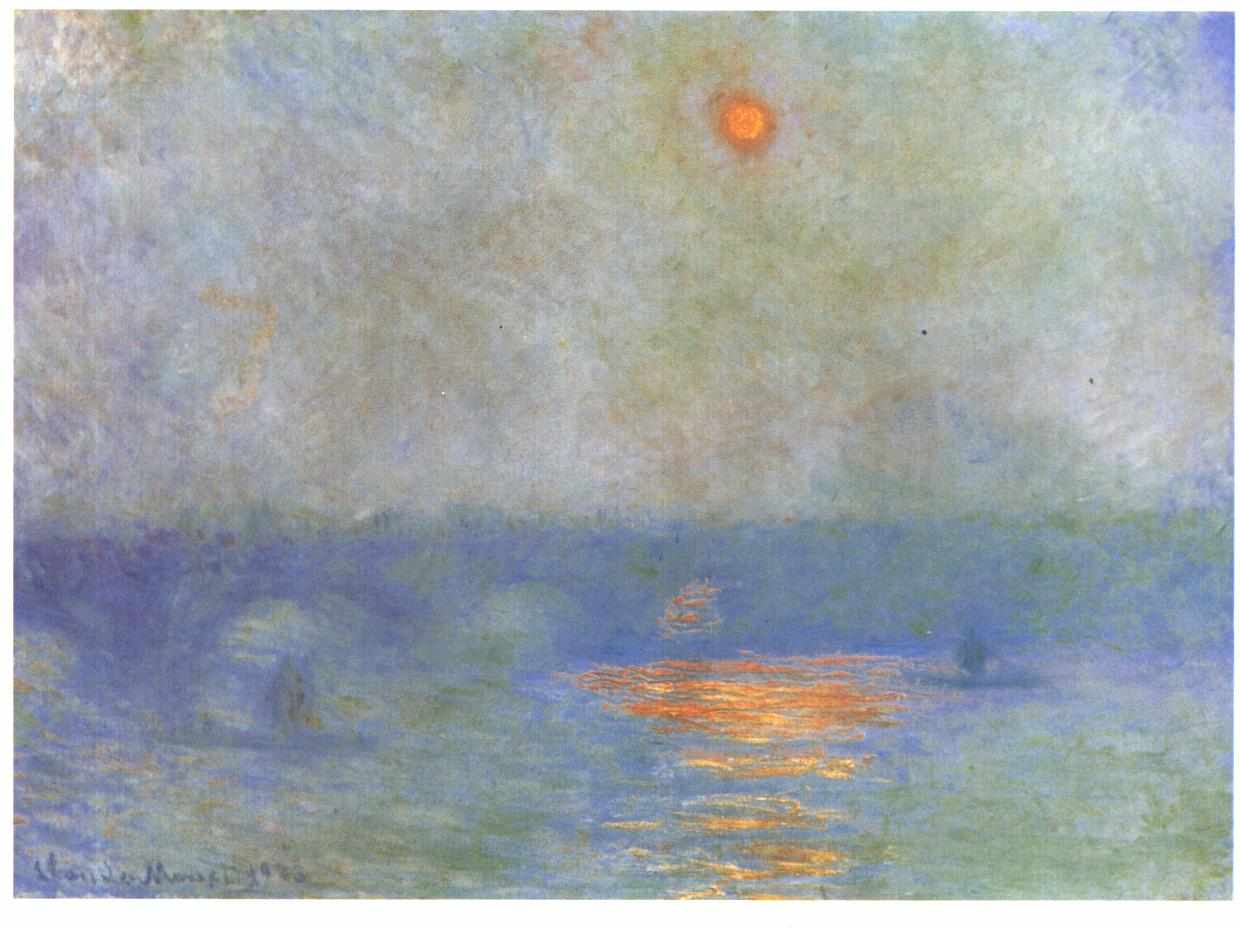
Waterloo Bridge: the Sun in a Fog
Claude Monet · 1903
Kindred works
You may also study
Waterloo Bridge in London
Claude Monet · 1902
Waterloo Bridge, Veiled Sun
Claude Monet · 1903
Waterloo Bridge, London, Sun Effect
Claude Monet · 1899–1901
Waterloo Bridge, London, at Sunset
Claude Monet · 1904
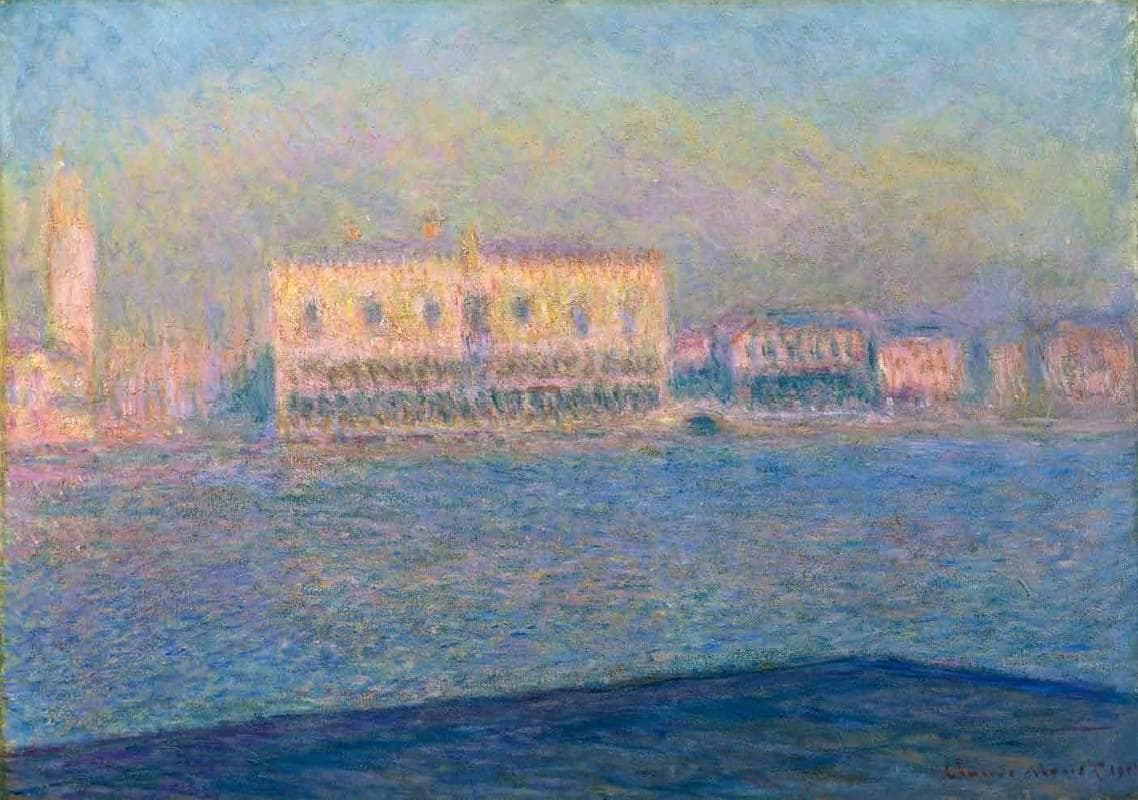
The Palazzo Ducale Seen from San Giorgio Maggiore
Claude Monet · 1908
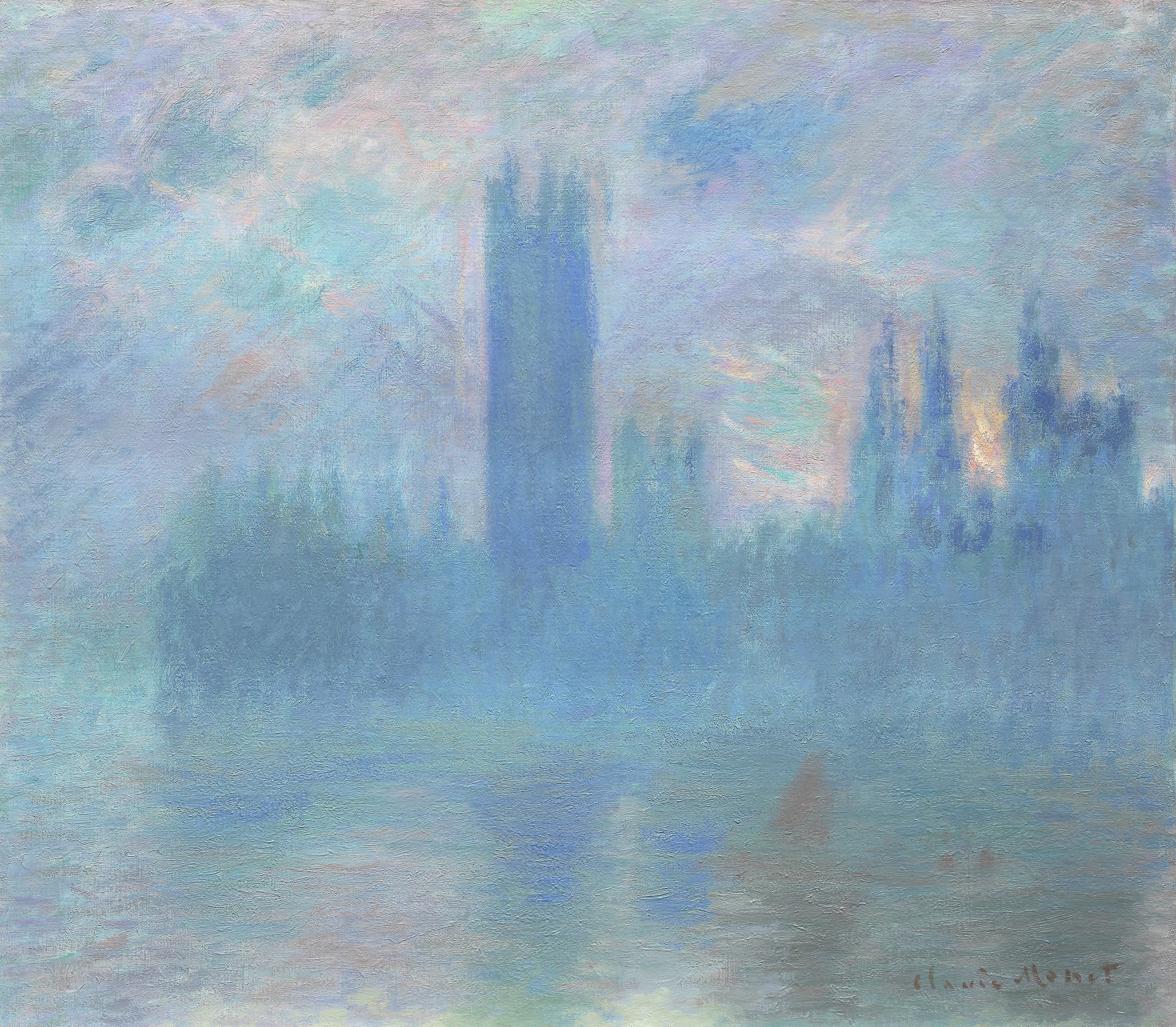
Houses of Parliament, London
Claude Monet · 1900–01
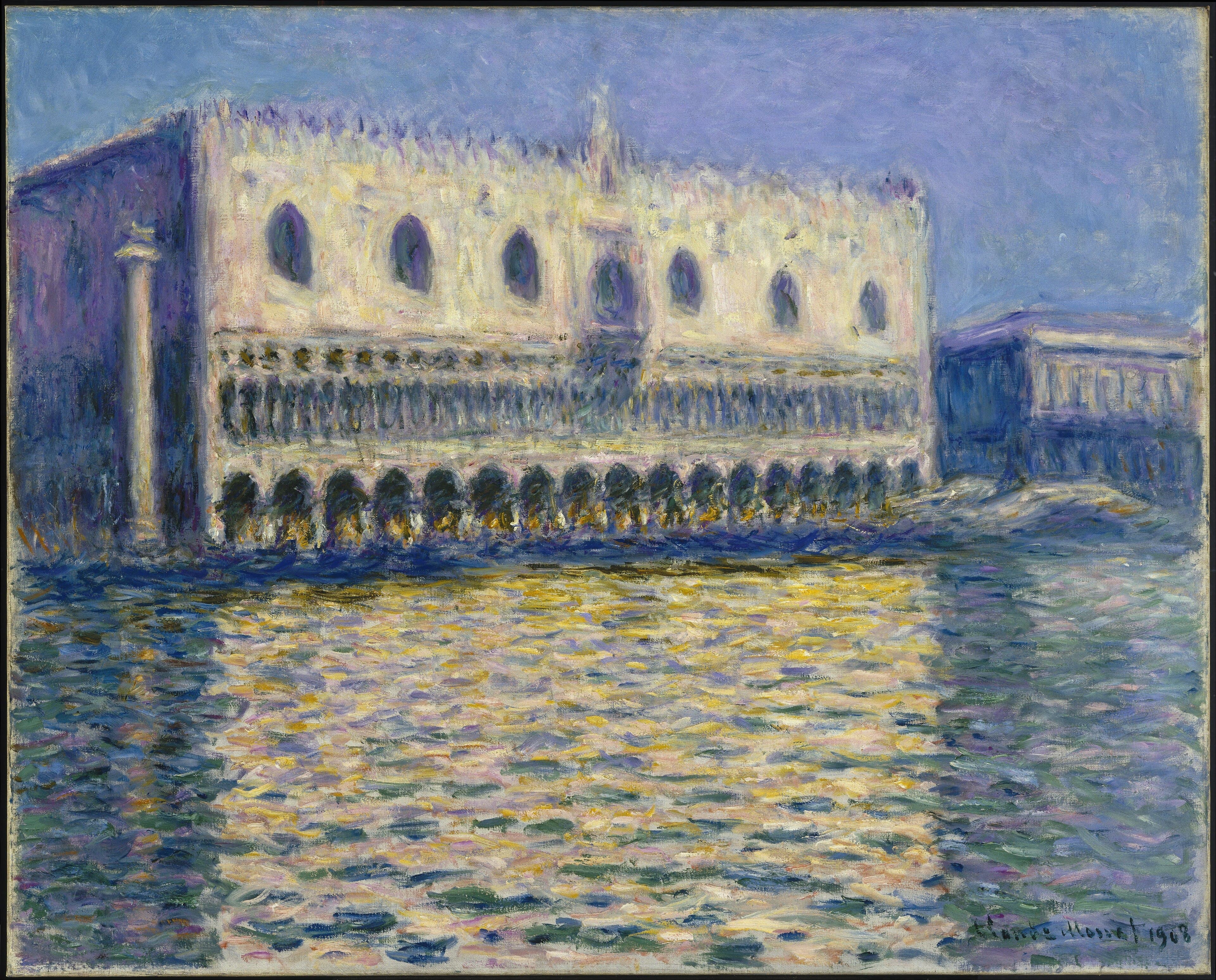
The Doge's Palace (Le Palais ducal)
Claude Monet · 1908
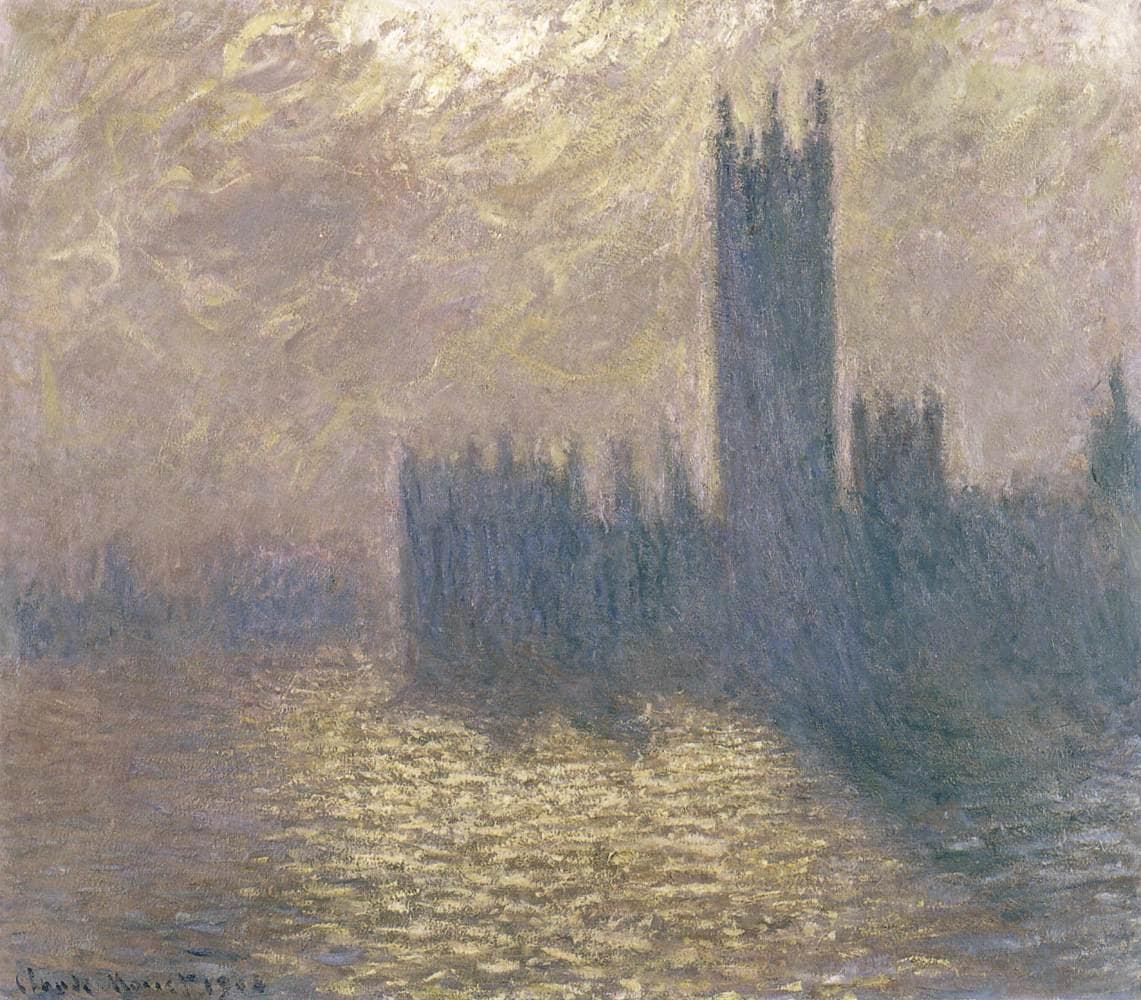
The Houses of Parliament, London
Claude Monet · 1904