Image: The National Gallery, London · Public domain · via Wikimedia Commons
The Water-Lily Pond (National Gallery, London)
Claude Monet, 1899
The Water-Lily Pond is an 1899 painting by Claude Monet of the Japanese footbridge over his lily pond at Giverny, in deep, cool greens. It has been in the National Gallery, London, since 1927.
- Artist
- Claude Monet
- Date
- 1899
- Medium
- Oil on canvas
- Dimensions
- 88.3 × 93.1 cm
- Collection
- The National Gallery, London, United Kingdom
- Movement
- Impressionism
- Catalogue
- Wildenstein 1516
- Nature & Landscape
- Water & Sea
The Water-Lily Pond is Claude Monet's 1899 view of the wooden footbridge across his lily pond at Giverny, in the National Gallery in London (NG4240). Measuring 88.3 by 93.1 centimeters and signed and dated at lower right, it entered the collection in 1927 and is one of the best-known of the bridge pictures. Its French title, Le Bassin aux nymphéas, harmonie verte, names its defining quality: it is the greenest of them all.
What you're looking at
The bridge spans the canvas a little above center, a shallow arc in blue-gray and dull green that runs off both edges. Above and behind it, the garden closes in: willow fronds on the left, painted in long, falling strokes of yellow-green; dark trees beyond the bridge in olive and bottle green; tall grasses and reeds along the far bank. Almost no sky shows. The light is soft and even, as if under a high, slightly overcast sky.
Below, the pond is a field of lilies. The pads are rendered as small flat touches of green, olive and yellow, in loose horizontal bands that recede toward the bridge. The flowers are mainly pink and rose, with some white, set as single dabs among the pads. In the gaps of open water, Monet places darker greens and browns, the reflections of trees, so that the surface alternates between floating leaves and depth. Along the right edge, a column of reeds rises in darker strokes.
The garden in 1899
Monet had rented the house at Giverny from 1883 and bought it in 1890. In 1893 he acquired the land across the road and railway, dug a pond fed by an arm of the Epte and built the bridge. Water lilies, which he ordered from the nurseryman Latour-Marliac, were planted in the pond. By 1899 the garden had matured, and he painted the bridge some dozen times from the same position, several of which Durand-Ruel exhibited in Paris in 1900.
How this version differs
Set beside its siblings, London's picture is the most subdued and unified. The Pushkin White Water Lilies is bright, with a nearly white bridge and blue in the trees. The Met's Bridge over a Pond of Water Lilies is lighter and warmer. Philadelphia's Japanese Footbridge is lusher, with more saturated color. Here the bridge is darker, close in value to the foliage, and the painting reads almost as a single field of greens, interrupted only by the pinks of the flowers. The Musée d'Orsay's Water Lily Pond, Green Harmony, whose title is nearly identical, is the closest relative.
How it was painted
Monet varied his stroke with the subject: long and vertical for the willow, short and stabbing for the trees, horizontal for the lily pads. The paint is fairly thick throughout. The bridge is laid in with long horizontal strokes, the railings with short verticals, and the palette is limited, built mainly from greens, yellows and blue, with pink for the flowers and touches of red-brown in the reeds.
Ownership and where to see it
The painting was acquired by the National Gallery in 1927, when interest in Impressionism in Britain was growing and the Courtauld fund was being used to buy modern French pictures for the nation. It hangs in the Gallery's nineteenth-century rooms in Trafalgar Square, where it is among the most visited Monets in Britain; the Gallery also holds Water-Lilies, Setting Sun. For the bridge pictures see The Japanese Footbridge; for the whole lily series, Monet's Water Lilies; for the garden, Giverny; and for other public Monet collections, Where to See Monet's Paintings.
Questions & answers
Where is Monet's The Water-Lily Pond?
This 1899 version is in the National Gallery in London (NG4240), where it has been since 1927. It hangs in the nineteenth-century galleries; admission to the collection is free.
When and where was it painted?
In 1899, in Monet's water garden at Giverny in Normandy. He painted the footbridge about a dozen times that summer from nearly the same spot on the bank.
What does The Water-Lily Pond show?
The wooden Japanese-style footbridge arching over Monet's lily pond, with willow and dense trees behind and lily pads with pink and white flowers below, all in a harmony of greens.
How is the London version different from the others?
It is the darkest and greenest of the 1899 bridge pictures, with a blue-gray bridge close in tone to the foliage. The Pushkin and Met versions are brighter, the Philadelphia one more saturated.
More by the artist
Claude Monet
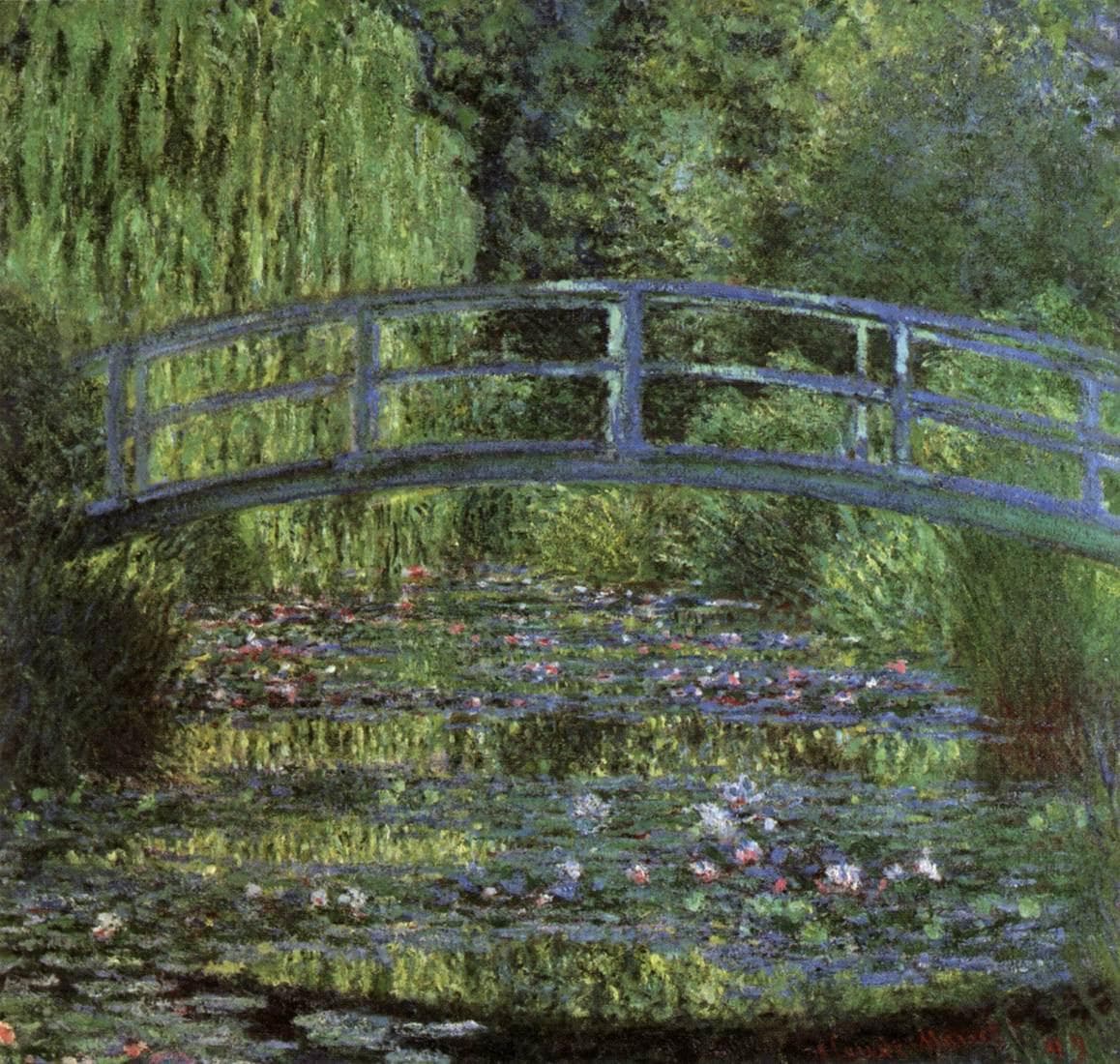
Water Lily Pond, Green Harmony
Claude Monet · 1899
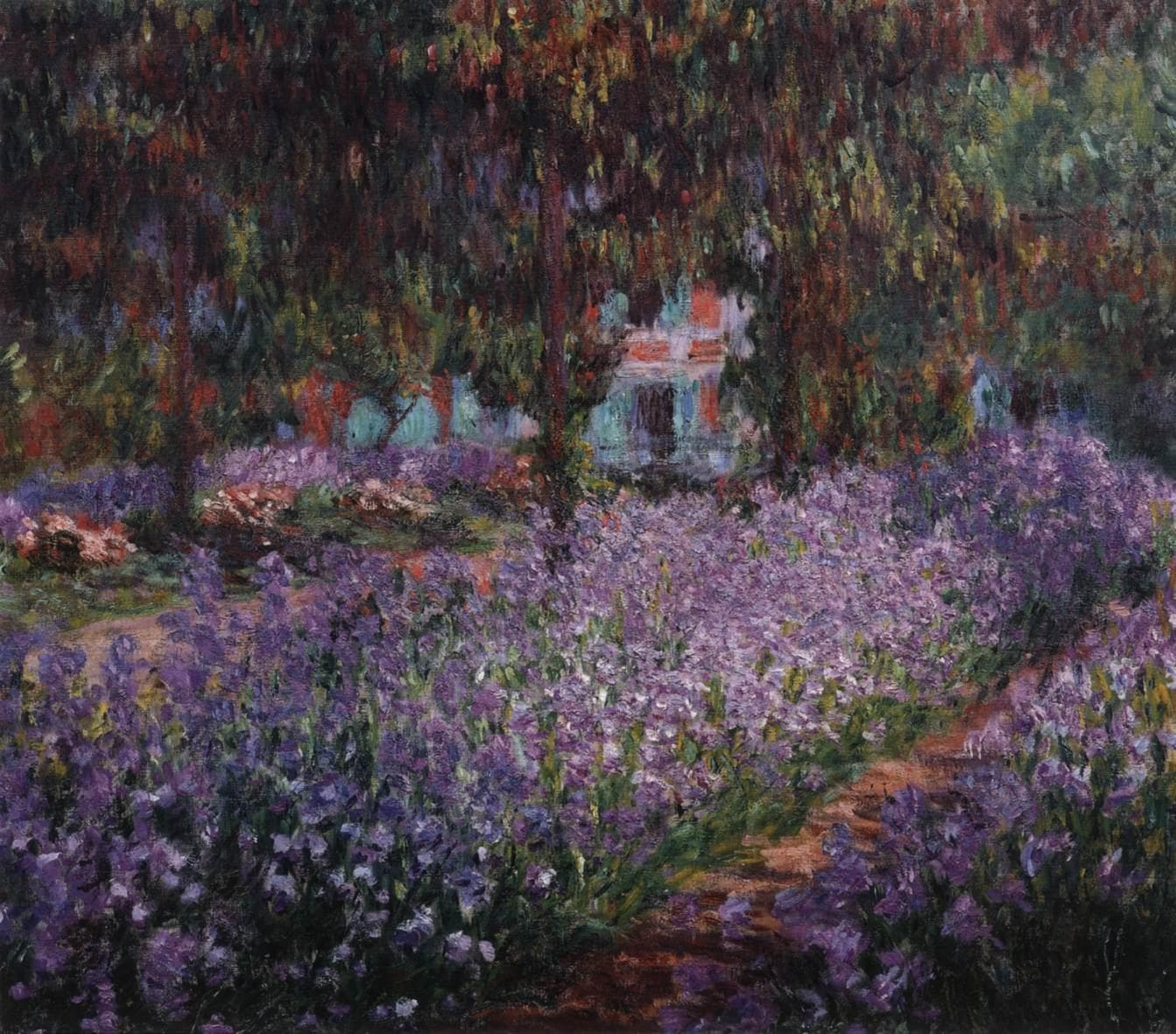
Irises in Monet's Garden at Giverny
Claude Monet · 1900
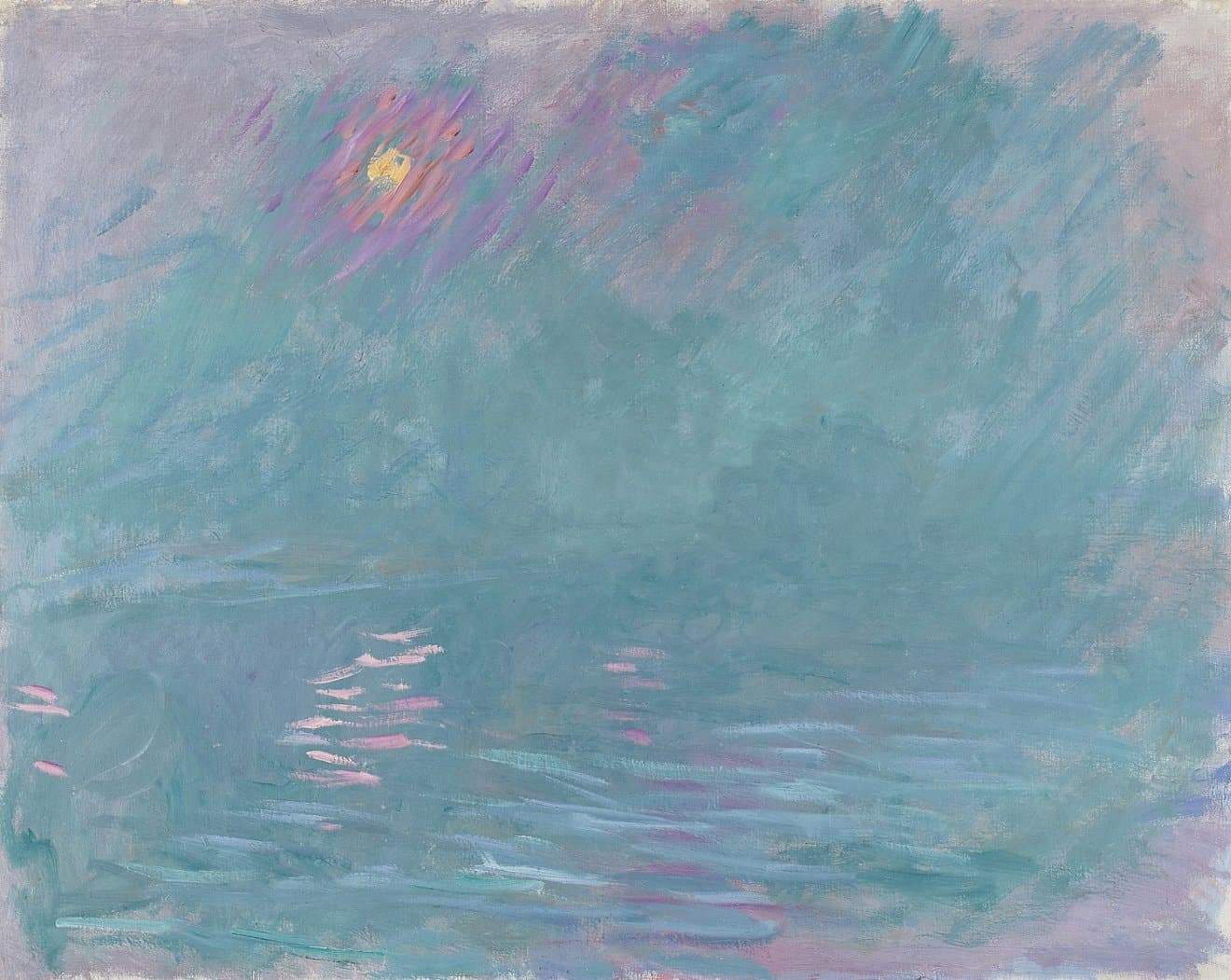
Waterloo Bridge (Kerry Stokes Collection)
Claude Monet · 1899–1901
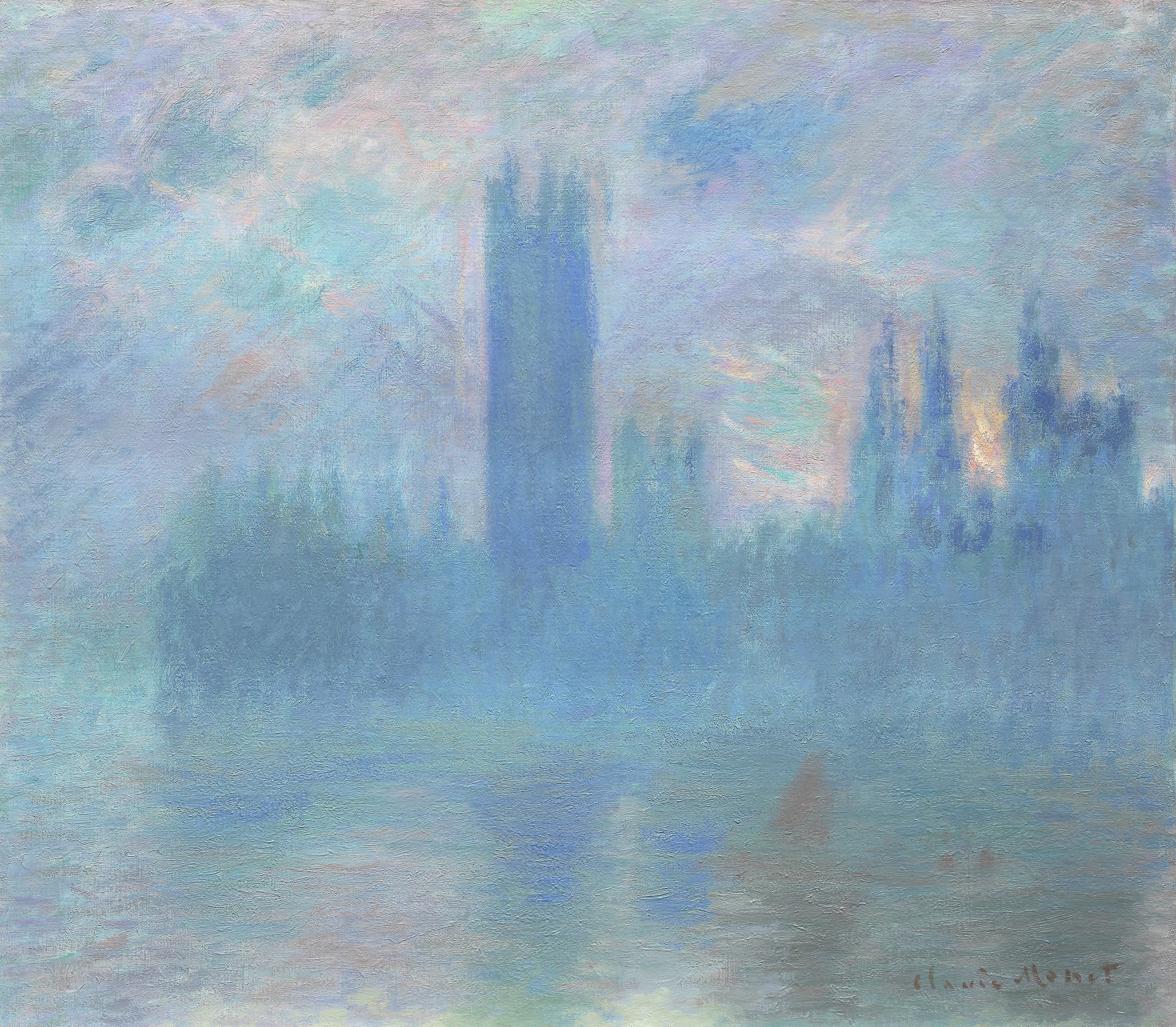
Houses of Parliament, London
Claude Monet · 1900–01
Waterloo Bridge (Santa Barbara Museum of Art)
Claude Monet · 1900
Charing Cross Bridge
Claude Monet · 1899
Charing Cross Bridge (private collection, c. 1900)
Claude Monet · c. 1899–1901
Charing Cross Bridge
Claude Monet · 1899
Also painted in 1899
The same year

Bridge over a Pond of Water Lilies
Claude Monet · 1899
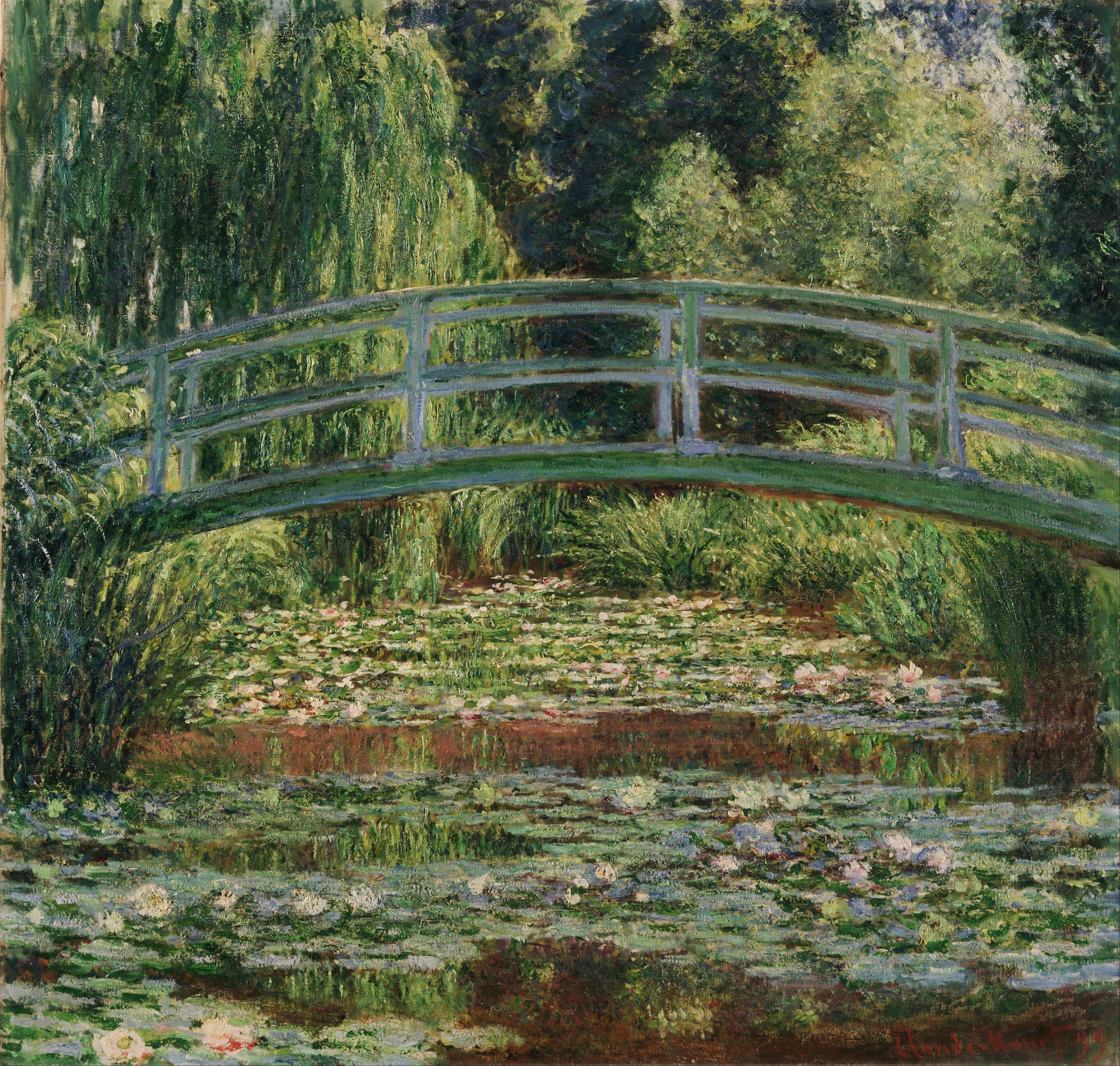
The Japanese Footbridge and the Water Lily Pool, Giverny
Claude Monet · 1899
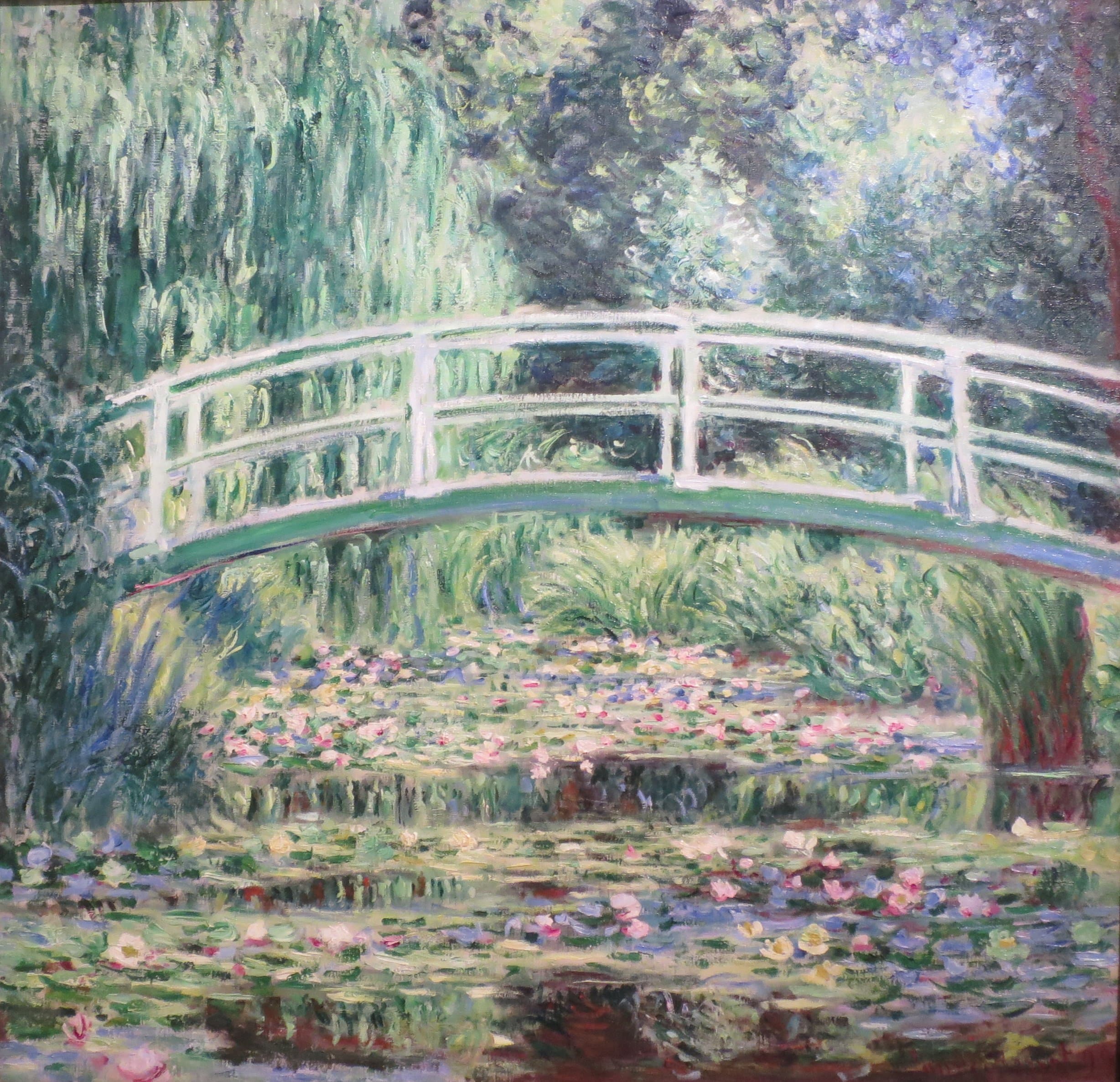
White Water Lilies
Claude Monet · 1899
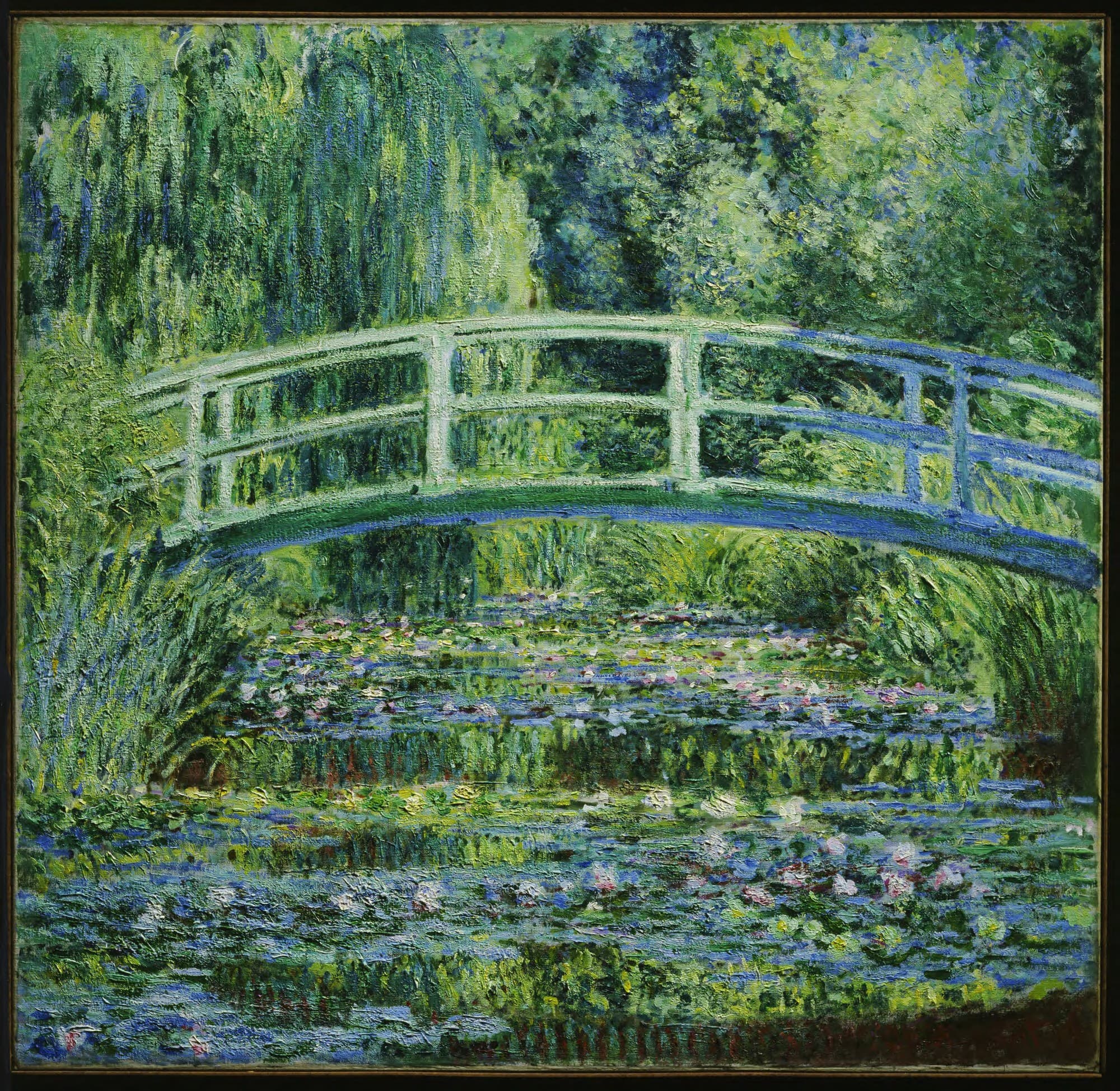
Water Lilies and Japanese Bridge
Claude Monet · 1899
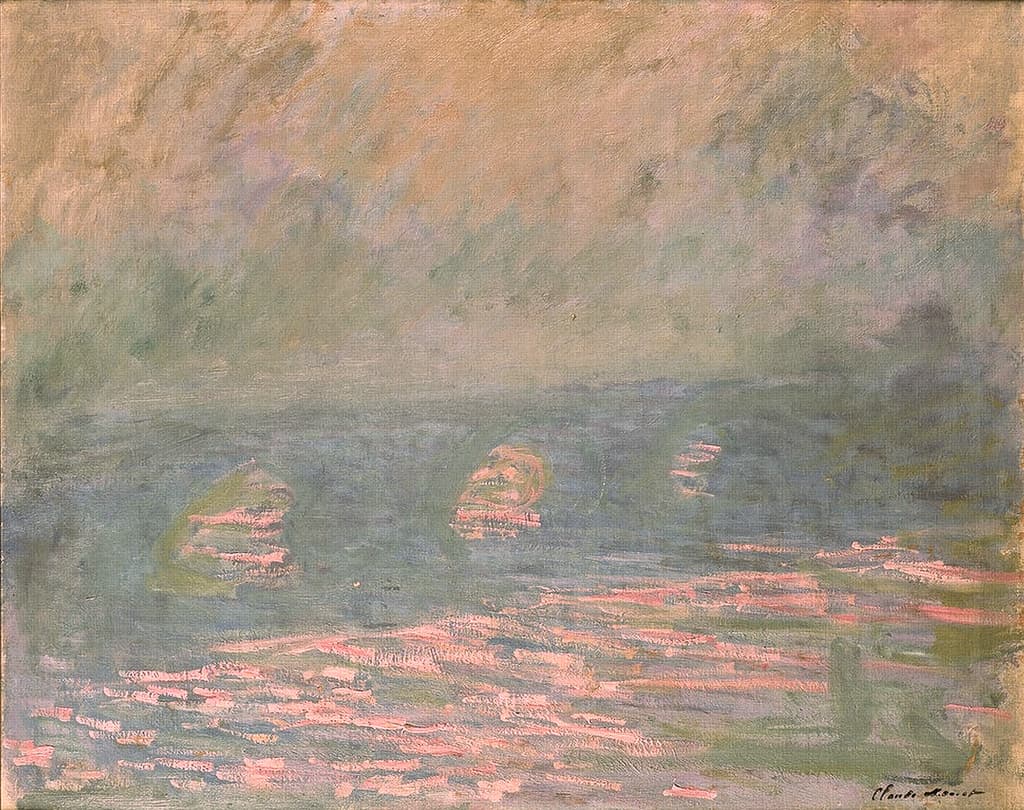
Waterloo Bridge (Matsushita Museum of Art)
Claude Monet · 1899–1901
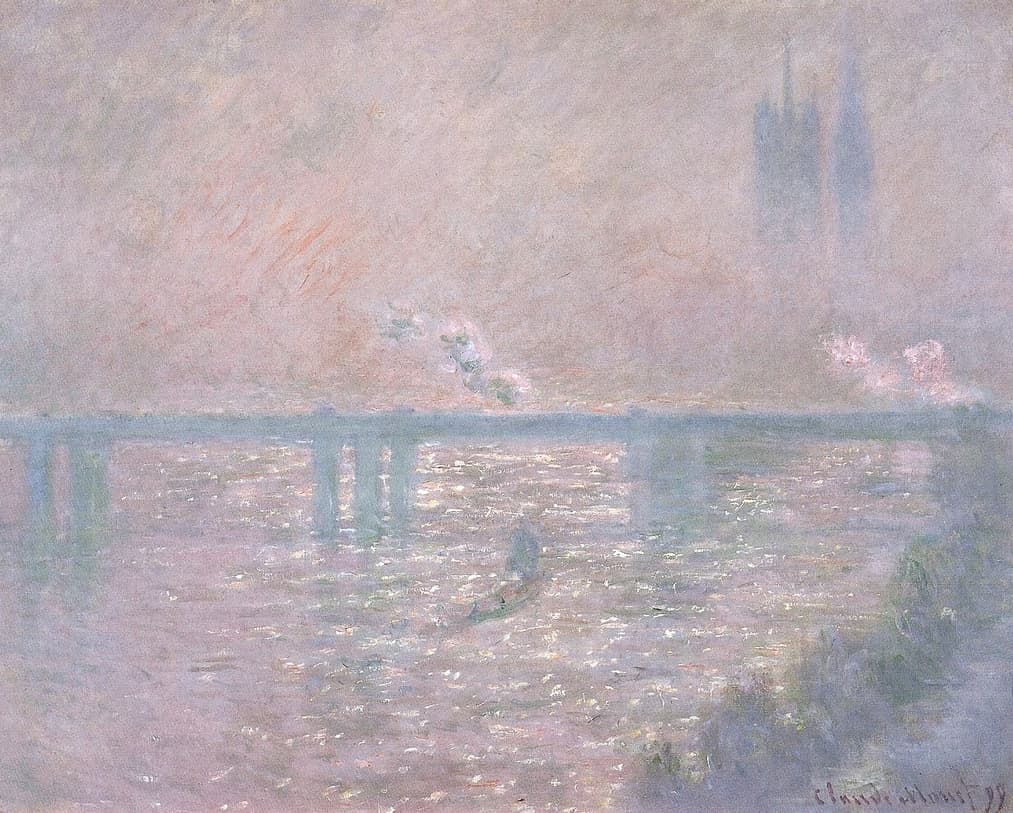
Charing Cross Bridge
Claude Monet · 1899
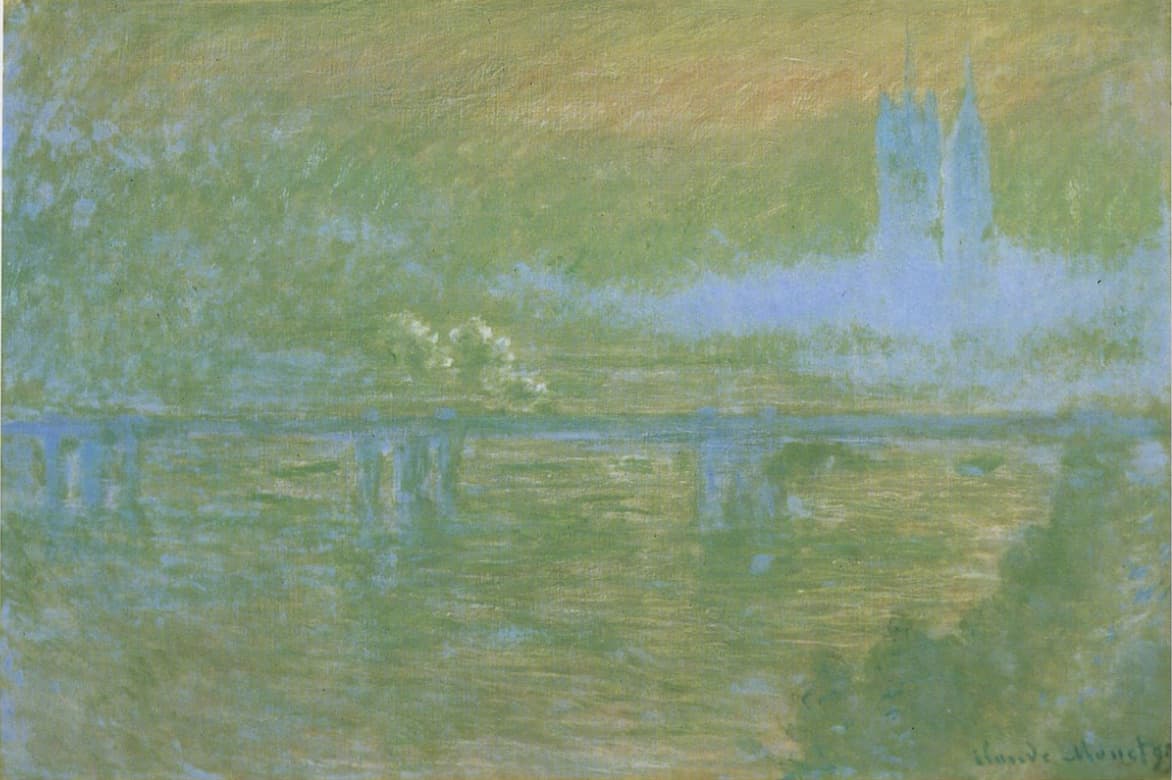
Charing Cross Bridge
Claude Monet · c. 1899
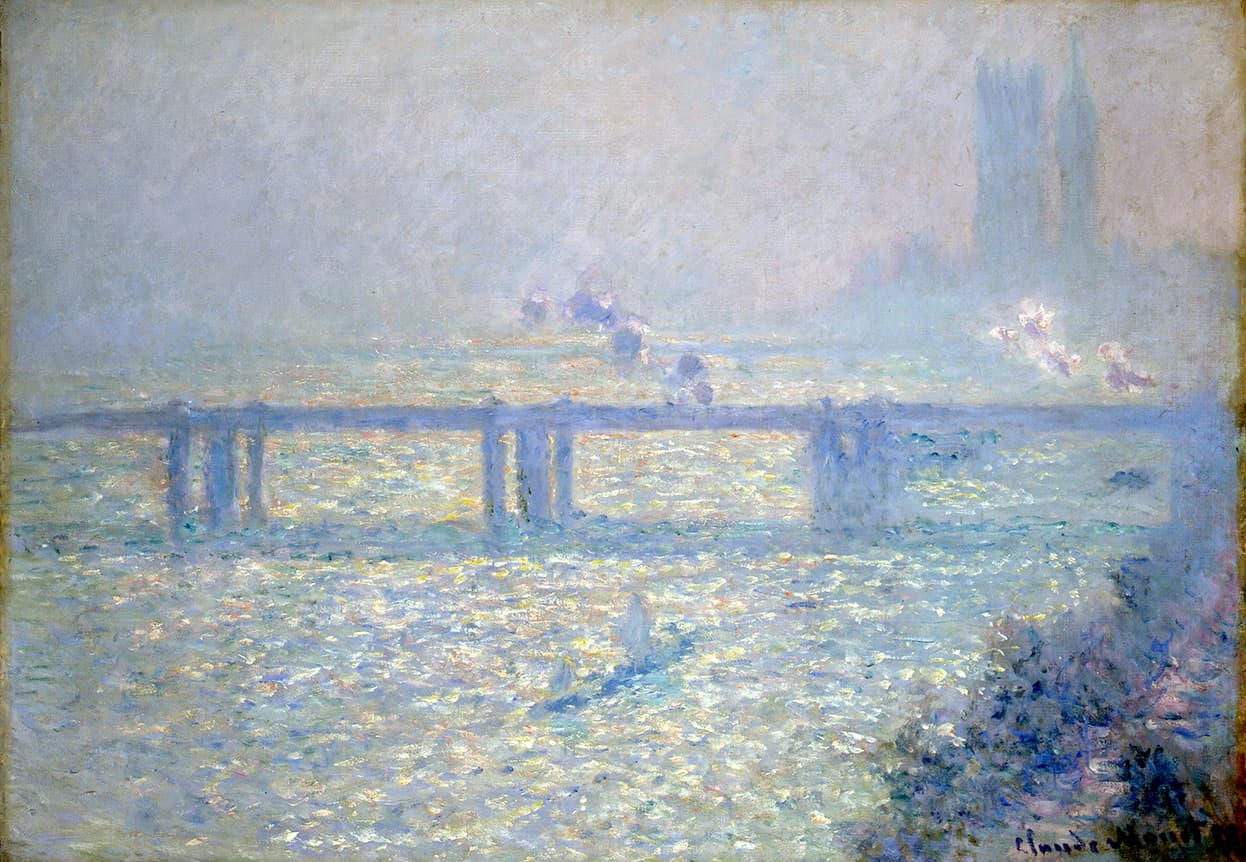
Charing Cross Bridge (Shelburne Museum)
Claude Monet · 1899
Kindred works
You may also study
White Water Lilies
Claude Monet · 1899
The Japanese Footbridge and the Water Lily Pool, Giverny
Claude Monet · 1899
Bridge over a Pond of Water Lilies
Claude Monet · 1899
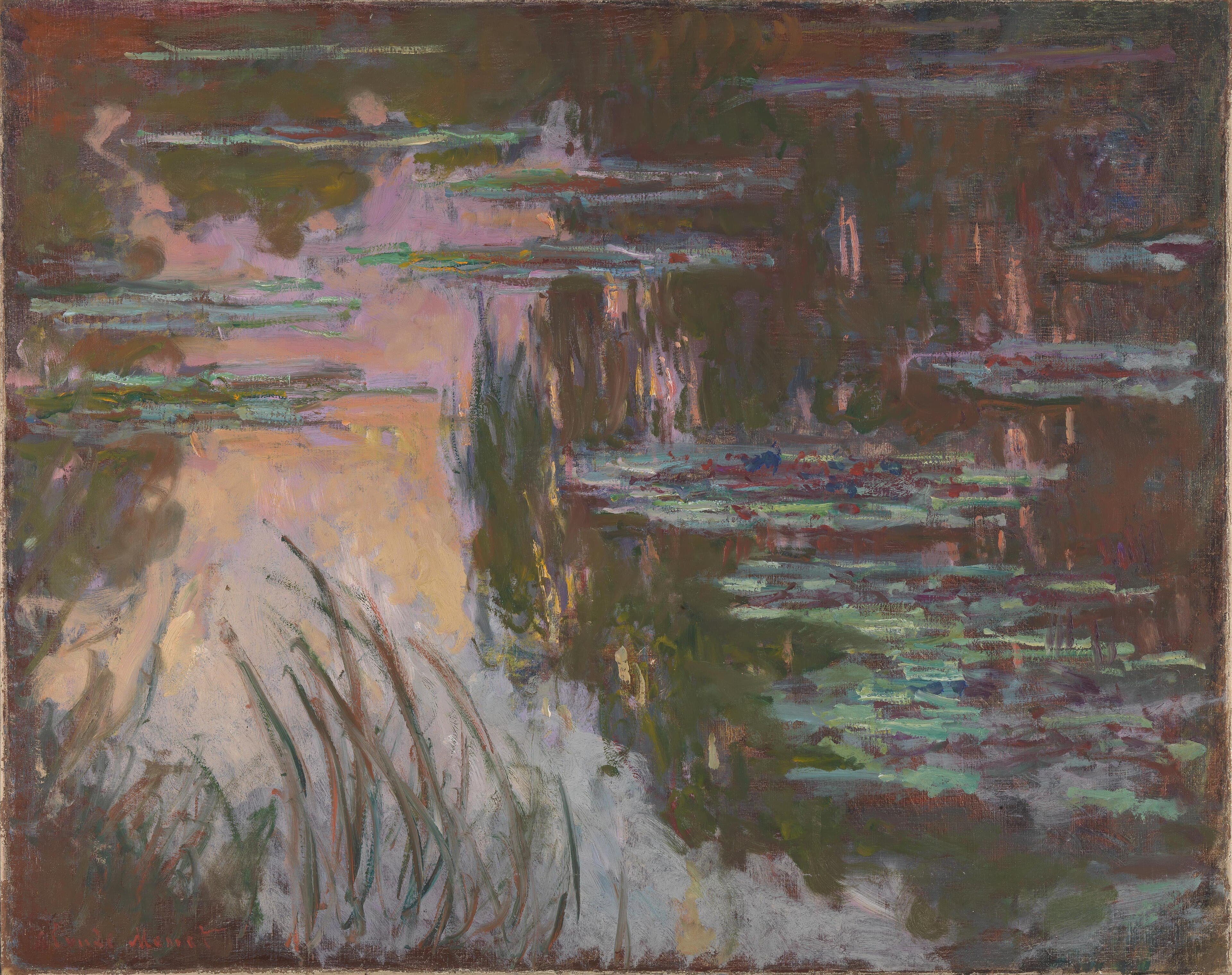
Water-Lilies, Setting Sun (National Gallery, London)
Claude Monet · c. 1907
Morning on the Seine
Claude Monet · 1897

Beach in Pourville
Claude Monet · 1882
Vétheuil in the Fog
Claude Monet · 1879
Antibes
Claude Monet · 1888