Impressionism
Haystacks, Snow Effect
Claude Monet, 1891
Haystacks, Snow Effect is a painting by Claude Monet of two wheat stacks in a snowy field at Giverny, seen against a low, hazy sun, signed and dated 1891. It hangs in the Scottish National Gallery in Edinburgh.
- Artist
- Claude Monet
- Date
- 1891
- Medium
- Oil on canvas
- Dimensions
- 65 × 92 cm
- Collection
- Scottish National Gallery, Edinburgh, United Kingdom
- Movement
- Impressionism
- Catalogue
- Wildenstein W 1277
Haystacks, Snow Effect is one of Claude Monet's winter canvases from his series of stacks of wheat, painted in the fields beside his house at Giverny in 1890–91. Signed and dated "91" at lower left, it measures 65 by 92 centimeters and is number 1277 in Daniel Wildenstein's catalogue. It belongs to the National Galleries of Scotland (NG 2283), entered the collection in 1965 and hangs in the Scottish National Gallery in Edinburgh. Our catalogue has also listed it as Haystack, Effect of White Frost.
What does Haystacks, Snow Effect show?
Two stacks stand in a snow-covered field. The larger one fills the center of the canvas, a squat drum topped by a steep cone; the smaller sits behind it to the left, partly hidden. Both are seen against the light, so the sides facing us are in shadow: deep plum, rust and blue-black, with flecks of cobalt and pale blue on the upper slopes where the snow on the thatch catches the sky.
The sun is low and behind them, somewhere in the haze at the top of the canvas. That is why their shadows run straight toward us. The large stack's shadow spills down to the bottom edge as a pool of brilliant ultramarine, the most saturated passage in the picture, and the small stack throws a second, lighter blue shape to the left.
Behind the stacks, the landscape almost dissolves. A low rise of snowy ground, a few trees and the line of the hills are reduced to drifts of white, lilac and pale blue, and the sky above is a band of peach and gold. Only near the lower right do a few ochre flecks of stubble break through the snow, reminding you this is a harvested field.
Look closely at the snow
Nothing here is painted white. The sunlit snow in the foreground is built of pink, cream, yellow and lilac strokes laid side by side, while the shadowed snow is blue and violet. Near the stacks, Monet drags warm orange into the edges of the shadows, where reflected light from the straw would fall.
The paint is thick and crusted, worked over many sessions. Strokes run horizontally across the field, curve around the stacks and break into short dabs in the misty background. Up close, the large stack's surface is a weave of red, blue and violet; from across the room it reads as a single dark mass with a glowing outline.
How Monet painted the stacks
Monet had bought his house at Giverny in November 1890, and the stacks stood in a field close by. From late summer 1890 into the winter he painted them over and over, setting up several canvases at once and switching to another as the light changed. In a letter to the critic Gustave Geffroy that October he wrote that he was struggling to capture what he called "instantaneity."
The snow effects come from the hard winter of 1890–91, when frost and snow lay for weeks. Like most canvases in the series, this one was finished in the studio, where Monet adjusted colors so that the pictures would hang well together.
How this version fits the Haystacks series
The full series runs to about twenty-five canvases, and fifteen of them were shown at Durand-Ruel's gallery in Paris in May 1891, where they sold within days. Their success made the series Monet's working method, from the Poplars to Rouen Cathedral. Our Haystacks series hub gathers the versions in the catalogue.
Among the snow pictures, this is one of the most backlit. Compare the single, sidelit stack of Grainstack (Snow Effect) in Boston, the flat gray light of Stack of Wheat, Snow Effect, Overcast Day and the orange afterglow of Stacks of Wheat, Sunset, Snow Effect, both in Chicago. The same field in late summer appears in Grainstack in Sunlight in Zurich.
Where to see Haystacks, Snow Effect
The painting hangs in the Scottish National Gallery on the Mound in Edinburgh. The gallery also owns one of the 1891 canvases of Poplars on the Epte, so two of Monet's series can be seen side by side. For the setting of both, see our page on Monet's Giverny; for other collections, our guide on where to see Monet's paintings; and for his life, Claude Monet.
Questions & answers
Where is Monet's Haystacks, Snow Effect?
It is in the Scottish National Gallery in Edinburgh, part of the National Galleries of Scotland (NG 2283), which acquired it in 1965. Dated 1891, it shows two wheat stacks casting blue shadows on snow. Other snow-effect stacks from the same series are in Boston, Chicago, New York and Los Angeles.
When and where was Haystacks, Snow Effect painted?
Monet painted it at Giverny, in a field near his house, during the hard winter of 1890–91, and signed and dated it 1891. He worked on several canvases outdoors at once and finished them in the studio before fifteen stack paintings were exhibited in Paris in May 1891.
What does Haystacks, Snow Effect show?
It shows two stacks of wheat in a snowy field, seen against a low, hazy sun, so their shadows run toward the viewer as pools of bright blue. The stacks are in deep plum and rust, the snow is pink and lilac, and the hills behind dissolve in mist. They are grain, not hay.
How many haystack paintings did Monet make?
The main series of 1890–91 has about twenty-five canvases, of which fifteen were shown at Durand-Ruel's gallery in May 1891. Monet had painted stacks in earlier years too, so totals vary with what is counted. This Edinburgh canvas is Wildenstein 1277, one of the snow and frost effects of winter 1890–91.
More by the artist
Claude Monet

Bridge over a Pond of Water Lilies
Claude Monet · 1899

Woman with a Parasol – Madame Monet and Her Son
Claude Monet · 1875

Sunset in Venice
Claude Monet · 1908–12

La Grenouillère
Claude Monet · 1869

Beach in Pourville
Claude Monet · 1882

Springtime
Claude Monet · 1872

Boating on the River Epte
Claude Monet · 1890

The Seine at Asnières (Hermitage)
Claude Monet · 1873
Also painted in 1891
The same year
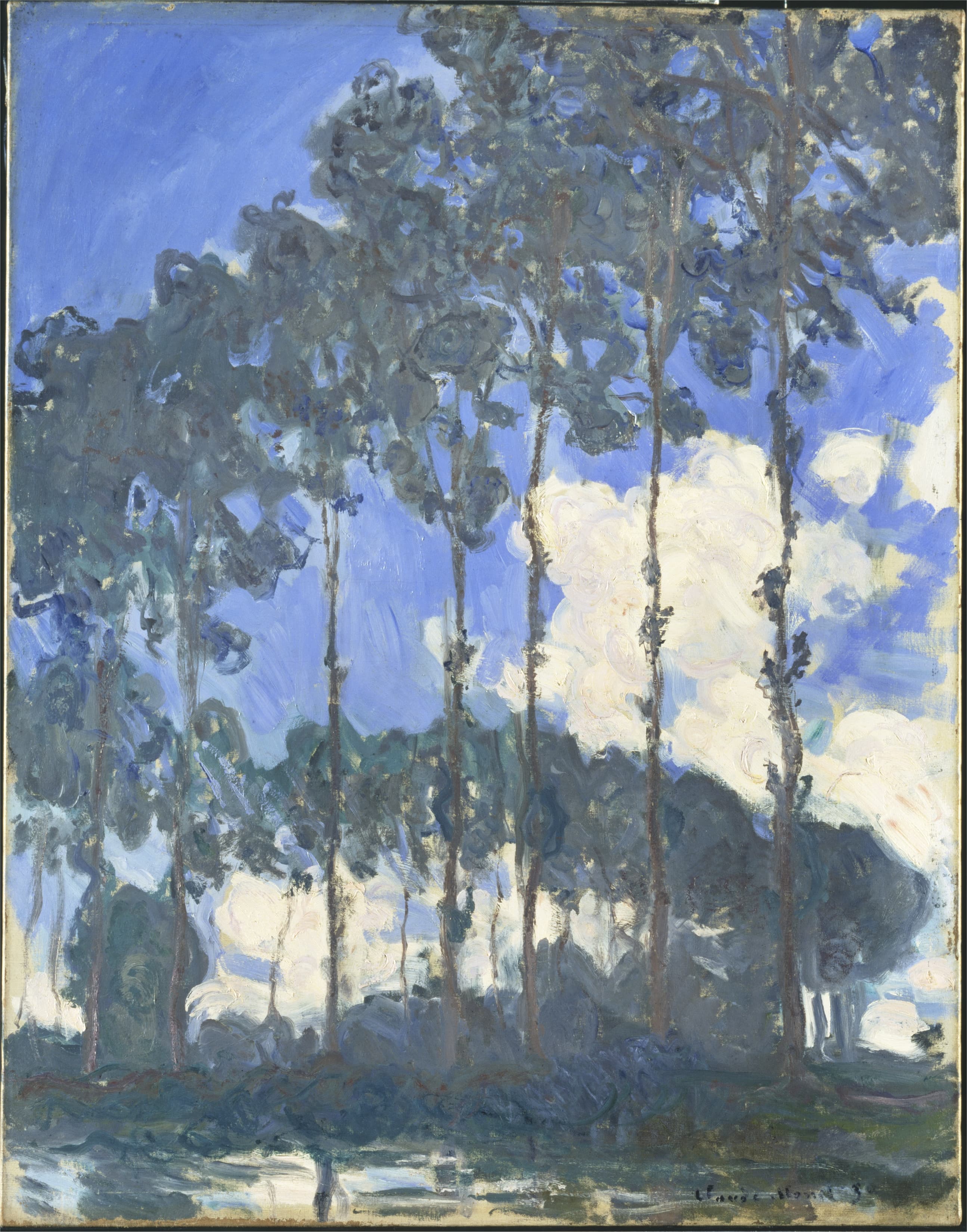
Poplars on the Epte (London)
Claude Monet · 1891
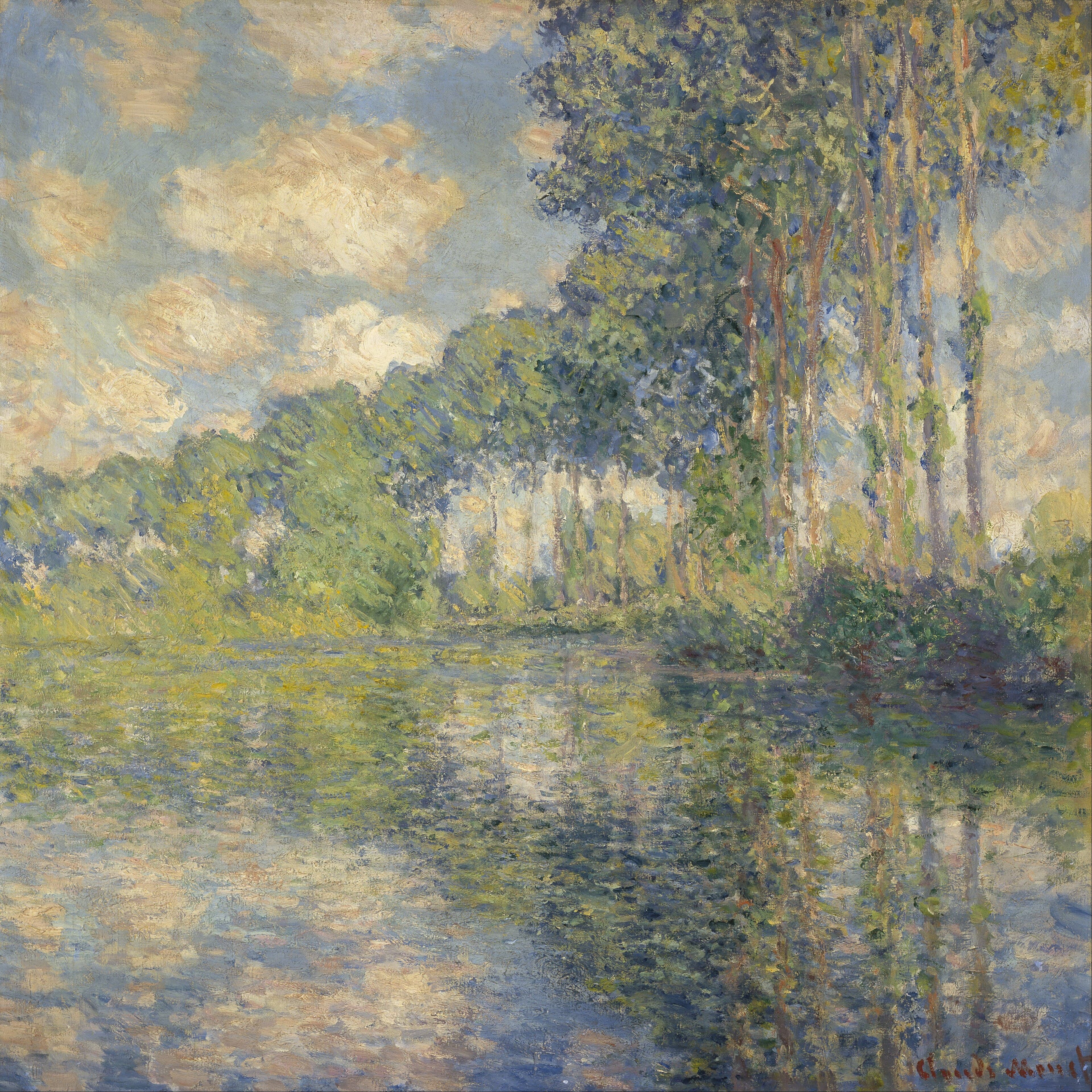
Poplars on the Epte (Edinburgh)
Claude Monet · 1891
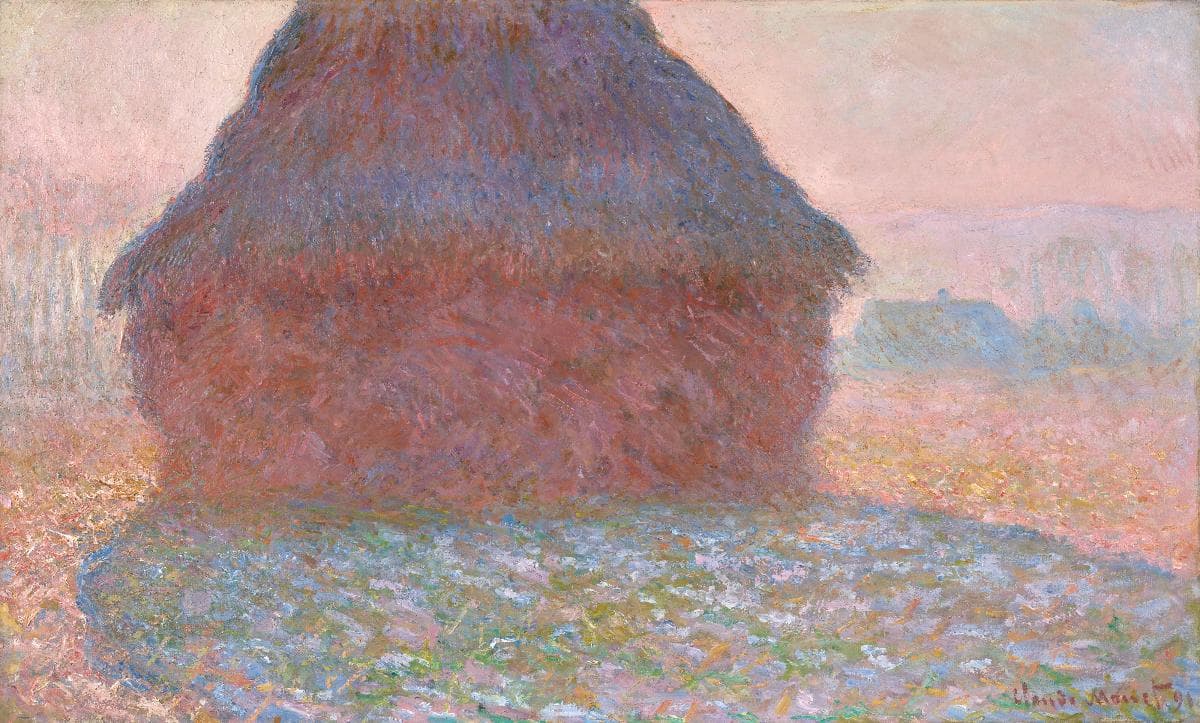
Grainstack in Sunlight
Claude Monet · 1891
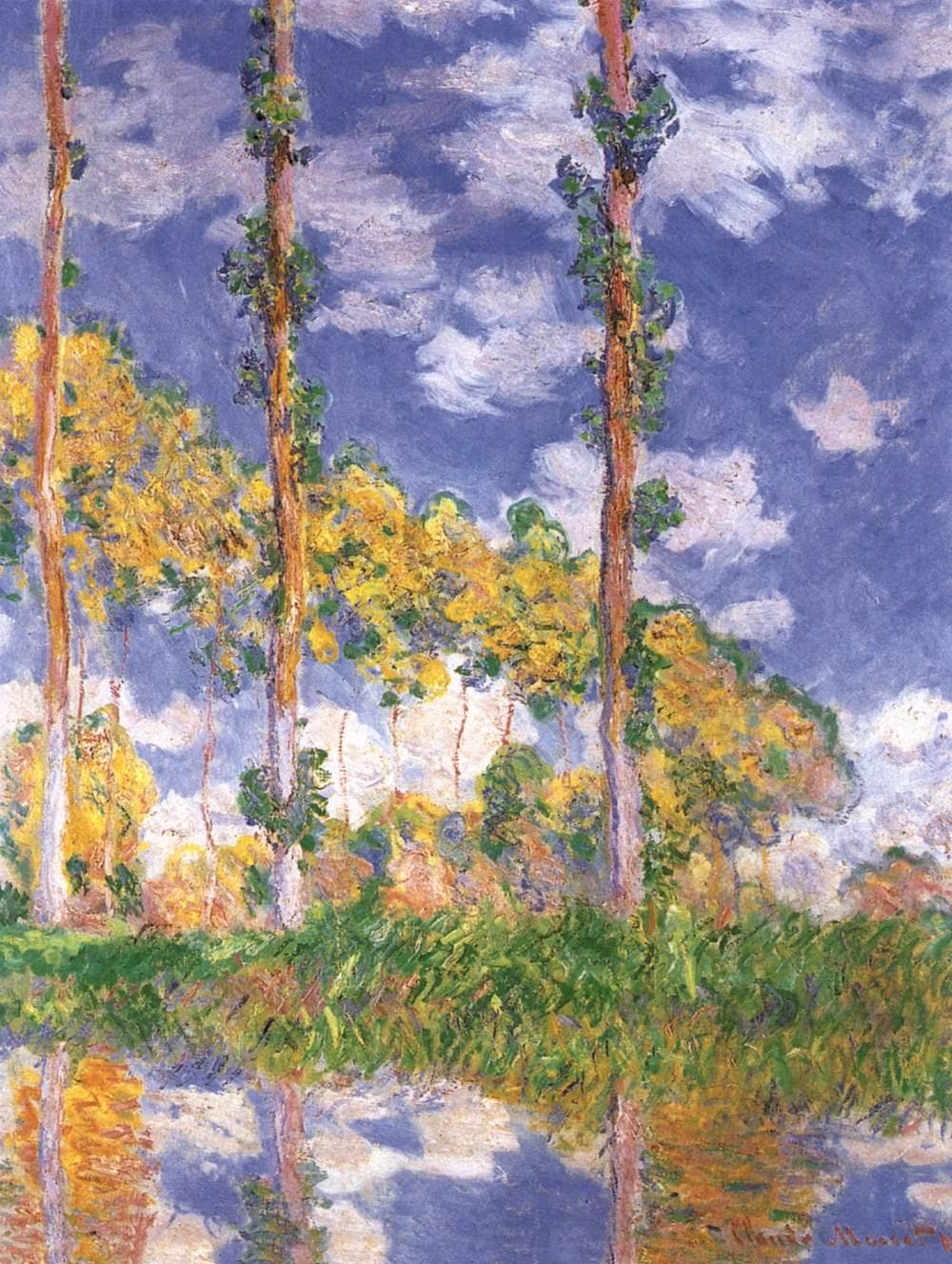
Three Poplars, Summer
Claude Monet · 1891
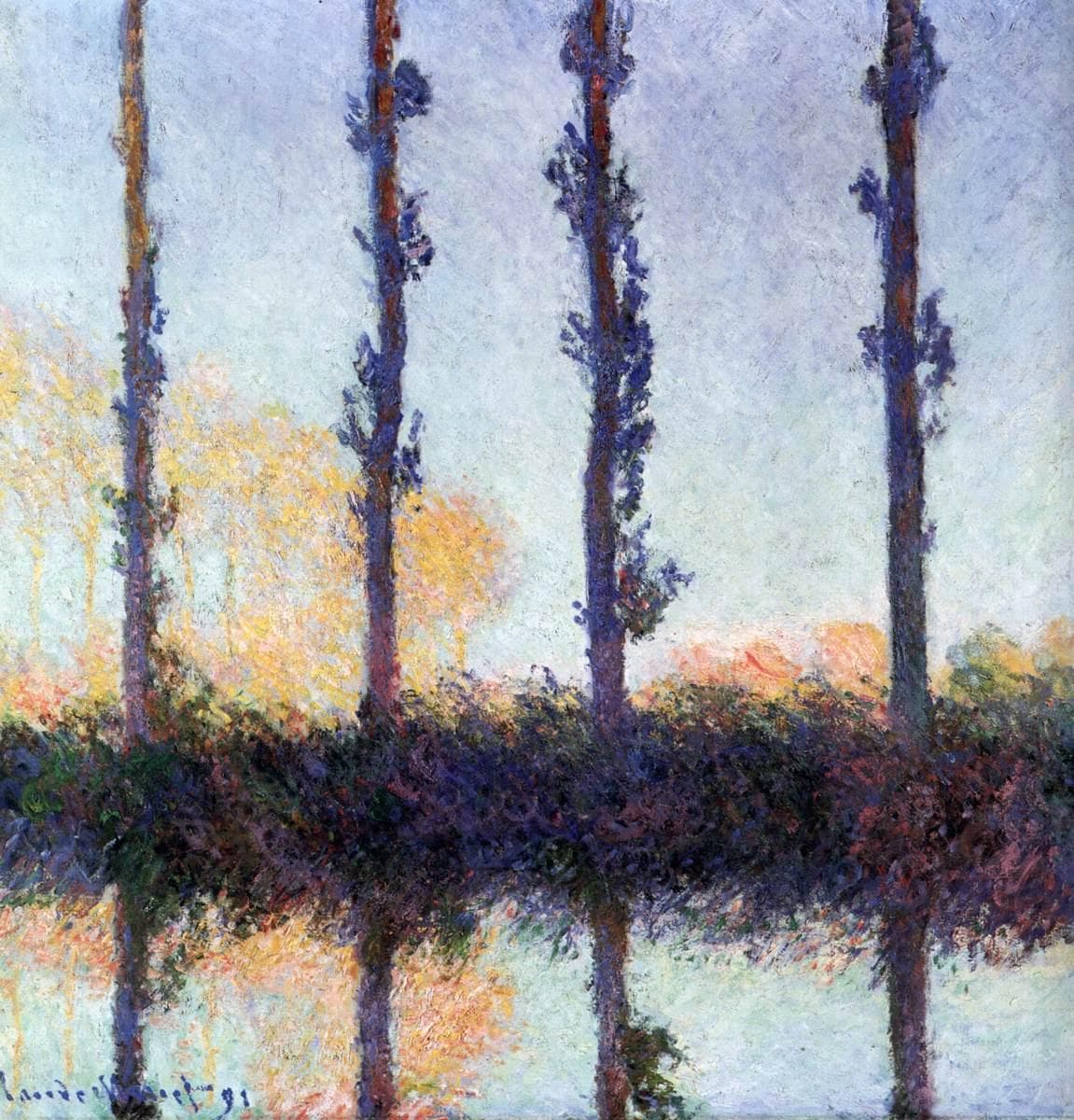
The Four Trees
Claude Monet · 1891
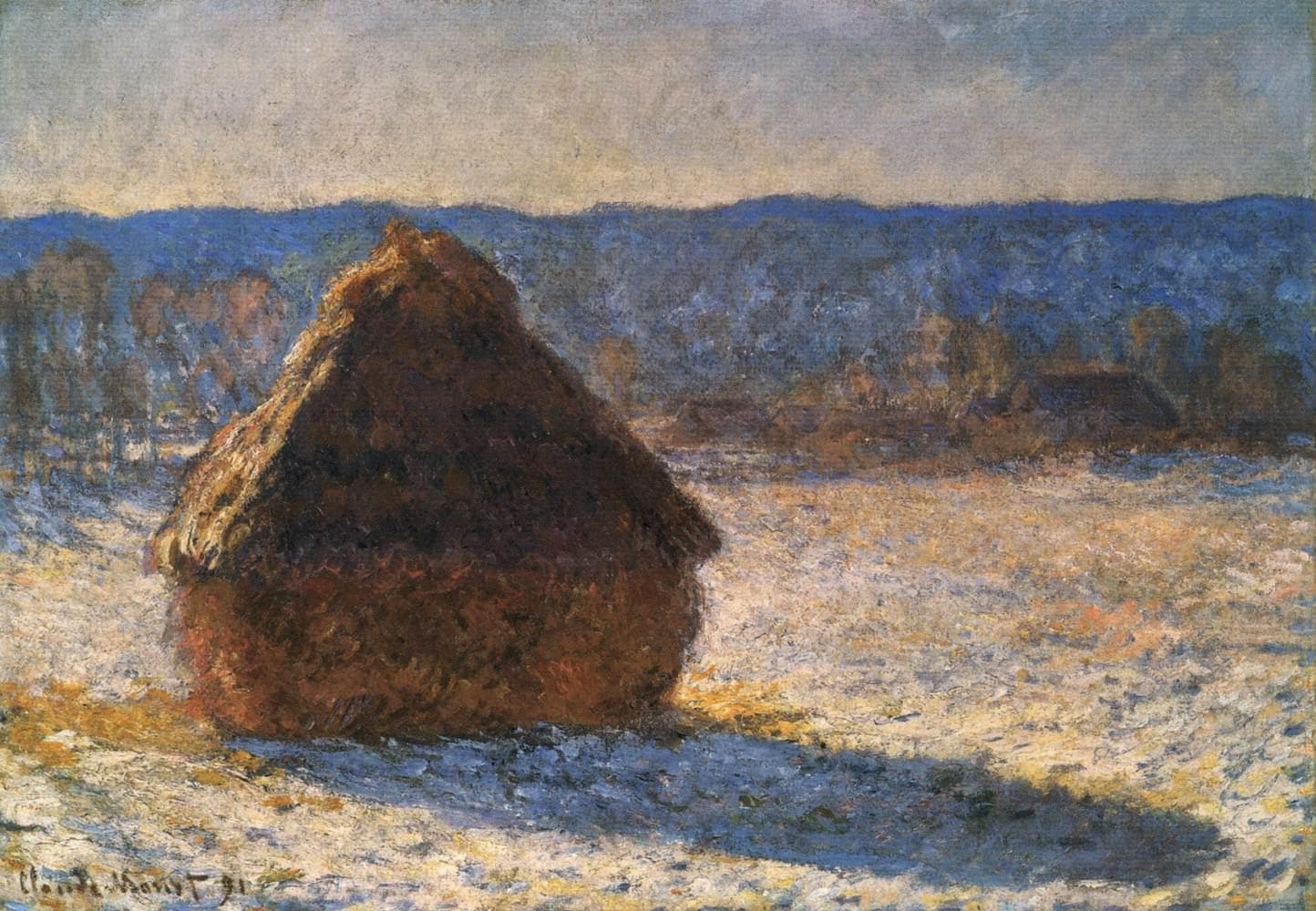
Grainstack (Snow Effect)
Claude Monet · 1891
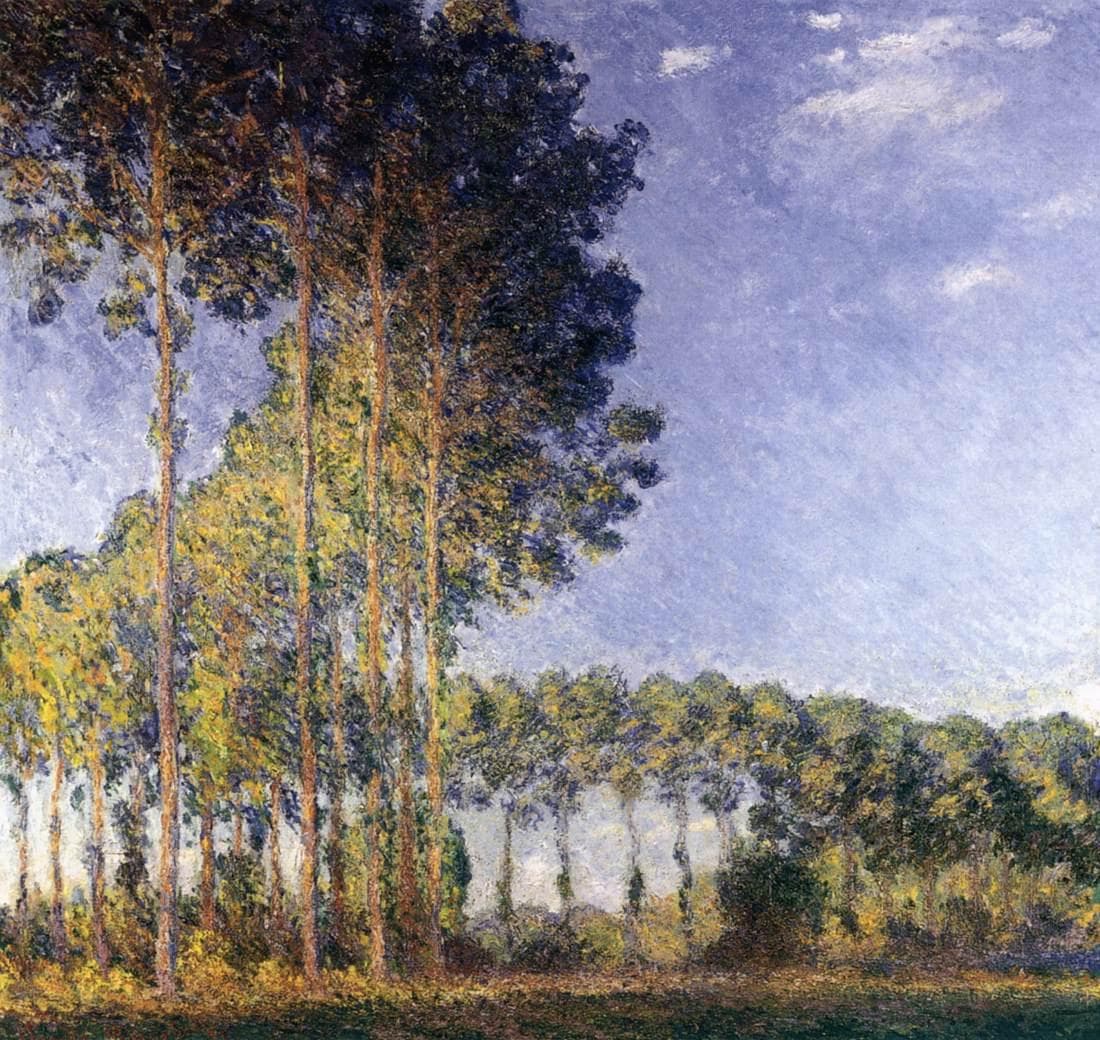
Poplars at the Banks of Epte
Claude Monet · 1891–92
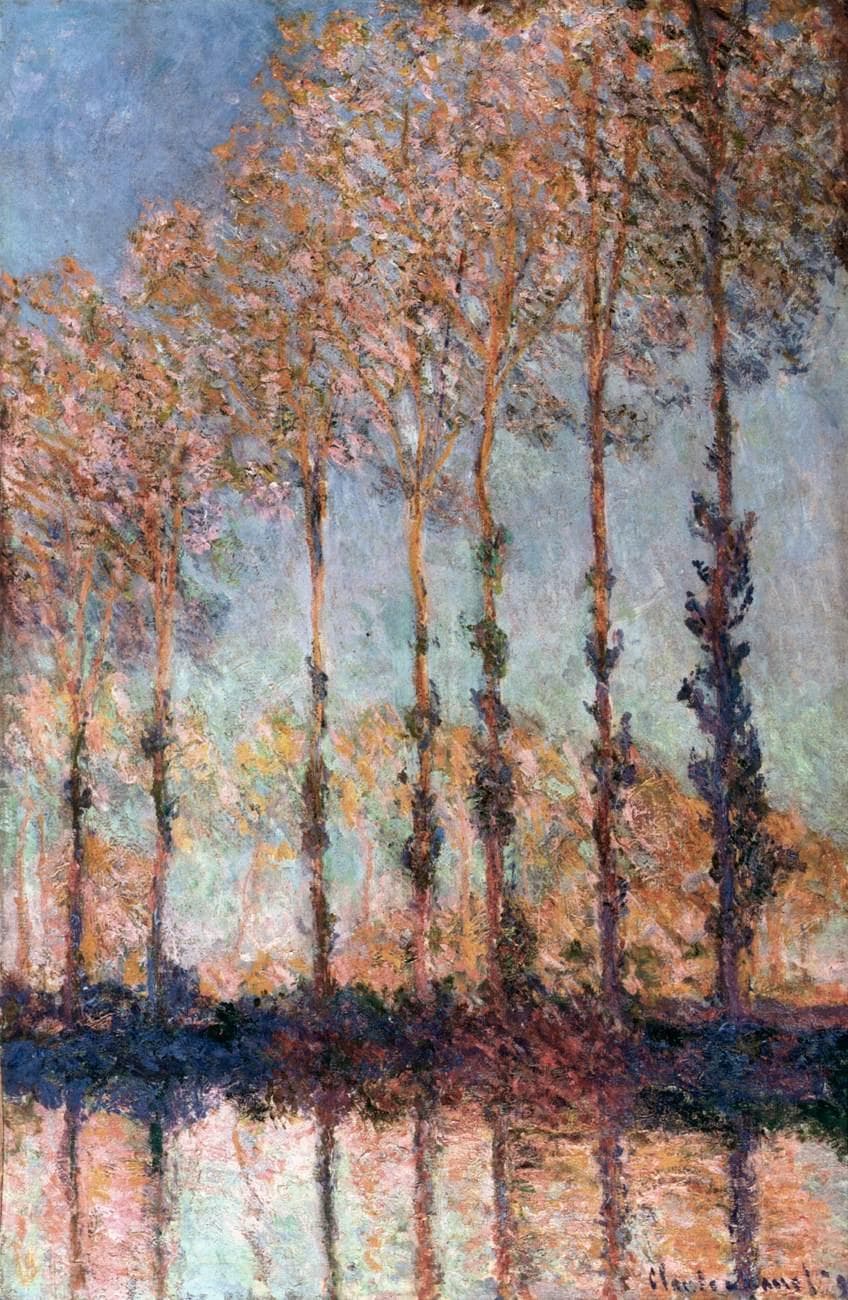
Poplars on the Banks of the River Epte
Claude Monet · 1891
Kindred works
You may also study
Grainstack (Snow Effect)
Claude Monet · 1891
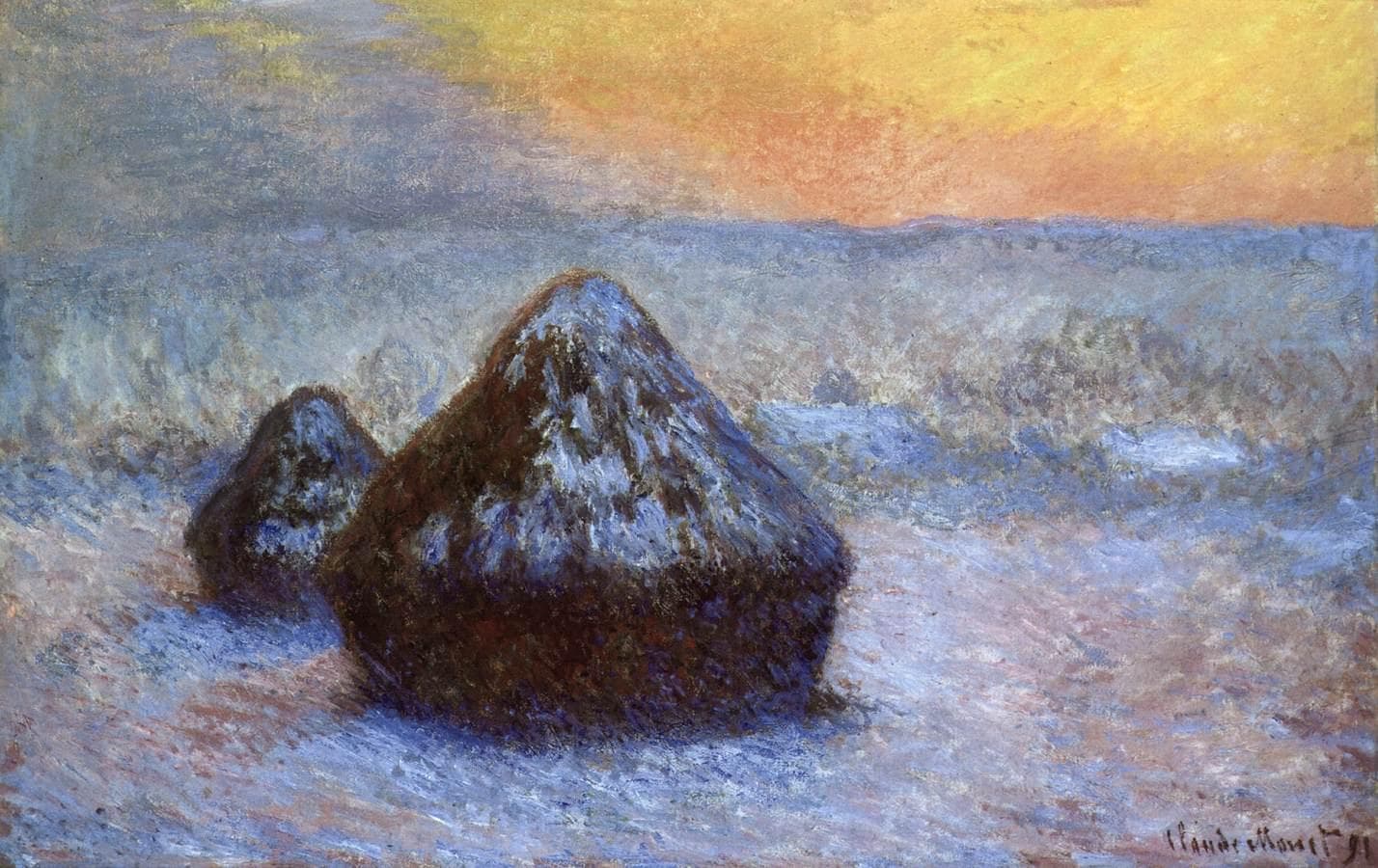
Stacks of Wheat, Sunset, Snow Effect
Claude Monet · 1890–91
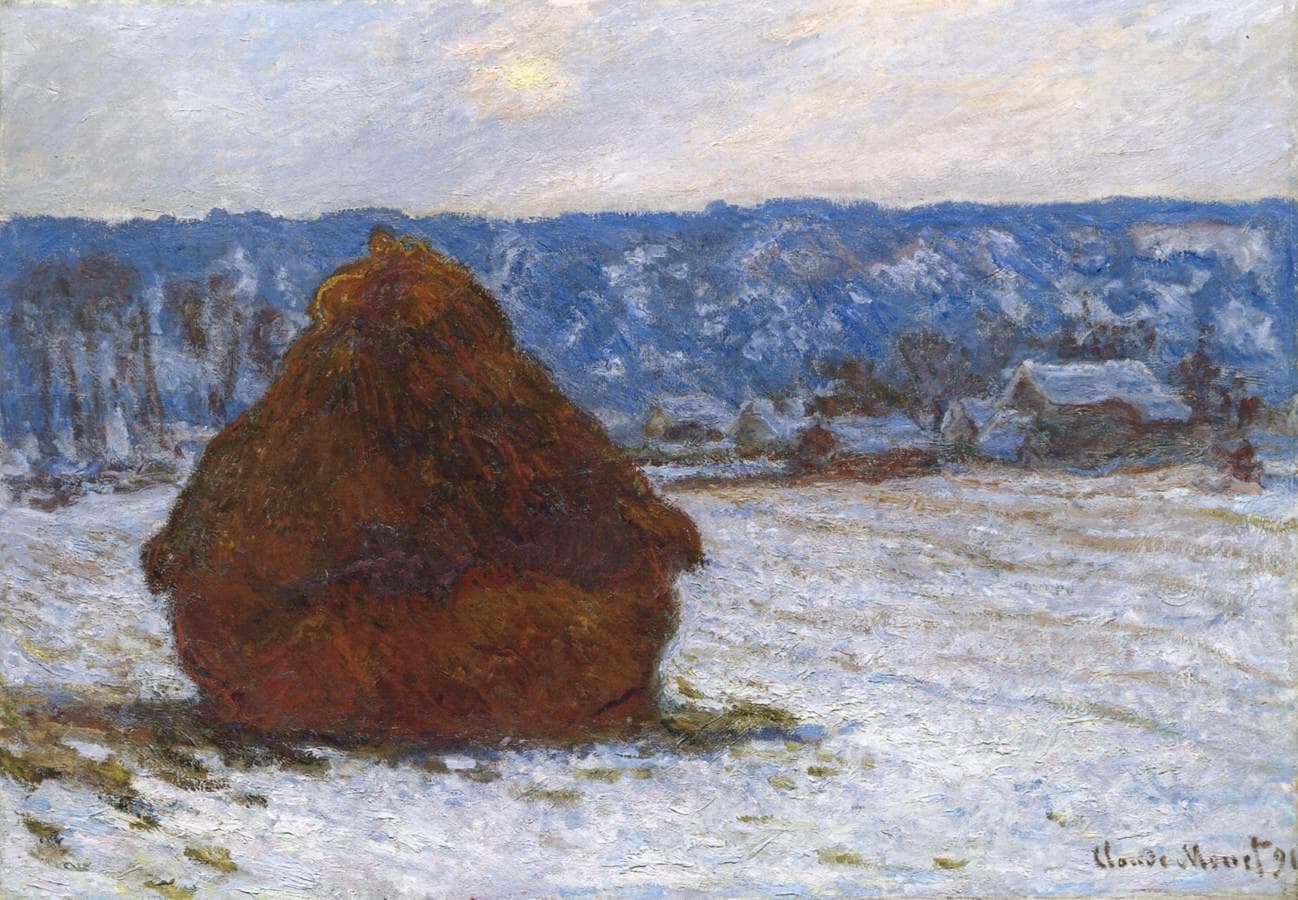
Stack of Wheat, Snow Effect, Overcast Day
Claude Monet · 1890–91
Grainstack in Sunlight
Claude Monet · 1891
Poplars on the Epte (Edinburgh)
Claude Monet · 1891
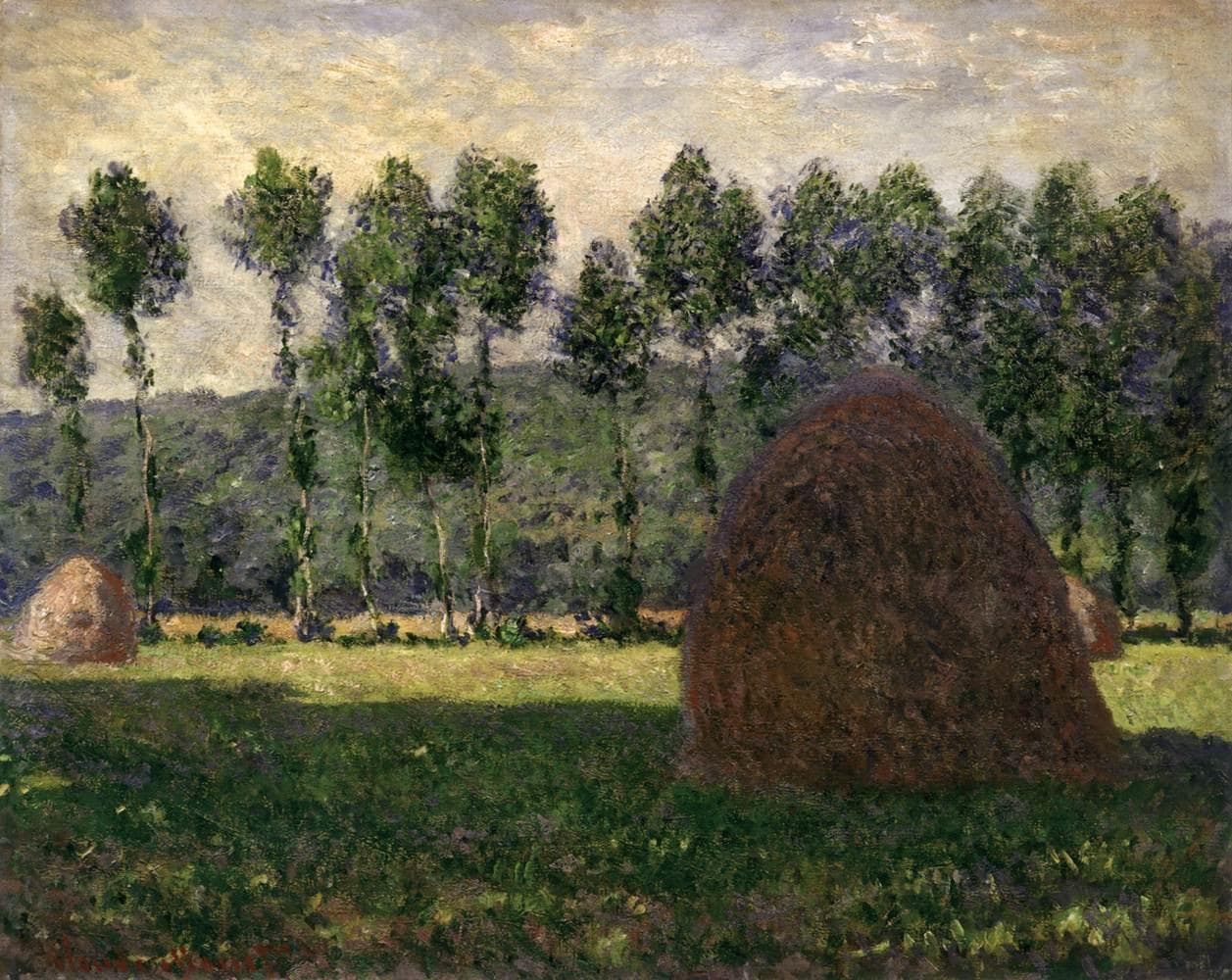
Haystack near Giverny
Claude Monet · 1884–89

The Scream
Edvard Munch · 1893

Ophelia
John Everett Millais · 1851–52