Impressionism
Stack of Wheat
Claude Monet, 1890–91
Stack of Wheat is a winter painting by Claude Monet from his series of wheat stacks at Giverny, made in 1890–91: a single snow-dusted stack in a frozen field under a pale sky. The 65.8 × 92.3 cm canvas (Wildenstein 1283) is in the Art Institute of Chicago.
- Artist
- Claude Monet
- Date
- 1890–91
- Medium
- Oil on canvas
- Dimensions
- 65.8 × 92.3 cm
- Collection
- Art Institute of Chicago, Chicago, United States
- Movement
- Impressionism
- Catalogue
- Wildenstein 1283
What you are looking at
One stack of wheat, a little left of center, sits in a field of thin, broken snow. Its conical cap is streaked white where the snow has settled, while the lower drum stays a deep rust red and plum, dark enough to read as the heaviest thing on the canvas. Behind it a screen of bare poplars and willows runs across the picture in blue-grey and mauve, and beyond them a line of blue hills closes the view under a pale, milky sky touched with pink. At the far right a few pale shapes suggest farm buildings at the edge of the village.
The snow is not white. Monet builds it from short strokes of lilac, pale blue, cream and pink, with flecks of brown stubble breaking through, so the ground seems to vibrate. The stack's shadow is barely there, a smear of violet at its base, which tells you the light is low and diffuse. The sky is the calmest part of the picture, a smooth band of pale pinkish grey brushed horizontally, and it makes the busy ground and the dark stack seem heavier still. The signature and date, "Claude Monet 91," sit at the lower left.
Look at the edge of the stack where it meets the sky and the trees. Monet runs a thin line of warmer, lighter color along the silhouette, a halo that makes the form glow slightly against its background, a device he used throughout the series.
Giverny, 1890–91
The stacks stood in a field next to Monet's house at Giverny. They were ordinary farm structures, wheat sheaves piled and thatched to keep them dry until threshing, and they stayed in the fields through the winter. Monet began painting them in late summer 1890 and continued into the following winter, carrying canvases out to the field and switching from one to the next as the light and weather changed. Heavy snow that winter gave him the white grounds of this and several related canvases.
How it was painted
The canvas is a wide format, about 66 by 92 centimeters, the standard size of most of the series. The paint is thick and dry, applied in many layers, and much of the series was reworked in the studio before exhibition so that each canvas would hold together as a harmony of color. Here the harmony is cool: blues, lilacs and greys, with the red-brown stack as the single warm mass.
The series
What interested Monet was what he called the "envelope" of light and air around a single motif. When fifteen of the paintings were shown at the Galerie Durand-Ruel in Paris in May 1891, the show was a commercial and critical success and set the pattern for his later series of poplars and Rouen Cathedral. All of them are gathered in our Haystacks hub.
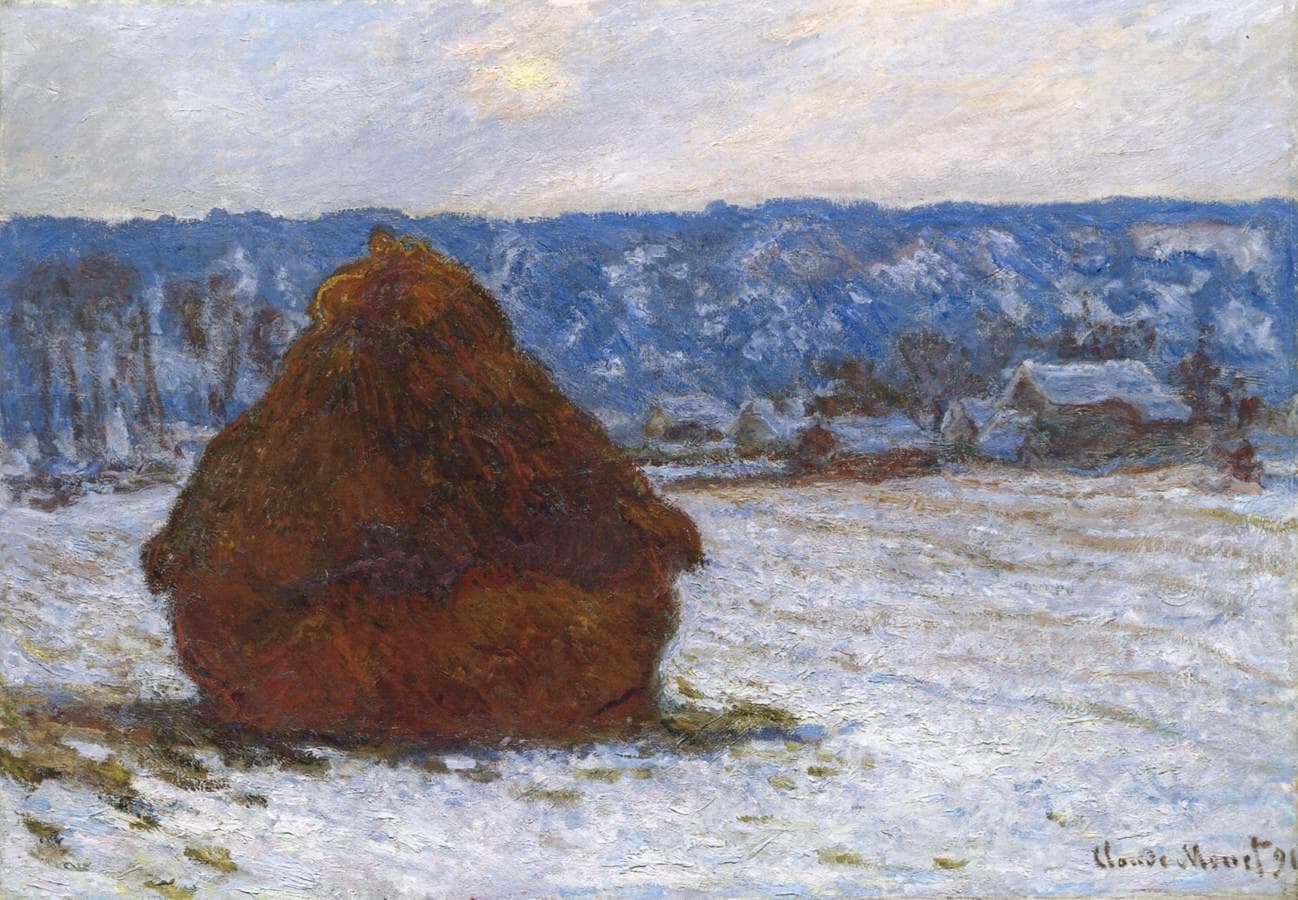
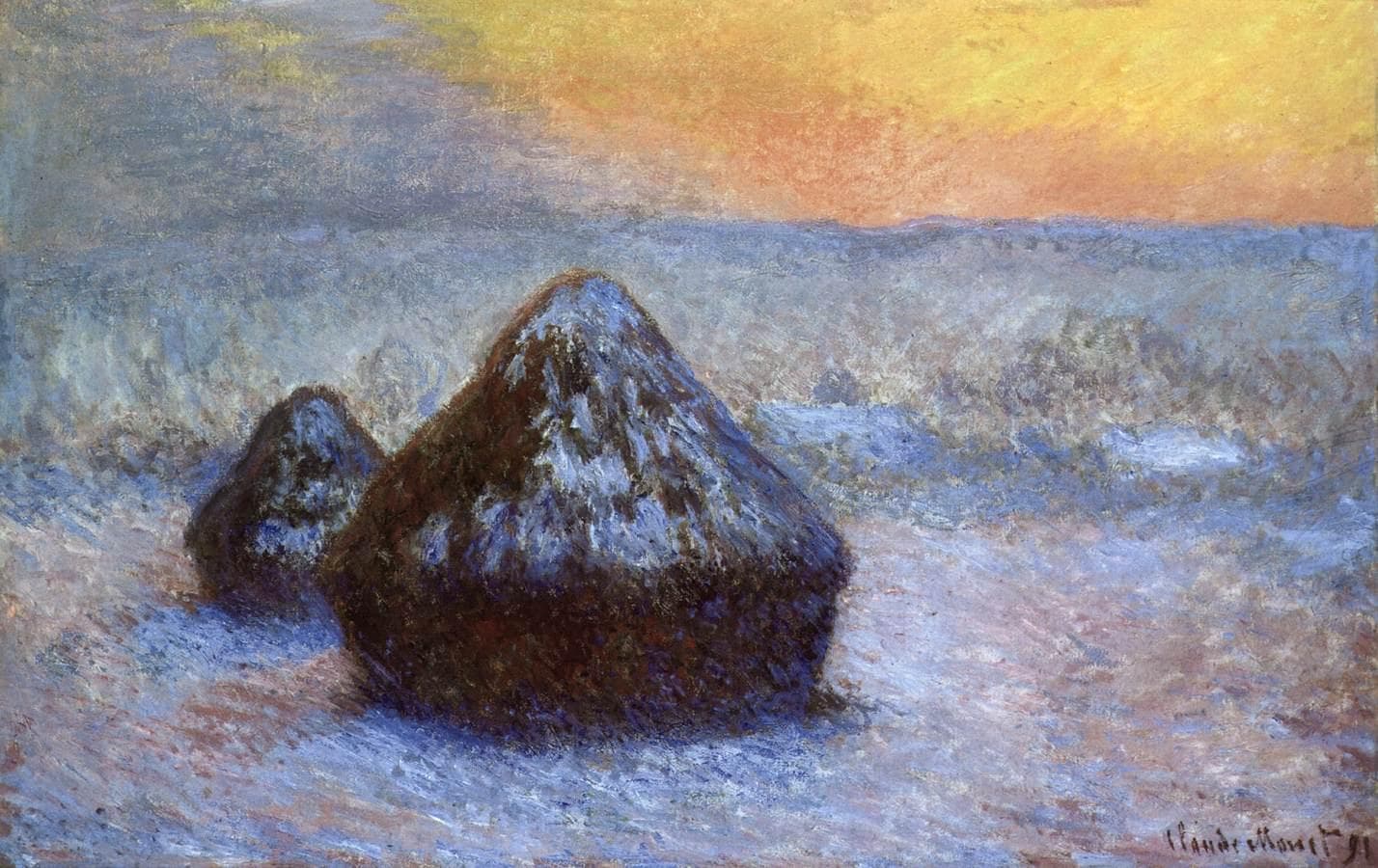
In the same gallery in Chicago you can compare this canvas with Stack of Wheat, Snow Effect, Overcast Day, where the stack is almost bare of snow under a cloudy sky, and Stacks of Wheat, Sunset, Snow Effect, where an orange sky burns over the frozen field. Elsewhere, Haystack in the Snow, Morning in Boston and Haystack, Effect of White Frost in Edinburgh show other winter conditions.
Provenance
According to the museum, the canvas may have been acquired by the Chicago collector Bertha Honoré Palmer by 1892, and it stayed with the Palmer family until it passed through a New York dealer and was bought by the Art Institute in 1983. It thus returned to the city where many of the stacks first found buyers.
Meaning
Claude Monet did not make the stacks symbols of rural life or harvest, though contemporaries sometimes read them that way. The meaning lies in the method: by keeping the subject constant, the color of the snow, the air and the shadows becomes the real subject.
Where to see it
The painting hangs in the Art Institute's Impressionist galleries; see our guide to Monet at the Art Institute of Chicago.
Questions & answers
Where is Monet's Stack of Wheat?
This Stack of Wheat (Wildenstein 1283) is in the Art Institute of Chicago, which acquired it in 1983. It measures 65.8 by 92.3 centimeters. The museum holds several canvases from Monet's 1890–91 wheat stacks series, so visitors can see winter and autumn versions side by side.
When and where was Stack of Wheat painted?
In the winter of 1890–91, in a field beside Monet's house at Giverny in Normandy. The canvas is signed and dated '91 at lower left. Monet had begun painting the stacks in late summer 1890 and continued through the snows of that winter.
What does Stack of Wheat show?
A single wheat stack, its top dusted with snow, standing in a frozen field with a row of bare trees and blue hills behind it under a pale pinkish sky. The subject is the cold, diffuse winter light and the colors it creates in snow and shadow.
How many Stacks of Wheat did Monet paint?
Monet's main series of wheat stacks, painted at Giverny in 1890–91, numbers about twenty-five canvases, with a few earlier and related works. Fifteen were exhibited in Paris in May 1891. The Art Institute of Chicago holds one of the largest groups.
More by the artist
Claude Monet

Bridge over a Pond of Water Lilies
Claude Monet · 1899

Woman with a Parasol – Madame Monet and Her Son
Claude Monet · 1875

Sunset in Venice
Claude Monet · 1908–12

La Grenouillère
Claude Monet · 1869

Beach in Pourville
Claude Monet · 1882

Springtime
Claude Monet · 1872

Boating on the River Epte
Claude Monet · 1890

The Seine at Asnières (Hermitage)
Claude Monet · 1873
Also painted in 1890
The same year
Kindred works
You may also study
Stack of Wheat, Snow Effect, Overcast Day
Claude Monet · 1890–91
Stacks of Wheat, Sunset, Snow Effect
Claude Monet · 1890–91
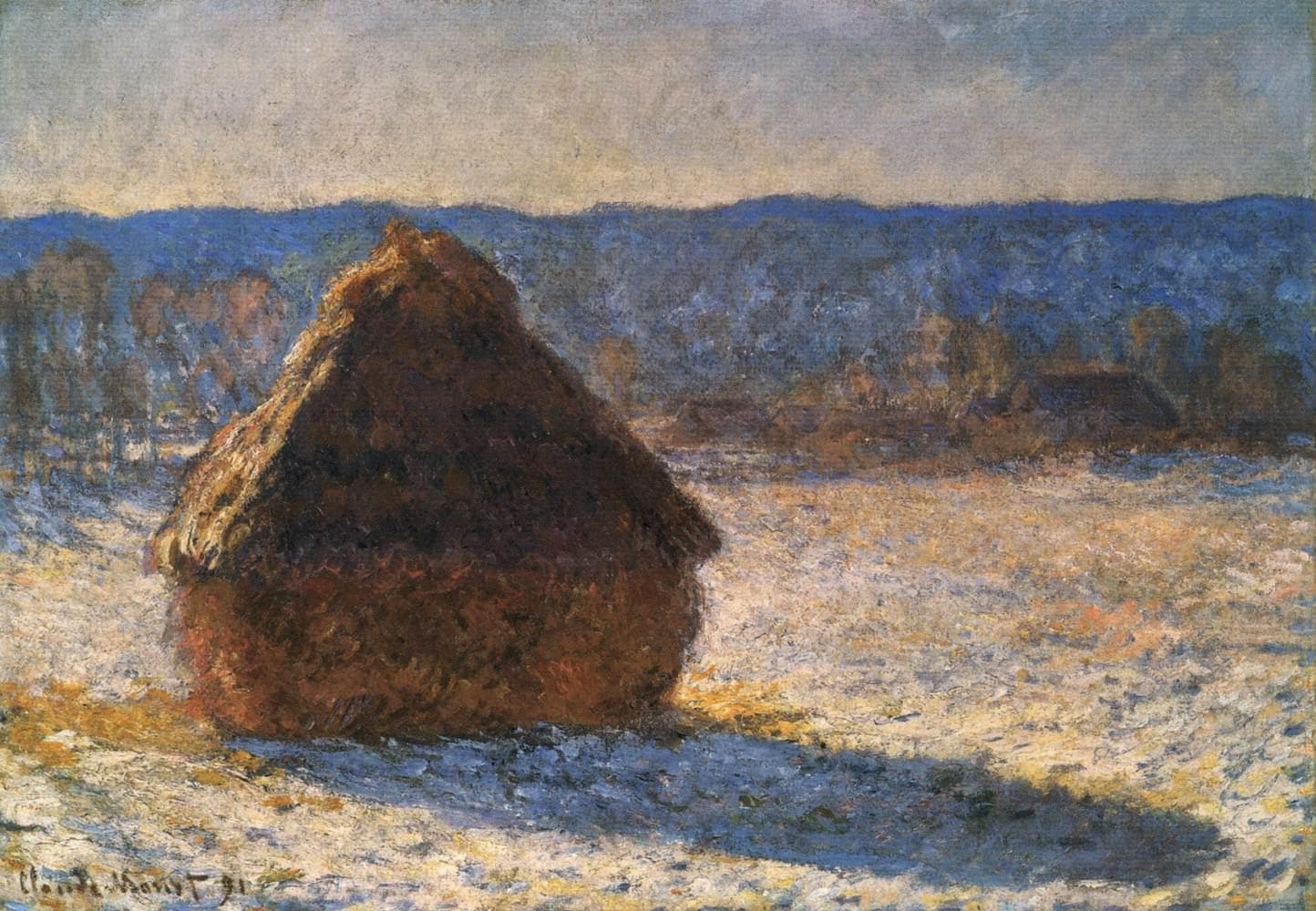
Grainstack (Snow Effect)
Claude Monet · 1891
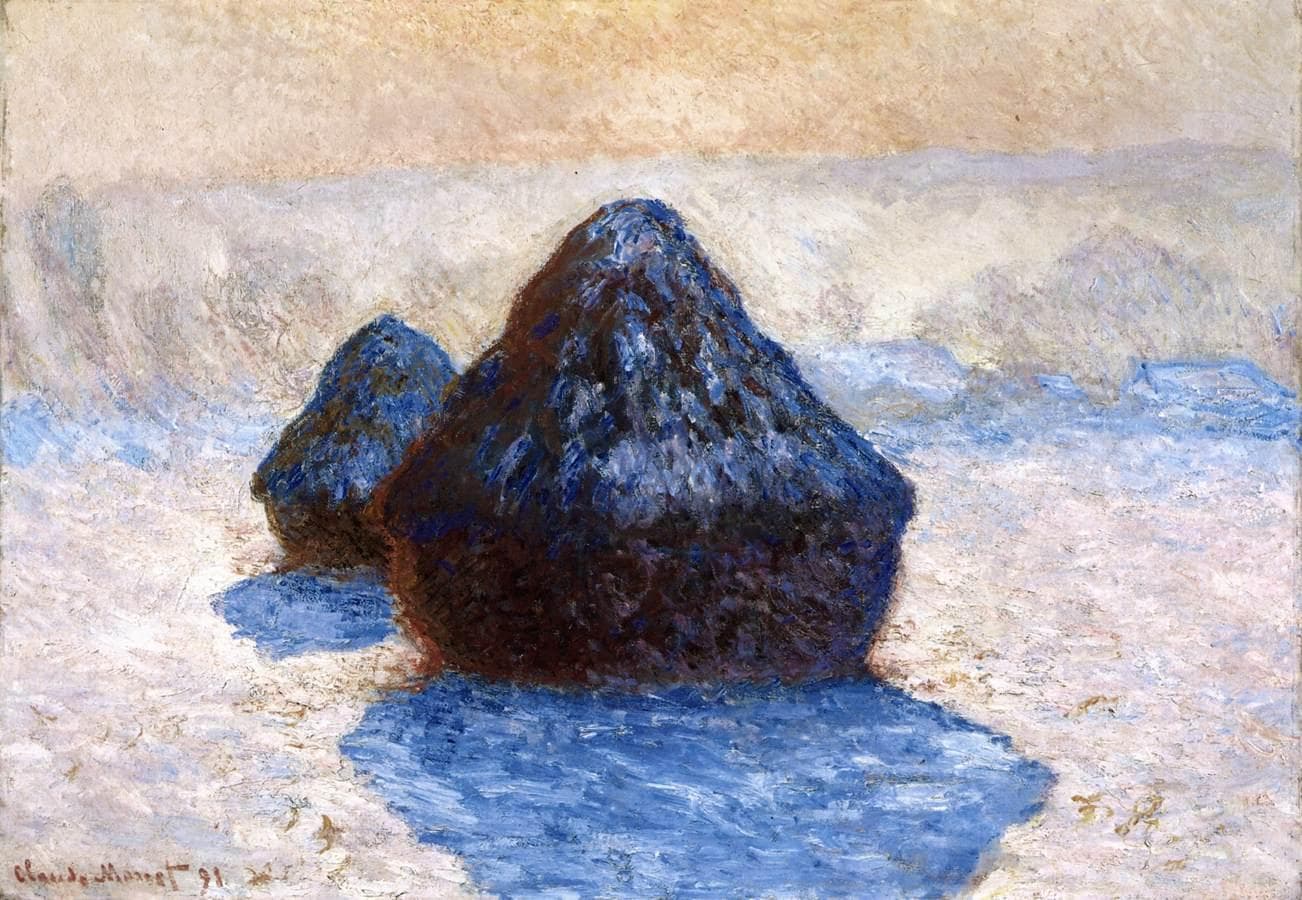
Haystacks, Snow Effect
Claude Monet · 1891
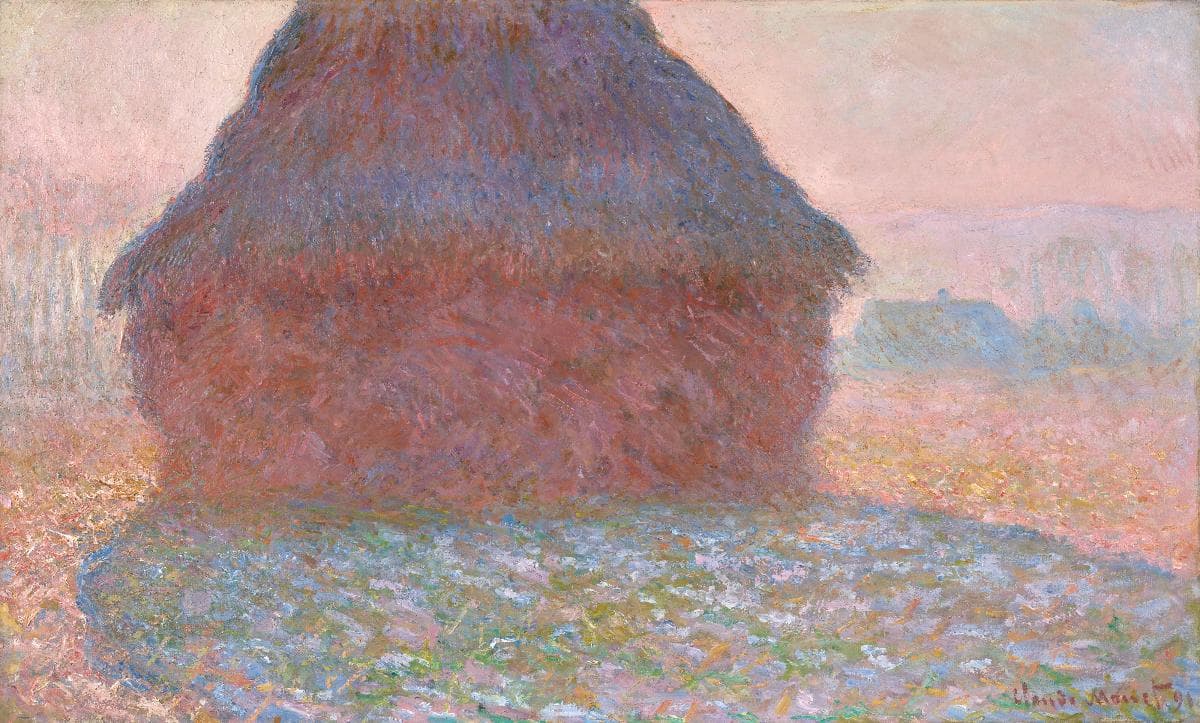
Grainstack in Sunlight
Claude Monet · 1891

The Scream
Edvard Munch · 1893

Ophelia
John Everett Millais · 1851–52

The Great Wave off Kanagawa
Katsushika Hokusai · c. 1830–32