Image: Kunsthaus Zürich · Public domain · via Wikimedia Commons
Impressionism
Grainstack in Sunlight
Claude Monet, 1891
Grainstack in Sunlight (Meule au soleil) is an 1891 painting from Claude Monet's Haystacks series, a single stack glowing in hazy summer light near Giverny, the picture that struck Kandinsky in Moscow. It is in the Kunsthaus Zürich.
- Artist
- Claude Monet
- Date
- 1891
- Medium
- Oil on canvas
- Dimensions
- 60 × 100 cm
- Collection
- Kunsthaus Zürich, Zurich, Switzerland
- Movement
- Impressionism
- Catalogue
- Wildenstein 1288
What you are looking at
A huge stack of grain rises from the left half of the picture, so close and so tall that its top is cut off by the upper edge of the canvas. Its sides are a dense weave of red, orange, violet and blue strokes, and the thatched cap that should give it a shape is lost above the frame. In front of it, a long shadow stretches across the stubble field in cool blue, green and lilac, and the field beyond the shadow blazes in pink and gold. On the right, through a pale haze, the low walls and roofs of a farm and a line of trees float on the horizon. The sky is a warm, milky pink.
This is high summer, around midday or early afternoon, when the air shimmers with heat. Monet does not show the sun; he shows what it does to color. Even the shadow is full of light.
The detail that matters most is the cropping. In every other painting of the series the stack sits wholly within the picture, with sky above it. Only here is it cut off at the top, which makes it less an object than a block of color pressing against the frame.
Where and when it was painted
The grainstacks stood in the Clos Morin, a field west of Monet's house at Giverny where a local farmer built his stacks every year after the harvest. Monet began painting them in the late summer of 1890 and continued through the following winter, setting up several canvases at once and switching between them as the light changed. The series ran to about 25 canvases. Fifteen of them were shown at Durand-Ruel's gallery in Paris in May 1891, and they sold at once, mostly to collectors in the United States.
This canvas was not ready for that show. Ernest Hoschedé, the estranged husband of Alice, died in the spring of 1891, and Monet's work was interrupted; he delivered this picture to Durand-Ruel only in July 1891. It is signed and dated "Claude Monet 91" at lower right. For the series as a whole, see the Haystacks series; for the village, Giverny: Monet's house and garden.
How it was painted
The canvas is a wide 60 by 100 centimeters. The paint is applied in thick, small, criss-crossing strokes, built up in layers over several sessions, so that the surface has a dry, crusty texture like the straw itself. Monet uses complementary pairs to make the light vibrate: orange and blue in the stack, pink and green in the field. The farm buildings are hardly more than violet rectangles dissolved in the haze.
Set it beside the winter canvases, such as Grainstack (Snow Effect) in Boston, Stacks of Wheat, Sunset, Snow Effect in Chicago or Haystacks, Snow Effect in Edinburgh, and the idea of the series becomes clear: the stack is a constant, and the subject is the changing envelope of light around it.
Kandinsky and the Moscow exhibition
In 1896 the painting was shown in an exhibition of French art in Moscow. The young Wassily Kandinsky saw it there and later wrote, in his memoir Reminiscences (1913), that he did not recognize the subject from the catalogue and at first felt that the object was missing from the picture, yet was gripped by the power of the color. He described it as a revelation that eventually helped lead him toward abstraction.
Ownership and where to see it
Durand-Ruel bought the picture in July 1891 and it later passed to the Paris collector Edmond Decap and the New York banker Alonzo Barton Hepburn. The Kunsthaus Zürich bought it in 1969 with funds from the Otto Meister bequest (inventory 1969/0007). Check the museum's website for whether it is on display. See where to see Monet's paintings and the Claude Monet page.
Questions & answers
Where is Monet's Grainstack in Sunlight?
It is in the Kunsthaus Zürich in Switzerland (inventory 1969/0007), bought in 1969 with funds from the Otto Meister bequest. The canvas measures 60 by 100 centimeters. It is not always on display.
When did Monet paint Grainstack in Sunlight?
It belongs to the Haystacks series Monet began in late summer 1890 at Giverny. This canvas is signed and dated 1891 and was delivered to his dealer Durand-Ruel in July 1891, after the series exhibition of May that year.
What is special about Grainstack in Sunlight?
It is the only painting in the series in which the stack is cut off by the top edge of the canvas, so it reads almost as a block of color. Wassily Kandinsky saw it in Moscow in 1896 and later said it showed him the power of color without an object.
How many Haystacks paintings did Monet make?
The main series of 1890–91 numbers about 25 canvases, painted in the Clos Morin near his house at Giverny in different seasons and light. Fifteen were exhibited at Durand-Ruel's gallery in Paris in May 1891.
More by the artist
Claude Monet

Bridge over a Pond of Water Lilies
Claude Monet · 1899

Woman with a Parasol – Madame Monet and Her Son
Claude Monet · 1875

Sunset in Venice
Claude Monet · 1908–12

La Grenouillère
Claude Monet · 1869

Beach in Pourville
Claude Monet · 1882

Springtime
Claude Monet · 1872

Boating on the River Epte
Claude Monet · 1890

The Seine at Asnières (Hermitage)
Claude Monet · 1873
Also painted in 1891
The same year
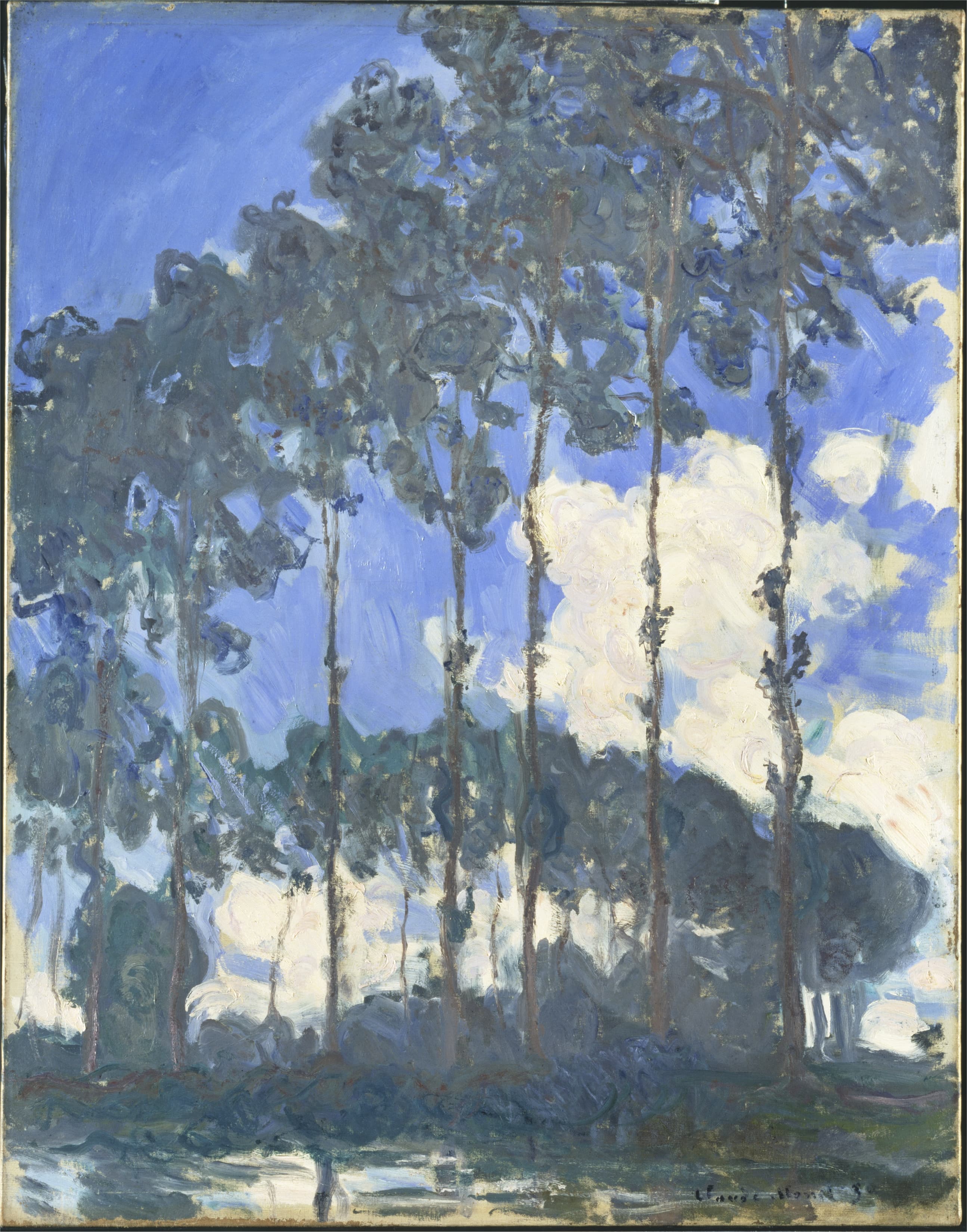
Poplars on the Epte (London)
Claude Monet · 1891
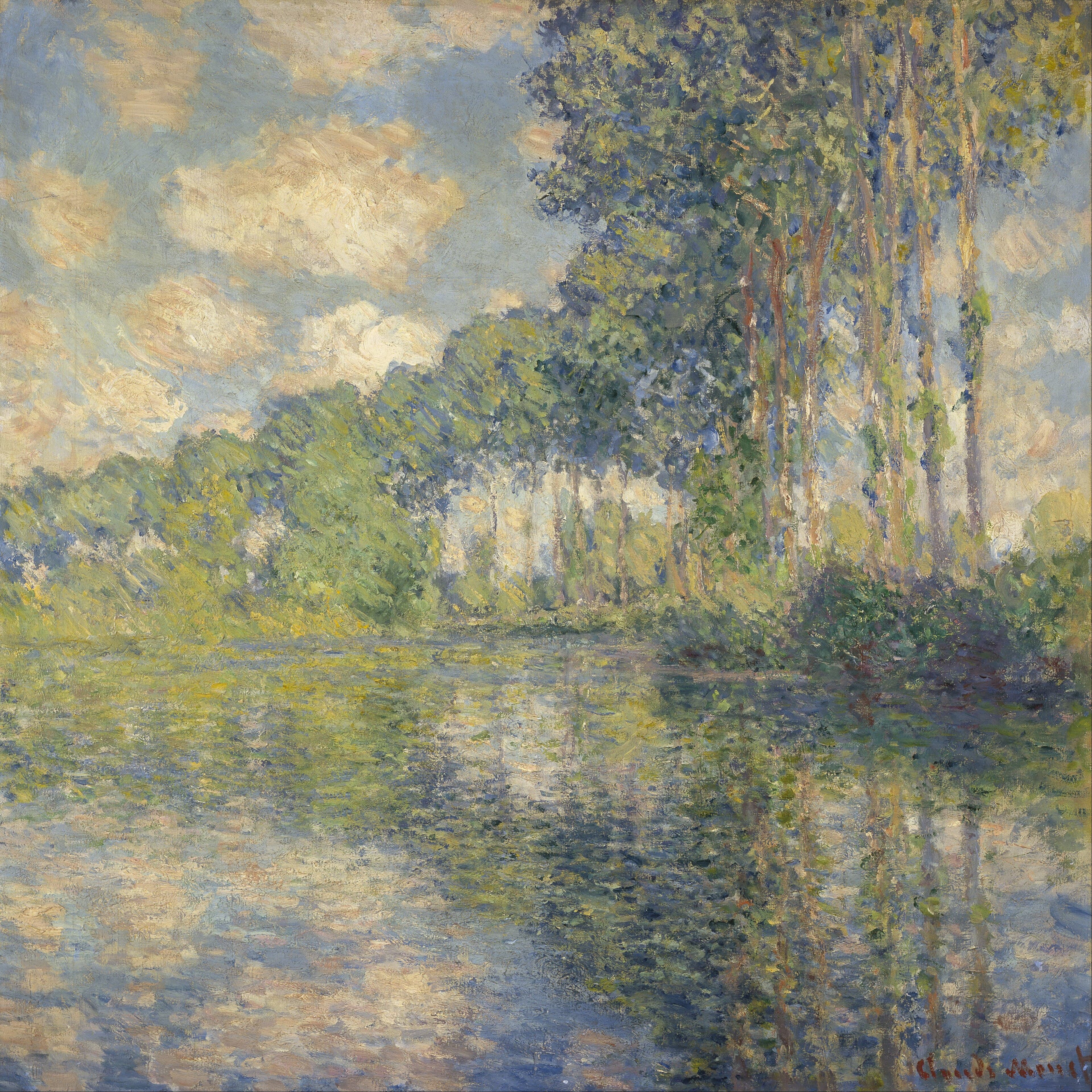
Poplars on the Epte (Edinburgh)
Claude Monet · 1891
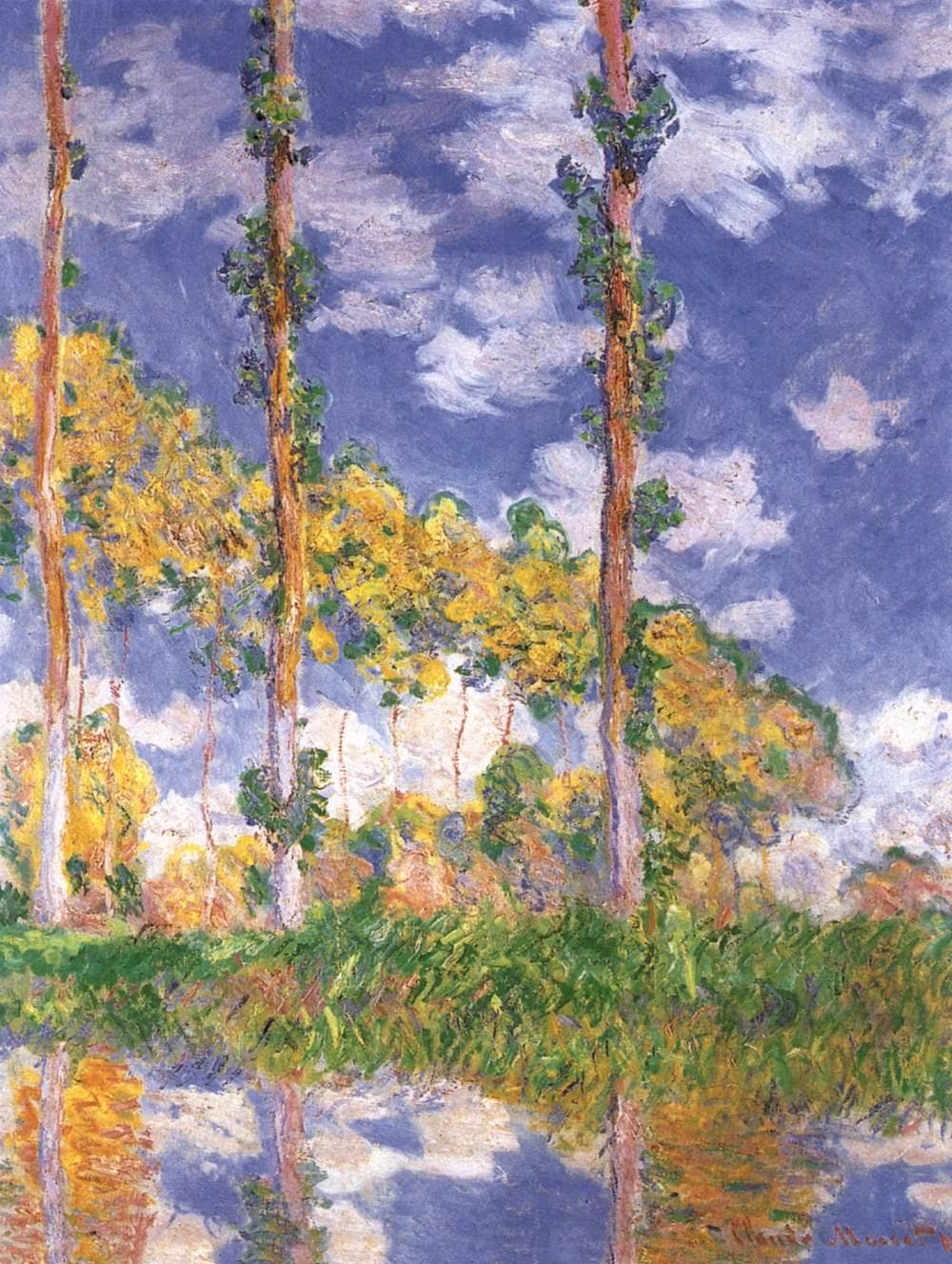
Three Poplars, Summer
Claude Monet · 1891
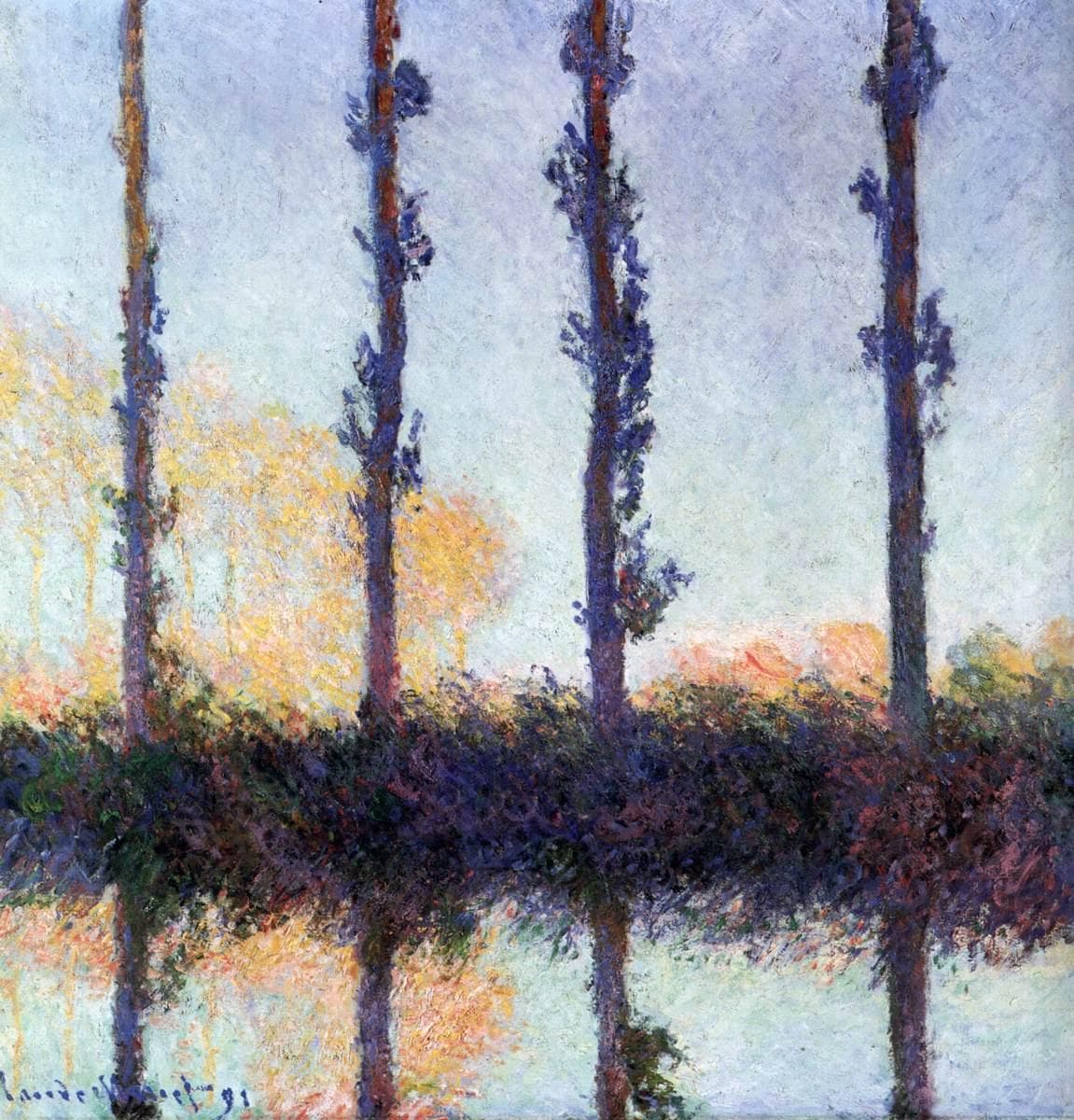
The Four Trees
Claude Monet · 1891
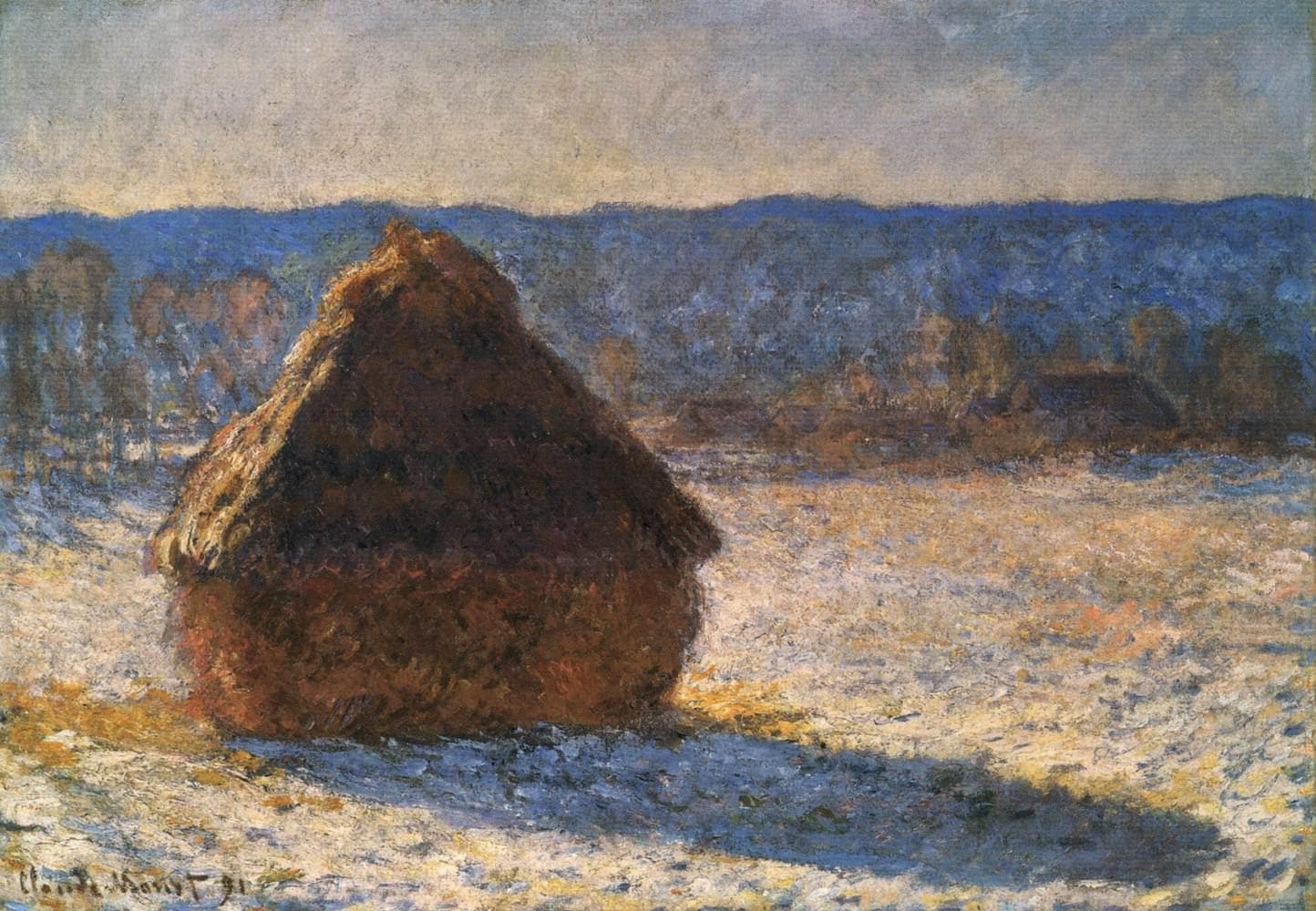
Grainstack (Snow Effect)
Claude Monet · 1891
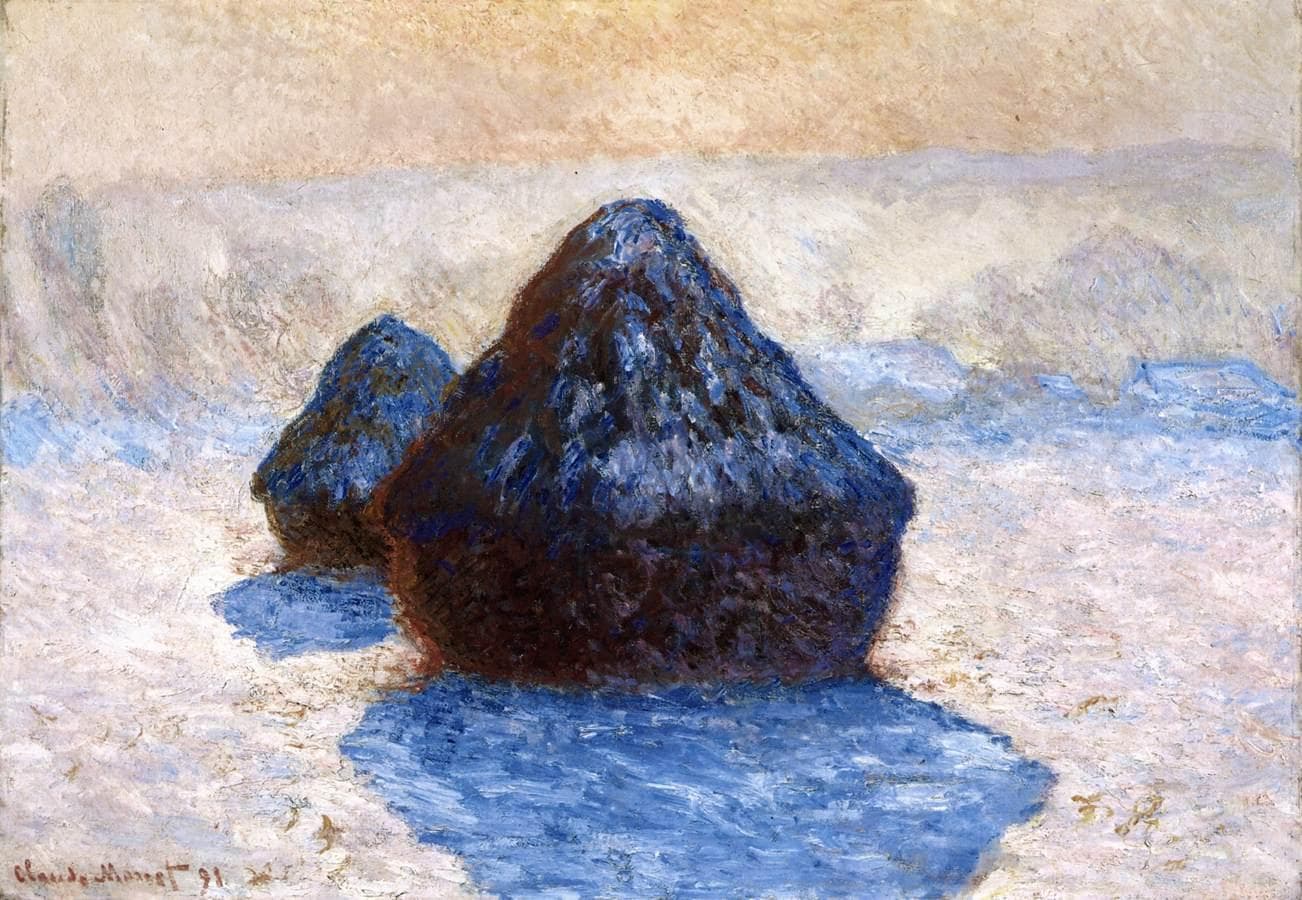
Haystacks, Snow Effect
Claude Monet · 1891
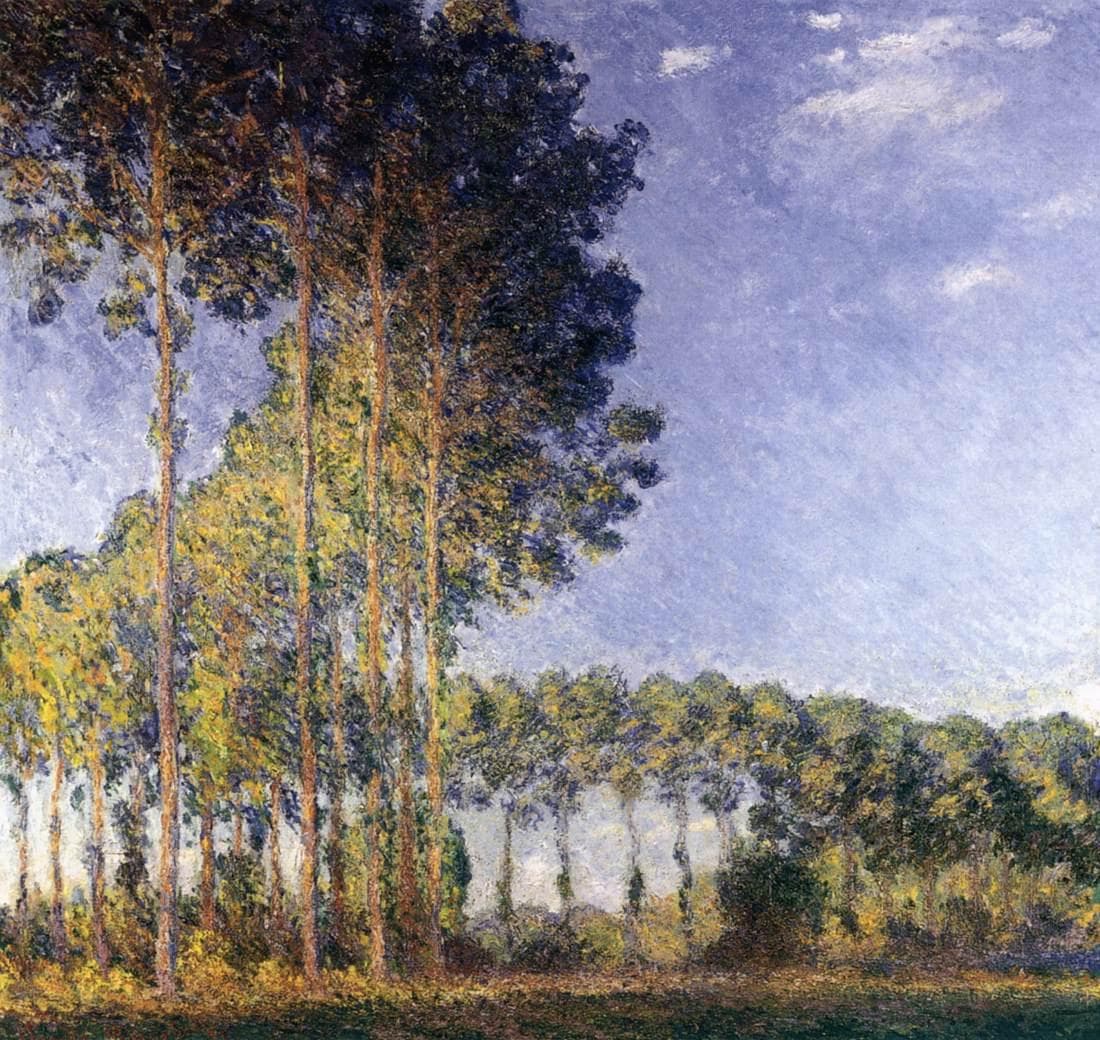
Poplars at the Banks of Epte
Claude Monet · 1891–92
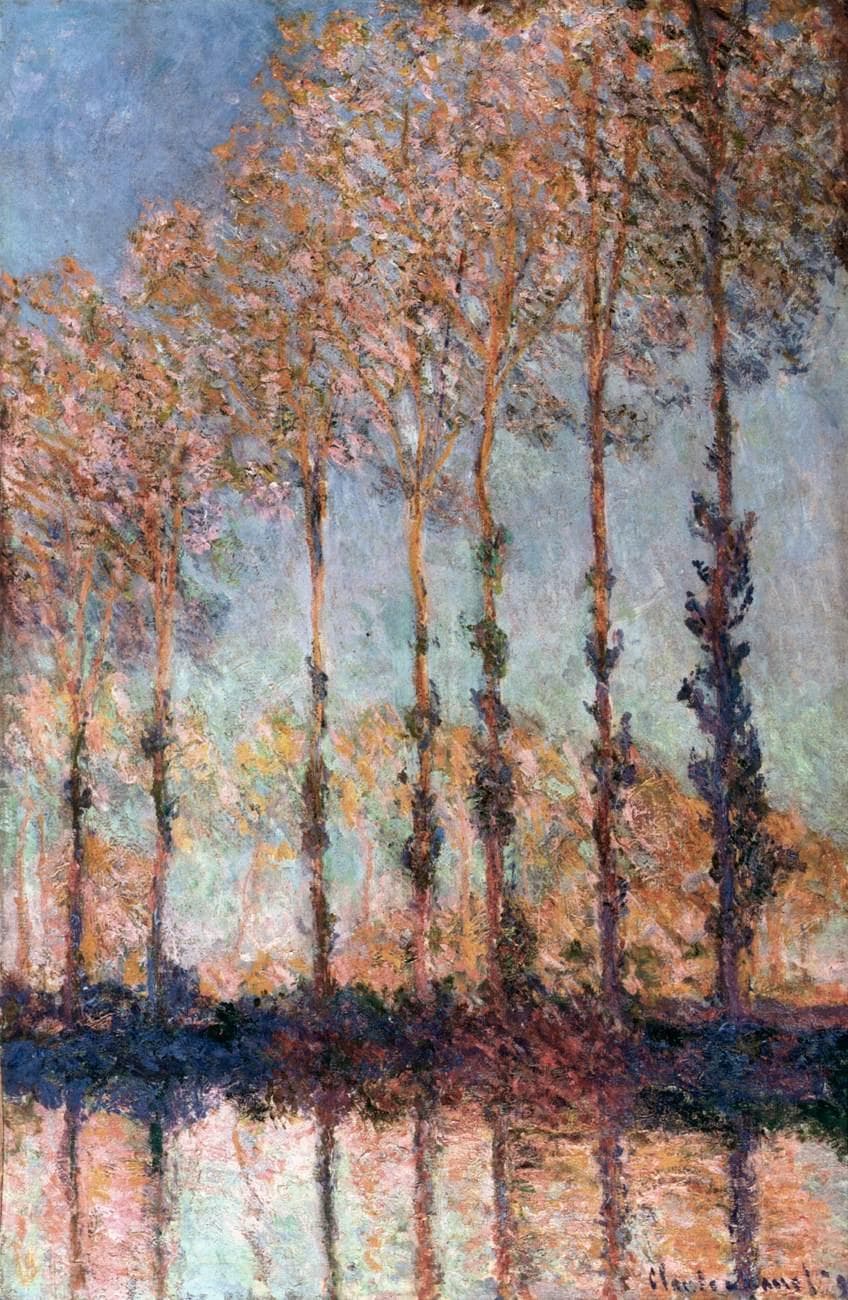
Poplars on the Banks of the River Epte
Claude Monet · 1891
Kindred works
You may also study
Grainstack (Snow Effect)
Claude Monet · 1891
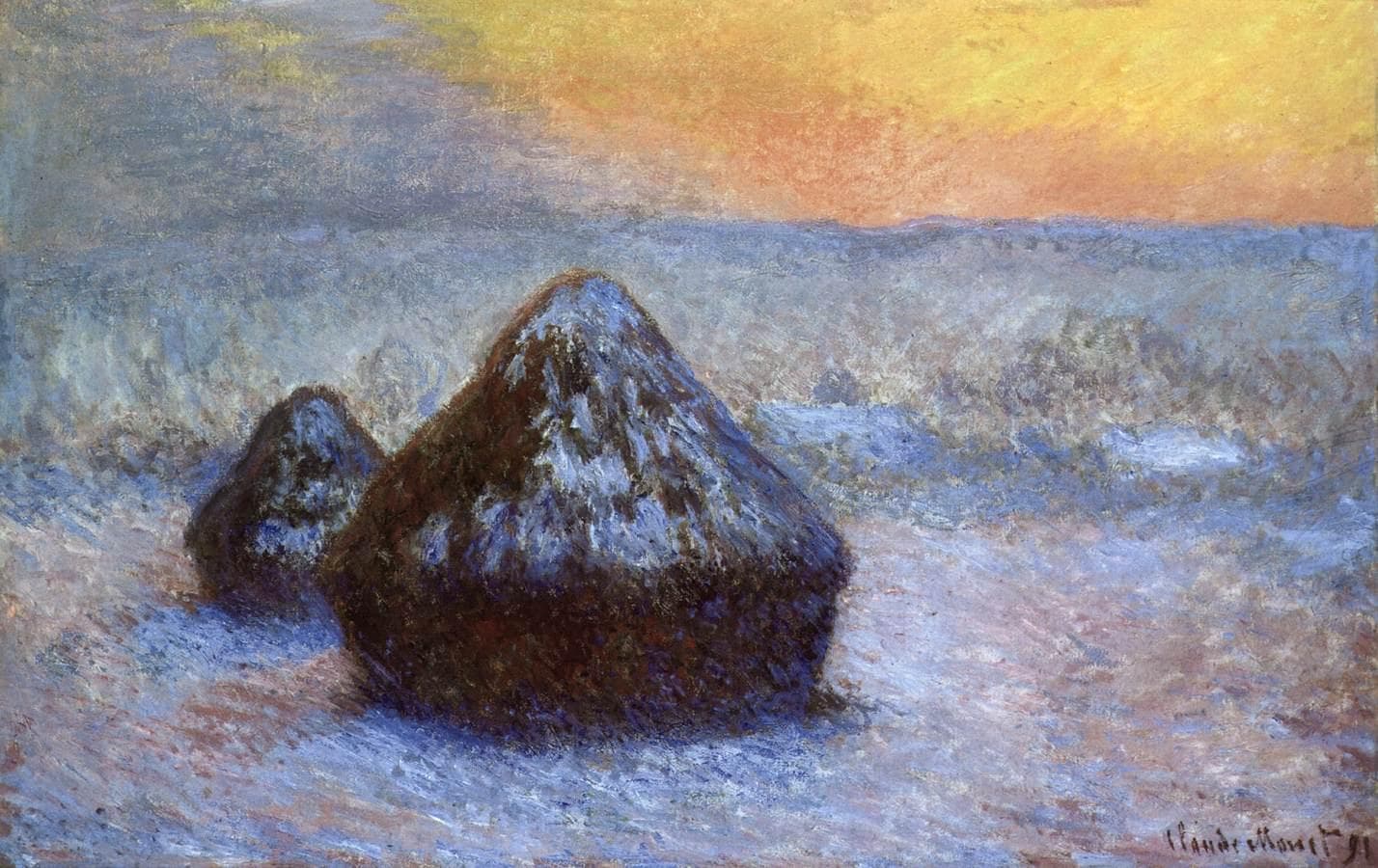
Stacks of Wheat, Sunset, Snow Effect
Claude Monet · 1890–91
Haystacks, Snow Effect
Claude Monet · 1891
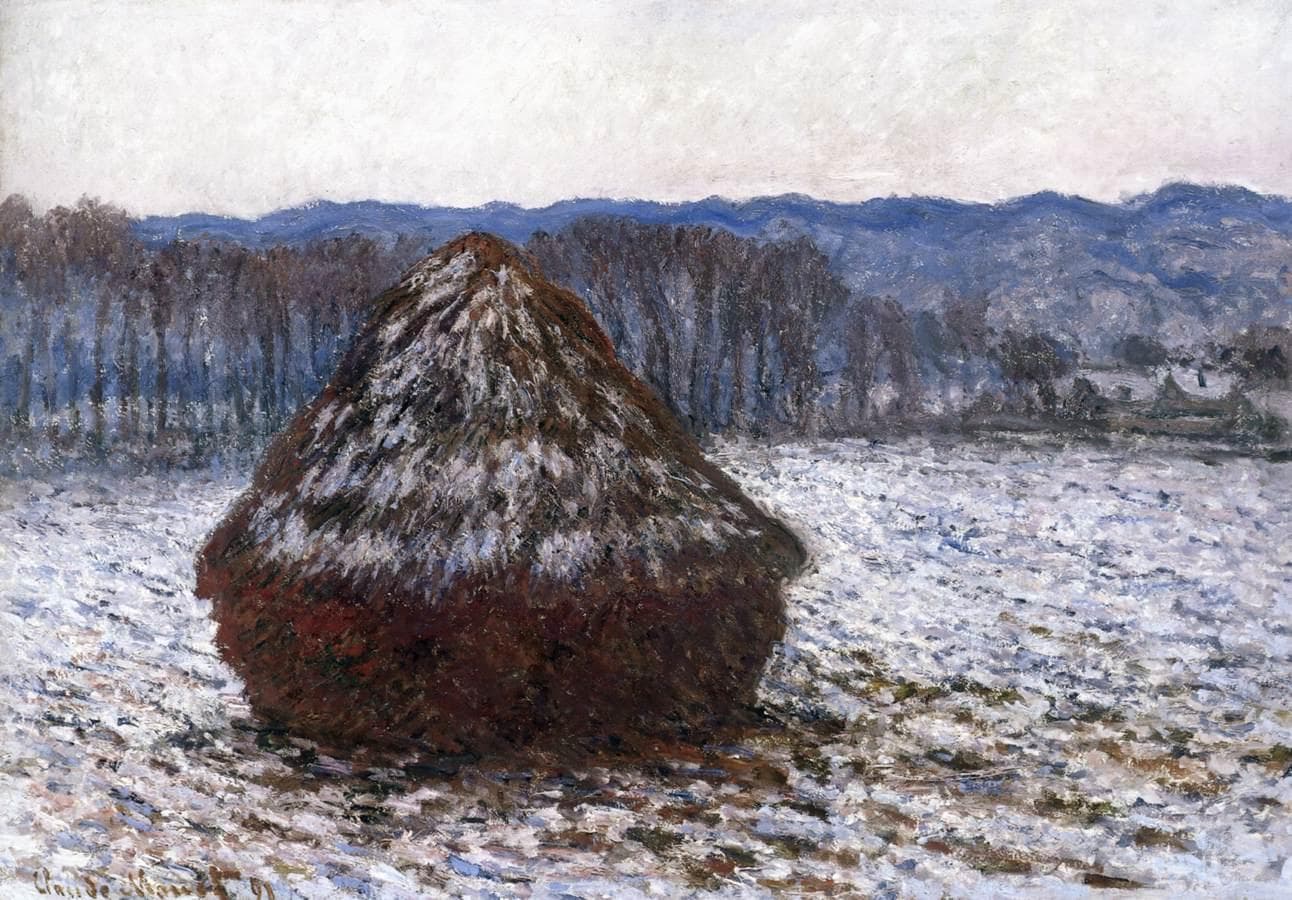
Stack of Wheat
Claude Monet · 1890–91
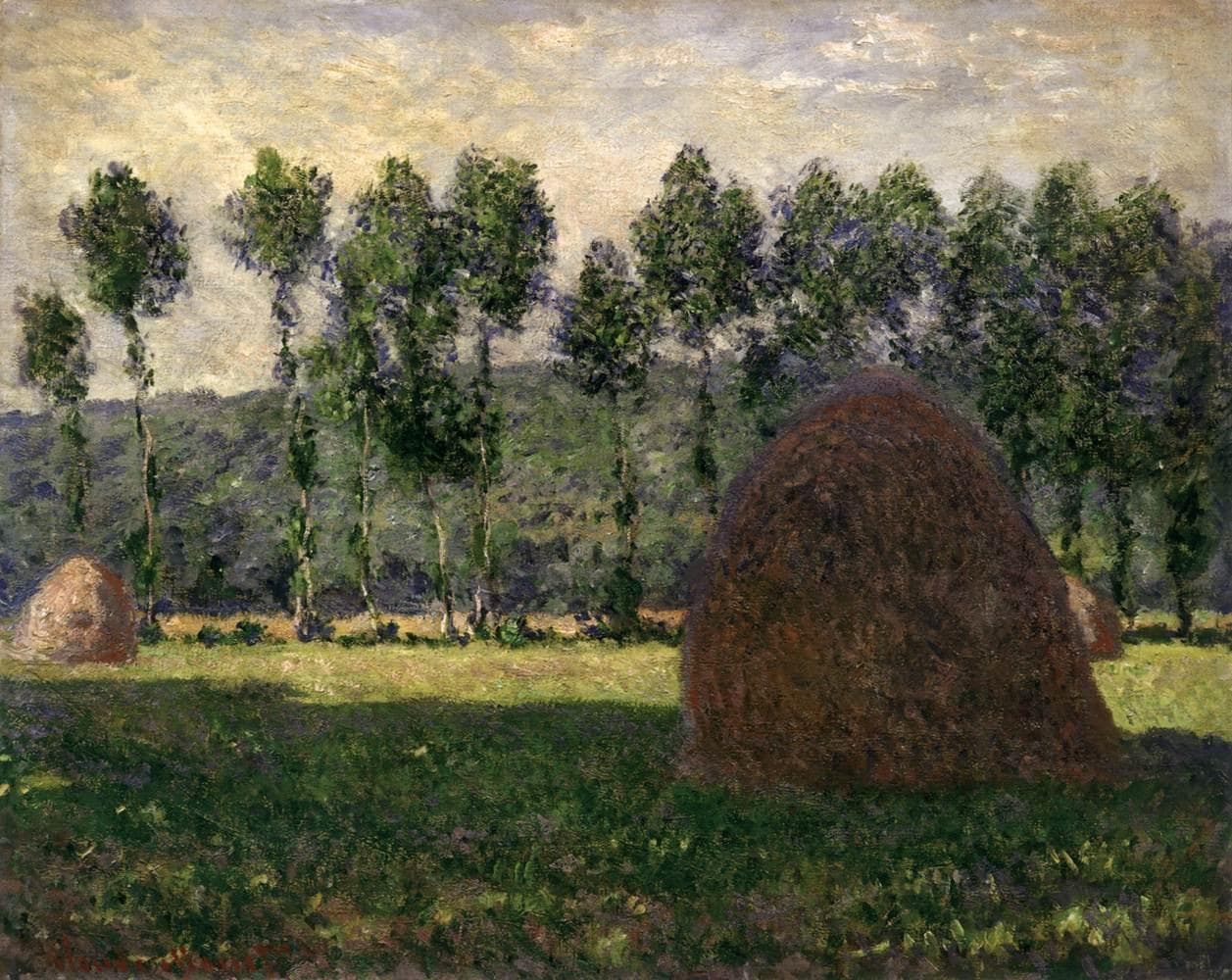
Haystack near Giverny
Claude Monet · 1884–89

The Scream
Edvard Munch · 1893

Ophelia
John Everett Millais · 1851–52

The Great Wave off Kanagawa
Katsushika Hokusai · c. 1830–32