Samson Destroying the Temple
Gustave Doré, 1866
Samson Destroying the Temple, also called The Death of Samson, is a wood engraving after Gustave Doré for his 1866 illustrated Bible (La Grande Bible de Tours). Blinded Samson pushes apart the pillars of Dagon's temple as it falls on the Philistines (Judges 16).
- Artist
- Gustave Doré
- Date
- 1866
- Medium
- Wood engraving
- Movement
- Romanticism
- Themes
- Religion & Saints, War & Violence, Death & Memento Mori, Architecture & Ruins, Literature & Poetry
What you are looking at
A temple is falling in. Massive columns, thick as towers and carved with bands of relief, lean and break at every angle; a huge block of entablature tilts out of the top of the picture, and figures tumble from the galleries above, arms and legs flung out against the masonry. Through the gaps you can see further colonnades receding into a bright interior.
At the center, small against all this weight, stands Samson. He is nearly naked, wearing only a short, shaggy loincloth, his long hair wild. His legs are braced and his arms are flung wide, each hand pressed against a column that is already giving way. A band of cloth covers his eyes. He is the still point around which everything else is moving.
Below him a crowd pours down a broad flight of steps toward us in panic. People run, fall and shield their heads. A woman in the middle is caught mid-flight, her hair streaming, with a naked infant clinging to her shoulder. A man at front left sprawls headlong down the steps; at right, another falls from the platform into the void. Look for the bodies already dropping from the upper level at left: these are the spectators who had been on the roof.
The passage: Judges 16
Samson, the Nazirite strongman of the Book of Judges, has been betrayed by Delilah, shorn of his hair and with it his strength, blinded and set to grind in prison by the Philistines. But "the hair of his head began to grow again" (16:22). The Philistine lords gather in the temple of their god Dagon to celebrate, and call for Samson to entertain them. "Now the house was full of men and women; and all the lords of the Philistines were there; and there were upon the roof about three thousand men and women, that beheld while Samson made sport" (16:27, King James Version).
Samson prays for strength "only this once." Then "Samson took hold of the two middle pillars upon which the house stood... And Samson said, Let me die with the Philistines. And he bowed himself with all his might; and the house fell upon the lords, and upon all the people that were therein. So the dead which he slew at his death were more than they which he slew in his life" (16:29–30).
How Doré staged it
The text has Samson bowing forward between two pillars. Doré makes him push outward, arms spread, a pose that reads instantly as strength and also echoes a crucifixion, a link Christian commentators long drew between Samson's self-sacrificing death and Christ's. The blindfold is Doré's way of reminding us that this man cannot see what he is doing; he acts by touch, exactly as the text says he asked to "feel the pillars."
The architecture is a free invention. Doré gave Dagon's house the look of an Egyptian temple, with bundled columns, flared capitals and bands of carved relief, a nineteenth-century shorthand for the ancient Near East. Its scale makes Samson almost tiny, so the drama becomes one of a single human body against stone.
He also turned the camera, so to speak, toward the escaping crowd. The steps that carry people down toward us put the viewer in the path of the stampede.
How it was made
The plate is a wood engraving after Doré's drawing on a boxwood block, cut by Charles Laplante, whose signature "C. Laplante" sits at lower right; Doré's is at lower left. The columns show the engraver's care: each is modeled with dense vertical hatching, then broken by tiny incised reliefs, while the light interior behind is left almost white. Samson, in the gap between two dark columns, is set against the brightest area in the picture, which is why the eye finds so small a figure at once.
Publication
The engraving is from Doré's illustrated Bible, published by Alfred Mame et Fils in Tours in 1866 and known as La Grande Bible de Tours, with an English edition by Cassell, Petter & Galpin. In that edition it is usually titled The Death of Samson. The scan shown here comes from the Polish edition, Pismo Święte Starego i Nowego Testamentu (1873), digitized by the National Library of Poland. It closes the run of Samson plates in Judges; see the whole cycle in the Doré Bible, and Doré's earlier Old Testament plates such as Moses Breaking the Tables of the Law.
Meaning
Samson is one of the Bible's most morally tangled heroes: a judge of Israel who is violent, reckless and easily deceived, and whose greatest act is a mass killing in which he dies too. Jewish and Christian readers have honored his last prayer and his self-sacrifice; modern readers are often more uneasy.
Doré's plate holds both responses. Samson's pose is heroic, but the picture is dominated by the crowd, women and children among them, rushing toward us from the collapse. The same pairing of a lone figure of power and a rout of the doomed appears in his Milton plates, such as The War in Heaven, and in the Bible's other great scene of mass judgment, The Deluge. More of his work is on the Gustave Doré page.
Questions & answers
What does Doré's Samson Destroying the Temple show?
Samson, blindfolded and nearly naked, stands between two huge columns of the temple of Dagon with his arms spread, pushing them apart. The temple collapses around him: columns break, people fall from the galleries above, and a panicked crowd flees down the steps toward the viewer, a woman with a baby among them.
Which Bible verse does the plate illustrate?
Judges 16:29–30. In the King James Version, "Samson took hold of the two middle pillars upon which the house stood... And Samson said, Let me die with the Philistines. And he bowed himself with all his might; and the house fell upon the lords, and upon all the people that were therein."
When was Doré's Death of Samson made?
Doré designed it for his illustrated Bible, published by Mame in Tours in 1866 and known as La Grande Bible de Tours, with an English edition from Cassell, Petter & Galpin in London, where it is usually titled The Death of Samson. It was reprinted in many later editions, including a Polish one of 1873.
Who engraved Samson Destroying the Temple?
Doré drew the image on a boxwood block and Charles Laplante cut it; his signature, "C. Laplante", appears at lower right and Doré's at lower left. Laplante built the columns from dense vertical hatching and left the interior behind Samson almost white, so the small figure stands out at once.
Why is Samson blindfolded in Doré's engraving?
The Philistines had put out Samson's eyes after Delilah's betrayal (Judges 16:21). Doré marks his blindness with a band across the eyes, and the text has him ask to "feel the pillars" before he pulls the temple down. The blindfold also stresses that his final act comes from prayer, not sight.
More by Gustave Doré
All works →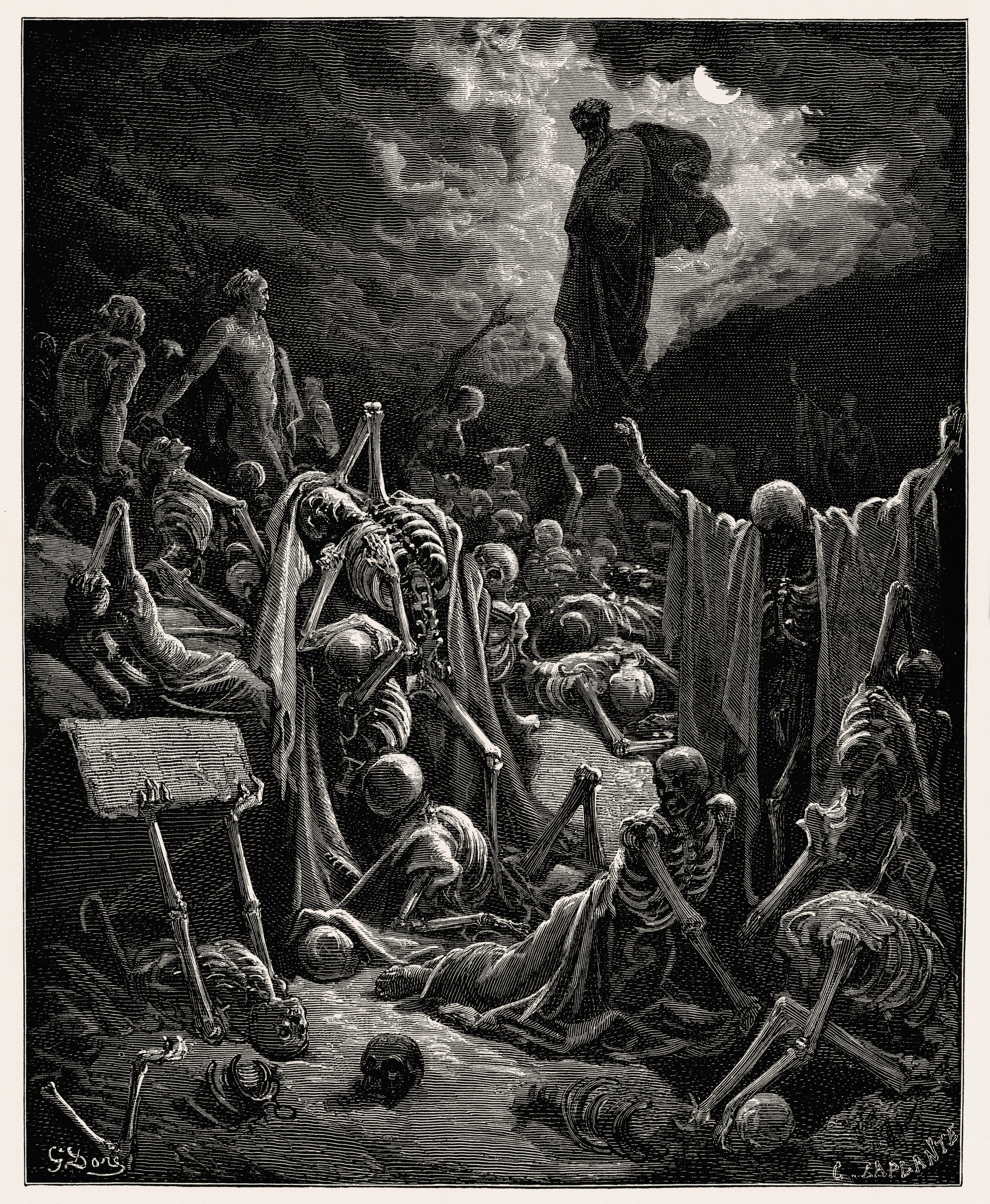
The Vision of the Valley of Dry Bones
Gustave Doré · 1866
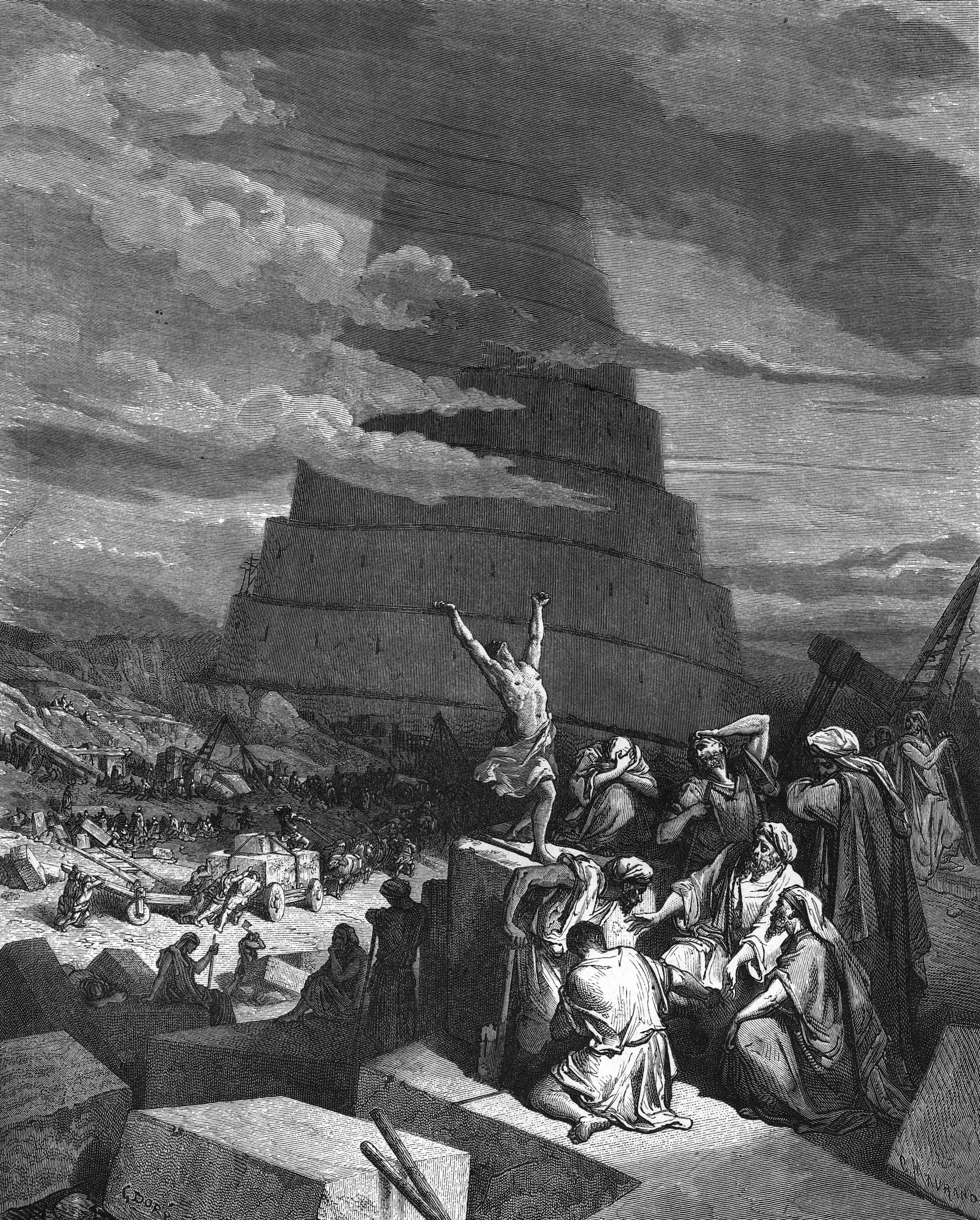
The Confusion of Tongues
Gustave Doré · 1866
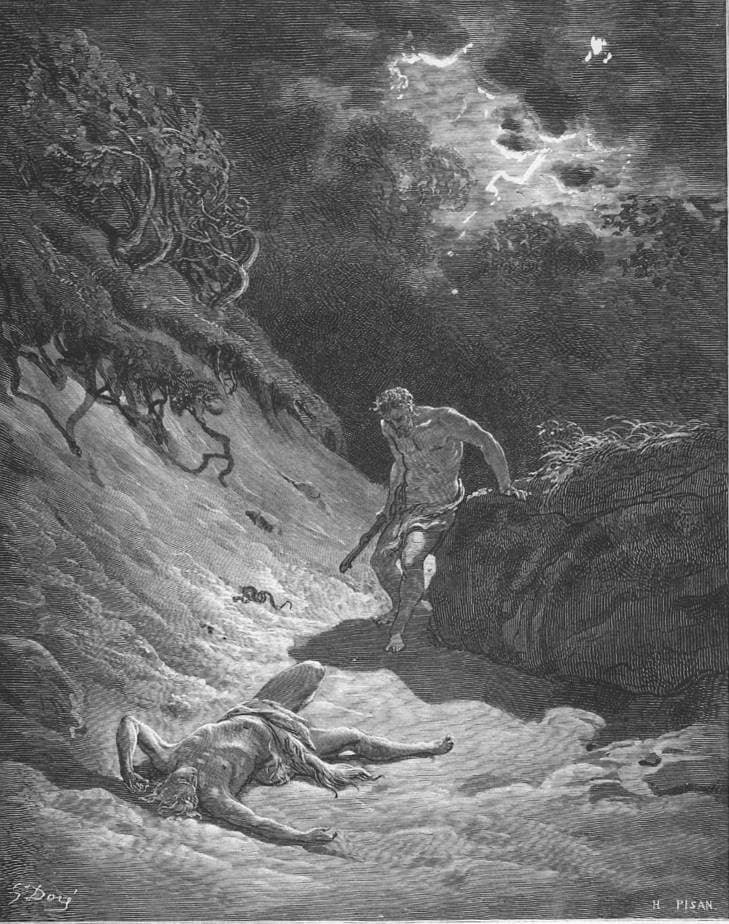
The Death of Abel
Gustave Doré · 1866
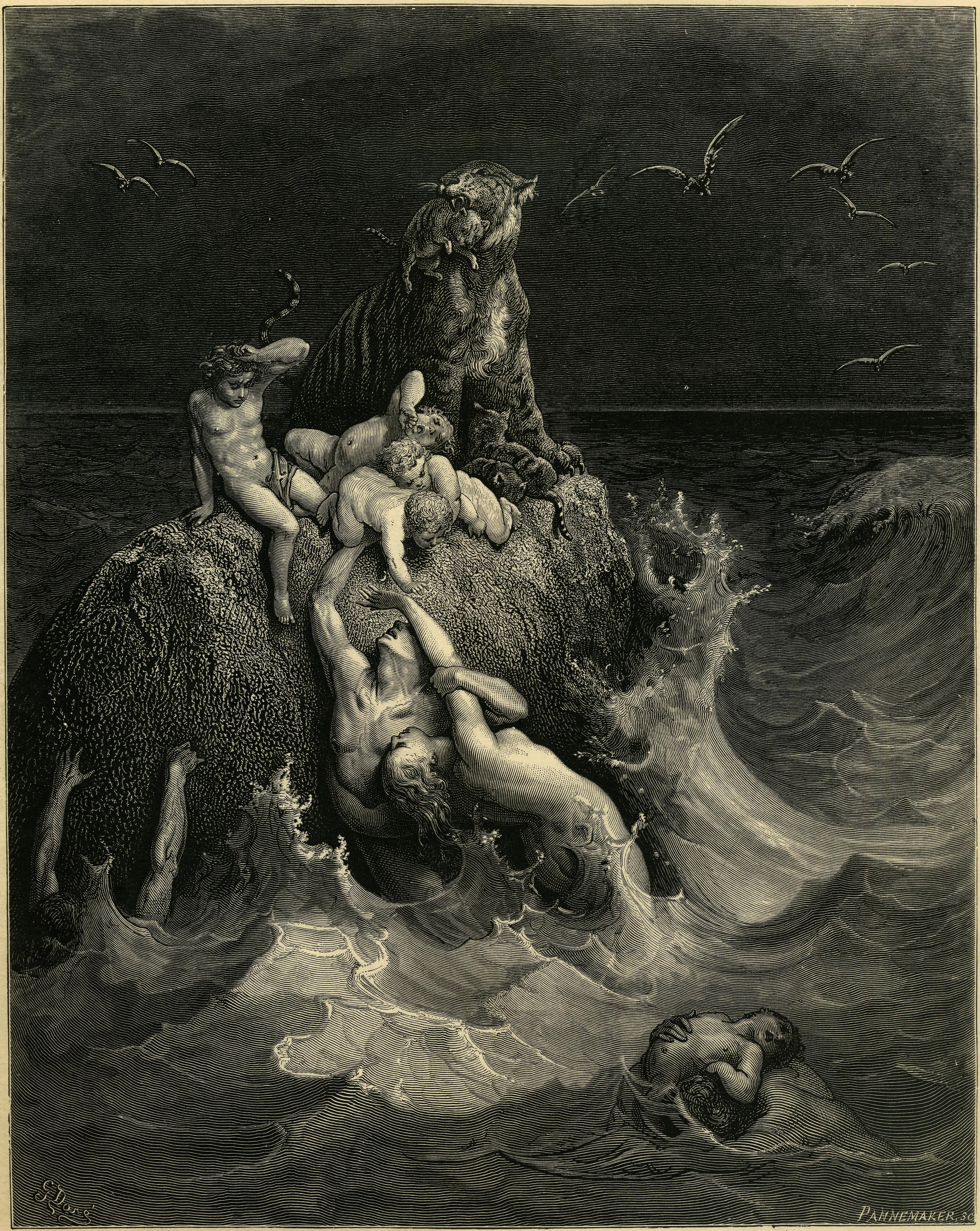
The Deluge
Gustave Doré · 1866
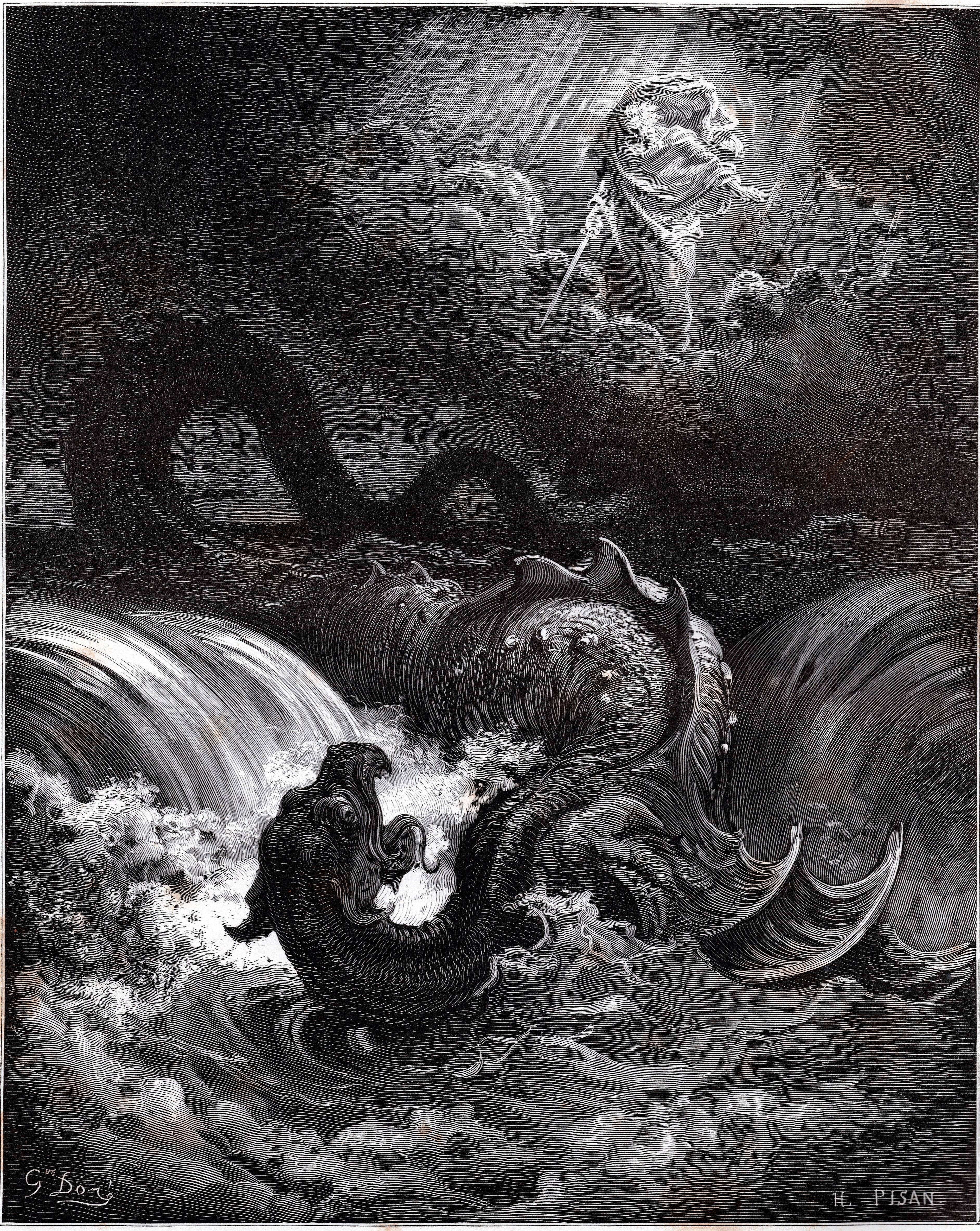
The Destruction of Leviathan
Gustave Doré · 1866
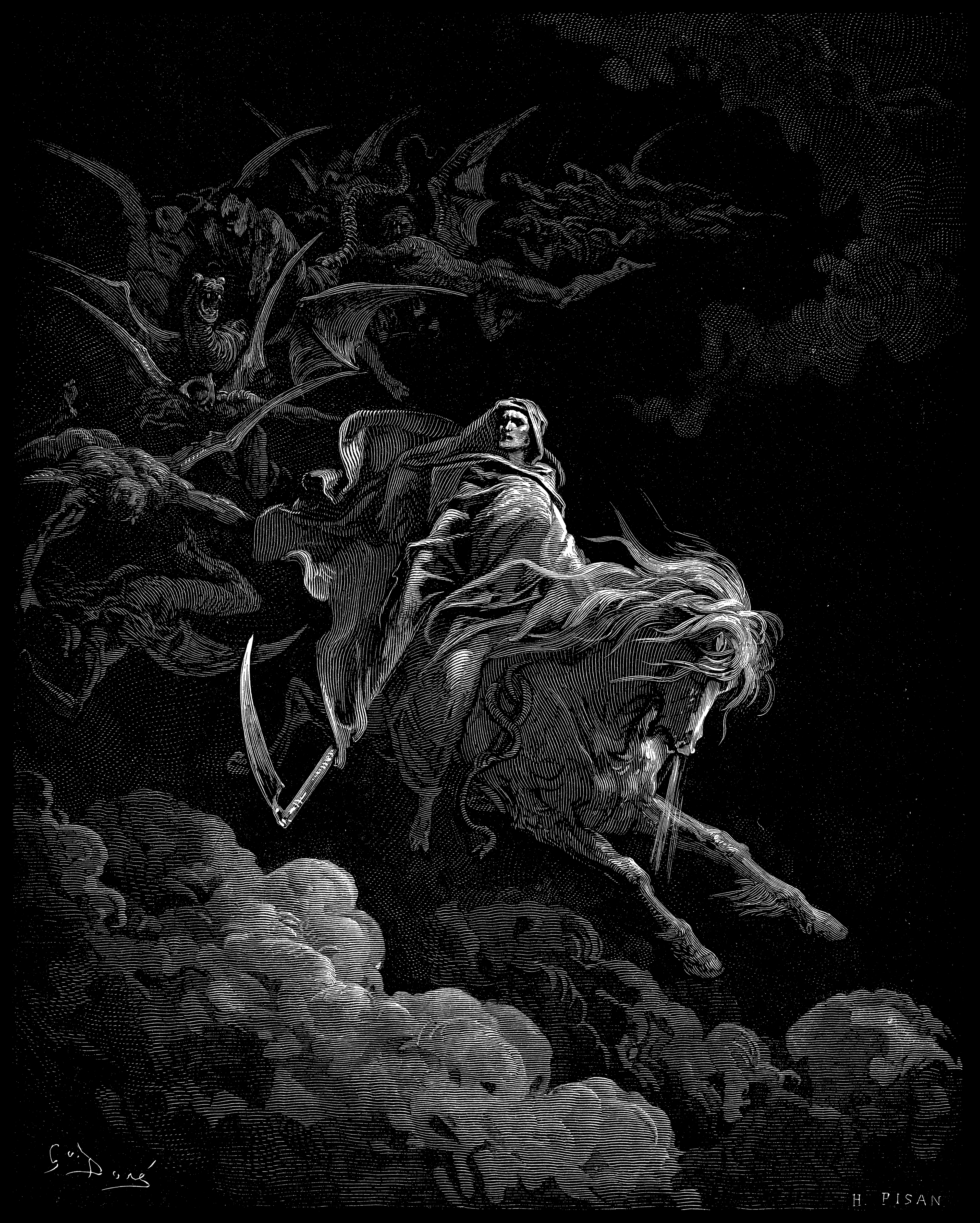
Death on the Pale Horse
Gustave Doré · 1866
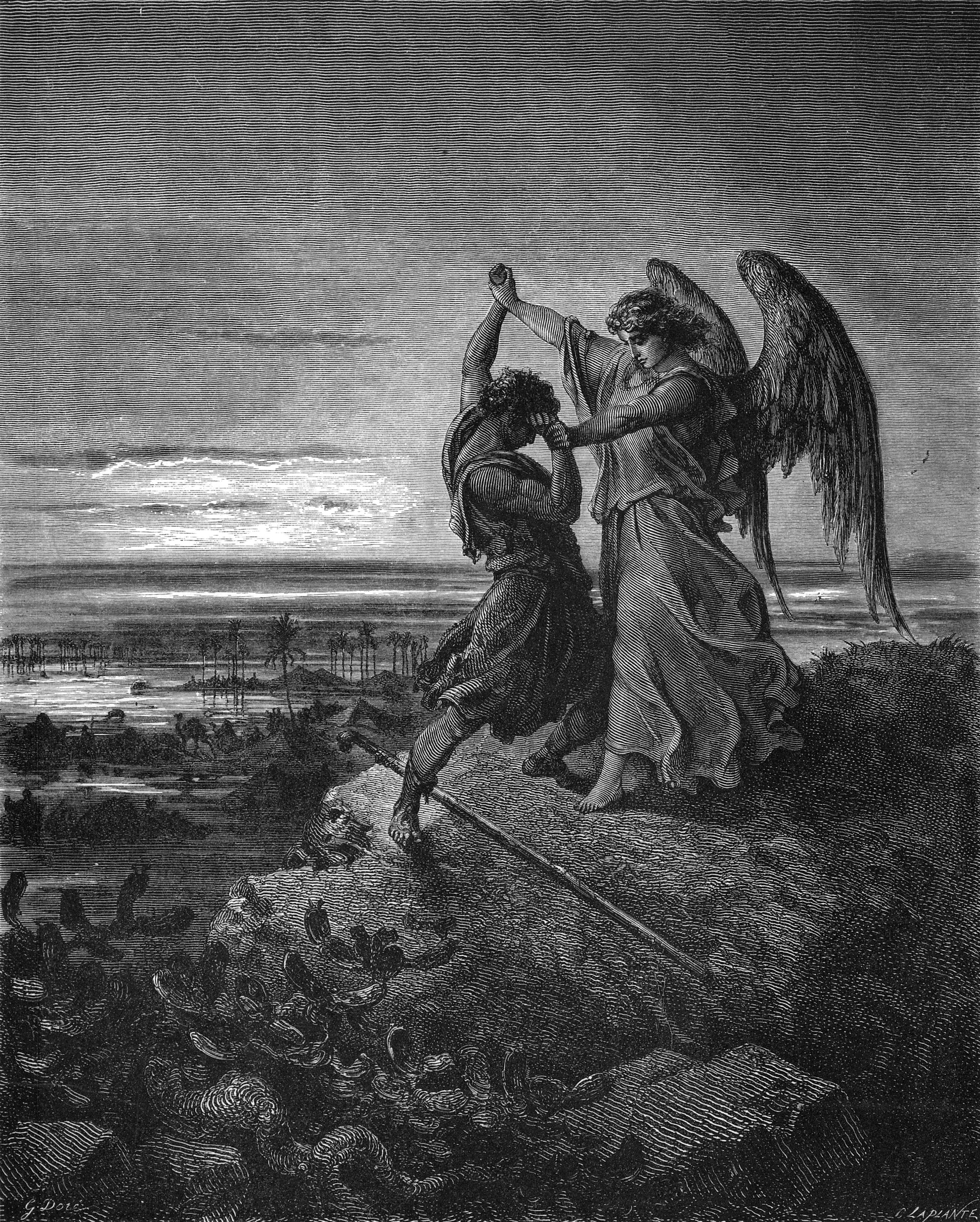
Jacob Wrestling with the Angel
Gustave Doré · 1866
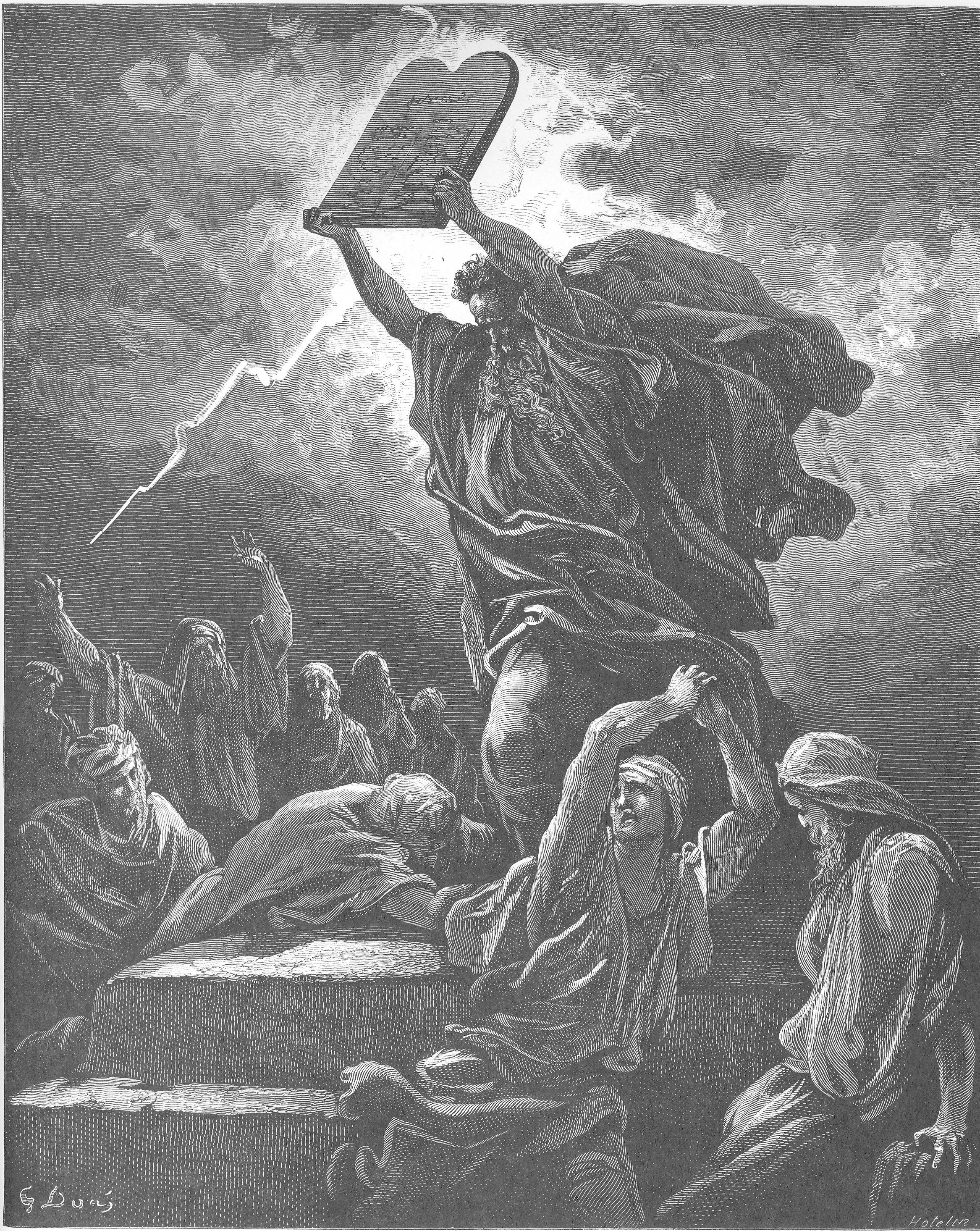
Moses Breaking the Tables of the Law
Gustave Doré · 1866
Also from 1866
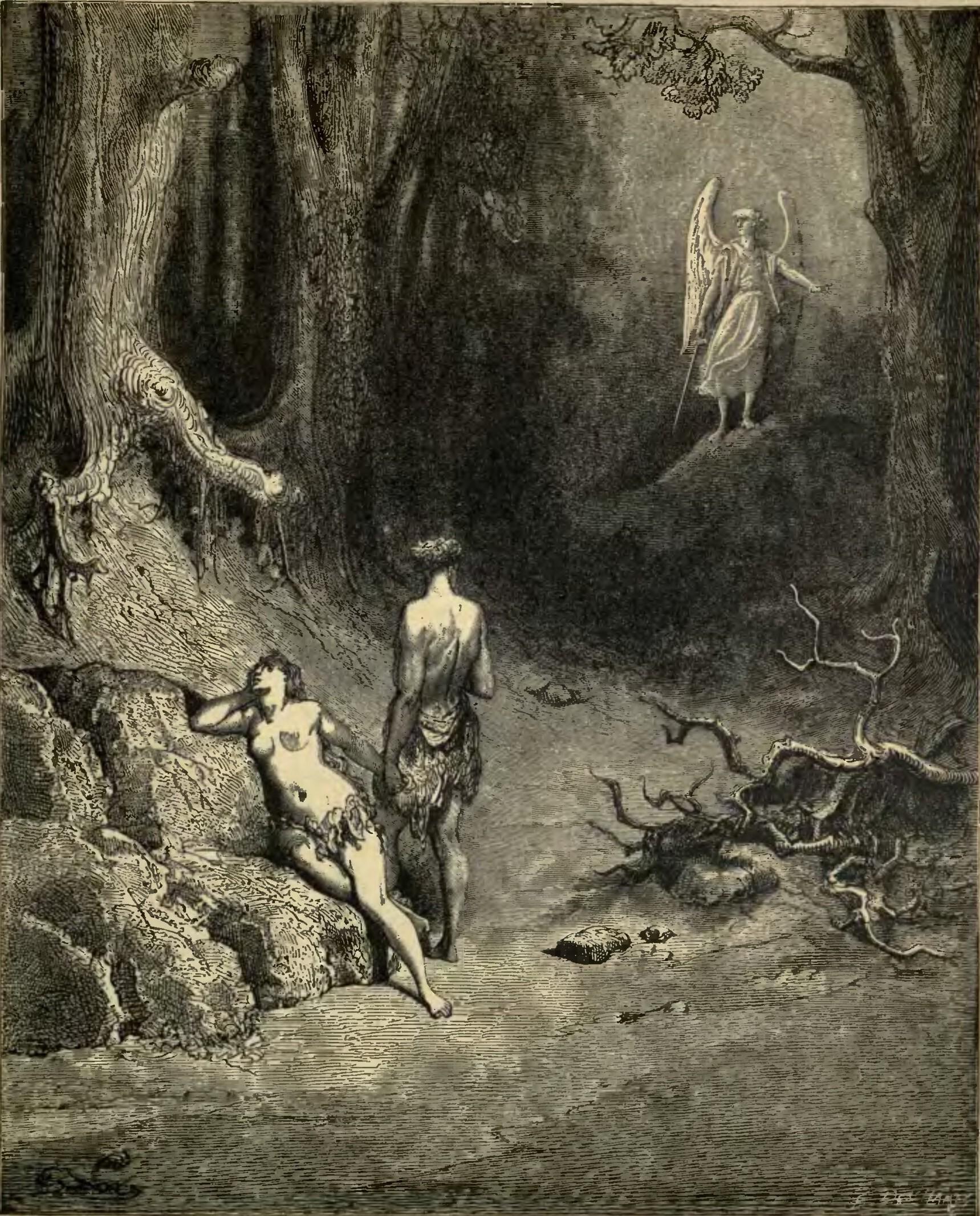
Adam and Eve Expelled from Paradise
Gustave Doré · 1866
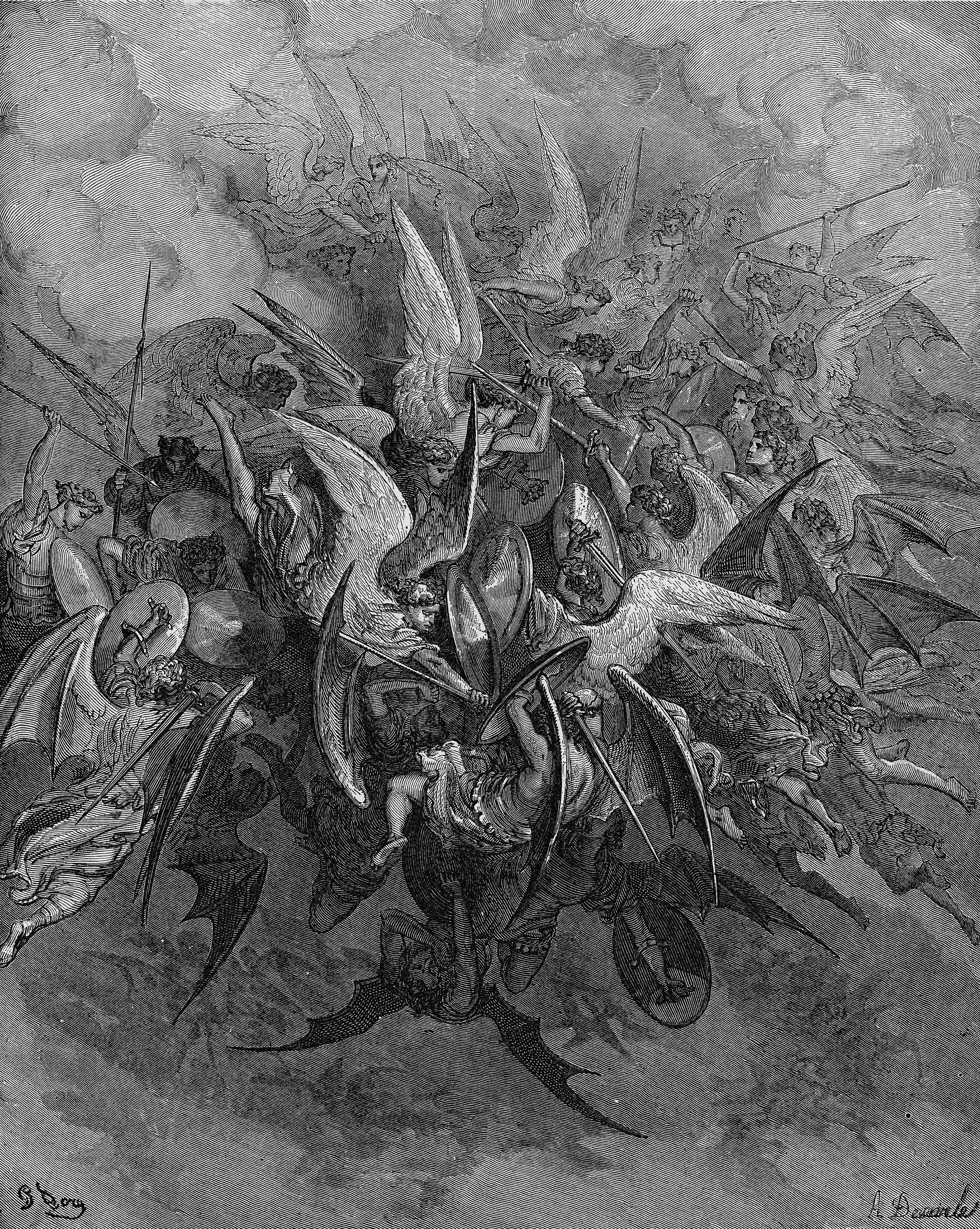
The War in Heaven
Gustave Doré · 1866
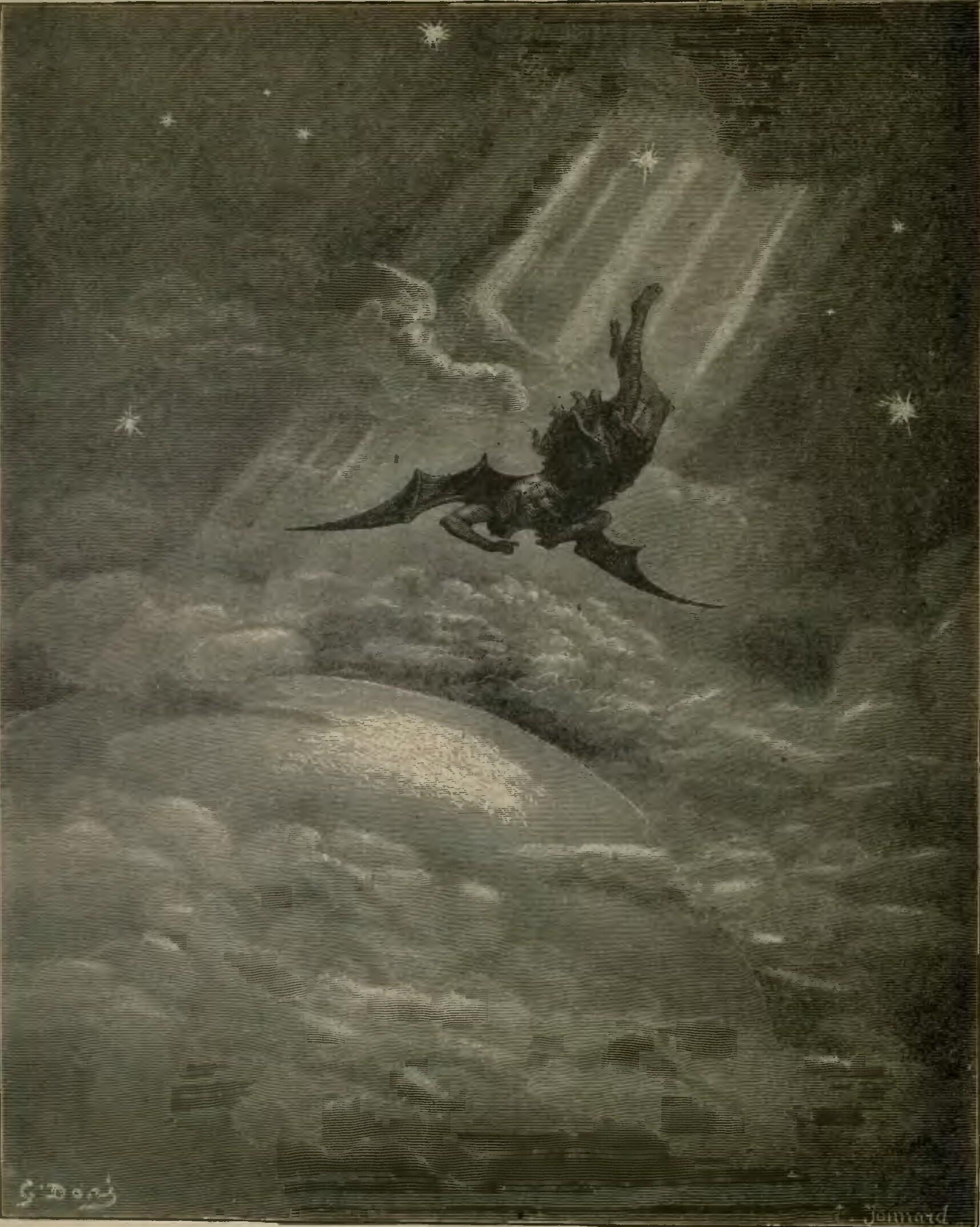
Satan Approaching the Confines of the Earth
Gustave Doré · 1866
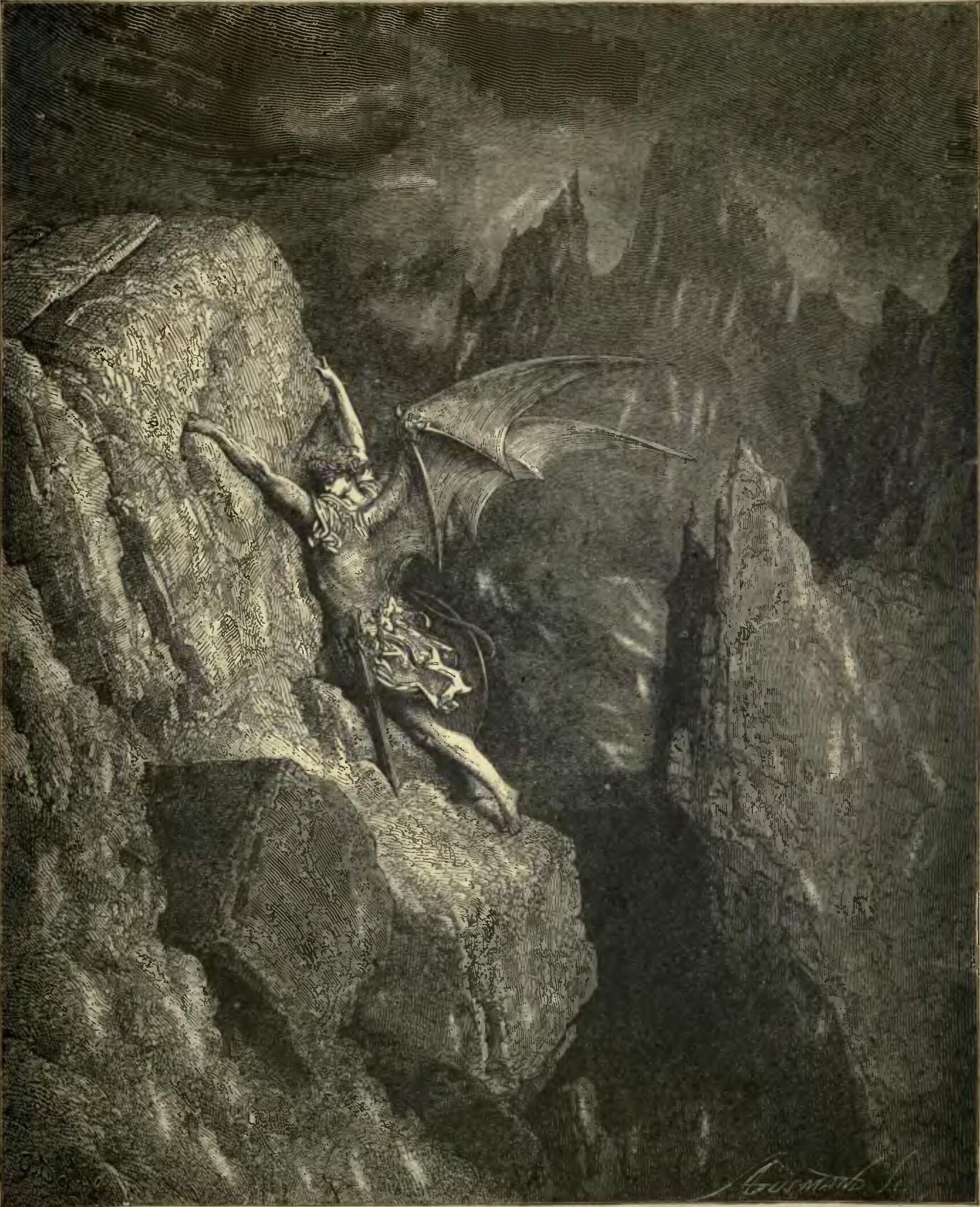
Satan’s Flight Through Chaos
Gustave Doré · 1866
Satan, Sin and Death at the Gates of Hell
Gustave Doré · 1866
Satan in Council
Gustave Doré · 1866
Satan Cast Out of Heaven
Gustave Doré · 1866
Related works
The War in Heaven
Gustave Doré · 1866
The Last Day of Pompeii
Karl Bryullov · 1830–33
Bertran de Born Holding His Head
Gustave Doré · 1861
The Gate of Hell (Abandon All Hope)
Gustave Doré · 1861
The Course of Empire: Destruction
Thomas Cole · 1836
Satan Cast Out of Heaven
Gustave Doré · 1866
The Beheading of Saint John the Baptist
Caravaggio · 1608
Church of Saint-Étienne-le-Vieux
Unknown · Founded c. 10th century; recorded c. 1067; rebuilt 15th century