Romanticism
The Death of Abel
Gustave Doré, 1866
The Death of Abel is a wood engraving designed by Gustave Doré for his illustrated Bible of 1866 (La Grande Bible de Tours). Under a lightning-split sky, Cain slips away from Abel's body, club in hand, while a small serpent crosses the path.
- Artist
- Gustave Doré
- Date
- 1866
- Medium
- Wood engraving (engraved by Héliodore Pisan after Gustave Doré)
- Movement
- Romanticism
What you are looking at
The print is tall and almost entirely dark. A ravine cuts diagonally down through the picture, from a wooded bank at upper left to a pale, open patch of ground at the bottom. Abel lies there on his back, arms flung out, head twisted away from us and one knee raised, the only figure in full light. His long hair spills across the ground.
Cain has already turned to go. He moves away up the path toward the right, bent forward, steadying himself with one hand against a great boulder. A club hangs from his other hand. He looks back over his shoulder at his brother's body, and his face is in shadow. The scene is the instant after the blow, not the blow itself.
Above him the sky breaks open. Lightning forks through torn clouds at upper right, and the trees on the bank twist in the wind, their roots clawing out of the earth like hands. The whole landscape seems to recoil from what has happened.
Look closely at the bright path between the two brothers. A small serpent slides across the ground there, almost lost in the engraved texture of the earth. It is easy to miss at first glance, and it is the key to the picture's meaning.
The story in Genesis
The episode comes from Genesis 4. Cain, the elder son of Adam and Eve, is a tiller of the ground; Abel, the younger, is a shepherd. Both bring offerings to God, who accepts Abel's lamb and rejects Cain's fruits. Cain, consumed by anger, speaks with his brother in the field, and there he rises against Abel and kills him. It is the first murder in the Bible, and the first death of any human being.
God then asks Cain where his brother is, and Cain answers with the famous evasion, Am I my brother's keeper? God replies that Abel's blood cries out from the ground, and condemns Cain to be a restless wanderer, marked so that no one will kill him. Cain settles in the land of Nod, east of Eden, and founds the first city.
Genesis never says what weapon Cain used. Later tradition supplied one: a stone, a jawbone, a farm tool or, as here, a club. Doré also chose the aftermath rather than the struggle, which lets the empty, wounded landscape carry the horror.
What does the serpent mean?
The small snake on the path ties the murder back to the Fall in Genesis 3, where the serpent tempts Eve in Eden. Doré is reminding the viewer that sin, once it enters the world, spreads: disobedience in the garden leads directly to fratricide in the field. The lightning reads as the voice of divine judgment, and the shuddering trees as the ground that, in the text, has opened its mouth to receive Abel's blood.
How it was made
The Death of Abel is a wood engraving from Gustave Doré's illustrated Bible, published in 1866 by Alfred Mame et Fils in Tours (the edition now called La Grande Bible de Tours) and in English the same year by Cassell. The two-volume Tours edition contains more than two hundred full-page plates; library catalogues of the first edition count 228, while later printings and modern reprints usually cite 241.
Doré did not cut the blocks himself. He drew each design directly onto the whitened surface of a boxwood block, and a team of specialist engravers carved away the wood to reproduce his drawing. This plate is signed G. Doré at lower left and H. Pisan at lower right, for Héliodore Pisan, one of the most skilled of Doré's engravers. Pisan's lines are what make the night: dense parallel hatching for the sky and rock, short broken strokes for the glittering soil, and areas left almost untouched for the pale path and Abel's body. The result looks less like a line drawing than a painting rendered in black and white.
Context: Doré's Bible
By 1866 Gustave Doré (1832–1883) was the most famous illustrator in Europe, having already published his illustrations for Dante's Inferno (1861) and Don Quixote (1863). The Bible was his most ambitious and most widely reproduced project, reprinted in many languages through the rest of the century and endlessly copied in Sunday-school books, sermons and, later, films. For many people in the nineteenth and twentieth centuries, Doré's images simply were what the Bible looked like.
In the Bible sequence, this plate follows Cain and Abel Offering Their Sacrifices, which shows the smoke of Abel's offering rising while Cain's is beaten down. Read together, the two images make a short drama of favor, envy and murder.
Legacy and where to see it
Because it is a print, The Death of Abel exists in thousands of impressions rather than as a single object. Copies of the 1866 Tours and Cassell editions are held by major libraries, including the Morgan Library & Museum in New York, and loose plates circulate widely. The engraving is in the public domain.
The aftermath of the murder became a favorite academic subject later in the century. William-Adolphe Bouguereau painted Adam and Eve cradling their dead son in Premier Deuil (The First Mourning), 1888. Doré's other great subject, Dante's Inferno, was painted in full color by his younger contemporary Gustave Courtois in Dante and Virgil in Hell (1879); see also and the wider survey in Death in Art. More of Doré's work is gathered on his artist page.
Questions & answers
Who made The Death of Abel engraving?
Gustave Doré designed it for his illustrated Bible, published in 1866 by Mame in Tours and by Cassell in London. Doré drew the image on a wood block, and it was cut by the engraver Héliodore Pisan, whose name appears at lower right beside Doré's signature at lower left.
What is happening in Doré's The Death of Abel?
It shows the moment just after the first murder in Genesis 4. Abel lies dead in a ravine while Cain, holding a club, slinks away and looks back. Lightning splits the sky and a small serpent crosses the path, linking the killing to the Fall in Eden.
How many engravings are in the Doré Bible?
Counts vary by edition. Library catalogues of the 1866 Tours first edition record 228 illustrations, while later printings and modern reprints of the Doré Bible usually cite 241 engravings. Either way, it is one of the largest illustration projects of the nineteenth century.
Why is there a snake in The Death of Abel?
The small serpent on the path recalls the serpent that tempted Eve in Genesis 3. Doré uses it to show that the sin introduced in Eden has now spread to the next generation, turning disobedience into murder. It is a detail many viewers overlook.
Kindred works
You may also study
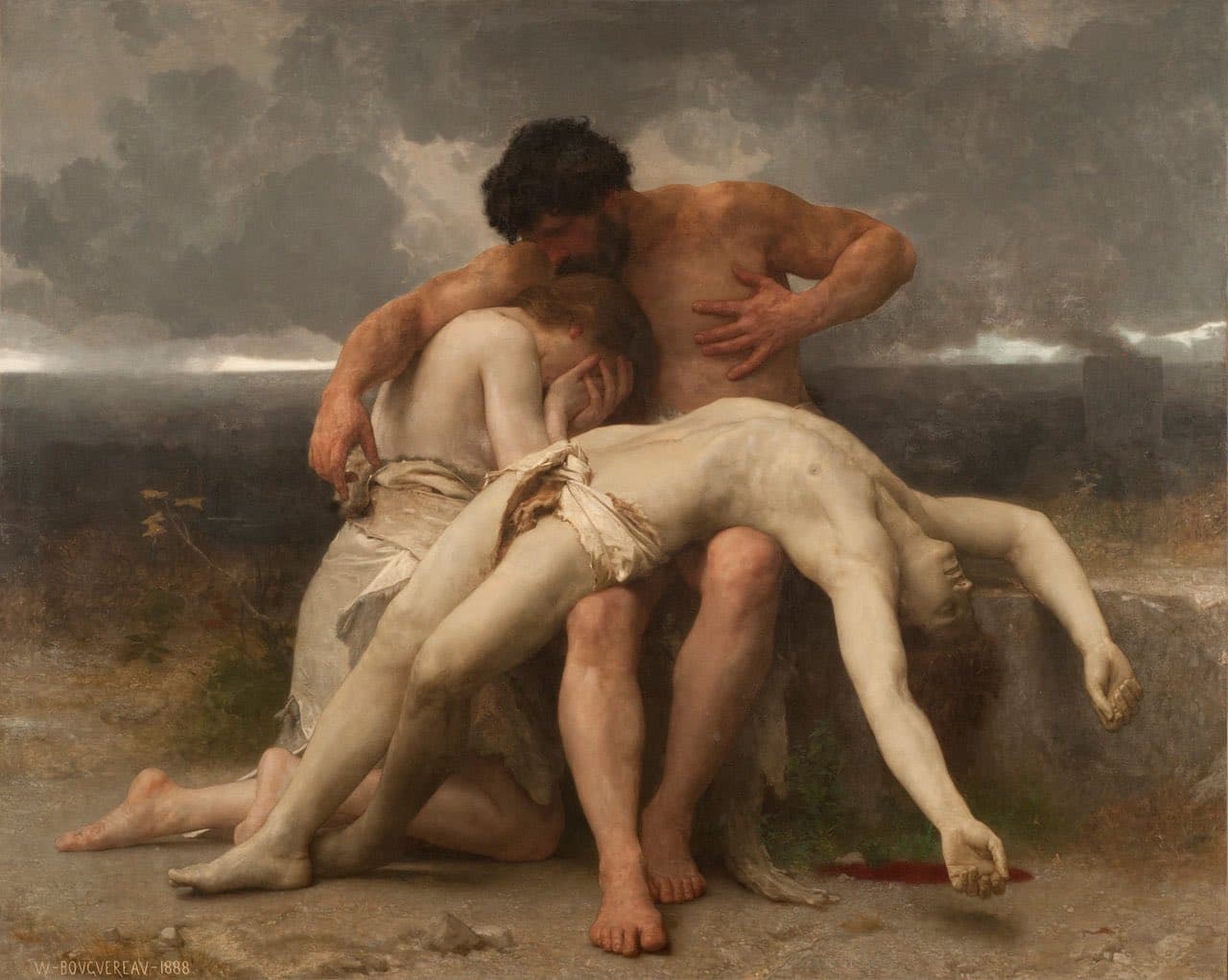
Premier Deuil
William-Adolphe Bouguereau · 1888
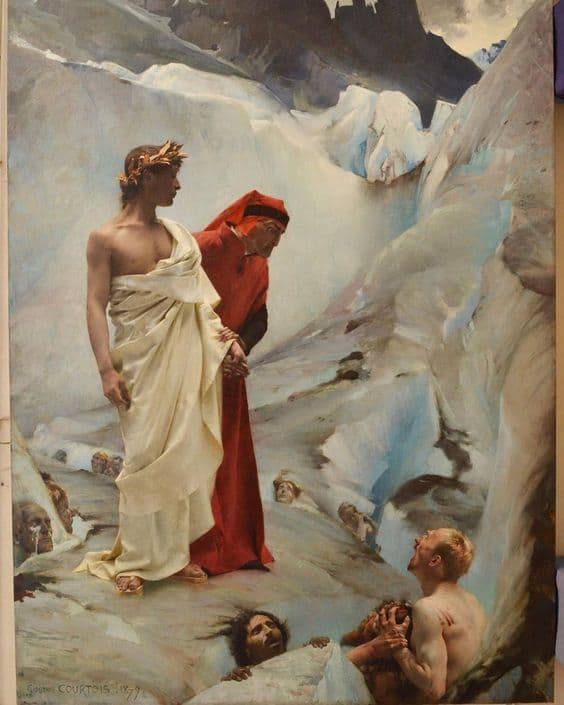
Dante and Virgil in Hell
Gustave Courtois · 1879
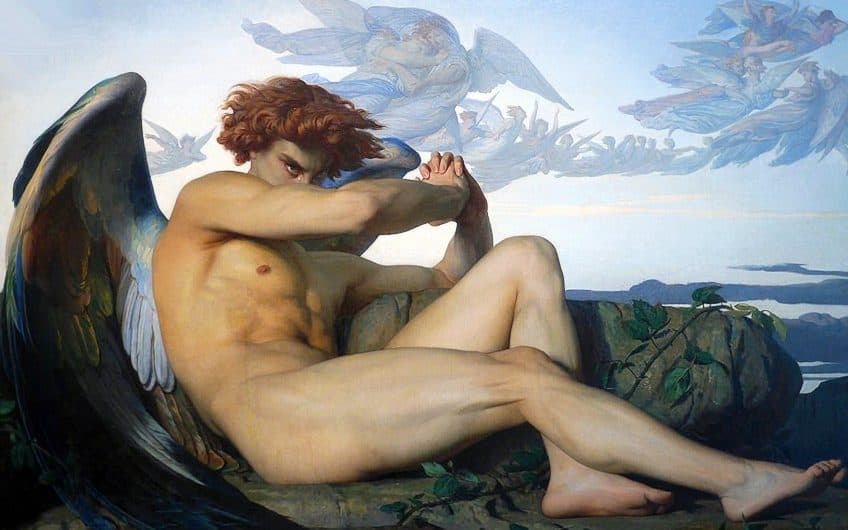
Fallen Angel
Alexandre Cabanel · 1847
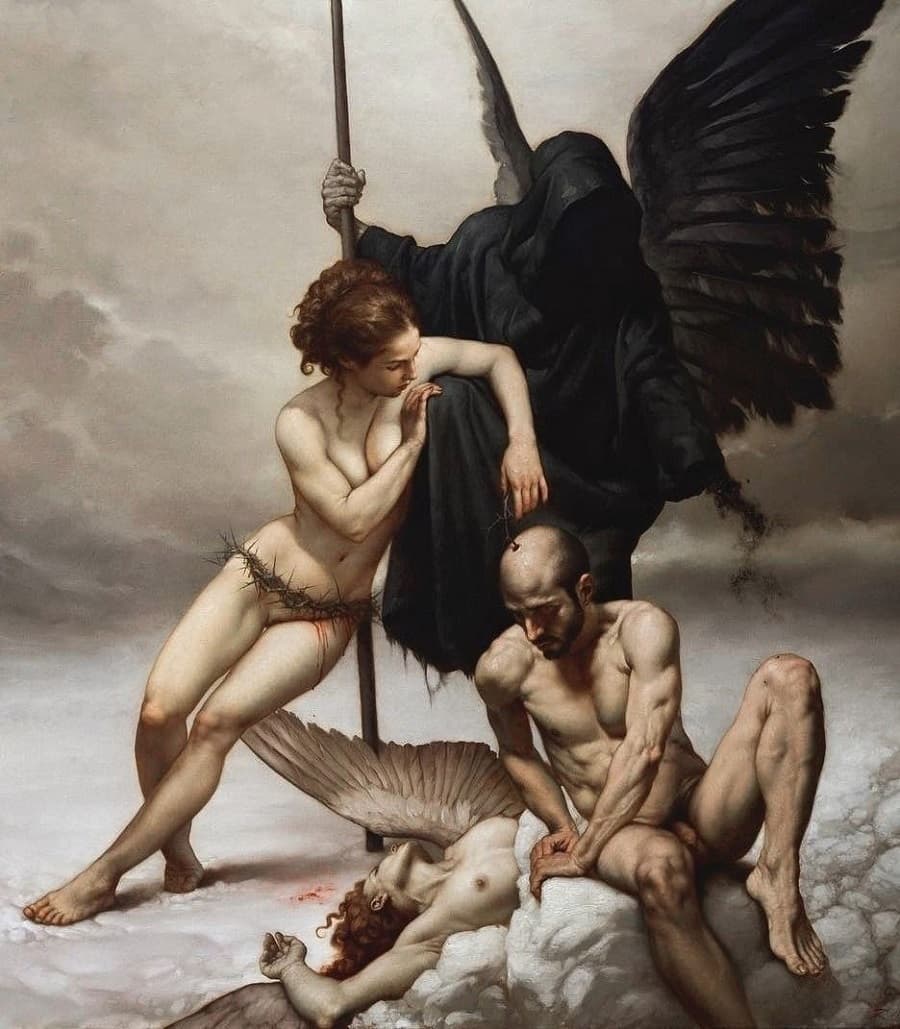
The Angel, the Death, and the Devil
Roberto Ferri · 2018
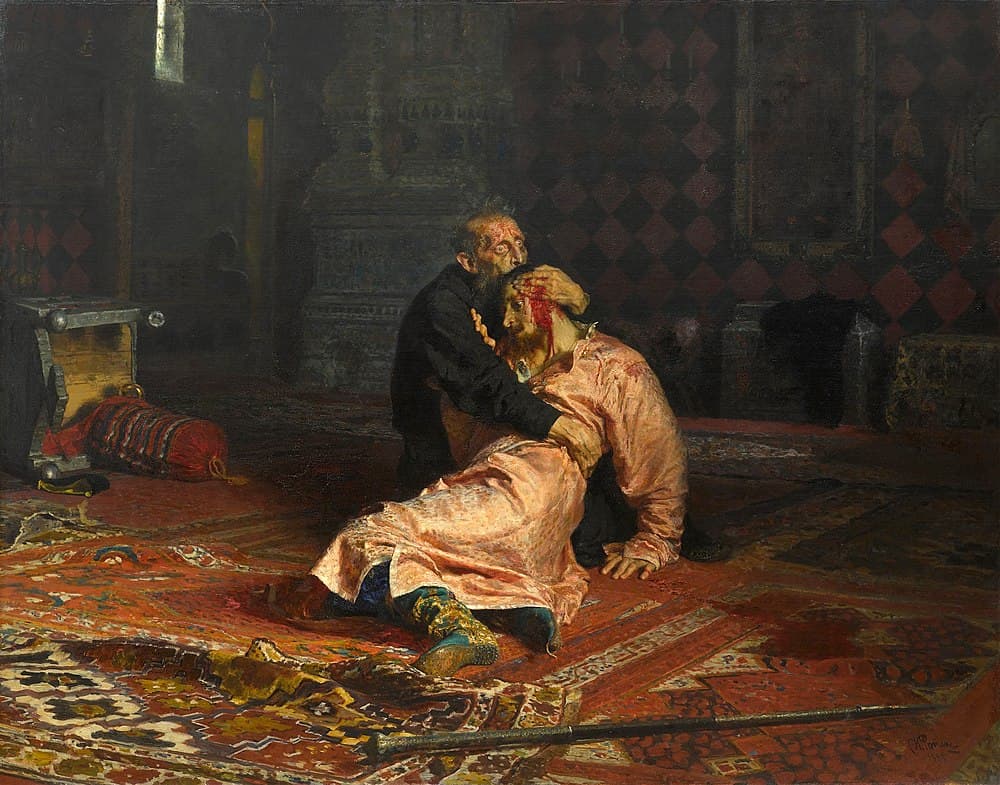
Ivan the Terrible and His Son Ivan
Ilya Repin · 1883–85
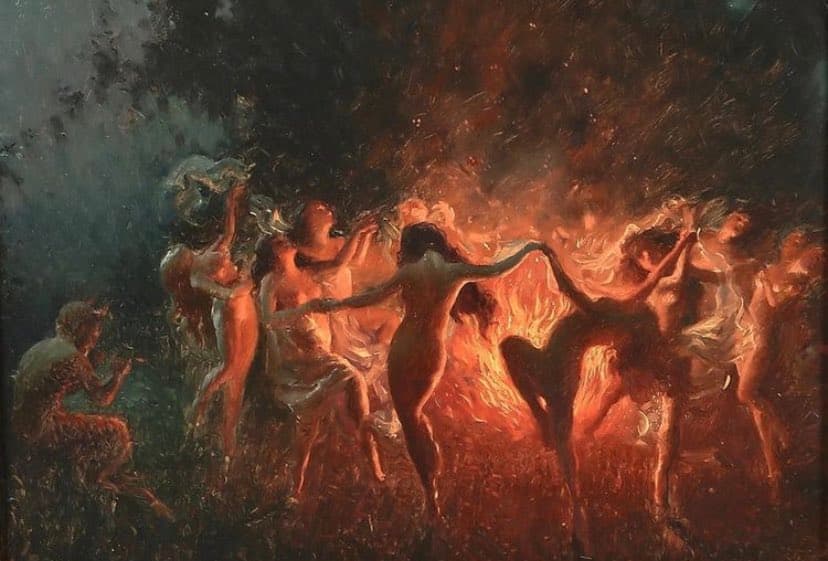
Nymphs Dancing to Pan's Flute
Joseph Tomanek

The Scream
Edvard Munch · 1893

Saturn Devouring His Son
Francisco Goya · c. 1819–1823