Impressionism
Poplars at the Banks of Epte
Claude Monet, 1891–92
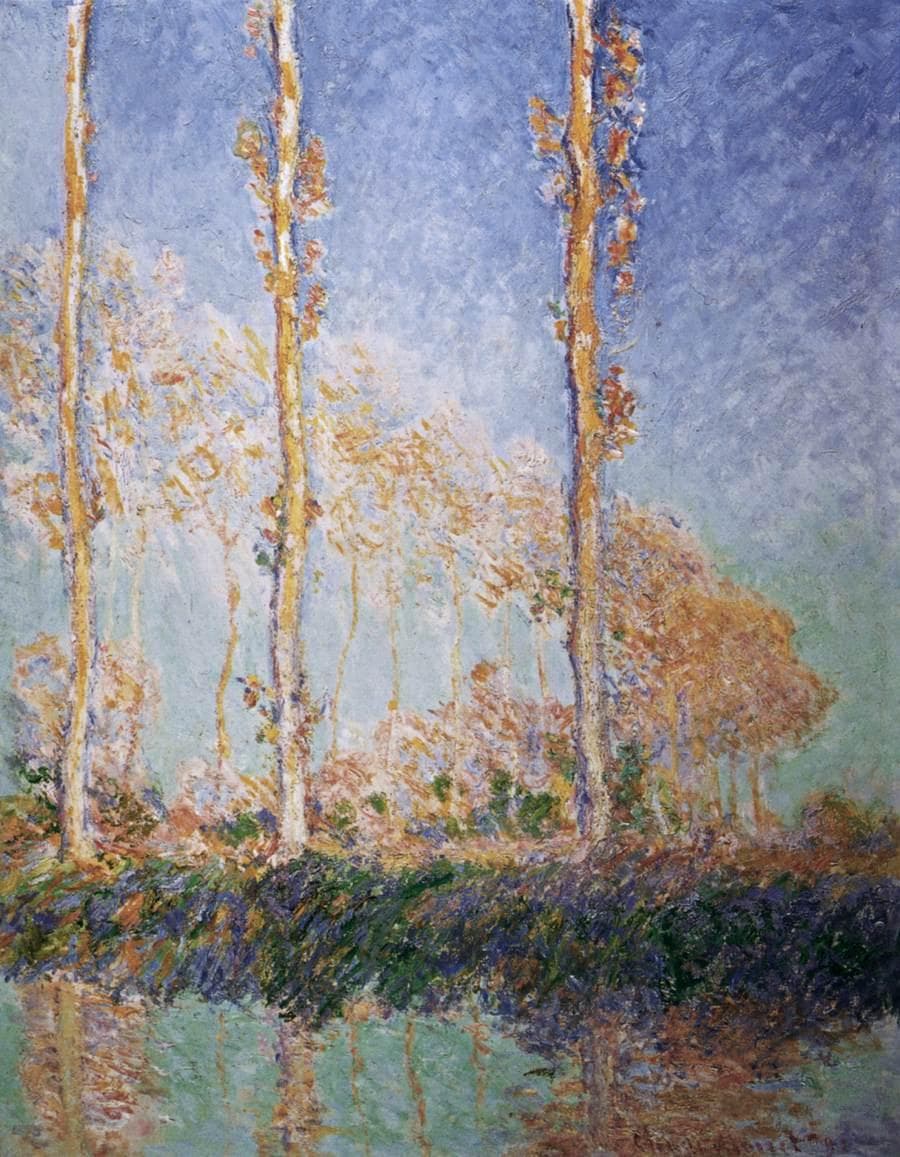
Poplars at the Banks of Epte (Les Peupliers au bord de l'Epte, vue du marais) is a nearly square canvas by Claude Monet from his Poplars series of 1891–92, looking along the curving row of trees on the Epte near Giverny. It measures 88 × 93 cm (Wildenstein 1312) and is in a private collection.
- Artist
- Claude Monet
- Date
- 1891–92
- Medium
- Oil on canvas
- Dimensions
- 88 × 93 cm
- Collection
- Private collection
- Movement
- Impressionism
- Catalogue
- Wildenstein 1312
What you are looking at
Unlike most of the Poplars, this canvas looks along the row rather than straight across the river at it. A cluster of tall, slender trunks rises at the left, catching warm late-day light, their feathery crowns massing into a dark blue-green silhouette that runs almost to the top edge. From there the row swings away to the right in a long, low curve, the trees shrinking with distance until they become a ribbon of green and gold along the horizon. The foreground is a strip of meadow and marsh in ocher, green and violet, and above everything is a wide, broken sky of lilac-blue with small, high white clouds.
The handling is dense and even. The sky is built from short, crisscrossing strokes that give it the same woven texture as the foliage, so tree and air feel made of one substance. Look at the trunks in the near group: each is a single wavering line of light paint, edged on one side with blue shadow, and they are not quite parallel, which keeps the group from looking like a fence. Low down among them, the meadow is lit in yellow, as if the sun were coming in from the left behind us.
The nearer crowns are where the picture is most worked. Monet lays dark blue-greens over lighter yellow-greens and leaves gaps through which the sky shows, so the foliage seems to move. In the distant row the same trees are reduced to a few vertical flicks each, a change of scale that does the work of perspective without any drawn lines.
Where and when
The trees stood in single file along a marshy stretch of the Epte near Limetz, a short way upstream from Monet's house at Giverny. He began painting them in the late spring of 1891 and continued into the autumn. Most of the series was painted from his floating studio, a boat moored opposite the row, which explains why so many canvases look straight across the water at the trunks. This is one of the exceptions: here Monet set up on the meadow side, where the curve of the row could be seen whole. Wildenstein's catalogue groups it with a small set of views taken from the marsh and dates it 1891–92.
The trees were not Monet's to keep. They belonged to the commune of Limetz, which put them up for auction partway through the campaign; Monet came to an arrangement with the timber merchant who bought them so that they would stay standing until he had finished.
How it was painted
The near-square format, about 88 by 93 centimeters, is unusual in the series. It gives the picture more of the character of a conventional landscape: there is a foreground, a middle distance and a horizon, and the eye travels into depth along the curve of the row. In the tall, narrow canvases, by contrast, the trunks run off the top of the frame and the picture reads as a flat pattern of verticals. The brushwork, however, is the same: small, dry, overlapping touches, applied over several sessions, that knit sky and foliage together.
The Poplars series
The Epte poplars are among Monet's most celebrated series, gathered in our Poplars hub. They followed the success of the haystacks in 1891, and a group was shown at Durand-Ruel's gallery in Paris in early 1892. Compare this sweeping view with the tight, frontal Poplars on the Banks of the River Epte in Philadelphia, the three trunks of Poplars, Three Pink Trees, Autumn, and The Four Trees in New York. Poplars on the Epte at Tate shows the row seen across the water in similar summer light.
Meaning
The poplars were planted as a commercial crop, destined for timber, which gives the series an undertone of impermanence. But the paintings are less elegy than experiment. With the motif fixed in place, Claude Monet could study how a change of hour or season altered every color, and the row's curve gave him a ready-made rhythm of verticals and a receding line.
Where is it now?
The painting is in a private collection and is rarely exhibited. Many canvases from the series are in public museums in Philadelphia, New York, London, Edinburgh, Cambridge and Tokyo; our guide on where to see Monet's paintings lists them by city.
Questions & answers
Where is Poplars at the Banks of Epte?
This canvas, measuring 88 by 93 centimeters and catalogued as Wildenstein 1312, is in a private collection. Many other paintings from Monet's Poplars series are in public museums, including the Philadelphia Museum of Art, the Metropolitan Museum of Art, Tate, the Fitzwilliam Museum and the National Galleries of Scotland.
When and where did Monet paint the poplars?
Along the river Epte near Limetz, a few kilometers upstream from his home at Giverny, from late spring to autumn 1891. Most canvases were painted from his floating studio boat; this one belongs to a small group of views from the marshy meadow, dated 1891–92.
What does Poplars at the Banks of Epte show?
A line of tall poplars curving away along the riverbank, with a group of trunks close by at left and the rest of the row receding to the right under a wide, cloudy sky. Monet's subject is the warm light on the trees and the woven texture of foliage and air.
How many Poplars paintings did Monet make?
Wildenstein's catalogue lists more than twenty canvases of the Epte poplars from 1891 and early 1892. Monet's dealer Paul Durand-Ruel showed a group of them as a series in Paris in 1892, following the success of the haystack paintings the year before.
More by the artist
Claude Monet

Bridge over a Pond of Water Lilies
Claude Monet · 1899

Woman with a Parasol – Madame Monet and Her Son
Claude Monet · 1875

Sunset in Venice
Claude Monet · 1908–12

La Grenouillère
Claude Monet · 1869

Beach in Pourville
Claude Monet · 1882

Springtime
Claude Monet · 1872

Boating on the River Epte
Claude Monet · 1890

The Seine at Asnières (Hermitage)
Claude Monet · 1873
Also painted in 1891
The same year
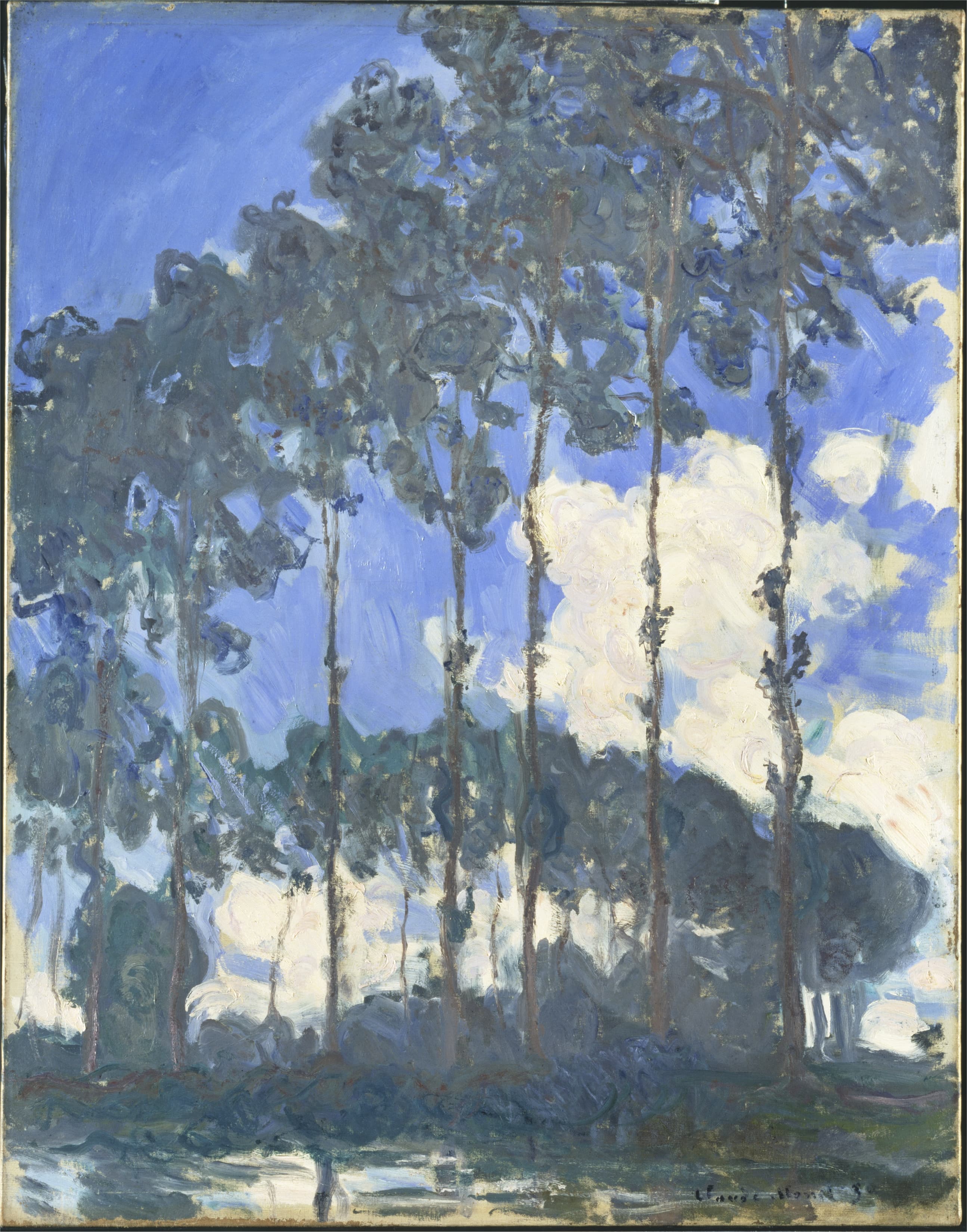
Poplars on the Epte (London)
Claude Monet · 1891
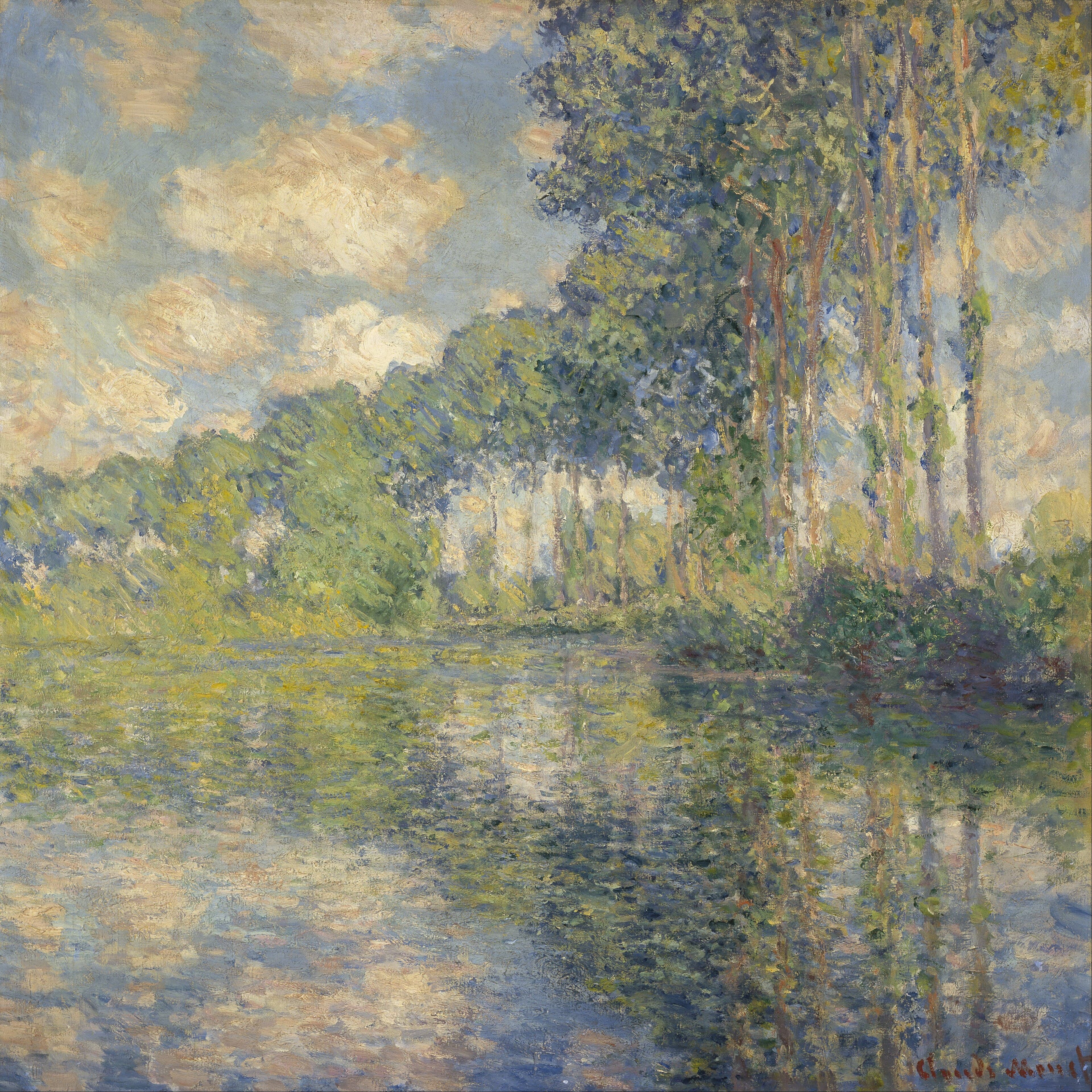
Poplars on the Epte (Edinburgh)
Claude Monet · 1891
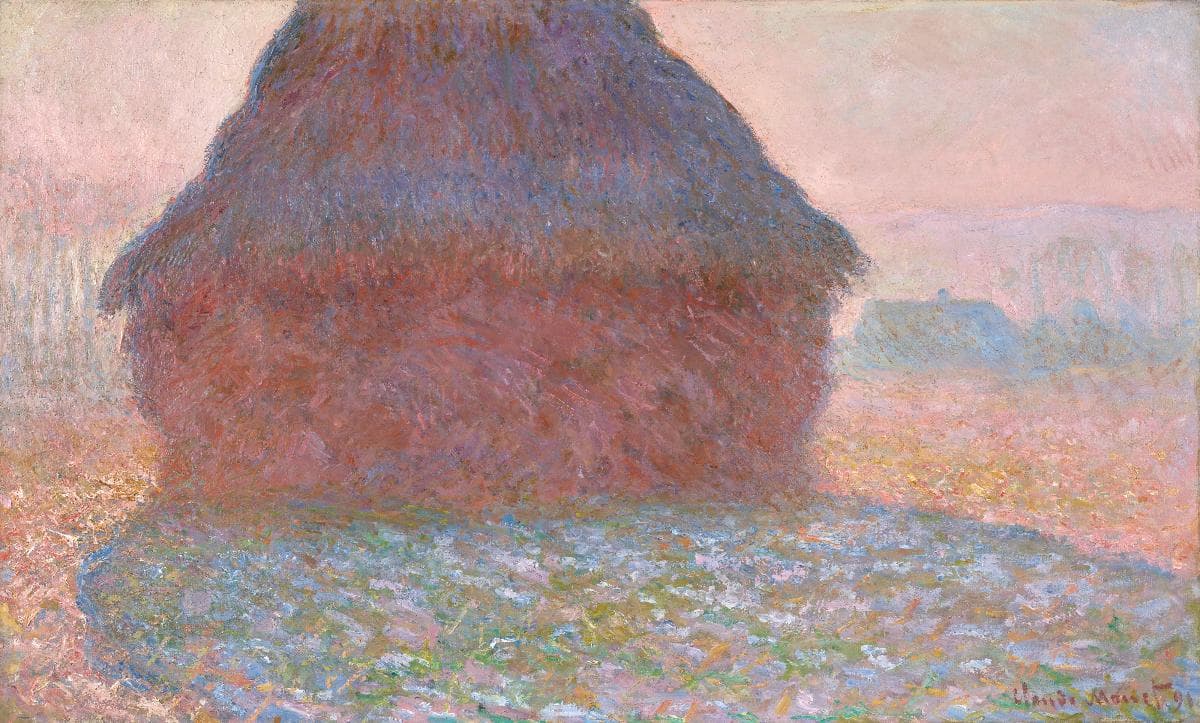
Grainstack in Sunlight
Claude Monet · 1891
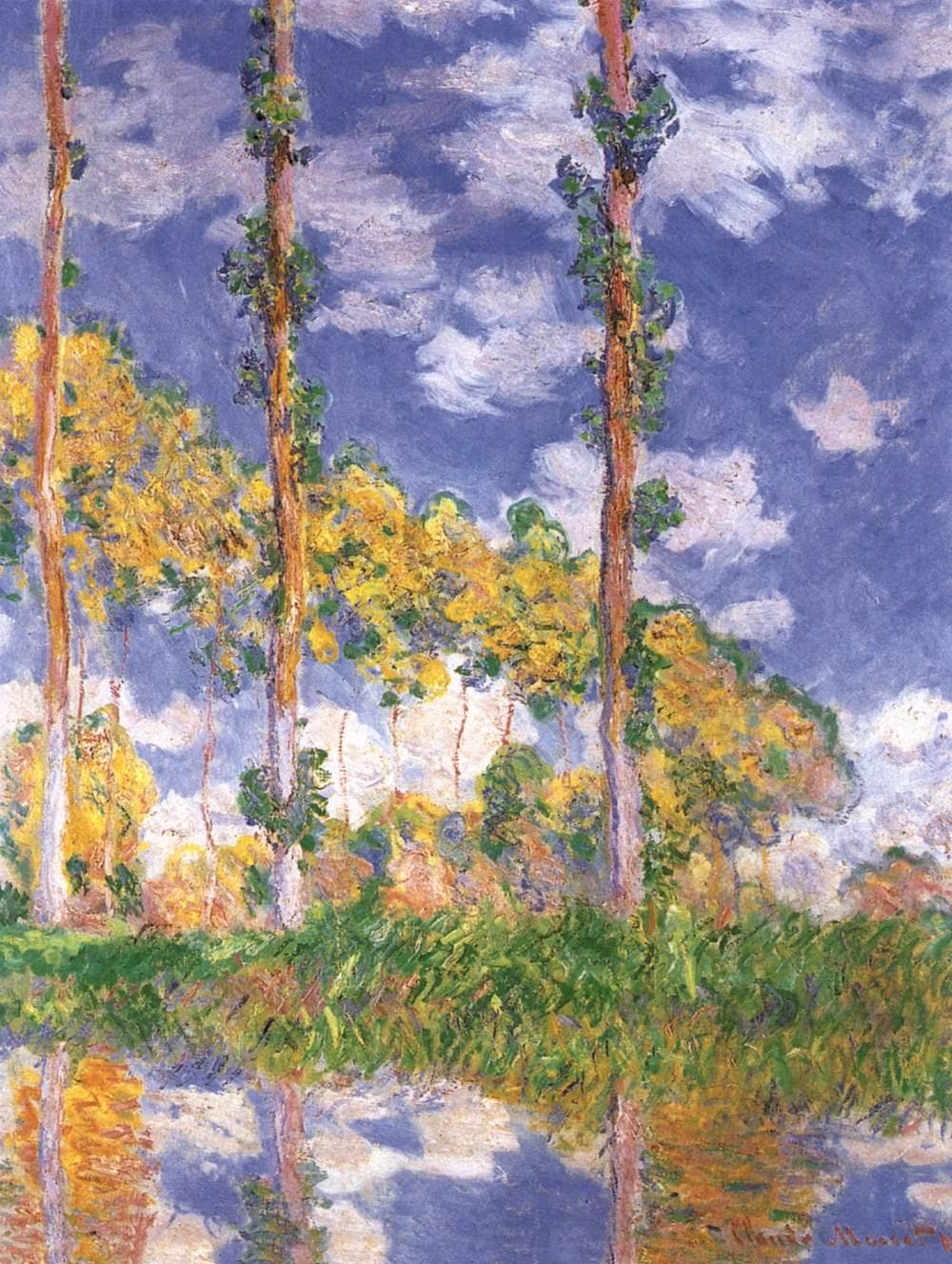
Three Poplars, Summer
Claude Monet · 1891
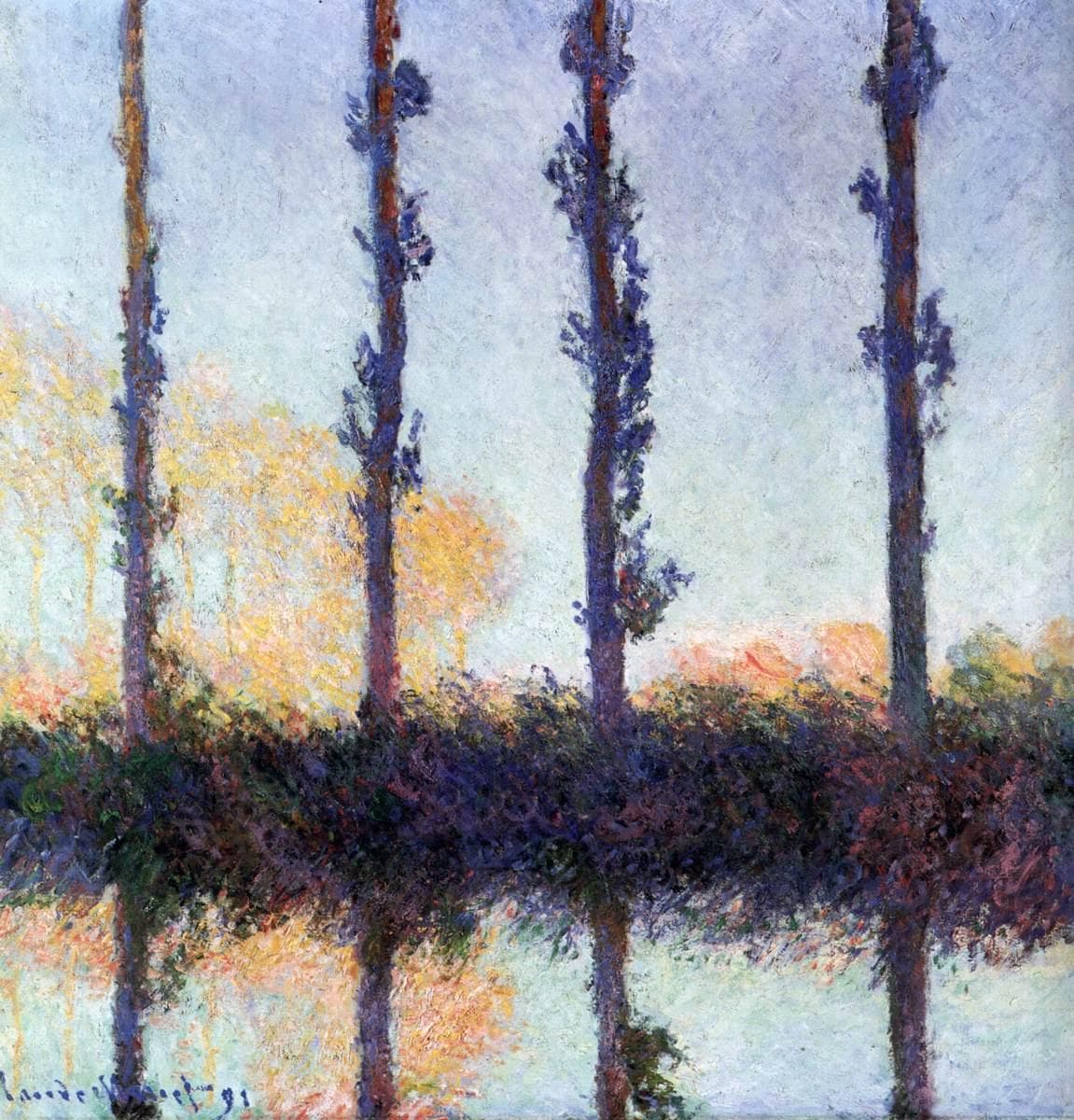
The Four Trees
Claude Monet · 1891
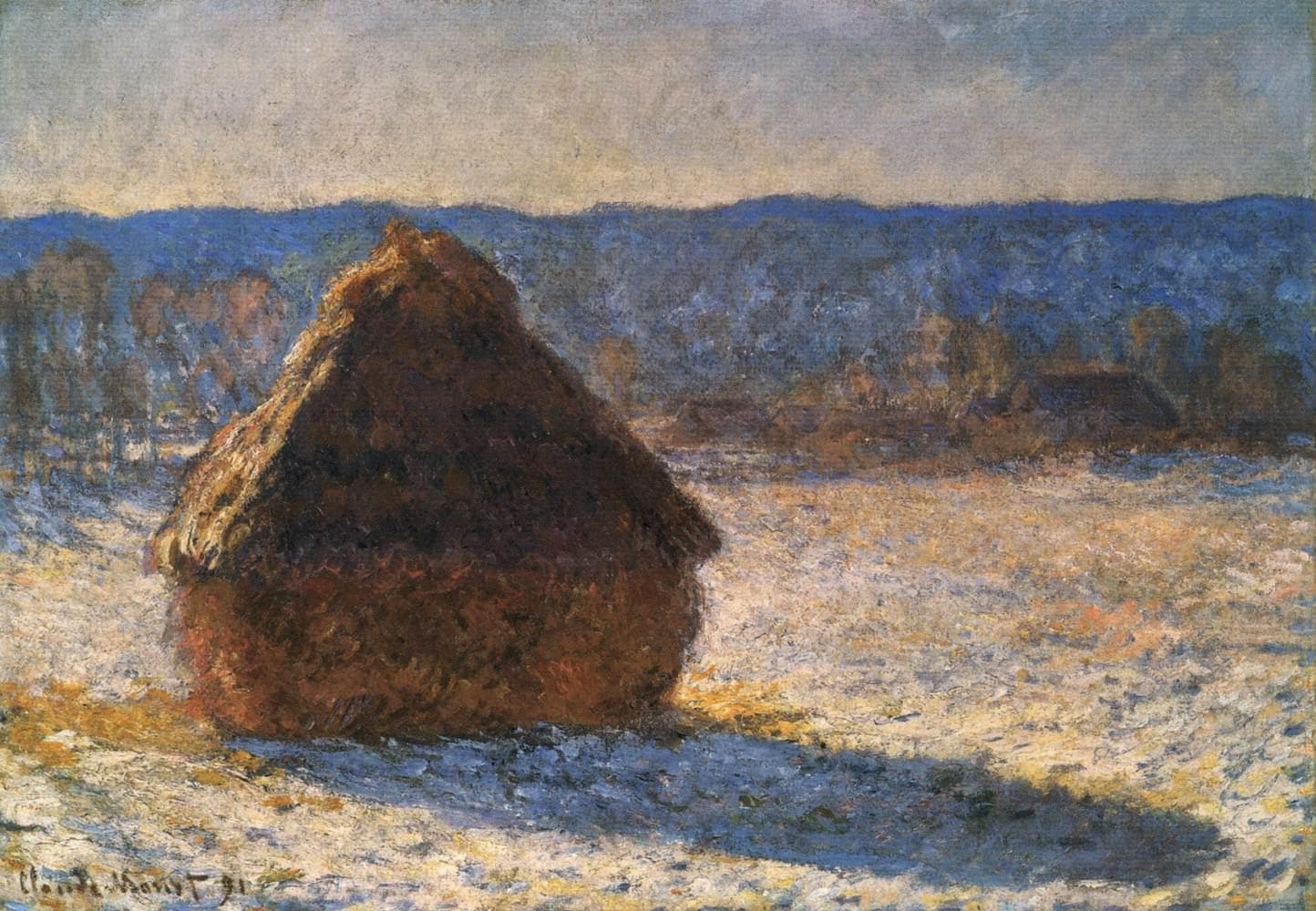
Grainstack (Snow Effect)
Claude Monet · 1891
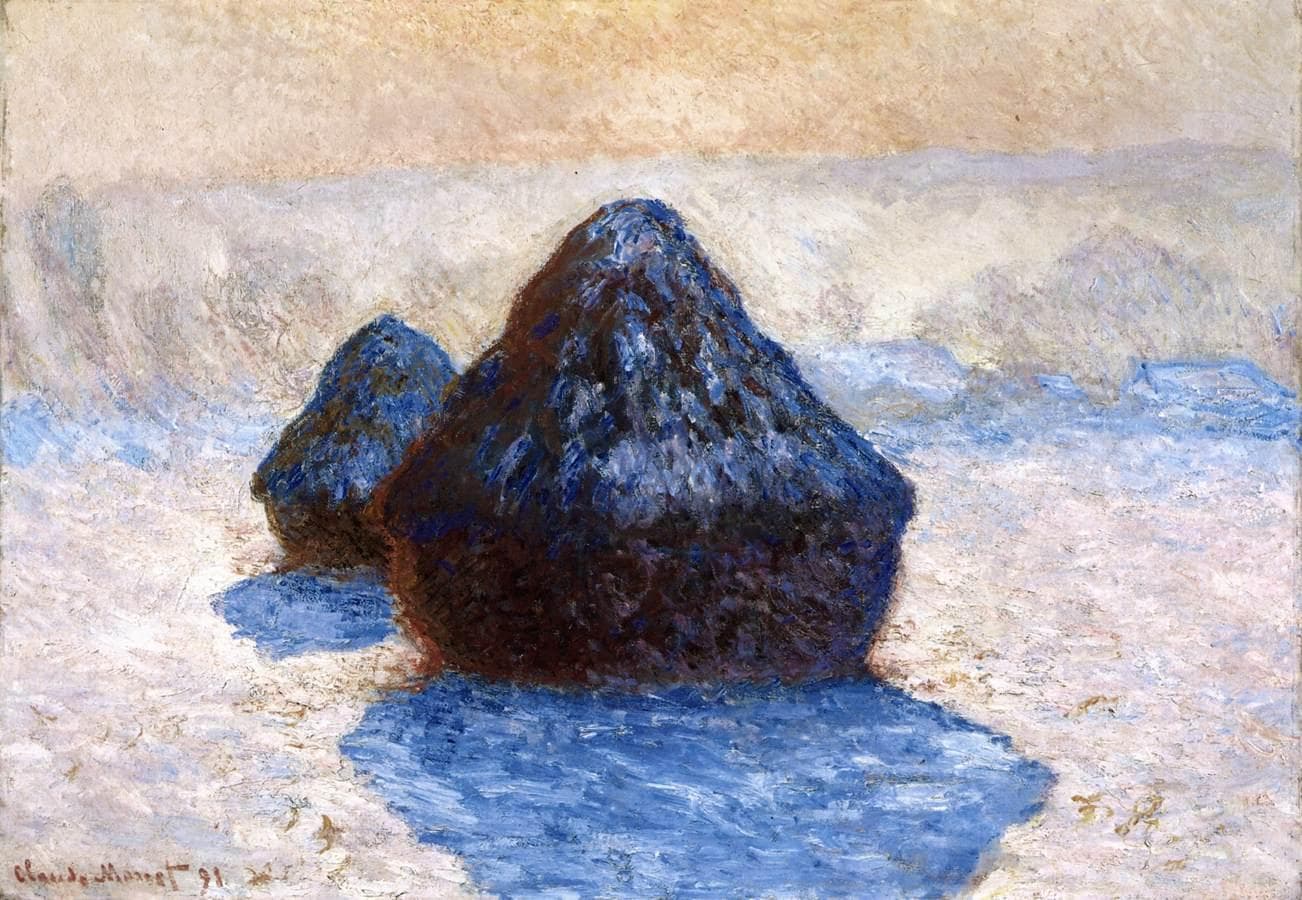
Haystacks, Snow Effect
Claude Monet · 1891
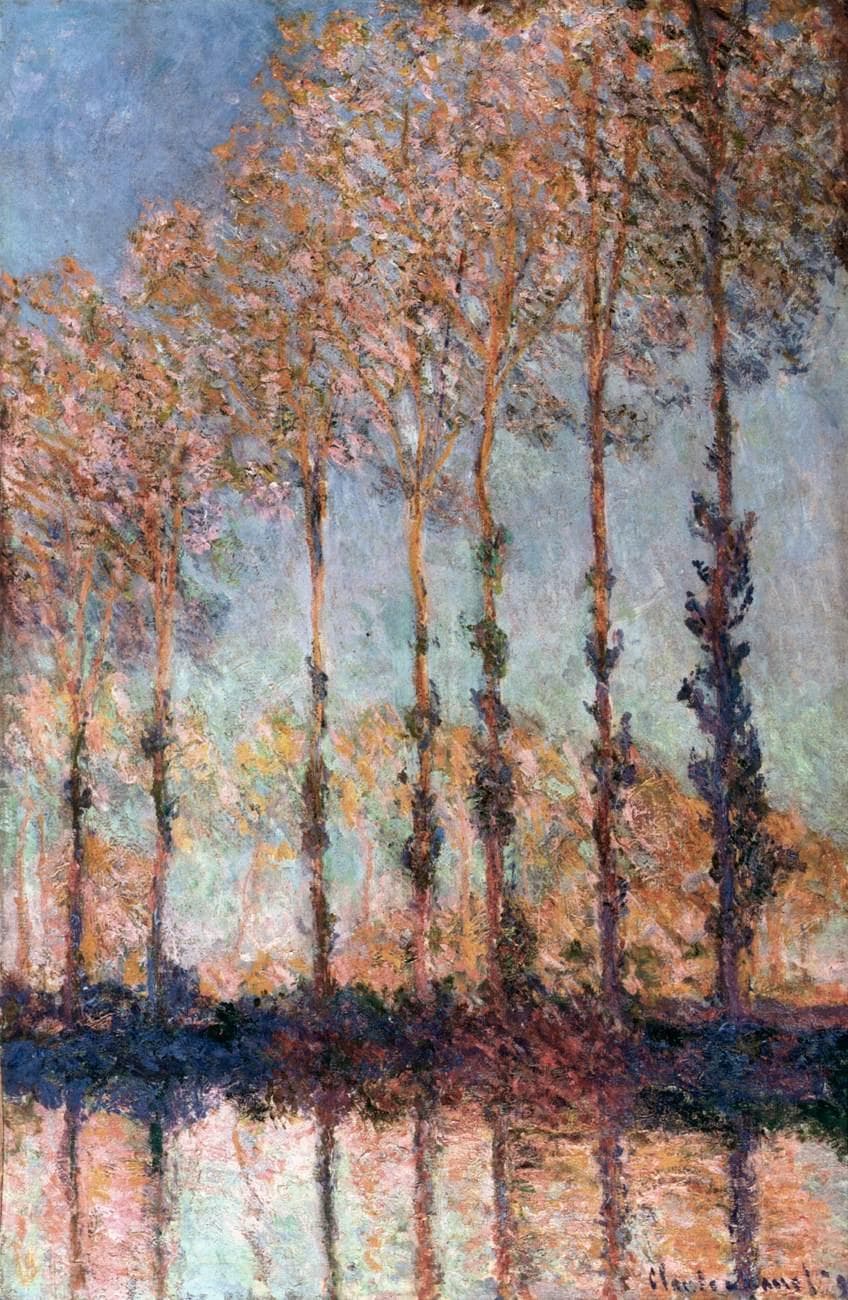
Poplars on the Banks of the River Epte
Claude Monet · 1891
Kindred works
You may also study
Poplars on the Banks of the River Epte
Claude Monet · 1891
Poplars, Three Pink Trees, Autumn
Claude Monet · 1891
The Four Trees
Claude Monet · 1891
Poplars on the Epte (London)
Claude Monet · 1891
Three Poplars, Summer
Claude Monet · 1891

The Scream
Edvard Munch · 1893

Ophelia
John Everett Millais · 1851–52

The Great Wave off Kanagawa
Katsushika Hokusai · c. 1830–32