Impressionism
Three Poplars, Summer
Claude Monet, 1891
Three Poplars, Summer is an 1891 painting from Claude Monet's Poplars series, showing three tall trunks on the Epte near Giverny, reflected in the river beneath a blue sky. The National Museum of Western Art, Tokyo, holds it under the title Poplars in the Sun.
- Artist
- Claude Monet
- Date
- 1891
- Medium
- Oil on canvas
- Dimensions
- 93 × 73.5 cm
- Collection
- National Museum of Western Art, Tokyo, Japan
- Movement
- Impressionism
- Catalogue
- Wildenstein 1305
What you are looking at
Three slender poplar trunks rise from the bottom of the canvas to the top and beyond, cut off by the frame so we never see their crowns. Behind them a band of smaller trees, their leaves yellow, gold and green in strong sunlight, curves away along the riverbank. Above, a deep blue sky is filled with swirling white clouds. Below, the river Epte reflects the whole scene upside down in broken strokes, the trunks continuing as wavering lines into the water.
Claude Monet painted this canvas in 1891, during the summer he devoted to a row of poplars on the Epte, a short distance upstream from his home at Giverny. It is in the National Museum of Western Art in Tokyo, which catalogues it as Poplars in the Sun; the descriptive title Three Poplars, Summer is also widely used. It measures about 93 by 73.5 centimeters and is signed at lower right.
Looking closely
The picture is organized around a grid. The three vertical trunks, evenly spaced, divide the canvas into panels like the uprights of a screen. The horizontal band of the riverbank, a ribbon of bright green, crosses them about two-thirds of the way down. Above and below that line, sky and reflection mirror each other.
Monet treats the trunks themselves as colored lines rather than solid objects. They are pinkish-orange and ochre where the sun strikes, with clumps of green leaves clinging along their length (poplars in this region were often pruned so that foliage grew close to the trunk). The color of the bark is set against the blue of the sky, a pairing of warm and cool that makes the trees seem to vibrate.
The clouds are laid in with loose, curving strokes of white and grey over blue, quite different from the short dabs used for the foliage. In the water the brushwork changes again: horizontal strokes break the reflections into bands of blue, orange and gold, so the river feels both still and alive. Notice how the reflected trunks are offset slightly, as they would be in moving water, and how the band of riverbank is painted in quick, upward flicks of green, the grasses catching the same sun as the leaves. The signature, at lower right, is placed in the reflection, almost lost among the strokes.
The Poplars series
In the spring of 1891 Monet began painting a line of poplars along the Epte at Limetz, near Giverny. He worked largely from his studio boat, which let him look up at the trees from water level and gave the series its characteristic low, upward-looking viewpoint. The trees belonged to the local commune, and when they were put up for sale as timber before he had finished, Monet reached an arrangement with the buyer, paying to have the felling delayed until his paintings were done.
He produced more than twenty canvases of the motif, in three broad groups. Some, like this one, show a few trunks close up, cut off top and bottom; others show the whole line of trees zigzagging along the river; still others show the S-curve of the bank from further away. Fifteen were exhibited together at Paul Durand-Ruel's gallery in Paris in early 1892, a year after the Grainstacks had been shown there to great success.
Related canvases on this site include The Four Trees (Metropolitan Museum of Art), Poplars on the Banks of the River Epte and Poplars, Three Pink Trees, Autumn, a close cousin of this composition in autumn color.
What does the series mean?
Monet's series paintings were about time: the same motif under different light, season and weather. In the poplars he added a strong decorative structure, verticals and horizontals arranged almost like a woven textile or a folding screen, which many art historians link to Japanese prints and to the growing taste for decorative painting in the 1890s.
Some writers have also read the poplars as a patriotic motif. The poplar had been a symbol of liberty since the French Revolution, when "liberty trees" were planted across France, and the series appeared at a time of renewed national feeling. There is no statement from Monet to support this, and it is best treated as one possible reading of a motif he chose primarily for its light and form.
Where to see it
The painting is in the National Museum of Western Art, Tokyo, part of the Matsukata Collection assembled in Europe in the early twentieth century by the industrialist Kojiro Matsukata. The museum was opened in 1959, designed by Le Corbusier, largely to house the part of that collection returned to Japan by France. It holds one of the finest groups of Monets in Asia. Check the museum's website for current display. For more, see our guide to famous Monet paintings.
Questions & answers
Where is Monet's Three Poplars, Summer?
It is in the National Museum of Western Art in Tokyo, which catalogues it as Poplars in the Sun (1891). It came from the collection of Kojiro Matsukata, the Japanese industrialist whose holdings formed the core of the museum when it opened in 1959.
How many poplar paintings did Monet make?
Monet painted more than twenty canvases of the poplars on the Epte in 1891, in three broad compositional groups. Fifteen were exhibited together at Durand-Ruel's gallery in Paris in early 1892. The show followed the success of his Grainstacks the year before and confirmed the series as his main way of working.
Did Monet buy the poplar trees?
When the commune put the trees up for sale before he had finished painting them, Monet came to an agreement with the timber merchant who bought them, paying to delay the felling until his series was complete.
Where were Monet's poplars?
They grew along the river Epte at Limetz, a short distance upstream from Monet's home at Giverny in Normandy. He painted many of the canvases from his studio boat, moored on the river, looking up at the trees from water level, which explains the low viewpoint.
More by the artist
Claude Monet

Bridge over a Pond of Water Lilies
Claude Monet · 1899

Woman with a Parasol – Madame Monet and Her Son
Claude Monet · 1875

Sunset in Venice
Claude Monet · 1908–12

La Grenouillère
Claude Monet · 1869

Beach in Pourville
Claude Monet · 1882

Springtime
Claude Monet · 1872

Boating on the River Epte
Claude Monet · 1890

The Seine at Asnières (Hermitage)
Claude Monet · 1873
Also painted in 1891
The same year
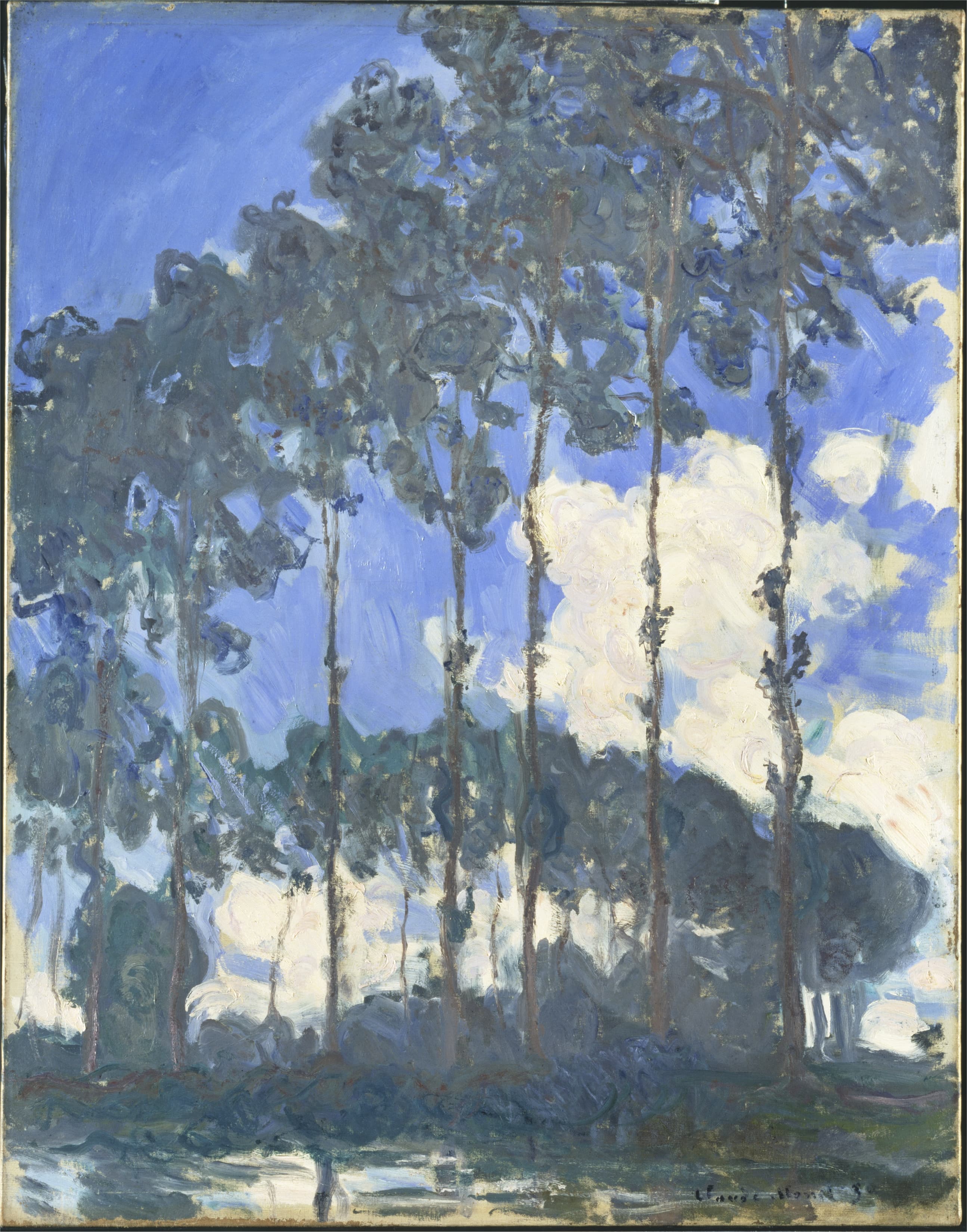
Poplars on the Epte (London)
Claude Monet · 1891
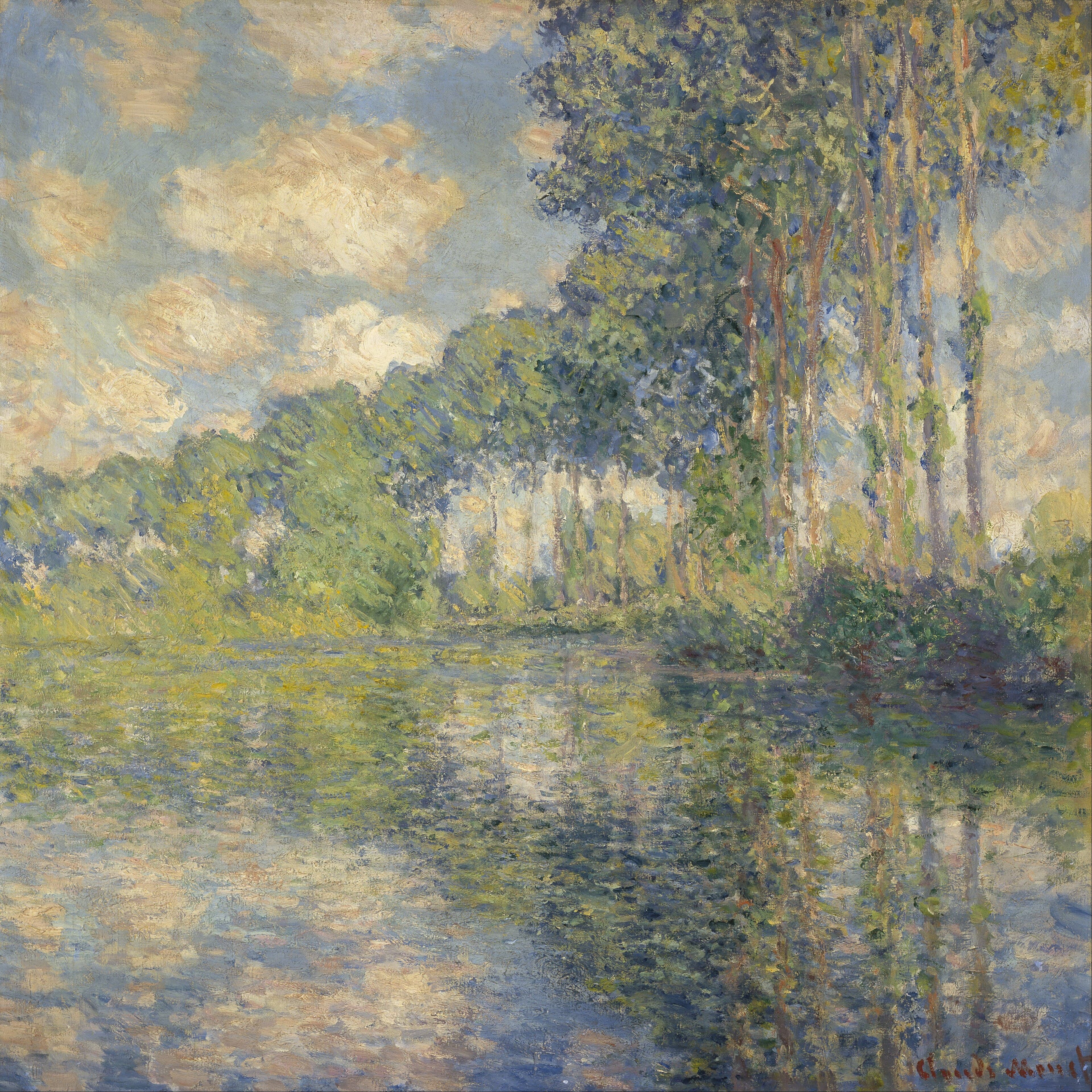
Poplars on the Epte (Edinburgh)
Claude Monet · 1891
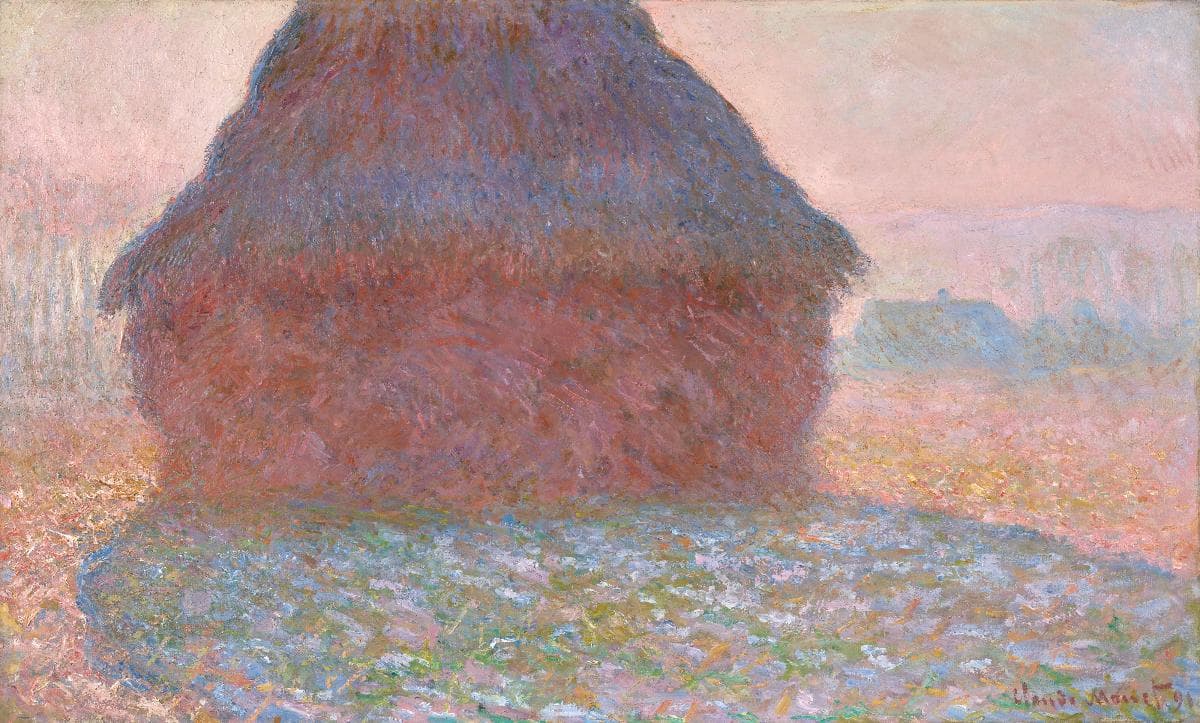
Grainstack in Sunlight
Claude Monet · 1891
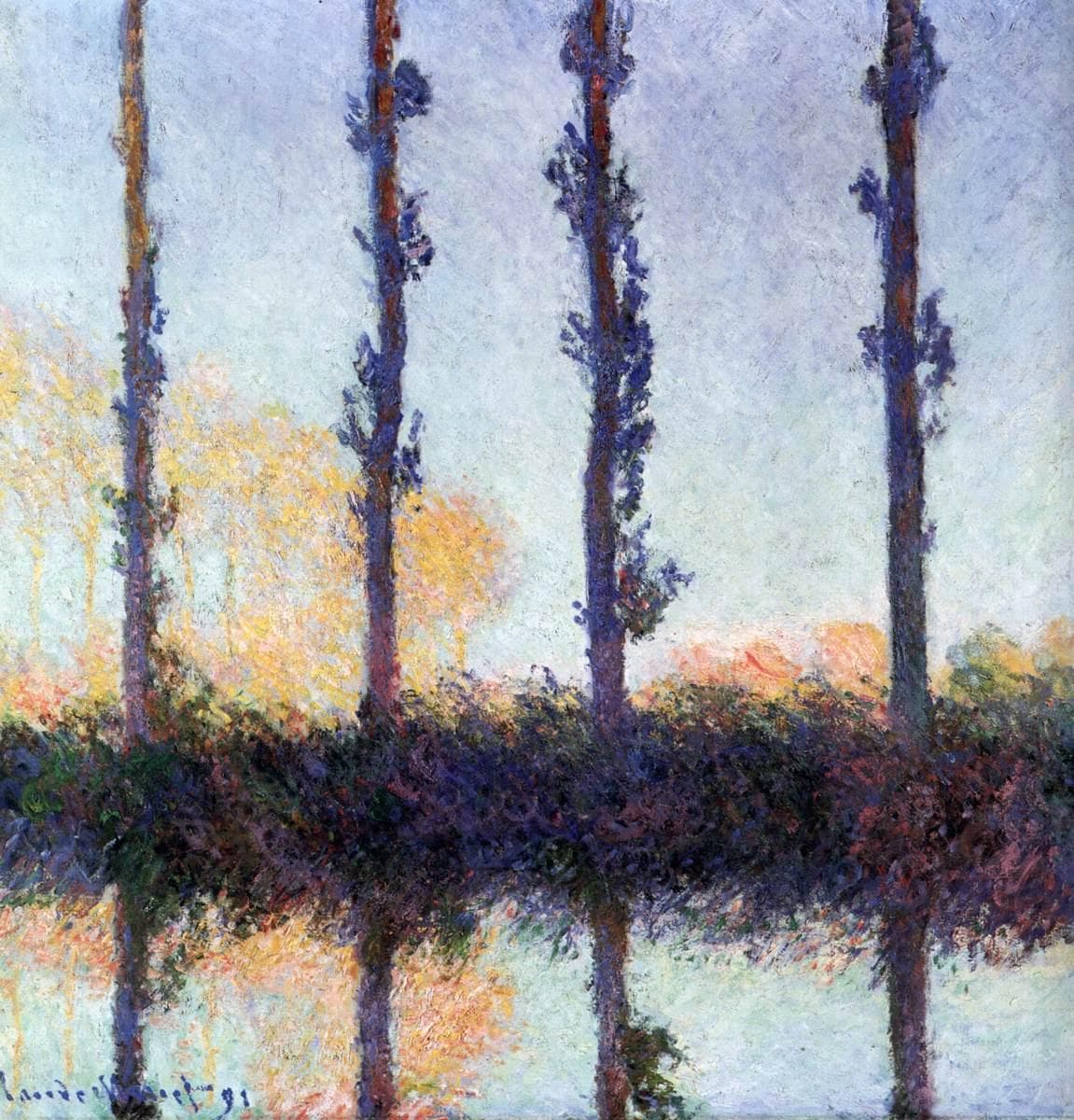
The Four Trees
Claude Monet · 1891
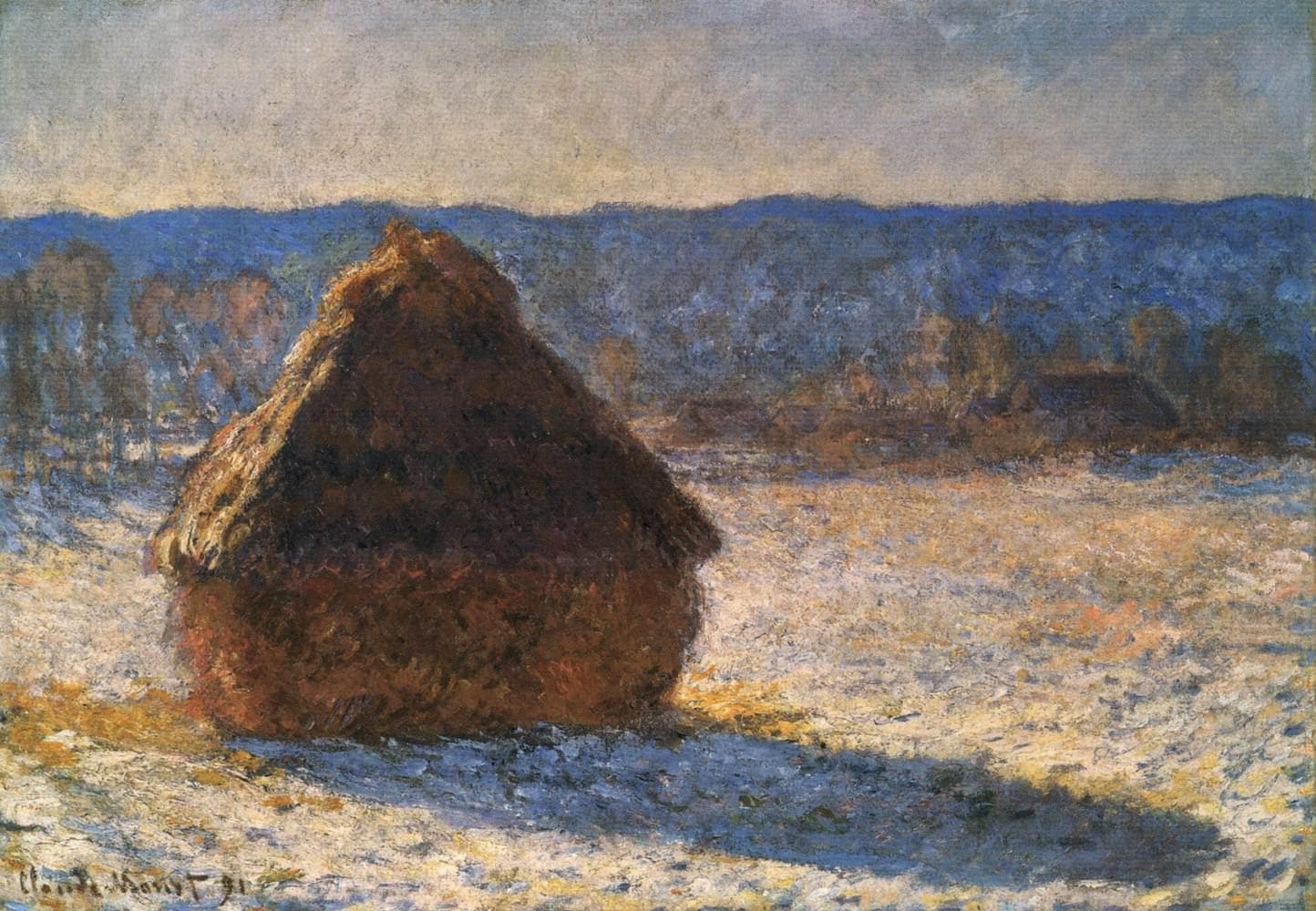
Grainstack (Snow Effect)
Claude Monet · 1891
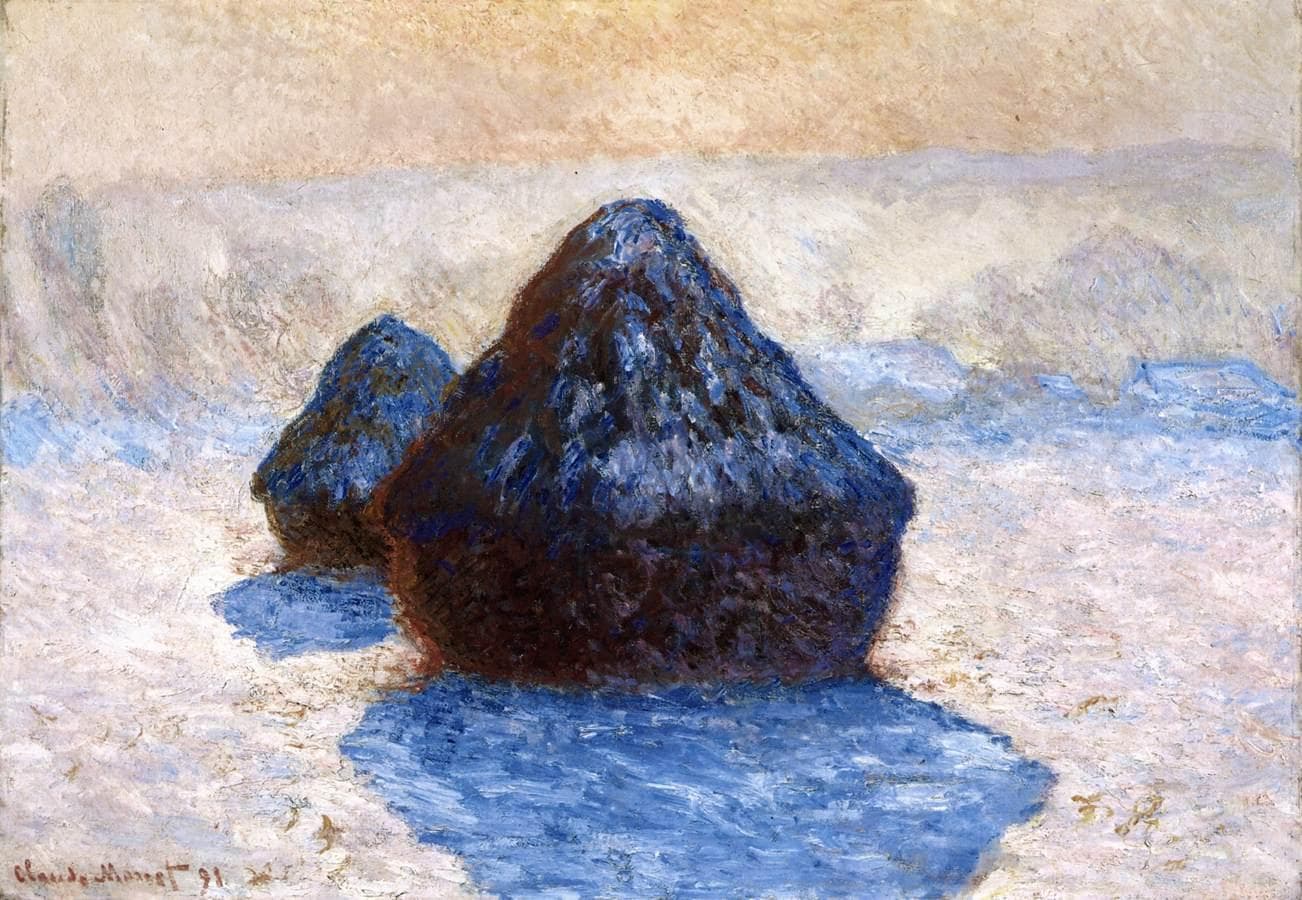
Haystacks, Snow Effect
Claude Monet · 1891
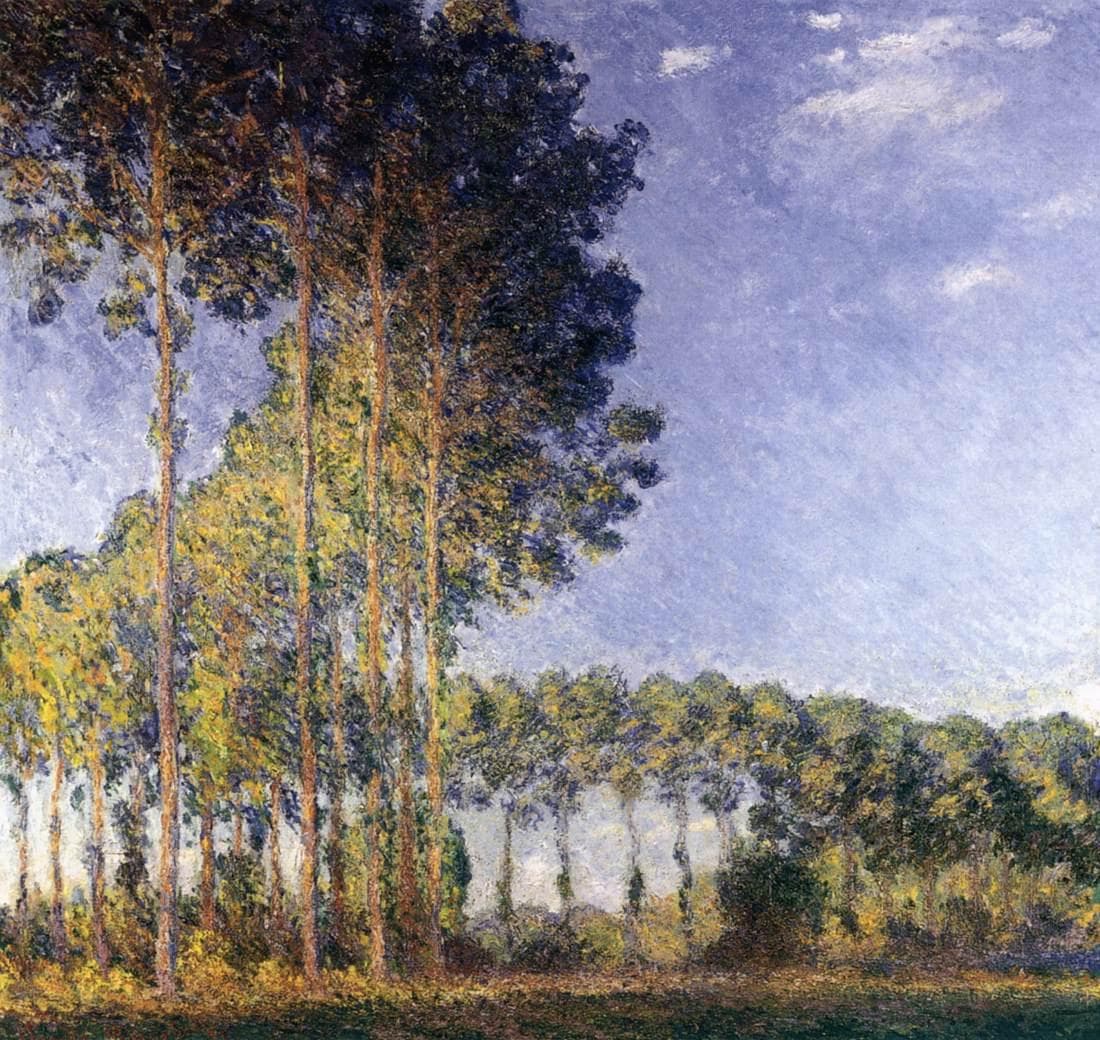
Poplars at the Banks of Epte
Claude Monet · 1891–92
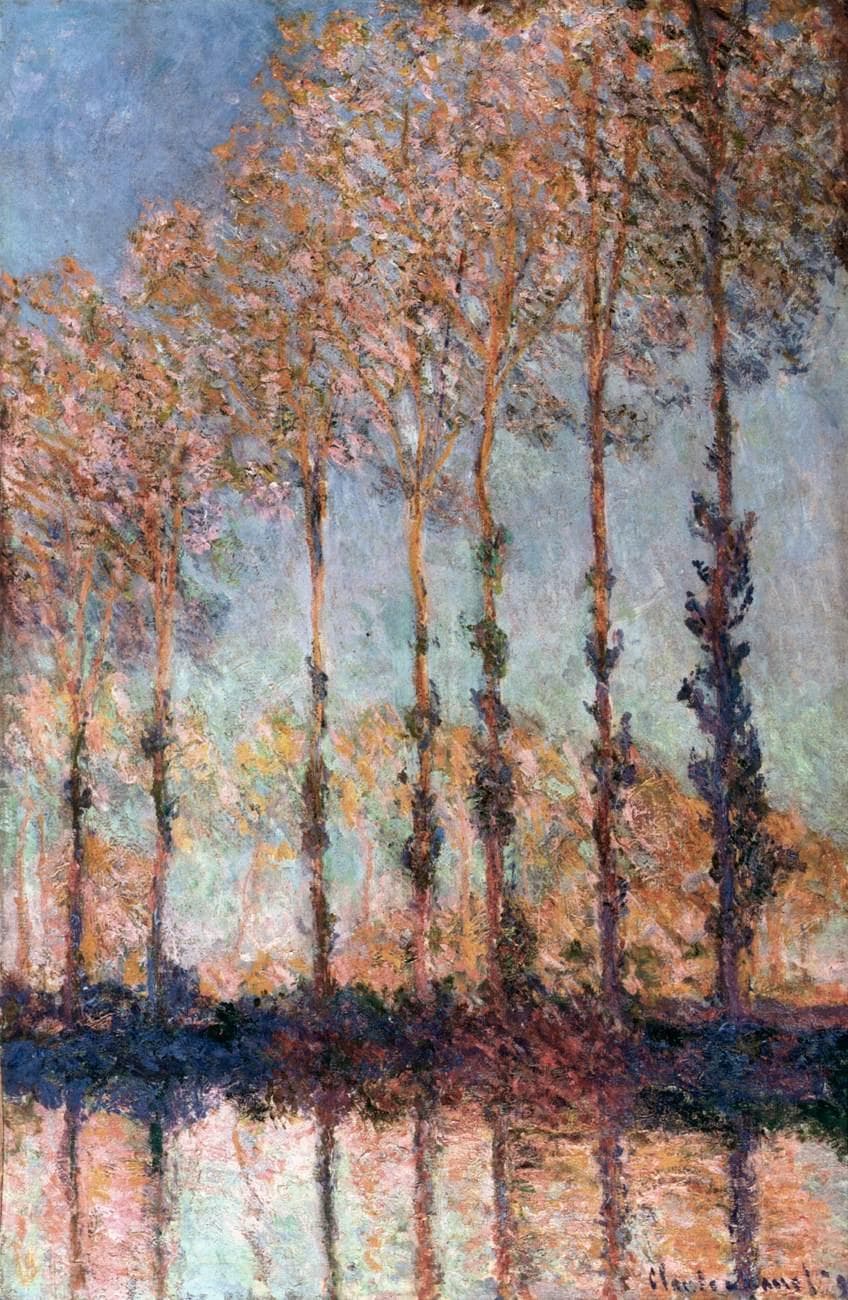
Poplars on the Banks of the River Epte
Claude Monet · 1891
Kindred works
You may also study
The Four Trees
Claude Monet · 1891
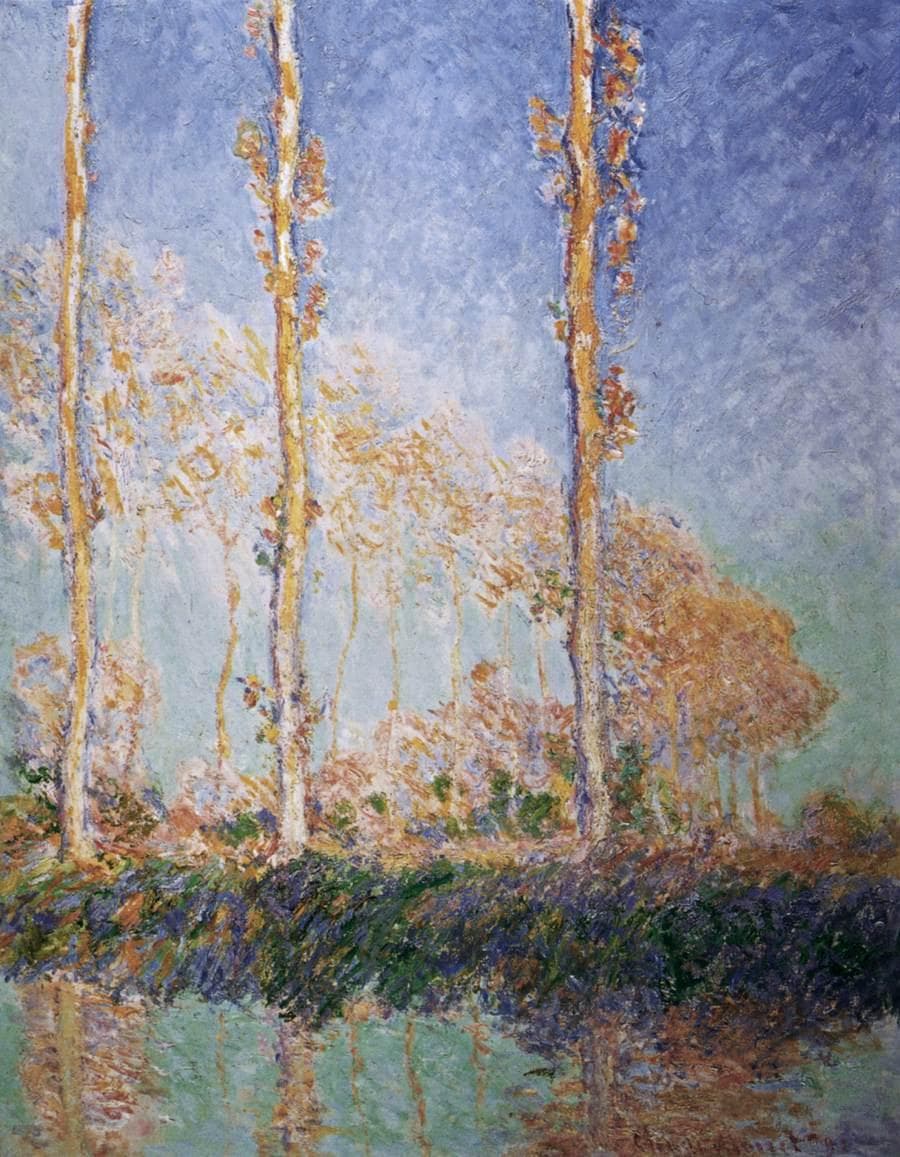
Poplars, Three Pink Trees, Autumn
Claude Monet · 1891
Poplars on the Banks of the River Epte
Claude Monet · 1891
Poplars at the Banks of Epte
Claude Monet · 1891–92
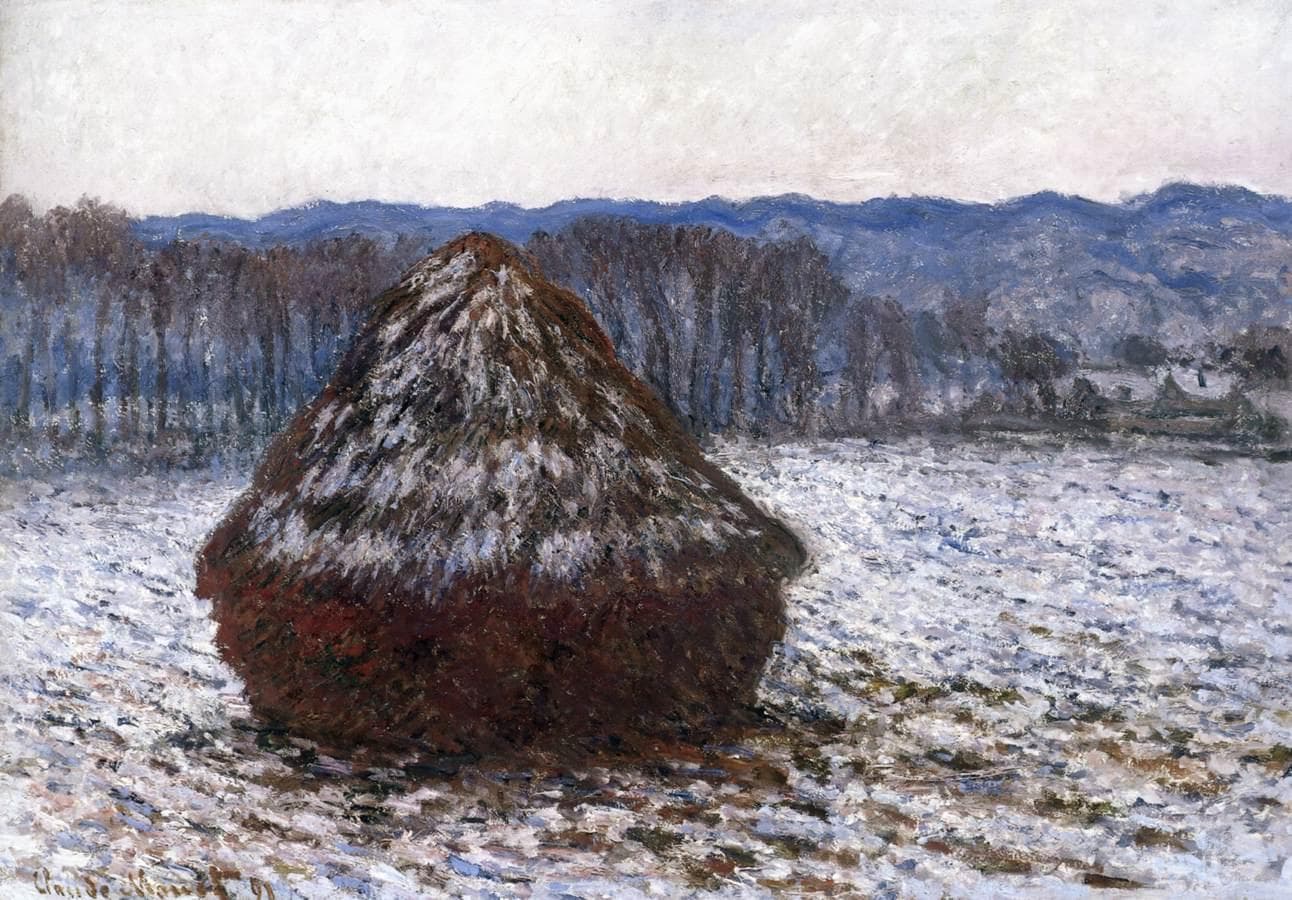
Stack of Wheat
Claude Monet · 1890–91

The Scream
Edvard Munch · 1893

Ophelia
John Everett Millais · 1851–52

The Great Wave off Kanagawa
Katsushika Hokusai · c. 1830–32