Image: Kunsthaus Zürich (Merzbacher Collection) · Public domain · via Wikimedia Commons
Winter Landscape at the Val de Falaise (Giverny)
Claude Monet, 1885
Winter Landscape at the Val de Falaise is an 1885 painting by Claude Monet of a farmhouse among bare pollarded trees in a small valley near Giverny, under bright winter sun. It is in the Merzbacher Collection, on permanent loan to the Kunsthaus Zürich.
- Artist
- Claude Monet
- Date
- 1885
- Medium
- Oil on canvas
- Dimensions
- 65.4 × 80.5 cm
- Collection
- Kunsthaus Zürich (Gabriele and Werner Merzbacher Collection), Zurich, Switzerland
- Movement
- Impressionism
- Catalogue
- Wildenstein 975
- Nature & Landscape
Claude Monet's Winter Landscape at the Val de Falaise (Paysage d'hiver au val de Falaise) was painted in 1885, two years after he settled at Giverny, in a small side valley near the village. A low farmhouse sits among bare, pollarded trees at the foot of a sunlit hillside on a clear winter day. The canvas, 65.4 by 80.5 centimeters, is signed and dated in red "Claude Monet 85" at lower left and catalogued by Wildenstein as number 975. It belongs to the Gabriele and Werner Merzbacher Collection and has been on permanent loan to the Kunsthaus Zürich since 2021.
What you are looking at
The canvas is crossed by a row of thin, upright trees, the most striking thing in the picture. They have been pollarded, cut back hard so that only the trunks remain, and their tops sprout knobbly clusters of new growth. Monet paints them in yellow-green and ocher, as if lit by low sun and furred with moss, and spaces them unevenly across the left half like a broken fence of vertical strokes. One taller tree at far left still keeps a fan of bare twigs, a lilac haze against the blue.
Behind the trees, a long farmhouse with a heavy rose-gray roof sits against the slope, its walls pale and chalky, a chimney at center. To the right, the hillside rises steeply in bands of ocher, rose and russet, lit full on by the winter sun, with a patch of white chalk showing through at the far right. The sky is a clear, cold blue with a few thin clouds.
In the foreground, things get more particular. A band of brilliant green grass runs across the lower canvas, startlingly fresh for winter. At lower right a rough wooden paling fence runs diagonally, painted in pale grays and blues, and beside it lies a heap of cut branches in rusty red. On the left, the ground is a tangle of reddish undergrowth and bare earth.
Where and when
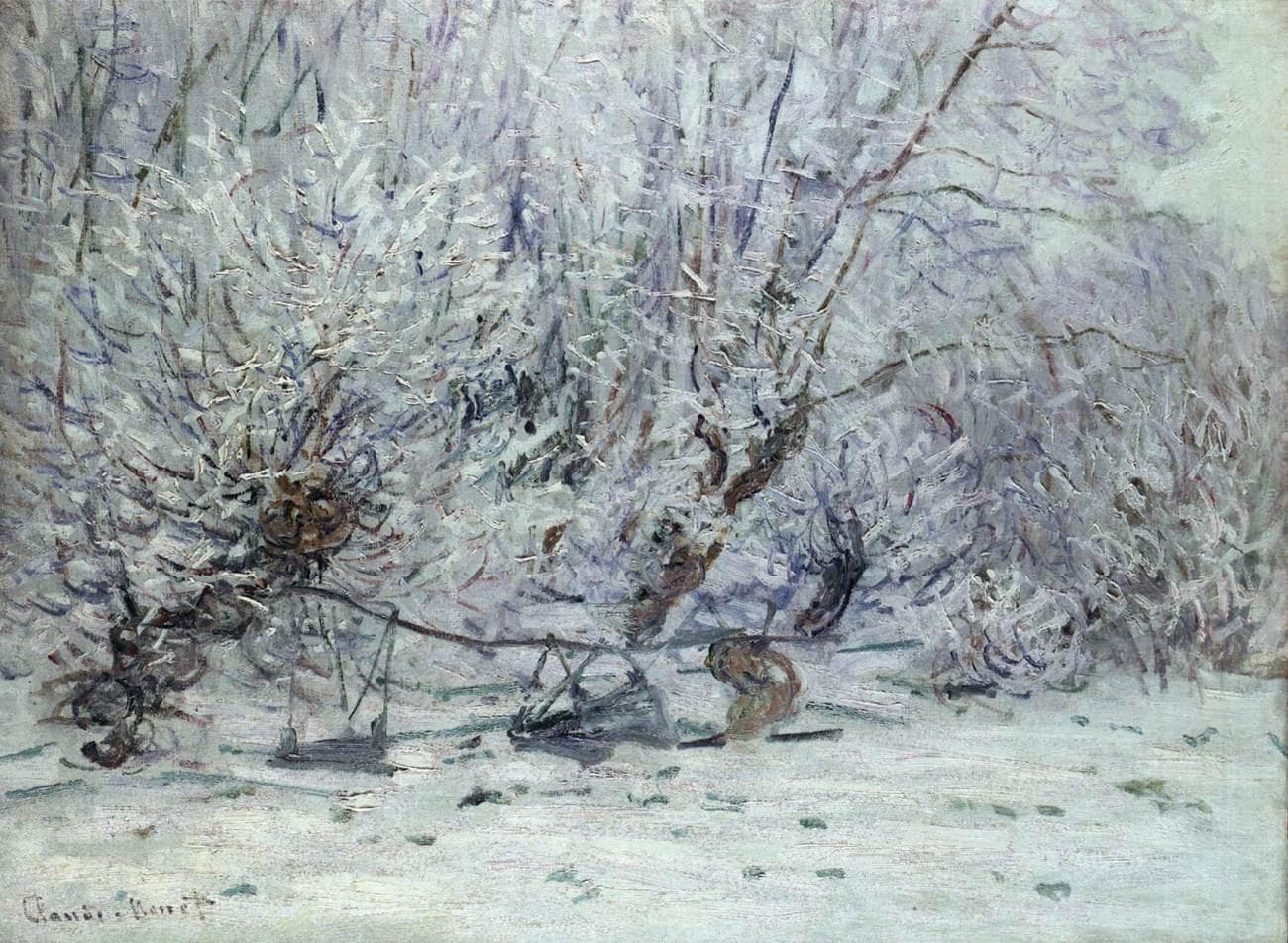
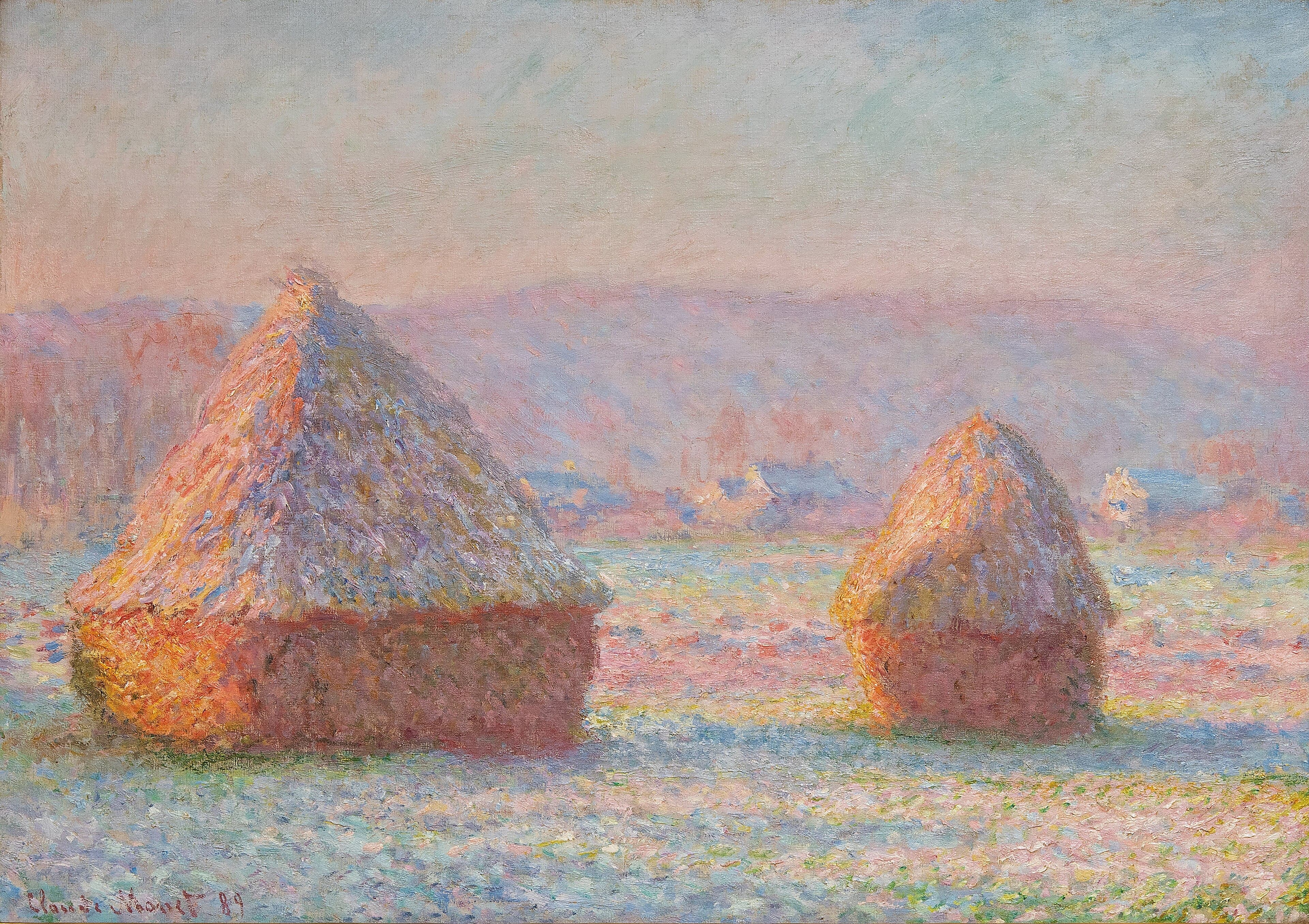
Monet moved to Giverny in April 1883 with Alice Hoschedé and their combined family of children. In the first years, before the water garden existed, he painted the countryside around the village: the Seine and its islands, the meadows, the Epte, the small valleys cutting into the chalk hills. The Val de Falaise is one of these. Winter landscapes were a recurring subject in these years, among them Frost of the same year and, a little later, the frosty Grainstacks, White Frost Effect of 1888.
How this version differs
Monet's earlier snow scenes, at Argenteuil and Vétheuil, are often gray, white and muffled. This is a dry, bright winter: no snow, a hard blue sky, sun raking across the hill and turning it pink and gold. The color is closer to his southern pictures of the previous year at Bordighera than to the snowy landscapes of the 1870s, and the vertical rhythm of the trees looks ahead to the Poplars of 1891, where a row of thin trunks again structures the whole canvas.
How it was painted
The paint is applied in small, crisp strokes throughout, with little blending. On the hillside they run in parallel diagonals that follow the slope; in the grass they are short horizontal flicks of pure green; on the trees they are stacked vertical dabs that build up the knobbly trunks. Shadows are colored rather than dark: blue and violet on the house wall, lilac on the fence. The red of the signature echoes the brush heap and the undergrowth.
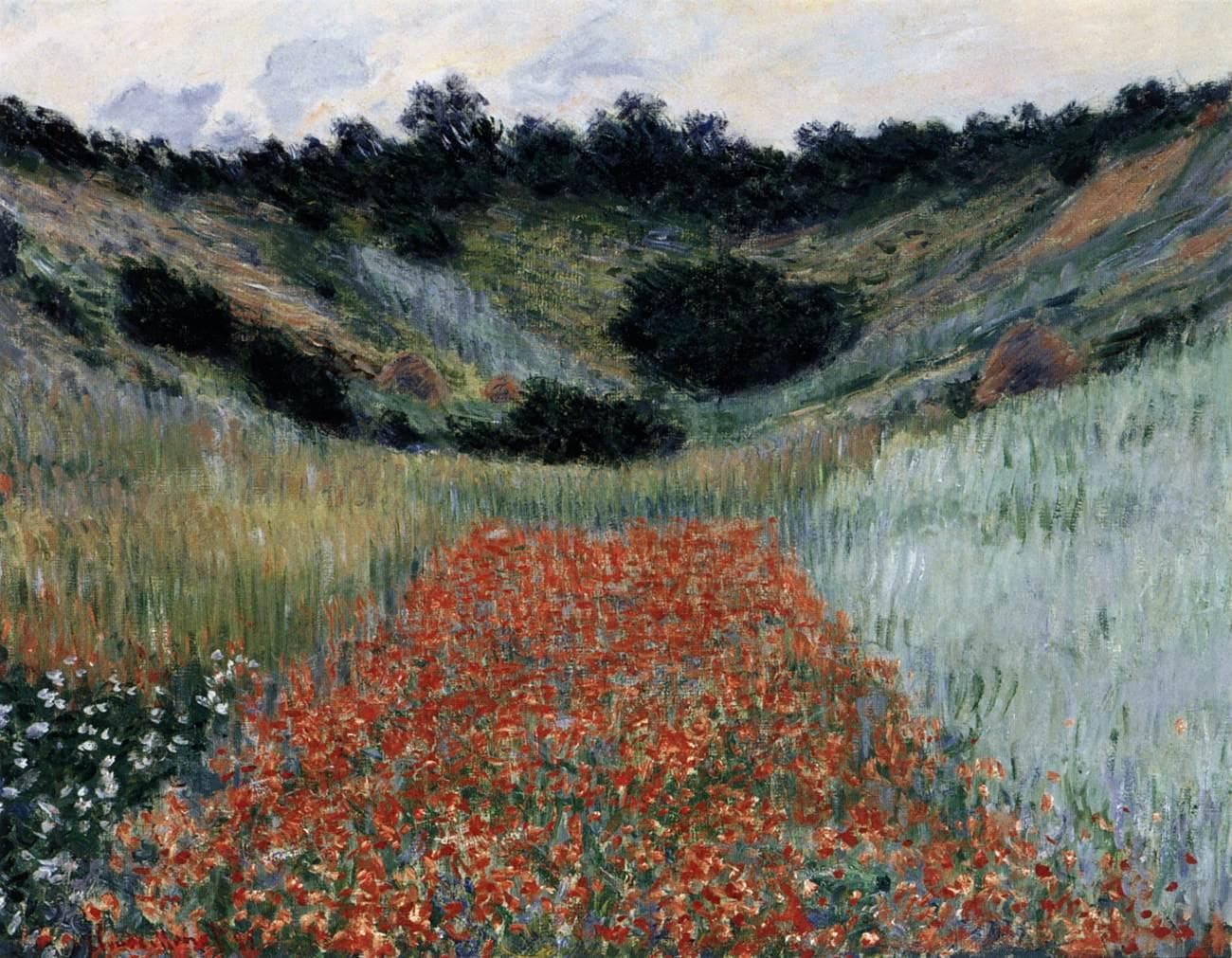
For Monet's first decade in the village and the paintings of its surroundings, see Giverny: Monet's House and Garden, and compare the summer valley of Poppy Field in a Hollow near Giverny, painted the same year.
Where to see it
The painting belongs to Gabriele and Werner Merzbacher, whose collection of Impressionist, Fauve and Expressionist works went on permanent loan to the Kunsthaus Zürich when the museum's new building by David Chipperfield opened in 2021. It is on display there. For other places to see Monet, see Where to See Monet's Paintings, and for the painter, Claude Monet.
Questions & answers
Where is Monet's Winter Landscape at the Val de Falaise?
It belongs to the Gabriele and Werner Merzbacher Collection and has been on permanent loan to the Kunsthaus Zürich in Switzerland since 2021. It is displayed in the museum's extension building designed by David Chipperfield.
When and where was it painted?
Monet painted it in 1885 in the Val de Falaise, a small valley near Giverny in Normandy, where he had moved in 1883. It is signed and dated 1885 in red at lower left.
What does the painting show?
It shows a farmhouse with a heavy roof among bare, pollarded trees at the foot of a sunlit hillside on a clear winter day. A bright green meadow, a wooden fence and a heap of cut branches fill the foreground.
Is it a snow scene?
No. Unlike many of Monet's winter pictures from the 1870s and 1880s, it shows a dry, bright winter day without snow. The hillside glows rose and ocher in low sunlight under a hard blue sky, and the grass is a vivid green.
More by the artist
Claude Monet
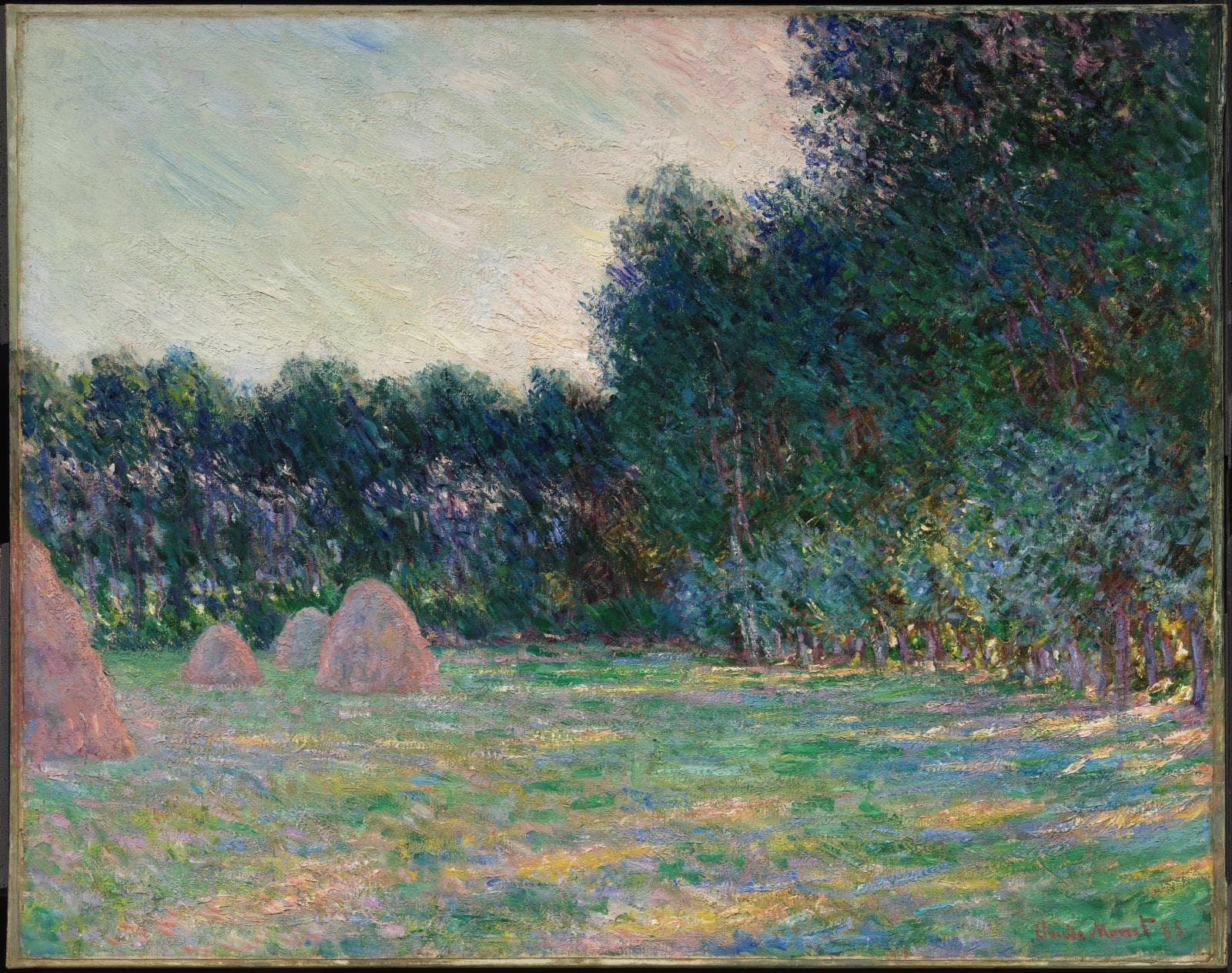
Meadow with Haystacks near Giverny
Claude Monet · 1885
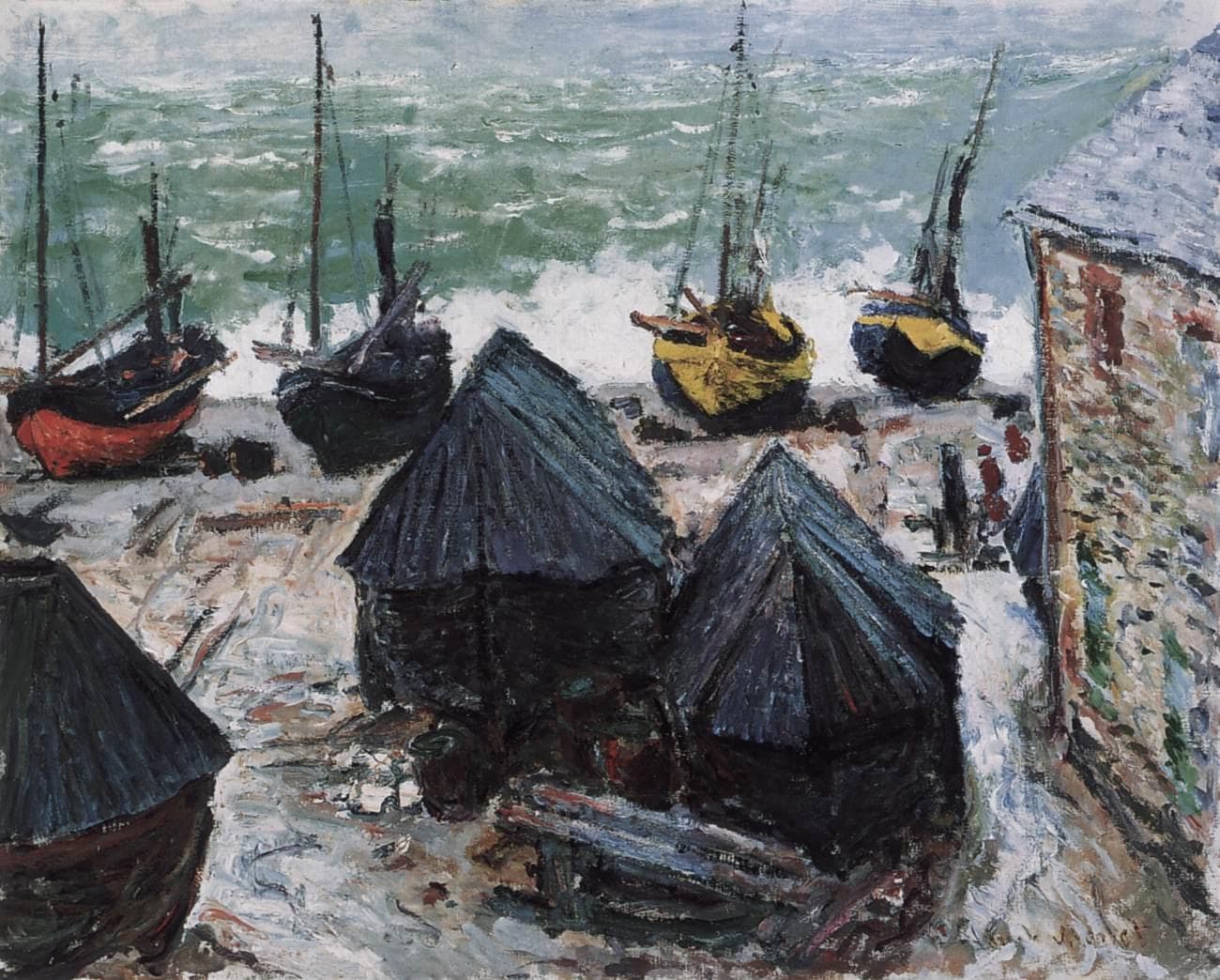
Boats on the Beach at Étretat
Claude Monet · 1885
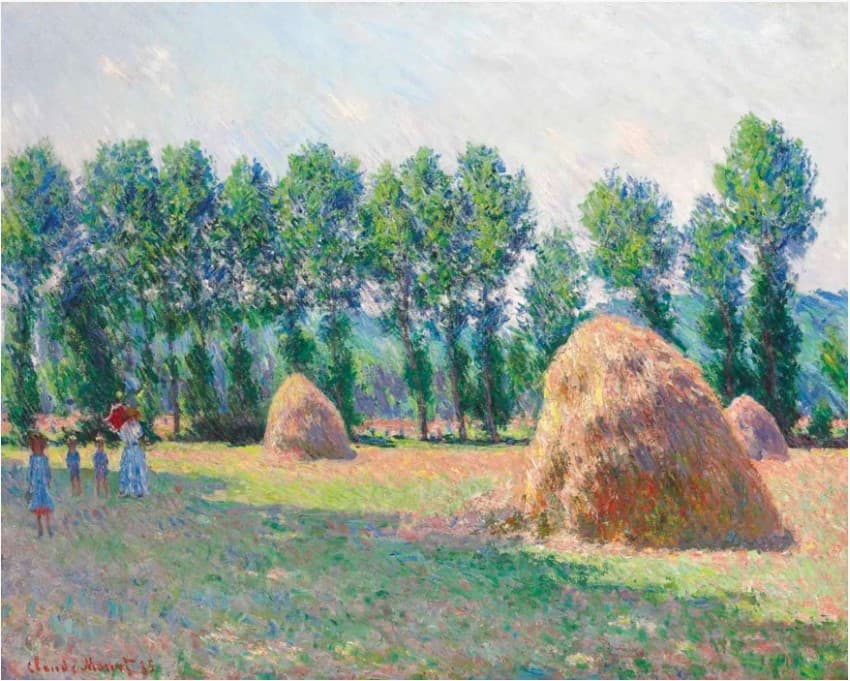
Haystacks at Giverny (1885)
Claude Monet · 1885
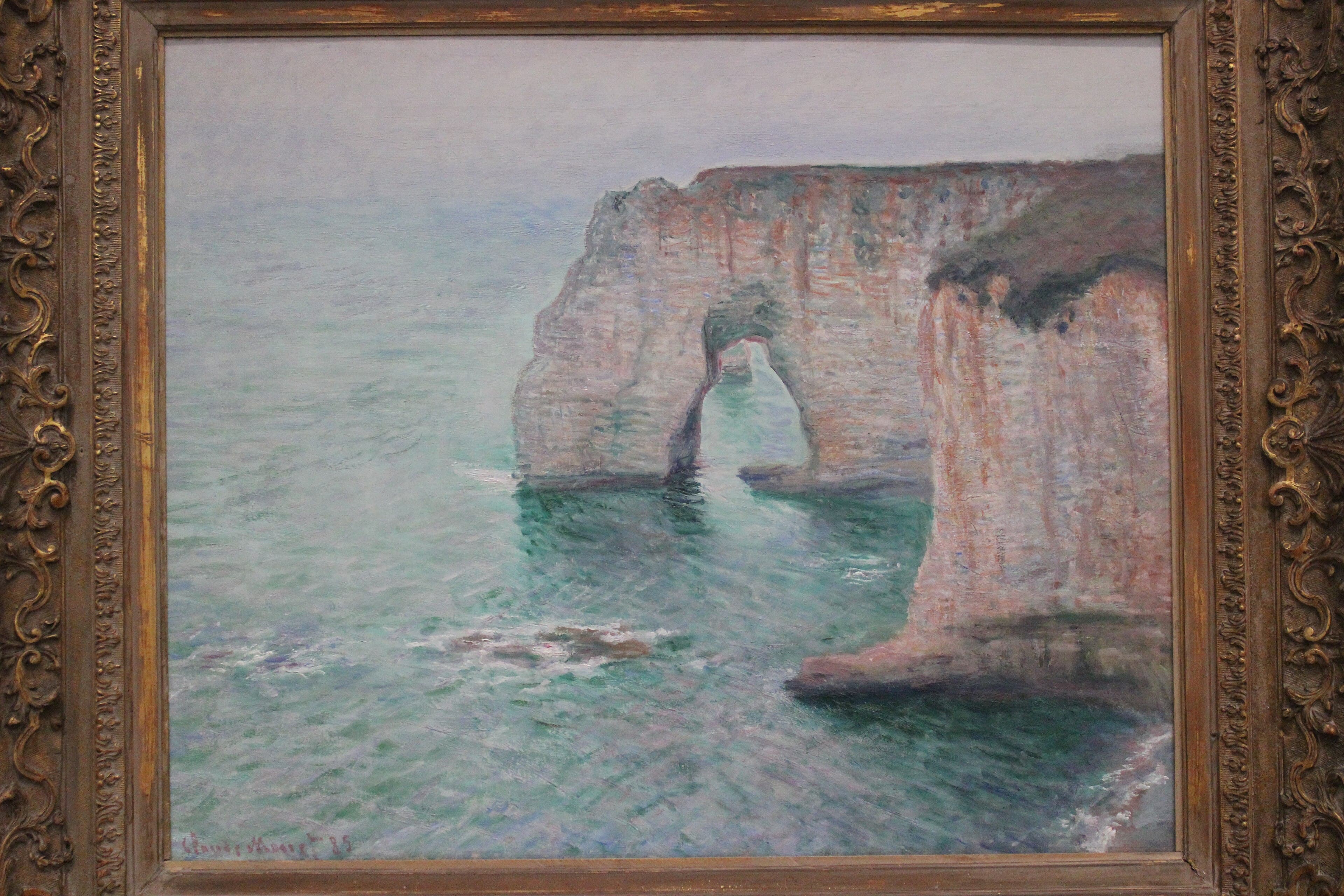
Manne-Porte, Étretat
Claude Monet · 1885
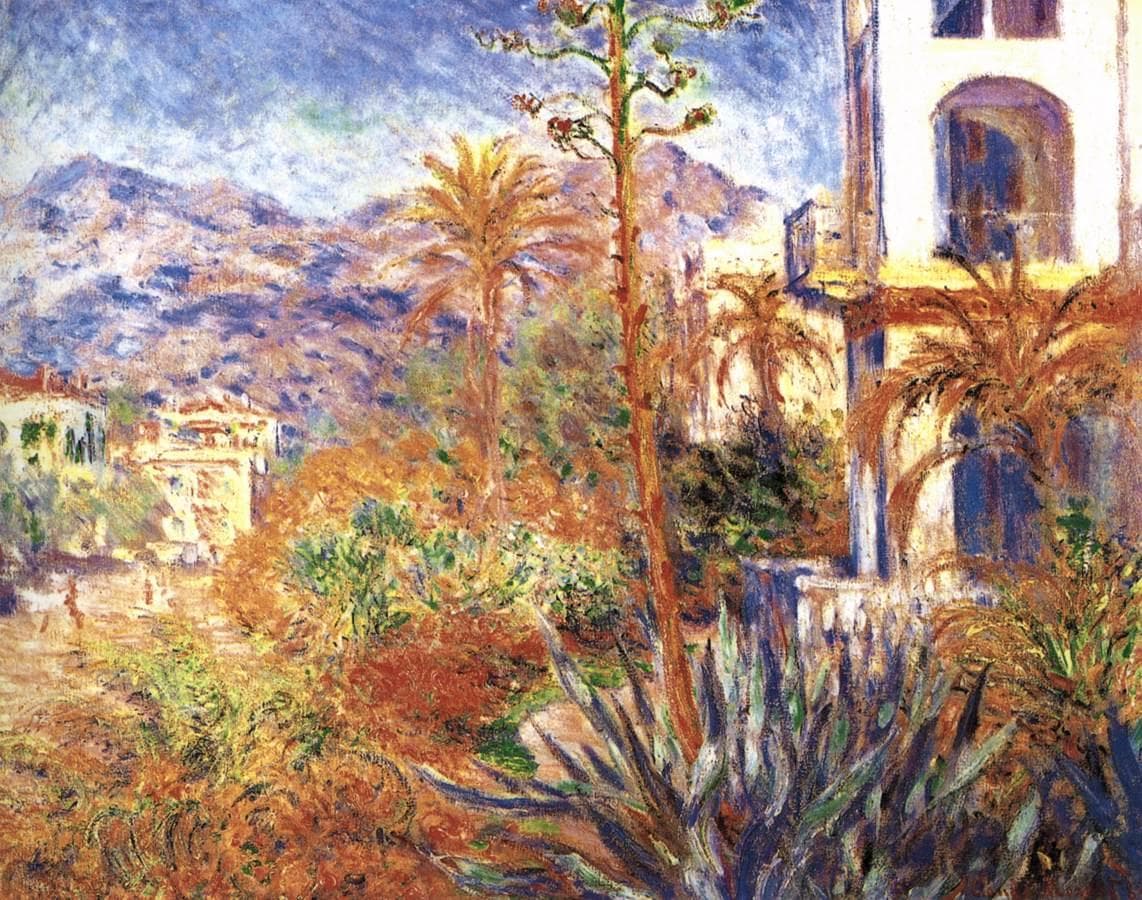
Villas in Bordighera
Claude Monet · 1884
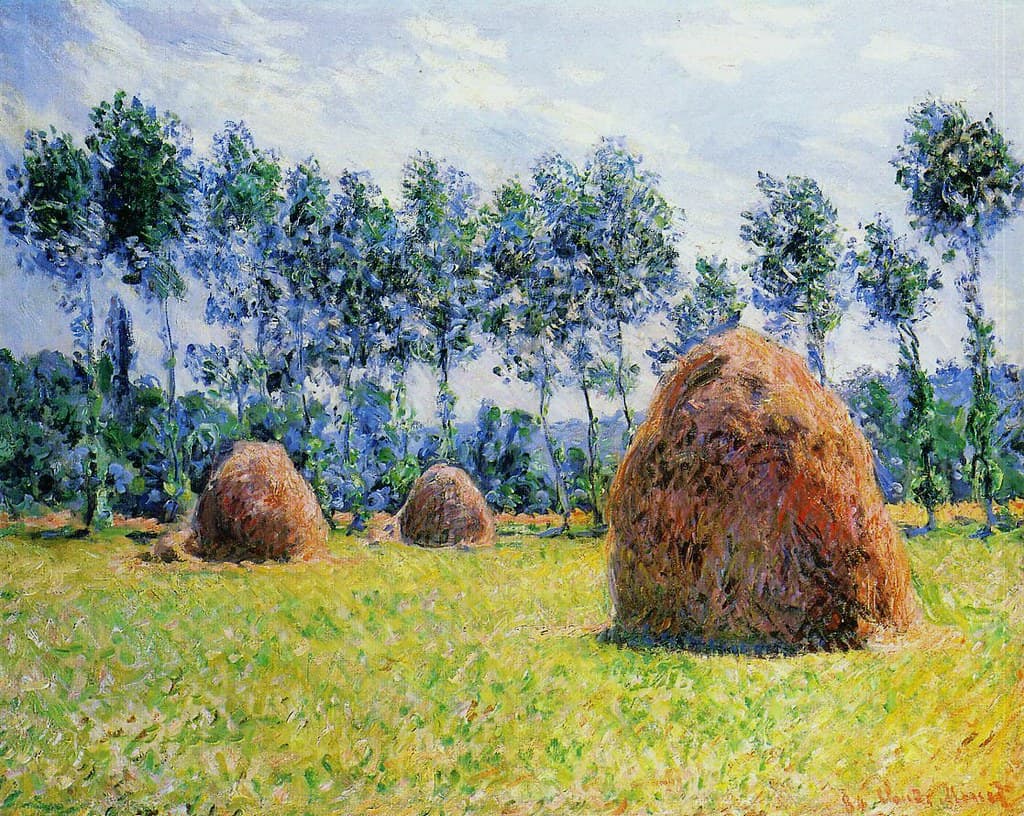
Haystacks at Giverny (1884)
Claude Monet · 1884
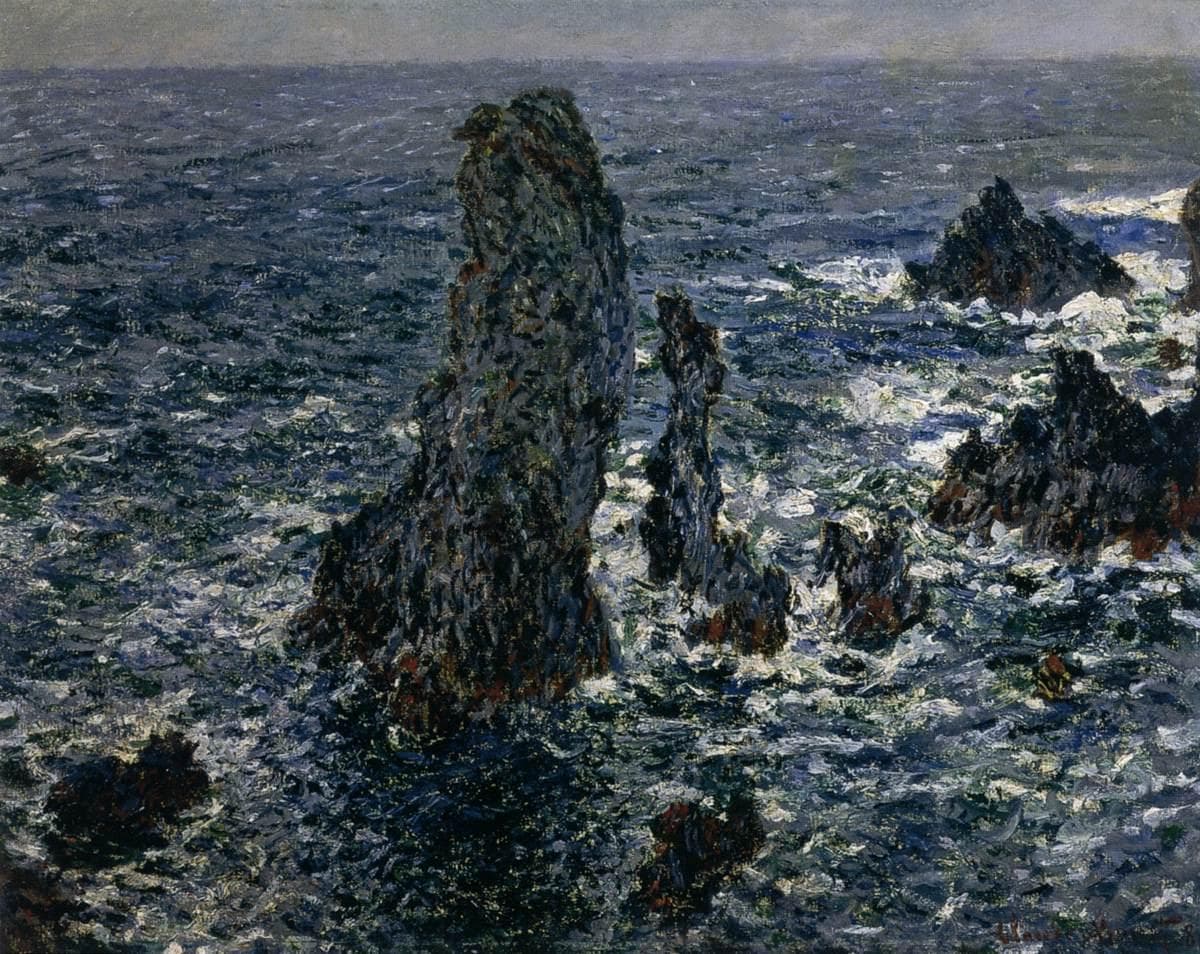
The Pyramides at Port-Coton, Rough Sea
Claude Monet · 1886
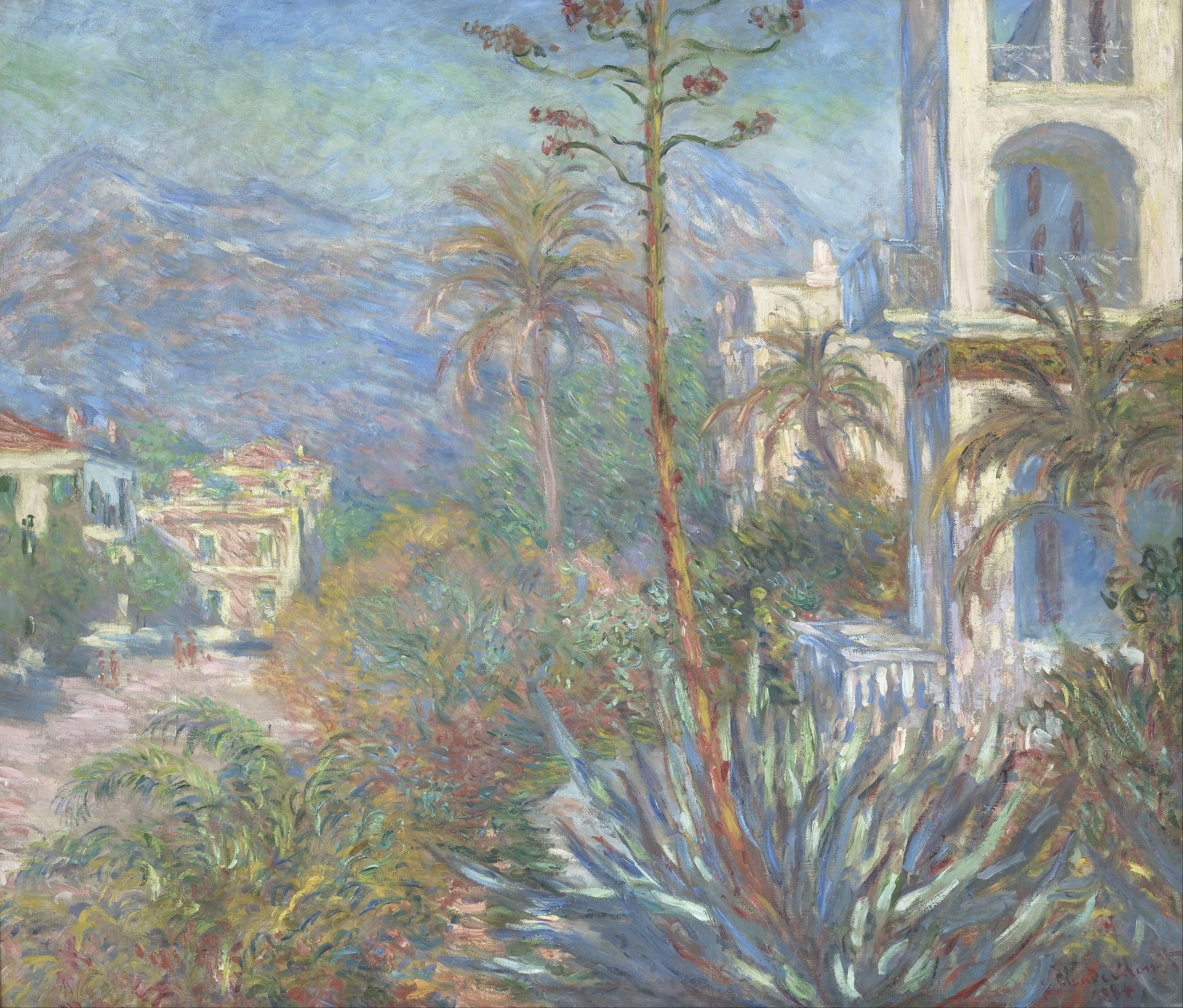
Villas at Bordighera
Claude Monet · 1884
Also painted in 1885
The same year
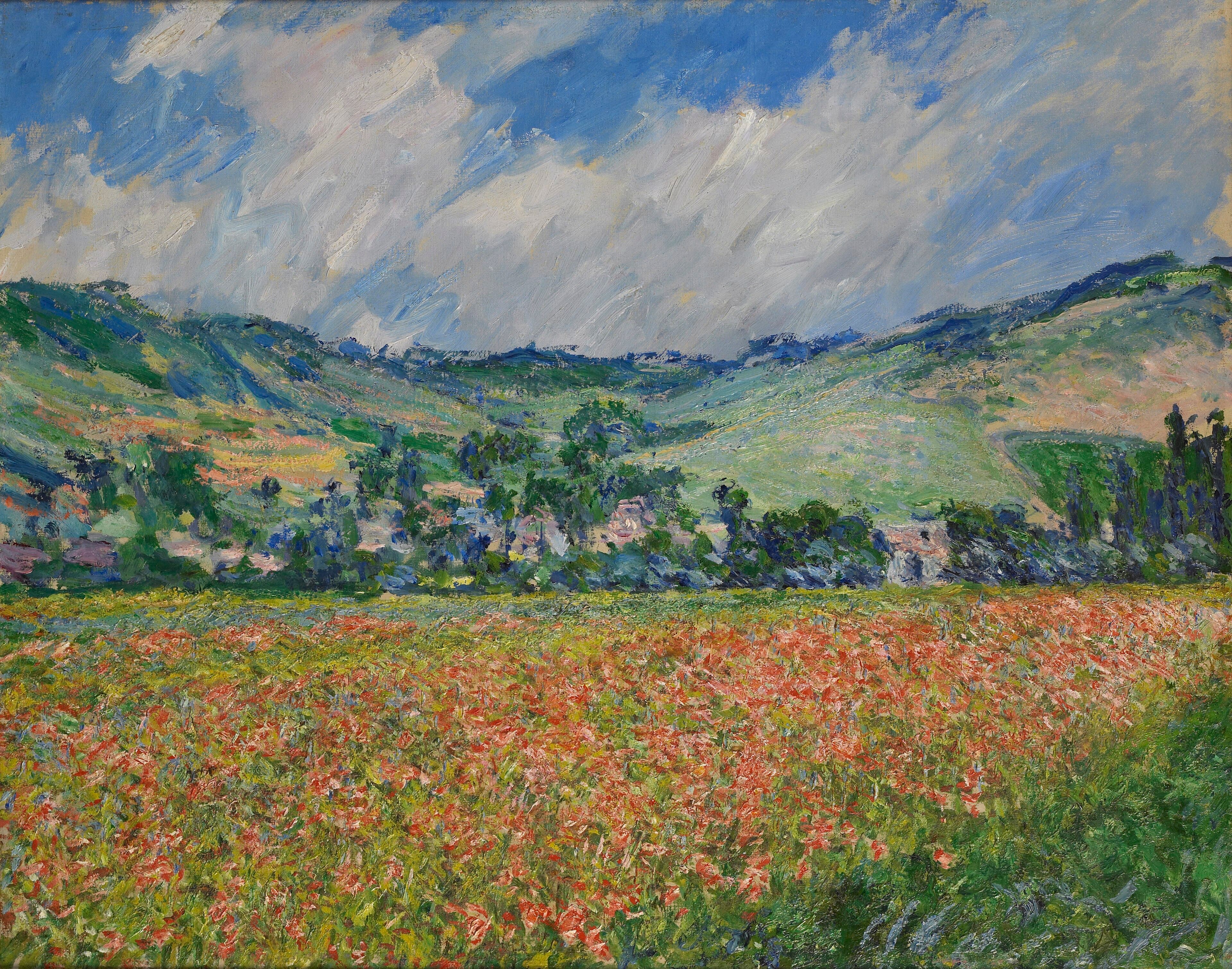
Poppy Field, Around Giverny
Claude Monet · 1885
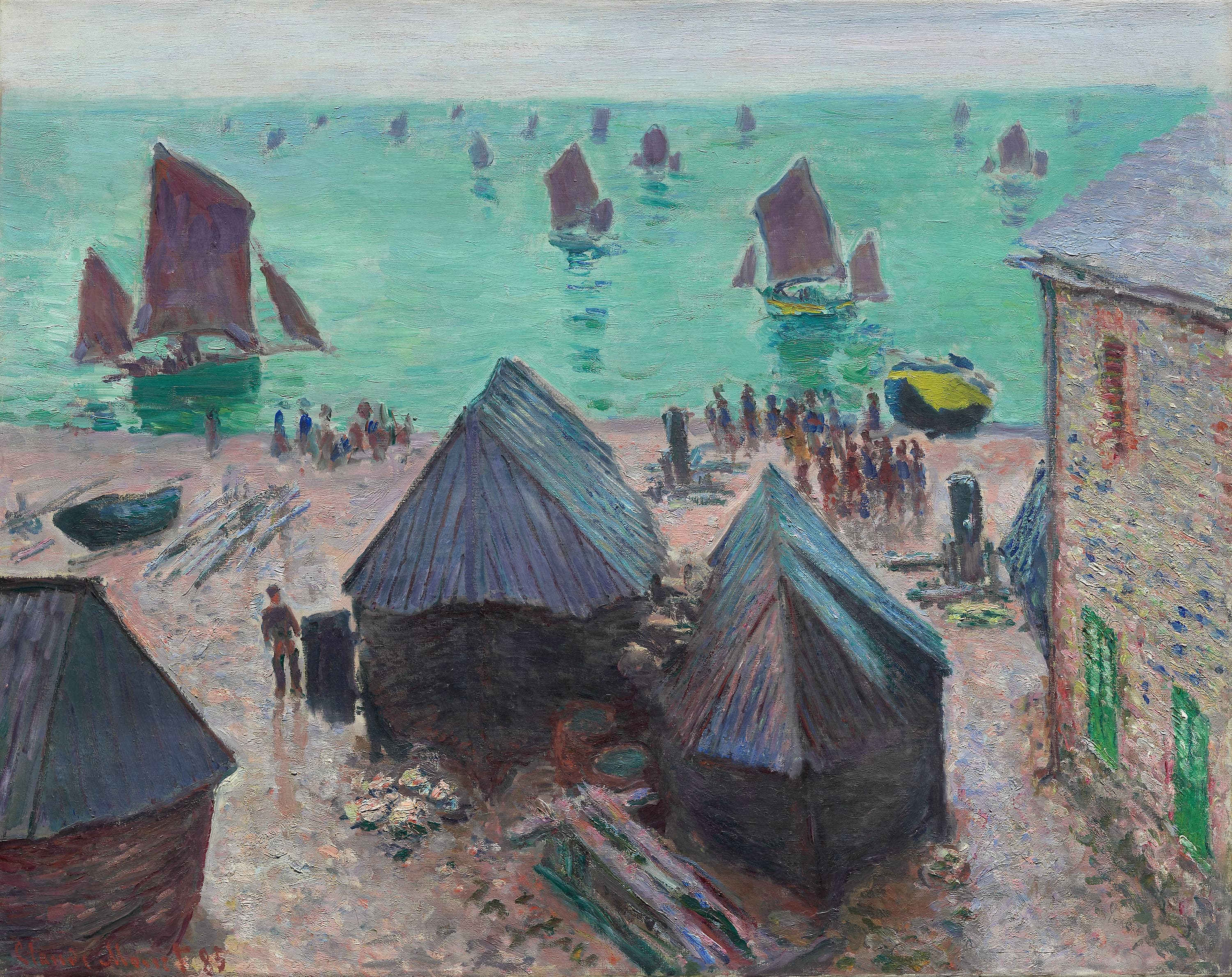
The Departure of the Boats, Étretat
Claude Monet · 1885
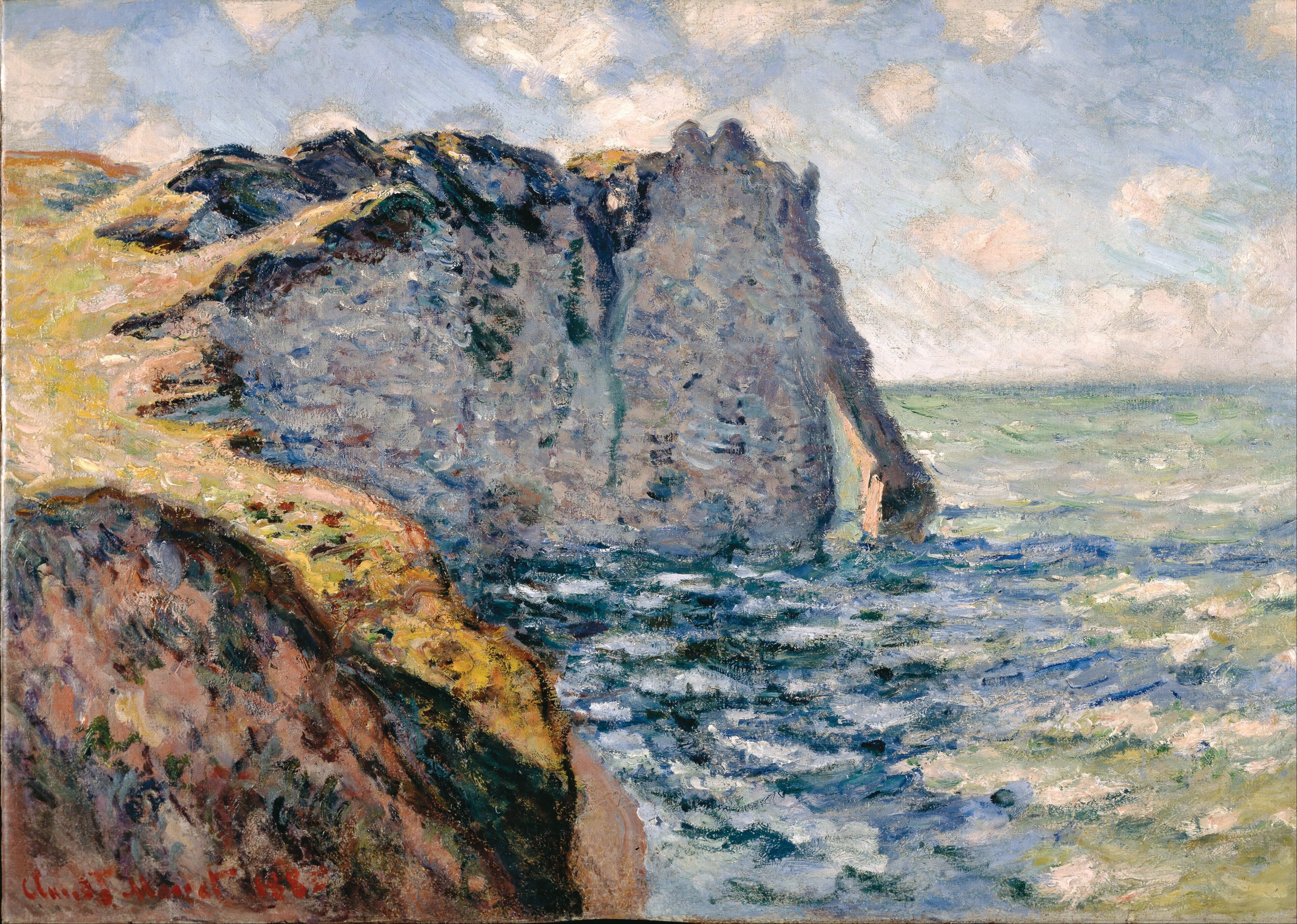
The Cliff of Aval, Étretat
Claude Monet · 1885
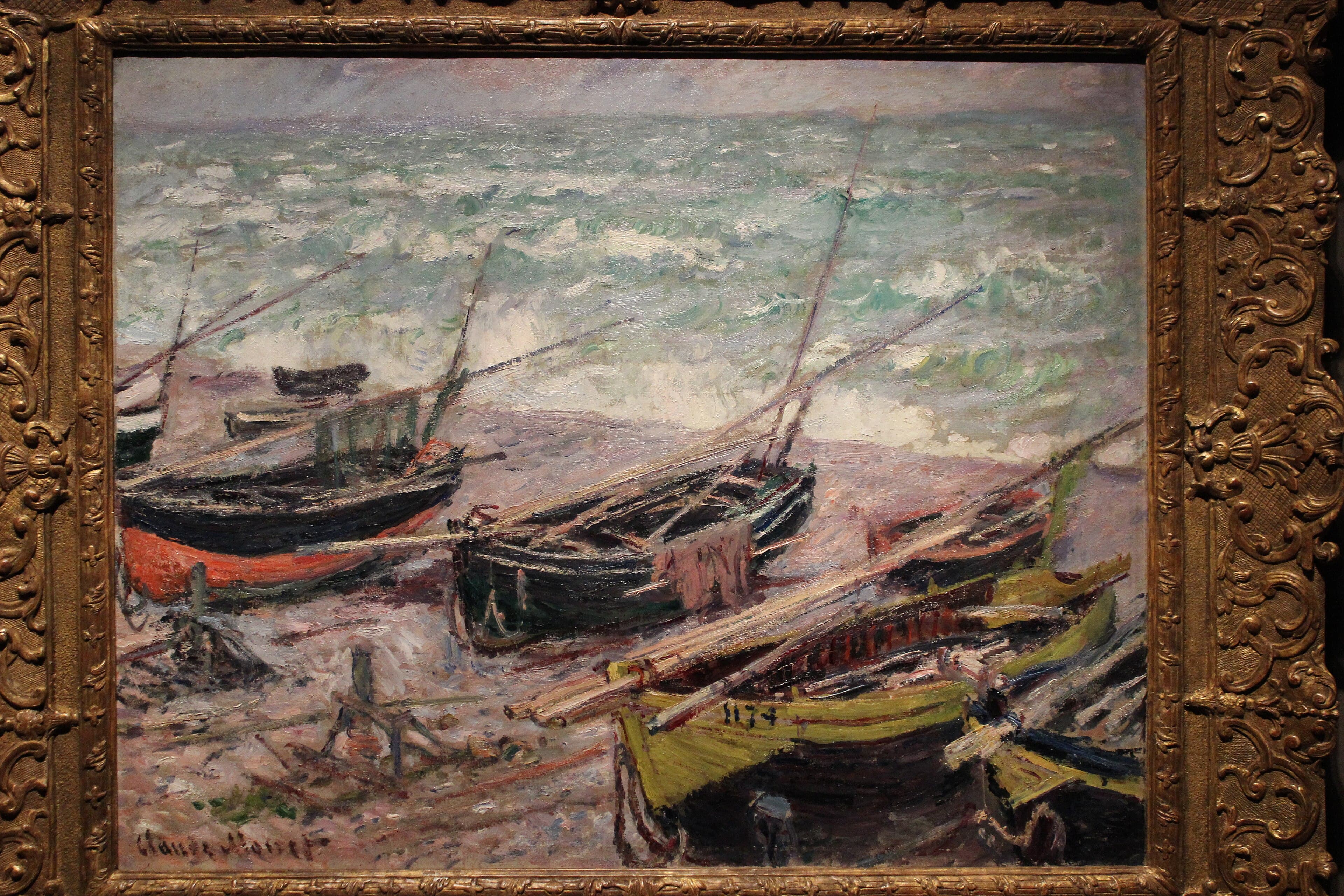
Fishing Boats at Étretat
Claude Monet · 1885
Bras de Seine à Giverny
Claude Monet · 1885
Haystacks (Ohara Museum, 1885)
Claude Monet · 1885
The Cliffs at Étretat
Claude Monet · 1885
Three Fishing Boats
Claude Monet · 1885
Kindred works
You may also study
Frost
Claude Monet · 1885
Poppy Field in a Hollow near Giverny
Claude Monet · 1885
Grainstacks, White Frost Effect
Claude Monet · 1888–89
Bras de Seine à Giverny
Claude Monet · 1885
Sunset on the Seine in Winter
Claude Monet · 1880
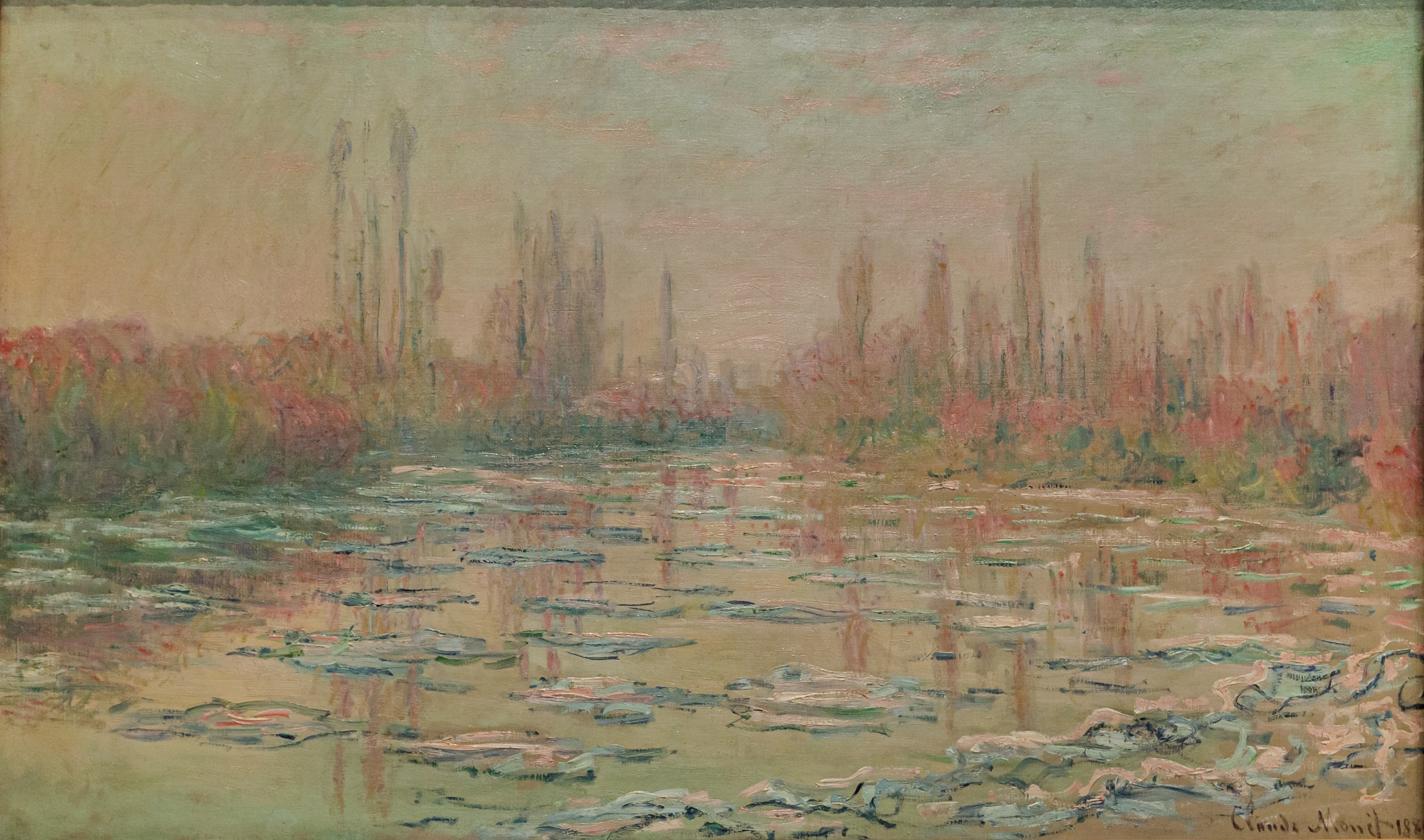
Floating Ice on the Seine (Les Glaçons)
Claude Monet · 1880
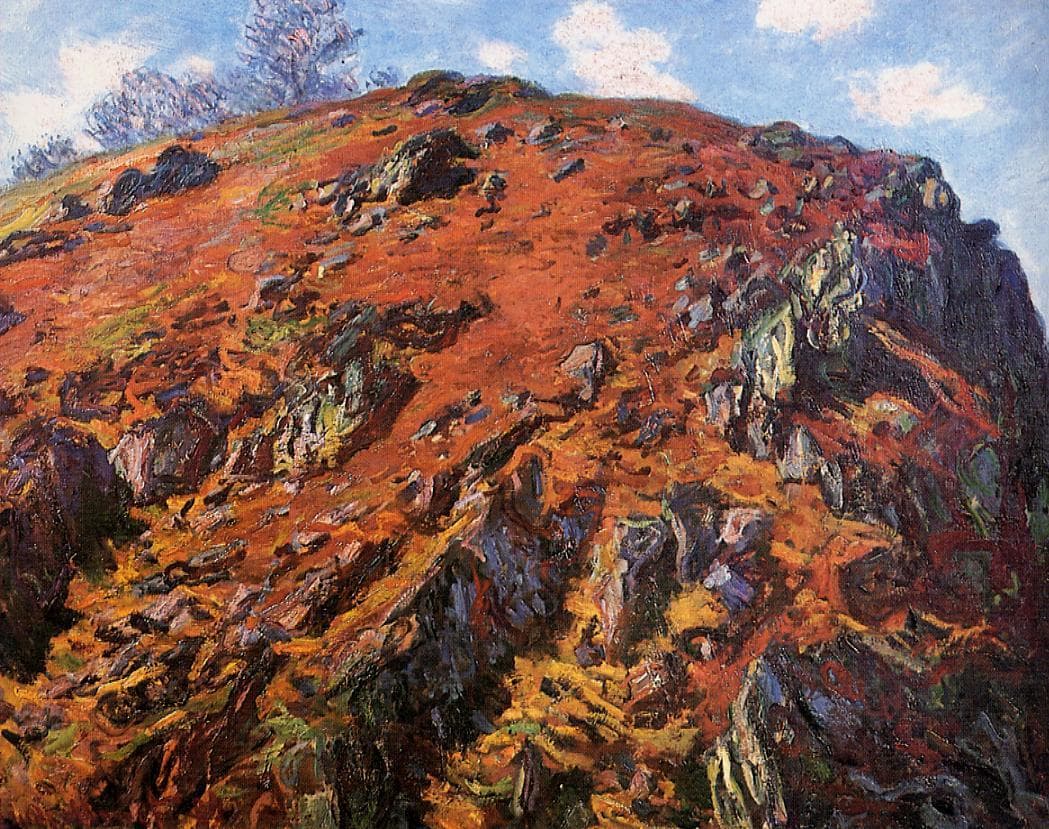
Study of Rocks, Creuse ('Le Bloc')
Claude Monet · 1889
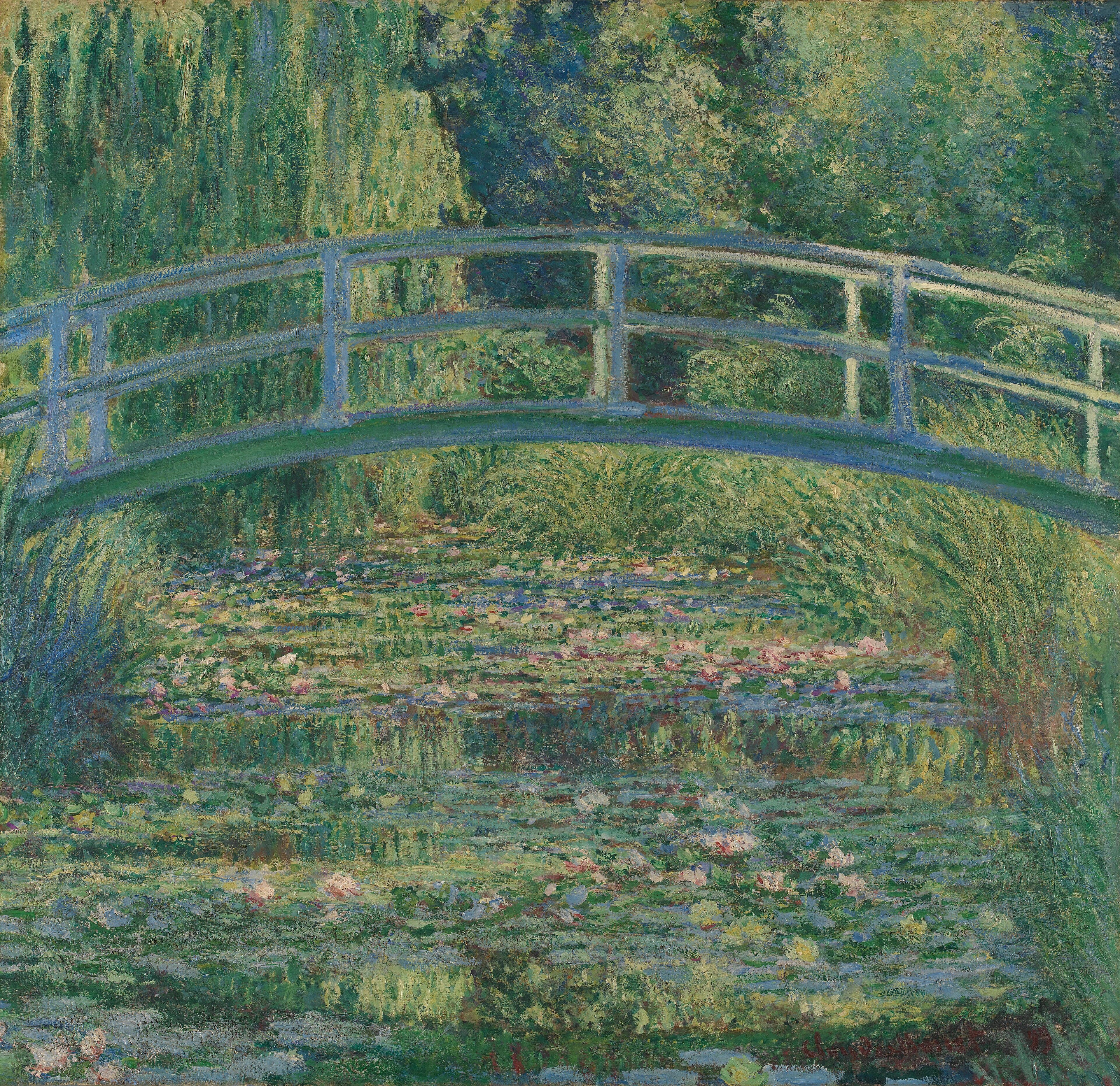
The Water-Lily Pond (National Gallery, London)
Claude Monet · 1899