Image: Photo: Adrian Scottow from London, England, CC BY-SA 2.0, via Wikimedia Commons (Musée d'Orsay) · CC BY-SA 2.0 · via Wikimedia Commons
Floating Ice on the Seine (Les Glaçons)
Claude Monet, 1880
Floating Ice on the Seine (Les Glaçons) is an 1880 painting by Claude Monet of slabs of ice drifting down the Seine near Vétheuil during the thaw, under a pinkish sky. It is in the Musée d'Orsay, Paris.
- Artist
- Claude Monet
- Date
- 1880
- Medium
- Oil on canvas
- Dimensions
- 60 × 100 cm
- Collection
- Musée d'Orsay, Paris, France
- Movement
- Impressionism
- Catalogue
- Wildenstein 567
- Water & Sea
- Nature & Landscape
Les Glaçons (Floating Ice on the Seine), also catalogued as Débâcle sur la Seine, is a painting by Claude Monet of the river at Vétheuil in January 1880, when the frozen Seine broke up and great flat slabs of ice drifted downstream. Signed and dated 1880 and catalogued by Wildenstein as no. 567, it was shown at the famous Monet–Rodin exhibition at the Galerie Georges Petit in 1889 and entered the Louvre as a gift in 1965. It is now in the Musée d'Orsay.
What you're looking at
The Seine fills the lower half of the canvas, a broad sheet of pale olive and pinkish water strewn with ice floes. In the foreground the floes are large and close, painted as flat, irregular shapes outlined in loose curling strokes of white, pink, blue-green and gray. Toward the distance they shrink into thin horizontal slivers that stack up toward the far banks, until the river becomes a pattern of pale lines.
On both sides the banks are lined with trees: low bushes in rose, coral and russet, and above them tall, thin poplars, painted as vertical streaks of gray, violet and rust that rise into the sky. Their reflections drop straight down into the water between the floes as long pinkish verticals. The sky is a soft, warm haze of cream and pink with faint streaks of rose cloud. The signature and the date 1880 are at lower right.
Where and when it was painted
In December 1879 an extreme cold spell froze the Seine at Vétheuil, where Monet had lived since 1878. In the first days of January 1880 the thaw came suddenly; the ice cracked and moved off downstream in heavy floes, and near Paris bridges were damaged. Monet painted the scene again and again over the following weeks, sometimes from the bank and sometimes from his studio boat, in about two dozen canvases. He had lost his wife Camille only months before, and many writers have read these pictures of breaking ice as images of mourning and release, though Monet himself spoke of them only as studies of the weather. See Monet at Vétheuil.
How it was painted
Monet keeps the palette warm and muted, with pinks, olives and creams instead of the cold blues one might expect. The floes are drawn with curving, calligraphic outlines and filled with flat, light color, which makes them read as solid shapes floating on a surface, while the poplars and reflections are dragged down in long vertical strokes. The strong grid of vertical trees and horizontal ice is one of the most striking designs among the winter canvases.
How this version differs
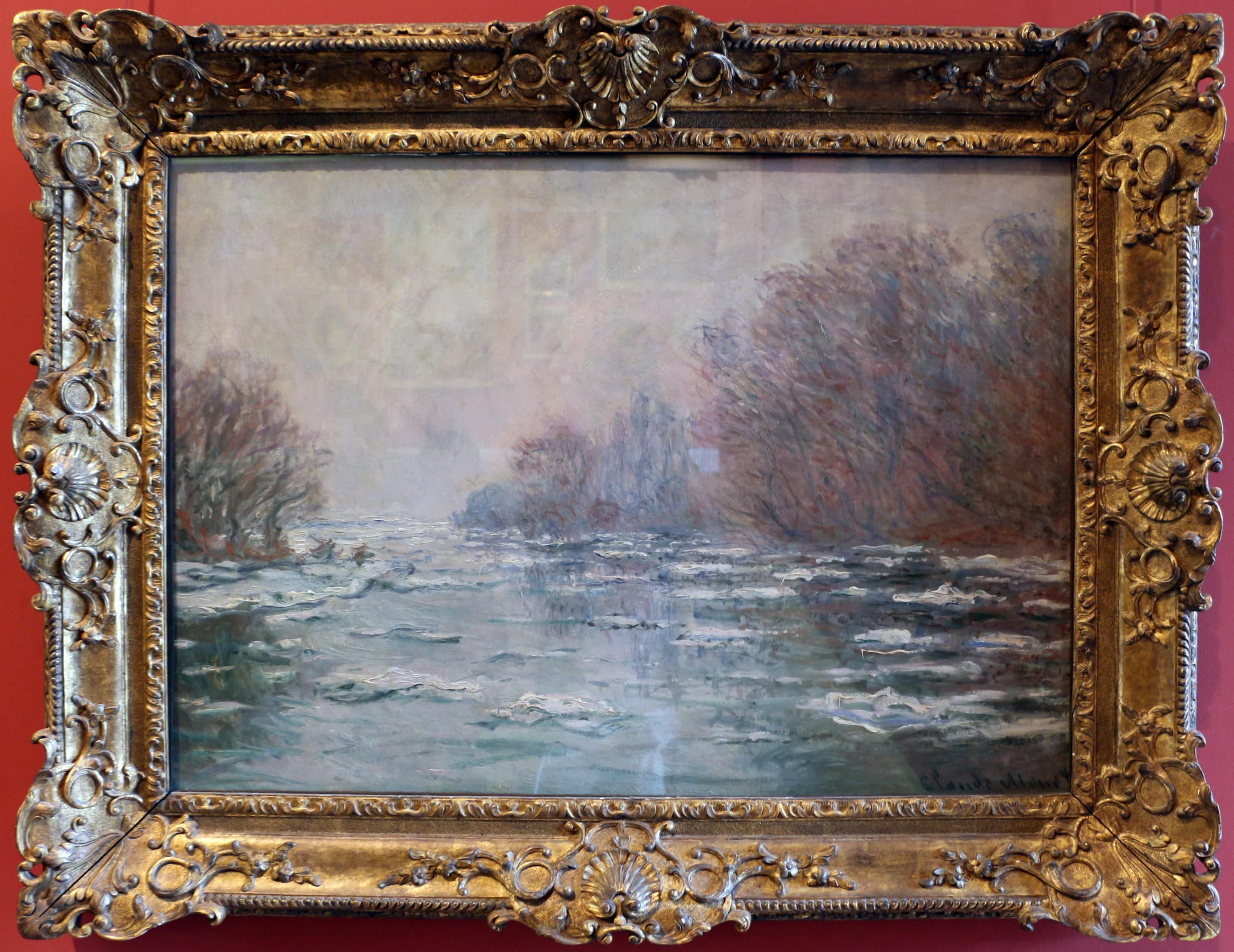
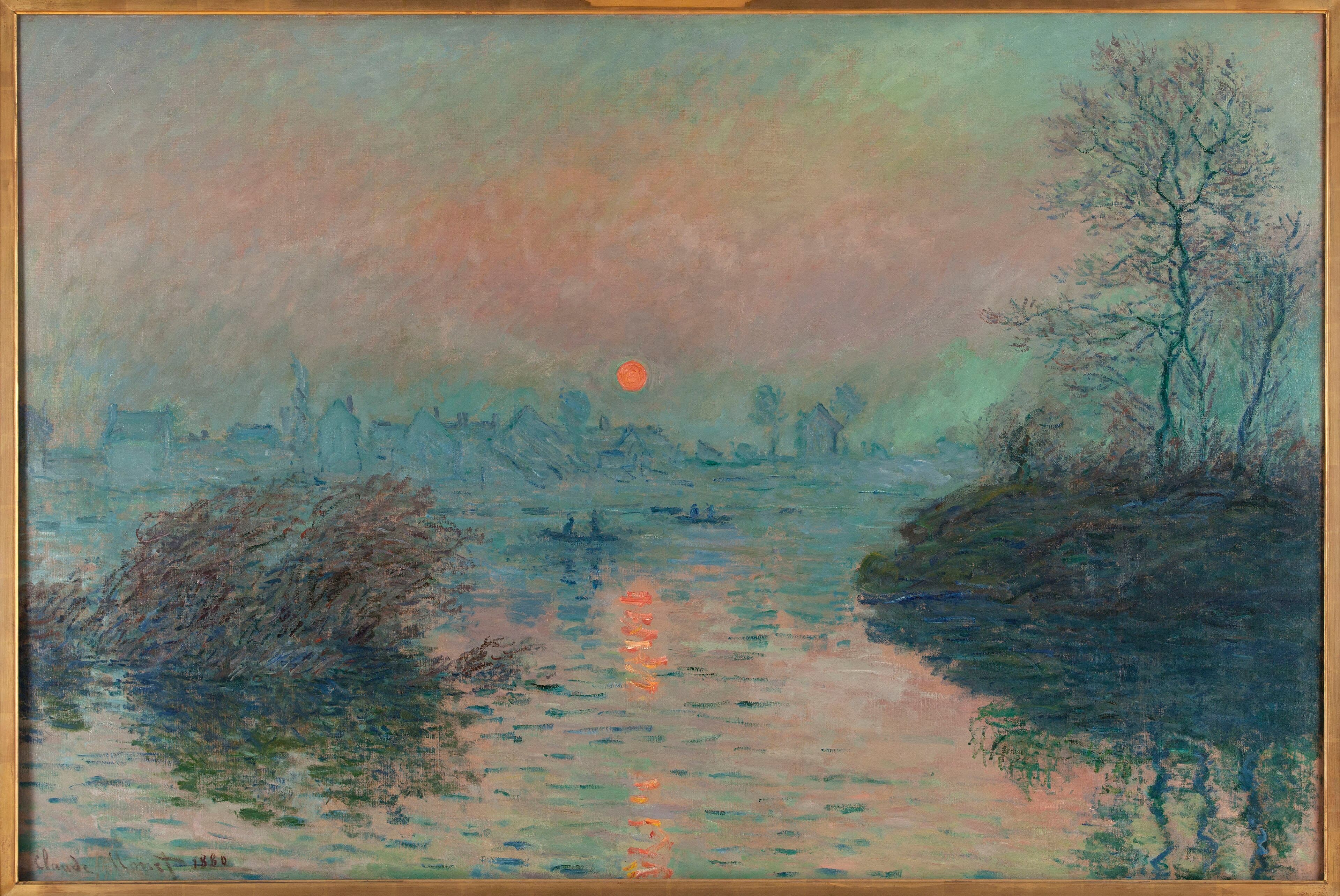
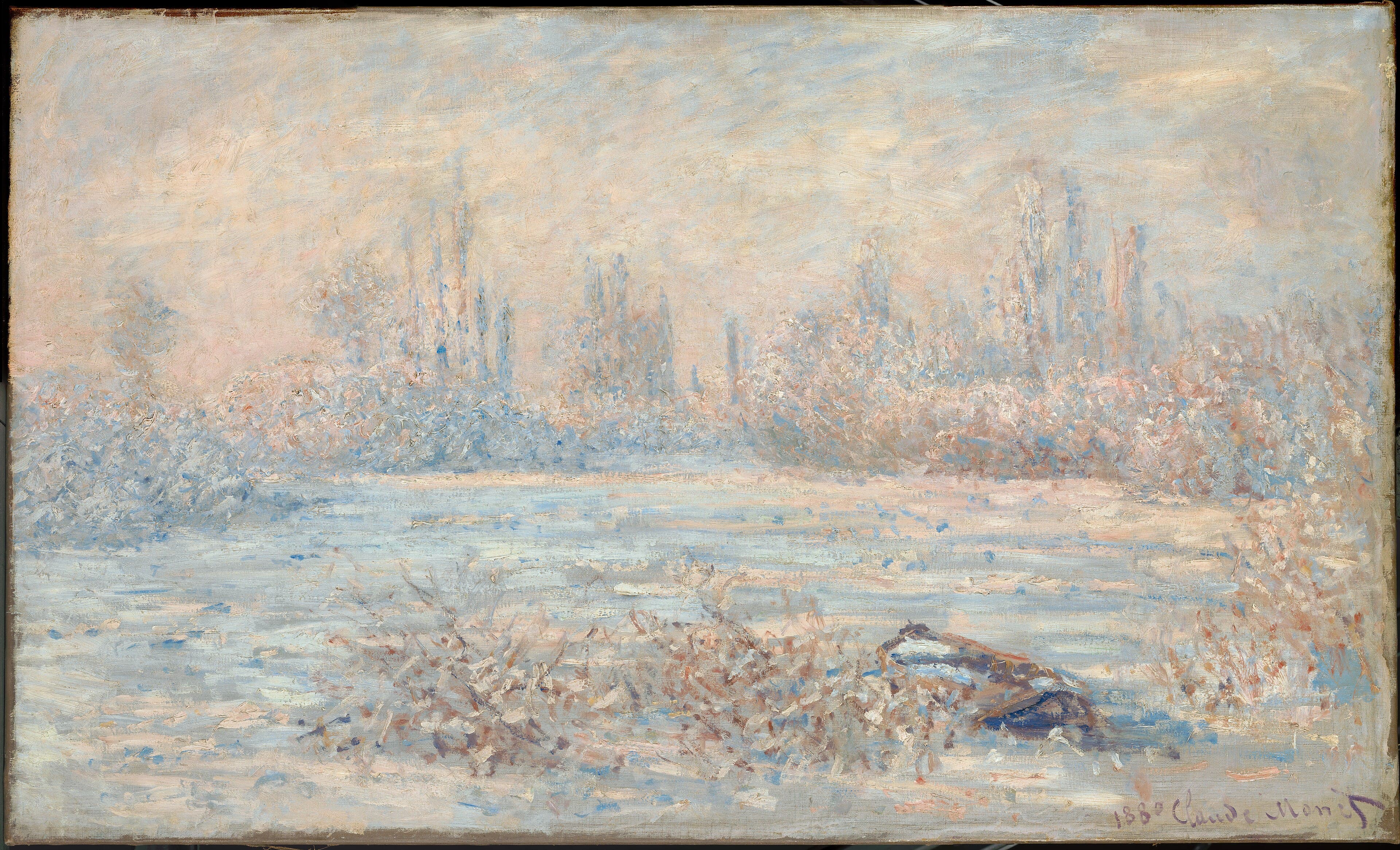
Monet painted the breakup in several formats and lights. In The Breakup of the Ice at Lavacourt and The Breaking up near Vétheuil the light is cooler and grayer; in the Petit Palais Sunset on the Seine at Lavacourt a red sun hangs over the floes. This Orsay version is notable for its warm, rosy haze and the dense rows of floes receding into the distance. It is the same size as Frost, also in the Orsay, which shows the freeze that came before. Monet returned to the motif in 1893 at Bennecourt in Ice Floes.
Ownership and where to see it
The French state's records list the banker and critic Charles Ephrussi as an owner in 1889, then Joseph Reinach and Baron Napoléon Gourgaud; the painting entered the Louvre in 1965 as a gift from Baroness Eva Gourgaud and moved to the Musée d'Orsay in 1986 (inventory RF 1965 10). It was shown at Monet–Rodin, Paris, 1889, and at the Monet retrospective at the Orangerie in 1931. For other works by Monet there, see Monet at the Musée d'Orsay.
Questions & answers
Where is Monet's Floating Ice on the Seine (Les Glaçons)?
It is in the Musée d'Orsay in Paris (inventory RF 1965 10). It entered the Louvre in 1965 as a gift from the Gourgaud family and moved to the Musée d'Orsay in 1986.
When and where did Monet paint Les Glaçons?
At Vétheuil on the Seine in January 1880, when the river, frozen since December 1879, broke up during a sudden thaw. It is signed and dated 1880.
What does Floating Ice on the Seine show?
It shows flat slabs of ice drifting on the Seine between banks of pink and russet bushes and tall gray poplars, their reflections falling into the water under a warm, hazy pink sky.
How many paintings of the ice breakup did Monet make?
About two dozen canvases record the freeze and thaw of winter 1879–80 at Vétheuil and Lavacourt. They are now in museums including the Orsay, the Petit Palais and others, and in private collections.
More by the artist
Claude Monet
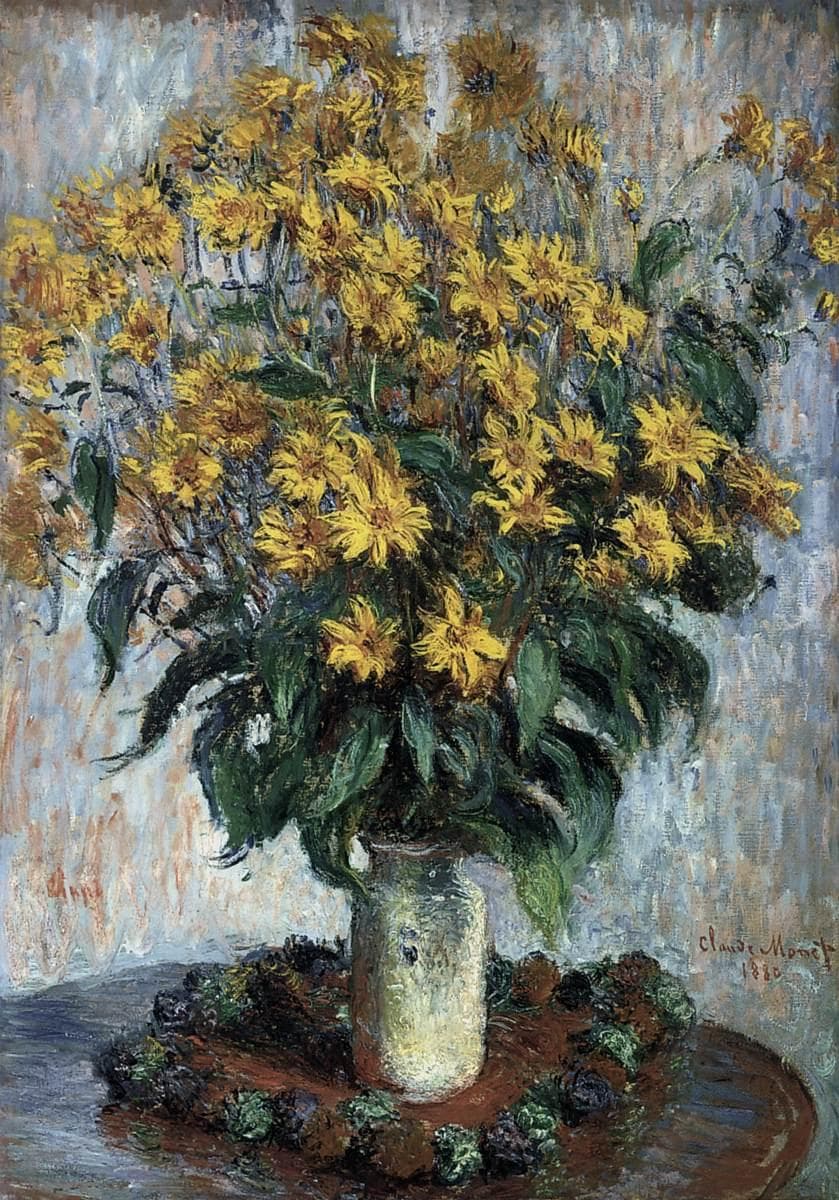
Jerusalem Artichoke Flowers
Claude Monet · 1880
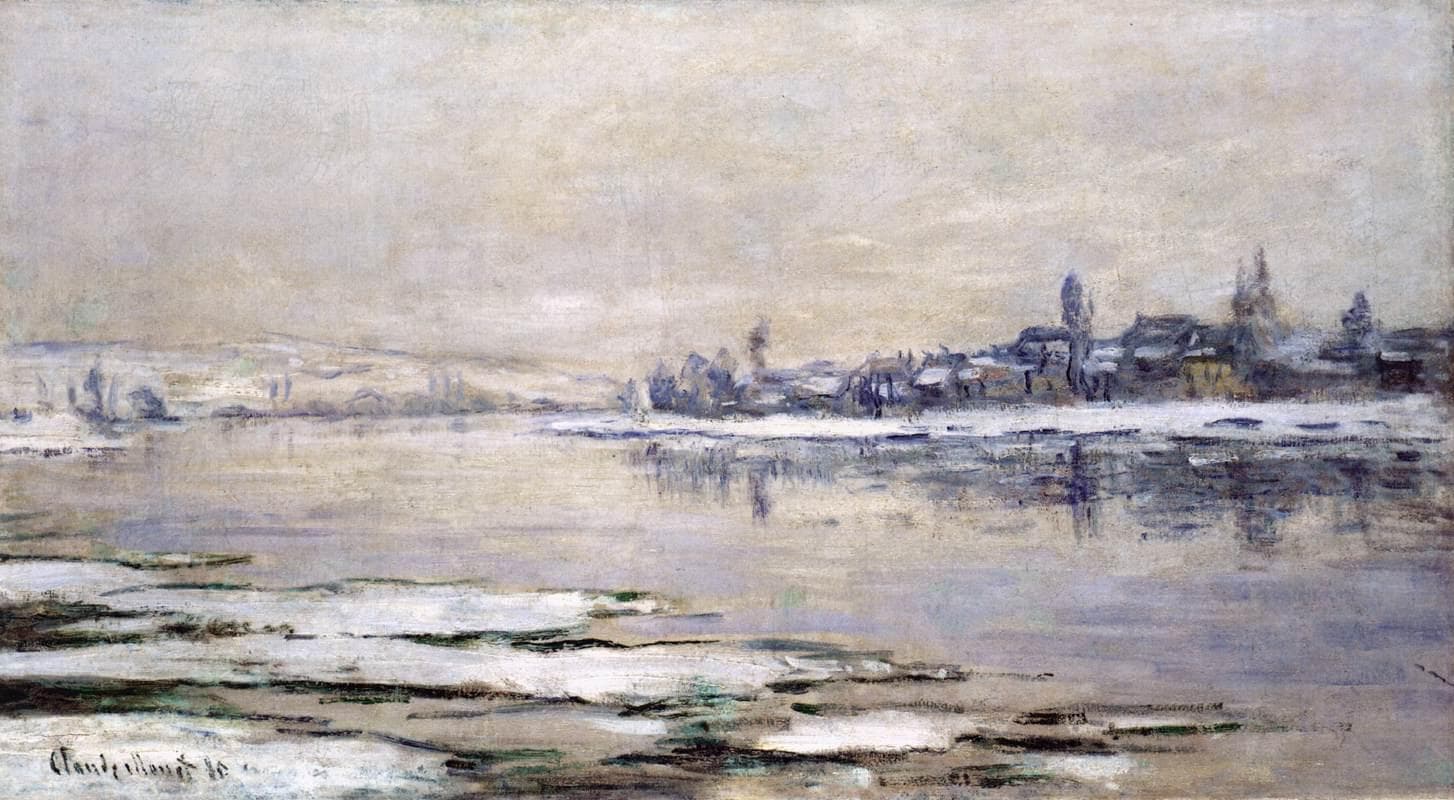
The Breakup of the Ice at Lavacourt
Claude Monet · 1880
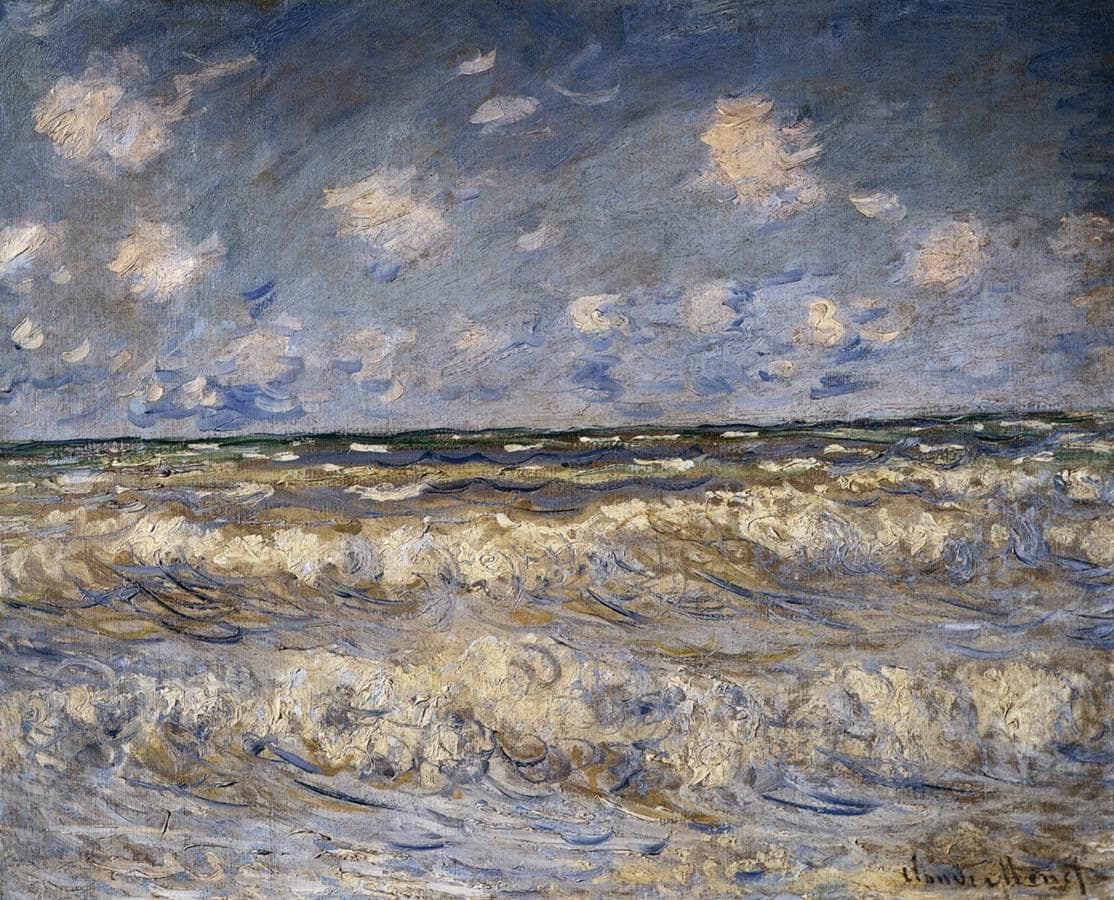
Stormy Sea
Claude Monet · c. 1881–84
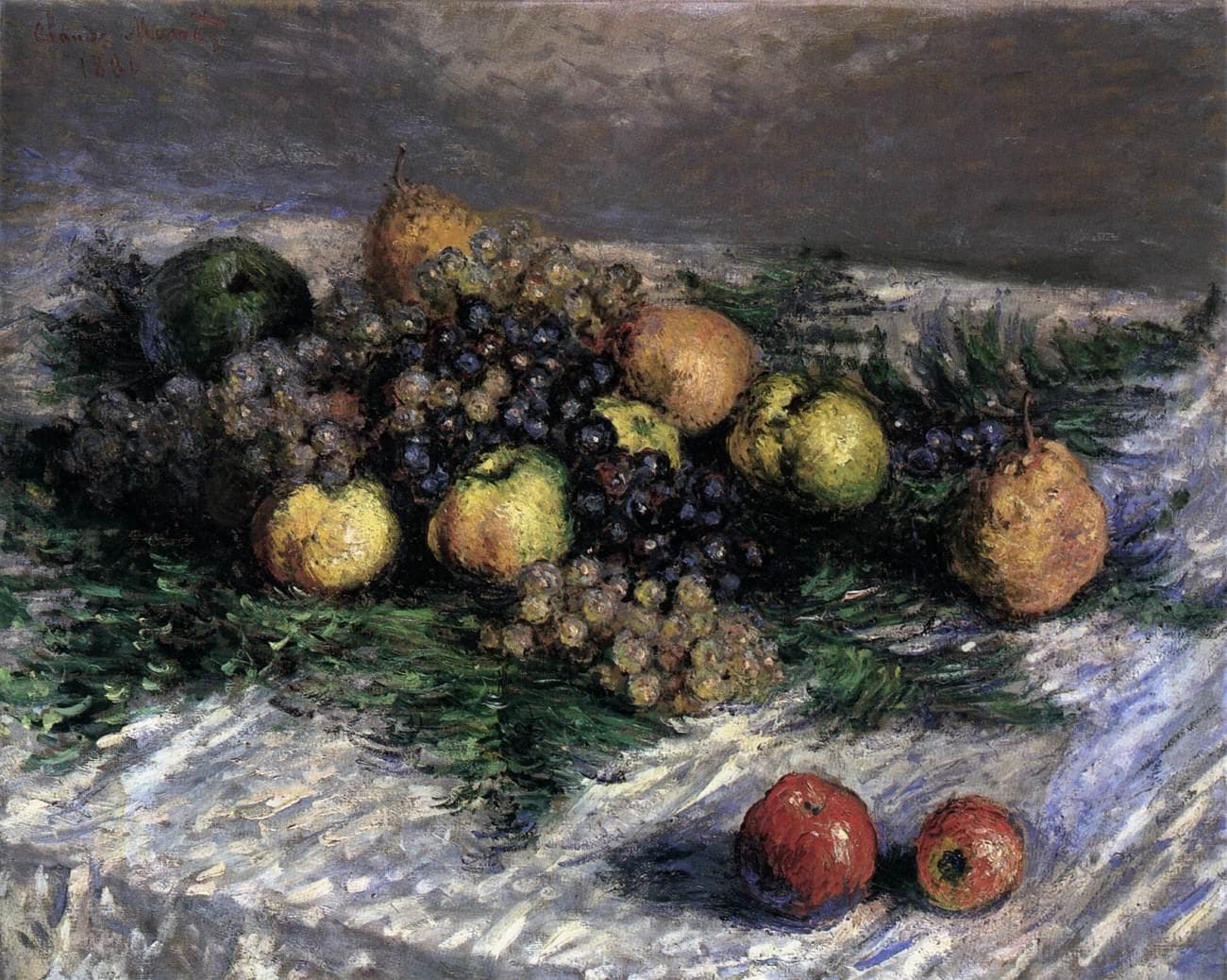
Still-Life with Pears and Grapes
Claude Monet · 1880
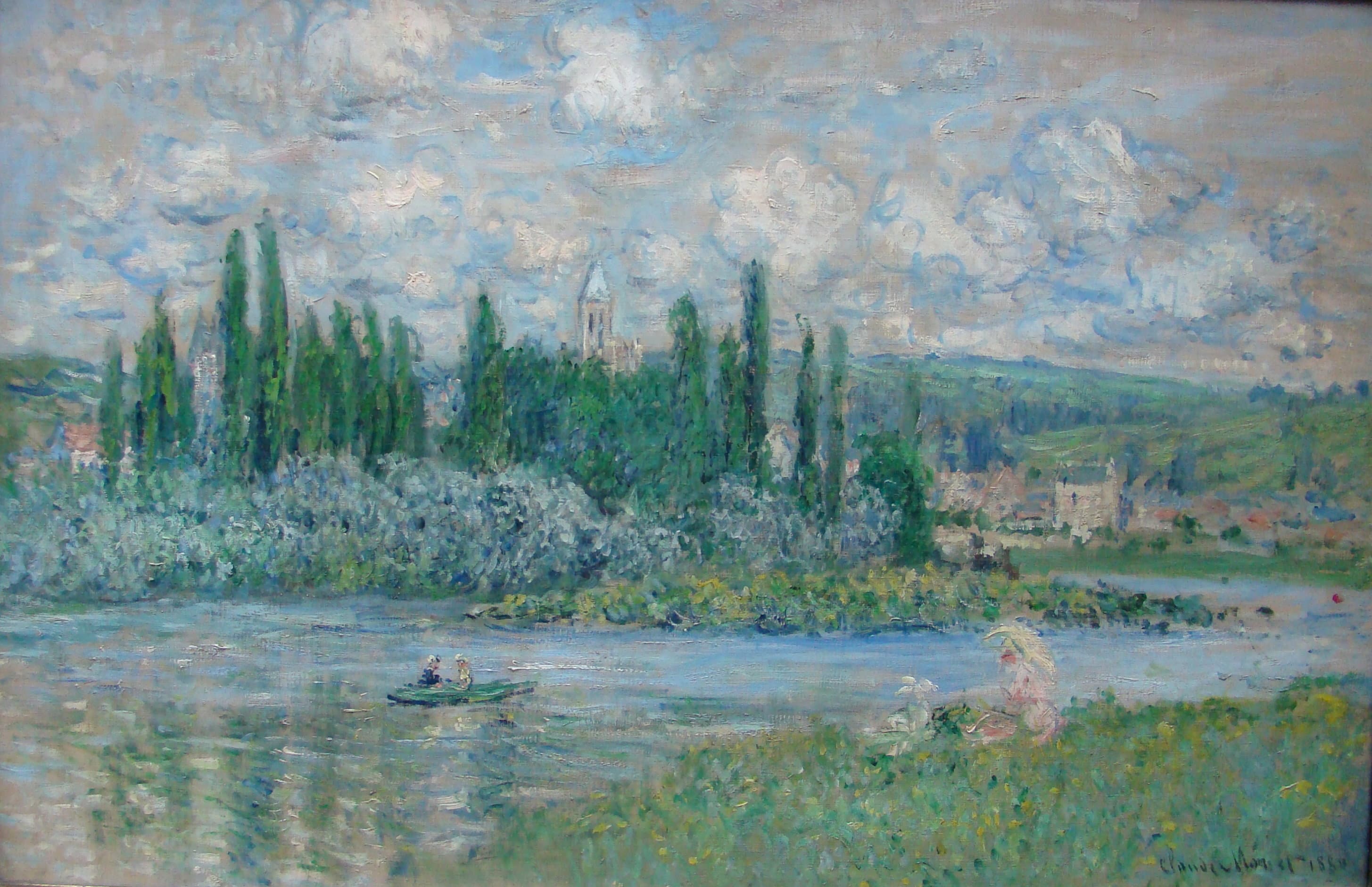
View of Vétheuil
Claude Monet · 1880
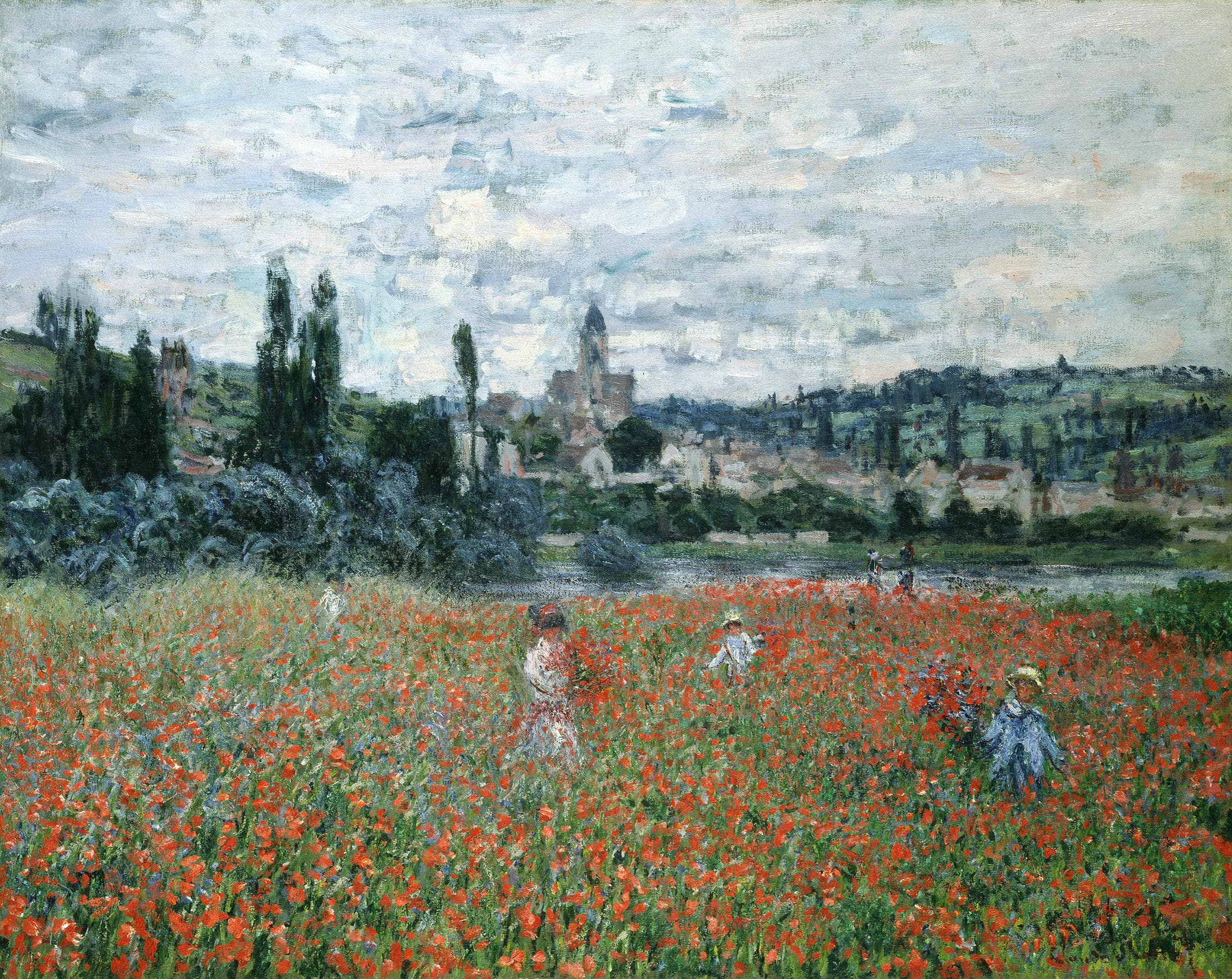
Poppy Field near Vétheuil
Claude Monet · c. 1879
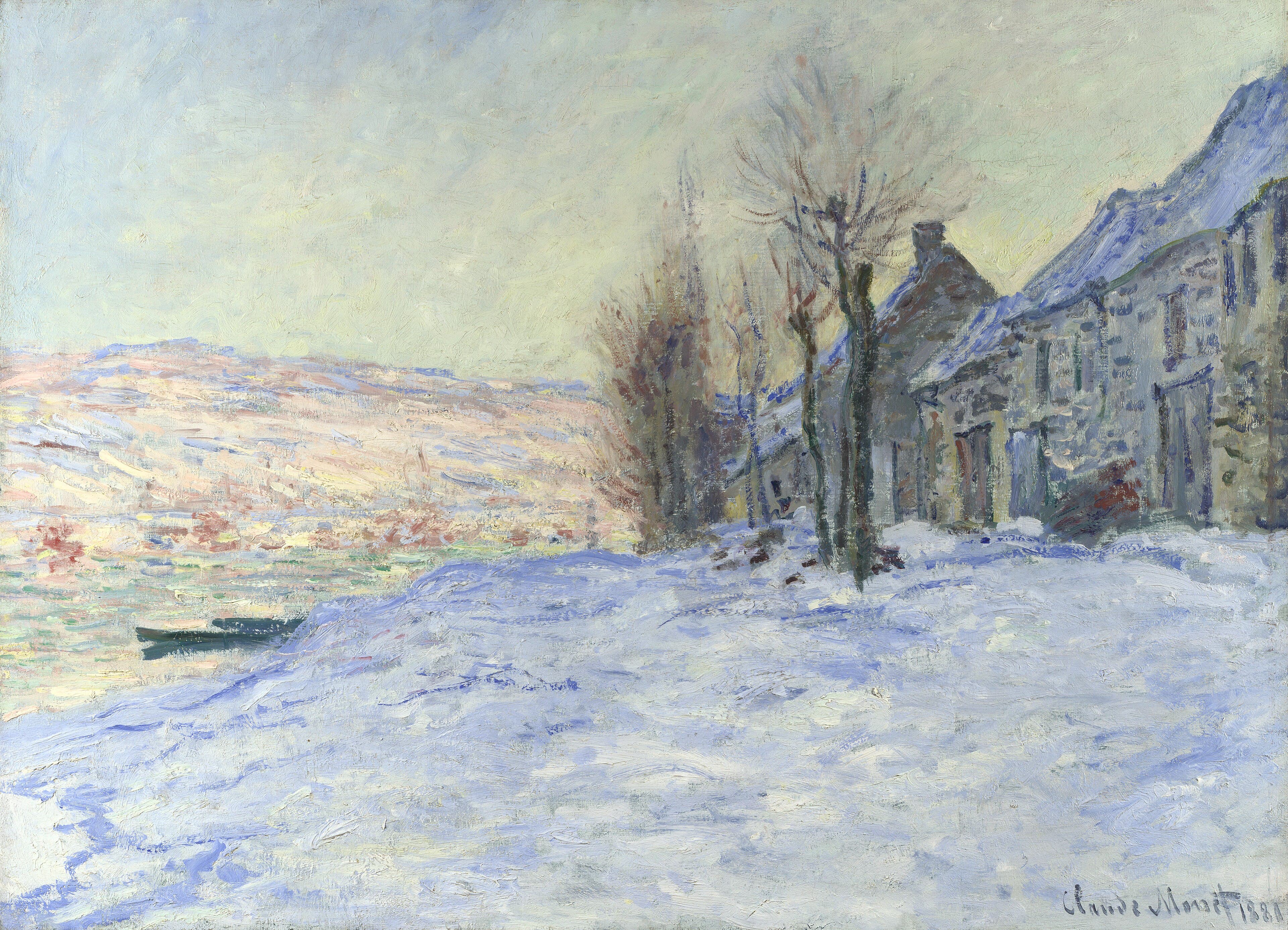
Lavacourt under Snow
Claude Monet · c. 1878–81
Vétheuil in the Fog
Claude Monet · 1879
Also painted in 1880
The same year
The Breaking Up of the Ice near Vétheuil
Claude Monet · c. 1880
Sunset on the Seine at Lavacourt, Winter Effect
Claude Monet · 1880
Michel Monet with a Pompon
Claude Monet · 1880
Frost (Le Givre)
Claude Monet · 1880
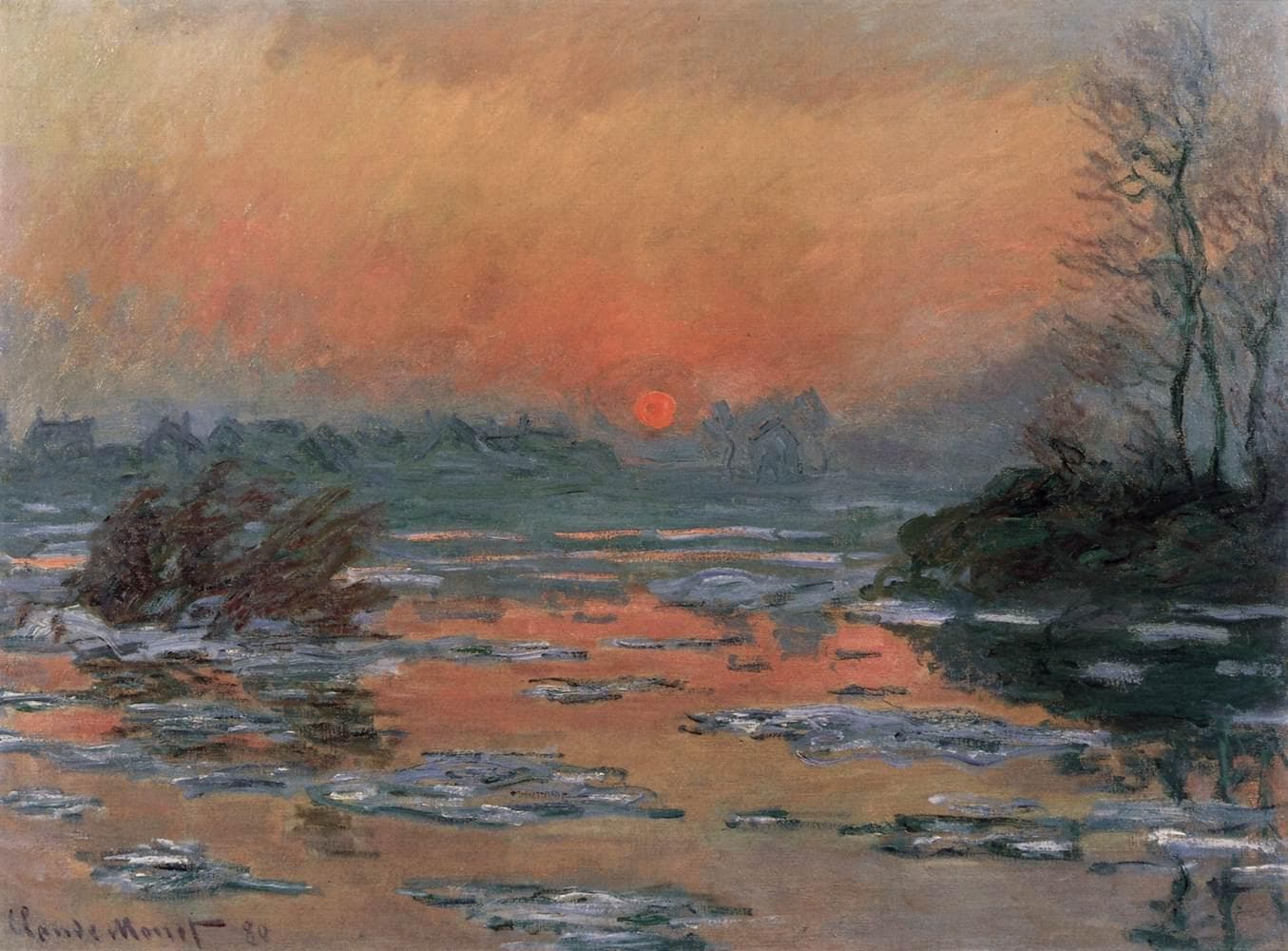
Sunset on the Seine in Winter
Claude Monet · 1880
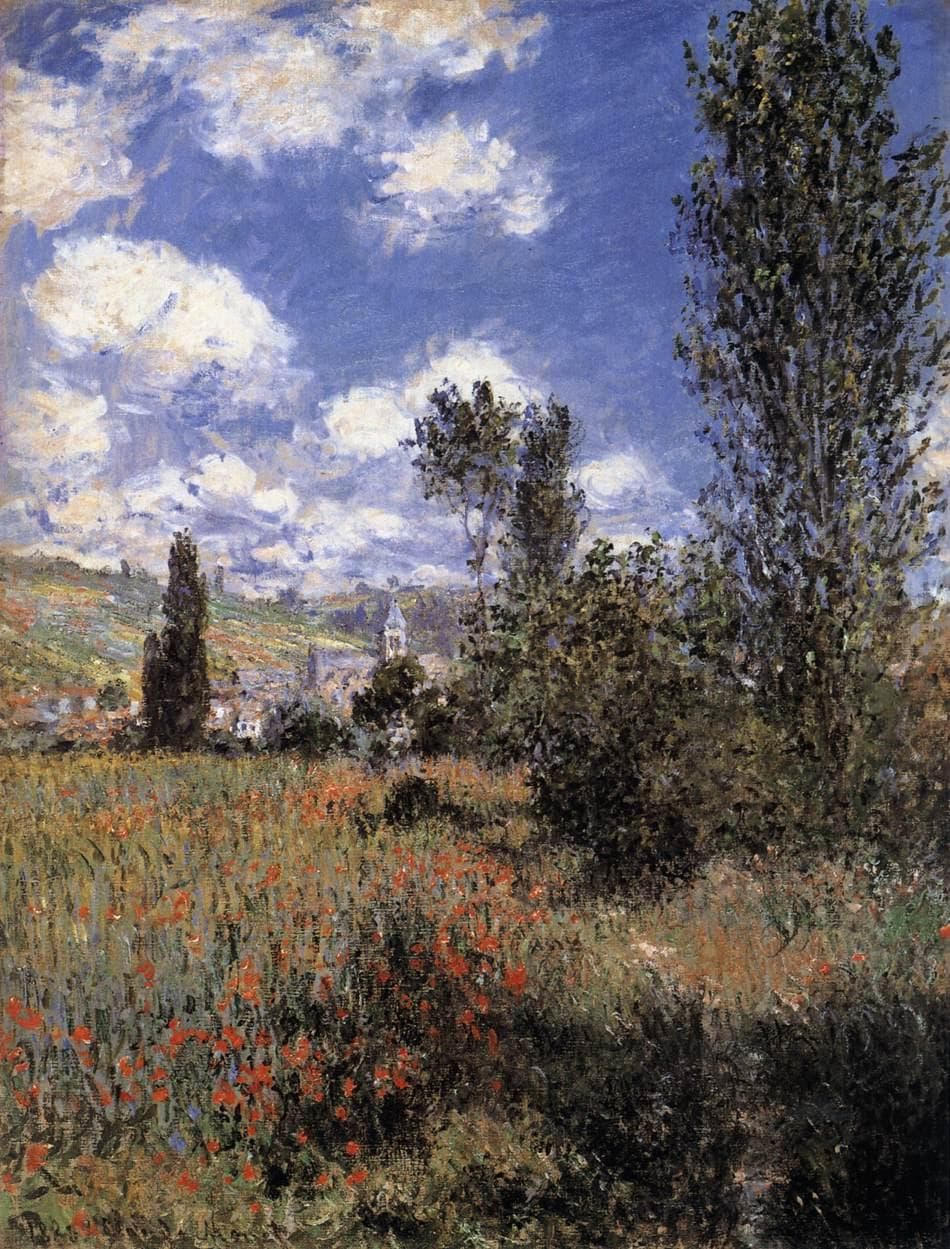
View of Vétheuil
Claude Monet · 1880
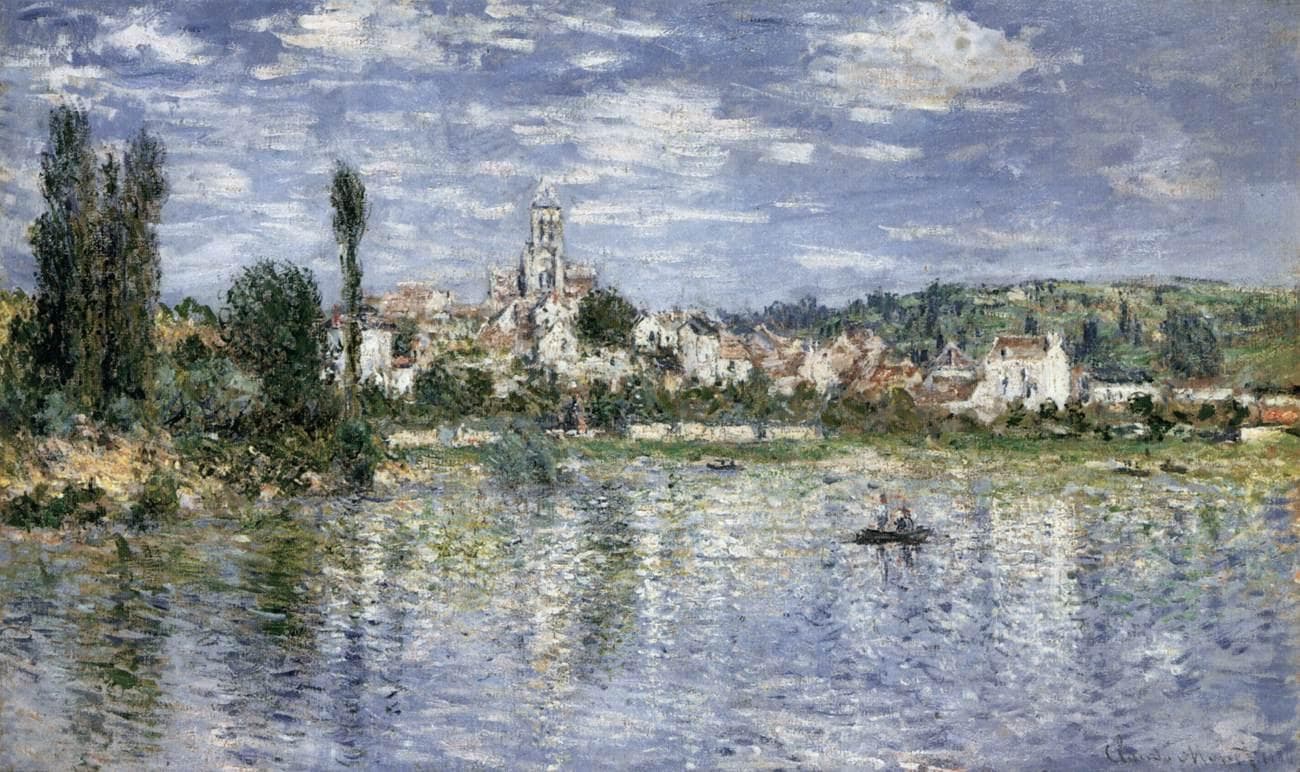
Vétheuil in Summer
Claude Monet · 1880
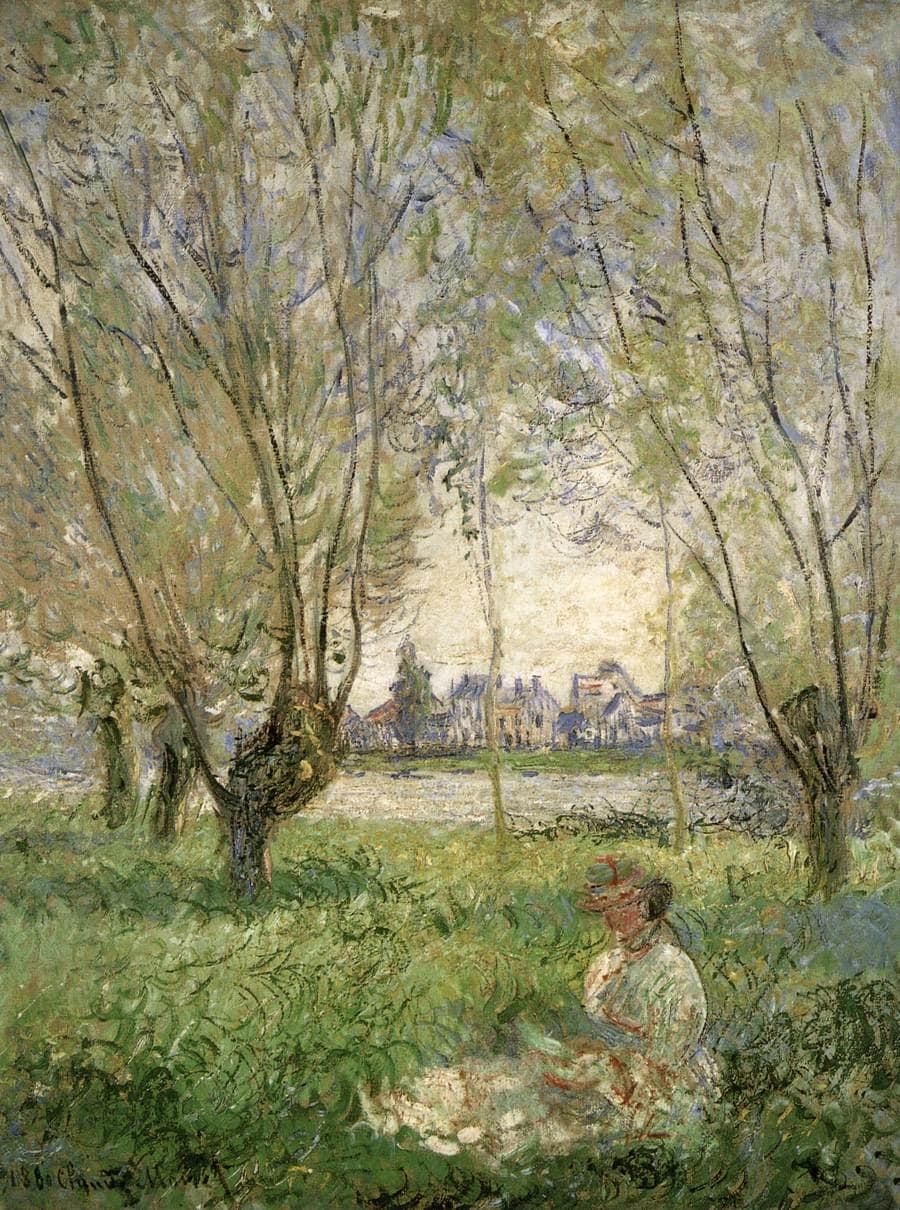
Woman Seated under the Willows
Claude Monet · 1880
Kindred works
You may also study
Frost (Le Givre)
Claude Monet · 1880
The Breaking Up of the Ice near Vétheuil
Claude Monet · c. 1880
Sunset on the Seine at Lavacourt, Winter Effect
Claude Monet · 1880
Winter Sun at Lavacourt
Claude Monet · 1879–80
Riverside Path at Argenteuil
Claude Monet · c. 1872
Argenteuil Basin with a Single Sailboat
Claude Monet · 1874
Heavy Sea at Étretat
Claude Monet · c. 1868–69
View of Bordighera
Claude Monet · 1884