Impressionism
Sunset on the Seine in Winter
Claude Monet, 1880
Sunset on the Seine in Winter (Soleil couchant sur la Seine, effet d'hiver) is an 1880 oil by Claude Monet showing a red winter sun over the ice-choked Seine near Vétheuil. It is in the Pola Museum of Art, Hakone, Japan.
- Artist
- Claude Monet
- Date
- 1880
- Medium
- Oil on canvas
- Dimensions
- 60.6 × 81.1 cm
- Collection
- Pola Museum of Art, Hakone, Japan
- Movement
- Impressionism
- Catalogue
- Wildenstein 574
Painted at Monet at Vétheuil
What you are looking at
A small red sun hangs low in an orange haze, just above a row of houses so faint they are barely there. Below it, the Seine is choked with ice. Flat floes, grey and white with blue shadows, drift across water that reflects the sky in streaks of salmon and gold. On the left a ragged island of bare, rust-colored brush pokes up from the river; on the right a darker bank rises into a stand of leafless trees, their trunks and branches drawn in thin blue-green and violet lines against the glow.
There is no figure, no boat and no path into the scene. The only things that move are the light and the ice, and the picture is organized around the vertical line that runs from the sun down through its broken reflection on the water.
Claude Monet signed and dated the canvas "Claude Monet 80" at lower left. It measures 60.6 by 81.1 centimeters, is catalogued by Wildenstein as number 574, and belongs to the Pola Museum of Art in Hakone, Japan.
Where and when it was painted
Monet painted the scene in the winter of 1879–80 on the stretch of the Seine at Vétheuil, the village about 60 kilometers downriver from Paris where he had lived since the late summer of 1878. Across the water lay the hamlet of Lavacourt, and the low line of roofs under the sun belongs to one bank or the other of that reach of river. For his years there, see Monet at Vétheuil.
That December the Seine froze over in one of the coldest spells of the century. When the thaw came in early January 1880, the ice broke up with a noise heard across the valley, and great floes ground downstream for days. Monet painted the event repeatedly: the frozen river, the breakup, the floating ice under grey skies and at sunset. These are the débâcle pictures, and they belong to the bleakest months of his life. His wife Camille had died on 5 September 1879, the household he shared with Alice Hoschedé and eight children was in debt, and his paintings were selling poorly.
How it was painted
This is a picture about temperature as much as light. Monet sets the two halves of the color wheel against each other: hot orange and red in the sky, cold blue-grey and white in the ice, and the red disc of the sun beside the green-black of the bank. The floes are built from a few horizontal strokes of thick white edged with blue, laid wet into the orange water, and they get smaller and closer together as they recede, which makes the river stretch back toward the light.
The sky is scrubbed in with broad, loose strokes, thinner than the paint below, so the haze seems to hang in front of the village. The trees at right are a different kind of mark altogether: long, wiry lines dragged with a small brush, almost drawing. That contrast between flat haze, thick ice and linear branches is what keeps a near-monochrome picture lively.
The scale suggests work outdoors on the bank, at speed, in the short winter dusk. Monet could not have held a sunset like this for more than a session or two, which is why so many of the débâcle canvases are this size.
The larger version
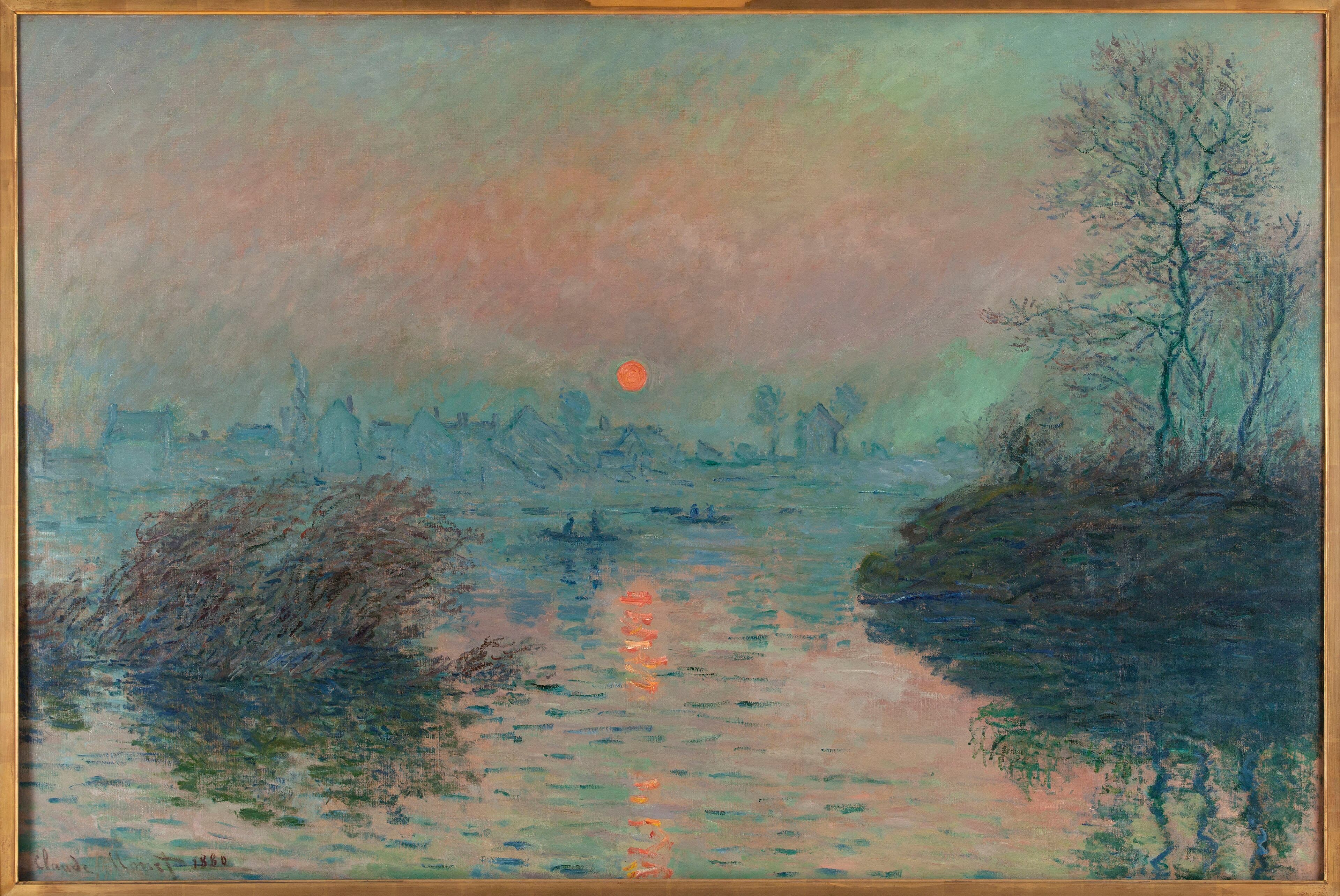
Monet worked the same composition up into a much bigger canvas, Soleil couchant sur la Seine à Lavacourt, effet d'hiver, about 100 by 150 centimeters, now in the Petit Palais in Paris: see Sunset on the Seine at Lavacourt, Winter Effect. He considered sending it to the Salon of 1880, then held it back as too personal for the jury and submitted a more conventional view of Lavacourt instead.
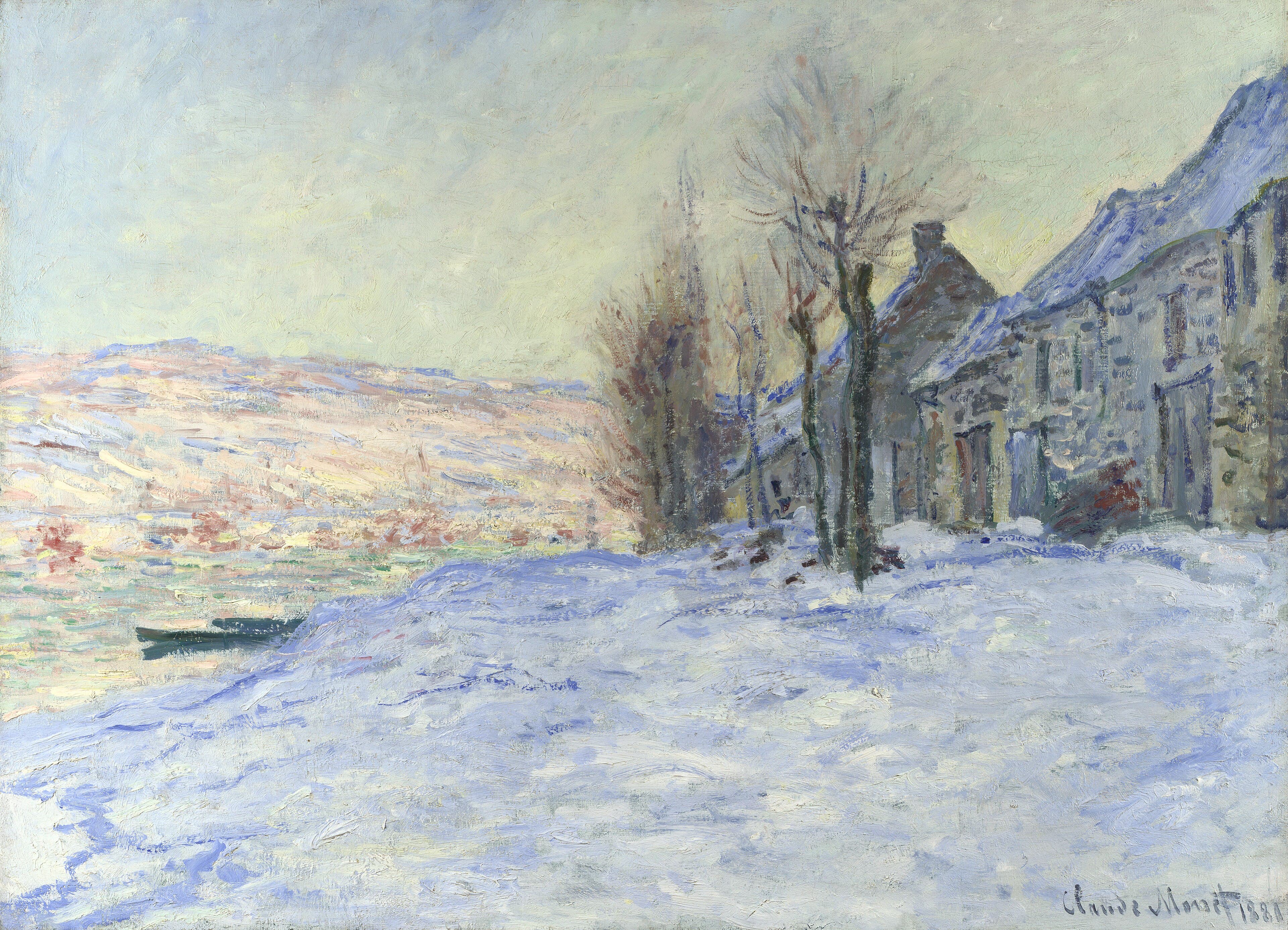
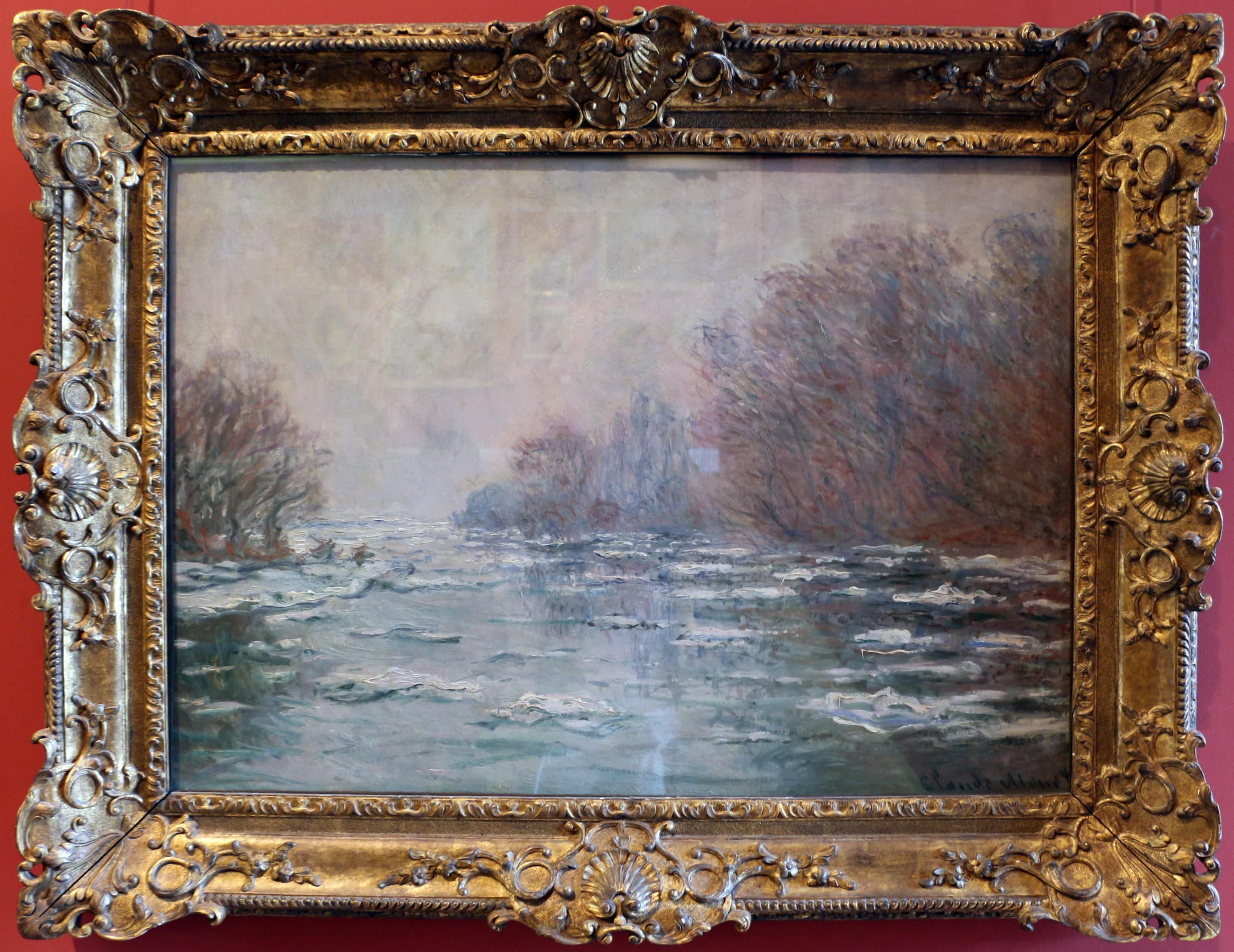
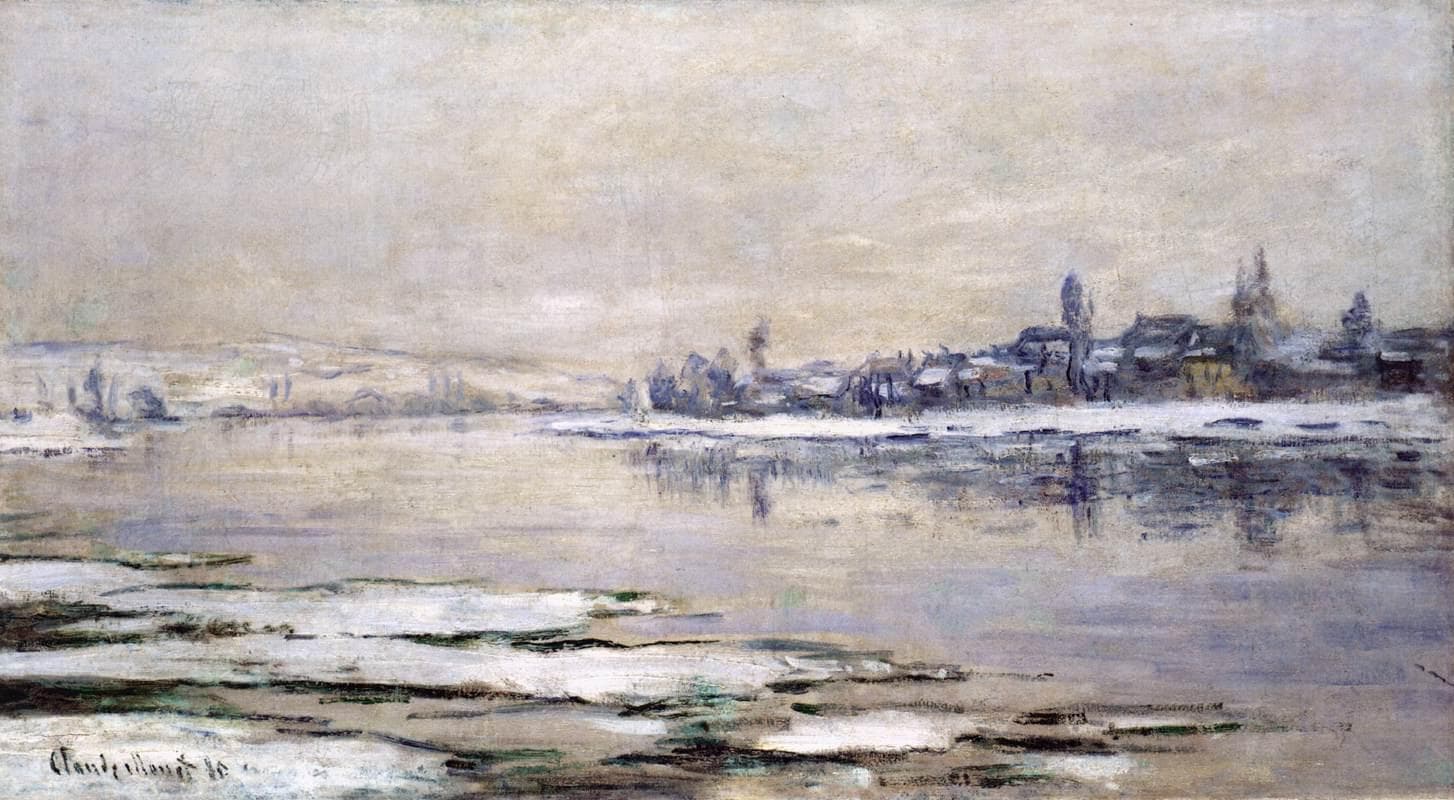
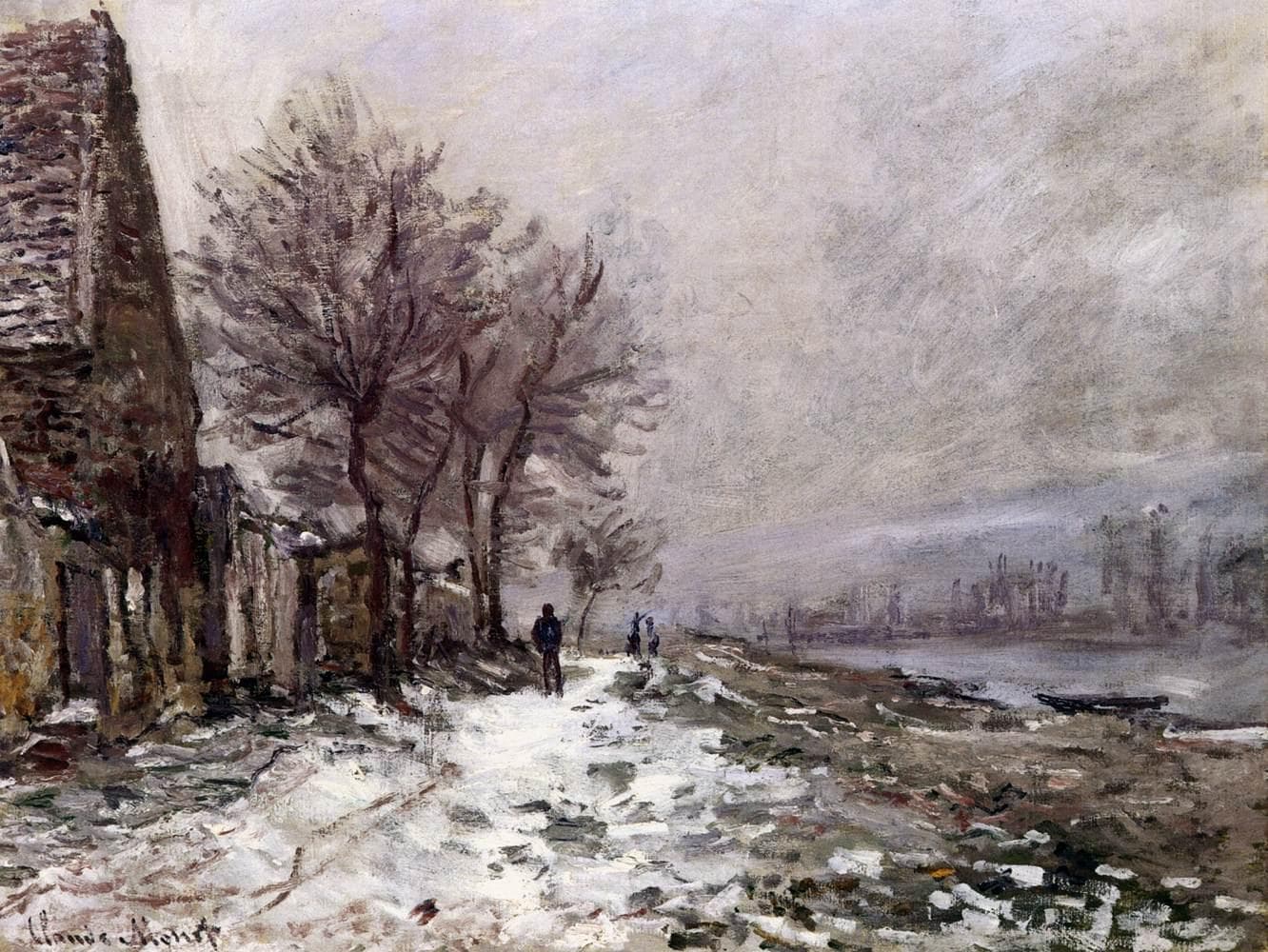
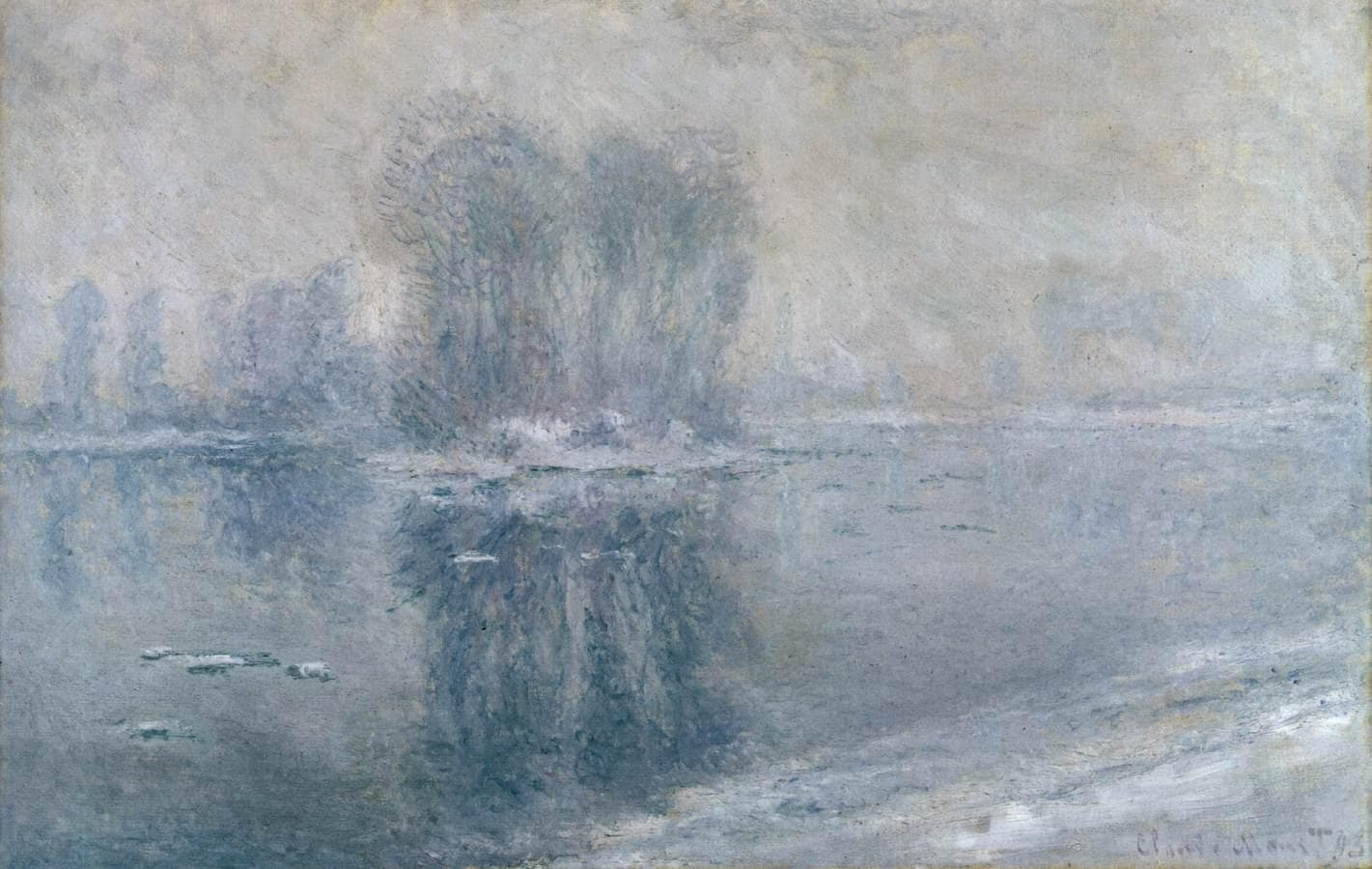
The Hakone canvas is the more immediate of the two. Its paint is looser, its sky stronger, and it has the look of something made in front of the motif. Compare it with the grey daylight of The Breakup of the Ice at Lavacourt and The Breaking Up of the Ice near Vétheuil in the French national collections, and with the snowbound village of Lavacourt in Winter. Thirteen years later Monet returned to the subject at Bennecourt, upriver from Giverny, in Ice Floes.
Where to see it
The painting is in the Pola Museum of Art, a museum in the forested hills of Hakone, south-west of Tokyo, built around the collection of the businessman Suzuki Tsuneshi and strong in French Impressionism. Works are rotated, so check the museum's current displays before a visit. For other public holdings, see where to see Monet's paintings, and for the artist's life, Claude Monet.
Questions & answers
Where is Monet's Sunset on the Seine in Winter?
Monet's Sunset on the Seine in Winter (1880) belongs to the Pola Museum of Art in Hakone, Japan. The canvas measures 60.6 by 81.1 centimeters and is catalogued by Wildenstein as number 574. A much larger version of the same composition is in the Petit Palais, Paris.
When and where did Monet paint Sunset on the Seine in Winter?
He painted it in the winter of 1879–80 on the Seine at Vétheuil, where he was then living, during the great freeze and thaw that broke up the river ice in January 1880. It is signed and dated 1880 at lower left.
What does Sunset on the Seine in Winter show?
A red sun sets in an orange haze over the Seine, which is crowded with floating ice. A faint row of houses lies on the horizon and bare trees stand on the right bank. Painted months after his wife Camille's death, it is often read as one of Monet's most melancholy works, though he left no statement of intent.
How many versions of the sunset on the frozen Seine did Monet paint?
The composition exists in two main versions: this smaller canvas in Hakone and the large Soleil couchant sur la Seine à Lavacourt, effet d'hiver in the Petit Palais, Paris. Both belong to a wider group of more than a dozen débâcle paintings of the ice from that winter.
More by the artist
Claude Monet

Bridge over a Pond of Water Lilies
Claude Monet · 1899

Woman with a Parasol – Madame Monet and Her Son
Claude Monet · 1875

Sunset in Venice
Claude Monet · 1908–12

La Grenouillère
Claude Monet · 1869

Beach in Pourville
Claude Monet · 1882

Springtime
Claude Monet · 1872

Boating on the River Epte
Claude Monet · 1890

The Seine at Asnières (Hermitage)
Claude Monet · 1873
Also painted in 1880
The same year
Lavacourt under Snow
Claude Monet · c. 1878–81
View of Vétheuil
Claude Monet · 1880
Sunset on the Seine at Lavacourt, Winter Effect
Claude Monet · 1880
The Breaking Up of the Ice near Vétheuil
Claude Monet · c. 1880
Jerusalem Artichoke Flowers
Claude Monet · 1880
View of Vétheuil
Claude Monet · 1880
Vétheuil in Summer
Claude Monet · 1880
Woman Seated under the Willows
Claude Monet · 1880
Kindred works
You may also study
Sunset on the Seine at Lavacourt, Winter Effect
Claude Monet · 1880
The Breakup of the Ice at Lavacourt
Claude Monet · 1880
The Breaking Up of the Ice near Vétheuil
Claude Monet · c. 1880
Lavacourt in Winter
Claude Monet · 1879
Ice Floes
Claude Monet · 1893

The Scream
Edvard Munch · 1893

Ophelia
John Everett Millais · 1851–52

The Great Wave off Kanagawa
Katsushika Hokusai · c. 1830–32