Image: Pola Museum of Art, Hakone (photograph via Flickr) · Public domain · via Wikimedia Commons
Haystacks at Giverny (1884)
Claude Monet, 1884
Haystacks at Giverny (1884) is one of Claude Monet's earliest paintings of grainstacks: three tawny stacks in a sunlit summer meadow before a row of blue-green poplars. It is in the Pola Museum of Art, Hakone, Japan.
- Artist
- Claude Monet
- Date
- 1884
- Medium
- Oil on canvas
- Dimensions
- 66.1 × 81.3 cm
- Collection
- Pola Museum of Art, Hakone, Kanagawa, Japan
- Movement
- Impressionism
- Catalogue
- Wildenstein 902
- Nature & Landscape
Haystacks at Giverny is one of the first pictures in which Claude Monet painted the grainstacks of the meadows near his new home. Dated 1884, a year after he moved to Giverny, it shows three stacks of harvested grain standing in a bright green field, the largest close to us at right, two smaller ones further back at left, and behind them a long screen of slender poplars and bushes against a pale, cloud-streaked sky. It is in the Pola Museum of Art in Hakone, Japan (inv. 006-0207).
What you are looking at
The big stack at right dominates the picture. It is built of thick, curving strokes of russet, orange, rose and violet, rounder and more bulbous than the steep-roofed stacks of the later series, and it casts a short blue-violet shadow on the grass to its left, telling us the sun is high and slightly to the right. The two smaller stacks at left, one behind the other, repeat its shape in warmer, redder tones.
The meadow is the brightest part of the canvas: an intense field of yellow-green and lime, laid in short, crisscrossing strokes, with hints of pink and orange near the horizon where the grass catches the light. Behind, the row of poplars is painted with feathery, broken touches of blue, violet and green, their thin trunks visible below the foliage. Above them the sky is a soft mix of blue and white cloud. The signature is in red at lower right.
Where and when it was painted
Monet moved to Giverny, a village on the Seine about 75 km northwest of Paris, in April 1883, with Alice Hoschedé and their combined family of eight children. The meadows around the house, flat land between the village and the river Epte, became his everyday painting ground. In the summers of 1884 to 1886 he painted several pictures of the tall, round grainstacks the local farmers built after the harvest, each with its pointed thatch. They were scenes of summer meadows with poplars and figures, not yet the concentrated studies of light that the Haystacks series of 1890–91 would become. This canvas is the earliest of the group in our catalogue. See our Giverny hub for the place.
How it was painted
The picture is painted directly, with lively, varied brushwork. Monet used complementary contrasts to make the summer light sing: the orange and red of the stacks against the green of the grass, the violet shadows against the yellow-green field. The poplars are almost transparent, built from small dabs that let the sky show between them. It is a picture of a whole landscape on a sunny day, rather than of a single object under changing light.
How this version differs
Compare the canvas with the Pushkin Museum's Haystacks at Giverny of about the same years, or with the Ohara Museum's Haystacks of 1885, where figures rest in the shade of a stack. All share the poplar backdrop and summer light. By the time of the 1888–89 canvases, such as Grainstacks, White Frost Effect, Monet had dropped the trees, closed in on two stacks and turned to autumn and winter effects. In the 1890–91 series, works like Stack of Wheat (Thaw, Sunset) isolate a single stack.
Poplars and stacks
The poplar row in this picture is a reminder that the motifs of two of Monet's most famous series, the Haystacks of 1890–91 and the Poplars of 1891, were both present in his first Giverny summers. He spent years painting the landscape around his house before deciding which elements could carry a series on their own.
Where to see it
The Pola Museum of Art in Hakone, in the mountains southwest of Tokyo, opened in 2002 to show the collection assembled by Tsuneshi Suzuki of the Pola cosmetics group; it is particularly strong in French Impressionism and owns several Monets, including a view of the Gare Saint-Lazare. See also where to see Monet's paintings.
Questions & answers
Where is Monet's Haystacks at Giverny (1884)?
In the Pola Museum of Art in Hakone, Kanagawa Prefecture, Japan (inv. 006-0207). The museum, opened in 2002, is known for its French Impressionist collection and owns several Monets.
When and where was it painted?
In summer 1884 at Giverny, in the meadows near the house Monet had moved into the year before. It is one of his first paintings of the local grainstacks.
What does the painting show?
Three tawny grainstacks in a bright green summer meadow, the largest at right casting a violet shadow, with a row of slender poplars and bushes behind under a pale cloudy sky.
Is this part of Monet's Haystacks series?
It is a precursor. The famous series of about 25 canvases dates from 1890–91. Monet painted a handful of summer meadow scenes with stacks in 1884–86, and five stack pictures in 1888–89, before turning the motif into a series.
More by the artist
Claude Monet
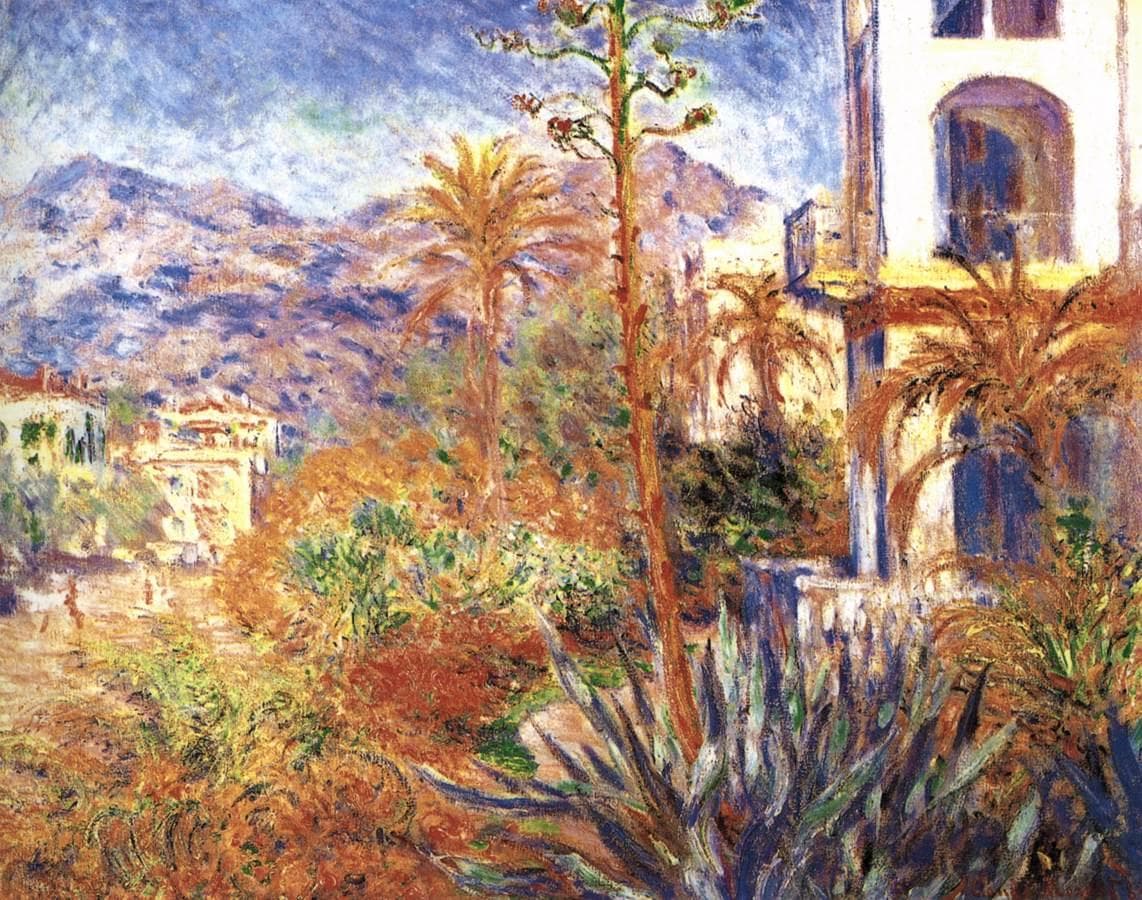
Villas in Bordighera
Claude Monet · 1884
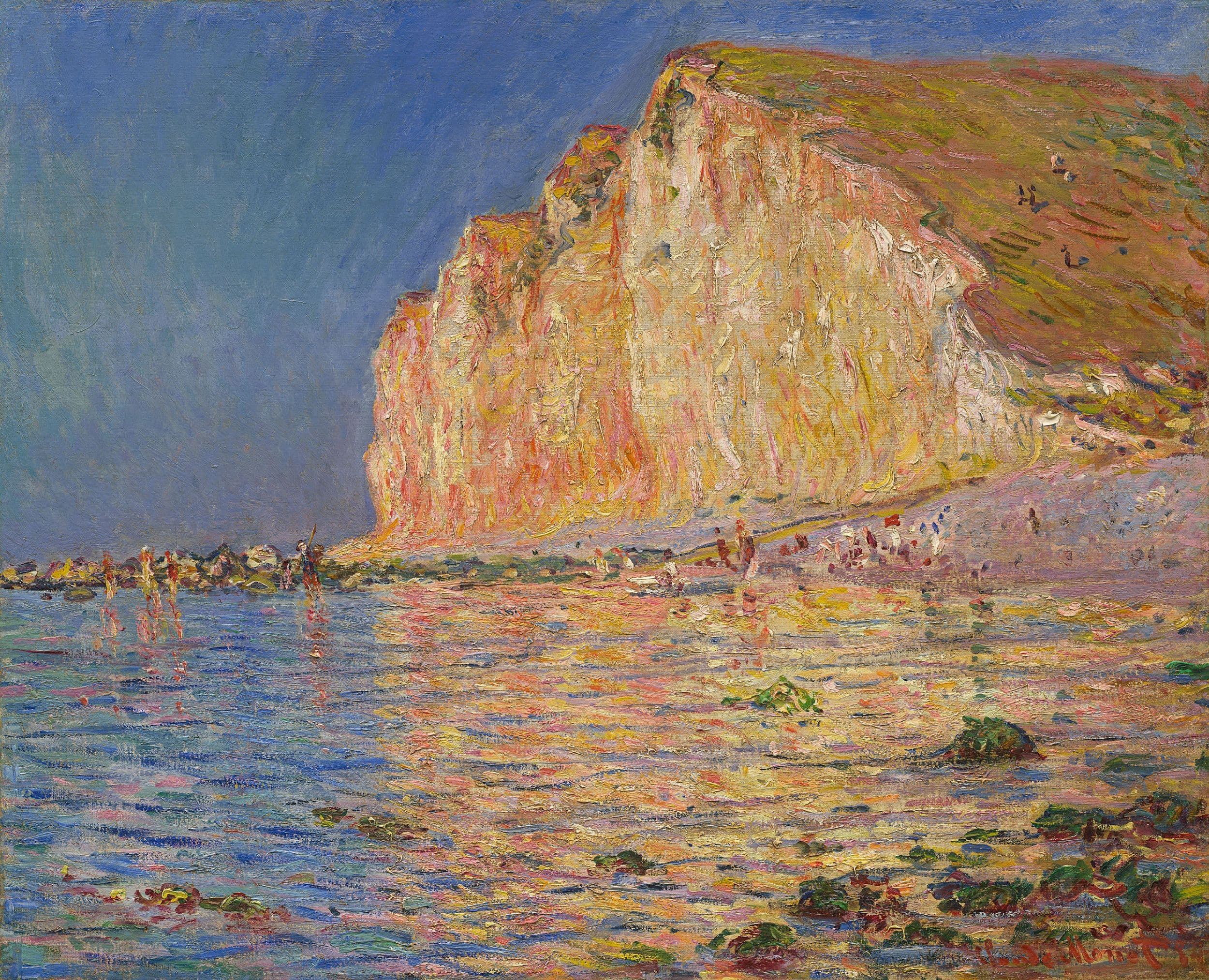
Low Tide at Les Petites-Dalles
Claude Monet · 1884
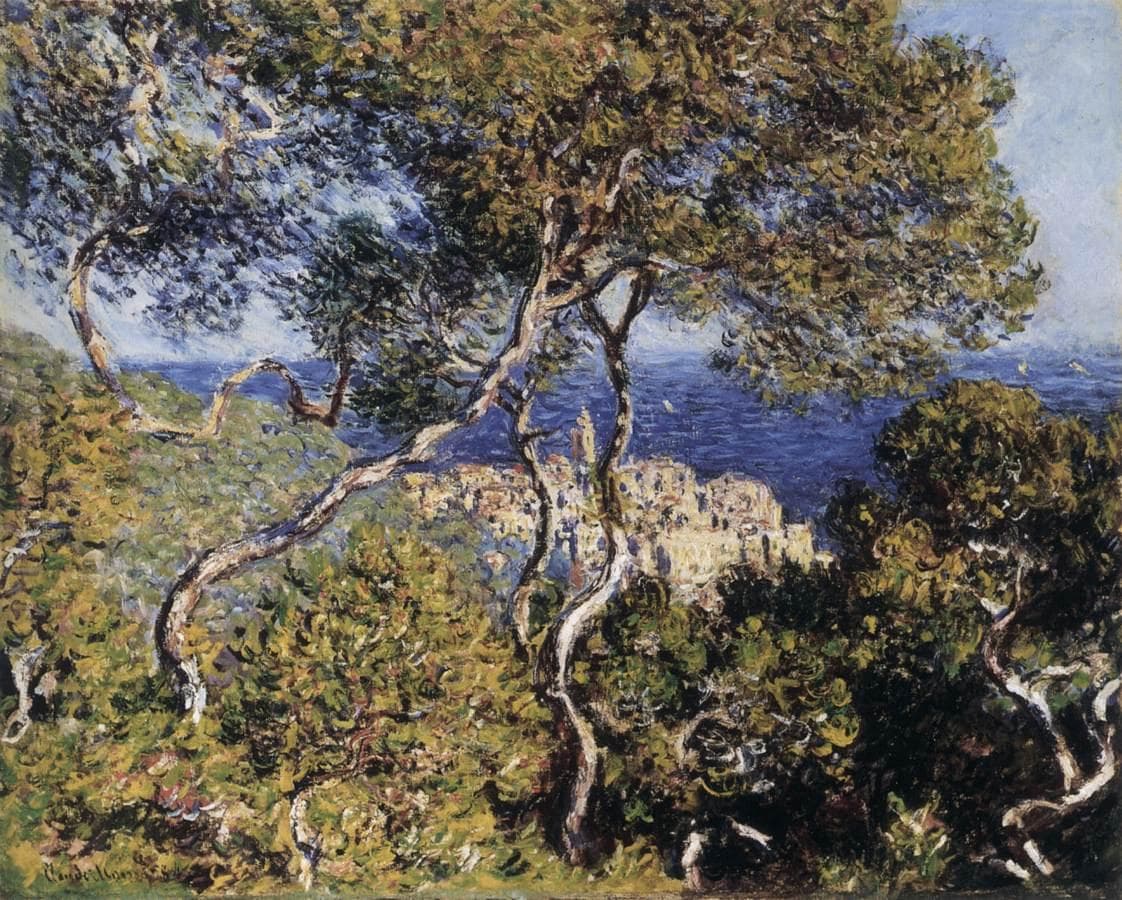
Bordighera
Claude Monet · 1884
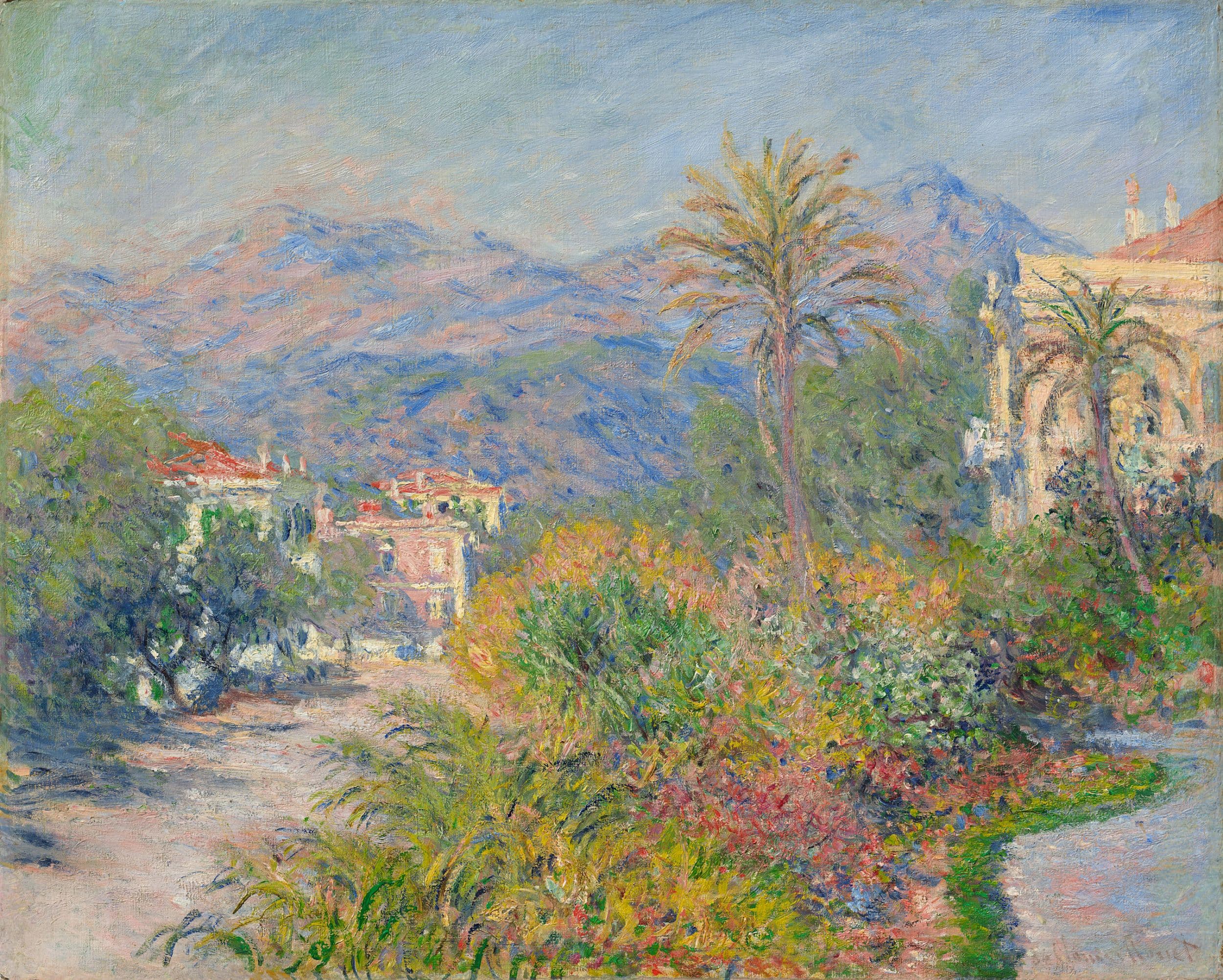
Strada Romana in Bordighera
Claude Monet · 1884
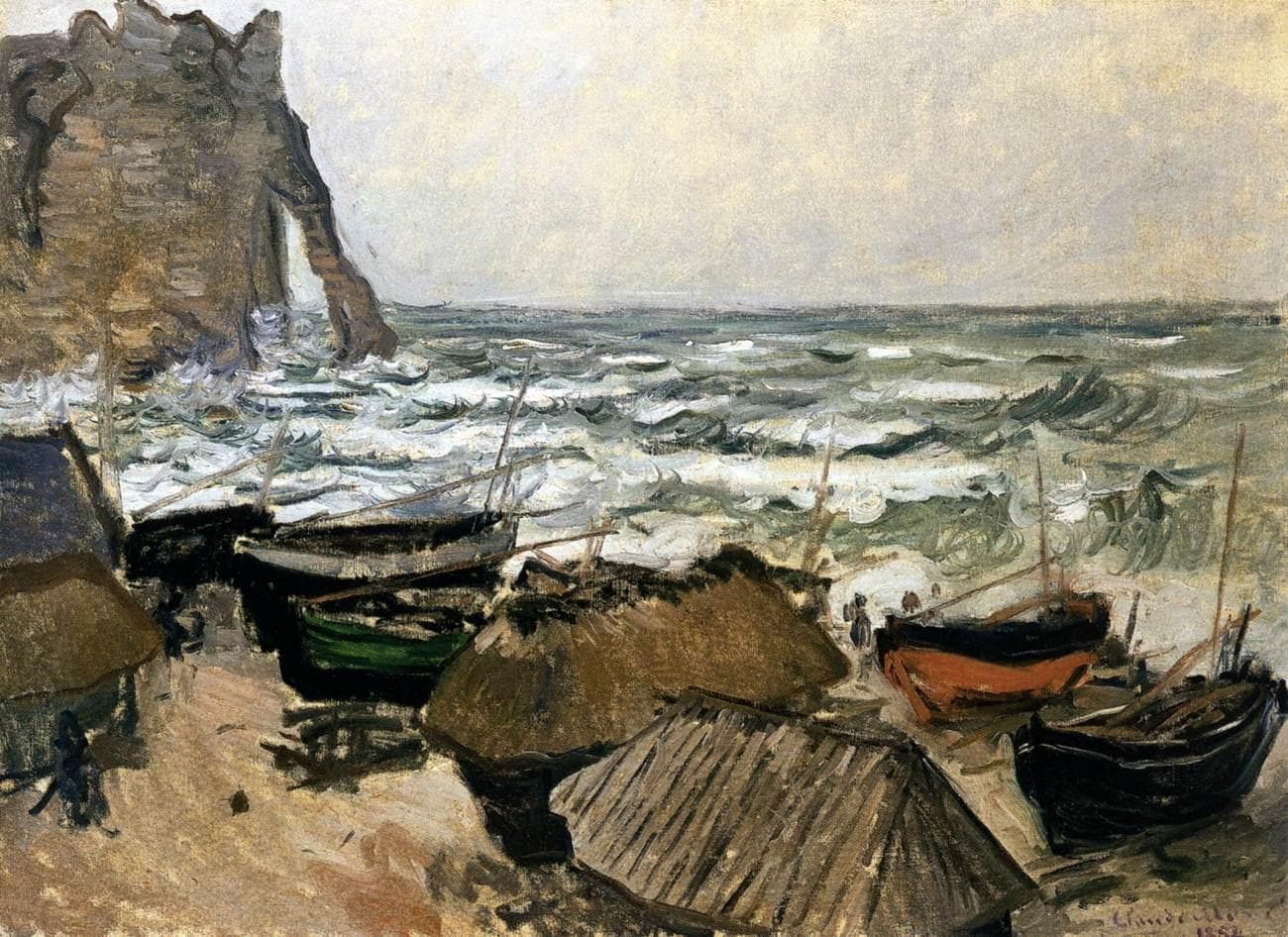
Fishing Boats and the Porte d'Aval
Claude Monet · 1884
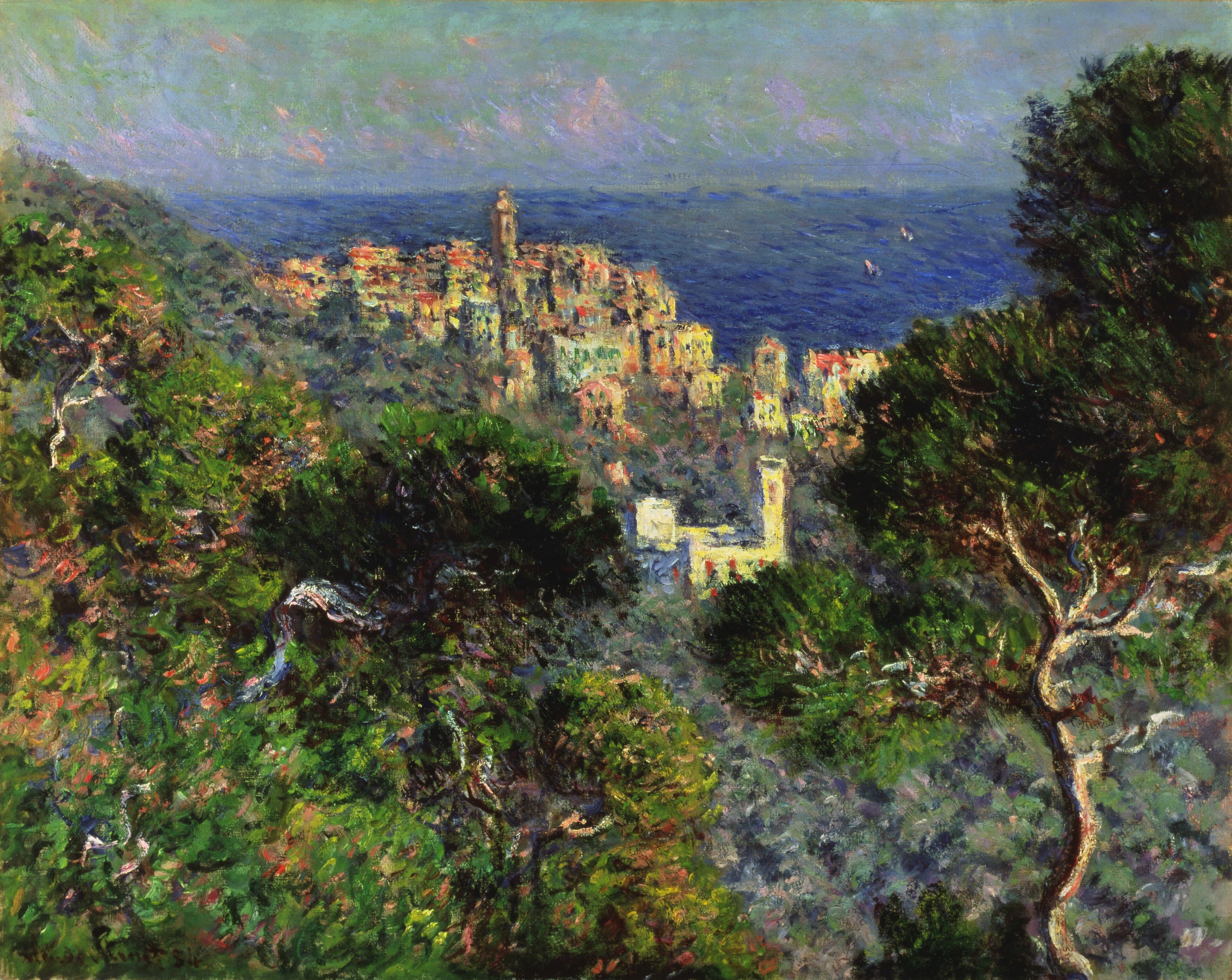
View of Bordighera
Claude Monet · 1884
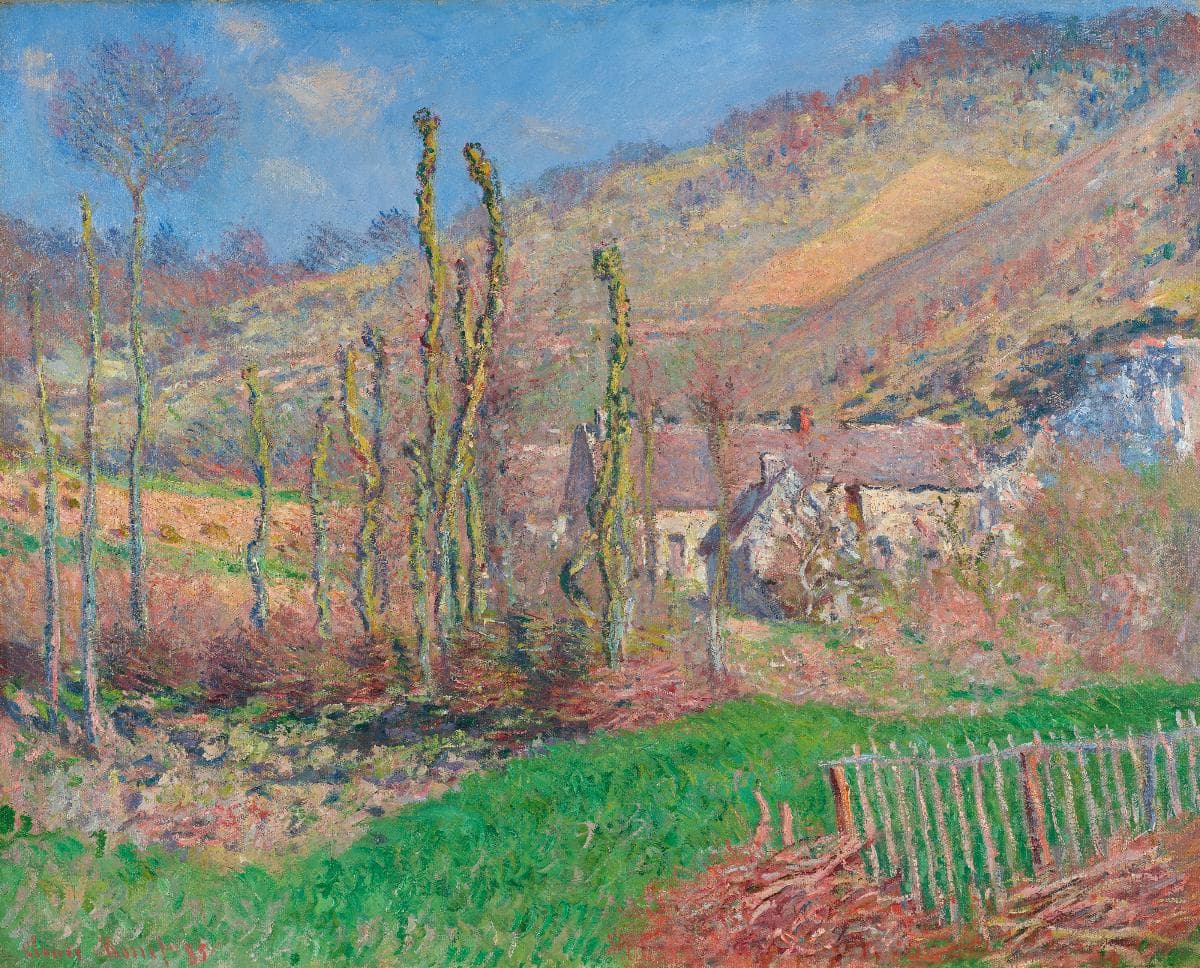
Winter Landscape at the Val de Falaise (Giverny)
Claude Monet · 1885
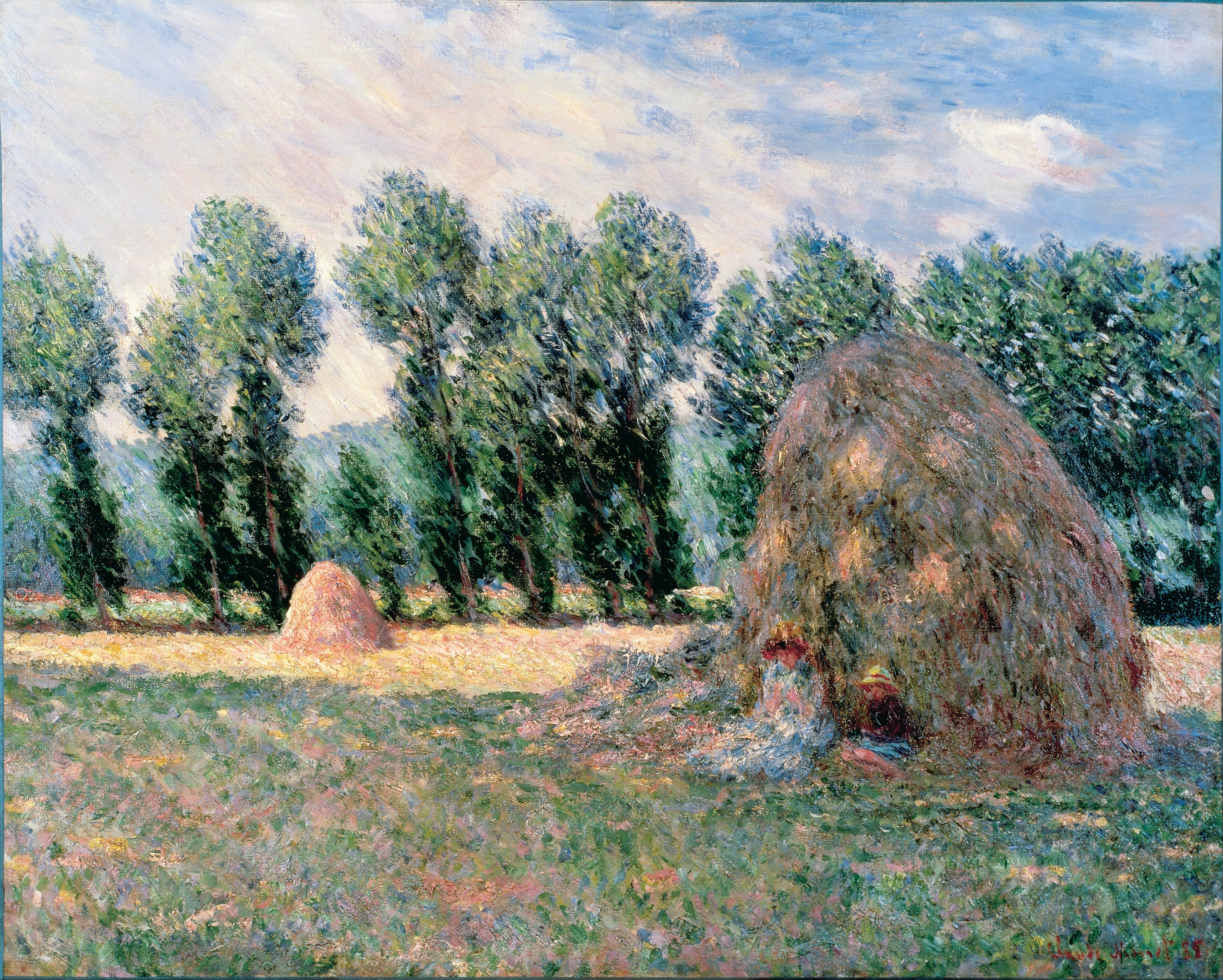
Haystacks (Ohara Museum, 1885)
Claude Monet · 1885
Also painted in 1884
The same year
The Valley of the Nervia
Claude Monet · 1884
Garden at Bordighera, Impression of Morning
Claude Monet · 1884
Villas at Bordighera
Claude Monet · 1884
Under the Lemon Trees
Claude Monet · 1884
Villas at Bordighera
Claude Monet · 1884
Valle Buona, near Bordighera
Claude Monet · 1884
Palm Trees at Bordighera
Claude Monet · 1884
Kindred works
You may also study
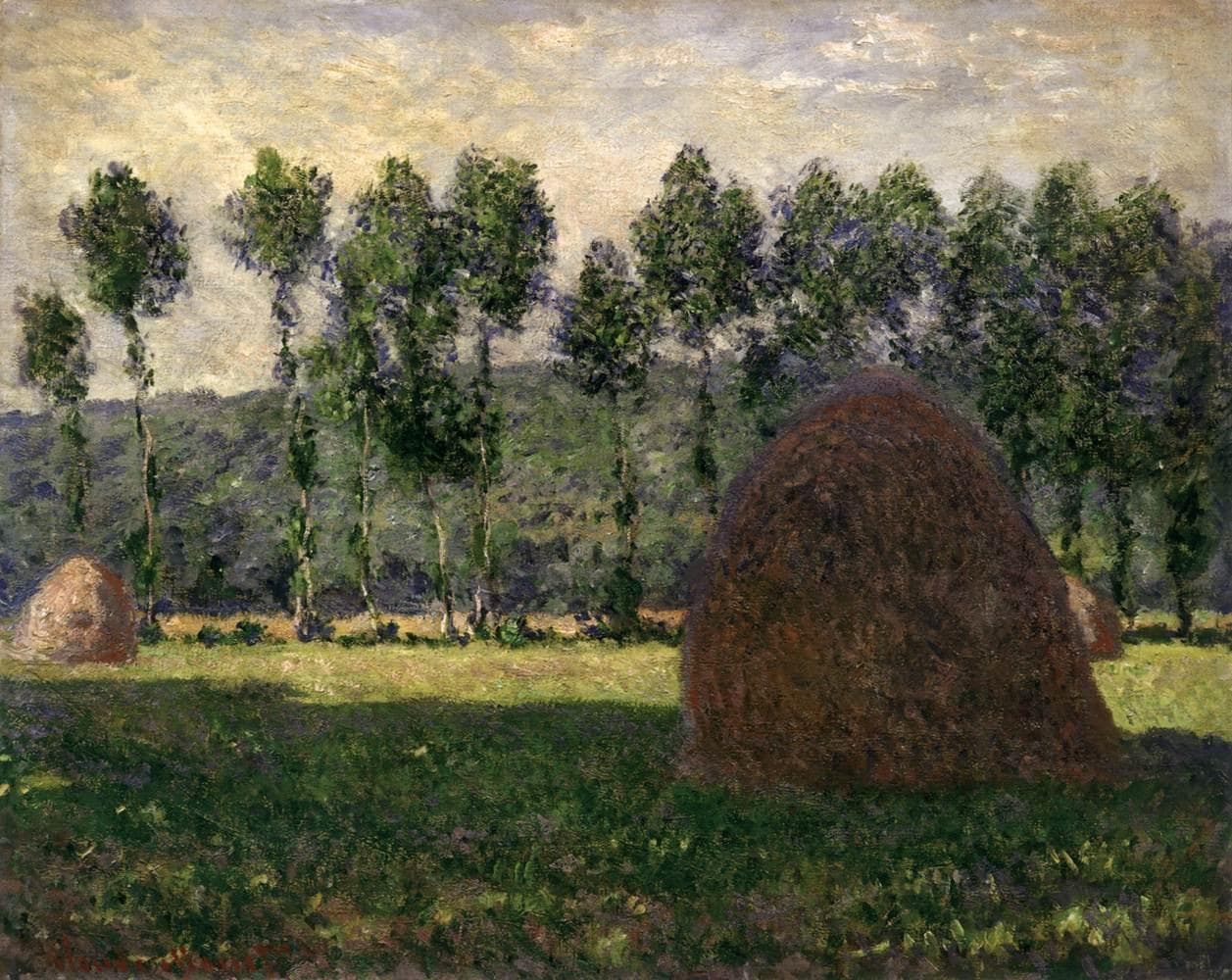
Haystack near Giverny
Claude Monet · 1884–89
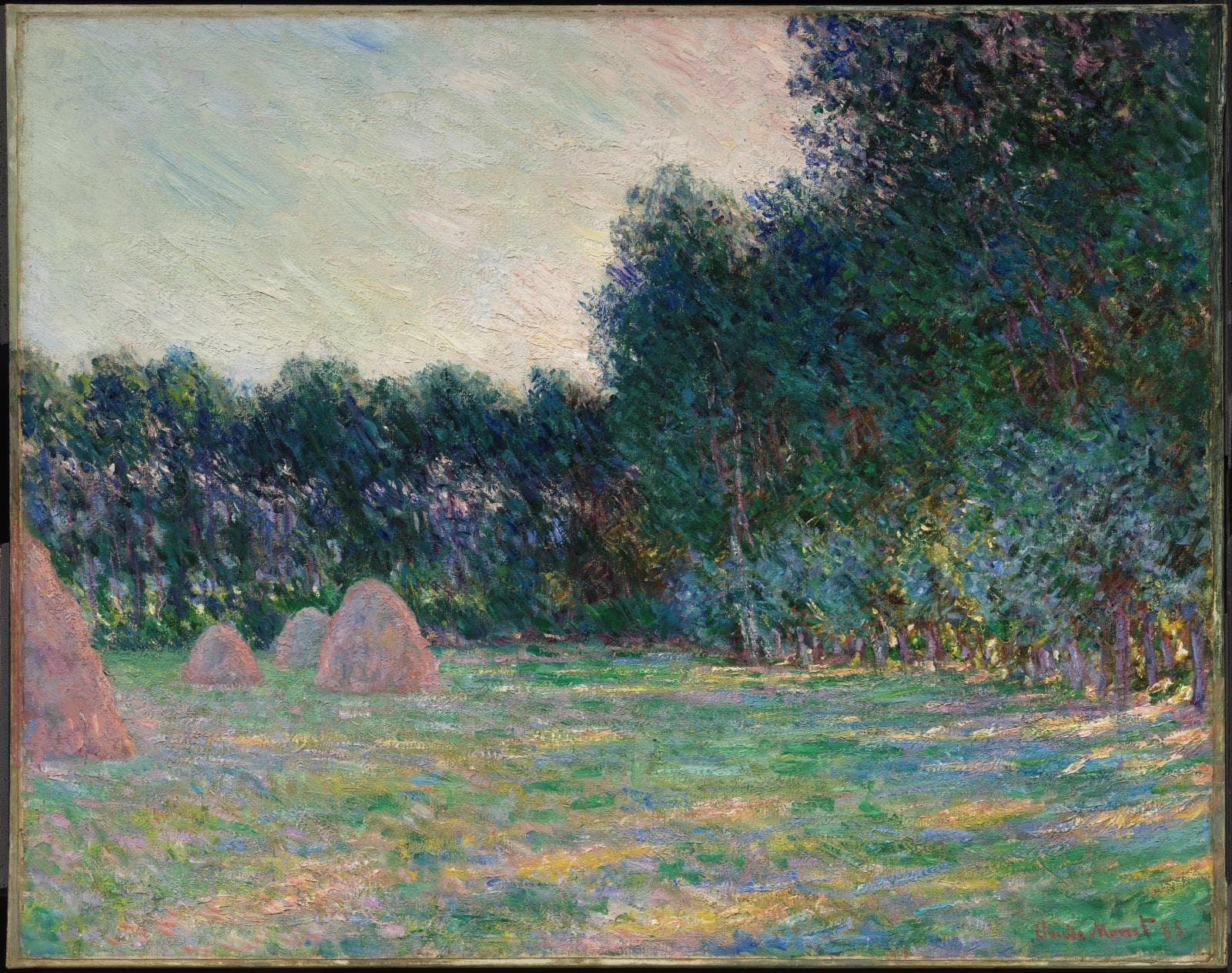
Meadow with Haystacks near Giverny
Claude Monet · 1885
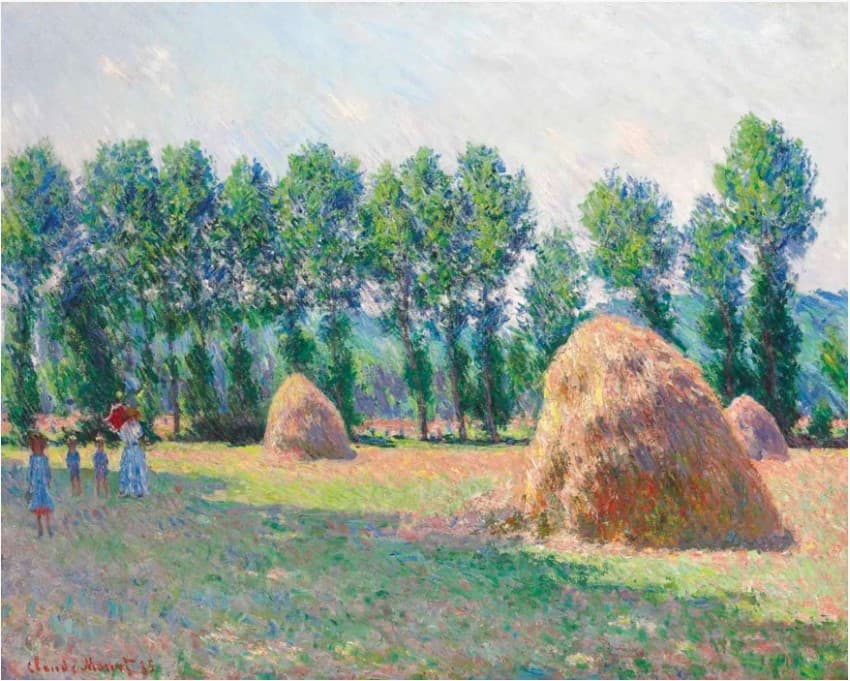
Haystacks at Giverny (1885)
Claude Monet · 1885
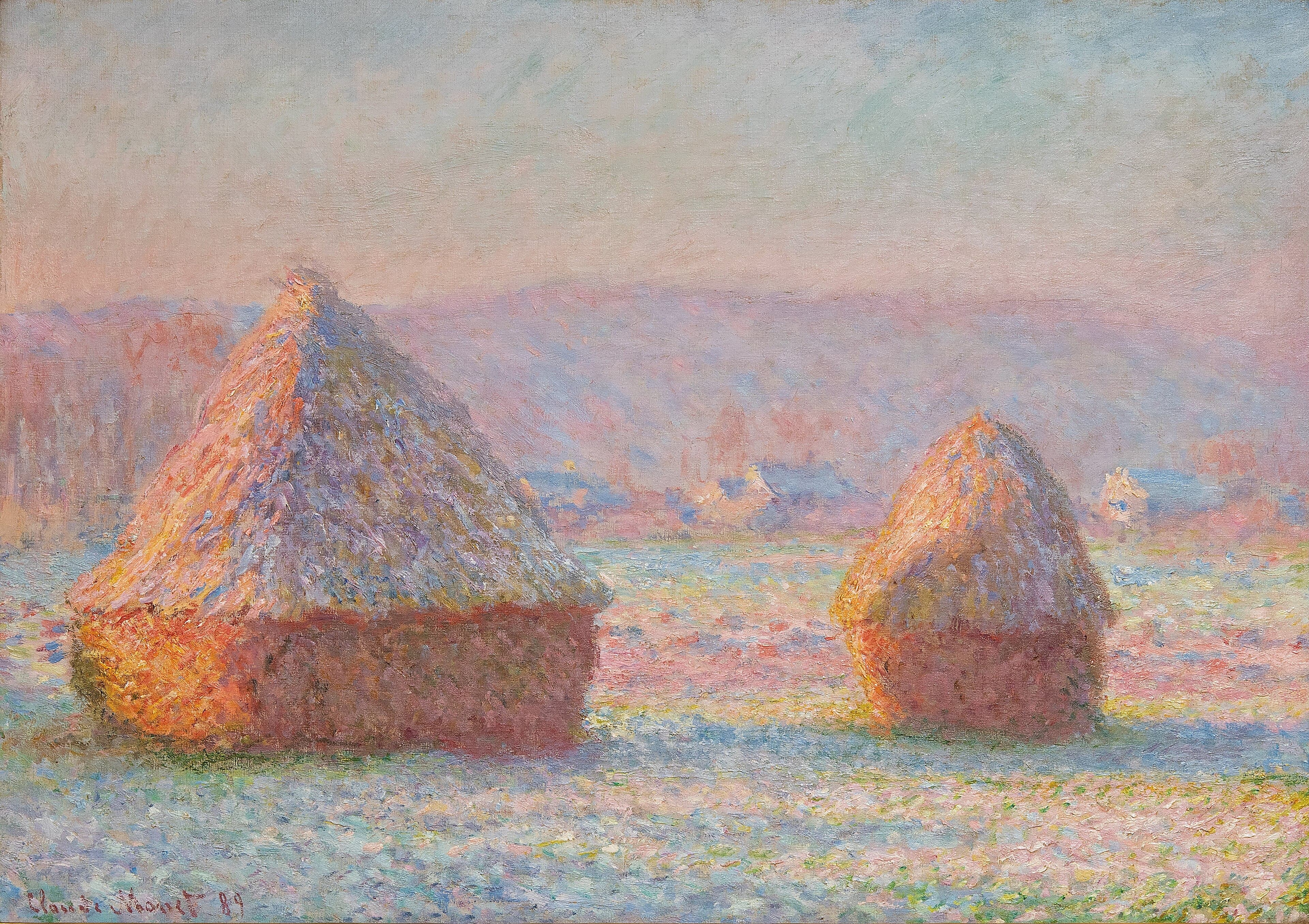
Grainstacks, White Frost Effect
Claude Monet · 1888–89

Springtime
Claude Monet · 1872
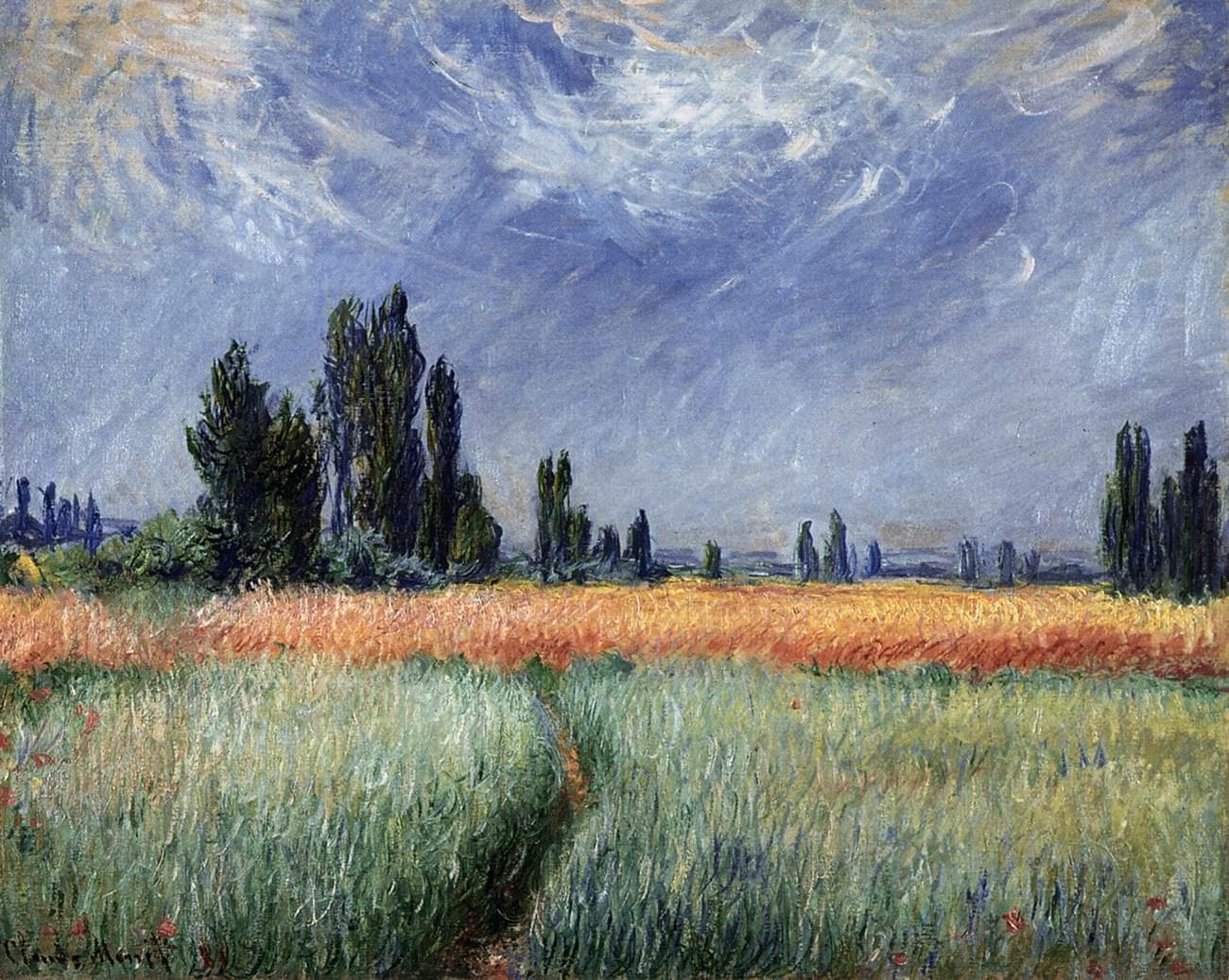
Wheat Field
Claude Monet · 1881
Anglers on the Seine at Poissy
Claude Monet · 1882
Boulevard Saint-Denis, Argenteuil, in Winter
Claude Monet · 1875