Image: Royal Collection Trust (reproduced from the catalogue Monet in the '90s) · Public domain · via Wikimedia Commons
Impressionism
Study of Rocks, Creuse ('Le Bloc')
Claude Monet, 1889
Study of Rocks, Creuse, nicknamed 'Le Bloc', is an 1889 painting by Claude Monet of a massive rocky hillside in the Creuse valley, glowing rust and orange under a blue sky. Once owned by Georges Clemenceau, it is in the British Royal Collection.
- Artist
- Claude Monet
- Date
- 1889
- Medium
- Oil on canvas
- Dimensions
- 72.4 × 91.4 cm
- Collection
- Royal Collection, United Kingdom
- Movement
- Impressionism
- Catalogue
- Wildenstein 1228
Study of Rocks, Creuse is one of the most powerful canvases Claude Monet painted in the spring of 1889 in the remote valley of the Creuse, in central France. It shows a single great hump of rock and heath, glowing in rust, orange and purple, that fills almost the whole picture, with only a sliver of blue sky above. Georges Clemenceau, its early owner, nicknamed it Le Bloc (The Block). Queen Elizabeth the Queen Mother bought it in 1949, and it remains in the Royal Collection.
What you're looking at
This is a landscape with almost no landscape. A steep, rounded hillside rises from the bottom edge to just below the top, its outline a long curve from upper left to right. The whole slope is covered in dense, wiry strokes of red-brown and orange, the color of dead bracken and heather in early spring, broken by outcrops of gray, blue and violet stone. On the right the slope falls away into a dark, shadowed cliff face of slate blue, deep green and black, with lighter yellow-green lichen on the ledges.
The sky is a narrow band of strong blue with a few white cumulus clouds. At the top left, a couple of bare trees in pale lilac stand on the ridge, small against the mass of the hill, and give it scale. There are no figures, no paths and no river, although the Creuse runs at the foot of the rock. The picture is about weight and color: a heavy, sunlit mass of earth pushing up against the sky.
From a distance the rock reads as a single warm shape; close up it breaks into separate strokes of nearly every color on Monet's palette, including greens and purples that are hard to see from across a room.
The Creuse campaign, 1889
In February 1889 Monet went to Fresselines, a village in the Creuse department, with the critic Gustave Geffroy, and stayed into May. The steep, rocky valley where two branches of the Creuse meet was wilder than anything he had painted before. He worked on some two dozen canvases there, painting the same few motifs at different times of day and under changing weather. It was a dry run for the true series that began a year later with the grainstacks; see the Haystacks series.
This rock rises above the junction of the two rivers. Monet painted the surrounding valley in similar color, for example in Valley of the Creuse (Sunlight Effect) in Boston and The Creuse, Sunset at the Musée Unterlinden. Le Bloc is the most compressed and monumental of the group.
How it was painted
The canvas is a standard size, about 72 by 91 centimeters. Monet covered it in a dense mesh of short, curving, overlapping strokes, building up the rock until its surface feels as rough as the thing itself. The reds and oranges are set against complementary blues and greens in the shadows, so the hill seems to glow. Paul Hayes Tucker, curator of the 1990 Monet in the '90s exhibition in Boston, called the picture majestic, and it has often been seen as a step toward the more abstract late work.
Clemenceau and the Queen Mother
The painting was among the Creuse canvases Monet showed at his joint exhibition with Auguste Rodin at the Galerie Georges Petit in Paris in June 1889. It passed to Monet's close friend Georges Clemenceau, the radical politician and later prime minister. The date is uncertain: Wildenstein gives 1899, but an 1891 catalogue already names Clemenceau as owner. It was Clemenceau who called it Le Bloc, probably also a political joke.
In 1949 the Queen (later the Queen Mother) bought it for £2,000, a bold purchase of a modern French painting for the British royal household. It hung at Clarence House, her London home, where Noël Coward, an amateur painter, came specially to see it. It remains in the Royal Collection and is occasionally lent or shown in Royal Collection exhibitions. For Monet's work on public display, see where to see Monet's paintings.
Questions & answers
Where is Monet's Study of Rocks, Creuse (Le Bloc)?
It is in the Royal Collection in the United Kingdom. Queen Elizabeth (later the Queen Mother) bought it in 1949, and it hung at Clarence House in London. It is shown occasionally in Royal Collection exhibitions.
When and where was Le Bloc painted?
Monet painted it in spring 1889 near Fresselines, in the Creuse department of central France, where he stayed from February to May painting the rocky river valley.
Why is the painting called Le Bloc?
The nickname, meaning 'the block', was given by its early owner Georges Clemenceau, the French statesman and Monet's friend. It describes the massive rock and probably also made a political pun.
Is Le Bloc part of a series?
It belongs to a group of about two dozen views of the Creuse valley painted in 1889, showing the same motifs under different light. The group anticipates the series Monet began in 1890 with the grainstacks.
More by the artist
Claude Monet

Bridge over a Pond of Water Lilies
Claude Monet · 1899

Woman with a Parasol – Madame Monet and Her Son
Claude Monet · 1875

Sunset in Venice
Claude Monet · 1908–12

La Grenouillère
Claude Monet · 1869

Beach in Pourville
Claude Monet · 1882

Springtime
Claude Monet · 1872

Boating on the River Epte
Claude Monet · 1890

The Seine at Asnières (Hermitage)
Claude Monet · 1873
Also painted in 1889
The same year
Kindred works
You may also study
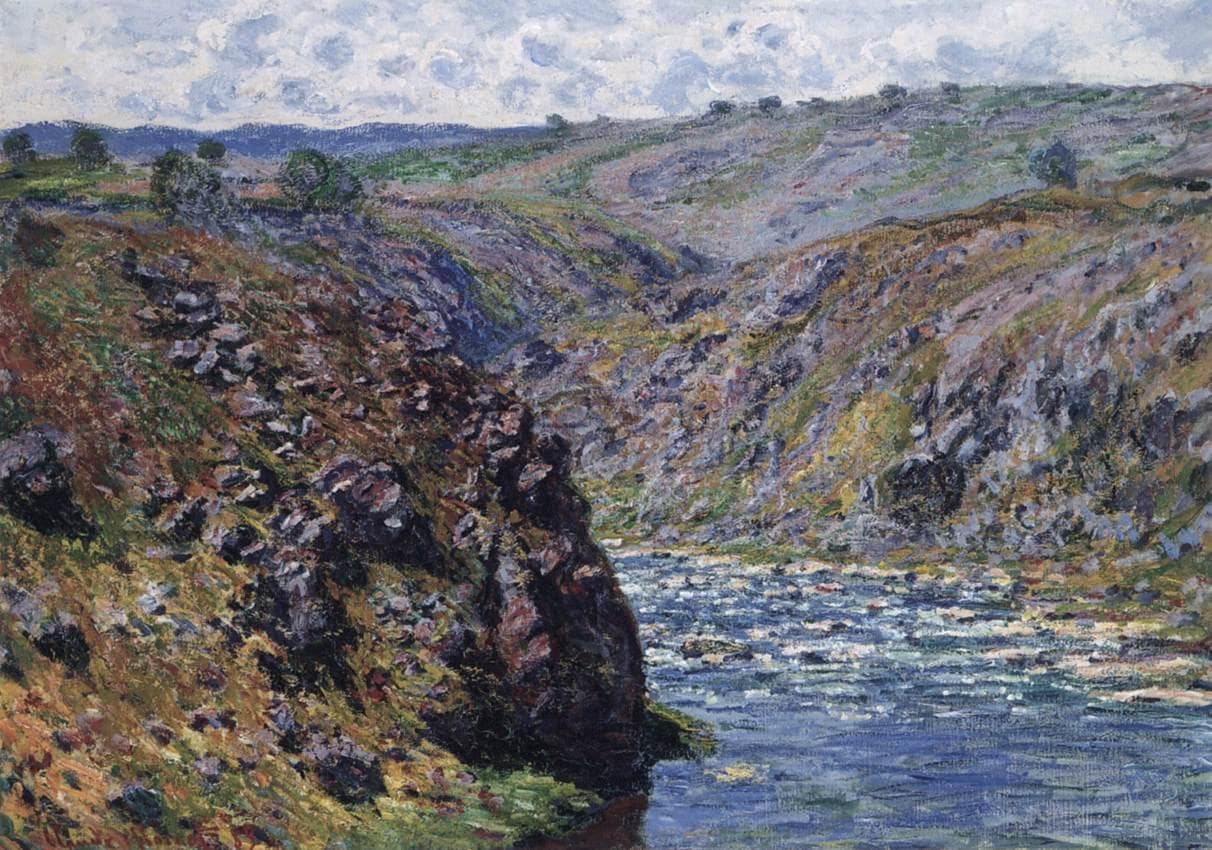
Valley of the Creuse (Sunlight Effect)
Claude Monet · 1889
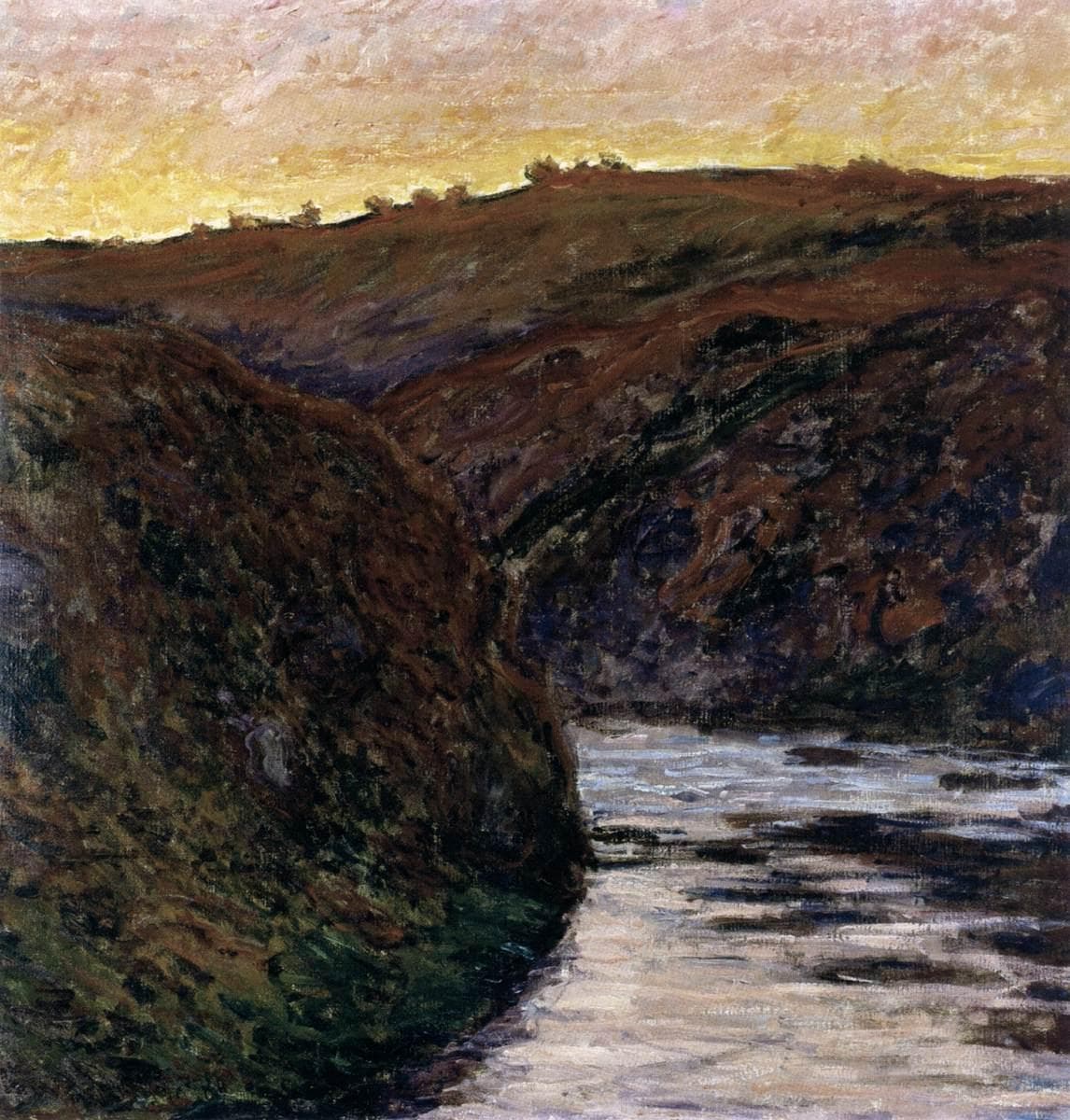
The Creuse, Sunset
Claude Monet · 1889
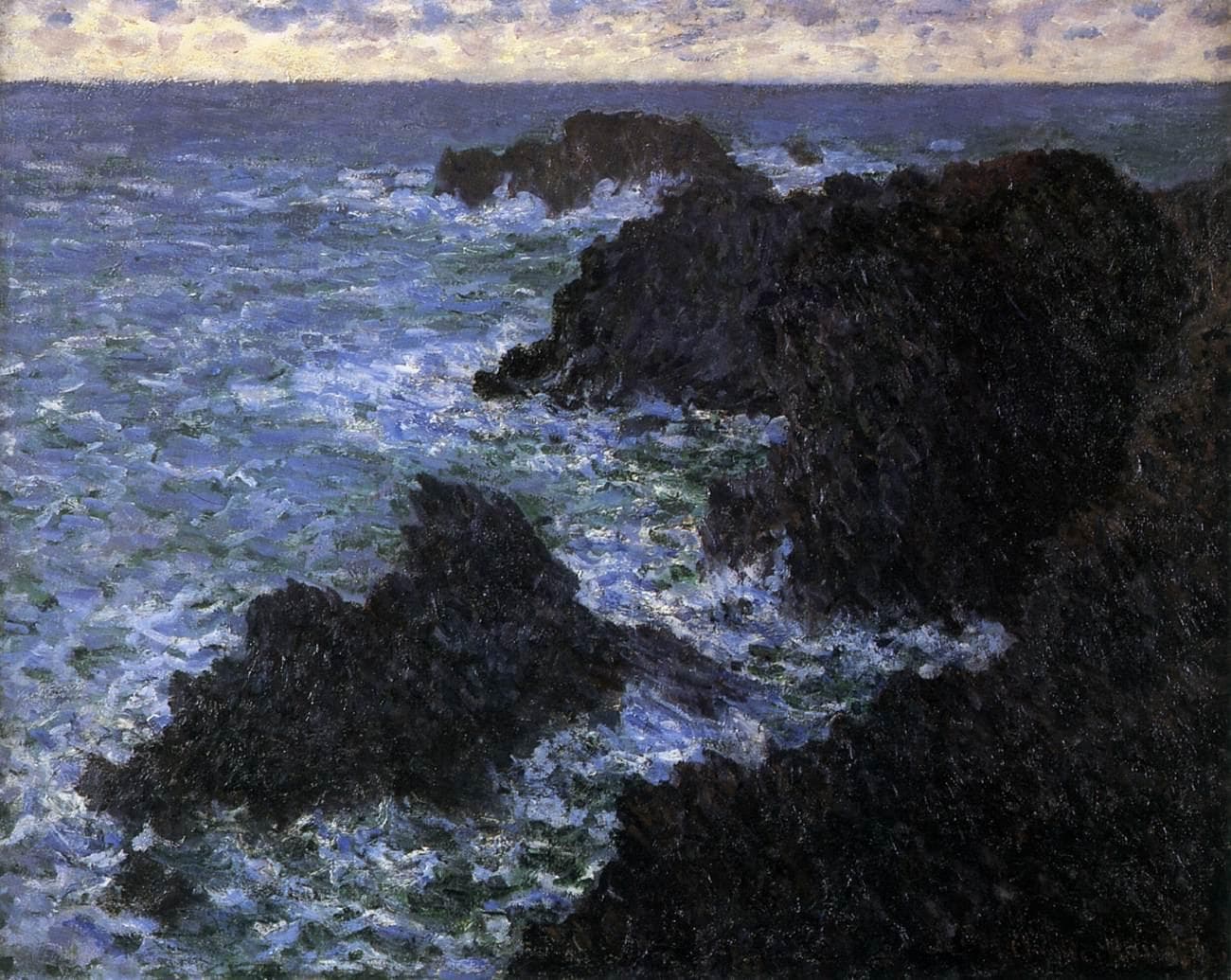
The Rocks of Belle-Île, the Wild Coast
Claude Monet · 1886
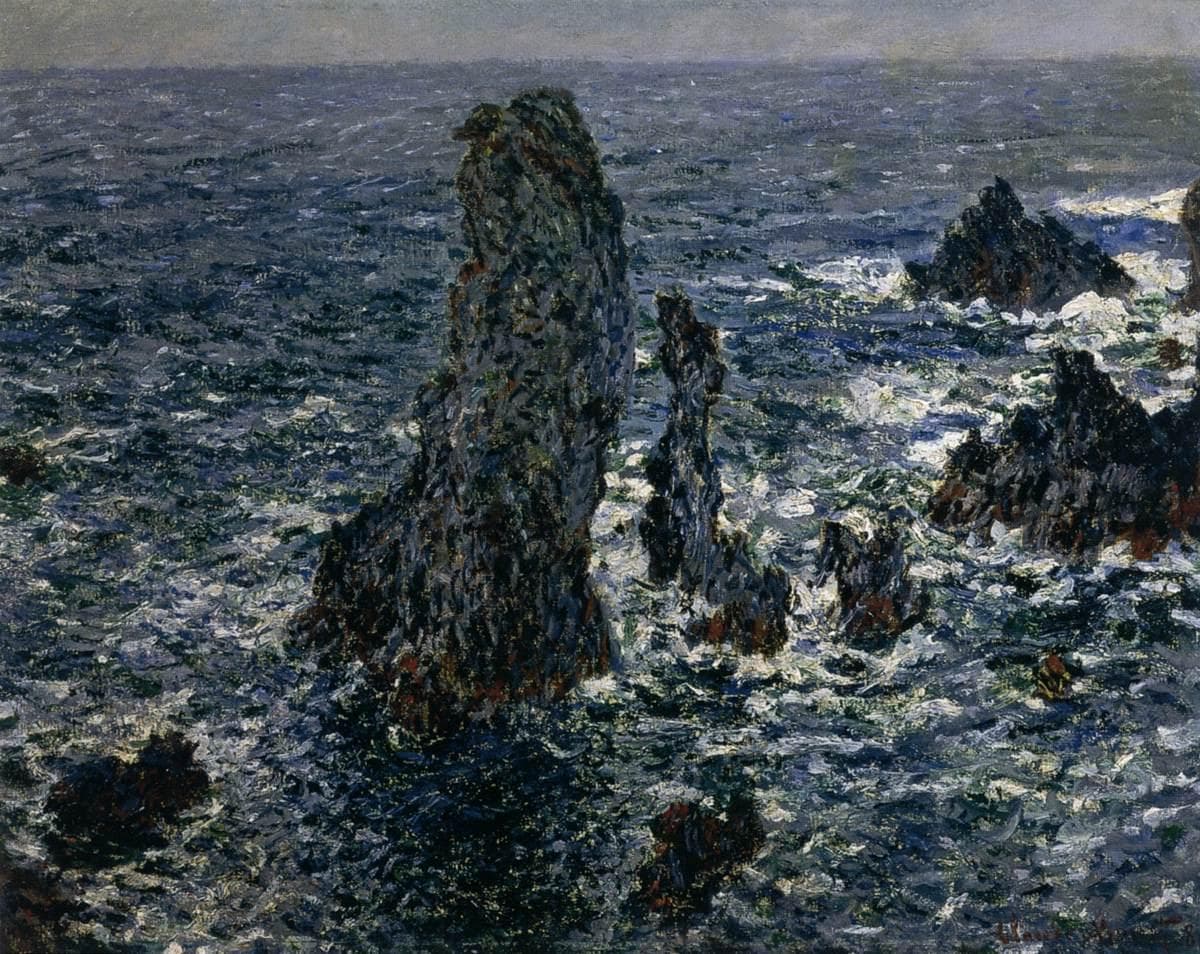
The Pyramides at Port-Coton, Rough Sea
Claude Monet · 1886
Grainstack (Snow Effect)
Claude Monet · 1891

The Scream
Edvard Munch · 1893

Ophelia
John Everett Millais · 1851–52

The Great Wave off Kanagawa
Katsushika Hokusai · c. 1830–32