Image: Ohara Museum of Art, Kurashiki, via Google Arts & Culture · Public domain · via Wikimedia Commons
Haystacks (Ohara Museum, 1885)
Claude Monet, 1885
Haystacks (1885) is a summer meadow at Giverny by Claude Monet, with two figures resting in the shade of a large grainstack beneath a row of poplars. It is in the Ohara Museum of Art in Kurashiki, Japan.
- Artist
- Claude Monet
- Date
- 1885
- Medium
- Oil on canvas
- Dimensions
- 65.2 × 81.5 cm
- Collection
- Ohara Museum of Art, Kurashiki, Okayama, Japan
- Movement
- Impressionism
- Catalogue
- Wildenstein 994
- Nature & Landscape
Haystacks in the Ohara Museum of Art is a summer landscape Claude Monet painted at Giverny in 1885, five years before his famous series. A large grainstack stands at right with two small figures resting in its shade, a smaller stack sits in the sunny field at left, and a row of tall poplars runs across the background under a blue sky with drifting cloud. It belongs to the Ohara Museum of Art in Kurashiki, Okayama Prefecture, Japan's first museum devoted to Western art.
What you are looking at
The canvas is about 65 by 82 cm. The big stack, right of center, is a softly rounded cone painted in mauve, gold and gray-green, its top lit by the sun, its body in shadow. At its foot, in the cool shade on its left side, two figures sit or lie in the grass: one in a pale dress and a broad hat, another, darker, next to her. They are painted with just a few strokes, but they turn the scene into a summer afternoon of rest after work in the fields.
At left, much further back, a small stack catches full sun and glows orange. Between the two runs a band of bright, yellow-green meadow, crossed by a broad shadow in the foreground that stretches from left to right. Behind, the poplars and other trees form a high, broken wall of green and blue, with glimpses of hills between them. The sky is a lively mix of white cloud and patches of blue. The signature is at lower right.
Where and when it was painted
Monet moved to Giverny, a village on the Seine about 75 km northwest of Paris, in April 1883, with Alice Hoschedé and their combined family of eight children. The meadows around the house, flat land between the village and the river Epte, became his everyday painting ground. In the summers of 1884 to 1886 he painted several pictures of the tall, round grainstacks the local farmers built after the harvest, each with its pointed thatch. They were scenes of summer meadows with poplars and figures, not yet the concentrated studies of light that the Haystacks series of 1890–91 would become. Our Giverny hub covers the place and its gardens.
How it was painted
Monet painted in the meadow, using short, feathery strokes that make the grass and leaves tremble. The shadow areas are full of color: the stack's shaded side is mauve and green rather than brown, and the shadow on the meadow is blue-green. The figures are placed in that shade, so that the eye finds them only after it has taken in the stack. Compared with the later series, the handling is lighter and more varied, and the picture is about the pleasures of the place as much as about light.
How this version differs
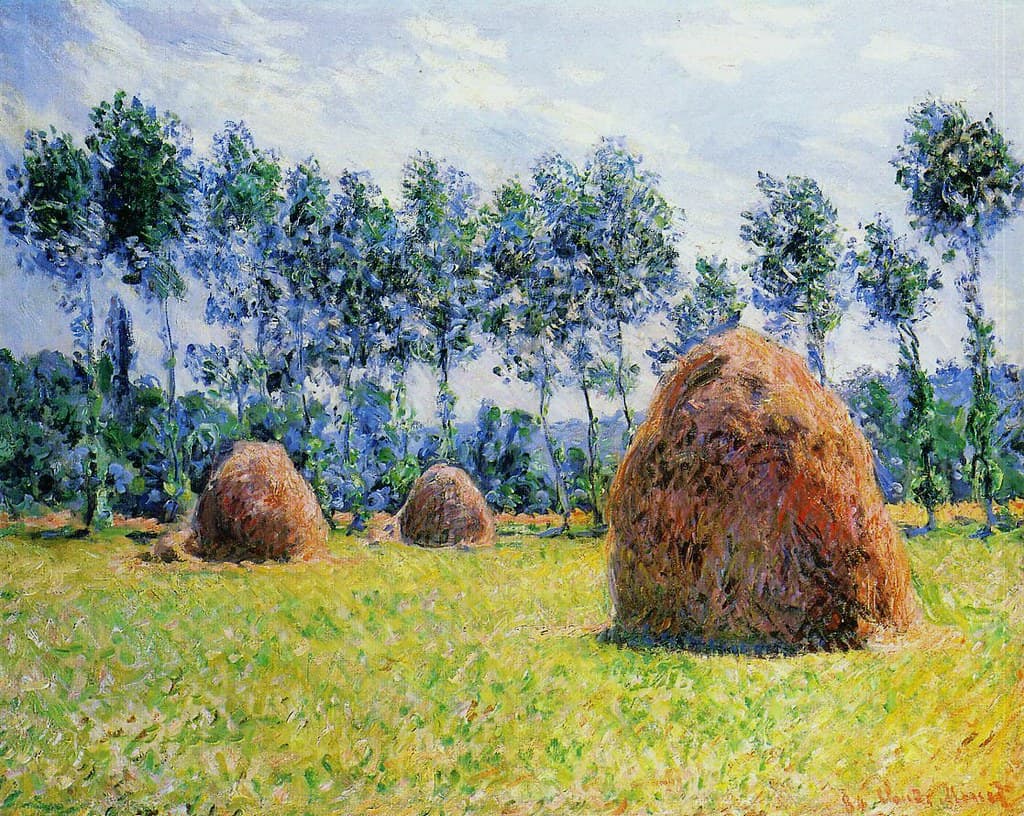
Among the 1884–86 meadow pictures, this one gives figures the greatest presence. In the Pola Museum's Haystacks at Giverny of 1884 there are no people; in the privately owned Haystacks at Giverny of 1885, figures with a red parasol stand at the left edge. The MFA Boston's Meadow with Haystacks of the same year shows the stacks pushed to the edge of a long, shadowed meadow. In the Haystacks series of 1890–91, Monet would remove both the figures and the trees.
Japan and Monet
The Ohara Museum was founded in 1930 by the Kurashiki industrialist Magosaburo Ohara, largely on the basis of Western paintings bought in Europe in the 1920s by his friend, the painter Torajiro Kojima. It holds an important group of Impressionist works, and its garden includes water lilies descended from plants at Giverny. This Haystacks is one of its best-known pictures.
The stacks before the series
Comparing this canvas with the 1890–91 Haystacks shows how far Monet's idea developed in five years. Here the stack is one element in a landscape, sharing the picture with trees, sky and people. In the series, the stack becomes a monumental single form, almost a building, and the subject shifts from the place to the light falling on it. This summer picture shows where that idea began.
Where to see it
The painting is in the Ohara Museum of Art, in the historic Bikan quarter of Kurashiki. See also where to see Monet's paintings.
Questions & answers
Where is Monet's Haystacks in Japan?
This 1885 Haystacks is in the Ohara Museum of Art in Kurashiki, Okayama Prefecture. Founded in 1930 by Magosaburo Ohara, it was Japan's first museum of Western art, and its garden includes water lilies from Monet's Giverny.
When was it painted?
In summer 1885 at Giverny, where Monet had settled two years earlier. It predates his famous Haystacks series of 1890–91 by five years.
What does the painting show?
A summer meadow with a large grainstack at right, two figures resting in its shade, a smaller sunlit stack at left and a row of tall poplars across the background under a cloudy blue sky.
How is it different from the later Haystacks series?
The 1890–91 series isolates one or two stacks against a low horizon and studies changing light through autumn and winter. This earlier picture is a broader summer landscape with trees and figures, closer to a scene of country life.
More by the artist
Claude Monet
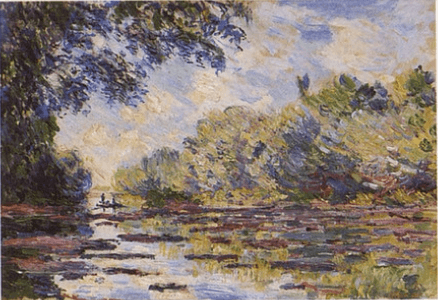
Bras de Seine à Giverny
Claude Monet · 1885
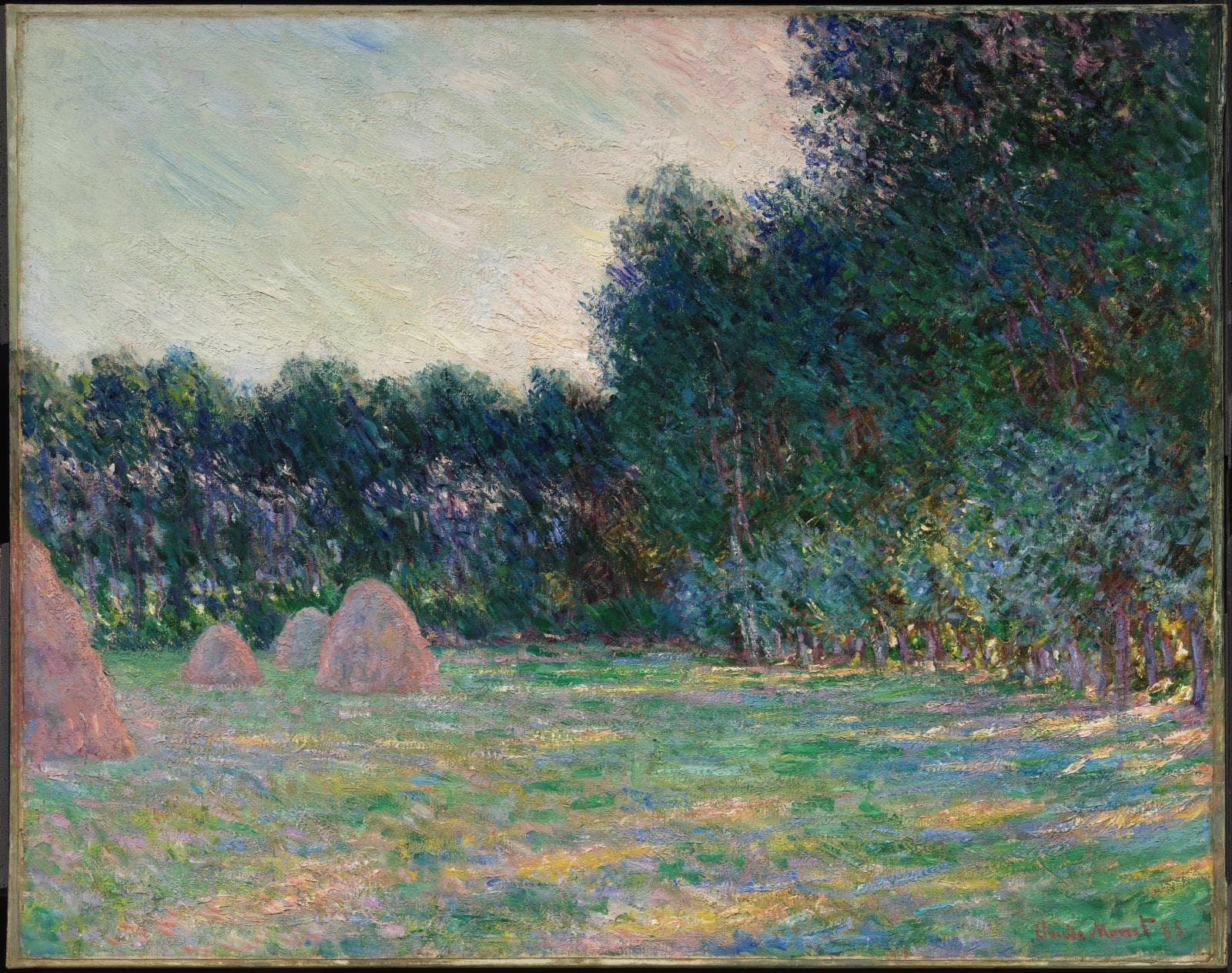
Meadow with Haystacks near Giverny
Claude Monet · 1885
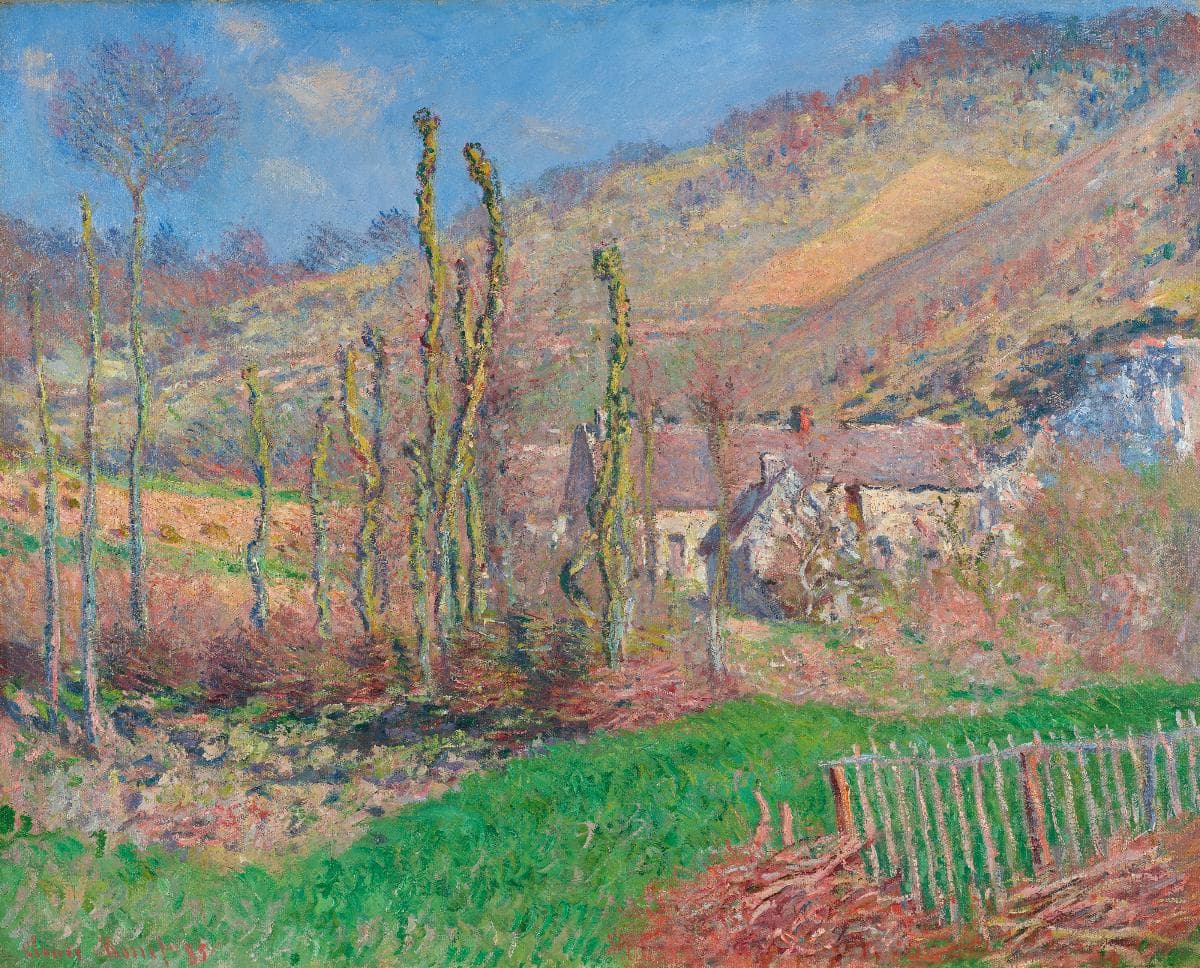
Winter Landscape at the Val de Falaise (Giverny)
Claude Monet · 1885
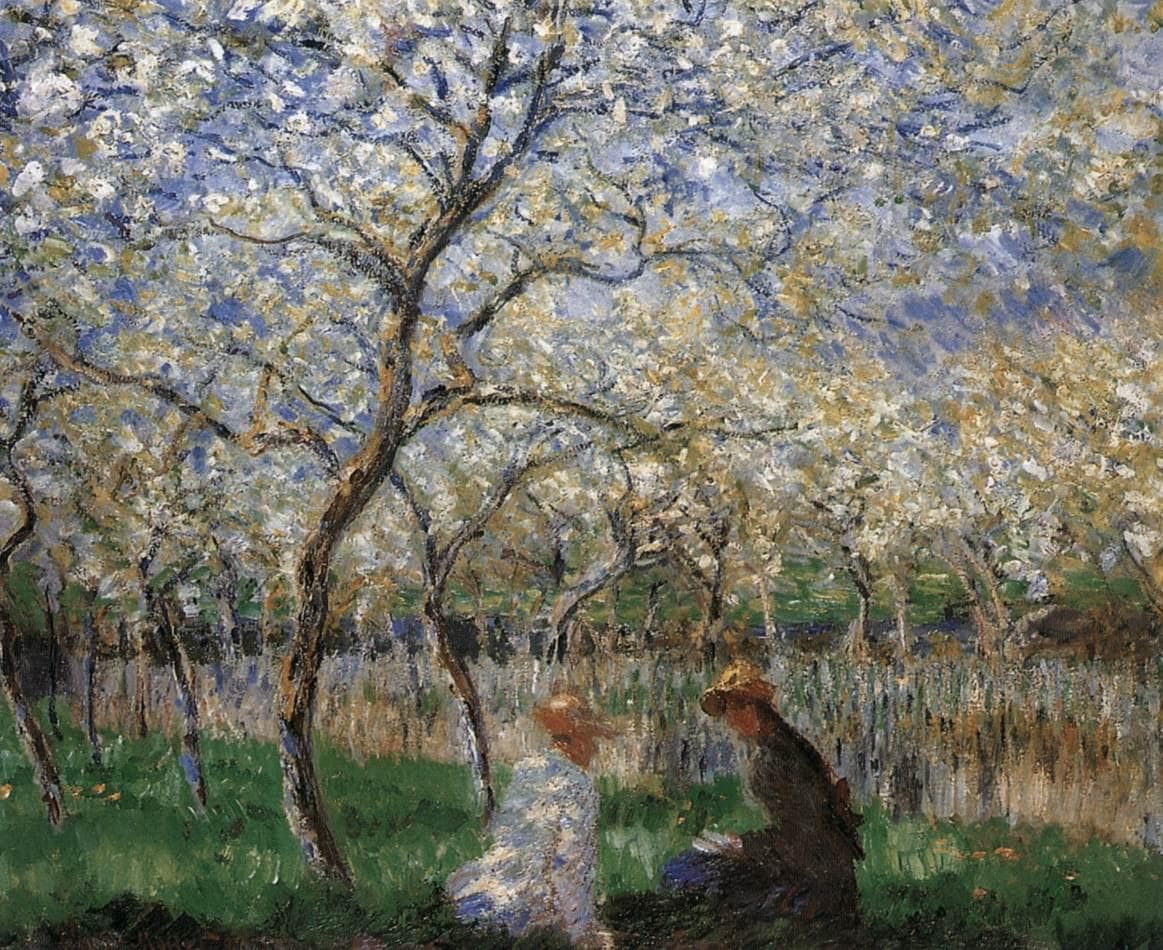
Spring
Claude Monet · 1886
Sailboat, Evening Effect
Claude Monet · 1885
Manne-Porte, Étretat
Claude Monet · 1885
Woman with a Parasol, Facing Left
Claude Monet · 1886
Self-Portrait in Beret
Claude Monet · 1886
Also painted in 1885
The same year
Poppy Field, Around Giverny
Claude Monet · 1885
The Departure of the Boats, Étretat
Claude Monet · 1885
The Cliff of Aval, Étretat
Claude Monet · 1885
Fishing Boats at Étretat
Claude Monet · 1885
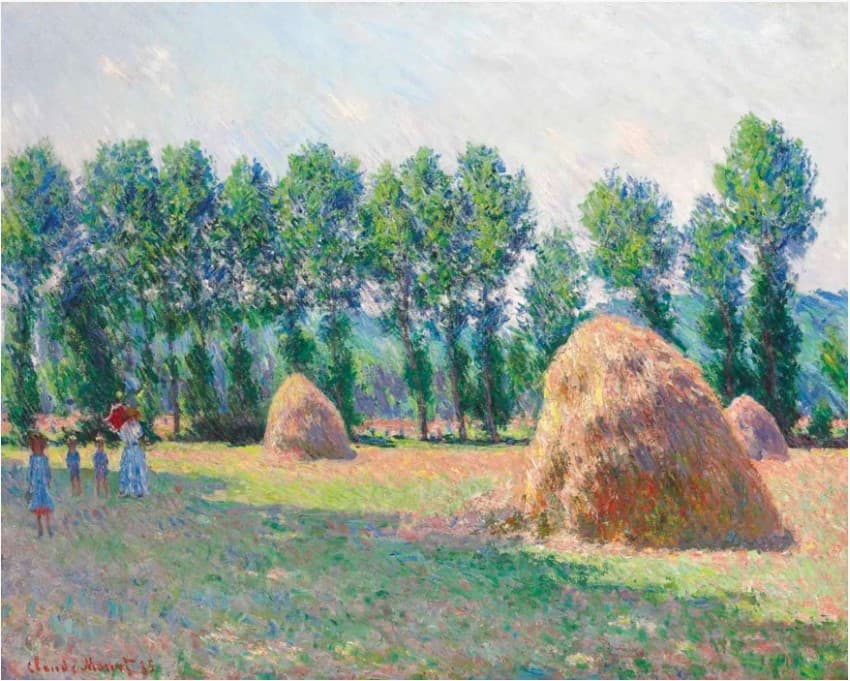
Haystacks at Giverny (1885)
Claude Monet · 1885
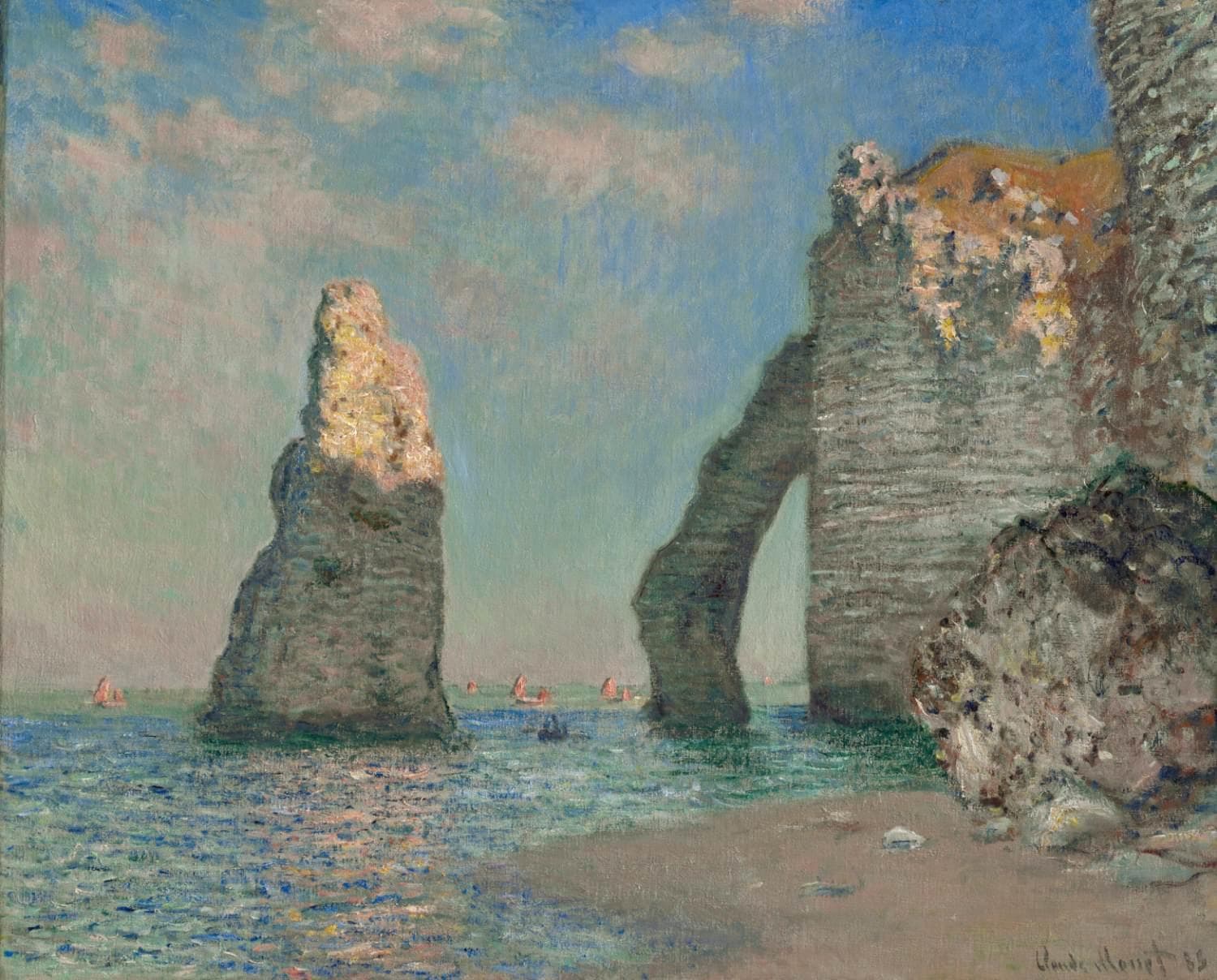
The Cliffs at Étretat
Claude Monet · 1885
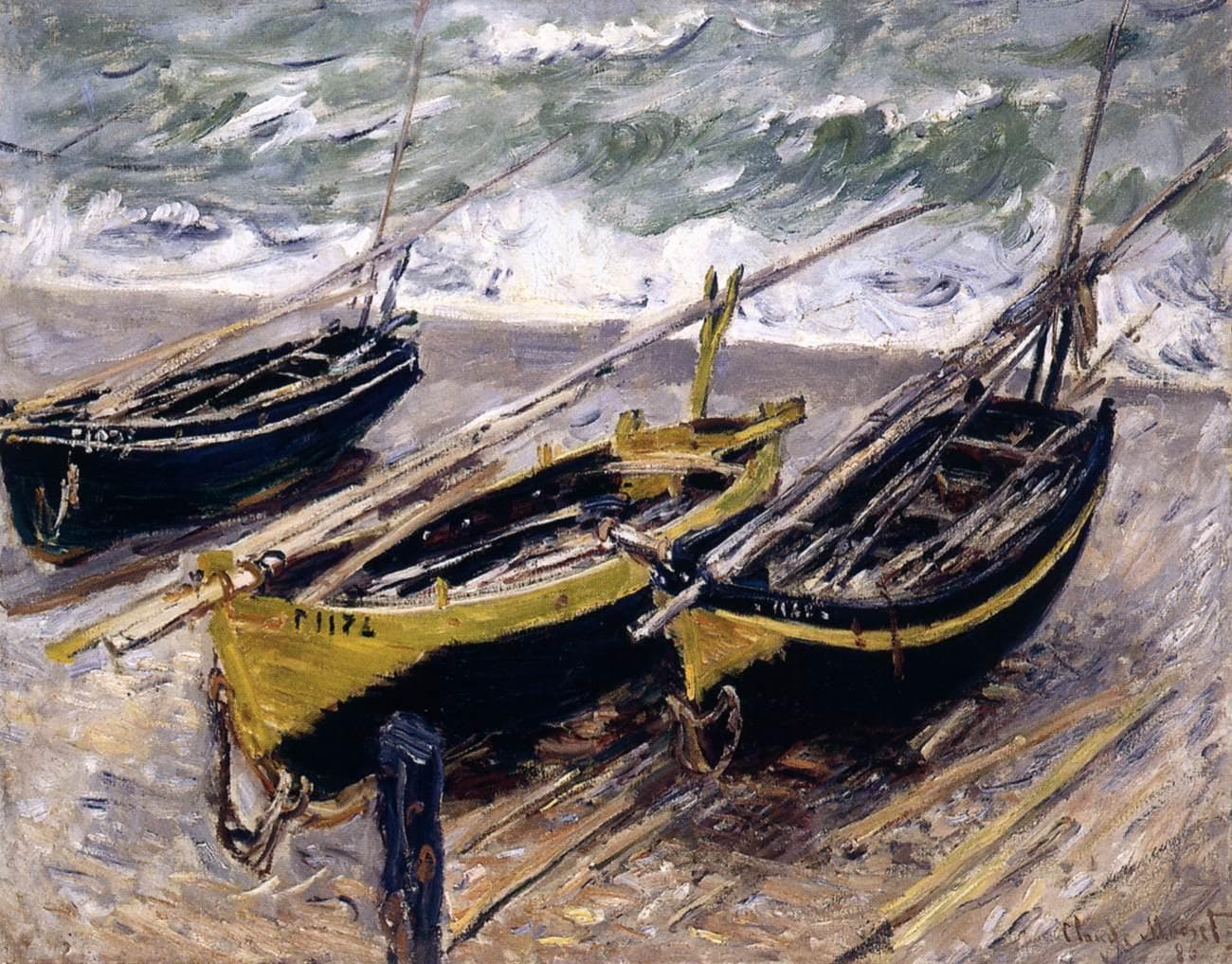
Three Fishing Boats
Claude Monet · 1885
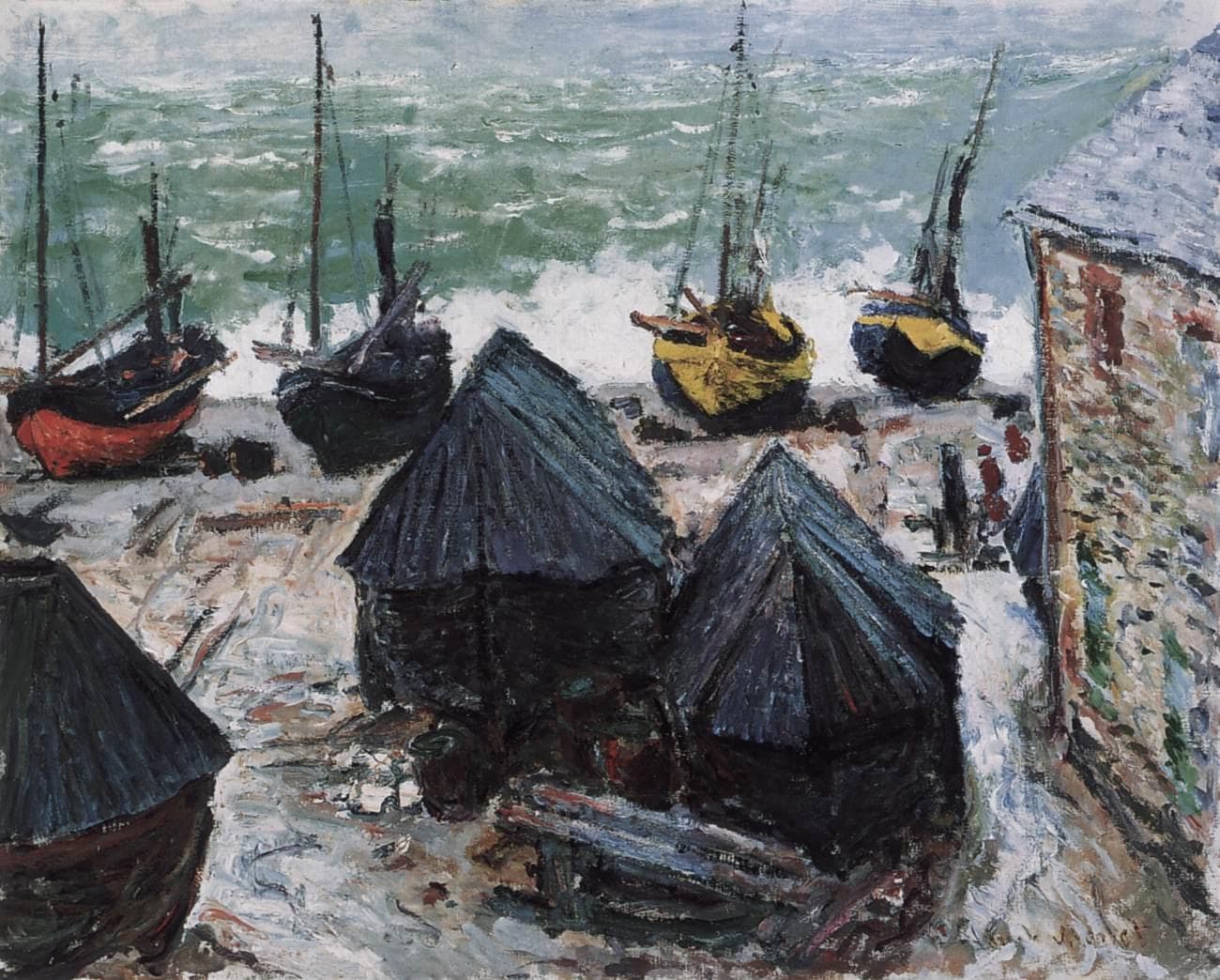
Boats on the Beach at Étretat
Claude Monet · 1885
Kindred works
You may also study
Haystacks at Giverny (1884)
Claude Monet · 1884
Haystacks at Giverny (1885)
Claude Monet · 1885
Haystack near Giverny
Claude Monet · 1884–89
Haystack at Giverny
Claude Monet · 1886
The Breakup of the Ice at Lavacourt
Claude Monet · 1880
The Japanese Footbridge and the Water Lily Pool, Giverny
Claude Monet · 1899
Morning on the Seine, near Giverny (1896)
Claude Monet · 1896
Argenteuil
Claude Monet · c. 1872