Image: Museum of Fine Arts, Boston · CC BY-SA 4.0 · via Wikimedia Commons
Meadow with Haystacks near Giverny
Claude Monet, 1885
Meadow with Haystacks near Giverny (1885) is Claude Monet's view of a long meadow in late-day light, four grainstacks at left and a dark wall of trees at right. It is in the Museum of Fine Arts, Boston, bequest of Arthur Tracy Cabot.
- Artist
- Claude Monet
- Date
- 1885
- Medium
- Oil on canvas
- Dimensions
- 74 × 93.5 cm
- Collection
- Museum of Fine Arts, Boston, Boston, United States
- Movement
- Impressionism
- Catalogue
- Wildenstein 995
- Nature & Landscape
Meadow with Haystacks near Giverny (Prairie aux meules près de Giverny) is a landscape Claude Monet painted in 1885, two years after settling at Giverny. A deep meadow stretches away from us, striped with long shadows; four grainstacks stand at the far left, one cut by the edge of the canvas, and a massive bank of trees in dark green, blue and violet rises on the right under a pale, pinkish sky. It has been in the Museum of Fine Arts, Boston, since 1942, the bequest of Dr. Arthur Tracy Cabot.
What you are looking at
The canvas is fairly large, 74 by 93.5 cm, and its composition is unusual. Instead of placing the stacks at the center, Monet pushed them to the left edge: the nearest is cut in half by the frame, and three more, smaller and pinkish, sit further back in a line. The right half is filled by the trees, painted as a single dark mass of interlocking strokes, from which a few slender trunks emerge at the base.
The meadow is the true subject. It is crossed by broad bands of shadow cast by the trees, cool blue-green, alternating with strips of sunlit grass in yellow, pink and pale green. These bands, running diagonally toward the left, tell us the sun is low and behind the trees, probably late in the afternoon. The sky, laid in with long, slanting strokes of cream, pink and lilac, is pale and luminous. The signature, in red, is at lower right.
Where and when it was painted
Monet settled at Giverny in April 1883. In his first summers there he painted the surrounding fields again and again, including several pictures of the grainstacks the farmers built after harvest, set in meadows bordered by poplars and willows. This canvas belongs to that group, which also includes the Ohara Museum's Haystacks and the privately owned Haystacks at Giverny, both of 1885. Our Giverny hub covers the place.
How it was painted
The brushwork is fluid and directional. In the trees, Monet used short, curving strokes, layered wet into wet, to suggest dense foliage in shadow. In the meadow, longer horizontal strokes follow the lie of the land and the direction of the shadows. The color is rich: the shadows are blue, green and violet, the lit grass pink and gold, and the stacks pick up the warm light of the sky. The contrast between the heavy dark trees and the airy meadow gives the picture its strength.
Lilla Cabot Perry and the Boston connection
The painting's history ties it to the circle of American painters at Giverny. According to the MFA, Monet sold it to Durand-Ruel in December 1885. In 1899 the Boston painter Lilla Cabot Perry, who spent many summers at Giverny as Monet's neighbor and promoted his work in Boston, acquired it for her brother, Arthur Tracy Cabot, a surgeon and MFA trustee. It passed to his widow and came to the museum in 1942. Boston's early enthusiasm for Monet, which Perry did much to encourage, is why the city holds one of the largest Monet collections in the world.
How this version differs
Compare the stack-centered Haystacks at Giverny of 1884 in the Pola Museum, where three stacks stand in full sun. Here the stacks are marginal and the shadowed meadow takes over. In the Haystacks series of 1890–91, Monet reversed the emphasis again, moving close to one or two stacks; the MFA owns one of those too, Grainstack (Sunset).
Light at the end of the day
The long shadows stretching across the grass are the clearest clue to the time of day. With the sun low behind the trees, the meadow is divided into alternating bands of cool and warm color, and the haystacks at the far left still catch the last direct light on their tops. Monet would make this kind of effect, low sun and long shadow, the subject of many of the 1890–91 canvases, but here it serves a broader view of the landscape.
Where to see it
The painting is in the Museum of Fine Arts, Boston (inv. 42.541); the MFA's records have listed it as not on view at times, so check the online collection. See our Monet at the MFA Boston guide and where to see Monet's paintings.
Questions & answers
Where is Monet's Meadow with Haystacks near Giverny?
In the Museum of Fine Arts, Boston (inv. 42.541), the bequest of Dr. Arthur Tracy Cabot in 1942. It is not always on display, so check the MFA's online collection before visiting.
When was it painted?
In 1885, two years after Monet moved to Giverny. It belongs to a small group of summer meadow pictures with grainstacks that came before his famous Haystacks series of 1890–91.
What does the painting show?
A long meadow near Giverny striped with late-afternoon shadows, with four grainstacks at the far left, one cut by the frame, and a dark mass of trees filling the right side under a pale pink sky.
Who owned it before the MFA?
Monet sold it to Durand-Ruel in 1885. In 1899 the painter Lilla Cabot Perry, Monet's neighbor and friend at Giverny, bought it for her brother Arthur Tracy Cabot, a Boston surgeon. It came to the museum through his bequest in 1942.
More by the artist
Claude Monet
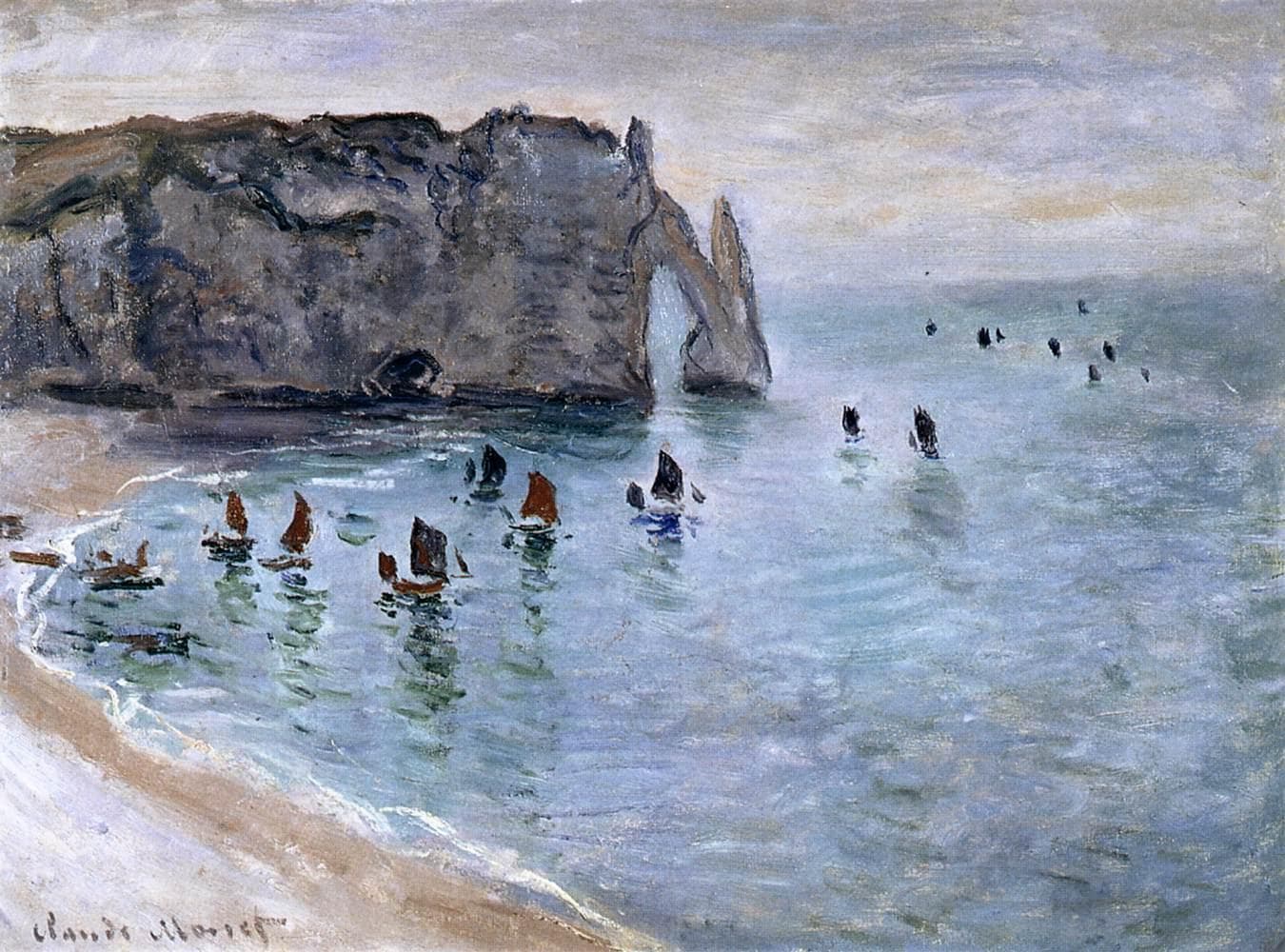
Étretat, the Porte d'Aval: Fishing Boats Leaving the Harbor
Claude Monet · 1885
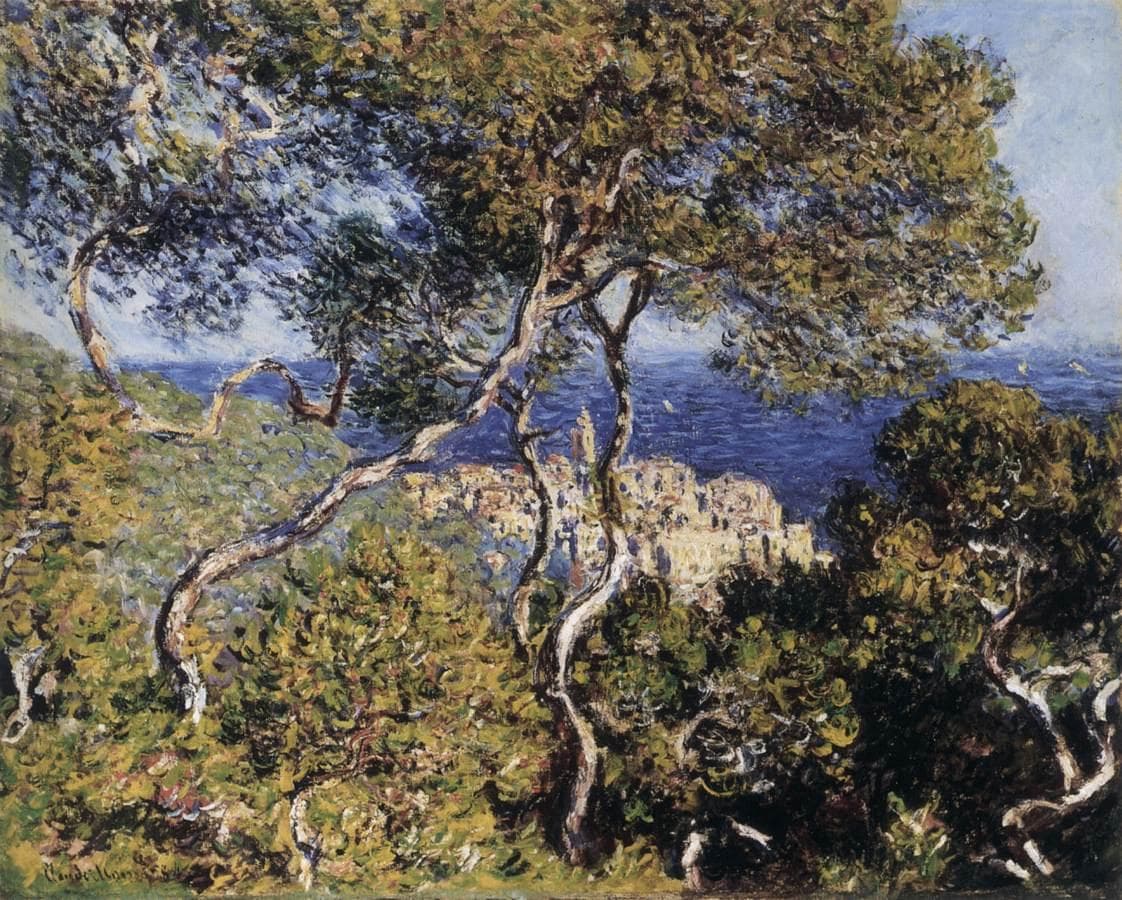
Bordighera
Claude Monet · 1884
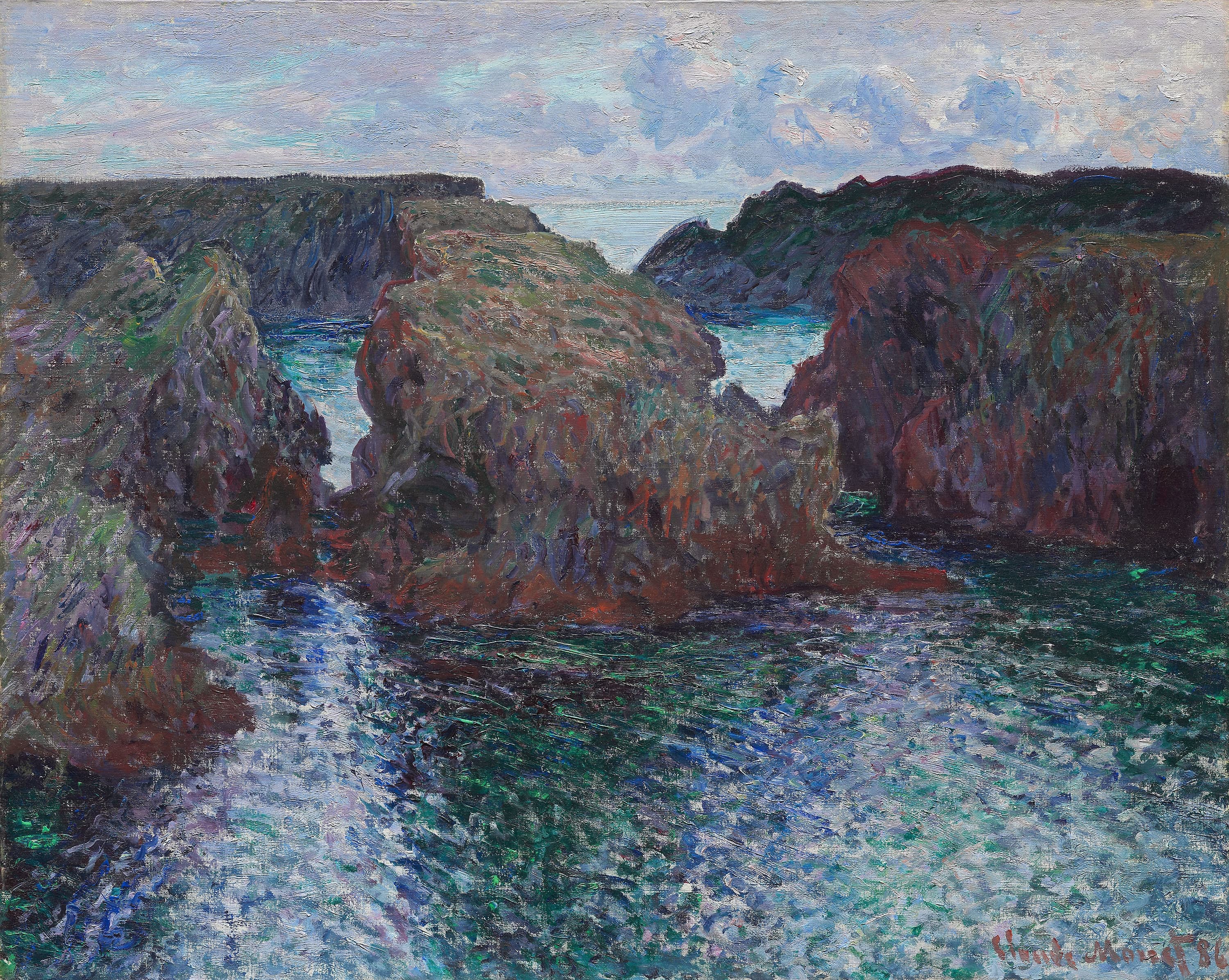
Rocks at Port-Goulphar, Belle-Île
Claude Monet · 1886
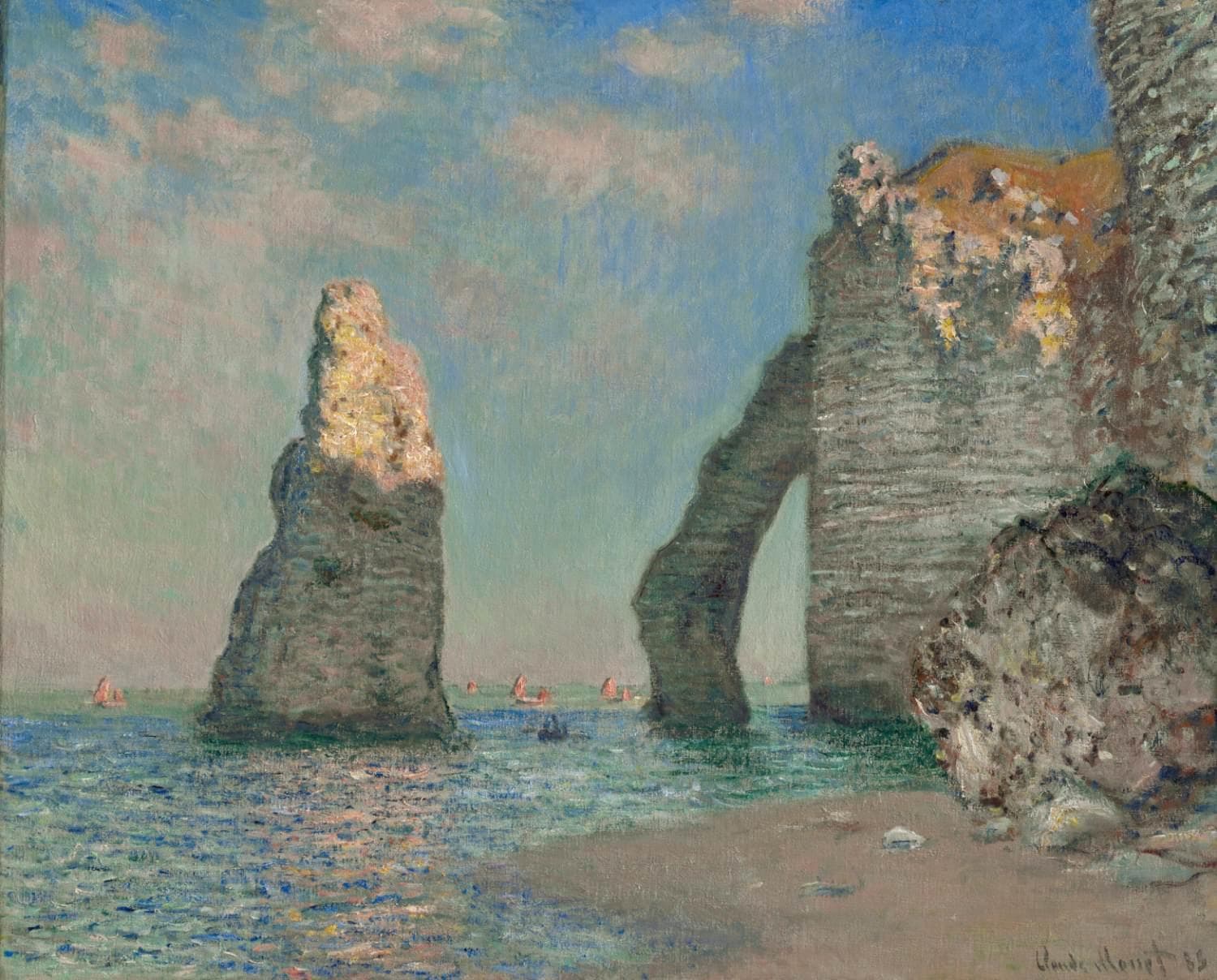
The Cliffs at Étretat
Claude Monet · 1885
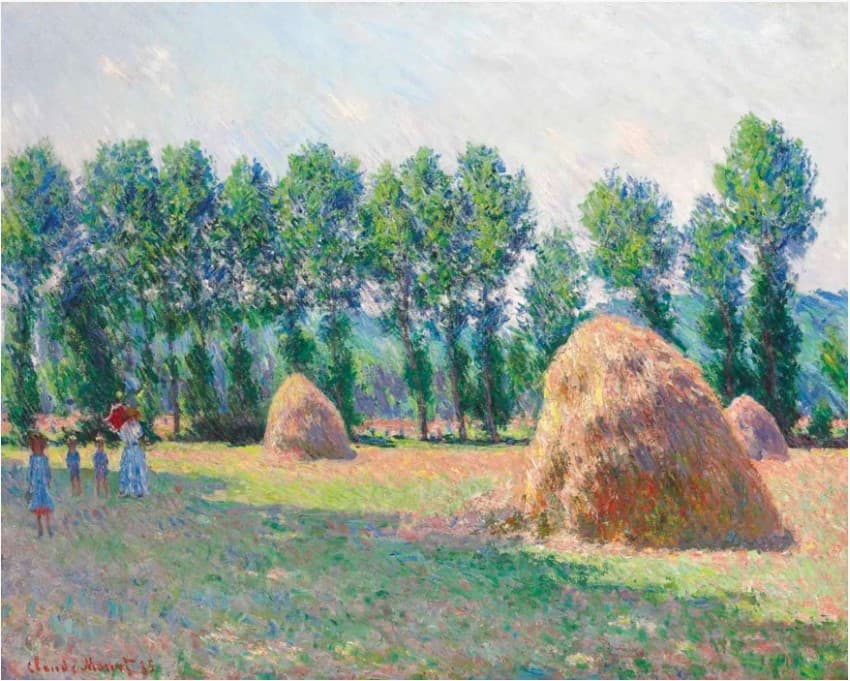
Haystacks at Giverny (1885)
Claude Monet · 1885
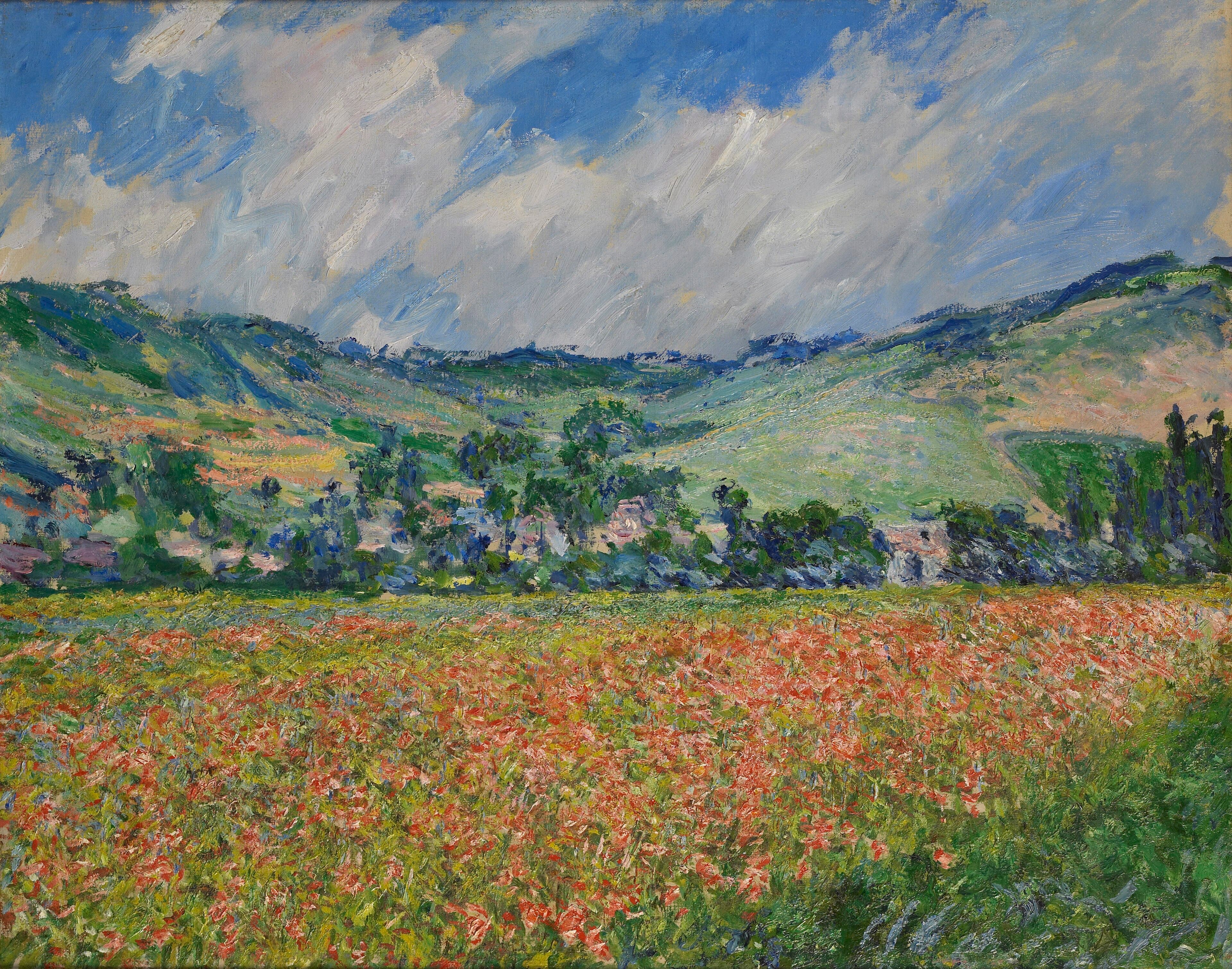
Poppy Field, Around Giverny
Claude Monet · 1885
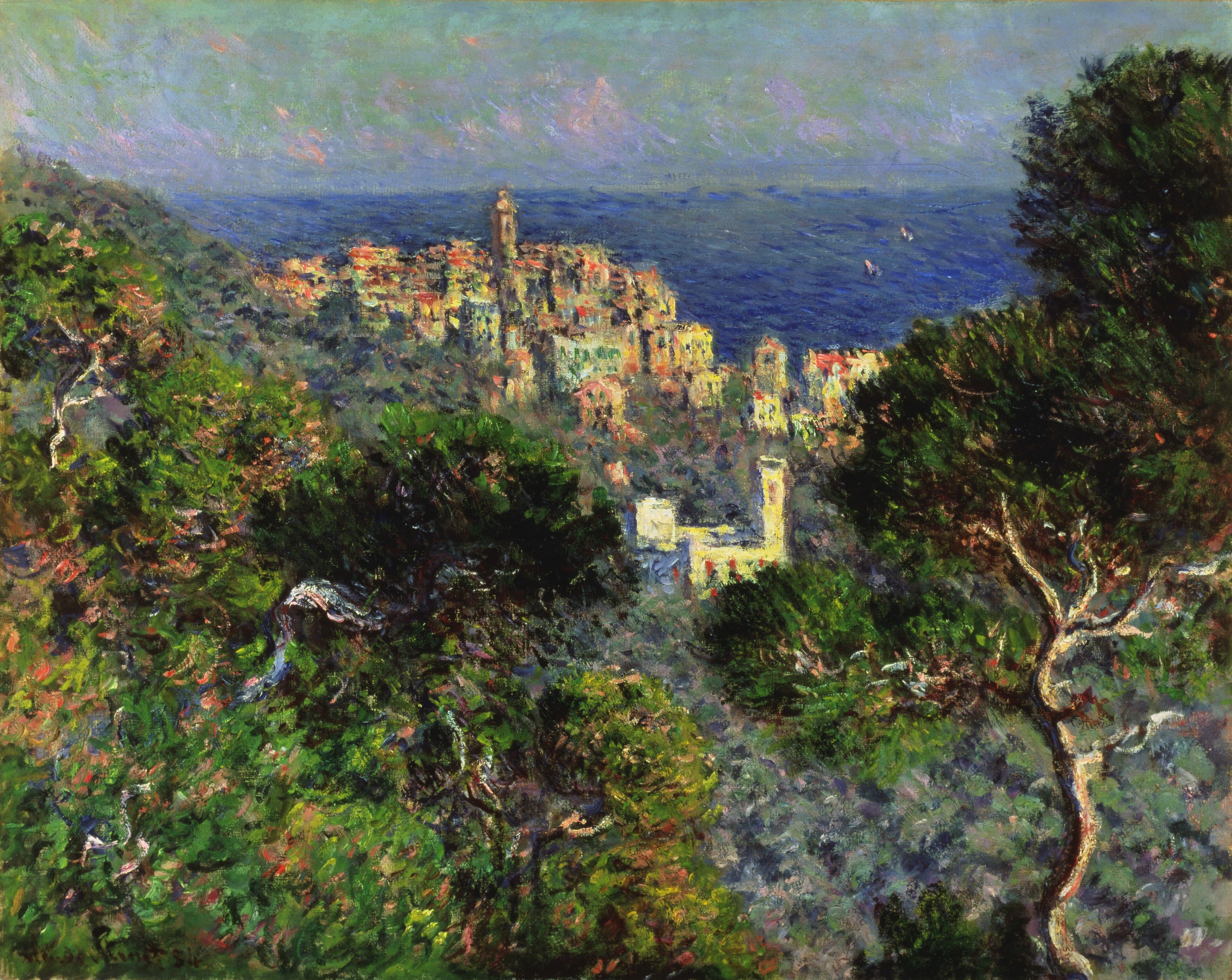
View of Bordighera
Claude Monet · 1884
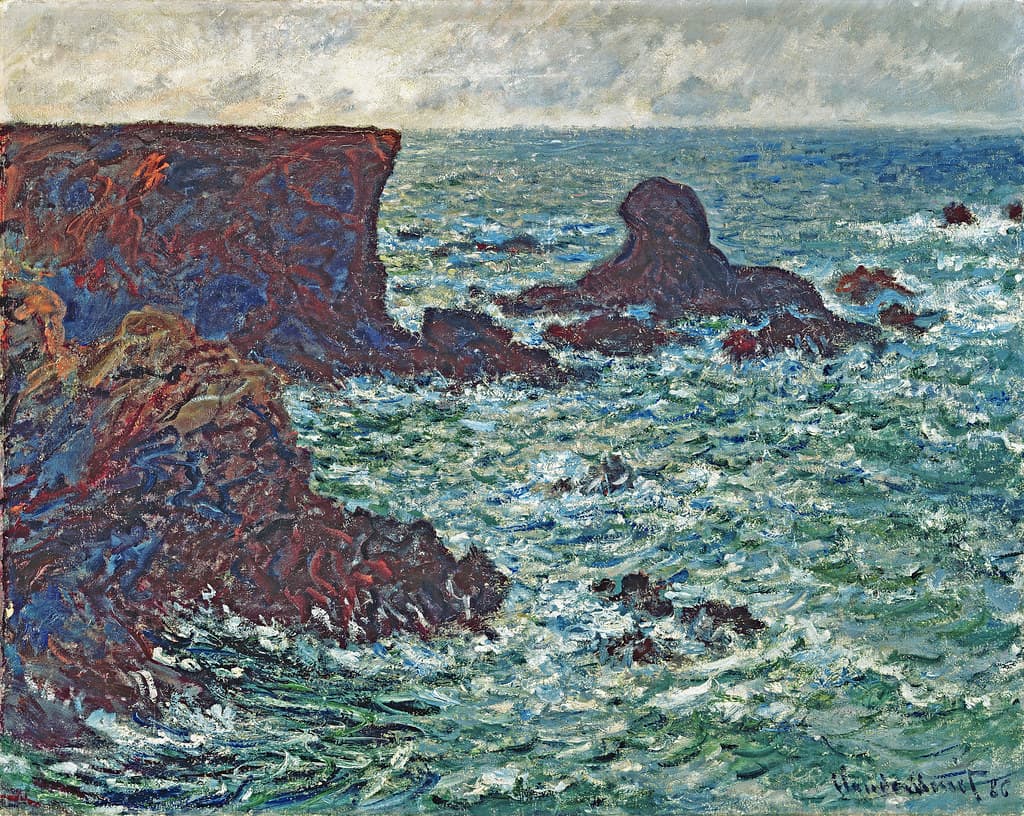
Rocks at Port-Coton, the Lion Rock, Belle-Île
Claude Monet · 1886
Also painted in 1885
The same year
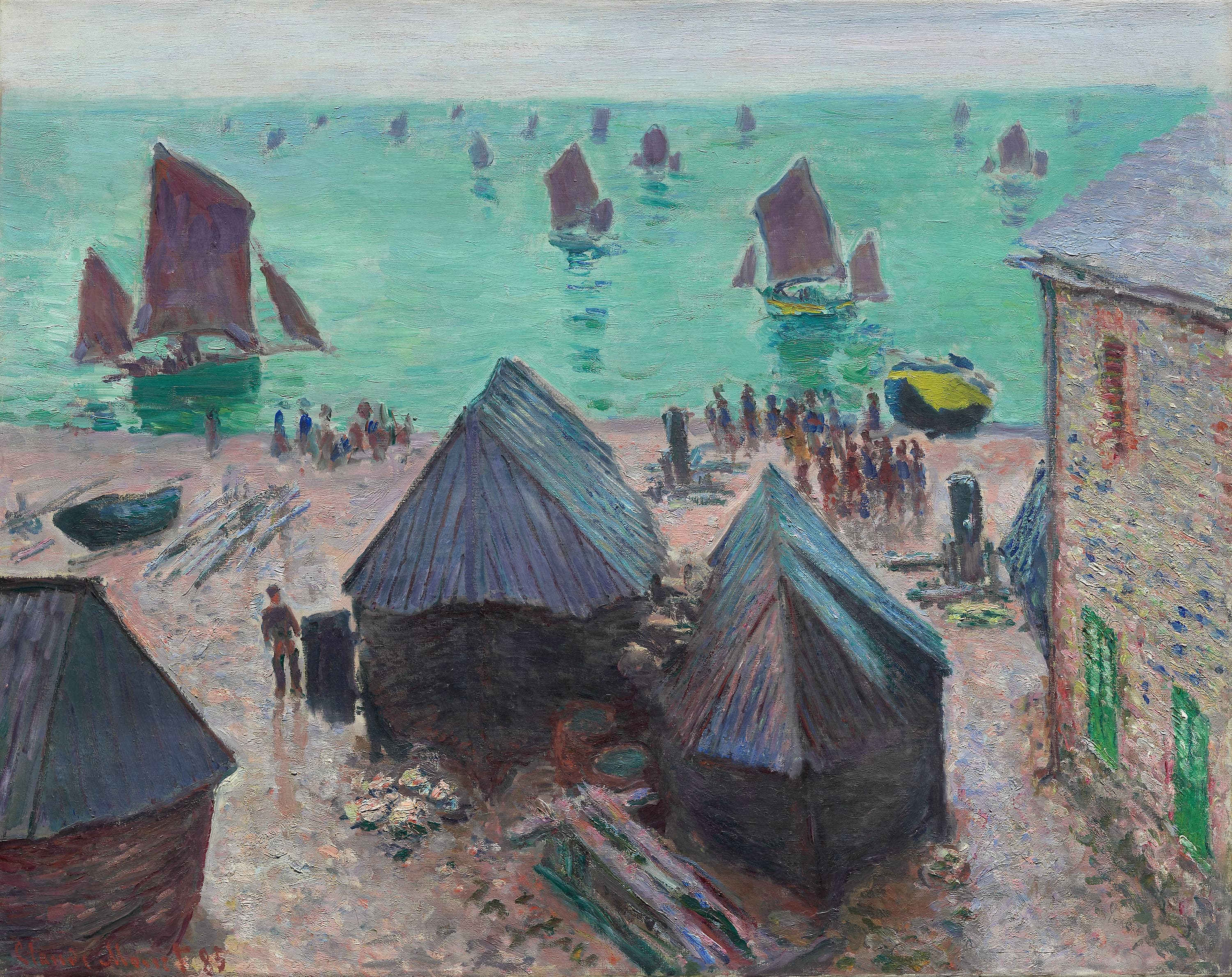
The Departure of the Boats, Étretat
Claude Monet · 1885
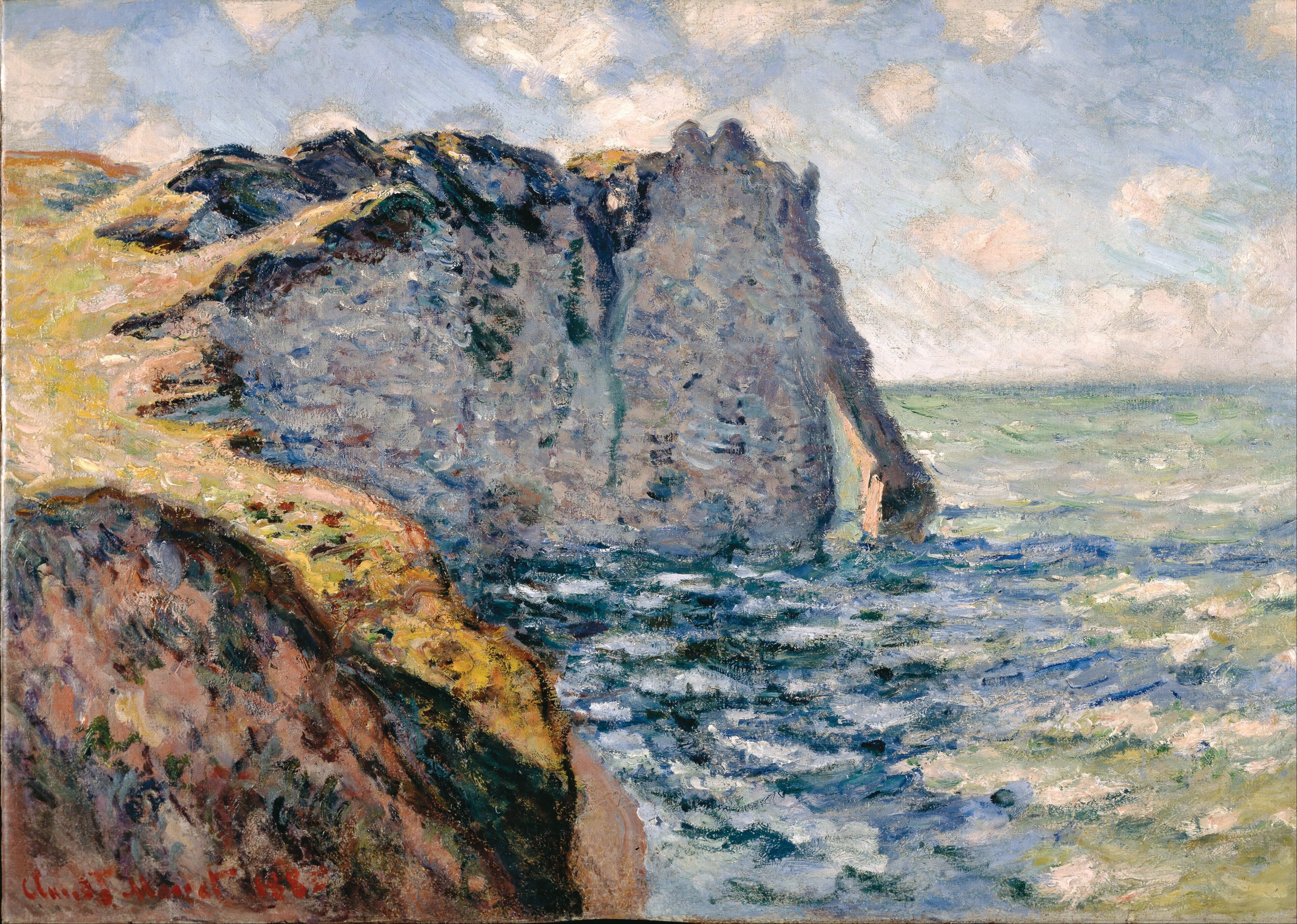
The Cliff of Aval, Étretat
Claude Monet · 1885
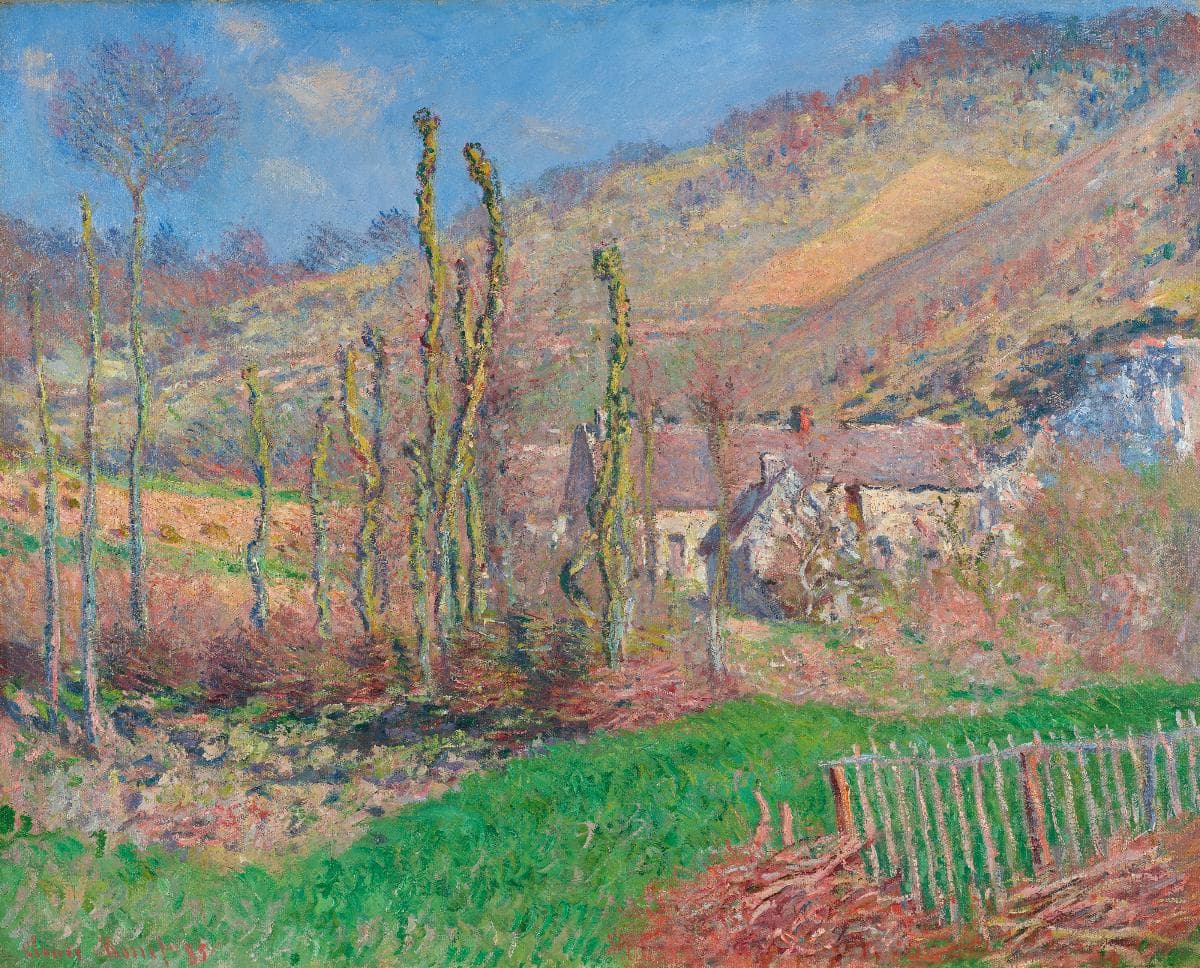
Winter Landscape at the Val de Falaise (Giverny)
Claude Monet · 1885
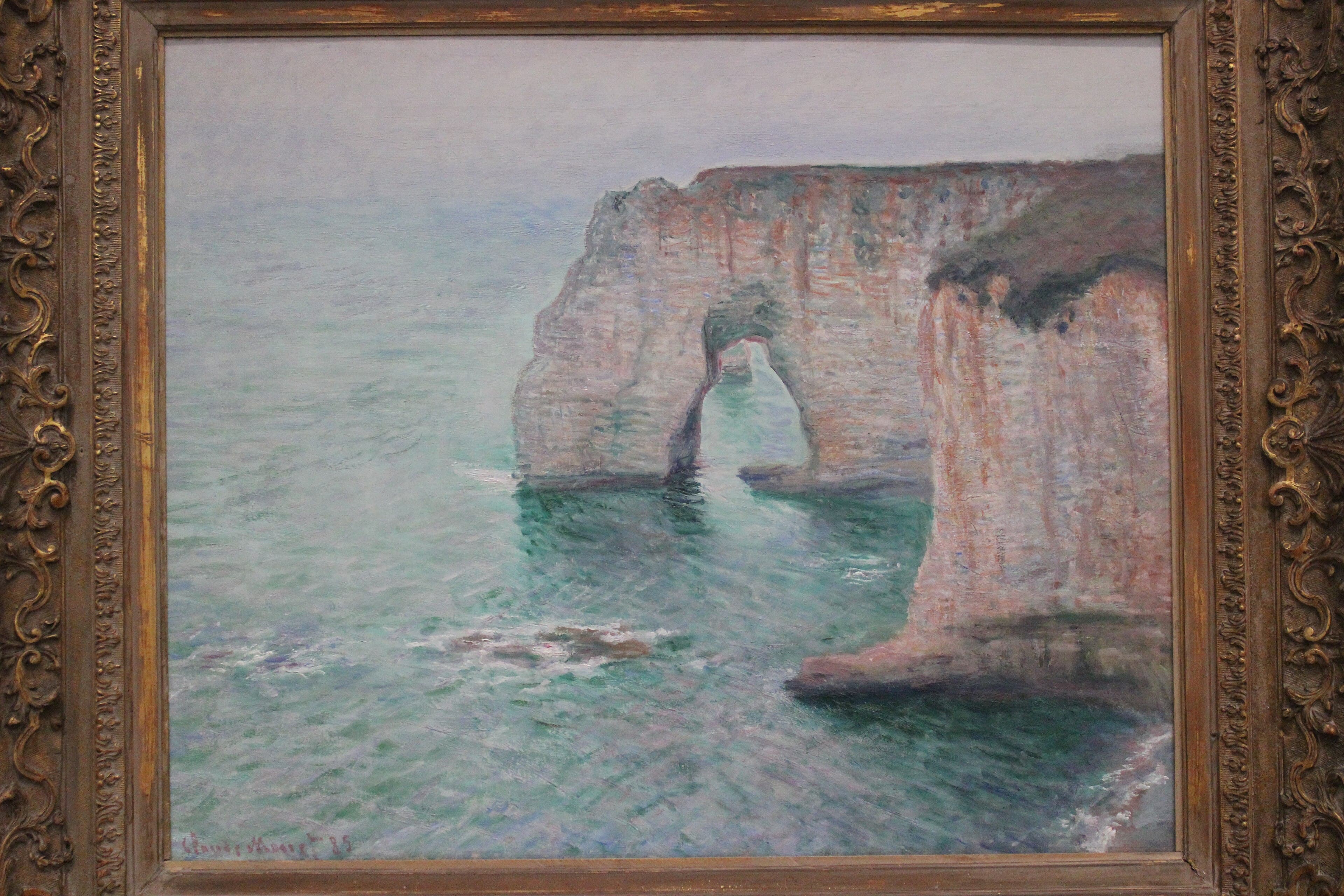
Manne-Porte, Étretat
Claude Monet · 1885
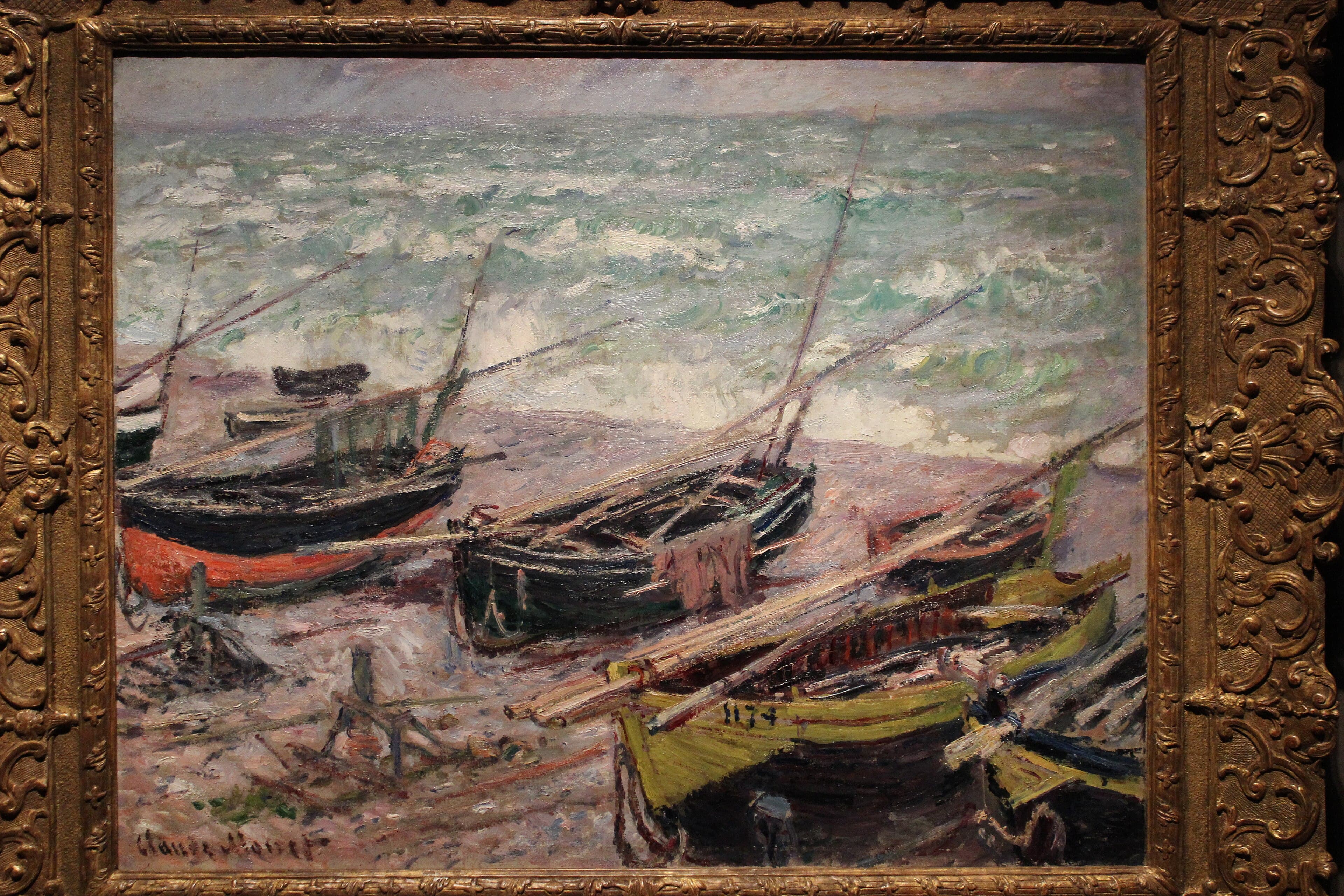
Fishing Boats at Étretat
Claude Monet · 1885
Bras de Seine à Giverny
Claude Monet · 1885
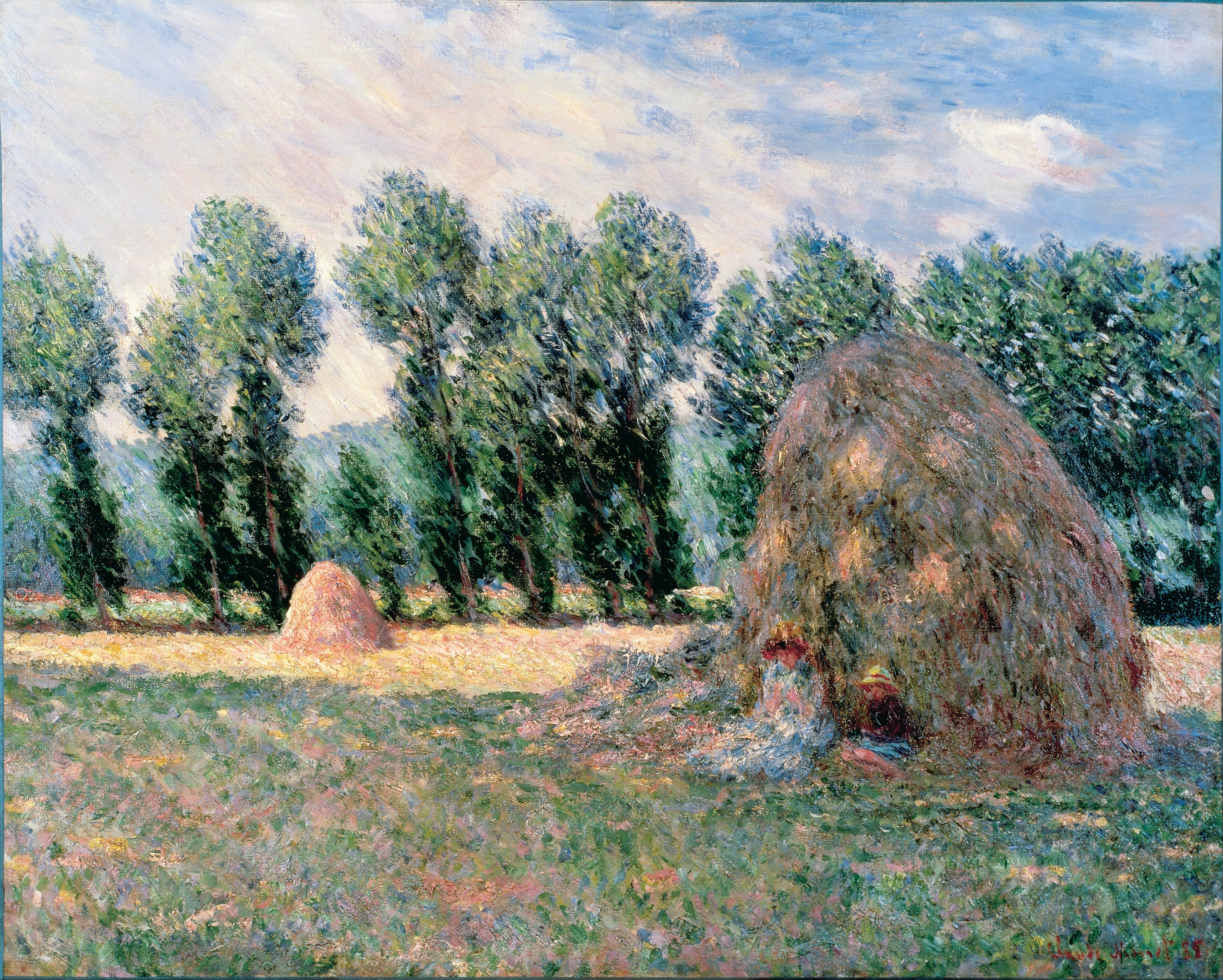
Haystacks (Ohara Museum, 1885)
Claude Monet · 1885
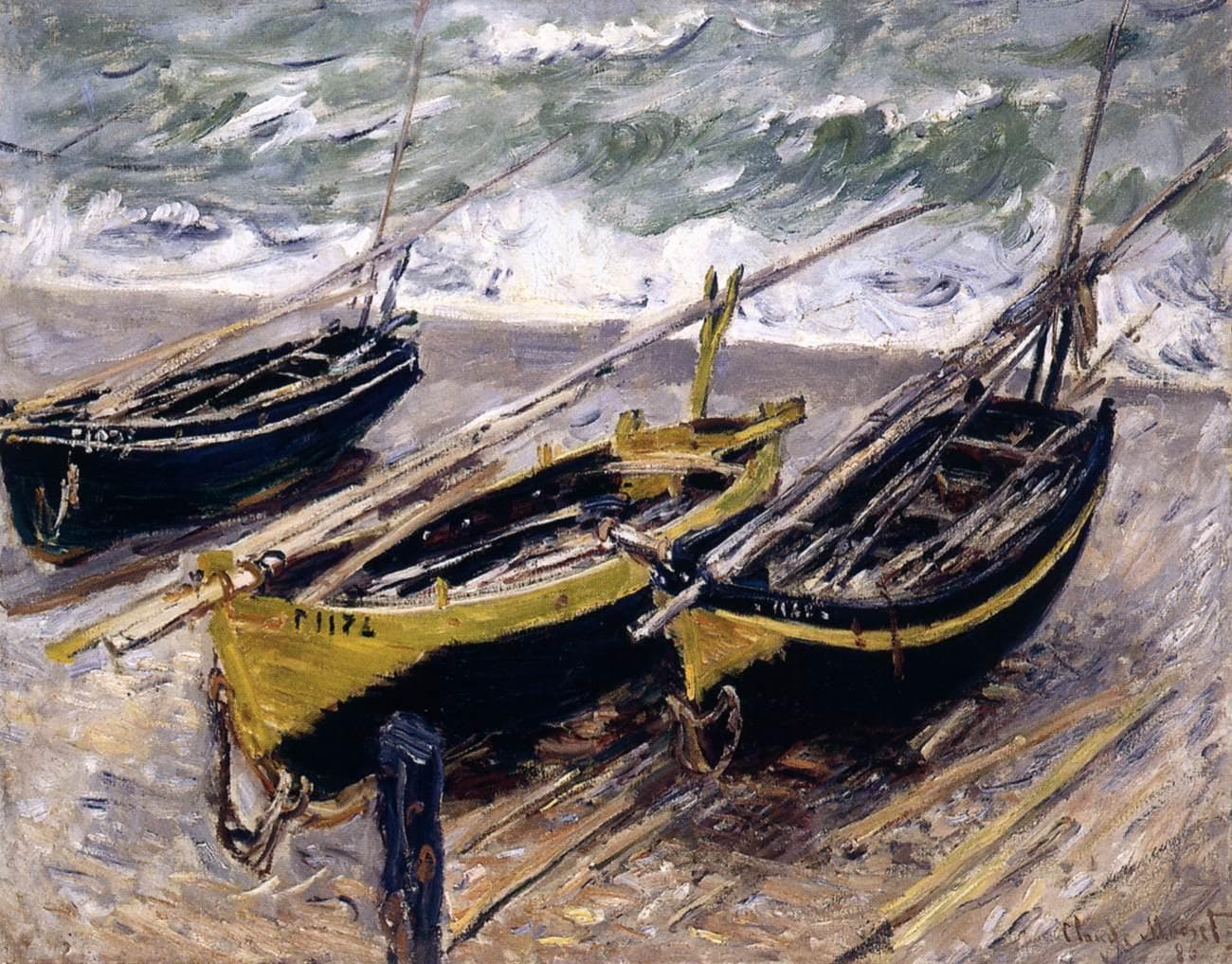
Three Fishing Boats
Claude Monet · 1885
Kindred works
You may also study
Haystacks (Ohara Museum, 1885)
Claude Monet · 1885
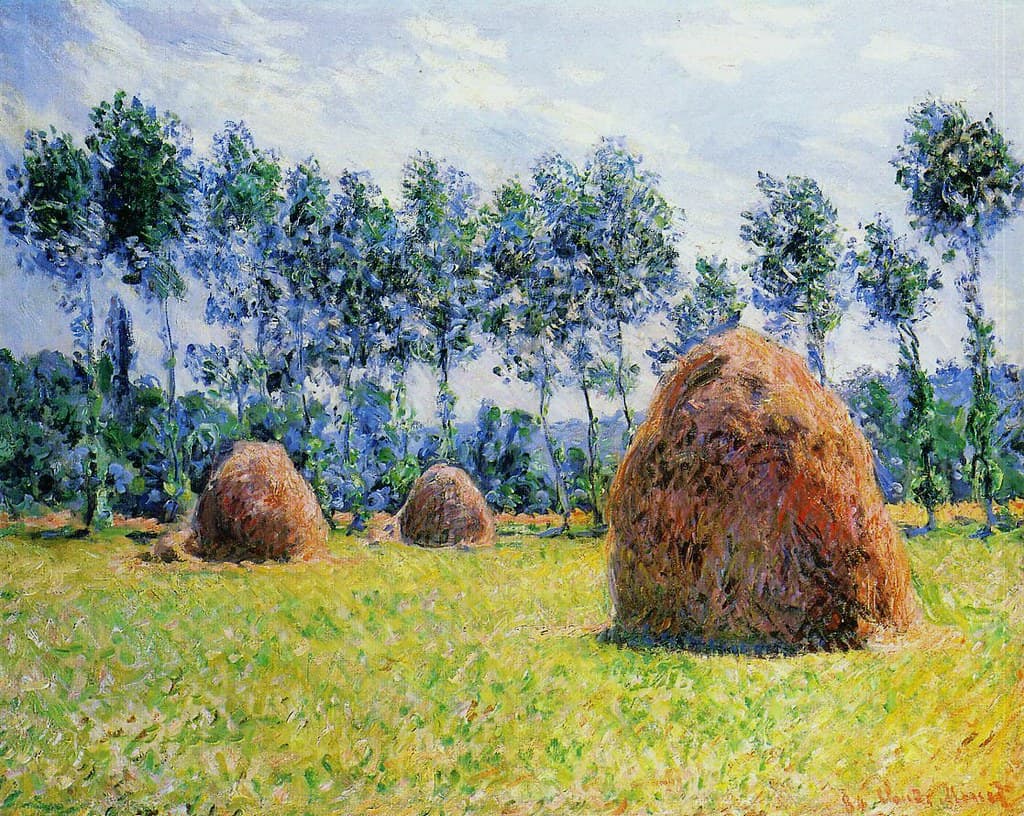
Haystacks at Giverny (1884)
Claude Monet · 1884
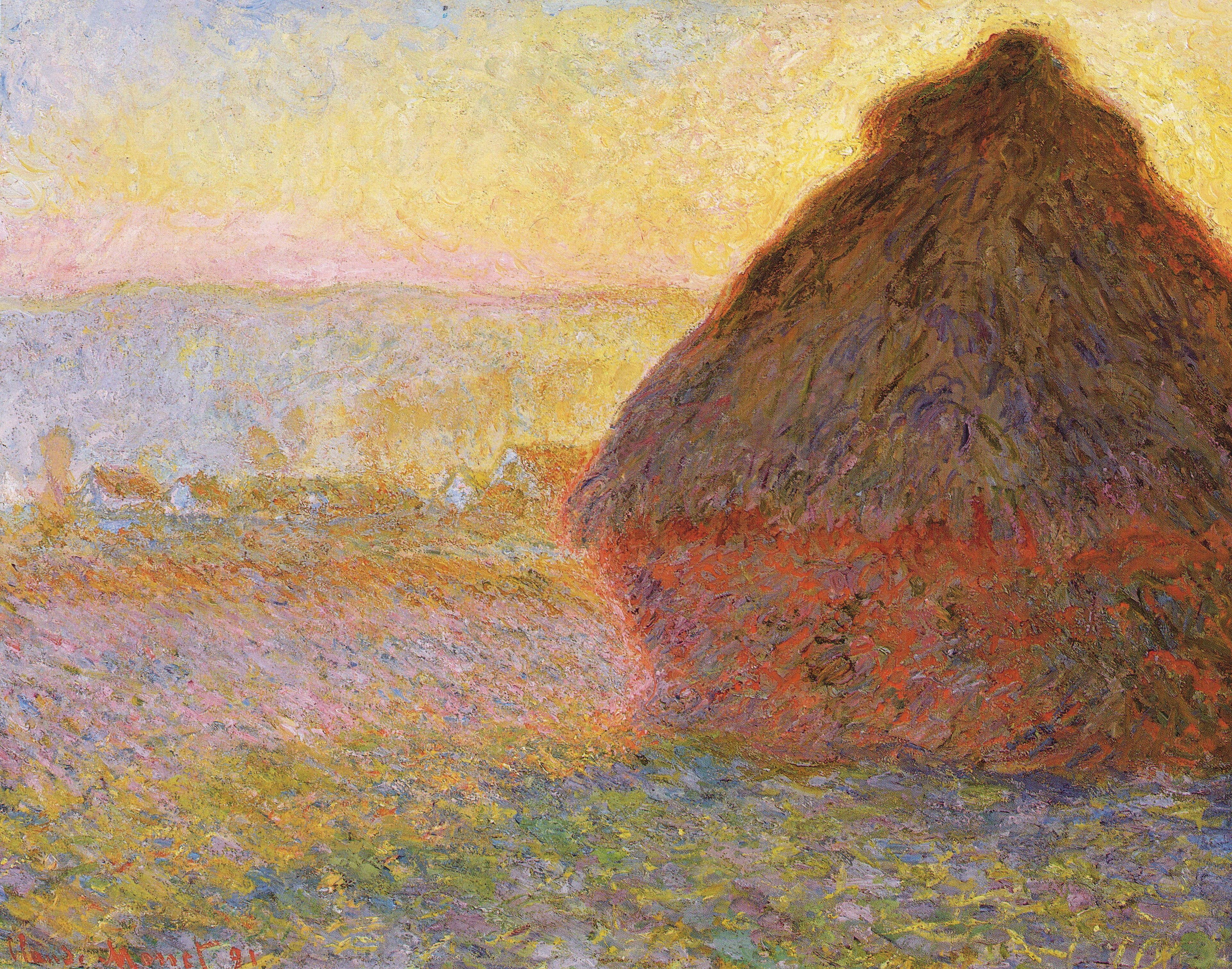
Grainstack (Sunset)
Claude Monet · 1891
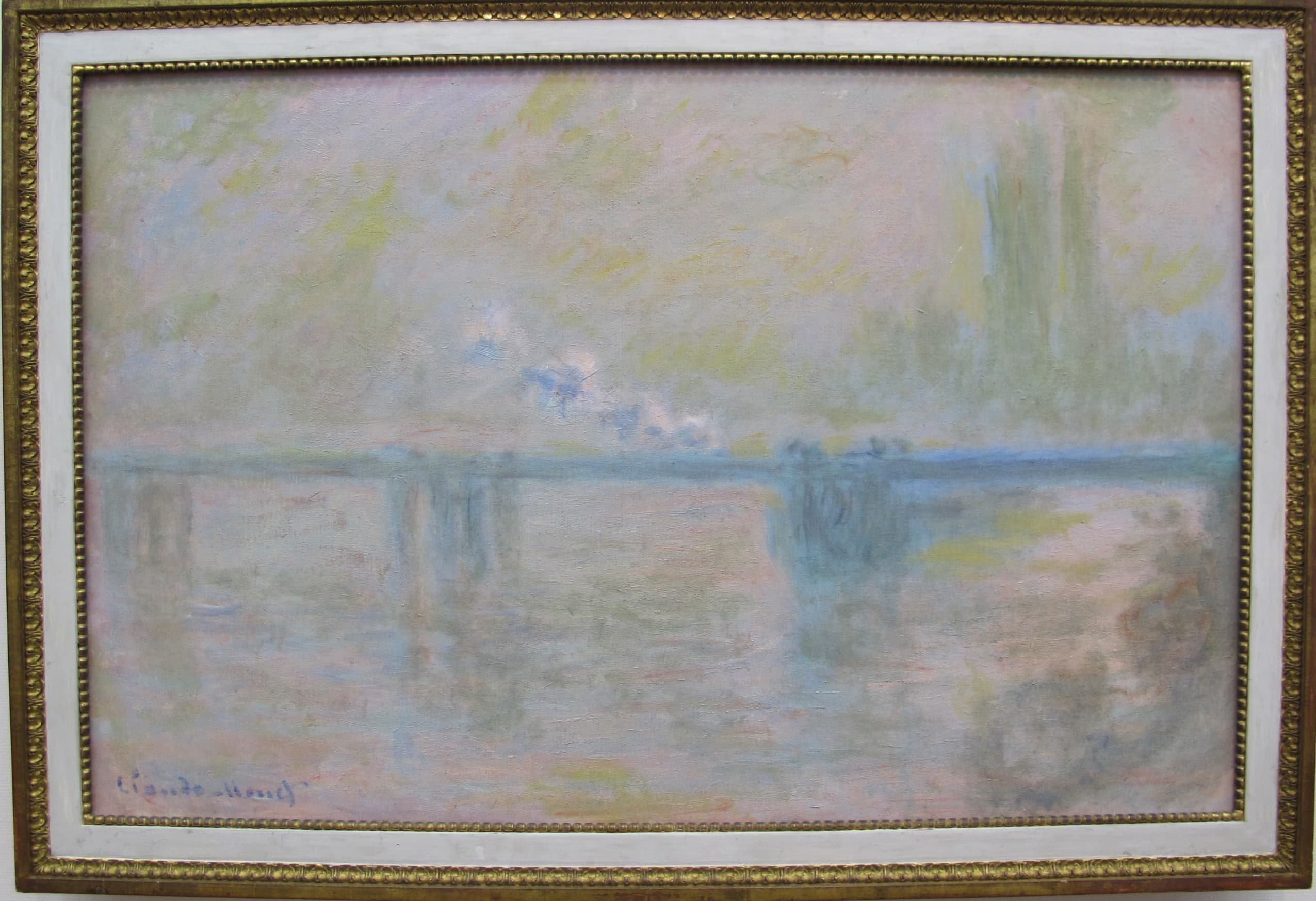
Charing Cross Bridge (Overcast Day)
Claude Monet · 1900
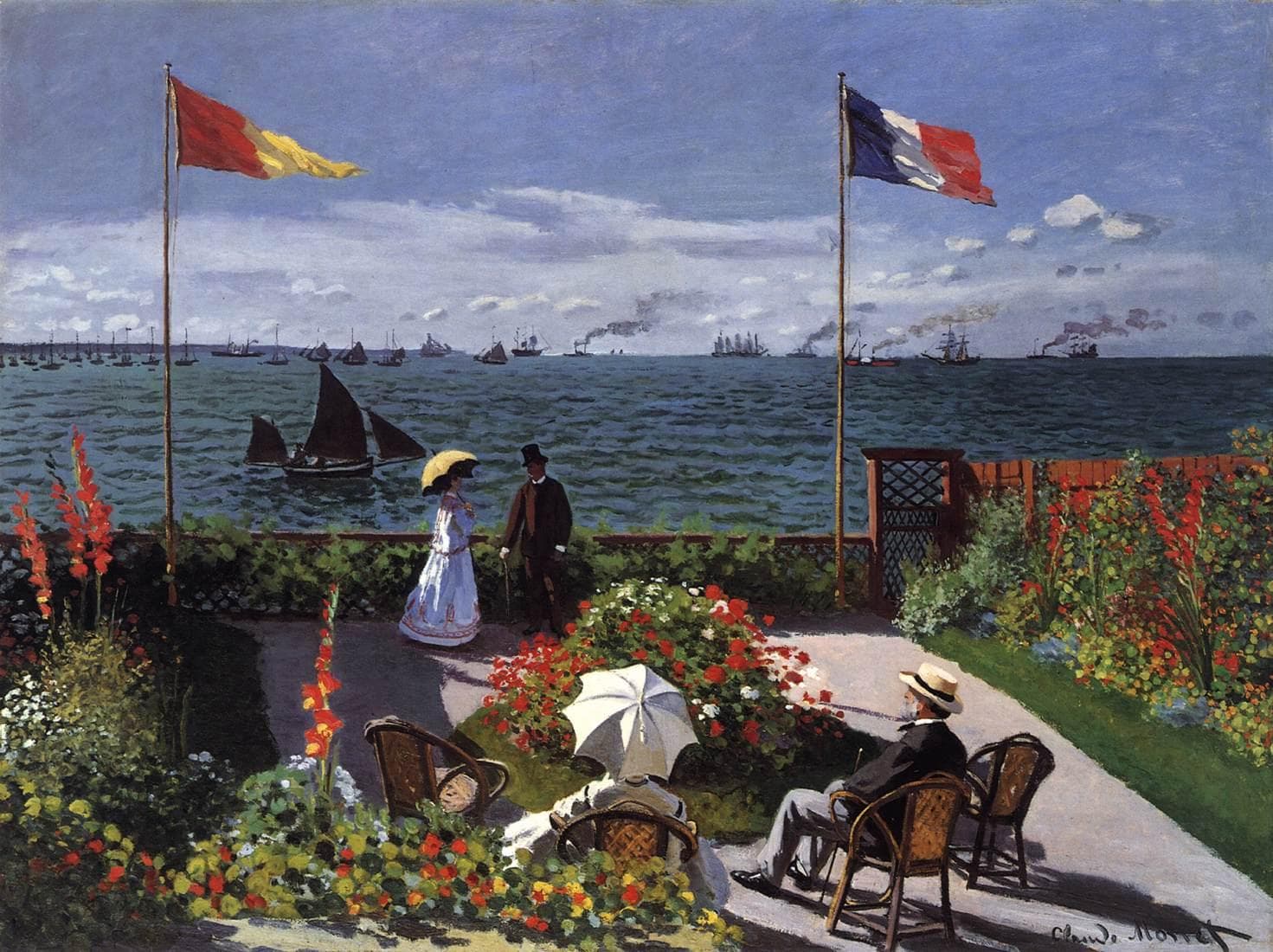
Garden at Sainte-Adresse
Claude Monet · 1867
The Argenteuil Bridge
Claude Monet · 1874
A Cart on the Snowy Road at Honfleur
Claude Monet · c. 1867
Les Peupliers
Claude Monet · 1891