Image: Philadelphia Museum of Art; photo by Miguel Hermoso Cuesta · CC BY-SA 4.0 · via Wikimedia Commons
Manne-Porte, Étretat
Claude Monet, 1885
Manne-Porte, Étretat is an 1885 painting by Claude Monet of the huge natural rock arch of the Manneporte on the Normandy coast, pale pink and gray above a calm, milky jade sea. It is in the John G. Johnson Collection at the Philadelphia Museum of Art.
- Artist
- Claude Monet
- Date
- 1885
- Medium
- Oil on canvas
- Dimensions
- 65.4 × 81.3 cm
- Collection
- Philadelphia Museum of Art, Philadelphia, United States
- Movement
- Impressionism
- Catalogue
- Wildenstein 1037
- Nature & Landscape
- Water & Sea
Claude Monet's Manne-Porte, Étretat was painted in 1885, during his autumn campaign at Étretat on the Normandy coast. It shows the Manneporte, the largest of the town's natural chalk arches, rising from a still, pale sea under a hazy sky. The canvas, 65.4 by 81.3 centimeters (Wildenstein 1037), is signed and dated "Claude Monet 85" at lower left. It is in the John G. Johnson Collection at the Philadelphia Museum of Art.
What you are looking at
The arch stands in the middle distance, seen from the side at high tide. It is a vast loop of chalk, pale pink, cream and gray, with a dark opening through which you see more sea and, faintly, a smaller rock beyond. To its right, a second, closer cliff face rises sheer from the water and fills the right side of the canvas. Its top is capped with dark green turf, and its face is streaked with rose, lilac and ocher, as if stained by water and weather.
Everything else is water and mist. The sea is a broad sheet of milky jade and turquoise, crossed by long, gentle ripples, with a few rocks breaking the surface in the middle foreground and a thin line of surf at the foot of the near cliff. The sky is a pale, even gray-white that merges with the sea at the horizon, so that the arch seems to float. There are no figures and no boats.
The Philadelphia Museum describes how Monet emphasized the arch's isolation by painting the great vertical faces of the receding cliffs. Look at how the near cliff, in shadow, frames the bright arch, and how its edge runs straight down the canvas like a curtain.
Where and when
Monet had painted at Étretat in the 1860s and again in early 1883. In 1885 he came back with Alice Hoschedé and the children for a holiday near the end of the season and stayed on into the winter, lodging in a house lent by the singer and collector Jean-Baptiste Faure. He worked feverishly, beginning around fifty canvases of the cliffs, arches and beach. Getting to the Manneporte was dangerous; it can be reached on foot only at low tide, and that November Monet was knocked down by a wave while painting below the cliffs.
The Manneporte pictures and how this version differs
Monet painted the Manneporte several times. The Manneporte, Étretat of 1883 in the Metropolitan Museum looks at the arch from the beach below, close and massive, under bright sun. The Manneporte near Étretat of 1886, also at the Met, returns to it a year later, again from close to sea level. The Musée d'Orsay's Étretat, the Manneporte, Reflections on the Water concentrates on its reflection.
The Philadelphia picture is the quietest of the group. The viewpoint is higher and more distant, the light is diffuse and pearly, and the palette is reduced to pinks, grays and jade. It is a picture of calm weather and soft air, not of drama, and it shows the arch as a shape in space rather than a wall of rock.
How it was painted
The sea is painted in long, loose horizontal strokes, thinly enough in places that the canvas shows through. The cliffs are worked harder, with short vertical and diagonal strokes that suggest the layering of the chalk, and touches of rose, lilac and yellow laid over a cream base. The sky is a single, almost uniform layer. The restraint of the palette is the point: Monet holds everything within a narrow range of soft, high-keyed colors so that the arch barely separates from the air around it.
For his other pictures of this coast, see Étretat and the Normandy Coast and The Cliff of Aval, Étretat, painted the same autumn.
Where to see it
The painting belonged to the Philadelphia lawyer John G. Johnson, whose huge collection of European art was bequeathed to the city in 1917 and is administered by the Philadelphia Museum of Art. The museum also holds Monet's Morning at Antibes and Bend in the Epte River near Giverny. See also Where to See Monet's Paintings and Claude Monet.
Questions & answers
Where is Monet's Manne-Porte, Étretat?
This 1885 view of the Manneporte is in the Philadelphia Museum of Art, as part of the John G. Johnson Collection. Johnson, a Philadelphia lawyer, bequeathed his collection to the city in 1917, and the museum cares for it.
What is the Manneporte?
The Manneporte is the largest of the natural chalk arches in the cliffs at Étretat on the Normandy coast, west of the town beyond the Porte d'Aval. It can be reached on foot only at low tide, and Monet painted it several times in 1883, 1885 and 1886.
When did Monet paint Manne-Porte, Étretat?
He painted it in the autumn of 1885, during an extended stay at Étretat that began as a family holiday and continued into December. It is signed and dated 1885 at lower left.
How is the Philadelphia Manneporte different from Monet's other versions?
The Metropolitan Museum's versions of 1883 and 1886 view the arch from the beach below, close up and in strong light. The Philadelphia painting is taken from farther away on a calm, misty day, in a soft palette of pink, gray and jade.
More by the artist
Claude Monet
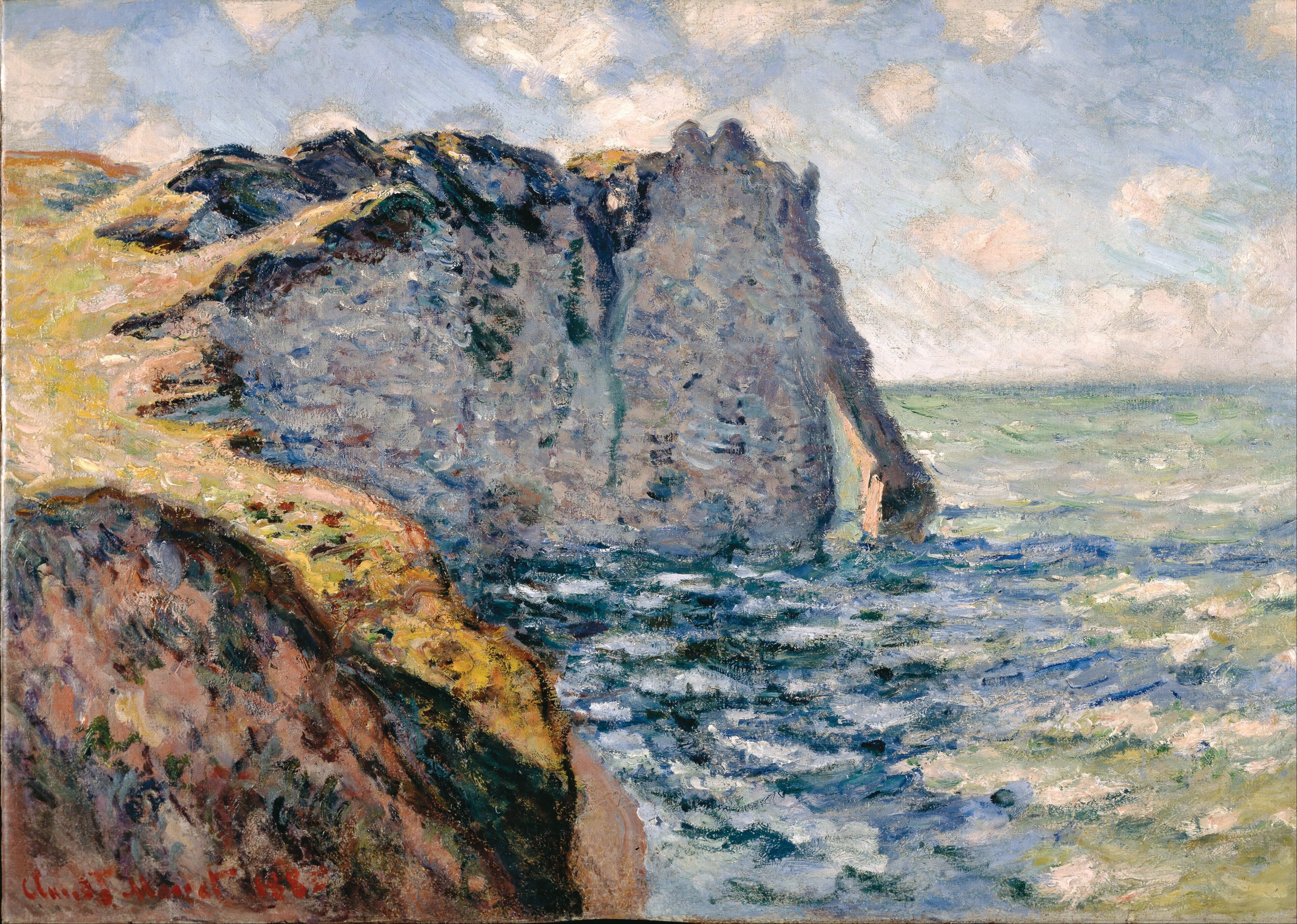
The Cliff of Aval, Étretat
Claude Monet · 1885
Poppy Field, Around Giverny
Claude Monet · 1885
Villas at Bordighera
Claude Monet · 1884
Bordighera
Claude Monet · 1884
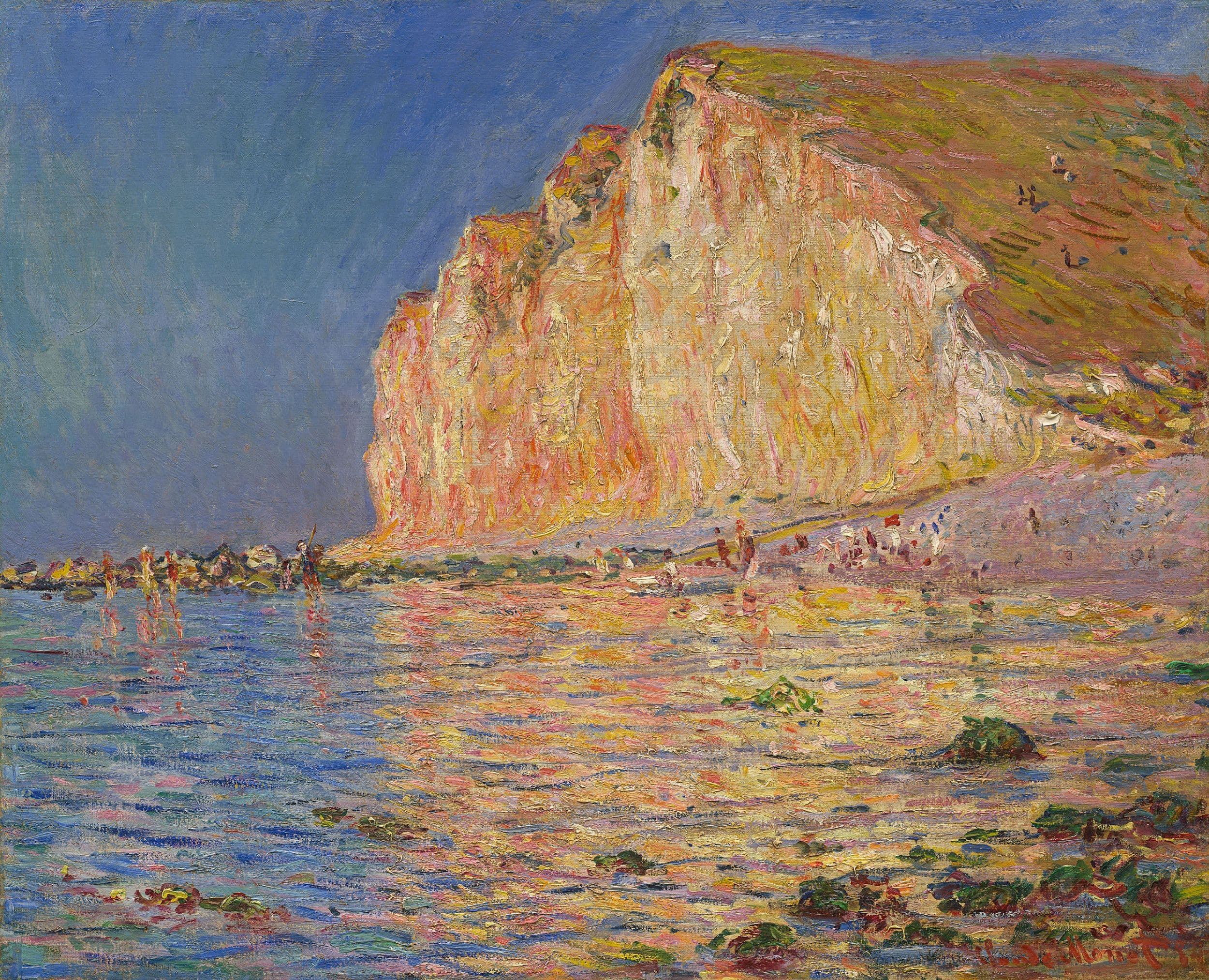
Low Tide at Les Petites-Dalles
Claude Monet · 1884
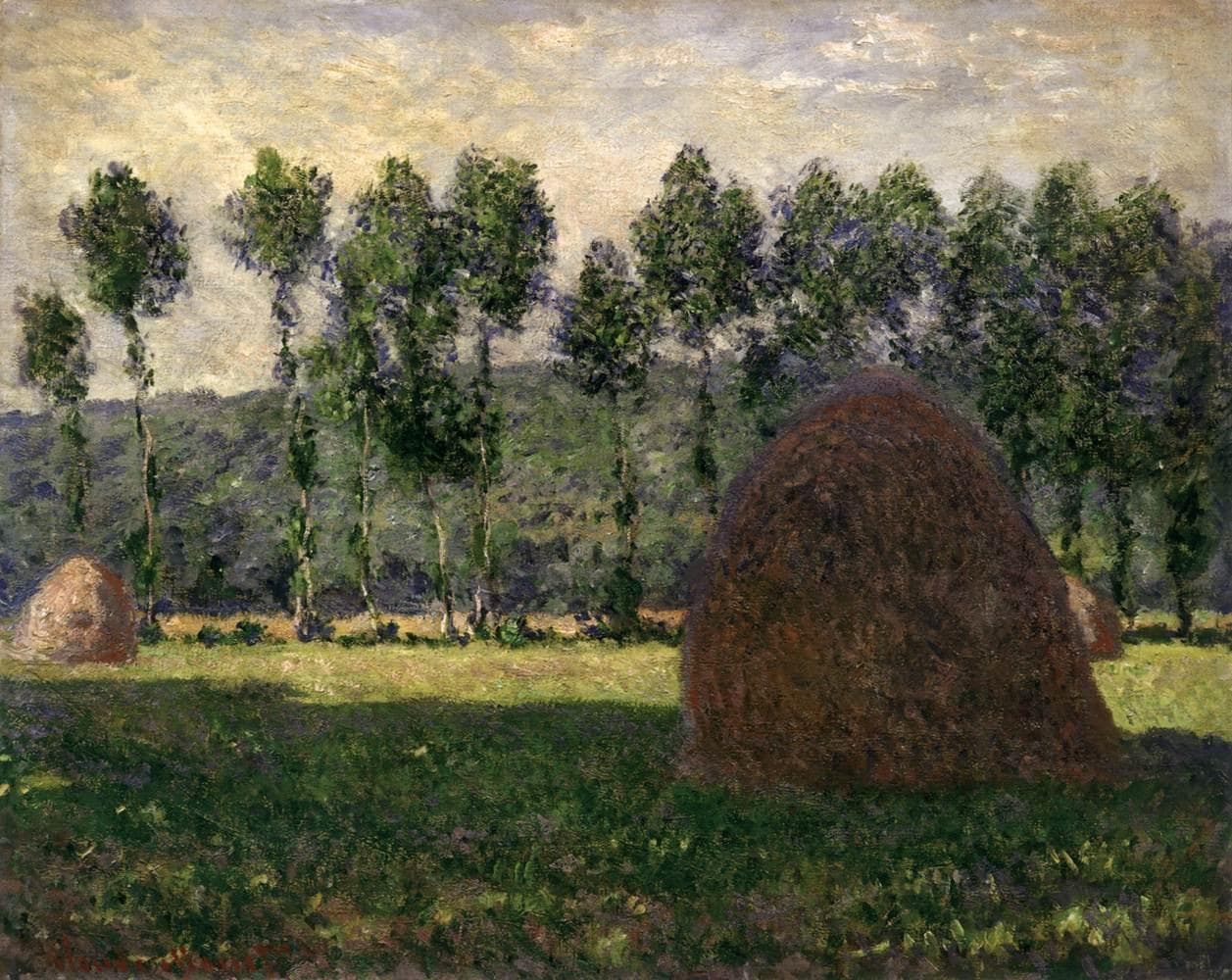
Haystack near Giverny
Claude Monet · 1884–89
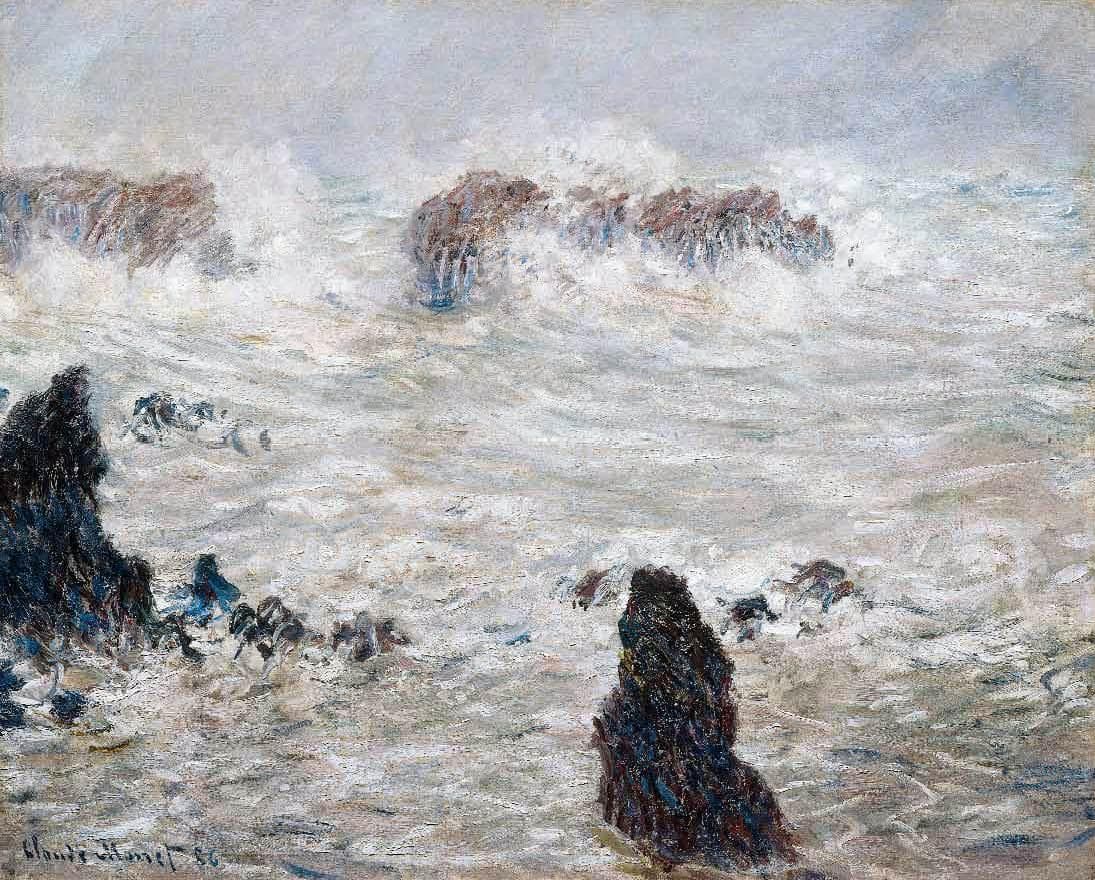
Storm off Belle-Île
Claude Monet · 1886
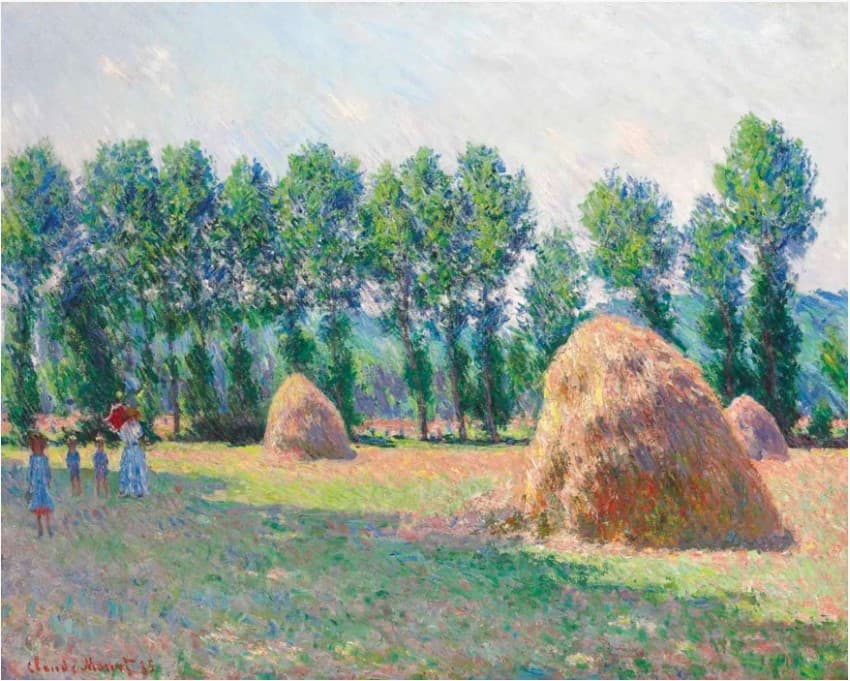
Haystacks at Giverny (1885)
Claude Monet · 1885
Also painted in 1885
The same year
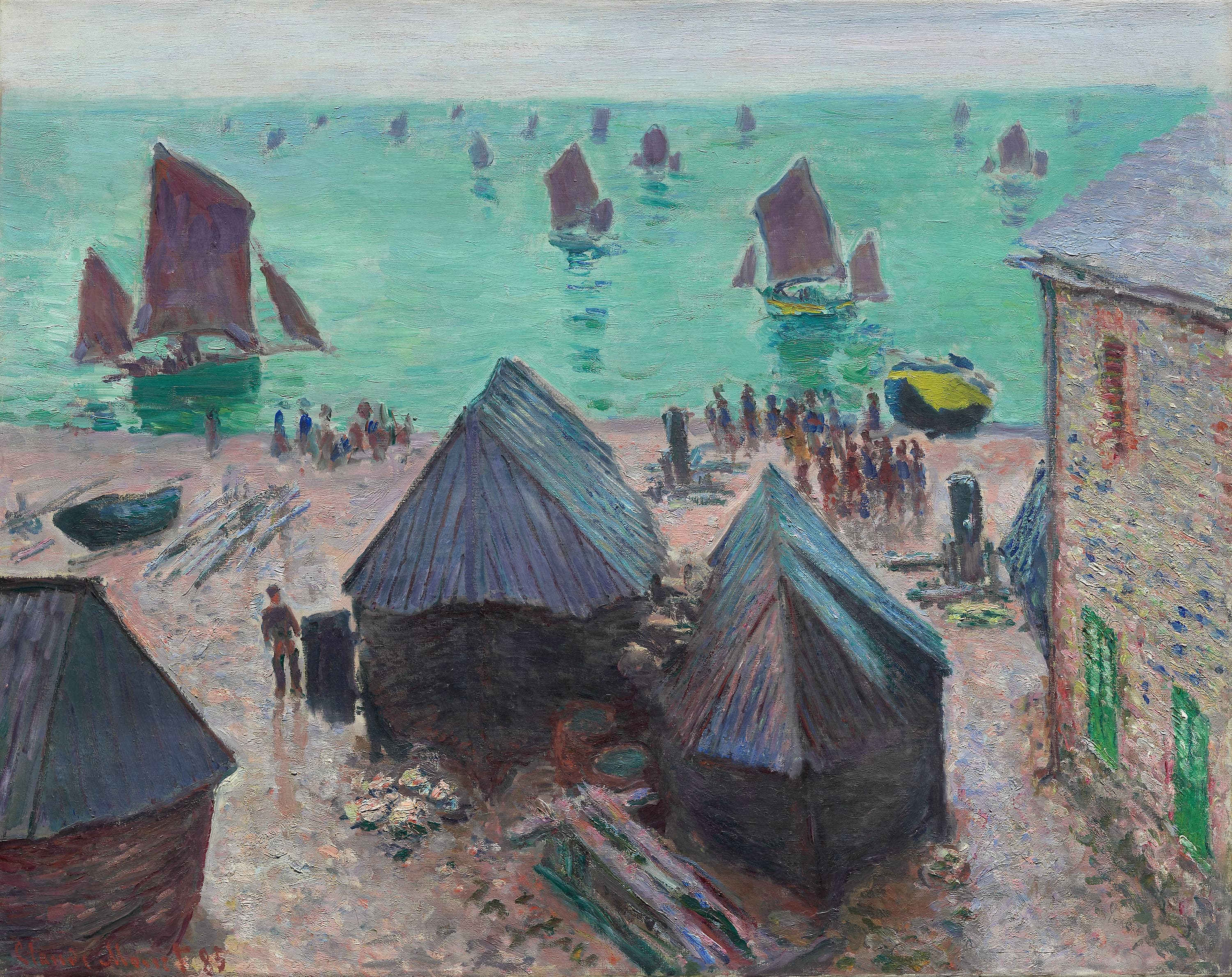
The Departure of the Boats, Étretat
Claude Monet · 1885
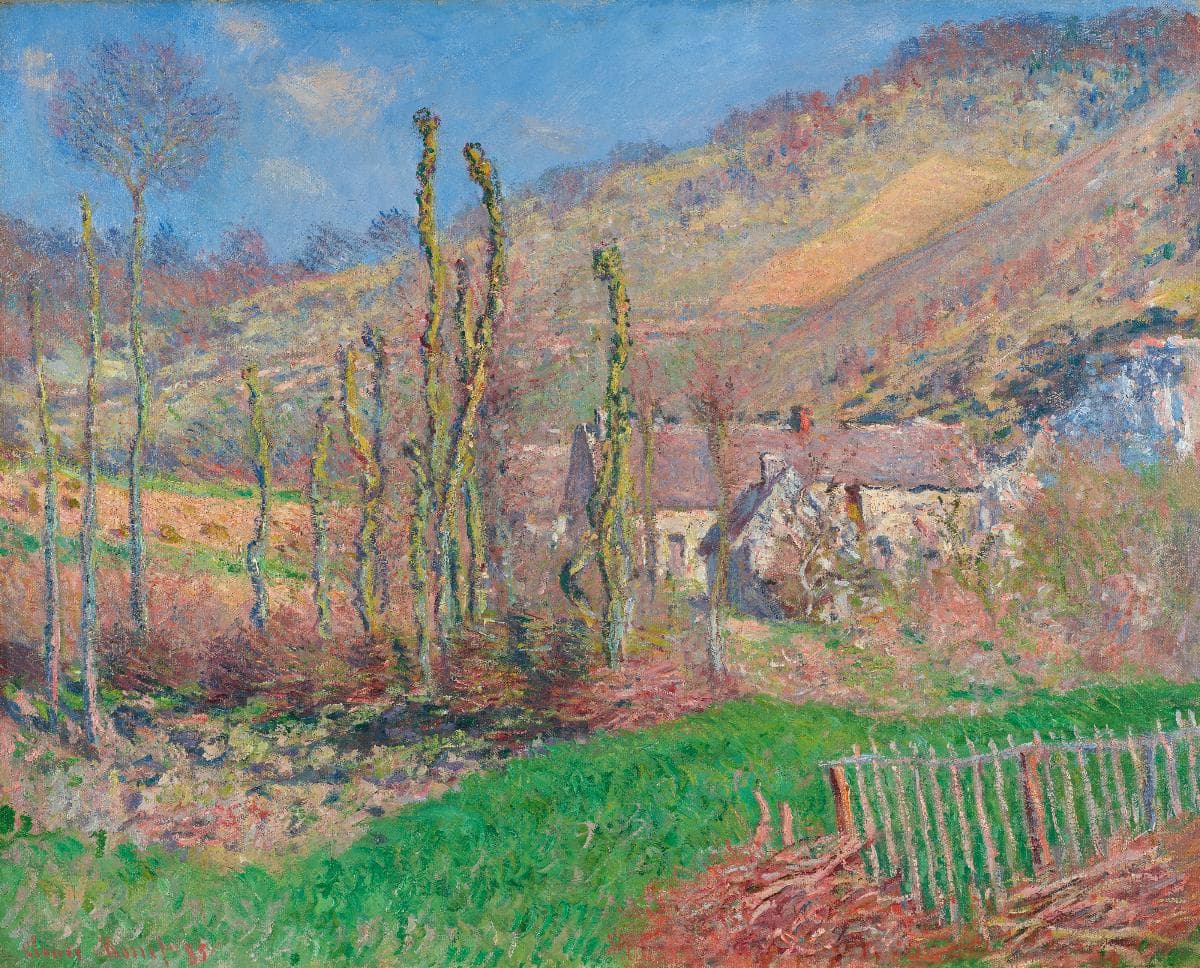
Winter Landscape at the Val de Falaise (Giverny)
Claude Monet · 1885
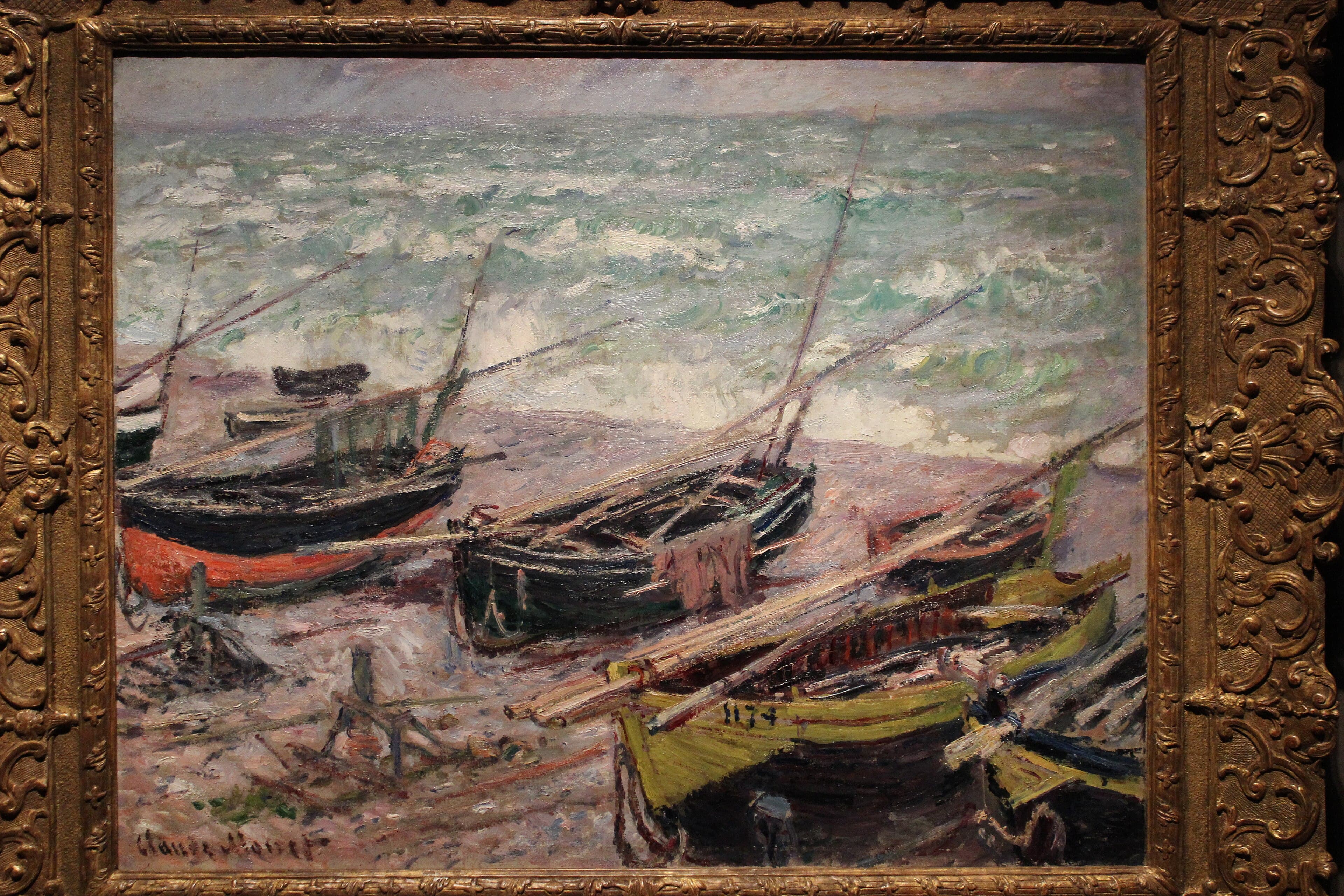
Fishing Boats at Étretat
Claude Monet · 1885
Bras de Seine à Giverny
Claude Monet · 1885
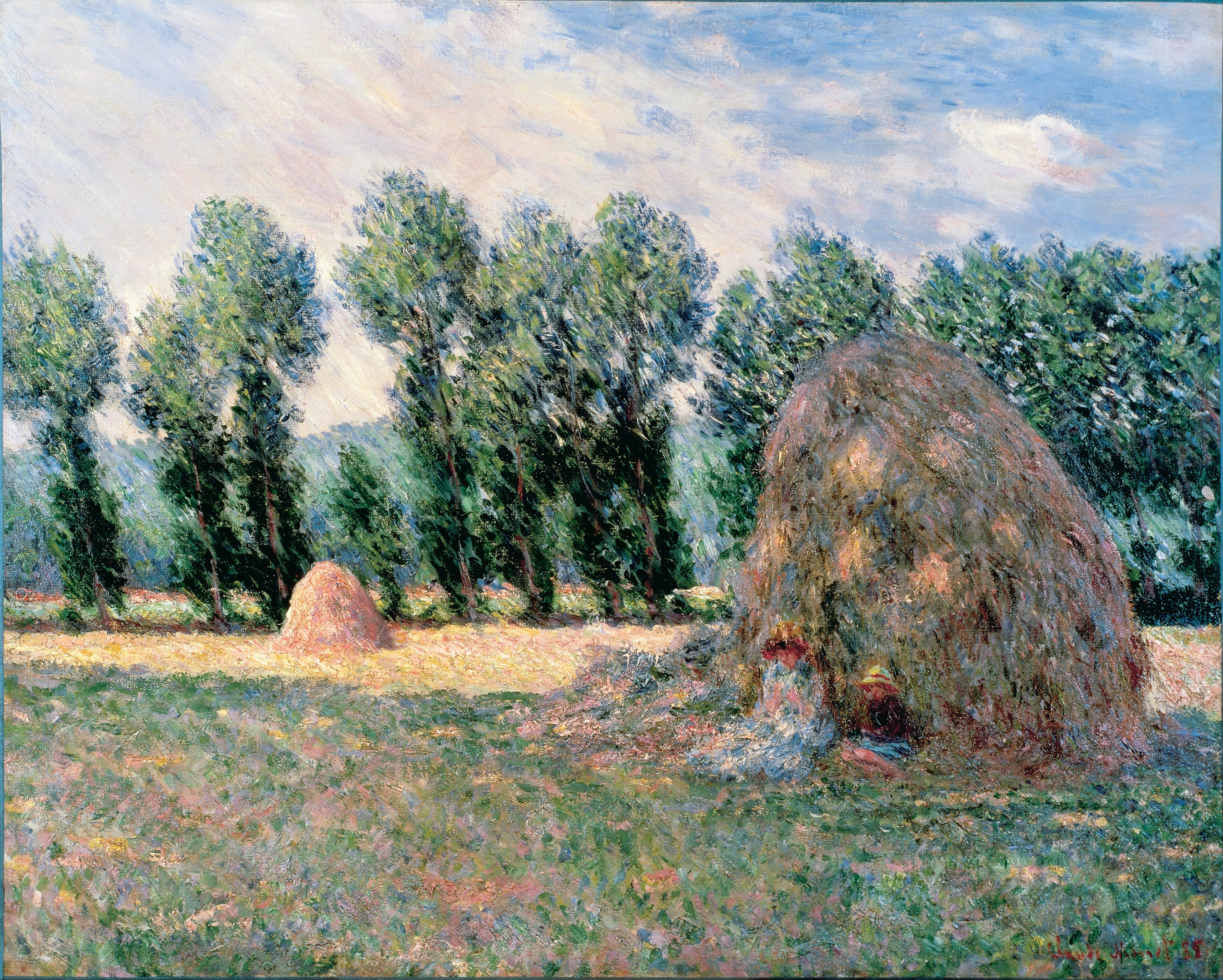
Haystacks (Ohara Museum, 1885)
Claude Monet · 1885
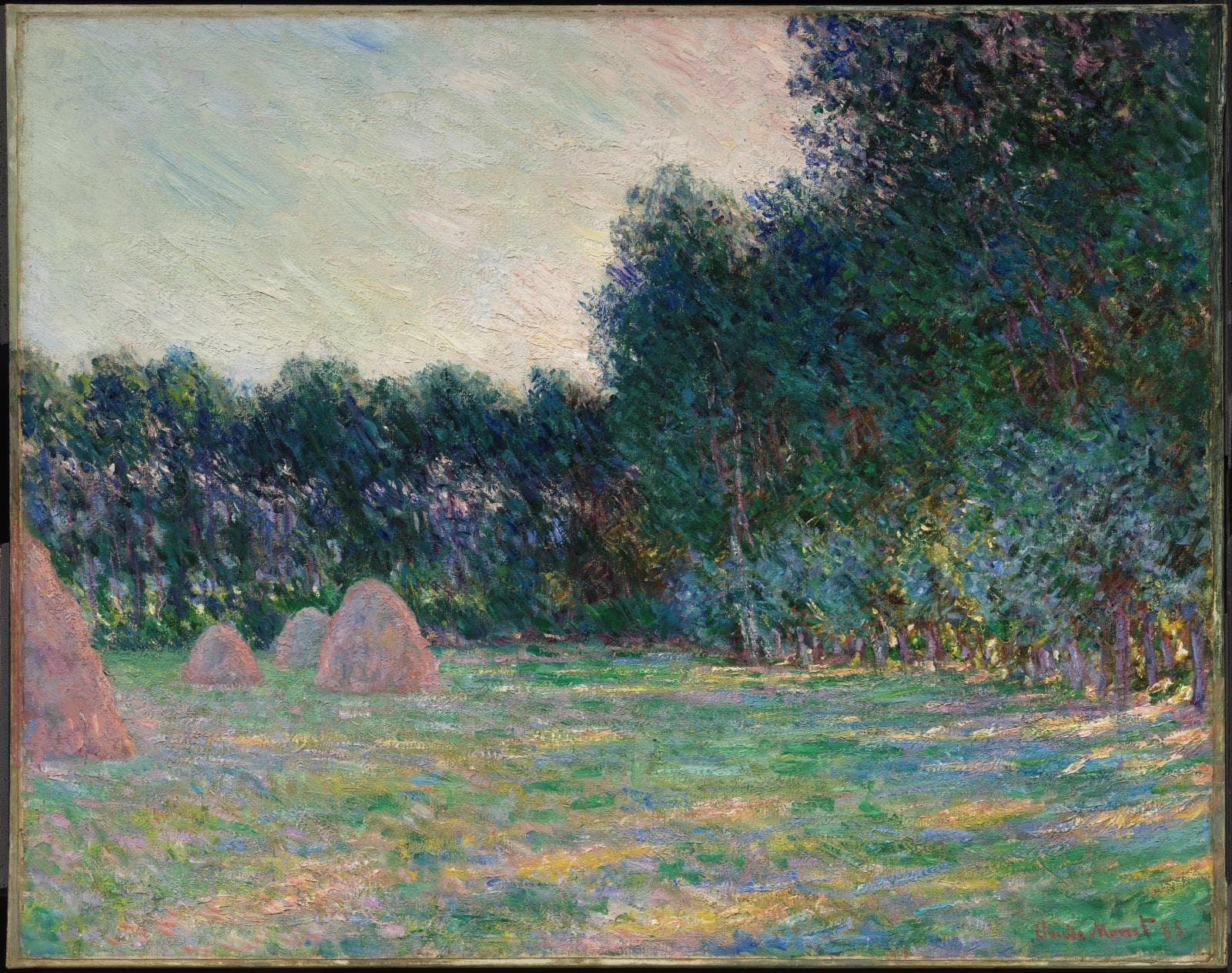
Meadow with Haystacks near Giverny
Claude Monet · 1885
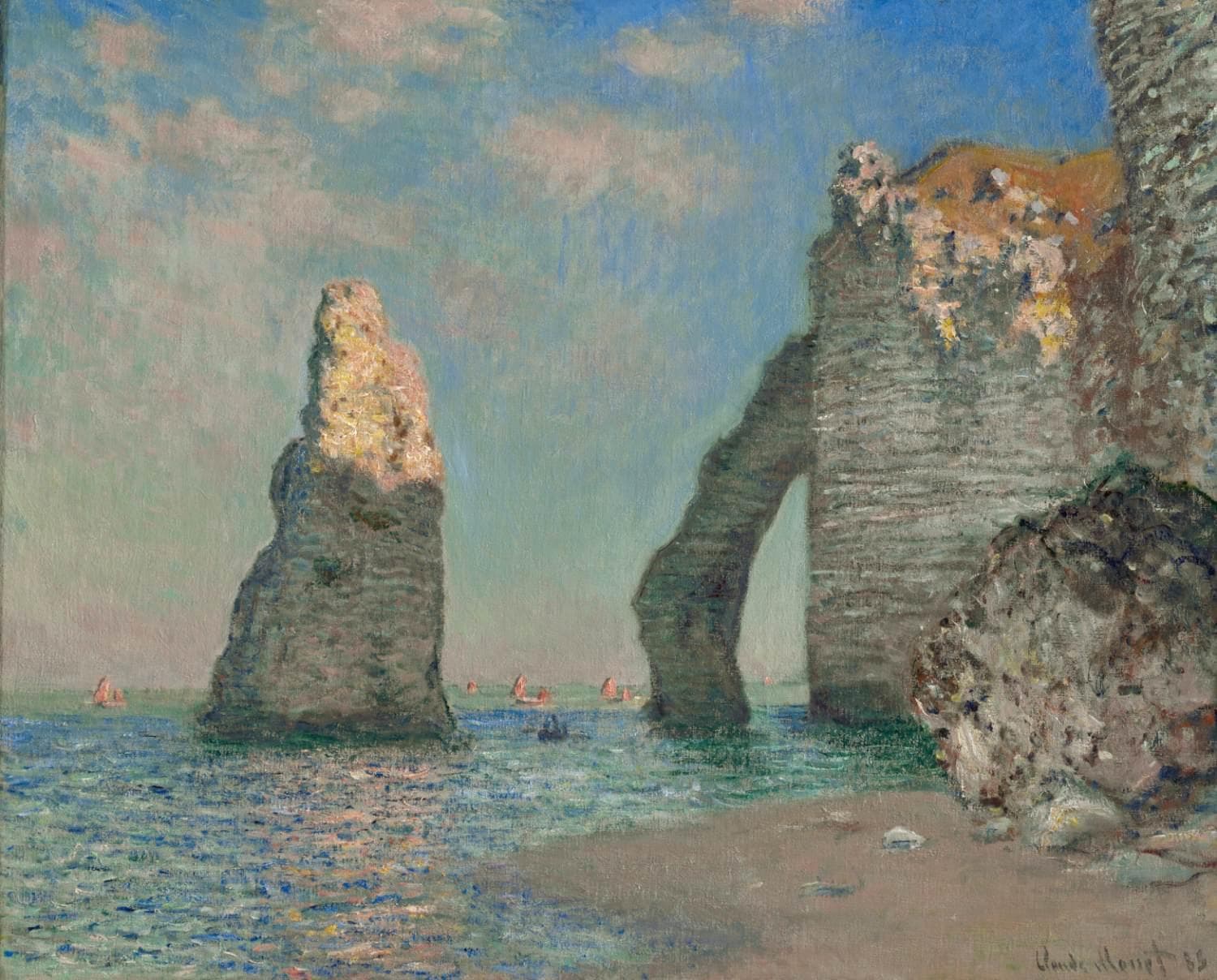
The Cliffs at Étretat
Claude Monet · 1885
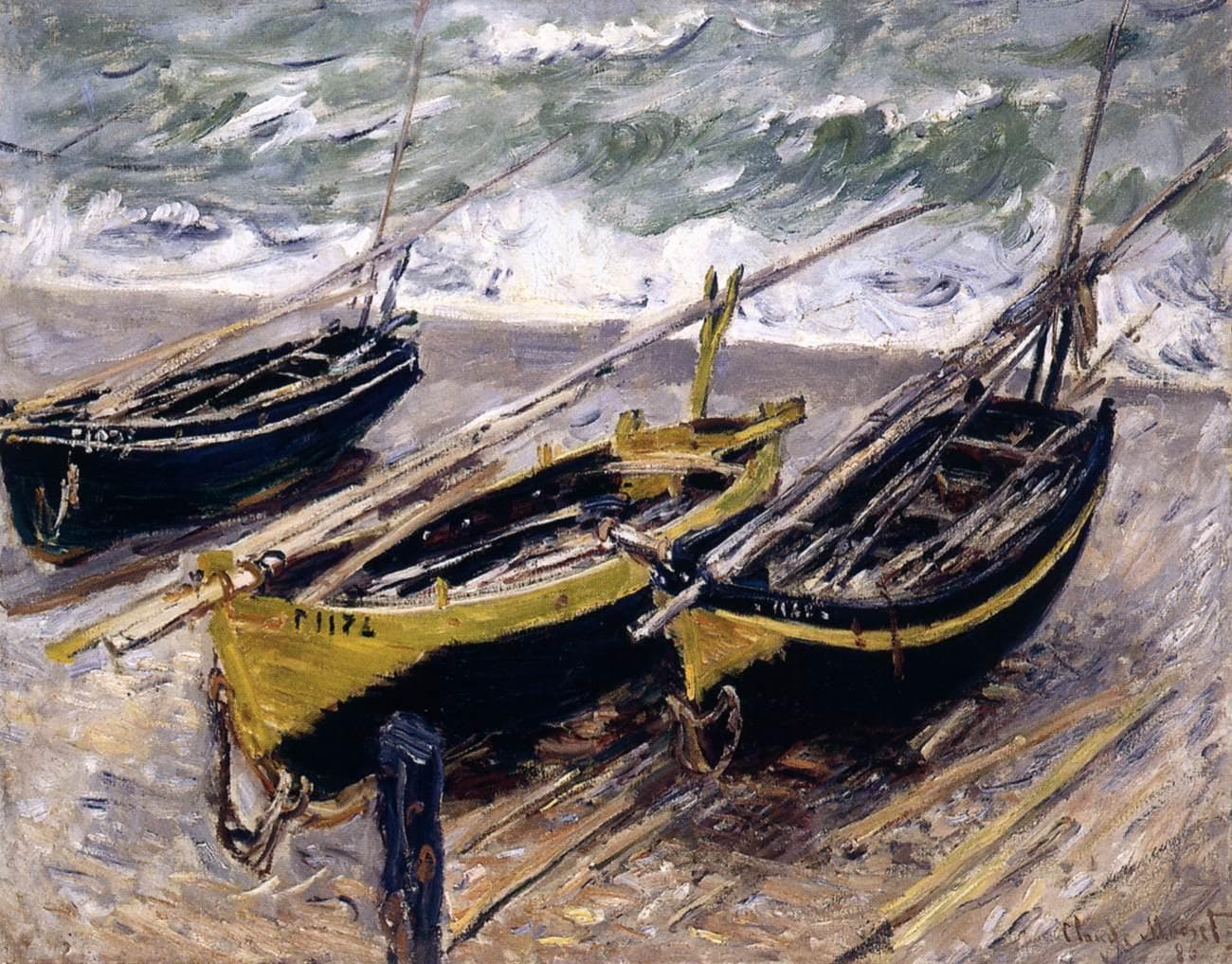
Three Fishing Boats
Claude Monet · 1885
Kindred works
You may also study
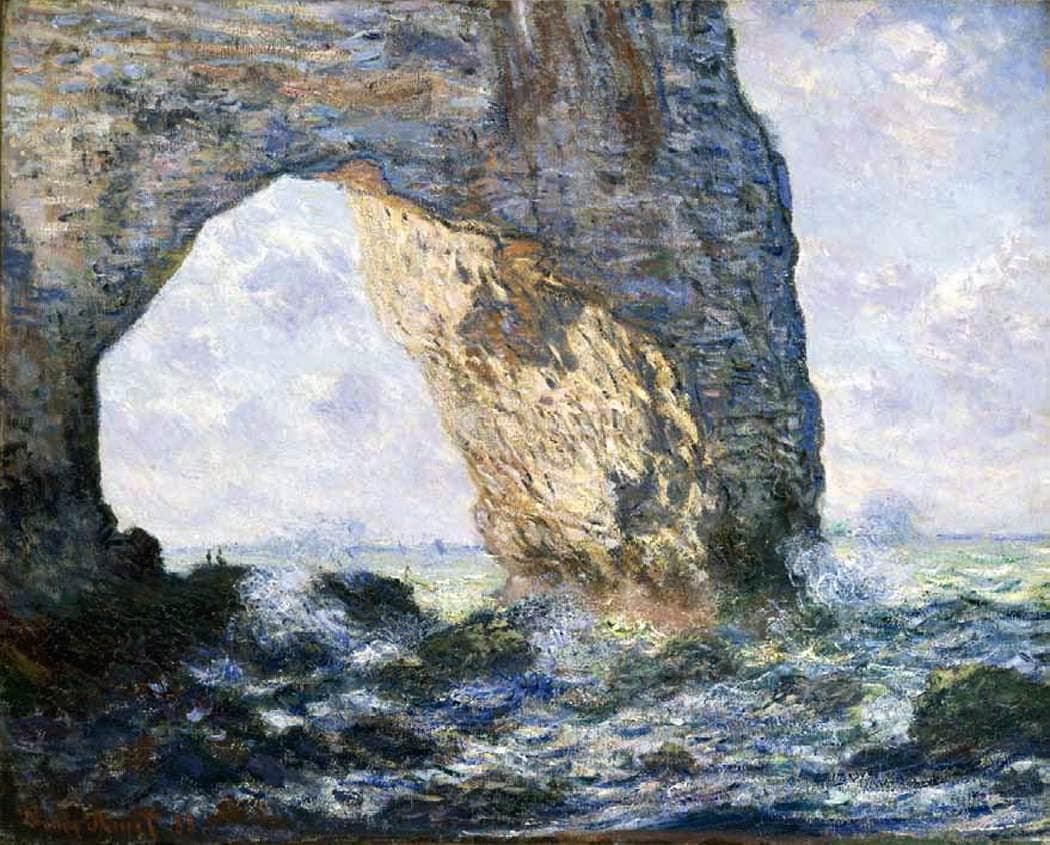
The Manneporte (Étretat)
Claude Monet · 1883
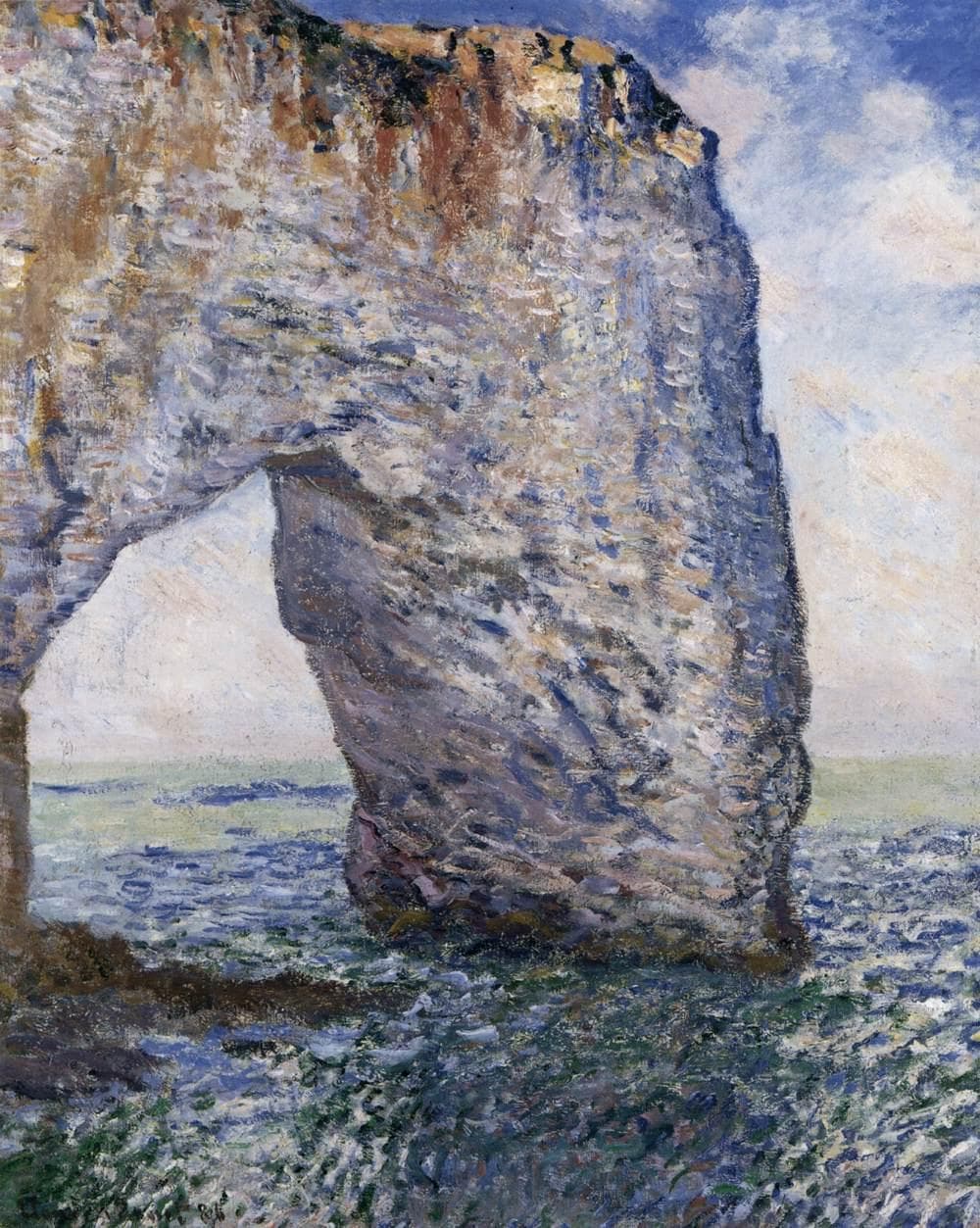
The Manneporte near Étretat
Claude Monet · 1886
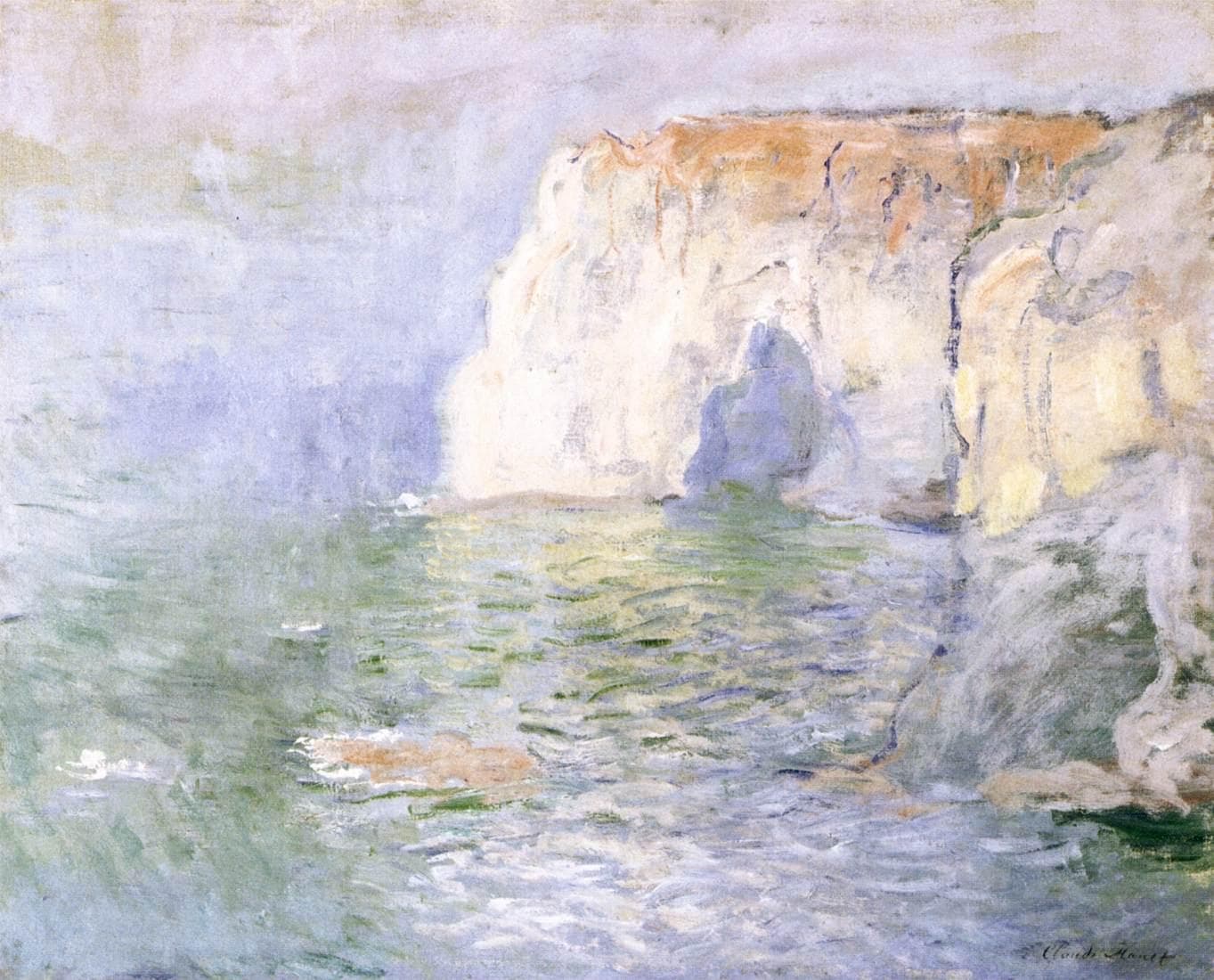
Étretat, the Manneporte, Reflections on the Water
Claude Monet · c. 1885
Fishing Boats at Étretat
Claude Monet · 1885
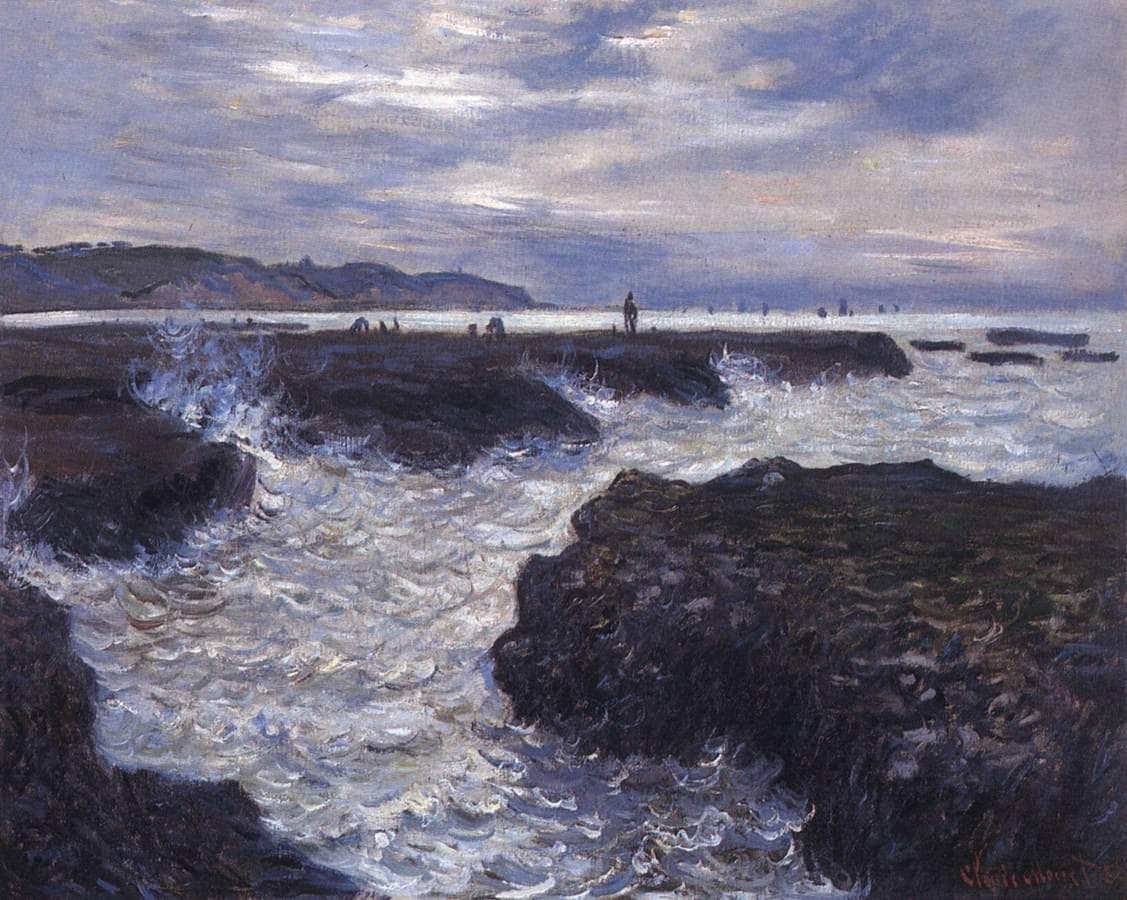
The Rocks at Pourville, Low Tide
Claude Monet · 1882
Sailboats on the Seine at Petit-Gennevilliers
Claude Monet · 1874
The Breaking Up of the Ice near Vétheuil
Claude Monet · c. 1880
The Seine at Rouen
Claude Monet · 1872