Image: Denver Art Museum (Google Art Project) · Public domain · via Wikimedia Commons
Waterloo Bridge, Sunlight Effect (Denver Art Museum)
Claude Monet, 1903
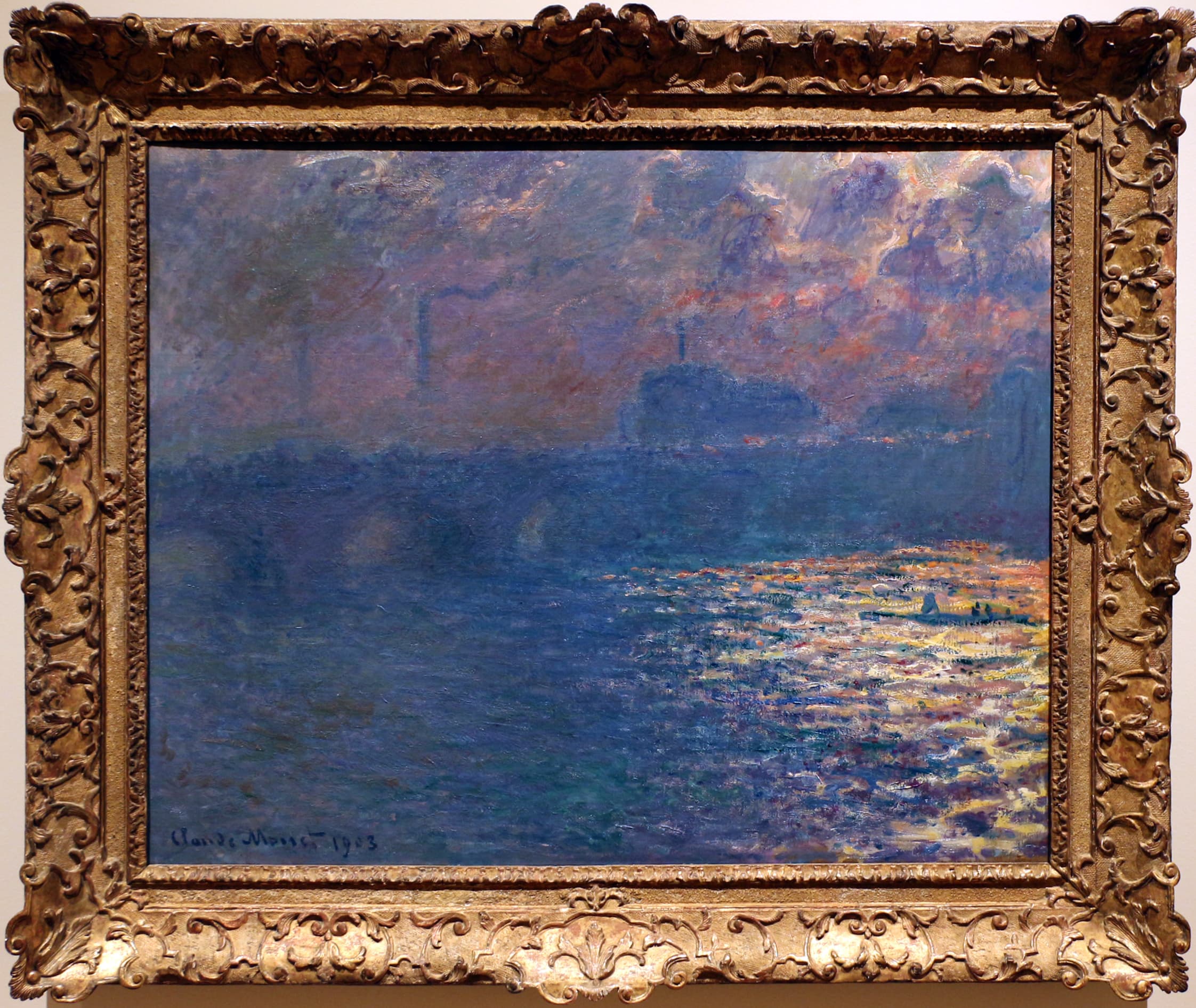
Waterloo Bridge, Sunlight Effect is a 1903 Claude Monet painting in which white plumes of steam rise from a Thames glittering yellow under a blue bridge. Once briefly owned by Sergei Shchukin, it is in the Denver Art Museum.
- Artist
- Claude Monet
- Date
- 1903
- Medium
- Oil on canvas
- Dimensions
- 63.5 × 98.4 cm
- Collection
- Denver Art Museum, Denver, United States
- Movement
- Impressionism
- Catalogue
- Wildenstein 1565
- The City
- Water & Sea
Waterloo Bridge, Sunlight Effect (Le Pont de Waterloo, effet de soleil) is one of Claude Monet's London views from the Savoy Hotel, inscribed Claude Monet 1903 at lower left. It measures 63.5 × 98.4 cm and is number 1565 in the Wildenstein catalogue raisonné. The Denver Art Museum bought it in 1935 with funds from the Helen Dill bequest (1935.15), and it is currently on view.
What you're looking at
This is one of the most brilliant of the sunlit versions. The river fills the lower half with a dazzle of short strokes in lemon yellow, white and pale gold, laid over blue-green, as if the sun were burning on the water just below the bridge. Rising out of that glare are four or five plumes of white and lilac steam, puffed up from tugs passing beneath, and a dark tug with its barges in the foreground.
The bridge is a band of blue-violet, its arches visible as darker hoops, two of them lit yellow from behind. Above it, the far bank is a pale lilac haze in which two chimneys trail smoke to the right, and a large building with a smoking chimney stands at right center.
What distinguishes the Denver canvas is its brightness and its contrast of temperatures: hot yellow glitter against cool blue bridge and violet sky. The steam, catching the light, becomes almost sculptural.
Where and when it was painted
Monet painted Waterloo Bridge each morning during his London visits of 1899–1901, facing east into the low sun. The steam from Thames tugs, mingling with fog and smoke, was part of what he called London's atmosphere. He dated this canvas 1903 and showed it in Vues de la Tamise à Londres at Durand-Ruel in Paris in May–June 1904.
How it was painted
The sun's reflection is built from thick, separate dabs of yellow and white, applied over a darker underlayer so it sparkles. The steam is painted in soft, swirling, rounded strokes. The bridge and sky are thinner and more blended. The deliberate contrast of thick and thin, warm and cool gives the canvas its glare. Seen from across a room, the yellow passages seem to advance and the blue bridge to recede, so the river appears to shine toward the viewer; close up, the same passages break apart into separate, ridged strokes of paint, some laid almost straight from the tube.
How this version differs
In the Waterloo Bridge series, its closest sibling is the Baltimore Waterloo Bridge, Sunlight Effect with Smoke, where similar steam plumes rise but the palette is darker and bluer. The Art Institute of Chicago's Waterloo Bridge, Sunlight Effect, with the same title, has no steam or glitter at all. The Santa Barbara Waterloo Bridge shows a similar golden river without the plumes.
The Shchukin connection
Sergei Shchukin, the Moscow textile magnate, was one of the boldest collectors of modern French painting, buying Monet, Gauguin, Matisse and Picasso. He bought this canvas from Durand-Ruel in 1904, shortly after the London exhibition, but soon exchanged it for one of the Houses of Parliament pictures. Had he kept it, it would probably now be in the Hermitage or the Pushkin Museum, where Shchukin's collection ended up after nationalization in 1918. Instead, it traveled through the Paris collection of the Prince of Wagram to Denver.
Ownership and where to see it
Durand-Ruel bought it from Monet in 1904 and sold it that year to the Moscow collector Sergei Shchukin, who soon exchanged it for one of Monet's Houses of Parliament. It then belonged to Alexandre Berthier, 4th Prince of Wagram, a major collector of Impressionism, before Durand-Ruel sold it in 1911 to Katherine Wolcott Toll of Denver; the museum bought it in 1935. See Houses of Parliament, Monet in London, where to see Monet's paintings and Claude Monet.
The Denver canvas has been lent widely, including to exhibitions in Rome, Hamburg, Vienna and Copenhagen and to the Courtauld's Monet and London: Views of the Thames in 2024–25, where it hung with other canvases from the 1904 Paris exhibition.
Questions & answers
Where is Waterloo Bridge, Sunlight Effect in Denver?
It is in the Denver Art Museum (1935.15), bought in 1935 with funds from the Helen Dill bequest. The museum lists it as on view.
When was it painted?
It is inscribed 1903. Monet painted Waterloo Bridge from the Savoy Hotel in London in 1899–1901 and finished the canvases at Giverny; this one was shown in Paris at Durand-Ruel in 1904.
Who owned it before Denver?
Durand-Ruel sold it in 1904 to Sergei Shchukin in Moscow, who exchanged it for a Houses of Parliament. It then belonged to the Prince of Wagram, and from 1911 to Katherine Wolcott Toll of Denver.
What does the painting show?
Waterloo Bridge with the Thames glittering yellow in morning sun below it, white plumes of steam rising from passing tugs, and smoking chimneys in a lilac haze beyond.
More by the artist
Claude Monet
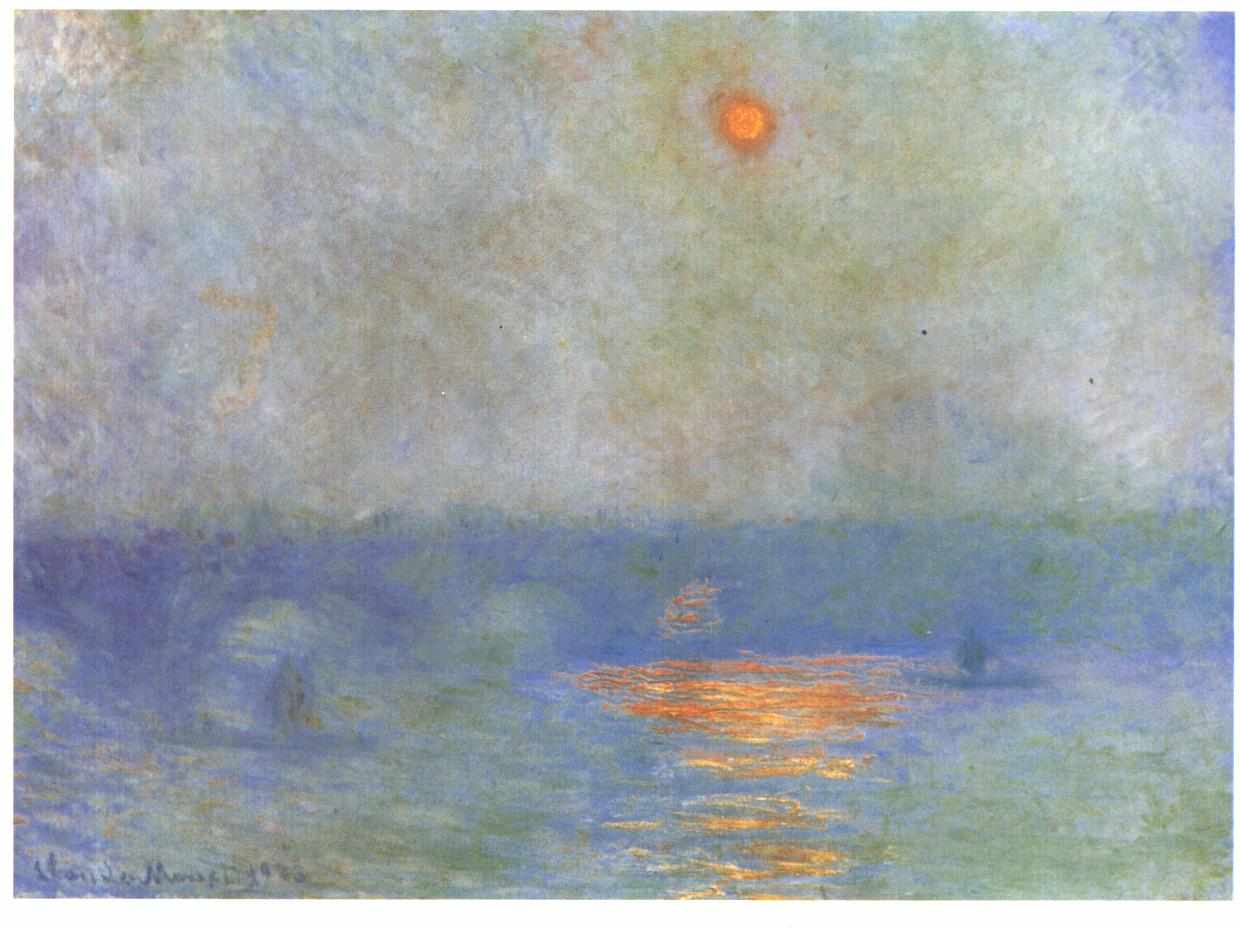
Waterloo Bridge: the Sun in a Fog
Claude Monet · 1903
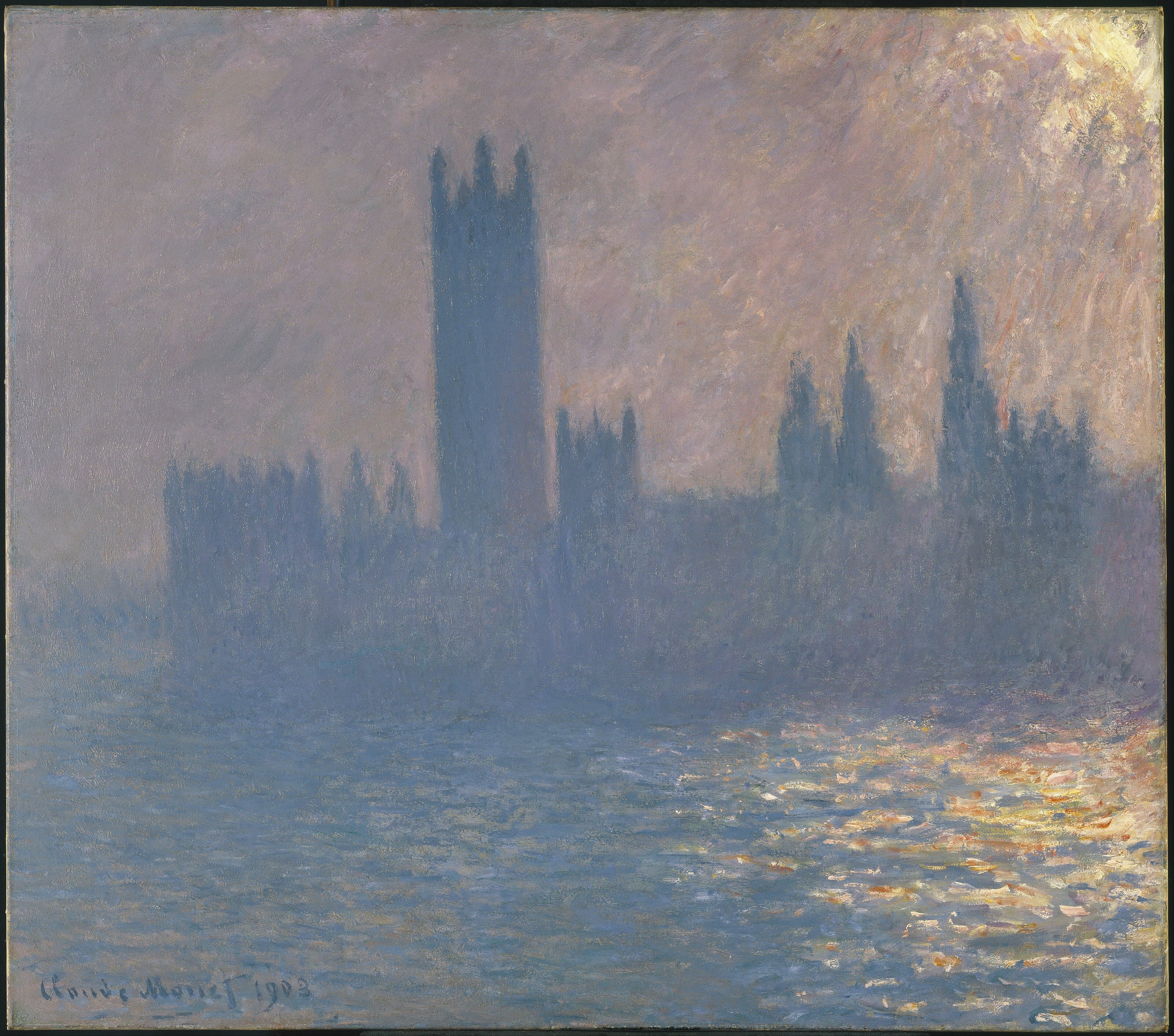
Houses of Parliament, Sunlight Effect
Claude Monet · 1903
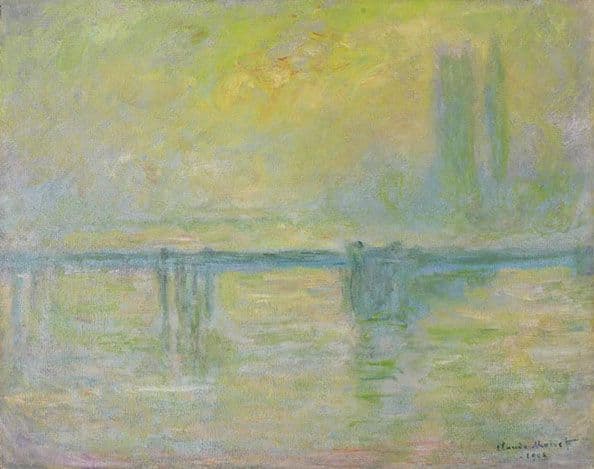
Charing Cross Bridge, Fog
Claude Monet · 1902–03
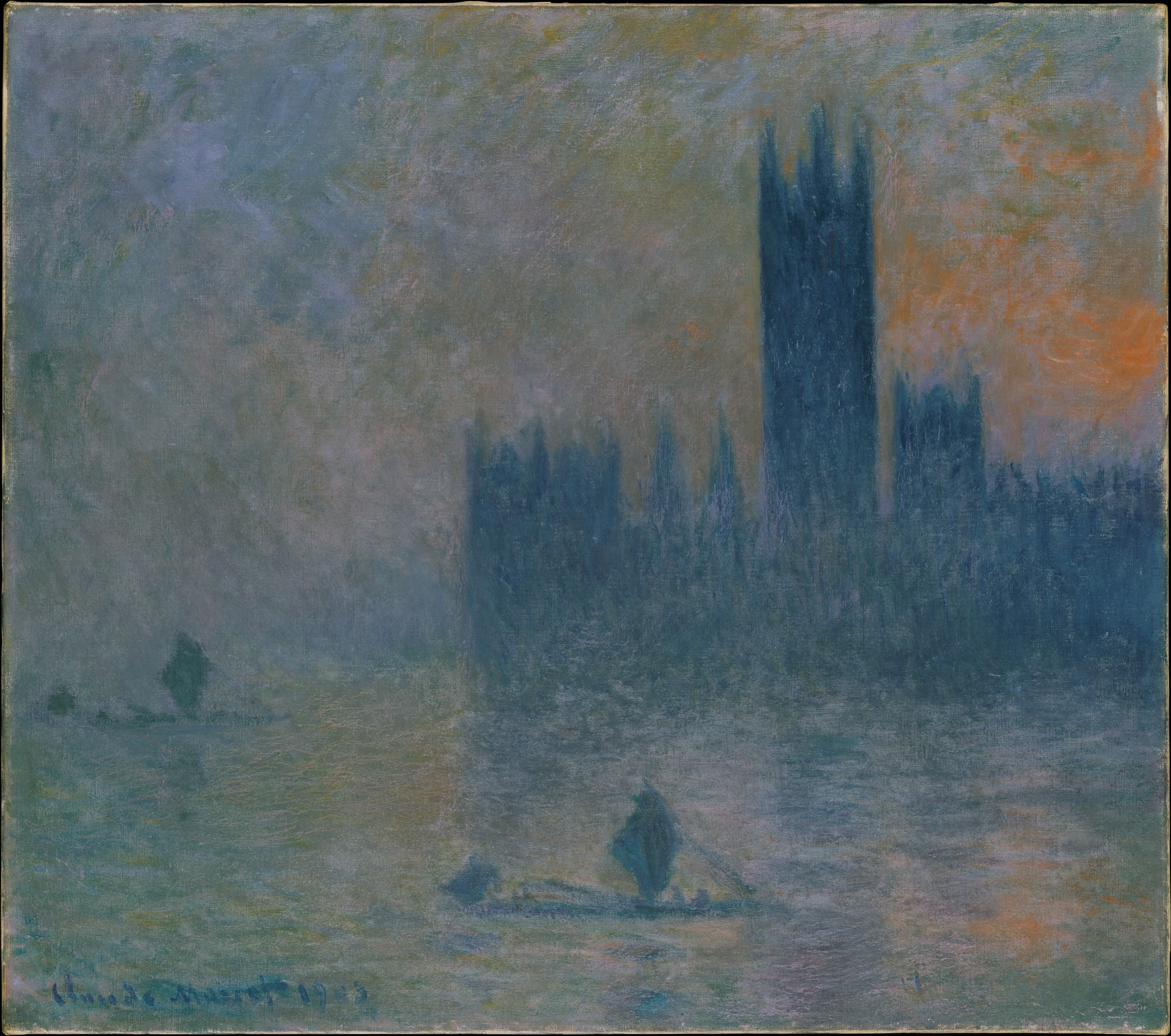
The Houses of Parliament (Effect of Fog)
Claude Monet · 1903–04
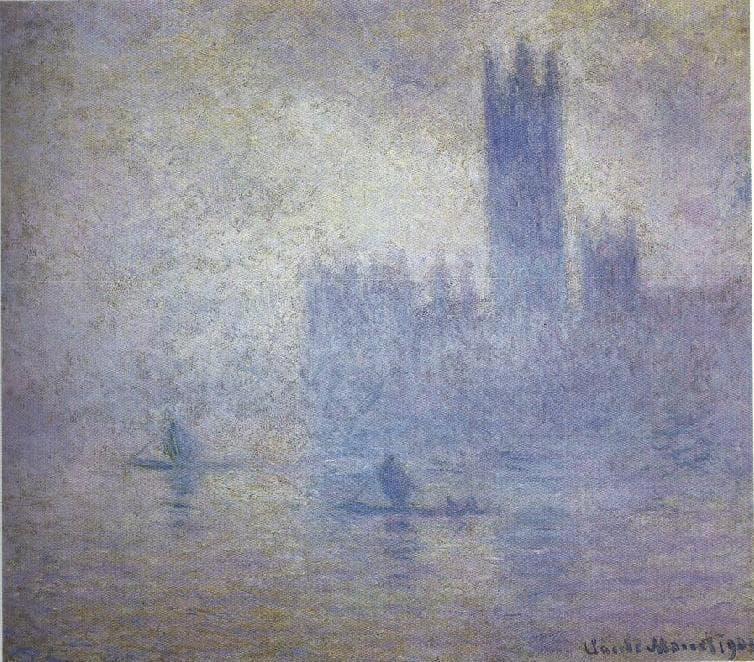
Houses of Parliament, Effect of Fog
Claude Monet · 1904
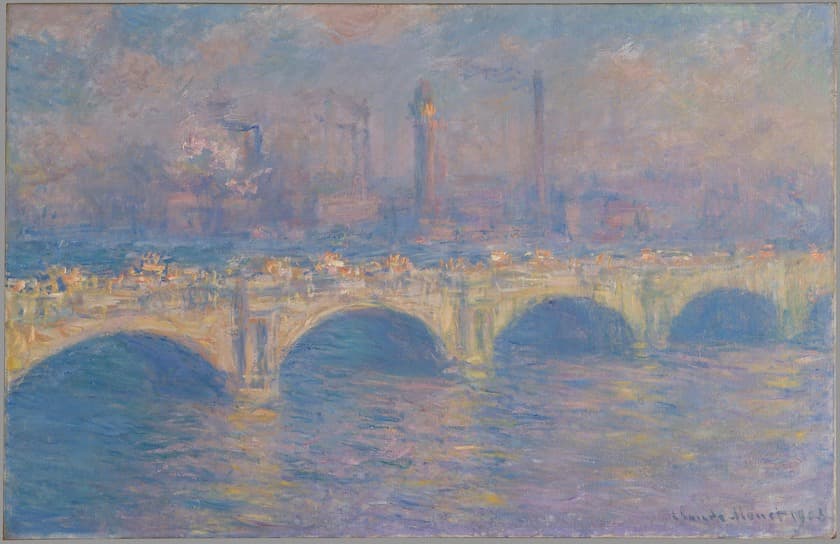
Waterloo Bridge, London
Claude Monet · 1903
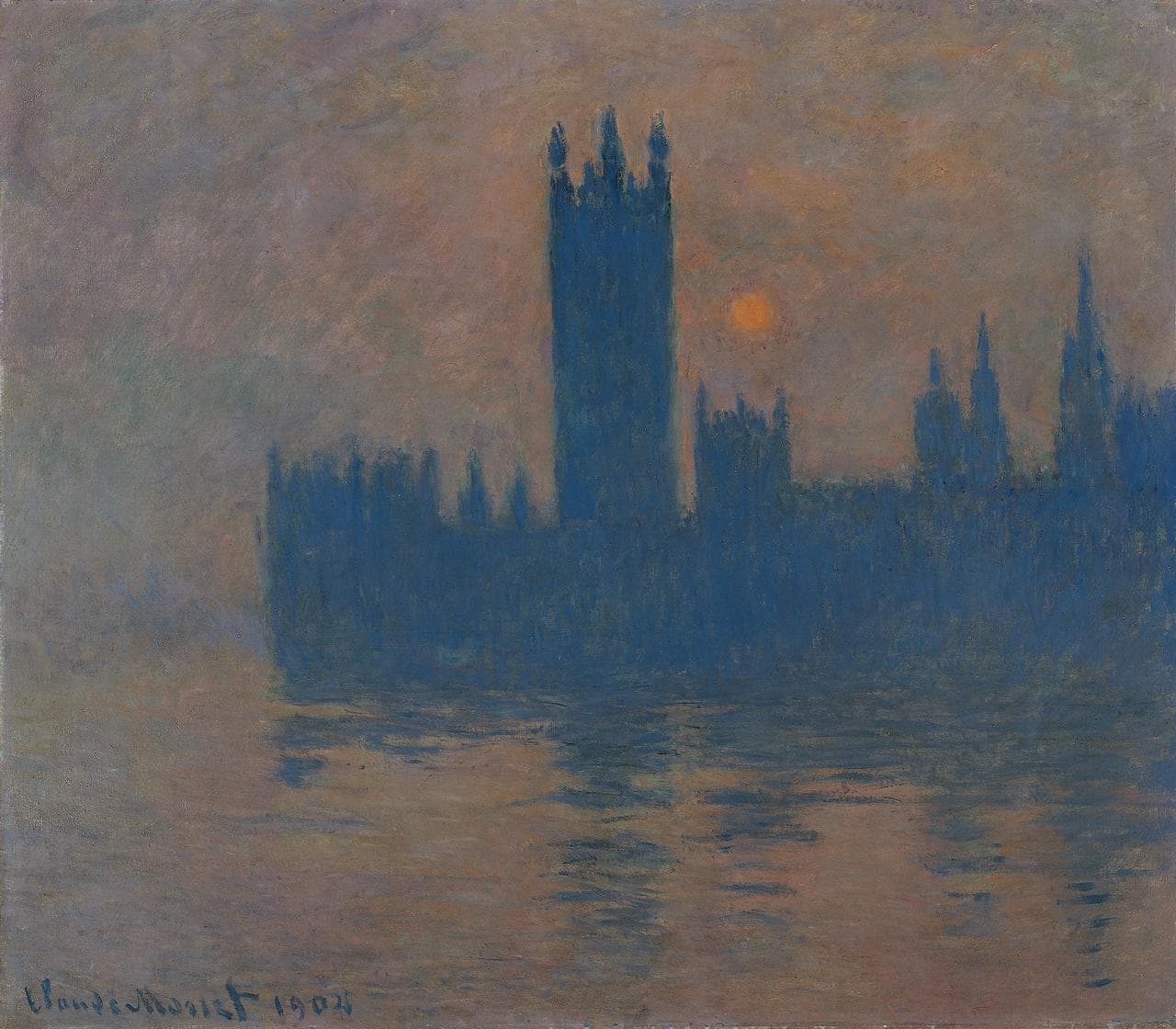
Le Parlement, coucher de soleil
Claude Monet · 1904
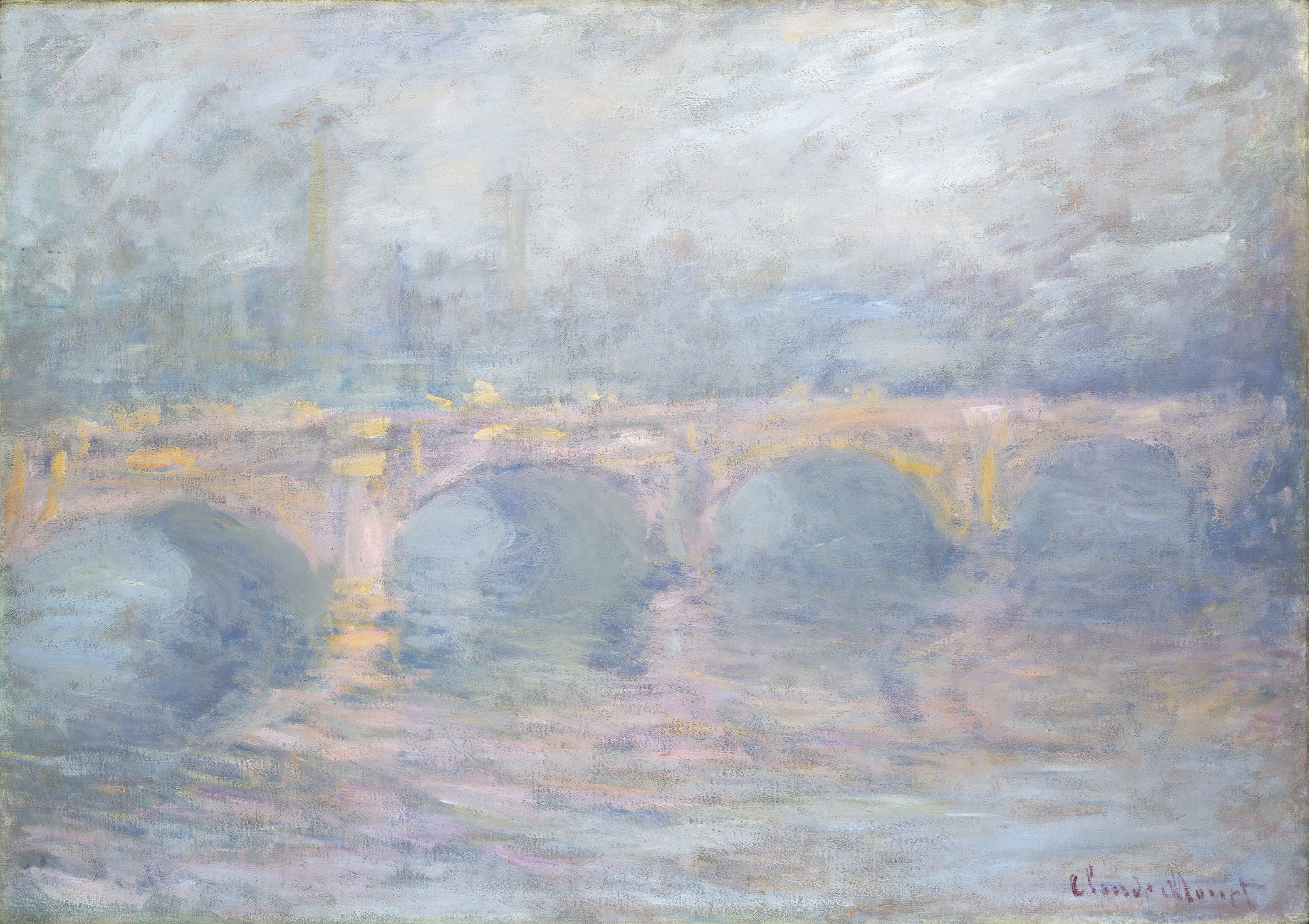
Waterloo Bridge, London, at Sunset
Claude Monet · 1904
Also painted in 1903
The same year
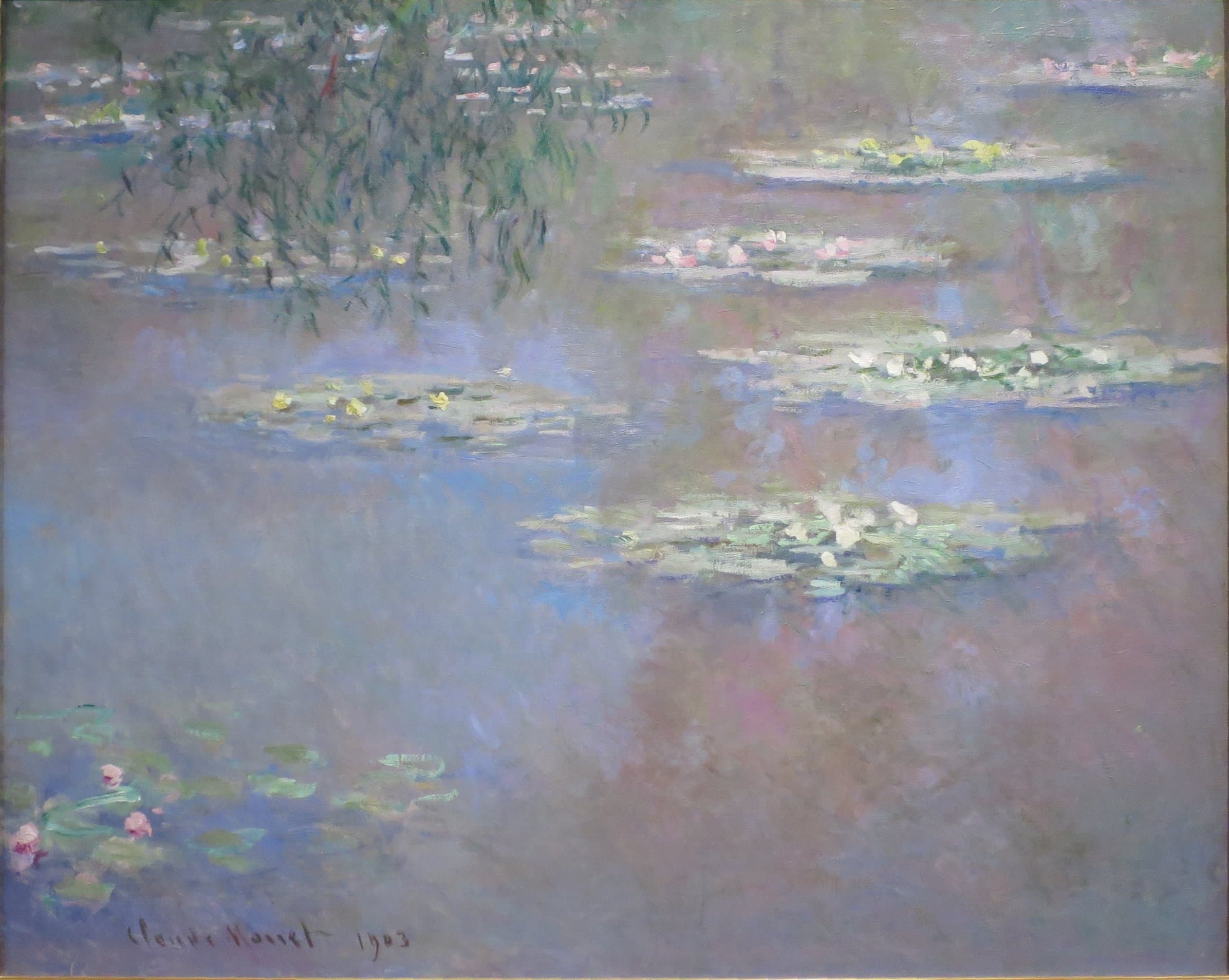
Waterlilies (1903, Dayton Art Institute)
Claude Monet · 1903
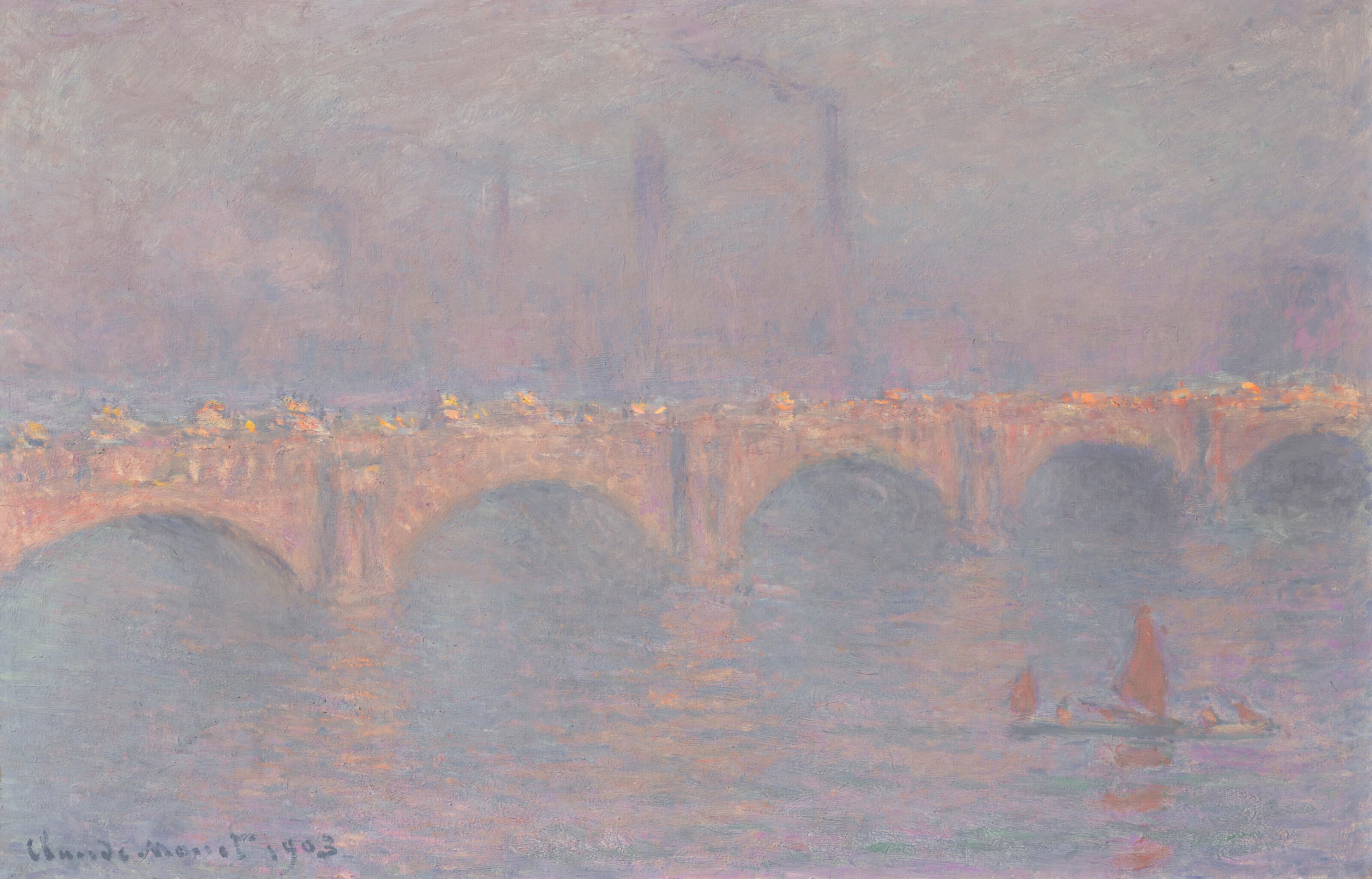
Waterloo Bridge, Hazy Sun
Claude Monet · 1903
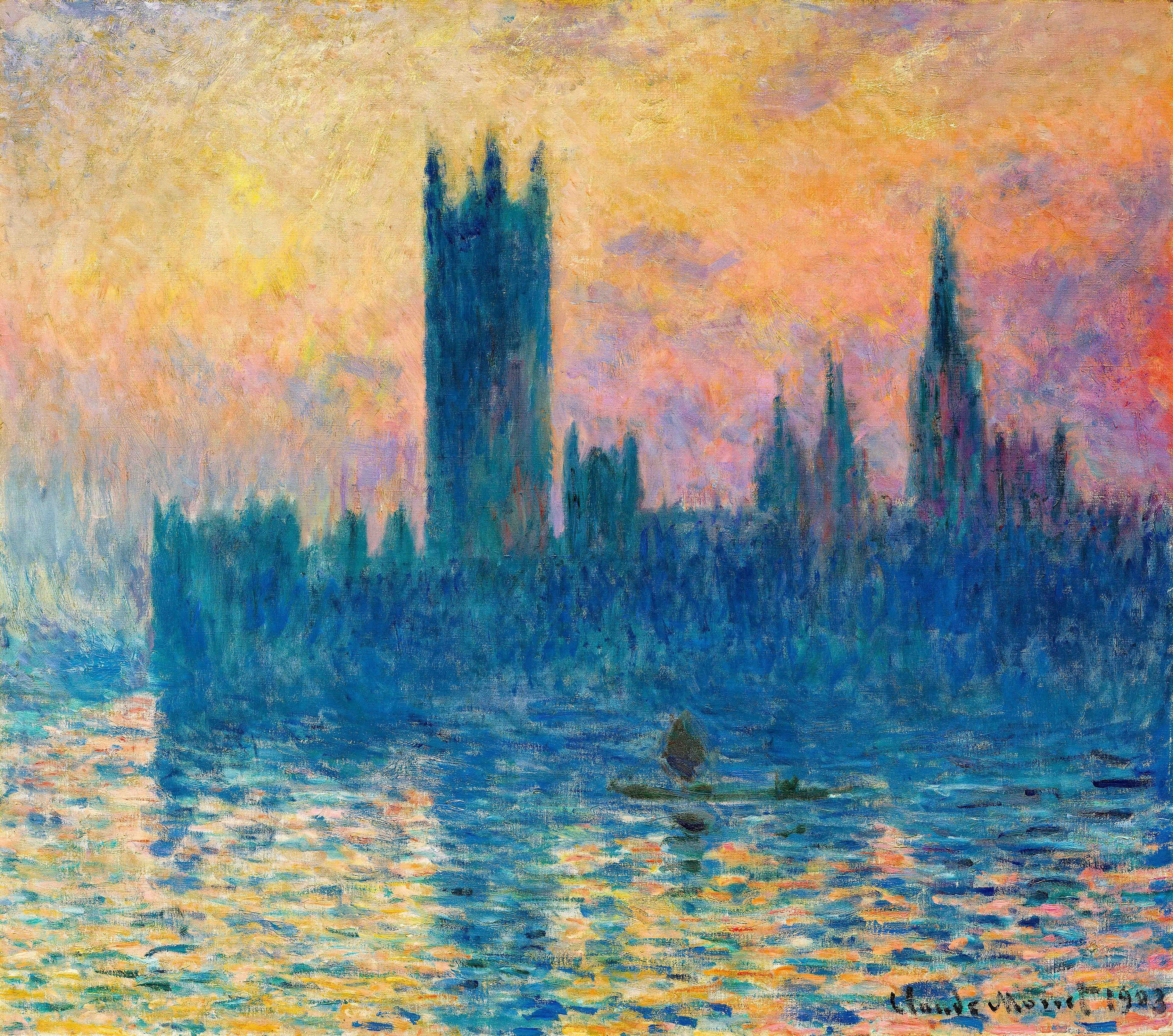
The Houses of Parliament, Sunset
Claude Monet · 1903
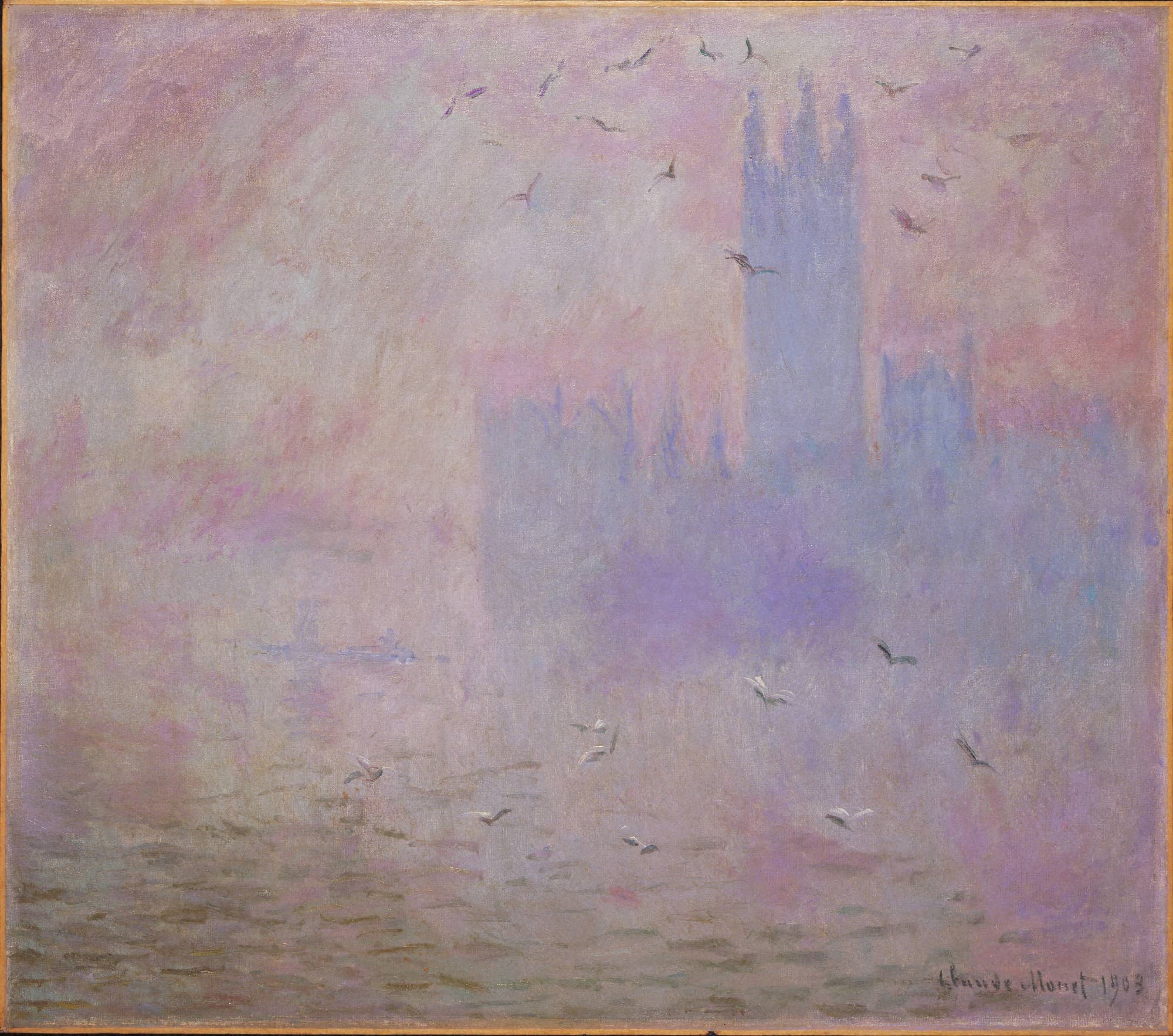
The Houses of Parliament, Seagulls
Claude Monet · 1903
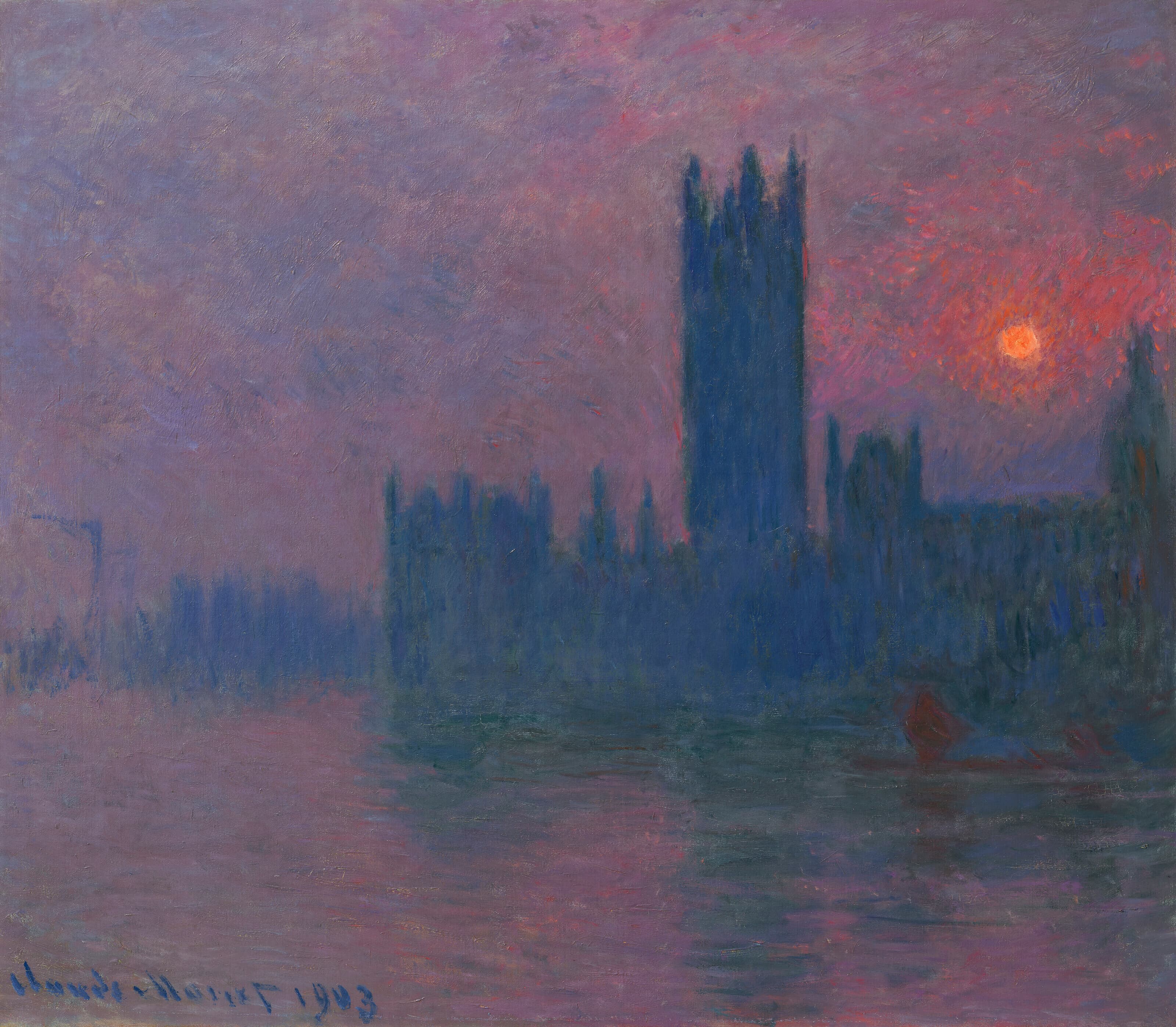
Houses of Parliament, Sunset
Claude Monet · 1903
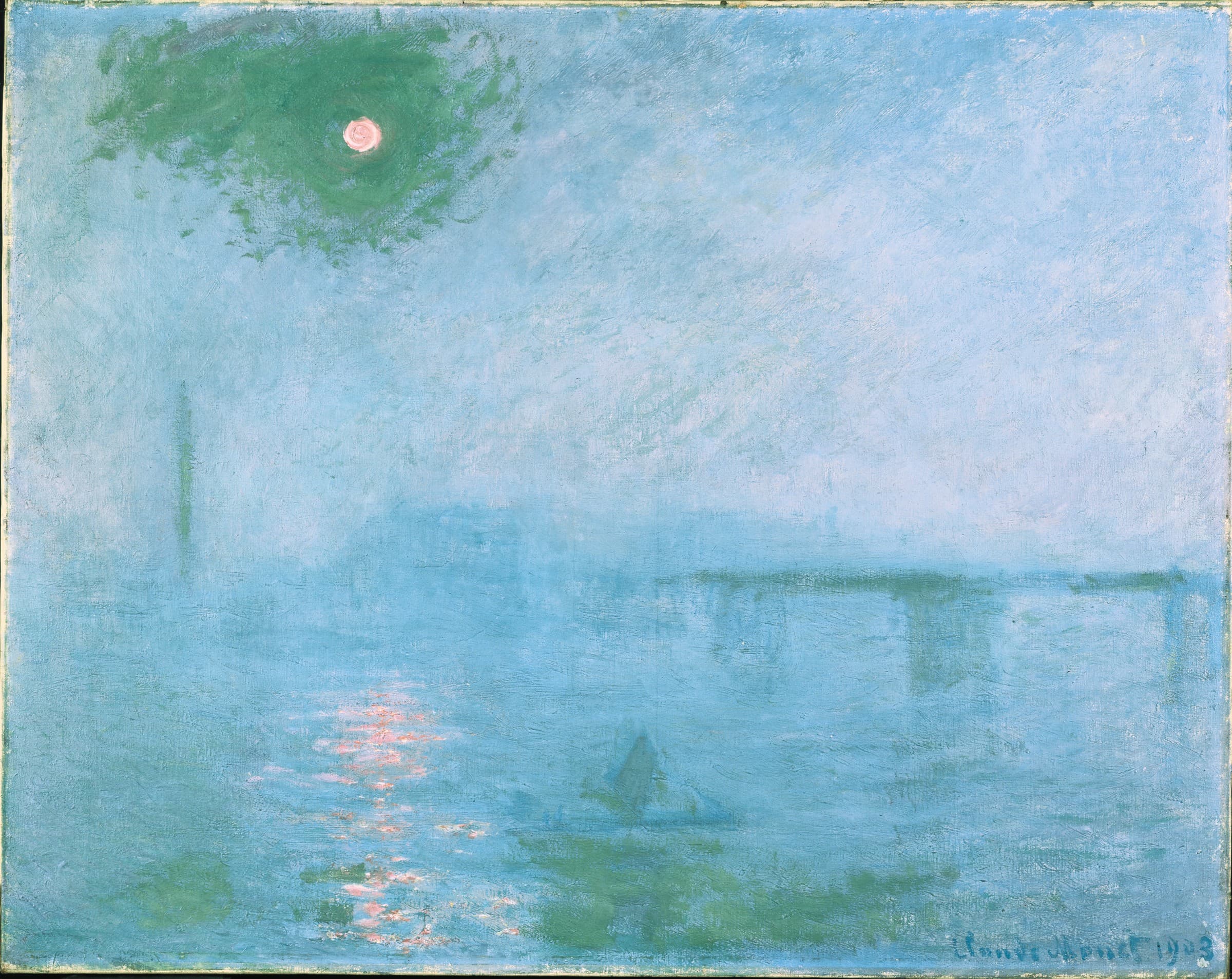
Charing Cross Bridge: Fog on the Thames
Claude Monet · 1903
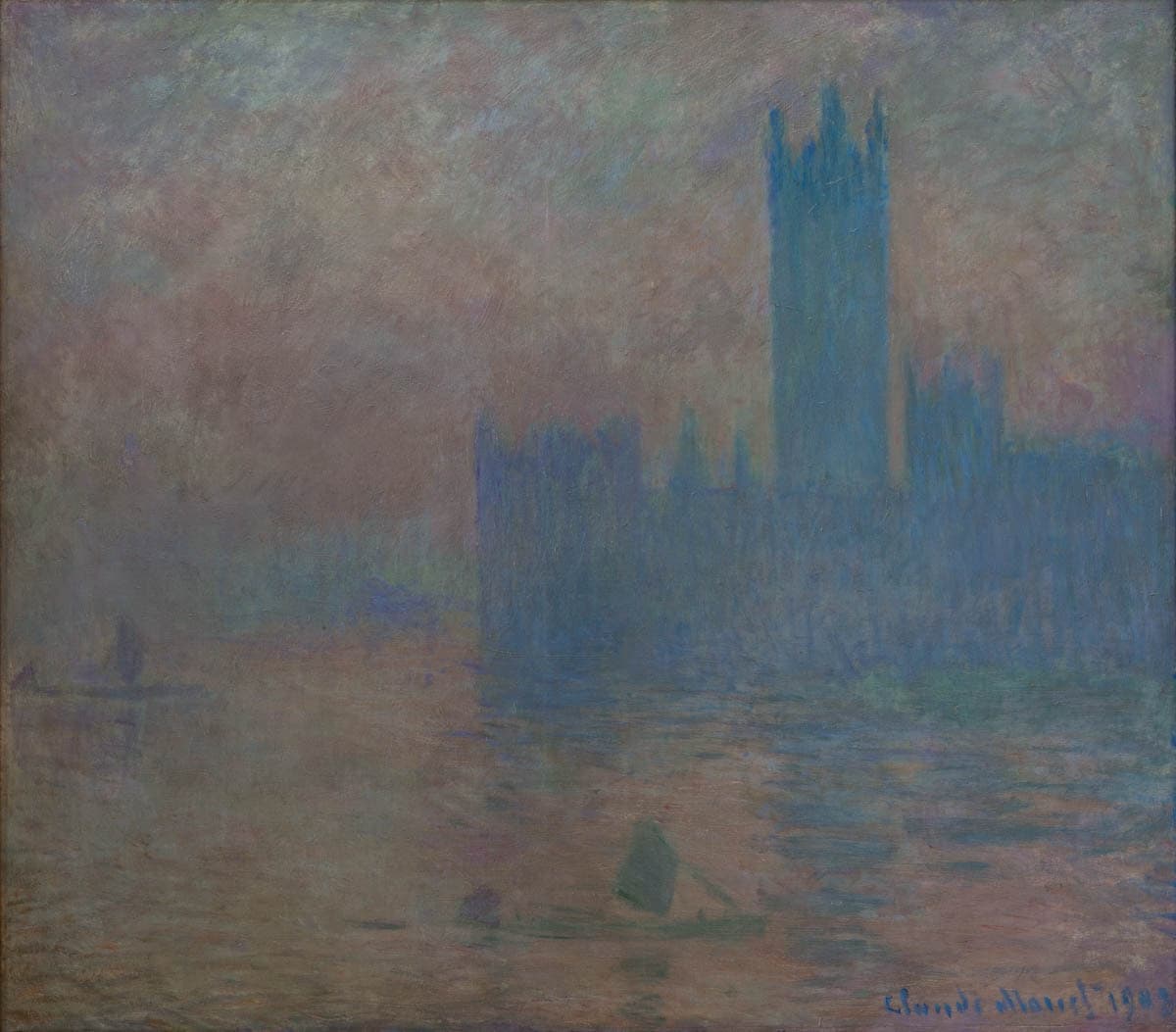
Le Parlement de Londres, effet de brouillard
Claude Monet · 1903
Houses of Parliament, Symphony in Blue
Claude Monet · 1903
Kindred works
You may also study
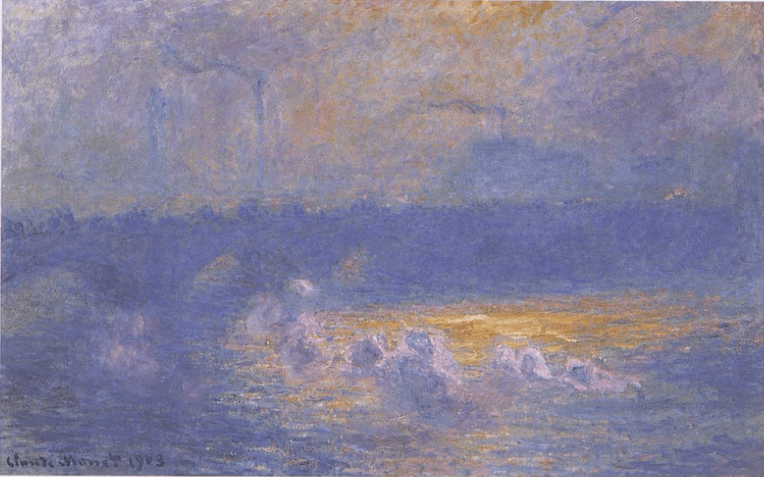
Waterloo Bridge, Sunlight Effect with Smoke
Claude Monet · 1903
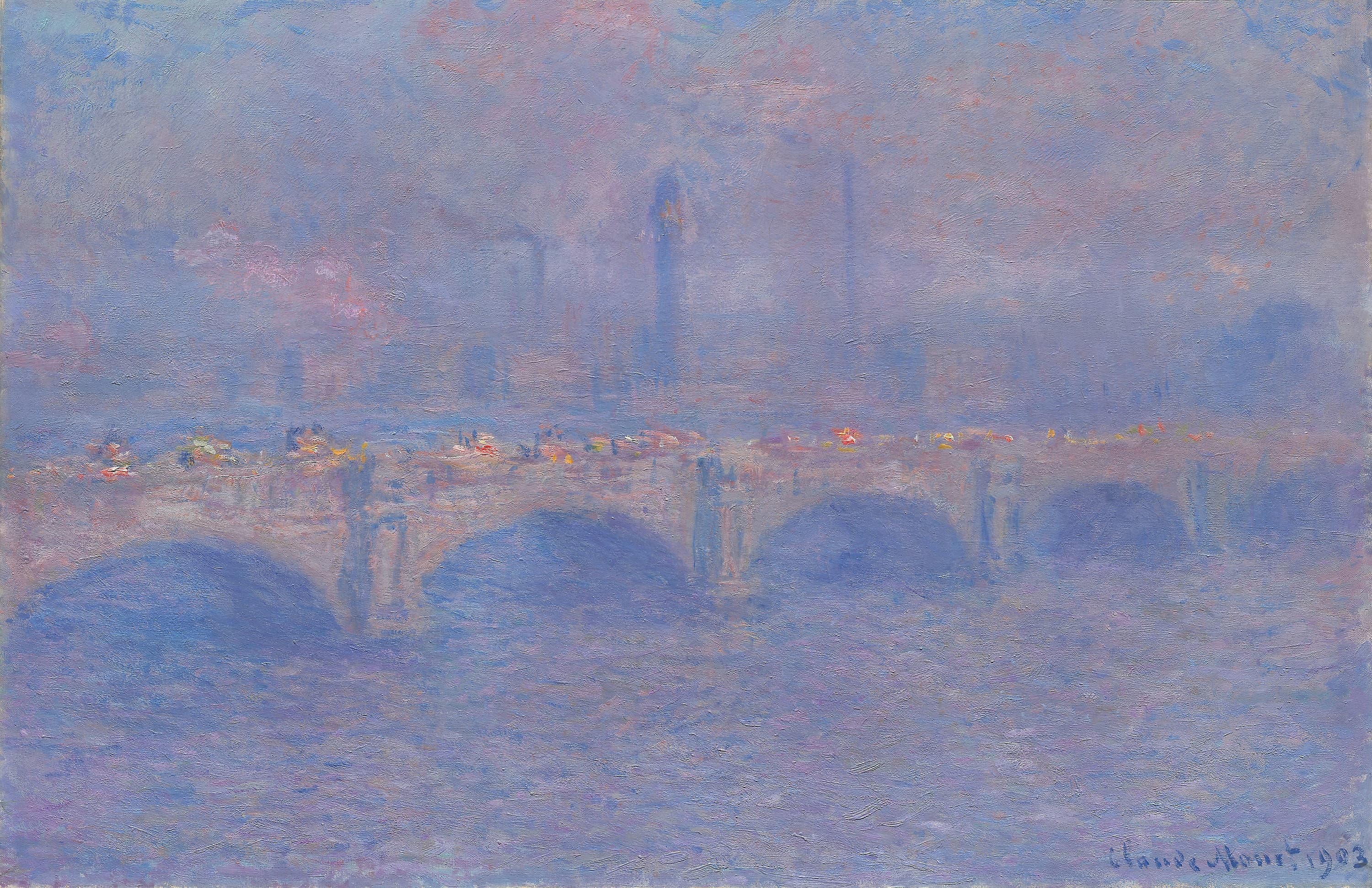
Waterloo Bridge, Sunlight Effect
Claude Monet · 1903
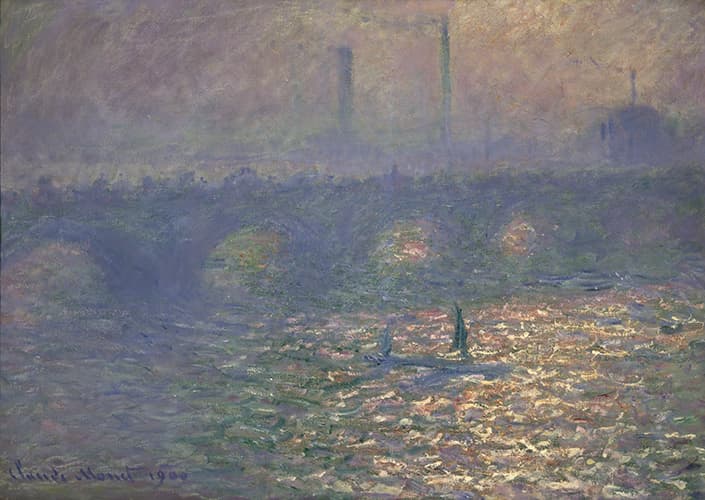
Waterloo Bridge (Santa Barbara Museum of Art)
Claude Monet · 1900
Waterloo Bridge, Sunlight Effect
Claude Monet · c. 1900 (dated 1903)
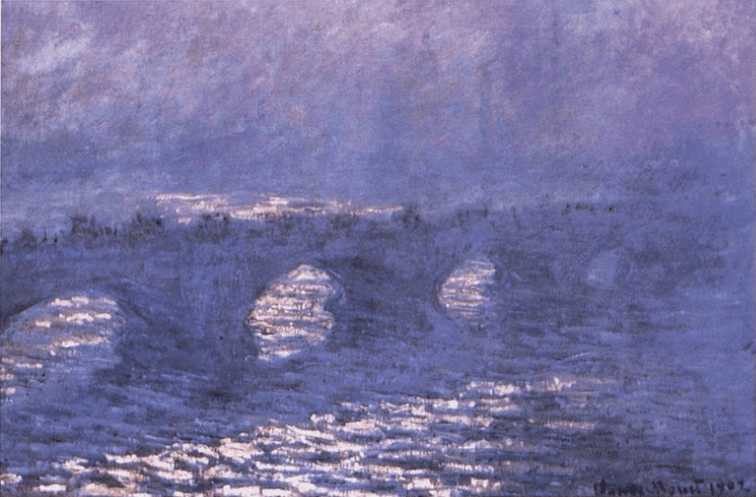
Waterloo Bridge, Effect of Sun in the Mist
Claude Monet · c. 1900–03
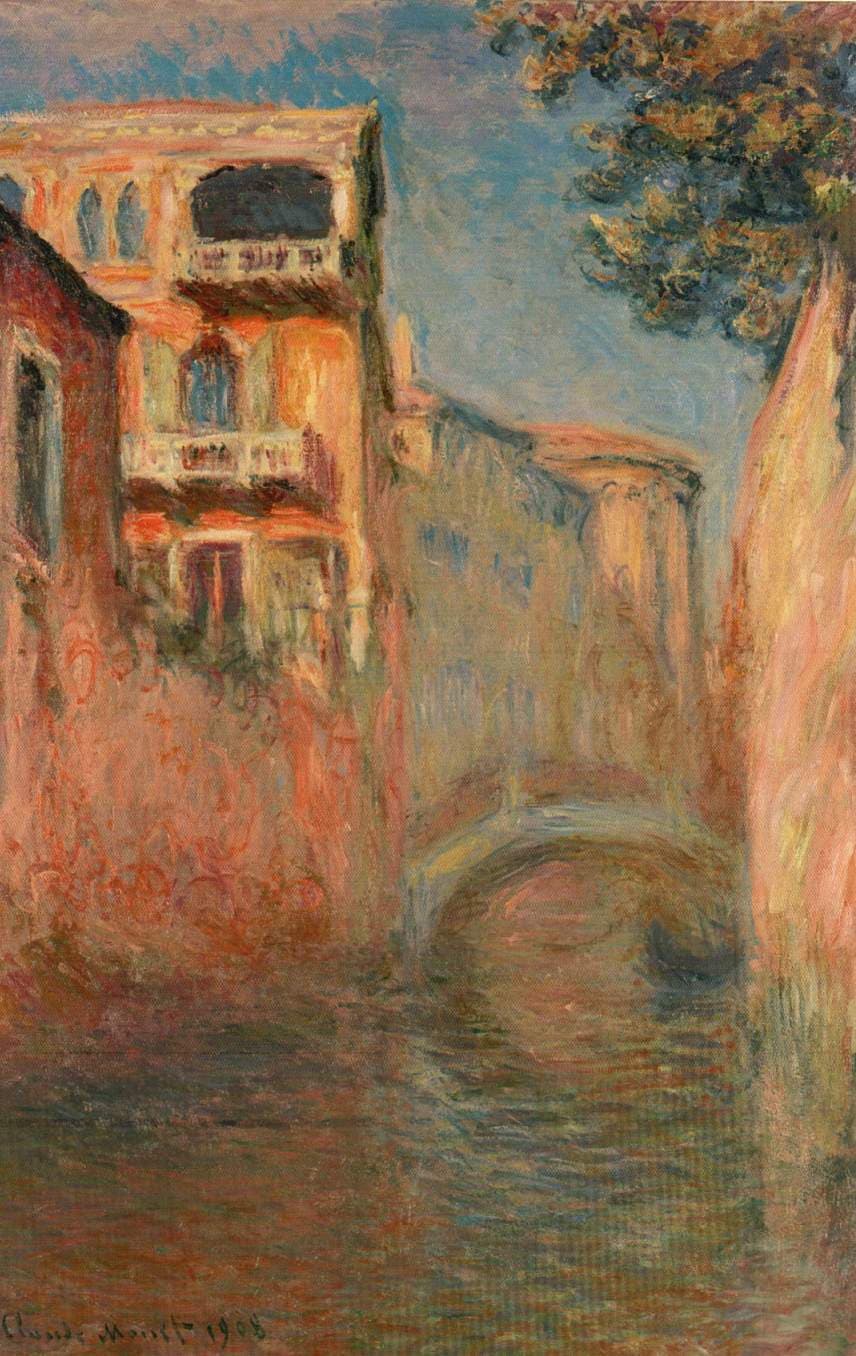
The Rio della Salute
Claude Monet · 1908
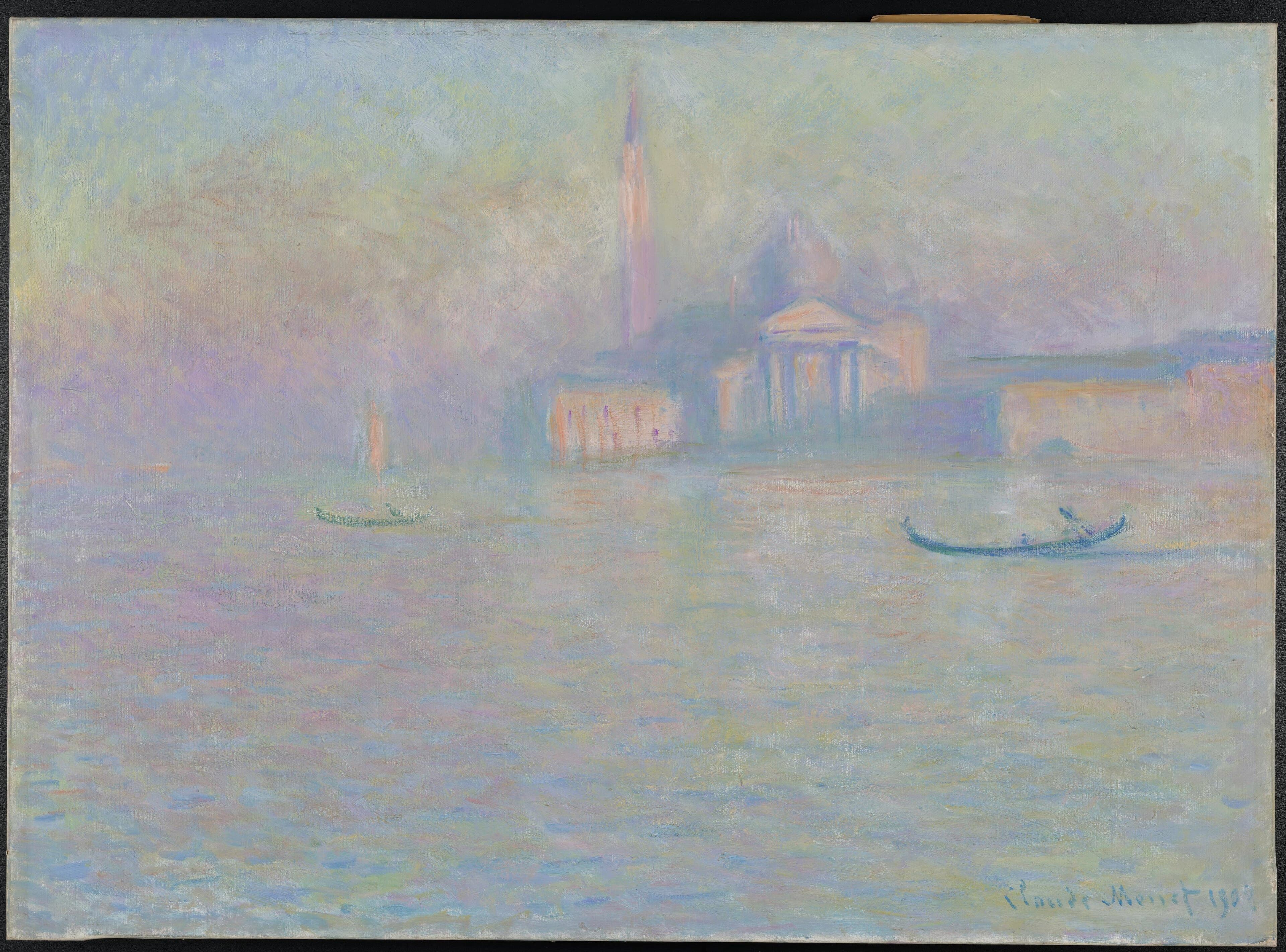
San Giorgio Maggiore
Claude Monet · 1908
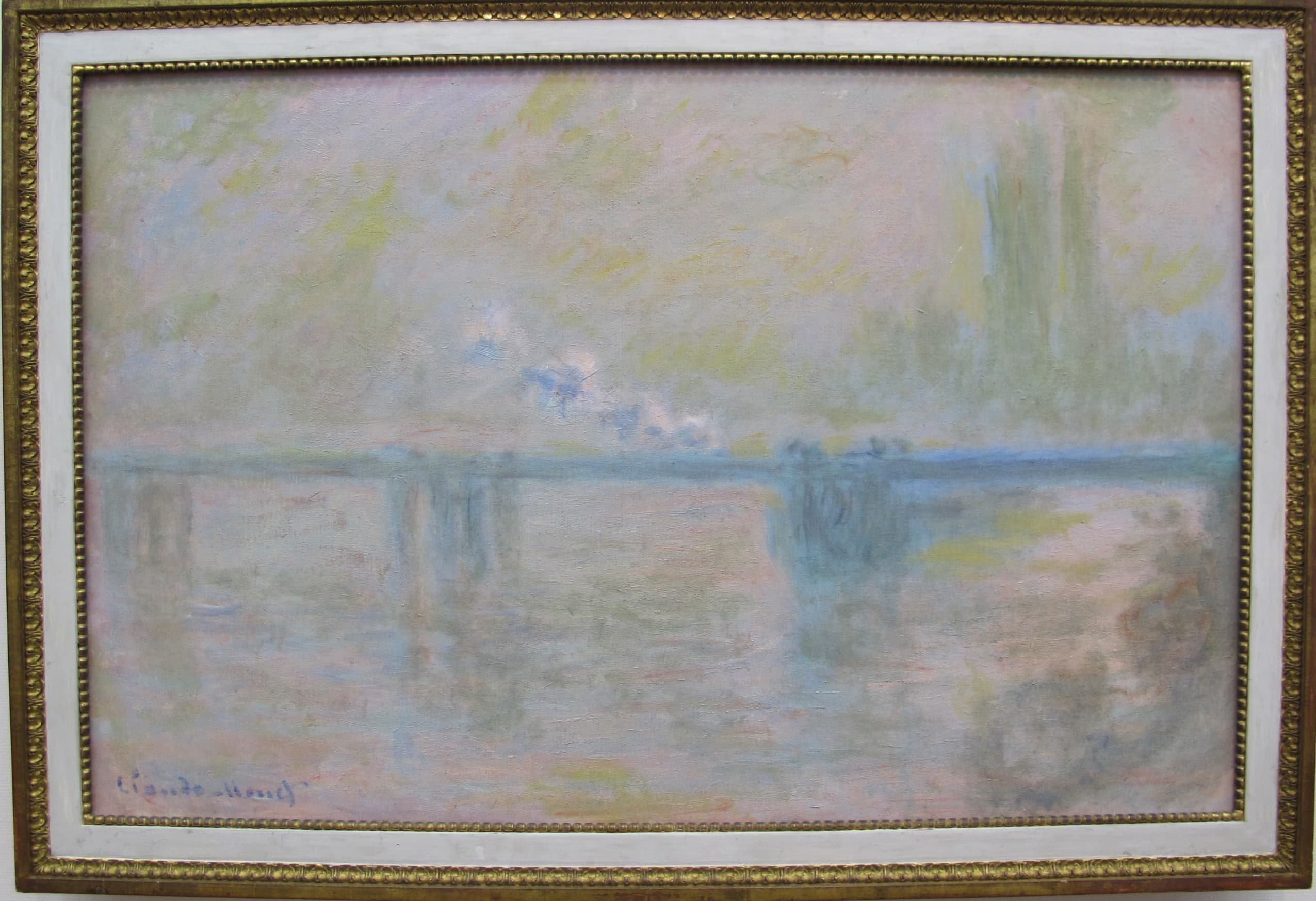
Charing Cross Bridge (Overcast Day)
Claude Monet · 1900