Image: Kunsthaus Zürich, gift of Walter Haefner 1995 · Public domain · via Wikimedia Commons
The Doge's Palace Seen from San Giorgio Maggiore (Zürich)
Claude Monet, 1908
The Doge's Palace Seen from San Giorgio Maggiore is a 1908 painting by Claude Monet in which the Doge's Palace and Venice's waterfront almost vanish in pale gold and pink haze across the lagoon. Given by Walter Haefner in 1995, it is in the Kunsthaus Zürich.
- Artist
- Claude Monet
- Date
- 1908
- Medium
- Oil on canvas
- Dimensions
- 65 × 100 cm
- Collection
- Kunsthaus Zürich, Zürich, Switzerland
- Movement
- Impressionism
- Catalogue
- Wildenstein 1751
- The City
- Architecture & Ruins
- Water & Sea
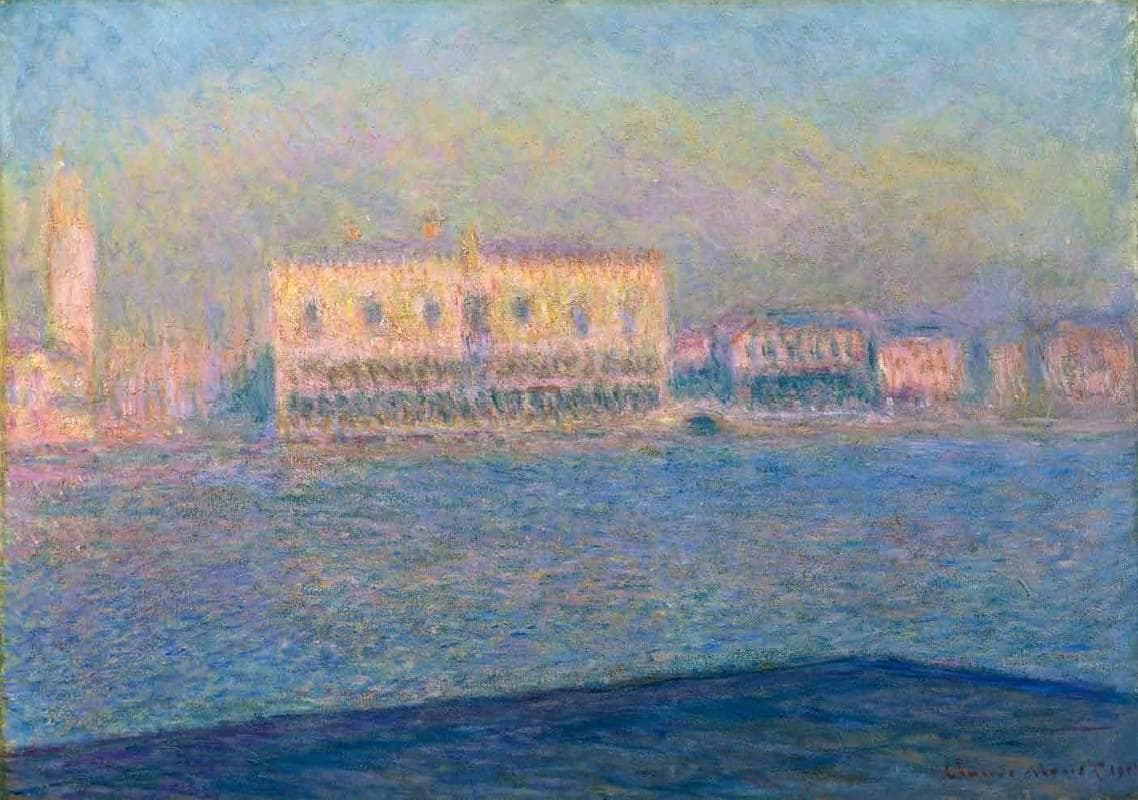
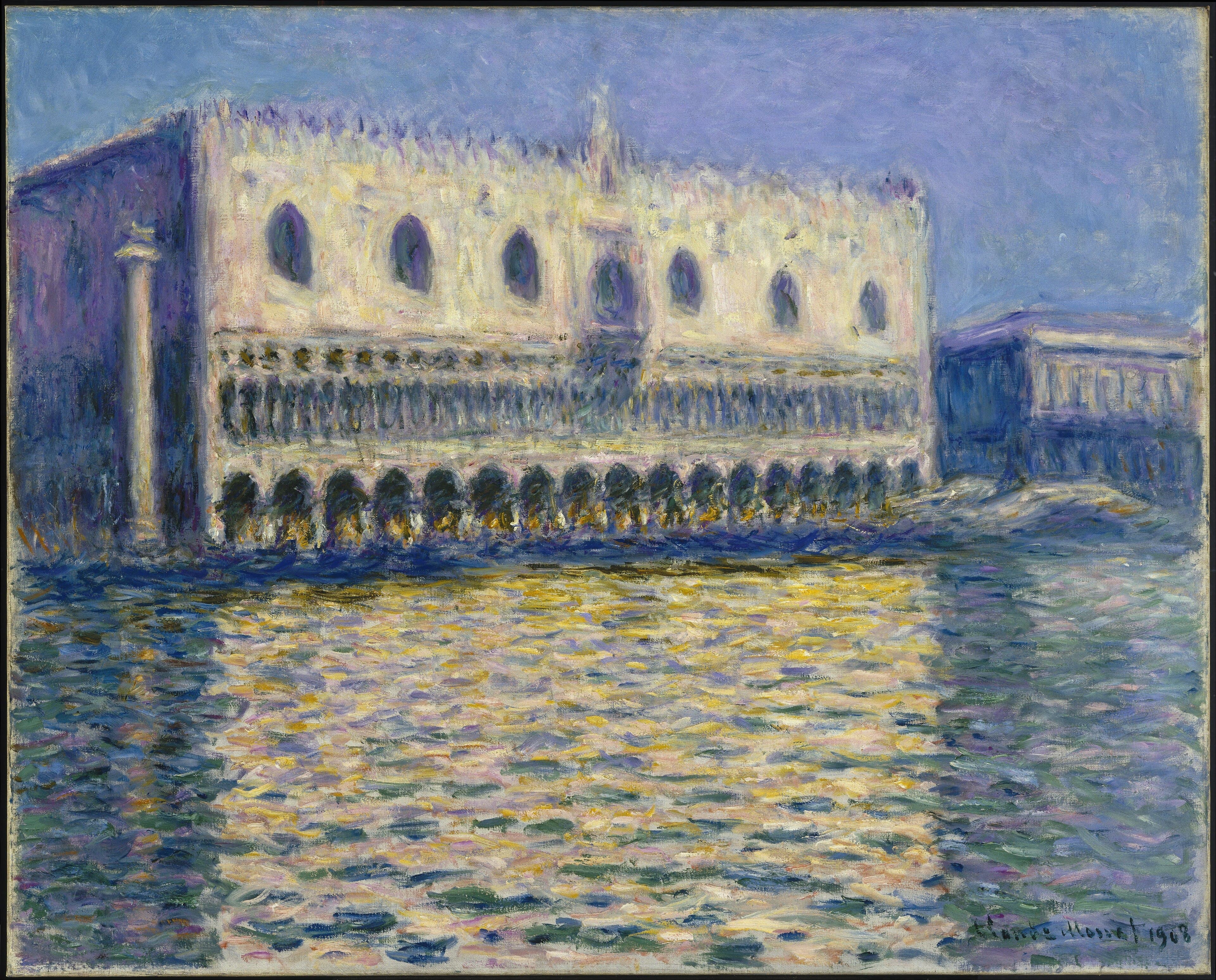
The Doge's Palace Seen from San Giorgio Maggiore (Le Palais Ducal vu de Saint-Georges Majeur) is one of six views Claude Monet painted in 1908 from the island of San Giorgio, looking across the lagoon to the Doge's Palace. This version, 65 by 100 centimeters and signed Claude Monet 1908 at the lower right in blue, is in the Kunsthaus Zürich (1995/0004). It is the haziest of the six.
What you're looking at
The scene is the same as in its siblings: a dark band of quay in the foreground, a wide stretch of lagoon, and the waterfront of Venice running across the horizon with the Doge's Palace at its center. But here the light has almost eaten the architecture. The palace is a pale block of cream and apricot, its windows barely indicated by faint blue marks. The Campanile at the far left is a ghostly column of pink. The buildings on either side, the Library to the left and the long Riva to the right, are no more than slightly denser patches of light.
The sky is a luminous veil of cream, pale yellow and lilac, nearly the same value as the buildings. The lagoon picks up the same colors in fine horizontal strokes: cream, lemon, pink, and pale blue-green, brightest in the middle distance where the sun strikes the water. At the bottom, the quay of San Giorgio is a diagonal band of soft lavender-blue, much lighter than the near-black edge in some versions.
The effect is of morning mist, or of sunlight diffused through haze off the water, the condition Monet had pursued in London a few years earlier.
The six views
According to the Kunsthaus, Monet painted six closely related canvases of the Doge's Palace, the Campanile (then being rebuilt after its collapse in 1902) and the Riva degli Schiavoni, all from San Giorgio Maggiore, and completed them at Giverny. The Metropolitan Museum's canvas is pinker and more defined; the Guggenheim's is cool and silvery, with a strong dark foreground. The Zürich picture pushes furthest toward dissolution: there is almost no contrast anywhere, and the city becomes a horizontal line of warm light between two expanses of shimmer. In the close-up Doge's Palace in Brooklyn, by contrast, the same facade fills the canvas.
Where and when
Monet and his wife Alice were in Venice from early October to early December 1908, staying first at the Palazzo Barbaro and then at the Hotel Britannia. He worked on canvases in rotation, each at its own hour. San Giorgio Maggiore, on its island across the basin, gave him both a motif, the church itself, and a viewpoint back toward the city. Twenty-nine Venice canvases were shown at Bernheim-Jeune in Paris in 1912.
How it was painted
The surface is evenly covered in small, dry strokes, the paint dragged so that colors overlap without blending. Monet keeps nearly everything in a narrow band of high values, separating forms by temperature, warm buildings against cool water, rather than by light and dark. The foreground quay is painted more broadly, with diagonal strokes.
Ownership and where to see it
The painting passed through the hands of Paul Durand-Ruel. It later belonged to the Zürich businessman Walter Haefner, who owned it by 1965 and lent it to the Kunsthaus from 1974. He gave it to the museum in 1995 to mark the fiftieth anniversary of his company, AMAG. It hangs in the Kunsthaus's collection of French painting. For the full Venice group see Monet in Venice; for other public collections of Monet, see Where to See Monet's Paintings.
Questions & answers
Where is this Monet Venice painting?
It is in the Kunsthaus Zürich in Switzerland (inventory 1995/0004). The businessman Walter Haefner, who had lent it to the museum since 1974, gave it in 1995 to mark AMAG's fiftieth anniversary.
When and where was it painted?
In 1908, during Monet's only visit to Venice. He looked from the island of San Giorgio Maggiore across the basin of San Marco to the Doge's Palace, and completed the canvas at Giverny.
What does it show?
The Doge's Palace, the Campanile and the Venetian waterfront as a thin, hazy band of cream and apricot between a pale sky and shimmering lagoon, with the lavender edge of the San Giorgio quay in the foreground.
How does it differ from the other versions?
It is the haziest of Monet's six views from San Giorgio. The Met's version is pinker and clearer and the Guggenheim's is cool and silvery with a darker foreground; here the city nearly dissolves into light.
More by the artist
Claude Monet
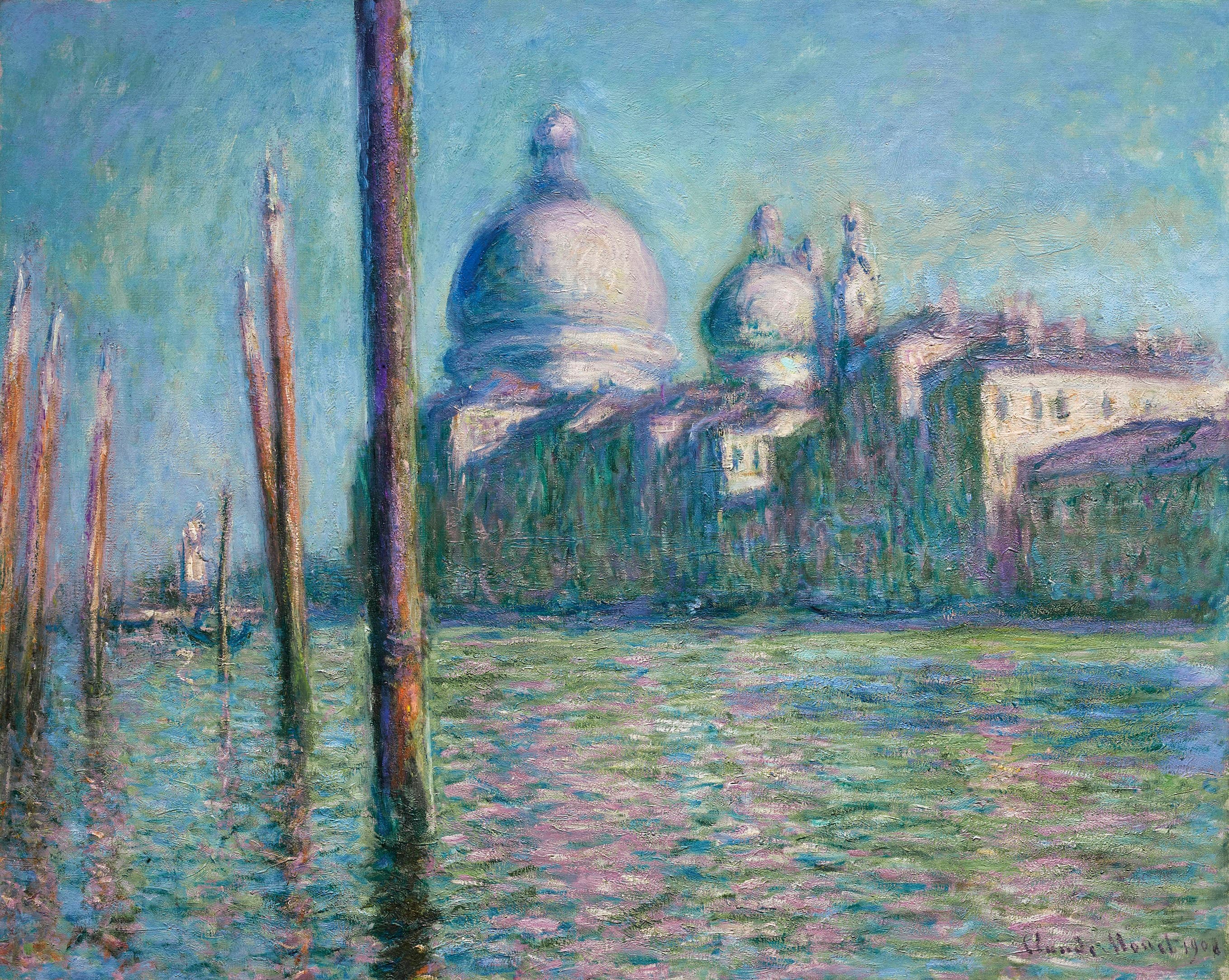
The Grand Canal, Venice
Claude Monet · 1908
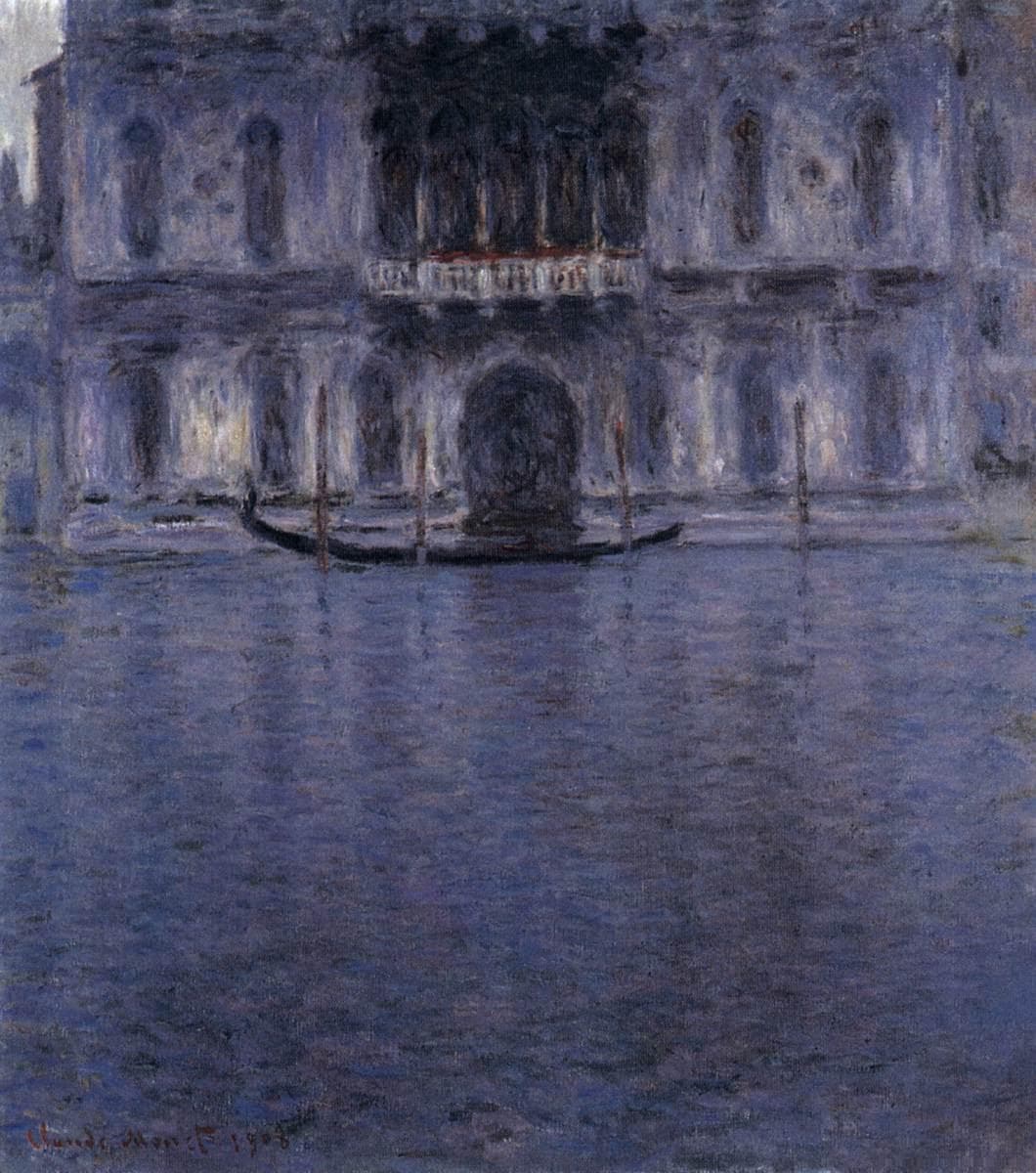
Palazzo Contarini
Claude Monet · 1908
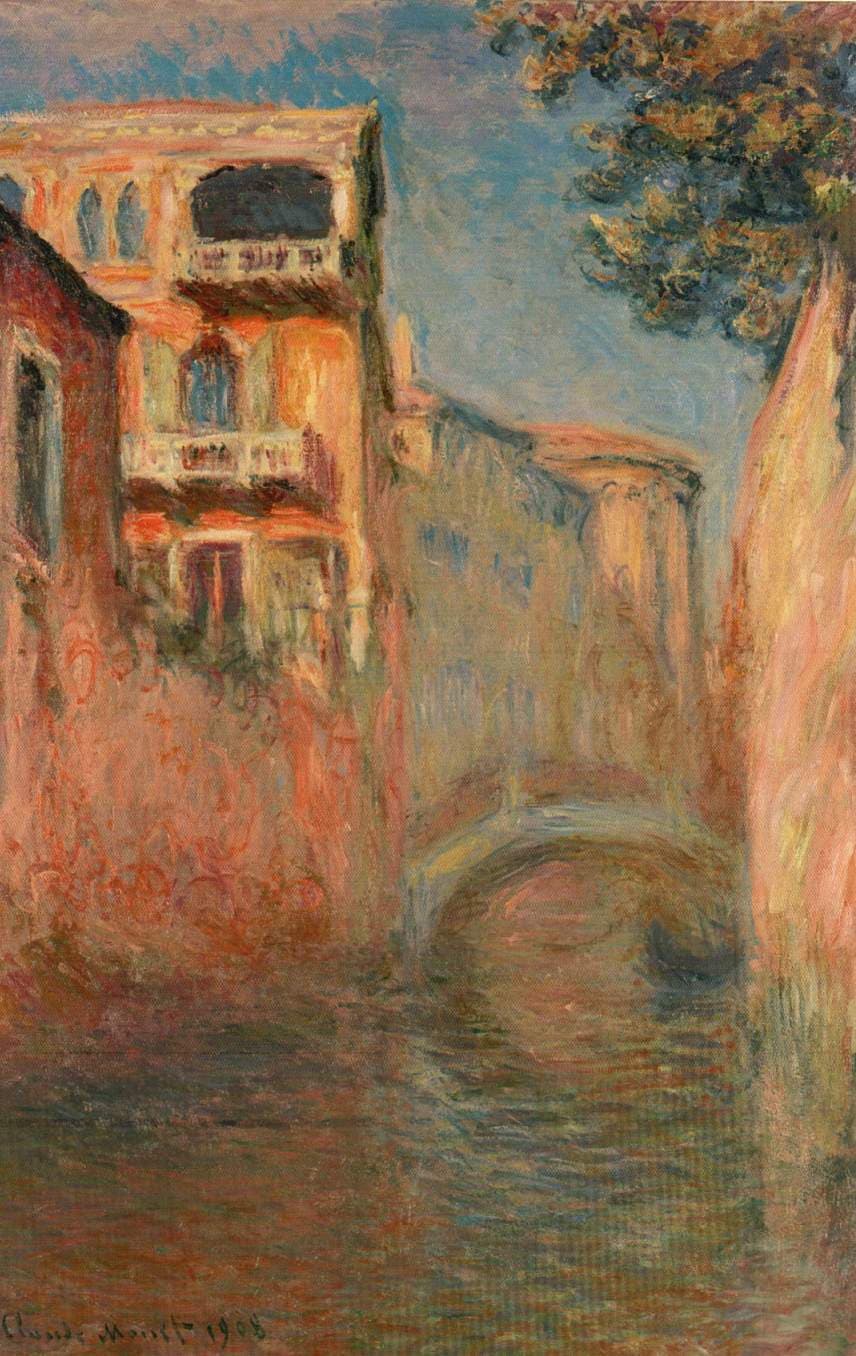
The Rio della Salute
Claude Monet · 1908
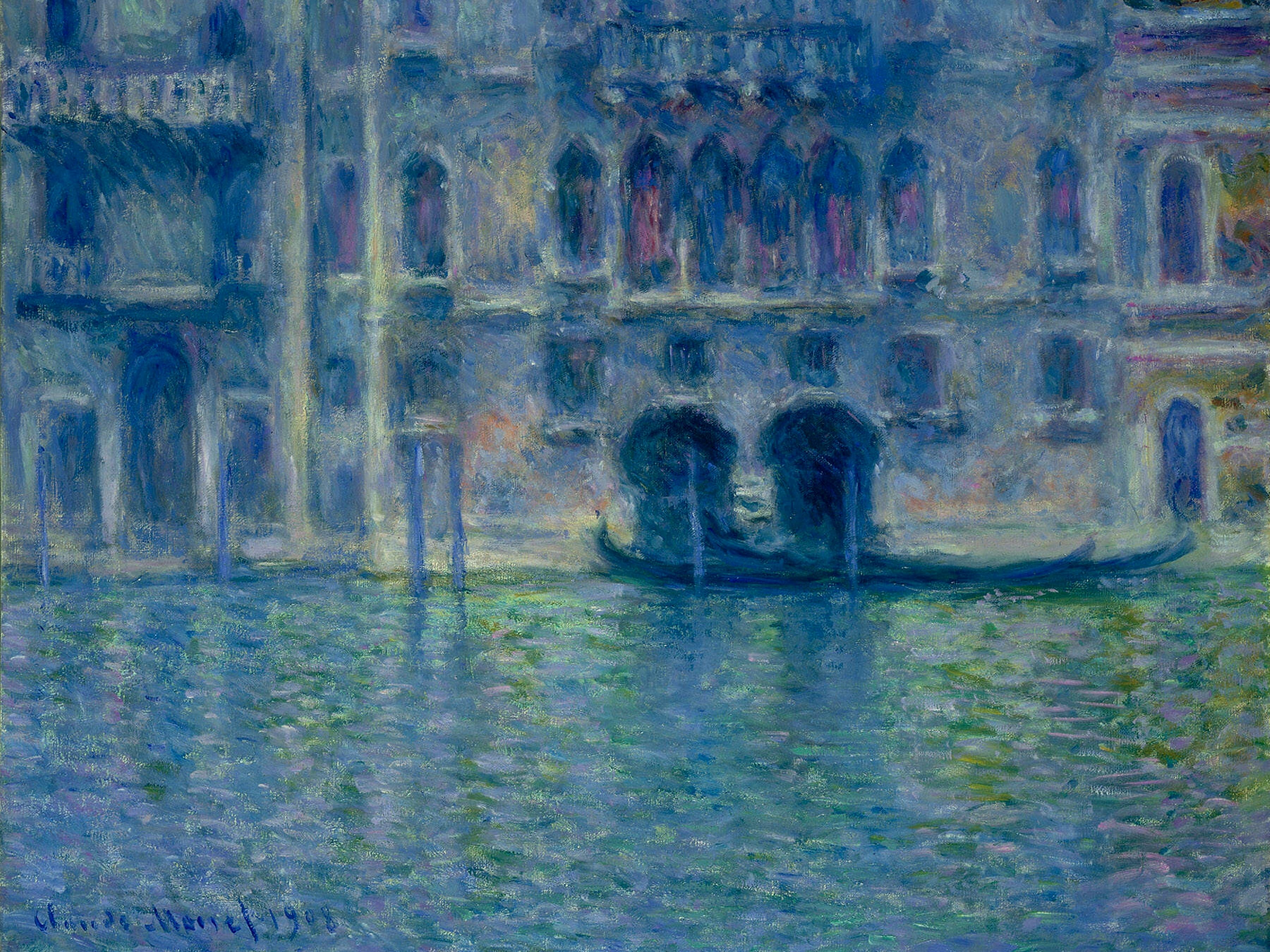
Palazzo da Mula, Venice
Claude Monet · 1908
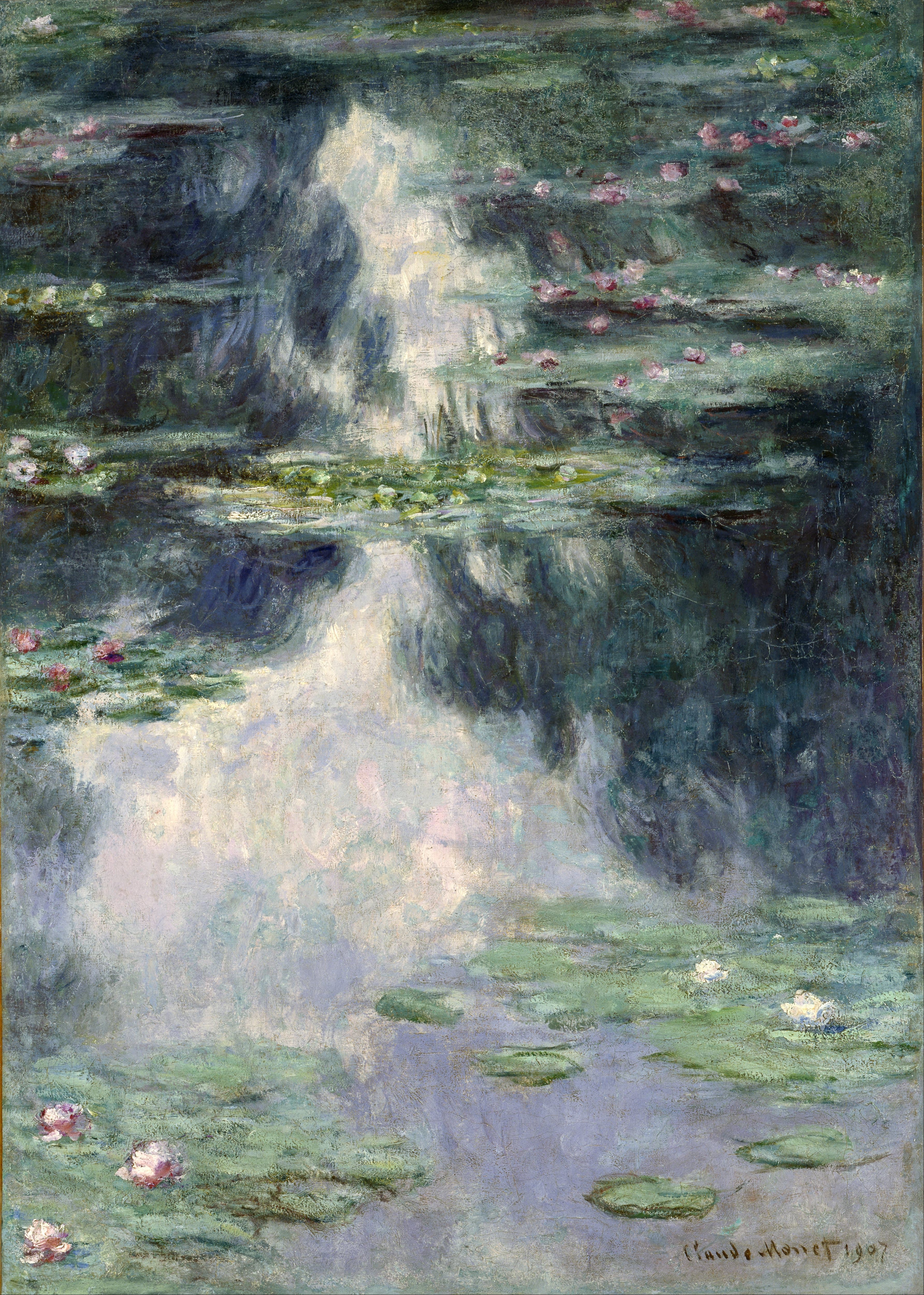
Pond with Water Lilies (Israel Museum)
Claude Monet · 1907
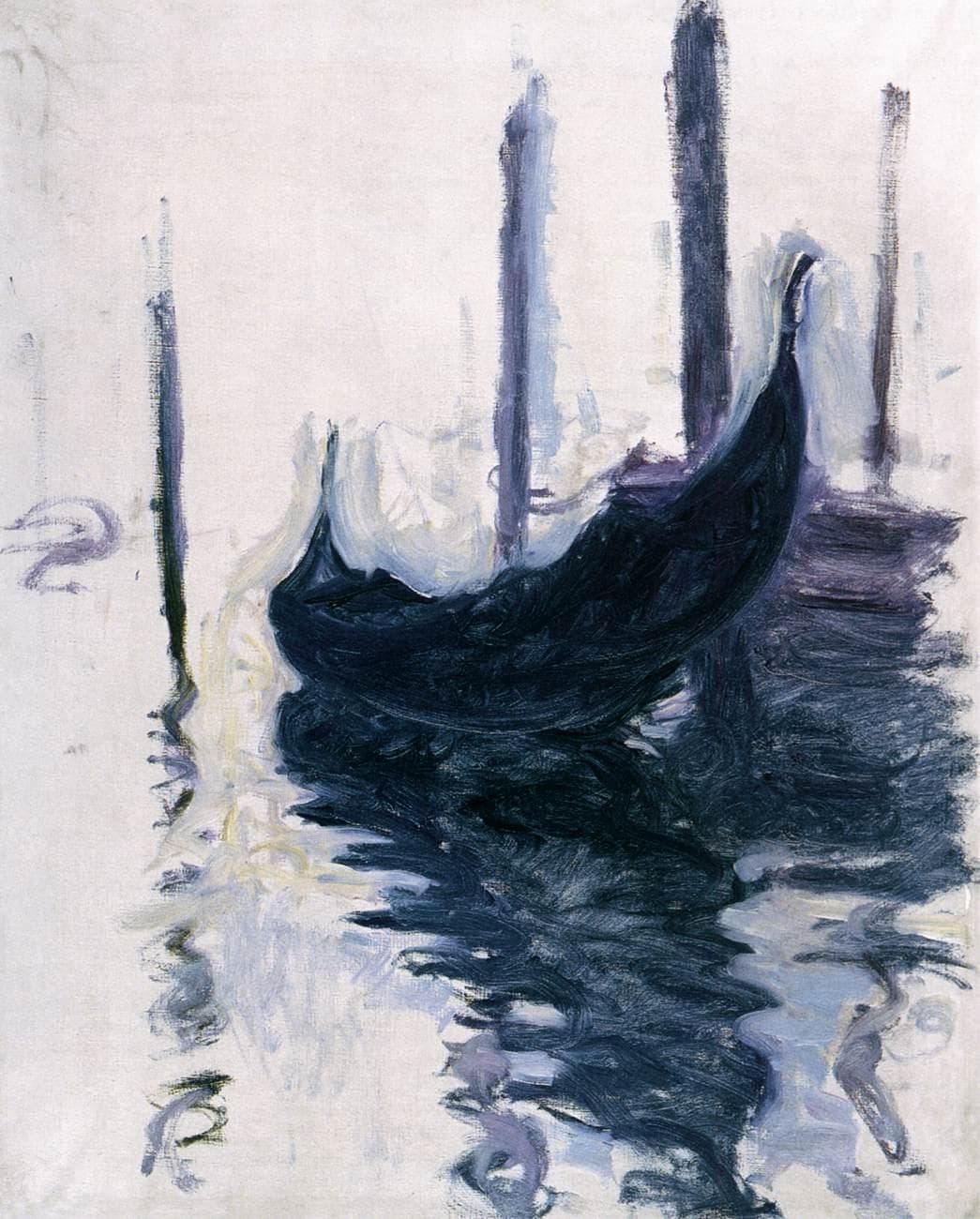
Gondola in Venice
Claude Monet · 1908
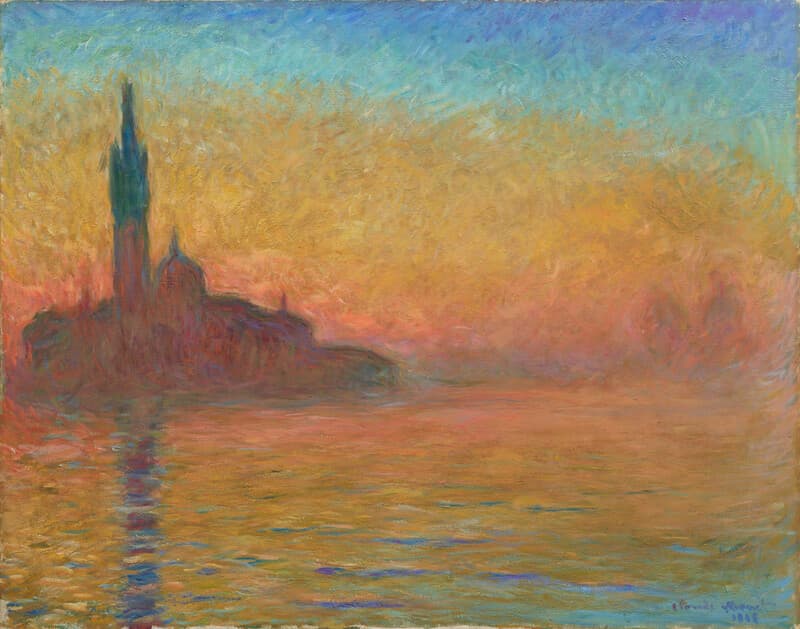
Twilight, Venice
Claude Monet · 1908
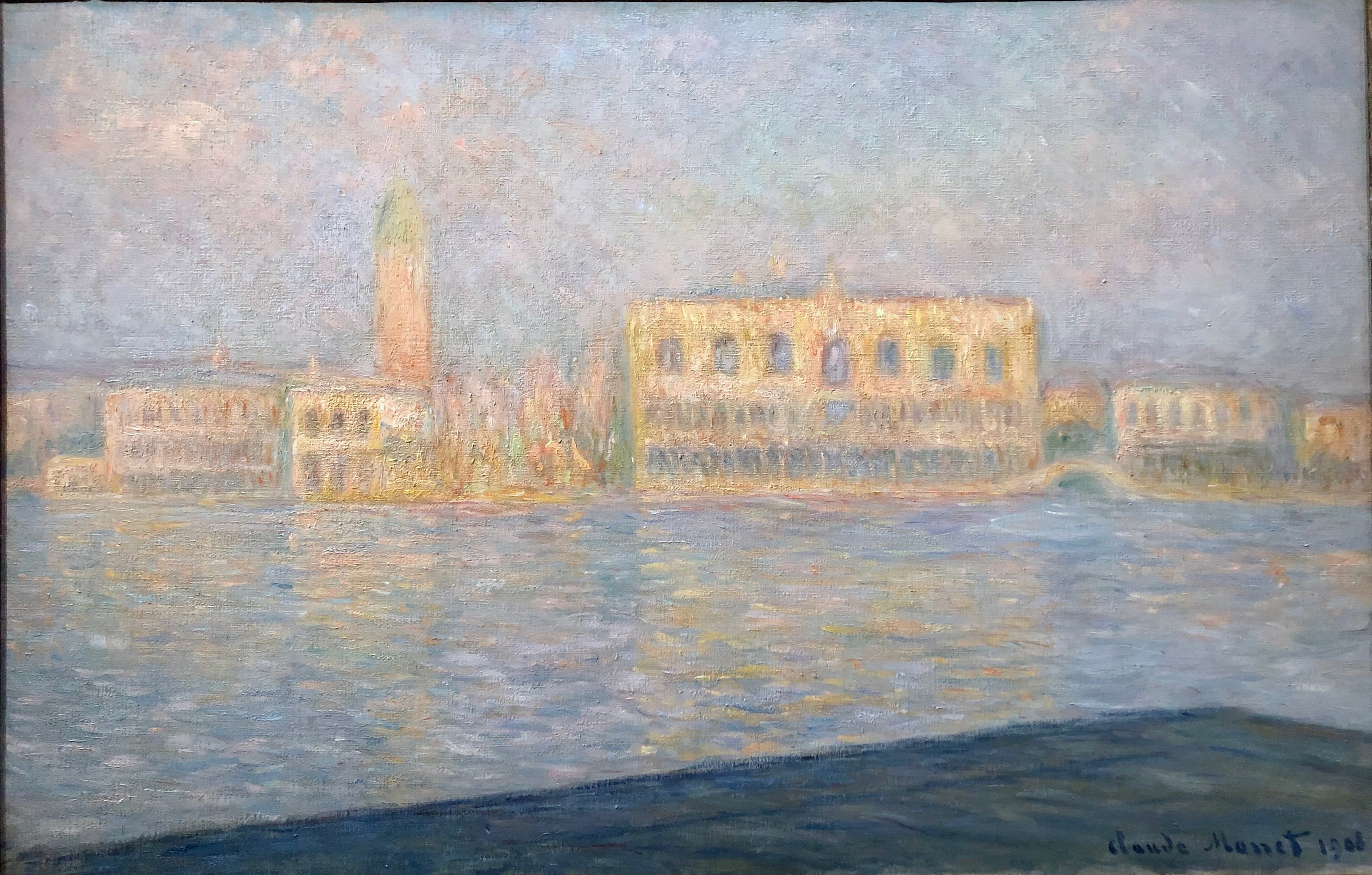
The Palazzo Ducale, Seen from San Giorgio Maggiore (Guggenheim)
Claude Monet · 1908
Also painted in 1908
The same year

Sunset in Venice
Claude Monet · 1908–12
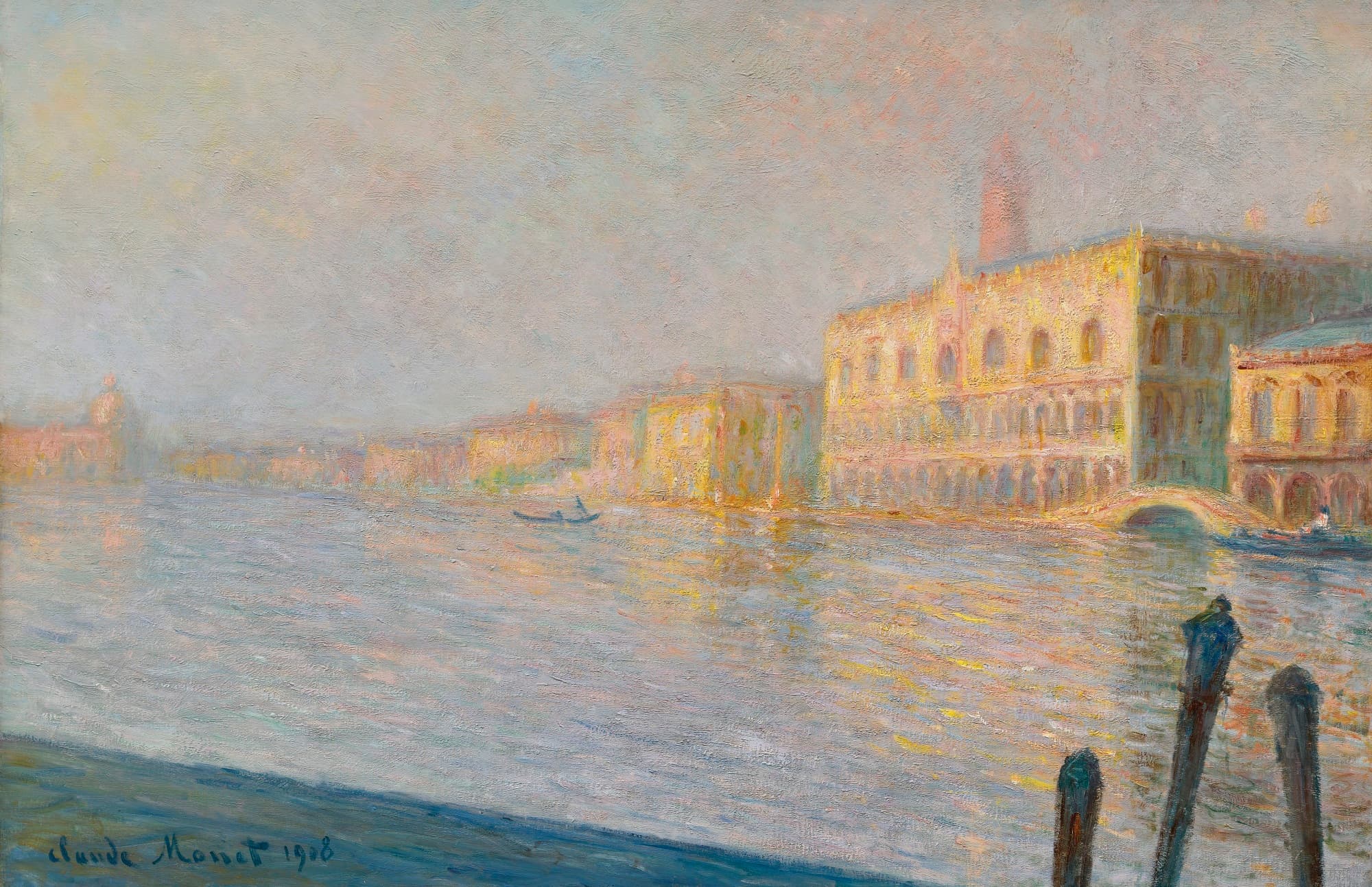
The Palazzo Ducale (Le Palais Ducal), 1908
Claude Monet · 1908
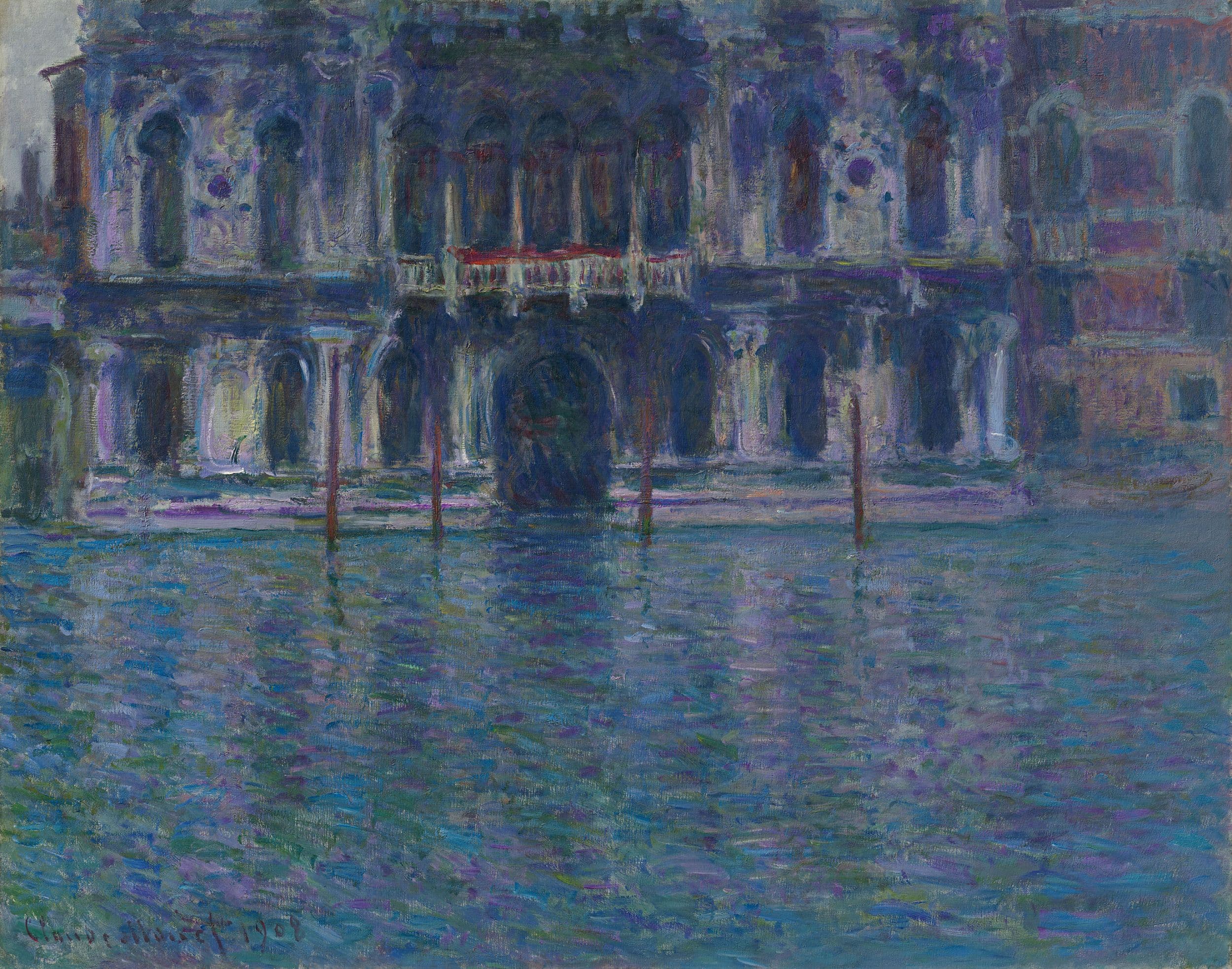
Le Palais Contarini (Potsdam)
Claude Monet · 1908
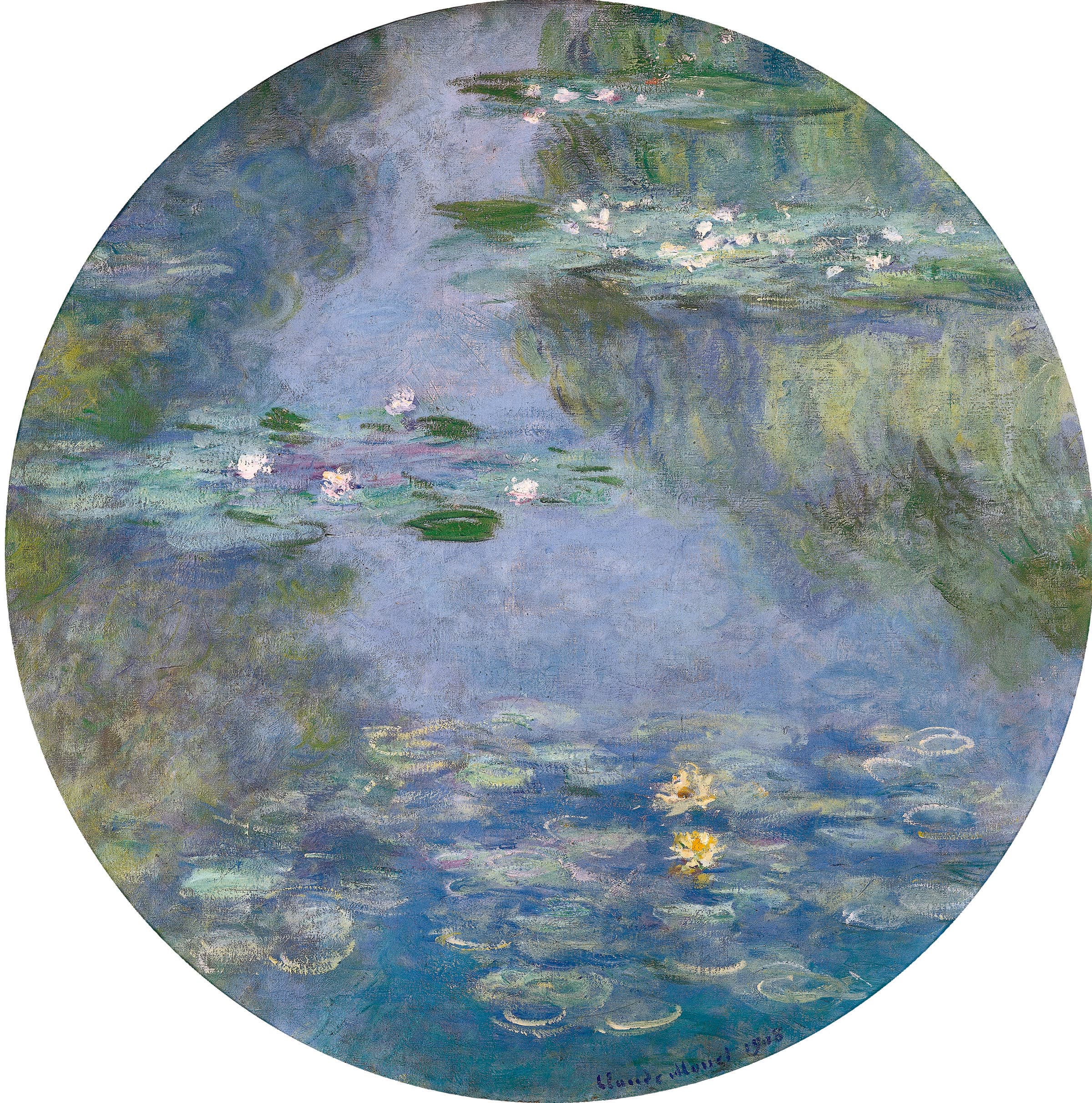
Nymphéas (1908 tondo, Vernon)
Claude Monet · 1908
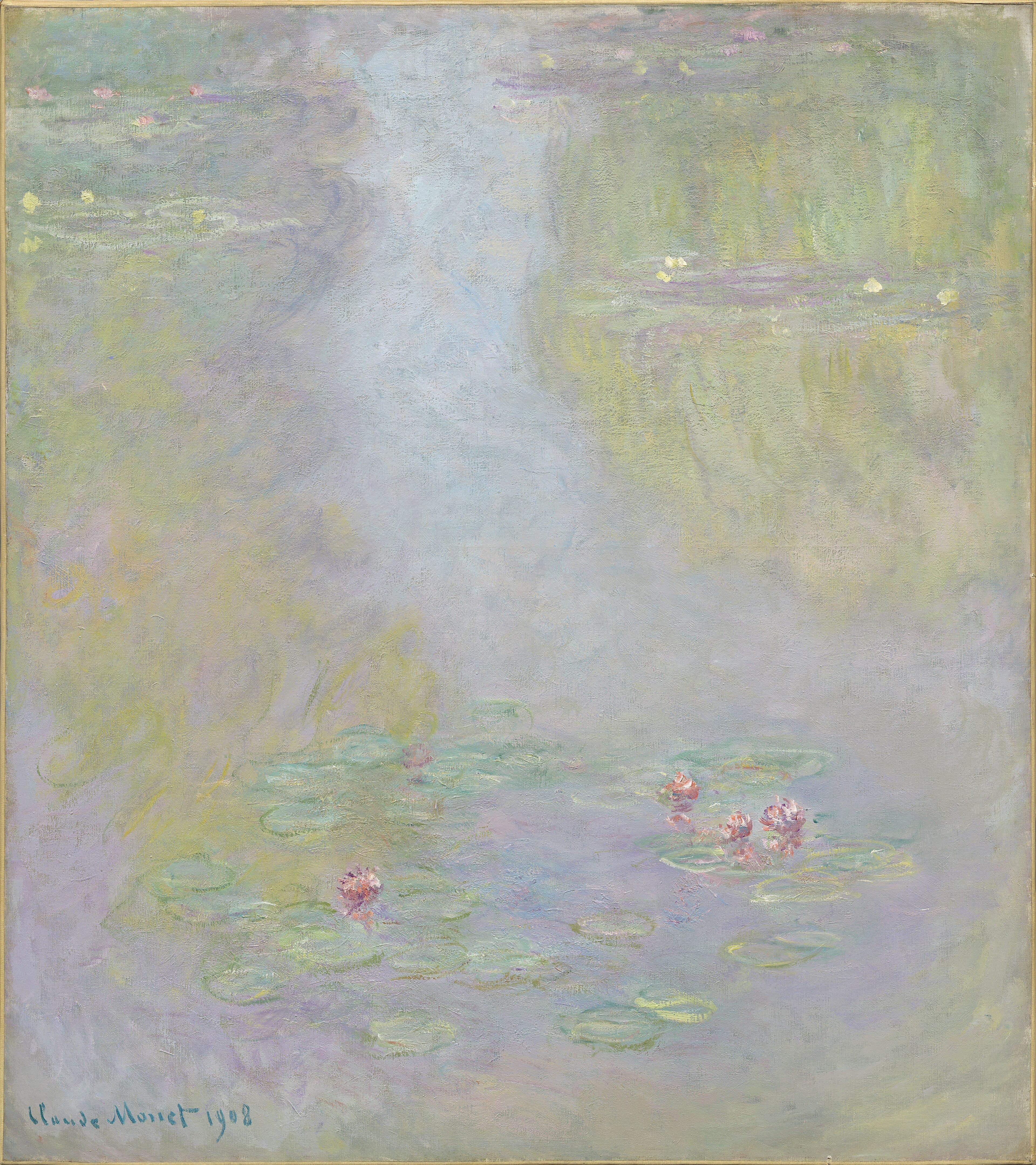
Water Lilies (1908, Tokyo Fuji Art Museum)
Claude Monet · 1908
Nymphéas (Oyamazaki Villa Museum)
Claude Monet · 1908
The Grand Canal, Venice
Claude Monet · 1908
The Rio della Salute
Claude Monet · 1908
Kindred works
You may also study
The Palazzo Ducale Seen from San Giorgio Maggiore
Claude Monet · 1908
The Doge's Palace (Le Palais ducal)
Claude Monet · 1908
The Palazzo Ducale (Le Palais Ducal), 1908
Claude Monet · 1908
Houses of Parliament, Symphony in Blue
Claude Monet · 1903
Le Parlement de Londres, effet de brouillard
Claude Monet · 1903
Houses of Parliament, Effect of Fog
Claude Monet · 1904
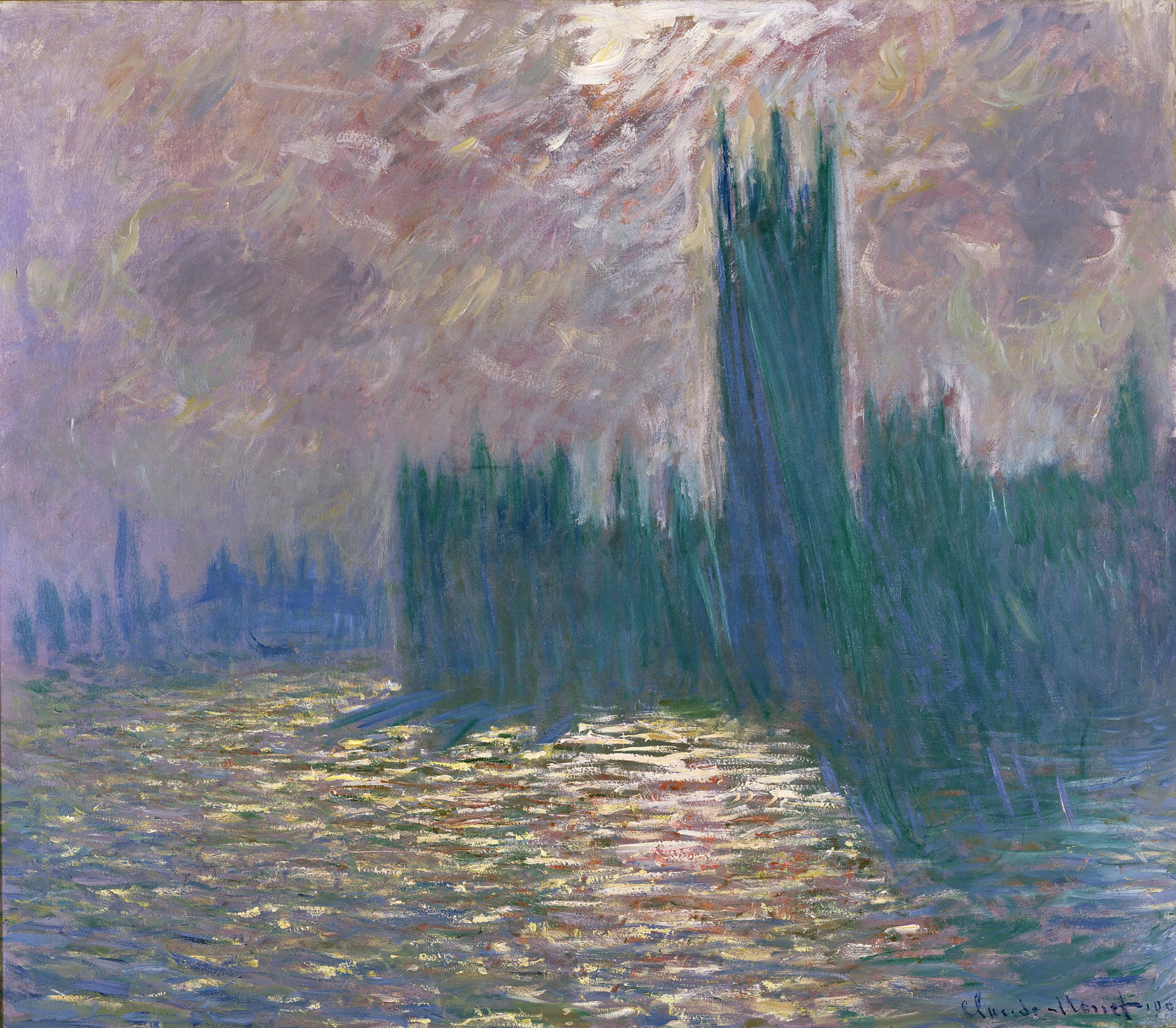
London, Parliament, Reflections on the Thames
Claude Monet · 1905
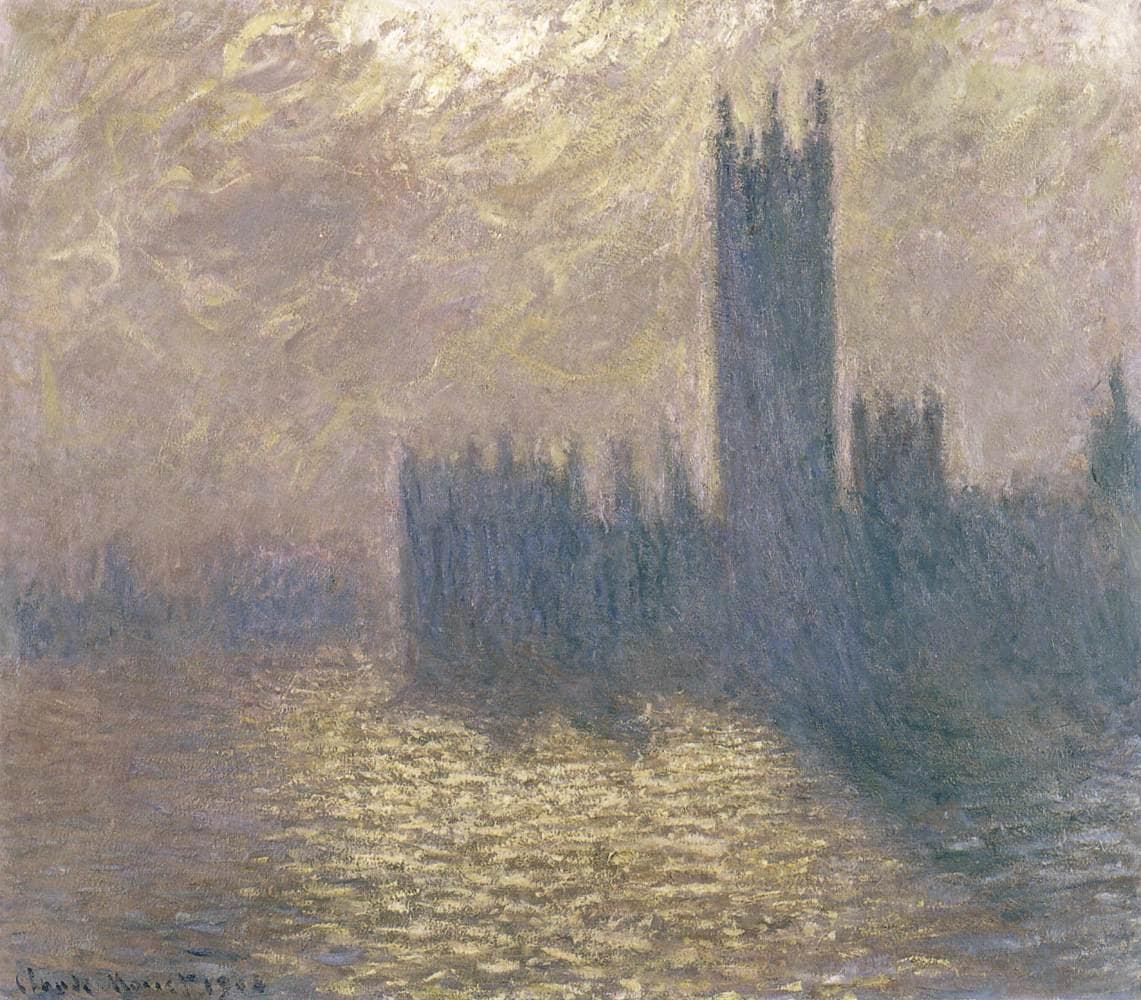
The Houses of Parliament, London
Claude Monet · 1904