Impressionism
Houses on the Zaan River at Zaandam
Claude Monet, 1871–72
Houses on the Zaan River at Zaandam is a Claude Monet painting of gabled Dutch houses mirrored in the river, made during his 1871 stay in the Netherlands. It belongs to the Städel Museum in Frankfurt, which acquired it in 1904.
- Artist
- Claude Monet
- Date
- 1871–72
- Medium
- Oil on canvas
- Dimensions
- 47.7 × 73.7 cm
- Collection
- Städel Museum, Frankfurt am Main, Germany
- Movement
- Impressionism
- Catalogue
- Wildenstein W 185
Houses on the Zaan River at Zaandam is a painting by Claude Monet of a row of gabled Dutch houses reflected in the river Zaan, made during the four months he spent in Zaandam, north of Amsterdam, in 1871. It belongs to the Städel Museum in Frankfurt am Main, which catalogues it as Houses by the Bank of the River Zaan, dates it 1871–72, and has owned it since 1904. The canvas measures 47.7 by 73.7 centimeters and is number 185 in Wildenstein's catalogue of Monet's work.
What you are looking at
Monet sets up his easel on or across the water and looks straight at the bank. Three houses stand in a line. The one at the left turns its narrow gable end toward us, clad in green-painted boards, while its long side wall, in warm salmon-pink brick, faces the river with a row of bottle-green shutters. Beside it rises a taller house with a pale green gable shaped like a bell, its curving outline finished with white scrolls and a little crowning ornament. A third gable of the same type, cut off by the right edge, repeats the shape like an echo.
These are the timber houses of the Zaan region, painted in the greens that local builders used, and Monet clearly enjoyed their fancy profiles. A low white railing runs along the water in front of the middle house. At the far left, past a stand of trees, the bank opens toward a smaller green house and two tiny figures standing by a fence, the only people in the picture.
Above, big rounded trees fill the gaps between the gables, and a summer sky of white and cream cumulus drifts over a clear blue. The lower third of the canvas is the river. It is painted in horizontal strokes that alternate dark and light, so the reflections of trees and walls come apart into stripes of green, pink, ochre and gray. The signature sits in the lower left corner, half lost in the water.
How it was painted
The design is almost classical: a band of water, a band of houses, a band of trees and a band of sky, each roughly parallel to the picture plane. Within that steady frame the brushwork is quick. The gables are drawn with a loaded brush in a few sure moves, and the white ornaments are single twists of paint. The trees are soft masses dabbed in darker greens over lighter ones.
The water shows Monet's method at its clearest. Instead of blending reflections into a mirror, he lays down separate strokes that each carry one color, and leaves the viewer's eye to mix them into moving water. It is the same broken-surface technique he had been developing on the Seine at Bougival a few years earlier, now applied to a Dutch canal-side light that is cooler and wetter than the French.
The palette is restrained compared with the pictures he would make at Argenteuil a year later: greens, grays, brick reds and creams, with blue only in the patches of sky.
Why was Monet in Zaandam?
Monet had left France for London in the autumn of 1870 to avoid the Franco-Prussian War, as described on our Monet in London page. In June 1871, rather than going straight home to a Paris shaken by the Commune, he traveled to Zaandam with his wife Camille and their young son Jean. Later accounts say the landscape painter Charles-François Daubigny suggested the town.
Zaandam was an industrial river town of windmills, sawmills, wooden houses and constant boat traffic, and Monet found it full of motifs. In about four months he painted some two dozen canvases. Several show mills and boats, such as Windmill and Boats near Zaandam, while others, like Zaandam in the Musée d'Orsay, take in the waterfront as a whole. The closest relative of this picture is Houses on the Achterzaan at the Metropolitan Museum, another row of houses seen across the water.
The Städel's own description makes a point worth keeping in mind: this calm, sunlit scene was painted while much of central Paris lay in ruins after the Commune. By the end of 1871 the family had settled at Argenteuil, where Monet would spend the next six years refining the light, broken handling first tried out here.
Where can you see it?
The painting is in the Städel Museum in Frankfurt am Main, inventory number 1385, in the museum's nineteenth-century collection. The Städel bought it in 1904, early for a German museum to acquire a Monet. Other Zaandam canvases are in Paris, New York and Copenhagen; our guide to where to see Monet's paintings lists the major collections.
Questions & answers
Where is Monet's Houses on the Zaan River at Zaandam?
It is in the Städel Museum in Frankfurt am Main, Germany, inventory number 1385, where it is titled Houses by the Bank of the River Zaan. The museum acquired it in 1904. The canvas measures 47.7 by 73.7 centimeters, and a related row of houses on the Achterzaan is at the Metropolitan Museum of Art in New York.
When and where did Monet paint the Zaandam houses?
He painted them in Zaandam, an industrial town on the river Zaan just north of Amsterdam, during a stay from June to the autumn of 1871. He had come from London, where he had spent the Franco-Prussian War. The Städel dates the canvas 1871–72, allowing for finishing after he returned to France.
What does Houses on the Zaan River show?
It shows three traditional Zaan houses seen from the water, with green boarded walls, salmon-pink brick, green shutters and ornate bell-shaped gables trimmed in white. Trees and a cloudy summer sky rise behind them, and their reflections break into colored stripes on the river. Two tiny figures stand on the bank at the far left.
How many paintings did Monet make in Zaandam?
He painted about two dozen canvases during his four months in Zaandam in 1871, showing windmills, boats, canals and waterside houses. This picture is one of several focused on rows of houses along the water. Others are in the Musée d'Orsay, the Metropolitan Museum of Art and the Ny Carlsberg Glyptotek in Copenhagen.
More by the artist
Claude Monet

Bridge over a Pond of Water Lilies
Claude Monet · 1899

Woman with a Parasol – Madame Monet and Her Son
Claude Monet · 1875

Sunset in Venice
Claude Monet · 1908–12

La Grenouillère
Claude Monet · 1869

Beach in Pourville
Claude Monet · 1882

Springtime
Claude Monet · 1872

Boating on the River Epte
Claude Monet · 1890

The Seine at Asnières (Hermitage)
Claude Monet · 1873
Also painted in 1871
The same year
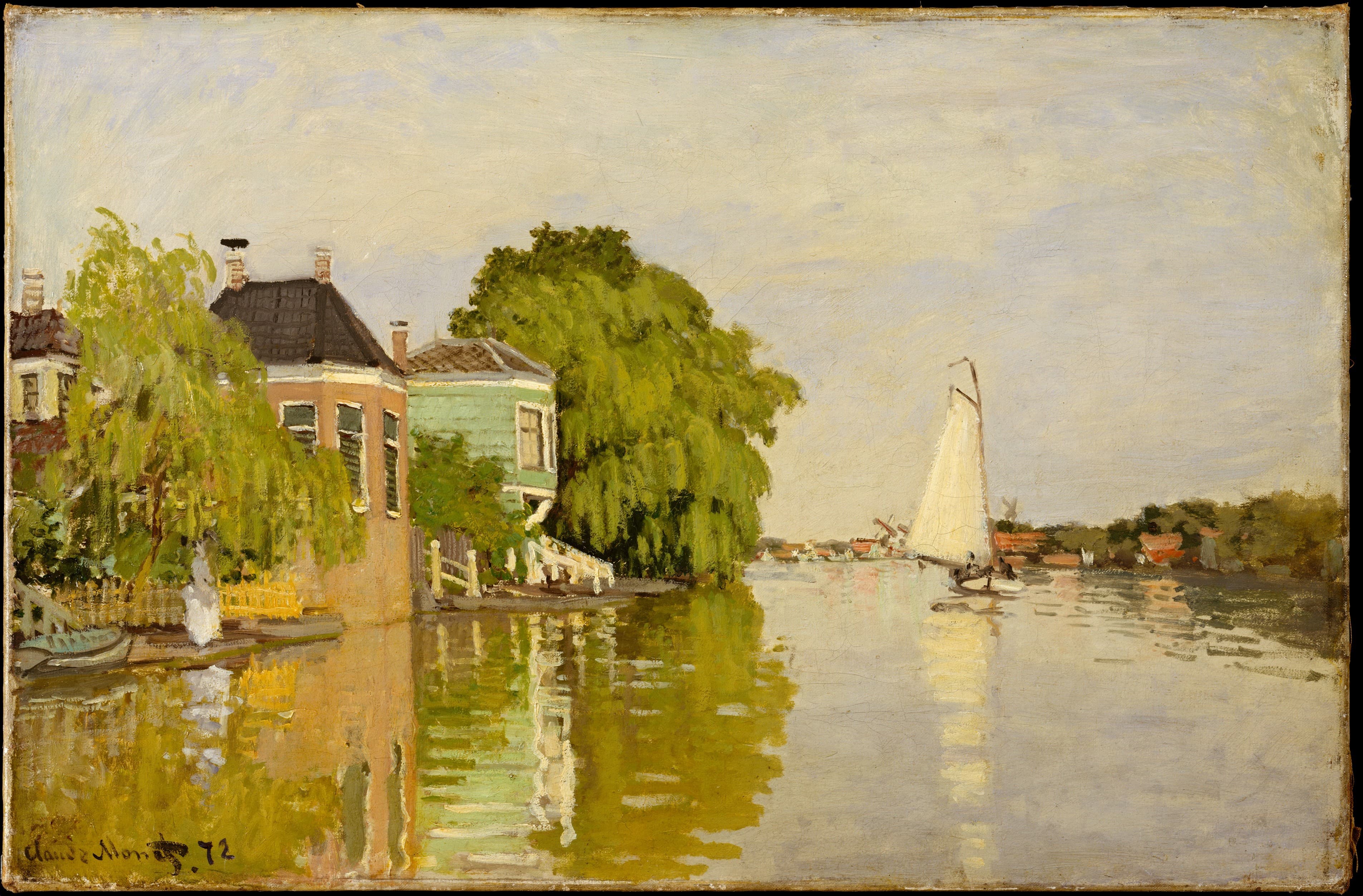
Houses on the Achterzaan
Claude Monet · 1871
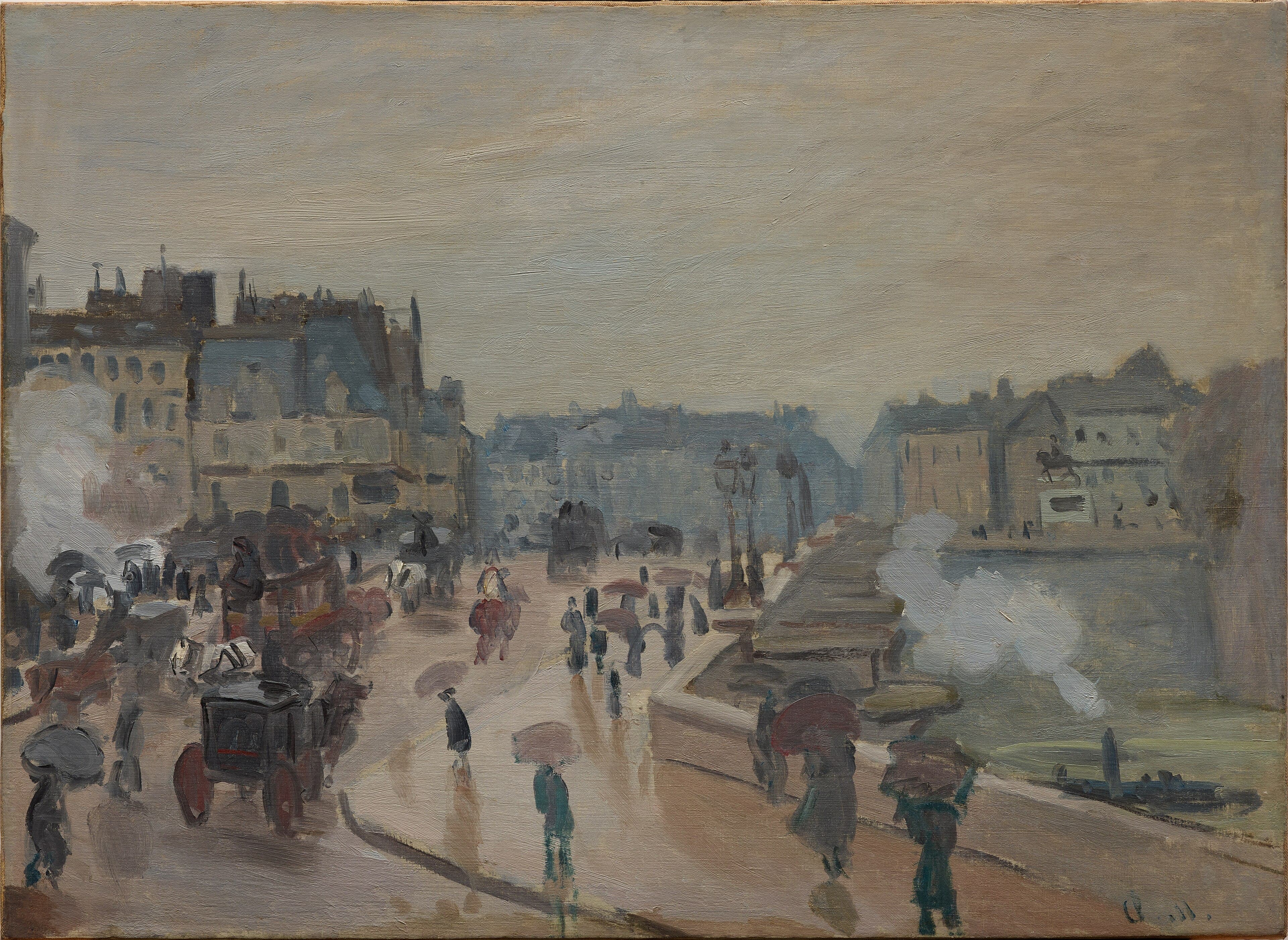
The Pont Neuf
Claude Monet · 1871
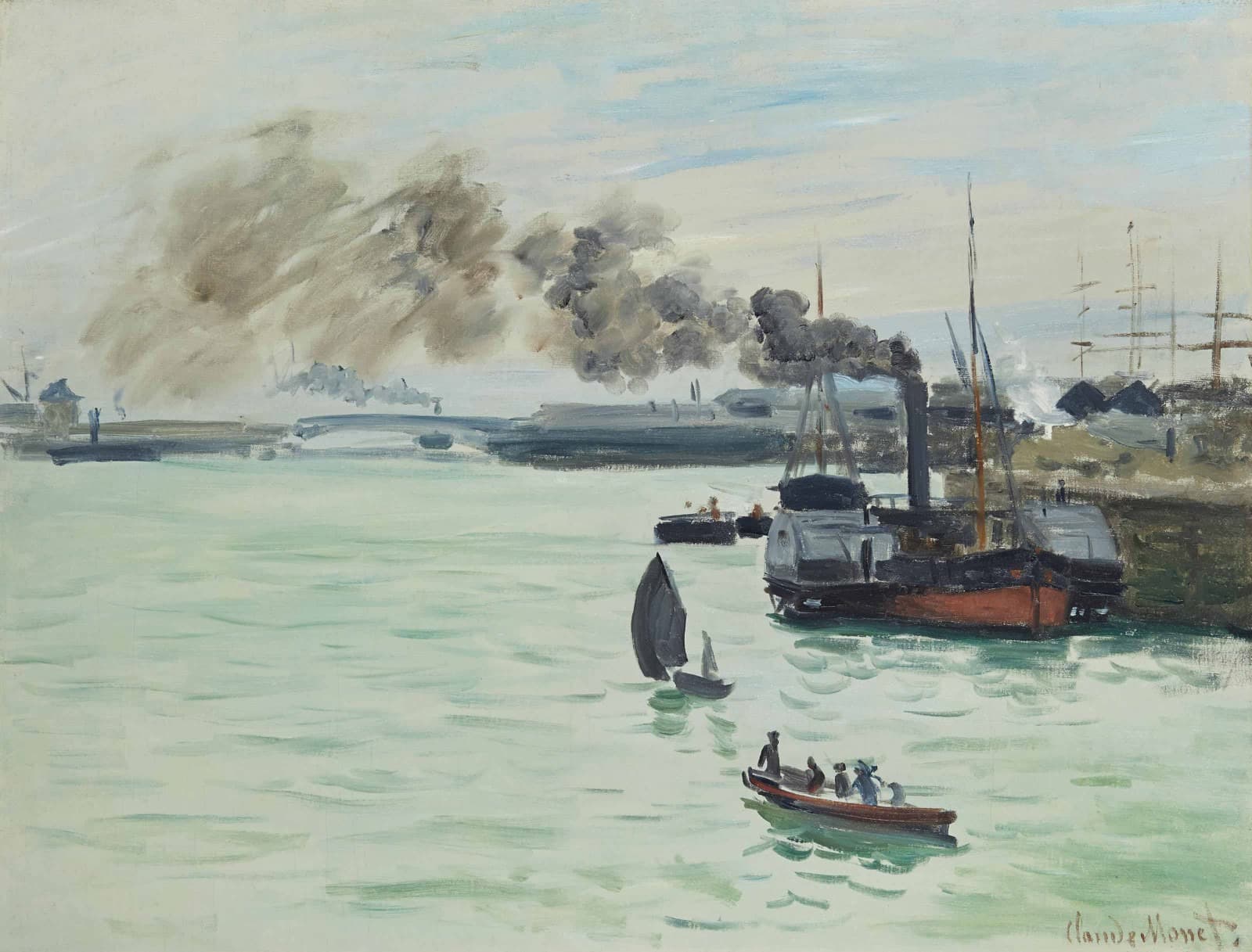
View of a Port
Claude Monet · 1871
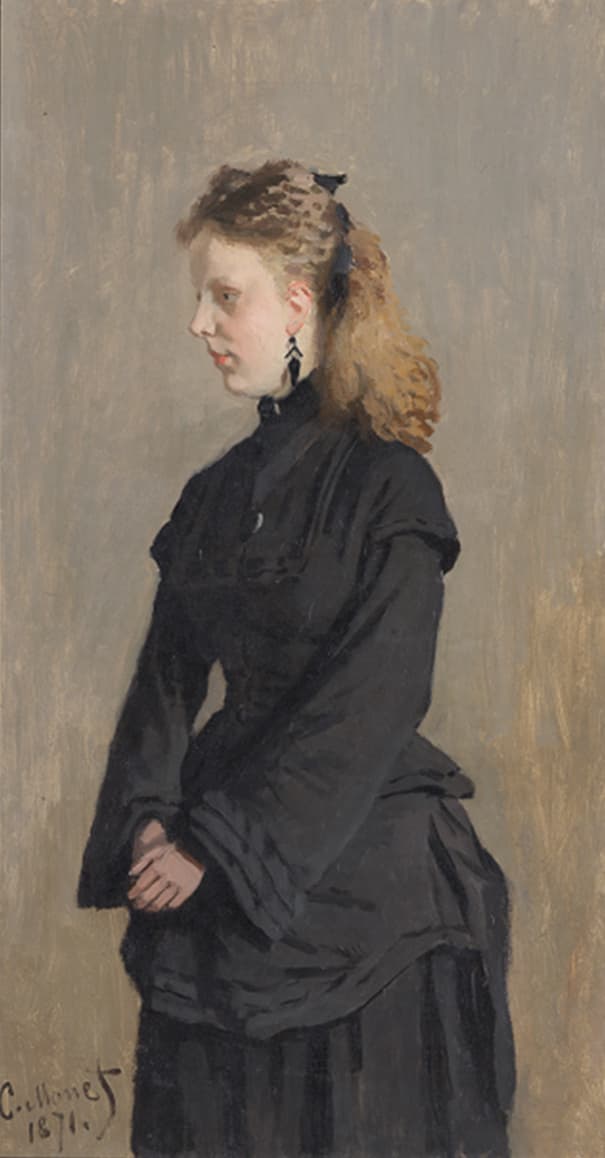
Portrait of Guurtje van de Stadt
Claude Monet · 1871
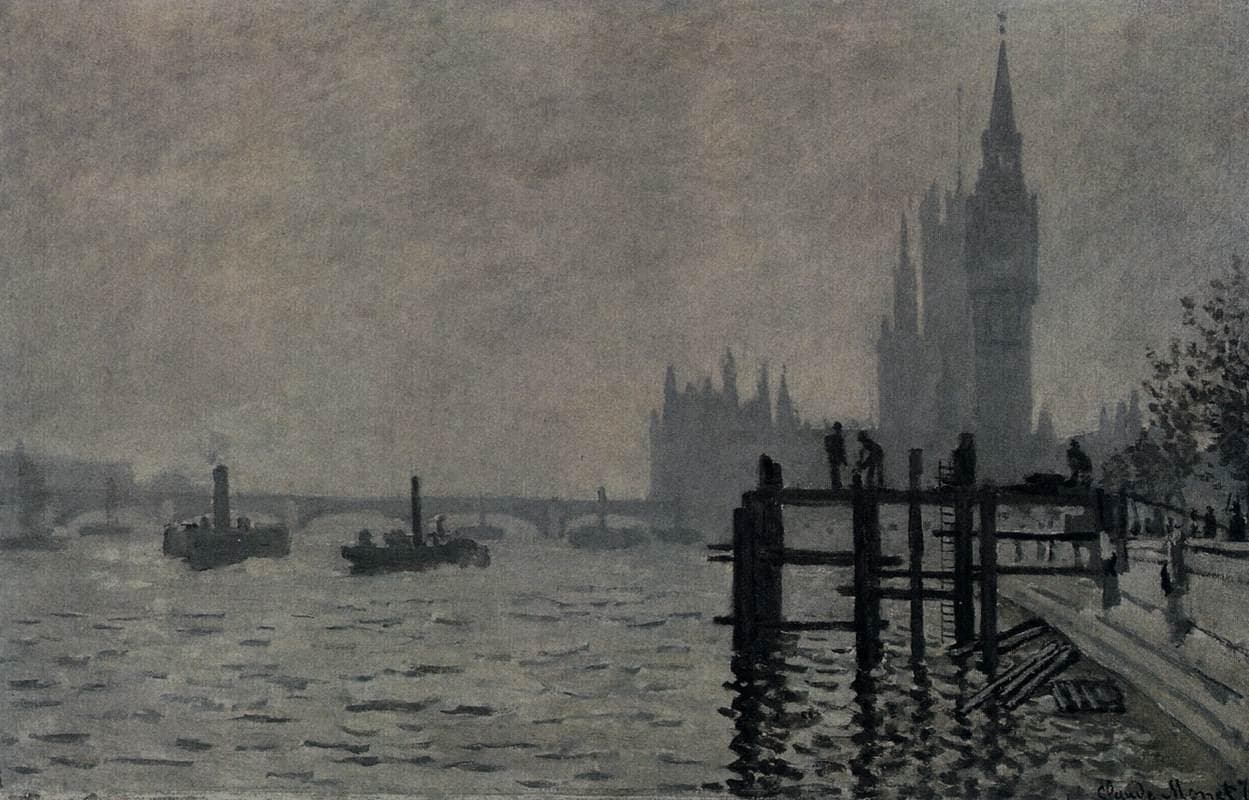
The Thames below Westminster
Claude Monet · c. 1871
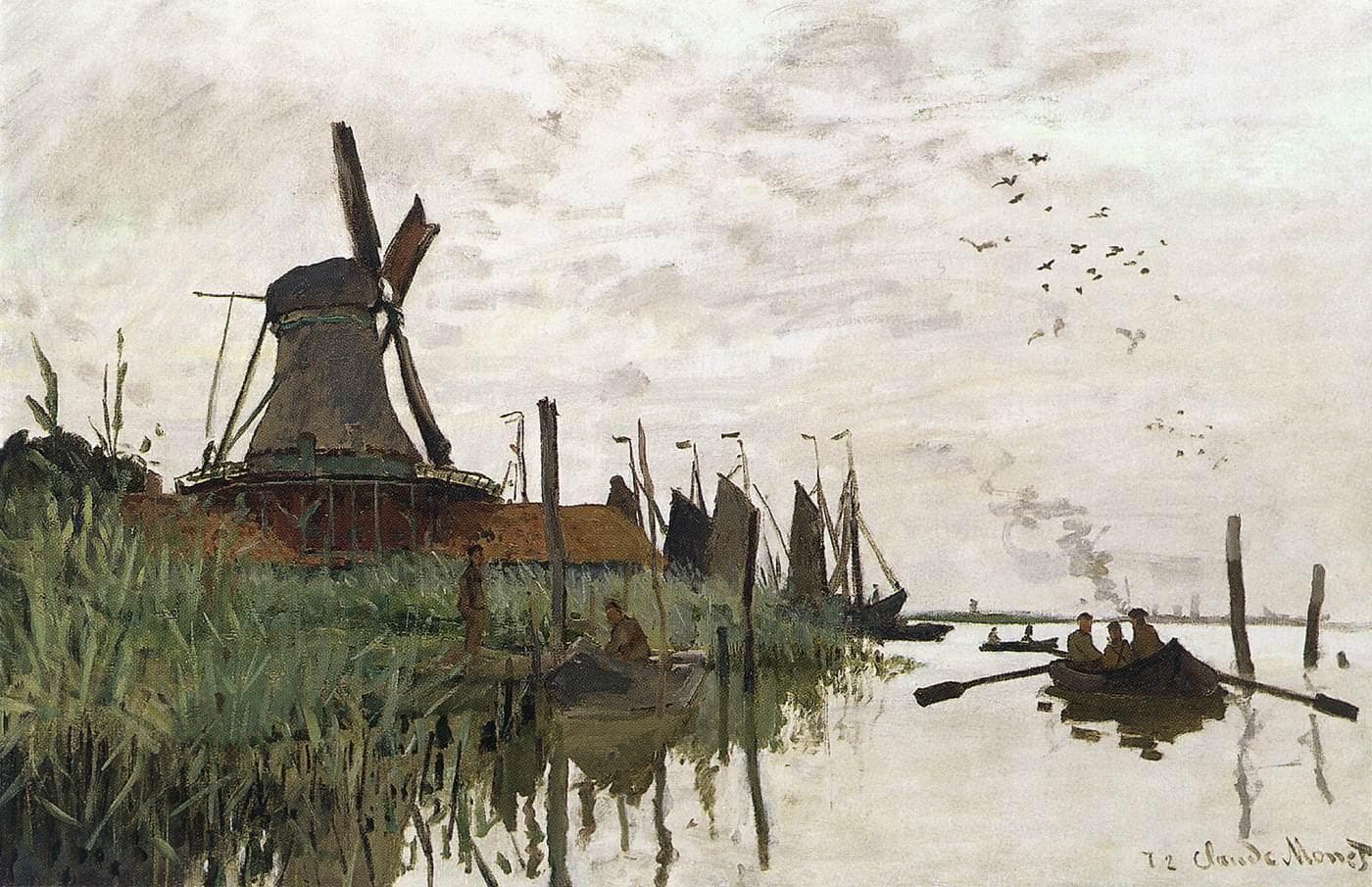
Windmill and Boats near Zaandam
Claude Monet · 1871
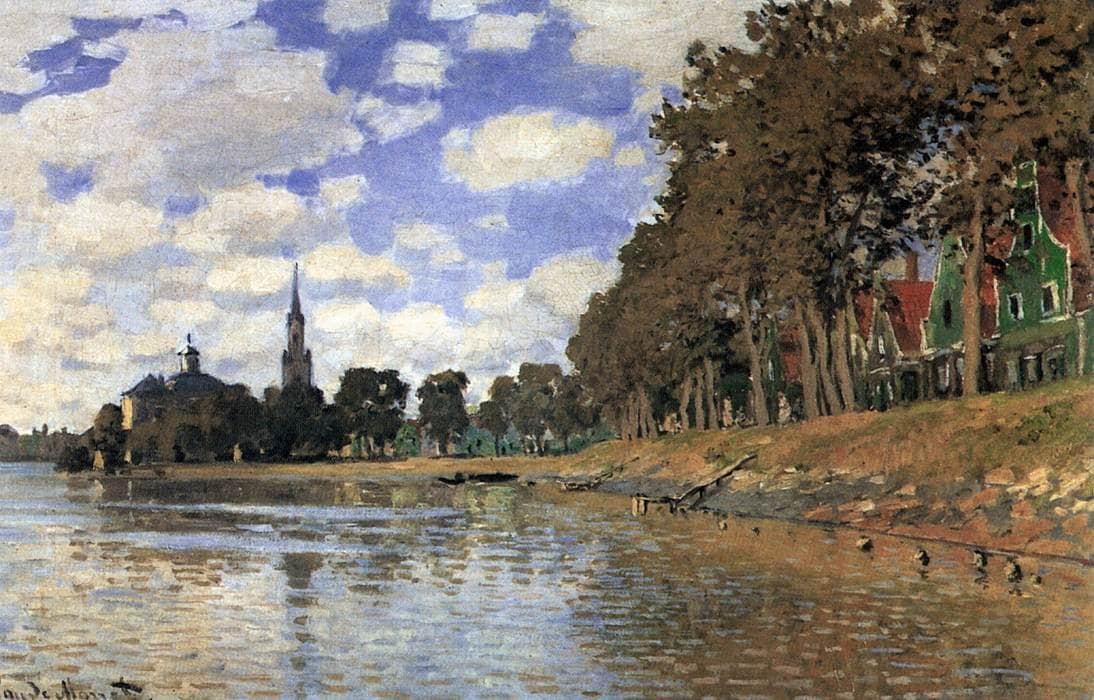
Zaandam
Claude Monet · 1871
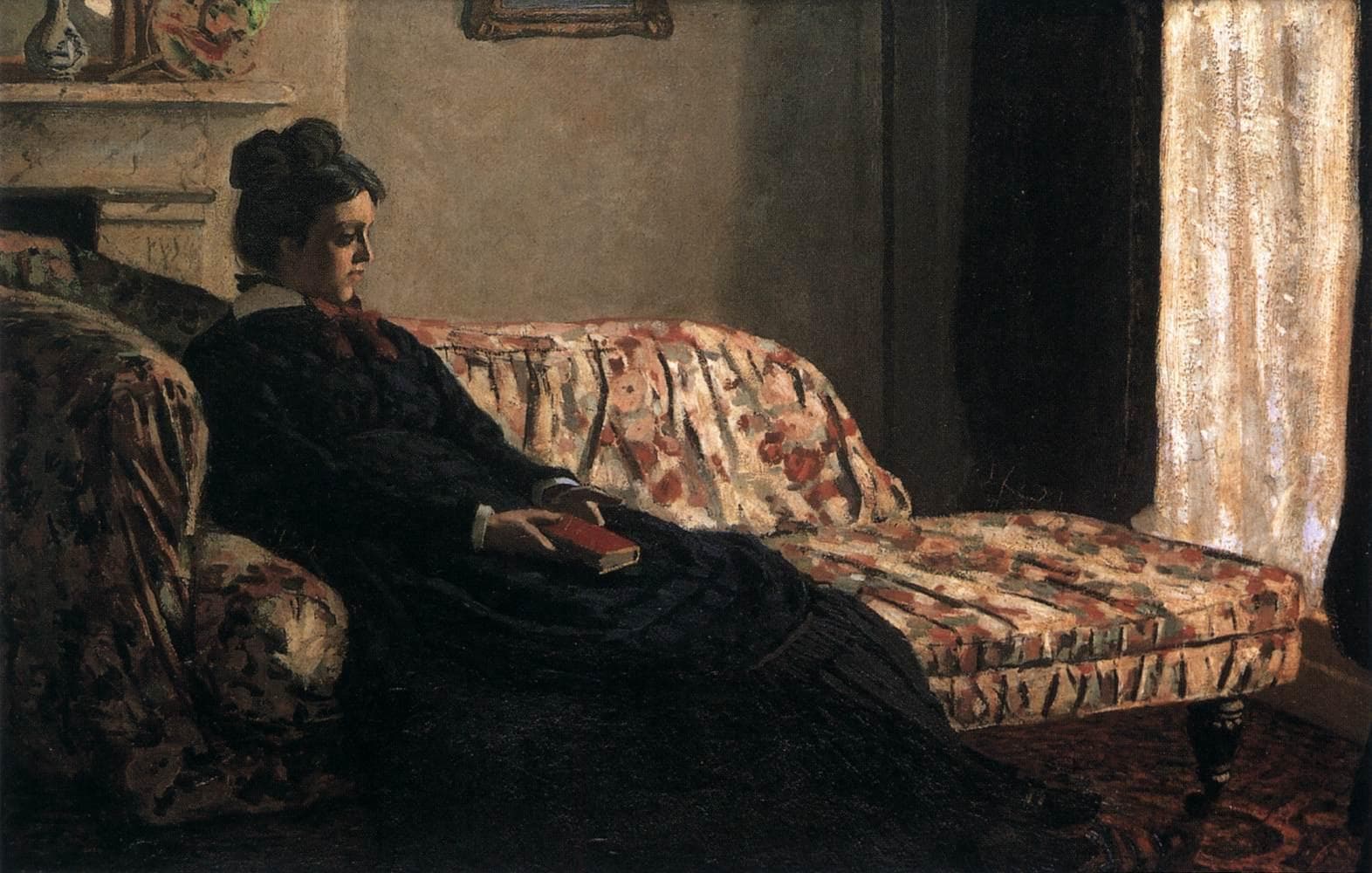
Meditation (Madame Monet on the Sofa)
Claude Monet · c. 1871
Kindred works
You may also study
Houses on the Achterzaan
Claude Monet · 1871
Windmill and Boats near Zaandam
Claude Monet · 1871
Zaandam
Claude Monet · 1871
The Thames below Westminster
Claude Monet · c. 1871
Houses at Argenteuil
Claude Monet · 1873

Ophelia
John Everett Millais · 1851–52

The Great Wave off Kanagawa
Katsushika Hokusai · c. 1830–32
The Birth of Venus
Sandro Botticelli · c. 1484–1486