Impressionism
Windmill and Boats near Zaandam
Claude Monet, 1871
Windmill and Boats near Zaandam is an 1871 painting by Claude Monet of a Dutch windmill above reeds on the river Zaan, with sailing barges and a rowing boat under a pale sky. It is in the Ny Carlsberg Glyptotek, Copenhagen.
- Artist
- Claude Monet
- Date
- 1871
- Medium
- Oil on canvas
- Dimensions
- 48 × 73.5 cm
- Collection
- Ny Carlsberg Glyptotek, Copenhagen, Denmark
- Movement
- Impressionism
- Catalogue
- Wildenstein 177
What you are looking at
On the left, a big wooden windmill stands on a brick base above a bank of reeds, its four sails angled against a pale, cloudy sky. A long red-roofed shed runs beside it. In front, tall green reeds and rushes crowd the water's edge, and a man stands among them near a moored boat, with another figure seated in it.
Further right, a cluster of sailing barges with dark sails and tall masts is tied up along the bank. On the open water to the right, a rowing boat with three people moves toward us, oars out; a second small boat floats beyond it, and smoke drifts from a distant steamer. A flock of birds wheels across the upper right of the sky.
The palette is restrained: gray-white sky, olive and green reeds, brown and black for the mill and boats. Mooring posts stand in the water at right, and the far shore is a thin dark line with a few buildings.
Zaandam, summer 1871
After his exile in London during the Franco-Prussian War, Claude Monet did not go straight back to France. In June 1871 he traveled to Zaandam, an industrial town on the river Zaan north of Amsterdam, and stayed until October with Camille and their son Jean. The Zaan district was full of windmills, hundreds of them, used for sawing timber, grinding pigment and pressing oil. Monet painted about two dozen canvases there, mostly of the river, the harbor, the houses and the mills.
This painting, catalogued by Wildenstein as W.177, is one of several mill views. Others are in the Van Gogh Museum in Amsterdam (W.181), the Walters Art Museum in Baltimore (W.170) and the Ashmolean Museum in Oxford (W.178), and together they show how thoroughly he explored the motif in a single summer.
How it was painted
The water is the most freely painted part. Monet lays it in with long horizontal strokes of gray and cream and pulls the reflections of the posts, reeds and rowing boat straight down in short dark verticals. Look at the rowing boat: three figures and two oars, each a few marks, yet the oars clearly dip on either side.
The reeds in the foreground are a different handwriting, quick upward flicks of green and yellow, with a few taller stalks standing against the sky at far left. The windmill, by contrast, is built up solidly in browns and blacks, and its sails are drawn with a few confident strokes, one of them foreshortened so the mill seems to turn toward us. The birds in the sky are tiny V-shaped marks, the kind of detail that gives an empty sky life.
The overcast, silvery light, very different from his later bright palette, shows how much Monet was still absorbing from Dutch landscape painting and from the gray skies of London. Look at the sky: it is not blank but laid in with broad, loose strokes of white, gray and the faintest pink, brushed in several directions.
The Zaandam pictures and how this one differs
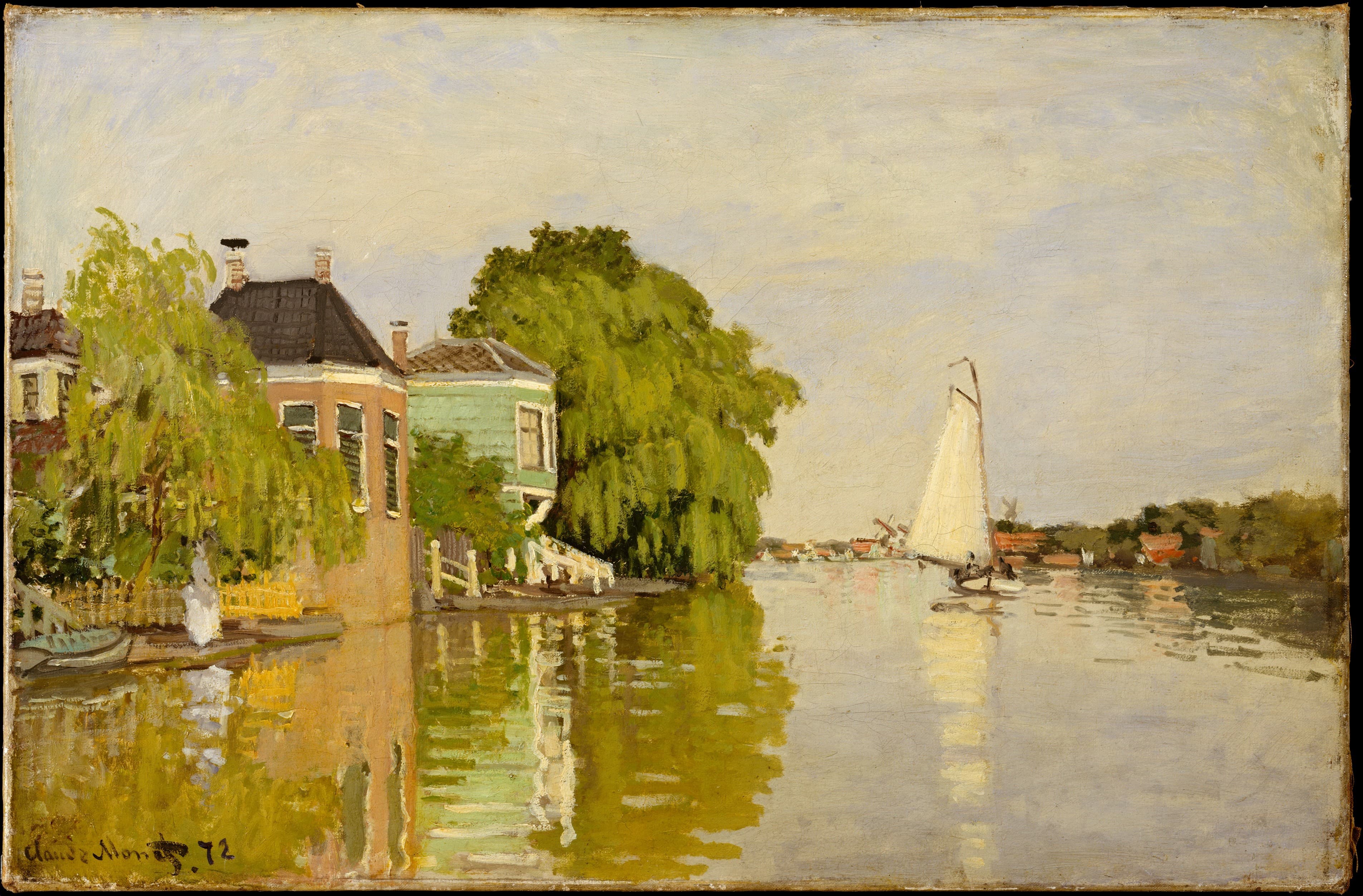
Monet's Dutch views fall into a few groups: the town seen along the river, as in Zaandam in the Orsay; the green wooden houses on the banks, as in Houses on the Riverbank in Zaandam and Houses on the Achterzaan; and the mills. This canvas combines the mill with river traffic, reeds and people, so it is a fuller picture of working life on the Zaan than most of the mill studies, which isolate the windmill against the sky.
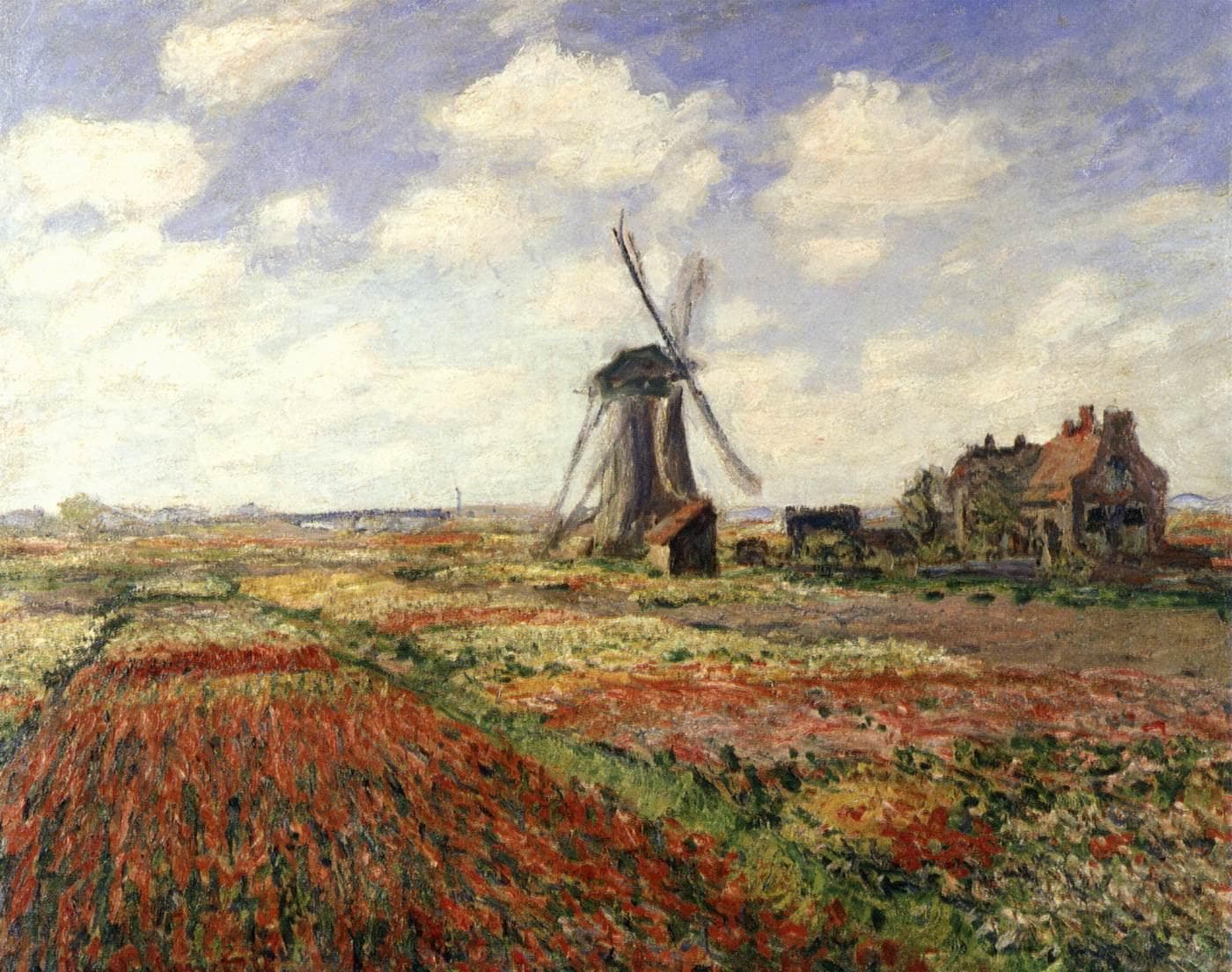
Monet came back to Holland in 1886 for Tulip Fields in Holland, where a windmill again anchors the view, though in sunlight and high color. The London months that came just before Zaandam are covered on Monet in London.
Where to see it
The painting is in the Ny Carlsberg Glyptotek, Copenhagen (MIN 3233), best known for its sculpture but also home to a strong group of French paintings. For other collections, see Where to See Monet's Paintings.
Questions & answers
Where is Monet's Windmill at Zaandam?
This 1871 canvas, Windmill and Boats near Zaandam, is in the Ny Carlsberg Glyptotek in Copenhagen, Denmark. Monet painted several windmill views at Zaandam, and others are in the Van Gogh Museum in Amsterdam, the Walters Art Museum in Baltimore and the Ashmolean Museum in Oxford.
When and where was it painted?
In the summer of 1871 at Zaandam, an industrial town on the river Zaan north of Amsterdam. Monet stayed there from June to October with Camille and their son Jean after leaving London. Wildenstein catalogues this canvas as W.177.
What does the painting show?
A wooden windmill on a brick base above reeds on the river Zaan, with a red-roofed shed, moored sailing barges, a rowing boat with three people and a distant steamer under a pale overcast sky. It is a picture of a working industrial river rather than a picturesque scene.
What were the windmills at Zaandam used for?
The Zaan region was one of the earliest industrial areas in Europe, with hundreds of windmills powering sawmills, oil presses and mills for grinding pigments and grain. Monet painted them as part of a working landscape of barges, sheds and river traffic.
More by the artist
Claude Monet

Bridge over a Pond of Water Lilies
Claude Monet · 1899

Woman with a Parasol – Madame Monet and Her Son
Claude Monet · 1875

Sunset in Venice
Claude Monet · 1908–12

La Grenouillère
Claude Monet · 1869

Beach in Pourville
Claude Monet · 1882

Springtime
Claude Monet · 1872

Boating on the River Epte
Claude Monet · 1890

The Seine at Asnières (Hermitage)
Claude Monet · 1873
Also painted in 1871
The same year
Houses on the Achterzaan
Claude Monet · 1871
The Pont Neuf
Claude Monet · 1871
View of a Port
Claude Monet · 1871
Portrait of Guurtje van de Stadt
Claude Monet · 1871
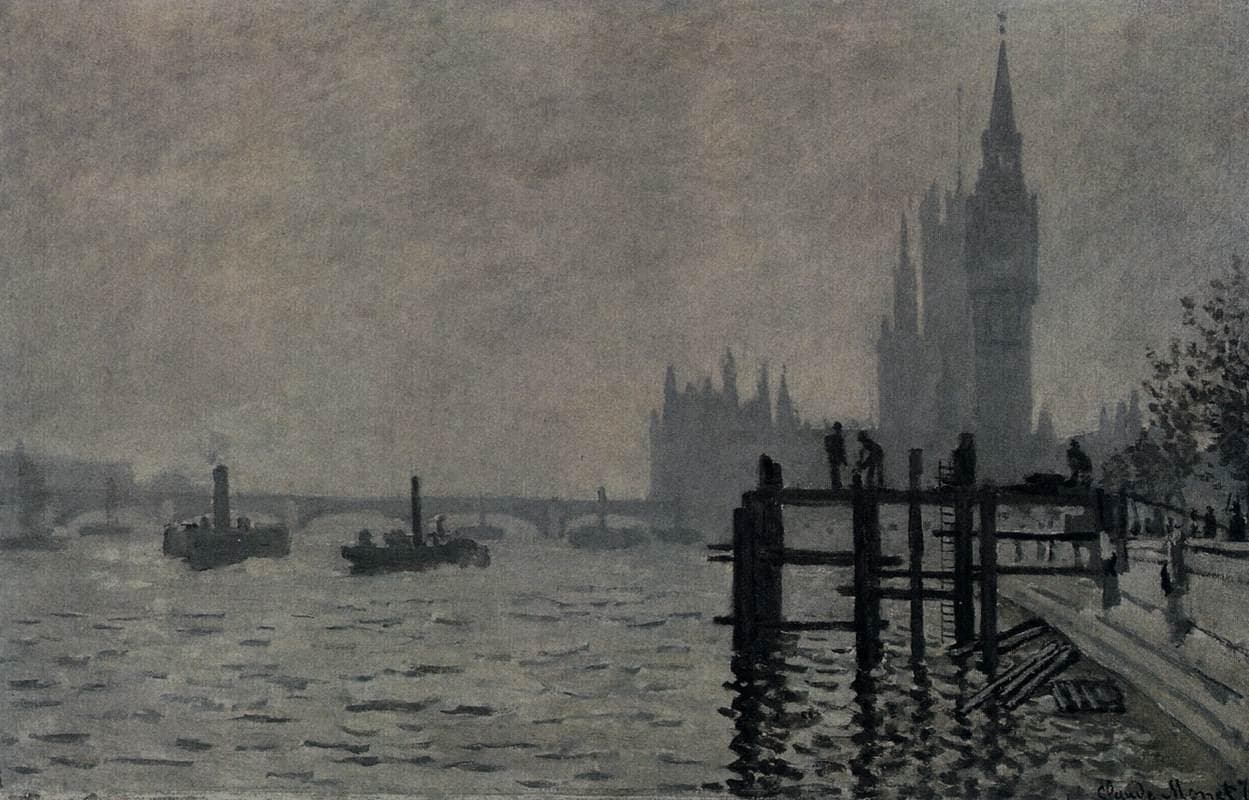
The Thames below Westminster
Claude Monet · c. 1871
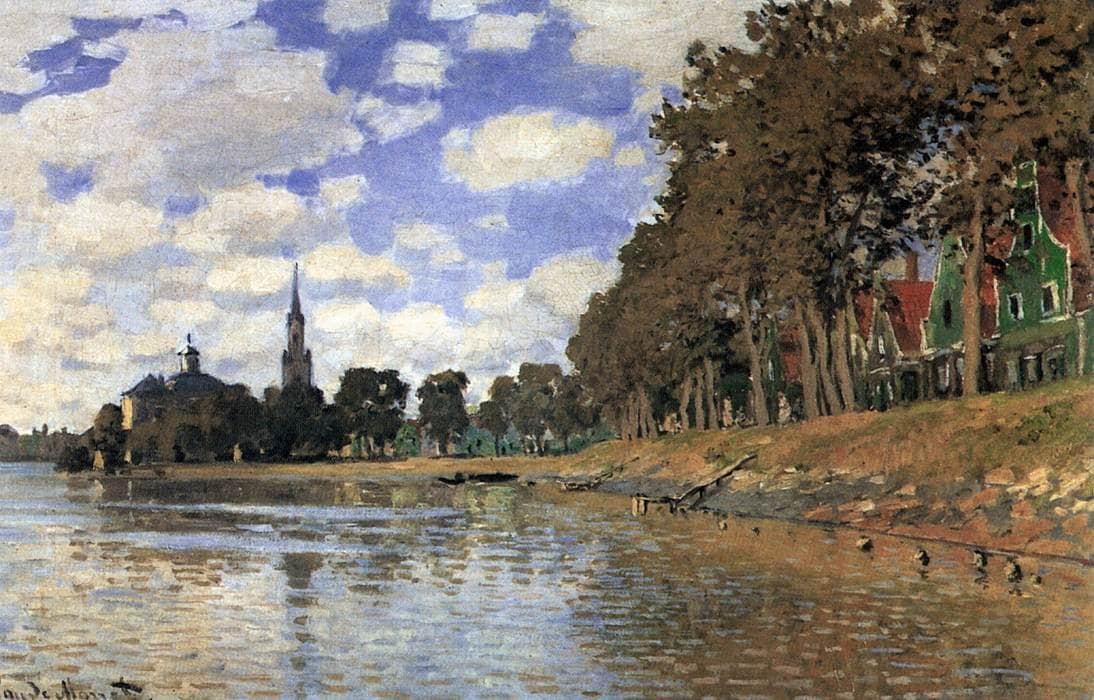
Zaandam
Claude Monet · 1871
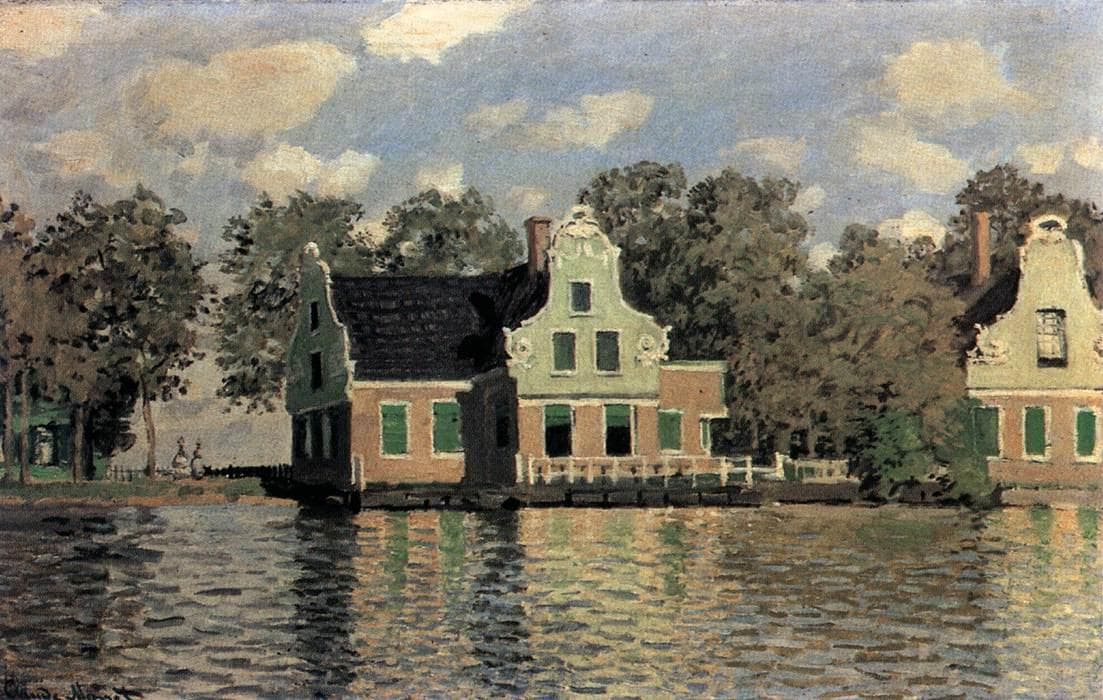
Houses on the Zaan River at Zaandam
Claude Monet · 1871–72
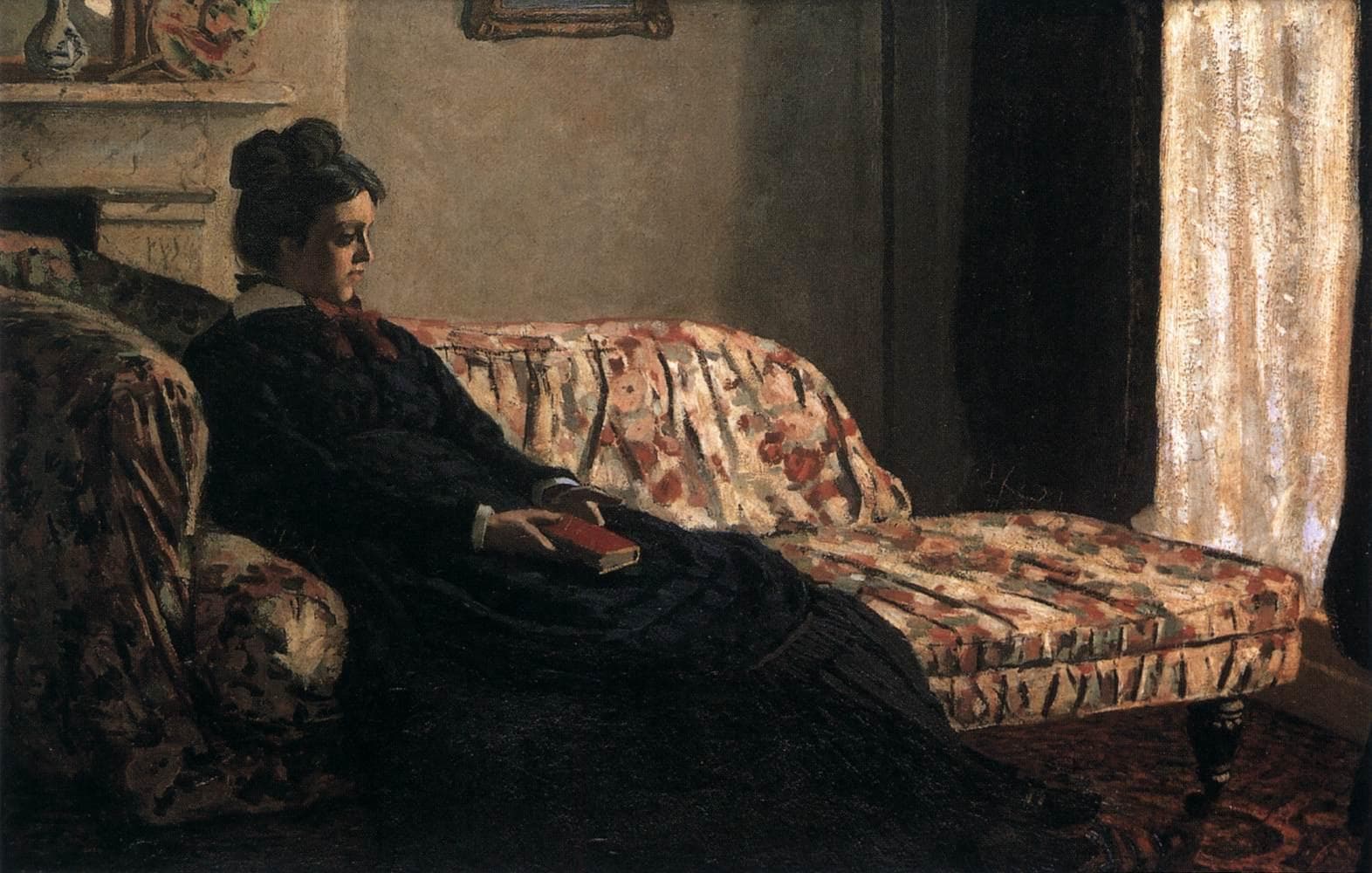
Meditation (Madame Monet on the Sofa)
Claude Monet · c. 1871
Kindred works
You may also study
Zaandam
Claude Monet · 1871
Houses on the Zaan River at Zaandam
Claude Monet · 1871–72
Houses on the Achterzaan
Claude Monet · 1871
Tulip Fields in Holland
Claude Monet · 1886
The Thames below Westminster
Claude Monet · c. 1871

The Scream
Edvard Munch · 1893

Ophelia
John Everett Millais · 1851–52

The Great Wave off Kanagawa
Katsushika Hokusai · c. 1830–32