Impressionism
Zaandam
Claude Monet, 1871
Zaandam is an 1871 painting by Claude Monet of the Dutch town of Zaandam seen along the river Zaan, with a church spire, green wooden houses and tall trees under a cloudy sky. It is in the Musée d'Orsay, Paris.
- Artist
- Claude Monet
- Date
- 1871
- Medium
- Oil on canvas
- Dimensions
- 47.8 × 73 cm
- Collection
- Musée d'Orsay, Paris, France
- Movement
- Impressionism
- Catalogue
- Wildenstein 183
More at Monet at the Musée d'Orsay
What you are looking at
A calm river runs from the left foreground into the distance. On the right bank, a row of tall trees leans over the water, and beneath them stand narrow wooden houses painted in the bright green typical of the Zaan region, with red-tiled roofs and stepped gables. A grassy bank, ocher and pink in the sun, slopes down to the water, where a few small boats and ducks sit near the shore. On the left, across the water, a domed building and a church with a tall, thin spire rise above a line of trees. Above everything, half the canvas is sky, blue with heaped white and gray clouds, and the clouds are mirrored in the river below.
It is a bright, breezy summer day. The trees on the right throw the houses into partial shade, so the green walls glow out of darkness.
Zaandam, 1871
After leaving London in the spring of 1871, Claude Monet went to Zaandam, a busy industrial town on the river Zaan north of Amsterdam, with Camille and their son Jean. They stayed from June to October, and he painted about two dozen canvases there. He wrote to Camille Pissarro that there was enough to paint for a lifetime. The town was known for its windmills and its green-painted wooden houses, both of which he recorded. This canvas is catalogued by Wildenstein as W.183.
The Dutch trip was a turning point. Monet sold several of the paintings, his finances briefly improved, and back in France he settled at Argenteuil at the end of the year. The London months that preceded Zaandam are described on Monet in London.
How it was painted
The river is the best passage. Monet paints it in short, horizontal strokes of blue, white and gray, with the reflections of the houses and trees pulled down as broken vertical bands of green and brown. The reflection of the bright clouds turns the left half of the water almost white.
Look at the green houses on the right. They are painted with flat, bright strokes of emerald, with crisp white touches for windows and gables, and they glow against the dark mass of trees above them. The church spire on the left is a single dark stroke, but it immediately gives the view its location and scale. The sky is lively and quickly painted, in thick white over blue, and takes up as much space as the town.
The bank on the right is a small surprise: warm pinks and oranges, with a scatter of dark dots for ducks or stones at the waterline. The signature at lower left is in dark paint over the gray-white water.
The palette is brighter than in the London pictures of the previous winter. Monet seems to have shed the grays of the Thames almost as soon as he arrived, and the clear Dutch light, with its strong blues and whites, set the tone for the high-keyed river pictures he would paint at Argenteuil over the next few years.
The Zaandam pictures and how this one differs
Monet's Dutch views fall into a few groups: windmills, as in Windmill and Boats near Zaandam in Copenhagen; the waterfront houses close up, as in Houses on the Riverbank in Zaandam in Frankfurt and Houses on the Achterzaan at the Met; and broader views of the town along the river, like this one. The Orsay canvas is among the most balanced of these, giving equal weight to sky, water and town, and among the brightest in color.
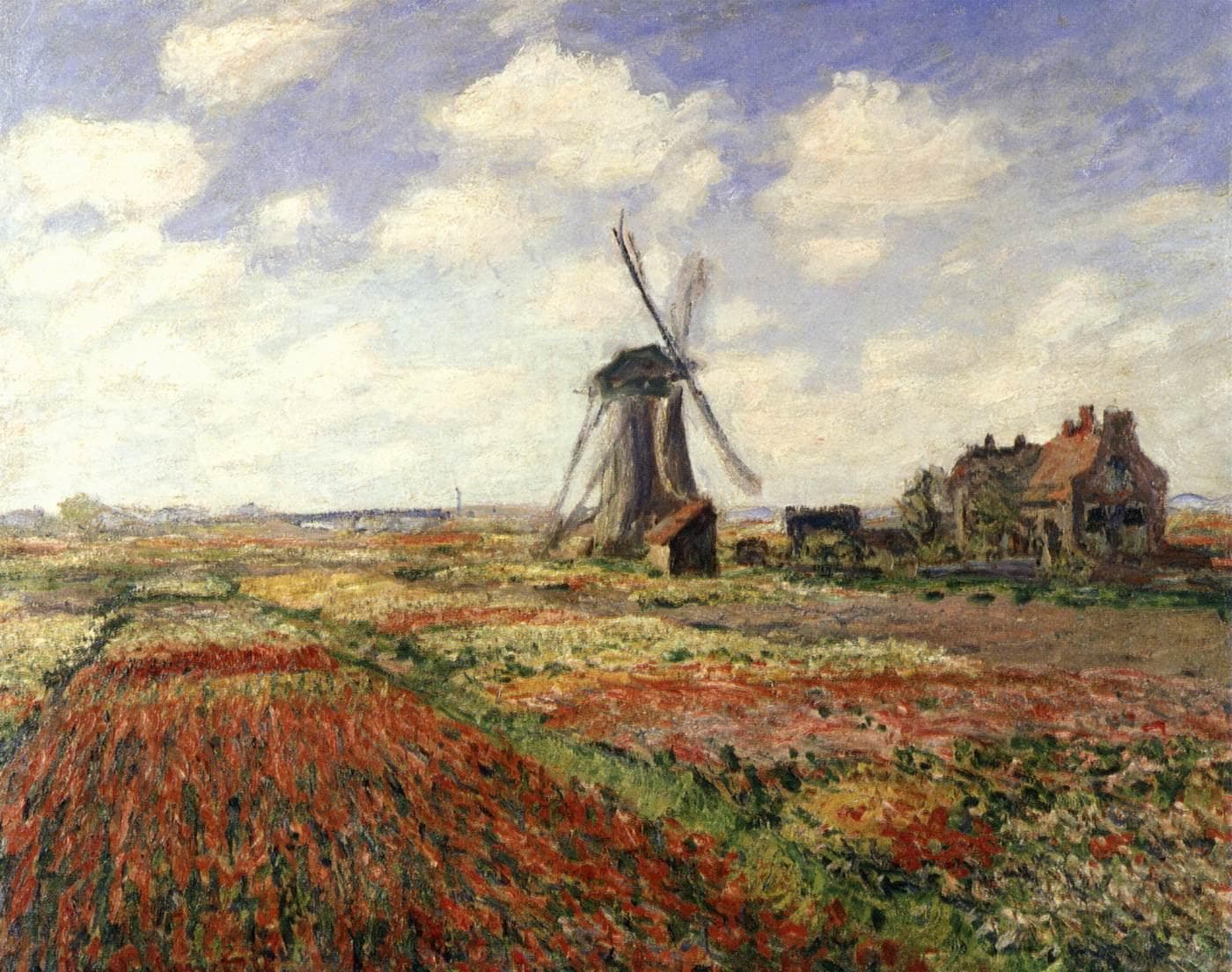
Its structure, a river receding diagonally with a tree-lined bank on one side, is one Monet would use again and again at Argenteuil, for instance in The Seine at Argenteuil. Fifteen years later he returned to Holland for the bulb fields of Tulip Fields in Holland, also in the Orsay.
Where to see it
The painting is in the Musée d'Orsay, Paris (RF 1673). Its other Monets are described on Monet at the Musée d'Orsay.
Questions & answers
Where is Monet's Zaandam?
This 1871 view is in the Musée d'Orsay in Paris (RF 1673). It measures 47.8 by 73 centimeters. Monet painted around two dozen canvases at Zaandam that summer, and others are in Copenhagen, Amsterdam, Frankfurt, Oxford, Baltimore and New York.
When and where was it painted?
In the summer of 1871 at Zaandam, on the river Zaan north of Amsterdam, where Monet stayed from June to October with Camille and their son Jean after leaving London. Wildenstein catalogues the canvas as W.183.
Why did Monet go to Zaandam?
After spending the Franco-Prussian War in London, he traveled to Holland in 1871, possibly on the suggestion of the painter Charles-François Daubigny. He stayed in Zaandam from June to October, painting the river, houses and windmills, and sold several of the pictures.
Why are the houses in Zaandam green?
Wooden houses in the Zaan region were traditionally painted a deep green, often with white trim, a style still seen at the open-air museum of the Zaanse Schans today. Monet made the color a feature of his views, setting the bright green against dark trees and blue water.
More by the artist
Claude Monet

Bridge over a Pond of Water Lilies
Claude Monet · 1899

Woman with a Parasol – Madame Monet and Her Son
Claude Monet · 1875

Sunset in Venice
Claude Monet · 1908–12

La Grenouillère
Claude Monet · 1869

Beach in Pourville
Claude Monet · 1882

Springtime
Claude Monet · 1872

Boating on the River Epte
Claude Monet · 1890

The Seine at Asnières (Hermitage)
Claude Monet · 1873
Also painted in 1871
The same year
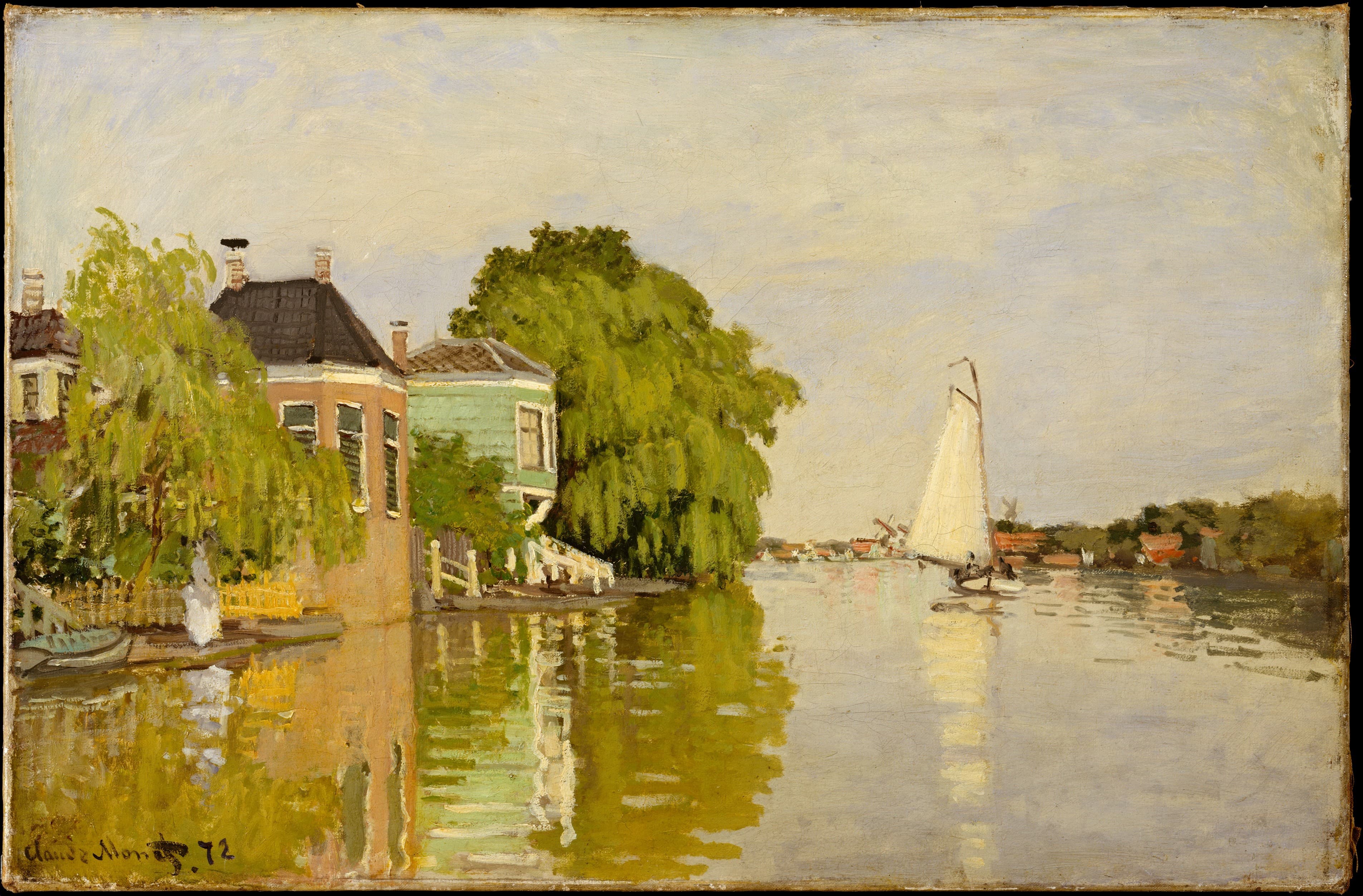
Houses on the Achterzaan
Claude Monet · 1871
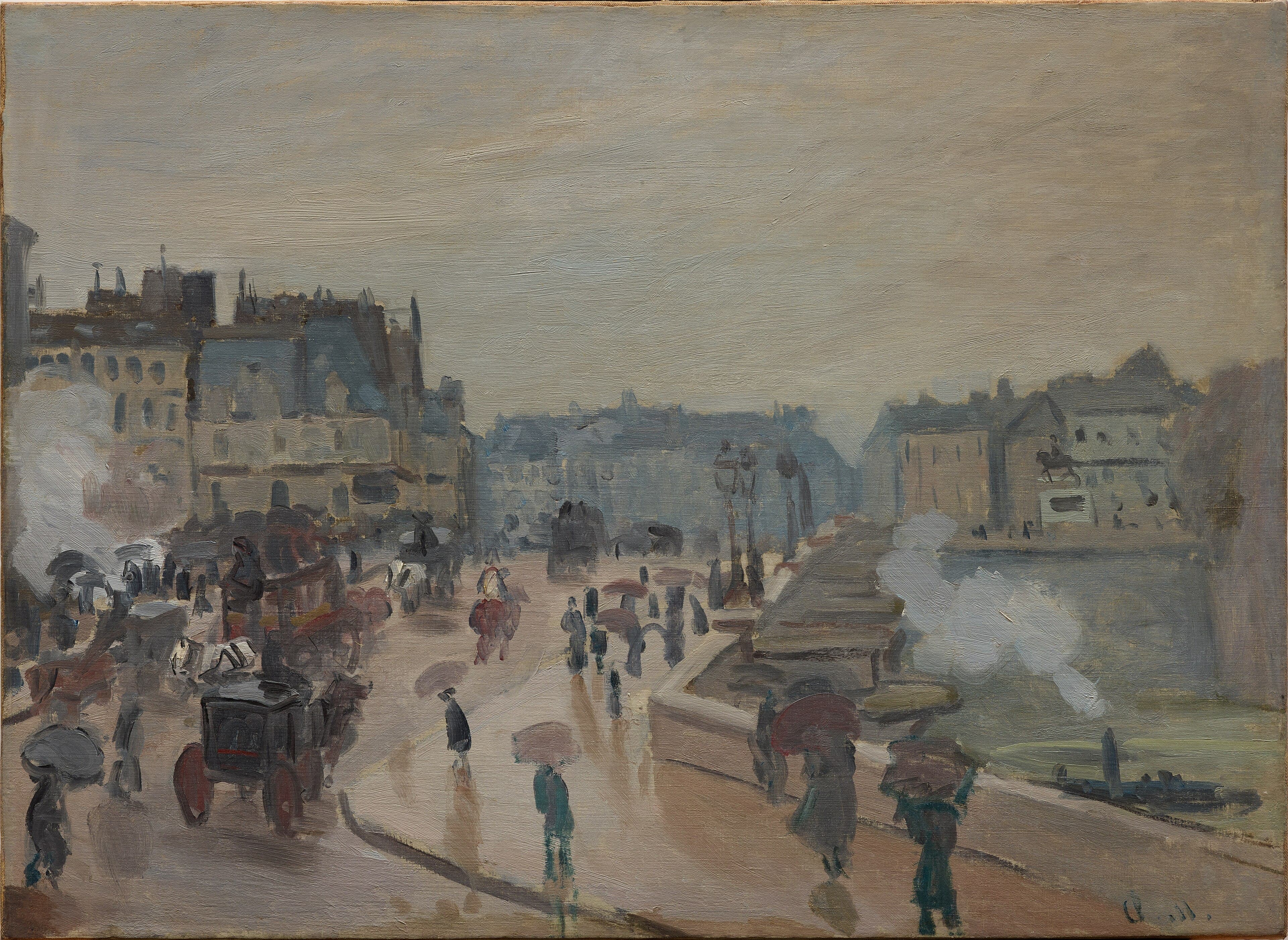
The Pont Neuf
Claude Monet · 1871
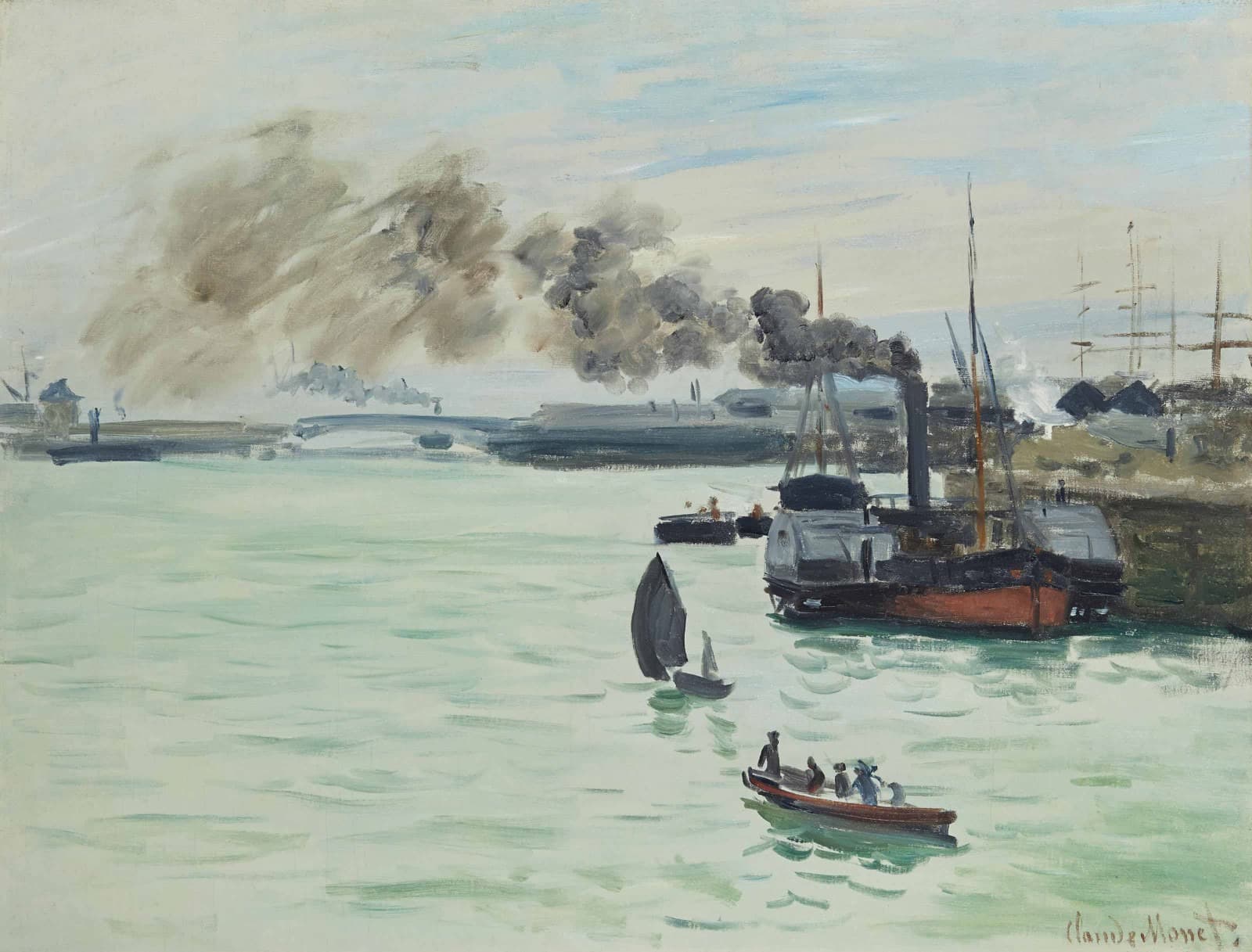
View of a Port
Claude Monet · 1871
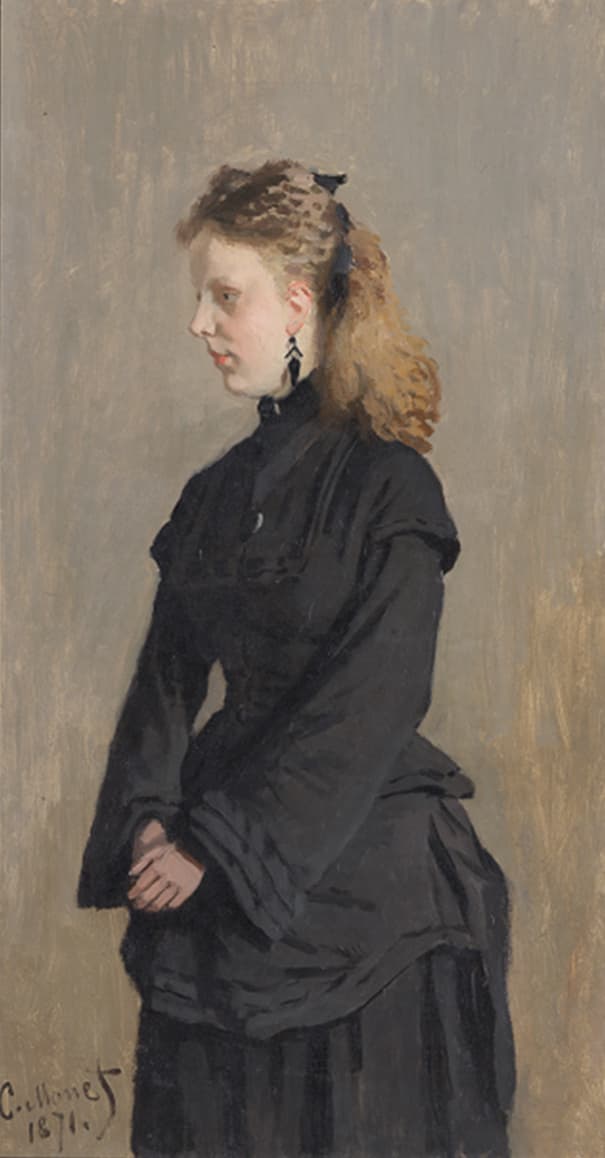
Portrait of Guurtje van de Stadt
Claude Monet · 1871
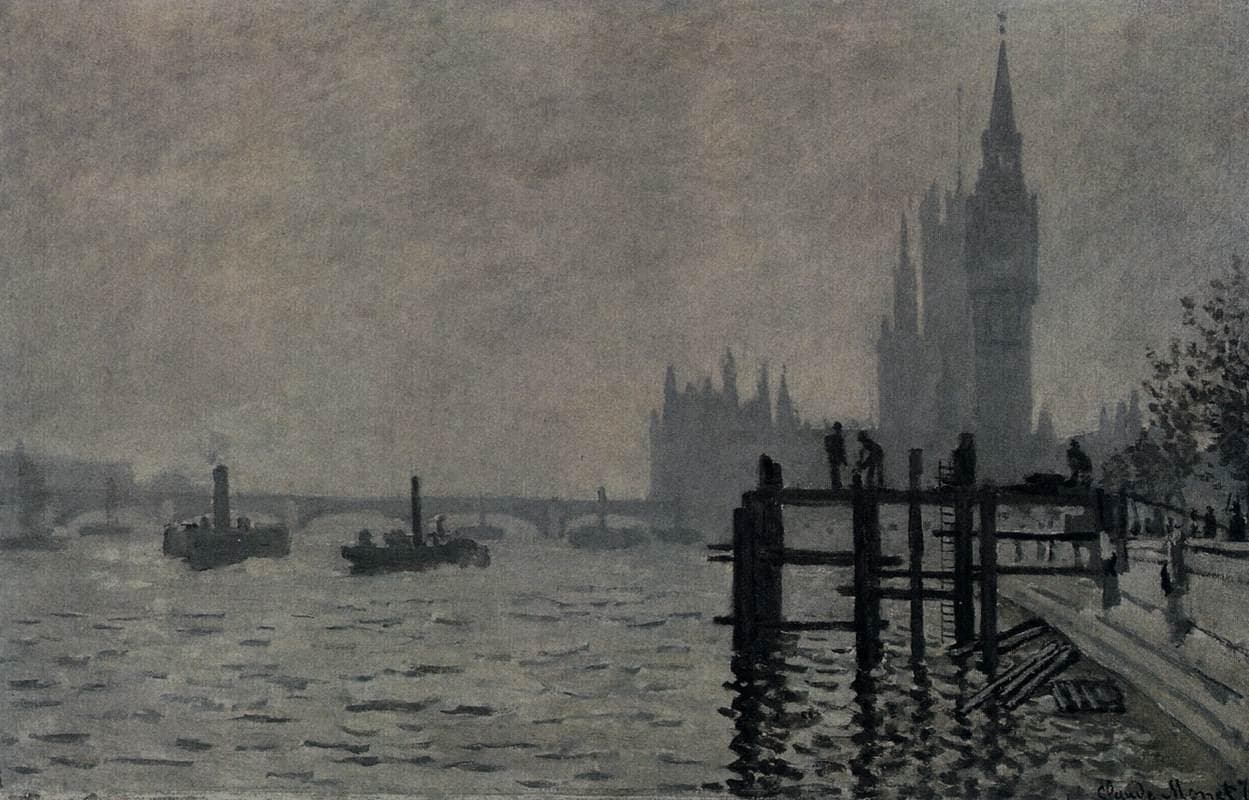
The Thames below Westminster
Claude Monet · c. 1871
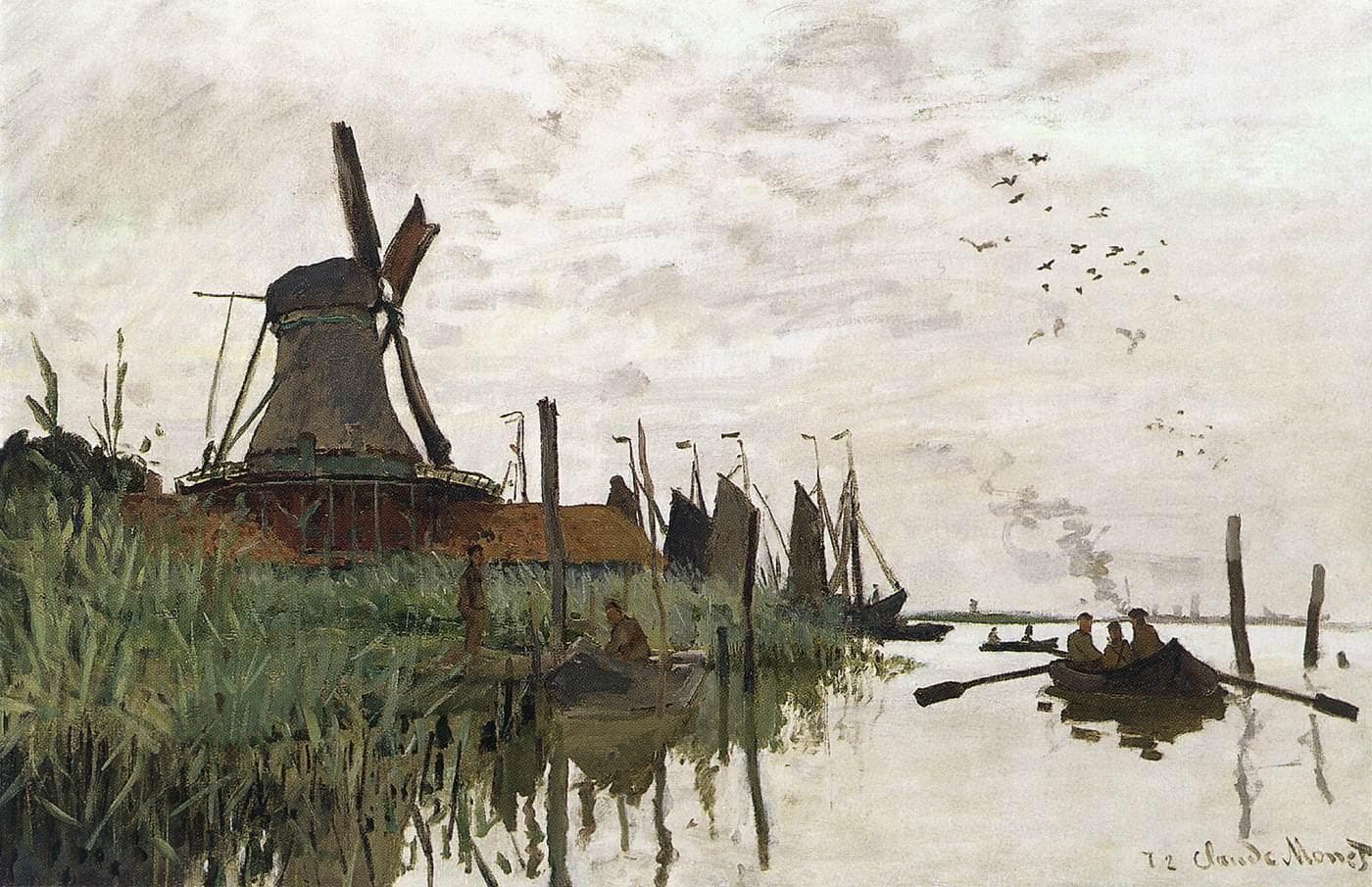
Windmill and Boats near Zaandam
Claude Monet · 1871
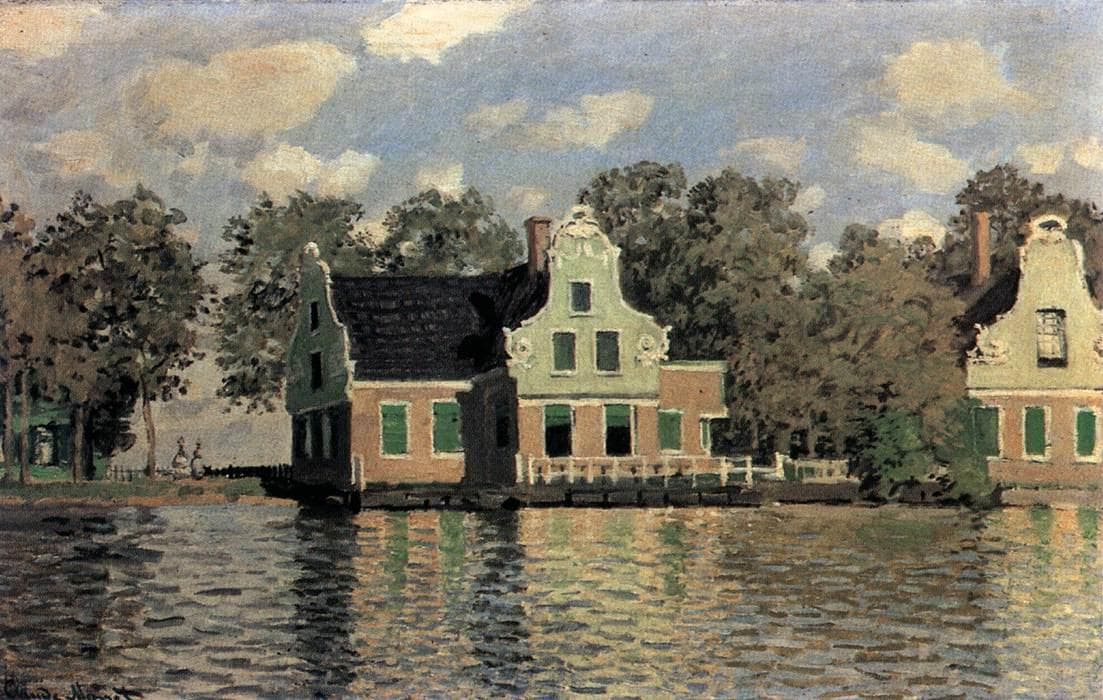
Houses on the Zaan River at Zaandam
Claude Monet · 1871–72
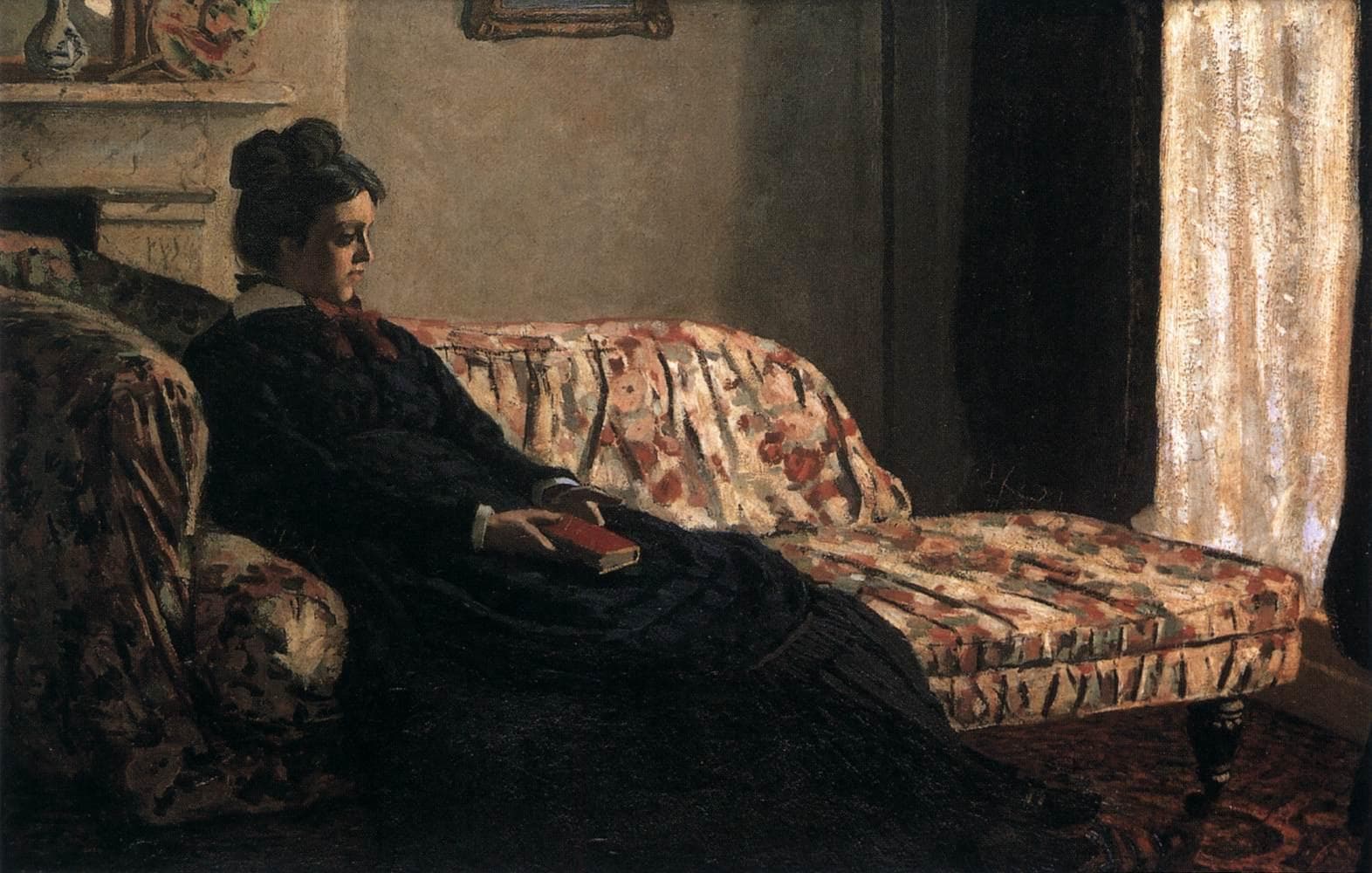
Meditation (Madame Monet on the Sofa)
Claude Monet · c. 1871
Kindred works
You may also study
Windmill and Boats near Zaandam
Claude Monet · 1871
Houses on the Zaan River at Zaandam
Claude Monet · 1871–72
Houses on the Achterzaan
Claude Monet · 1871
Tulip Fields in Holland
Claude Monet · 1886
The Thames below Westminster
Claude Monet · c. 1871

The Scream
Edvard Munch · 1893

Ophelia
John Everett Millais · 1851–52

The Great Wave off Kanagawa
Katsushika Hokusai · c. 1830–32