Impressionism
The Thames below Westminster
Claude Monet, c. 1871
The Thames below Westminster is a painting of about 1871 by Claude Monet of the Houses of Parliament in spring haze, made during his wartime exile in London. It is in the National Gallery, London.
- Artist
- Claude Monet
- Date
- c. 1871
- Medium
- Oil on canvas
- Dimensions
- 47 × 73 cm
- Collection
- National Gallery, London, United Kingdom
- Movement
- Impressionism
- Catalogue
- Wildenstein 166
Painted at Monet in London
What you are looking at
The Houses of Parliament rise on the right as a flat, blue-gray silhouette, their towers cut out against a pale, foggy sky. Westminster Bridge stretches low across the middle distance. On the river, two small steamers trail smoke, and a third boat is a smudge near the bridge. In the right foreground, a dark wooden jetty on stilts juts into the water, and a handful of workmen stand on it, on its crossbeams and on the embankment beside it. Almost everything is mist-colored: soft grays, buff and mauve, with only the jetty and the figures painted in true darks.
At the far right edge, a young tree in leaf and a railing mark the new riverside walk, where a few passers-by stand looking at the water. The time of year is spring; the light is the diffused, sourceless light of London haze.
Exile in London
Claude Monet came to London in the autumn of 1870 to escape the Franco-Prussian War and stayed until the late spring of 1871. It was a hard time: he had little money, and the Royal Academy rejected his work. But he met the dealer Paul Durand-Ruel, who would become his most important supporter, and he looked closely at Turner and Constable. Camille Pissarro was in London too, and the two painters visited the museums together.
This canvas (Wildenstein W.166) is one of only a handful of London views Monet made on that first stay. Its subject was new. The rebuilt Palace of Westminster had only recently been finished, and the Victoria Embankment, the granite river wall running along the right edge, had just been completed. According to the National Gallery, the men on the jetty are dismantling scaffolding left from that building work. Monet's London, early and late, is surveyed on our Monet in London page.
How it was painted
Monet sets the whole picture in a narrow tonal range. Parliament is barely darker than the sky, so its Gothic towers seem to dissolve upward. Against that haze he places the jetty: a lattice of black posts and crossbars, sharply drawn, with dark reflections hanging below. It acts as a foil, pushing the rest of the view back.
Look at the water. It is painted in short horizontal strokes of gray, cream and pale blue, closer together near us, more spread out in the distance. The steamers are a few dark dabs with a smudge of smoke. The tiny figures on the jetty are just vertical marks, yet they carry the scale of the whole scene; one man appears to be climbing a ladder on the right.
The jetty's design, a dark geometric grid cut by the frame and set against an empty, misty field, recalls the Japanese prints Monet was beginning to collect. Its reflections, broken into stacked dashes, are already the same marks he would use for posts and masts at Argenteuil.
From 1871 to the London series
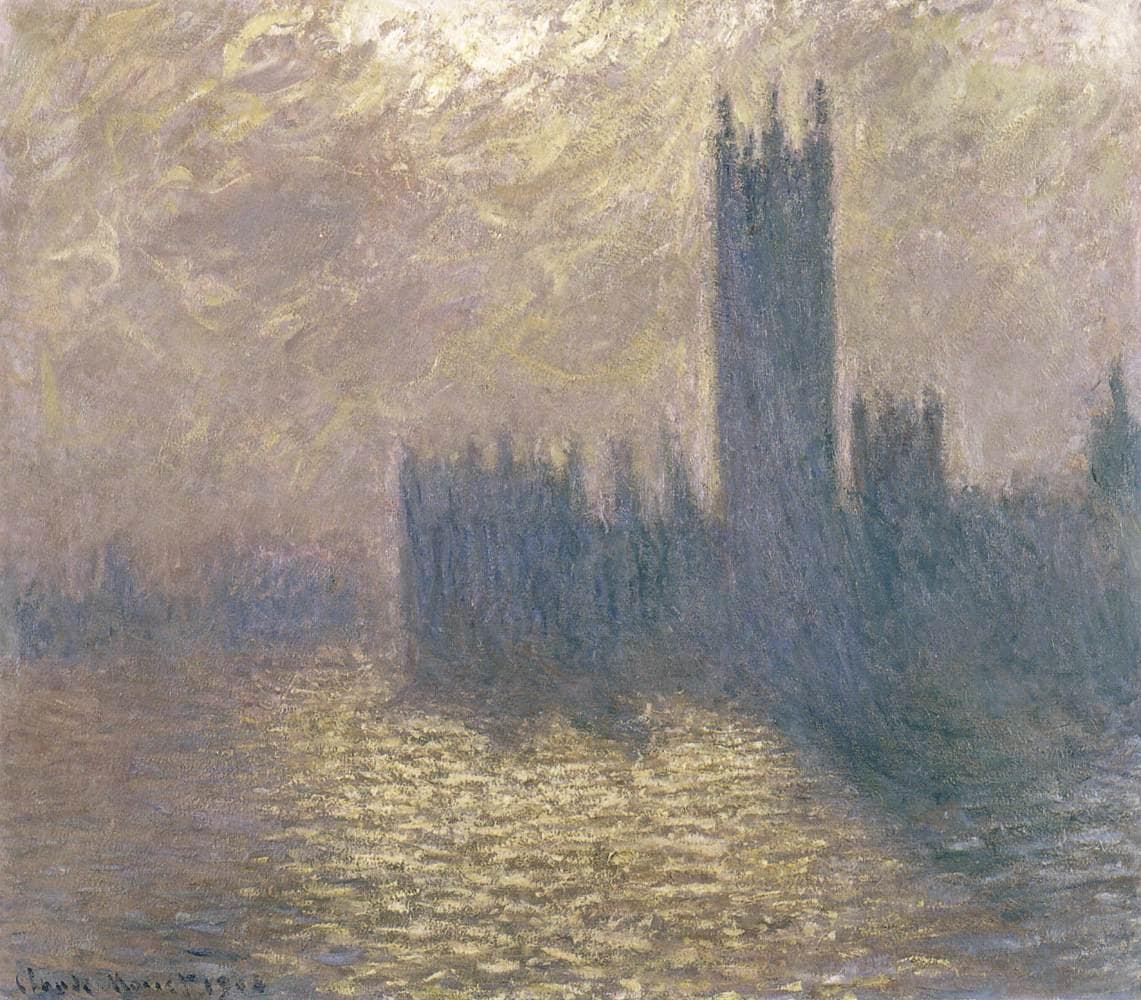
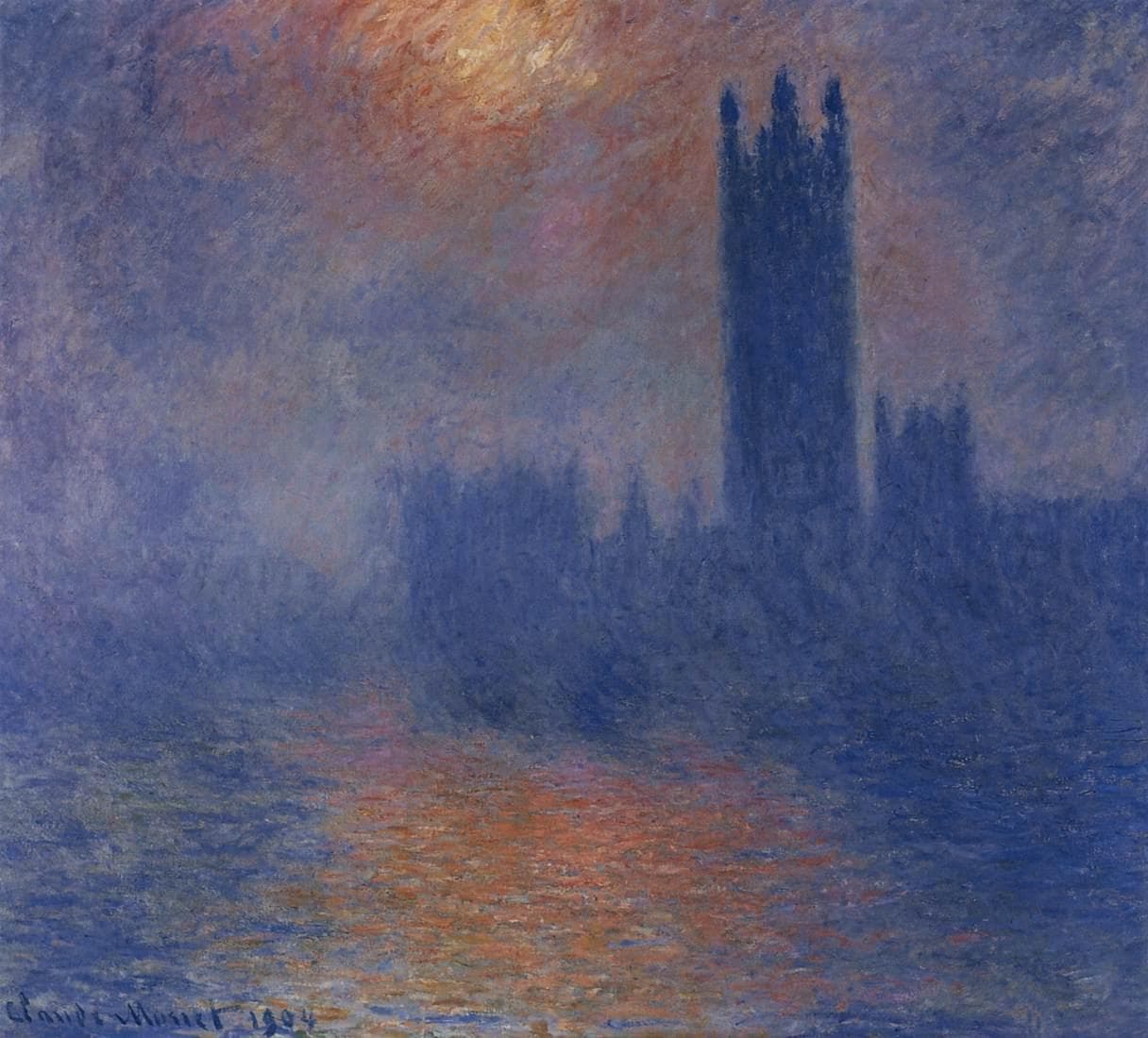
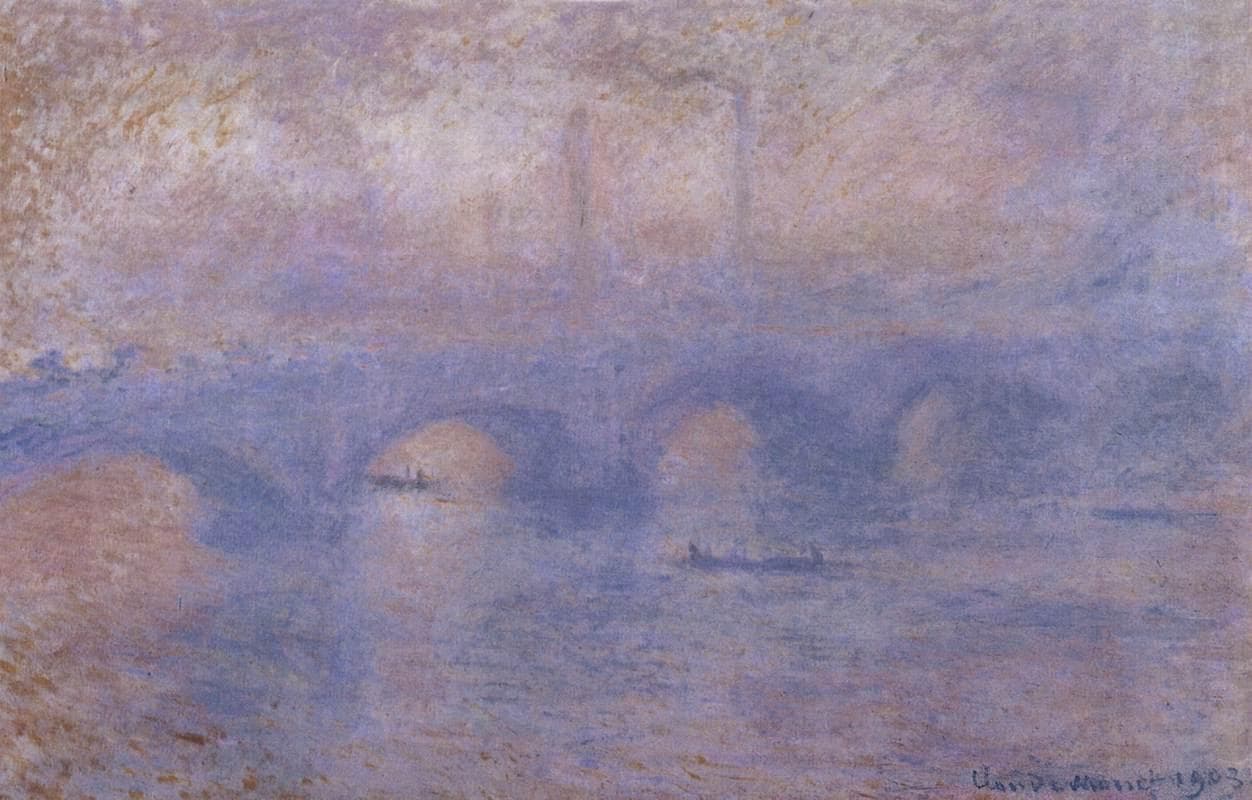
Thirty years later Monet came back to the same building and painted it over and over, from a terrace of St Thomas' Hospital across the river. The resulting Houses of Parliament series, including The Houses of Parliament, London, belongs to the same campaign as the bridges seen from his room at the Savoy, such as Waterloo Bridge, Effect of Fog. In 1871 he still separates near and far, solid and atmospheric; by 1900 the fog has swallowed everything. This modest picture is where his fascination with London fog begins.
Where to see it
The painting is in the National Gallery, London (NG6399), bequeathed by Lord Astor of Hever in 1971. It hangs a short walk from the view it shows, and it is one of the few pictures in the gallery where visitors can step outside and compare painting and place within minutes. The bridge, the river wall and Parliament all still stand. For Monet in other collections, see Where to See Monet's Paintings.
Questions & answers
Where is The Thames below Westminster?
The painting is in the National Gallery, London (NG6399), bequeathed by Lord Astor of Hever in 1971. It is one of the few pictures Monet painted during his first stay in London in 1870–71, and it shows the Houses of Parliament a short walk from where it now hangs.
When and where was it painted?
In London around 1871, probably in the spring, while Monet was a refugee from the Franco-Prussian War. He looked south along the Thames toward Westminster Bridge and the Houses of Parliament, with the newly completed Victoria Embankment on the right. Wildenstein catalogues it as W.166.
What is happening on the wooden jetty?
Workmen stand on a timber jetty beside the river wall. The National Gallery explains that they are dismantling scaffolding used in the building of the Victoria Embankment, which had just been completed. Their sharp dark shapes make the misty Parliament behind look even softer.
How does it relate to Monet's later Houses of Parliament series?
It is the first time he painted the building. Between 1899 and 1901 he returned to London and painted Parliament dozens of times in fog and sunset, finishing many canvases at Giverny. The 1871 picture already shows his interest in how mist dissolves solid architecture.
More by the artist
Claude Monet

Bridge over a Pond of Water Lilies
Claude Monet · 1899

Woman with a Parasol – Madame Monet and Her Son
Claude Monet · 1875

Sunset in Venice
Claude Monet · 1908–12

La Grenouillère
Claude Monet · 1869

Beach in Pourville
Claude Monet · 1882

Springtime
Claude Monet · 1872

Boating on the River Epte
Claude Monet · 1890

The Seine at Asnières (Hermitage)
Claude Monet · 1873
Also painted in 1871
The same year
Houses on the Achterzaan
Claude Monet · 1871
The Pont Neuf
Claude Monet · 1871
View of a Port
Claude Monet · 1871
Portrait of Guurtje van de Stadt
Claude Monet · 1871
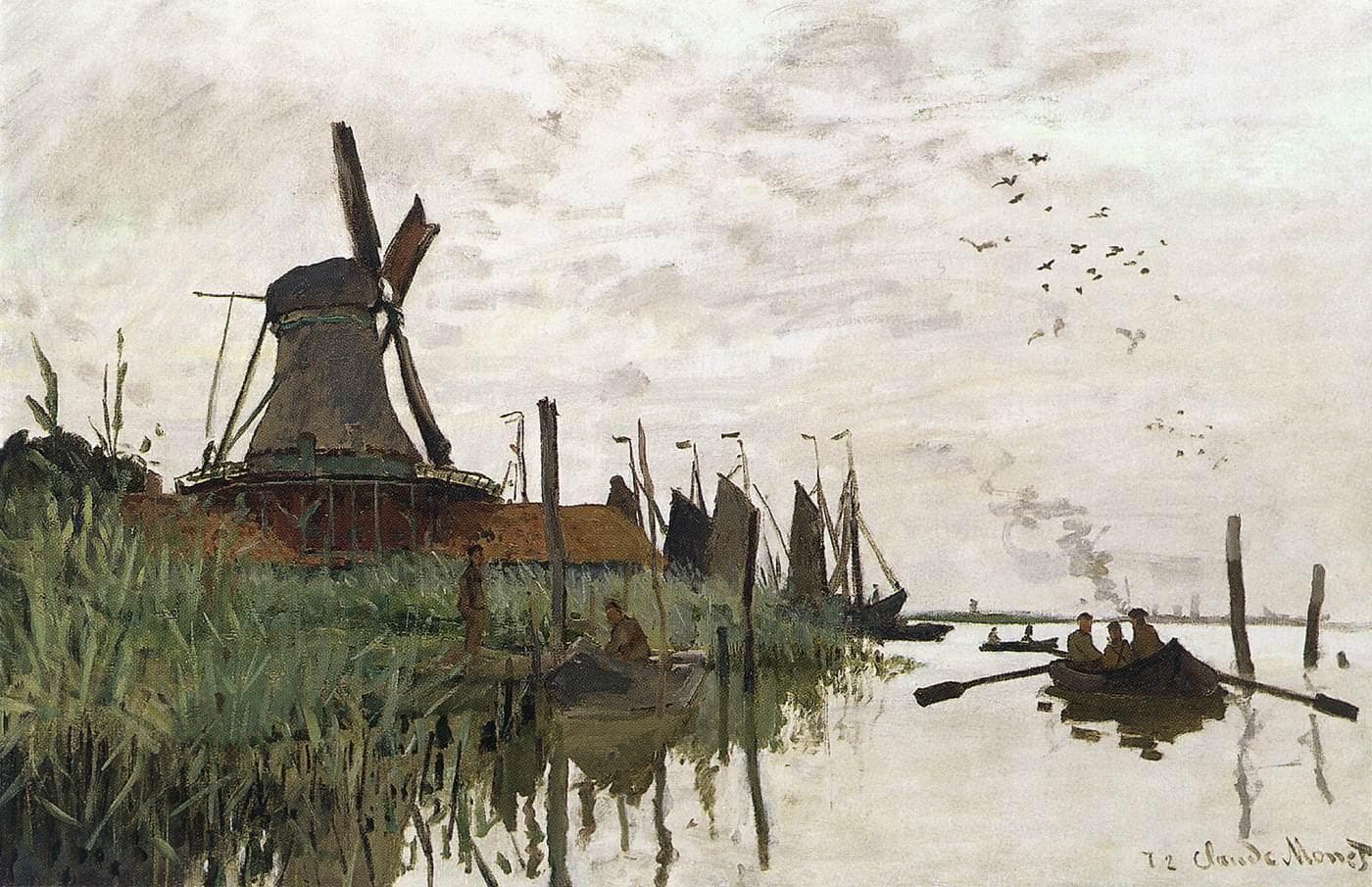
Windmill and Boats near Zaandam
Claude Monet · 1871
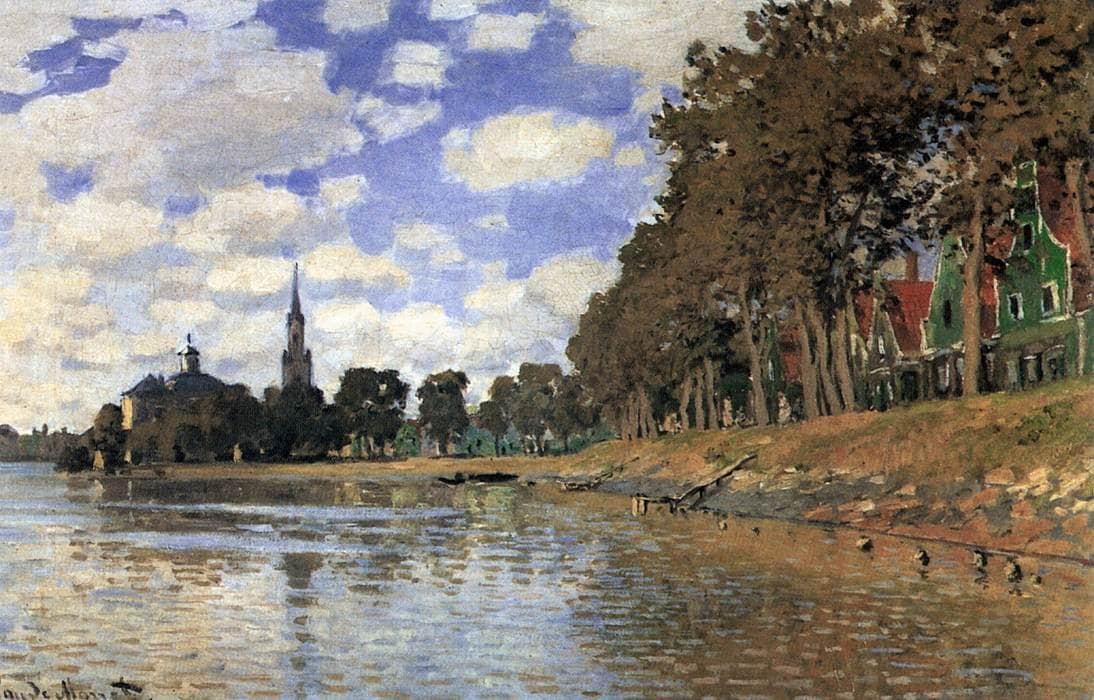
Zaandam
Claude Monet · 1871
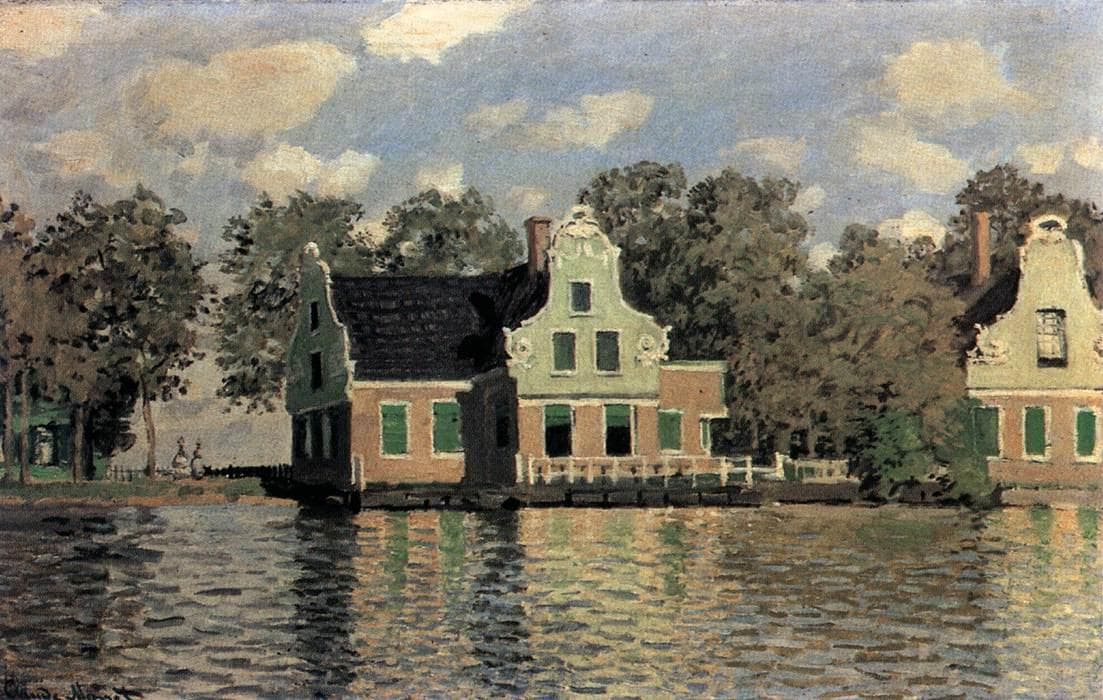
Houses on the Zaan River at Zaandam
Claude Monet · 1871–72
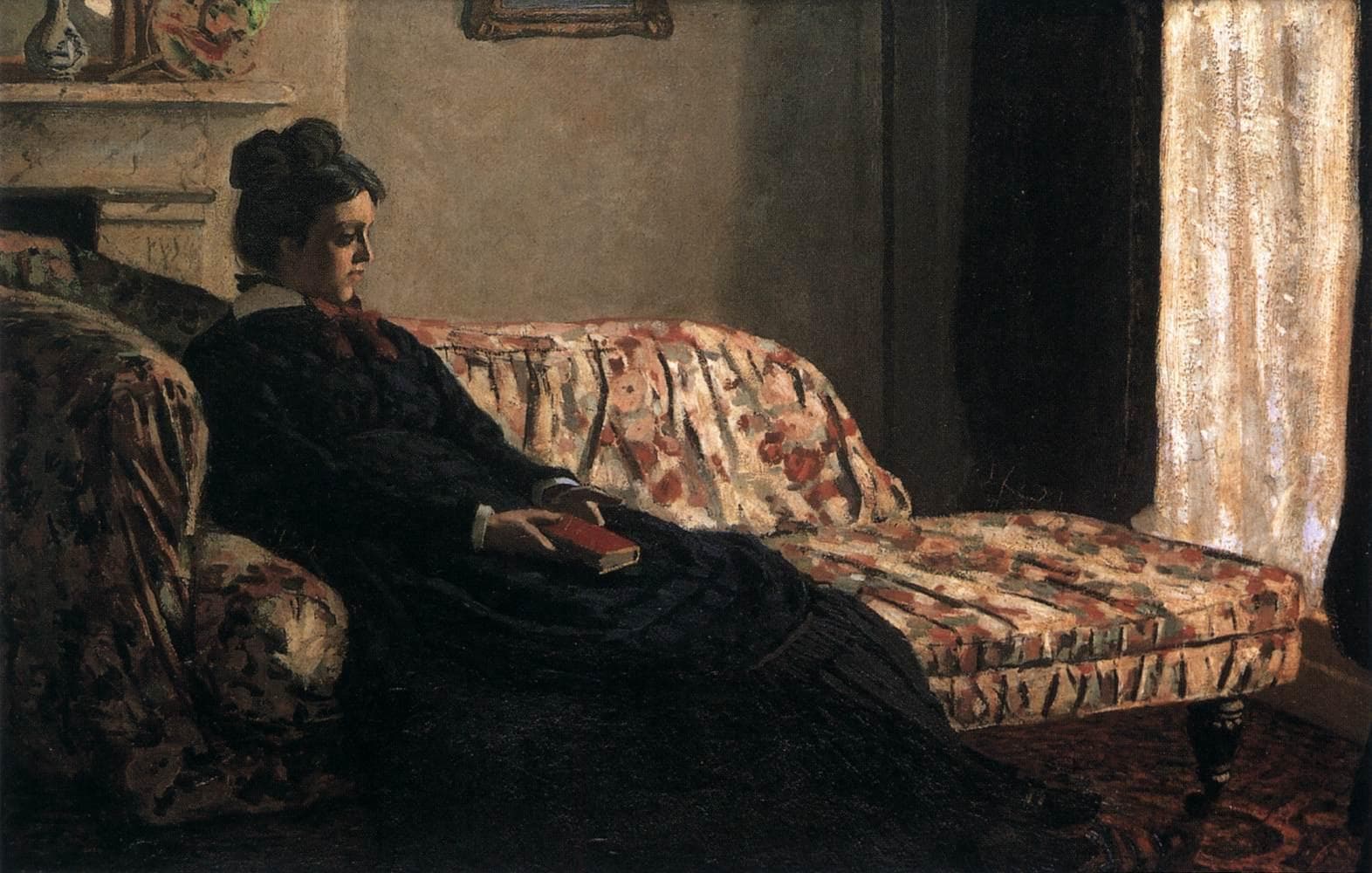
Meditation (Madame Monet on the Sofa)
Claude Monet · c. 1871
Kindred works
You may also study
The Houses of Parliament, London
Claude Monet · 1904
The Houses of Parliament in London
Claude Monet · 1904
Waterloo Bridge, Effect of Fog
Claude Monet · 1903
Impression, Sunrise
Claude Monet · 1872
Zaandam
Claude Monet · 1871

Ophelia
John Everett Millais · 1851–52

The Great Wave off Kanagawa
Katsushika Hokusai · c. 1830–32
The Birth of Venus
Sandro Botticelli · c. 1484–1486