Image: The Metropolitan Museum of Art, Robert Lehman Collection, 1975 · CC0 · via Wikimedia Commons
Impressionism
Houses on the Achterzaan
Claude Monet, 1871
Houses on the Achterzaan is an 1871 painting by Claude Monet of wooden houses and willows reflected in a river at Zaandam, in the Netherlands, with a white sail beyond. It is in the Robert Lehman Collection at the Metropolitan Museum of Art.
- Artist
- Claude Monet
- Date
- 1871
- Medium
- Oil on canvas
- Dimensions
- 44.1 × 67.3 cm
- Collection
- The Metropolitan Museum of Art, New York, United States
- Movement
- Impressionism
- Catalogue
- Wildenstein 186
More at Monet at the Met
Houses on the Achterzaan is a small, calm river view Claude Monet painted at Zaandam, north of Amsterdam, in the summer of 1871. Painted wooden houses and willows stand on the left bank, their reflections hanging upside down in still water, while a single white sail leans into the wind out on the river. The canvas is in the Metropolitan Museum of Art in New York, part of the Robert Lehman Collection.
What you're looking at
The picture divides into two halves. On the left, a row of riverside houses runs out from the edge: a brick house with a steep black roof, a smaller one painted bright green with white trim, a white balustraded landing stage, small boats tied up below. Big willows and a dense round tree in mid-tone greens lean over them. Their reflections drop straight down into the water in long vertical strokes of olive, green and pink, almost as solid as the buildings.
On the right, the river opens out flat and pale under a wide, milky sky. A sailing boat with a tall white sail sits just right of center, its reflection a column of cream on the water. Further off, at the vanishing point, a low strip of red roofs and a tiny windmill line the horizon. The sky takes up over half the canvas and is brushed in loose diagonal strokes of cream, lilac and pale blue. At lower left, Monet's signature in dark paint is followed by the date '72, though the painting is catalogued to his 1871 stay; the date was likely added when he signed it.
Note the tiny figures in the white-hulled boat beneath the sail: two dark dots, the only people in the picture.
Monet in Holland
Monet had fled to London in 1870 to avoid the Franco-Prussian War. In late May or early June 1871 he crossed to the Netherlands with Camille and their son Jean, encouraged by the landscape painter Charles-François Daubigny, and stayed at Zaandam until the autumn. The town, on the Zaan river near its junction with the IJ, was full of windmills, timber yards, canals and painted wooden houses. In about four months Monet painted some two dozen canvases there. They sold well, and they were his first sustained run of river pictures.
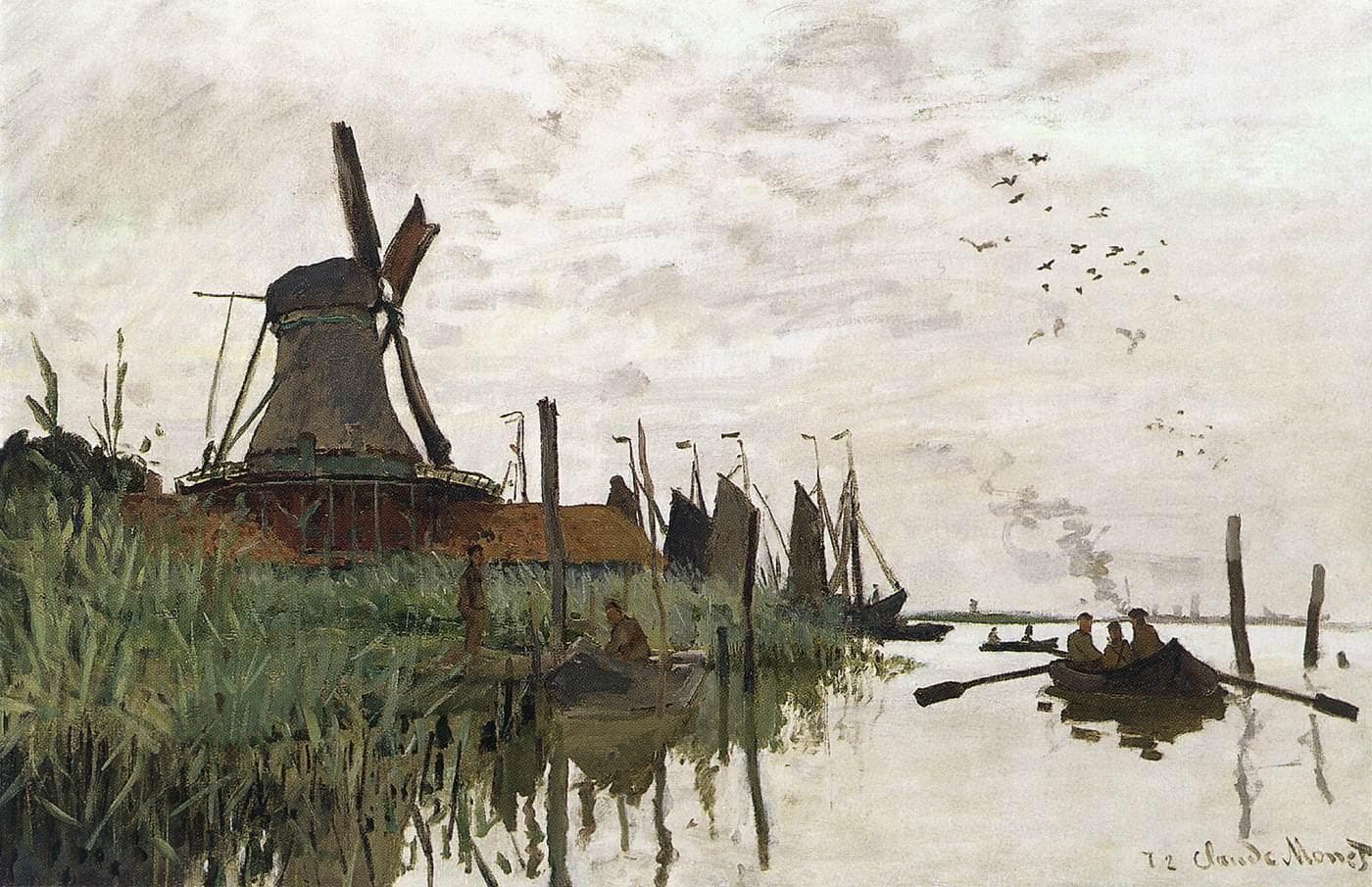
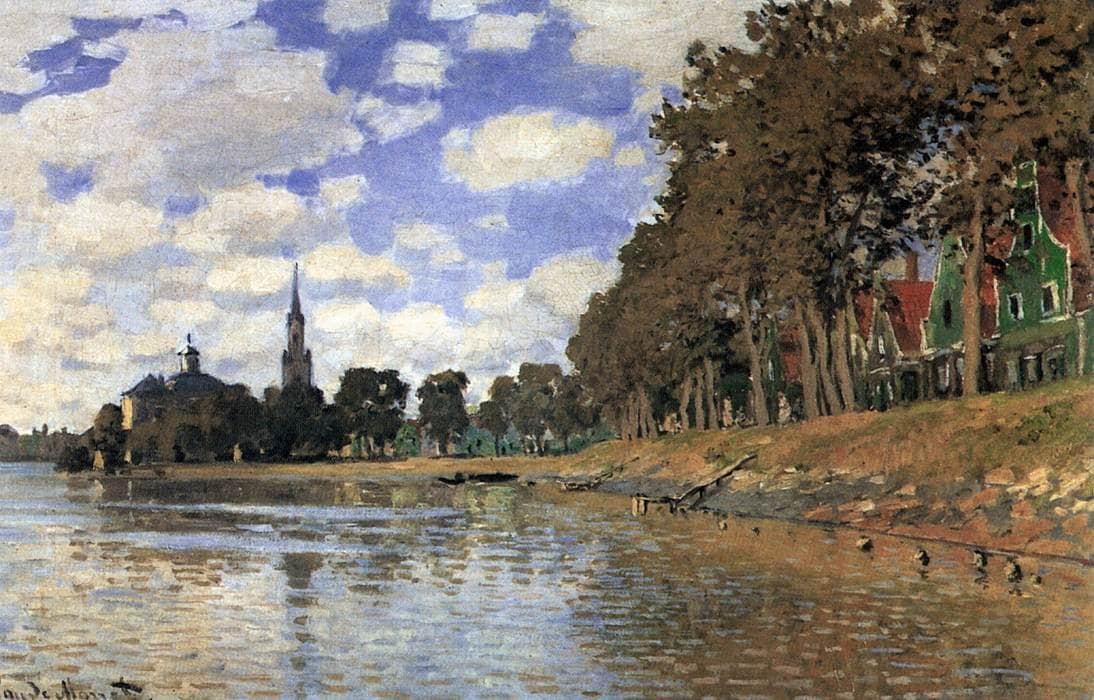
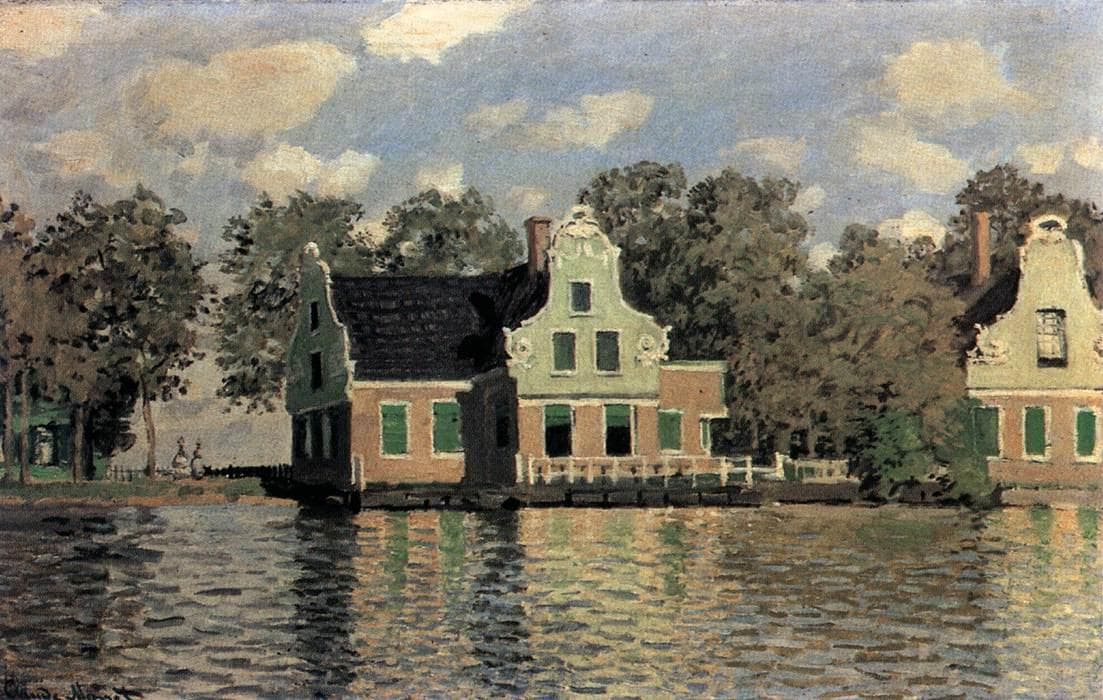
The Achterzaan is a stretch of the Zaan. Monet painted this view looking northwest along the west shore, where garden houses backed onto the water. Other canvases from the same stay include Zaandam in the Musée d'Orsay, Houses on the Zaan River at Zaandam in the Städel and Windmill and Boats near Zaandam. He also painted a small portrait of a local girl, Guurtje van de Stadt.
How it was painted
The surface is quick and lightly loaded. Monet lays the sky in thin scumbles, letting the pale ground glow through. The houses are blocked in with flat planes of color and a few dark accents for windows and roof edges. The willows are dabbed and dragged in upward flicks. In the water he works vertically for the reflections and horizontally for the open river, and the change in stroke direction does most of the work of telling surface from depth.
The arrangement, solid mass on one side and open water and sky on the other, is close to the Dutch river views of the seventeenth century, which Monet would have seen in Amsterdam's museums. The handling, though, is entirely his: fast, light and concerned with the overall tone of a hazy summer day. Within a year he would apply the same method on the Seine at Argenteuil.
Where to see it
The painting was acquired by the banker and collector Robert Lehman and came to the Met with his collection in 1975. It is usually shown in the Robert Lehman Wing, separate from the museum's main nineteenth-century galleries. For the rest of the museum's holdings, see Monet at the Met, and for Monet's early travels, his life in paintings.
Questions & answers
Where is Houses on the Achterzaan by Monet?
It is in the Metropolitan Museum of Art in New York, part of the Robert Lehman Collection, which came to the museum in 1975. It is usually displayed in the Robert Lehman Wing.
When and where did Monet paint Houses on the Achterzaan?
He painted it in summer 1871 at Zaandam in the Netherlands, where he stayed for about four months after leaving London. The Achterzaan is a stretch of the Zaan river; he looked northwest along its west bank.
Why is Houses on the Achterzaan dated 1872 in the signature?
The signature at lower left is followed by '72, but the painting belongs to Monet's 1871 Dutch stay and is catalogued to that year. Monet often signed and dated canvases later, when he sold or exhibited them.
How many paintings did Monet make in Zaandam?
About two dozen. Besides this canvas, they include Zaandam in the Musée d'Orsay, Houses on the Zaan River at Zaandam in Frankfurt, and several views of windmills and boats.
More by the artist
Claude Monet

Bridge over a Pond of Water Lilies
Claude Monet · 1899

Woman with a Parasol – Madame Monet and Her Son
Claude Monet · 1875

Sunset in Venice
Claude Monet · 1908–12

La Grenouillère
Claude Monet · 1869

Beach in Pourville
Claude Monet · 1882

Springtime
Claude Monet · 1872

Boating on the River Epte
Claude Monet · 1890

The Seine at Asnières (Hermitage)
Claude Monet · 1873
Also painted in 1871
The same year
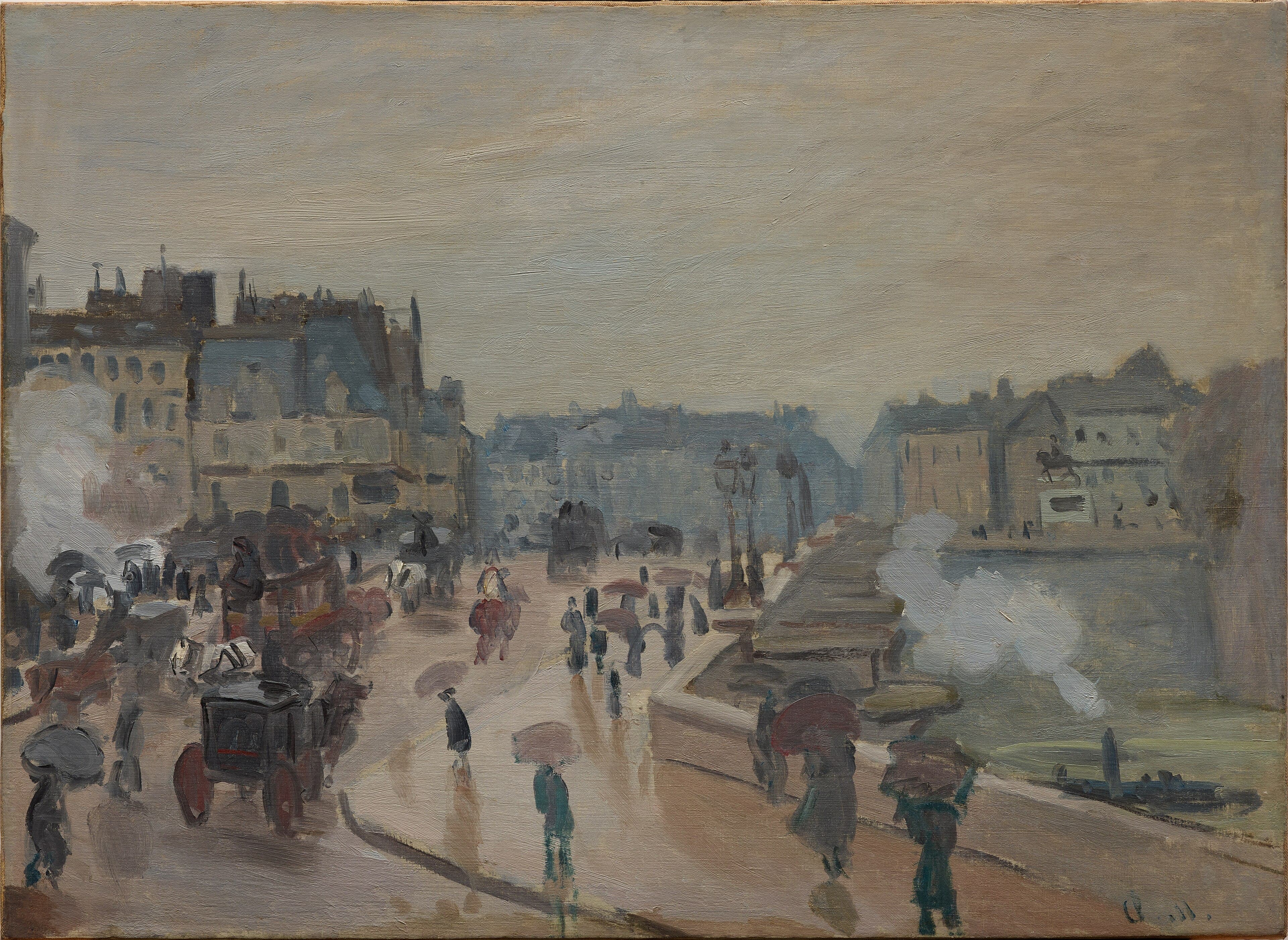
The Pont Neuf
Claude Monet · 1871
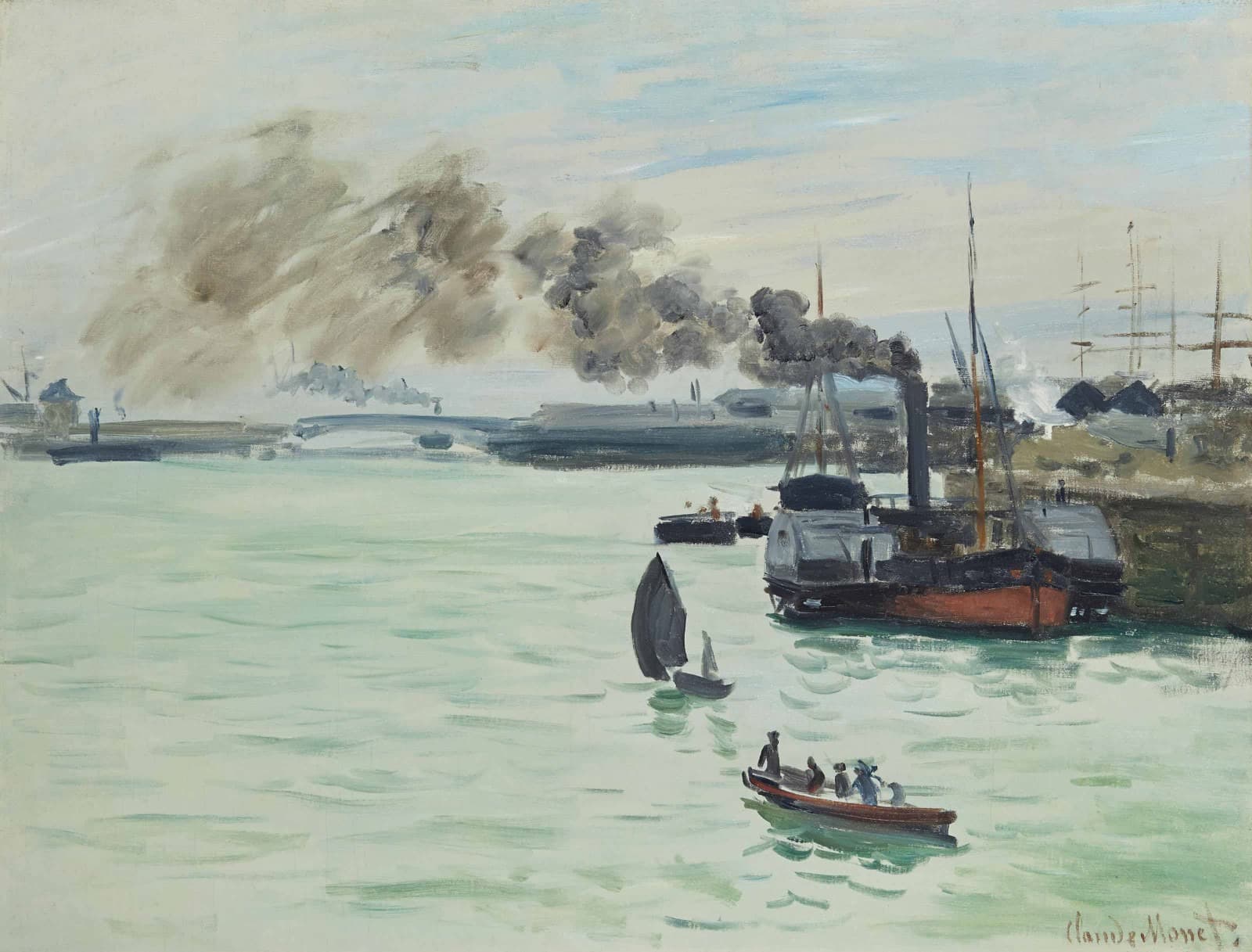
View of a Port
Claude Monet · 1871
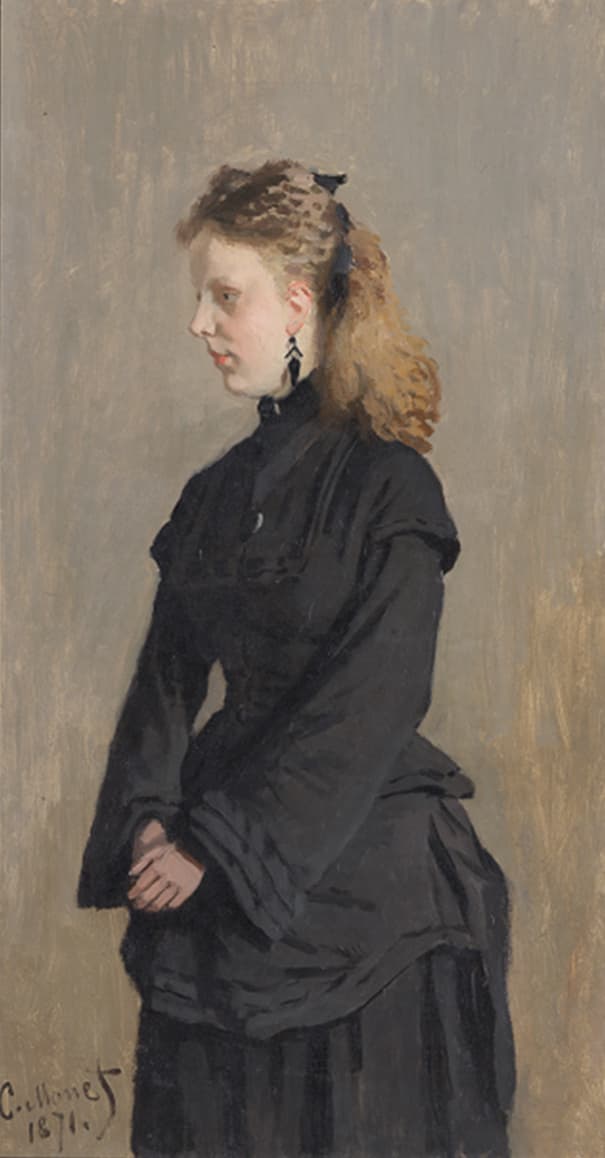
Portrait of Guurtje van de Stadt
Claude Monet · 1871
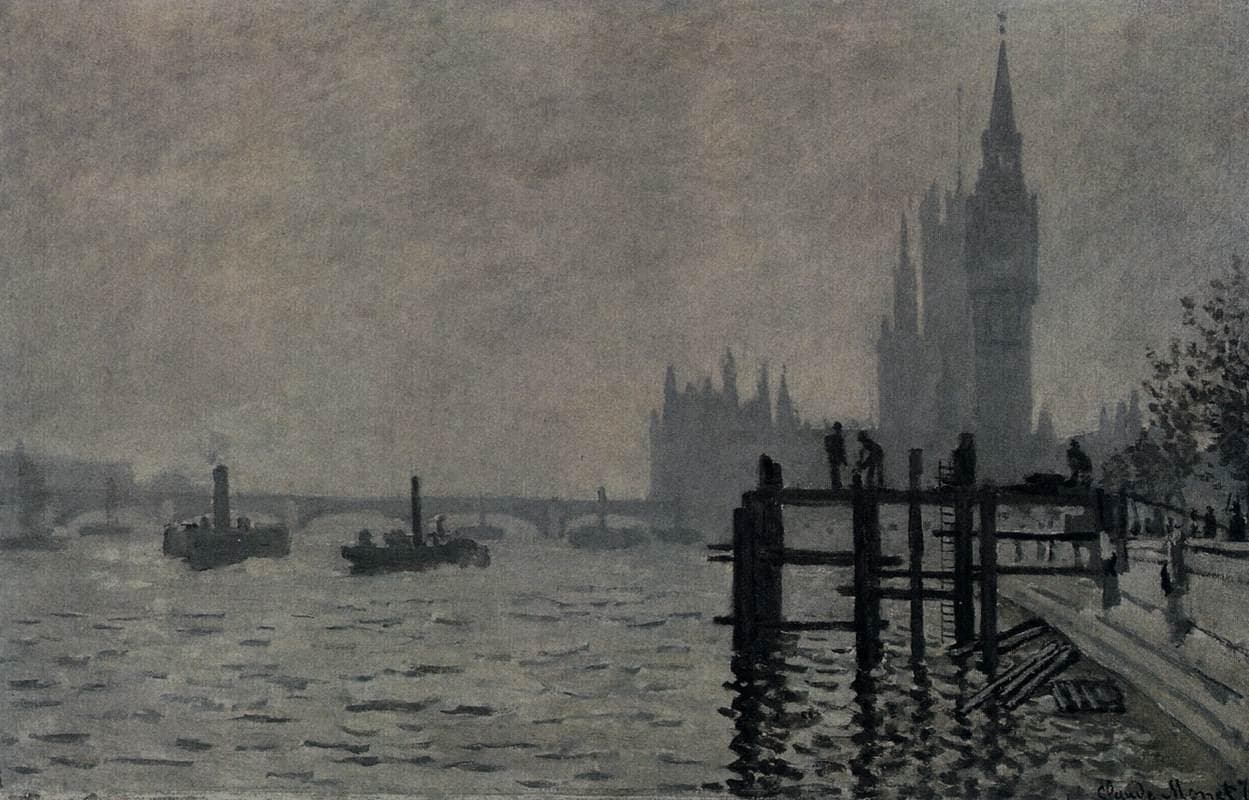
The Thames below Westminster
Claude Monet · c. 1871
Windmill and Boats near Zaandam
Claude Monet · 1871
Zaandam
Claude Monet · 1871
Houses on the Zaan River at Zaandam
Claude Monet · 1871–72
Meditation (Madame Monet on the Sofa)
Claude Monet · c. 1871
Kindred works
You may also study
Zaandam
Claude Monet · 1871
Houses on the Zaan River at Zaandam
Claude Monet · 1871–72
Windmill and Boats near Zaandam
Claude Monet · 1871
Portrait of Guurtje van de Stadt
Claude Monet · 1871
The Thames below Westminster
Claude Monet · c. 1871

The Scream
Edvard Munch · 1893

Ophelia
John Everett Millais · 1851–52

The Great Wave off Kanagawa
Katsushika Hokusai · c. 1830–32