Impressionism
Meditation (Madame Monet on the Sofa)
Claude Monet, c. 1871
Meditation, also called Madame Monet on the Sofa or Camille Monet on the Couch, is a small interior by Claude Monet, painted in London around 1871, of his wife Camille resting with a book. It is in the Musée d'Orsay, Paris.
- Artist
- Claude Monet
- Date
- c. 1871
- Medium
- Oil on canvas
- Dimensions
- 48 × 75 cm
- Collection
- Musée d'Orsay, Paris, France
- Movement
- Impressionism
- Catalogue
- Wildenstein 163
Painted at Monet in LondonMore at Monet at the Musée d'Orsay
Meditation, Madame Monet on the Sofa is a small, quiet interior that Claude Monet painted around 1871, most likely in London, where he had taken refuge with his wife Camille and their young son Jean during the Franco-Prussian War. The canvas, 48 by 75 centimeters and number 163 in Wildenstein's catalogue, is in the Musée d'Orsay in Paris.
What you are looking at
Camille sits at the left end of a long chaise sofa upholstered in a pale chintz printed with red and pink flowers, leaning back into a cushioned arm. She wears a dark, almost black dress with a white collar and a touch of red at the throat. Her head is bowed and turned toward the window at the right, her eyes lowered, lost in thought. A small red book lies closed in her lap, her fingers resting on it.
The room is dim. Behind her, at upper left, a mantelpiece carries a vase and a piece of patterned porcelain, and the bottom edge of a gilt frame hangs on the wall above the sofa. At the right a tall window is screened by a gauzy white curtain and a heavy dark drape, and daylight seeps through the gauze, catching the far end of the sofa, its turned wooden leg and the patterned carpet. The figure is placed at the left with the long, empty sofa stretching away beside her, which gives the picture its feeling of stillness and waiting.
How it was painted
The handling is closer to Édouard Manet or James McNeill Whistler than to Monet's later broken touch. The dark dress is painted as one broad, simple mass, its folds marked by a few strokes of dark blue-gray; the face is modeled in a handful of warm tones. The flowered upholstery is done in loose, quick strokes that suggest the pattern without counting it. The real subject is the soft, gray light falling across a room, and the way it picks out the red of the book, the white of the collar and the pale stripe of curtain.
Notice the balance of the composition: the dark mass of the figure on the left, the bright vertical of the curtain on the right, and between them the long, light horizontal of the sofa. It is the arrangement of a Japanese print, or of a Whistler, more than of a conventional portrait.
The title, Meditation, is apt but modest. Nothing happens in the picture, and nothing is explained. We do not know what Camille has been reading or what she is thinking about, only that she has stopped. For a painter who usually showed her walking in fields with a parasol, this is a striking image of a young wife in a foreign city, in a rented room, far from home in wartime.
London, 1870–71
When war broke out in July 1870, Monet, who had married Camille Doncieux that June, left France to avoid conscription and crossed to London. There he met the dealer Paul Durand-Ruel, who would become his most important supporter, and painted views of the river such as The Thames below Westminster and of Hyde Park and Green Park. In the summer of 1871 the family moved on to Zaandam in Holland, then back to France. Our hub on Monet in London follows both of his London periods.
Intimate scenes like this one are rare in his work. Camille appears in many Monet pictures, from the formal Camille (The Woman in the Green Dress) to Camille Monet on a Garden Bench, but seldom so private and inward. The closest comparison is the lamplit Interior after Dinner of 1868–69. Thirty years later Monet would return to London to paint the Houses of Parliament in fog.
Where to see it
The painting is in the Musée d'Orsay, Paris, which also holds his Camille Monet on Her Deathbed of 1879, the last time he painted her. It suits readers drawn to dark academia images of solitary reading. More on Claude Monet.
Questions & answers
Where is Monet's Meditation, Madame Monet on the Sofa?
The painting is in the Musée d'Orsay in Paris. It is a small canvas, about 48 by 75 centimeters, and is sometimes catalogued under the English titles Camille Monet on the Couch or Madame Monet on a Sofa, all referring to the same picture of Camille resting with a book.
When and where was Meditation painted?
It is usually dated to around 1871 and believed to have been painted in London, where Monet, Camille and their son Jean lived from late 1870 to mid-1871 to escape the Franco-Prussian War. The dim, diffused light and English-looking chintz sofa fit that setting.
What is Camille doing in the painting?
She sits on a long flowered sofa with a small red book closed in her lap, her head bowed toward the window as if lost in thought, which explains the title Meditation. Monet presents her not as a fashionable figure but as a private person in a quiet moment at home.
Did Monet paint other pictures of Camille indoors?
Very few. Most of his paintings of Camille show her outdoors, in gardens and fields. Interior after Dinner of 1868–69, in Washington, shows the family by lamplight, and Camille Monet on Her Deathbed of 1879, in the Musée d'Orsay, is his last image of her.
More by the artist
Claude Monet

Bridge over a Pond of Water Lilies
Claude Monet · 1899

Woman with a Parasol – Madame Monet and Her Son
Claude Monet · 1875

Sunset in Venice
Claude Monet · 1908–12

La Grenouillère
Claude Monet · 1869

Beach in Pourville
Claude Monet · 1882

Springtime
Claude Monet · 1872

Boating on the River Epte
Claude Monet · 1890

The Seine at Asnières (Hermitage)
Claude Monet · 1873
Also painted in 1871
The same year
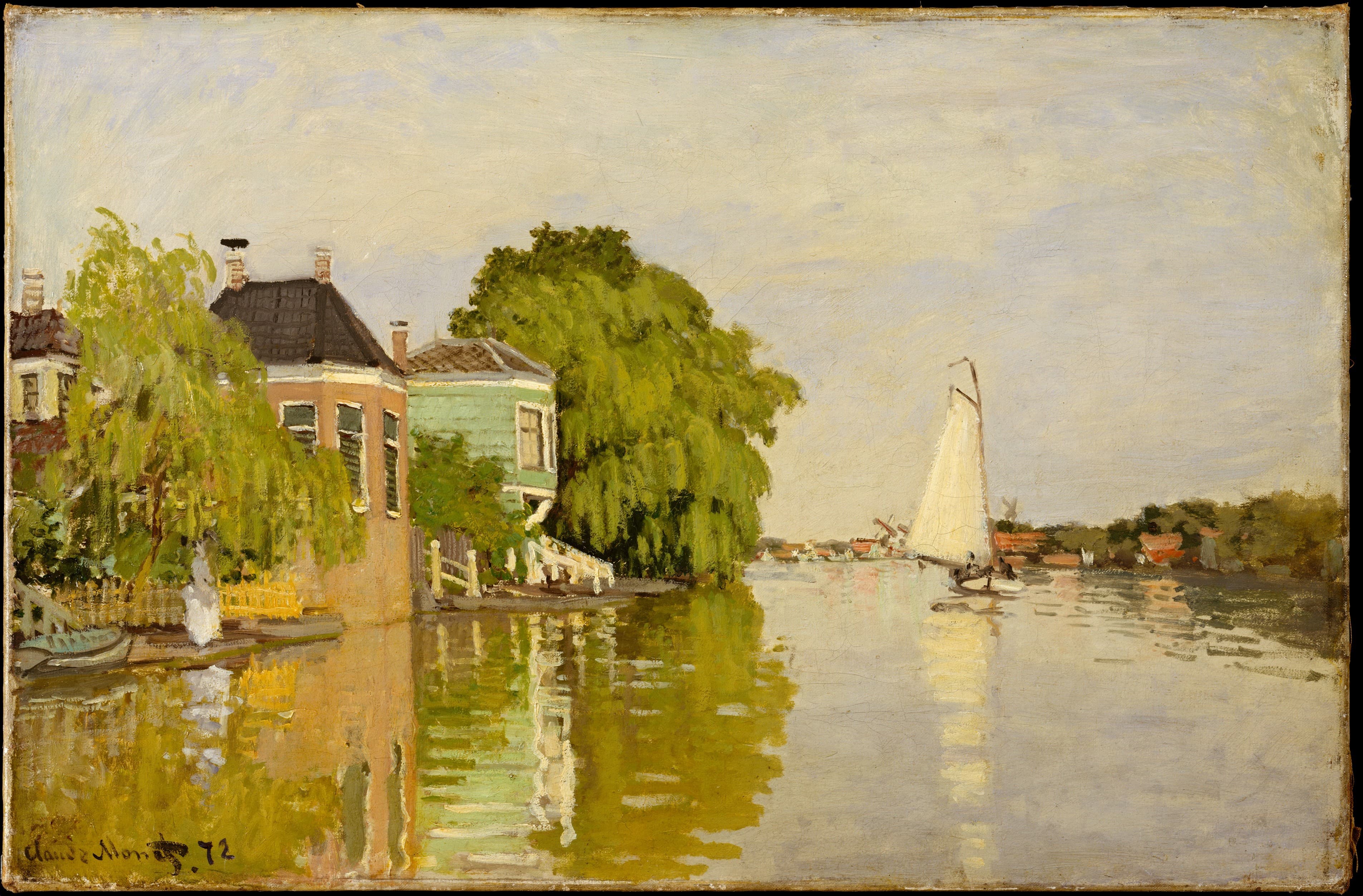
Houses on the Achterzaan
Claude Monet · 1871
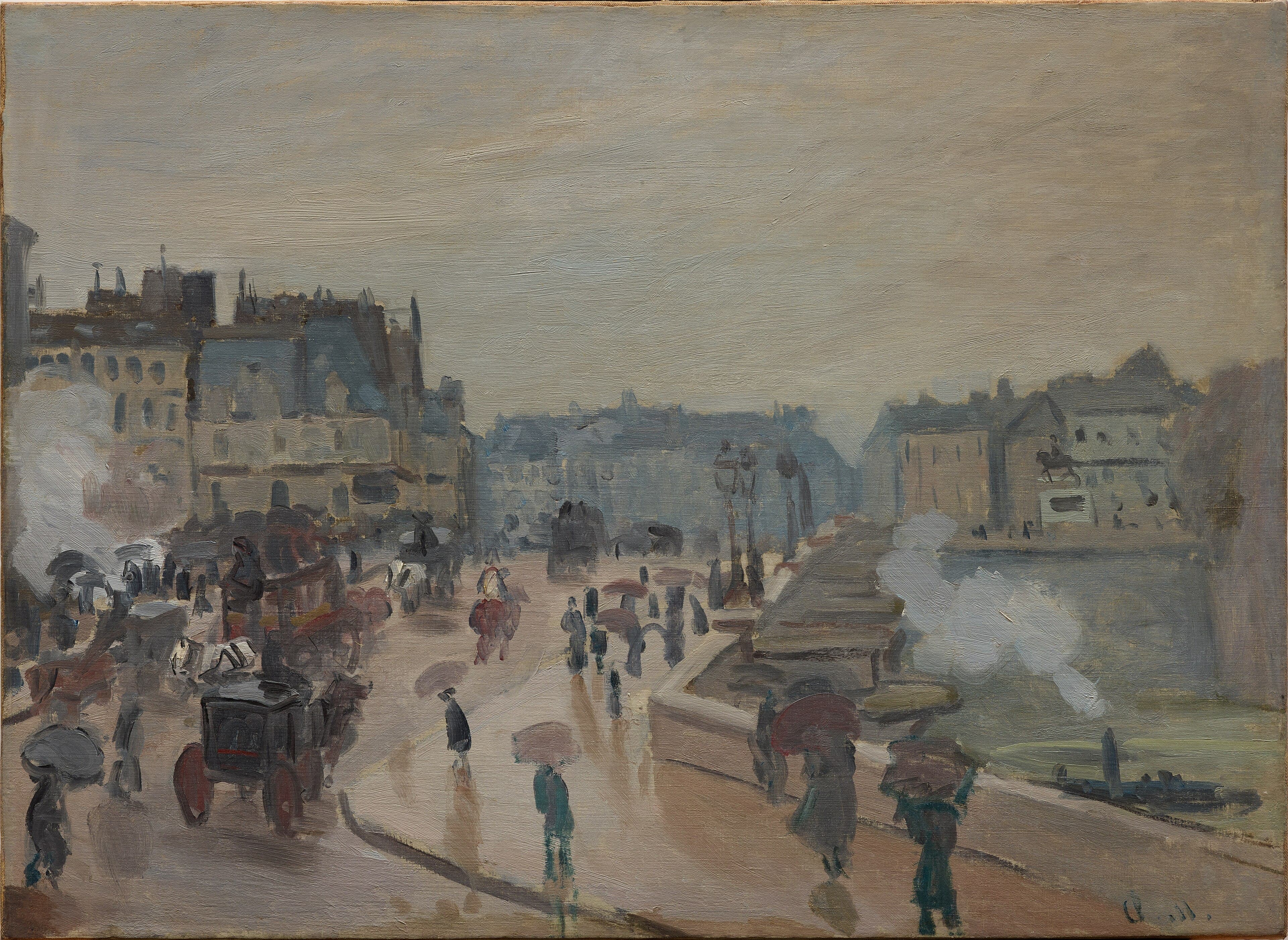
The Pont Neuf
Claude Monet · 1871
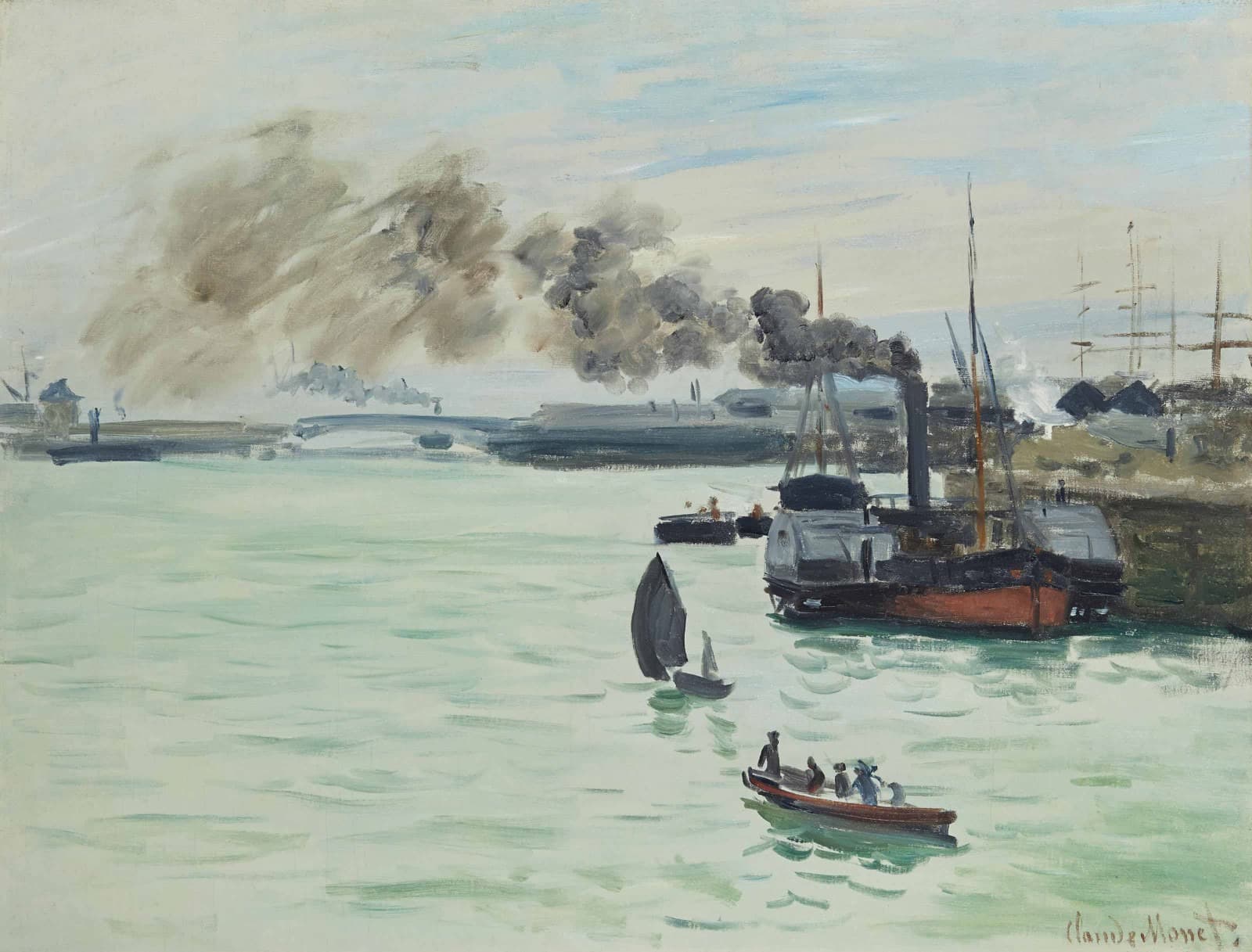
View of a Port
Claude Monet · 1871
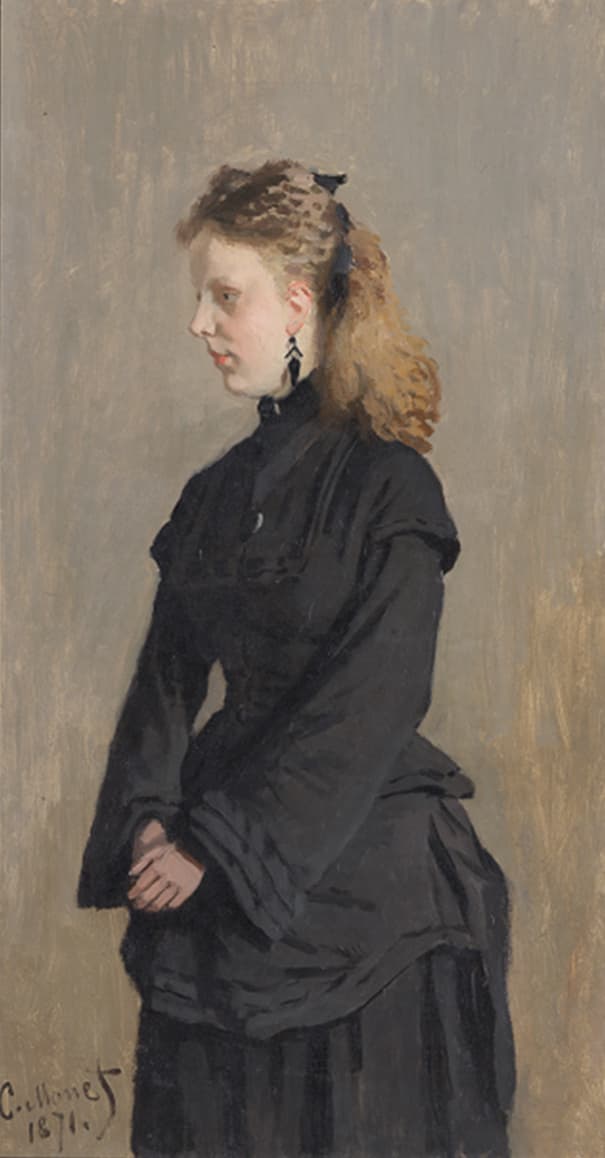
Portrait of Guurtje van de Stadt
Claude Monet · 1871
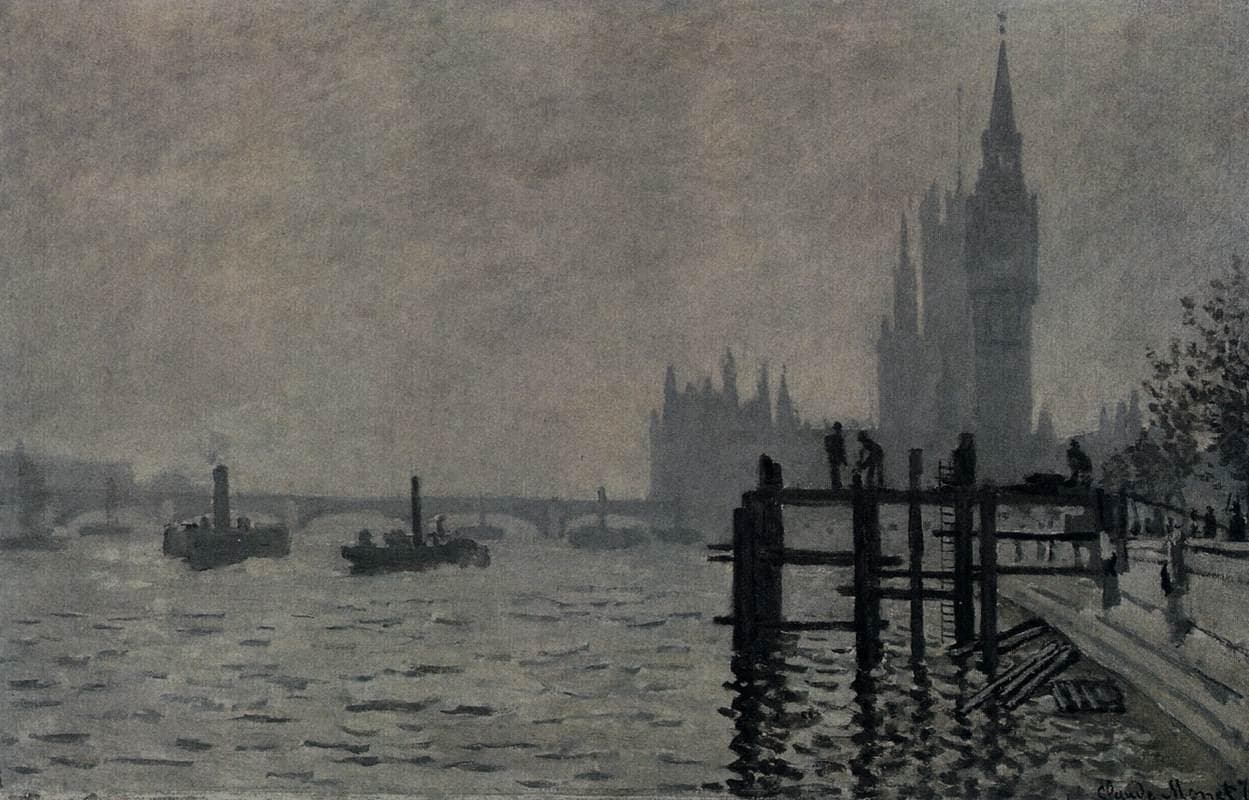
The Thames below Westminster
Claude Monet · c. 1871
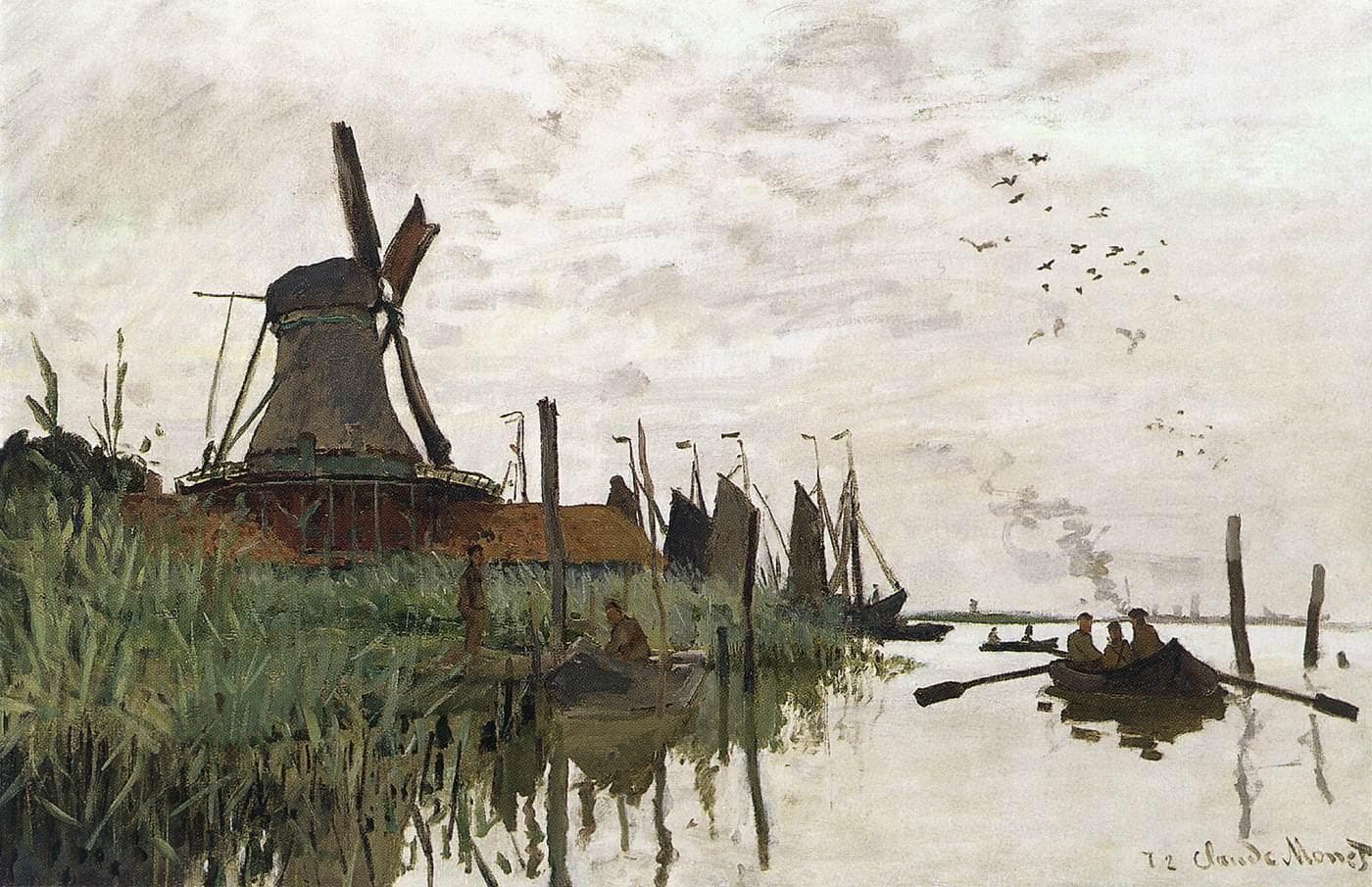
Windmill and Boats near Zaandam
Claude Monet · 1871
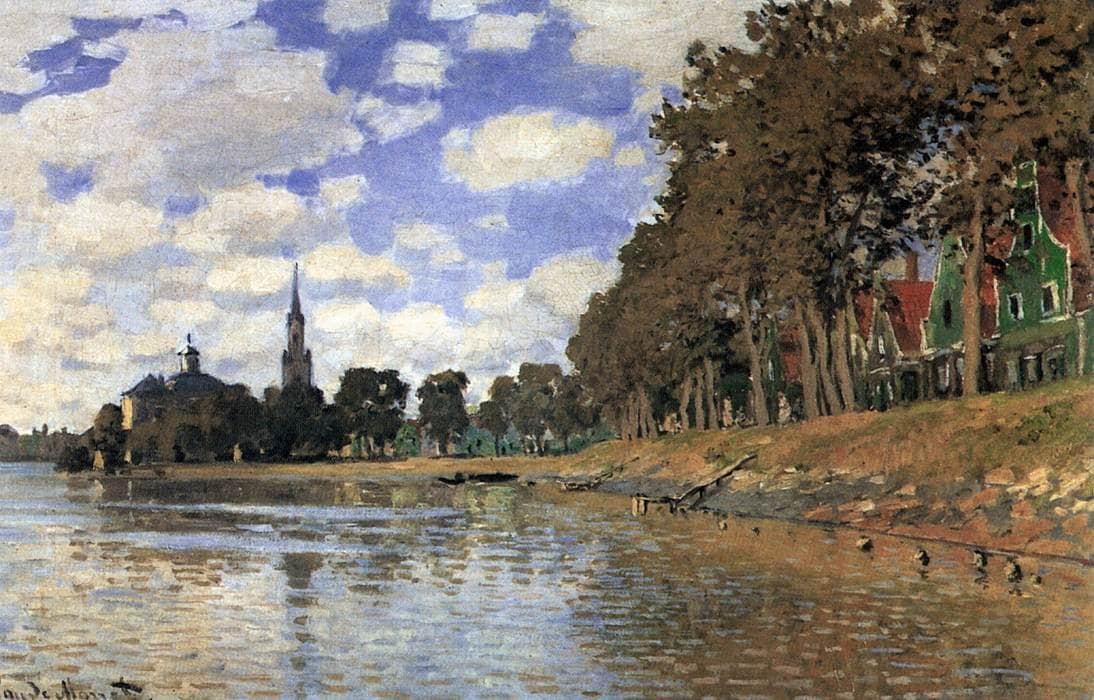
Zaandam
Claude Monet · 1871
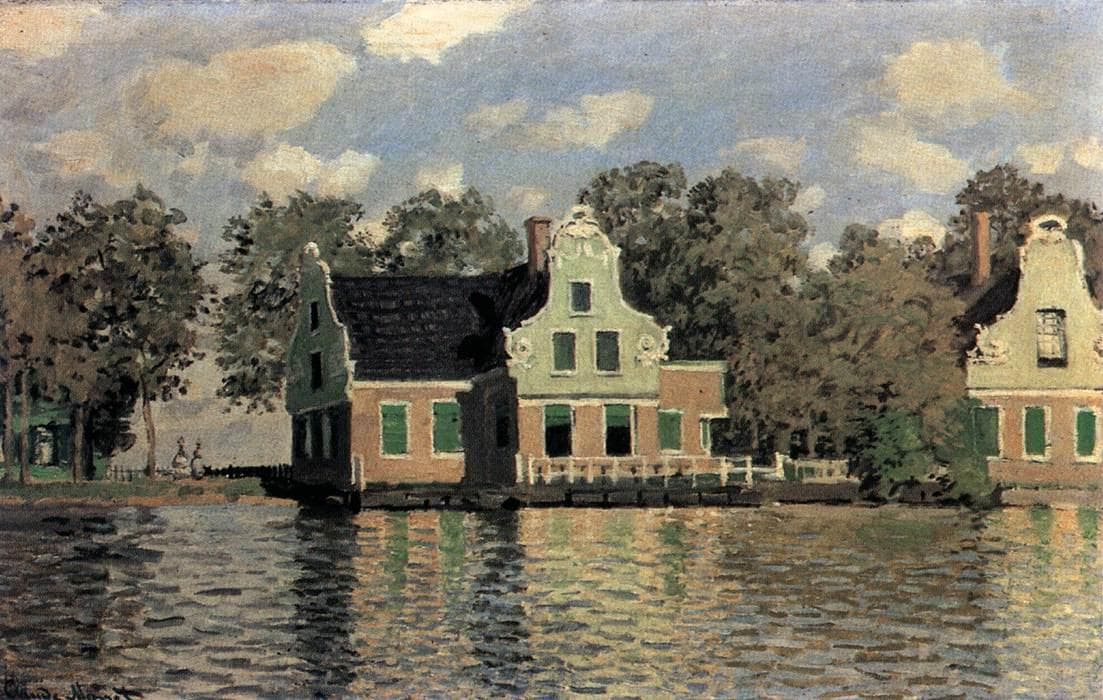
Houses on the Zaan River at Zaandam
Claude Monet · 1871–72
Kindred works
You may also study
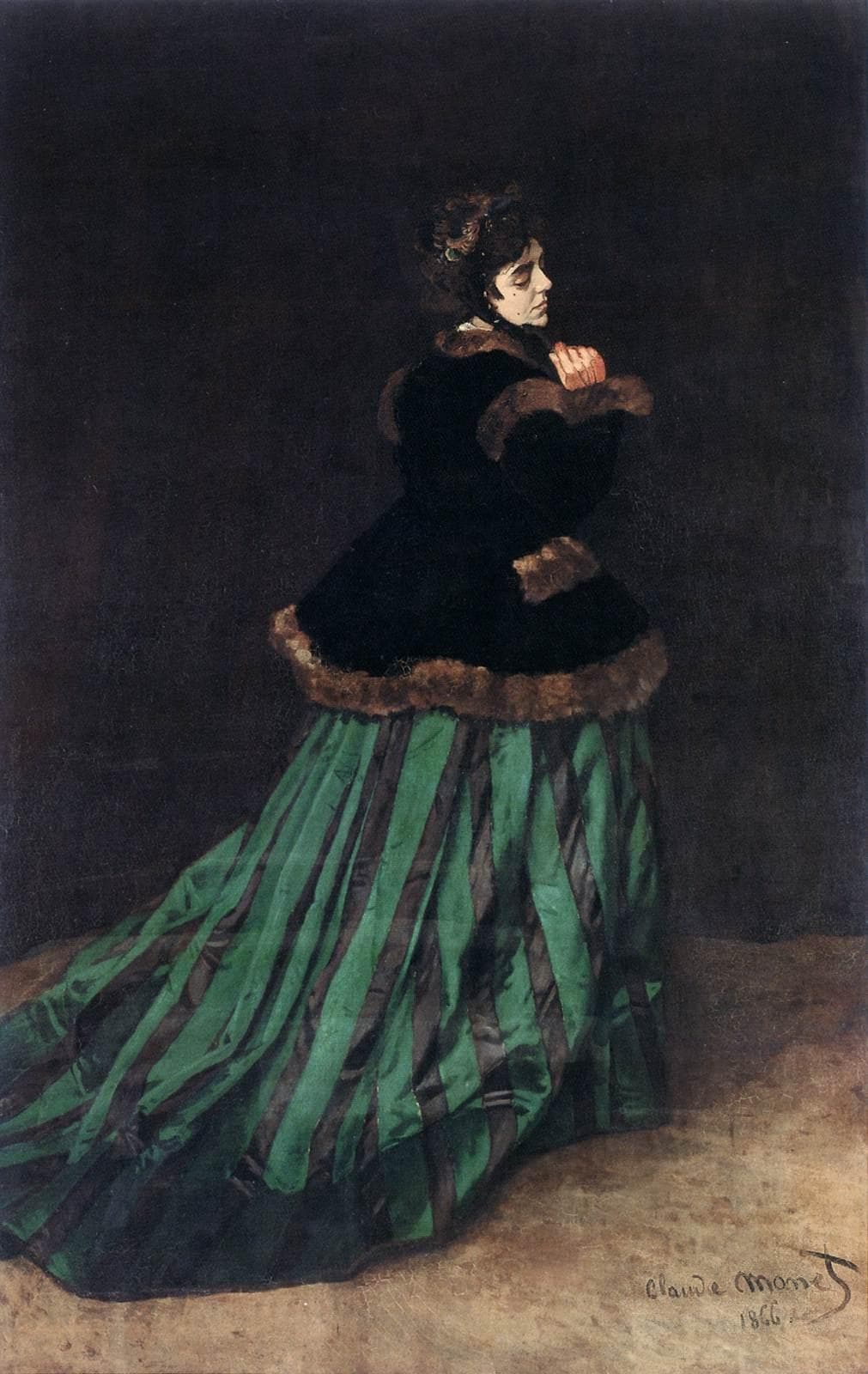
Camille (The Woman in the Green Dress)
Claude Monet · 1866
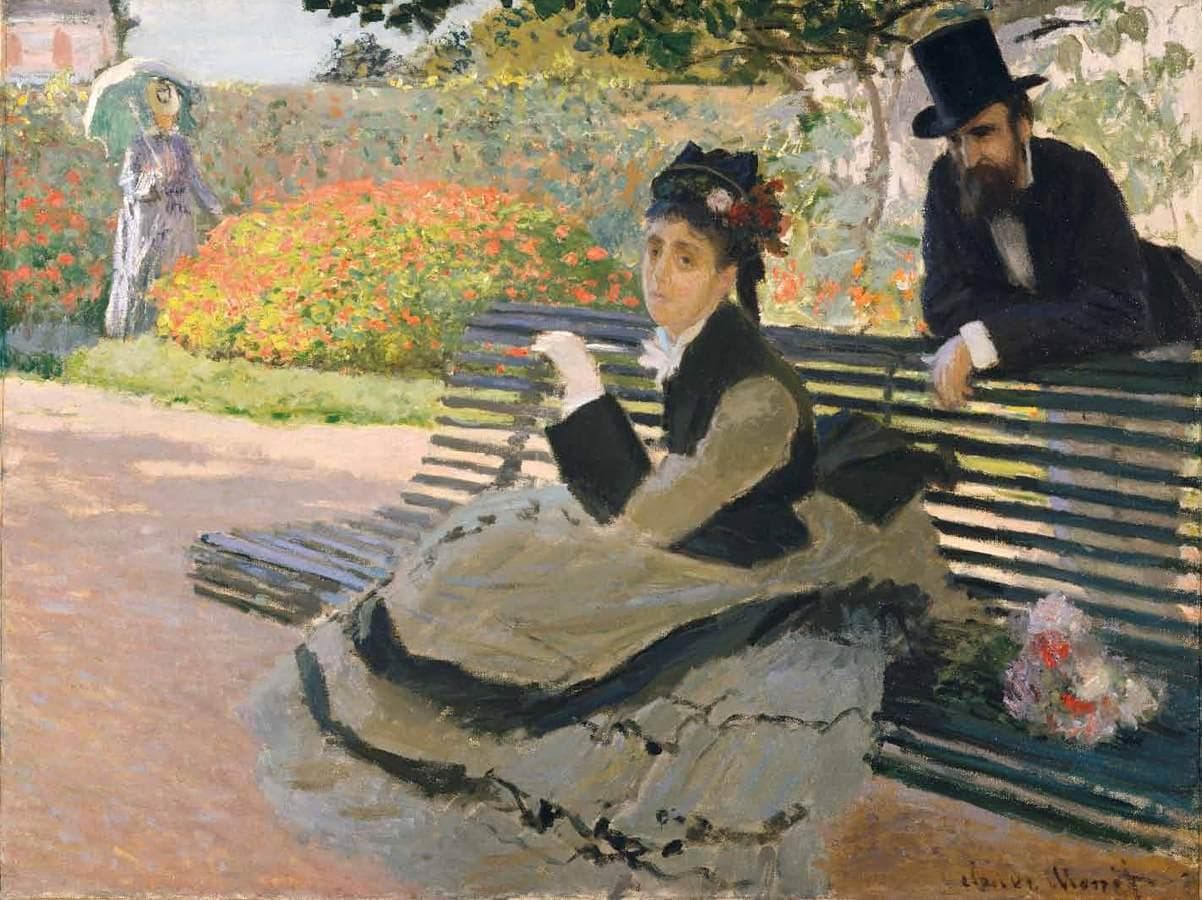
Camille Monet on a Garden Bench
Claude Monet · 1873
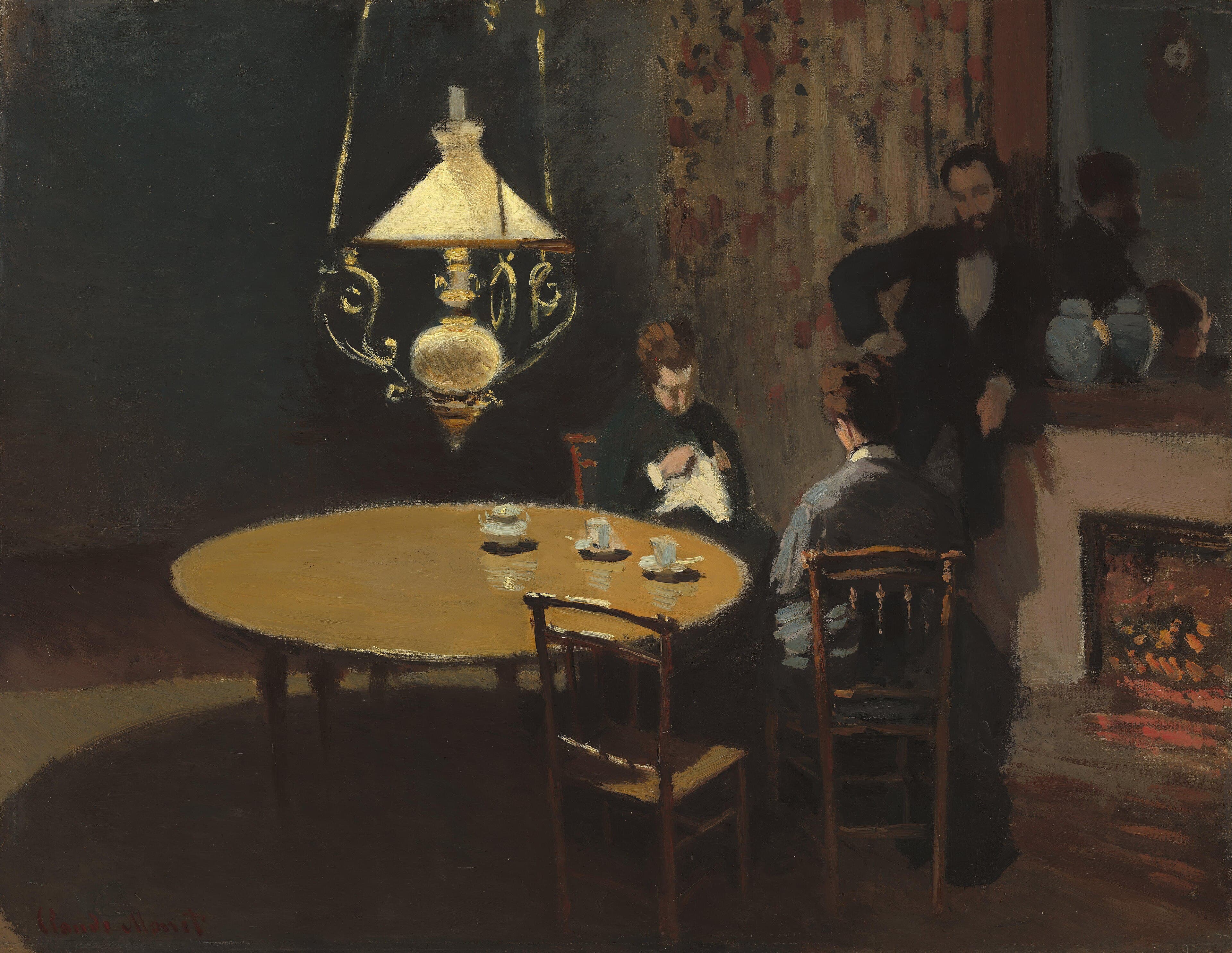
Interior, after Dinner
Claude Monet · 1868–69
The Thames below Westminster
Claude Monet · c. 1871
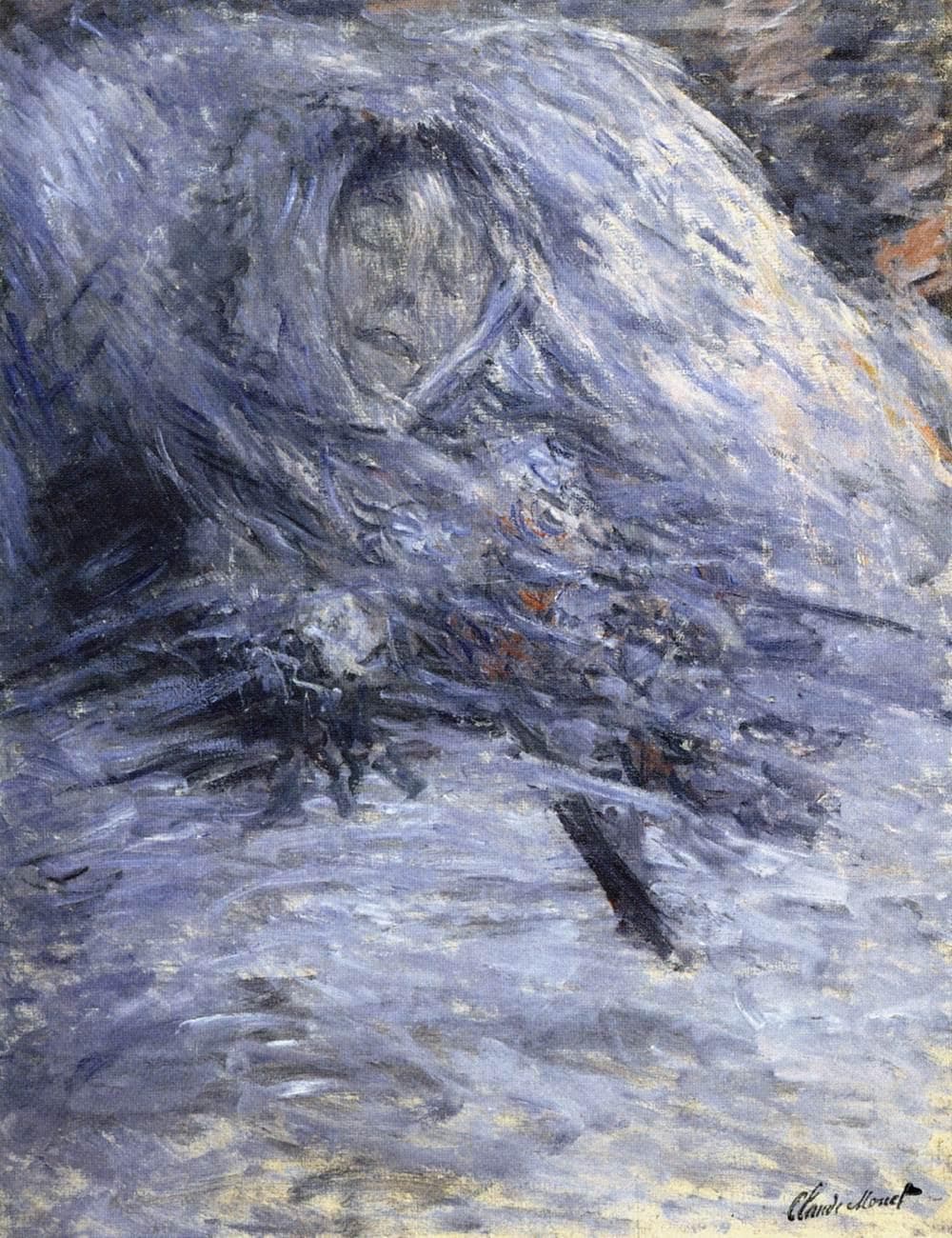
Camille Monet on Her Deathbed
Claude Monet · 1879
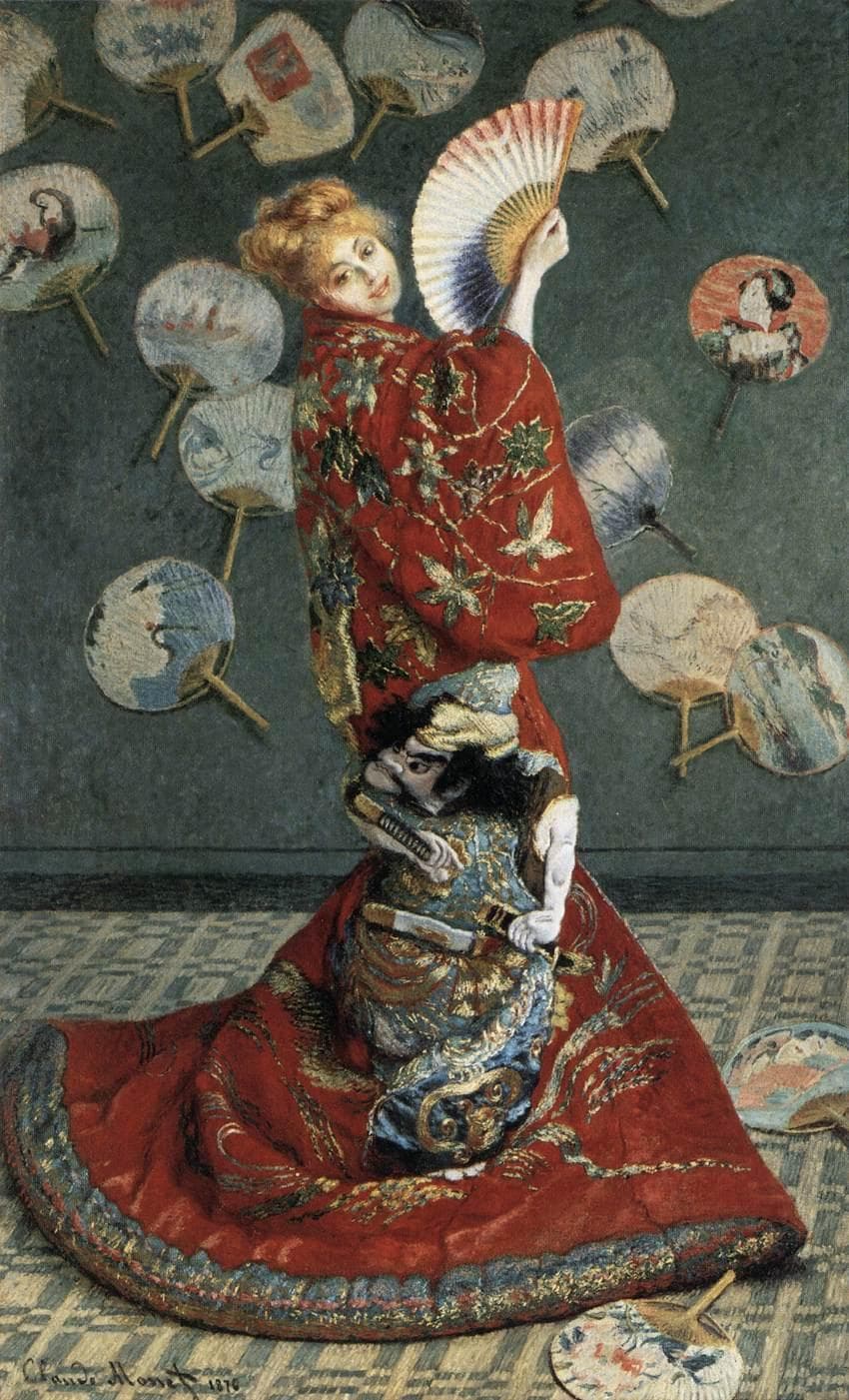
La Japonaise (Camille Monet in Japanese Costume)
Claude Monet · 1876

Venus de Milo
Alexandros of Antioch · c. 150–125 BC

The Thinker
Auguste Rodin · Modeled 1880–82; enlarged 1902–03; this cast 1904