Impressionism
Storm off Belle-Île
Claude Monet, 1886
Storm off Belle-Île (Tempête, côtes de Belle-Île) is an 1886 painting by Claude Monet of a gale whipping the sea into white foam around dark rocks off the Brittany coast. The 65.4 × 81.5 cm canvas (Wildenstein 1116) is in the Musée d'Orsay, Paris.
- Artist
- Claude Monet
- Date
- 1886
- Medium
- Oil on canvas
- Dimensions
- 65.4 × 81.5 cm
- Collection
- Musée d'Orsay, Paris, France
- Movement
- Impressionism
- Catalogue
- Wildenstein 1116
More at Monet at the Musée d'Orsay
What you are looking at
Almost the whole canvas is foam. The sea off Belle-Île has been beaten into a churning field of grey, white and pale lilac, and the horizon has vanished into spray and low cloud. Dark rocks break through at three points: a long reef across the upper middle, buried in exploding surf, its rust-brown stone visible in patches; a black-blue mass rising at the far left edge; and a single pointed stack standing up from the water in the lower center like a hooded figure. Smaller rocks scatter across the foreground and middle distance like debris, each wrapped in its own collar of foam.
Monet paints the water with long, looping strokes that follow the swirl of the current, laid wet into wet so the colors blur. The paint is thick, especially in the breaking waves along the reef, where white is dragged over grey to catch the light as real relief. The rocks are done in dark blue, violet and rust, never pure black, and their edges are softened where spray washes over them. Look at the upper sky: it is the same grey-white as the sea, so you cannot say where water ends and air begins. That loss of a horizon is what makes the picture feel like a storm rather than a view. The signature and date, "Claude Monet 86," are at lower left.
Belle-Île, autumn 1886
In September 1886 Monet traveled to Belle-Île-en-Mer, an island off the south coast of Brittany, planning a short stay. He remained until late November, lodging in the hamlet of Kervilahouen and working on the wild western shore, the Côte Sauvage, in rain and wind. In letters to Alice Hoschedé he described the coast as sinister but superb, a harsher place than the Channel cliffs he knew from the Normandy coast. On the island he also met the critic Gustave Geffroy, who became his friend and first biographer. Monet had to tie down his easel and canvases against the wind, and the local fisherman Poly carried his equipment.
How it was painted
The canvas is a standard size, about 65 by 81 centimeters, and Monet painted it out of doors on the cliffs, in conditions that made every session a struggle. The handling is fast and physical: loaded strokes of white swept in curves, then darker blues and violets worked in for the troughs and the rocks. The palette is narrow, almost monochrome, which makes the few warm notes in the reef and the rocks count for more. The single stack in the foreground is the darkest, most solid shape on the canvas, and it is placed slightly right of center, so that the composition pivots around it. Everything else seems to move; it alone stands still.
The Belle-Île pictures
Monet came back with several dozen canvases, many showing the same rocks under different weather, a working method that anticipated the series of the 1890s, such as the haystacks. The Orsay holds another, The Rocks of Belle-Île, the Wild Coast, and the group includes The "Pyramides" at Port-Coton in Moscow, where the needles of rock stand in calmer, bluer water. Compare the Normandy seas of a few years earlier, such as Rough Sea at Étretat and Stormy Sea, where the horizon still holds the composition together.
Meaning
The picture is about the force of weather on the sea. By removing the horizon and filling the canvas with foam, Claude Monet leaves only the dark rocks as fixed points, and the viewer has nowhere stable to stand. Writers have compared these canvases to Romantic storm painting, but Monet's interest was less in the sublime than in the effect: what a gale does to color and light.
Where to see it
Storm off Belle-Île is in the Musée d'Orsay in Paris. It was formerly owned by Gaston Migeon, a curator at the Louvre. See our guide to Monet at the Musée d'Orsay.
Questions & answers
Where is Monet's Storm off Belle-Île?
It is in the Musée d'Orsay in Paris, under the title Tempête, côtes de Belle-Île. The canvas is catalogued as Wildenstein 1116 and measures 65.4 by 81.5 centimeters. The Orsay also owns another of Monet's Belle-Île seascapes, The Rocks of Belle-Île, the Wild Coast.
When did Monet paint Storm off Belle-Île?
Monet painted it in autumn 1886, during a stay on Belle-Île-en-Mer off Brittany that lasted from September to late November. The canvas is signed and dated '86 at lower left. He worked on the island's exposed western shore, the Côte Sauvage.
What is Storm off Belle-Île about?
It is about the force of weather on the sea. Monet removes the horizon and fills the canvas with swirling foam, leaving only dark rocks as fixed points. The Belle-Île pictures are among his most dramatic, and they prepared the way for his series paintings of the 1890s.
Did Monet paint other views of Belle-Île?
Yes, several dozen. He painted the same rocks and coves of the Côte Sauvage repeatedly in changing weather, from calm blue days to storms. Examples include The Rocks of Belle-Île in the Musée d'Orsay and The Pyramides at Port-Coton in the Pushkin Museum, Moscow.
More by the artist
Claude Monet

Bridge over a Pond of Water Lilies
Claude Monet · 1899

Woman with a Parasol – Madame Monet and Her Son
Claude Monet · 1875

Sunset in Venice
Claude Monet · 1908–12

La Grenouillère
Claude Monet · 1869

Beach in Pourville
Claude Monet · 1882

Springtime
Claude Monet · 1872

Boating on the River Epte
Claude Monet · 1890

The Seine at Asnières (Hermitage)
Claude Monet · 1873
Also painted in 1886
The same year
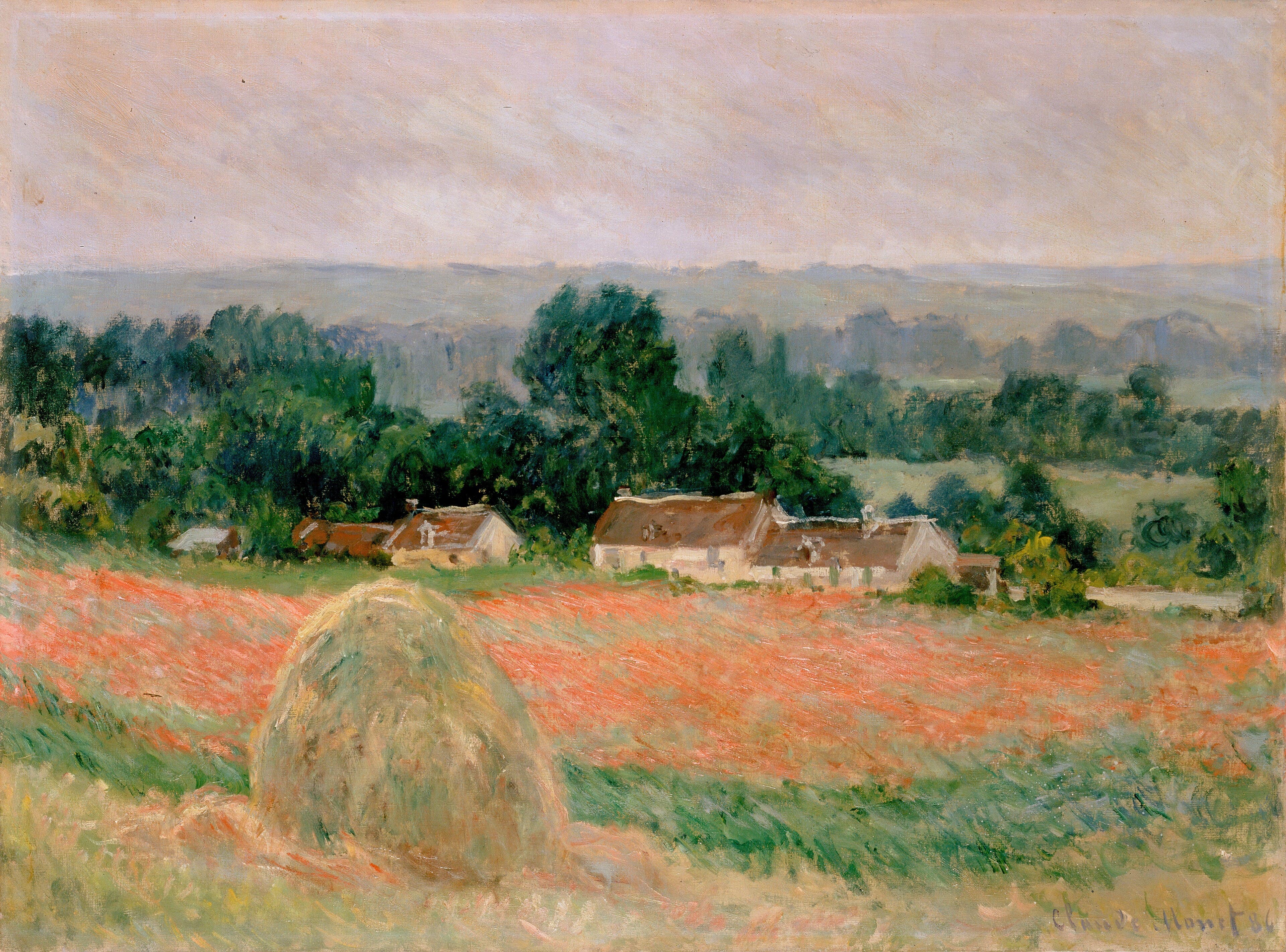
Haystack at Giverny
Claude Monet · 1886
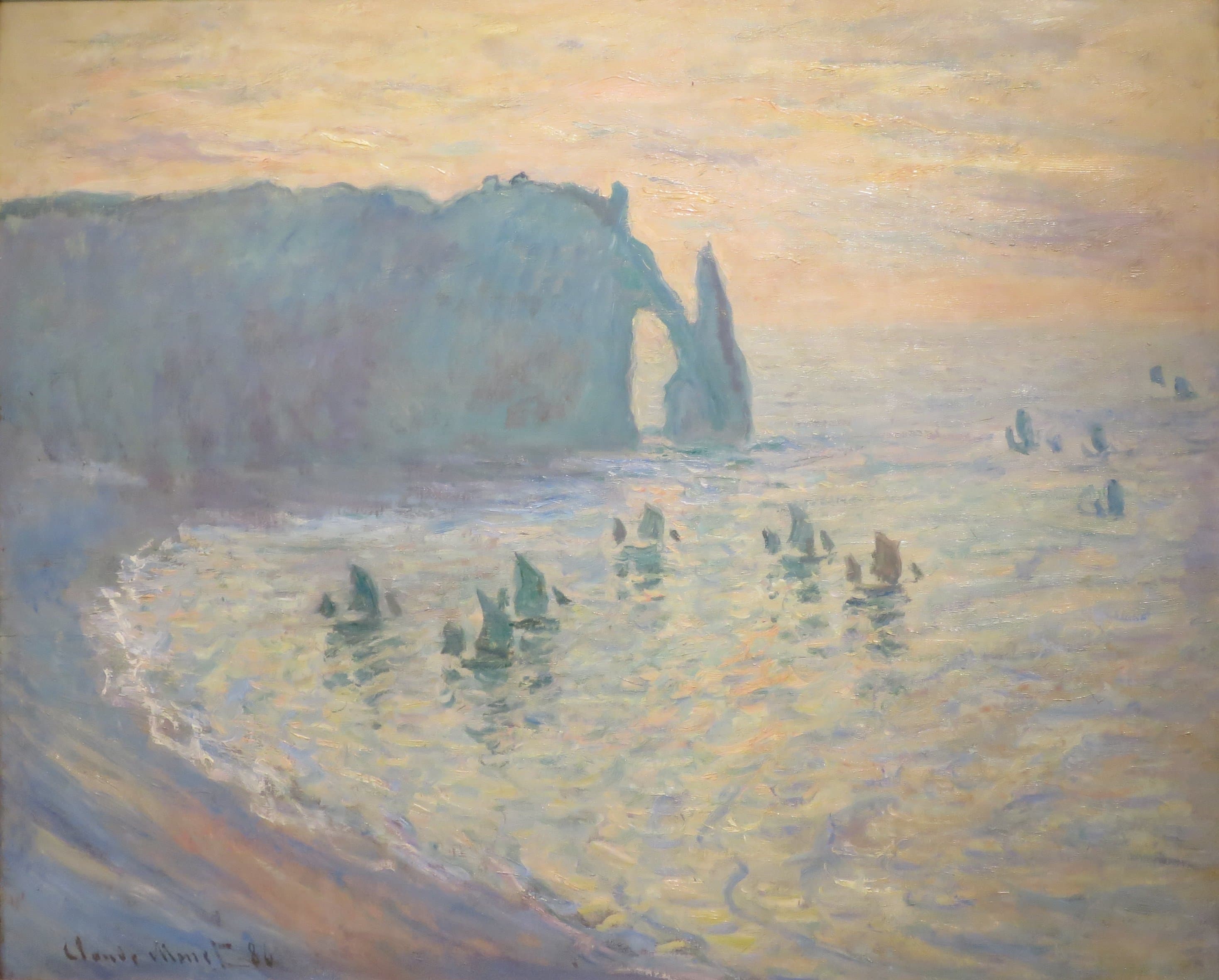
The Cliffs at Étretat
Claude Monet · 1886
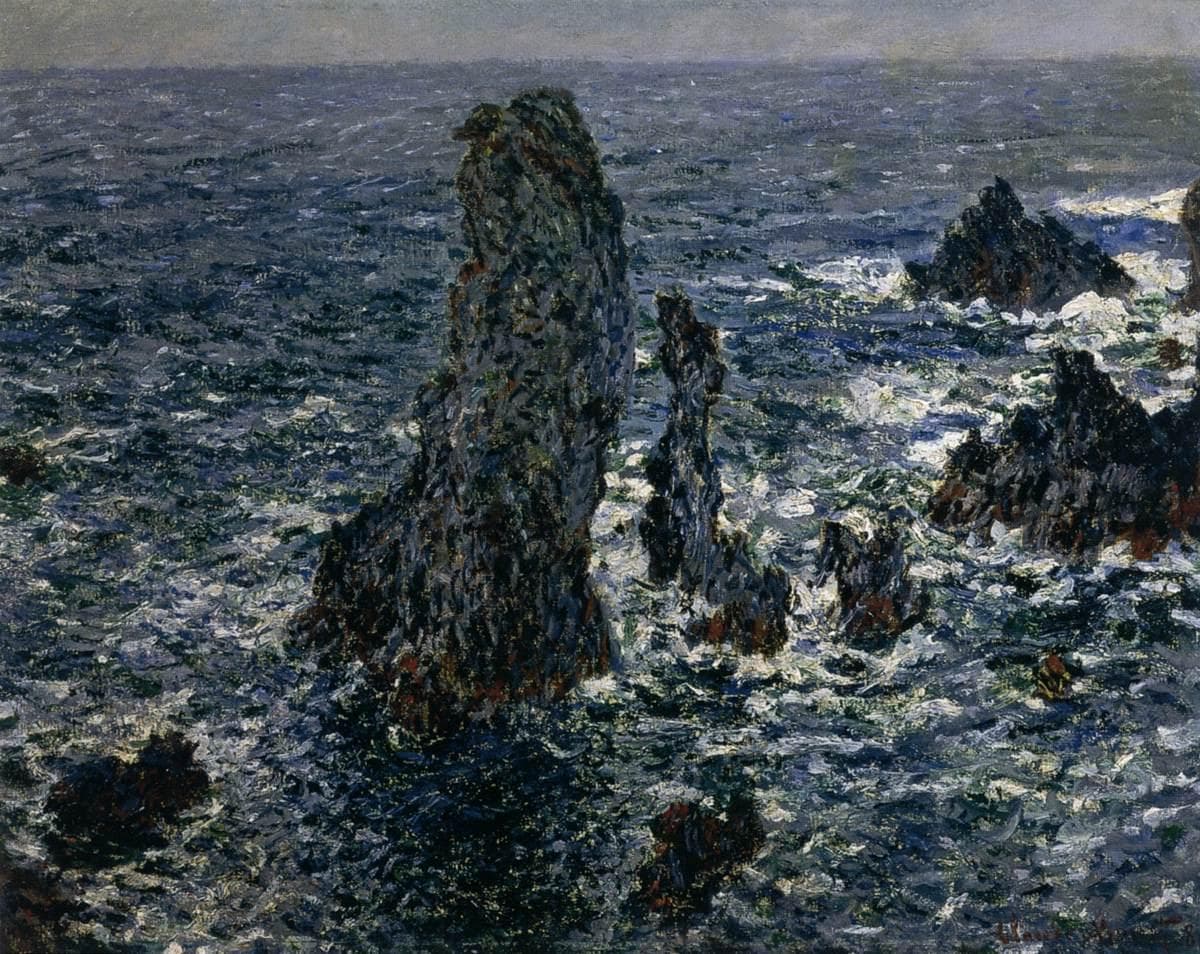
The Pyramides at Port-Coton, Rough Sea
Claude Monet · 1886
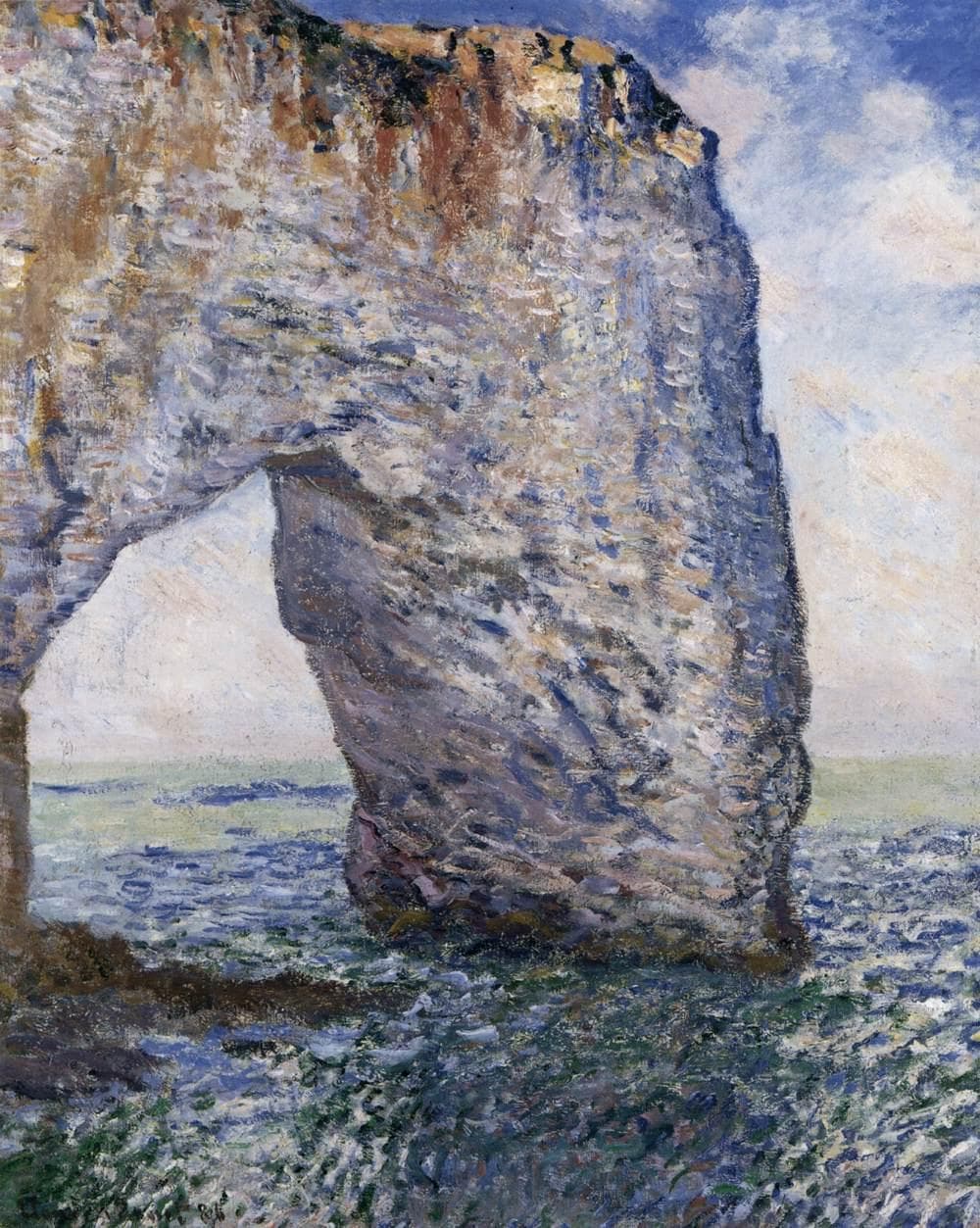
The Manneporte near Étretat
Claude Monet · 1886
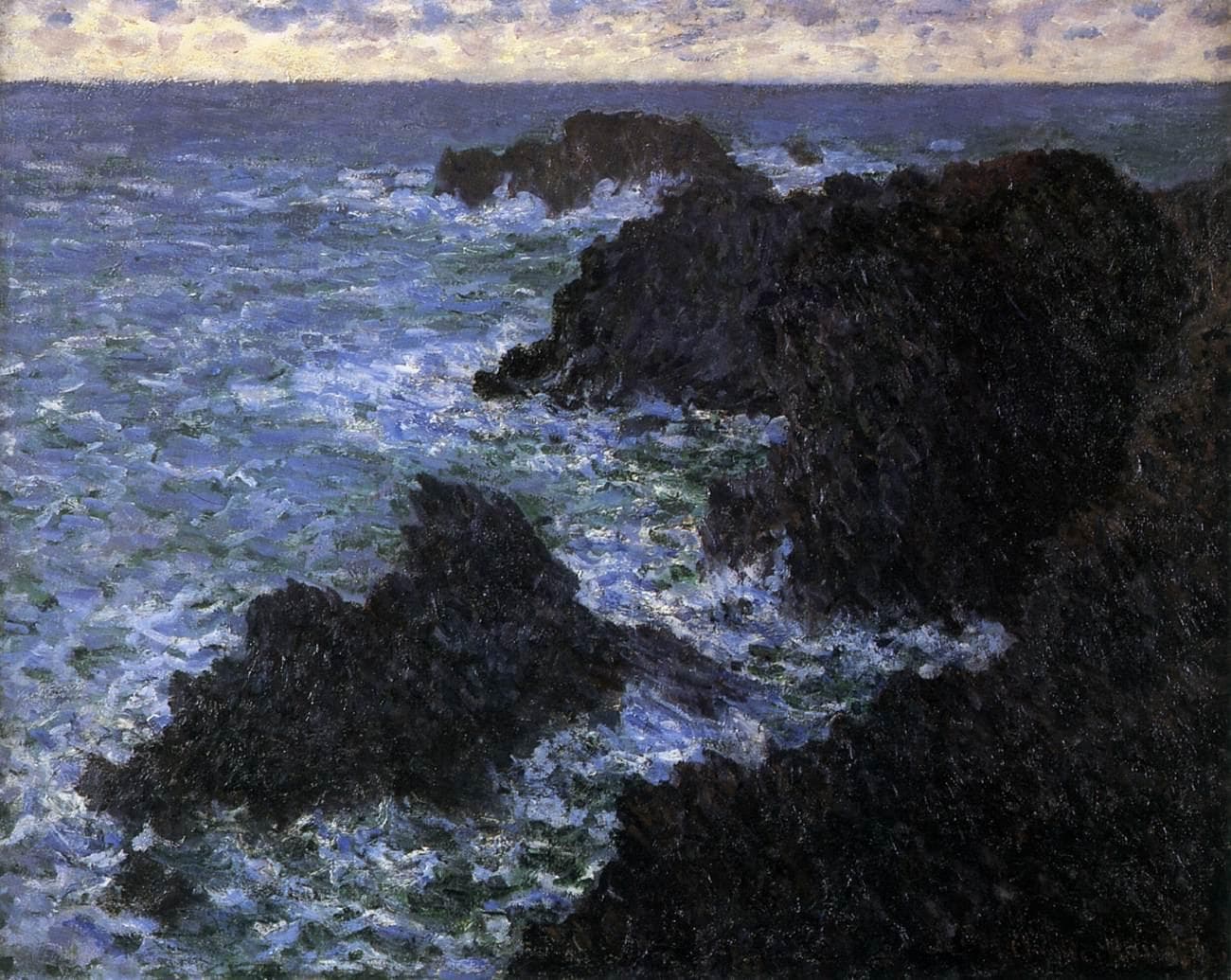
The Rocks of Belle-Île, the Wild Coast
Claude Monet · 1886
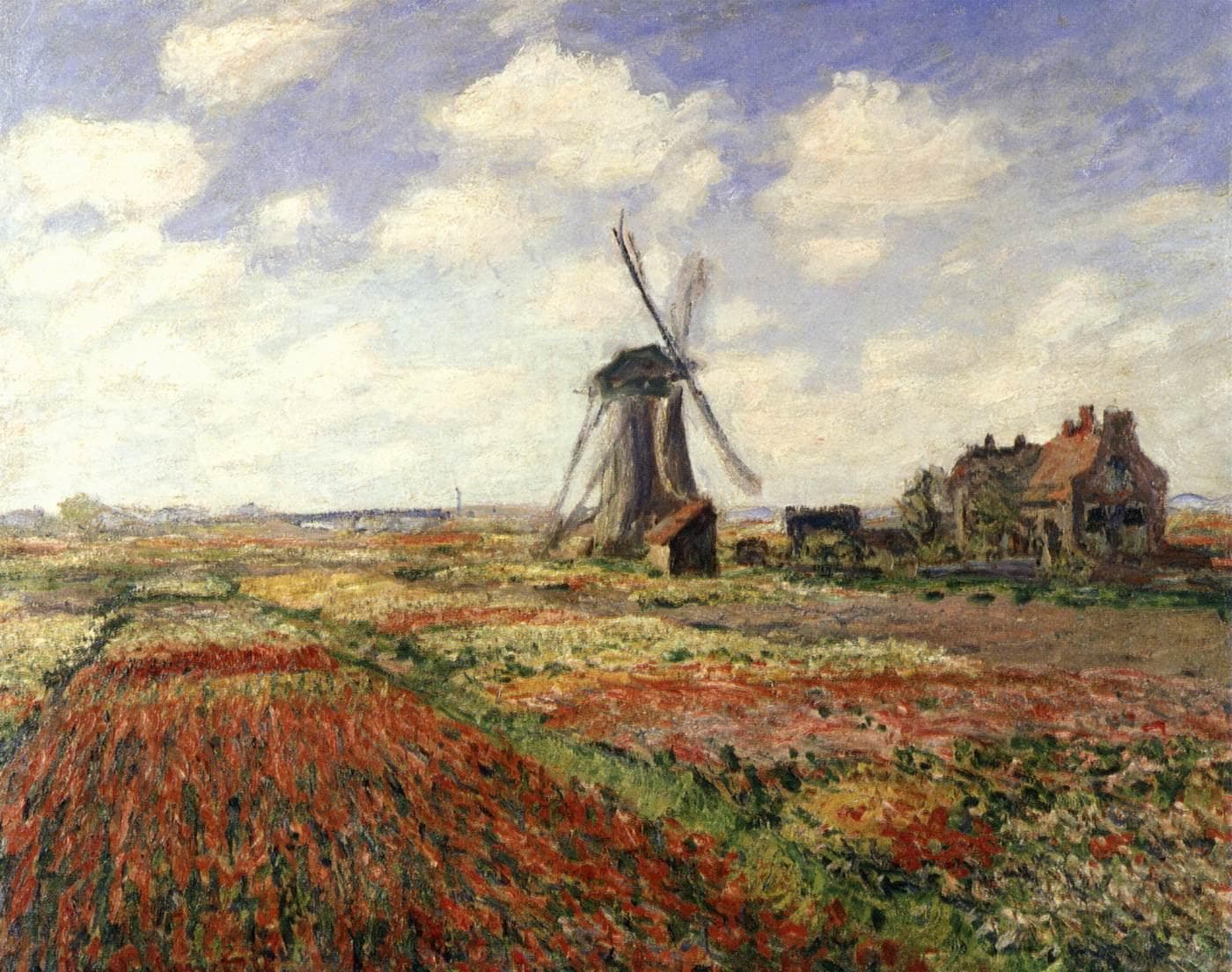
Tulip Fields in Holland
Claude Monet · 1886
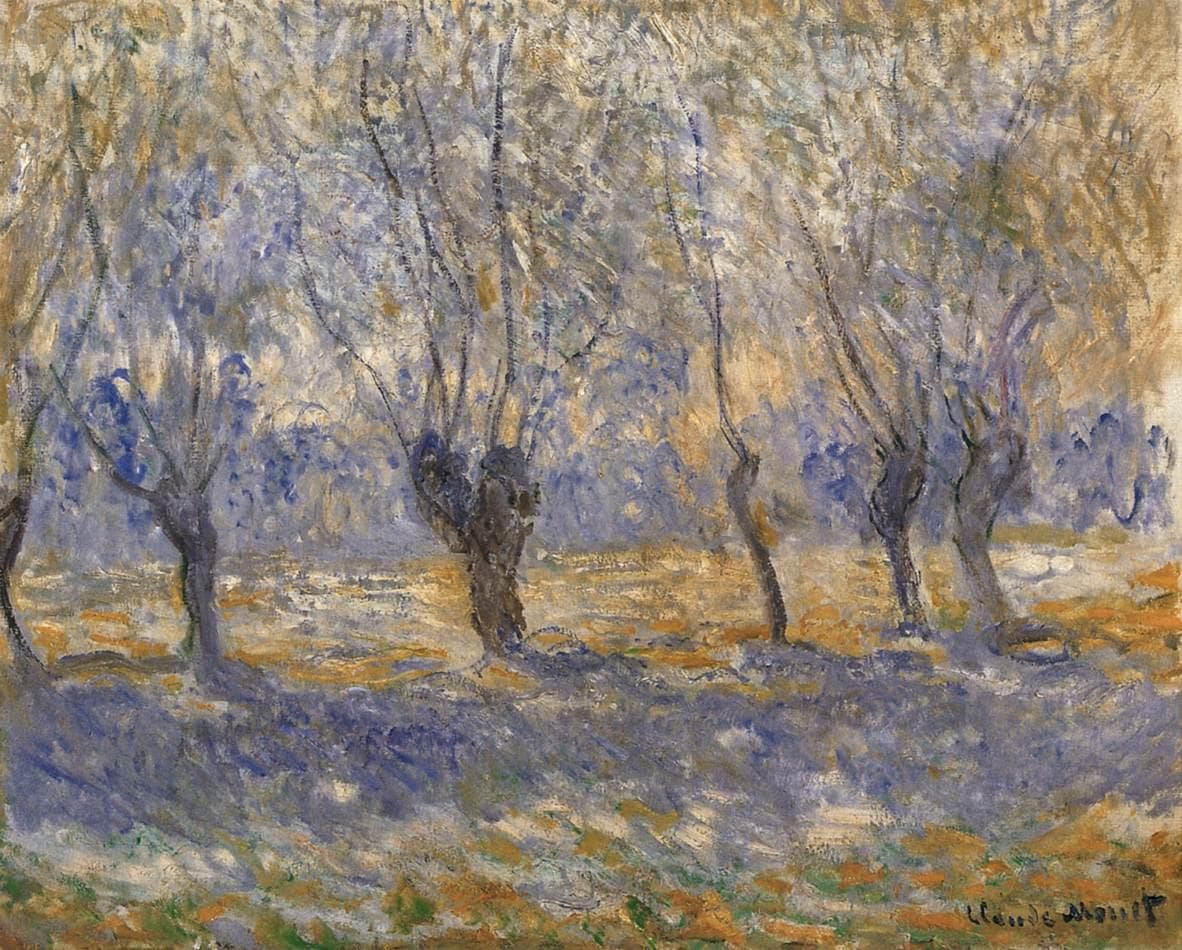
Willows at Giverny
Claude Monet · 1886
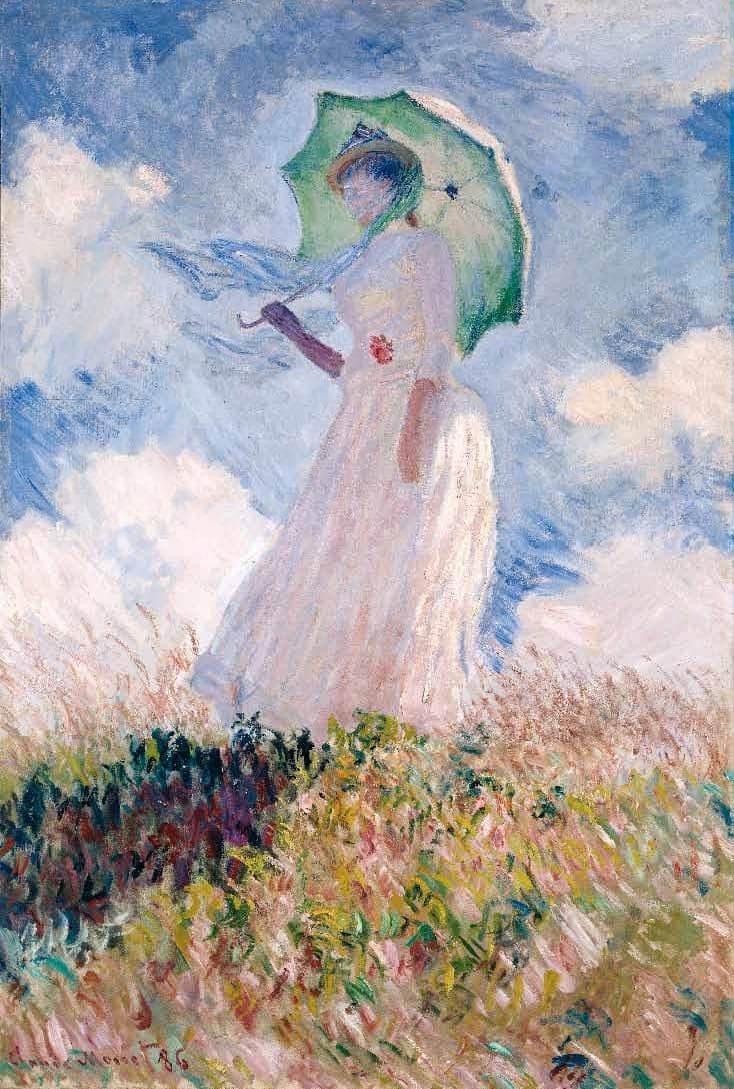
Woman with a Parasol, Facing Left
Claude Monet · 1886
Kindred works
You may also study
The Rocks of Belle-Île, the Wild Coast
Claude Monet · 1886
The Pyramides at Port-Coton, Rough Sea
Claude Monet · 1886
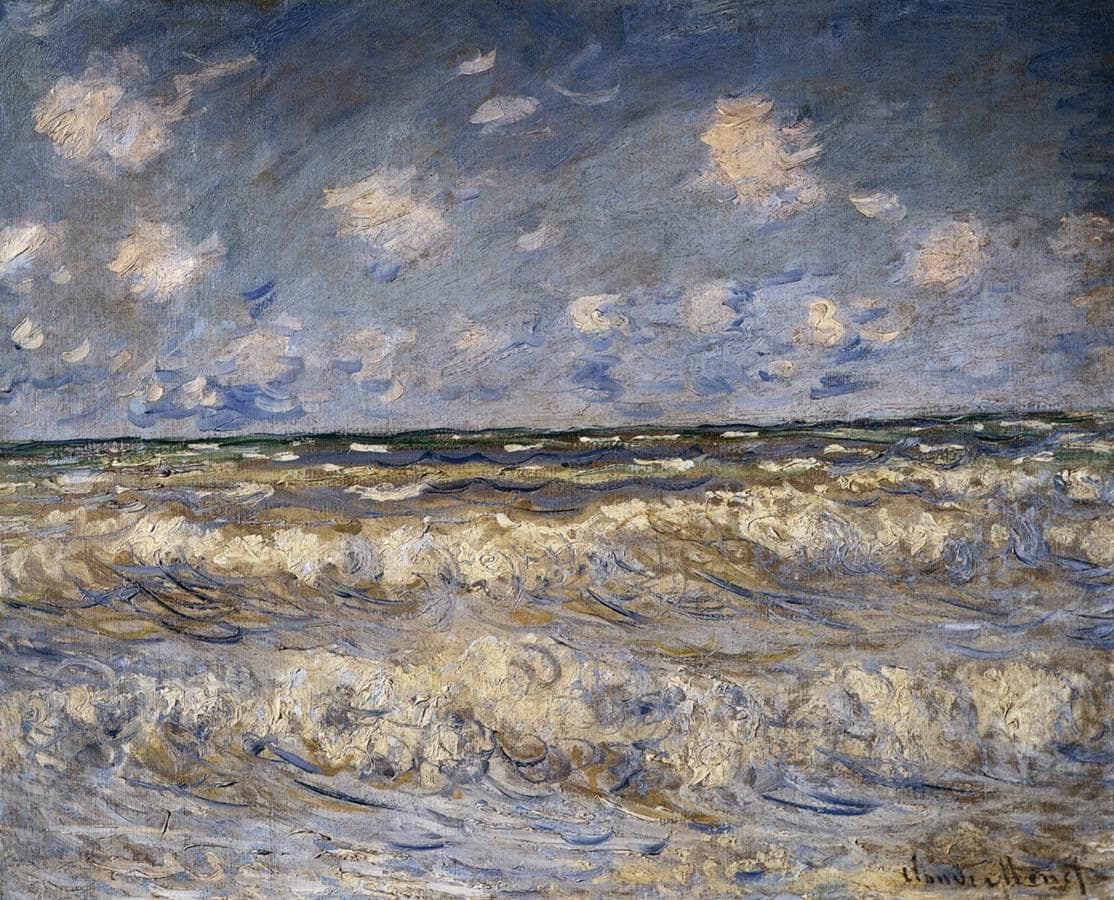
Stormy Sea
Claude Monet · c. 1881–84
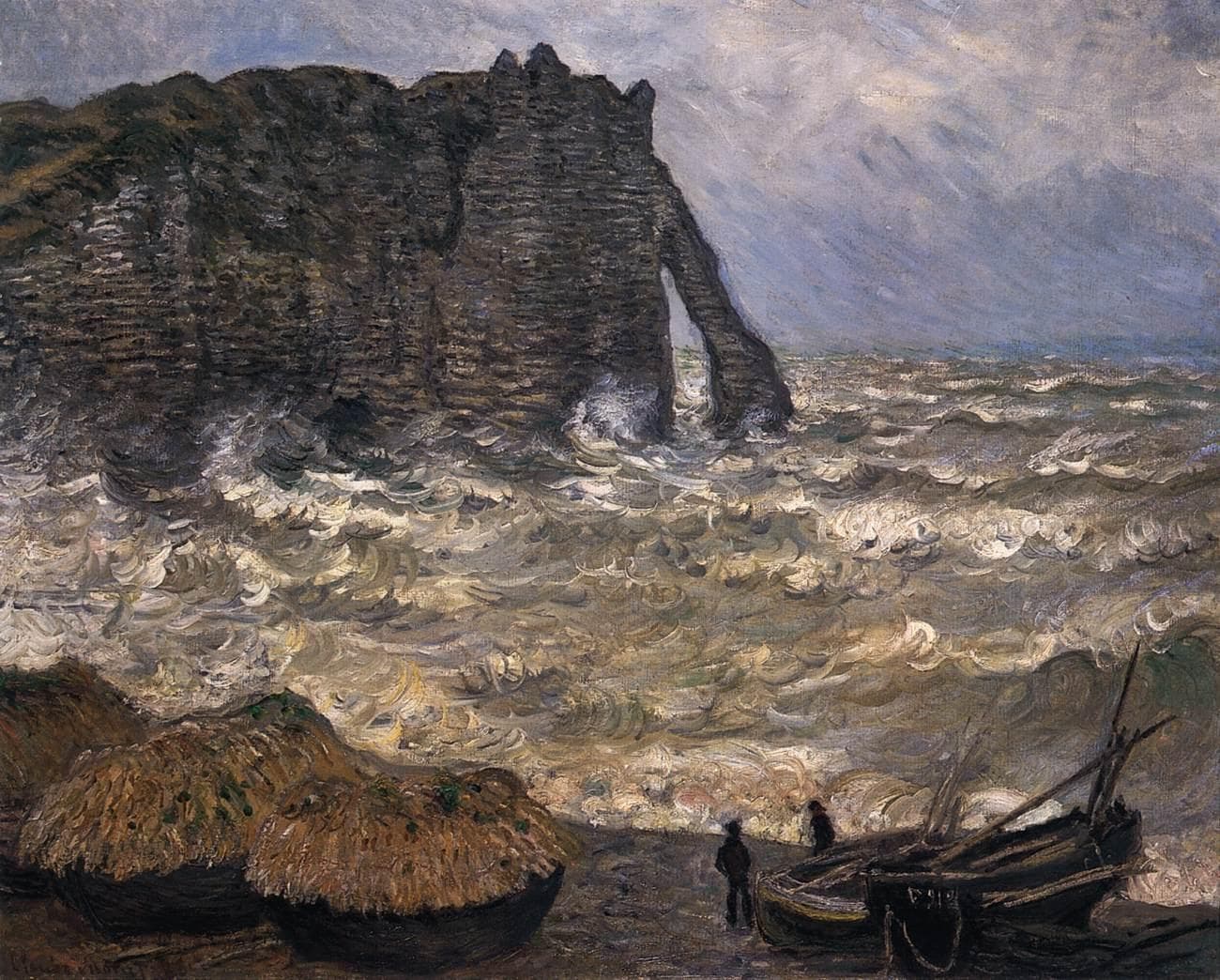
Rough Sea at Étretat
Claude Monet · 1883
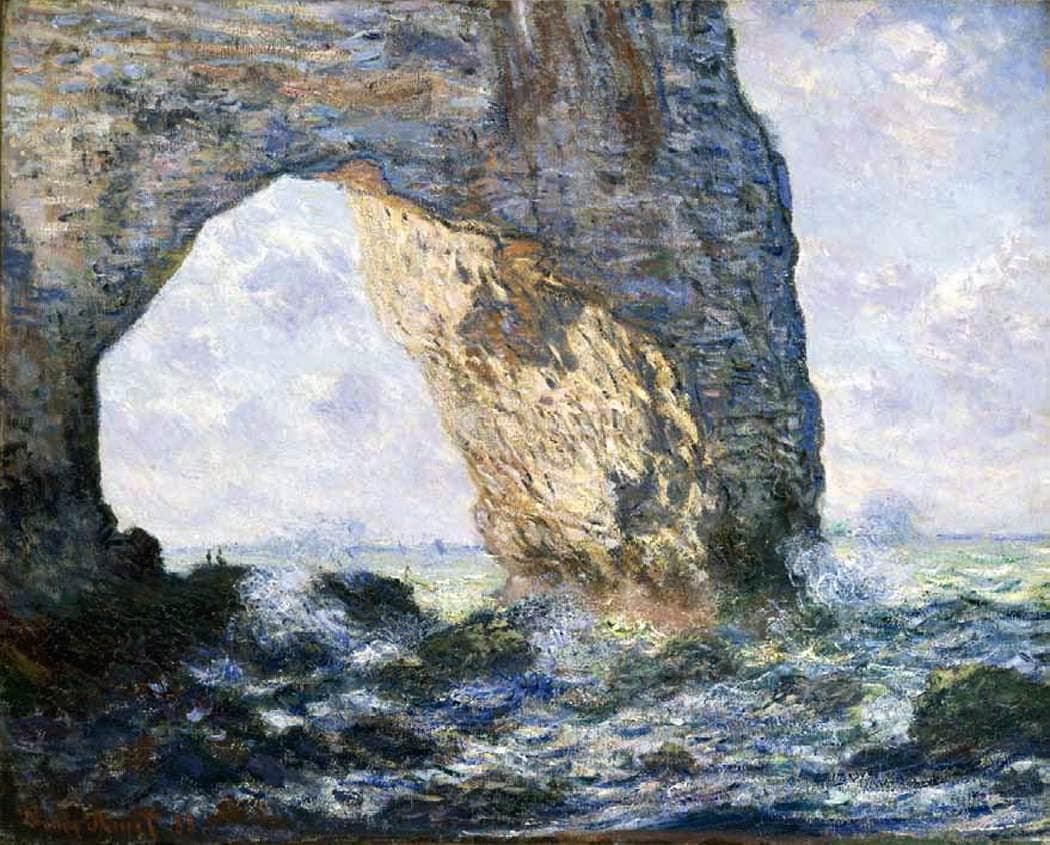
The Manneporte (Étretat)
Claude Monet · 1883

The Scream
Edvard Munch · 1893

Ophelia
John Everett Millais · 1851–52

The Great Wave off Kanagawa
Katsushika Hokusai · c. 1830–32