Image: Van Gogh Museum, Amsterdam (via Google Arts & Culture) · Public domain · via Wikimedia Commons
The Japanese Bridge
Claude Monet, 1919–24
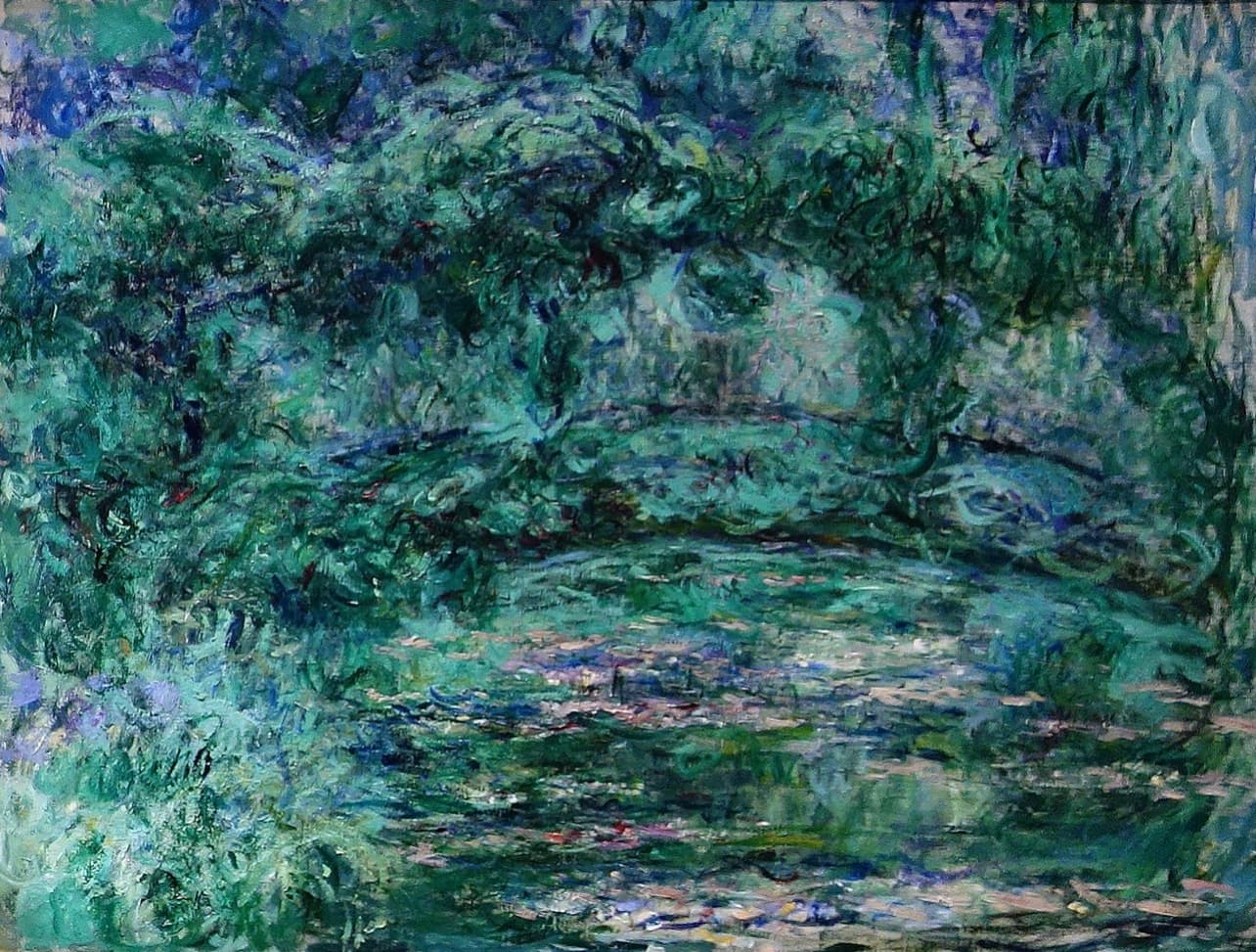
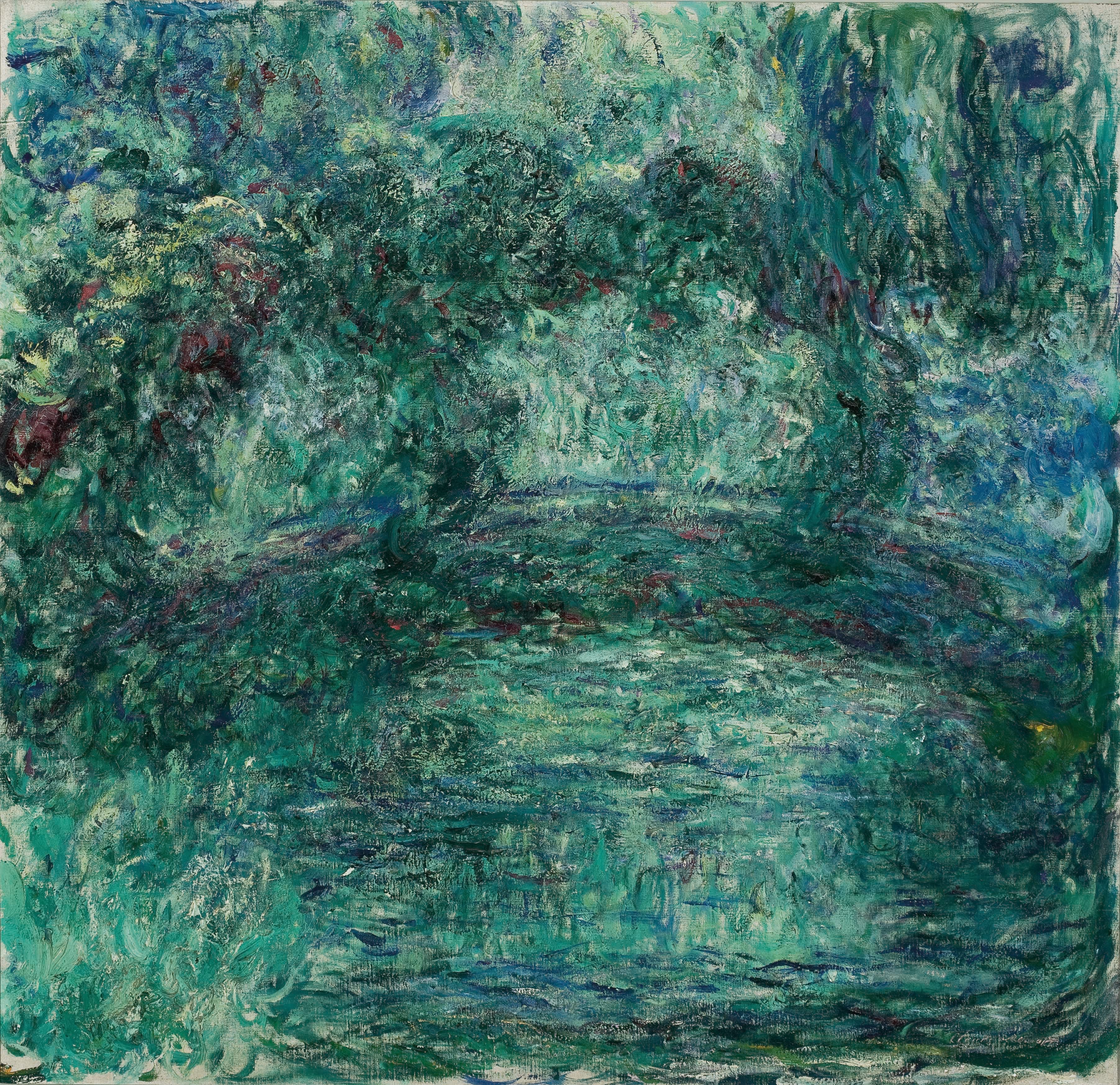
The Japanese Bridge is a late Claude Monet painting of his Giverny footbridge, dated 1919–24, in muted blue-green with a rail flecked in red. It is catalogued in the Van Gogh Museum, Amsterdam, where it hangs among Van Gogh's contemporaries.
- Artist
- Claude Monet
- Date
- 1919–24
- Medium
- Oil on canvas
- Collection
- Van Gogh Museum, Amsterdam, Netherlands
- Movement
- Impressionism
- Catalogue
- Wildenstein 1921a
- Nature & Landscape
- Water & Sea
The Japanese Bridge (Le Pont japonais) is a late painting by Claude Monet of the footbridge over the lily pond in his garden at Giverny, catalogued by Wildenstein as no. 1921a and dated between 1919 and 1924. It is listed in the collection of the Van Gogh Museum in Amsterdam (inventory s284B/2010), which has shown it in its galleries devoted to Van Gogh and his contemporaries.
What you're looking at
The canvas is horizontal and almost monochrome: a soft, smoky range of sage, gray-green, blue-green and slate, with whitish highlights and a few accents of dark red. The bridge is a wide arch that spans nearly the whole width just above the middle. Its upper edge is a line of dark green, and along it run small dashes of crimson and brick red, the most noticeable color in the picture. Monet's bridge was painted green, so the red here is not a literal record; it reads as light catching the rail or as an accent that holds the eye on the curve.
Above the arch, the wisteria and trees are a cloud of short, crusty strokes in gray-green and white. In the center, just above the bridge, a paler patch of light glows through the foliage. Below, the pond is a broad oval of pale green-white, almost luminous, brushed with horizontal strokes. Around this bright center the water darkens to blue and slate toward the edges. A couple of dark flecks at upper right may be flowers or shadows. The signature appears faintly at the lower right.
The effect is hushed, like the garden on an overcast day or at dusk. The bridge and its reflection form a loose ring of darker color enclosing the brightest passage in the picture.
The late bridge pictures
In 1899 Monet painted his footbridge a dozen times from the same place, in clear greens, as in The Japanese Footbridge in Washington. Around 1918 he returned to it, now as a man in his late seventies with cataracts, and over the next six years produced about two dozen bridge canvases in an altogether freer style. Most stayed in his studio until his death in 1926 and passed to his son Michel. Some were later sold; others came to the Musée Marmottan Monet in Paris with Michel's bequest in 1966.
How it was painted
The surface is worked with a dry, loaded brush, the paint dragged and scumbled so that each stroke breaks over the texture of the layer beneath. That gives the foliage a granular, crumbly look. On the pond, longer, flatter strokes lie side by side. Color differences are small; Monet builds the picture through value, keeping the darkest tones for the arch and the corners and the lightest for the center of the water.
How this version differs
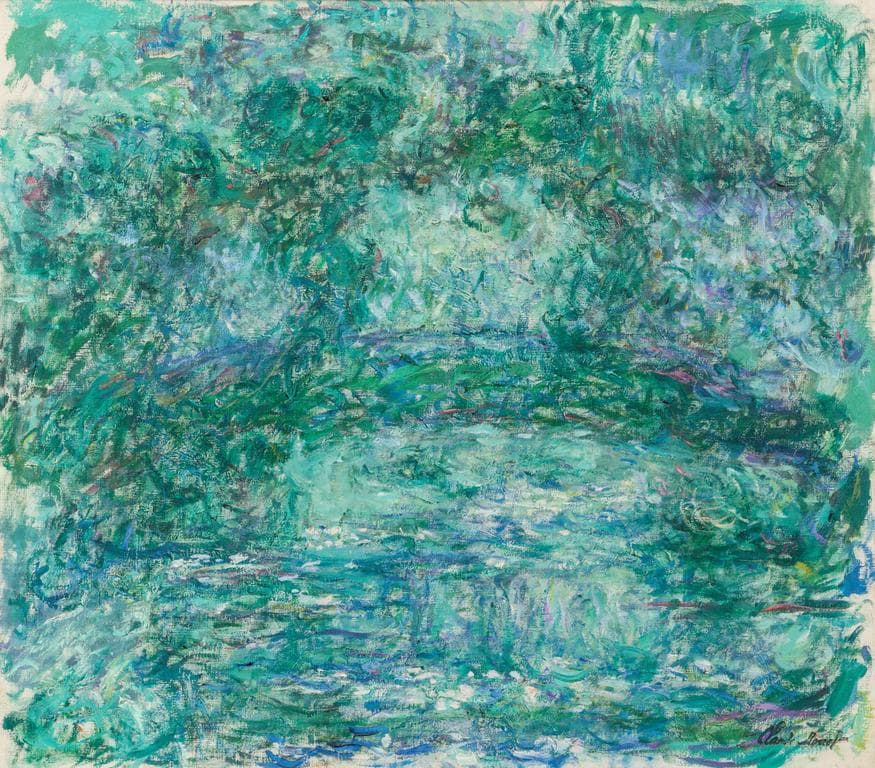
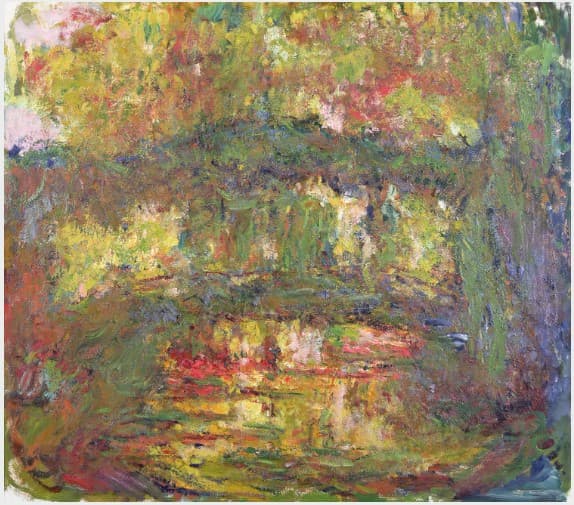
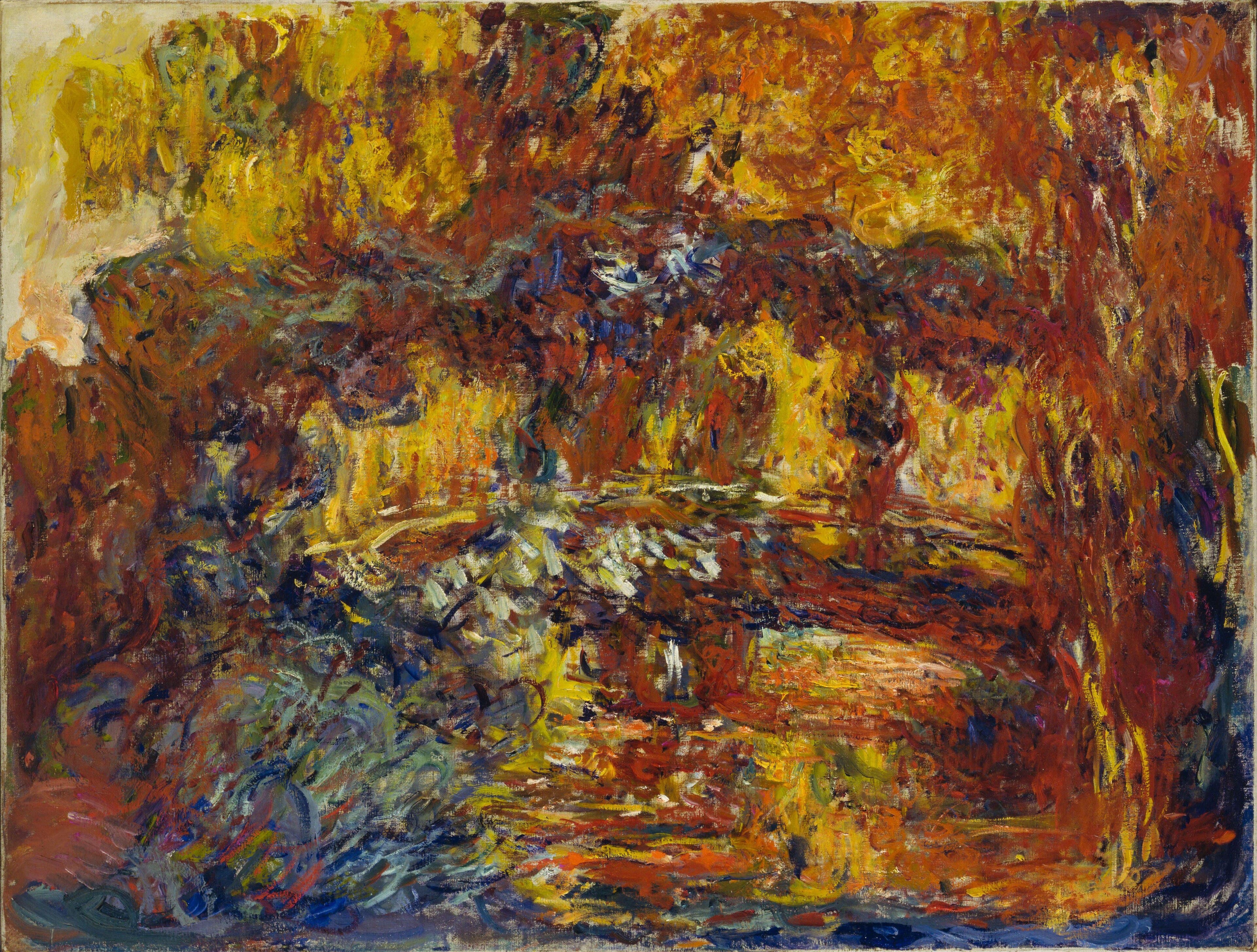
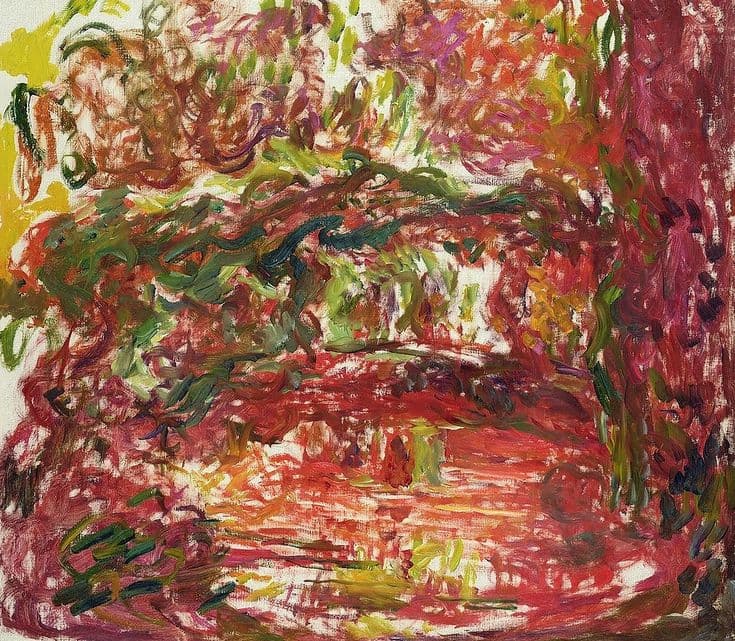
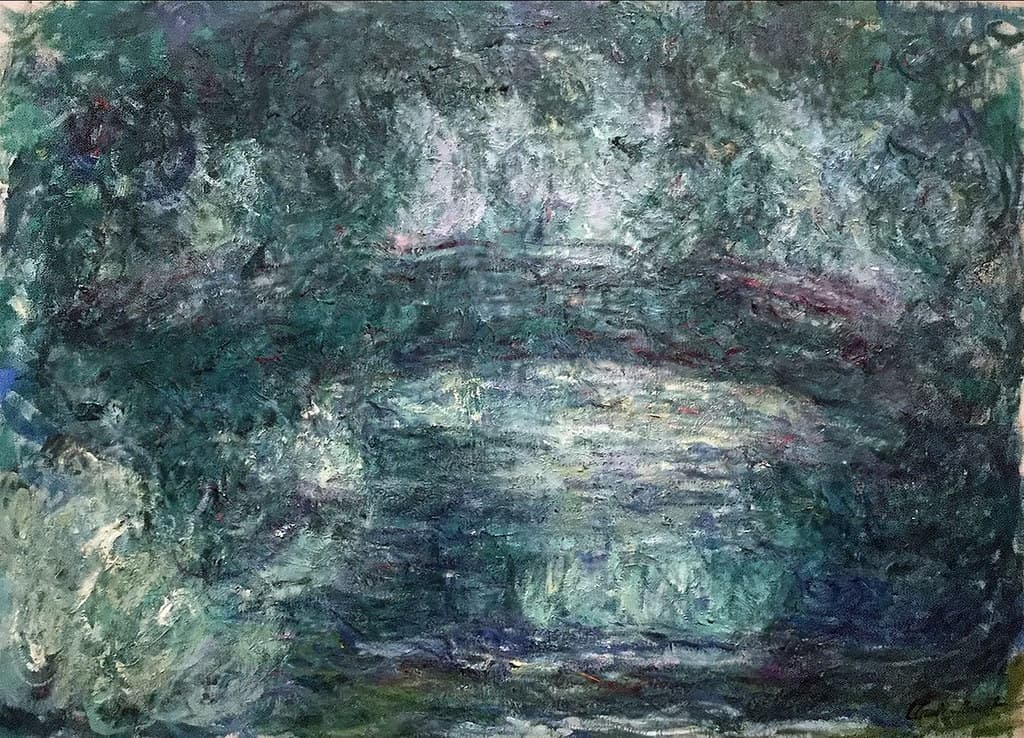
This canvas belongs to the cool, gray-blue end of the late bridges, near the Marmottan's Japanese Bridge of 1918–19 and the turquoise version lent to the National Gallery, London. It is more muted than either, closer to gray, with the red flecks on the rail as its signature detail. Against the hot red Le Pont japonais at the Marmottan, it shows how wide the range of the late series was. Follow the full sequence in the Japanese Footbridge series and the garden in Monet's Giverny.
Where to see it
The painting is listed in the Van Gogh Museum's collection and has hung there in the third-floor rooms on Van Gogh and his contemporaries, where it shows where Impressionism went in the decades after Van Gogh's death. The museum's catalogue details for this work, including its dimensions and how it came to Amsterdam, are not widely published. For other Monet collections, see where to see Monet's paintings.
Questions & answers
Does the Van Gogh Museum have a Monet?
Yes. A late Japanese Bridge by Claude Monet, dated 1919–24 (Wildenstein 1921a), is listed in the Van Gogh Museum's collection in Amsterdam and has been shown in its galleries on Van Gogh's contemporaries.
When was it painted?
It dates from between 1919 and 1924, when Monet, then in his late seventies and eighties, was painting his water garden at Giverny while working on the Orangerie Water Lilies.
What does it show?
It shows the arched footbridge over Monet's lily pond in muted gray-green and blue, with small red flecks along the rail, crusty foliage overhead and a pale, glowing pond beneath.
Why is the bridge red in some of Monet's paintings?
Monet's real bridge was painted green. In late canvases reds appear as accents of light or as part of the warmer color he used in those years, often linked to his cataracts, which yellowed and dimmed his vision.
More by the artist
Claude Monet
The Japanese Bridge
Claude Monet · c. 1919–24
Le pont japonais (Japanese Bridge)
Claude Monet · 1918–24
Water Lilies (1919, Metropolitan Museum)
Claude Monet · 1919
Le pont japonais
Claude Monet · 1918–24
The Japanese Bridge over the Water-Lily Pond in Giverny
Claude Monet · 1920–24
The Japanese Footbridge (MoMA)
Claude Monet · c. 1920–22

The Water Lilies: The Clouds
Claude Monet · c. 1914–26
Water Lilies: Green Reflections
Claude Monet · 1914–26
Also painted in 1921
The same year
Kindred works
You may also study
Japanese Bridge
Claude Monet · 1918–19
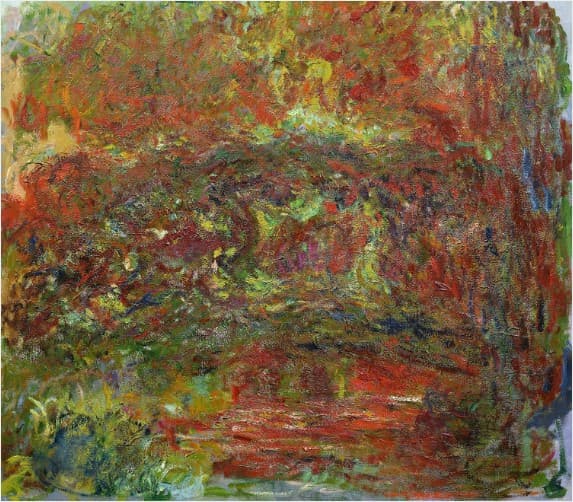
Le pont japonais
Claude Monet · 1918–24
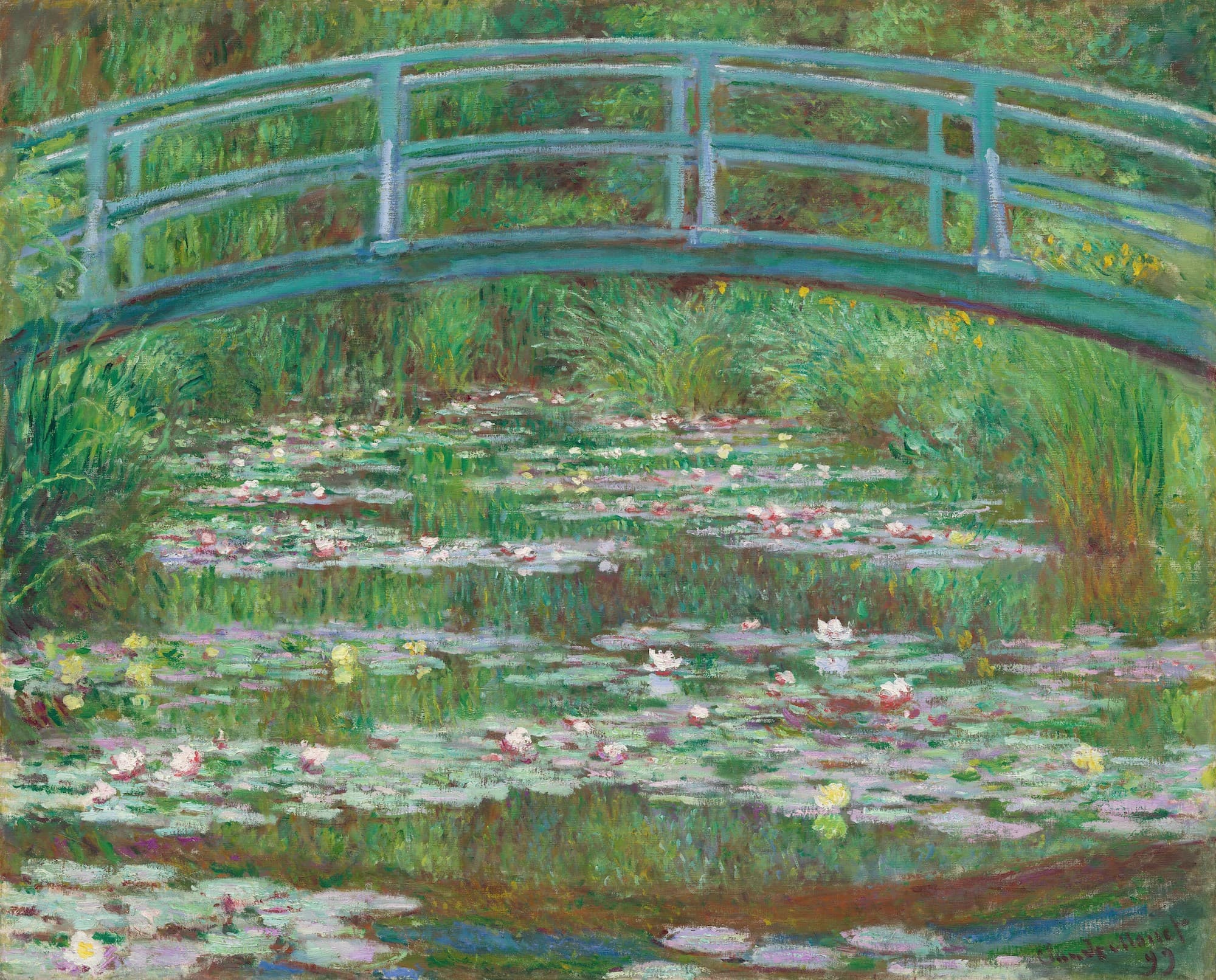
The Japanese Footbridge
Claude Monet · 1899
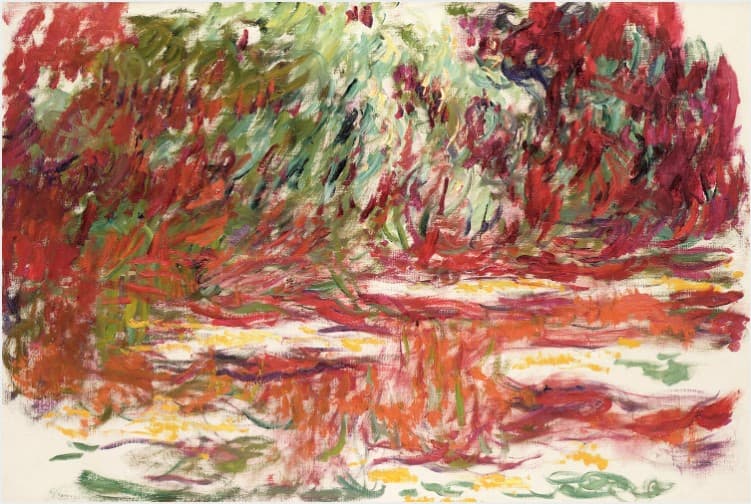
Water-Lily Pond (Bassin aux nymphéas, 1918–19)
Claude Monet · 1918–19
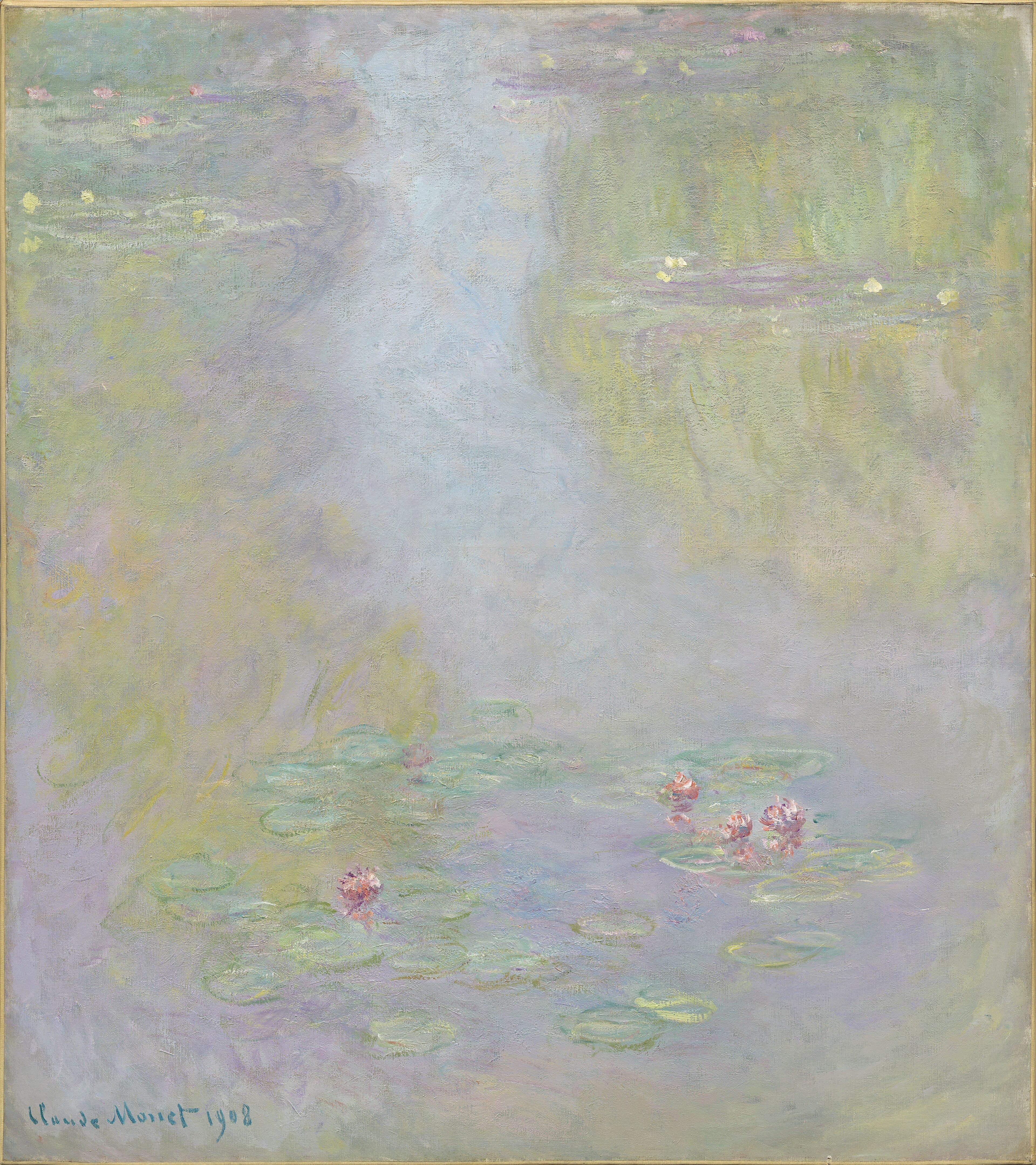
Water Lilies (1908, Tokyo Fuji Art Museum)
Claude Monet · 1908
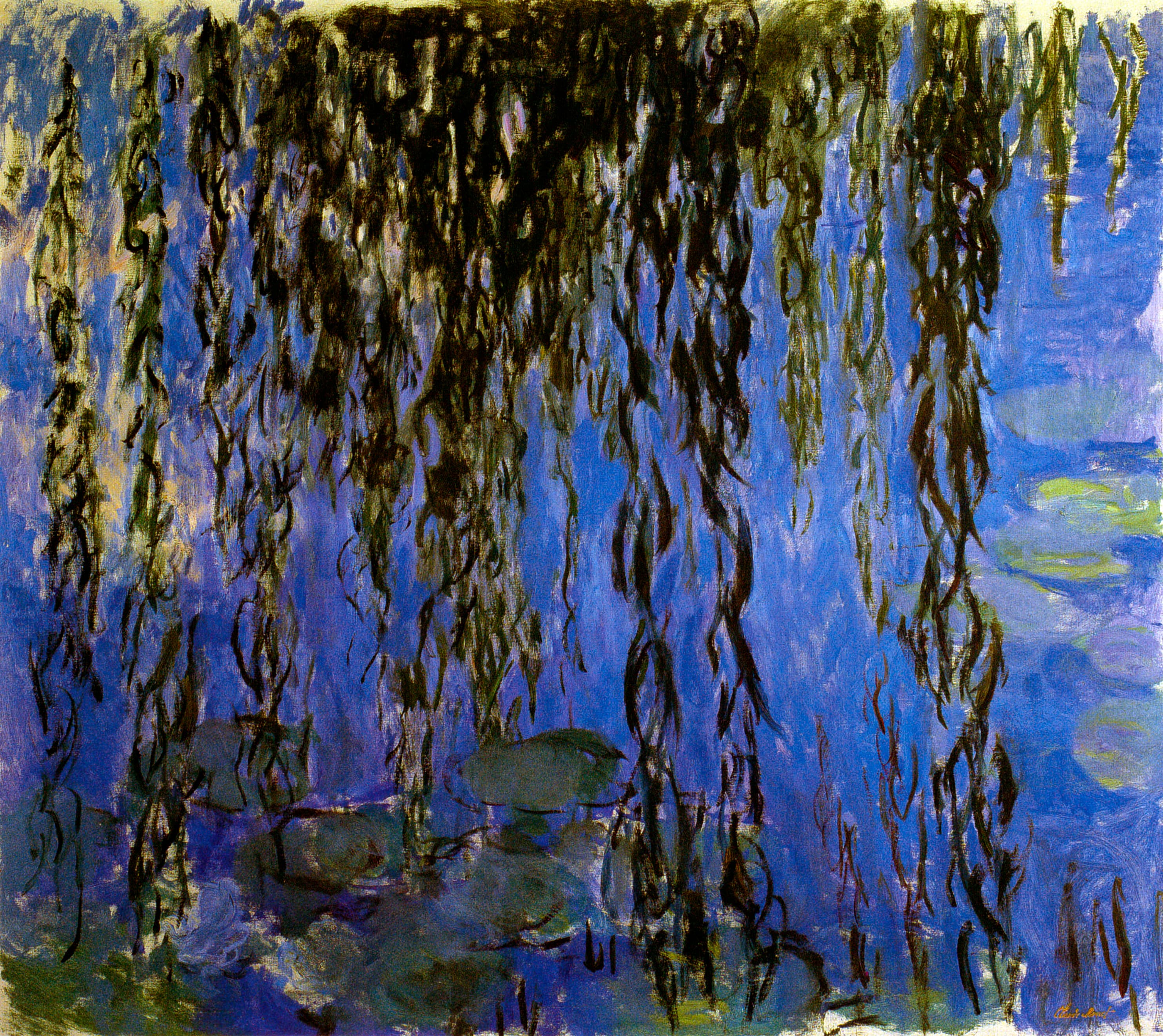
Water Lilies with Willow Branches
Claude Monet · c. 1916–17
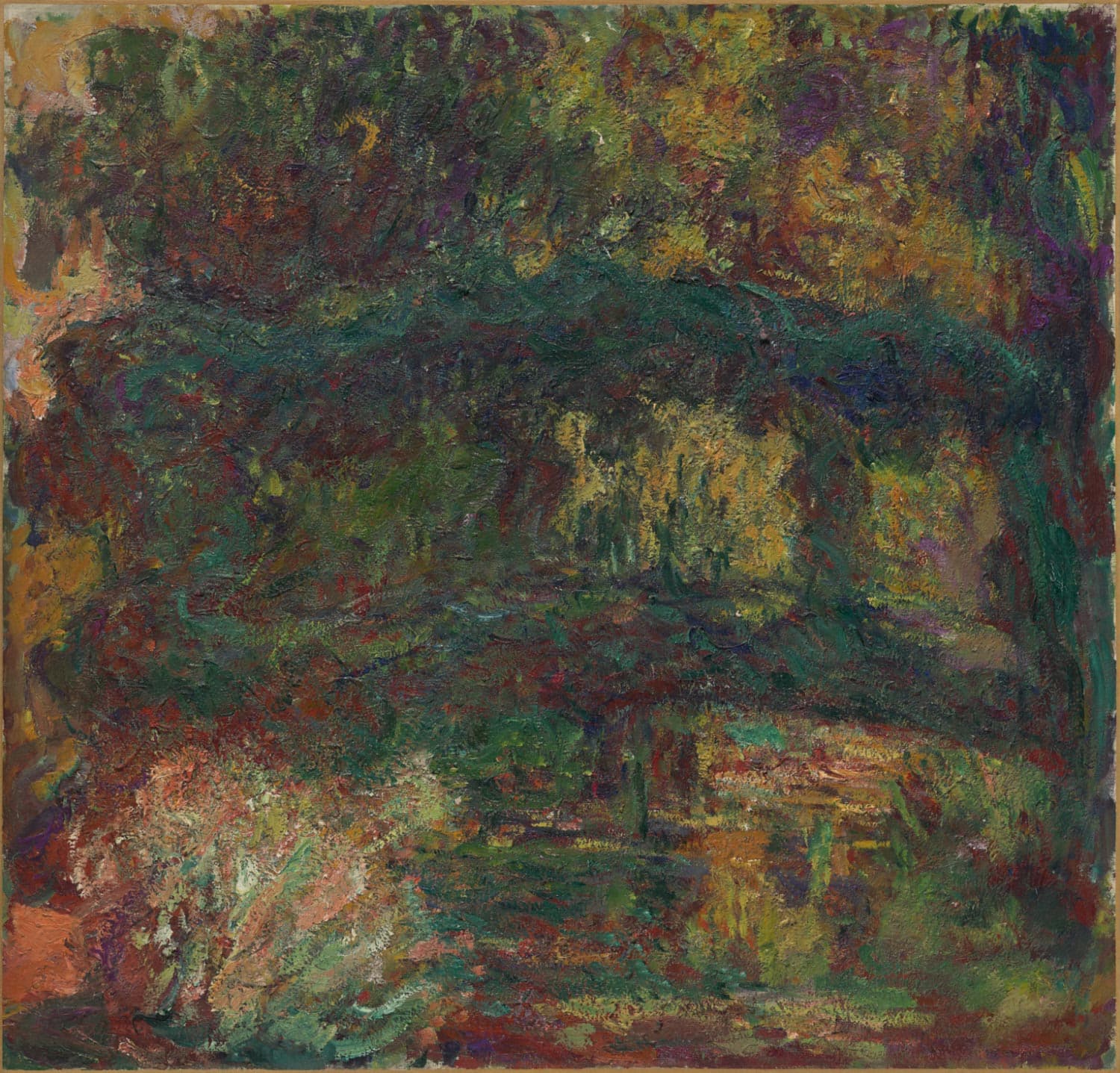
Nymphéas, Japanese Bridge
Claude Monet · 1918–26
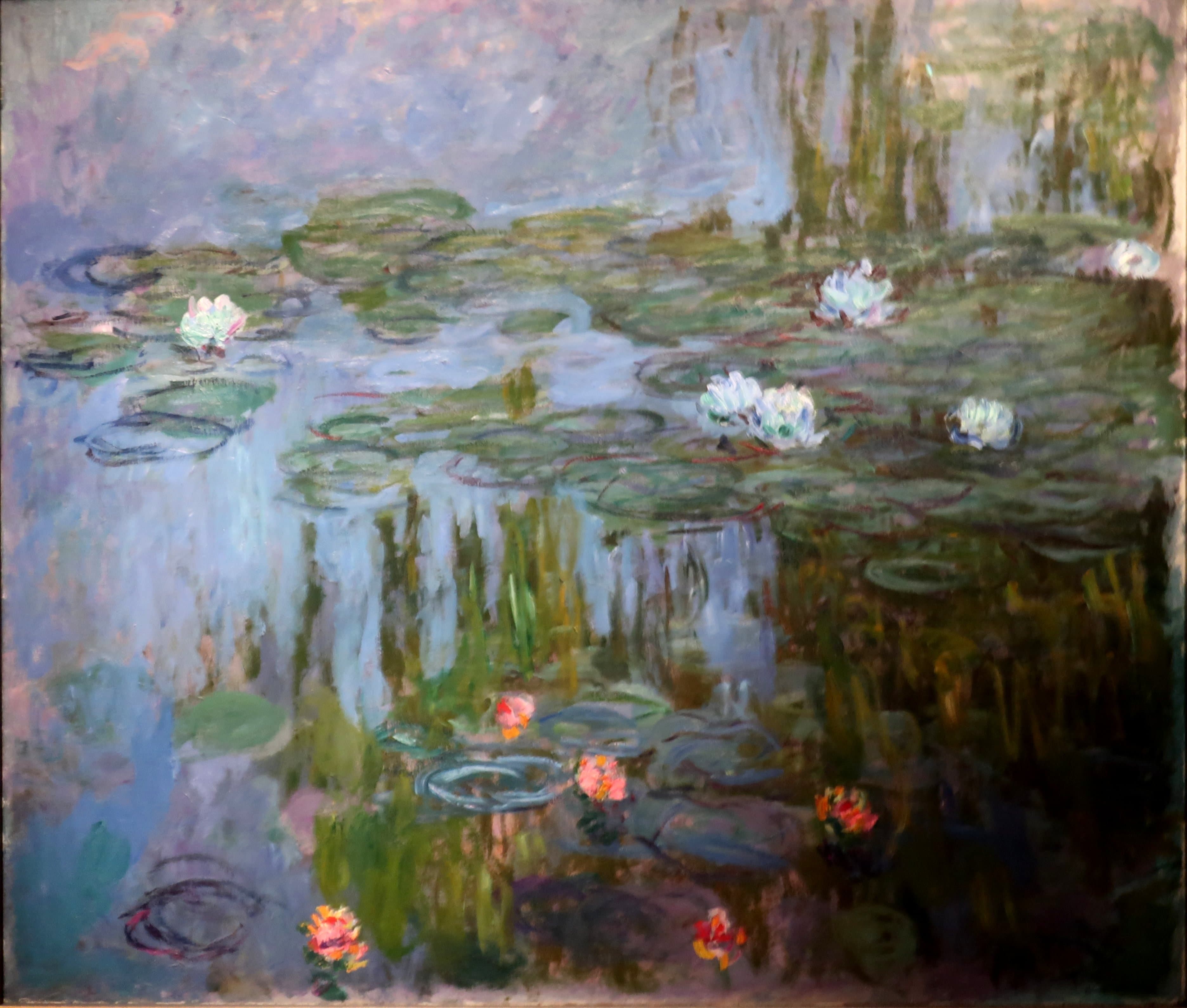
Waterlilies (c. 1914–15, Portland Art Museum)
Claude Monet · c. 1914–15