Image: Museum of Fine Arts, Houston · Public domain · via Wikimedia Commons
The Japanese Footbridge, Giverny
Claude Monet, c. 1922
The Japanese Footbridge, Giverny is a late Claude Monet painting of about 1922, his garden bridge burning in crimson, gold and dark green around a glowing opening of yellow light. It is in the Museum of Fine Arts, Houston, a 1976 gift of Audrey Jones Beck.
- Artist
- Claude Monet
- Date
- c. 1922
- Medium
- Oil on canvas
- Dimensions
- 88.9 × 94.1 cm
- Collection
- Museum of Fine Arts, Houston, Houston, United States
- Movement
- Impressionism
- Catalogue
- Wildenstein 1925
- Nature & Landscape
- Water & Sea
The Japanese Footbridge, Giverny is a late painting by Claude Monet of the wooden footbridge over the lily pond in his garden, dated to about 1922 and catalogued by Wildenstein as no. 1925. It measures 88.9 by 94.1 centimeters and is in the Museum of Fine Arts, Houston, part of the John A. and Audrey Jones Beck Collection, given by Audrey Jones Beck in 1976.
What you're looking at
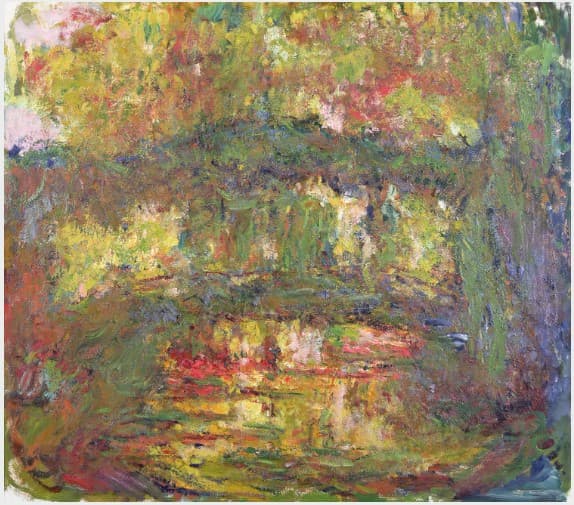
The palette is hot and deep: crimson, wine red, burnt orange, gold and mustard yellow, set against dark bottle green and teal. The bridge is a low arch just above the center, drawn as a band of dark green and red strokes with a line of pale cream and white along its walkway, catching the light. Above it, the wisteria and trees are a thick mass of red, gold and green strokes, warmer and lighter at the upper right, where orange and yellow suggest sun striking the leaves.
The heart of the picture is the opening beneath and beyond the arch. There, a block of bright yellow, ochre and orange glows like a lantern, crossed by thin vertical strokes of green, the willow fronds hanging into the light. It is the brightest passage in the canvas and the eye goes to it first. In the pond below, the glow is reflected in broken horizontal strokes of yellow, orange and cream, which run across the dark red and green water. On the left, a mass of crimson and orange foliage rises from the bank, with a touch of pink-white at the upper left. On the right, a column of dark green and blue verticals, the willow in shadow, frames the scene.
The effect is like looking into a sunlit room from a dark doorway: a deep, warm frame around a core of light.
The late bridges
Monet built the footbridge around 1895 and painted it in a clear, cool series in 1899–1900, as in Bridge over a Pond of Water Lilies at the Metropolitan Museum. When he returned to the motif about 1918, he was in his late seventies, working on the great Water Lilies decorations for Paris and seeing through cataracts, which yellowed and dimmed his sight until his operation in 1923. The bridge canvases he made between 1918 and 1924 are freer and often hotter in color than anything he had painted before.
According to the museum, this painting stayed with the family and belonged to Michel Monet, the painter's son, before it was acquired by Walter and Molly Bareiss of Greenwich, Connecticut, in 1956. Audrey Jones Beck bought it in 1976 and gave it to the museum the same year.
How it was painted
The paint is thick and vigorous, with strokes of different colors laid over one another while wet. Reds and greens, complementary colors, meet and mix into deep browns. The structure of the picture, however, is clear: arch, opening, reflection, framed by darker masses at the sides. That clarity is what sets the Houston canvas apart from the more chaotic late bridges.
How this version differs
Compared with the Marmottan's flaming red Japanese Bridge (W 1928), Houston's canvas is darker at the edges and more concentrated in its light. It is closest to Le pont japonais (W 1923), which also opens a golden space under the arch, but here the contrast is stronger and the reds deeper. Among the late bridges in American museums, it complements the green Japanese Footbridge at MoMA and the late Japanese Bridge at the Minneapolis Institute of Art. For the whole sequence, see the Japanese Footbridge series; for the garden, Monet's Giverny.
Where to see it
The painting hangs in the Audrey Jones Beck Building of the Museum of Fine Arts, Houston, which houses the museum's European collections, including the Beck Collection of Impressionist and Post-Impressionist art. It was shown in the 1978 exhibition Monet at Giverny, 1883–1926, which traveled to the Metropolitan Museum and the Saint Louis Art Museum. For other Monet collections, see where to see Monet's paintings.
Questions & answers
Where is Monet's Japanese Footbridge in Houston?
It is in the Museum of Fine Arts, Houston (76.198), in the Audrey Jones Beck Building. It belongs to the John A. and Audrey Jones Beck Collection and was given by Audrey Jones Beck in 1976.
When was it painted?
About 1922, at Monet's water garden in Giverny. It belongs to the late group of bridge paintings he made between about 1918 and 1924, while losing his sight to cataracts.
What does it show?
It shows the arched footbridge in crimson, gold and dark green, framing a glowing opening of yellow light beneath the arch, with willow fronds hanging into the light and the glow reflected in the pond.
Who owned the painting before the museum?
The museum's provenance lists Michel Monet, the painter's son, then Walter and Molly Bareiss of Greenwich, Connecticut, from 1956. Audrey Jones Beck acquired it in 1976 and gave it to the museum that year.
More by the artist
Claude Monet
Le Pont japonais
Claude Monet · 1918–24
The Japanese Bridge
Claude Monet · 1918–24
The Japanese Bridge
Claude Monet · 1918–24
Water Lilies: Setting Sun
Claude Monet · 1914–26
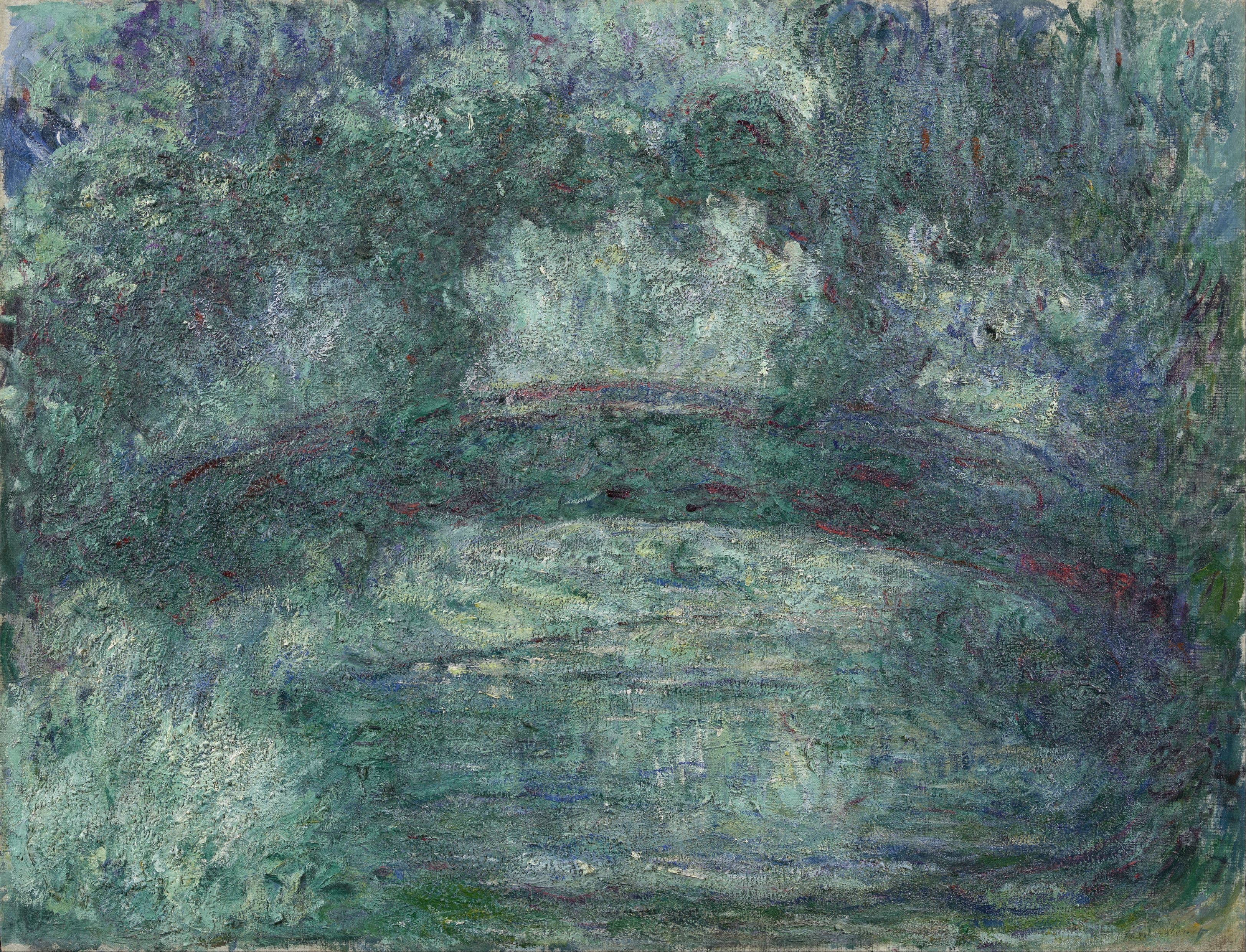
The Japanese Bridge
Claude Monet · 1919–24
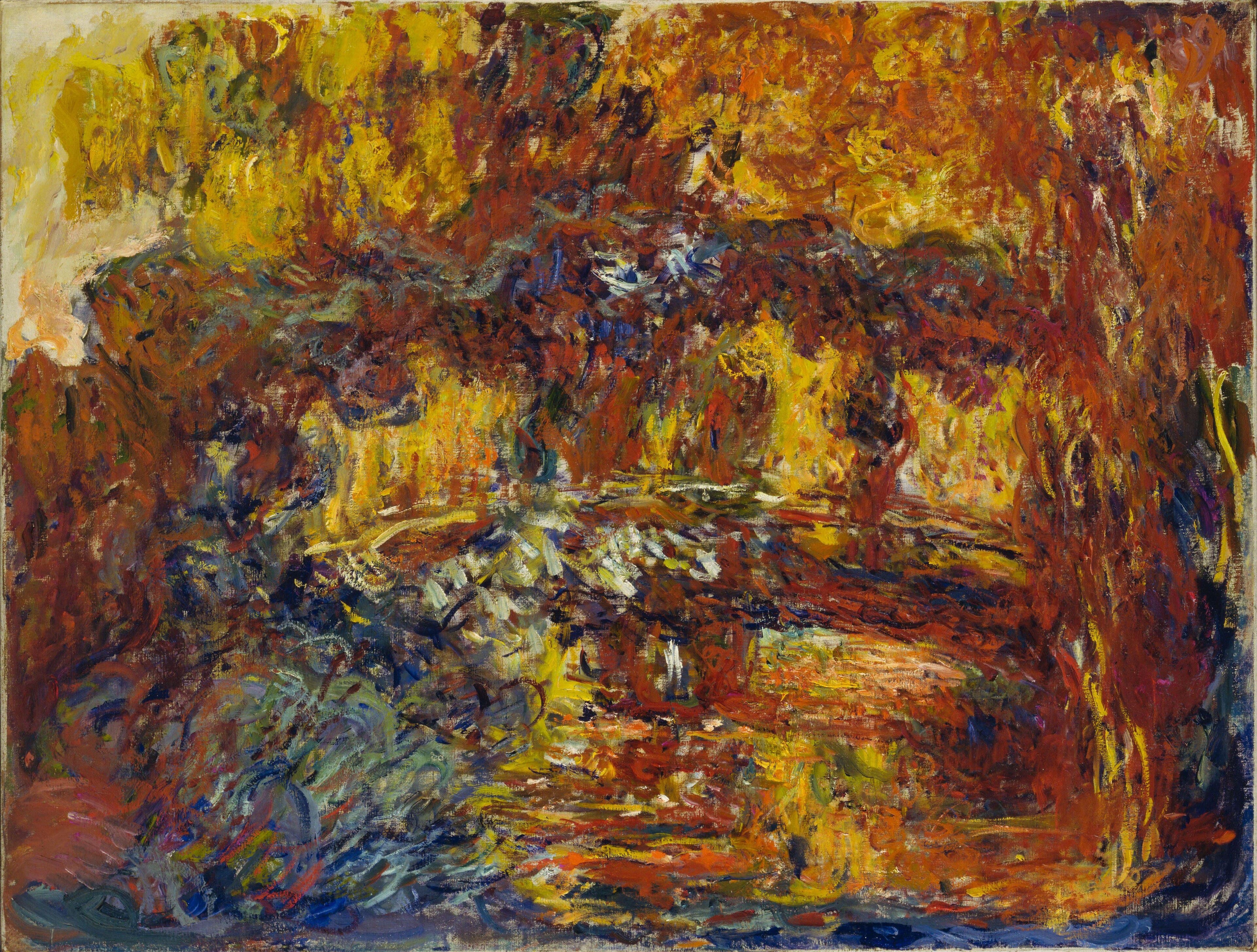
The Japanese Footbridge (MoMA)
Claude Monet · c. 1920–22
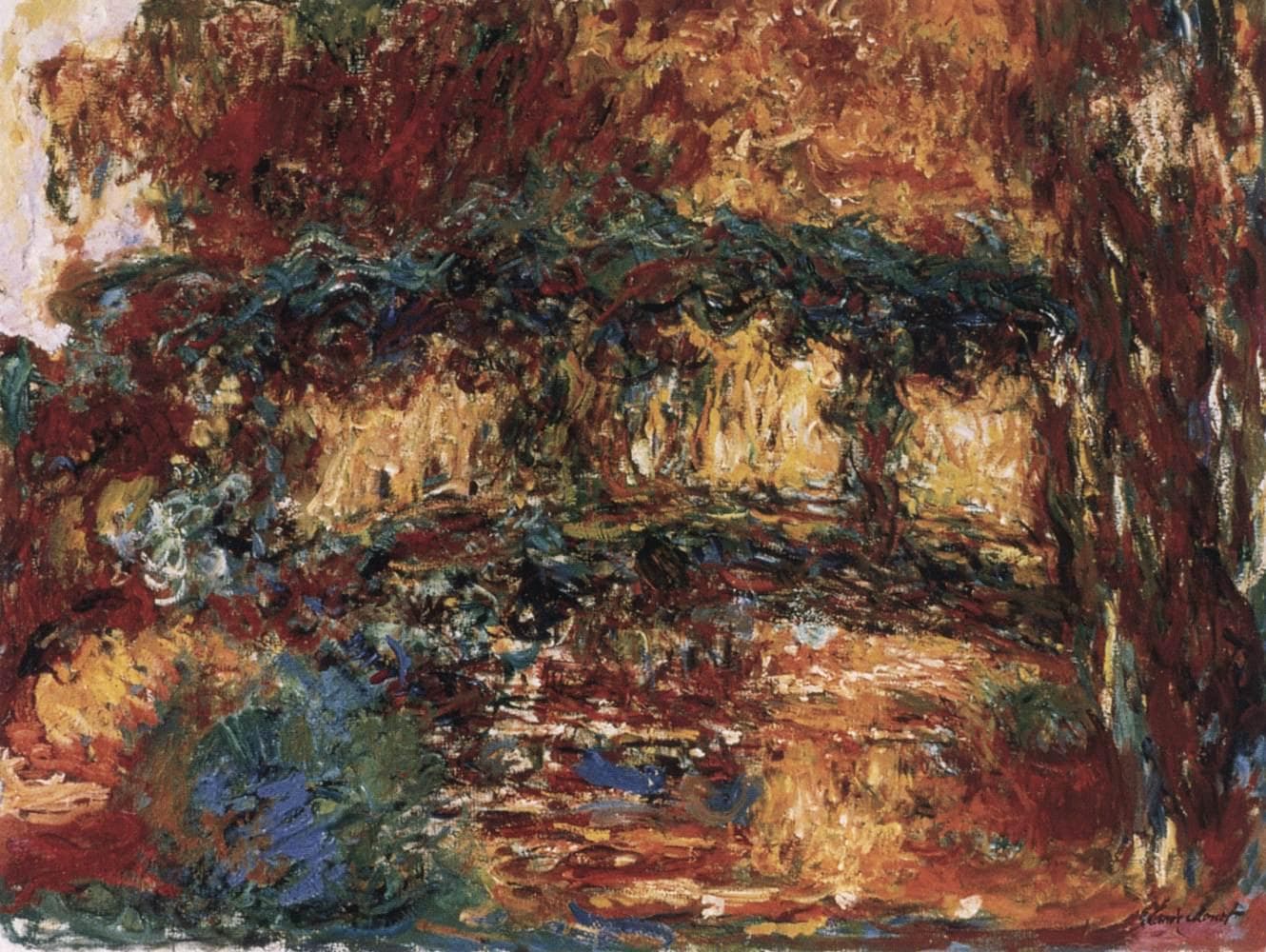
The Japanese Bridge
Claude Monet · c. 1923–25
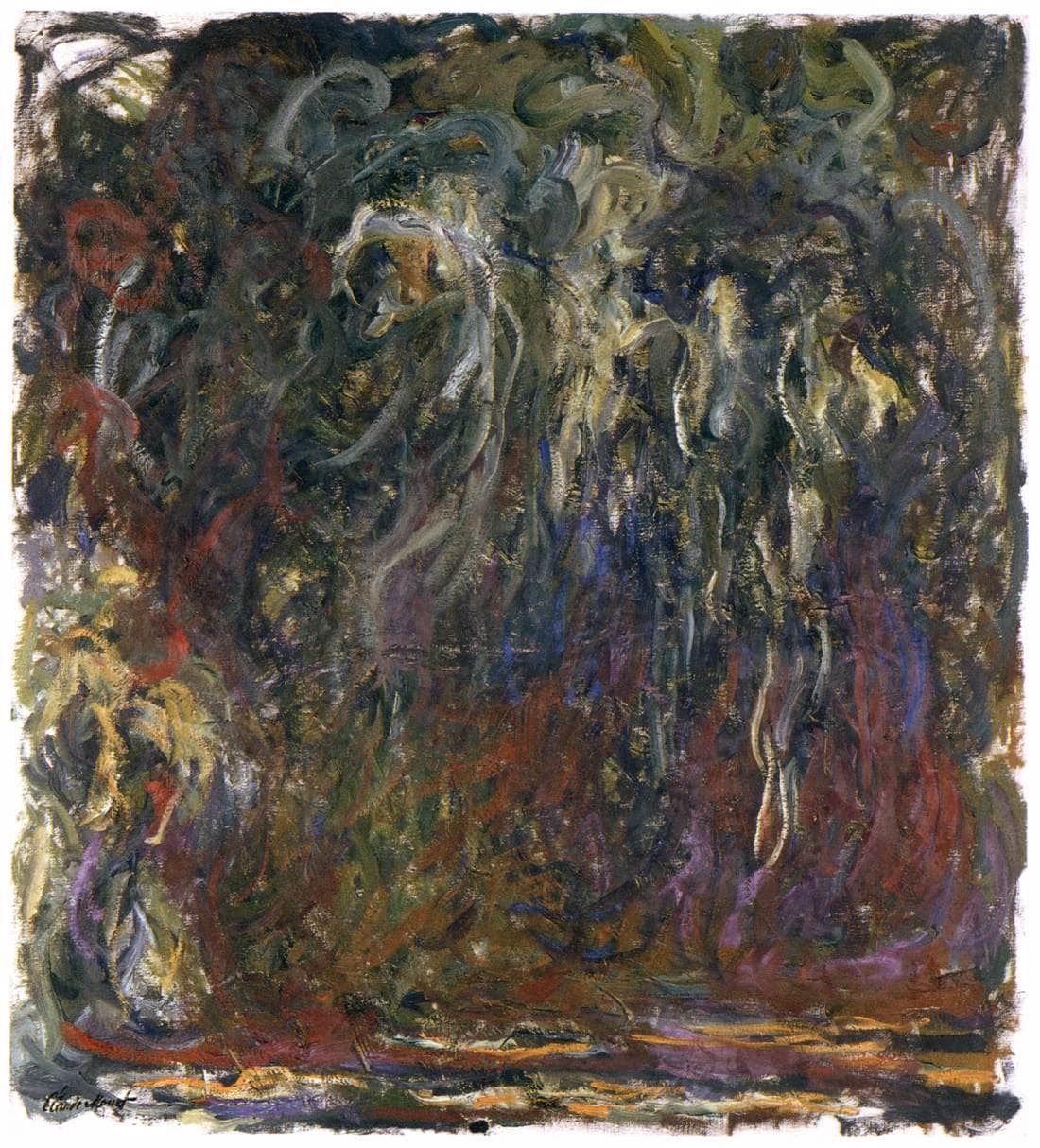
Weeping Willow
Claude Monet · 1920–22
Also painted in 1922
The same year
Kindred works
You may also study
Le pont japonais
Claude Monet · 1918–24

Bridge over a Pond of Water Lilies
Claude Monet · 1899
Nymphéas (1915, Musée Marmottan Monet)
Claude Monet · 1915
Water Lilies (Asahi Group Oyamazaki Villa Museum)
Claude Monet · c. 1914–17
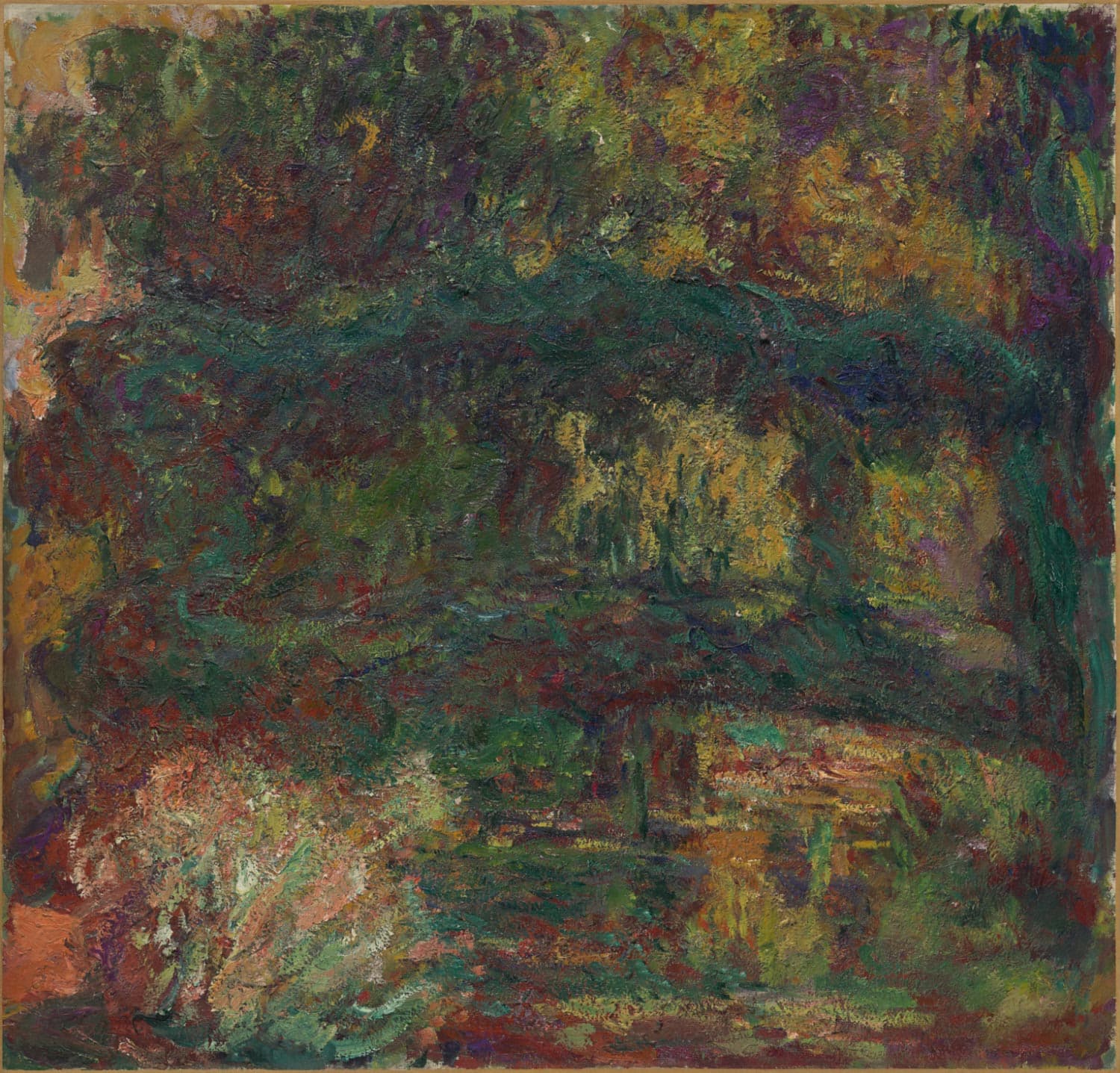
Nymphéas, Japanese Bridge
Claude Monet · 1918–26
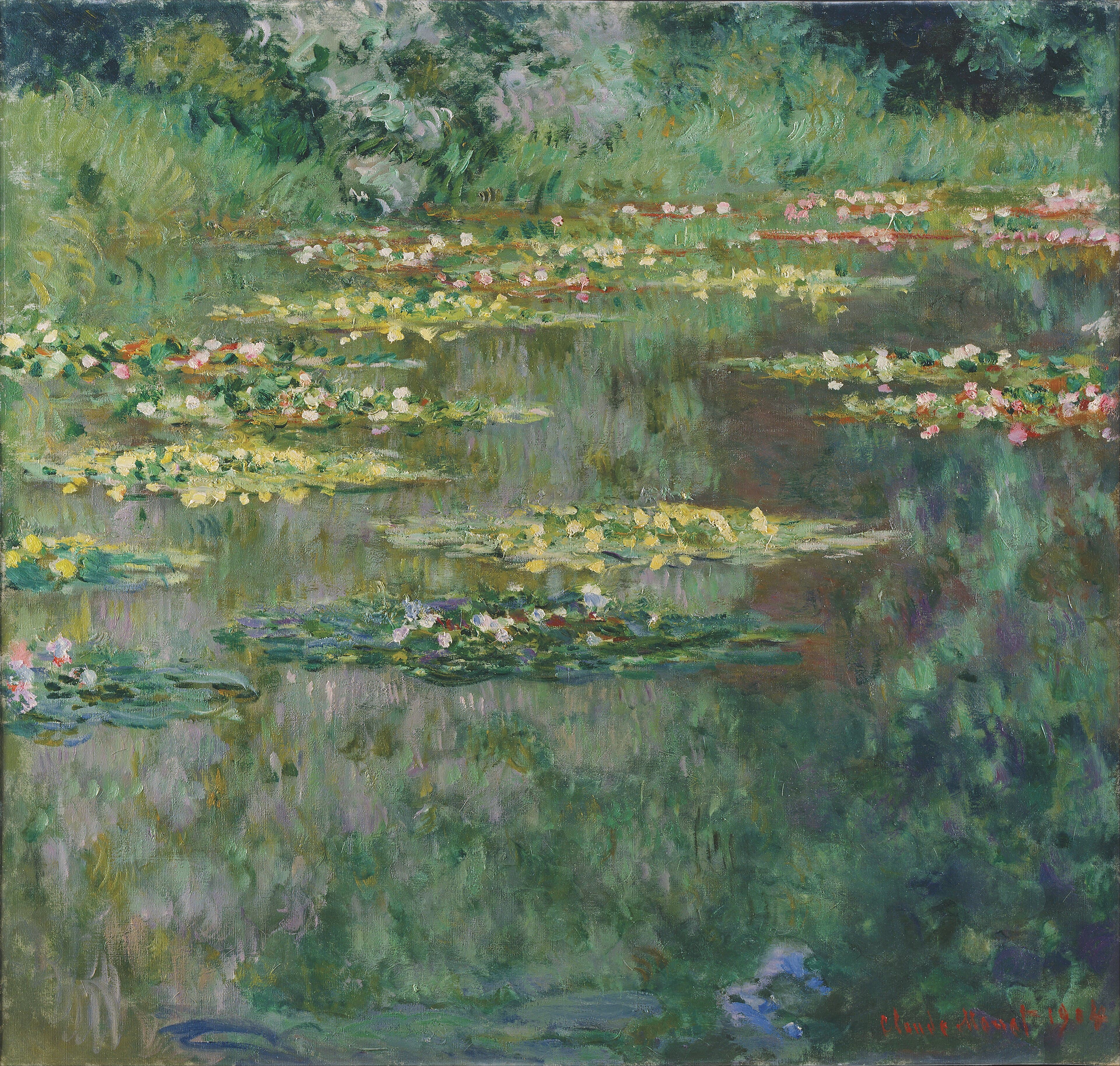
Le Bassin des Nymphéas (Denver)
Claude Monet · 1904
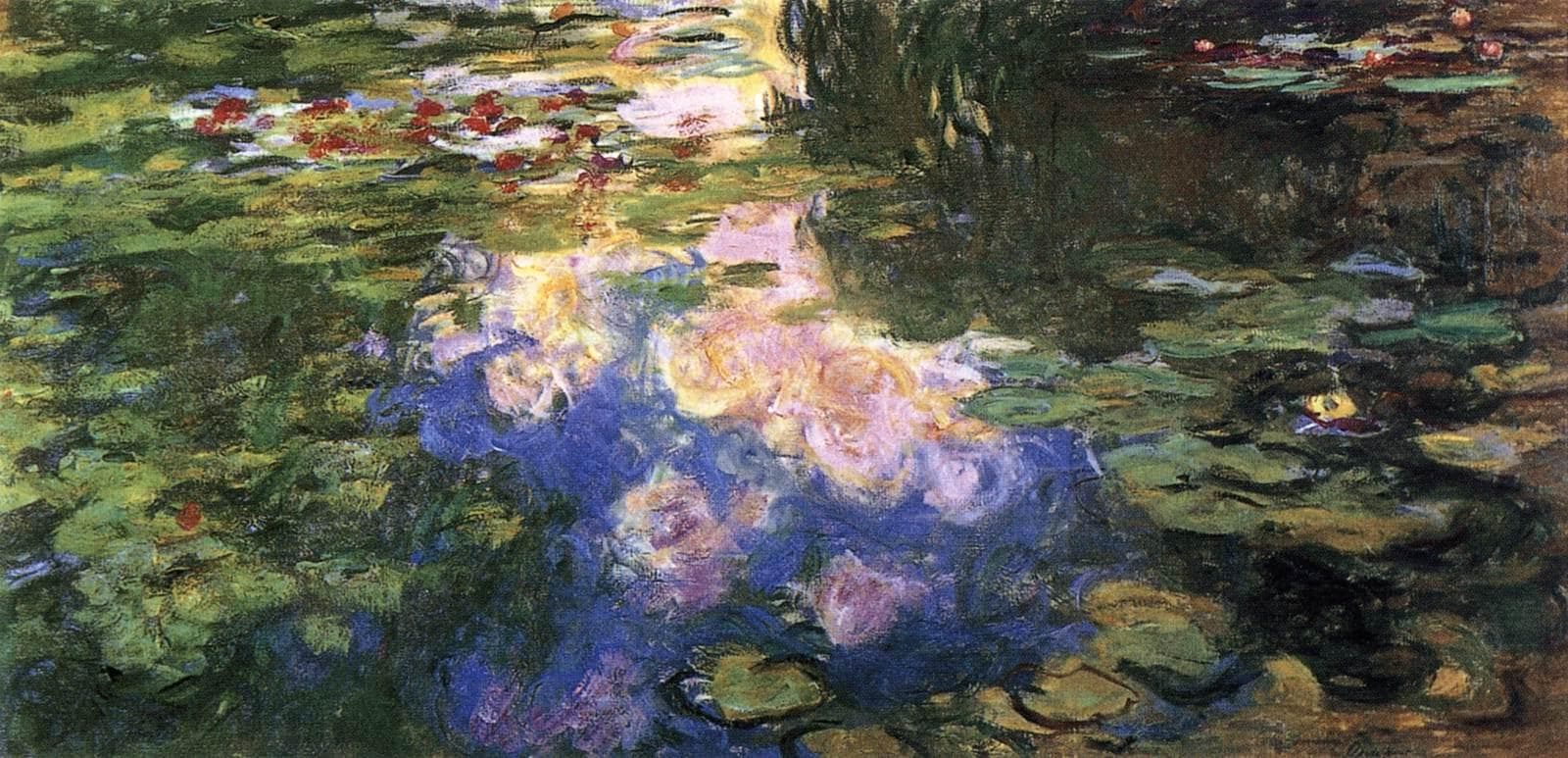
Water-Lily Pond (Le Bassin aux nymphéas), 1917–19
Claude Monet · 1917–19
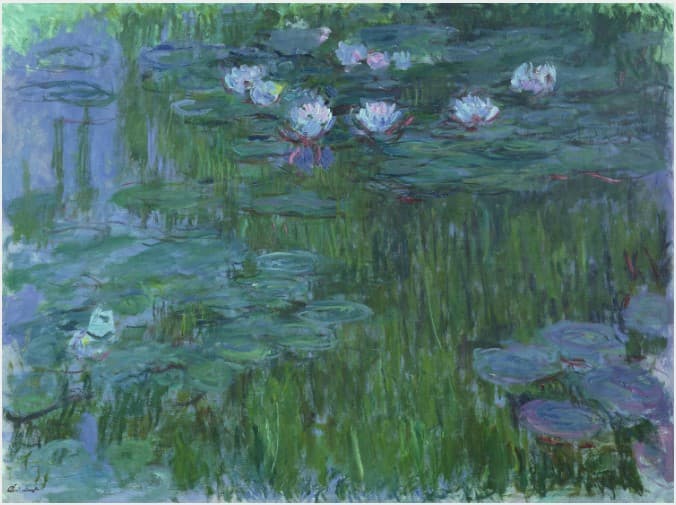
Nymphéas (Musée Marmottan Monet, 1914–17)
Claude Monet · 1914–17