Image: Saint Louis Art Museum, The Steinberg Charitable Fund · Public domain · via Wikimedia Commons
Water Lilies (Saint Louis Art Museum)
Claude Monet, c. 1915–26
Water Lilies is a mural-size Claude Monet canvas, 200 × 426 cm, painted at Giverny c. 1915–26 as the center of the Agapanthus triptych, with lily clusters floating on violet and blue water. It is in the Saint Louis Art Museum.
- Artist
- Claude Monet
- Date
- c. 1915–26
- Medium
- Oil on canvas
- Dimensions
- 200 × 426.1 cm
- Collection
- Saint Louis Art Museum, St. Louis, United States
- Movement
- Impressionism
- Catalogue
- Wildenstein 1976
- Nature & Landscape
- Water & Sea
This Water Lilies is a mural-sized canvas, 200 × 426.1 cm, painted by Claude Monet at Giverny and dated by the Saint Louis Art Museum to about 1915–26. It was originally the central panel of a three-part composition, the so-called Agapanthus triptych, whose side panels are now in the Cleveland Museum of Art and the Nelson-Atkins Museum of Art in Kansas City. The Saint Louis Art Museum bought it in 1956 with funds from the Steinberg Charitable Fund, and it hangs in Gallery 218.
What you're looking at
There is no bank and no sky, only the surface of the pond stretched across four meters. Clusters of lily pads float in loose islands: a long group across the upper left and center, a smaller group at the lower left, and a chain along the right side. They are painted as flat ellipses in cream, yellow-green and pale lilac, with flowers in pink, red and gold set among them.
Between the clusters the water is the main event. Through the middle runs a broad zone of blue, violet and green, with vertical strokes of olive and gold rising from the bottom like the reflection of grasses or of trees on a bank outside the picture. Toward the top, the water lightens to a lavender haze that reads as reflected sky.
The picture has no single focus. The eye drifts across it as it would across the water, which was exactly Monet's aim for the panels he wanted to surround a viewer.
Where and when it was painted
From 1914 until his death in 1926, Monet painted dozens of two-meter-high panels in his large studio at Giverny for the decorative cycle he gave to the French state. Some were joined into the compositions installed at the Musée de l'Orangerie in 1927; others, like the Agapanthus triptych, were set aside. The triptych takes its name from the agapanthus plants that grew at the pond's edge and appeared in an earlier stage of the composition. The museum's broad date, c. 1915–26, reflects the many years Monet could keep reworking such panels.
How it was painted
Working on a canvas this size meant painting standing, at arm's length, with large brushes, and the strokes are correspondingly broad. The reflections are laid in long vertical drags, the pads in wide horizontal sweeps, and the colors overlap wet, so violets and greens blend at their edges. An estate stamp on the back confirms it was in Monet's studio when he died.
How this version differs
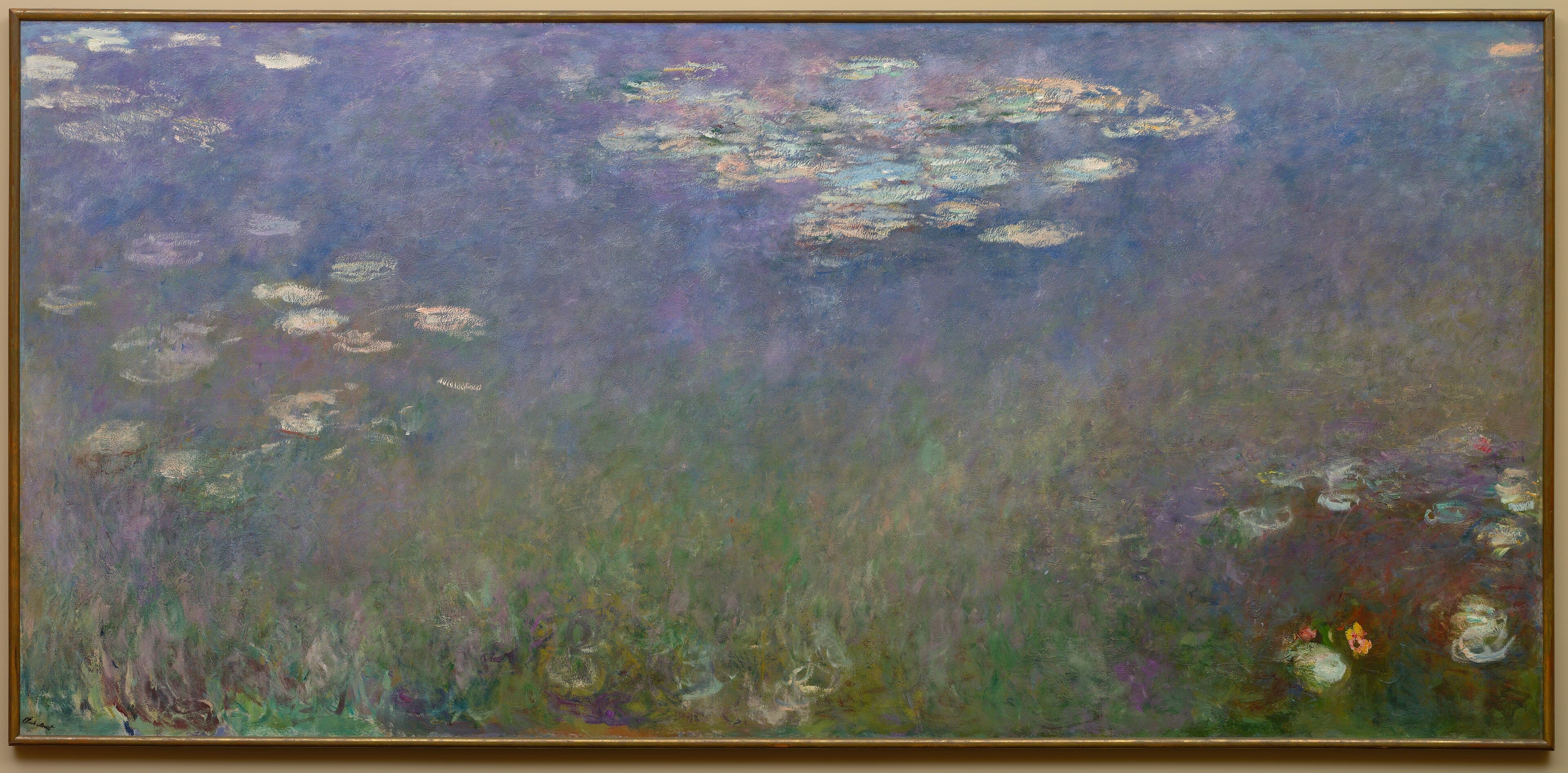
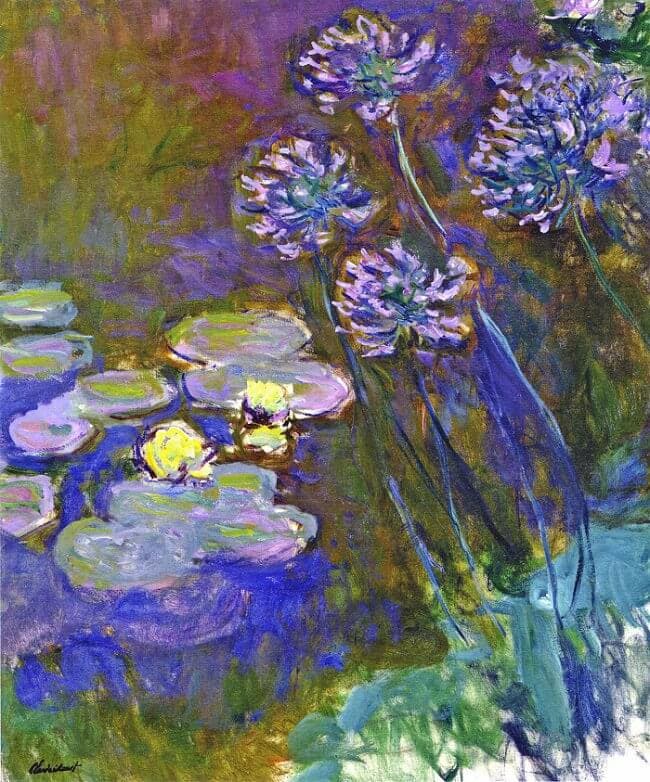
Among the large panels of the Water Lilies series, this one is cool and luminous, dominated by violet and blue rather than the gold of the National Gallery's Water-Lilies or the deep green of Zürich's Water Lily Pond, Green Reflection. Its left-hand partner is the Cleveland Water Lilies (Agapanthus); the Marmottan's Water Lilies and Agapanthus shows the plants that gave the triptych its name.
How the triptych was reunited
After the sale of 1956, the three panels of the Agapanthus triptych hung in three different American museums, several hundred kilometers apart. They have been brought together for special exhibitions, which have allowed visitors to experience the composition as Monet planned it: a continuous, curving wall of water roughly 12.8 meters long. The Saint Louis panel, as the center, carries the clearest cluster of lilies and holds the composition together. Seen alone, as it usually is, it still gives an idea of the scale Monet worked at, and of the way the late panels were designed to fill the visitor's field of vision.
Ownership and where to see it
After Monet's death the triptych passed to his son Michel, who sold it in 1950 to the Paris dealer Katia Granoff. When Knoedler's sold it in 1956, the three panels were separated, going to Saint Louis, Cleveland and Kansas City. The three have since been reunited for exhibitions. For other American museums holding Claude Monet's work, see where to see Monet's paintings; for the garden, see Giverny.
Questions & answers
Where is Monet's Water Lilies in St. Louis?
It is in the Saint Louis Art Museum, in Gallery 218 (object number 134:1956). The museum bought it from Knoedler's in 1956 with funds from the Steinberg Charitable Fund.
What is the Agapanthus triptych?
It is a three-panel water-lily composition that Monet painted for his decorative cycle but did not include in the Orangerie. The Saint Louis canvas is its center; the left panel is in Cleveland and the right panel in the Nelson-Atkins Museum in Kansas City.
When was it painted?
The Saint Louis Art Museum dates it to about 1915–26. Monet worked on such panels over many years in his large studio at Giverny, and this one was still in the studio when he died in 1926.
How big is the painting?
It measures 200 × 426.1 cm, about 6.5 by 14 feet, the same height as the Orangerie panels. Seen with its two partners, the triptych is almost 13 meters long.
More by the artist
Claude Monet
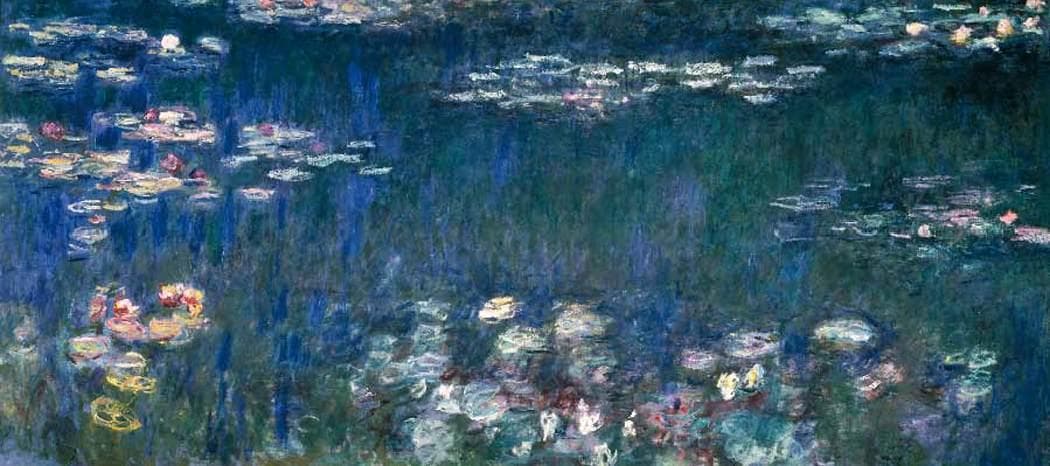
Water Lilies: Green Reflections
Claude Monet · 1914–26
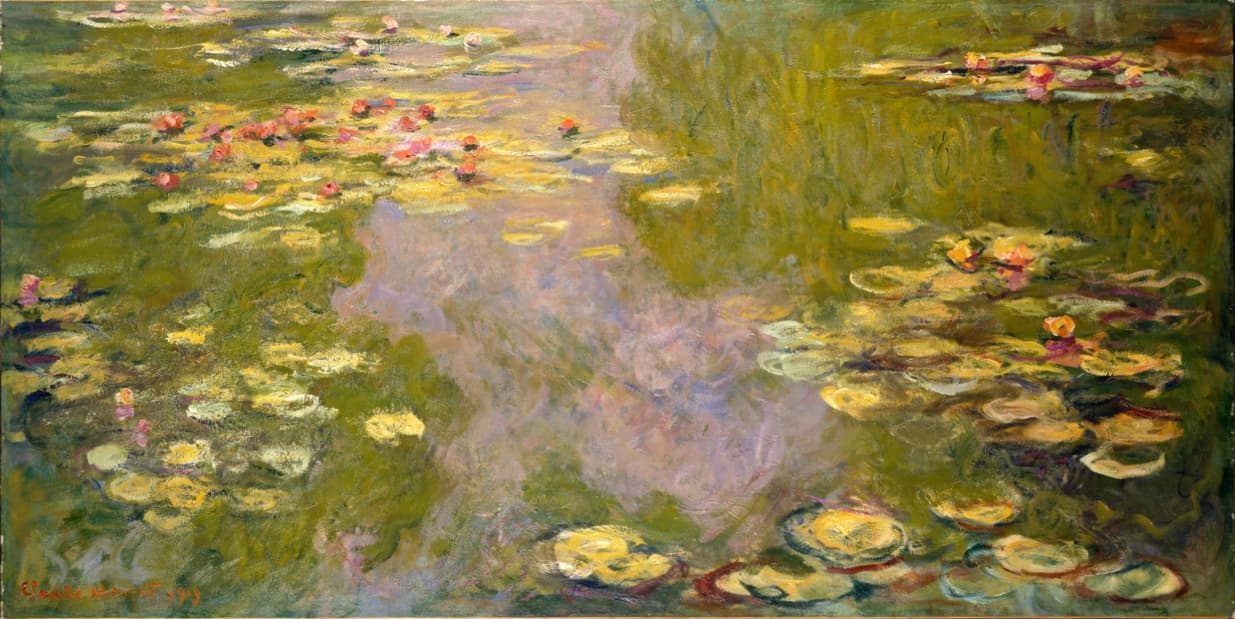
Water Lilies (1919, Metropolitan Museum)
Claude Monet · 1919
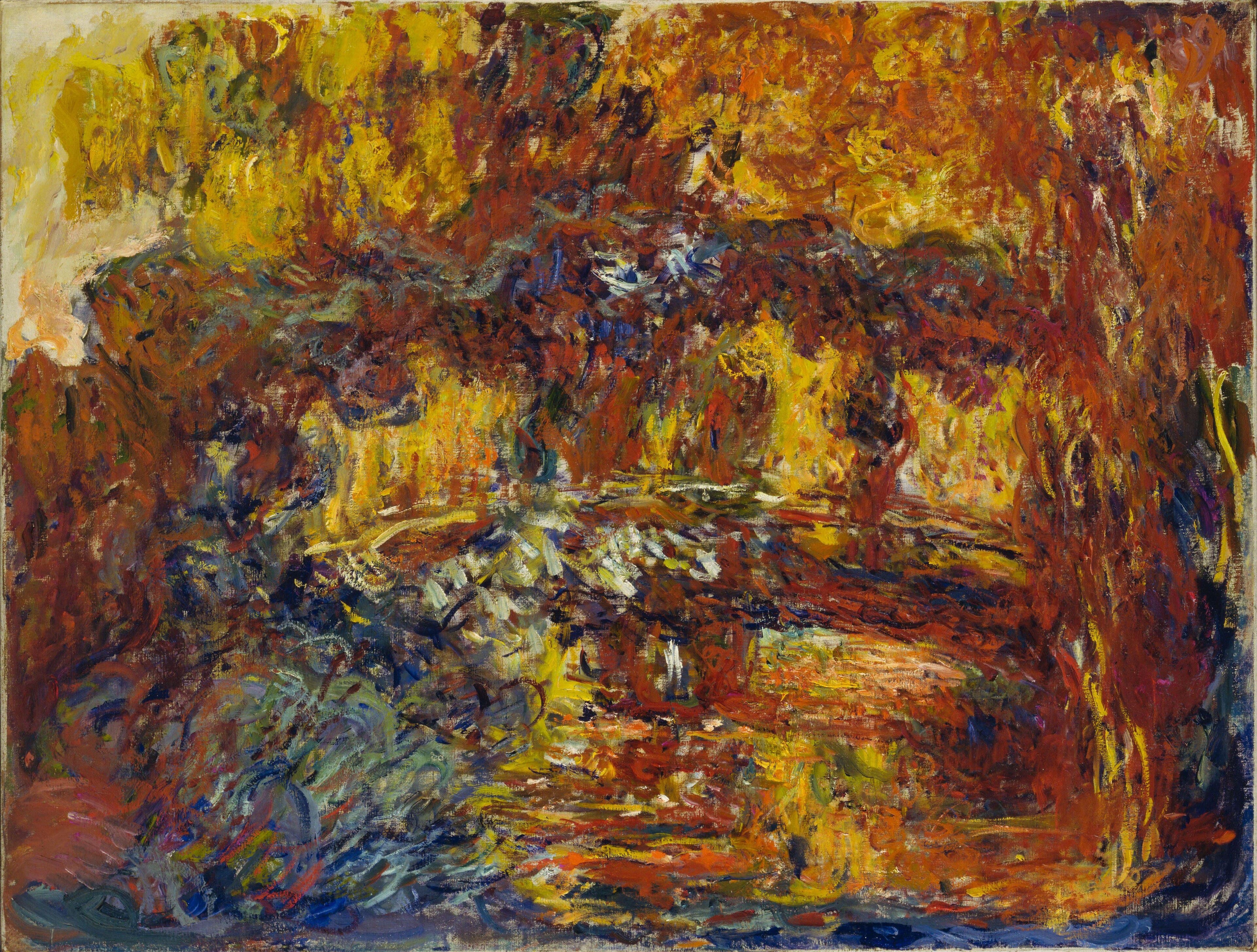
The Japanese Footbridge (MoMA)
Claude Monet · c. 1920–22
Corner of the Water-Lily Pond
Claude Monet · 1918
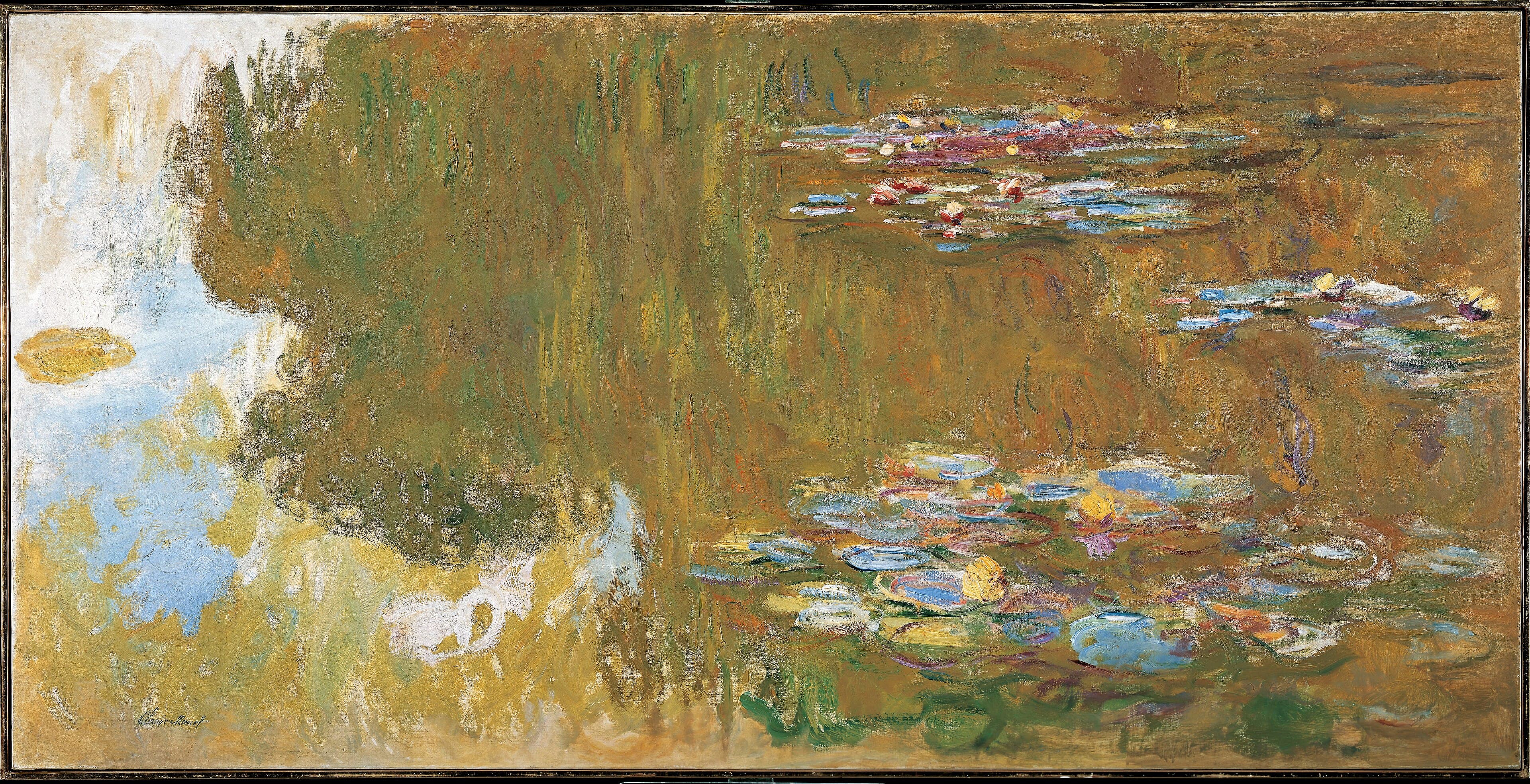
The Water Lily Pond (Albertina)
Claude Monet · 1917–19
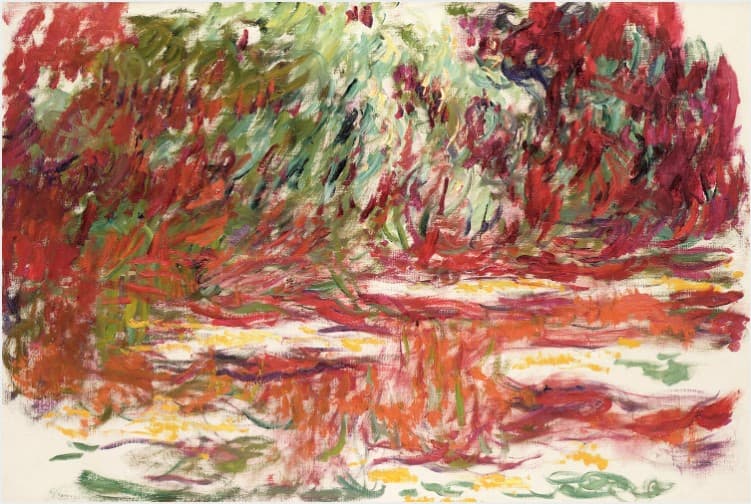
Water-Lily Pond (Bassin aux nymphéas, 1918–19)
Claude Monet · 1918–19
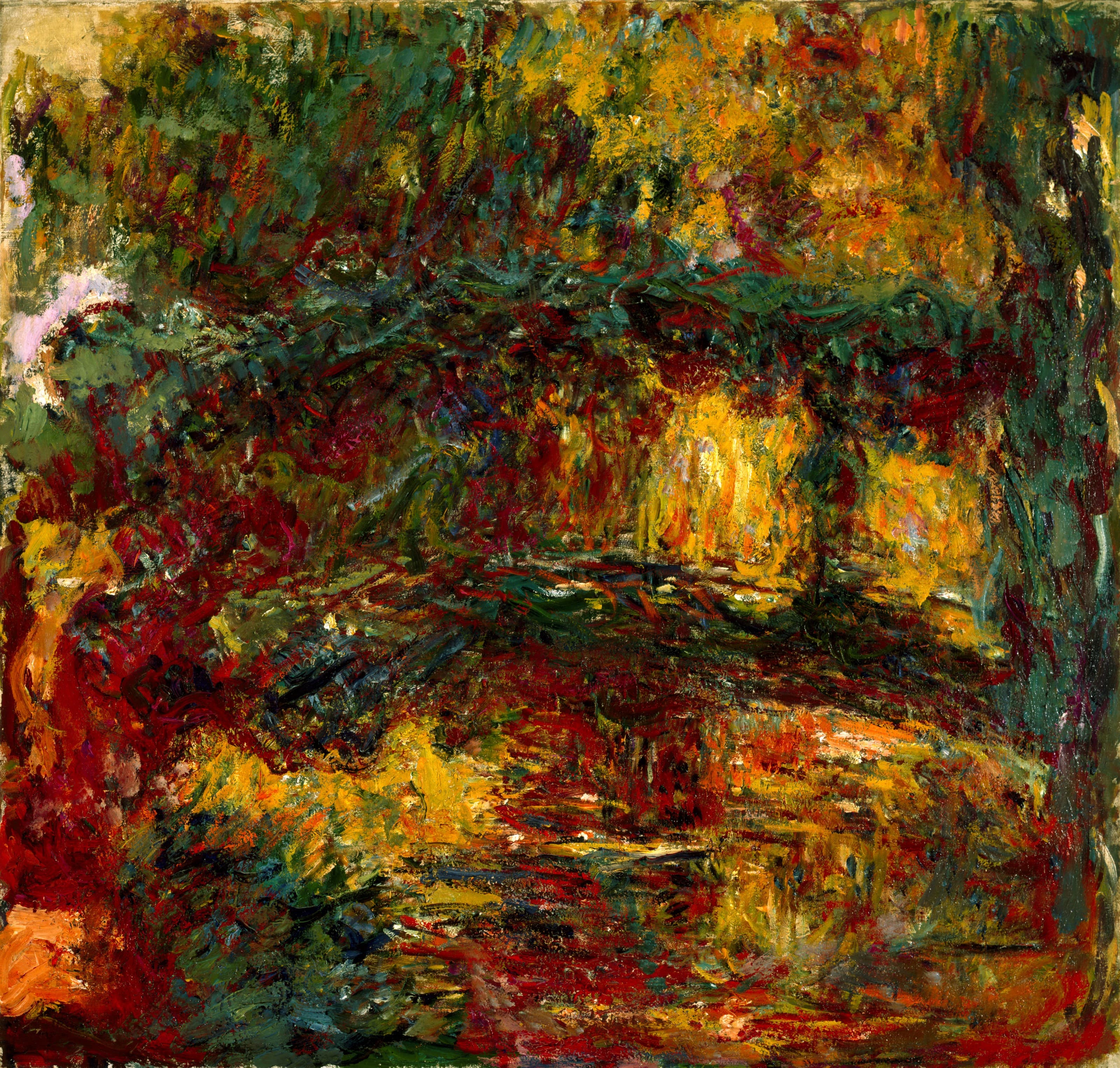
The Japanese Footbridge, Giverny
Claude Monet · c. 1922
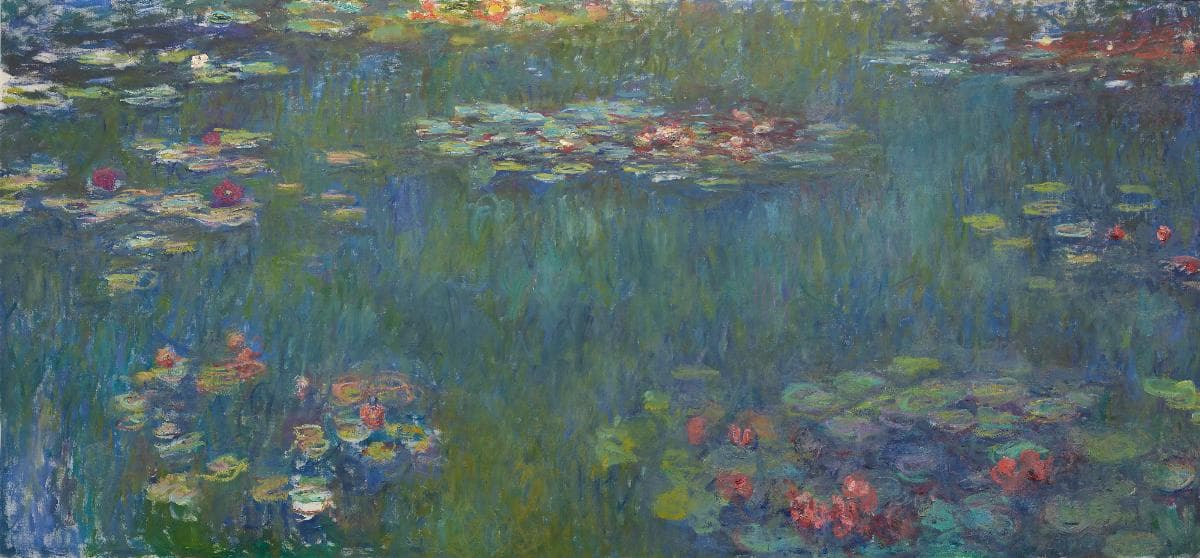
The Water-Lily Pond, Green Reflections
Claude Monet · 1920–26
Also painted in 1920
The same year

Kindred works
You may also study
Water Lilies (Agapanthus)
Claude Monet · c. 1915–26
Water Lilies and Agapanthus
Claude Monet · 1914–17
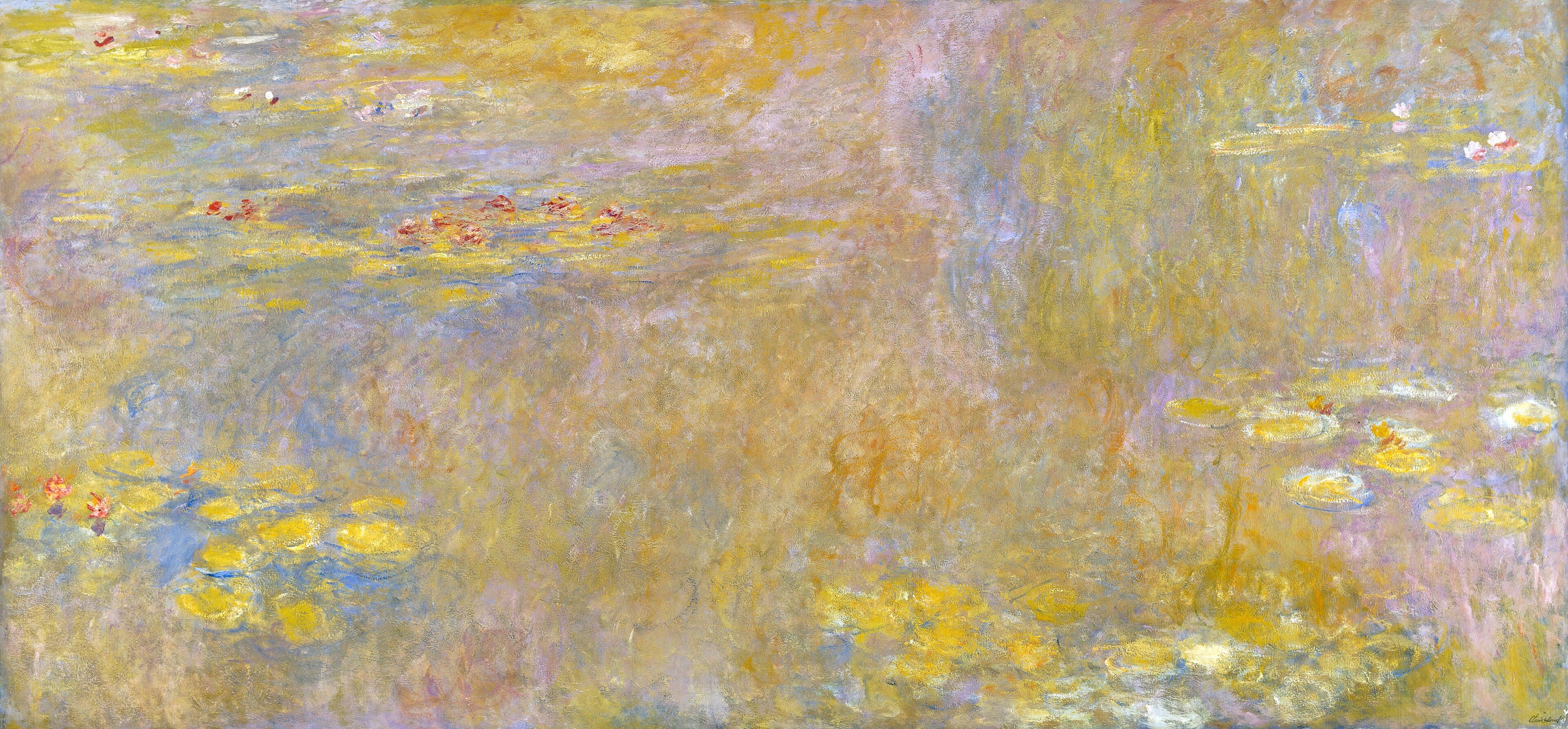
Water-Lilies
Claude Monet · after 1916
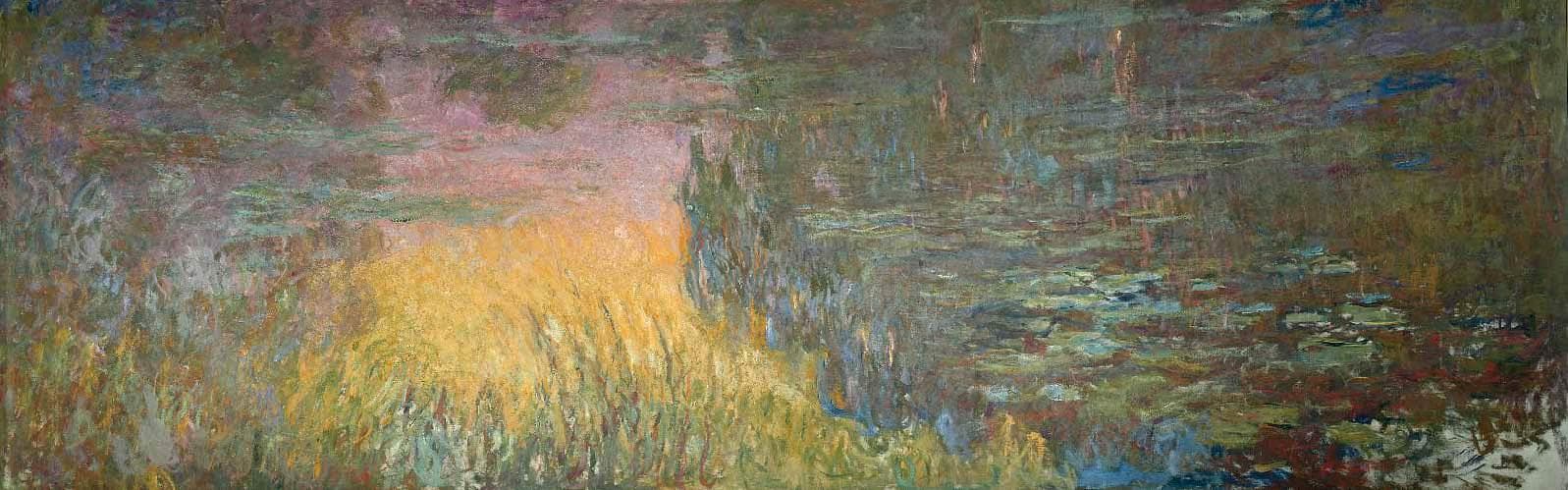
Water Lilies: Setting Sun
Claude Monet · 1914–26
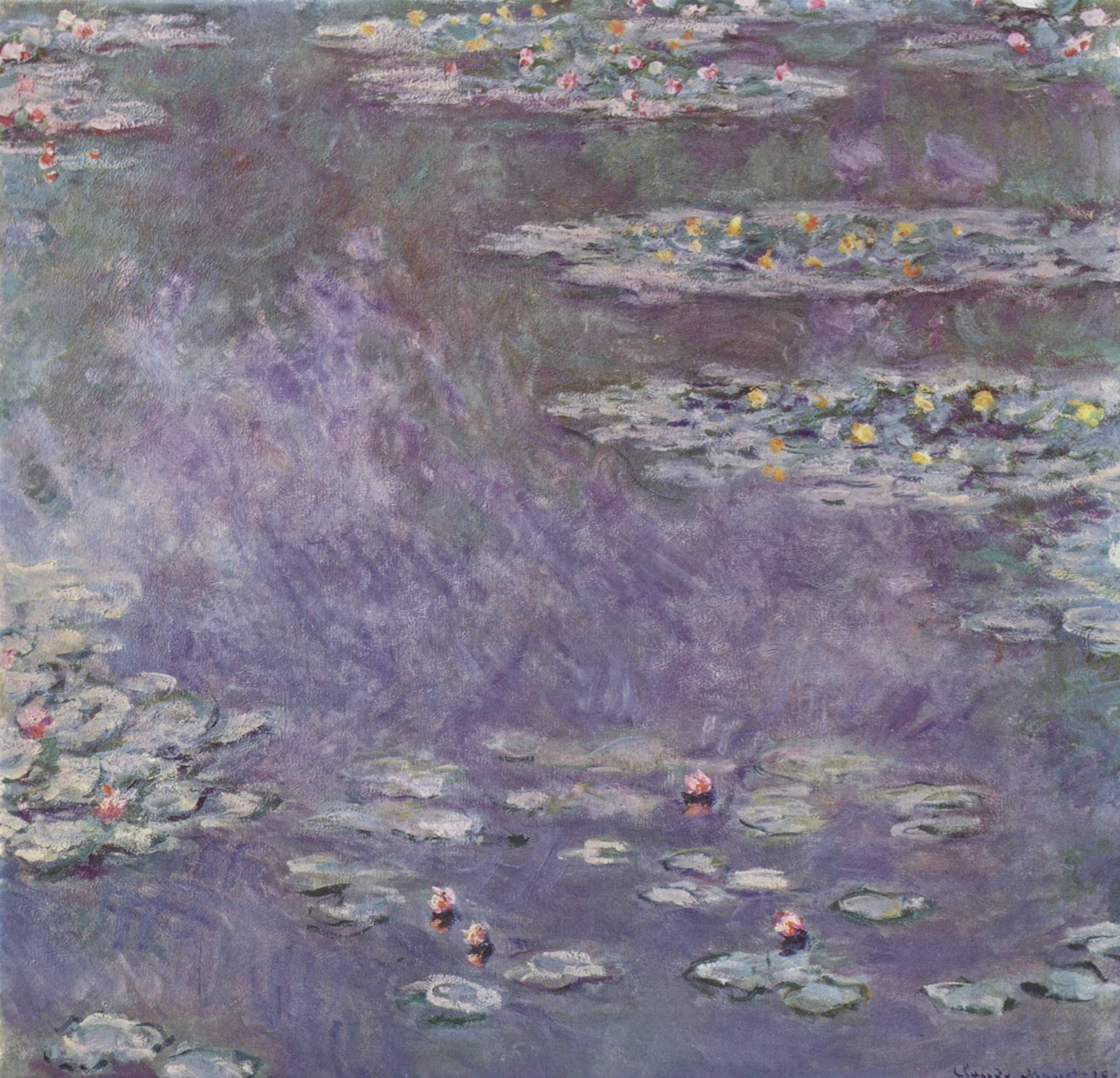
Nymphéas (Oyamazaki Villa Museum)
Claude Monet · 1908
Water Lilies (1904)
Claude Monet · 1904
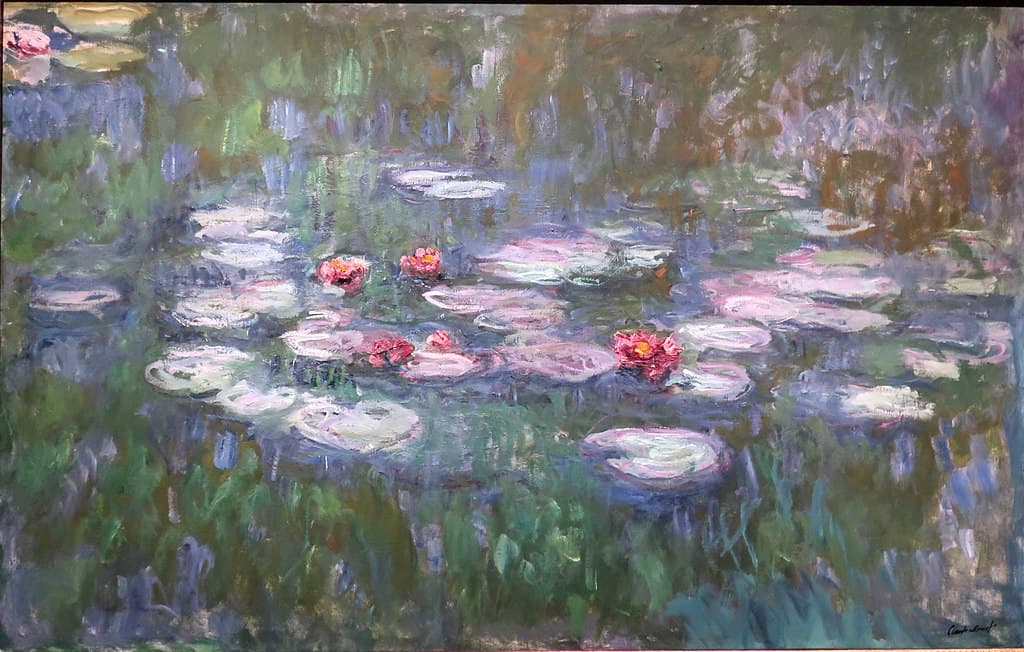
Nymphéas (Water Lilies)
Claude Monet · c. 1914–1919
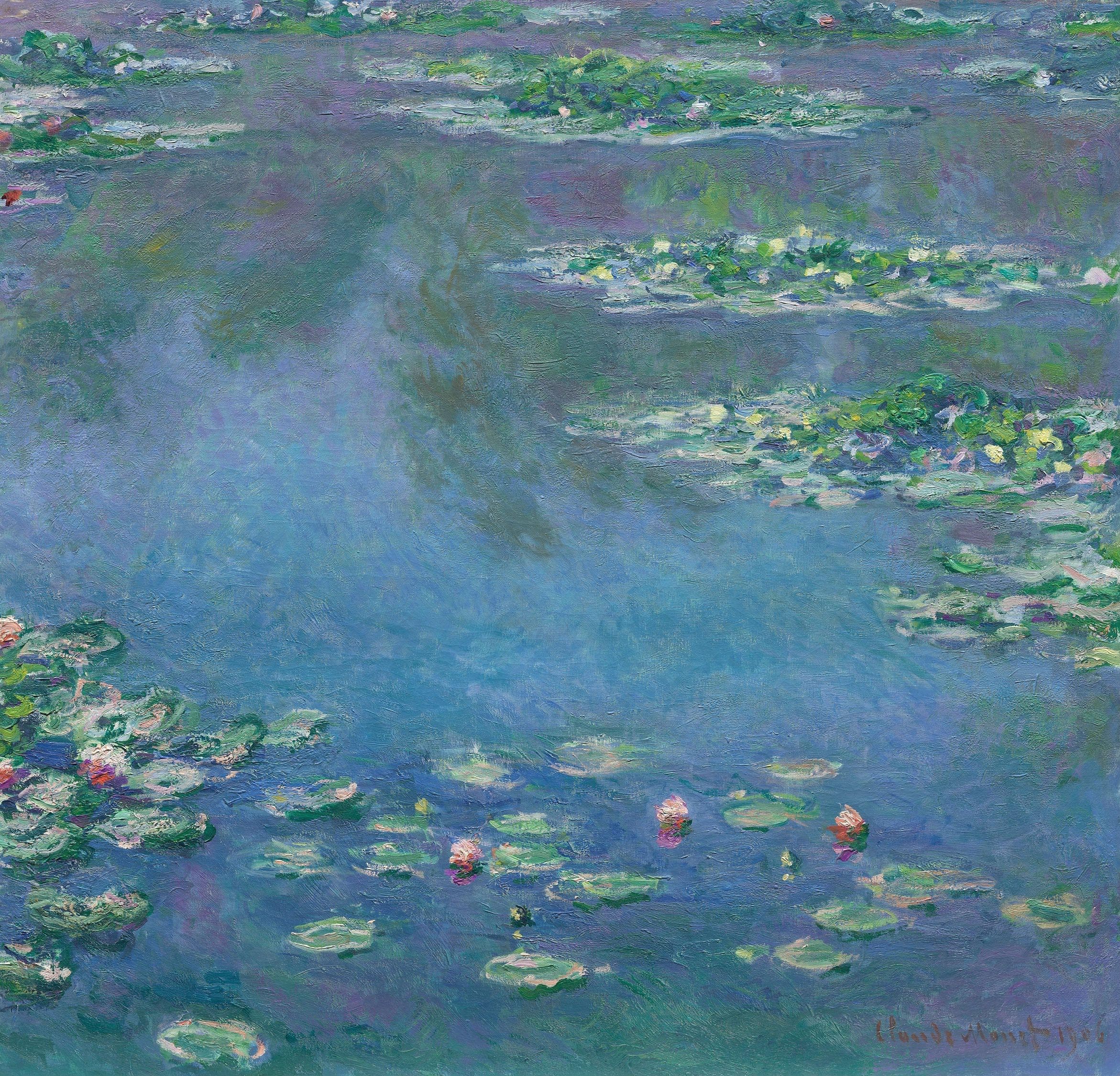
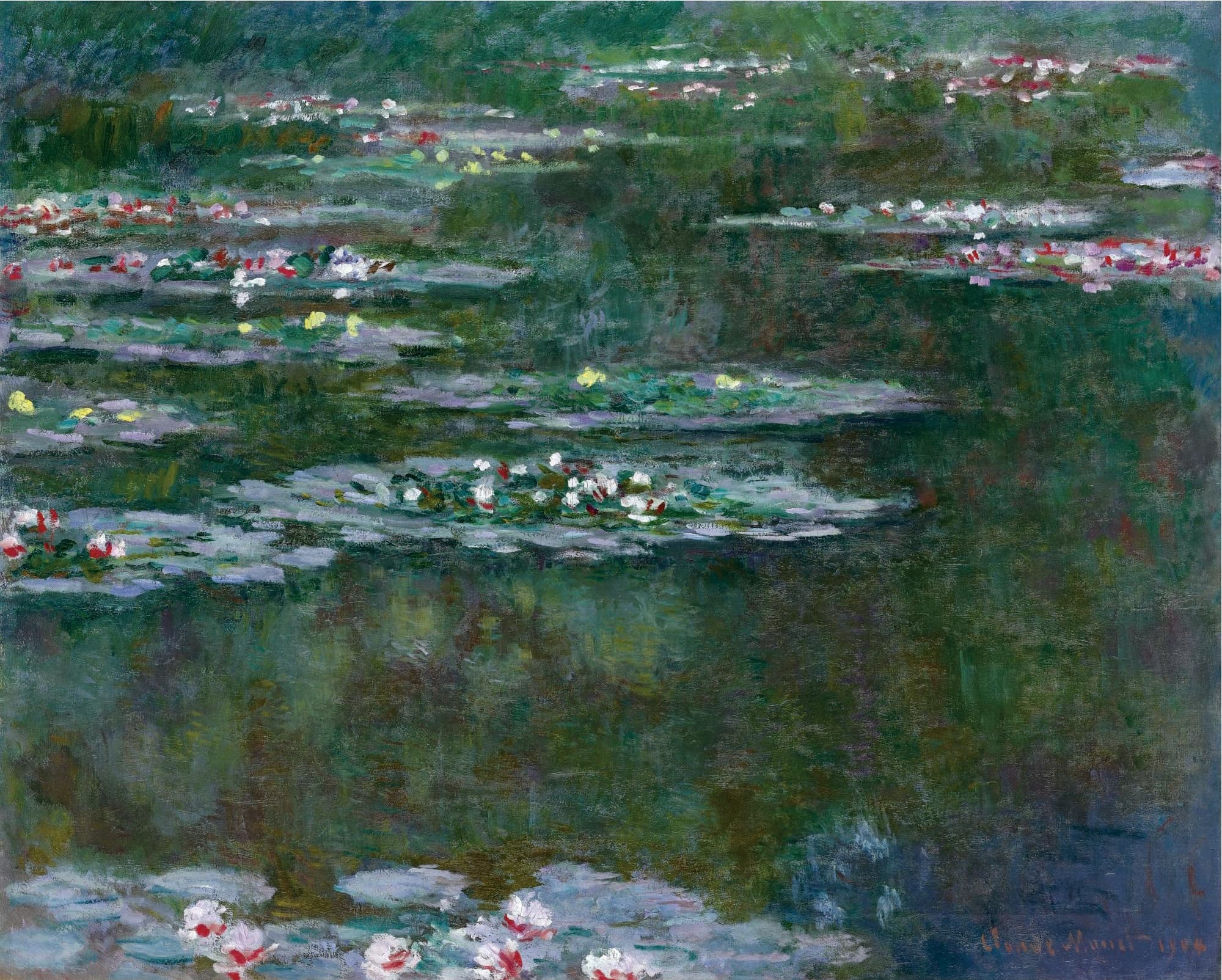
Water Lilies (1906, Art Institute of Chicago)
Claude Monet · 1906