Image: Musée Marmottan Monet, Paris · Public domain · via Wikimedia Commons
Nymphéas (Musée Marmottan Monet, 1916–19)
Claude Monet, 1916–19
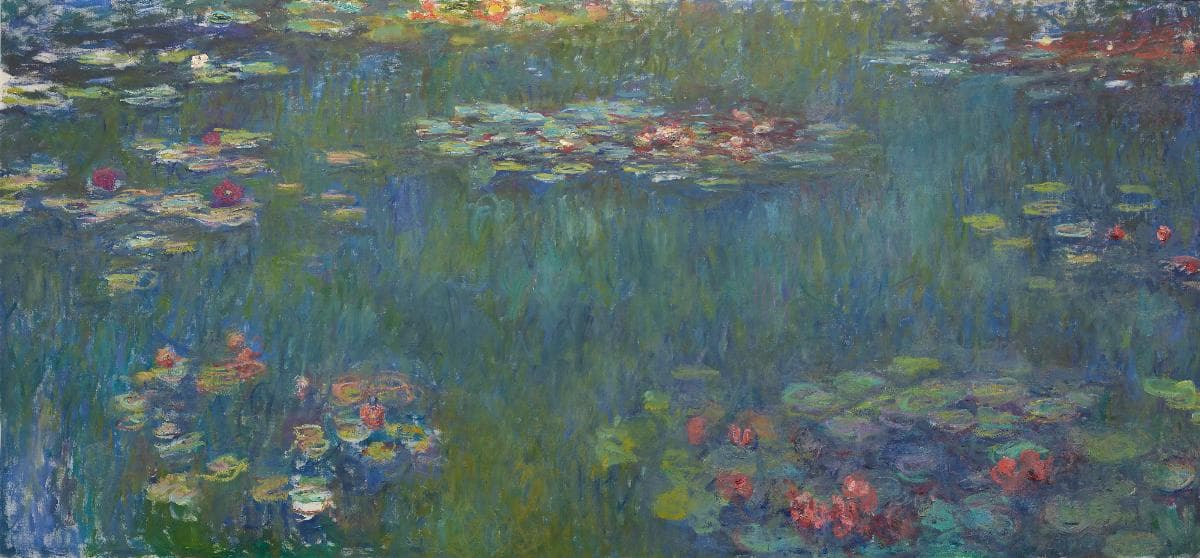
This Nymphéas is a two-meter-high canvas Claude Monet painted at Giverny between 1916 and 1919: willow fronds trailing across a violet pond with pink lilies and a green bank at lower left. It is in the Musée Marmottan Monet, Paris.
- Artist
- Claude Monet
- Date
- 1916–19
- Medium
- Oil on canvas
- Dimensions
- 200 × 180 cm
- Collection
- Musée Marmottan Monet, Paris, France
- Movement
- Impressionism
- Catalogue
- Wildenstein 1850
- Nature & Landscape
- Water & Sea
This Nymphéas (Water-Lilies) is a tall canvas, 200 × 180 cm, that Claude Monet painted of the pond in his garden at Giverny between 1916 and 1919. It is unsigned, and it came to the Musée Marmottan Monet in Paris with the bequest of the painter's son Michel Monet in 1966 (inv. 5117). It is number 1850 in the Wildenstein catalogue raisonné.
What you're looking at
The picture is divided into two zones. On the left, a dark mass of willow hangs down from the top edge and plunges into its own reflection, a column of deep green and violet strokes that runs nearly to the bottom of the canvas. On the right the water opens out into a broad field of pale violet and lilac, the reflected sky. Long, thin strands of willow drop through it, painted as single green threads.
Lily pads are spread across the middle band: rounded shapes in slate, green and blue-grey, some edged in dull red. A few pink flowers sit among them, and a single white-and-pink bloom glows in the upper left. At lower left, a wedge of bright grass green marks the bank, and at lower right a pale yellow-green pad catches the light. These two touches of green anchor a composition that is otherwise all suspension.
This canvas is distinctive for that combination: a strong vertical willow on one side, an open lilac expanse on the other, with the bank brought into the corner. It feels like an afternoon view from the edge of the pond, looking out under the tree.
Where and when it was painted
By 1916 Monet was working daily on what he called his Grandes Décorations. He painted on the bank of the pond in good weather and in his new studio, built in 1915, during the rest of the day. The tall format used here, slightly higher than it is wide, recurs in a group of Marmottan canvases from the same years and seems to have been used for vertical motifs, like a willow seen from below.
How it was painted
The handling is broad and quick. The willow column is built from overlapping vertical strokes, wet into wet, with violet laid over green. The lilac water is made of long horizontal and diagonal drags, letting the canvas show in places. The pads are scrubbed in with a few rounded marks each. Like many works from the Michel Monet bequest, the picture was not signed, and some edges are left unresolved.
How this version differs
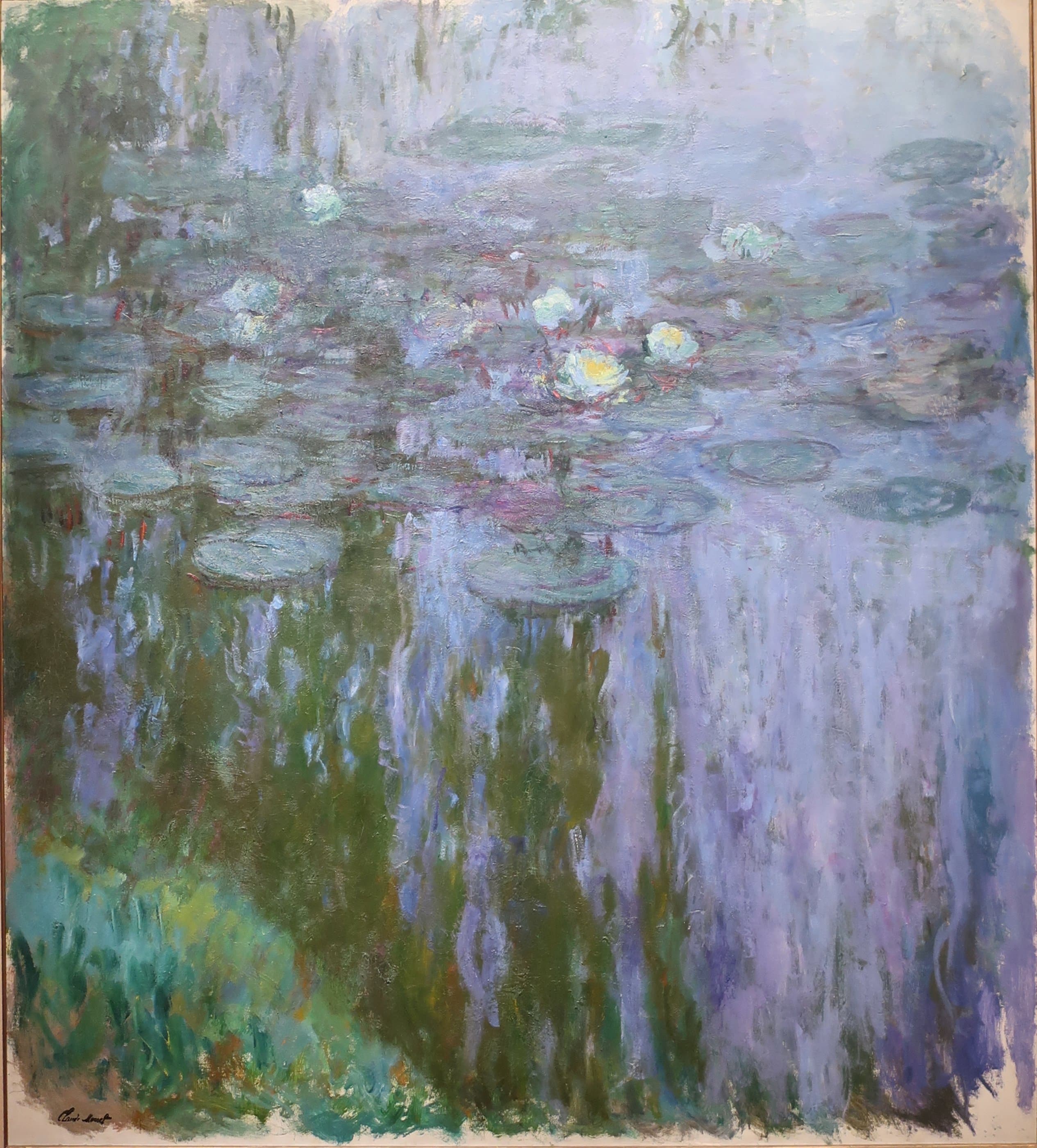
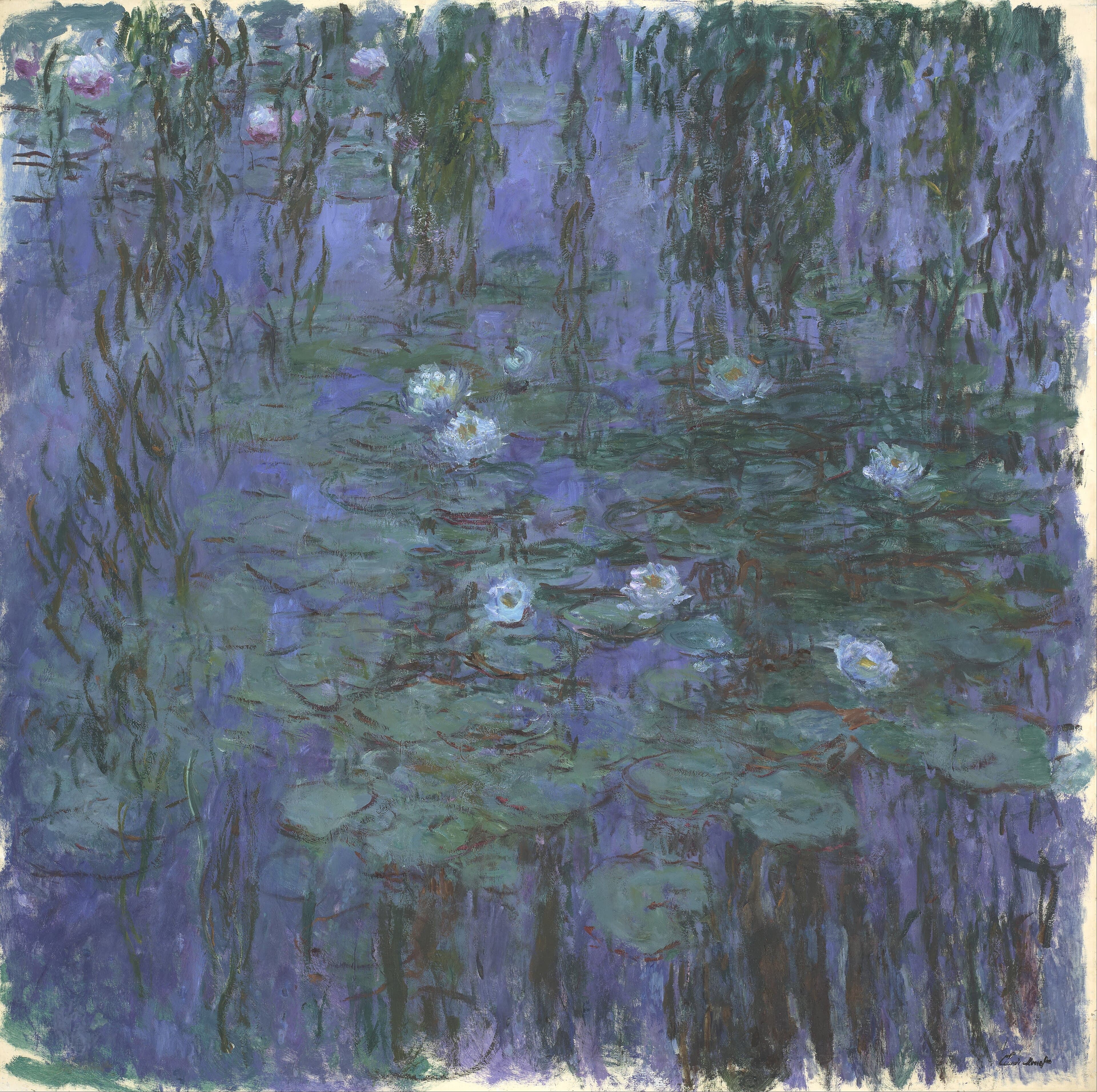
The Musée Marmottan Monet holds several canvases of exactly this size. In another 200 × 180 cm Nymphéas, the willow reflection becomes a soft lilac cascade on the right; in Water-Lilies, Reflection of a Weeping Willow, the lilies nearly disappear. This one keeps the clearest separation between tree, pads and sky, and it has the most saturated violet. The Blue Water Lilies at the Orsay is a square cousin in a cooler blue.
A detail to look for
In the upper right corner, above the open lilac water, Monet paints a strip of pale green and lemon with a few horizontal strokes: the far bank of the pond and the light on it, seen reflected. It is easy to miss, but it changes the space of the picture. Without it, the violet field would be bottomless; with it, the pond has a far edge, and the willow strands in front seem to hang in a real volume of air. Monet used such clues sparingly in the late canvases. Comparing this one with the Marmottan's more abstract squares shows how much a single strip of reflected bank can do.
Where to see it
Michel Monet's bequest made the Marmottan the main place to study the late work of Claude Monet; its Monet collection is displayed in a dedicated gallery, though individual canvases rotate and travel to exhibitions. For the garden that inspired them, see Giverny, and for the whole sequence, the Water Lilies series.
Questions & answers
Where is this Monet Nymphéas?
It is in the Musée Marmottan Monet in Paris (inventory 5117). The museum received it in 1966 as part of the bequest of Michel Monet, the painter's younger son, together with dozens of other late canvases.
When was it painted?
The Marmottan dates it to 1916–19. Monet painted it at Giverny during the years he was working on the large water-lily decorations now in the Musée de l'Orangerie.
What does the painting show?
A dark willow and its reflection fill the left side, while on the right the pond opens into pale violet water crossed by thin willow strands. Lily pads with a few pink flowers float across the middle, and a green bank appears at lower left.
Why is it unsigned?
Many late canvases stayed in Monet's studio as working pictures and were never sold in his lifetime, so he never signed them. Some were stamped with his signature after his death; this one, according to the museum, bears no signature.
More by the artist
Claude Monet
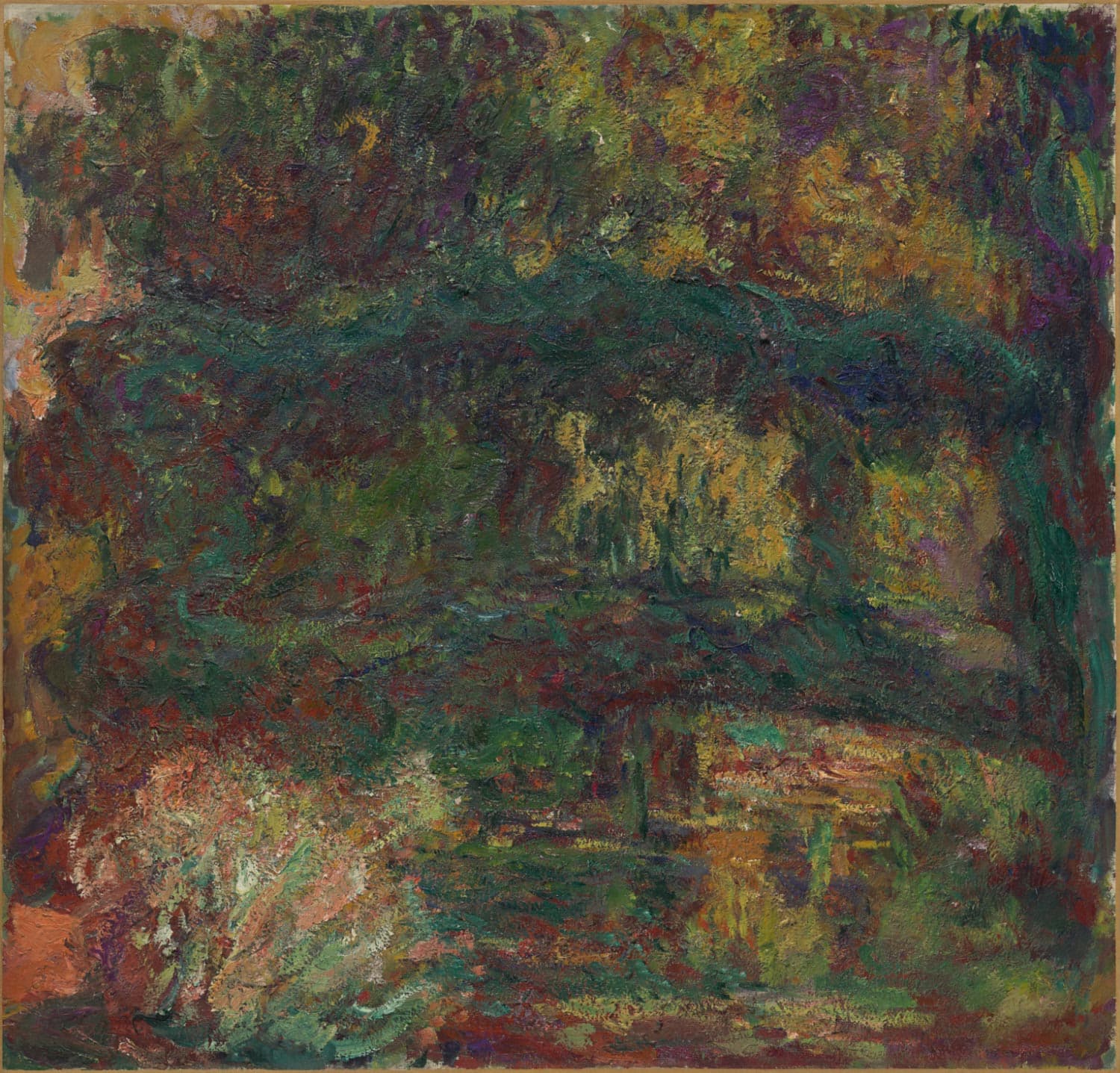
Nymphéas, Japanese Bridge
Claude Monet · 1918–26
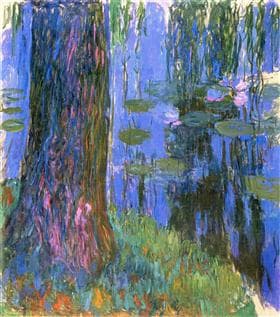
Weeping Willow and the Water-Lily Pond
Claude Monet · c. 1916–19
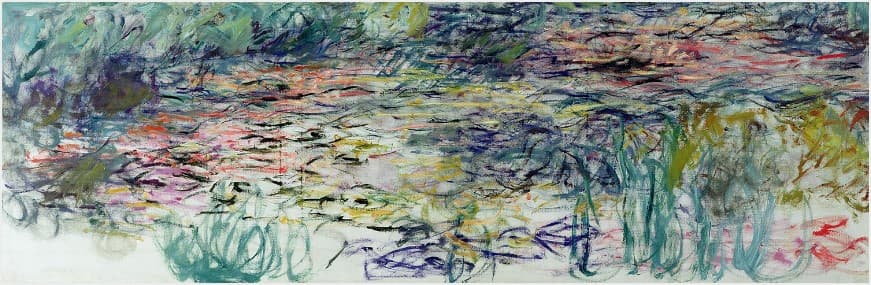
Nymphéas (Musée Marmottan Monet, 1917–19)
Claude Monet · 1917–19
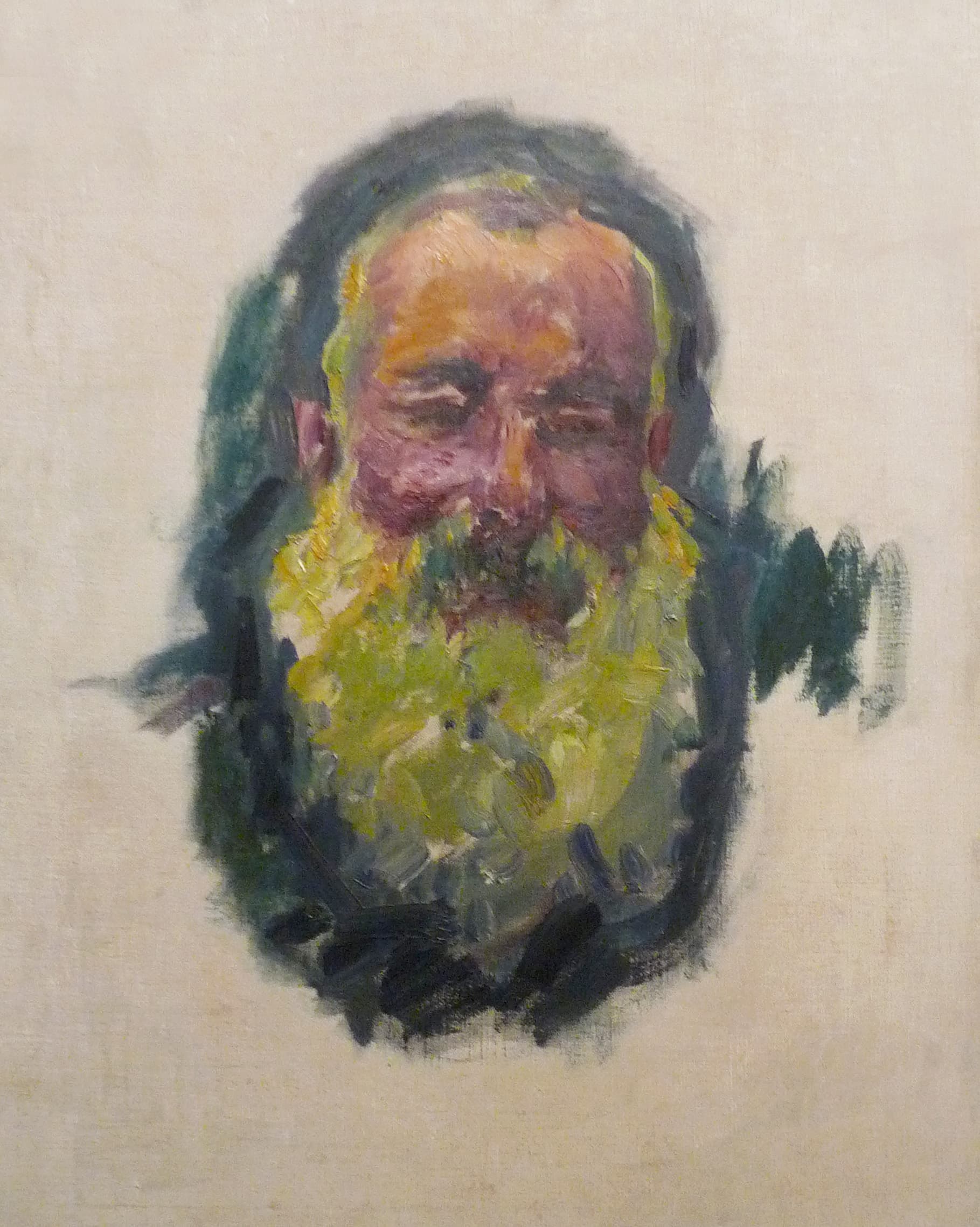
Self-Portrait (1917)
Claude Monet · 1917
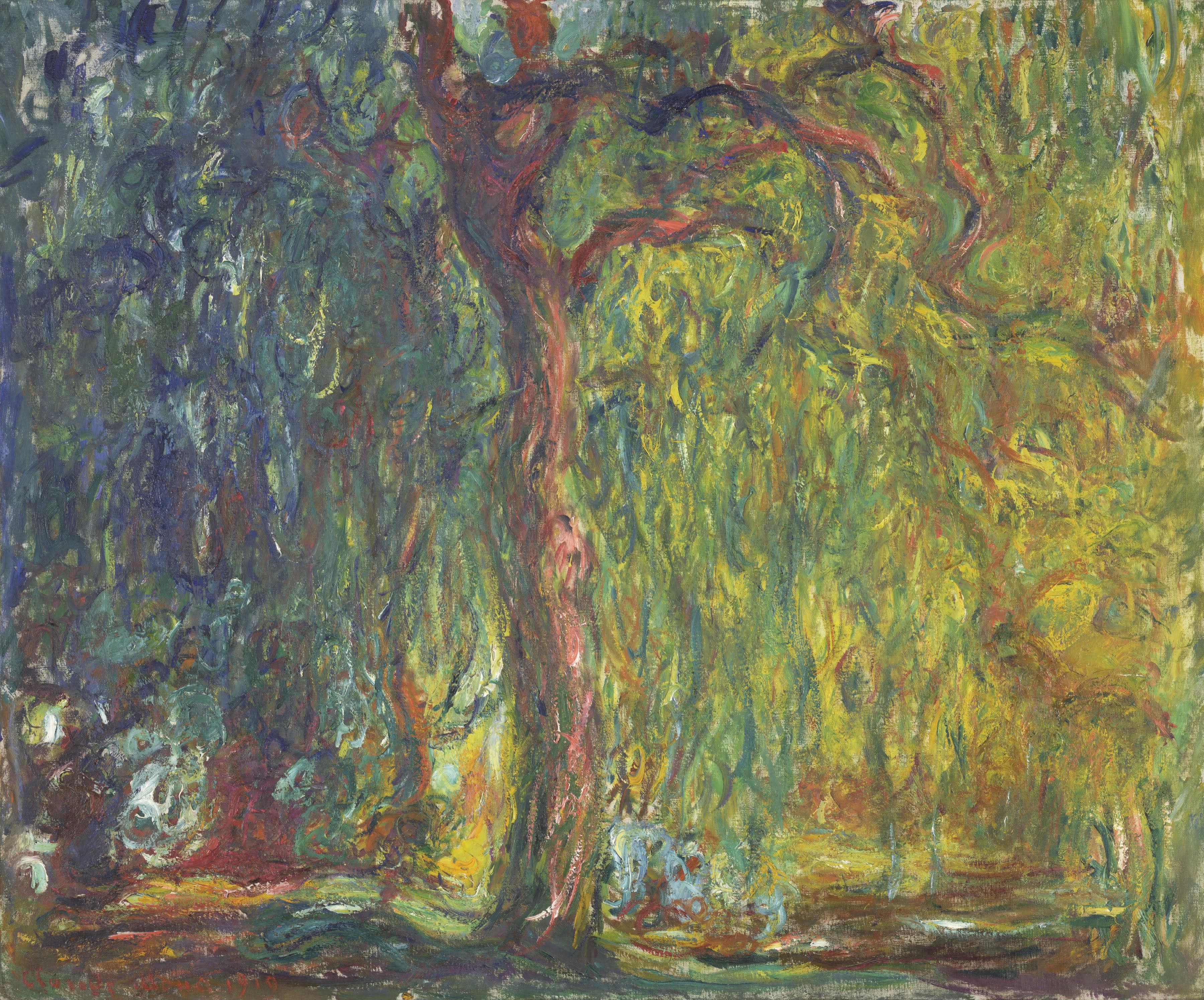
Weeping Willow
Claude Monet · 1918–19
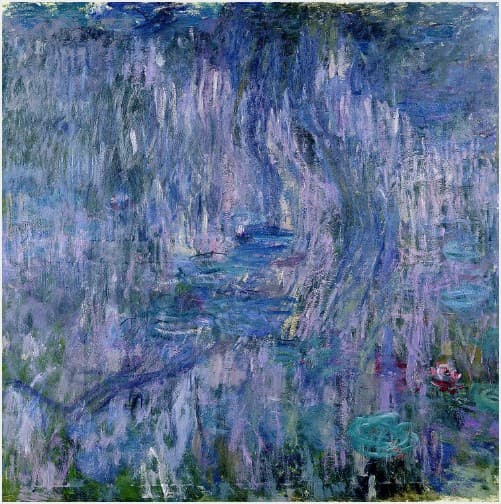
Water-Lilies, Reflection of a Weeping Willow
Claude Monet · 1916–19
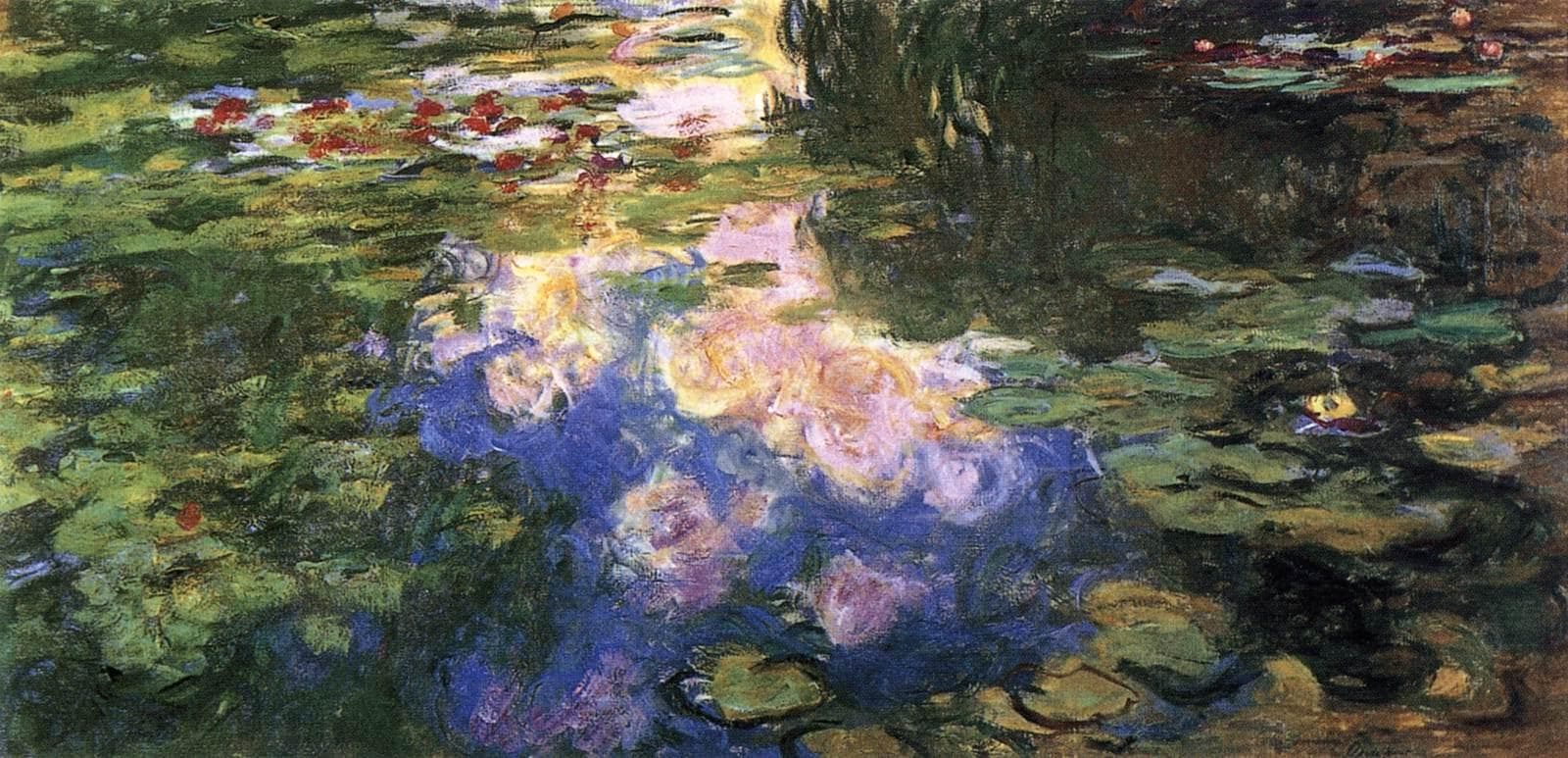
Water-Lily Pond (Le Bassin aux nymphéas), 1917–19
Claude Monet · 1917–19
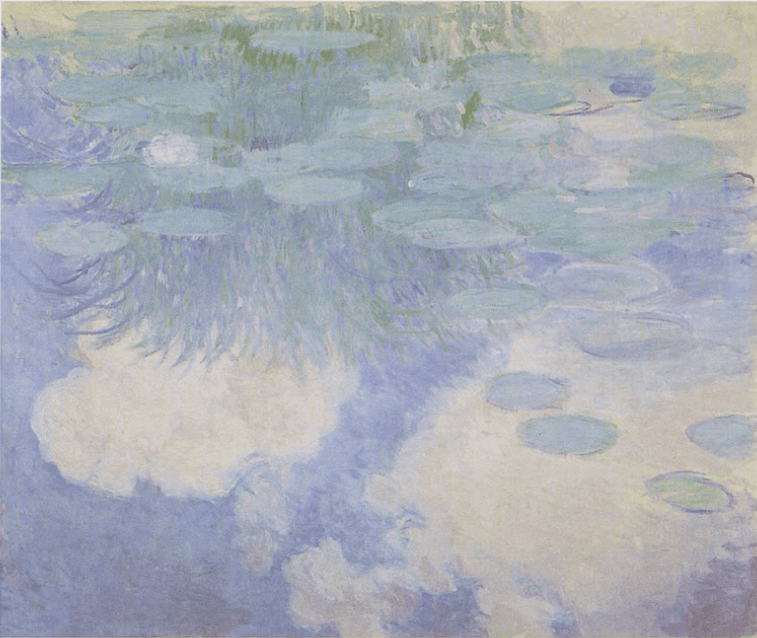
Nymphéas (1915, Musée Marmottan Monet)
Claude Monet · 1915
Also painted in 1917
The same year
Kindred works
You may also study
Nymphéas (Musée Marmottan Monet, 1916–19, inv. 5119)
Claude Monet · 1916–19
Blue Water Lilies
Claude Monet · 1916–19
Nymphéas (Musée Marmottan Monet, 1914–17)
Claude Monet · 1914–17
Water Lilies with Willow Branches
Claude Monet · c. 1916–17
The Water Lily Pond, Harmony in Rose
Claude Monet · 1900
The Japanese Bridge
Claude Monet · 1918–24
The Japanese Footbridge, Giverny
Claude Monet · c. 1922
The Water-Lily Pond, Green Reflections
Claude Monet · 1920–26