Image: Fondation Beyeler, Riehen/Basel (via Google Arts & Culture) · Public domain · via Wikimedia Commons
The Japanese Bridge
Claude Monet, 1918–24
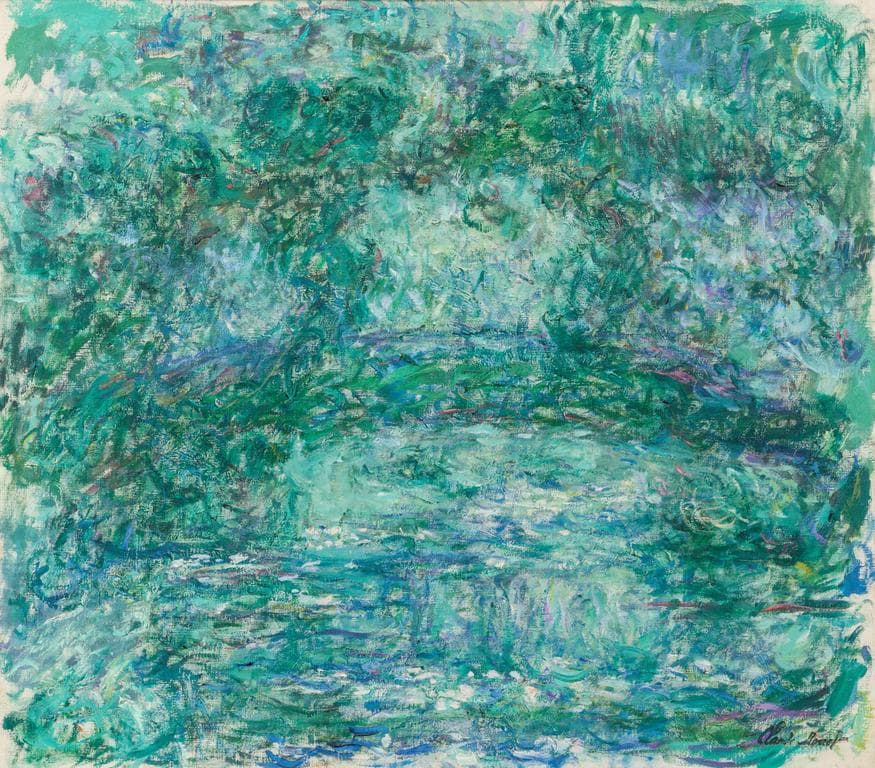
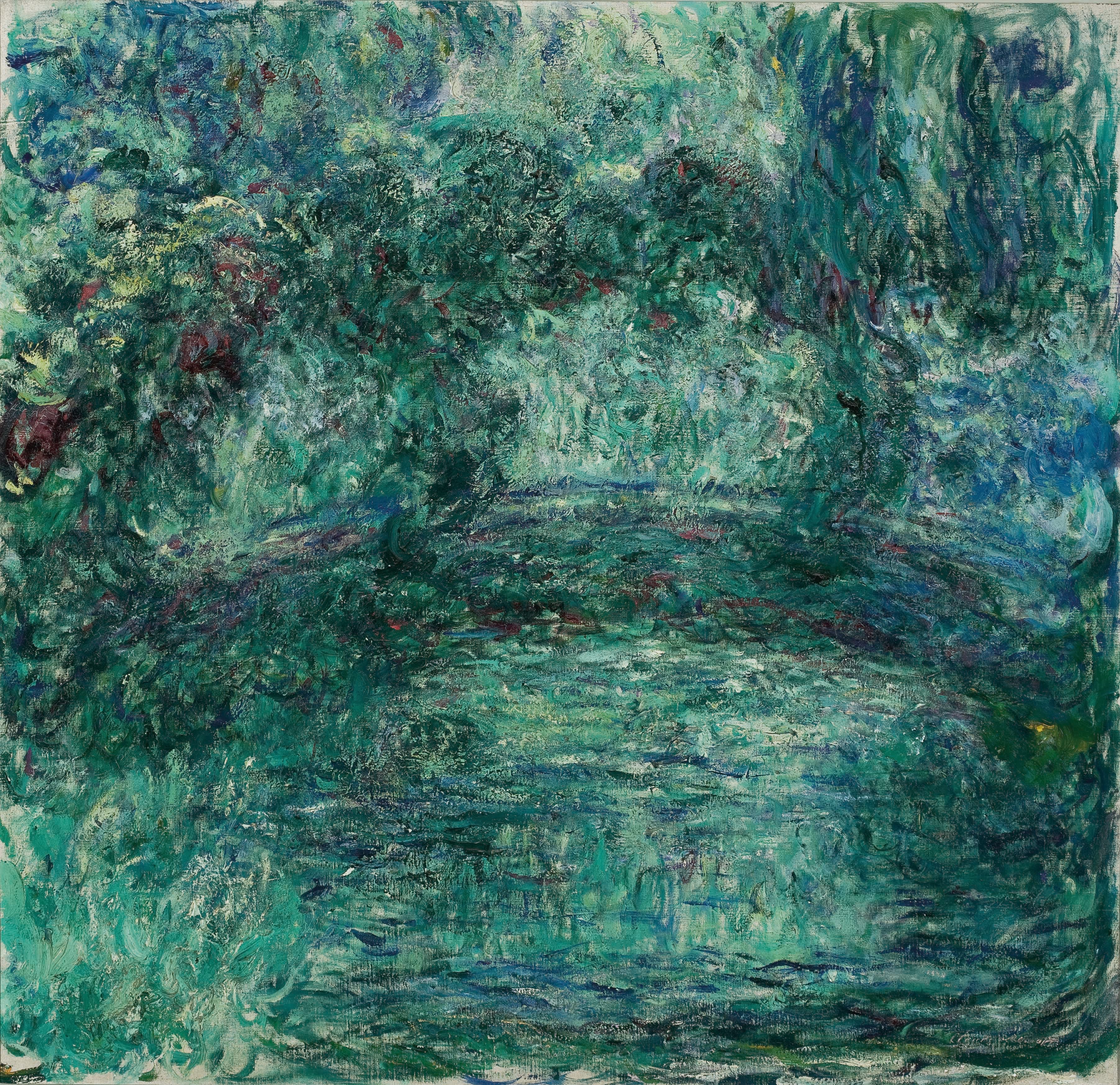
The Japanese Bridge is a late Claude Monet view of his Giverny footbridge, about 1918–24, in deep greens and blues with yellow water lilies dotting the pond. It belongs to the Fondation Beyeler in Riehen, near Basel.
- Artist
- Claude Monet
- Date
- 1918–24
- Medium
- Oil on canvas
- Dimensions
- 89 × 115.5 cm
- Collection
- Fondation Beyeler, Riehen (Basel), Switzerland
- Movement
- Impressionism
- Catalogue
- Wildenstein 1921
- Nature & Landscape
- Water & Sea
The Japanese Bridge (Le Pont japonais) is a late painting by Claude Monet of the arched footbridge over the water-lily pond in his garden at Giverny, dated 1918–24. It measures 89 by 115.5 centimeters and belongs to the Fondation Beyeler in Riehen, outside Basel (inventory 90.15), a museum whose collection was built around Monet's late work.
What you're looking at
The canvas is horizontal and almost entirely green and blue: bottle green, jade, sage, slate blue and touches of violet, lightened in places with chalky whites. The bridge is a low, dark arch crossing the picture just above the middle, its upper edge picked out with a faint line of blue and violet. Above it, the wisteria and trees fill the top half in soft, cloudy masses, a band of paler blue-white foliage glowing just above the arch. In the upper right, long curving strokes of dark green and violet hang down like hair, the willow, with a few small flecks of red.
The pond is where this version differs most from its companions. Below the bridge, a broad pale-green oval of water is scattered with small, bright yellow dots, perhaps a dozen of them: water lilies in flower, or the flowers of yellow pond lilies. They are the only warm color in the picture and they make the water read clearly as a surface, receding toward the bridge. Around them, the water is broken into short horizontal strokes of blue, white and pale green. At the left edge, thick swirls of gray-green mark shrubs on the bank. The signature, Claude Monet, is at the upper right, an unusual position.
The mood is cool, quiet and outdoor: a summer morning or an overcast day rather than the burning dusk of the red bridges.
The late bridge paintings
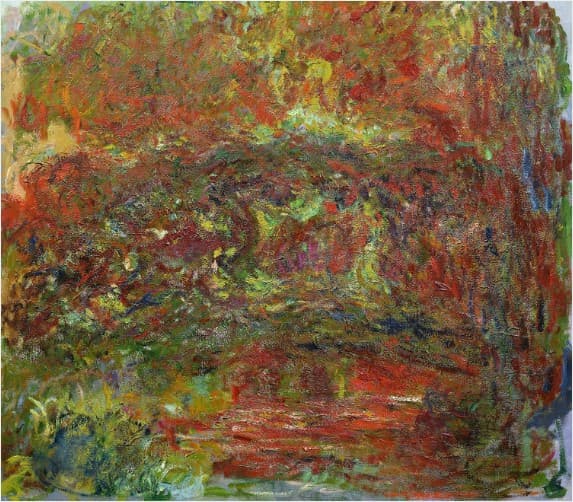
In 1899 Monet painted his footbridge a dozen times from the same place, in clear greens, as in Bridge over a Pond of Water Lilies at the Met. About 1918 he returned to it, with the wisteria now heavy on its trellis and his eyesight damaged by cataracts. The bridges of 1918–24 range from the blue-greens of this canvas to the fiery reds of the Marmottan's red Japanese Bridge.
How it was painted
The brushwork is fluid and rhythmic, with long curling strokes in the foliage and short horizontals on the water. Monet keeps the values close, so that bridge, foliage and water are distinguished by subtle shifts of tone rather than by contrast. The yellow dots are applied last, thick and separate, on top of the dried or nearly dried water.
How this version differs
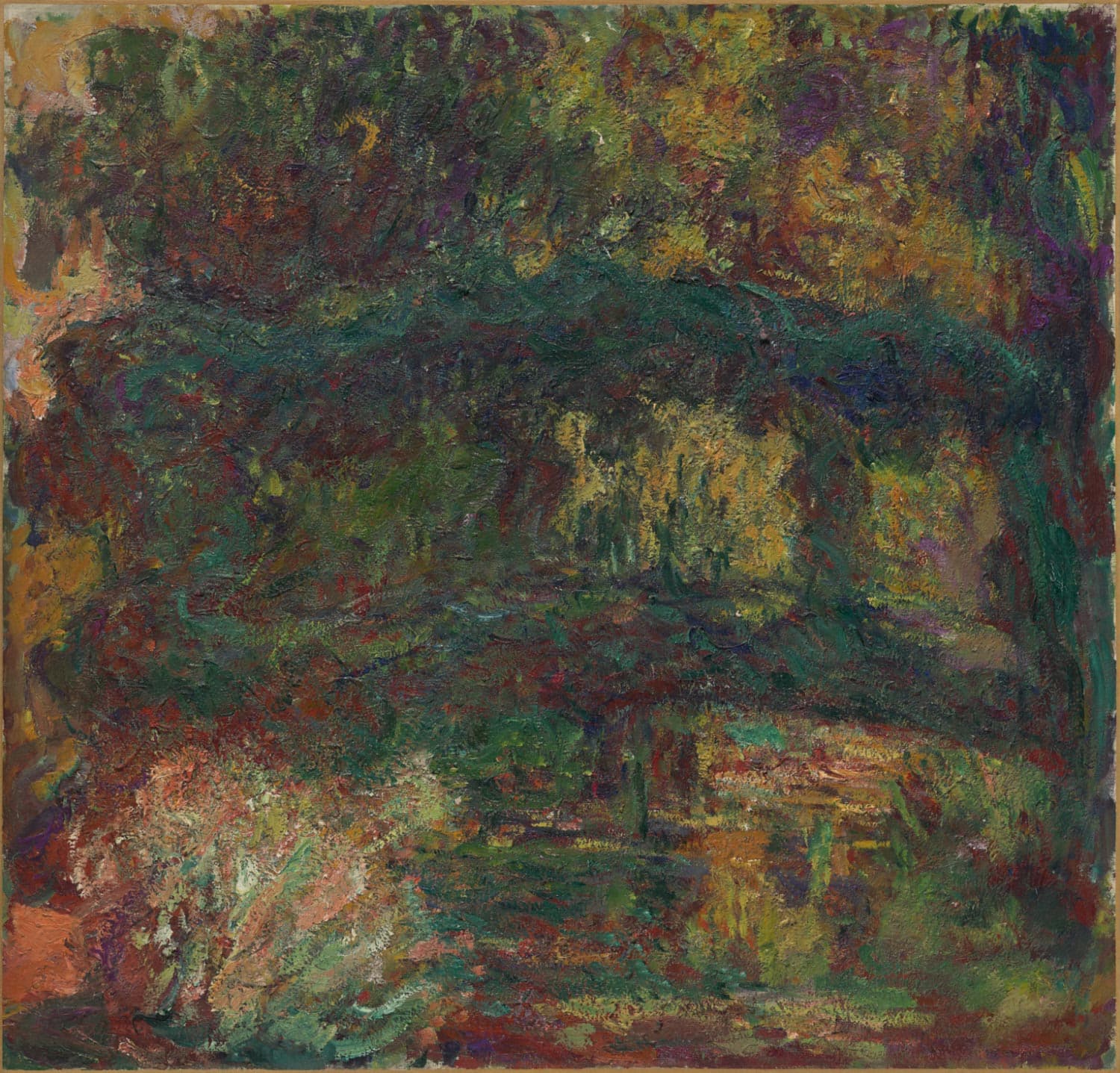
This canvas shares its cool palette and horizontal format with the turquoise bridge lent to the National Gallery, London and with the Van Gogh Museum's bridge, but its bright yellow flowers set it apart, as does the signature placed high at the right. It is greener and less saturated than the São Paulo bridge. For all the versions, see the Japanese Footbridge series, and for the garden, Monet's Giverny.
Where to see it
The painting is in the Fondation Beyeler in Riehen, near Basel, in the museum designed by Renzo Piano. The Beyeler holds an important group of Monet's late garden pictures, including a large water-lily triptych, and the long glass wall of its main gallery opens onto a pond planted with water lilies. For other collections, see where to see Monet's paintings.
Questions & answers
Where is Monet's Japanese Bridge at the Fondation Beyeler?
It is in the Fondation Beyeler in Riehen, just outside Basel, Switzerland (inventory 90.15). The museum holds a significant group of Monet's late works, including a large Water Lilies triptych.
When was it painted?
It is dated 1918–24. Monet painted it at Giverny during the last years of his career, while working on the Orangerie Water Lilies and struggling with cataracts.
What does it show?
It shows the arched footbridge over Monet's pond in deep greens and blues, with willow fronds at upper right and small bright yellow water-lily flowers dotting the pale water below.
How does this version compare with the red Japanese bridges?
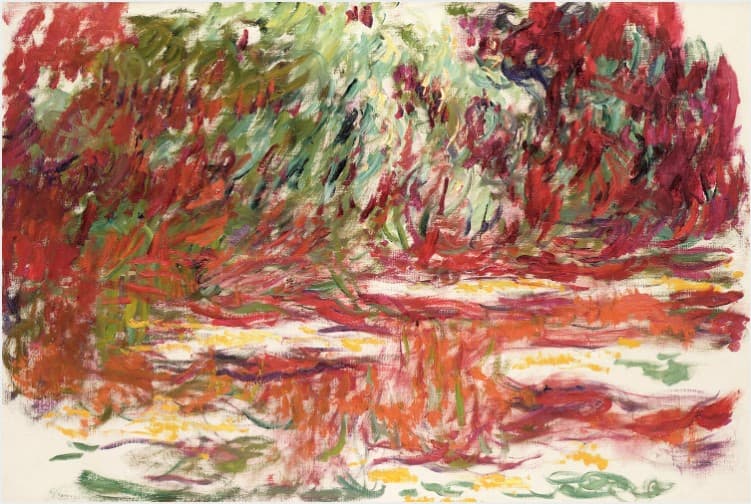
The red versions, mostly at the Marmottan, are hot and nearly abstract. This Beyeler canvas is cool and green, with the bridge and pond still readable and yellow flowers on the water as its only warm notes.
More by the artist
Claude Monet
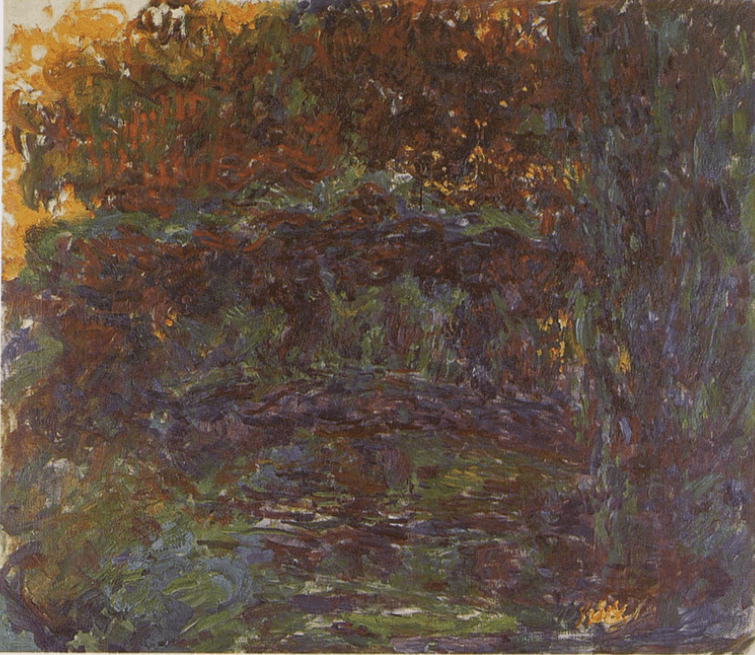
Le pont japonais (Japanese Bridge)
Claude Monet · 1918–24
The Japanese Bridge
Claude Monet · 1918–24
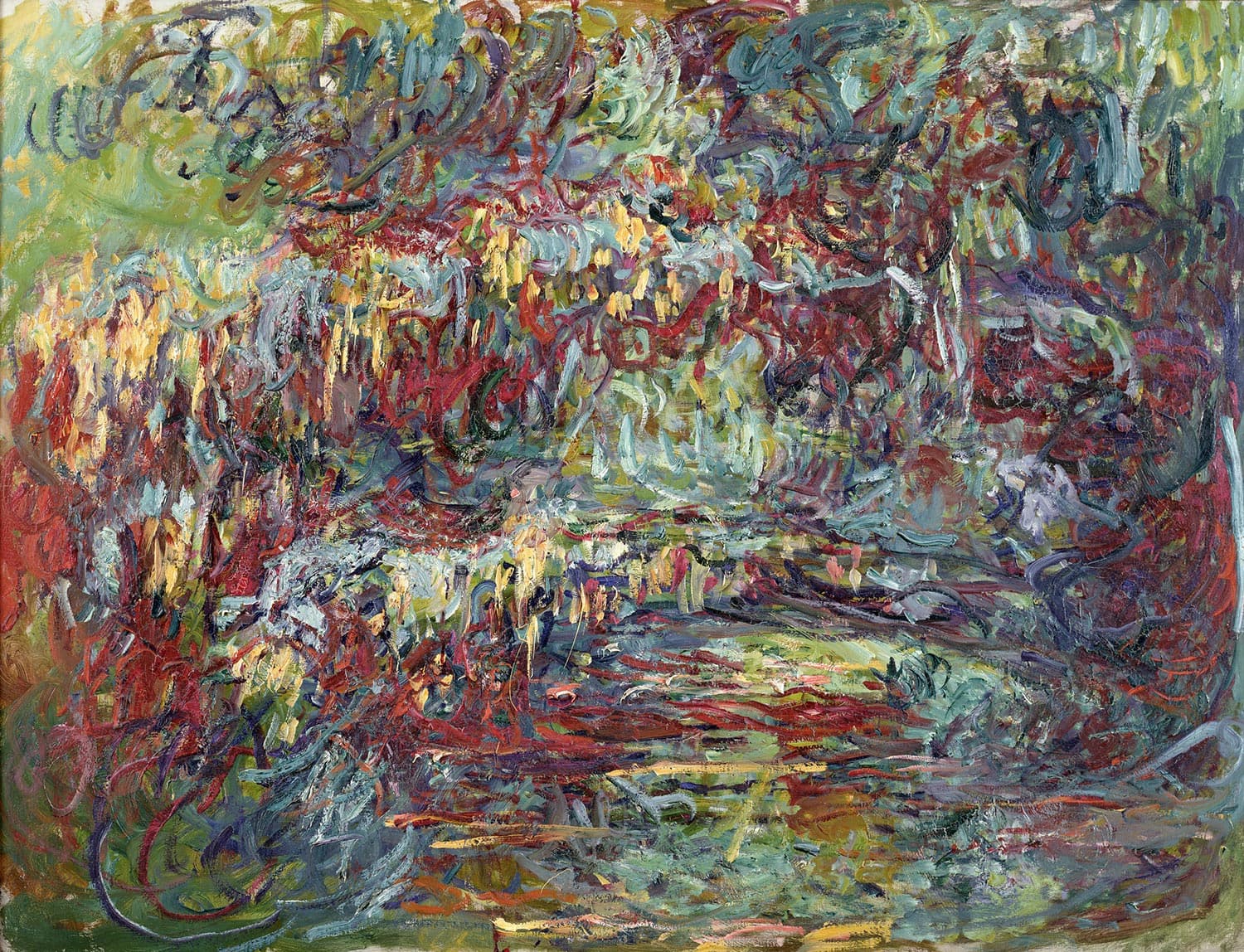
Le Pont japonais
Claude Monet · 1918–24
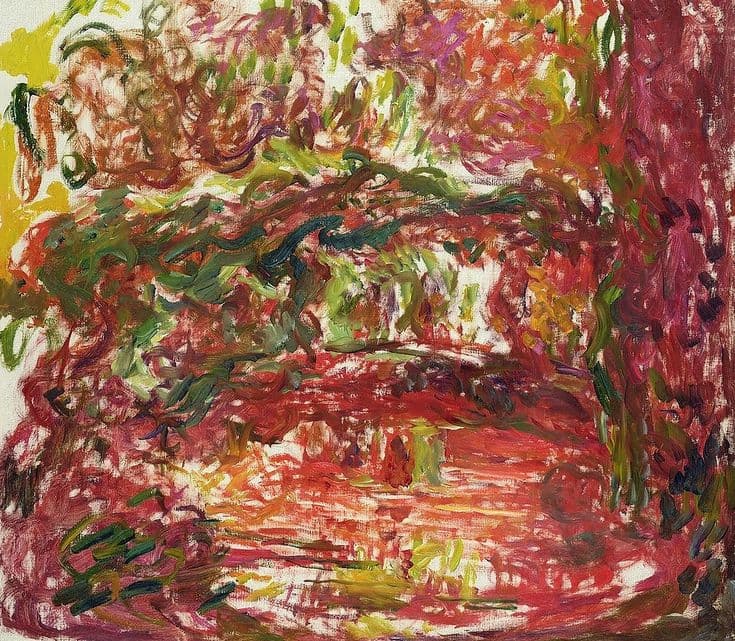
The Japanese Bridge
Claude Monet · 1918–24
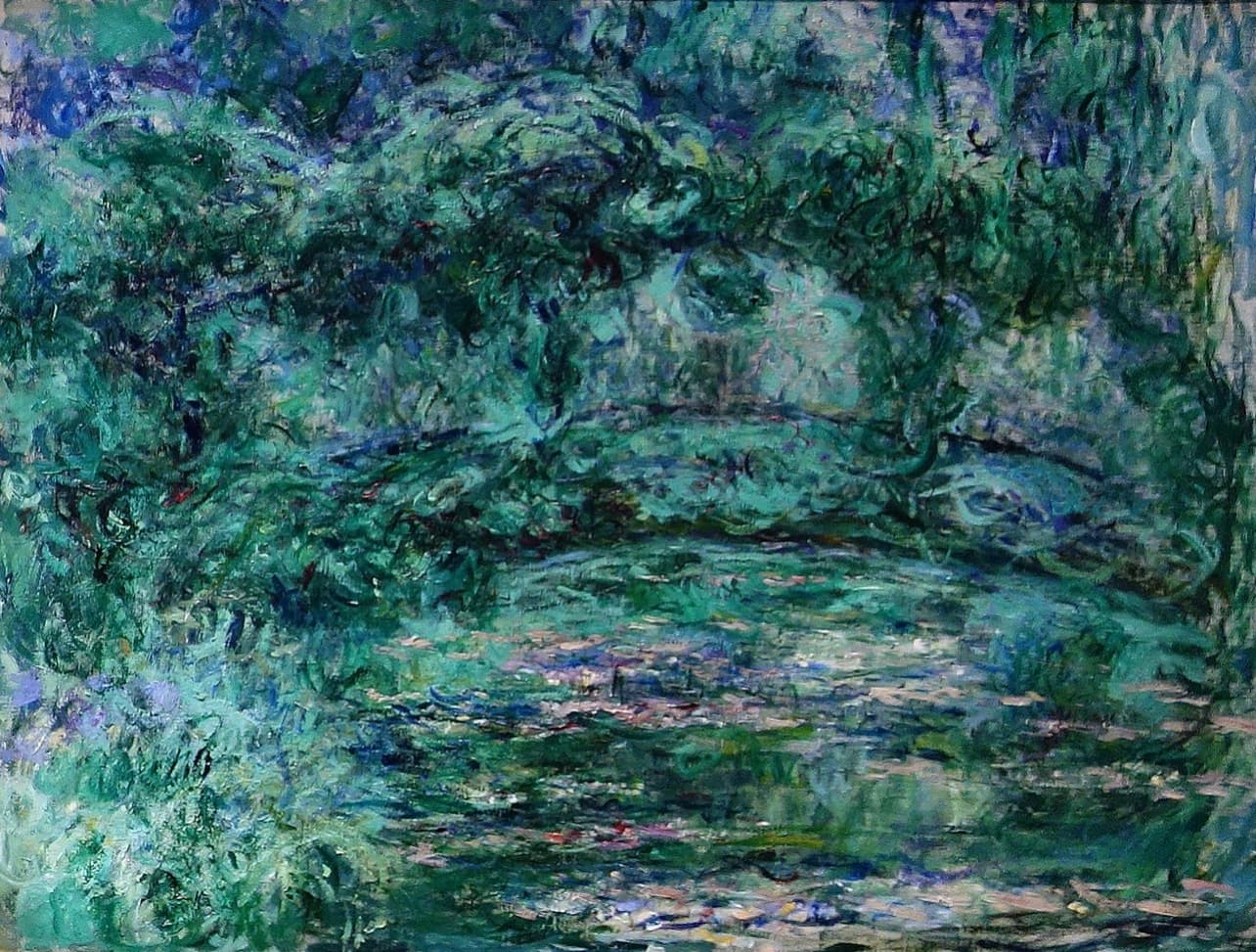
The Japanese Bridge
Claude Monet · c. 1919–24
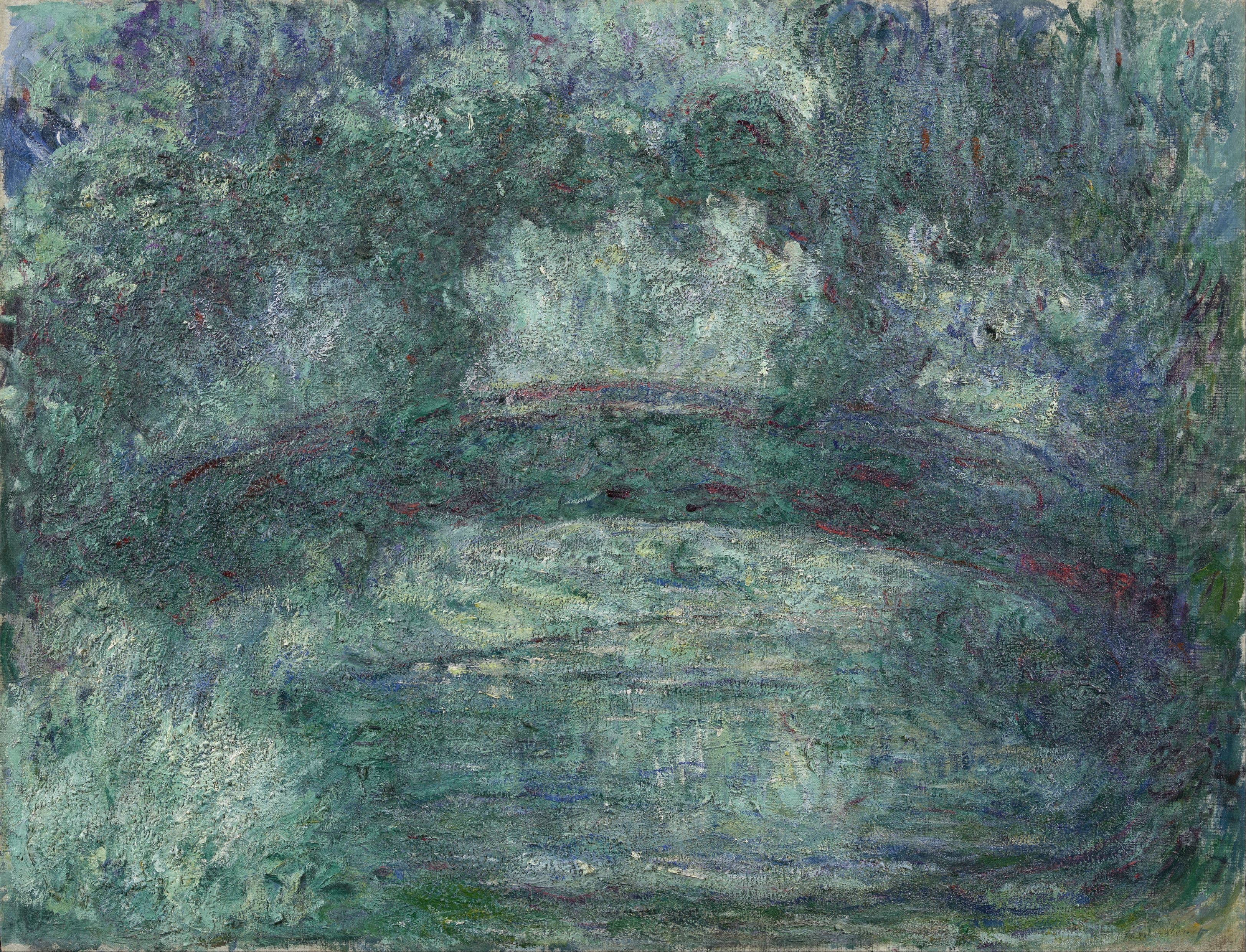
The Japanese Bridge
Claude Monet · 1919–24
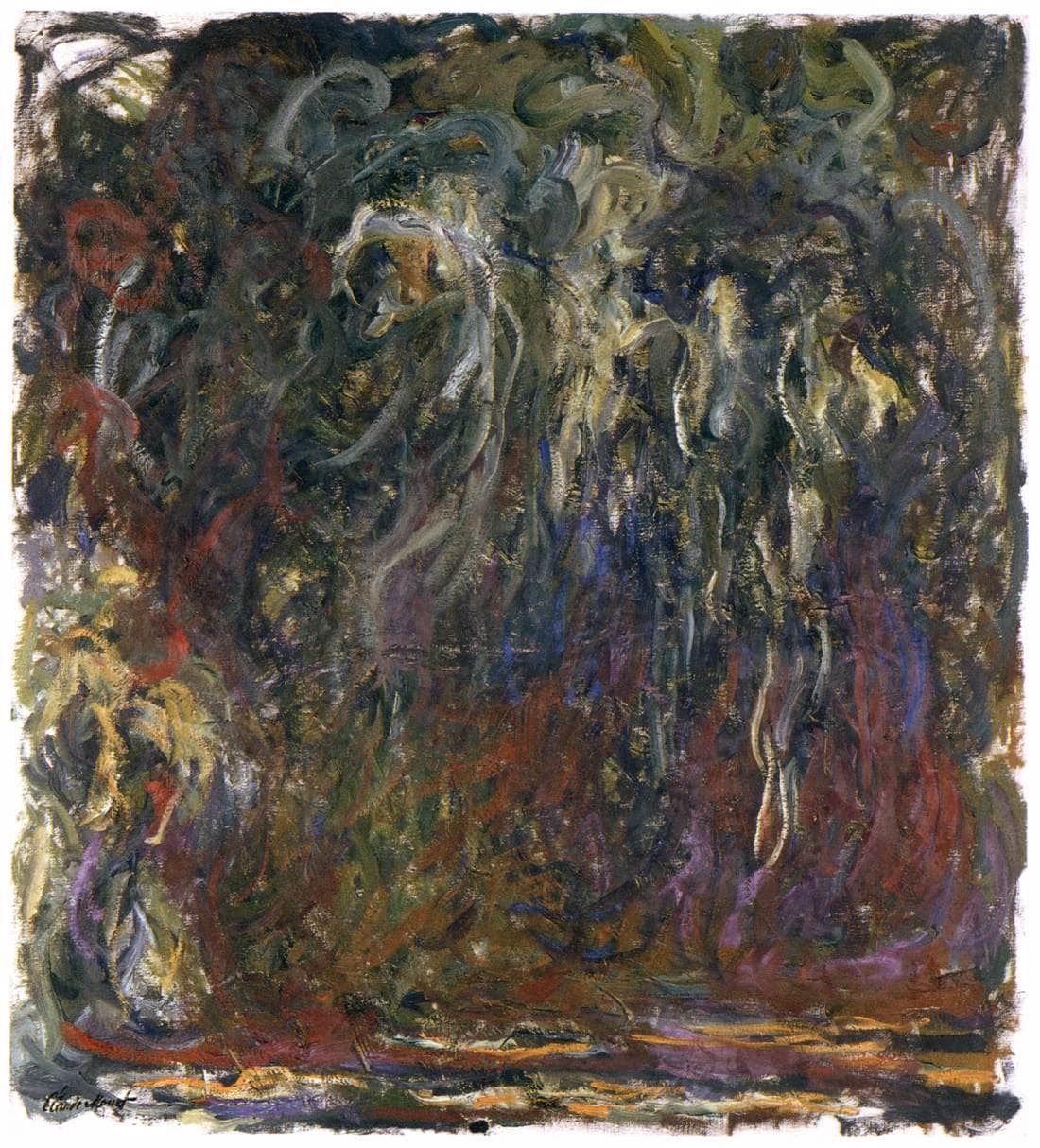
Weeping Willow
Claude Monet · 1920–22
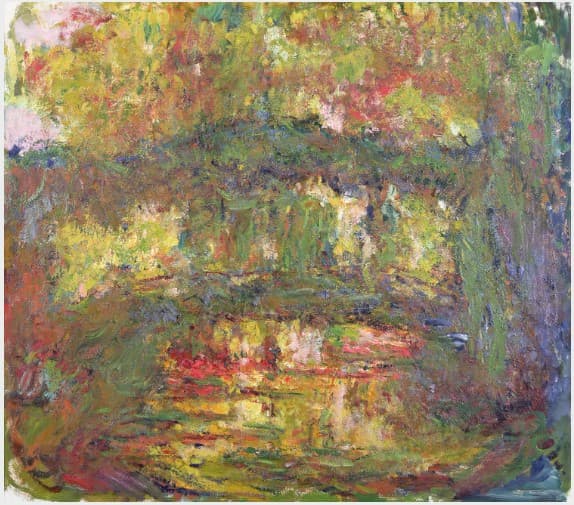
Le pont japonais
Claude Monet · 1918–24
Also painted in 1921
The same year
Kindred works
You may also study
The Japanese Bridge over the Water-Lily Pond in Giverny
Claude Monet · 1920–24

Bridge over a Pond of Water Lilies
Claude Monet · 1899
Water-Lily Pond (Bassin aux nymphéas, 1918–19)
Claude Monet · 1918–19
Nymphéas, Japanese Bridge
Claude Monet · 1918–26
The Water Lily Pond, Harmony in Rose
Claude Monet · 1900
Water Lilies (1914–17, Museum Barberini)
Claude Monet · 1914–17
The Japanese Bridge or The Lily Pond
Claude Monet · 1900
Water Lilies: Green Reflections
Claude Monet · 1914–26