Image: Musée Marmottan Monet, Paris · Public domain · via Wikimedia Commons
Le pont japonais
Claude Monet, 1918–24
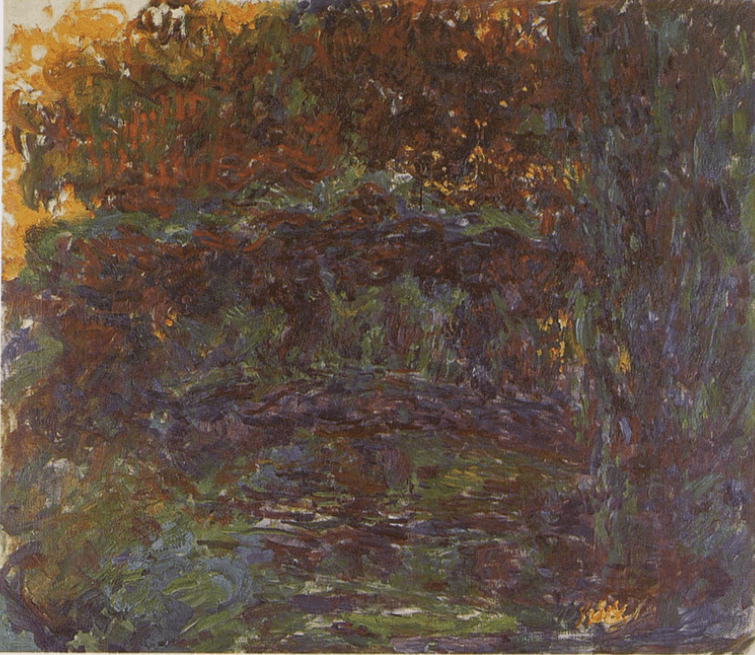
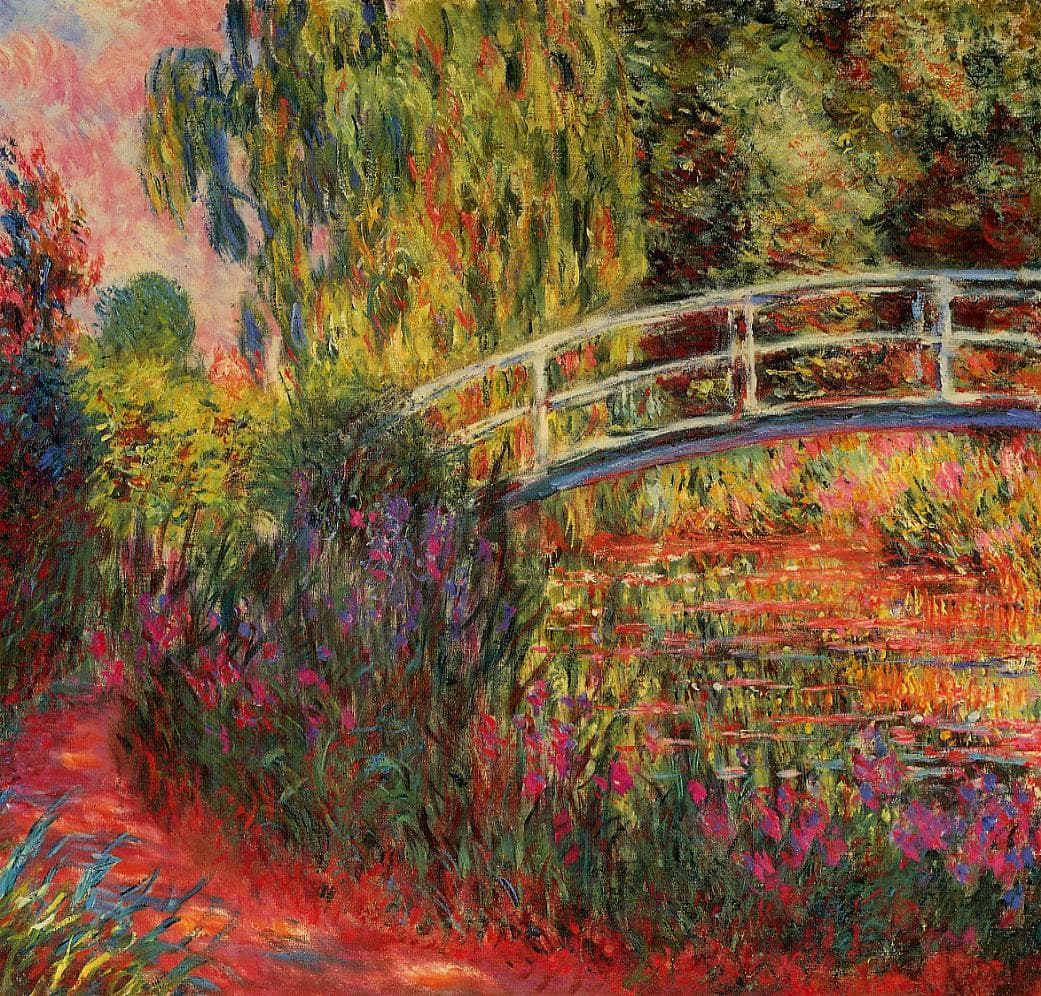
Le pont japonais (Wildenstein 1927) is a late Claude Monet view of his Giverny footbridge, about 1918–24, in which rust-red and brick tones are woven through dense olive and green. It is in the Musée Marmottan Monet, Paris.
- Artist
- Claude Monet
- Date
- 1918–24
- Medium
- Oil on canvas
- Dimensions
- 89 × 100 cm
- Collection
- Musée Marmottan Monet, Paris, France
- Movement
- Impressionism
- Catalogue
- Wildenstein 1927
- Nature & Landscape
- Water & Sea
Le pont japonais (The Japanese Bridge) is a late painting by Claude Monet of the wooden footbridge over the lily pond in his garden at Giverny, dated between about 1918 and 1924 and catalogued by Wildenstein as no. 1927. The unsigned canvas measures 89 by 100 centimeters. It was among the works in Monet's studio at his death and entered the Musée Marmottan Monet in Paris with the bequest of his son Michel in 1966.
What you're looking at
The color here is rust and brick: dense reds broken by olive, moss and yellow-green, with blue-violet in the deepest shadows. The bridge is a broad, slightly flattened arch spanning the canvas a little above the center, painted in deep red-brown with a dark green rim. Above it, the foliage is a thick weave of red, orange and green strokes, the greens brightest at the top center, where they turn almost yellow in the light.
The center of the canvas, under the arch, is a dark hollow: violet, crimson and blue-black, with a single bright magenta accent and a few thin vertical strokes of green and yellow, the willow's fronds. The pond below is a band of brick red and orange laid in horizontal strokes, with dark strokes running parallel to suggest ripples. At the lower left, a rounded mass of blue-green and gray marks a clump of leaves on the bank; its cool color is the strongest contrast in the picture. On the right, vertical strokes of red and blue descend the full height of the canvas, the willow in shadow.
The impression is of late afternoon heat, or of autumn, with the whole garden turned to rust.
Monet's late bridges
Monet painted the footbridge first in a classic group of 1899–1900, such as The Japanese Footbridge in Washington, in clear greens and blues. About 1918, while working on the Orangerie Water Lilies, he returned to the motif in a much freer way. Cataracts had been troubling his vision since 1912; until an operation on his right eye in 1923, he saw colors dulled and warmed. Some two dozen bridge canvases survive from these years, and most of them, including this one, belong to the Musée Marmottan Monet.
How it was painted
The surface is densely worked, with stroke laid over stroke so that little ground shows except at the margins. Monet's brush moves in all directions: curving through the foliage, vertical in the willow, horizontal in the water. Red and green, complementary colors, are placed side by side and allowed to mix where they meet, producing the brick and olive tones that give the picture its weight. The bridge is not drawn but emerges as the place where the dark strokes bend into a curve.
How this version differs
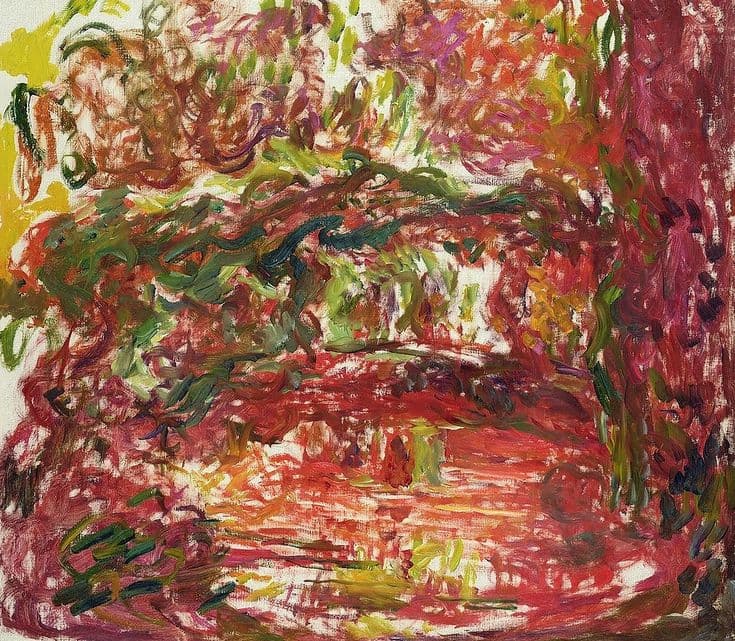
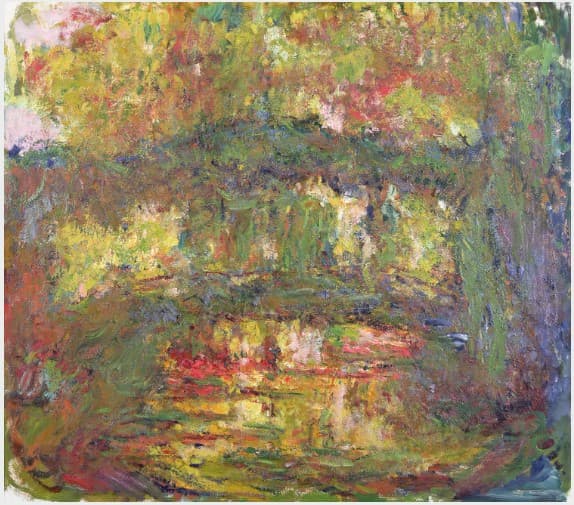
Among the four Marmottan bridges of the same size, this is the most closely woven. The Japanese Bridge (W 1928) is brighter and more open, a blaze of vermilion and orange; Le pont japonais (W 1923) is golden and sunlit; the Japanese Bridge (W 1924) is darker, in plum and russet. This canvas sits between them: hot like W 1928, heavy like W 1924. The cool blue clump at lower left, missing from its companions, is its distinguishing detail. For all the versions, see the Japanese Footbridge series; for the garden, Monet's Giverny.
Where to see it
The painting is in the Musée Marmottan Monet in Paris, home to the world's largest collection of works by Claude Monet. The late bridges are displayed in rotation in the museum's lower-level Monet gallery and are frequently lent abroad.
Questions & answers
Where is Monet's Le pont japonais (W 1927)?
It is in the Musée Marmottan Monet in Paris (inventory 5094). It came to the museum in 1966 with the bequest of Michel Monet, the painter's younger son and heir.
When was it painted?
Between about 1918 and 1924, at Giverny. It belongs to the late group of Japanese bridge paintings Monet made while suffering from cataracts and working on the Orangerie Water Lilies.
What does it show?
It shows the footbridge over Monet's lily pond as a rust-red arch under dense red and olive foliage, with a dark hollow beneath, a brick-red pond and a cool blue-green clump of leaves at lower left.
How is it different from the other red Japanese bridge at the Marmottan?
The Marmottan's Wildenstein 1928 version is brighter, with vermilion, orange and open light under the arch. This one is darker and more densely woven, with brick and olive tones and a cool blue-green note at lower left.
More by the artist
Claude Monet
The Japanese Bridge
Claude Monet · 1918–24

The Water Lilies: The Clouds
Claude Monet · c. 1914–26
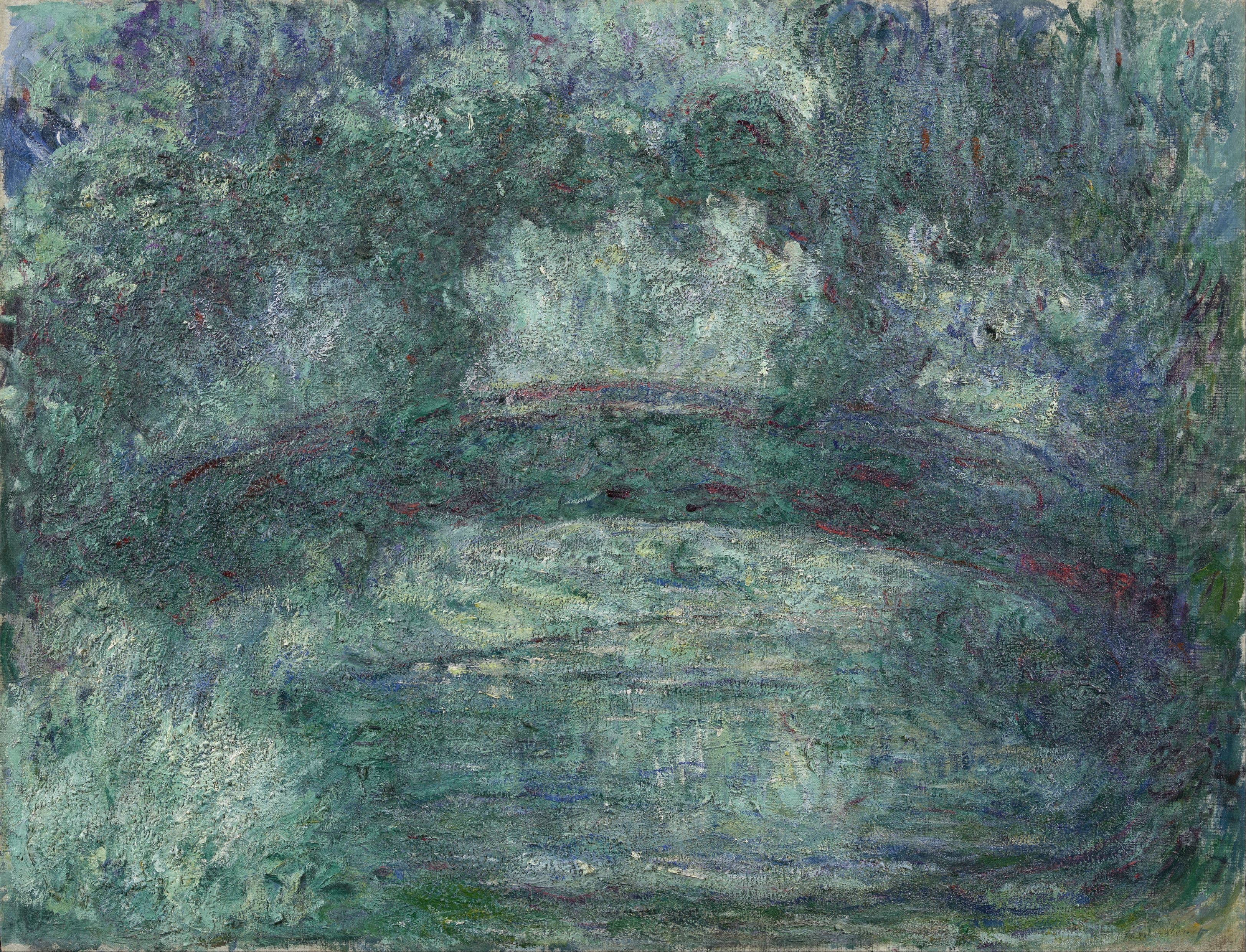
The Japanese Bridge
Claude Monet · 1919–24
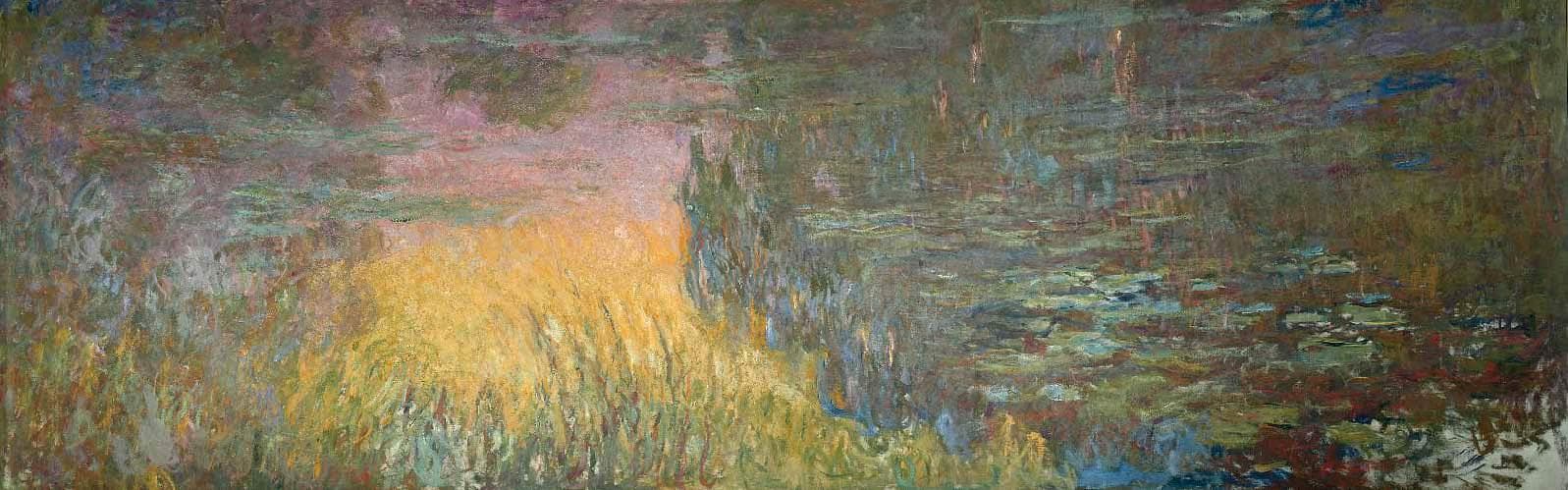
Water Lilies: Setting Sun
Claude Monet · 1914–26
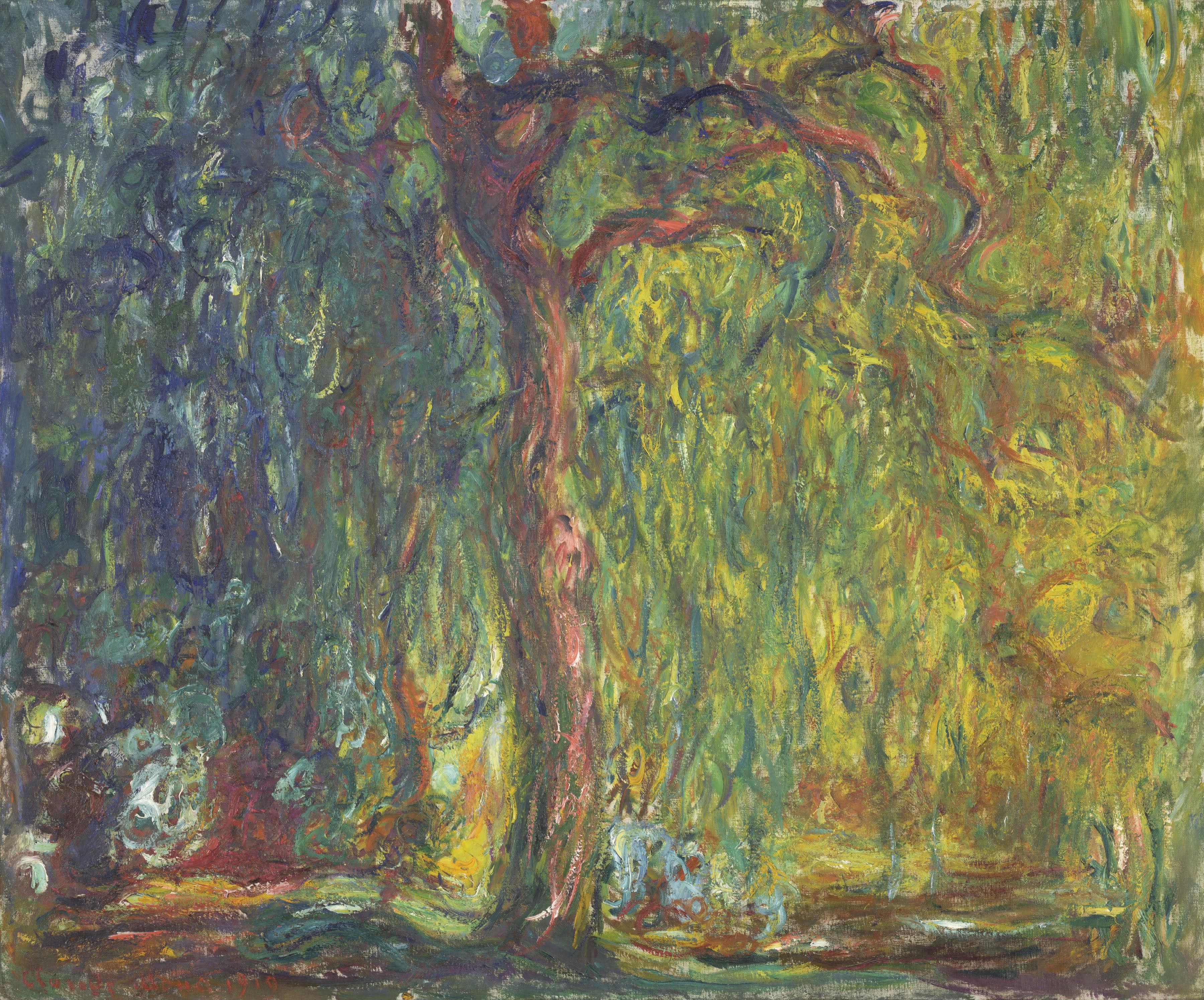
Weeping Willow
Claude Monet · 1918–19
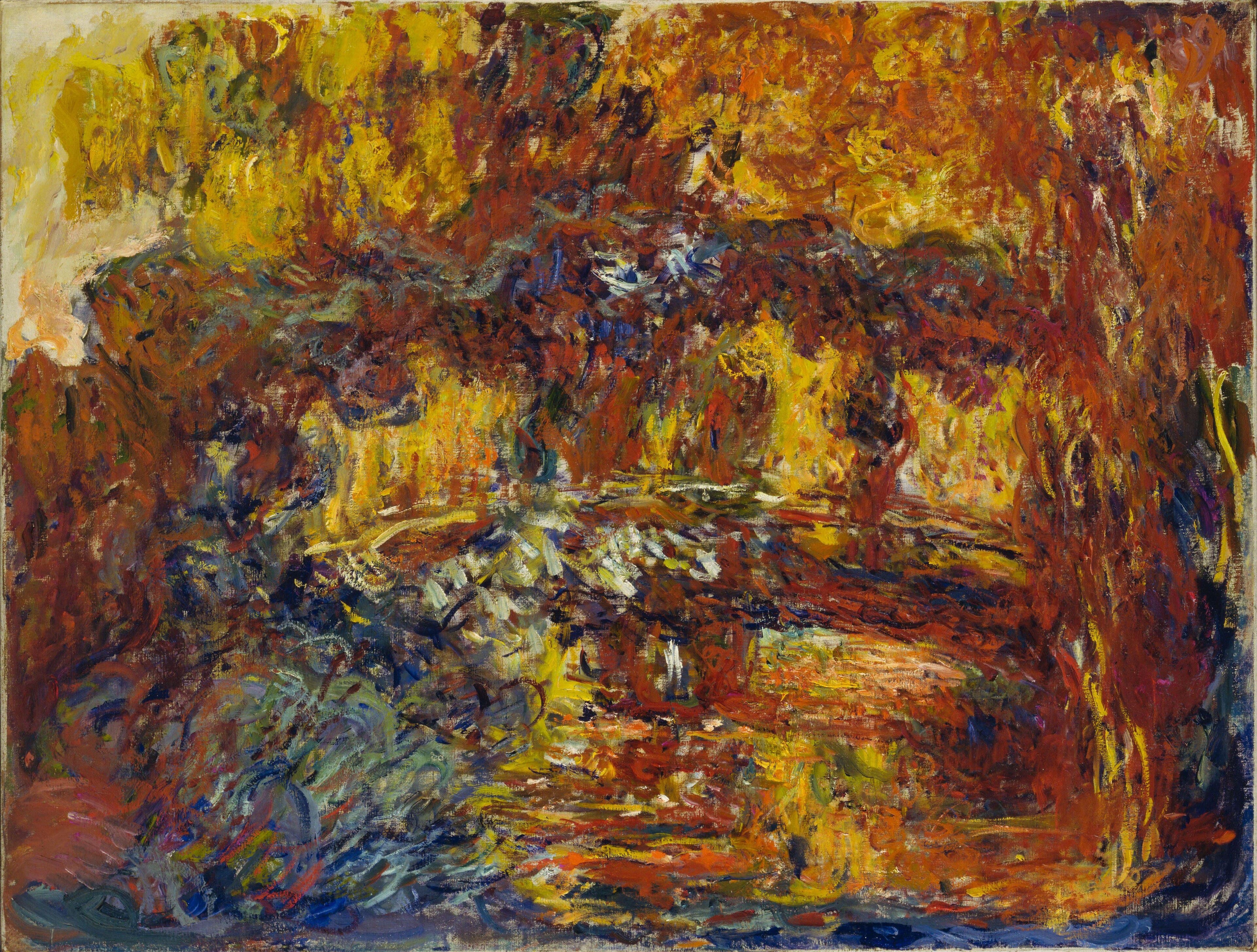
The Japanese Footbridge (MoMA)
Claude Monet · c. 1920–22
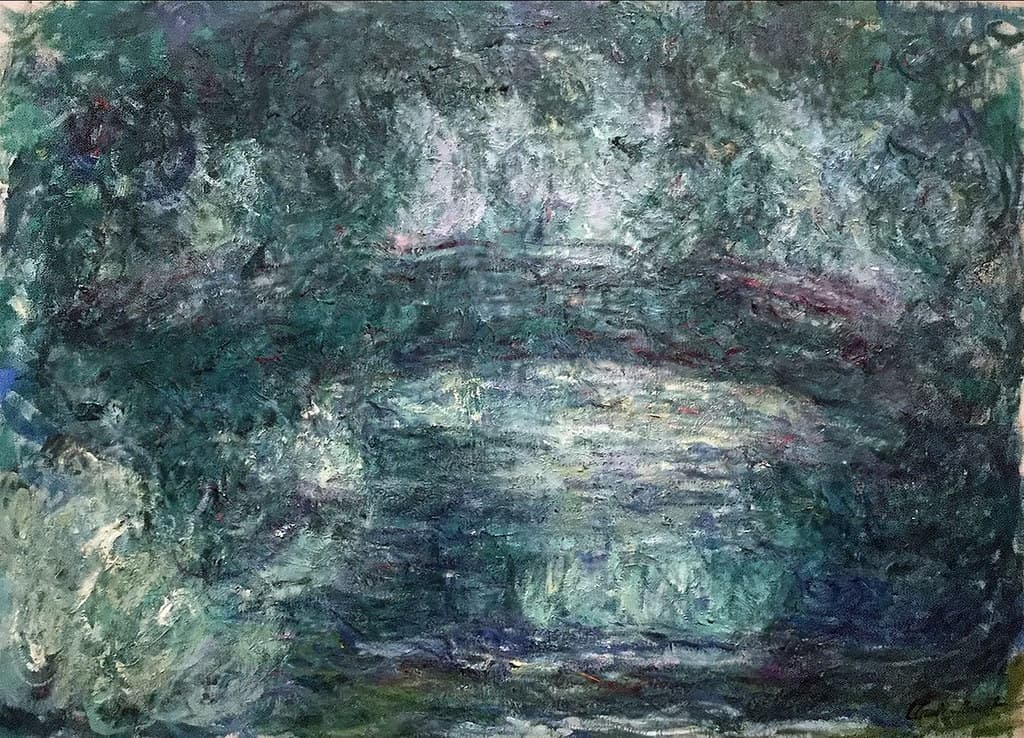
Japanese Bridge
Claude Monet · 1918–19
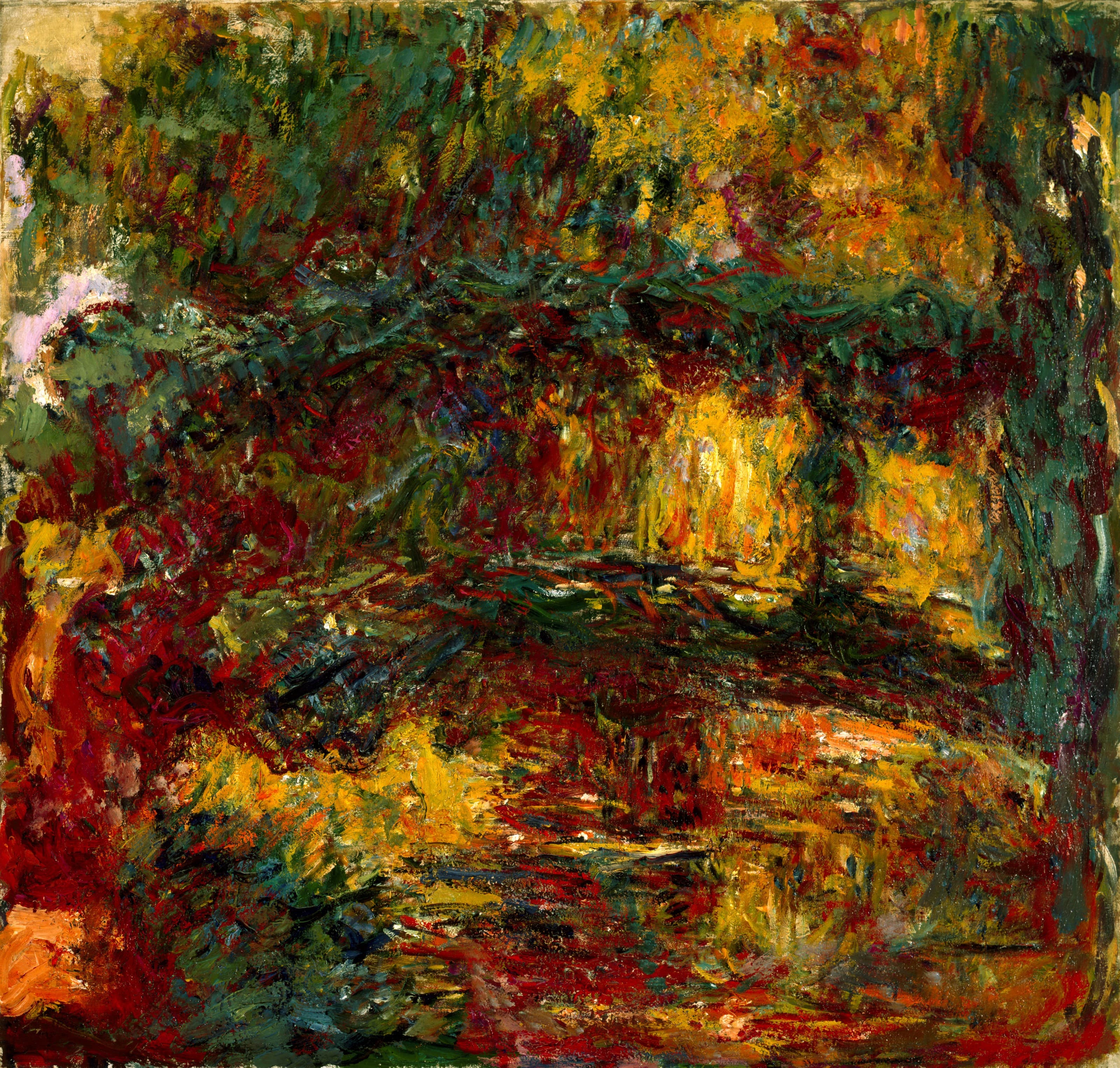
The Japanese Footbridge, Giverny
Claude Monet · c. 1922
Also painted in 1921
The same year
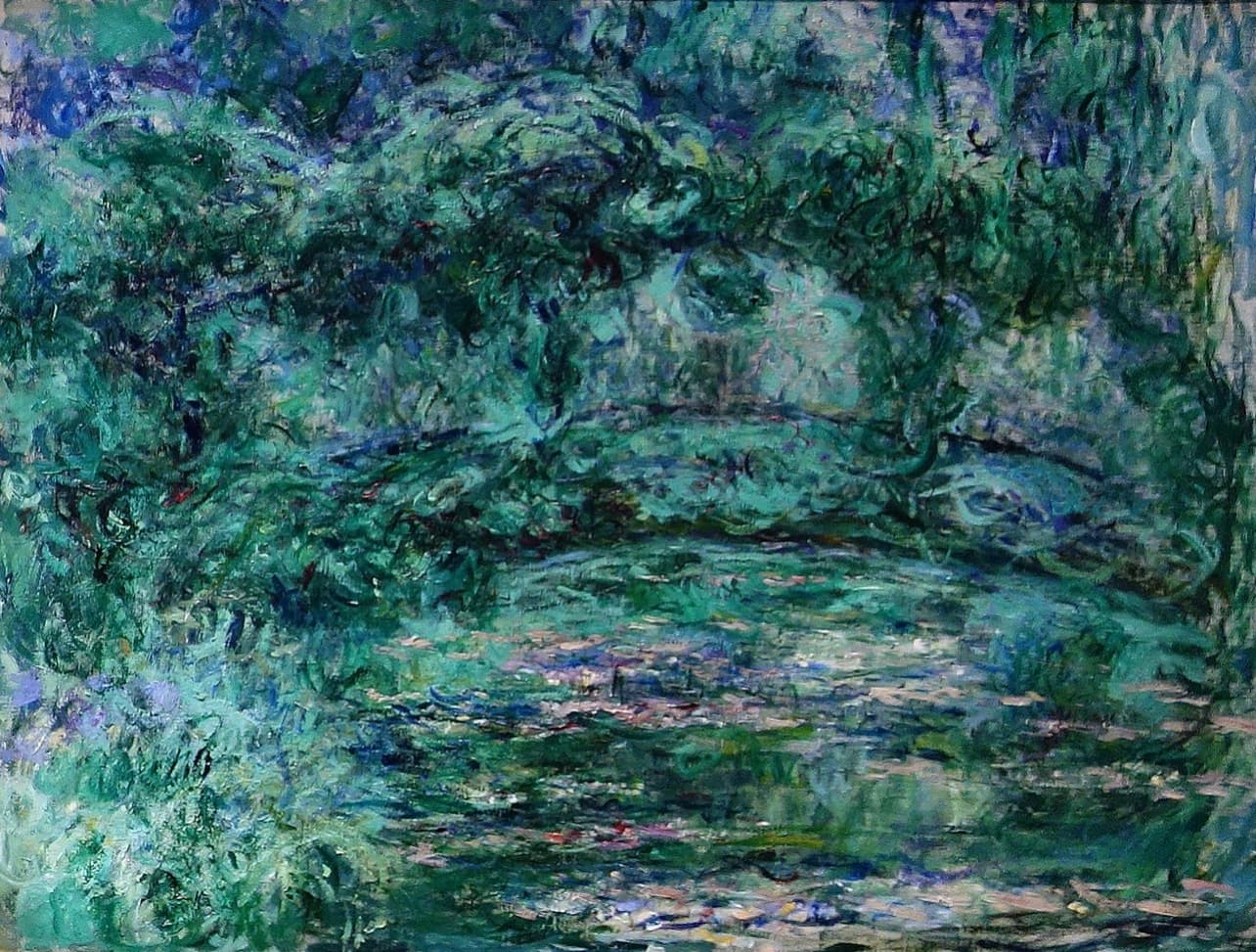
Kindred works
You may also study
The Japanese Bridge
Claude Monet · 1918–24
Le pont japonais
Claude Monet · 1918–24
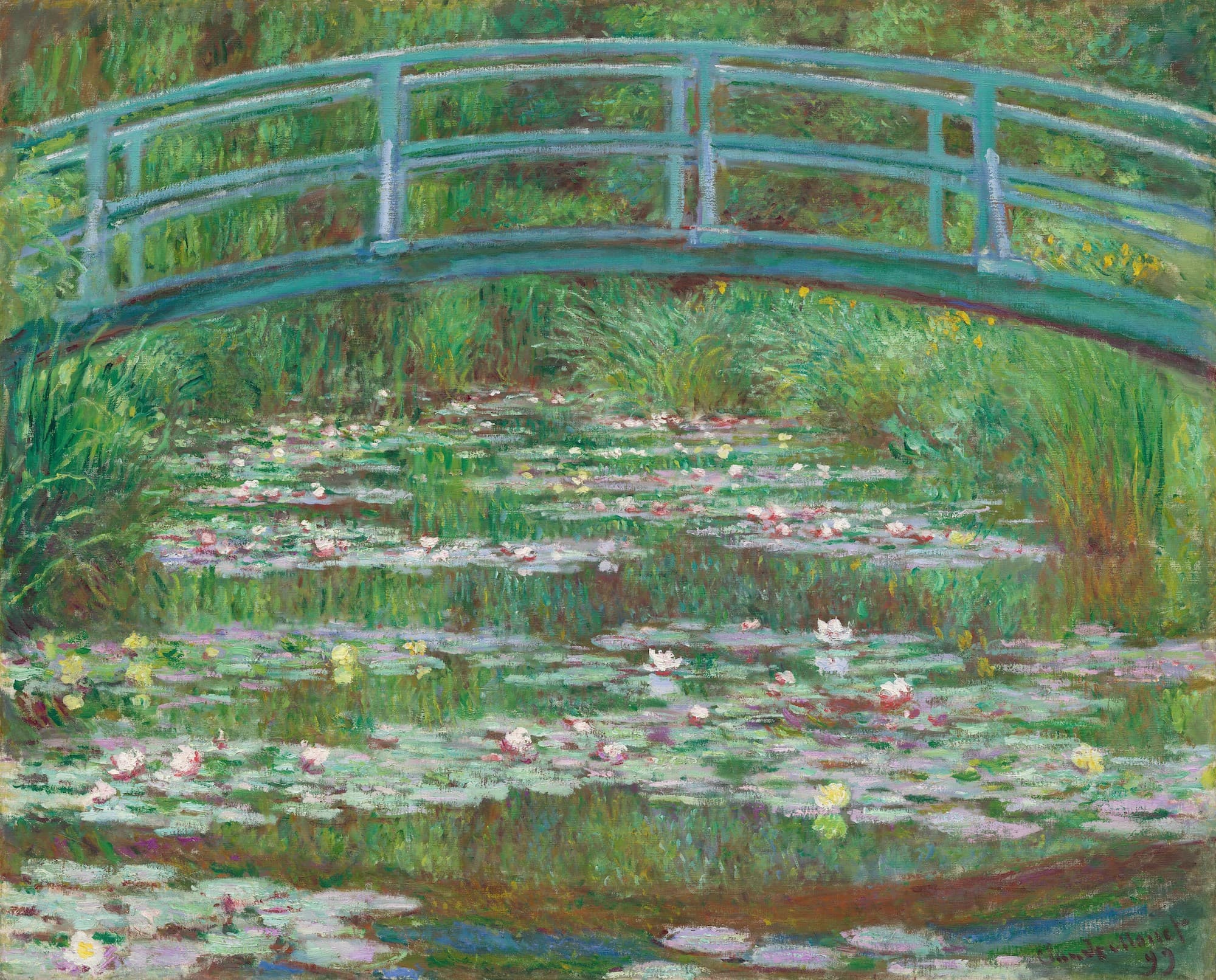
The Japanese Footbridge
Claude Monet · 1899
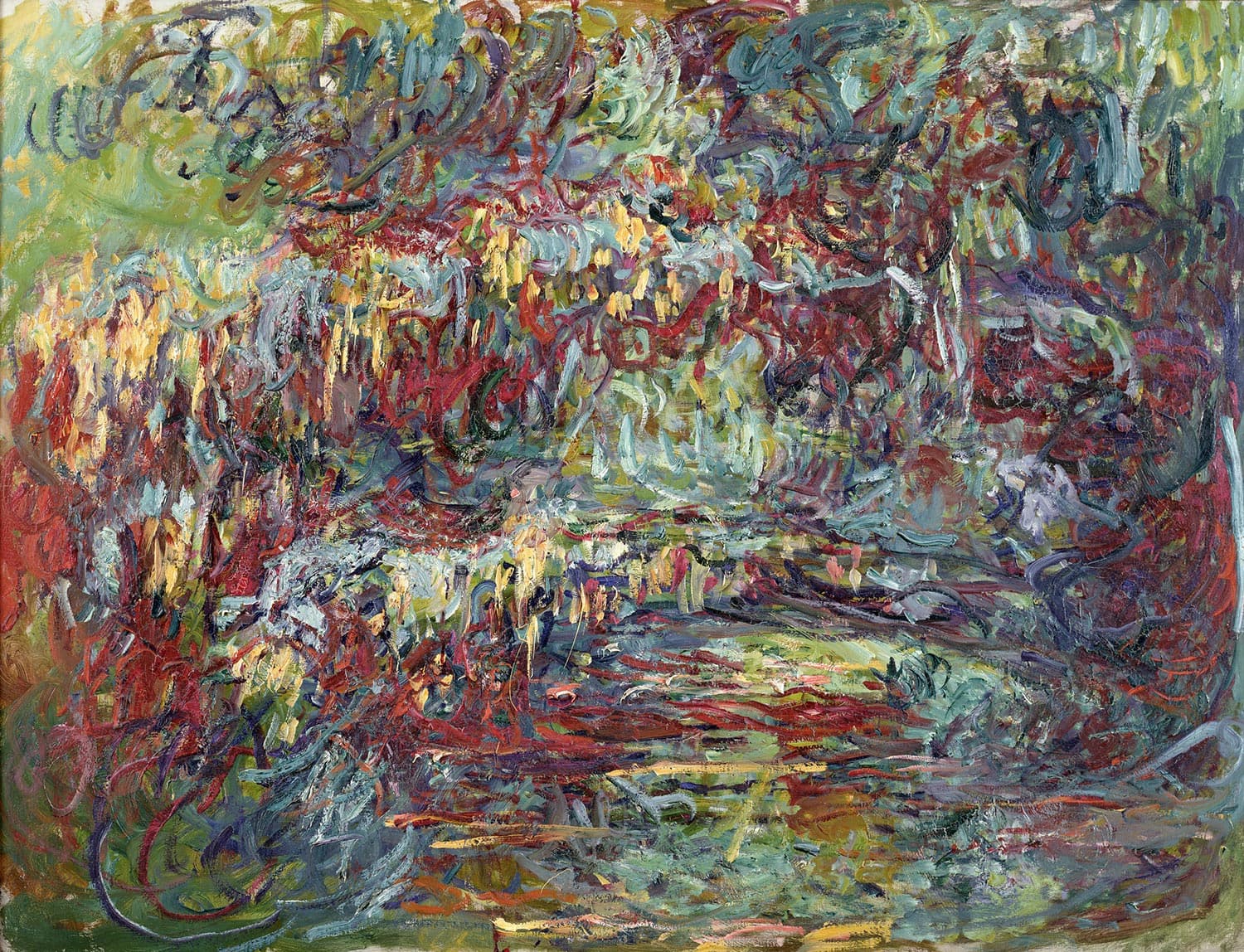
Le Pont japonais
Claude Monet · 1918–24
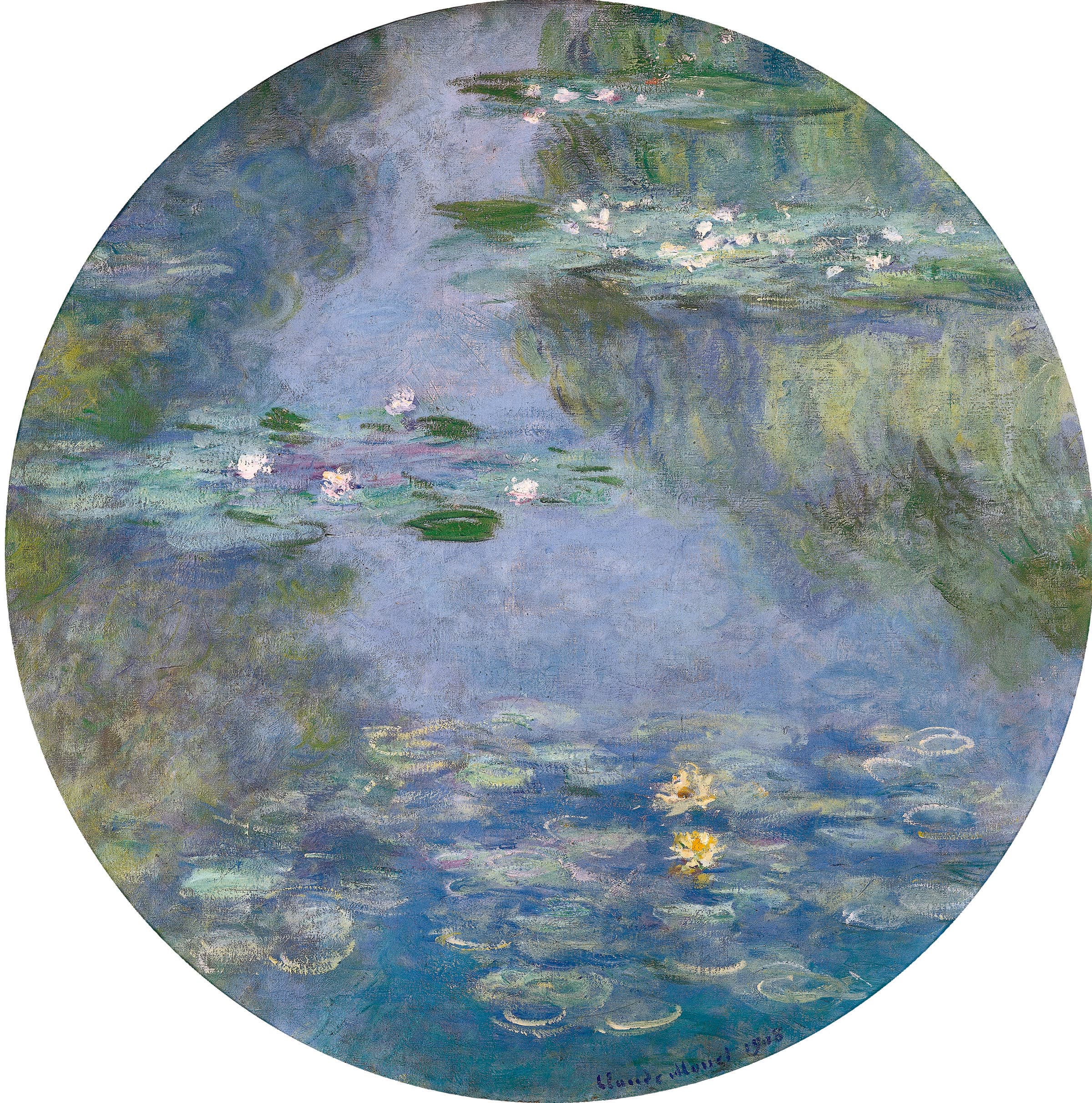
Nymphéas (1908 tondo, Vernon)
Claude Monet · 1908
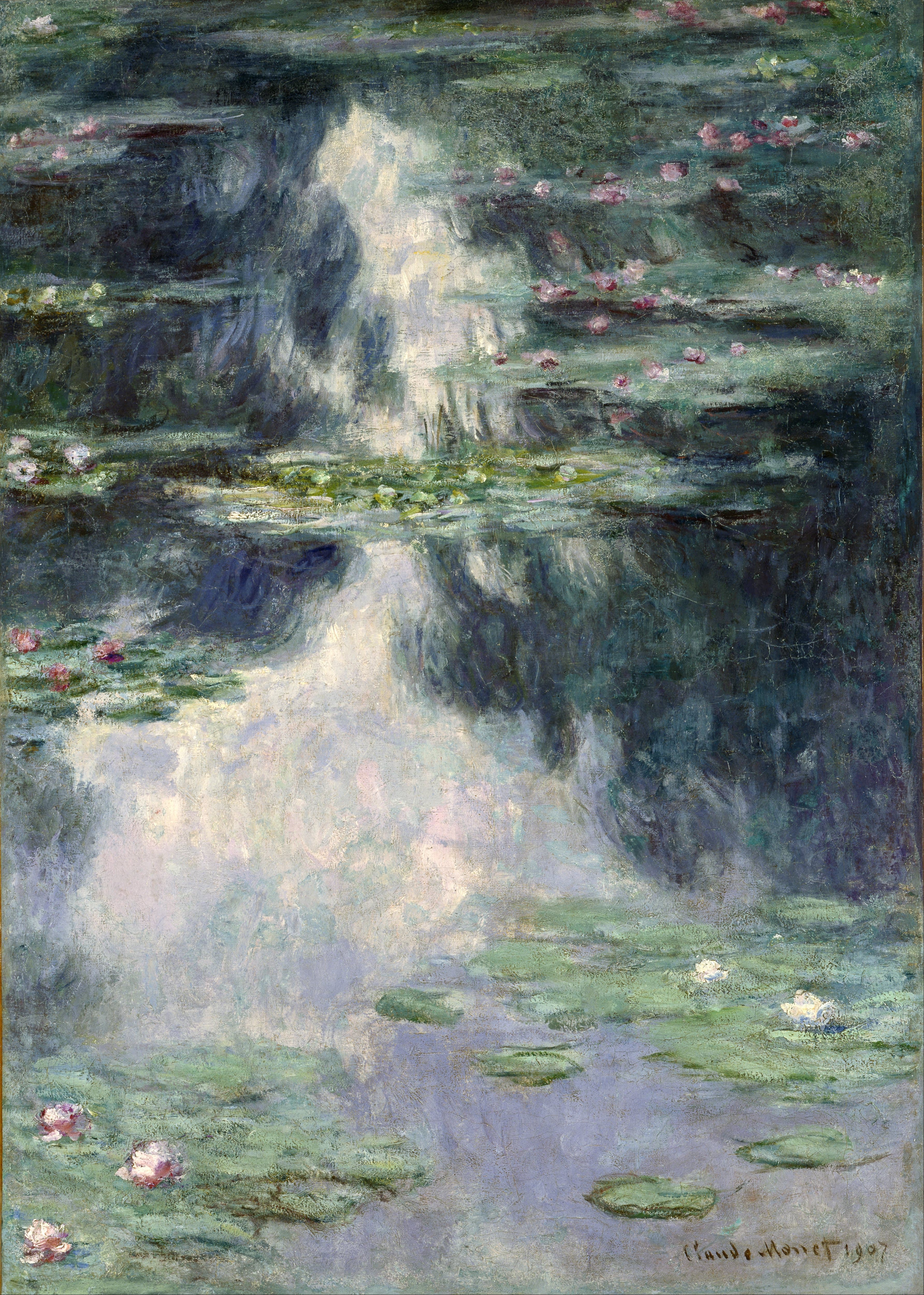
Pond with Water Lilies (Israel Museum)
Claude Monet · 1907
The Japanese Bridge or The Lily Pond
Claude Monet · 1900
Blue Water Lilies
Claude Monet · 1916–19