Image: Musée Marmottan Monet, Paris · Public domain · via Wikimedia Commons
Le Pont japonais
Claude Monet, 1918–24
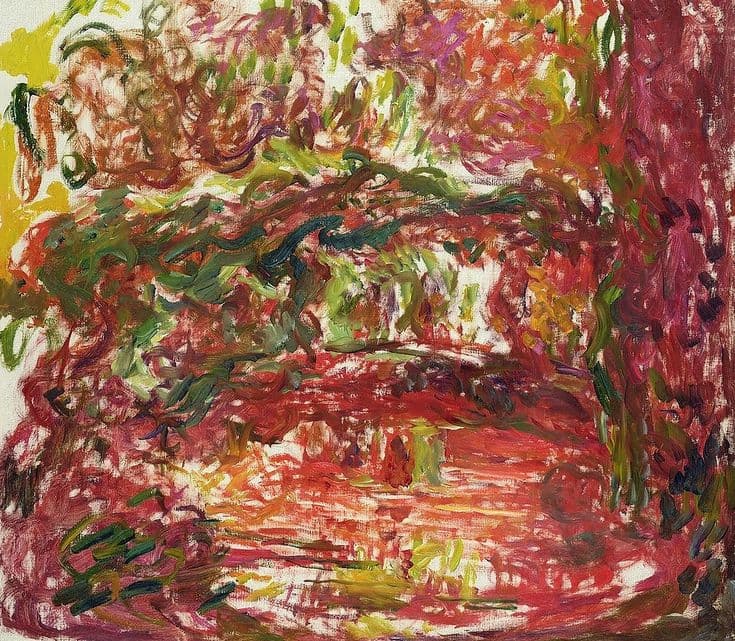
Le Pont japonais (Wildenstein 1933) is one of Claude Monet's most abstract late views of his Giverny footbridge, about 1918–24, a tangle of red, turquoise and yellow strokes hanging like flowers. It is in the Musée Marmottan Monet, Paris.
- Artist
- Claude Monet
- Date
- 1918–24
- Medium
- Oil on canvas
- Dimensions
- 89 × 116 cm
- Collection
- Musée Marmottan Monet, Paris, France
- Movement
- Impressionism
- Catalogue
- Wildenstein 1933
- Nature & Landscape
- Water & Sea
Le Pont japonais (The Japanese Bridge) is a late painting by Claude Monet of the footbridge in his water garden at Giverny, dated between about 1918 and 1924 and catalogued by Wildenstein as no. 1933. The unsigned canvas measures 89 by 116 centimeters. It came to the Musée Marmottan Monet in Paris in 1966 with the bequest of Michel Monet, the painter's son. The museum describes it as one of Monet's late easel paintings of the garden, with color applied "with a certain brutality."
What you're looking at
This is the hardest of the bridges to read. The canvas is a tangle of loose, looping strokes in brick red, crimson, turquoise, sea green, mustard yellow and lilac, laid over one another with almost no blending. The bridge is there, just: a low arch running from the left edge across the middle of the canvas toward the right, picked out by a band of pale green and lilac with darker strokes below it.
The striking feature is the hanging color. Above and along the bridge, short vertical strokes of yellow, cream and pale blue drop downward in clusters, like tassels. These are the racemes of the wisteria in flower, trained over the bridge's trellis, and they give the picture its rhythm: a curtain of falling marks across the arch. The Marmottan's text notes these vertical strokes evoking blossom. Above, the top of the canvas is a scribble of turquoise and green loops, written rather than painted, with a patch of pale lime-green at upper left.
Below the arch, the pond is a band of horizontal strokes, green, red, yellow and lilac, with a few strokes of bright yellow catching the light at the bottom. Around the edges, red and dark blue curls frame the whole scene. The overall effect is of an explosion of spring color in which the structure is felt rather than seen.
Monet's late bridges and his sight
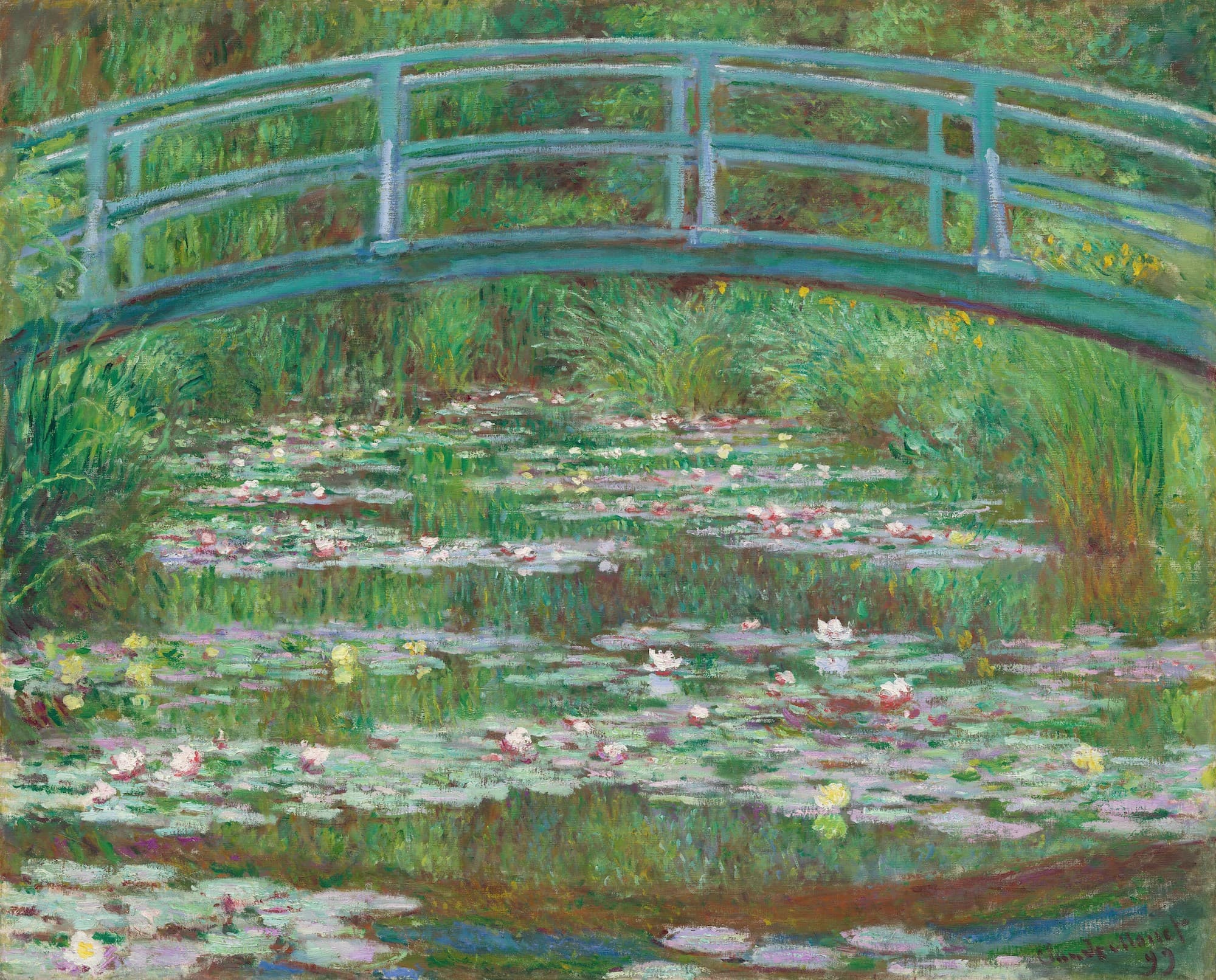
Monet first painted the bridge in a carefully drawn series of 1899–1900, as in The Japanese Footbridge in Washington, D.C. Returning to it about 1918, he worked with a cataract that the Marmottan says had been detected a few years earlier and that is thought to have altered his perception of color. The museum describes Monet's concern with what lay between his eye and the motif, "the light, the air," and sees in these canvases an opening toward modern abstraction.
How it was painted
The handling is the loosest of the series. Strokes are calligraphic, loops and hooks applied with a loaded brush and left as they fell. Complementary colors, red and green, yellow and violet, are placed side by side to vibrate. The canvas is horizontal, the same size as the turquoise bridge lent to the National Gallery, London, and the extra width lets the wisteria spread across the picture.
How this version differs
Most late bridges are dominated by a single color family: the blue-greens of the Marmottan Japanese Bridge of 1918–19, the reds of the Japanese Bridge W 1928. This one is multicolored, and it is the version in which the wisteria blossom is most explicit. It is also the most graphic, closer to drawing in paint than any of its companions. See the whole sequence in the Japanese Footbridge series and the garden in Monet's Giverny.
Where to see it
The painting is in the Musée Marmottan Monet in Paris, which holds the largest collection of works by Claude Monet, including most of the late bridges. Displays rotate, and the late canvases often travel to exhibitions; see Monet at the Musée Marmottan.
Questions & answers
Where is Monet's Le Pont japonais (W 1933)?
It is in the Musée Marmottan Monet in Paris (inventory 5106). It came to the museum in 1966 with the bequest of Michel Monet, together with most of Monet's late garden paintings.
When was it painted?
Between about 1918 and 1924, at Giverny. The Marmottan notes that Monet's cataract, detected a few years earlier, is thought to have affected his vision while he painted it.
What does it show?
It shows the footbridge over the lily pond almost dissolved in looping strokes of red, turquoise and yellow, with clusters of hanging yellow and pale blue strokes that evoke wisteria flowers along the arch.
Is this painting abstract?
Not intentionally. Monet was painting his garden, and the bridge, wisteria and pond are all there. But the motif is nearly indecipherable, and the Marmottan sees these late canvases as opening a path toward modern abstraction.
More by the artist
Claude Monet
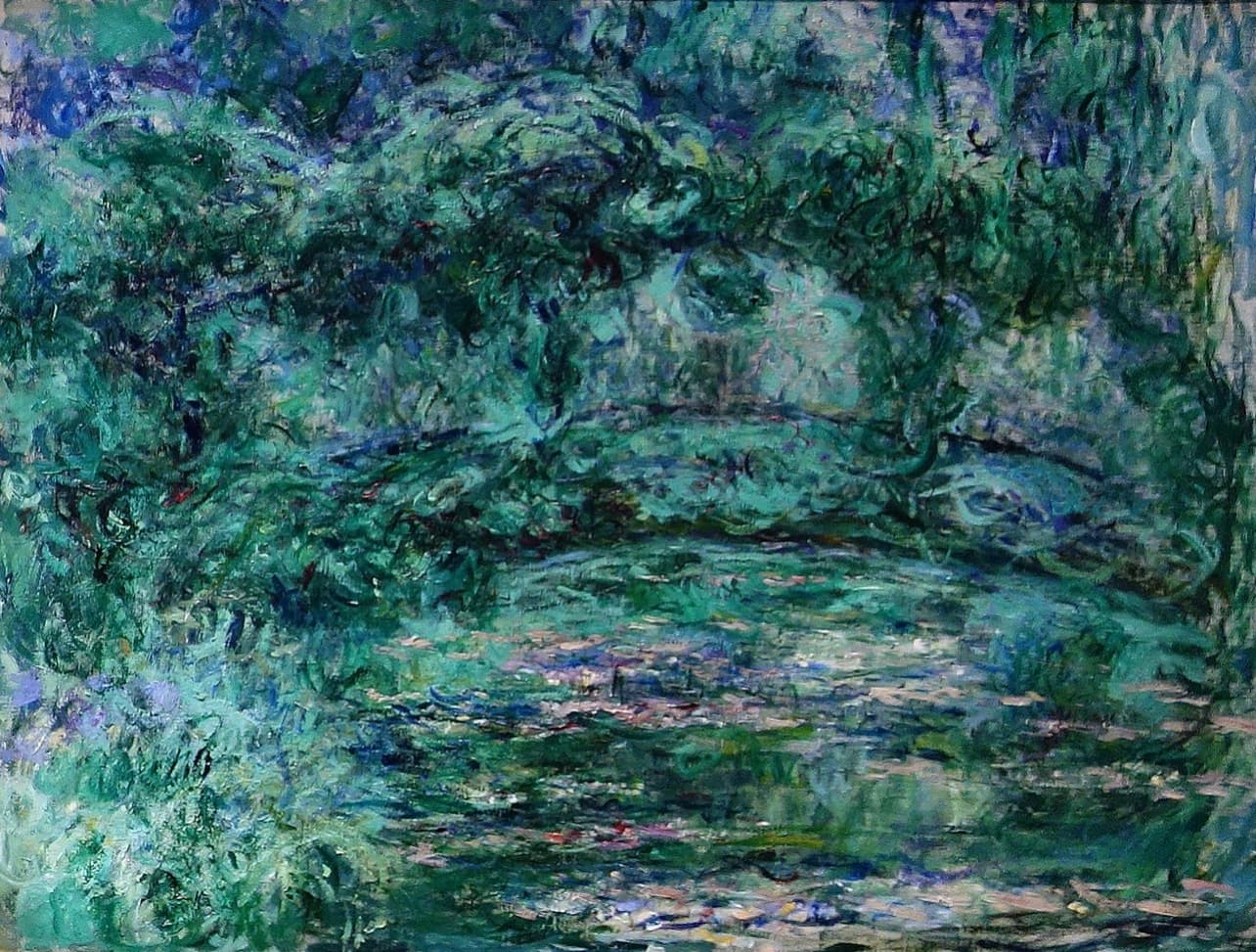
The Japanese Bridge
Claude Monet · c. 1919–24
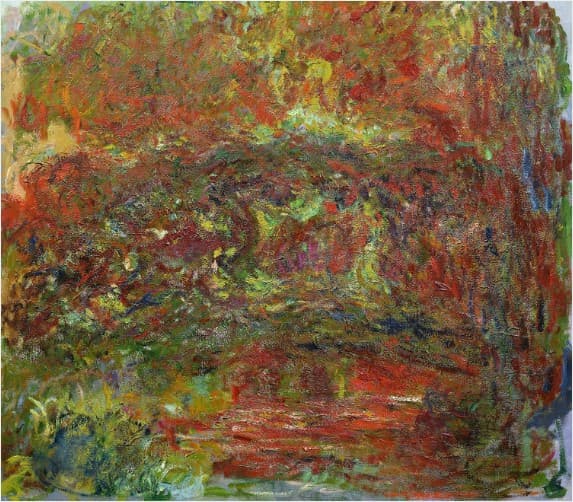
Le pont japonais
Claude Monet · 1918–24
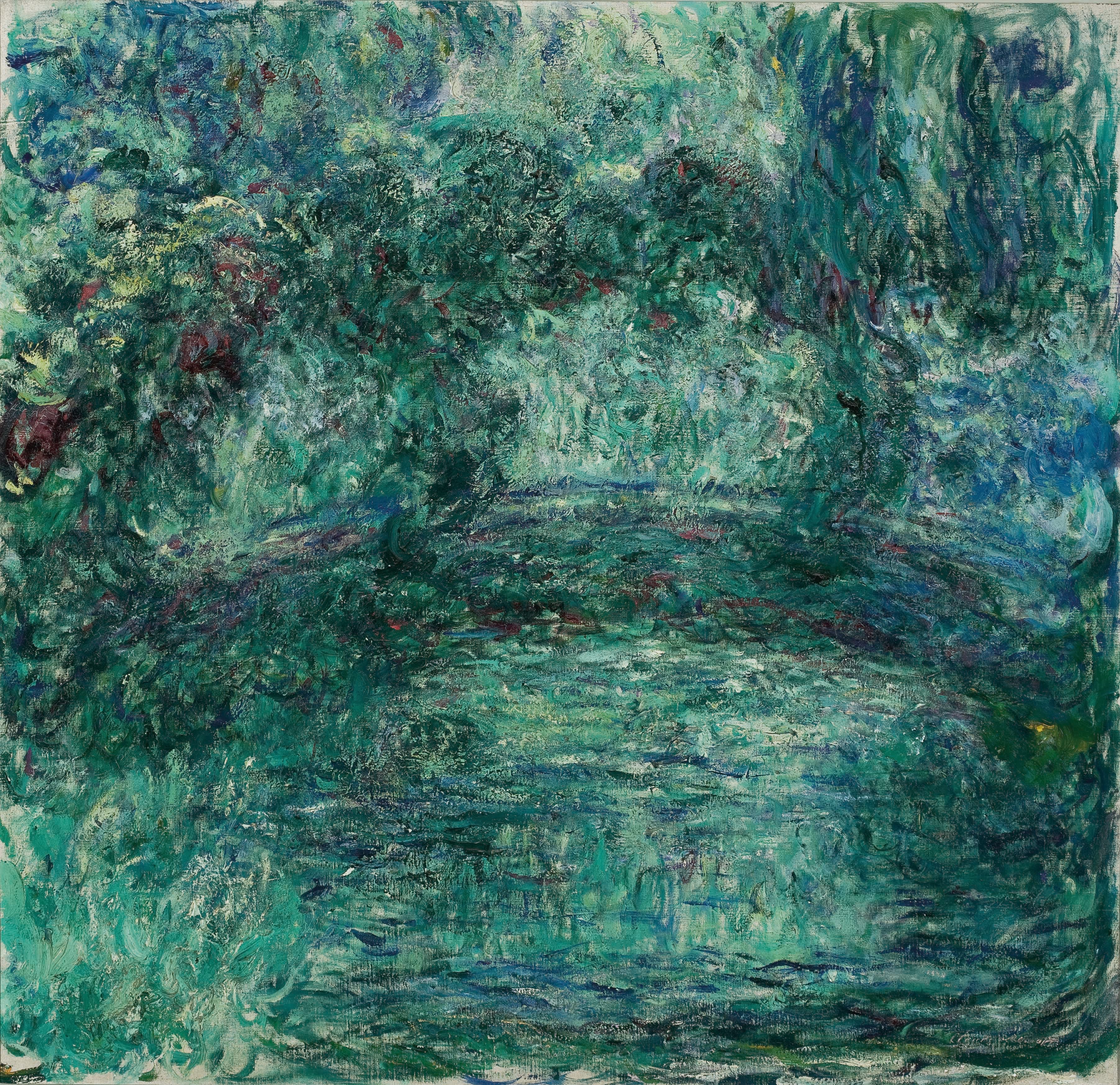
The Japanese Bridge over the Water-Lily Pond in Giverny
Claude Monet · 1920–24
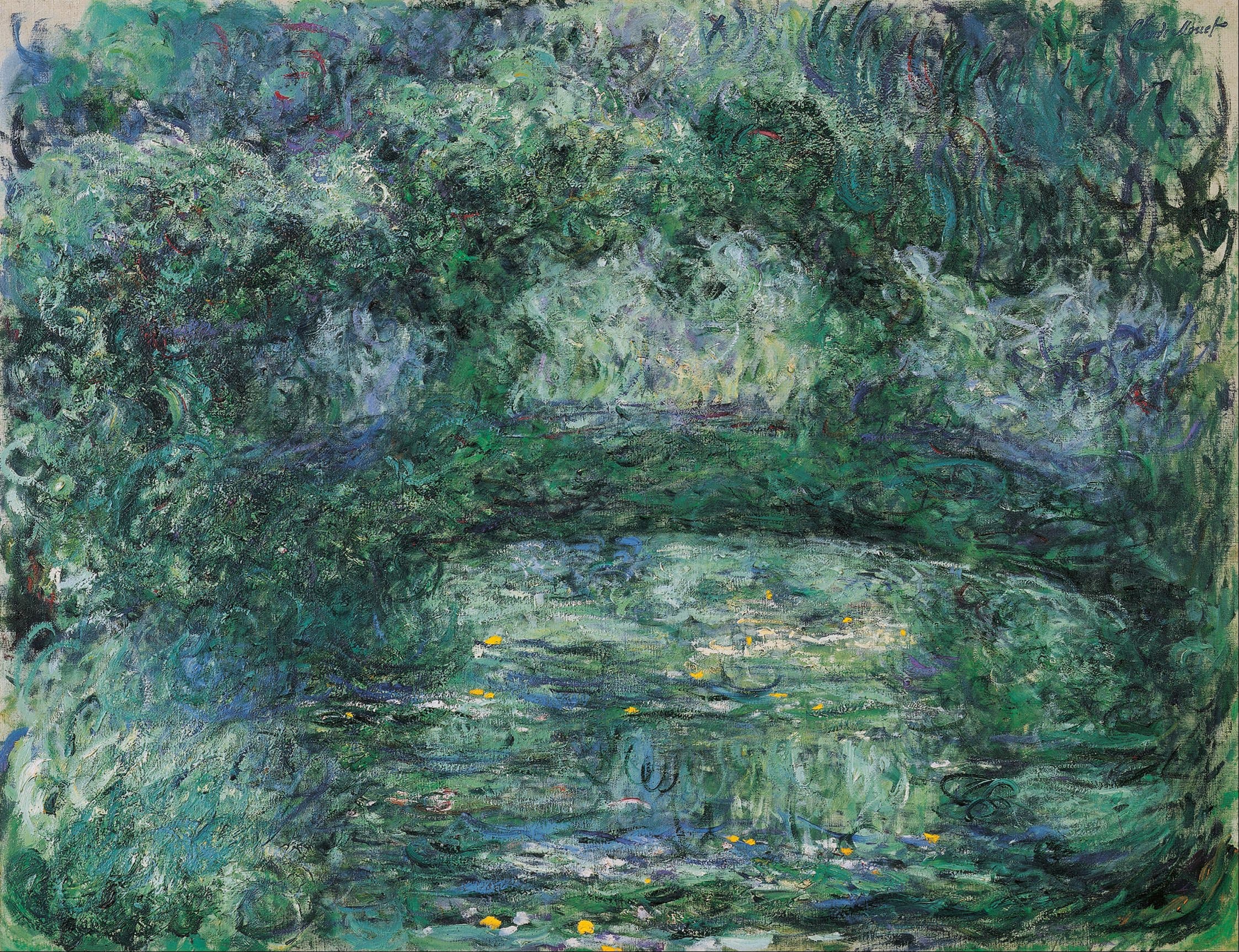
The Japanese Bridge
Claude Monet · 1918–24
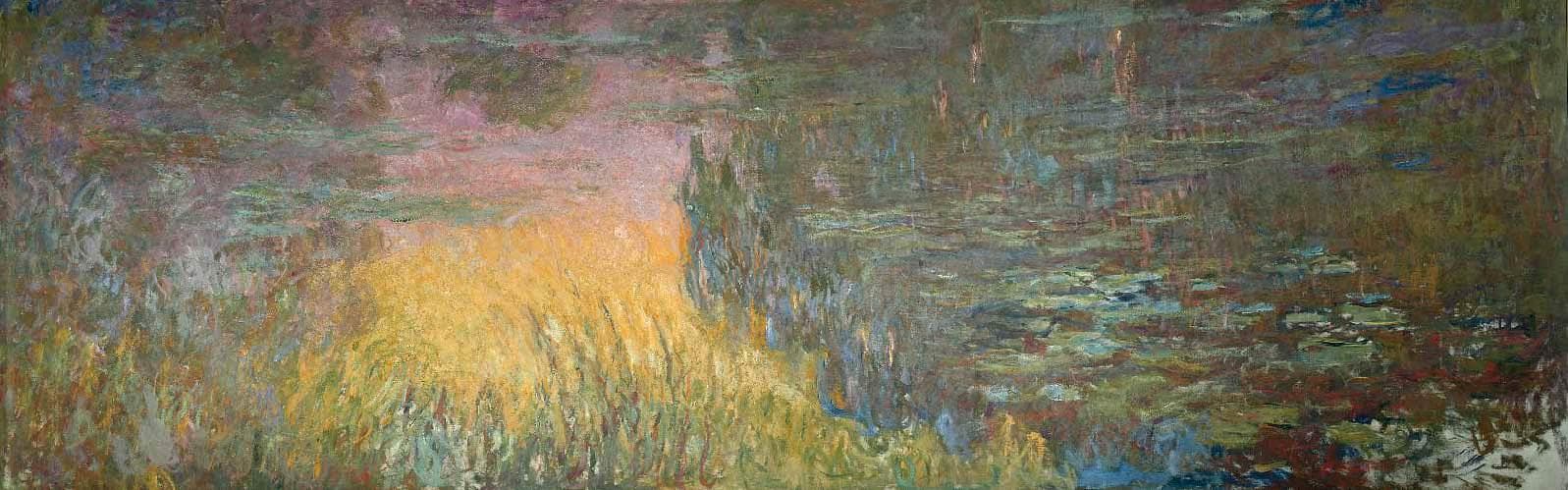
Water Lilies: Setting Sun
Claude Monet · 1914–26
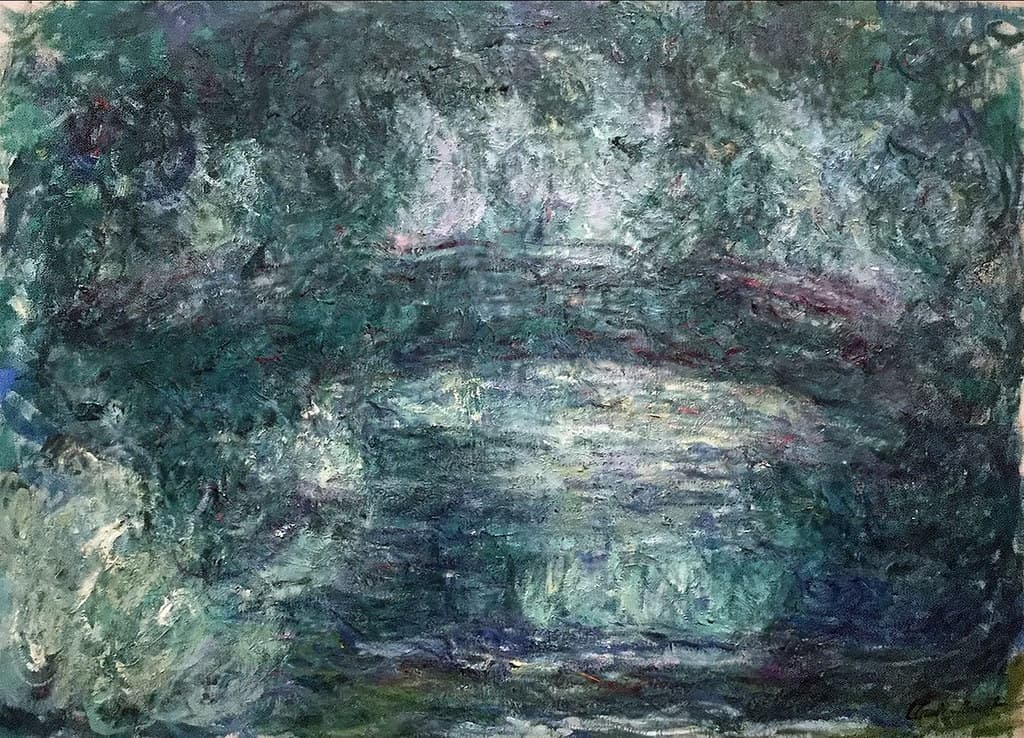
Japanese Bridge
Claude Monet · 1918–19
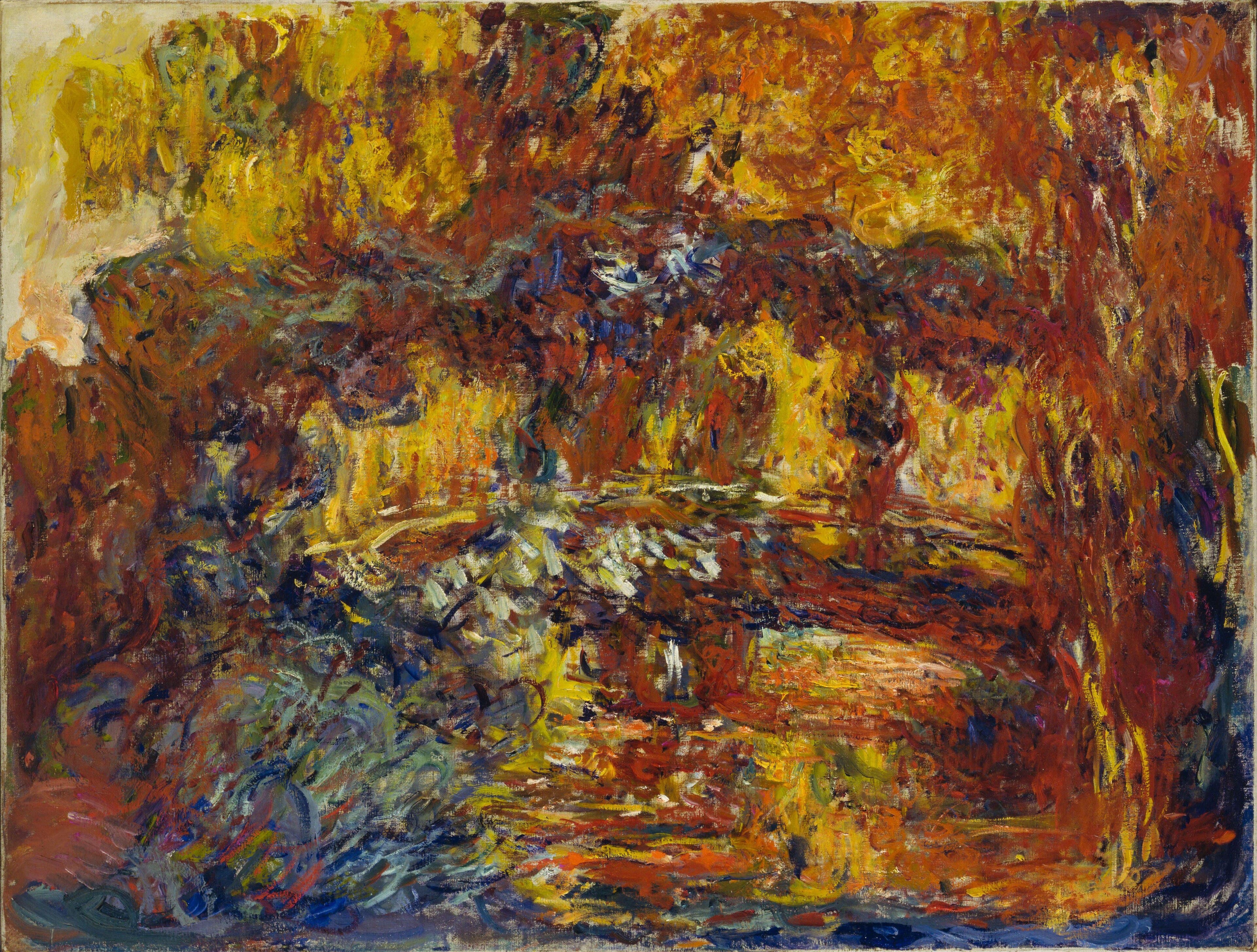
The Japanese Footbridge (MoMA)
Claude Monet · c. 1920–22
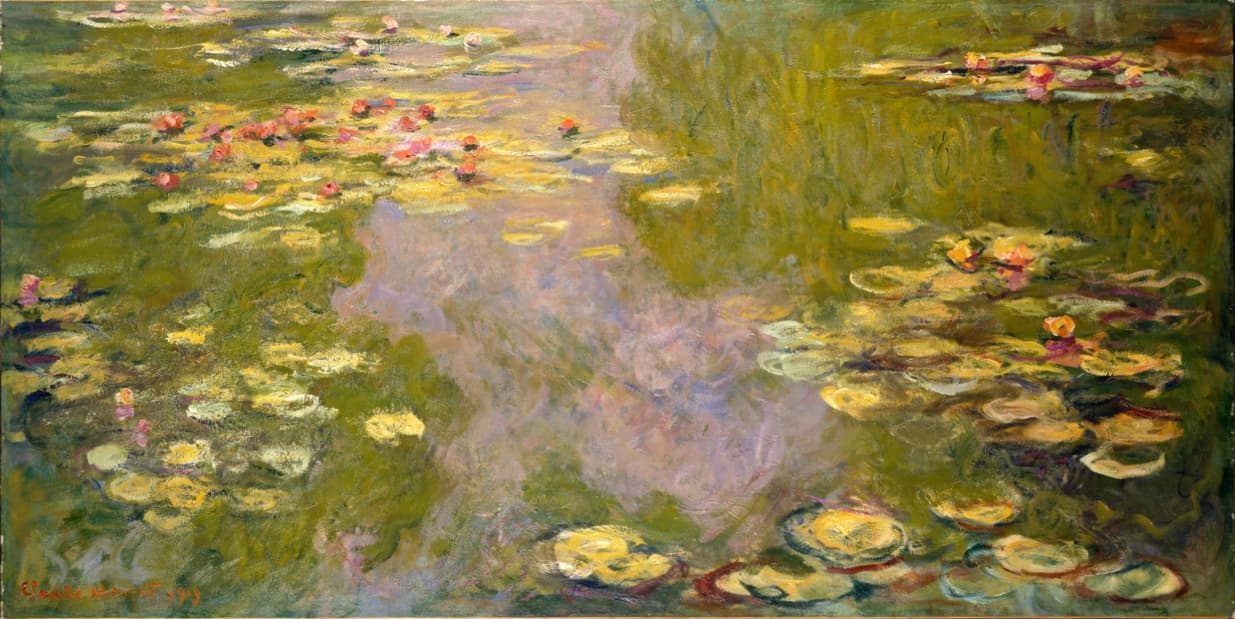
Water Lilies (1919, Metropolitan Museum)
Claude Monet · 1919
Also painted in 1921
The same year
Kindred works
You may also study
The Japanese Bridge
Claude Monet · 1918–24
The Japanese Footbridge
Claude Monet · 1899
Water Lilies (Agapanthus)
Claude Monet · c. 1915–26
Nymphéas (Musée Marmottan Monet, 1916–19, inv. 5119)
Claude Monet · 1916–19
Water Lilies (1908, Tokyo Fuji Art Museum)
Claude Monet · 1908
The Japanese Bridge
Claude Monet · 1918
Nymphéas (Musée Marmottan Monet, 1914–17)
Claude Monet · 1914–17
Le Pont japonais (The Japanese Bridge)
Claude Monet · 1918