Image: Sistine Chapel, Vatican Museums / Wikimedia Commons · Public domain · via Wikimedia Commons
High Renaissance
The Creation of Adam
Michelangelo, c. 1511–12
The Creation of Adam is Michelangelo's fresco of God reaching toward the first man, painted c. 1511–12 on the ceiling of the Sistine Chapel in Vatican City. The near-touch of their fingers is one of the most reproduced images in the world.
- Artist
- Michelangelo
- Date
- c. 1511–12
- Medium
- Fresco
- Dimensions
- 280 × 570 cm
- Collection
- Sistine Chapel, Vatican Museums, Vatican City, Vatican City
- Movement
- High Renaissance
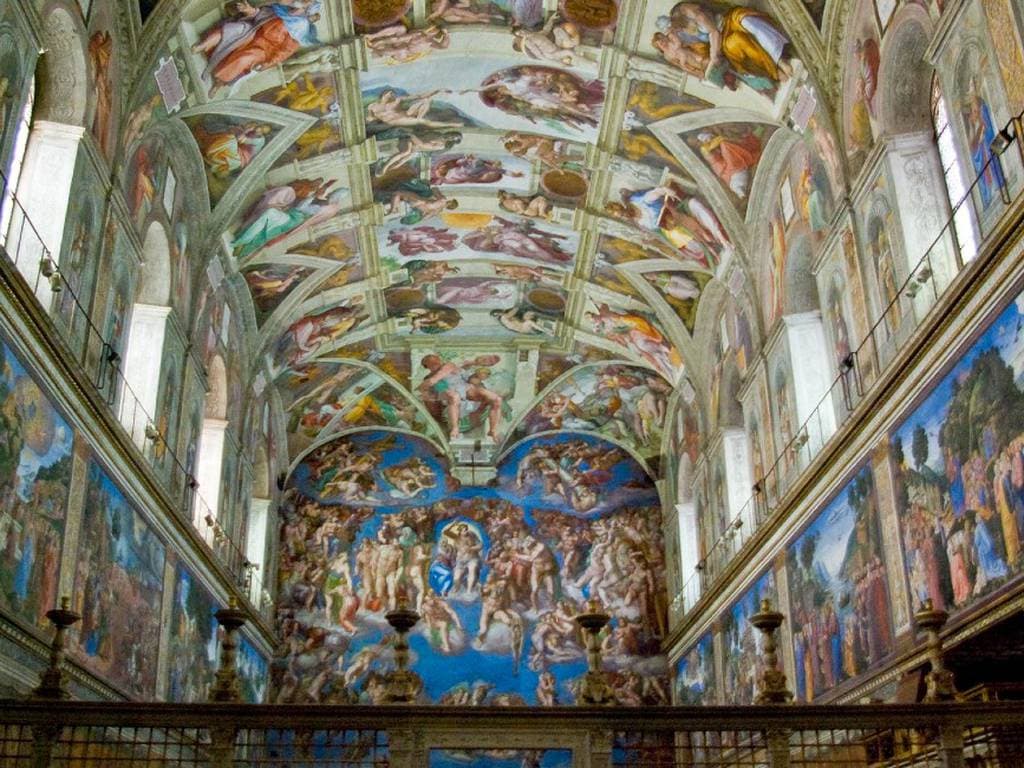
The Creation of Adam is one of nine scenes from the Book of Genesis that Michelangelo painted in fresco on the ceiling of the Sistine Chapel in the Vatican, between 1508 and 1512. The panel, about 280 by 570 centimeters, was painted around 1511–12, in the second half of the campaign, and it is the most famous image on the ceiling. It is still in place, about 20 meters above the floor, and can be seen as part of a visit to the Vatican Museums.
What you're looking at
On the left, Adam reclines on a bare green-brown slope at the edge of the world. He is fully formed, beautiful and heavy, but not yet fully alive. His body is turned toward us, one knee raised, his left arm resting on it and stretching out with a languid, drooping hand.
On the right, God the Father sweeps in from the air, borne by a cluster of wingless angels inside a billowing reddish-pink cloak. He is white-bearded and muscular, dressed in a light, short tunic, his whole body straining forward. His right arm extends fully, the index finger pointing.
Between the two fingers there is a gap of a few centimeters, and that gap is the subject. Adam's finger curls, still slack; God's is taut and alert. The spark of life has not yet passed between them. Michelangelo chose the instant before contact, so the painting is full of suspense.
The details most people miss
Look under God's left arm. A young woman with wide eyes peers out from the crowd of figures, gazing toward Adam. She is usually identified as Eve, not yet created, waiting in God's mind; another tradition sees her as Sophia, divine Wisdom. God's left hand rests on the shoulder of a child, sometimes read as the infant Christ, the future "new Adam."
Look, too, at Adam's hand. A crack in the plaster damaged it in the sixteenth century, and the tips of some of Adam's fingers were repainted later, traditionally attributed to Domenico Carnevale in the 1560s. The world's most famous finger may not be entirely Michelangelo's own.
And look at the shape behind God. The red cloak and the figures within it form an outline that, in 1990, the physician Frank Meshberger argued in the Journal of the American Medical Association matches a sagittal section of the human brain, with the brain stem, the pituitary gland and the major folds in place. Michelangelo had dissected corpses as a young man. The theory is popular and much debated; it is a modern reading, not a documented intention.
How it was made
Michelangelo regarded himself as a sculptor, not a painter, and accepted the ceiling commission from Pope Julius II reluctantly. He painted in buon fresco: pigments in water applied to fresh, wet lime plaster, which bonds with the color as it dries. Plaster could only be laid for one day's work at a time, a section called a giornata. Adam's figure was painted in just four giornate. Michelangelo worked standing on a scaffold of his own design, painting upward with his head tipped back, not lying on his back as popular legend says.
He transferred his designs to the plaster from full-scale cartoons, partly by incising lines and partly by pouncing charcoal dust through pricked holes; these marks are still visible at close range. A red chalk study for Adam, preparatory to the fresco, survives in the British Museum.
What does The Creation of Adam mean?
The source is Genesis 1:27 and 2:7: "God created man in his own image," and "breathed into his nostrils the breath of life." Earlier artists showed God molding Adam from clay or blessing him. Michelangelo invented the touch of the fingers, an image that does not appear in the Bible, translating the breath of life into a spark of energy passed from one hand to another.
The composition also embodies Renaissance humanist ideas. Adam is made "in the image of God": his body mirrors God's, reversed, and he is presented as the most perfect of creatures. The beauty of the nude male body is offered as evidence of divine perfection, an idea Michelangelo shared with the Neoplatonic thinkers he had met as a youth in the household of Lorenzo de' Medici in Florence.
Restoration
From 1980 to 1994, the Sistine Chapel frescoes were cleaned of centuries of candle soot, glue and earlier retouching. The restoration revealed bright, clear colors where viewers had long seen murky browns. It was controversial at the time, with some critics arguing that Michelangelo's final glazes had been removed, but it is now widely accepted.
Reception and legacy
The two almost-touching hands have become one of the most reproduced and parodied images ever made, a shorthand for creation, inspiration and contact, in everything from science posters to film. The picture also shaped later art: the reclining, monumental nude influenced artists from Raphael to Rodin.
Where to see it
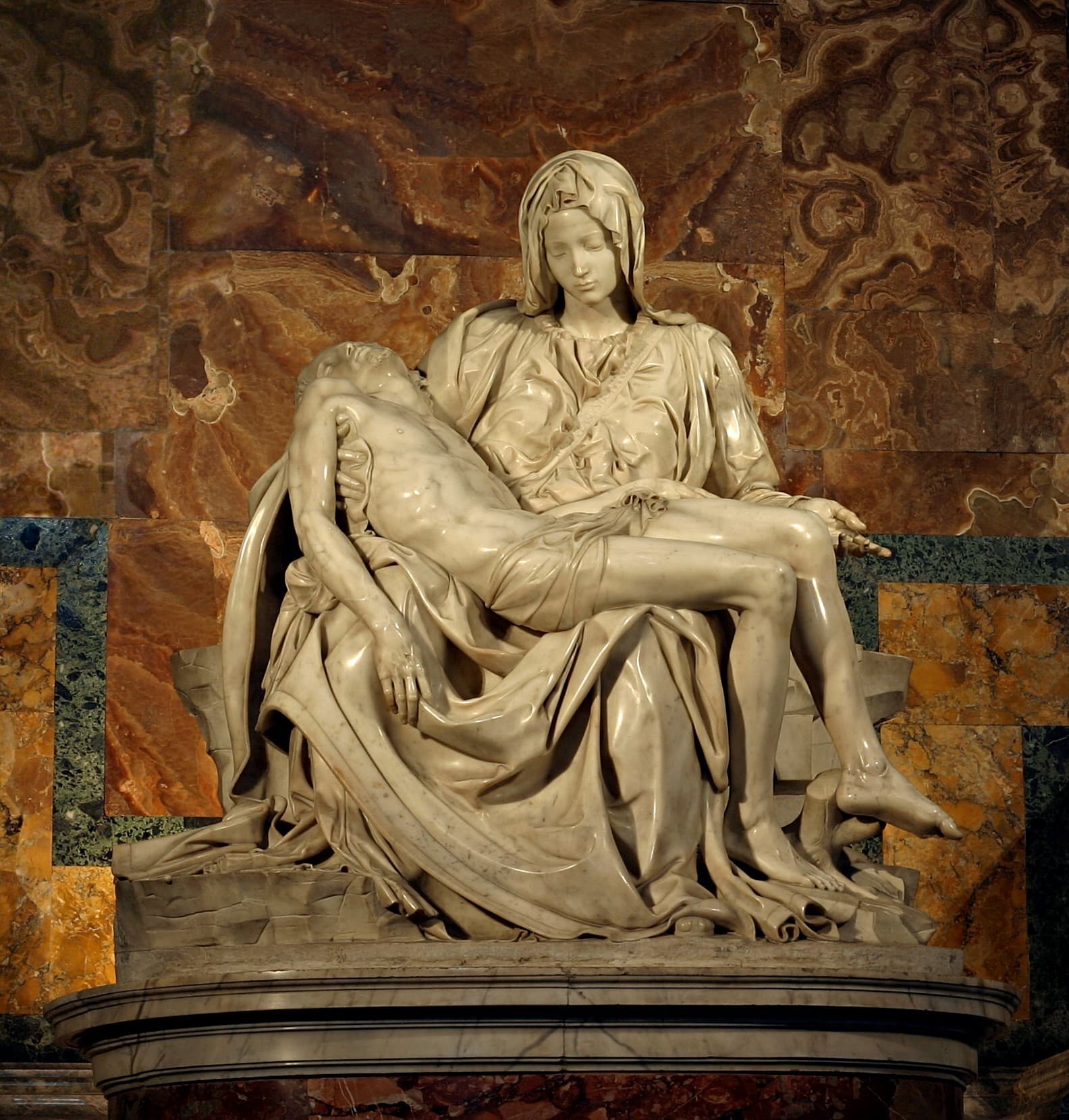
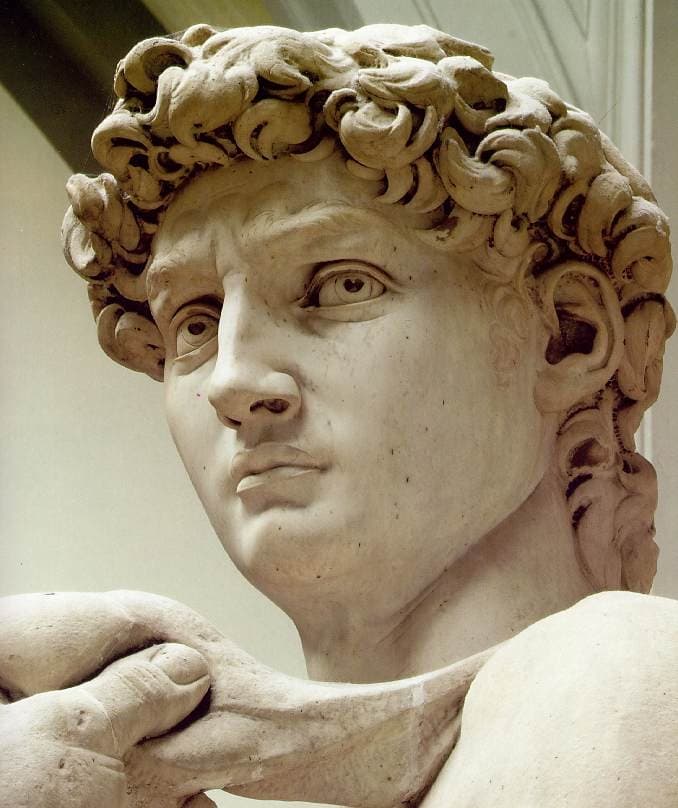
The fresco is in the center of the Sistine Chapel ceiling, in the Vatican Museums, Vatican City. Look along the central row of Genesis scenes: it is the fourth panel counting from the altar wall with the Last Judgment, roughly in the middle of the ceiling. Photography is not allowed in the chapel. See our page on the whole Sistine Chapel ceiling, the artist's Pietà and David, his biography at Michelangelo, and our guide to Renaissance paintings.
Questions & answers
Where is The Creation of Adam?
It is painted on the ceiling of the Sistine Chapel in the Vatican Museums, Vatican City, in the central row of Genesis scenes, the fourth panel from the altar wall with the Last Judgment. It is a fresco, part of the building, so it has never moved and cannot be lent.
What does The Creation of Adam mean?
It illustrates Genesis, where God creates man in his own image and gives him the breath of life. Michelangelo shows that gift as a spark passing between two outstretched fingers that have not yet touched, an image he invented. Adam's body mirrors God's, expressing the Renaissance idea of man as God's image.
Is there a brain hidden in The Creation of Adam?
In 1990 the physician Frank Meshberger argued that God's red cloak and the figures in it form the outline of a human brain. Michelangelo did study anatomy by dissection, but there is no evidence he intended this; it remains a popular modern interpretation.
Who is the woman under God's arm in The Creation of Adam?
She is usually identified as Eve, not yet created, existing in God's mind. Another interpretation identifies her as Sophia, divine Wisdom. The child God touches is sometimes read as the infant Christ.
When was The Creation of Adam painted?
Michelangelo painted the Sistine Chapel ceiling from 1508 to 1512, and The Creation of Adam dates from around 1511–12, in the second phase of the work. It was cleaned during the major restoration of 1980–94.
More by the artist
Michelangelo
Kindred works
You may also study
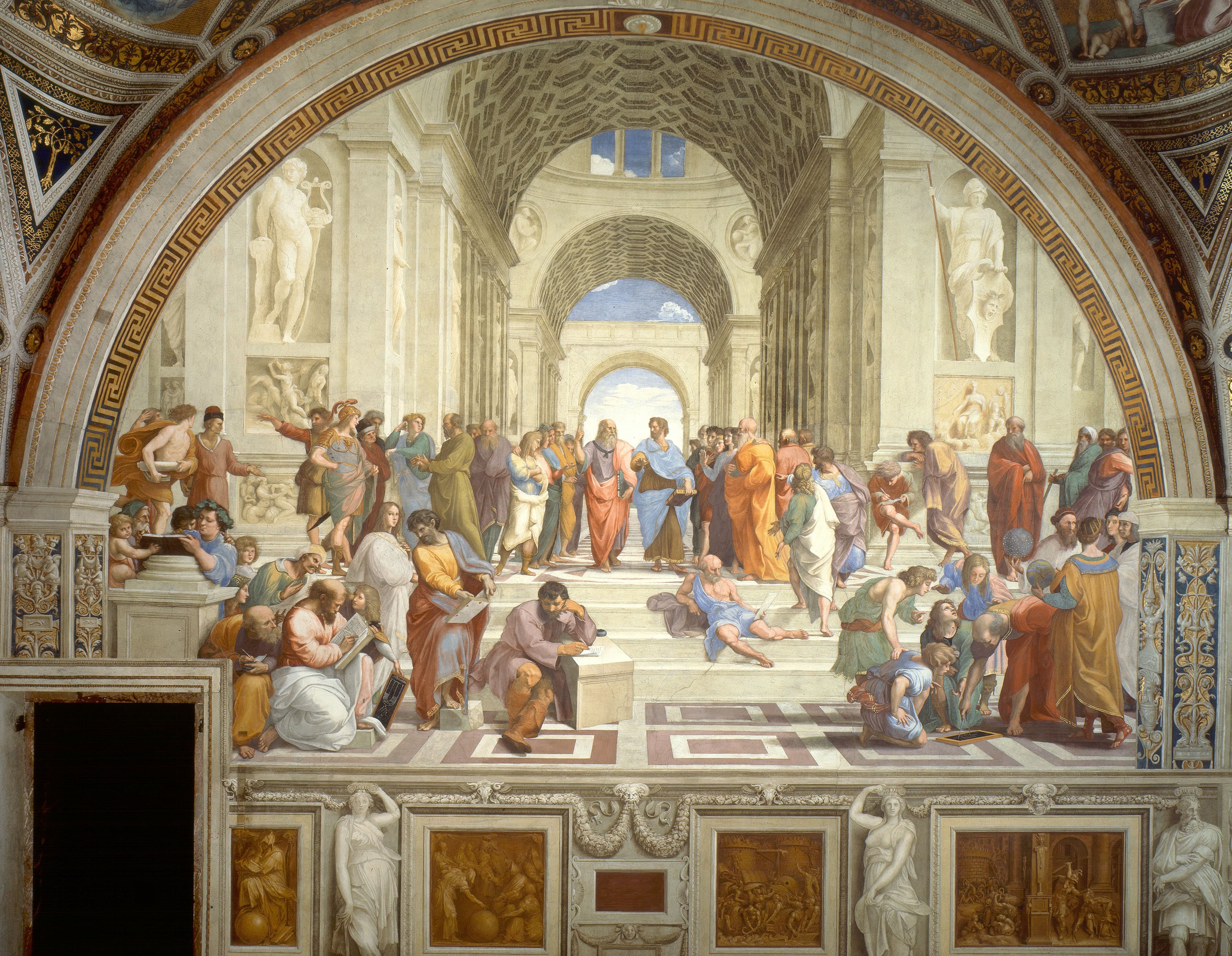
The School of Athens
Raphael · 1509–1511
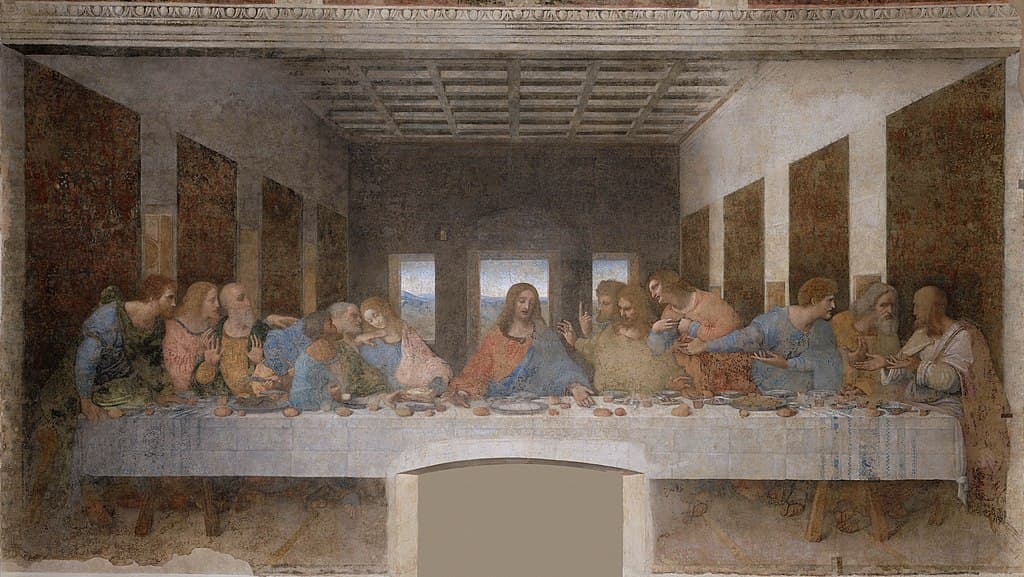
The Last Supper
Leonardo da Vinci · c. 1495–98

Bridge over a Pond of Water Lilies
Claude Monet · 1899

Venus de Milo
Alexandros of Antioch · c. 150–125 BC

Nymphs Dancing to Pan's Flute
Joseph Tomanek
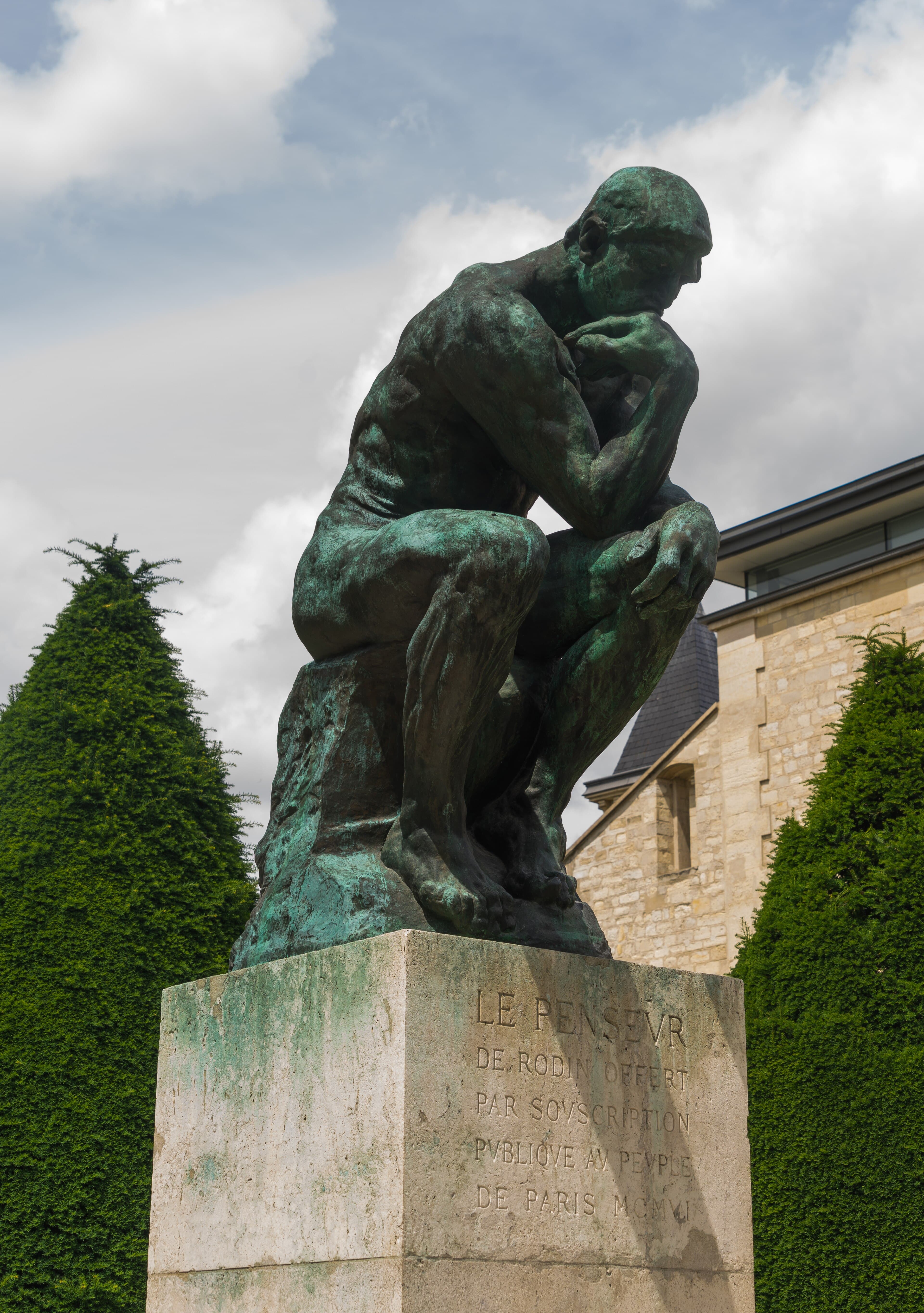
The Thinker
Auguste Rodin · Modeled 1880–82; enlarged 1902–03; this cast 1904

Woman with a Parasol – Madame Monet and Her Son
Claude Monet · 1875
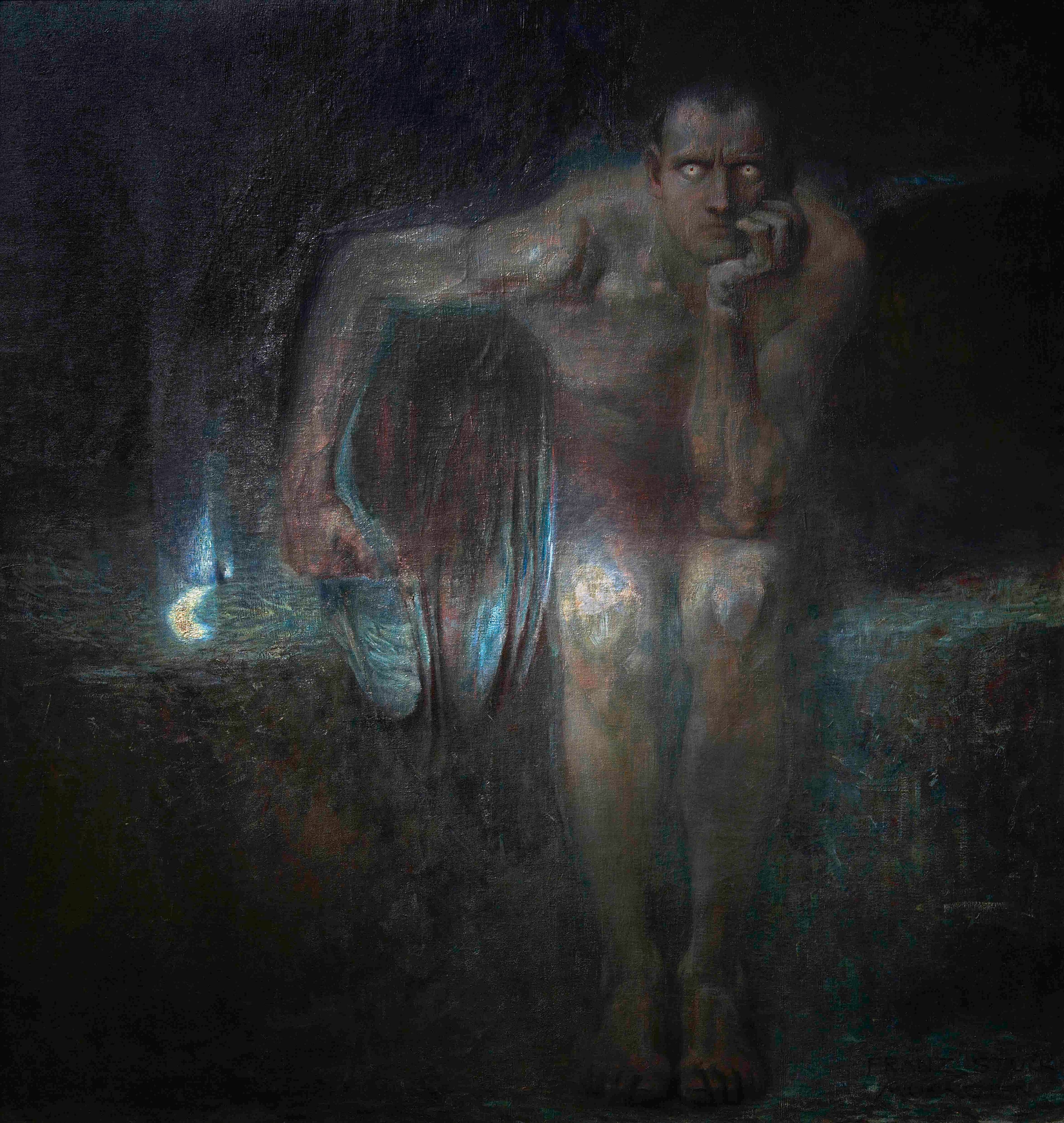
Lucifer
Franz von Stuck · 1890