Impressionism
Rouen Cathedral in Sunlight
Claude Monet, c. 1892–94
Rouen Cathedral, the Façade in Sunlight is a painting by Claude Monet from his Rouen Cathedral series (c. 1892–94), showing the west portal in soft, warm light in pinks, apricots and blues. It measures 106.7 × 73.7 cm (Wildenstein 1358) and is in the Clark Art Institute, Williamstown.
- Artist
- Claude Monet
- Date
- c. 1892–94
- Medium
- Oil on canvas
- Dimensions
- 106.7 × 73.7 cm
- Collection
- Clark Art Institute, Williamstown, Massachusetts, United States
- Movement
- Impressionism
- Catalogue
- Wildenstein 1358
What you are looking at
The portal stands square to us, filling the canvas, with the dark disk of the rose window just above center. Unlike the blazing noon view in Paris, the light here is diffuse and warm. The stone glows in apricot, peach and rose, the shadows are pale blue and lavender rather than deep ultramarine, and the sky that shows through the gables at the top is a soft, hazy blue. The arches of the three doorways at the bottom are filled with warm orange and ocher, the side portals glowing almost gold. At the left edge the canvas catches part of the Tour Saint-Romain, and at the right the base of the Tour de Beurre.
The paint surface is the familiar Rouen crust, built up in short, dry, overlapping touches, but it is lighter in key than many of the series, as though the whole façade were seen through warm air. Look at the rose window: it is not drawn, just a dark blue-black oval surrounded by a shifting ring of pink and blue that suggests the tracery. Below it, a pale vertical band runs down the center of the façade like a column of light. The signature, "Claude Monet," is at lower right.
From a distance the gables at the top read clearly as pinnacles and openwork; up close they break into flicks of cream and blue that could almost be clouds.
Rouen, 1892–93
Monet worked in Rouen, the Norman city on the Seine downstream from his home at Giverny, in the late winter and spring of 1892 and again in 1893. He painted from rented rooms facing the west front, so close that he could not fit the whole building on the canvas, and kept many canvases going at once, switching between them as the light moved. He continued to rework them at Giverny for some time afterward, which is why the Clark dates this canvas broadly to about 1892–94. Twenty pictures from the series were shown at Durand-Ruel's gallery in Paris in May 1895.
How it was painted
The canvas is about 107 by 74 centimeters. The ground is covered with layer upon layer of stiff paint, applied with a dry brush so that each new color sits on the ridges of the last. The warm tones are laid over cooler ones, and touches of blue are dragged across the pink at the end, which gives the surface its shimmer. Nothing is blended on the canvas; the mixing happens in the eye. Compared with the Orsay's noon view, the contrasts here are gentle. Lit stone and shadow differ more in temperature, warm against cool, than in brightness, which is why the picture reads as hazy and soft rather than dazzling.
Its place in the series
The series is gathered in our Rouen Cathedral hub. Wildenstein groups the canvases by viewpoint and by effect of light. This is one of the frontal views of the portal "in the sun," closely related to Rouen Cathedral in Full Sunlight in the Musée d'Orsay, where the shadows are a much deeper blue. The misty Effects of Morning Light and the Moscow Rouen Cathedral, Evening show the same stones at either end of the day. Seen side by side, they show how a slight change in the sun's angle alters every color.
Meaning
For Claude Monet, the cathedral was a fixed screen for the study of light, and its Gothic carving gave him a surface rich enough to catch every shift. The series has also been read in the context of the 1890s revival of interest in French Gothic as national heritage, though Monet himself spoke only of the light. The near-dissolution of solid stone into colored air is what later painters took from it.
Where to see it
The painting is in the Clark Art Institute in Williamstown, Massachusetts. It was not part of Sterling and Francine Clark's founding collection: the museum acquired it in 1967, in memory of Anne Strang Baxter. For other American museums with Monet, see where to see Monet's paintings.
Questions & answers
Where is Monet's Rouen Cathedral in Sunlight?
This version, titled Rouen Cathedral, the Façade in Sunlight, is in the Clark Art Institute in Williamstown, Massachusetts. It measures about 106.7 by 73.7 centimeters, is catalogued as Wildenstein 1358, and was acquired by the museum in 1967.
When was Rouen Cathedral in Sunlight painted?
Monet worked on the cathedral canvases in Rouen in the springs of 1892 and 1893 and continued to rework them at Giverny, dating many of them 1894. The Clark dates this canvas to about 1892–94. The series was exhibited at Durand-Ruel's gallery in Paris in 1895.
What does the painting show?
The west portal of Rouen Cathedral seen head on in soft, warm sunlight. The stone glows in apricot and rose, the shadows are pale blue and lavender, and the rose window is a dark oval near the center. Monet's subject is the colored light on the façade rather than its architecture.
How is this Rouen Cathedral different from the Orsay versions?
The Clark canvas shows the portal head on in gentle, warm light, in pinks, apricots and pale blues. The Orsay's Harmonie bleue et or is harsher midday sun with deep blue shadows, and its Harmonie blanche shows the façade and tower in pale morning mist.
More by the artist
Claude Monet

Bridge over a Pond of Water Lilies
Claude Monet · 1899

Woman with a Parasol – Madame Monet and Her Son
Claude Monet · 1875

Sunset in Venice
Claude Monet · 1908–12

La Grenouillère
Claude Monet · 1869

Beach in Pourville
Claude Monet · 1882

Springtime
Claude Monet · 1872

Boating on the River Epte
Claude Monet · 1890

The Seine at Asnières (Hermitage)
Claude Monet · 1873
Also painted in 1894
The same year
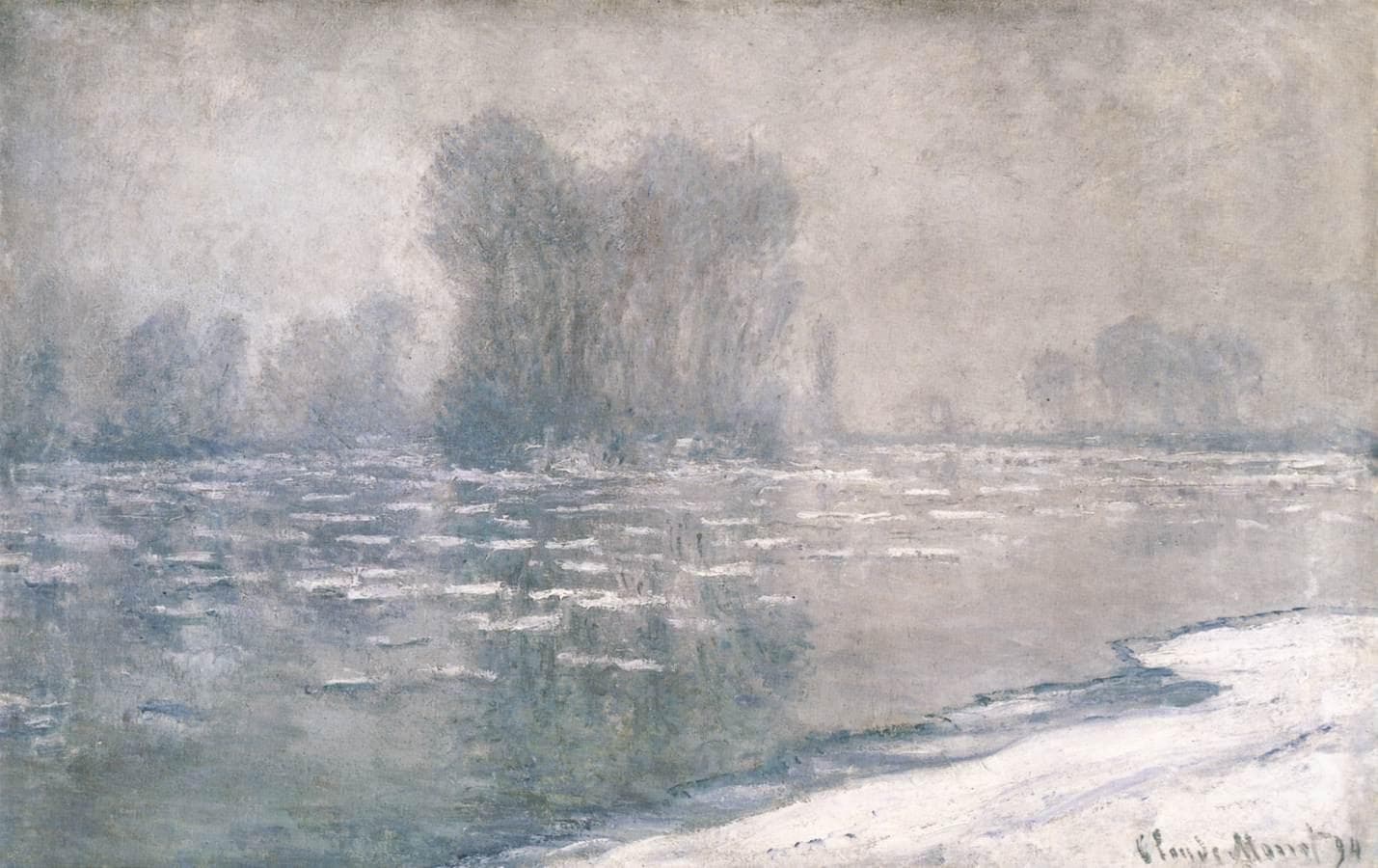
Kindred works
You may also study
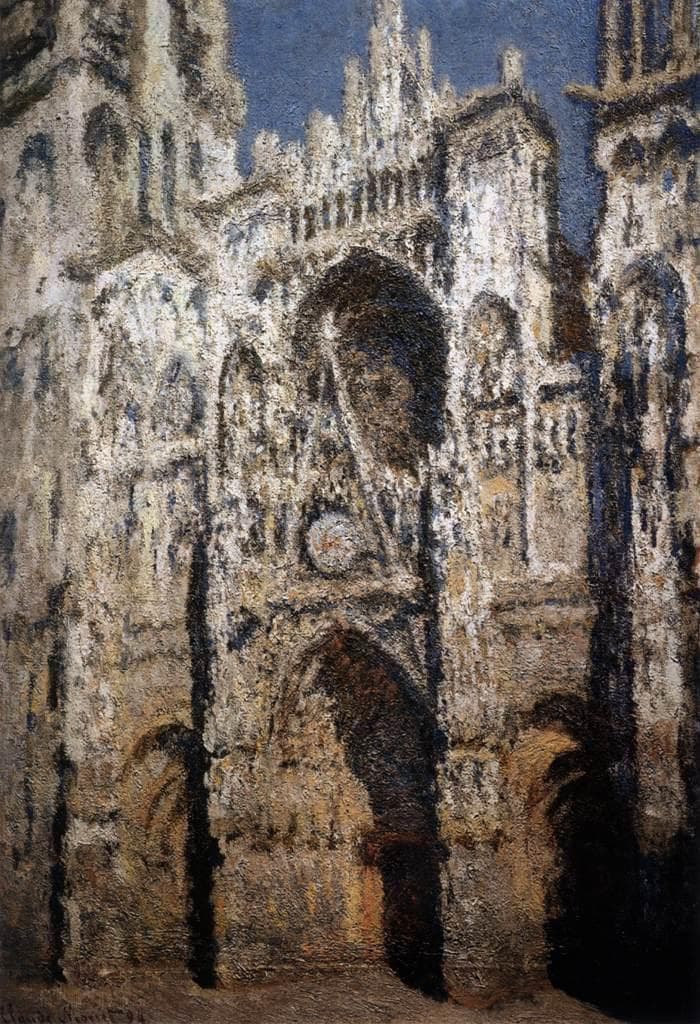
Rouen Cathedral in Full Sunlight
Claude Monet · 1893
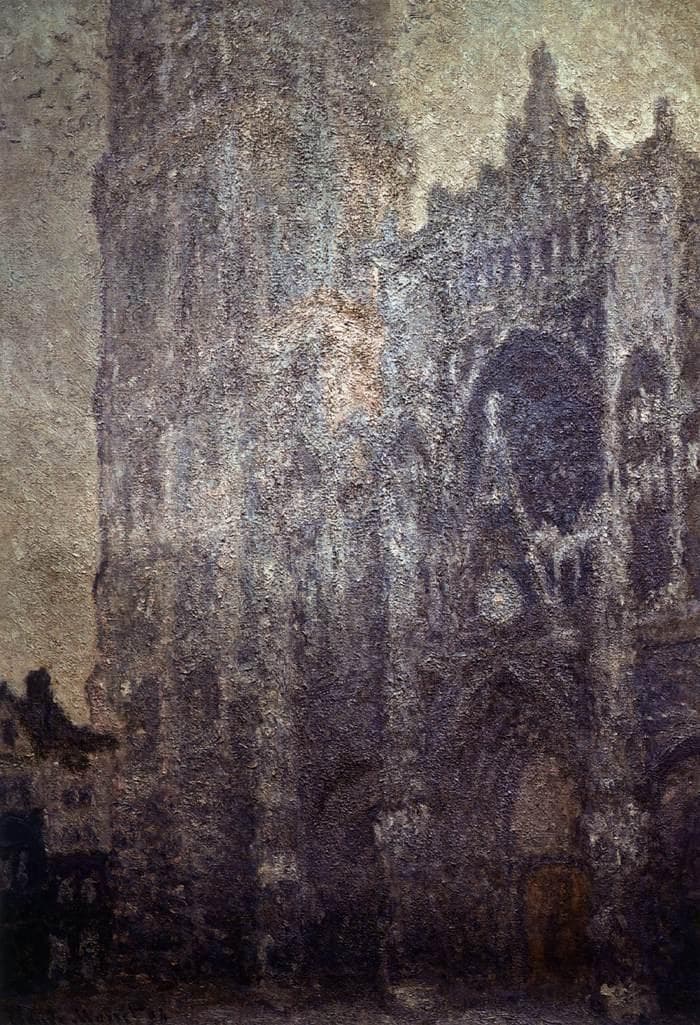
Rouen Cathedral, Effects of Morning Light
Claude Monet · 1893
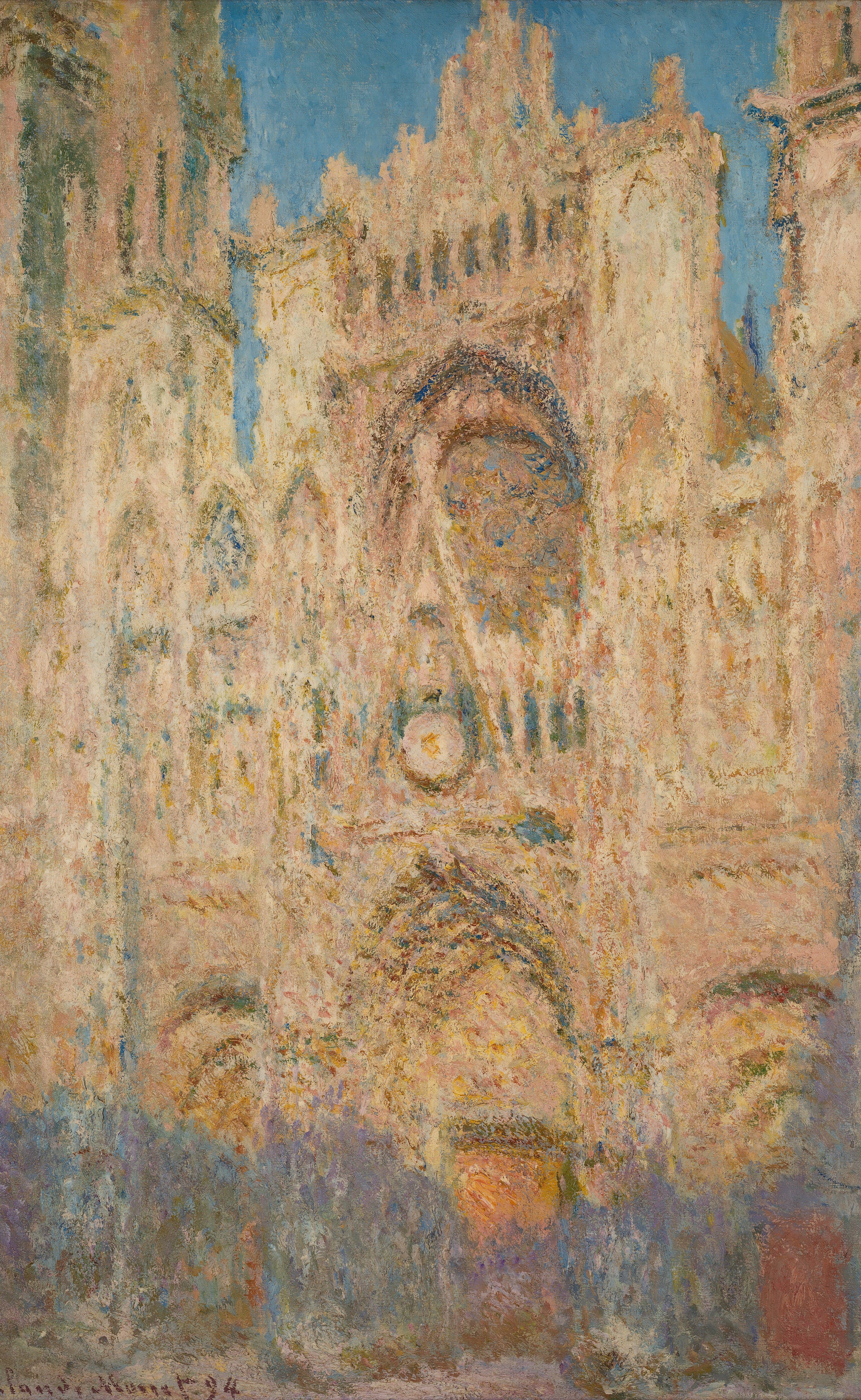
Rouen Cathedral, Evening
Claude Monet · 1894
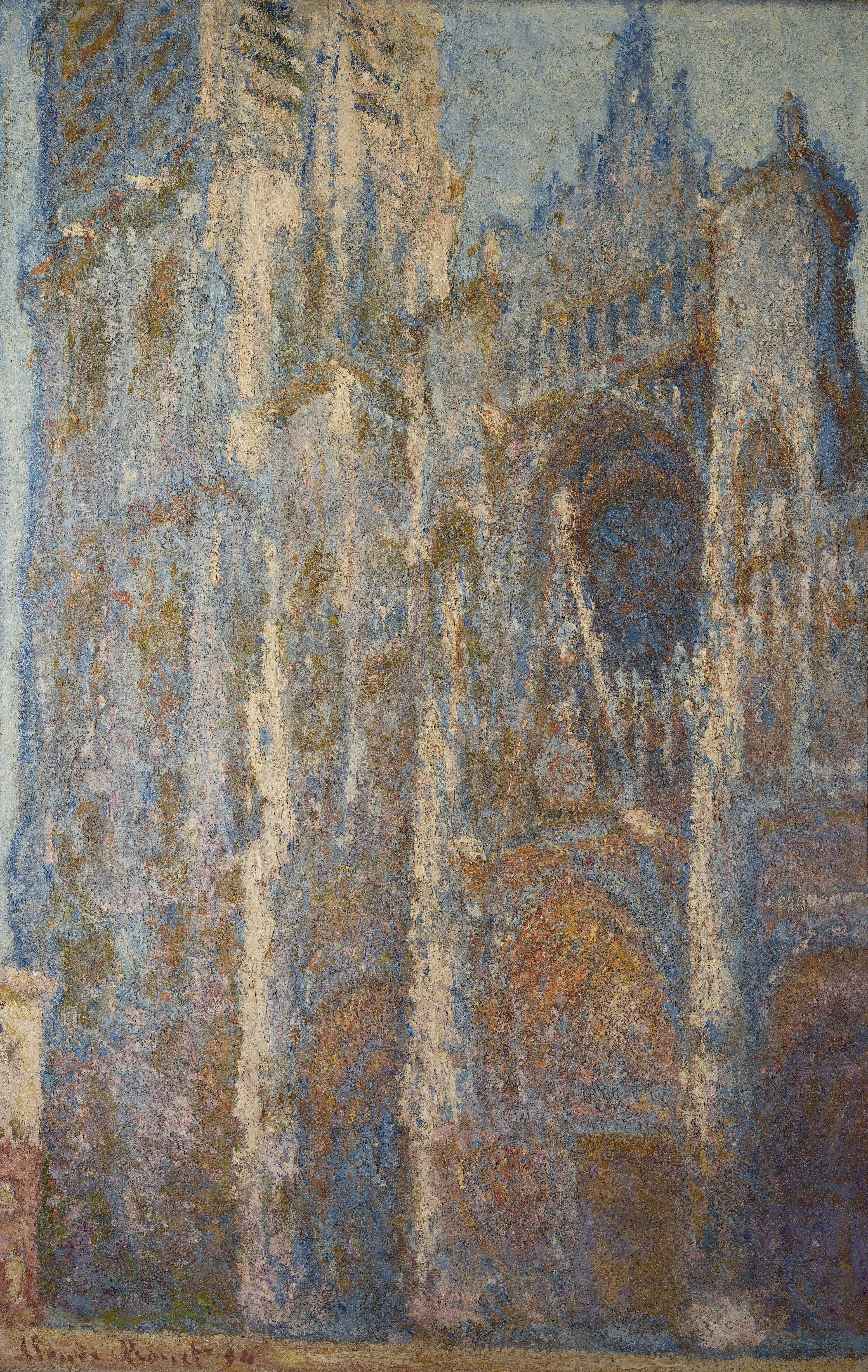
Rouen Cathedral, Portal and Tower d'Albane, Midday
Claude Monet · 1893–94
Stack of Wheat
Claude Monet · 1890–91
The Creation of Adam
Michelangelo · c. 1511–12
Lucifer
Franz von Stuck · 1890
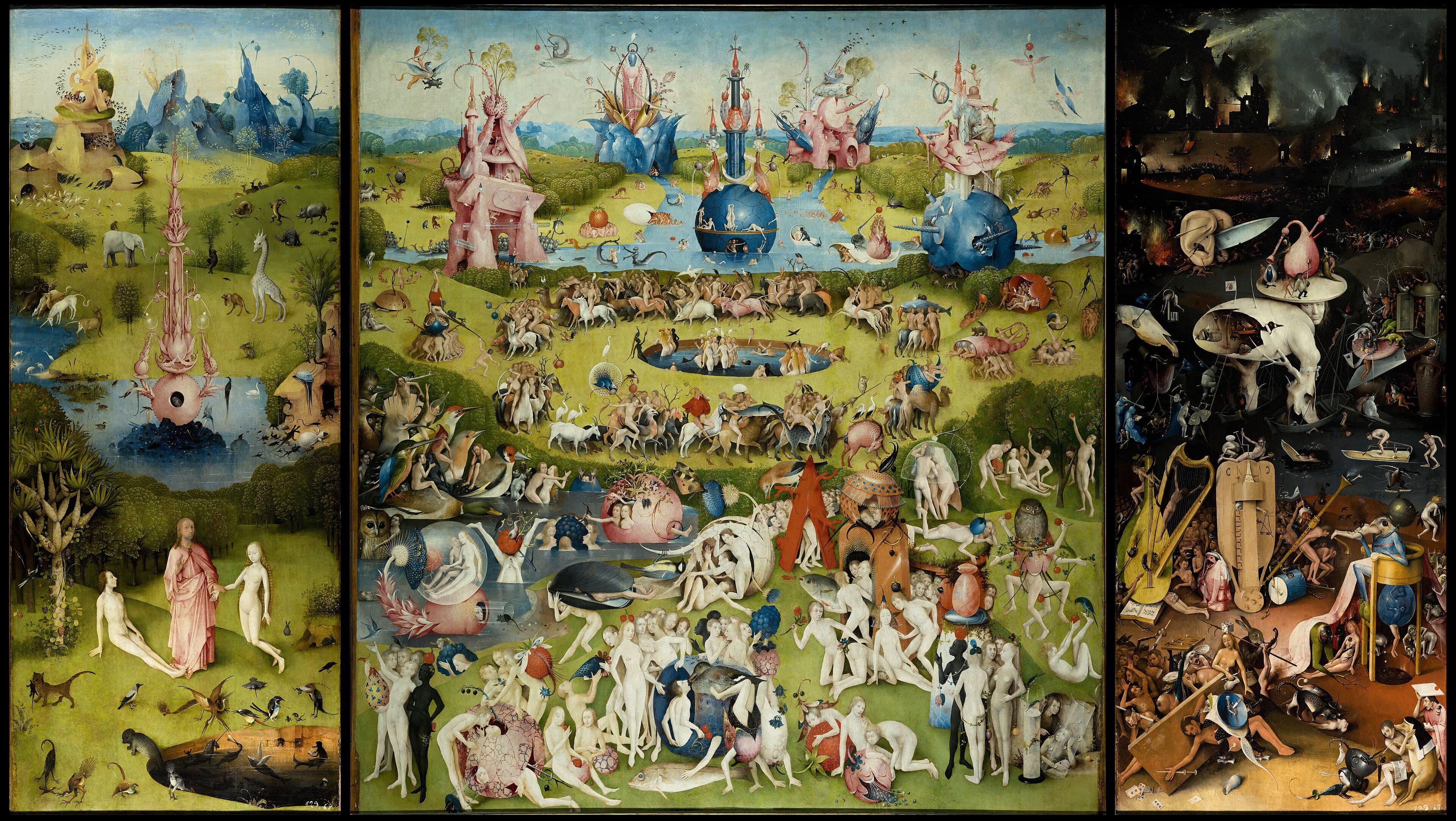
The Garden of Earthly Delights
Hieronymus Bosch · c. 1490–1510