Image: Asahi Group Oyamazaki Villa Museum of Art · Public domain · via Wikimedia Commons
Water Lilies (Asahi Group Oyamazaki Villa Museum)
Claude Monet, c. 1914–17
Nymphéas (Water Lilies) is a two-meter-square canvas Claude Monet painted at Giverny around 1914–17: lily pads and two yellow flowers on dark, plum-colored water. It is in the Asahi Group Oyamazaki Villa Museum of Art near Kyoto.
- Artist
- Claude Monet
- Date
- c. 1914–17
- Medium
- Oil on canvas
- Dimensions
- 200 × 200 cm
- Collection
- Asahi Group Oyamazaki Villa Museum of Art, Ōyamazaki, Kyoto, Japan
- Movement
- Impressionism
- Catalogue
- Wildenstein 1802
- Nature & Landscape
- Water & Sea
This Nymphéas (Water Lilies) is one of the large square canvases Claude Monet painted of the lily pond at Giverny during the First World War. It measures two meters on each side, it is listed in the Wildenstein catalogue raisonné as number 1802, and it belongs to the Asahi Group Oyamazaki Villa Museum of Art in Ōyamazaki, between Kyoto and Osaka, where it is one of several late water-lily paintings shown in the museum's underground gallery designed by Tadao Ando.
What you're looking at
The square is all water. Across the lower half floats a dense raft of round lily pads, painted as overlapping discs of mauve and dusty lilac with darker rims. Two flowers glow in the middle of them, yellow-orange cups that are the warmest notes on the canvas. Higher up, the pads thin out into flatter, paler ellipses scattered toward the top left and right, so the eye reads the pond receding even though there is no horizon.
The open water is the striking part of this version. Instead of the blue or pink of daylight canvases, it is a deep plum and violet, worked in vertical strokes that suggest the reflected trunks and foliage of trees along the far bank. A few flecks of rust and pink float in the upper left like scattered petals or reflected flowers. A strip of brighter green appears in the bottom right corner, the edge of a bank or a clump of grass, which is the only solid ground in the picture.
The mood is crepuscular. Whether Monet intended an evening effect or simply a shaded corner of the pond is not recorded, but the canvas belongs to the darker end of his late range. Bear in mind that the freely available reproduction is a scan from a book, and its colors are likely darker and redder than the painting itself.
Where and when it was painted
In 1914 Monet, then 73, began working toward an immense decorative cycle of water lilies, and in 1915 he built a new studio at Giverny to accommodate it. Over the following years he painted dozens of large canvases, many of them two-meter squares like this one, to work out compositions and color harmonies for what became the Orangerie Water Lilies. The squares concentrate on single motifs: a cluster of pads, a reflected willow, a patch of reflected cloud.
How it was painted
The pads are laid in with broad, round-ended strokes, each disc built from two or three tones so that it seems to tilt on the water. The water between them is made of long, dragged vertical marks, thin enough in places to let underlayers show. The two yellow flowers are thick, compact touches set on top at the end. As in most of these working canvases, the edges are loosely resolved, and the picture is signed with the studio stamp rather than a full signature.
How this version differs
Within the Water Lilies series, this canvas is a close cousin of the Marmottan's square and near-square studies, such as Nymphéas (1914–17), which shares the dense cluster of pads in the lower half but is painted in cool greens and white. The Orsay's Blue Water Lilies pushes the same format toward blue. Here the key is warm and dark, closer to the evening effects of Water Lilies, Evening Effect.
The rediscovery of the late water lilies
For several decades after Monet's death in 1926 the large late canvases were little valued. Many stayed in the studio at Giverny, and critics tended to see them as the work of an old man with failing eyes. That changed in the 1950s, when museums and collectors, especially in the United States, began to buy them, and the rise of large-scale abstract painting made their all-over surfaces look newly relevant. Japanese collectors had admired Monet since his lifetime, and the Asahi museum's group of water lilies belongs to that long tradition of Japanese interest in his work.
Where to see it
The Asahi Group Oyamazaki Villa Museum of Art occupies a restored early twentieth-century villa on the hillside of Mount Tennō, with modern additions by Tadao Ando. Its Monet water lilies hang in the underground gallery known as the Jewel Box. For other places to see work by Claude Monet, see where to see Monet's paintings, and for the garden that inspired these canvases, see Giverny.
Questions & answers
Where is this Monet Nymphéas?
It is in the Asahi Group Oyamazaki Villa Museum of Art in Ōyamazaki, Kyoto Prefecture, Japan. The museum shows its Monet water-lily paintings in an underground gallery designed by Tadao Ando, added to a historic hillside villa.
When was this Water Lilies painted?
It dates to around 1914–17, when Monet was painting large square canvases at Giverny in preparation for his water-lily decorations. Wikidata dates it to 1916; it is number 1802 in the Wildenstein catalogue raisonné.
What does the painting show?
It shows a cluster of lily pads with two yellow flowers on dark violet water in Monet's pond at Giverny. Vertical strokes in the water suggest reflected trees, and a strip of green bank appears in the lower right corner.
How many water lily paintings did Monet make?
Around 250 oil paintings of the water lilies are generally cited, made from the late 1890s until his death in 1926. Many of the large late canvases, like this square one, were working pictures for the Orangerie decorations.
More by the artist
Claude Monet
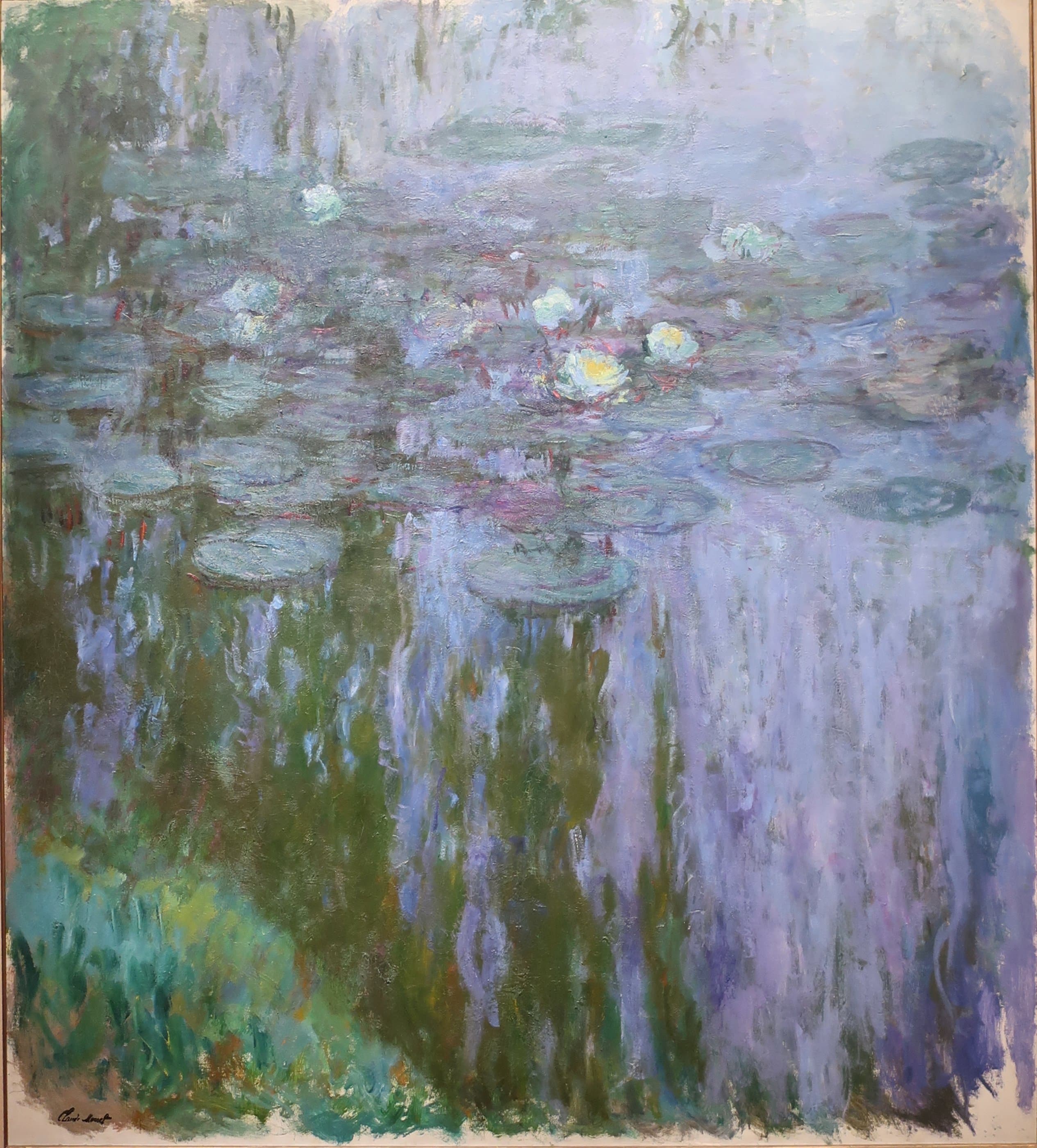
Nymphéas (Musée Marmottan Monet, 1916–19, inv. 5119)
Claude Monet · 1916–19
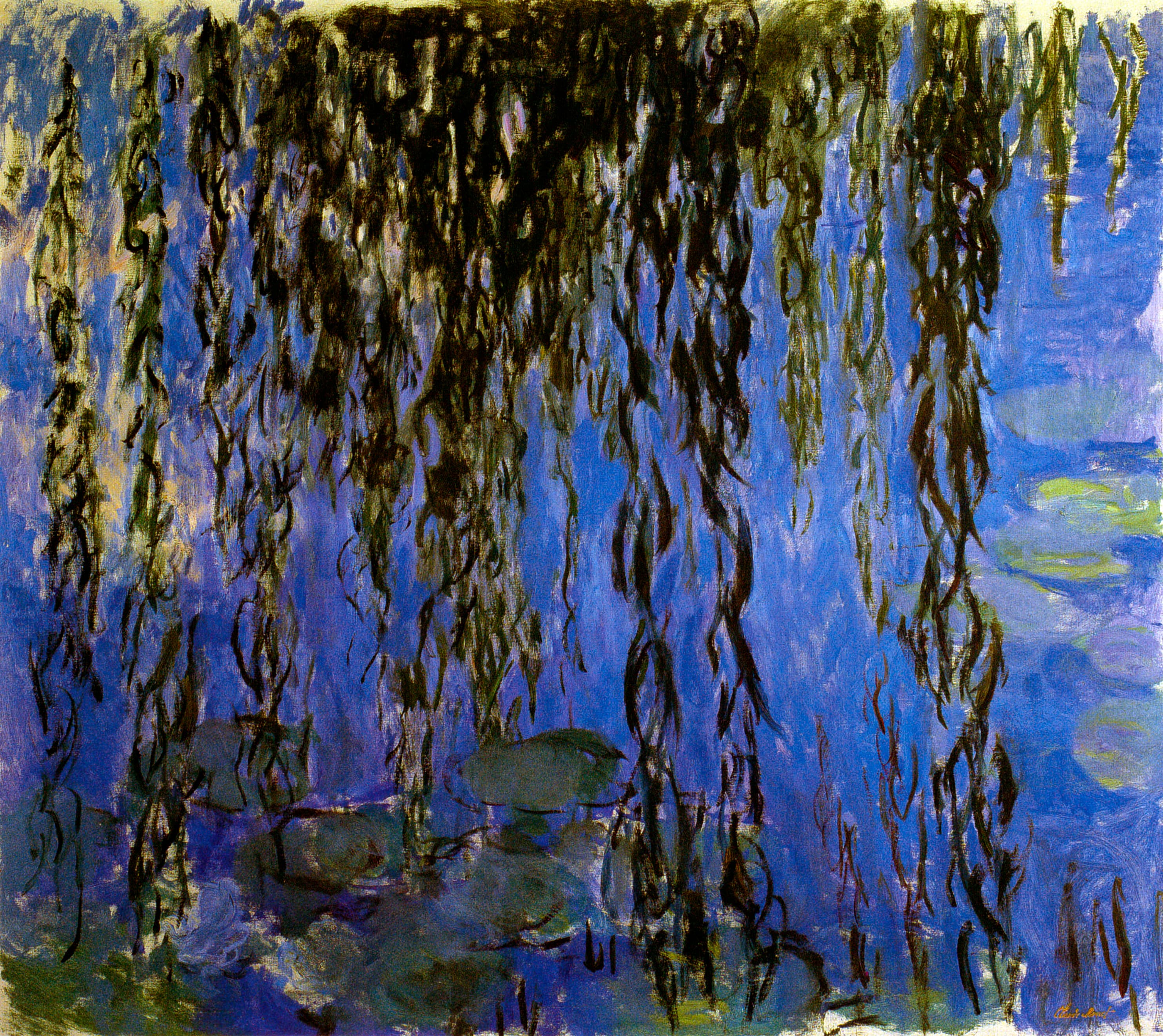
Water Lilies with Willow Branches
Claude Monet · c. 1916–17
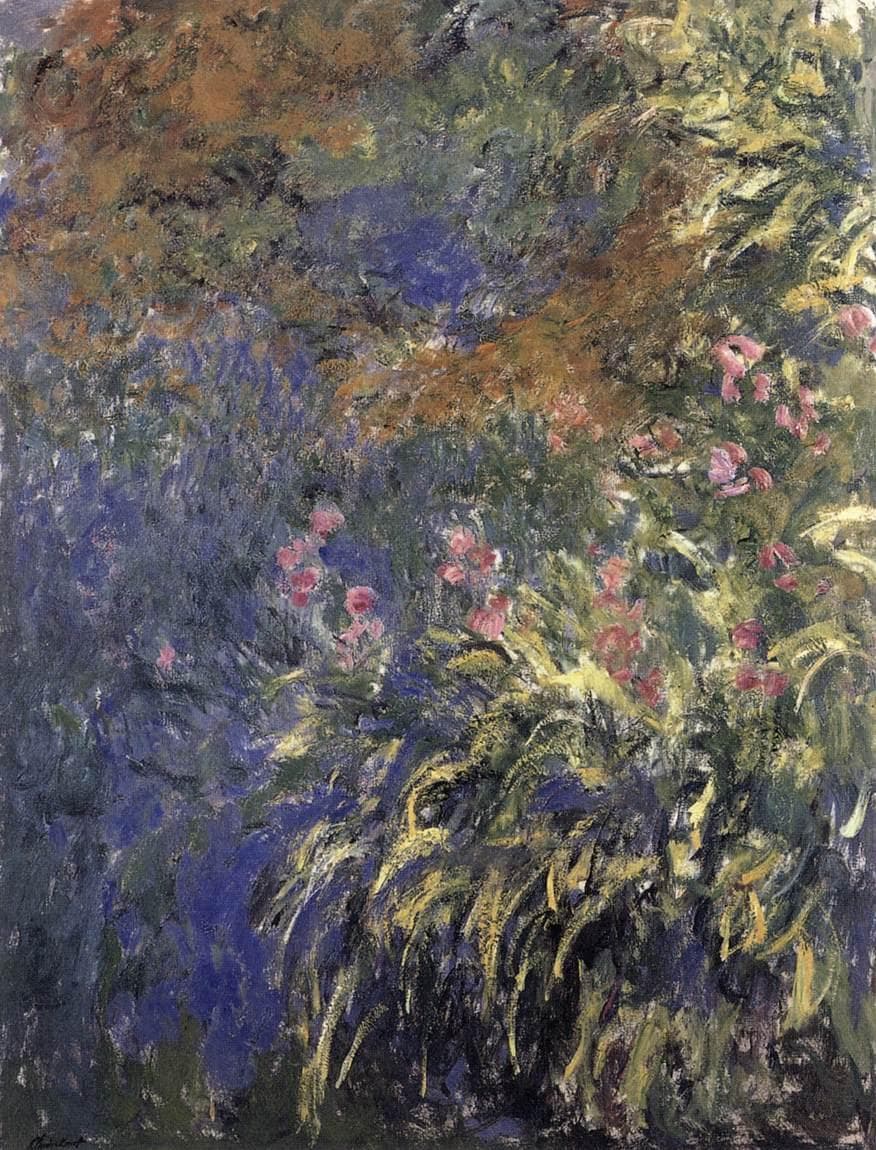
Irises by the Pond
Claude Monet · c. 1914–17
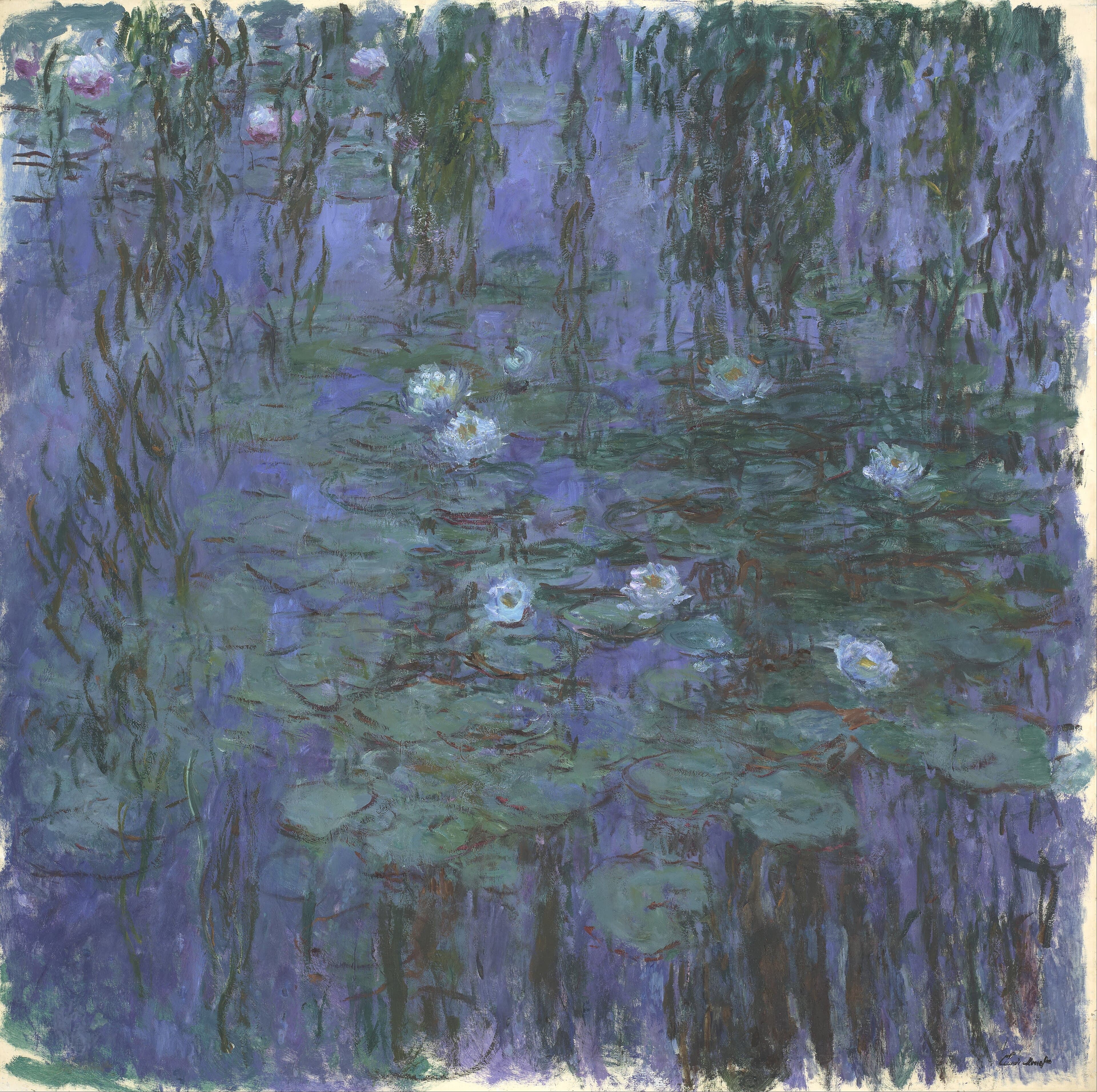
Blue Water Lilies
Claude Monet · 1916–19

Nymphéas [Waterlilies] (National Gallery of Australia)
Claude Monet · c. 1914–17
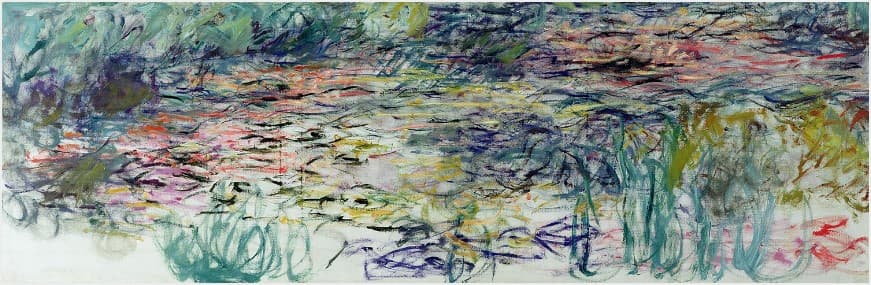
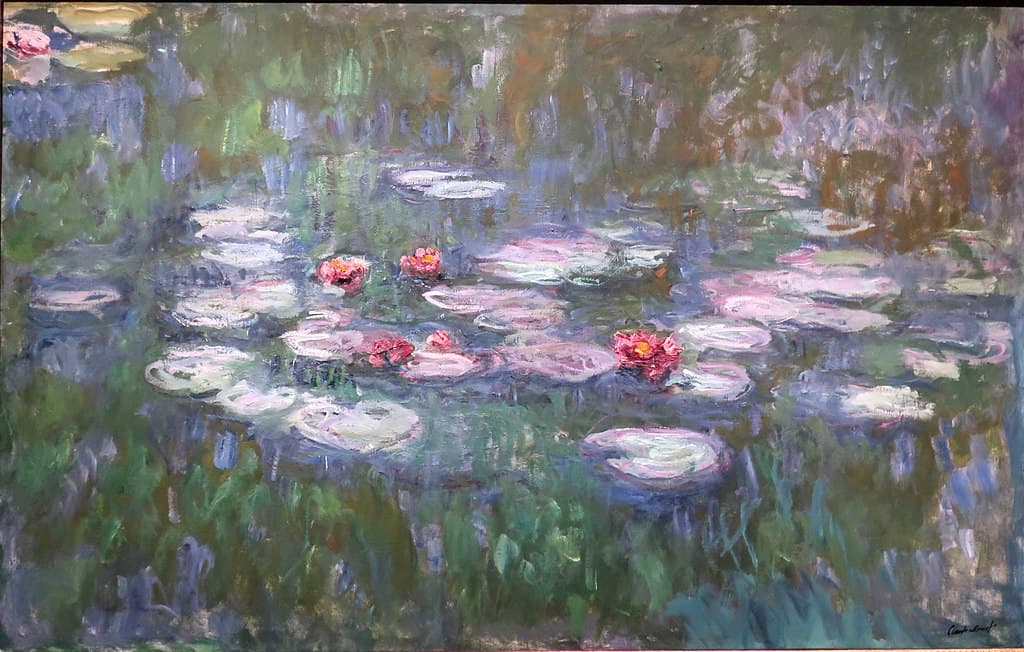
Nymphéas (Musée Marmottan Monet, 1917–19)
Claude Monet · 1917–19
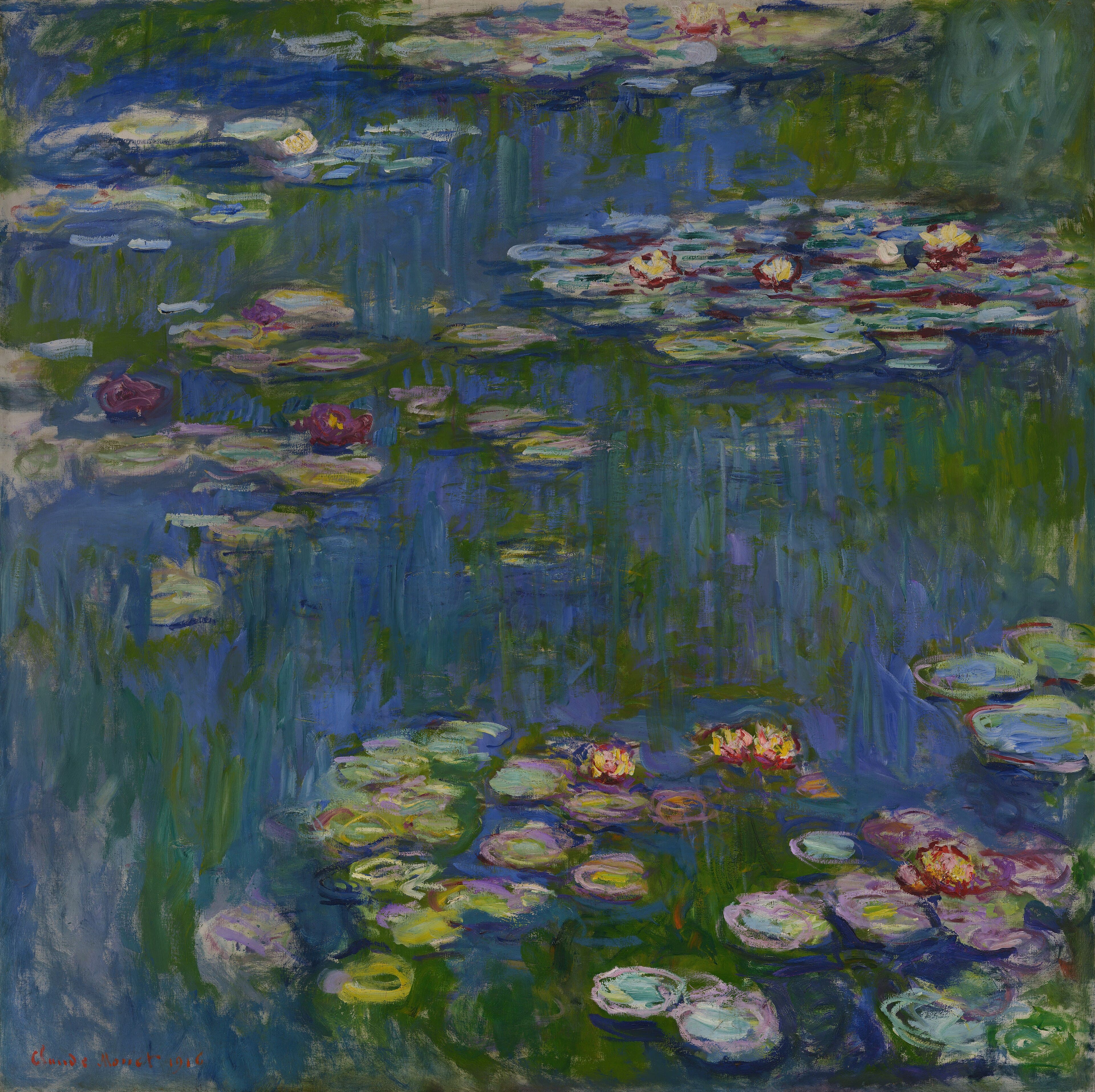
Water Lilies (1916, Tokyo)
Claude Monet · 1916
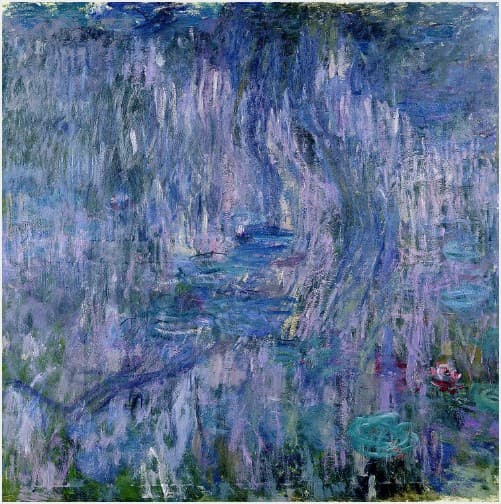
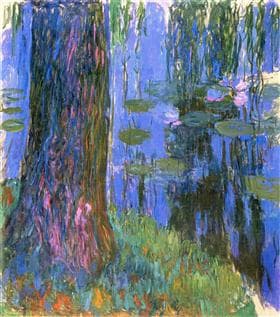
Water-Lilies, Reflection of a Weeping Willow
Claude Monet · 1916–19
Also painted in 1916
The same year
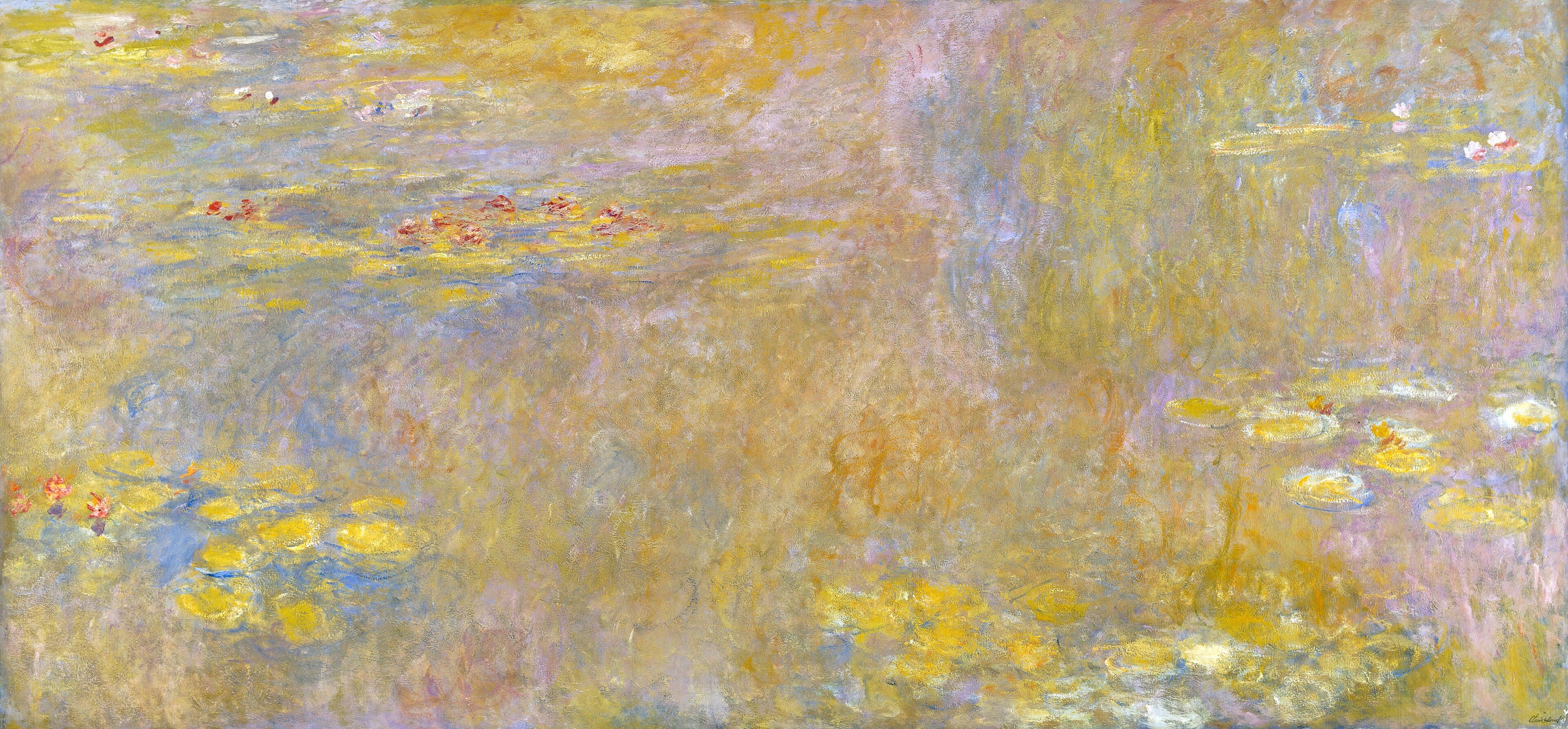
Kindred works
You may also study
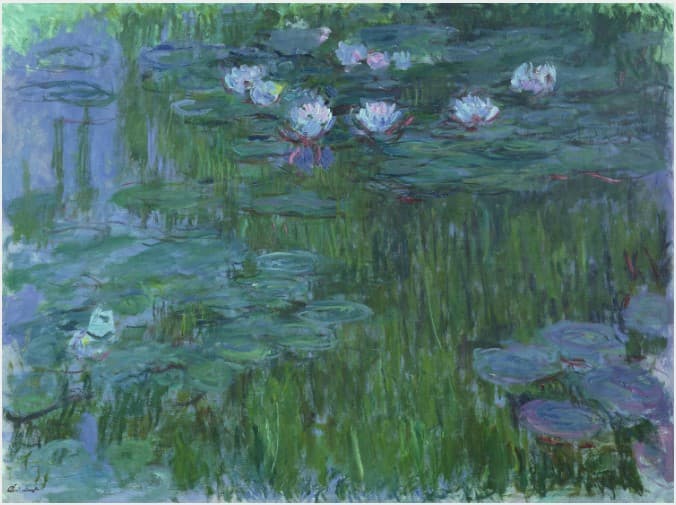
Nymphéas (Musée Marmottan Monet, 1914–17)
Claude Monet · 1914–17
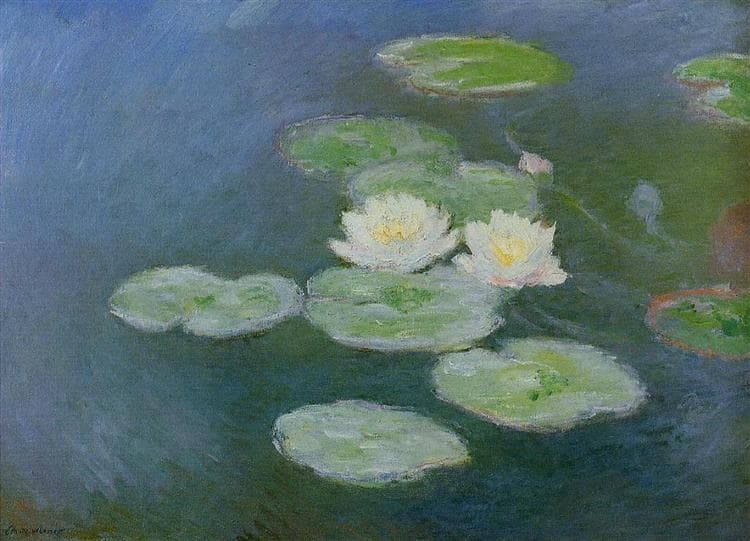
Water Lilies, Evening Effect
Claude Monet · 1897
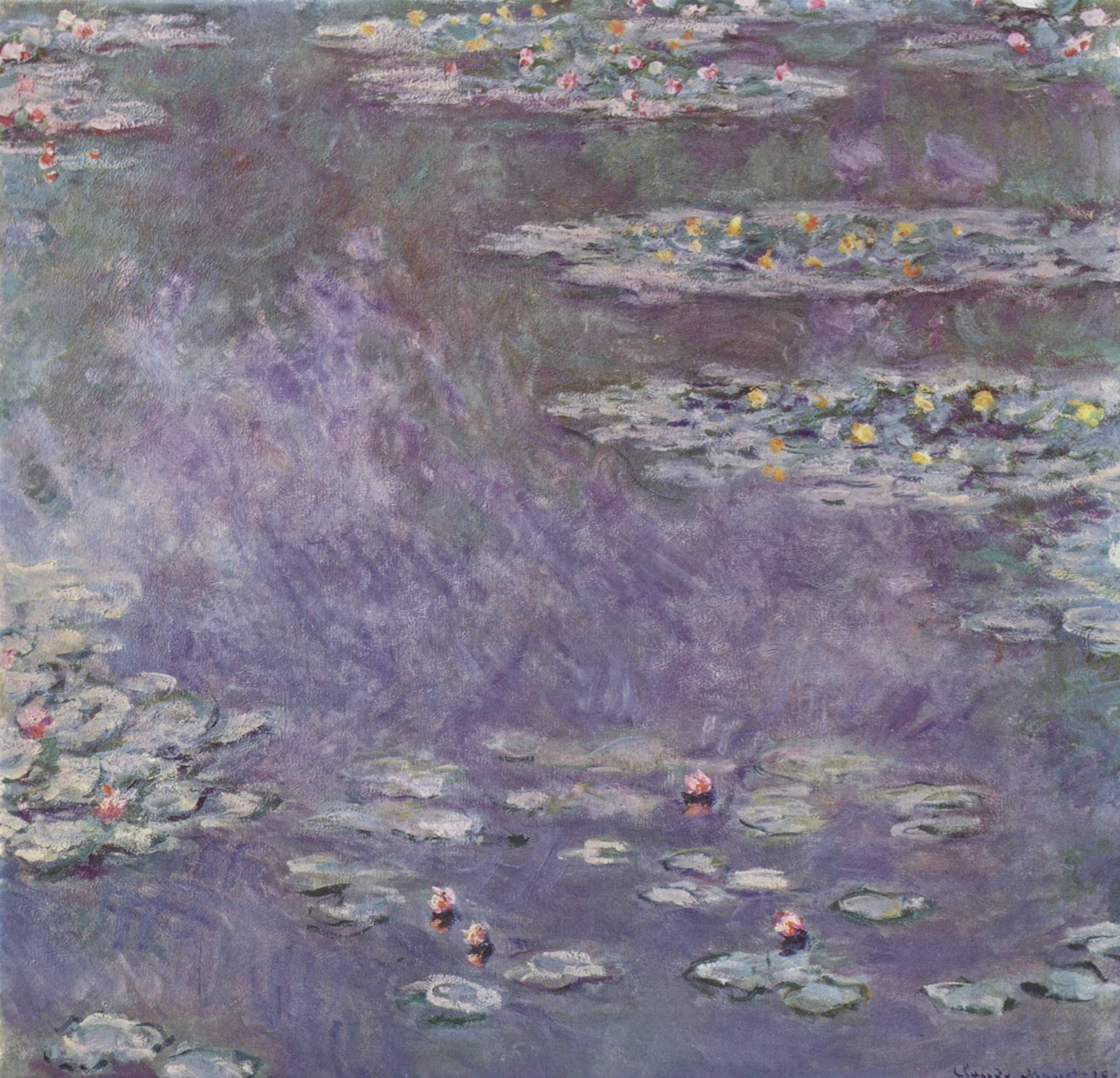
Nymphéas (Oyamazaki Villa Museum)
Claude Monet · 1908
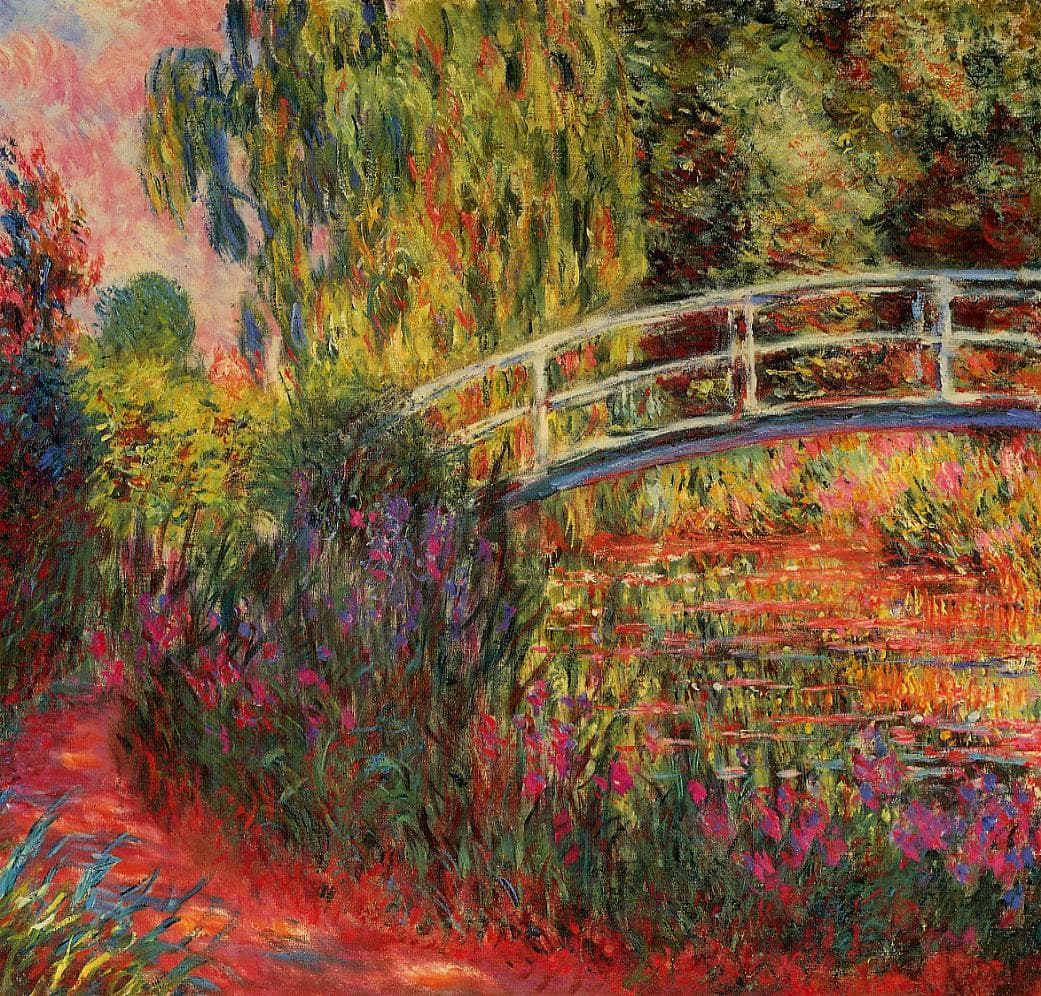
The Japanese Bridge or The Lily Pond
Claude Monet · 1900
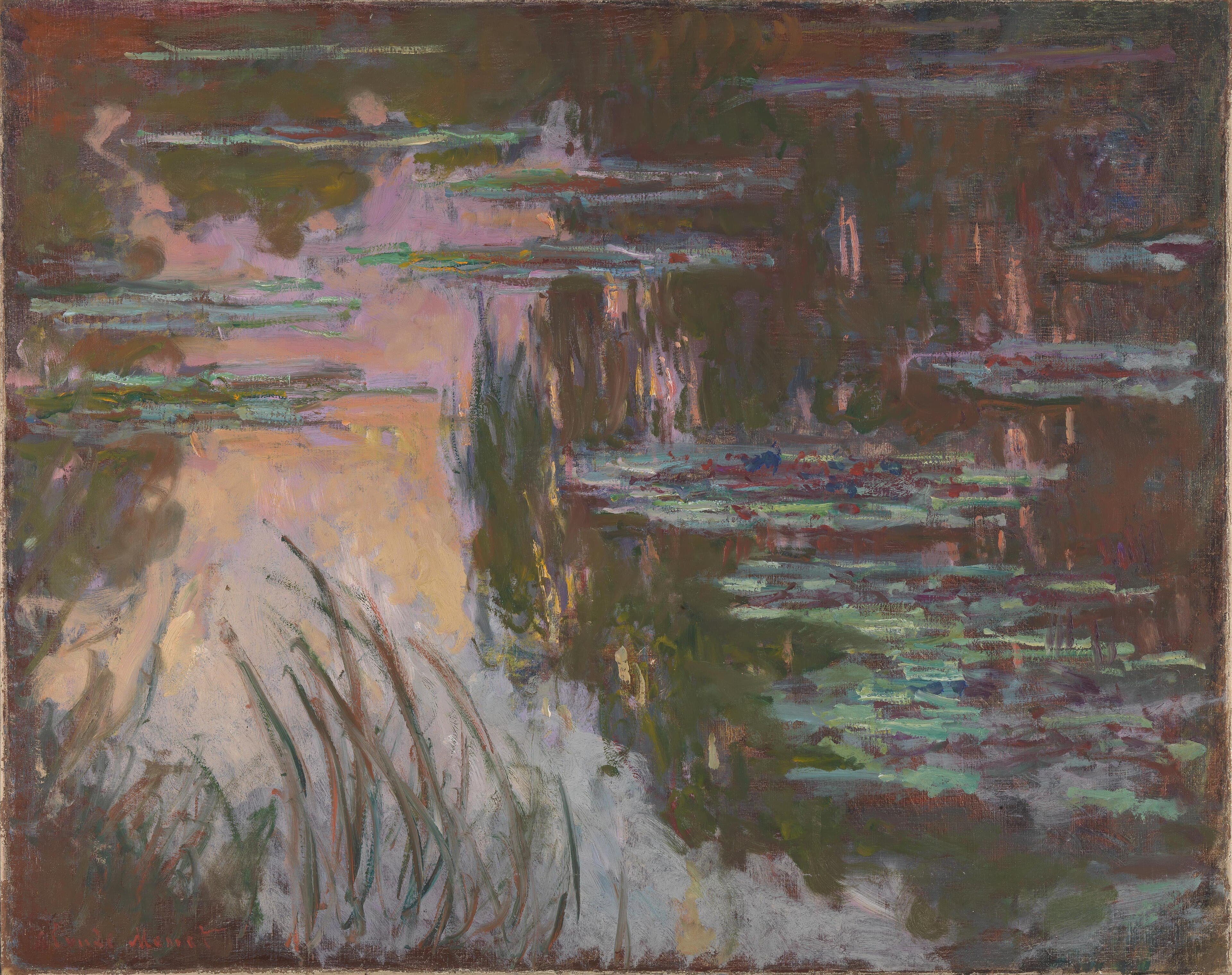
Water-Lilies, Setting Sun (National Gallery, London)
Claude Monet · c. 1907
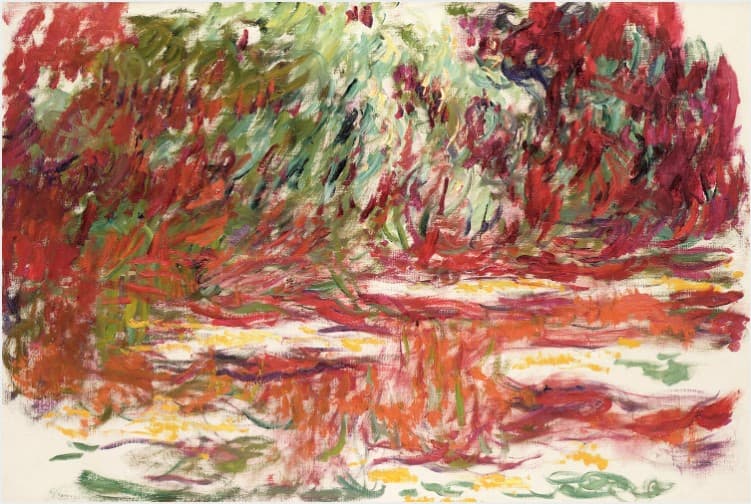
Water-Lily Pond (Bassin aux nymphéas, 1918–19)
Claude Monet · 1918–19
Le Bassin des Nymphéas (Denver)
Claude Monet · 1904
Nymphéas (1908 tondo, Vernon)
Claude Monet · 1908