Image: Musée Marmottan Monet, Paris; image via Wikimedia Commons · Public domain · via Wikimedia Commons
Nymphéas (1915, Musée Marmottan Monet)
Claude Monet, 1915
Nymphéas is a 1915 painting by Claude Monet of his Giverny pond in pale blue and lilac, with large white clouds reflected among pale lily pads and willow fronds. It is in the Musée Marmottan Monet, Paris, from Michel Monet's bequest.
- Artist
- Claude Monet
- Date
- 1915
- Medium
- Oil on canvas
- Dimensions
- 130 × 150 cm
- Collection
- Musée Marmottan Monet, Paris, France
- Movement
- Impressionism
- Catalogue
- Wildenstein 1783
- Nature & Landscape
- Water & Sea
Nymphéas is a canvas of 1915 by Claude Monet of his lily pond at Giverny, in the Musée Marmottan Monet in Paris (inventory 5085). It measures 130 by 150 centimeters and is one of the large late lily paintings that remained in Monet's studio and came to the Marmottan with the bequest of his son Michel in 1966. It is one of the palest and most cloud-filled of them.
What you're looking at
The canvas is almost entirely reflected sky. Across the lower half, great white clouds billow in the water, soft rounded shapes of white and cream edged with pale lilac, as if the sky had fallen into the pond. Around them the water is a clear pale blue, deepening to lavender toward the corners.
Above, the water is crowded with lily pads, painted in pale blue-green and gray, some outlined in darker blue, forming a broad band across the upper half and a few large single pads to the right and lower right. In the upper left, a fan of fine, downward strokes in blue and gray suggests the reflected fronds of a weeping willow. There are almost no flowers, only a pale white one at the upper left and faint touches elsewhere. At the top edge, a band of yellow-green and cream may be sunlit foliage reflected from the far bank.
The color range is narrow and cool: whites, blues, lilacs, pale greens. The picture's drama comes from scale and from the clouds.
The late pond
After the death of his wife Alice in 1911 and of his son Jean in 1914, Monet returned to the lily pond in 1914 with the plan of a cycle of decorative panels, and in 1915 he built a new, larger studio at Giverny to paint them. Alongside the panels, which were installed in the Musée de l'Orangerie in 1927, he made dozens of large canvases of the pond. Most were never signed or exhibited in his lifetime. At his death in 1926 they passed to Michel Monet, and in 1966 Michel bequeathed his father's collection, including many of these canvases, to the Académie des Beaux-Arts for the Musée Marmottan.
How this version differs
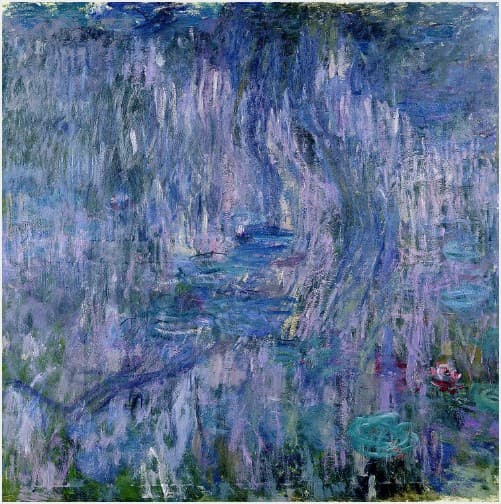
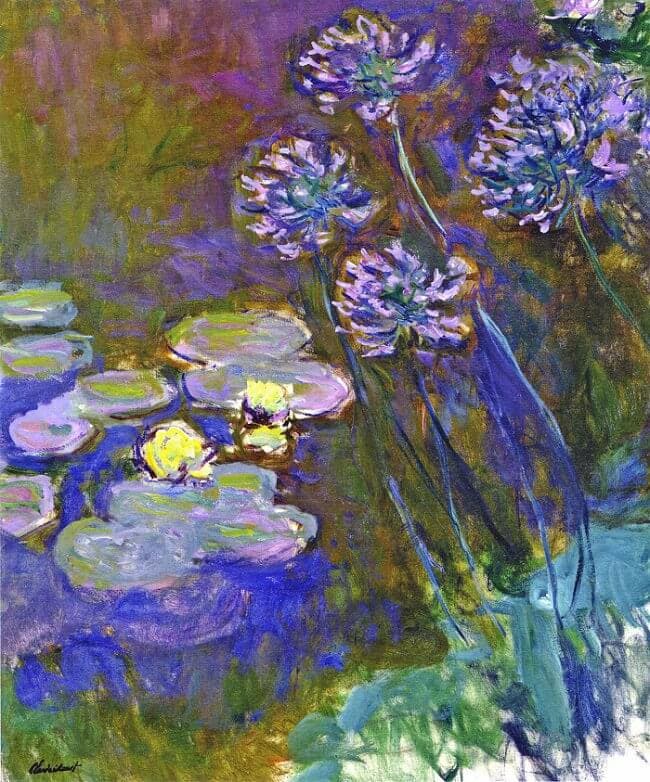
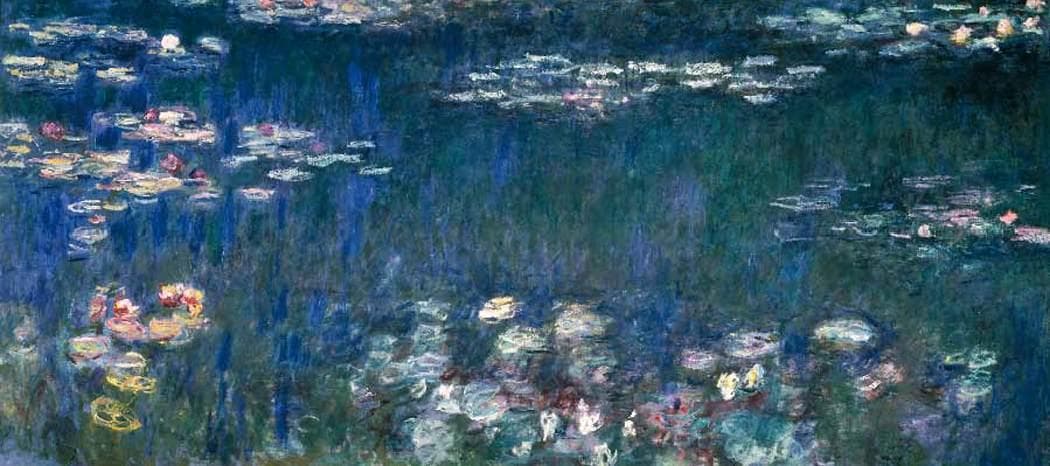
The Marmottan holds many late lily canvases, and they differ mostly in the reflection at their center. In Water-Lilies, Reflection of a Weeping Willow the willow dominates; in the Marmottan's Water Lilies and Agapanthus the bank and blue flowers frame the water. Here the subject is cloud. Compared with the dense, dark contemporaries in Gunma, Water Lilies (Nymphéas), and Potsdam, Water Lilies, it is open and luminous. Its reflected clouds anticipate the Orangerie's Green Reflections and the great Clouds panel there.
How it was painted
The clouds are laid in with broad, thick, curving strokes of white, worked into the blue around them while wet. The pads are thinner and flatter, brushed horizontally, some with a darker outline. The willow reflections are fine, dry, downward strokes. The paint is fluid and quick, typical of the studio canvases Monet used to test effects for the decorations.
Where to see it
The Musée Marmottan Monet, in a nineteenth-century hôtel particulier near the Bois de Boulogne in Paris, holds the world's largest collection of Monet's work, much of it from Michel Monet's bequest, and shows the late lily canvases in a dedicated lower-level gallery. See Musée Marmottan Monet and Monet's Water Lilies; for the garden, Giverny; and for more on Monet's late years, How Monet Painted.
Questions & answers
Where is Monet's 1915 Nymphéas?
It is in the Musée Marmottan Monet in Paris (inventory 5085). It came to the museum with the bequest of Monet's son Michel in 1966, along with many other late water-lily canvases.
When was it painted?
In 1915, at Giverny, the year Monet built his large new studio for the decorative water-lily panels later installed in the Musée de l'Orangerie.
What does it show?
The lily pond almost entirely as reflected sky: large white clouds in pale blue water in the lower half, a band of pale lily pads above, and reflected willow fronds at the upper left.
Why does the Marmottan have so many Monet water lilies?
Monet kept most of his late lily canvases in his studio. They passed to his son Michel, who bequeathed his father's collection in 1966, making the Marmottan the largest Monet collection in the world.
More by the artist
Claude Monet
Irises by the Pond
Claude Monet · c. 1914–17
Water Lilies (Nymphéas), 1915 (Gunma)
Claude Monet · 1915
Nymphéas (Musée Marmottan Monet, 1914–17)
Claude Monet · 1914–17
Water-Lilies
Claude Monet · after 1916

Nymphéas [Waterlilies] (National Gallery of Australia)
Claude Monet · c. 1914–17
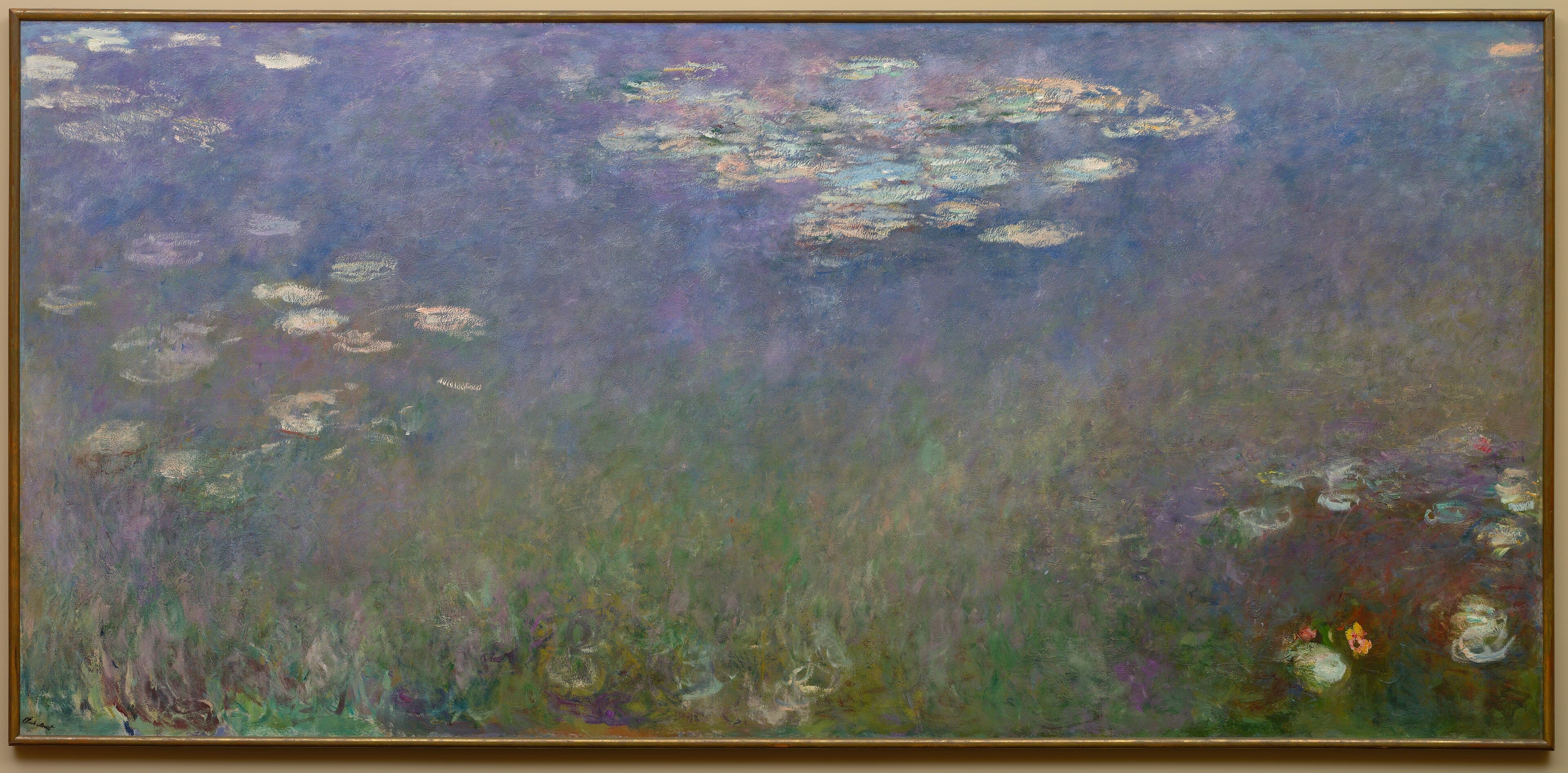
Water Lilies (Agapanthus)
Claude Monet · c. 1915–26

Water Lilies (MoMA triptych)
Claude Monet · 1914–26
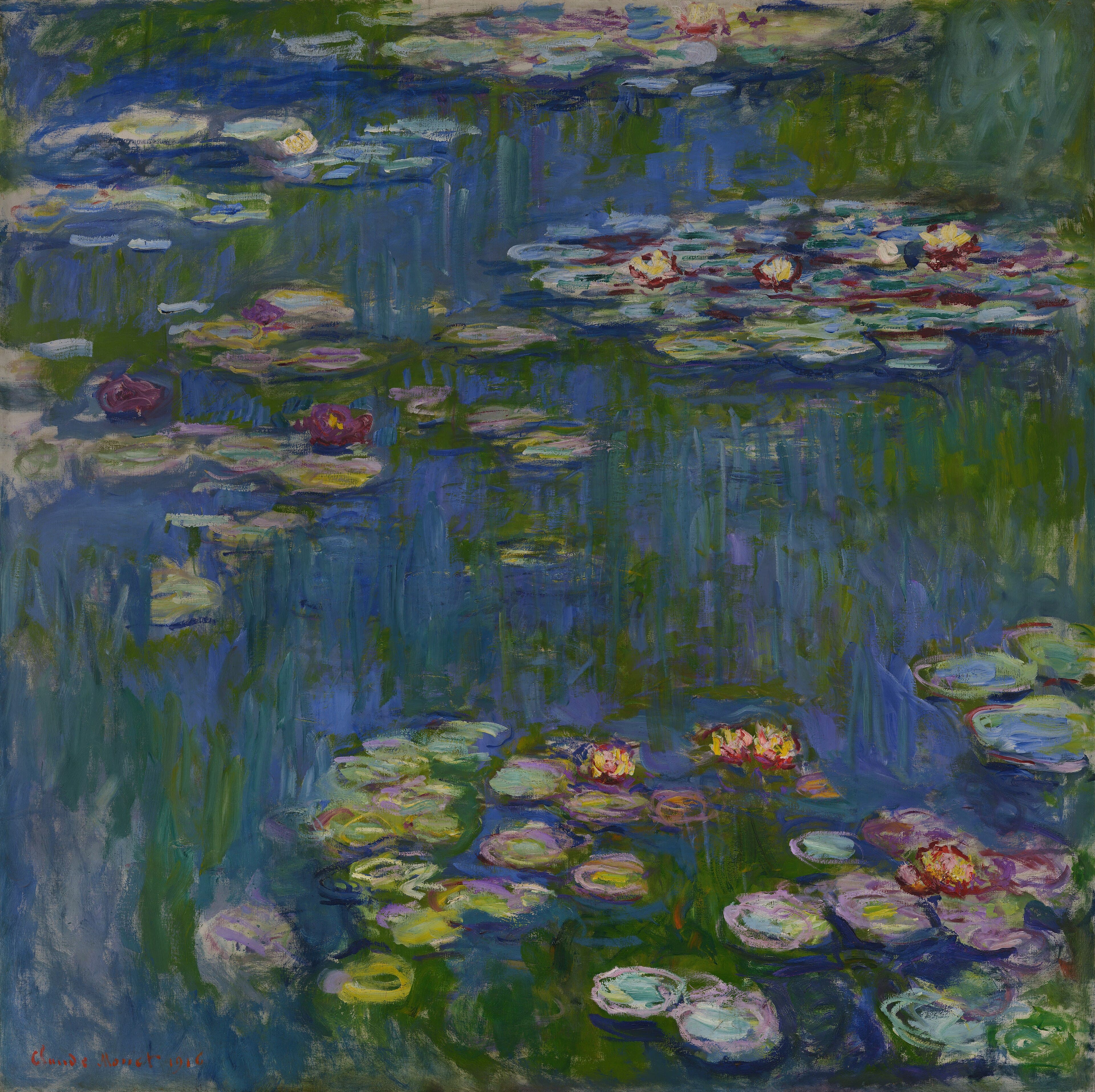
Water Lilies (1916, Tokyo)
Claude Monet · 1916
Also painted in 1915
The same year
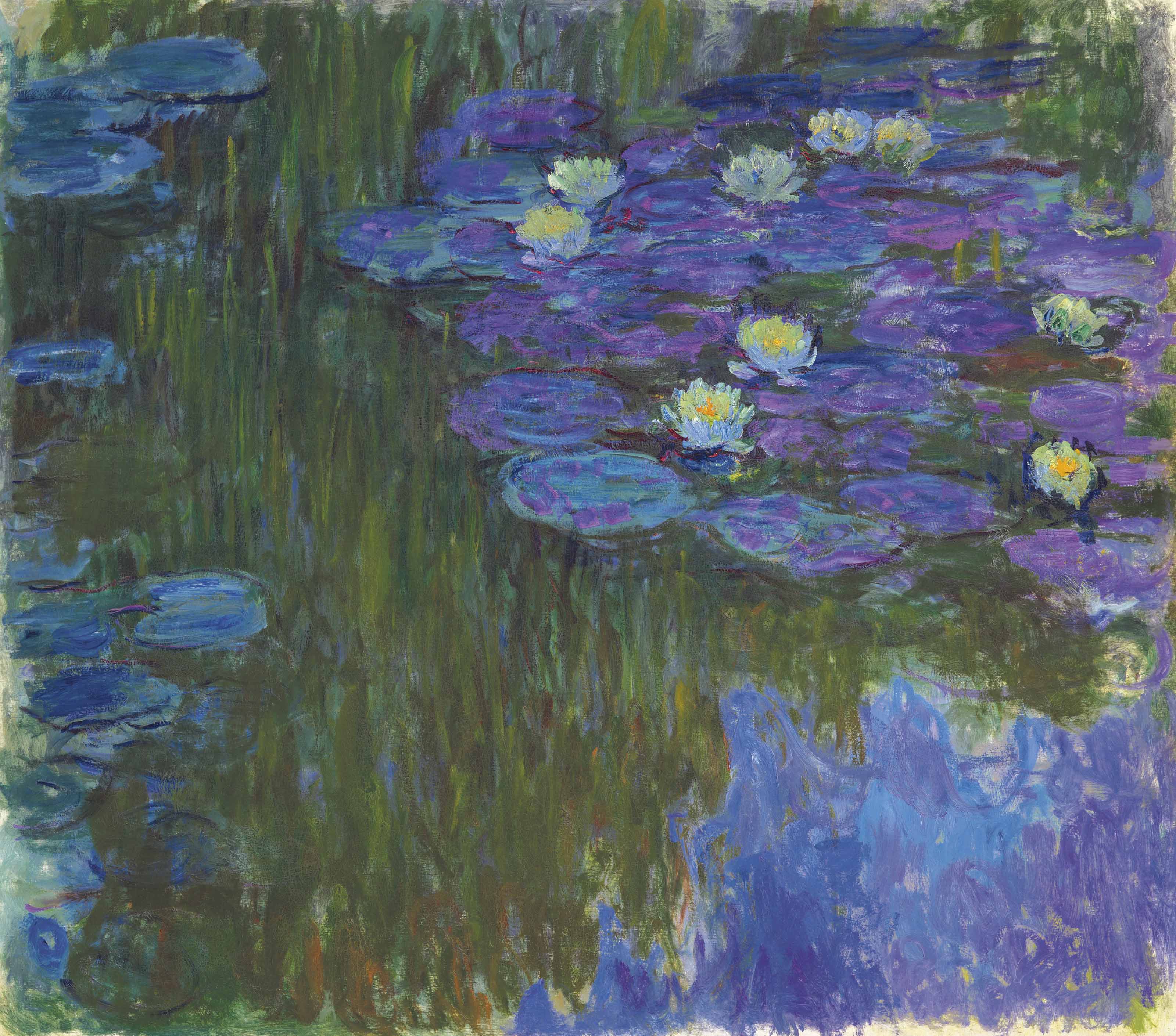
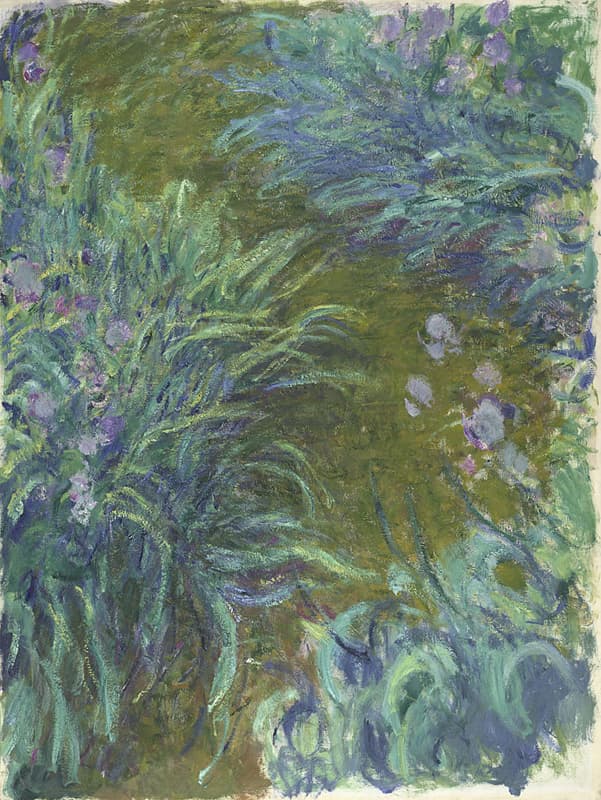
Kindred works
You may also study
Water-Lilies, Reflection of a Weeping Willow
Claude Monet · 1916–19
Water Lilies and Agapanthus
Claude Monet · 1914–17
Water Lilies: Green Reflections
Claude Monet · 1914–26
Nymphéas, Japanese Bridge
Claude Monet · 1918–26
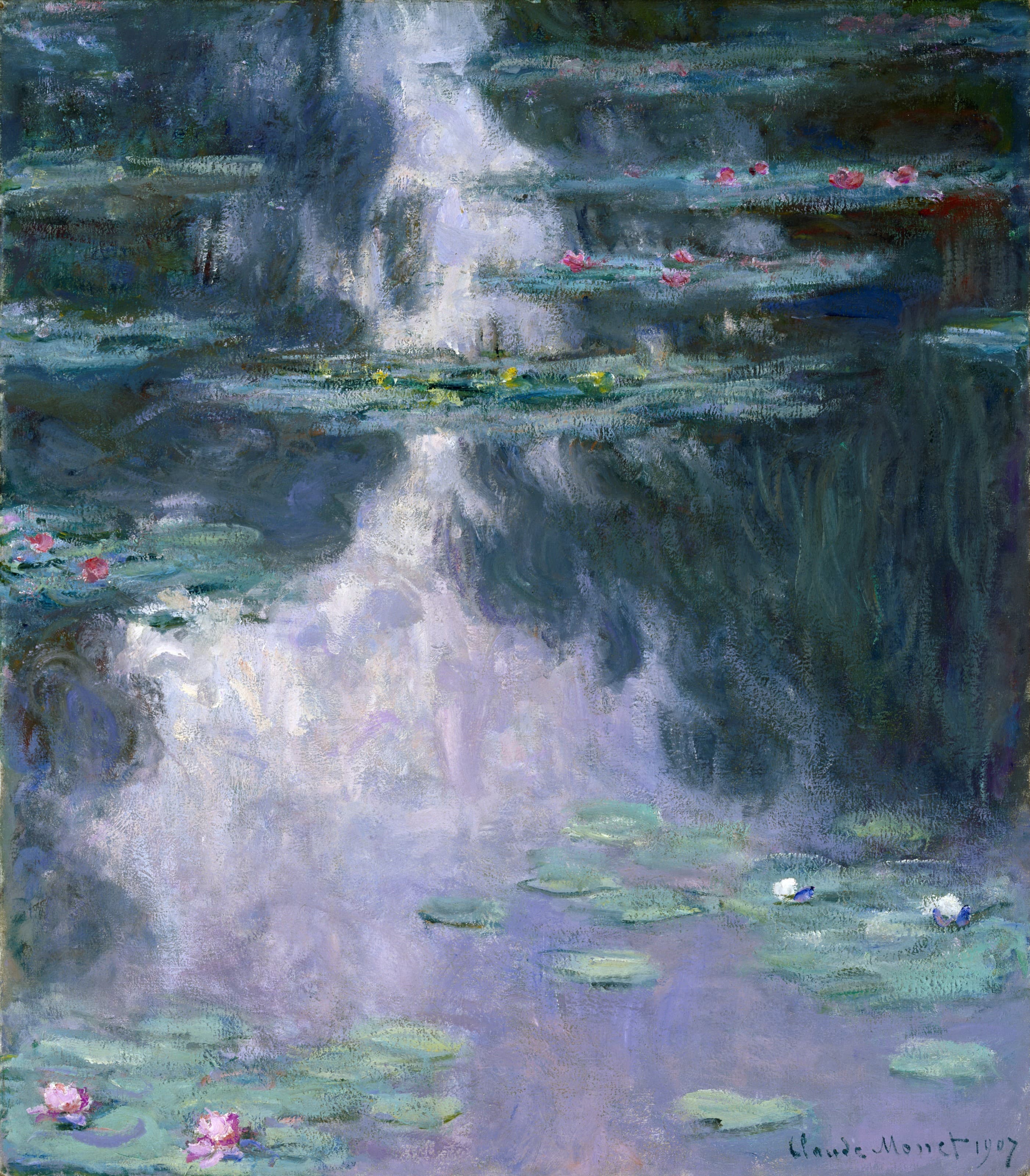
Water Lilies (Nymphéas), 1907 (Houston)
Claude Monet · 1907
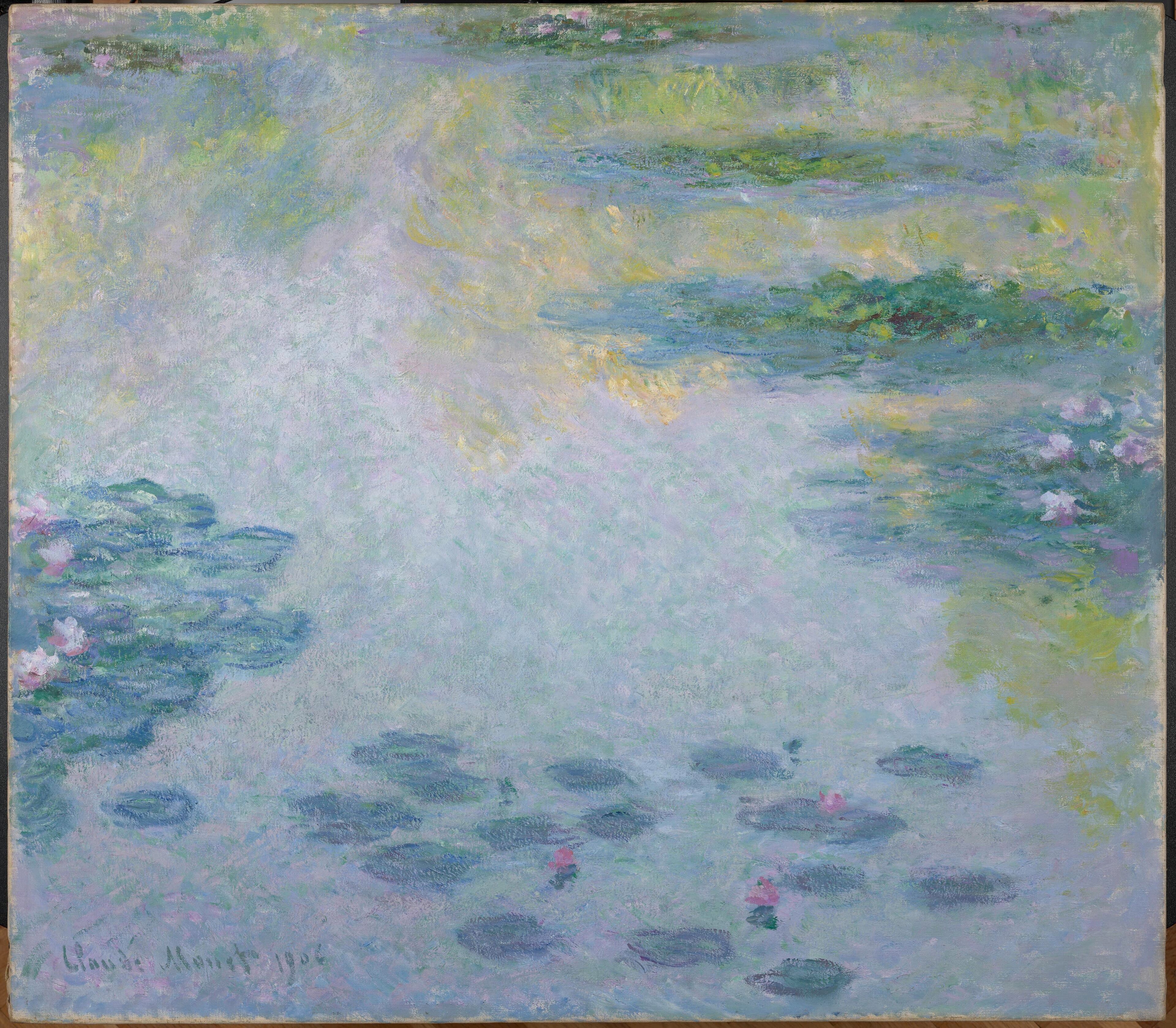
Waterlilies (1906, National Museum Cardiff)
Claude Monet · 1906
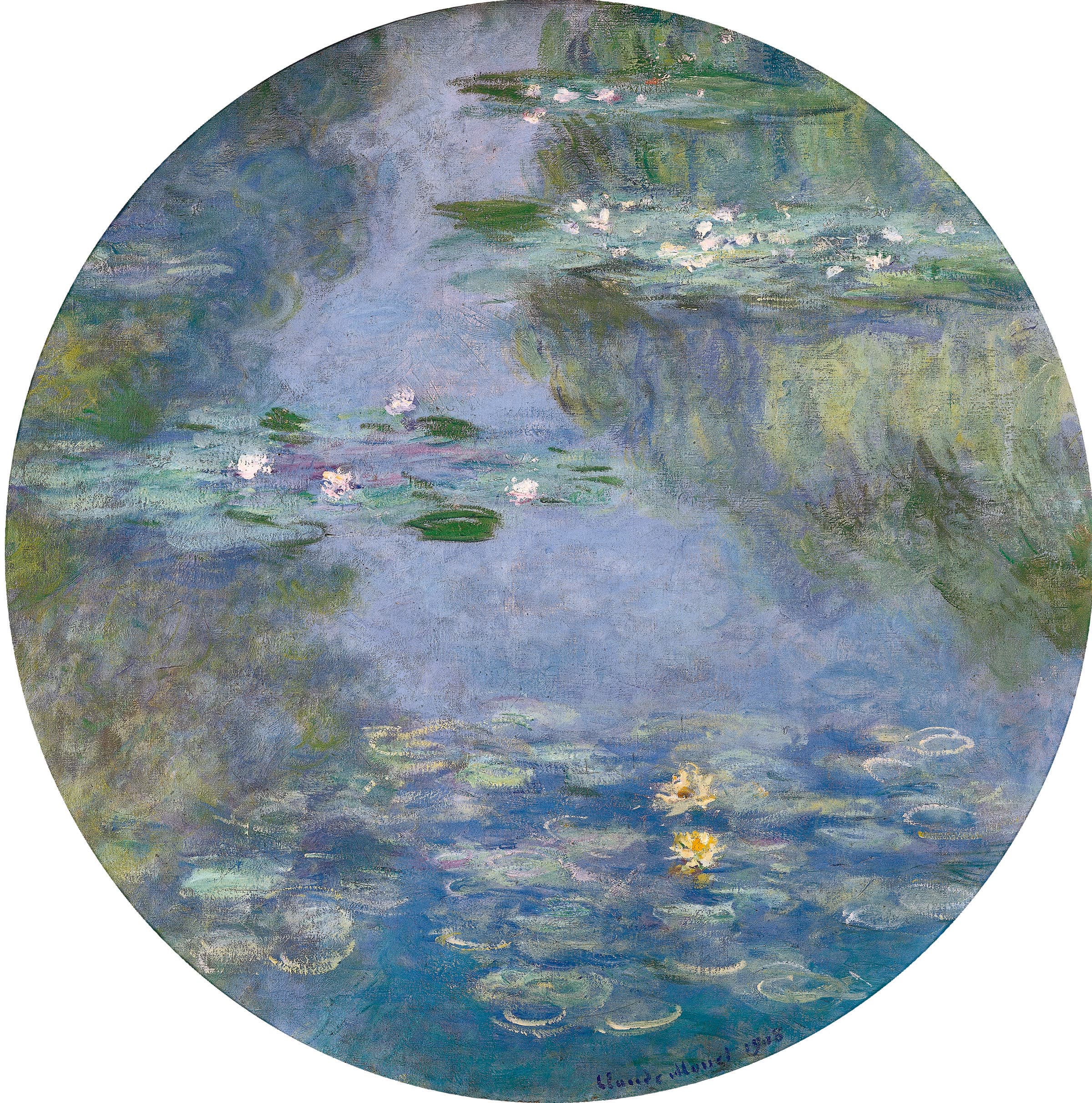
Nymphéas (1908 tondo, Vernon)
Claude Monet · 1908
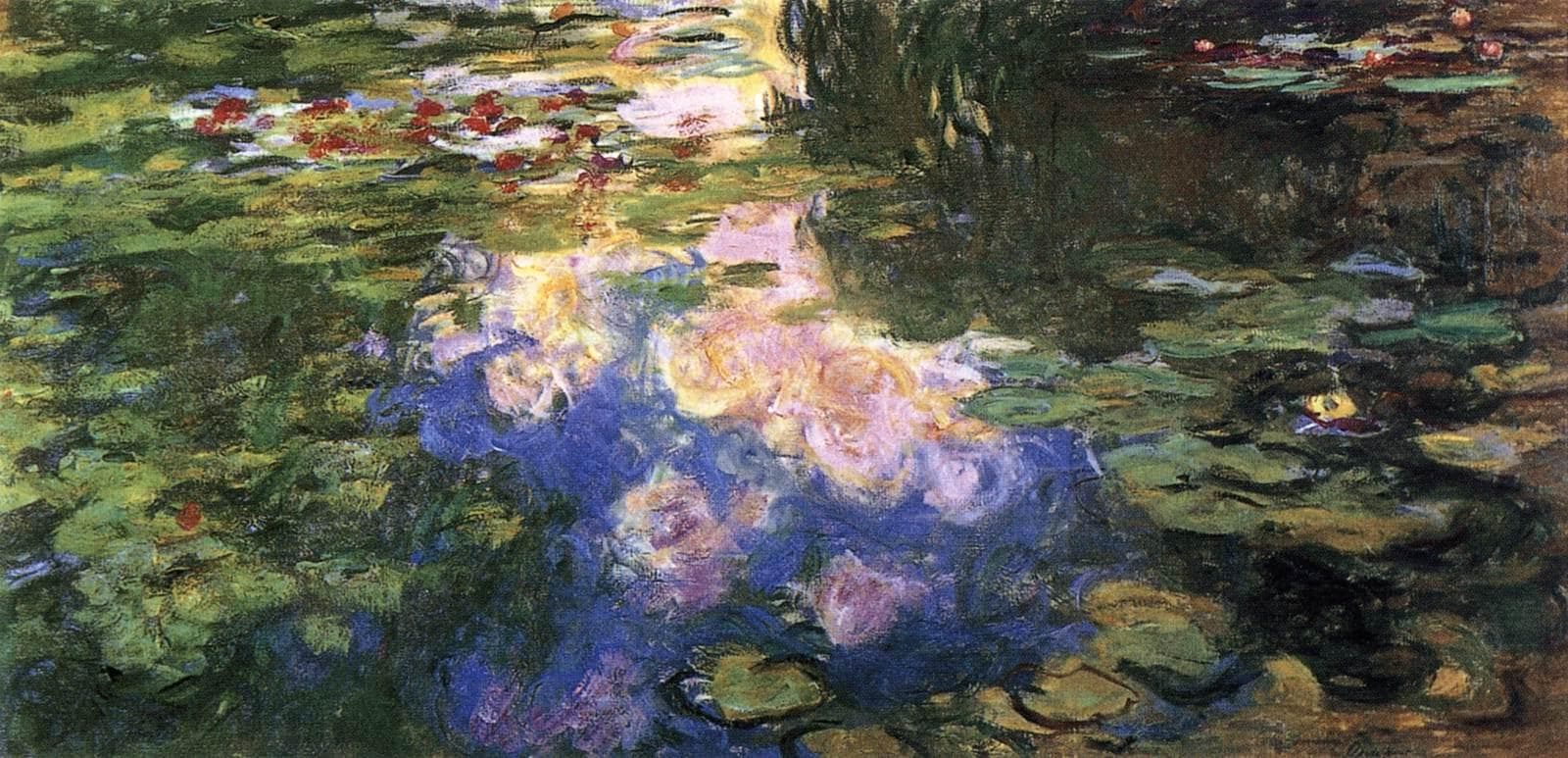
Water-Lily Pond (Le Bassin aux nymphéas), 1917–19
Claude Monet · 1917–19