Image: National Gallery, London (The Yorck Project) · Public domain · via Wikimedia Commons
Water-Lilies
Claude Monet, after 1916
Water-Lilies is a four-meter-wide canvas Claude Monet painted at Giverny after 1916, a golden, hazy view of his lily pond with clusters of yellow and pink flowers. The National Gallery in London bought it in 1963.
- Artist
- Claude Monet
- Date
- after 1916
- Medium
- Oil on canvas
- Dimensions
- 200 × 427 cm
- Collection
- National Gallery, London, United Kingdom
- Movement
- Impressionism
- Catalogue
- Wildenstein 1978
- Nature & Landscape
- Water & Sea
Water-Lilies is one of the huge late canvases Claude Monet painted of the pond in his garden at Giverny, dated by the National Gallery in London to after 1916. It is two meters high and more than four meters wide, the format of the panels he was making for his great water-lily decorations, and the Gallery acquired it in 1963 (NG6343). It is one of the few works of this scale in a British public collection.
What you're looking at
The canvas is pure surface: no bank, no sky, no horizon. Monet's eye is on the water just below him, and the long frame sweeps across it like a slow pan. Islands of lily pads float at the left, along the lower edge and across the upper right, painted as flat discs of lemon and mustard yellow edged with pale blue. Small flowers, pink, orange-red and white, sit on them in short clotted touches.
What sets this version apart is its warmth. The open water is not the blue or violet of many late canvases but a pale, buttery yellow shot through with lilac and soft green, the color of reflected cloud lit by sun. Across the center and right, faint vertical strokes suggest the mirrored trunks and foliage of trees on the bank, but they are so diluted that the reflection reads almost as a heat haze. The effect is of high summer at midday, the pond holding the glare of the sky.
In several places the canvas shows through, especially toward the right, and the paint is scrubbed thin in passages where Monet seems to have stopped. The picture was never sent out from the studio during his lifetime.
Where and when it was painted
From 1914 Monet worked at Giverny on the Grandes Décorations, the water-lily cycle he would give to the French state and which was installed in the Musée de l'Orangerie in 1927. In 1915 he built a studio large enough to hold several two-meter-high canvases side by side, and he painted many more panels than were finally used. Paintings like this one, of the same height and similar width, were part of that process: alternatives, studies and abandoned sections that remained in the studio when he died in 1926.
How it was painted
Monet painted the long canvases in the studio, working from the motifs he studied daily at the pond outside. The surface here is built up from loose, overlapping strokes that change direction with what they describe: horizontal for the pads, vertical for the reflections, small circling touches for the flowers. The palette is restricted, with chrome yellow, white, cobalt and a little rose doing almost all the work. Because the yellow dominates, the lilies themselves barely separate from the water, and the whole picture flattens into a shimmering field.
How this version differs
Set beside other panels in the Water Lilies series, this one is the sunlit counterpart to the dusky and violet versions. The Kunsthaus Zürich's Water Lily Pond, Green Reflection, of almost identical size, is dominated by cool green willow reflections; the Saint Louis Art Museum's Water Lilies, the center of the Agapanthus triptych, keeps a blue-violet key. The National Gallery also owns a later, smaller Water-Lilies, Setting Sun, where the reflected sky turns orange.
A detail to look for
Stand close to the left third of the canvas and look at the pads in the lower corner. Monet paints them as almost perfect ellipses, outlined in a thin line of darker yellow, while the flowers on them are tiny vermilion blots that barely break the surface. Then step back: from a few meters the outlines disappear and the pads read as patches of light. That double reading, structure close up and dissolution at a distance, is what Monet was designing for. He expected viewers of the decorative panels to stand inside a room of them and move around, and the large canvases work differently at each distance. The National Gallery's hang, on a long wall with space in front, lets you test it.
Where to see it
Like most of the late panels, it was still in the studio when Monet died in 1926, and it reached the market in the years after the Second World War, when collectors and museums rediscovered the late water lilies. The National Gallery bought it in 1963 and it is usually on view in London. For other museums holding work by Claude Monet, see where to see Monet's paintings; for the garden itself, see Giverny.
Questions & answers
Where is Monet's Water-Lilies in London?
This Water-Lilies is in the National Gallery, London (NG6343). The Gallery bought the four-meter-wide canvas in 1963. It is one of the largest Monet paintings in a British collection and is normally on display.
When was the National Gallery's Water-Lilies painted?
The National Gallery dates it to after 1916. Monet painted it in his large studio at Giverny while he was working on the water-lily decorations later installed in the Musée de l'Orangerie in Paris.
What does Monet's Water-Lilies show?
It shows the surface of the lily pond at Giverny with no bank or sky: clusters of yellow pads with pink and red flowers floating on pale, sunlit water that reflects clouds and faint trees. The yellow palette gives it the feel of a bright summer day.
Is this panel part of the Orangerie Water Lilies?
No. It is the same height and format as the Orangerie panels and was painted during the same campaign, but it was not used in the final installation. It remained in Monet's studio after his death and was later sold, reaching the National Gallery in 1963.
More by the artist
Claude Monet
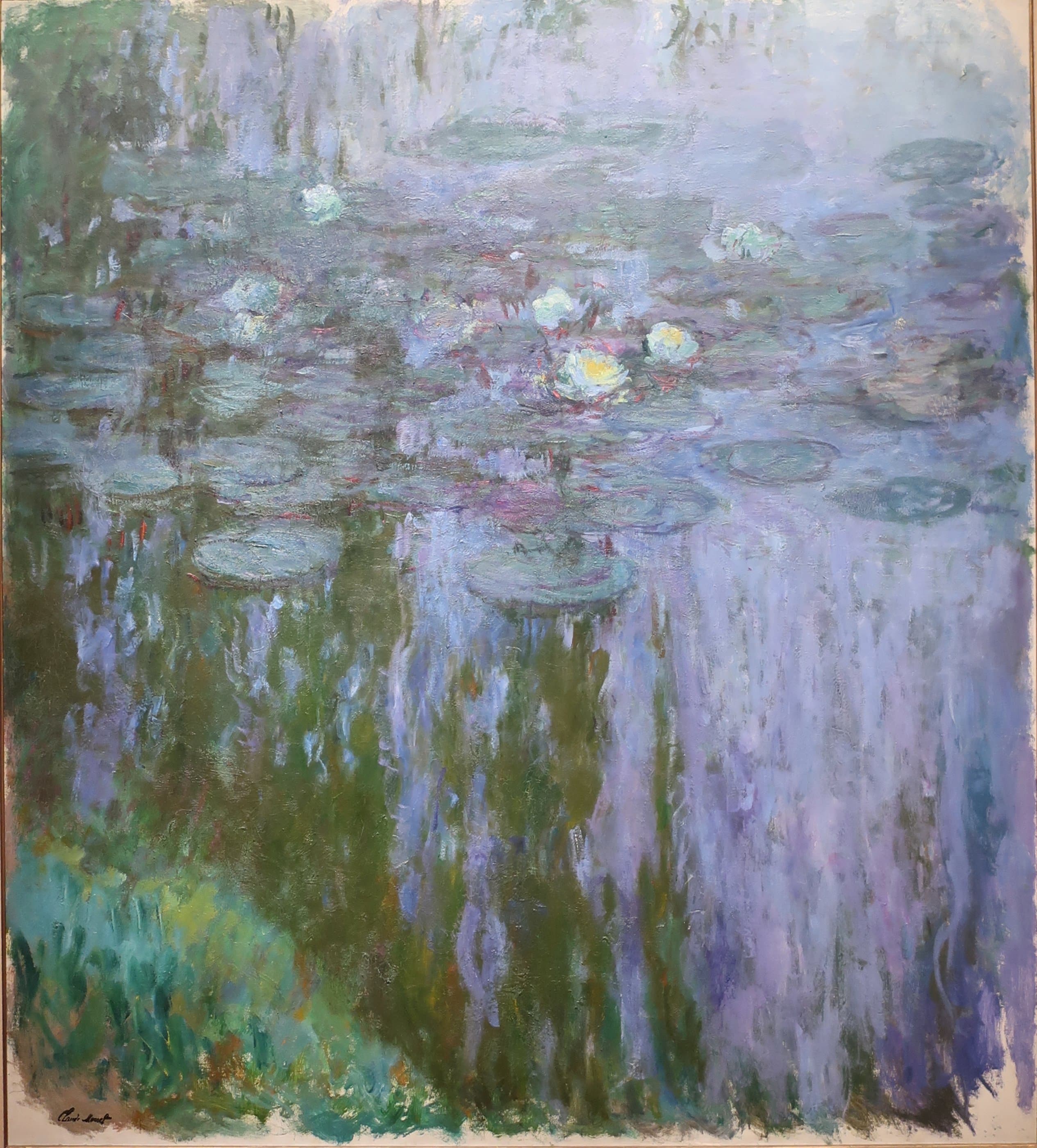
Nymphéas (Musée Marmottan Monet, 1916–19, inv. 5119)
Claude Monet · 1916–19
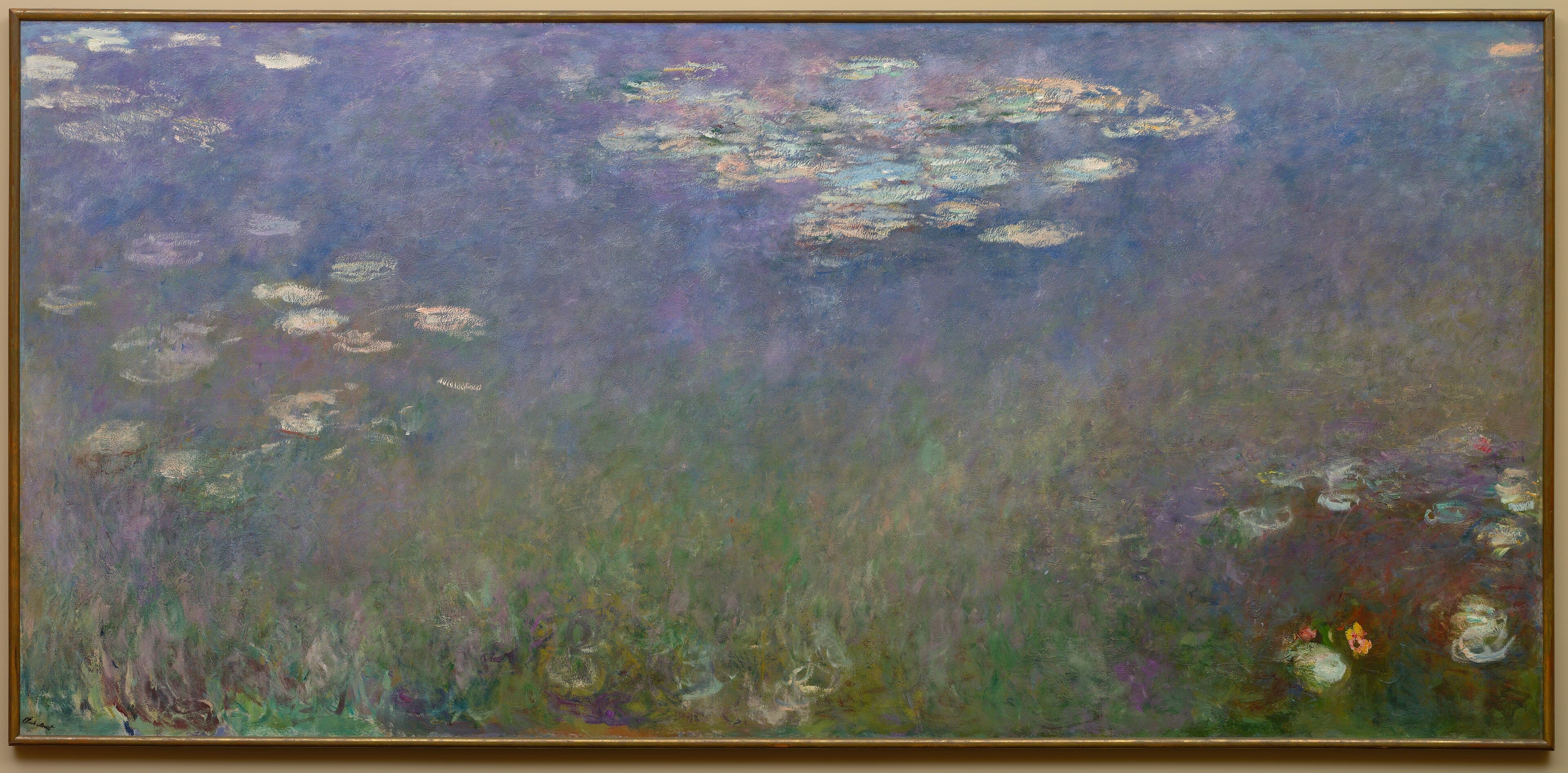
Water Lilies (Agapanthus)
Claude Monet · c. 1915–26
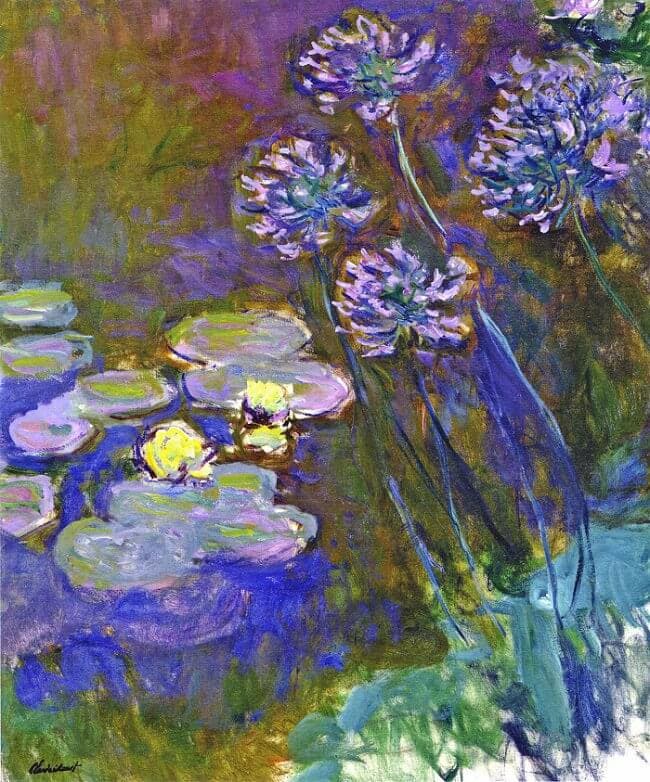
Water Lilies and Agapanthus
Claude Monet · 1914–17
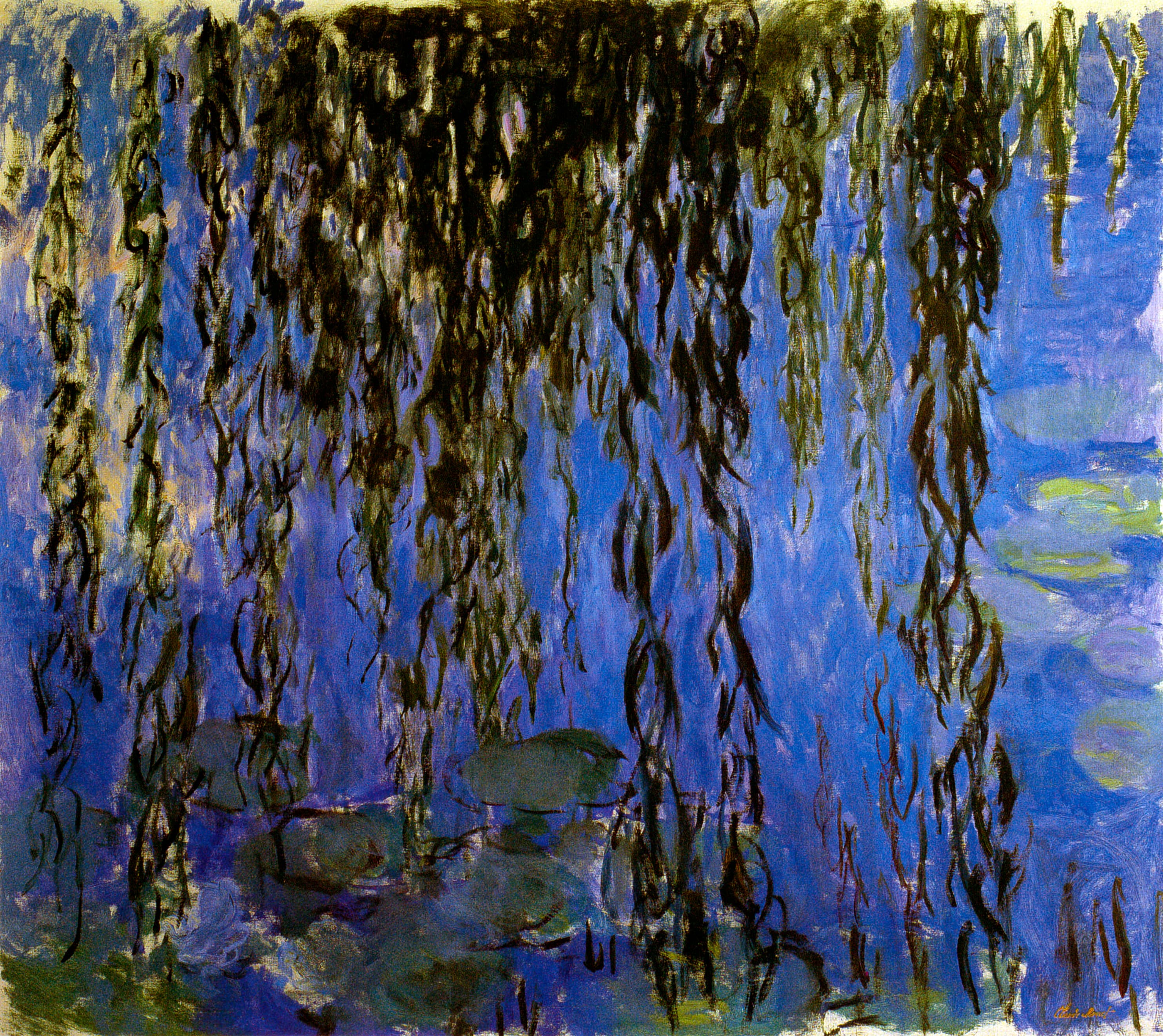
Water Lilies with Willow Branches
Claude Monet · c. 1916–17
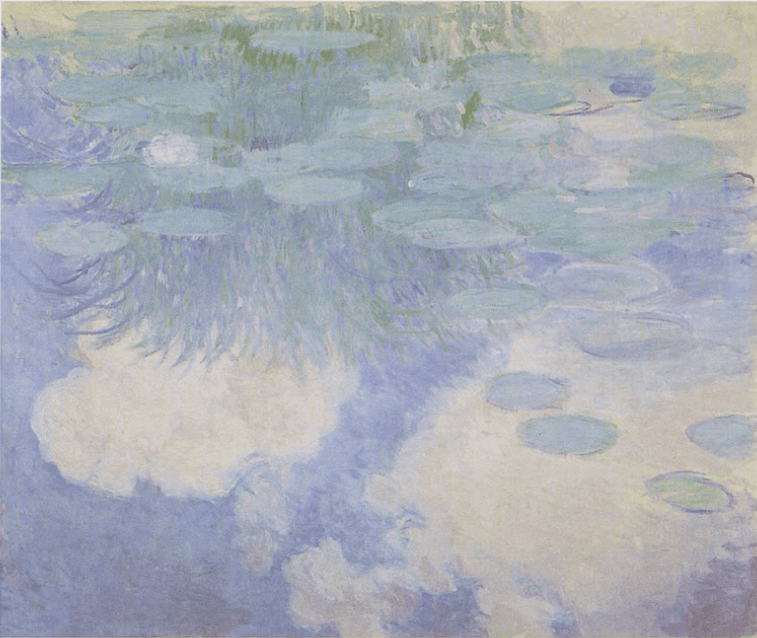
Nymphéas (1915, Musée Marmottan Monet)
Claude Monet · 1915
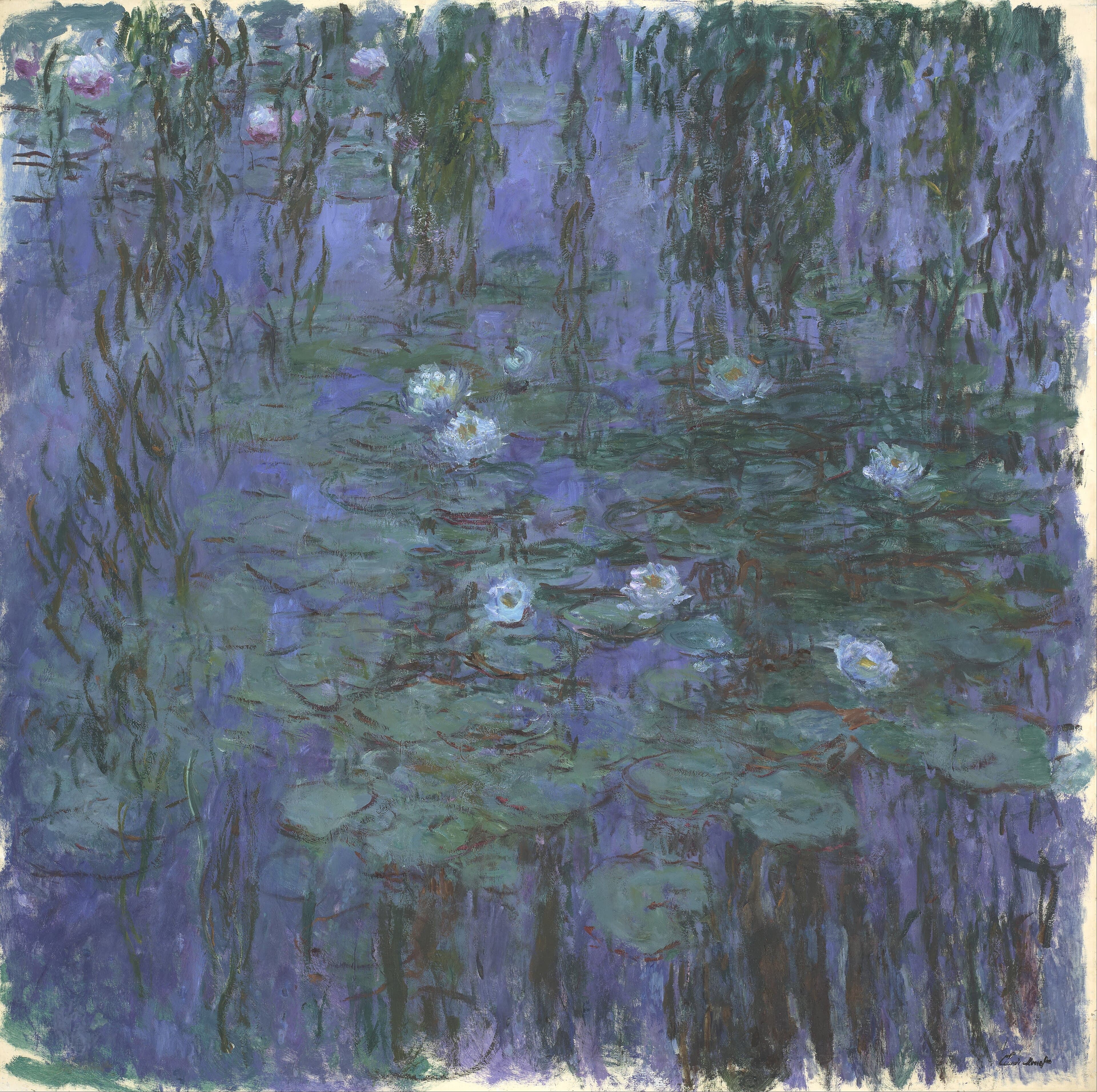
Blue Water Lilies
Claude Monet · 1916–19
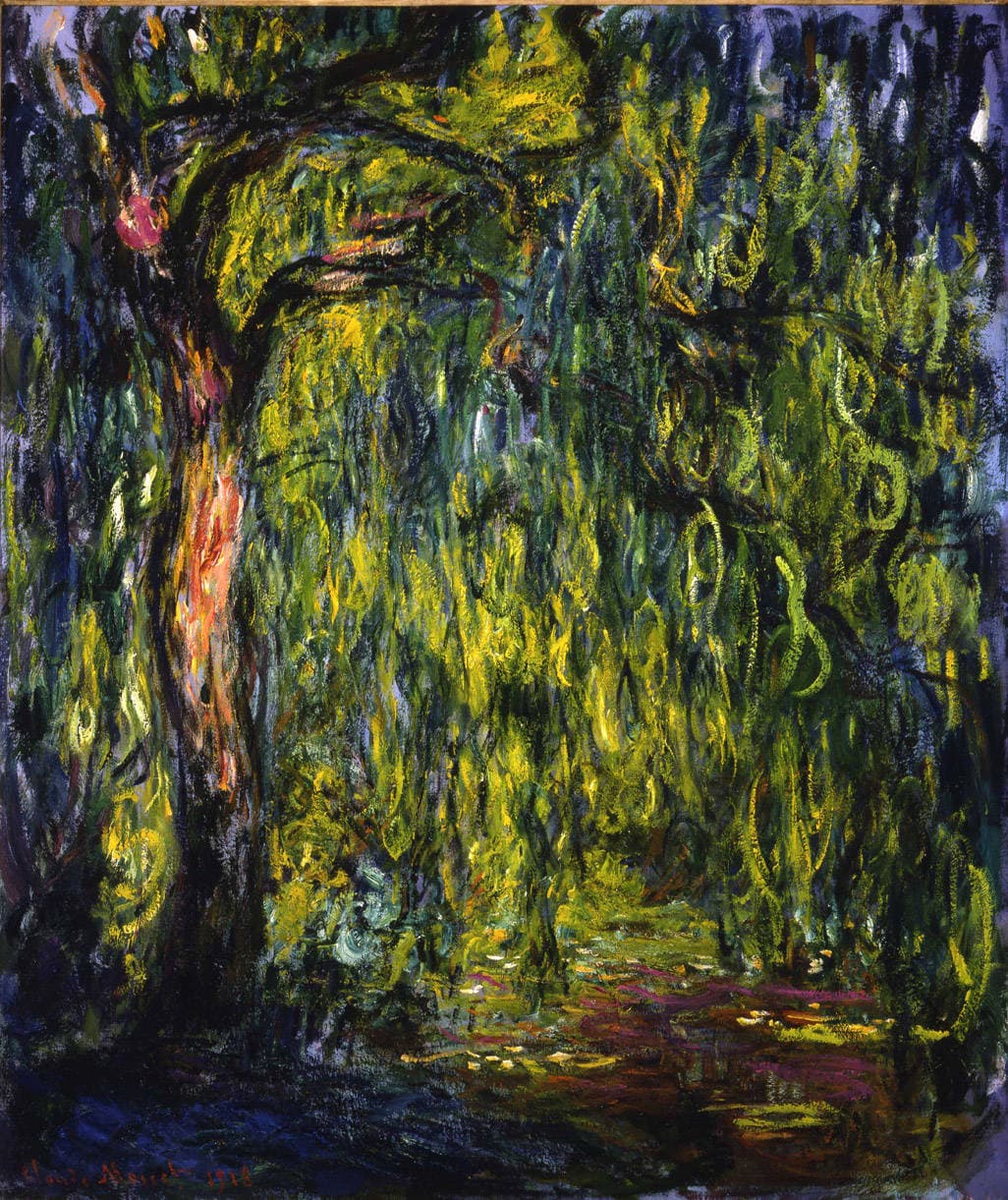
Weeping Willow (Columbus)
Claude Monet · 1918
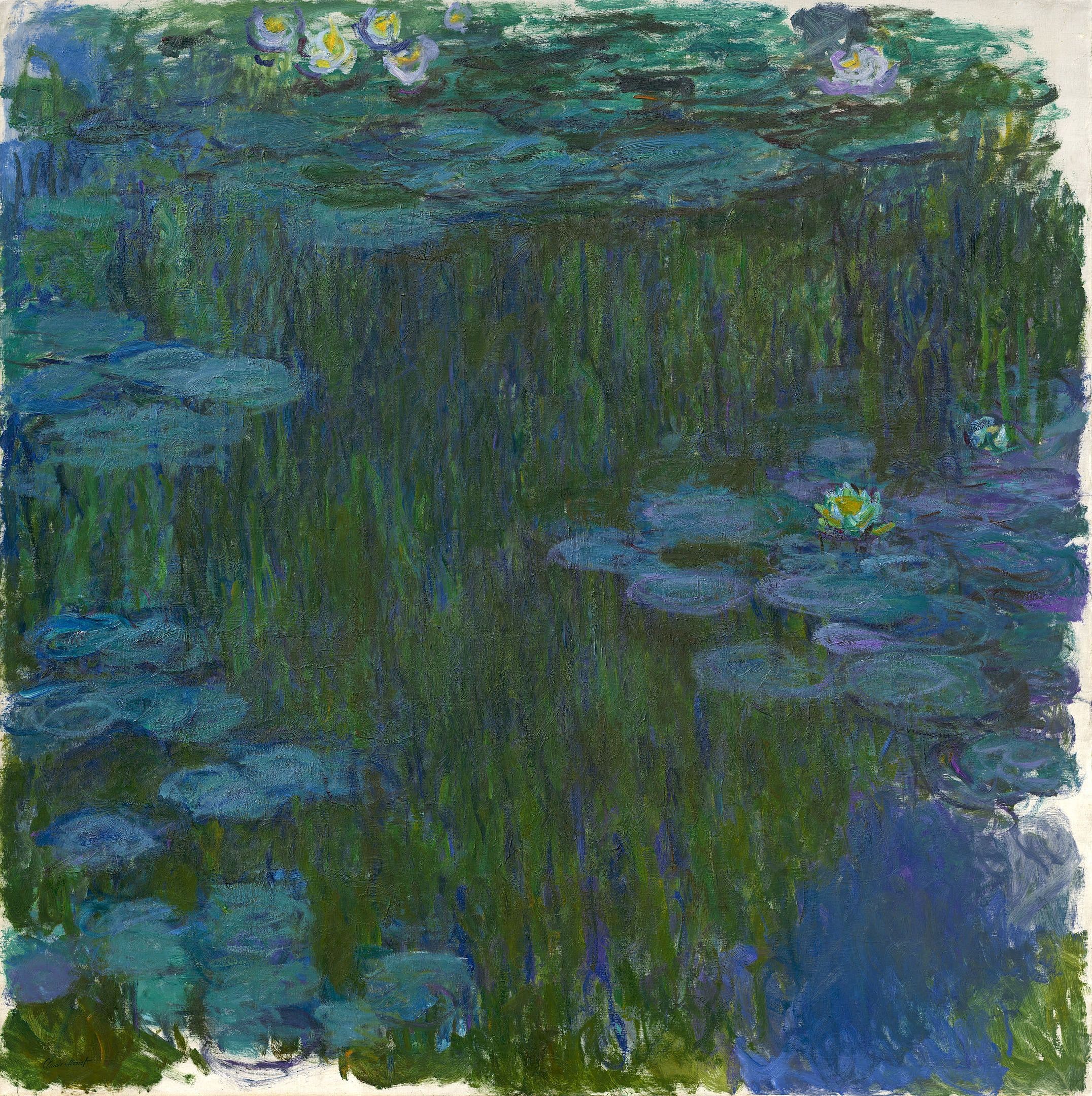
Water Lilies (1914–17, Museum Barberini)
Claude Monet · 1914–17
Also painted in 1916
The same year
Kindred works
You may also study
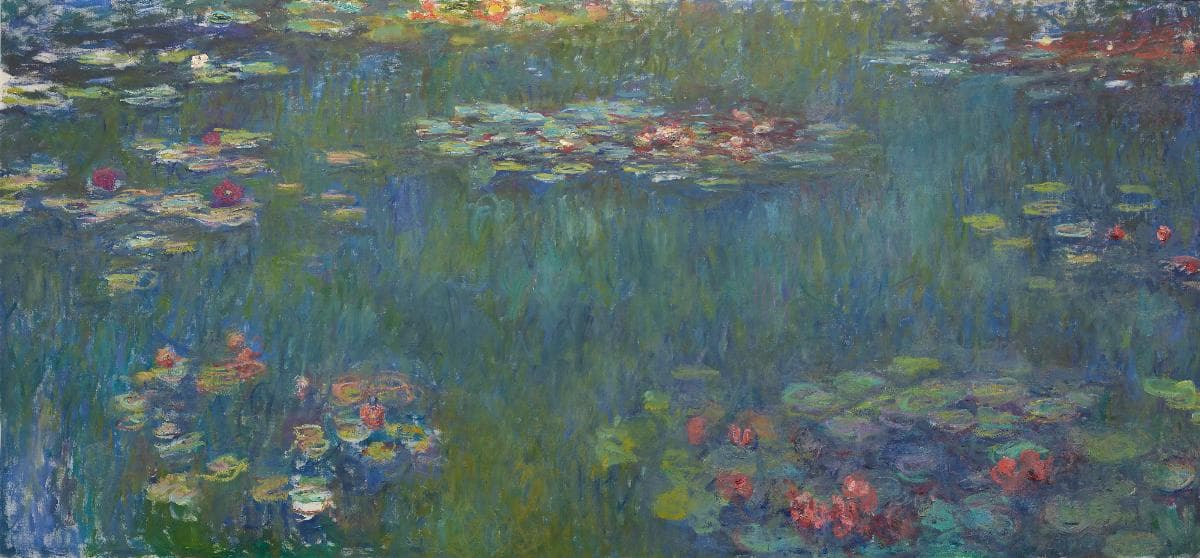
The Water-Lily Pond, Green Reflections
Claude Monet · 1920–26
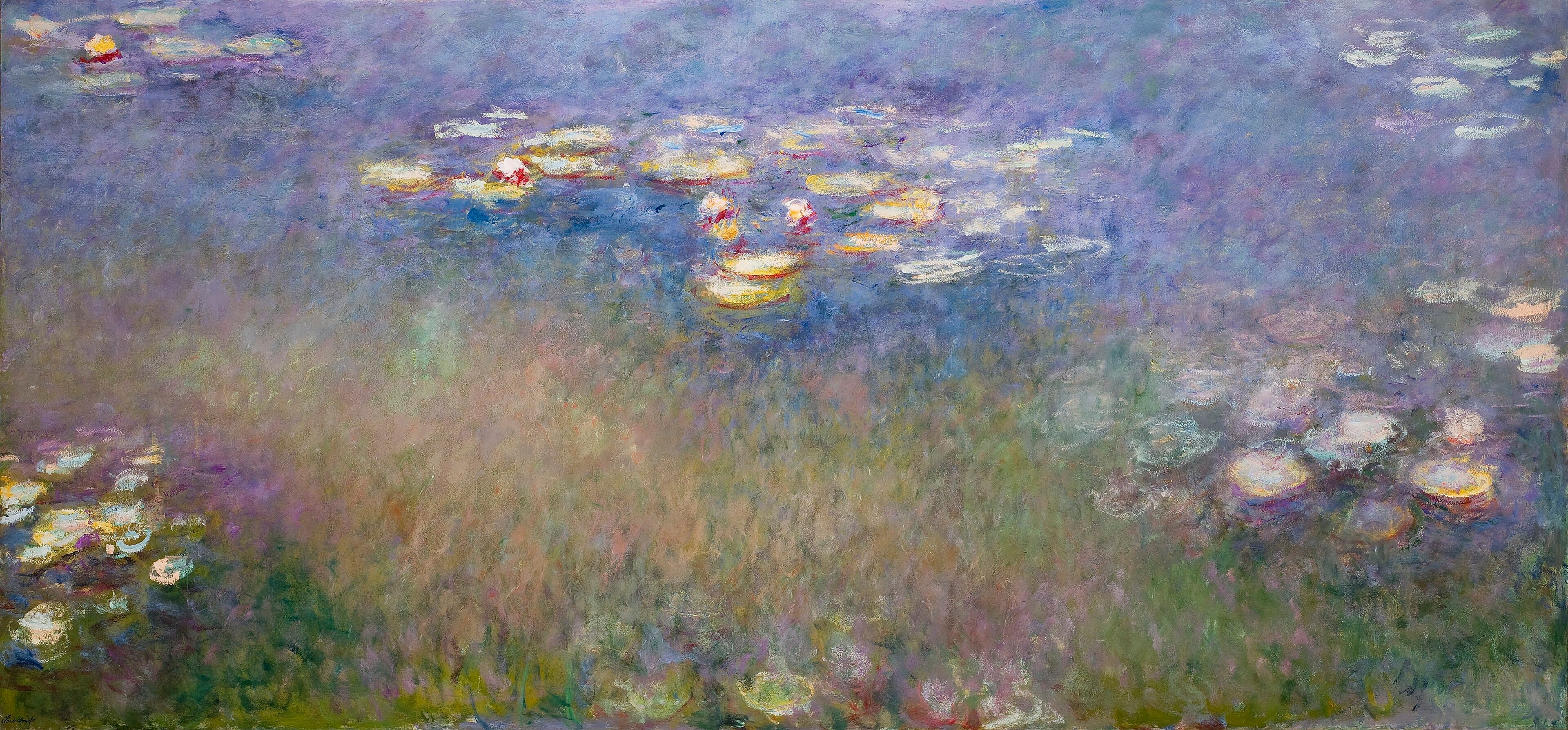
Water Lilies (Saint Louis Art Museum)
Claude Monet · c. 1915–26
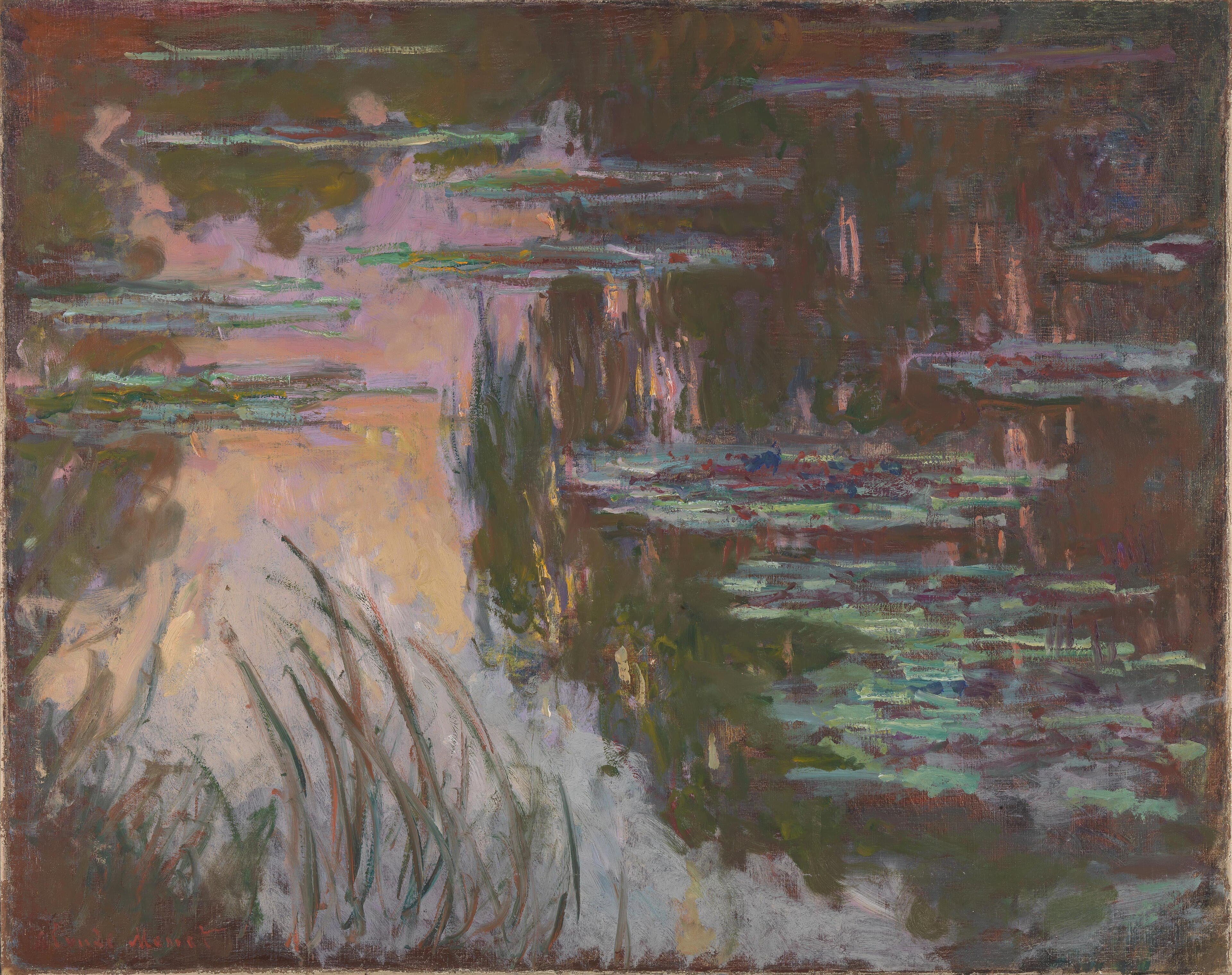
Water-Lilies, Setting Sun (National Gallery, London)
Claude Monet · c. 1907
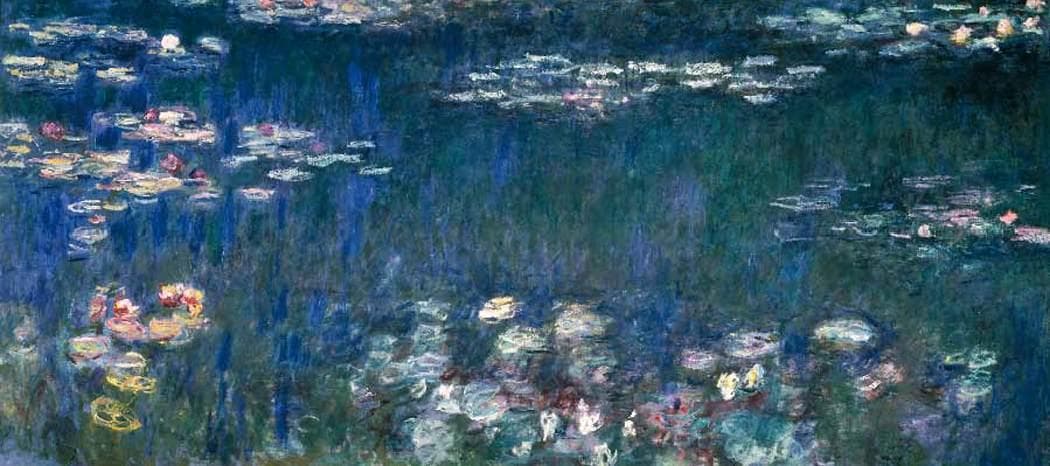
Water Lilies: Green Reflections
Claude Monet · 1914–26
Le pont japonais
Claude Monet · 1918–24
Iris
Claude Monet · c. 1924–25
The Japanese Bridge or The Lily Pond
Claude Monet · 1900
Nymphéas (Oyamazaki Villa Museum)
Claude Monet · 1908