Image: Private collection; via Flickr · Public domain · via Wikimedia Commons
Leicester Square, Night
Claude Monet, c. 1901
Leicester Square, Night is a painting of about 1901 by Claude Monet of London's theater district after dark, its lights dissolving into blurred streaks of orange and gold in a blue-green haze. It is one of three Leicester Square night scenes and is in a private collection.
- Artist
- Claude Monet
- Date
- c. 1901
- Medium
- Oil on canvas
- Dimensions
- 80 × 64 cm
- Collection
- Private collection
- Movement
- Impressionism
- Catalogue
- Wildenstein 1616
- The City
- Night & Dreams
Claude Monet's Leicester Square, Night (Leicester Square, la nuit) is one of a handful of night scenes Monet painted in London, almost certainly during his stay in early 1901. It shows the square at the heart of the West End, with its theaters and music halls, as a blur of electric and gas light in the fog. The upright canvas, about 80 by 64 centimeters, is catalogued by Wildenstein as number 1616 and is in a private collection. It is one of three closely related views of the square; another, Leicester Square, by Night, belongs to the Jean and Suzanne Planque Foundation at the Musée Granet in Aix-en-Provence.
What you are looking at
At first it is hard to see anything but color. The canvas is filled with a deep, smoky blue-green, brushed in long vertical and diagonal strokes. Out of it, lights emerge: a blaze of orange, vermilion and gold down the left edge, as if from a lit façade or a theater entrance; scattered yellow and white dots across the middle, like lamps or windows; a soft glow at the lower right.
Looking longer, the shapes of the square come through. Dark vertical masses at the left and right edges may be buildings or trees. In the middle distance, a row of lit windows in yellow and white suggests a façade across the square. In the center, a cluster of pale, brighter strokes could be a street lamp, a group of figures, or a passing carriage. The lower half dissolves into dragged streaks of blue, green, lilac and orange, the reflections of the lights on a wet pavement, or simply the haze of a London night.
Nothing is drawn. Every form is suggested by a few strokes of color, and the picture's subject is the experience of light in darkness and fog.
Where and when
Monet visited London in 1899, 1900 and 1901, staying at the Savoy Hotel on the Embankment and painting the Thames by day, the source of his Charing Cross Bridge, Waterloo Bridge and Houses of Parliament series. Leicester Square is a short walk from the Savoy, and its theaters and music halls, then lit by a mix of gas and electricity, made it one of the brightest places in the city at night. These night scenes are among the very few street views of his later career and rare true nocturnes in his work.
How this version differs
Of the three Leicester Square canvases, the Planque picture is warm, dominated by reds, oranges and browns. This version is cool. Its ground is a deep blue-green, and the lights stand out as hot accents against it, with the strongest concentration of orange down the left side. The effect is more of fog and distance, less of crowd and glare. Compare also the misty dusk of the river views such as Waterloo Bridge, London, at Dusk.
How it was painted
The surface is fluid and fast. Monet uses long, loaded strokes, many of them vertical, laid wet into wet so that colors streak and blend. The lights are placed last, in thick touches of orange, yellow and white that sit on top of the blue. Parts of the canvas look almost unfinished. When Monet showed his London work at Durand-Ruel in 1904, the exhibition was devoted to views of the Thames.
For all of Monet's London work, see Monet in London.
Where to see it
The painting is in a private collection and is rarely shown in public; it was lent to the Musée Marmottan Monet's 2014 exhibition of Impressionist works from private collections. For Monet's London paintings on public view, see Where to See Monet's Paintings; for the artist, Claude Monet.
Questions & answers
Where is Monet's Leicester Square, Night?
This blue-green version (Wildenstein 1616) is in a private collection. Another Leicester Square night scene by Monet, warmer in color, belongs to the Planque Foundation and hangs in the Musée Granet in Aix-en-Provence.
When did Monet paint Leicester Square?
Monet probably painted it during his stay in London in early 1901, when he was based at the Savoy Hotel and working mainly on views of the Thames. Leicester Square was a short walk away.
What does Leicester Square, Night show?
It shows London's Leicester Square after dark as a haze of deep blue-green, pierced by blurred streaks and dots of orange, gold and white light from theaters, lamps and windows, with almost no drawn forms.
How many Leicester Square paintings did Monet make?
Monet painted three closely related night views of Leicester Square, catalogued by Wildenstein around numbers 1615 to 1617. They are rare night scenes in his work and among his very few late street views.
More by the artist
Claude Monet
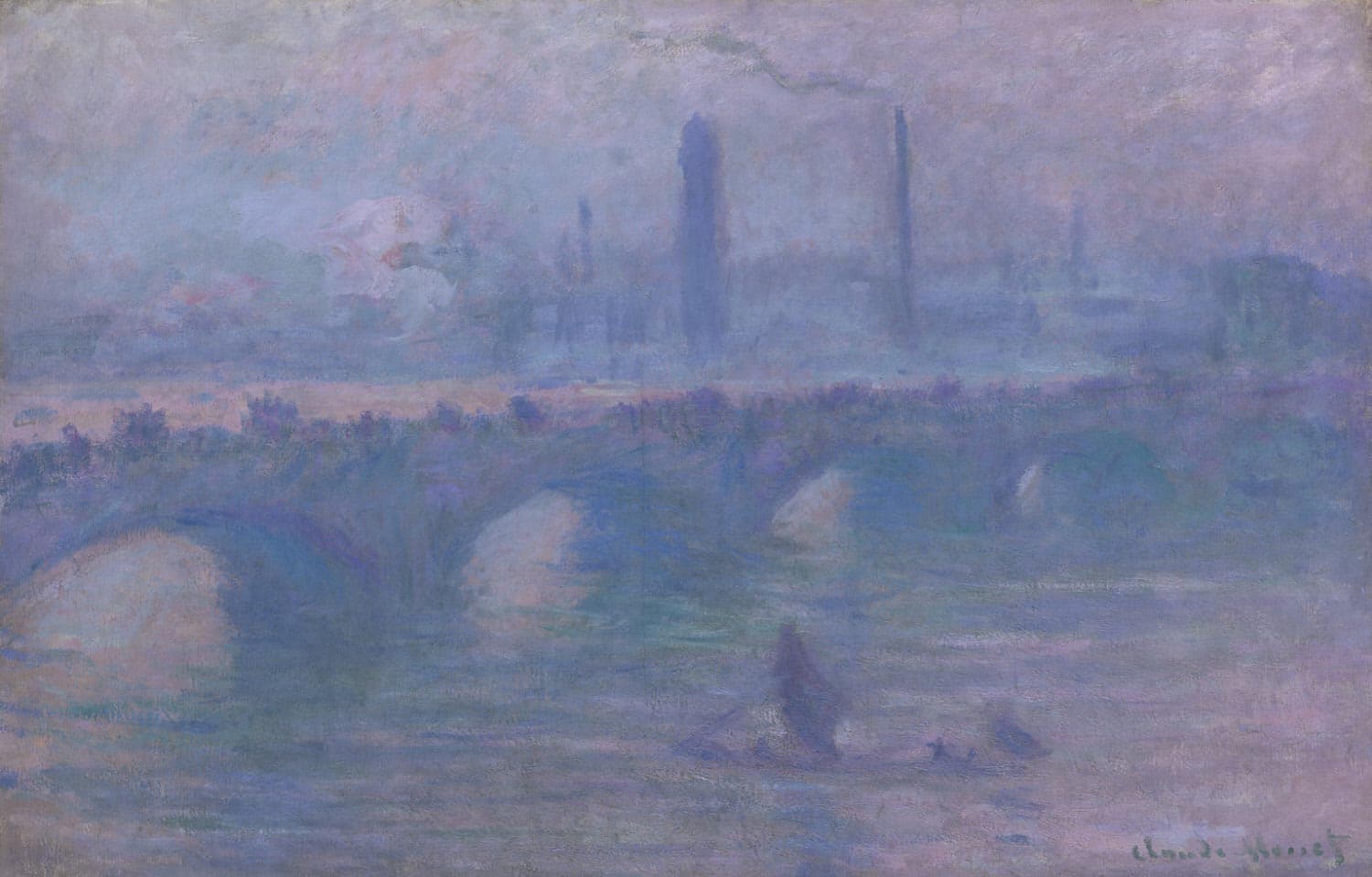
Waterloo Bridge, Morning Fog
Claude Monet · 1901
The Garden Path at Giverny
Claude Monet · 1902
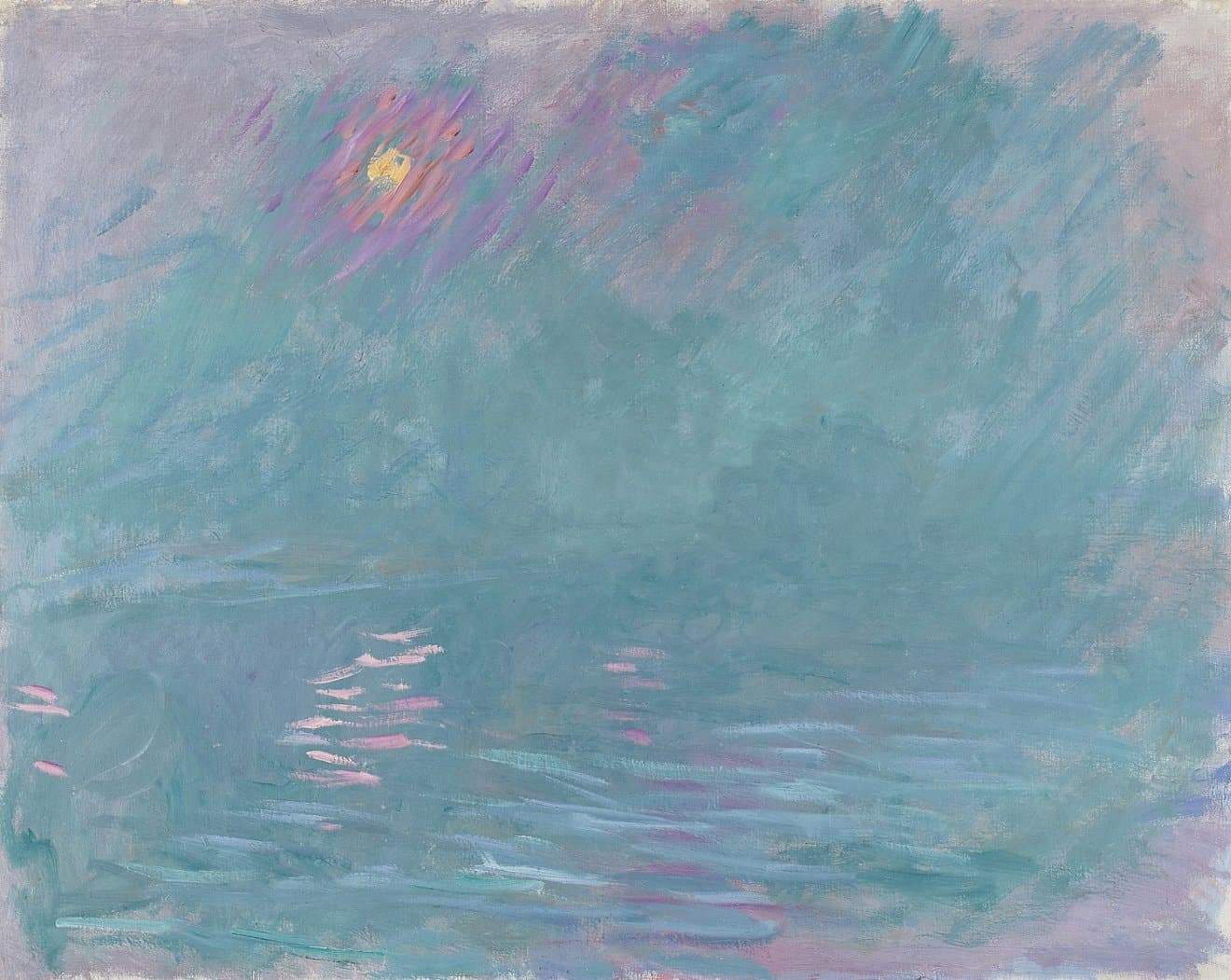
Waterloo Bridge (Kerry Stokes Collection)
Claude Monet · 1899–1901
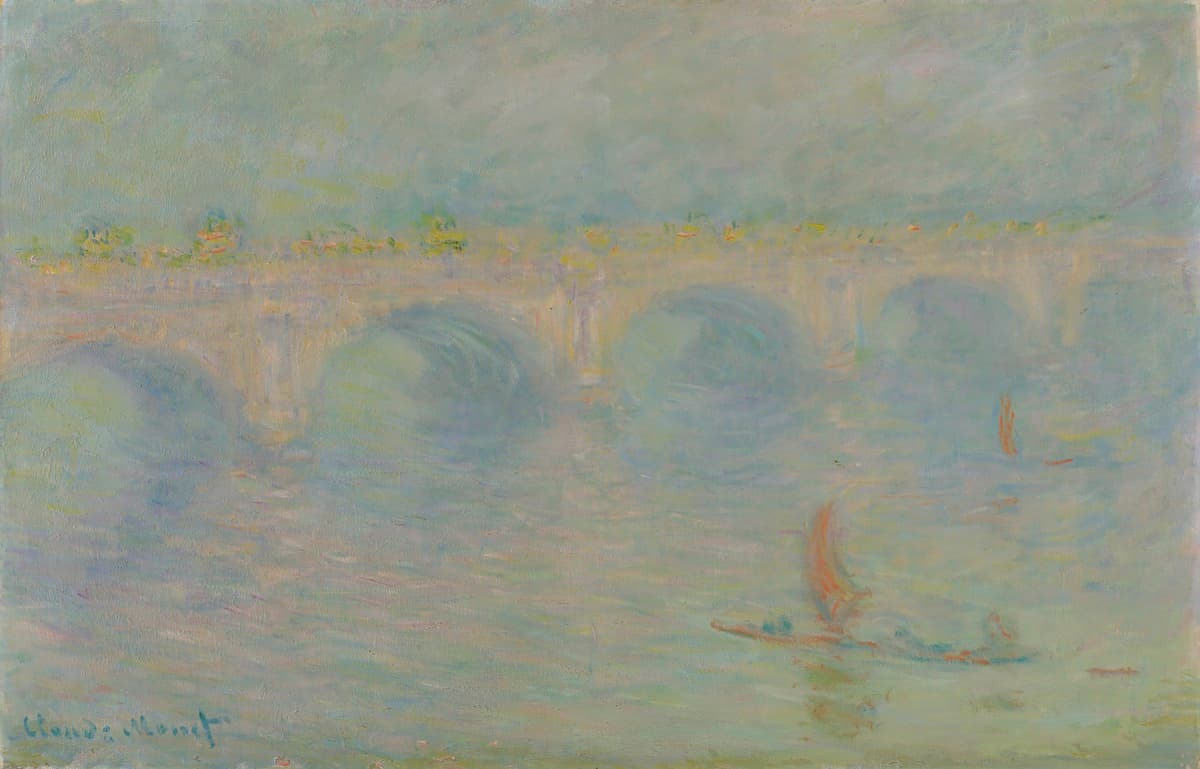
Waterloo Bridge, London, Sun Effect
Claude Monet · 1899–1901
Waterloo Bridge in London
Claude Monet · 1902
Waterloo Bridge, Gray Weather
Claude Monet · 1900
Charing Cross Bridge, Smoke in the Fog, Impression
Claude Monet · 1902
Water Lilies and Japanese Bridge
Claude Monet · 1899
Also painted in 1901
The same year
Kindred works
You may also study
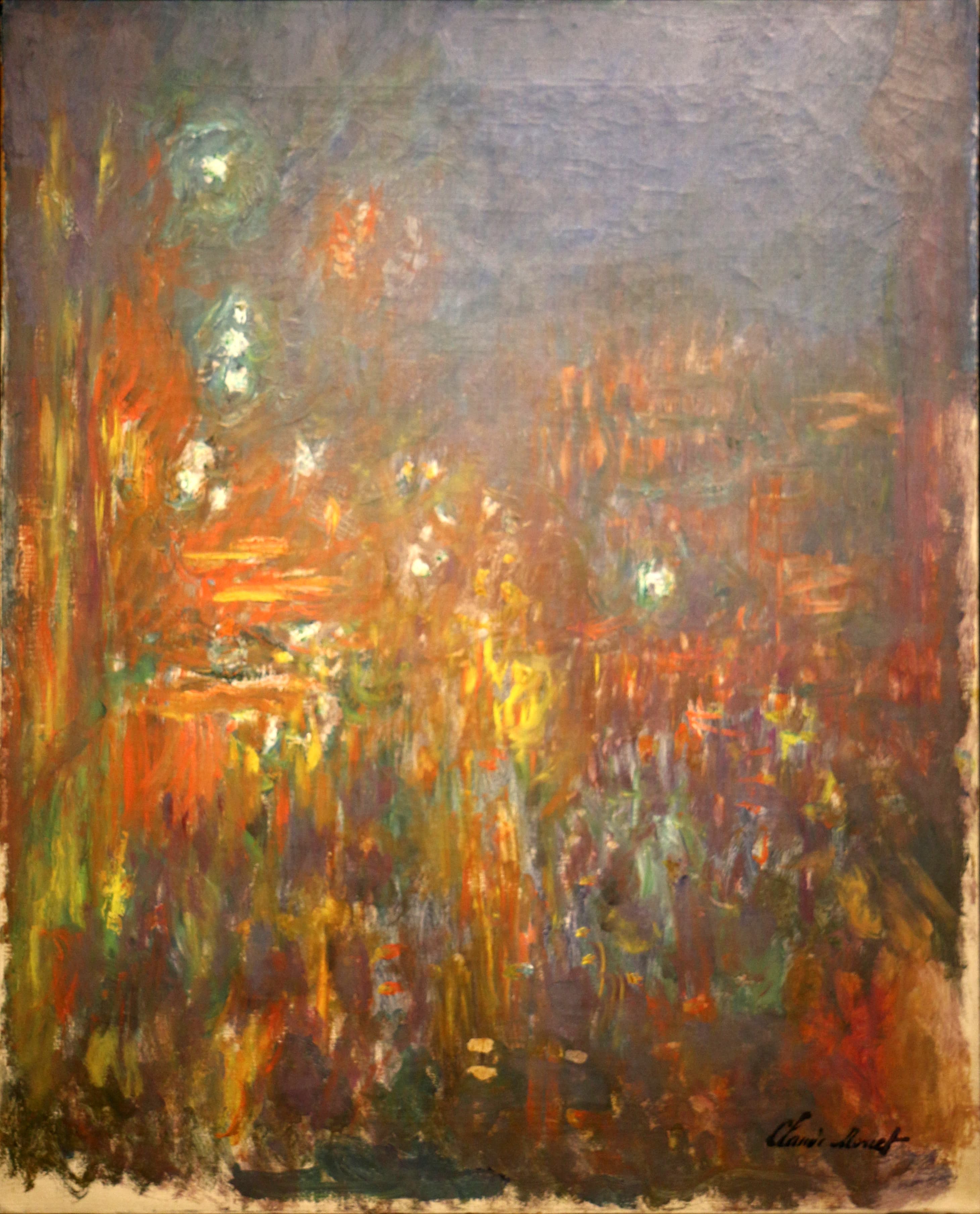
Leicester Square, by Night
Claude Monet · 1901
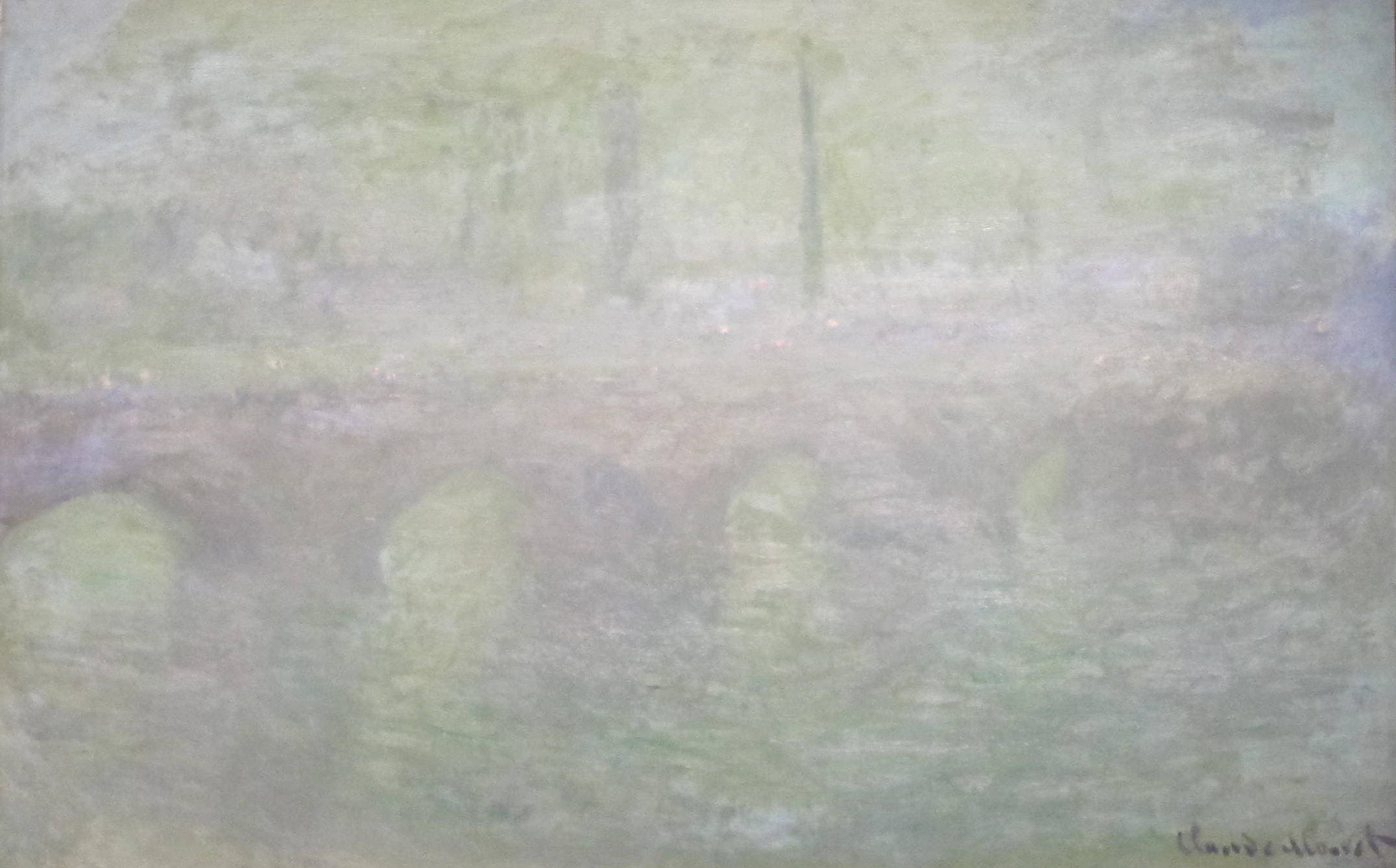
Waterloo Bridge, London, at Dusk
Claude Monet · 1904
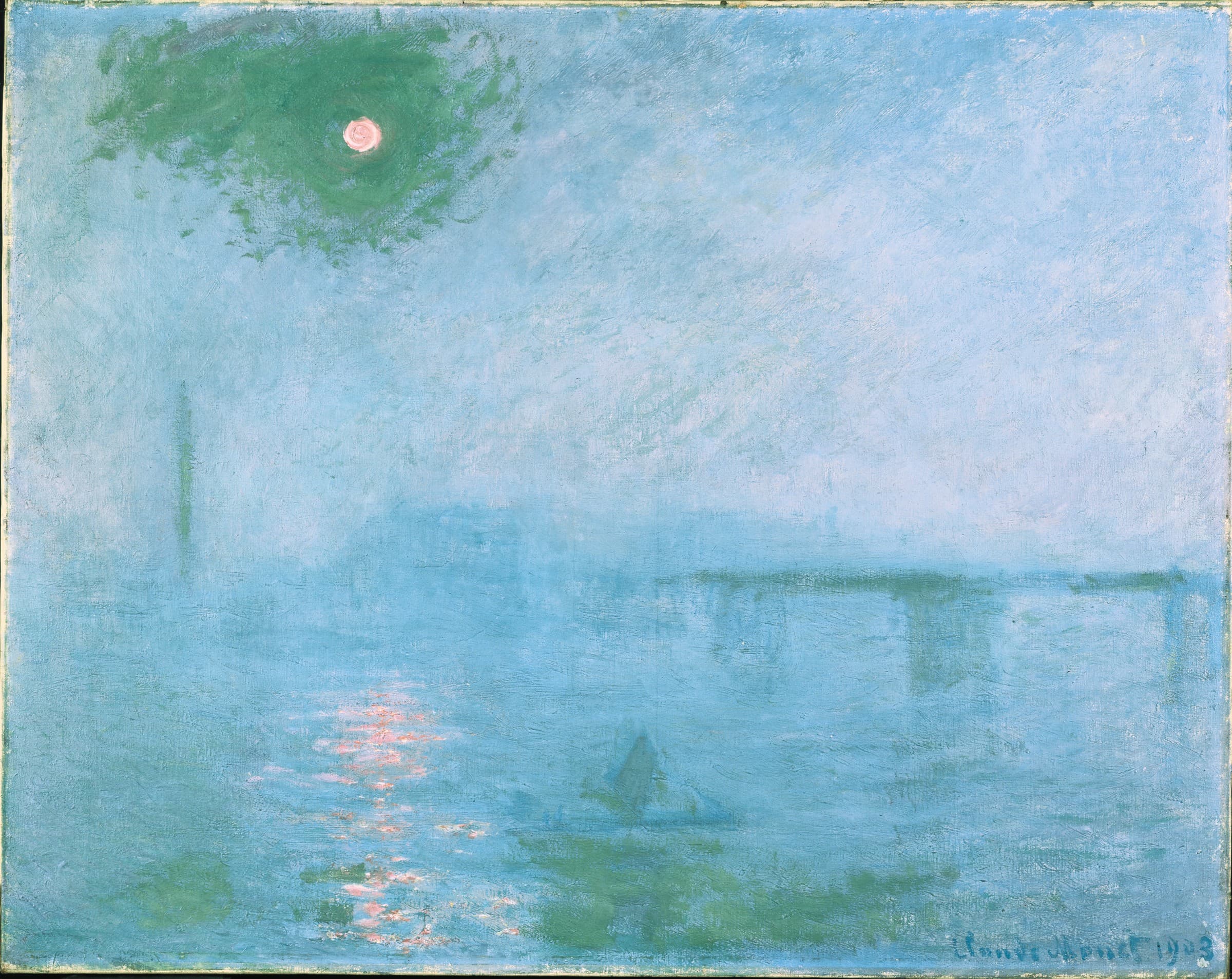
Charing Cross Bridge: Fog on the Thames
Claude Monet · 1903
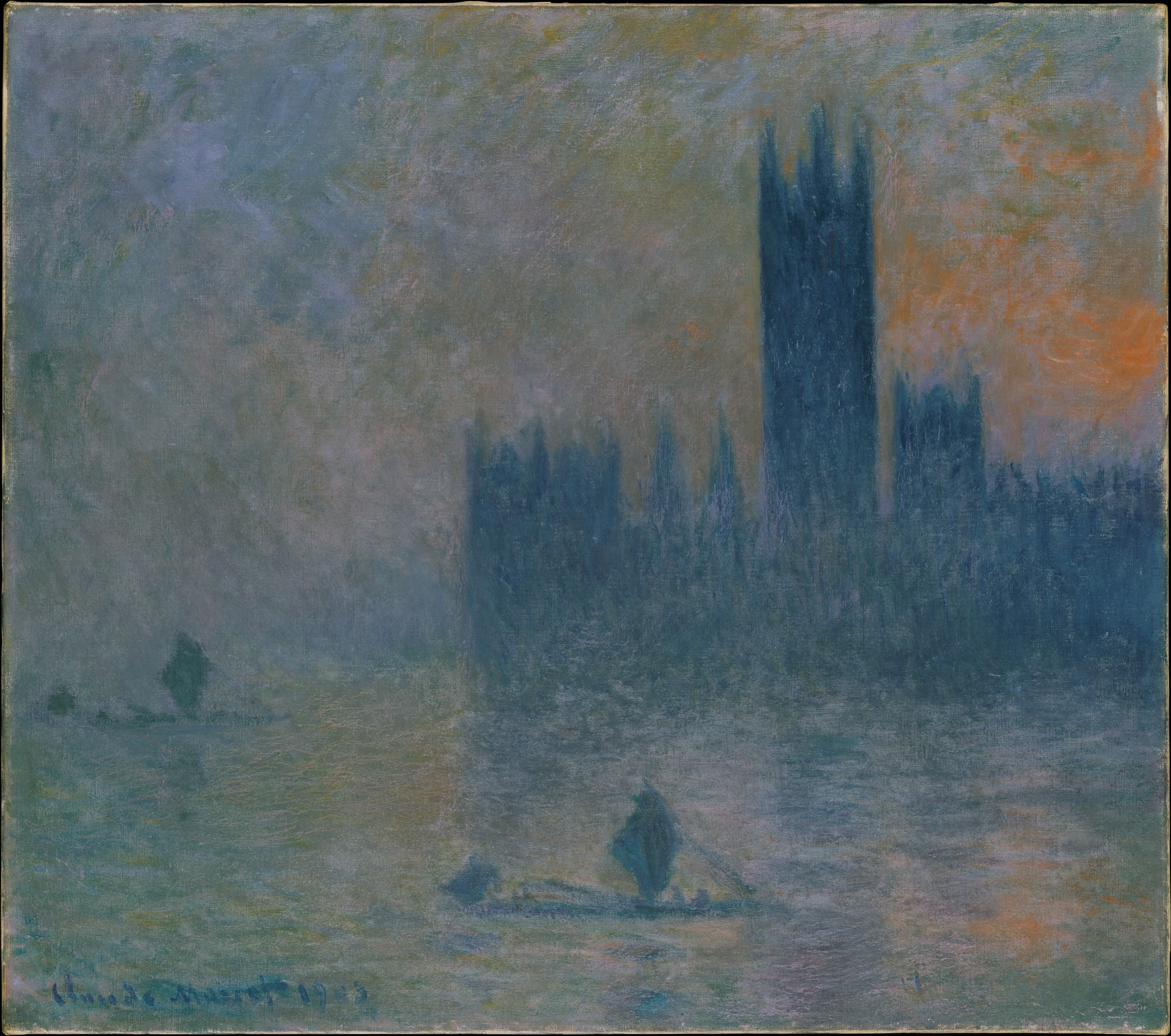
The Houses of Parliament (Effect of Fog)
Claude Monet · 1903–04

Sunset in Venice
Claude Monet · 1908–12
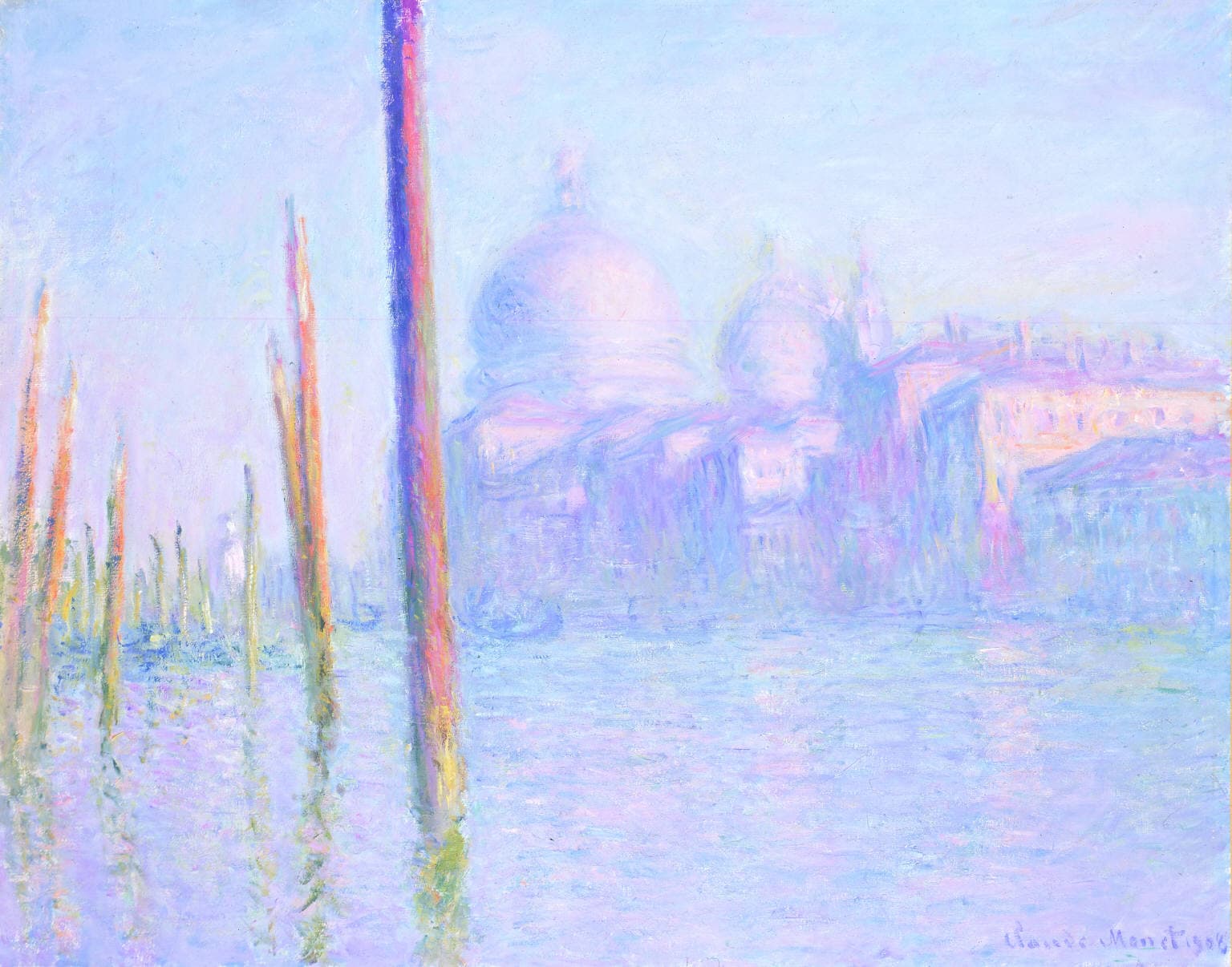
The Grand Canal, Venice
Claude Monet · 1908
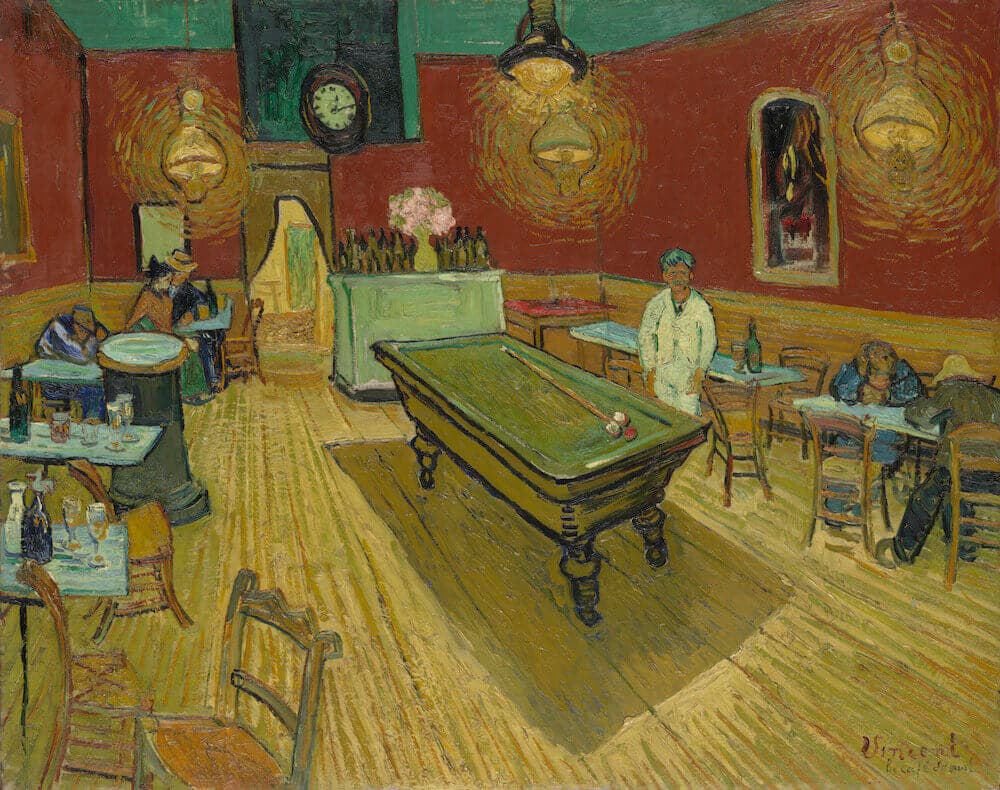
The Night Café
Vincent van Gogh · 1888
Le Parlement de Londres, effet de brouillard
Claude Monet · 1903