Image: Hasso Plattner Collection, Museum Barberini, Potsdam (image via Sotheby's) · Public domain · via Wikimedia Commons
Impressionism
The Palazzo Ducale (Le Palais Ducal), 1908
Claude Monet, 1908
Le Palais Ducal is a 1908 painting by Claude Monet of the Doge's Palace in Venice seen across the Bacino di San Marco in golden haze, the only one of his Venice views facing west. It is in the Hasso Plattner Collection at the Museum Barberini, Potsdam.
- Artist
- Claude Monet
- Date
- 1908
- Medium
- Oil on canvas
- Dimensions
- 57 × 92 cm
- Collection
- Museum Barberini (Hasso Plattner Collection), Potsdam, Germany
- Movement
- Impressionism
- Catalogue
- Wildenstein 1770
Painted at Monet in Venice
What you are looking at
The Doge's Palace stands on the right, its long pink and cream facade glowing in hazy sunlight, the arcades of its lower stories a row of soft shadows. Behind it the campanile of San Marco rises in delicate rose tones. To the right of the palace a smaller building and a bridge close the view. Leftward, the waterfront runs away diagonally into a golden mist, its buildings fading to pale shapes, and at the far left a dome, the church of Santa Maria della Salute, is barely visible. A wide stretch of the Bacino di San Marco fills the lower half, shimmering in strokes of blue, lilac and gold.
Two things anchor the foreground: in the lower right, three dark wooden mooring posts, the pali, rise out of the water, and along the lower left edge runs a dark shape, perhaps the edge of a pontoon or quay. A single black gondola glides across the middle distance. The canvas is signed and dated "Claude Monet 1908" at lower left.
The detail most people miss is the diagonal. Most of Monet's Venice pictures are frontal and calm, built in horizontal bands. Here the palaces run back at an angle, and the pali push forward, which gives this canvas an unusual sense of depth and movement.
Where and when it was painted
In the autumn of 1908 Monet, then 68, went to Venice for the first and only time, with his wife Alice. They arrived at the beginning of October at the invitation of Mary Young Hunter, an American hostess he had met in London, and stayed first at the Palazzo Barbaro on the Grand Canal, then at the Hotel Britannia, leaving in early December. Monet had been reluctant to go, saying the city was too beautiful to be painted, but once there he worked every day on the palaces, the lagoon and the light. He brought back 37 canvases, which he reworked in his studio at Giverny over the next years. Twenty-nine were shown at the Galerie Bernheim-Jeune in Paris in 1912, a year after Alice's death.
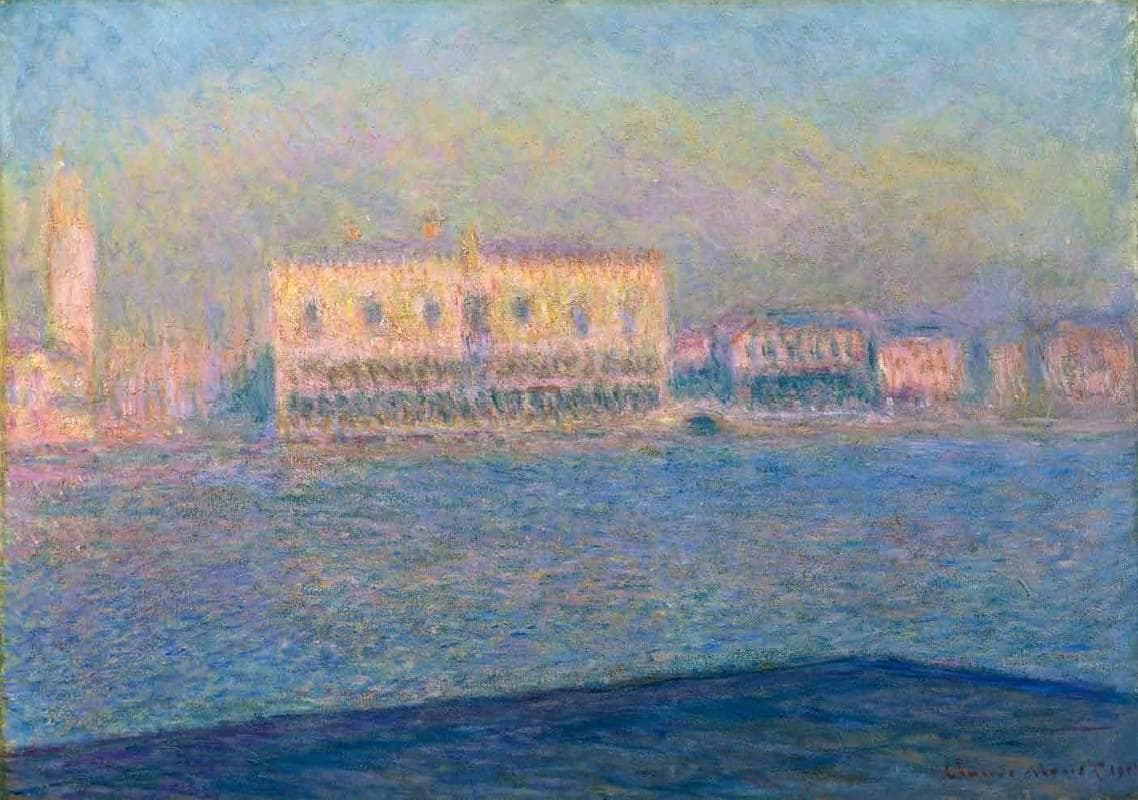
Monet painted the Doge's Palace in ten compositions, most of them seen from the island of San Giorgio Maggiore across the basin, as in The Palazzo Ducale Seen from San Giorgio Maggiore at the Met. This is the only one in which he faces west, with the Ponte della Paglia and the prison building to the right and the two columns of the Piazzetta marking the entrance to Piazza San Marco. The museum suggests he may have worked from a floating pontoon moored in the lagoon near San Giorgio, which would explain both the dark edge at lower left and the fact that he painted this view only once. For the trip, see Monet in Venice.
How it was painted
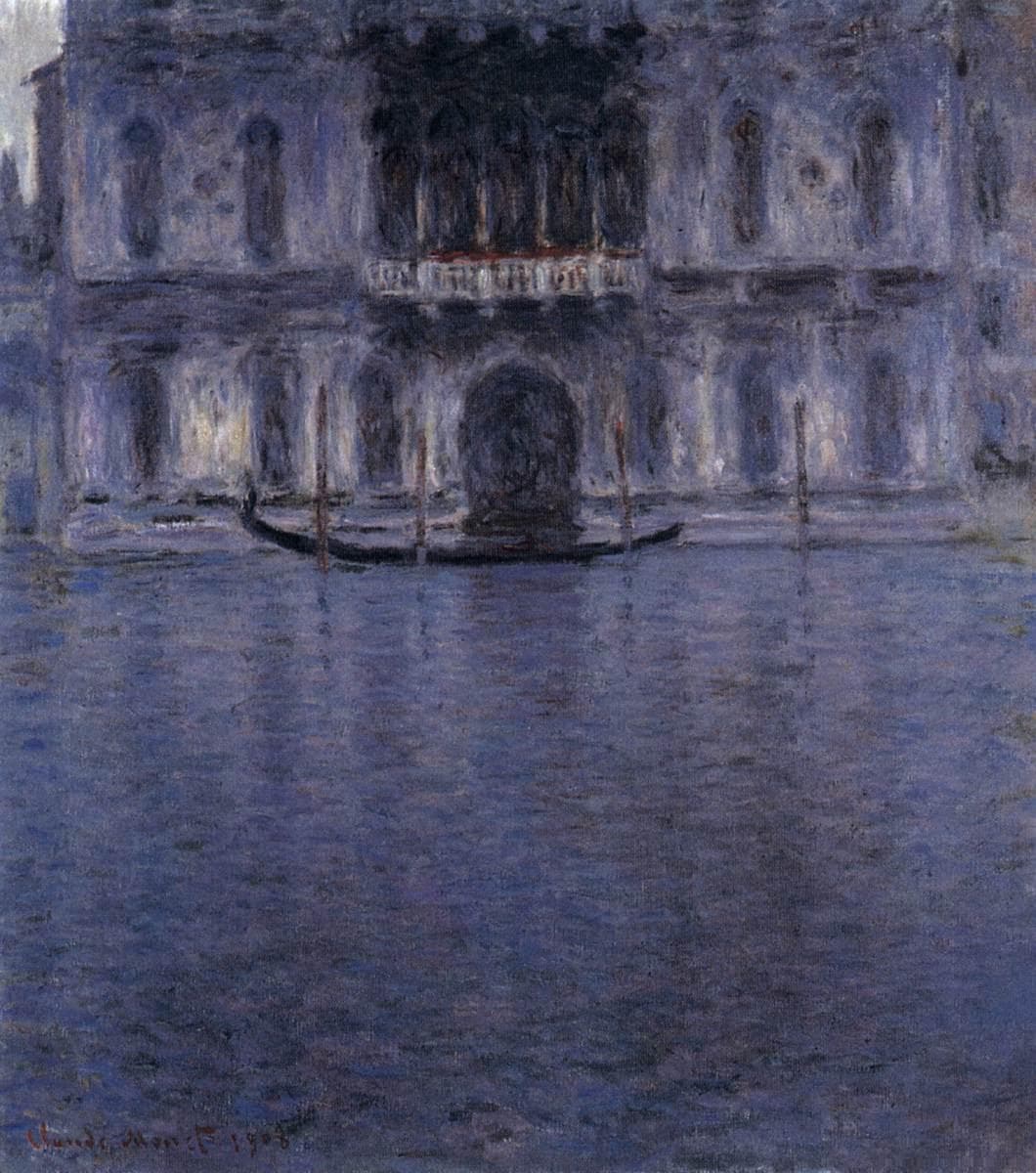
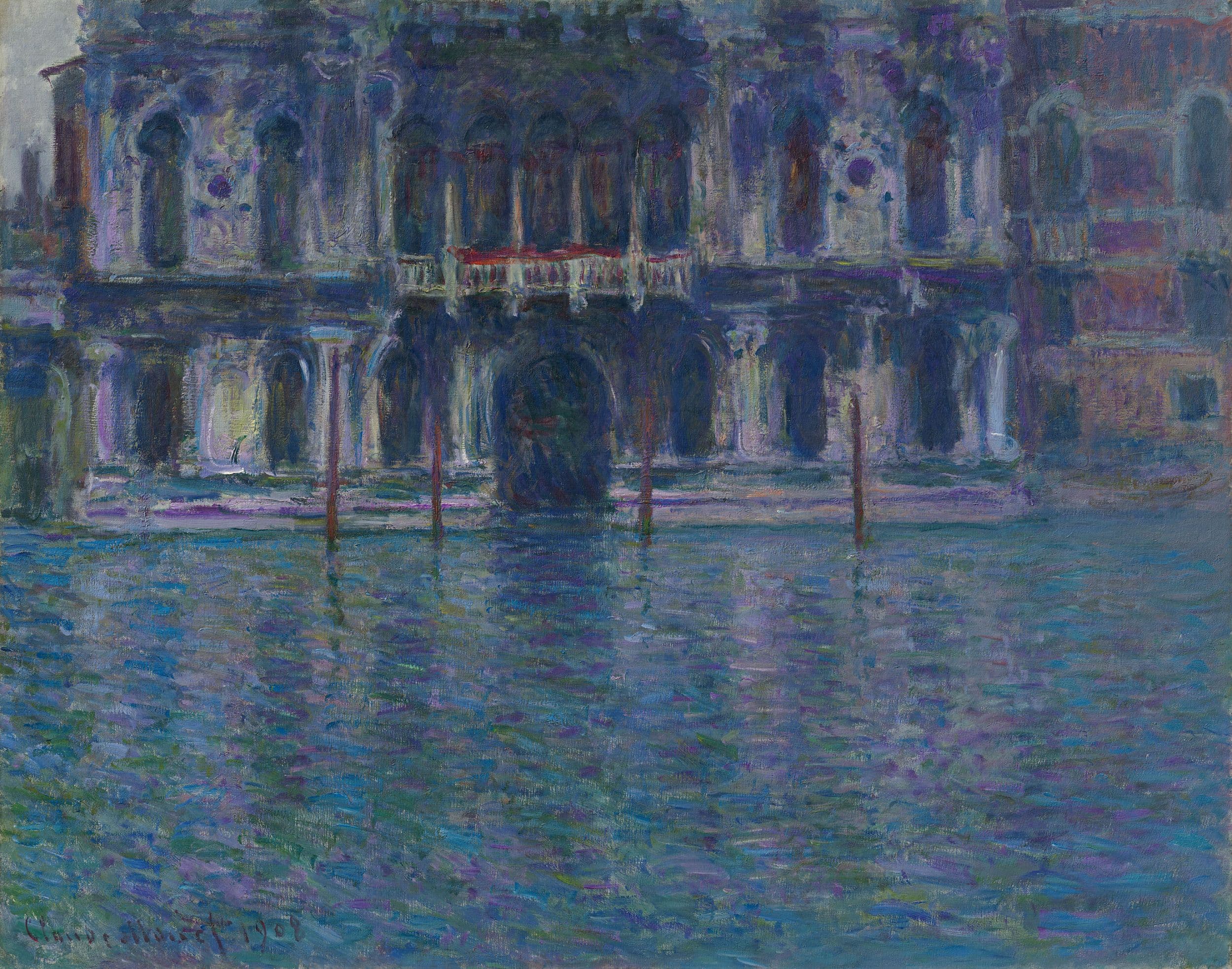
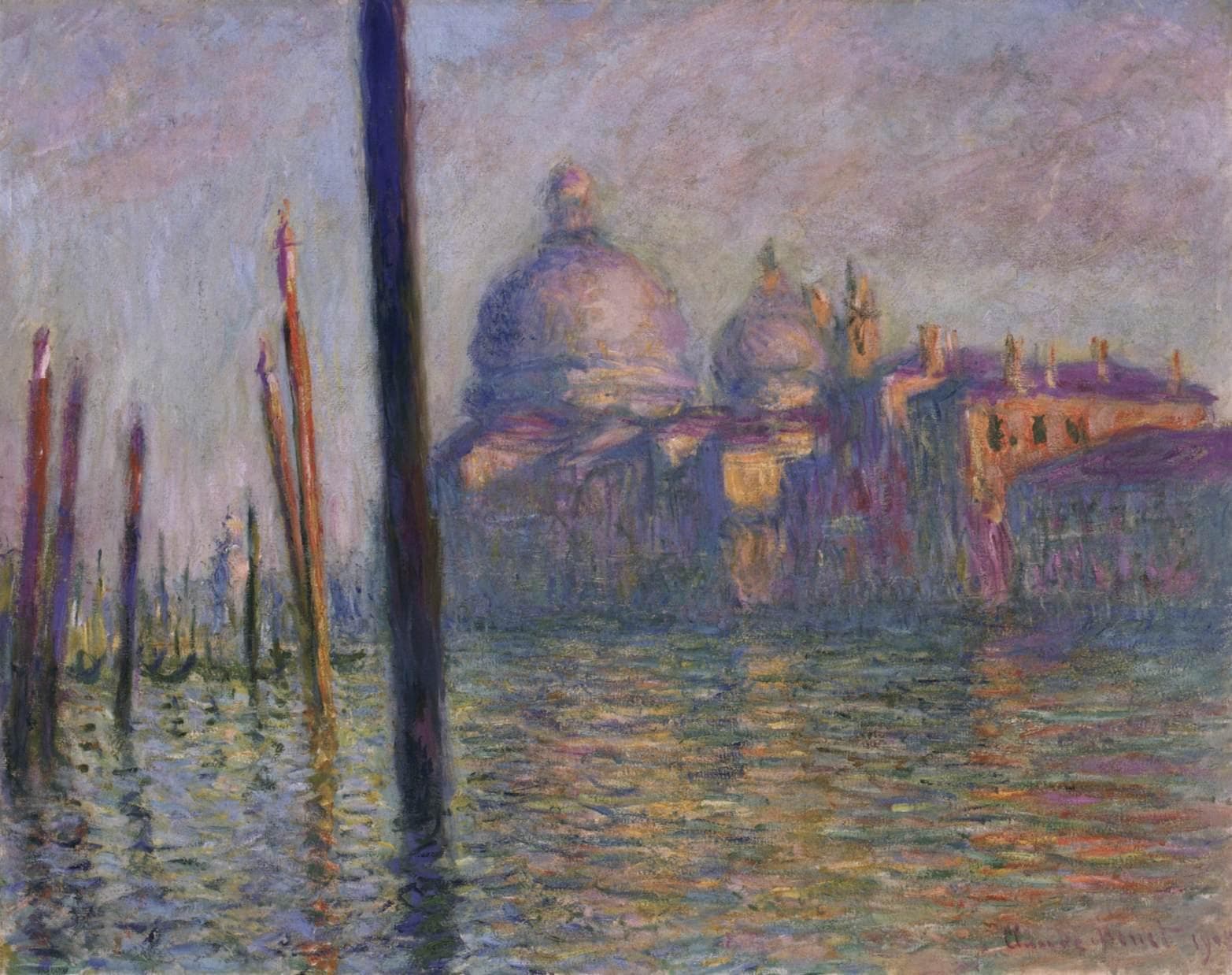
The surface is quickly and thinly painted compared with Monet's heavily reworked Venice canvases. The palace is drawn with some architectural care, while the rest of the waterfront dissolves into a band of haze, and the water is a lattice of short horizontal touches. The atmospheric gradation of color has often been compared with J. M. W. Turner, whose Venice watercolors Monet knew from London. Compare the violet palace front of Le Palais Contarini, from the same collection, and the domes in mist of The Grand Canal in Boston.
Ownership and where to see it
The painting has a hard history. It belonged in the 1920s to the Berlin collector Erich Goeritz and then to the banker Jakob Goldschmidt. In 1941 the German state confiscated it from Goldschmidt, who had fled Nazi Germany, and it was sold at auction in Berlin to the steel company Vereinigte Stahlwerke, which gave it to its chairman, Albert Vögler. In 1960 it was restituted to Goldschmidt's son Erwin. His heir consigned it to Sotheby's in New York, where it was sold on 5 May 2015 and entered the collection of Hasso Plattner. It is now displayed at the Museum Barberini in Potsdam (MB-Mon-32), which shows Plattner's large Impressionist collection, and it was lent to Monet and Venice at the Brooklyn Museum and San Francisco in 2025–26. See where to see Monet's paintings and the Claude Monet page.
Questions & answers
Where is Monet's Le Palais Ducal?
It is in the Hasso Plattner Collection at the Museum Barberini in Potsdam, Germany (MB-Mon-32), where it is on permanent display with Plattner's Impressionist paintings. It was bought at Sotheby's New York in May 2015.
When did Monet paint the Doge's Palace?
In the autumn of 1908, during his only visit to Venice, from early October to early December, with his wife Alice. He reworked the Venice canvases at Giverny and exhibited them at Bernheim-Jeune in Paris in 1912.
What is unusual about this view of the Doge's Palace?
Of Monet's ten paintings of the palace, it is the only one facing west. The buildings run back diagonally into a golden haze, with mooring posts in the right foreground and a single gondola, and the vantage point may have been a pontoon in the lagoon.
Was Le Palais Ducal looted by the Nazis?
Yes. It was confiscated from the banker Jakob Goldschmidt in 1941 and auctioned in Berlin. It was restituted to his son Erwin Goldschmidt in 1960, and the family's heir sold it at Sotheby's in 2015.
More by the artist
Claude Monet

Bridge over a Pond of Water Lilies
Claude Monet · 1899

Woman with a Parasol – Madame Monet and Her Son
Claude Monet · 1875

Sunset in Venice
Claude Monet · 1908–12

La Grenouillère
Claude Monet · 1869

Beach in Pourville
Claude Monet · 1882

Springtime
Claude Monet · 1872

Boating on the River Epte
Claude Monet · 1890

The Seine at Asnières (Hermitage)
Claude Monet · 1873
Also painted in 1908
The same year
Kindred works
You may also study
The Palazzo Ducale Seen from San Giorgio Maggiore
Claude Monet · 1908
Le Palais Contarini (Potsdam)
Claude Monet · 1908
The Grand Canal in Venice
Claude Monet · 1908
Gondola in Venice
Claude Monet · 1908

Ophelia
John Everett Millais · 1851–52

The Great Wave off Kanagawa
Katsushika Hokusai · c. 1830–32
The Birth of Venus
Sandro Botticelli · c. 1484–1486
The School of Athens
Raphael · 1509–1511