Image: Shelburne Museum, Shelburne, Vermont · Public domain · via Wikimedia Commons
Charing Cross Bridge (Shelburne Museum)
Claude Monet, 1899
Le pont de Charing Cross (Charing Cross Bridge), 1899, is Claude Monet's sunlit view of the Thames railway bridge from the Savoy Hotel, the river sparkling white and blue. It hangs in the Shelburne Museum in Vermont.
- Artist
- Claude Monet
- Date
- 1899
- Medium
- Oil on canvas
- Dimensions
- 65 × 92 cm
- Collection
- Shelburne Museum, Shelburne, Vermont, United States
- Movement
- Impressionism
- Catalogue
- Wildenstein 1521
- The City
- Water & Sea
Le pont de Charing Cross (Charing Cross Bridge) is a canvas Claude Monet painted in London in 1899, and among the early versions of the motif it is the one with the most sun. The river below the railway bridge is a sheet of flashing white, blue and yellow, smoke drifts above the deck, and the Houses of Parliament stand at upper right in a silvery haze. It belongs to the Shelburne Museum in Shelburne, Vermont, which was founded by the collector Electra Havemeyer Webb.
What you are looking at
The composition is wide and open. The bridge, a gray-violet band with three groups of piers, crosses the canvas a little above center. Above it the sky is a pale, warm gray, smudged with violet at the edges; at upper right the two towers of Westminster, the square Victoria Tower and the slenderer clock tower, are brushed in slightly darker lilac.
What makes this version distinct is the water. Monet covered the lower half with crisp, separate touches of white and cream laid over blue and lilac, so densely that the river seems to shimmer in strong low sun. Two small sailing boats float in the center, white triangles with blue shadows, and to the right a dark green-violet clump of foliage in the corner marks the Embankment gardens below the hotel. Above the bridge, puffs of pink and violet smoke trail from left to right, from trains or river steamers. The signature is at lower right.
Where and when it was painted
Monet painted the view from the Savoy Hotel on the Victoria Embankment, where he stayed for about six weeks in autumn 1899. Looking upriver, he had the Hungerford railway bridge (named after Charing Cross station, which it served) and Westminster beyond. Looking downriver he had Waterloo Bridge. He came back in 1900 and 1901, as our Monet in London hub explains, and kept working on the canvases in Giverny until 1904.
How it was painted
The handling here is more vigorous than in the misty versions. On the water, Monet used short, thick, roughly horizontal strokes, leaving each one distinct so that the colors mix in the eye rather than on the palette. In the sky the paint is thinner and more blended. The bridge is drawn in quickly with a loaded brush, and its piers break into soft reflections. The contrast between the dense, broken surface below and the smooth air above sets up the picture's main tension.
The wide 65 × 92 cm format, also used for the Murauchi Art Museum version, gives the bridge room to run edge to edge and makes the river a broad stage for light.
How this version differs
Most early Charing Cross canvases are veiled. The Thyssen-Bornemisza version is quiet and blue, the Menard canvas rose-colored. The Shelburne picture records a brighter moment, closer to the glittering Santa Barbara version, with sunlight breaking strongly on the river. It shows that Monet's London was not only fog. Our Charing Cross Bridge series page sets the versions side by side.
A sunny London
It is easy to think of Monet's London as all fog, but his letters show he spent many days fighting bright weather too. When the sun came out strongly he could not continue canvases begun in mist, and had to turn to others reserved for sunshine. The Shelburne picture is one of those sunny canvases. Its heavy, sparkling paint is also a reminder of how differently the series reads in reproduction and in person: the thick white touches on the water catch the gallery light and seem to glitter as the viewer moves.
Where to see it
The Shelburne Museum on the shore of Lake Champlain was founded in 1947 by Electra Havemeyer Webb, daughter of the great New York collectors Henry O. and Louisine Havemeyer, who had bought heavily from Monet and his dealers. Her Impressionist paintings, including this canvas (inv. 27.1.4.70) and a Haystacks picture, are shown in the museum's Electra Havemeyer Webb Memorial Building, a re-creation of her New York apartment. The museum is seasonal, so check opening dates. See also where to see Monet's paintings.
Questions & answers
Where is Monet's Charing Cross Bridge in Vermont?
It is in the Shelburne Museum in Shelburne, Vermont (inv. 27.1.4.70), shown in the Electra Havemeyer Webb Memorial Building among the founder's Impressionist paintings. The museum opens seasonally, so check dates before visiting.
When was it painted?
In 1899, during Monet's first stay at the Savoy Hotel in London, when he began painting the Thames bridges from his window. Like most of the London series it may have been reworked at Giverny before sale.
What does the painting show?
Charing Cross (Hungerford) railway bridge over a sunlit Thames, the water sparkling with white and yellow touches. Two small sailboats float below, smoke drifts over the bridge and the towers of Westminster rise in haze at upper right.
How does it differ from other Charing Cross Bridge paintings?
It is one of the sunniest. Where many versions are dominated by fog in blue, pink or green, this canvas focuses on strong light breaking on the river, painted with thick, separate strokes that make the water shimmer.
More by the artist
Claude Monet
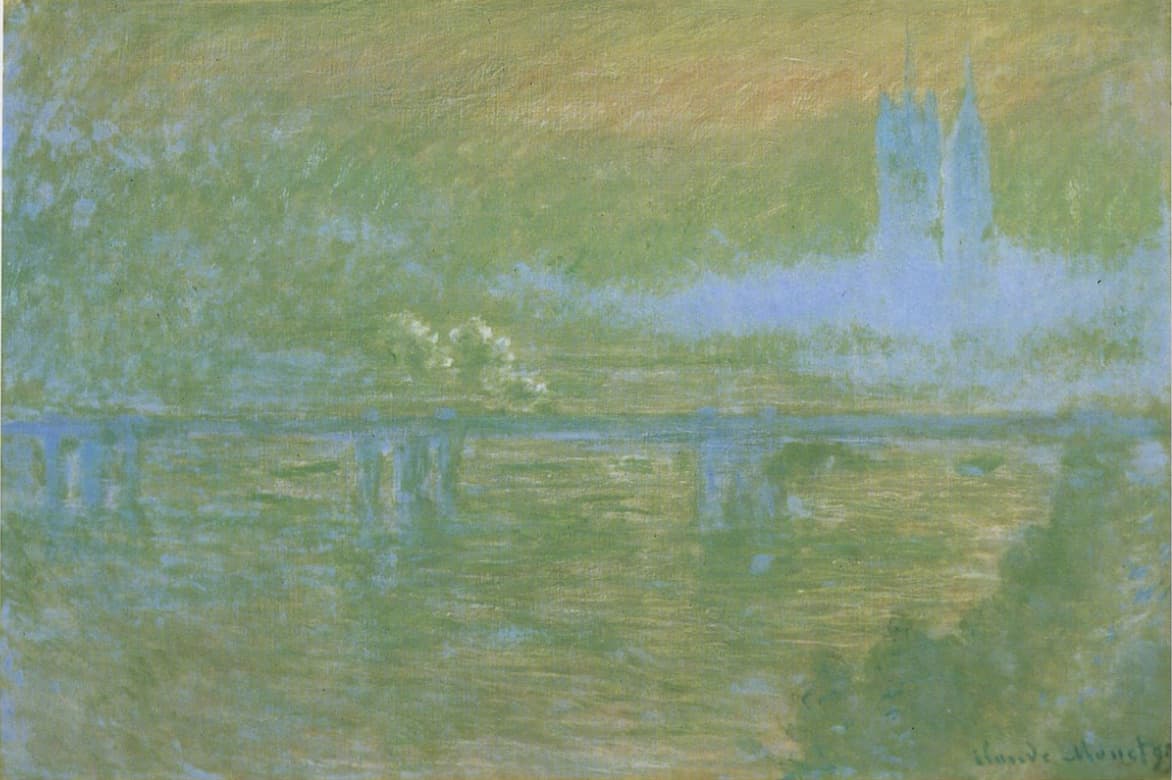
Charing Cross Bridge
Claude Monet · c. 1899
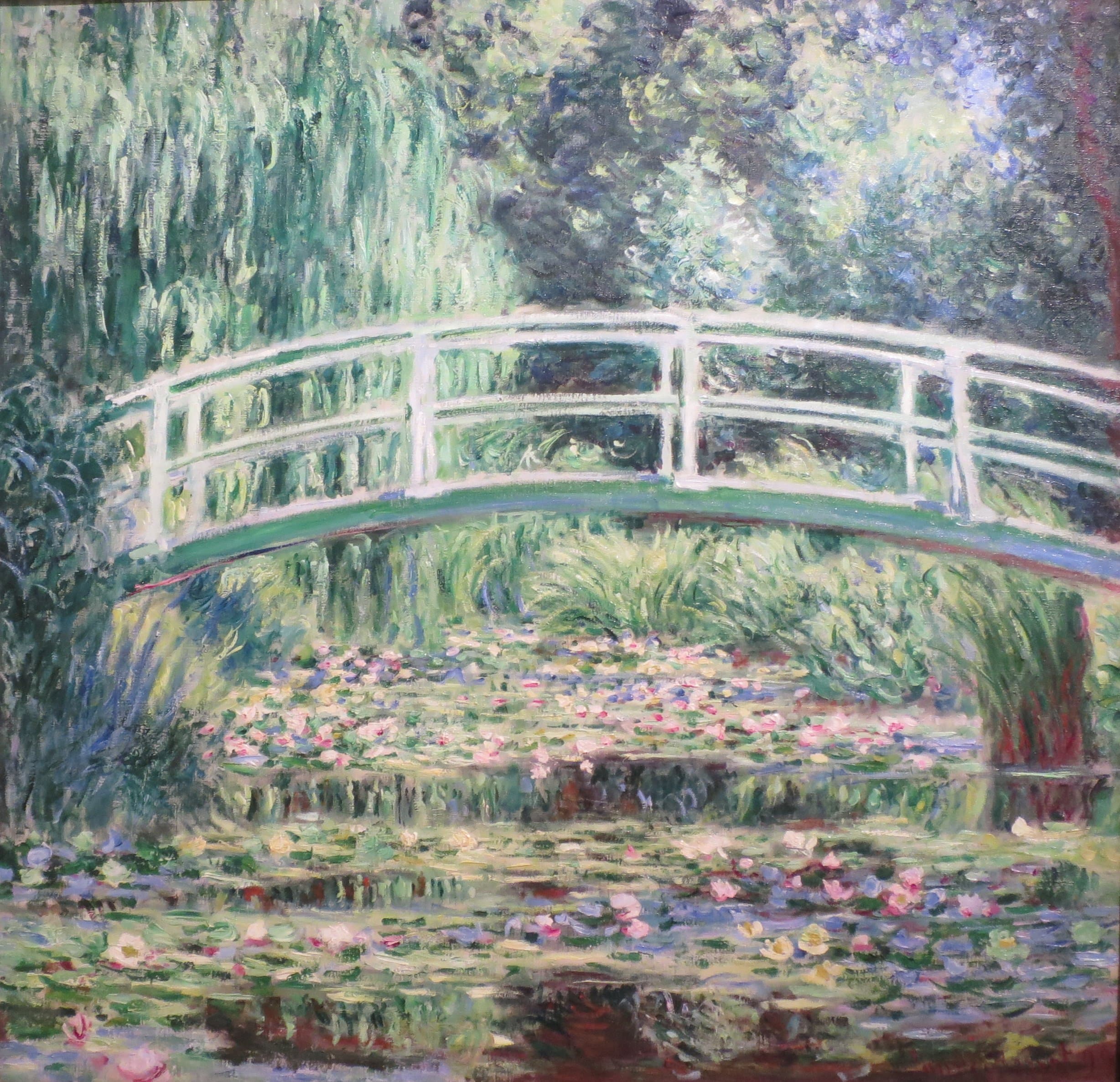
White Water Lilies
Claude Monet · 1899
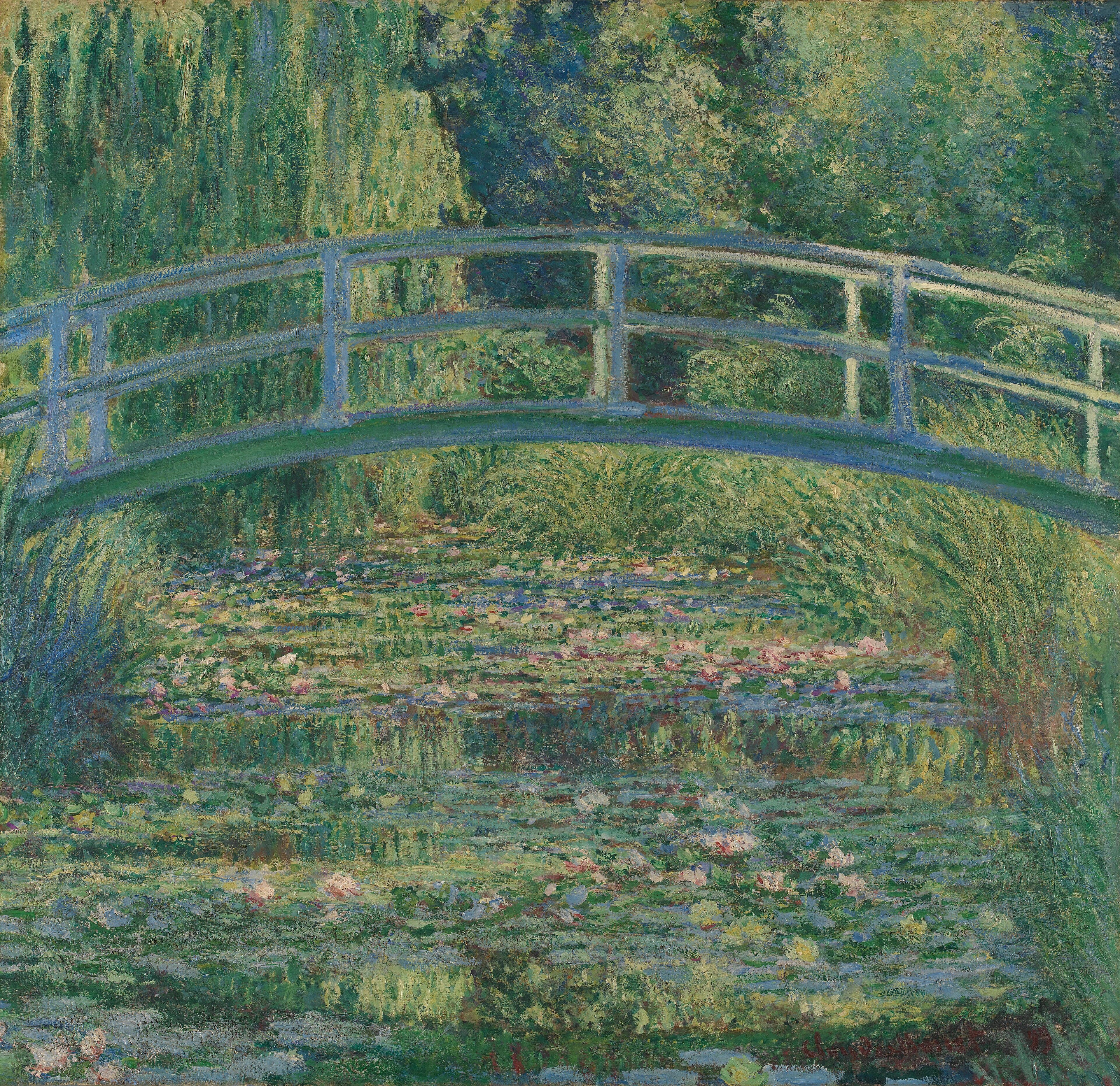
The Water-Lily Pond (National Gallery, London)
Claude Monet · 1899
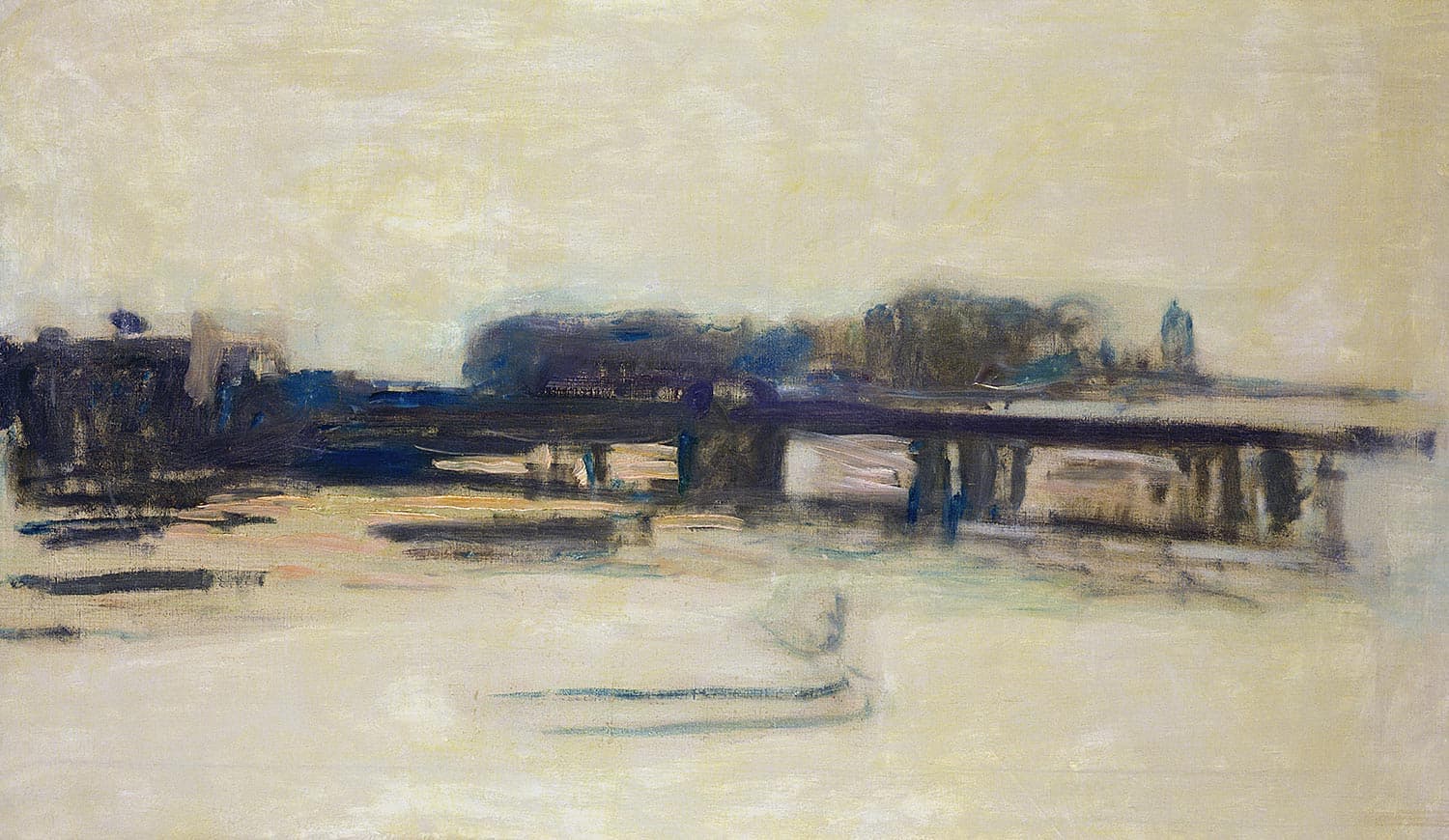
Charing Cross Bridge, London (Marmottan study)
Claude Monet · c. 1899–1901
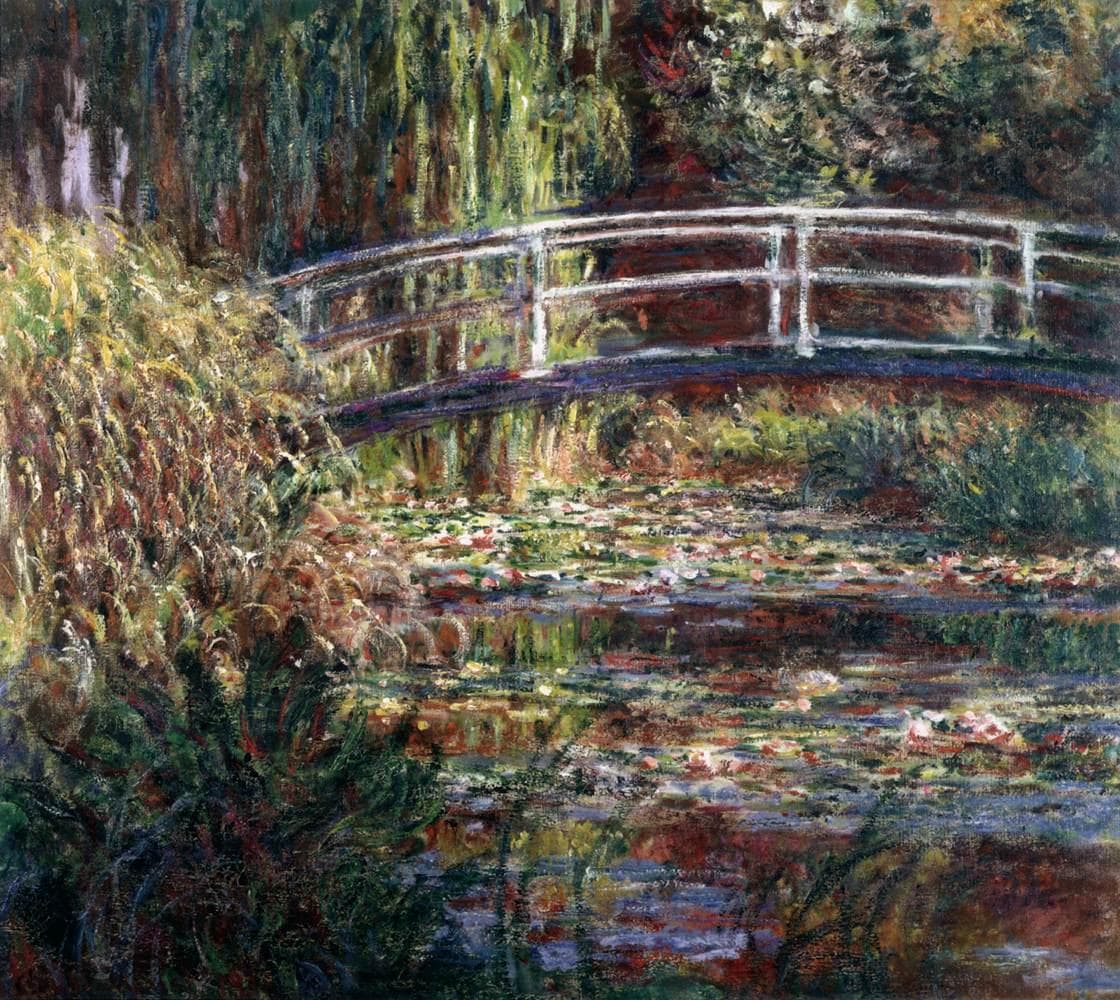
The Water Lily Pond, Harmony in Rose
Claude Monet · 1900
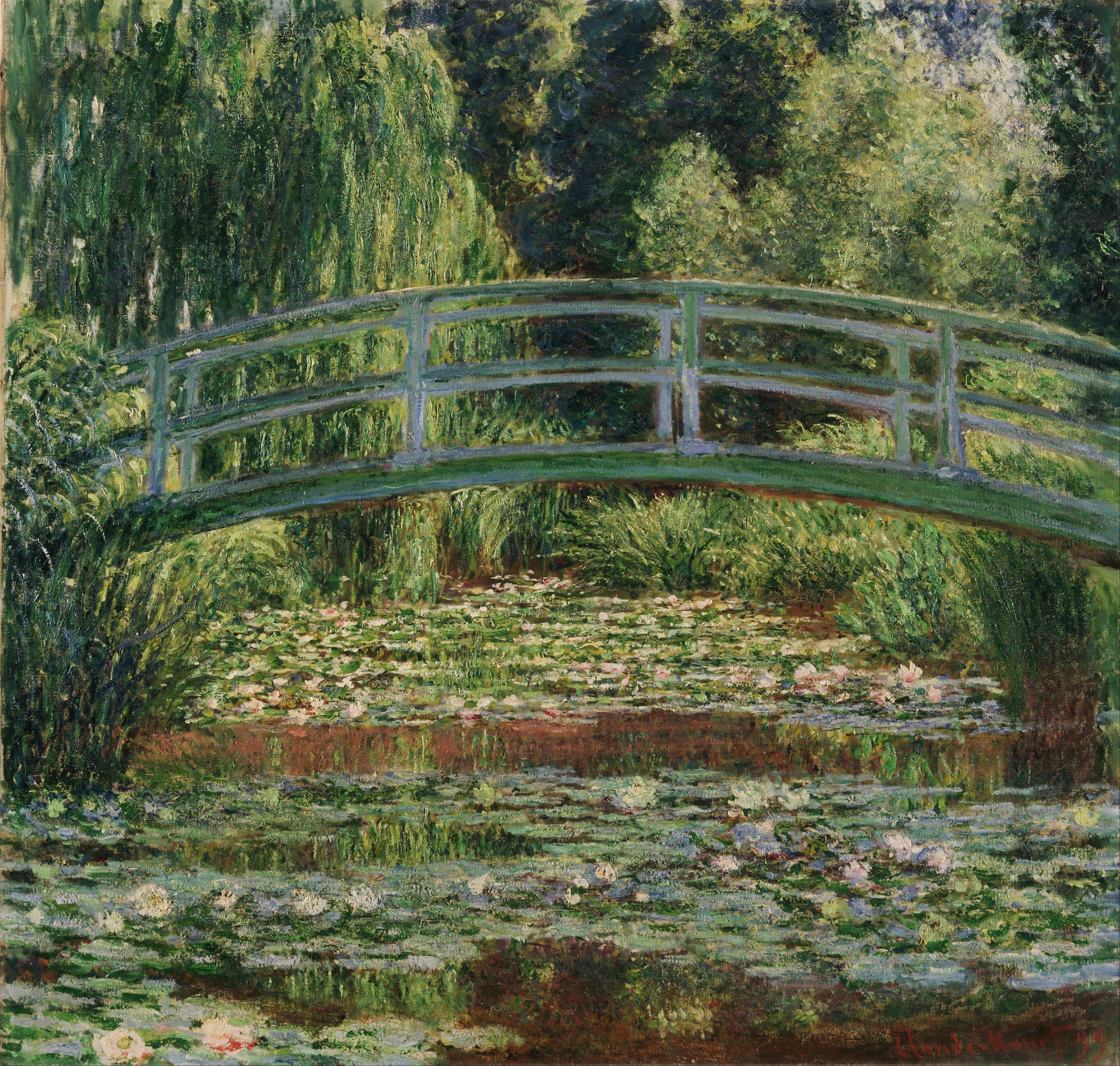
The Japanese Footbridge and the Water Lily Pool, Giverny
Claude Monet · 1899
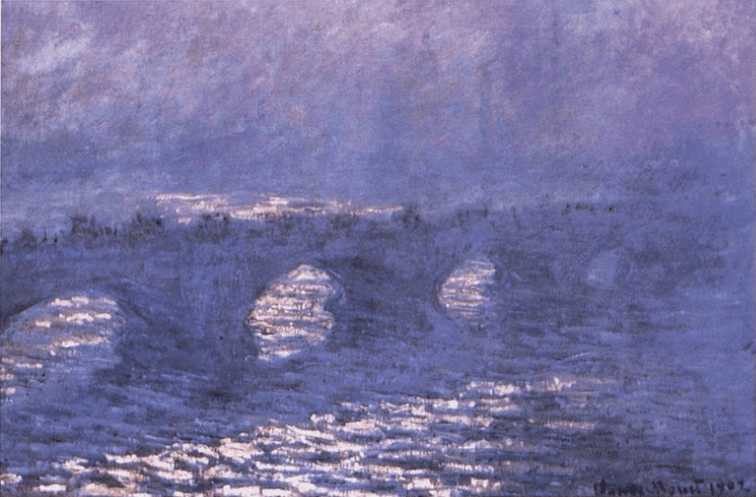
Waterloo Bridge, Effect of Sun in the Mist
Claude Monet · c. 1900–03
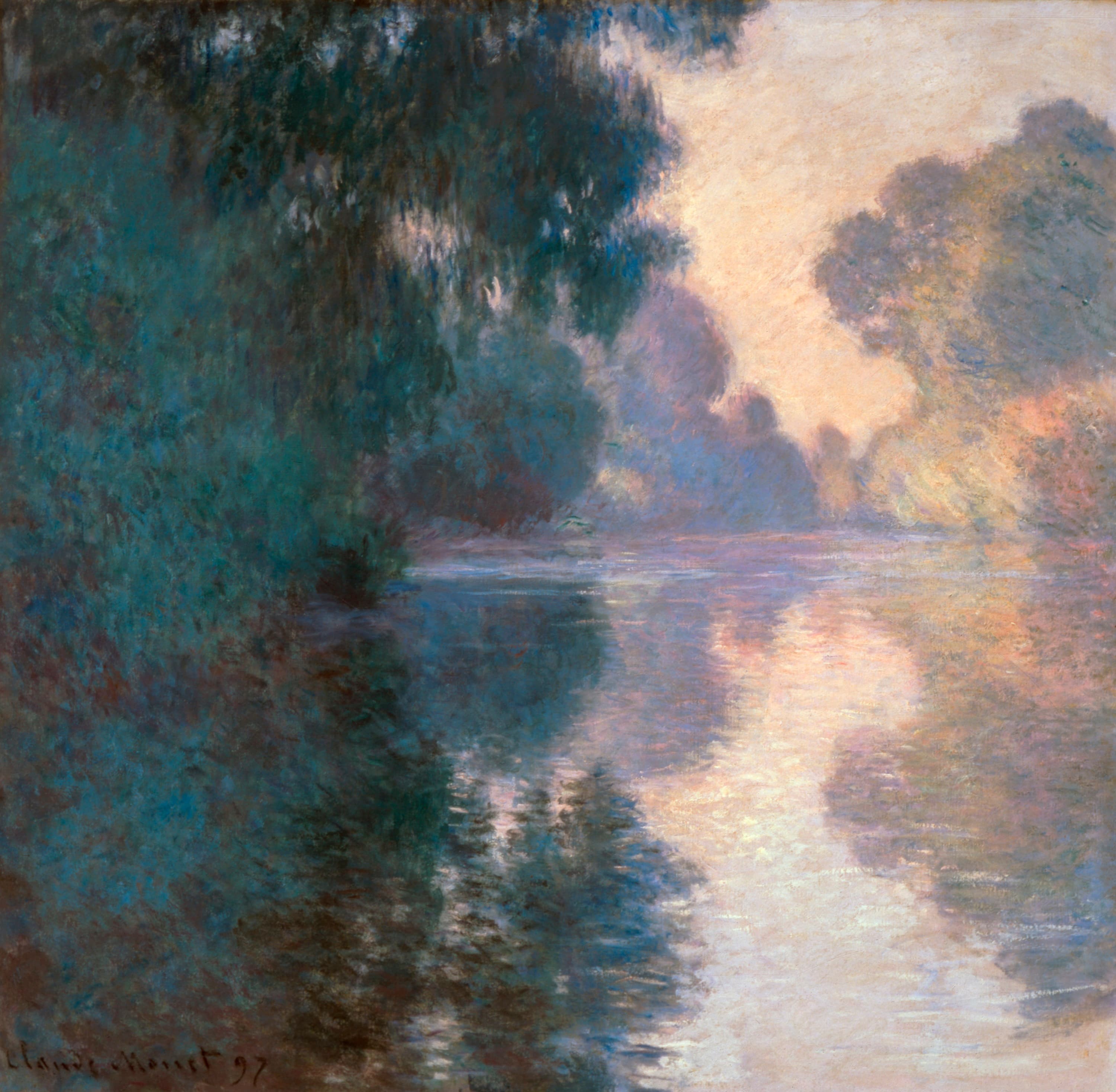
Morning on the Seine, Good Weather
Claude Monet · 1897
Also painted in 1899
The same year

Bridge over a Pond of Water Lilies
Claude Monet · 1899
Water Lilies and Japanese Bridge
Claude Monet · 1899
Waterloo Bridge (Matsushita Museum of Art)
Claude Monet · 1899–1901
Charing Cross Bridge
Claude Monet · 1899
Charing Cross Bridge
Claude Monet · 1899
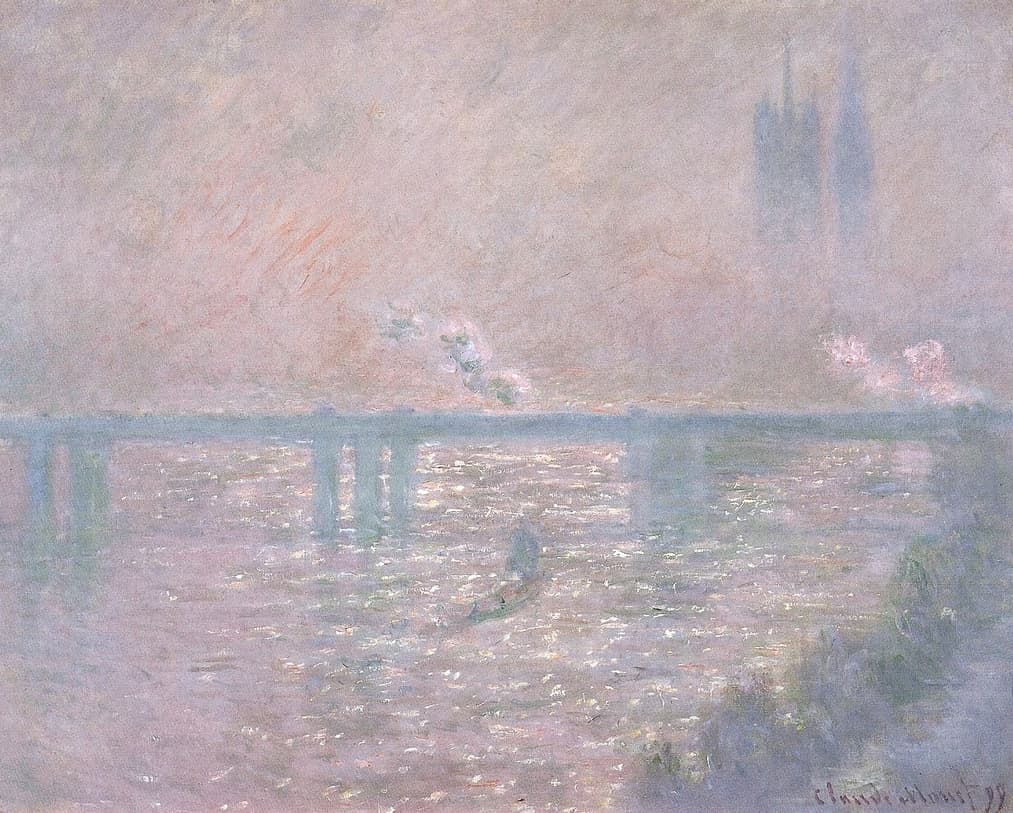
Charing Cross Bridge
Claude Monet · 1899
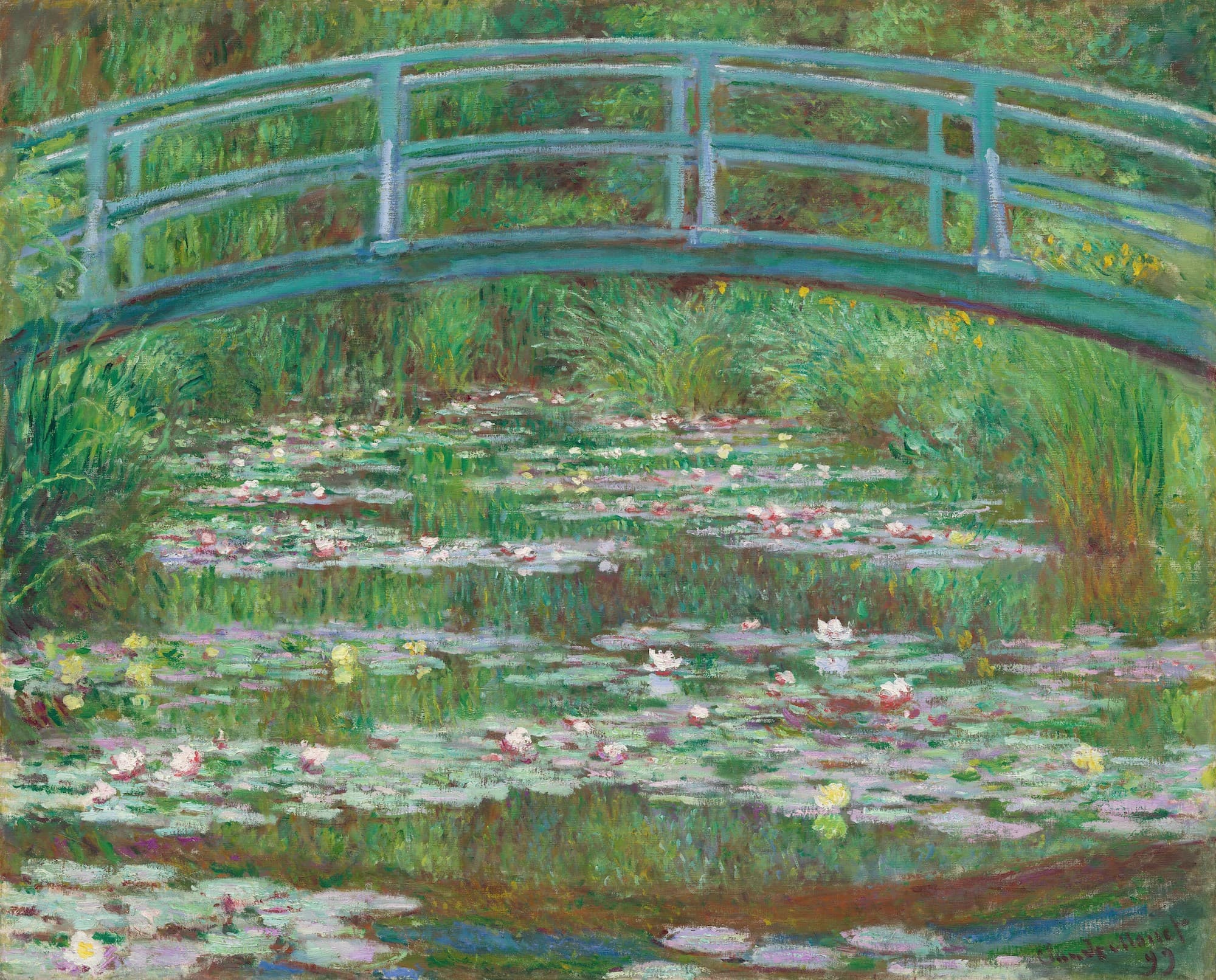
The Japanese Footbridge
Claude Monet · 1899
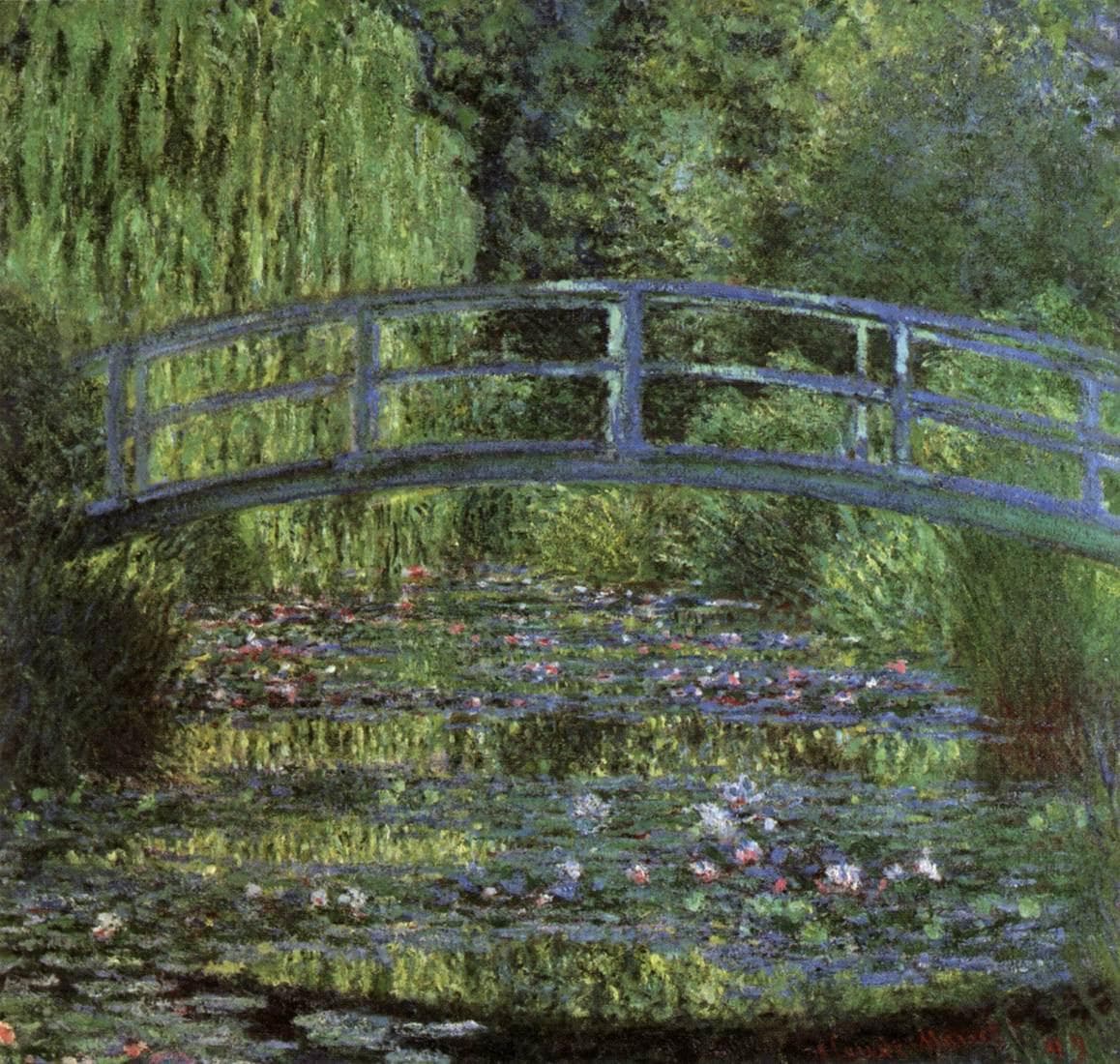
Water Lily Pond, Green Harmony
Claude Monet · 1899
Kindred works
You may also study
Charing Cross Bridge
Claude Monet · 1899
Charing Cross Bridge
Claude Monet · 1899
Charing Cross Bridge
Claude Monet · 1899
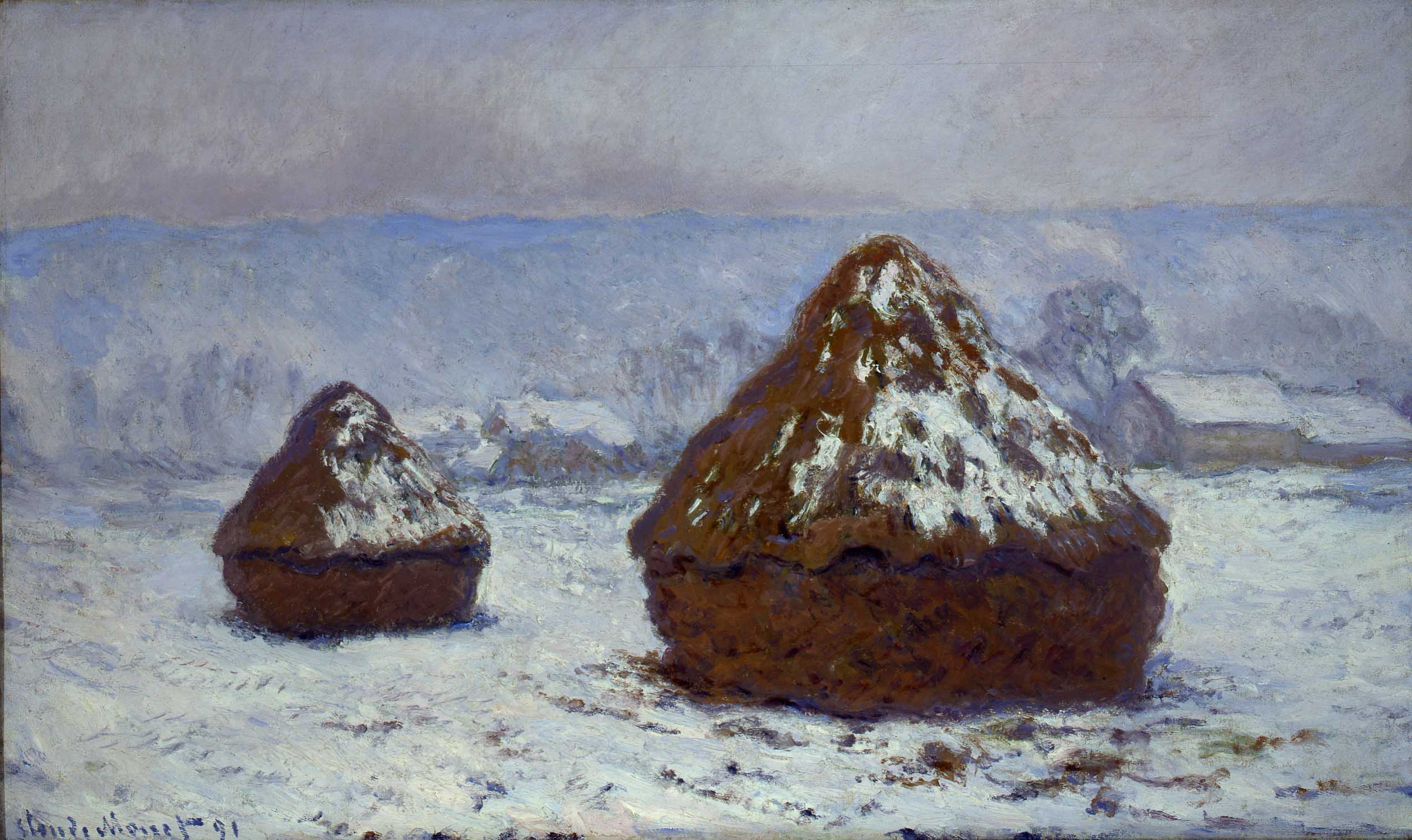
Grainstacks, Snow Effect
Claude Monet · 1891
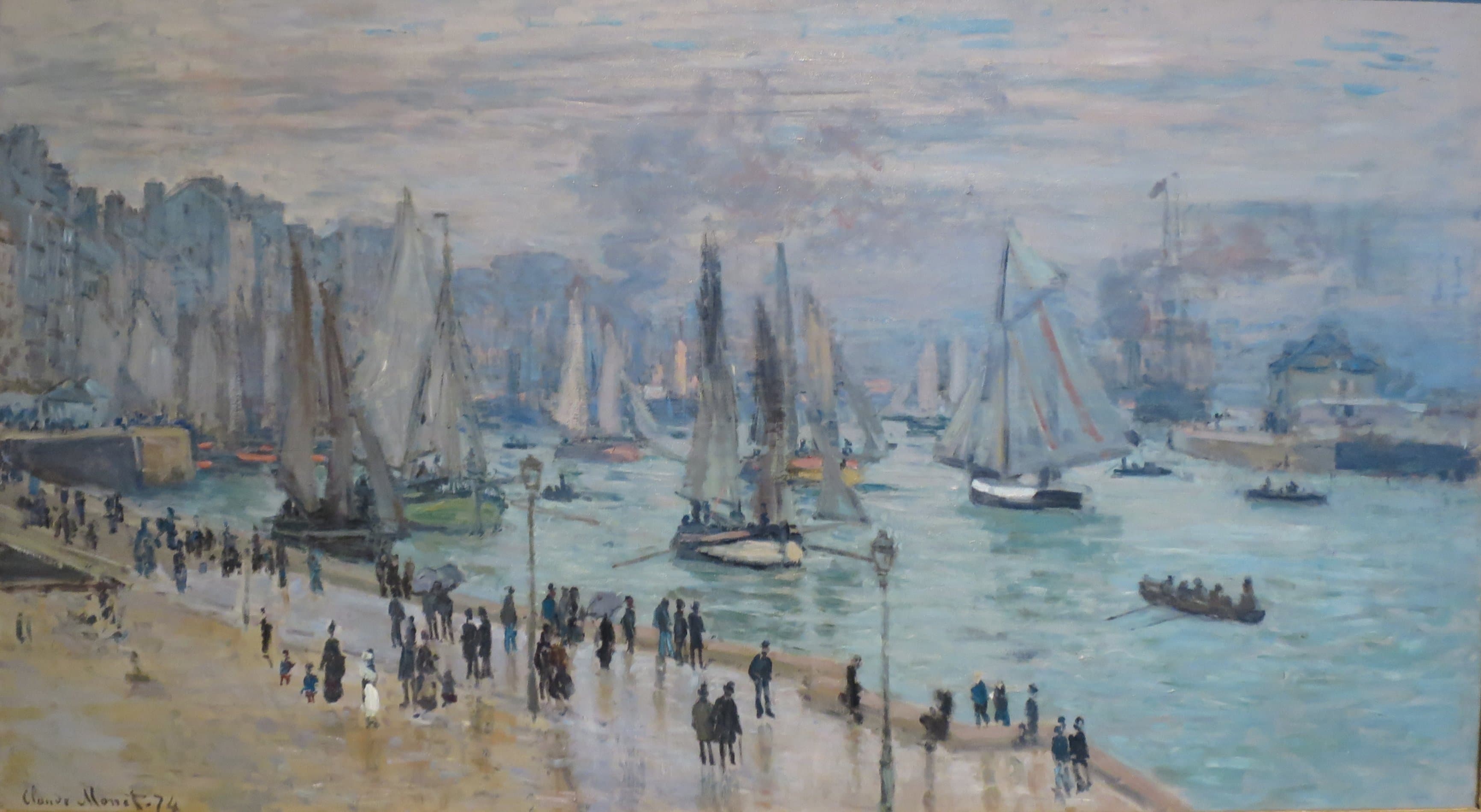
Fishing Boats Leaving the Harbor, Le Havre
Claude Monet · 1874
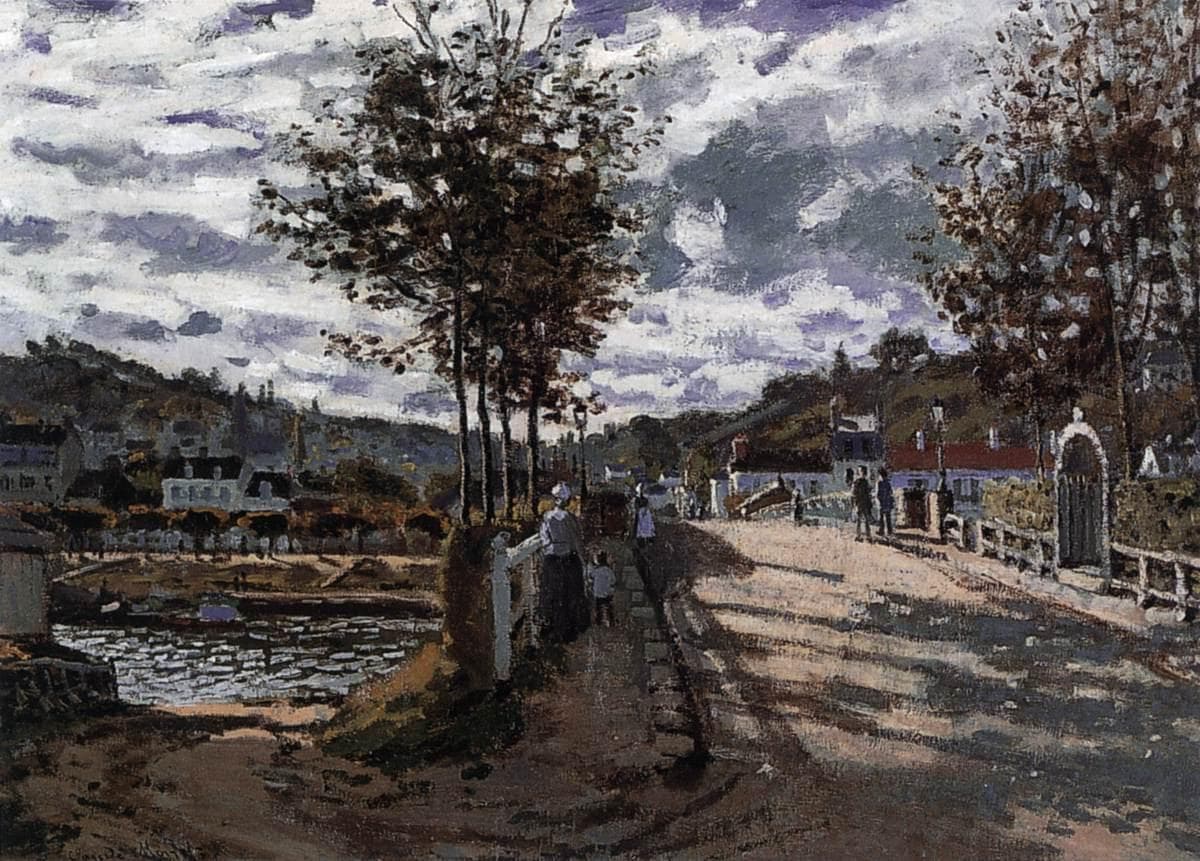
The Bridge at Bougival
Claude Monet · 1869
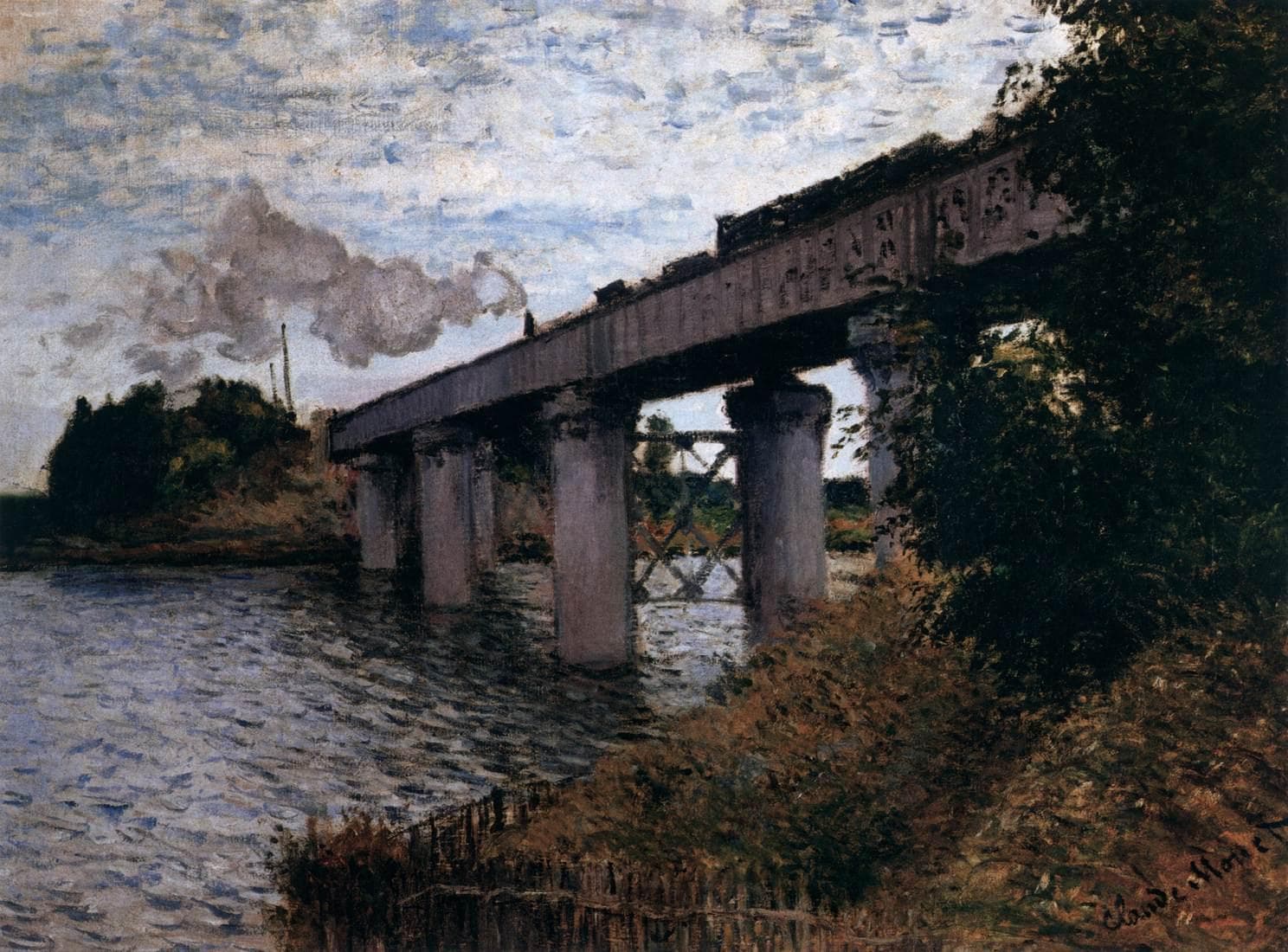
The Railway Bridge at Argenteuil
Claude Monet · c. 1873–74
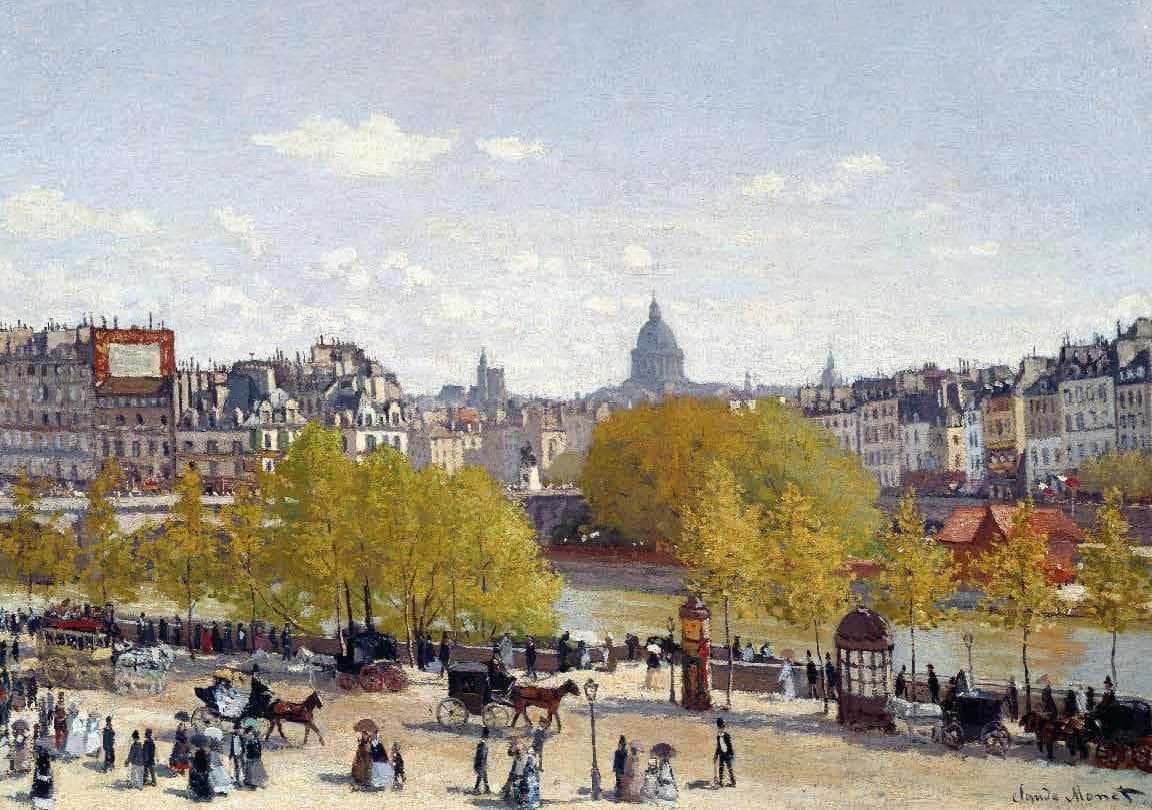
Quai du Louvre, Paris
Claude Monet · 1867