Image: Metropolitan Museum of Art, New York (Open Access) · CC0 · via Wikimedia Commons
The Houses of Parliament (Effect of Fog)
Claude Monet, 1903–04
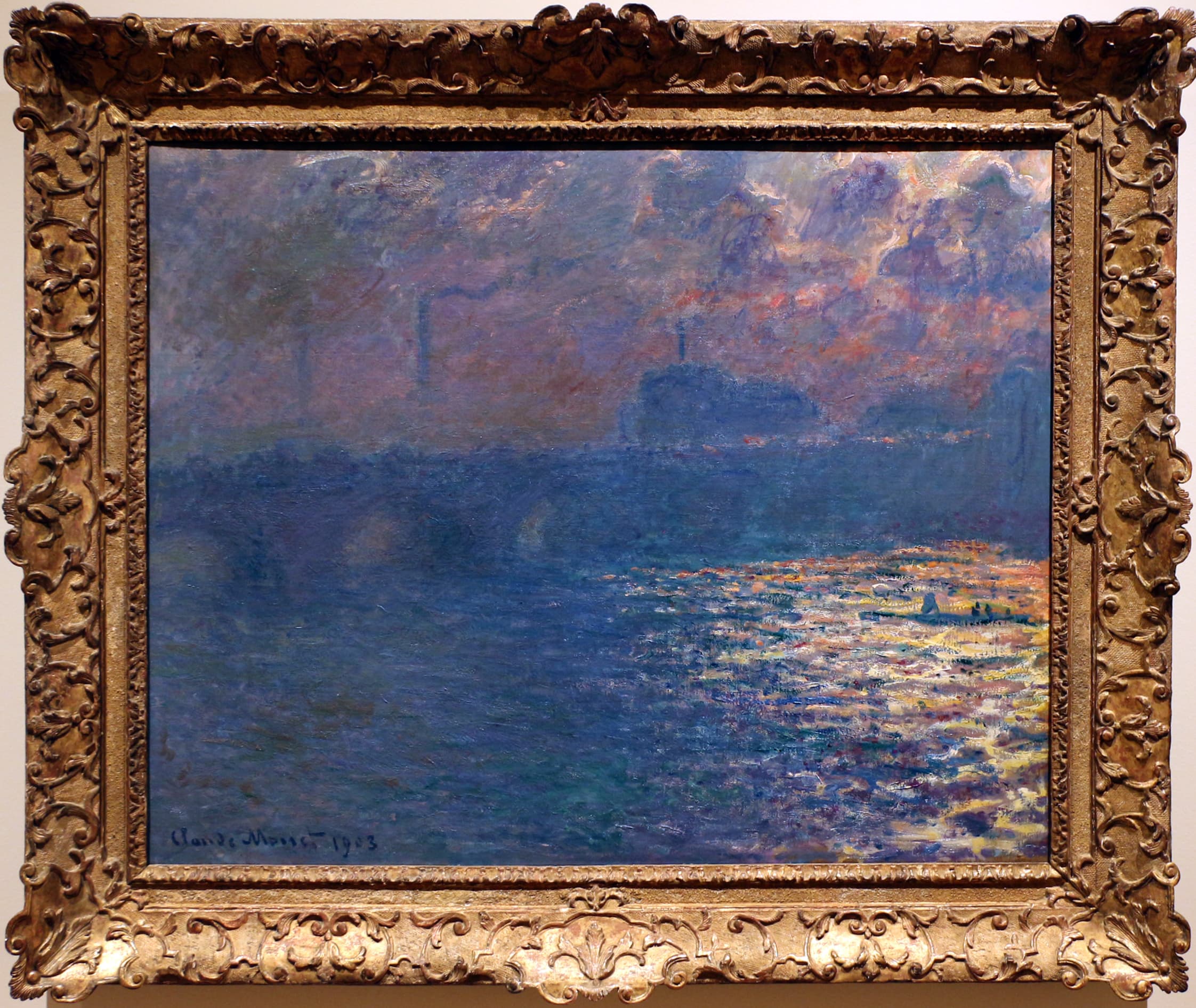
The Houses of Parliament (Effect of Fog) is a painting by Claude Monet of 1903–04 showing Westminster as a blue silhouette in greenish fog, an orange glow at right and boats on the Thames. It is in the Metropolitan Museum of Art.
- Artist
- Claude Monet
- Date
- 1903–04
- Medium
- Oil on canvas
- Dimensions
- 81.3 × 92.4 cm
- Collection
- The Metropolitan Museum of Art, New York, United States
- Movement
- Impressionism
- Catalogue
- Wildenstein 1609
- The City
- Water & Sea
- Architecture & Ruins
The Houses of Parliament (Effect of Fog) is a painting by Claude Monet dated 1903–04 by the museum and signed "Claude Monet 1903" at lower left. It shows the Palace of Westminster as a deep blue silhouette in a greenish-gray London fog, with an orange glow breaking through at upper right and small boats on the Thames below. The canvas, 81.3 by 92.4 centimeters, is in the Metropolitan Museum of Art in New York (accession 56.135.6), a bequest of Julia W. Emmons in 1956. Wildenstein lists it as number 1609.
What you're looking at
The palace occupies the right half of the canvas. Its great tower stands just right of center, dark blue-green and topped with pinnacles; lower buildings and spires fill the space to its right. The forms are solid near the top and dissolve into fog toward the water.
The fog is the picture. Monet paints it in grays, greens, mauves and dull yellows, laid on in loose, circling strokes that cover the left half of the canvas almost uniformly. At upper right, behind the palace, the fog warms to orange, where the sun is trying to break through. The orange is laid on in rough patches, with the gray showing between.
On the river, two boats are the only distinct shapes. One, with a dark sail, sits at left in the middle distance; the other, a barge with a sail and a long towline, moves across the lower center. Their dark shapes, half-swallowed by the fog, give the picture its scale.
Fog with a hidden sun: what makes this version distinct
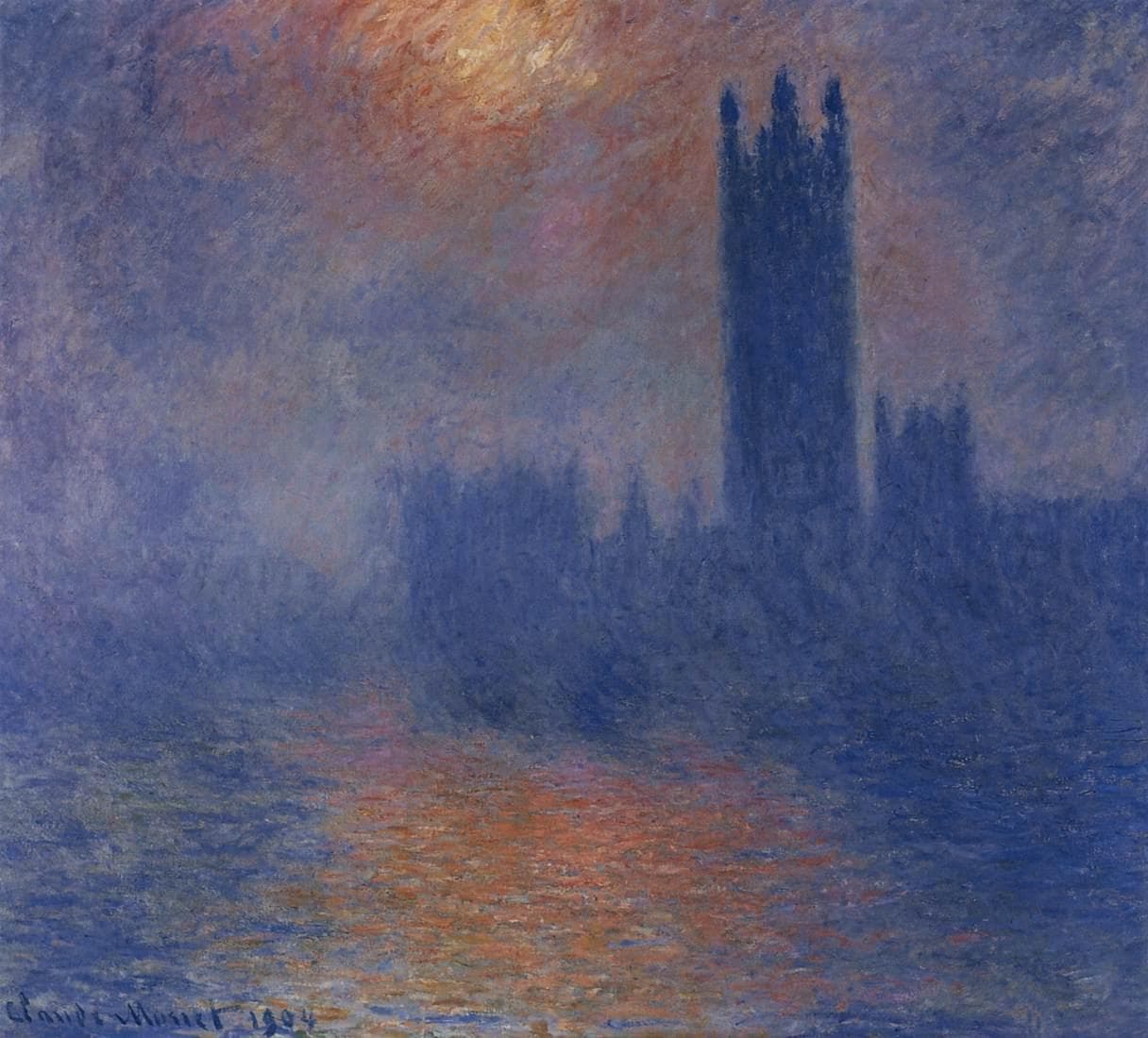
Fog paintings make up a large part of the Parliament series. This one is darker and greener than most, with stronger contrast between the solid palace and the soft air. Compare the High Museum's Houses of Parliament, Symphony in Blue, where everything dissolves in lavender, and the Musée d'Orsay's The Houses of Parliament in London (Sun Breaking Through the Fog), where a sun bursts through in a blaze of gold. The Met canvas holds the moment just before the sun wins: the orange is there, but the fog still dominates.
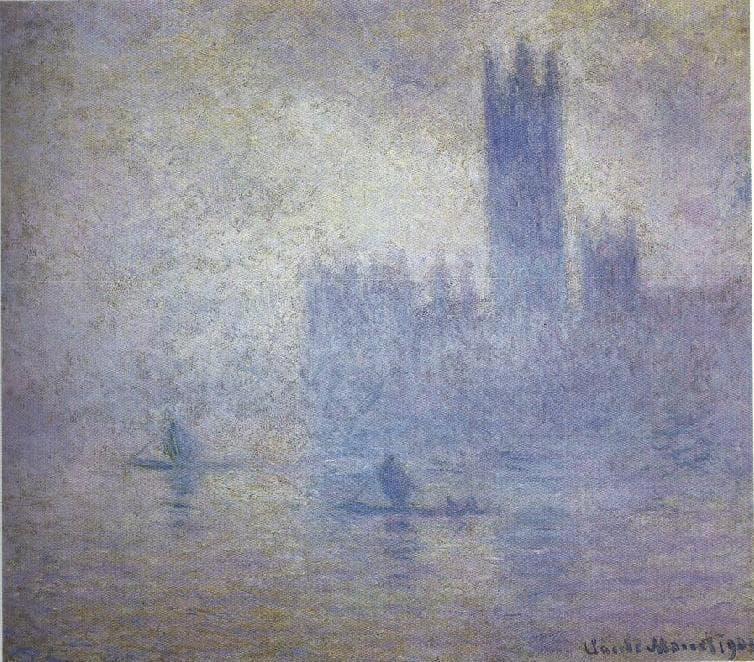
The MuMa in Le Havre has a near-twin, Le Parlement de Londres, effet de brouillard, with the same layout and boats in a warmer, browner fog.
How it was painted
Monet painted the Parliament from St Thomas' Hospital, across the river from Westminster, in the late afternoons of 1900 and 1901. He admired London's fogs, the mixture of mist and coal smoke that turned the city's light yellow, orange and green, and said that without fog London would not be beautiful. He kept many canvases going, returned to each as its effect came back, and reworked them at Giverny before his 1904 exhibition of thirty-seven Thames views at Durand-Ruel.
The paint here is thin in the fog, with the canvas texture showing, and thicker in the palace and the orange glow.
The Met's Monets
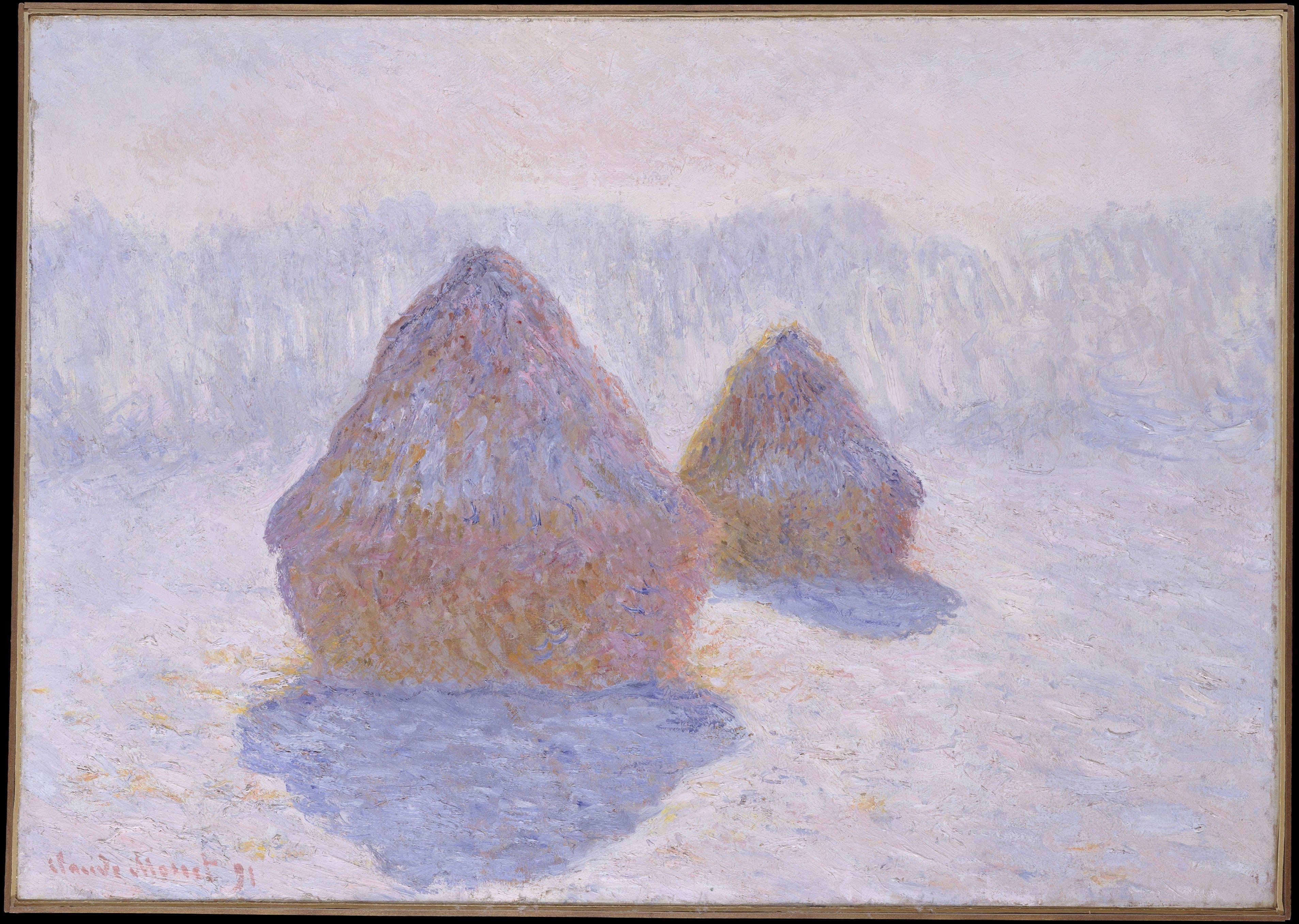
The Met holds one of the largest Monet collections in the United States, including stacks, cathedral and water-lily pictures. Visitors can compare this London fog with Haystacks (Effect of Snow and Sun), painted a decade earlier, to see how Monet's interest in atmosphere carried from the fields of Giverny to the Thames.
Details to look for
Look at the towline of the barge in the foreground: a single thin diagonal stroke of gray connects the boat to something out of sight, giving the empty water a story. The great tower is darkest at its top, against the orange, and lighter at its base, where the fog is thickest. That reverses the usual logic of shading and tells you the light is behind and above.
Where to see it
The painting is in the Metropolitan Museum of Art in New York. See Monet at the Met, our Houses of Parliament series hub, Monet in London and Claude Monet.
Questions & answers
Where is Monet's The Houses of Parliament (Effect of Fog)?
It is in the Metropolitan Museum of Art in New York, accession number 56.135.6, a bequest of Julia W. Emmons in 1956. The Met holds one of the largest Monet collections in the United States.
When was it painted?
Monet signed it 1903, and the museum dates it 1903–04. He worked on the Parliament series in London in 1900–01 and reworked the canvases at Giverny before his Paris exhibition of 1904.
What does the painting show?
The Houses of Parliament as a dark blue silhouette in greenish-gray fog over the Thames, with an orange glow breaking through behind the building and two sailing boats half-swallowed by the mist.
Why did Monet paint London fog?
He loved it. London's fog, a mix of mist and coal smoke, turned the light yellow, orange and green and dissolved buildings into shapes. Monet said that without fog London would not be beautiful, and it became the true subject of the series.
More by the artist
Claude Monet
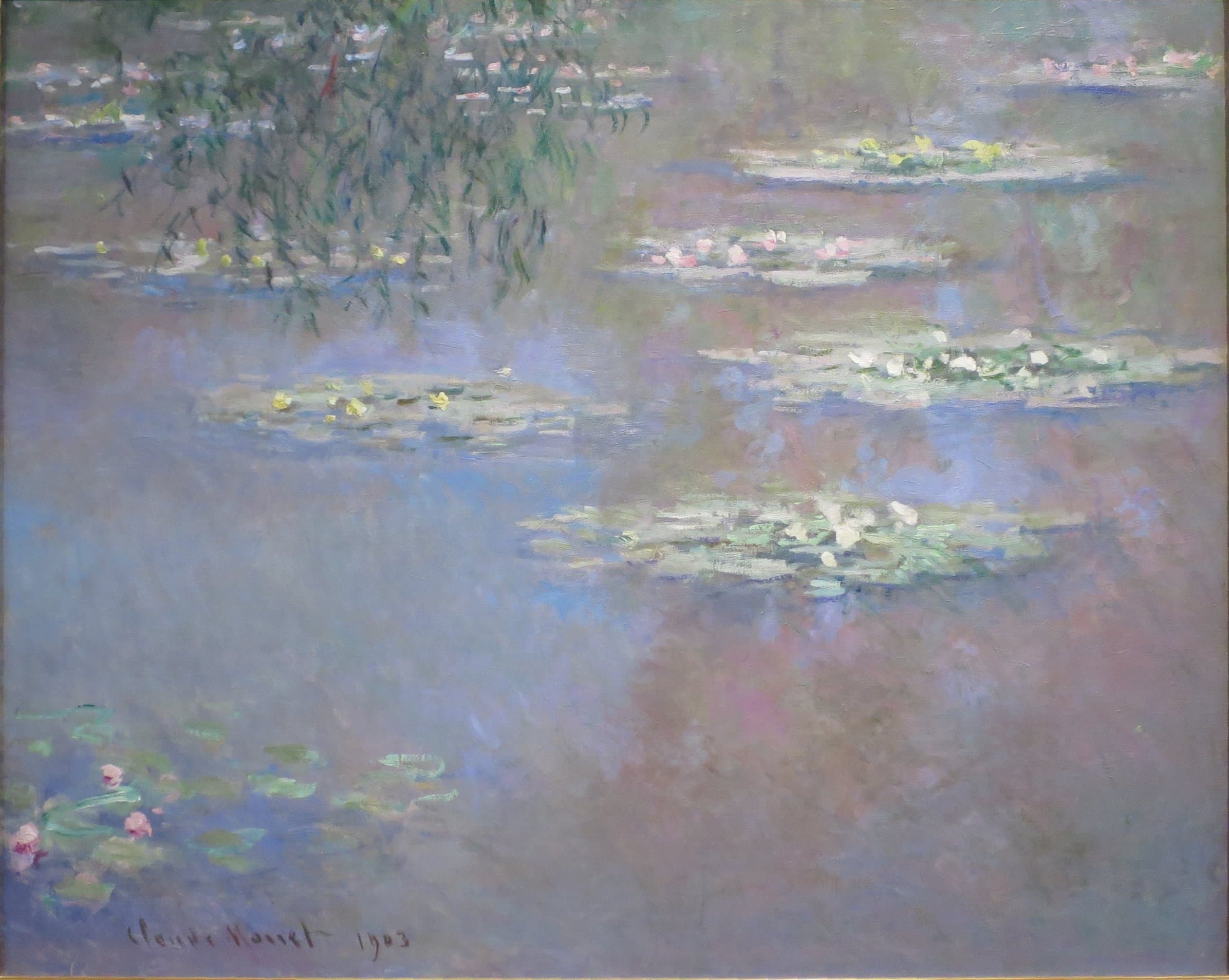
Waterlilies (1903, Dayton Art Institute)
Claude Monet · 1903
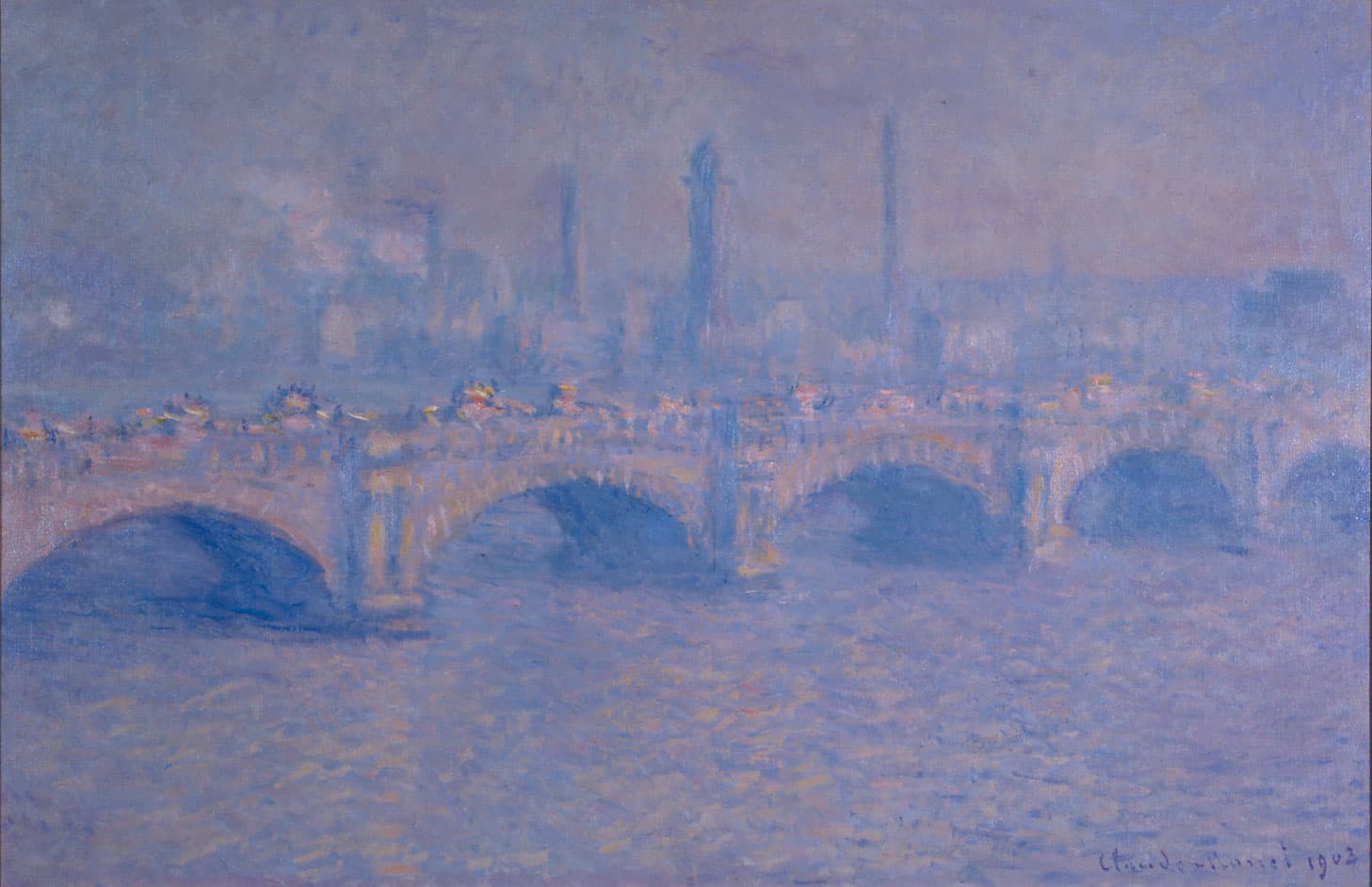
Waterloo Bridge, Sunlight Effect
Claude Monet · 1903
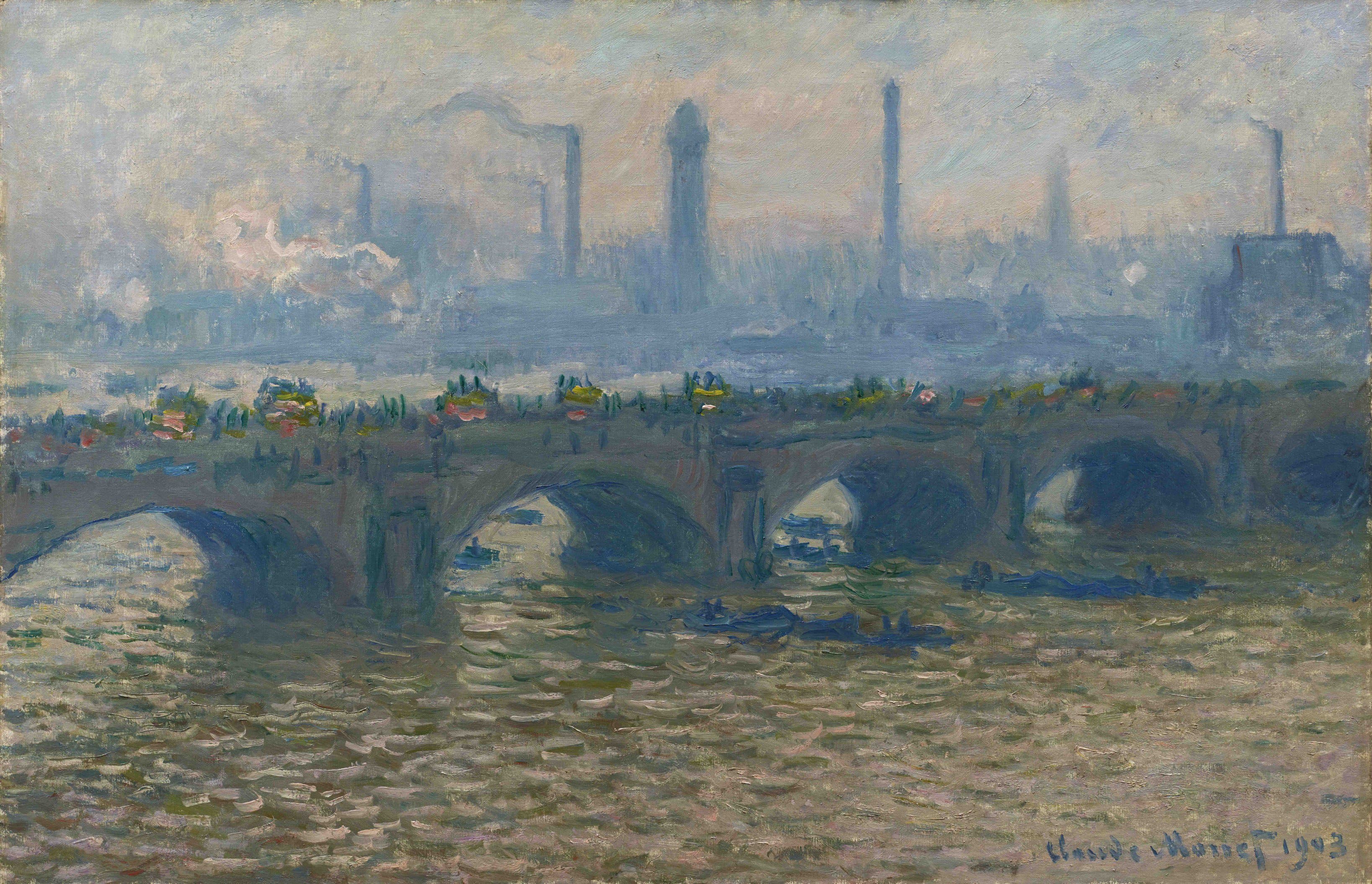
Waterloo Bridge, Gray Day (Ordrupgaard)
Claude Monet · 1903
Waterloo Bridge, Sunlight Effect
Claude Monet · c. 1900 (dated 1903)
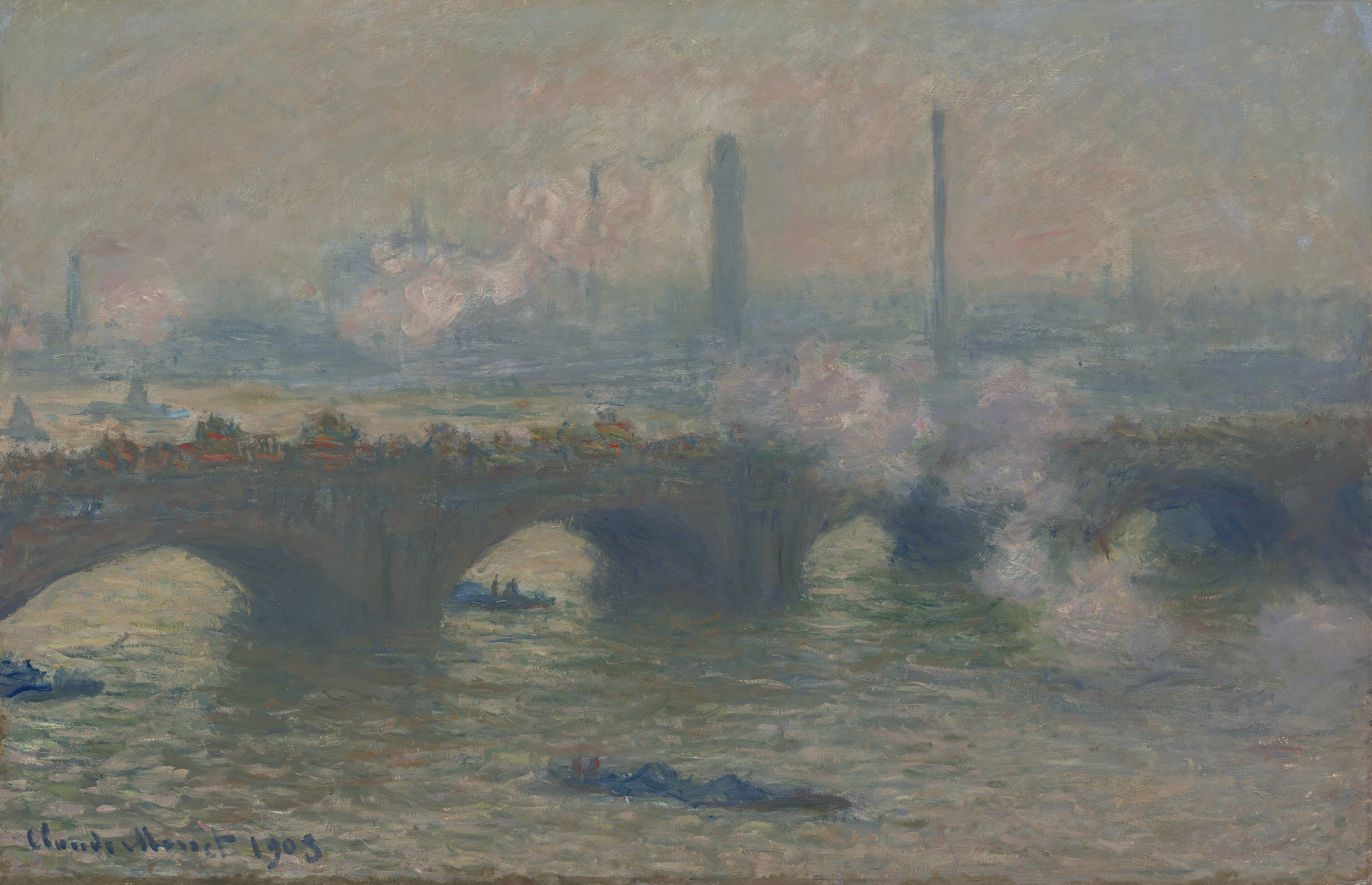
Waterloo Bridge, Gray Day
Claude Monet · 1903
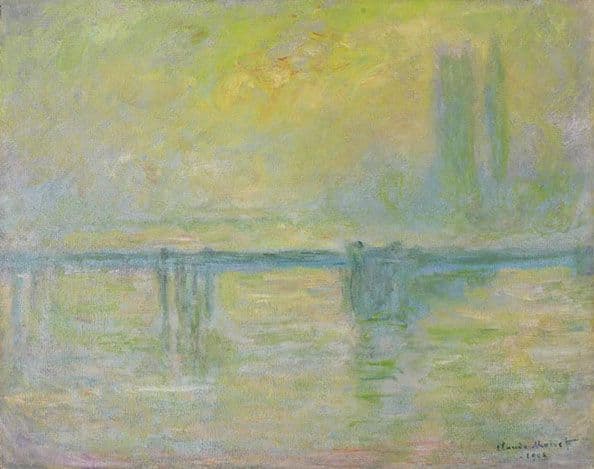
Charing Cross Bridge, Fog
Claude Monet · 1902–03
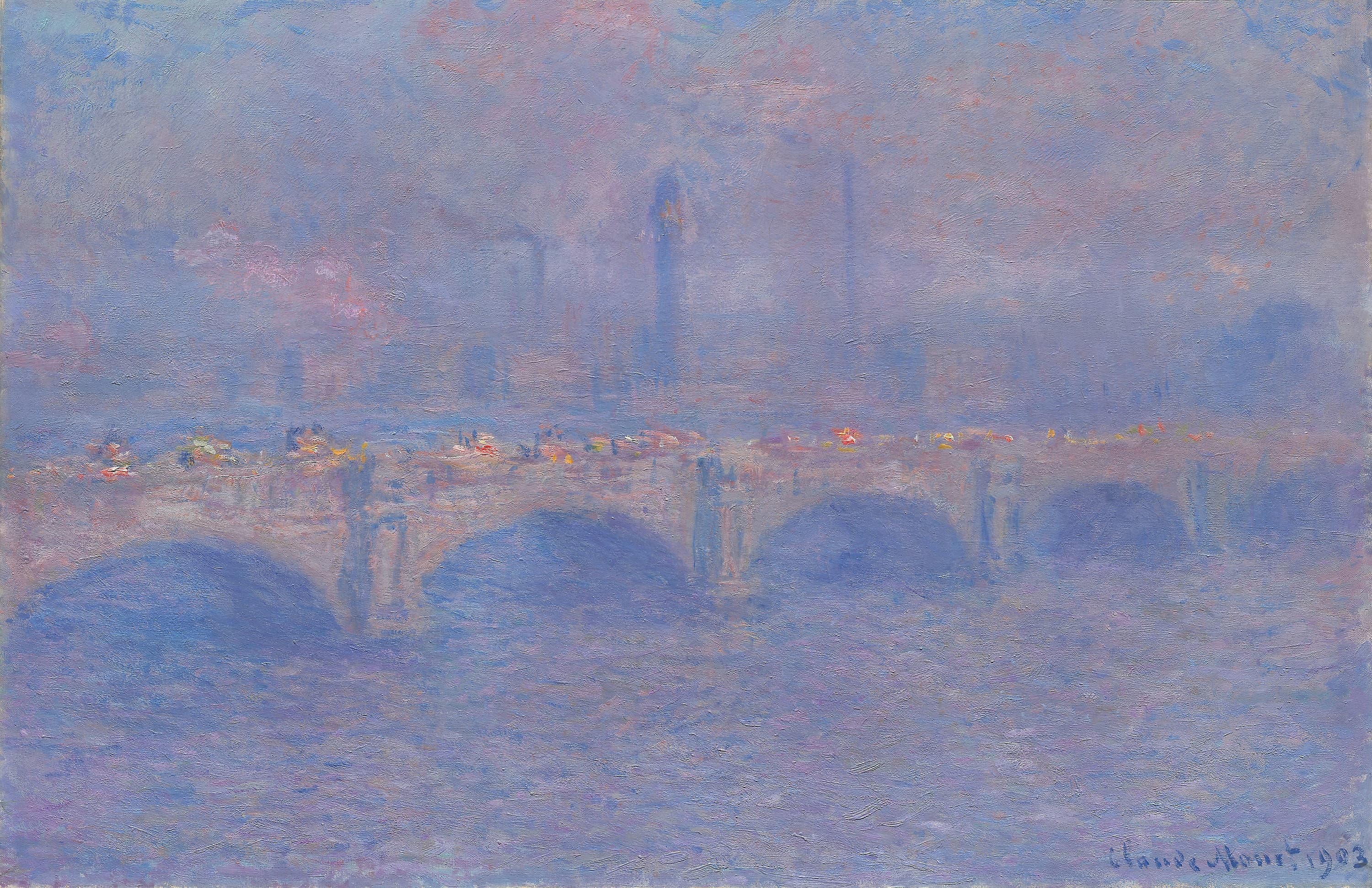
Waterloo Bridge, Sunlight Effect
Claude Monet · 1903
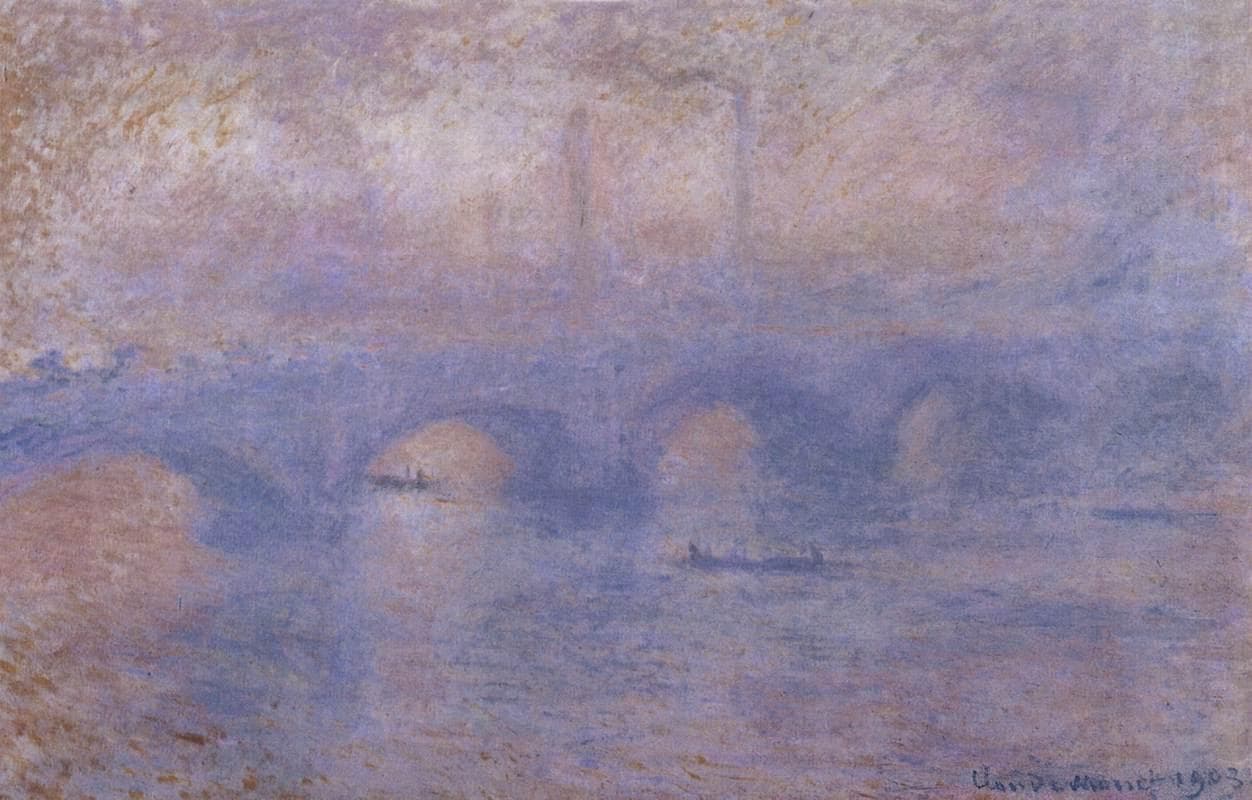
Waterloo Bridge, Effect of Fog
Claude Monet · 1903
Also painted in 1903
The same year
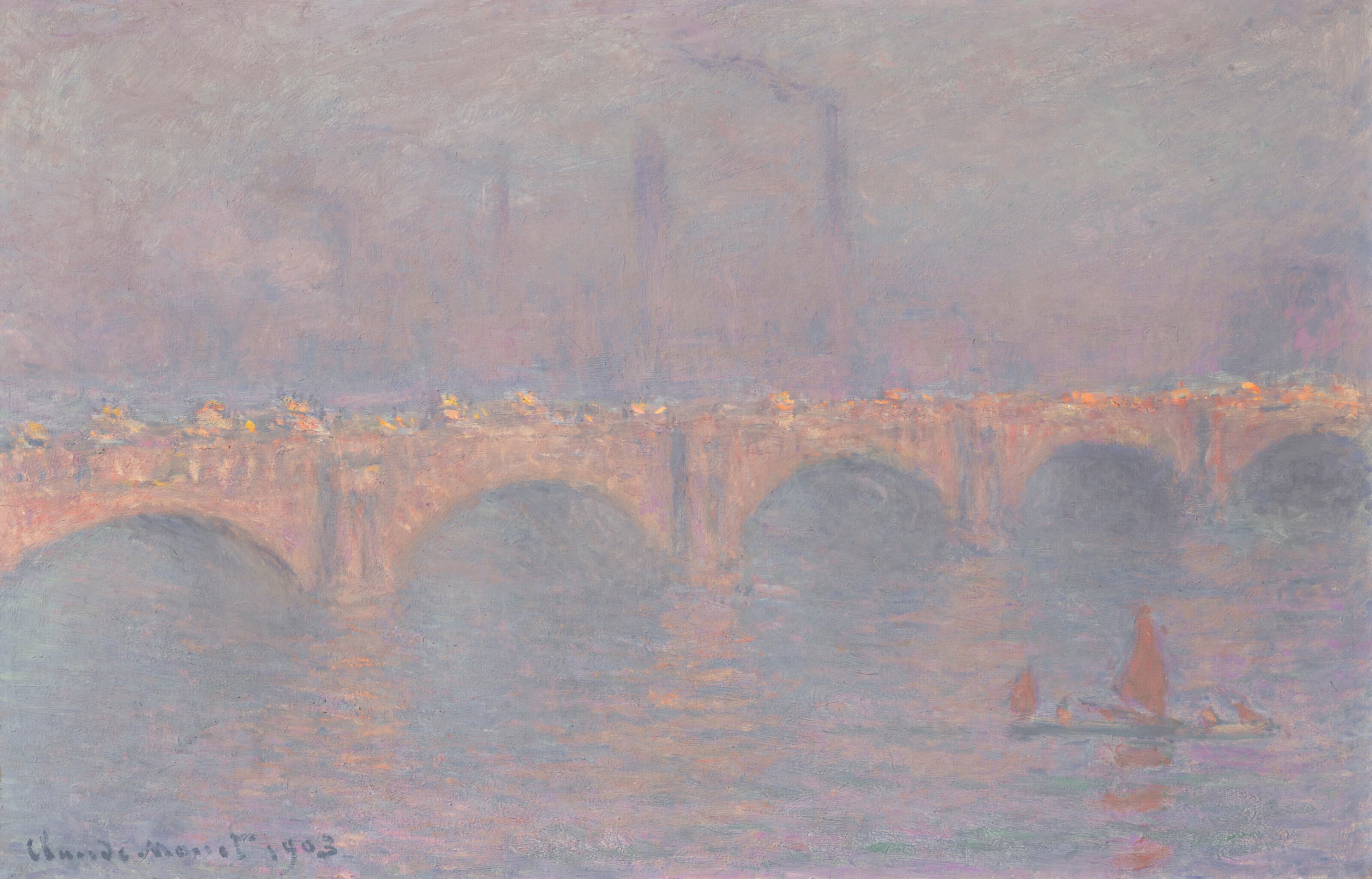
Waterloo Bridge, Hazy Sun
Claude Monet · 1903
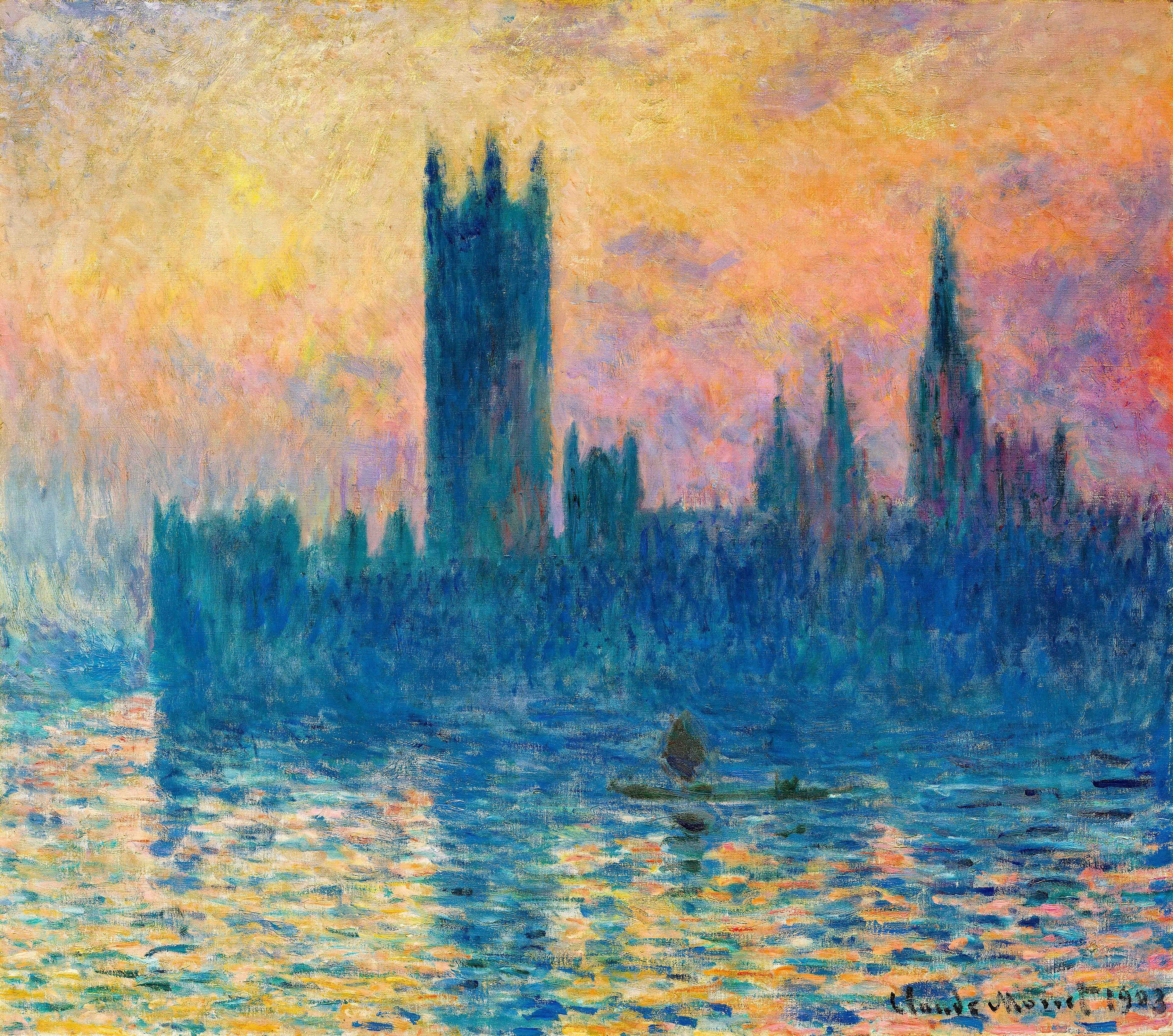
The Houses of Parliament, Sunset
Claude Monet · 1903
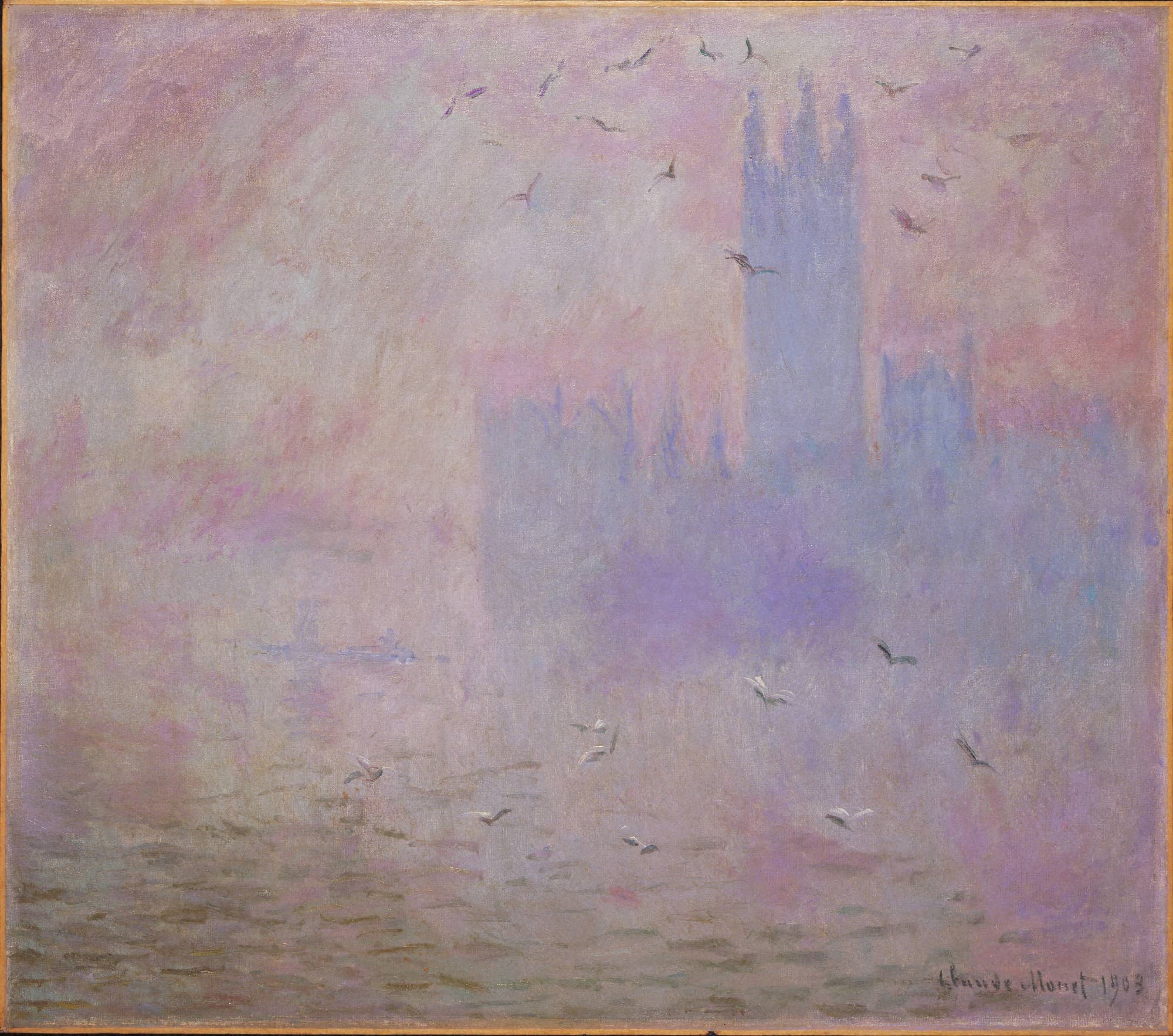
The Houses of Parliament, Seagulls
Claude Monet · 1903
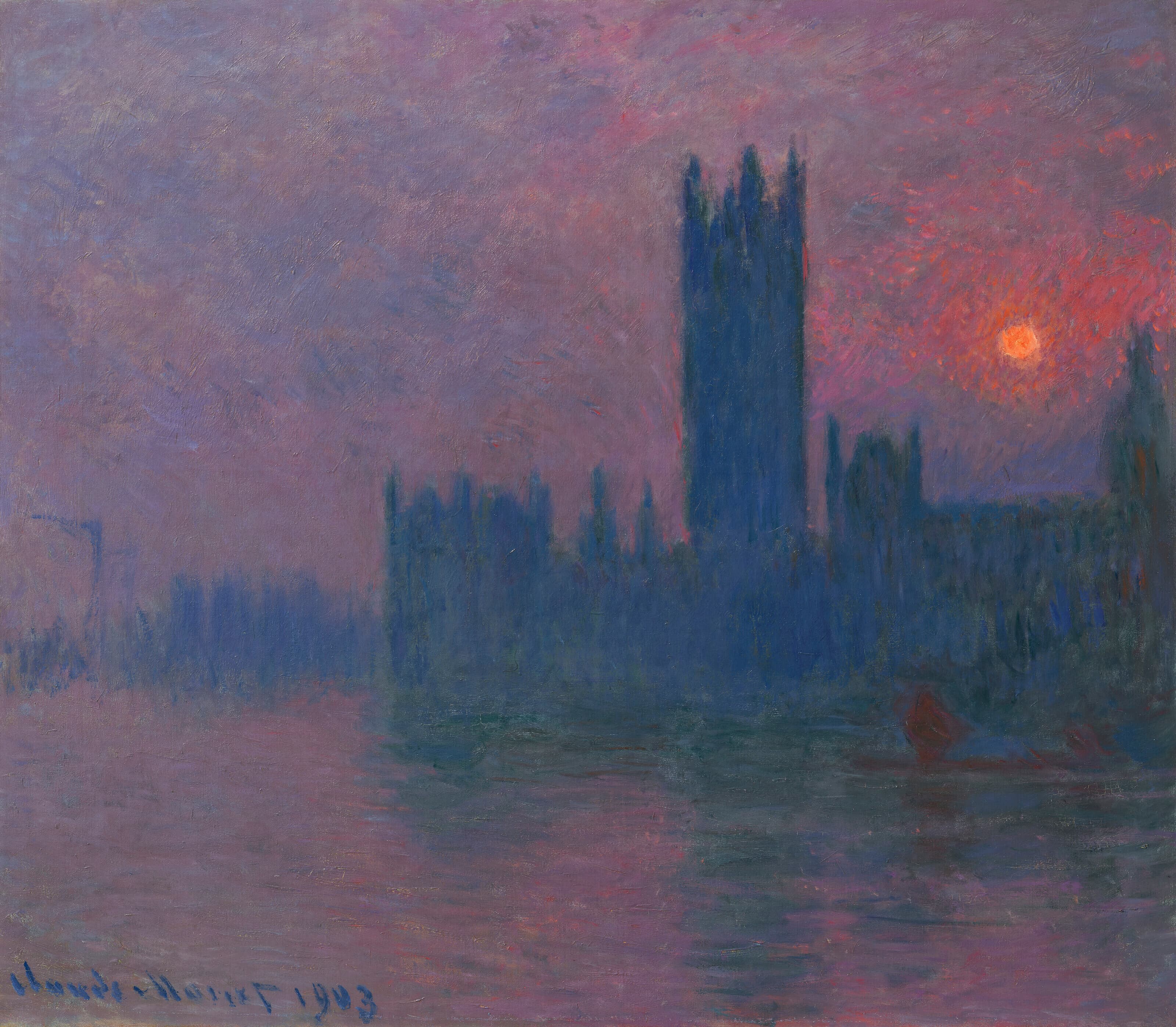
Houses of Parliament, Sunset
Claude Monet · 1903
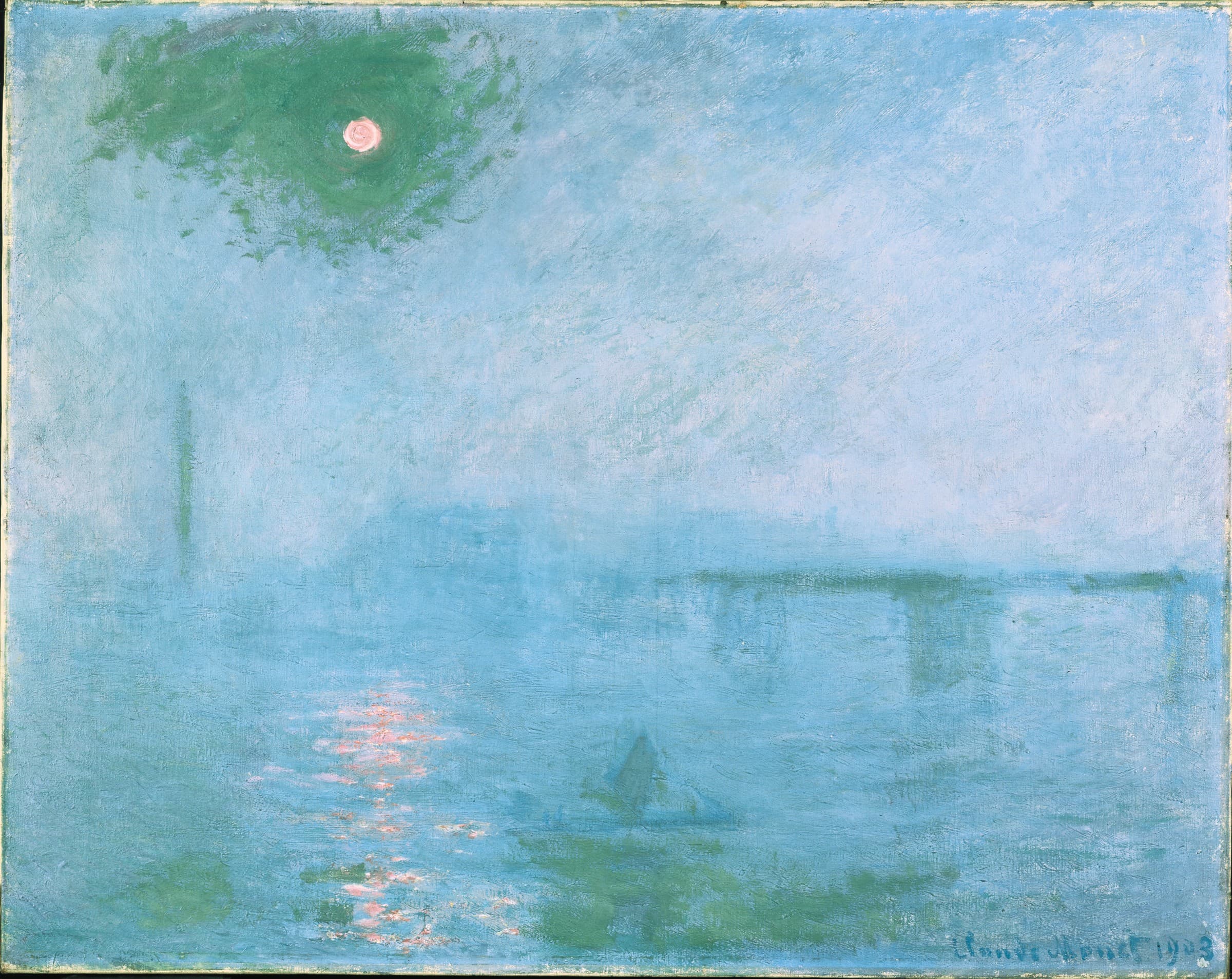
Charing Cross Bridge: Fog on the Thames
Claude Monet · 1903
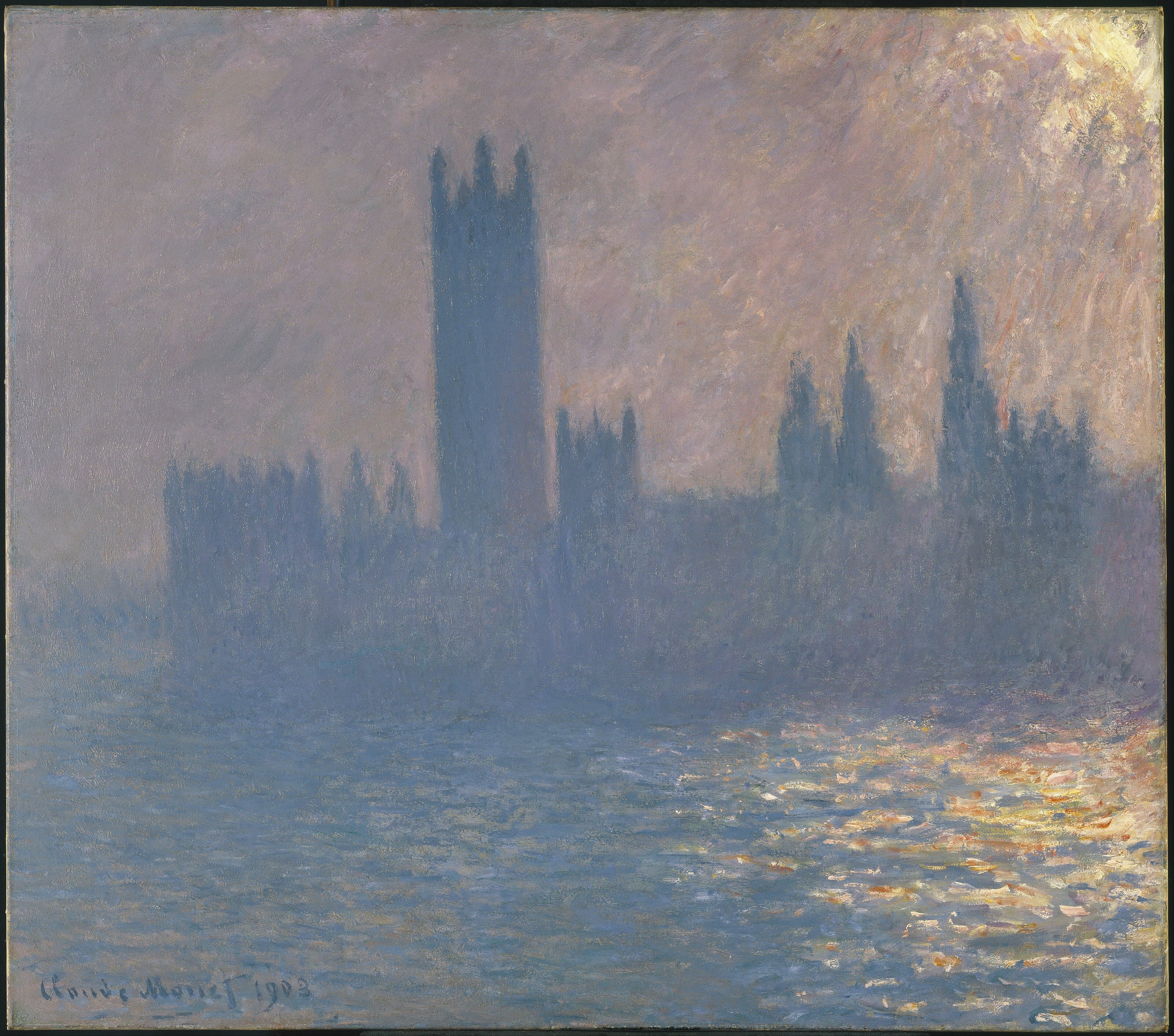
Houses of Parliament, Sunlight Effect
Claude Monet · 1903
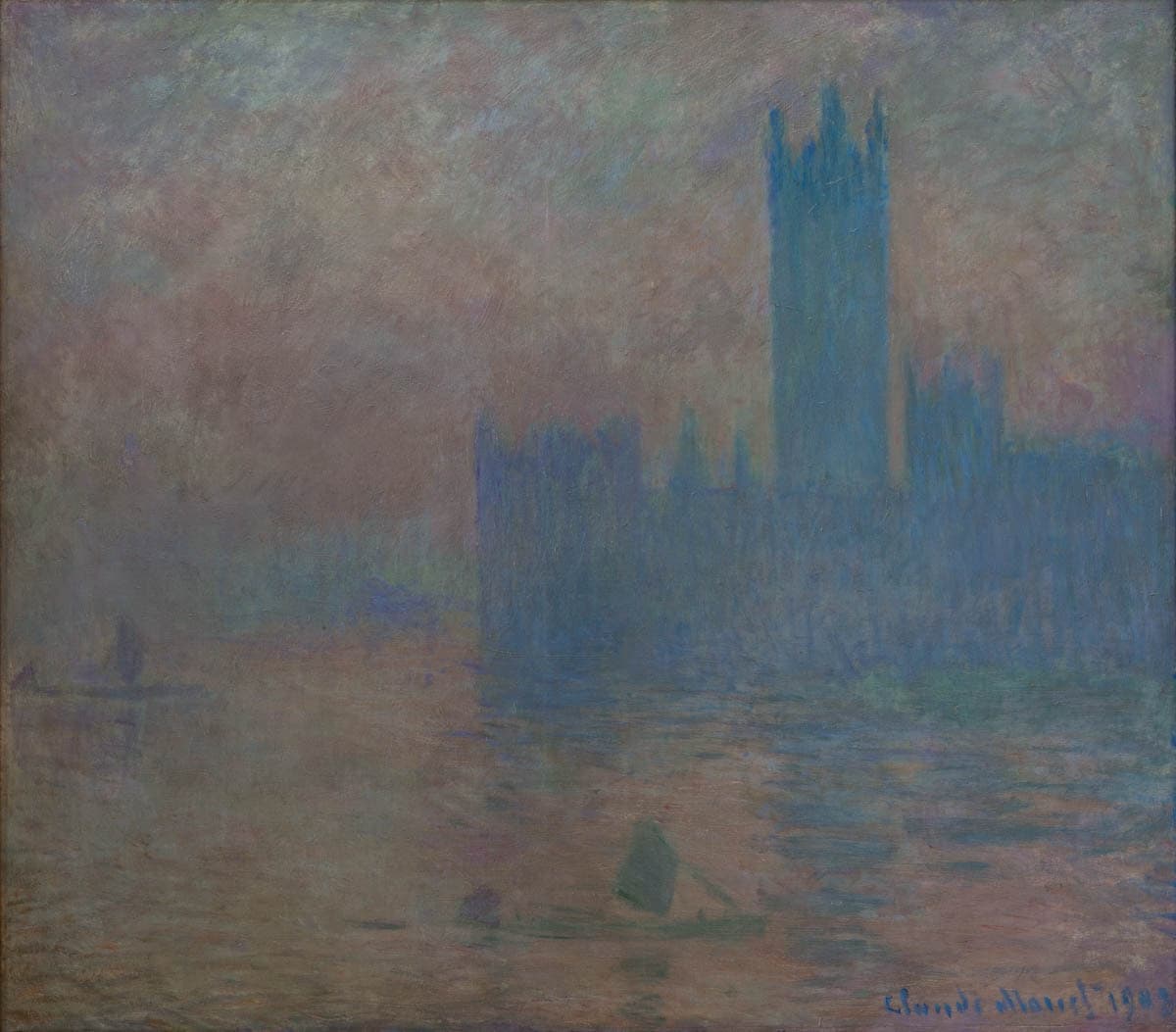
Le Parlement de Londres, effet de brouillard
Claude Monet · 1903
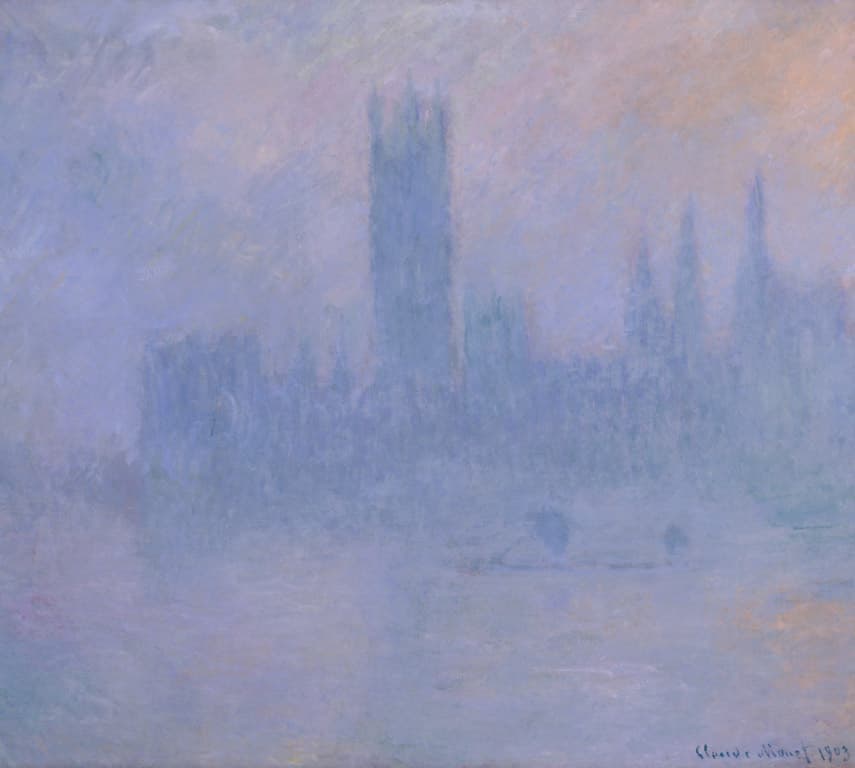
Houses of Parliament, Symphony in Blue
Claude Monet · 1903
Kindred works
You may also study
Le Parlement de Londres, effet de brouillard
Claude Monet · 1903
Houses of Parliament, Symphony in Blue
Claude Monet · 1903
The Houses of Parliament in London
Claude Monet · 1904
Houses of Parliament, Effect of Fog
Claude Monet · 1904
Haystacks (Effect of Snow and Sun)
Claude Monet · 1891
The Doge's Palace (Le Palais ducal)
Claude Monet · 1908
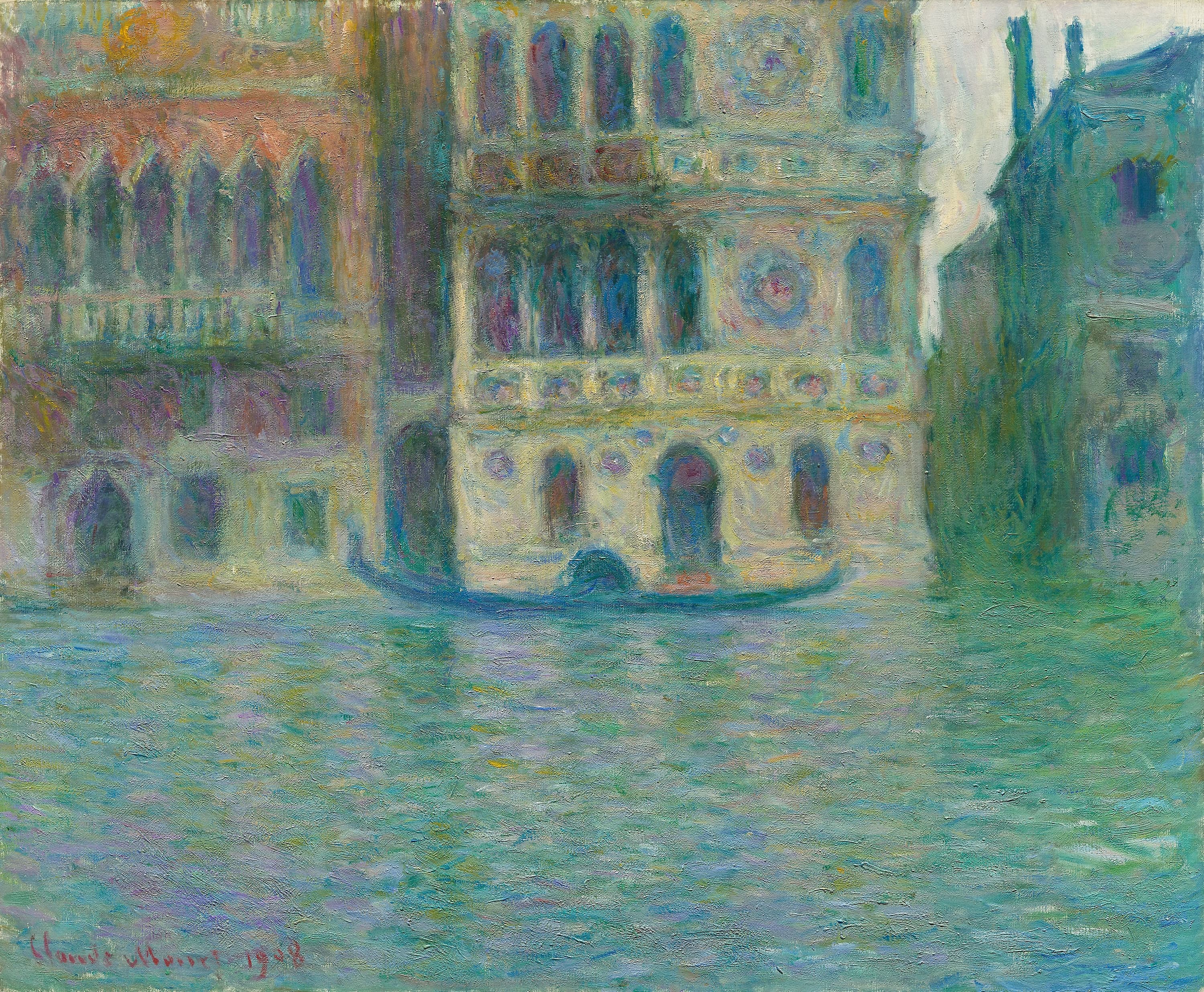
Venice, Palazzo Dario
Claude Monet · 1908
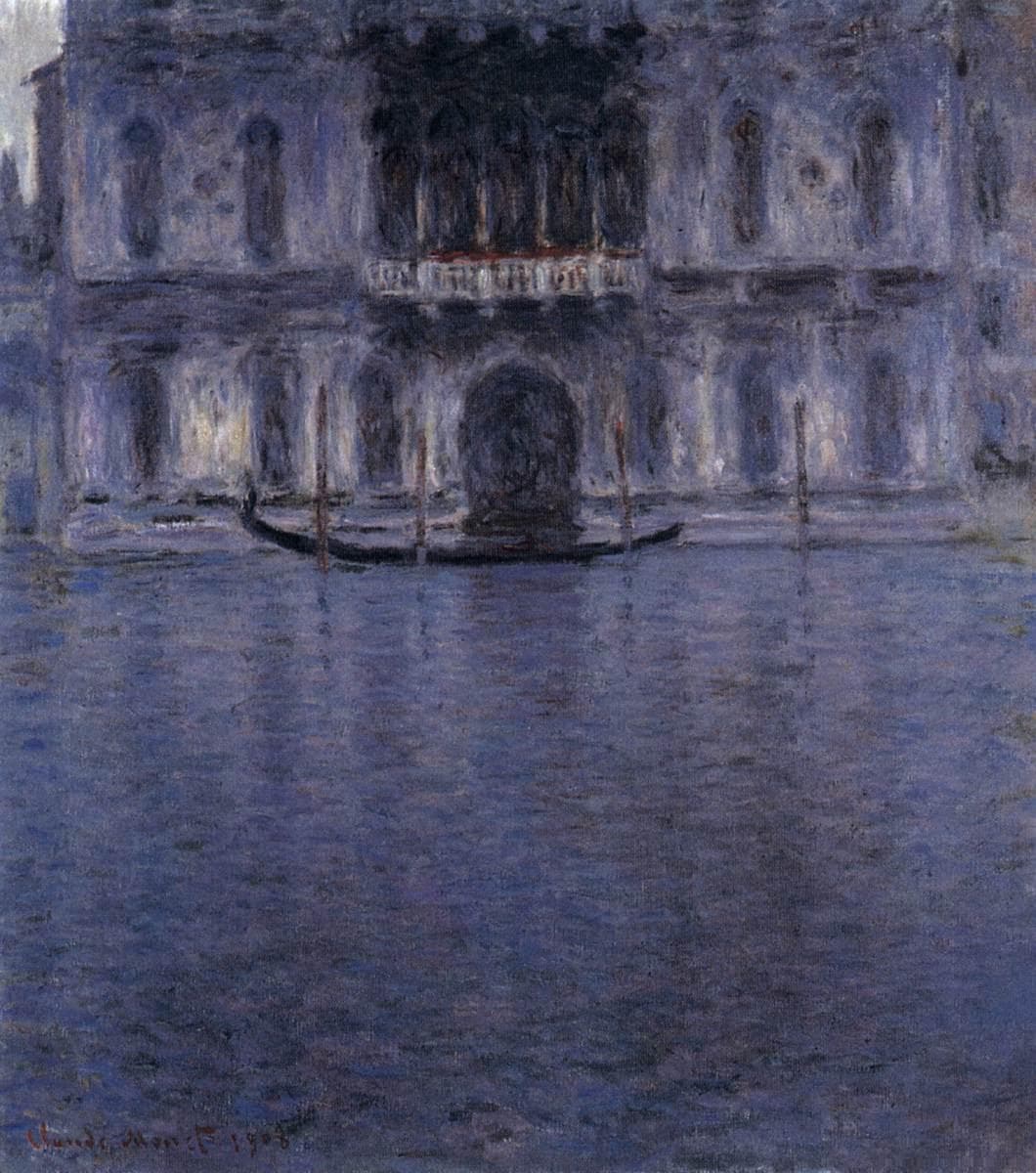
Palazzo Contarini
Claude Monet · 1908